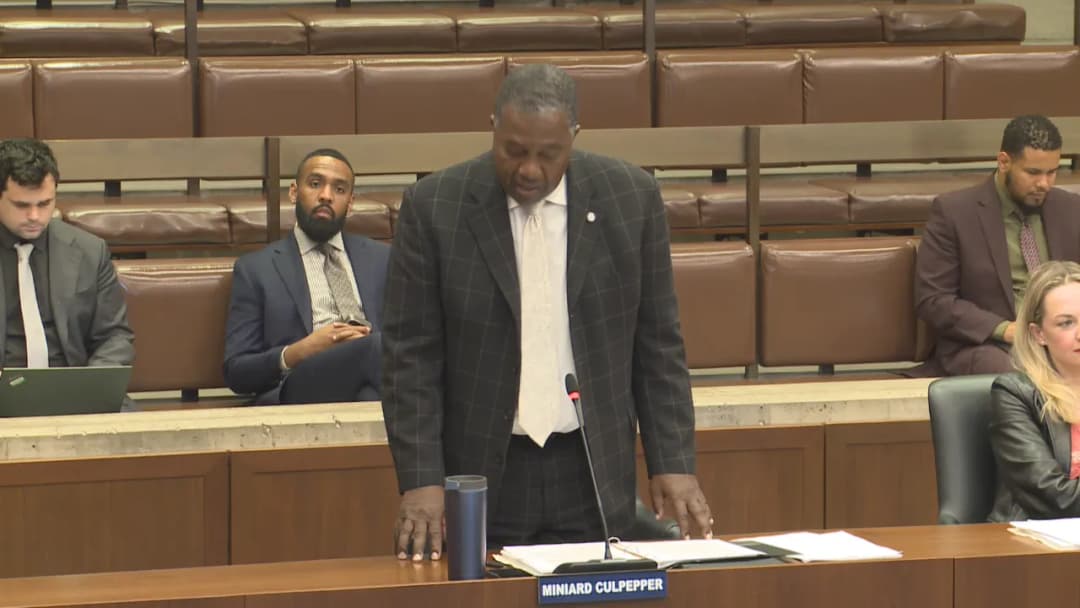
The Boston City Council held its regular meeting on Wednesday, October 21, 2026, at 12:12 PM in the Christopher A. Iannella Chamber, adjourning at 4:25 PM. All 13 councilors were present. The meeting included approvals of grants, appointments, introduction of major housing ordinances, adoption of resolutions, and debate over a summons for the MBTA General Manager. Consent Calendar - Routine approvals included the minutes from the October 7, 2026 meeting. - The Consent Agenda (items 1977–2022) containing 46 resolutions recognizing individuals and organizations was adopted without objection. Discussion Items - Zoning Board of Appeal Reappointments and New Appointments (Dockets 1515–1524): Councilor Durkin, chair of the Committee on Planning, Development, and Transportation, presented the recommendations. All ten appointments (including reappointments of Giovanny Valencia, Katie Whewell, Alan E. Langham, Sherry Dong, Shamaiah Turner, Jeanne Pinado, David Collins, and new appointees Carla Monteiro, Patrick Walsh, William Masterson) were confirmed by unanimous 13–0 votes. - Community Mitigation Grant (Docket 1953): A $668,500 grant from the Massachusetts Gaming Commission for costs related to gaming establishment construction and operation was referred to the Committee on Ways and Means. - Constable Appointment (Docket 1954): Burton Malkofsky was confirmed as a renewal constable for a three-year term. - Communications Filed (Dockets 1955–1957): Reports on the Veteran Advocate annual report, assaults on Boston police officers, and civil rights concerns about the Blue Hill Avenue Transportation Action Plan were placed on file. - E-Bike Grant (Docket 1883): Councilor Durkin reported that the $3,250,220 Community Connections Grant from the MAPC would fund 887 new e-bikes and 434 spare batteries for the Blue Bikes system, increasing the e-bike share from 12% to 33% of the fleet. The order passed 10–2, with Councilors Flynn and Murphy voting no. - Immigrant Advancement Grant (Docket 1774): Councilor Culpepper reported that a $500,000 grant from the Rockefeller Philanthropy Advisors would support Boston’s first immigrant-led home care cooperative, creating opportunities for 60 immigrant workers and serving over 100 individuals. The order passed unanimously 13–0. - Data Centers Zoning Amendment (Docket 1718): Councilor Durkin summarized a hearing where the administration stated hyperscale data centers are unlikely in Boston and is developing clearer definitions. The order remained in committee. - Community Preservation Act Funds (Docket 1601): Councilor Pepén reported a hearing exploring raising the CPA percentage for affordable housing. Councilor Worrell noted that no new affordable homeownership units were funded in the last CPA round. The order remained in committee. - Bullying, Sexual Harassment, and Misconduct in BPS (Docket 0407): Councilor Mejia reported on a hearing highlighting over 2,000 unreported cases, inconsistent responses, and lack of accountability. The order remained in committee for continued oversight. - Ordinance: “Bad Landlords List” (Docket 1958): Council President Breadon introduced an ordinance to create a publicly published list of repeat-offending landlords and exclude them from city grants and zoning relief. Referred to Government Operations. - Ordinance: Displacement Impact Mitigation Initiative and Trust Fund (Docket 1959): Councilor Mejia introduced an ordinance to prevent displacement through early risk identification and mitigation plans. Referred to Government Operations. - Ordinance: Neighborhood-Based Affordability Standards (Docket 1960): Councilor Mejia introduced an ordinance to establish neighborhood-specific Area Median Income standards for city housing programs. Referred to Government Operations. - Petitions for Special Laws (Dockets 1961, 1962): Petitions to waive maximum age requirements for a firefighter applicant (Stephen Maguire) and a police officer applicant (Haji-Mohamed Bayour) were passed unanimously. - Hearing Orders: Orders were passed for hearings on COLA for retirees (1963), Boston Water and Sewer Commission lawsuit verdict (1964), central booking agreement between BPD and Suffolk County Sheriff (1965), SuccessLink Youth Employment Program (1966), and the Veteran Advocate annual report (1967). Each was referred to the appropriate committee. - Summons for MBTA General Manager (Docket 1968): Councilor Culpepper’s order to summon Phillip Eng to the Civil Rights Committee passed 8–2–3 (Breadon, Culpepper, Flynn, Louijeune, Mejia, Murphy, Santana, Worrell yes; Coletta Zapata, Durkan no; FitzGerald, Pepén, Weber present). Debate centered on lack of response to a previous hearing invitation and civil rights implications for transit equity. - Section 17F Order (Docket 1969): Councilor Murphy’s order for information on outstanding 17F responses passed unanimously 13–0. - Fields Corner Post Office Resolution (Docket 1970): Councilor FitzGerald’s resolution urging USPS to secure a new location was adopted. - Ride for Your Life Resolution (Docket 1971): Councilor Pepén’s resolution recognizing the ride and remembering traffic violence victims was adopted. - Dental Care for Veterans Resolution (Docket 1972): Councilor Flynn’s resolution supporting H.R. 210 was adopted. - Public Housing Budget Cuts Resolution (Docket 1973): Councilor Pepén’s resolution urging Congress to reverse $18 million in cuts to BHA federal operating budget and restore voucher funding was adopted. - Judge Leslie E. Harris Courthouse Resolution (Docket 1974): Councilor Worrell’s resolution supporting naming the Dorchester Division of Boston Municipal Court after Judge Leslie E. Harris was adopted. - Election Day Holiday Resolution (Docket 1975): Council President Breadon’s resolution declaring Election Day a holiday for City Council employees and urging city and state to follow was adopted 10–3 (FitzGerald, Flynn, Murphy no). - Lung Cancer Awareness Month Resolution (Docket 1976): Councilor Flynn’s resolution recognizing November as Lung Cancer Awareness Month was adopted. Key Outcomes - Confirmed Appointments: All ten Zoning Board of Appeal members and alternates were confirmed unanimously. - Grant Approvals: The $3.25 million e-bike grant passed (10–2); the $500,000 immigrant grant passed unanimously. - Summons Issued: The MBTA General Manager is summoned to appear before the Civil Rights Committee per a 8–2–3 vote. - Ordinances Introduced: Three major housing-related ordinances were referred to the Government Operations Committee for further consideration. - Petitions Approved: Special law petitions for age waivers for a firefighter and a police officer were passed. - Resolutions Adopted: Over 50 resolutions, including those on postal service, traffic safety, veterans’ dental care, public housing funding, courthouse naming, and Election Day holiday, were adopted.
The Public Meeting Index
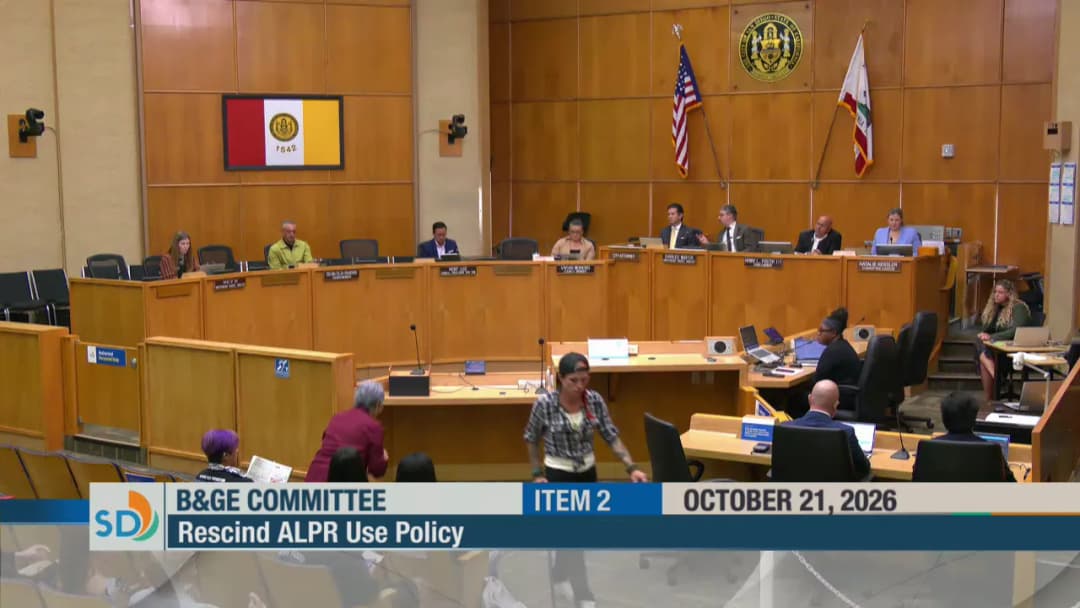
The Public Meeting IndexThe Budget and Government Efficiency Committee met on Wednesday, October 21, 2026, with Chair Henry L. Foster III presiding. The committee reviewed the FY 2026 year-end financial performance report, approved a measure to begin rescinding the city's ALPR use policy, adopted a cannabis delivery service permit fee, and renewed the city treasurer's investment authority. All action items passed. The public participated in person and by Zoom; the online live stream was not working. Consent Calendar - Item 1, approval of committee minutes from September 23, 2026, was approved unanimously, 4-0. During public comment, one speaker raised the $7 million "bootworld" contract, another said the minutes did not fully capture her previous comments about diesel shortages and El Niño, and one virtual speaker reported that agenda document links on the city website were not working. Public Comments & Testimony - In non-agenda public comment, speakers raised a wide range of topics. Blair Beekman emphasized community accountability in trash and RFID technology. Audra questioned why the city focuses on vehicle surveillance while broader tracking of people remains unaddressed. Anthony Ralphs thanked council members for raising SDPD body-worn camera compliance concerns and urged greater accountability for the police budget and technology requests. Other speakers commented on youth vaping prevention, cannabis tax underperformance, police overtime, vape shops near schools, and infrastructure maintenance. One speaker criticized the committee for starting late. Discussion Item: FY 2026 Year-End Financial Performance Report (Item 5) - Department of Finance staff presented the unaudited year-end results. Revenues were expected to finish $4.1 million (0.2%) above third-quarter projections; expenditures were expected to finish $10.5 million (0.5%) above; and net projected activity decreased by $6.4 million. The projected available fund balance moved from a positive $1.7 million to a negative $4.7 million, requiring a $4.7 million draw from the General Fund Stability Reserve to balance FY 2026. After the draw, combined general fund emergency and stability reserves are expected to total $202.4 million, or 10.9% of operating revenues, below the 14.1% reserve policy target. - The report identified a $7.4 million delay in Cal OES reimbursements for the January 2024 storms, now expected in FY 2027. Staff said reimbursements will first replenish the stability reserve, and any remaining balance could support unanticipated expenditures. - The IBA noted this was the first general fund reserve draw in recent memory, that risk management reserves ended about $21 million below adopted budget and nearly $50 million below their combined policy targets, and that one-time budget mitigation options are increasingly limited. - In discussion, Pro Tem Lee asked about revenue trends; staff said property tax growth is softening to about 3% while sales tax is rebounding. Vice Chair Moreno expressed disappointment at the reserve draw and stressed the importance of rebuilding reserves toward the 16% target. Staff said updated reserve policy proposals are expected next month along with the five-year financial outlook. Chair Foster requested a follow-up on unbudgeted positions. This was an information item; no vote was taken. Discussion Item: Rescind ALPR Use Policy (Item 2) - Tiffany Harrison, Deputy Chief of Staff for Council District 4, presented the request for the City Attorney to work with Councilmember Foster's office to rescind the ALPR use policy and amend the TRUST ordinance to prohibit ALPR technology. She reviewed the history of the TRUST ordinance, the 2023 Flock/Ubiquia contract, the June 2025 disclosure that outside agencies accessed San Diego's ALPR data, and national examples of misuse. - The City Attorney's office advised that changes to technology use policies may trigger collective bargaining obligations under the Meyers-Milias-Brown Act and recommended a labor relations assessment before council consideration. - Dozens of public speakers testified, overwhelmingly in support of ending ALPR/Flock. Speakers cited privacy violations, risks to immigrant communities, false arrests, racial disparities, and the need to redirect the roughly $2 million annual contract to community services. Many asked the committee to extend the prohibition to Ubiquia, smart streetlights, and future surveillance technologies, and some urged building a veto-proof supermajority. - SDPD answered questions remotely. The department said it does not track misread rates, that officers must visually confirm a plate and verify it through a records check before a stop, that the "other" search category has been removed, and that weekly audits are conducted. Councilmember Ilo Rivera pressed on a community relations officer email urging residents to oppose cancellation, called it advocacy rather than information, and criticized the absence of SDPD leadership in the room. He also noted the 2024 surveillance report showed data shared with Homeland Security Investigations and CBP ten times, though SDPD said those were not immigration enforcement cases. - Chair Foster made the motion, saying the action was about safeguarding fundamental rights and fostering trust, and noted that the Flock contract was negotiated by a then-SDPD captain who later became a Flock employee. - The motion passed 4-0. It directs the City Attorney to work with Councilmember Foster's office, the IBA, and purchasing/contracting to prepare a resolution rescinding the ALPR use policy and an ordinance amendment to prohibit ALPR technology. The City Attorney confirmed both the resolution and ordinance are subject to mayoral veto, and that once the policy is rescinded, use of the technology must cease. Discussion Item: Cannabis Delivery Service Permit Fee (Item 3) - Ricardo Ramos of the City Treasurer's Office proposed a $51 annual cannabis delivery service permit fee for out-of-town businesses delivering into San Diego, effective January 1, 2027. The fee covers application processing and registry maintenance but excludes enforcement costs because of limited enforcement capacity. The ordinance includes a private right of action with penalties split 65% to city enforcement and 35% to plaintiffs. - Public comment was mixed. Phil Rath, executive director of UMMC, a trade association of city-permitted cannabis retailers, expressed support, saying permitted retailers pay taxes and follow labor laws while unpermitted outside delivery services do not. Other speakers questioned whether $51 covers actual costs, argued the city should not rely on private lawsuits, opposed another cannabis fee, or suggested banning deliveries if enforcement is not feasible. - The committee approved the fee and directed the Department of Finance to amend the user fee rate book by a 3-0 vote, with Vice Chair Moreno absent. Discussion Item: City Treasurer's Investment Policy and Delegation of Authority (Item 4) - The City Treasurer's office requested renewal of the authority to invest city funds for January 1 through December 31, 2027, and presented annual investment policy updates. As of September 30, 2026, the pooled investment fund had a market value of $2.23 billion and an annualized yield of 4.05%. FY 2026 investment income was $93.7 million, the second-highest annual total on record. - Proposed policy changes were administrative: adding mandatory investment officer training, electronic Form 700 filing, removing 2031 sunset clauses on negative-rate securities and commercial paper limits, extending commercial paper maximum maturity from 270 to 397 days, and clarifying pool investment language. - Public comment was minimal. Councilmember Ilo Rivera asked about screening out investments in private prisons and companies profiting from immigration detention, similar to the city's earlier fossil fuel divestment. Staff confirmed the city does not currently invest in CoreCivic or GEO Group and agreed to work with the IBA and Rivera's office to bring options to council. - The committee approved the investment policy and delegation of authority by a 3-0 vote, with Vice Chair Moreno absent. Key Outcomes - Consent calendar approved 4-0. - Item 5 was received as an information item; staff committed to providing a supplemental positions update and a Cal OES update in the first quarter budget monitoring report. - Item 2 passed 4-0, directing preparation of a resolution to rescind the ALPR use policy and a TRUST ordinance amendment to prohibit ALPR technology. - Item 3 passed 3-0, adopting a $51 cannabis delivery service permit fee effective January 1, 2027. - Item 4 passed 3-0, renewing the investment delegation through December 31, 2027, approving the 2027 investment policy updates, and beginning work on socially responsible investment options. - The next regular meeting was scheduled for Wednesday, November 18, 2026, at 9:00 a.m.
The City Council held a special meeting on October 21, 2026 (note: the transcript states the meeting was called on Tuesday, October 20, 2026, creating a date discrepancy). The meeting was called to order with a moment of silence, followed by the Pledge of Allegiance led by Alderman Lenin. Roll call confirmed all members present: Dunn, Vasquez, Holloway, Lenin, Grip, Newton, Blunk, Ingram, Job Jin, and Burkholder. The council unanimously passed a motion to enter executive session to discuss a real estate transaction pursuant to Iowa Code section 21.51J and to discuss strategy with counsel in matters involving litigation pursuant to Iowa Code section 21.51C. After adjourning from closed session, the council did not reconvene. Key Outcomes - Unanimous vote (10-0) to go into executive session. - The meeting ended after the closed session with no further public business.
The Los Angeles City Council held its regular meeting on October 21, 2026, taking votes on a public bank feasibility study, an automatic license plate reader (ALPR) use policy for the Department of Transportation, and technical updates to the fats, oils, and grease (FOG) ordinance. During public comment, residents and advocates provided testimony on the Riverwalk Project in Studio City, raised privacy concerns over ALPR contracts with Axon, and called for funding to address violence against Black women and girls. The council also deferred a major ALPR contract for LAPD and entered closed session to discuss litigation with Los Angeles County over the homeless services Continuum of Care. Consent Calendar - The council approved a block of items in initial votes, including items 3 through 6, 8, 10, 11, 12, 14, and 22. The ordinance for item 12 was held over for a second reading and subsequently passed 12-0. - Items 1, 2, 15, 18, and 19 were passed in a unanimous 14-0 vote. Public Comments & Testimony - Riverwalk Project Support: Multiple speakers expressed strong support for the mixed-use project. Sherry Bonstale (Greenberg Glusker), representing the applicant, described it as a mixed-use urban infill project with 46 very low-income units, noting community benefits and support from Council District 4. Holly Williams, a land use professor at USC, stated the project represents good land use planning. Bart Reed (Transit Coalition) urged passage, noting 814 housing units and workforce offices. Nicole Ku Klock Waldman, a paid speaker for the developer, highlighted transit-oriented development and housing supply. Scott Mandel (Studio City Neighborhood Council) conveyed conditional support from the neighborhood council, reporting that their conditions had been met through cooperation with the developer and Council District 4. - Riverwalk Project Opposition: Adele Slaughter (Studio City Residents Association) urged denial of the tract map, arguing the project does not meet fire safety standards and citing a Jensen study showing existing evacuation times exceed six hours, with the development adding 27 minutes. - ALPR and Surveillance Opponents: Several callers opposed the Axon and Flock contracts. One speaker cited an OIG report showing 161 false hits in 60 days and argued the council should lead by rejecting all ALPRs. David Boloch (Council District 12) stated he is generally pro-police but argued ALPRs would be used against the public. Carlos Samador (Clean Car Wars Worker Center, LA Sanctuary Coalition) opposed the tools due to entanglement with ICE. Ariel Bernstein (LA Alliance for a New Economy) urged rejection of all ALPR technology. A speaker who identified themselves as a stalking victim warned against allowing 4,000 people access to invasive data. - Public Bank Supporters: Jake Hart (Public Bank LA Coalition) urged funding the feasibility study, arguing a city-owned bank would keep money in the local economy to fund rental assistance, wildfire relief, and affordable housing, citing the Bank of North Dakota as a model. - Public Bank Opponents: Councilmember Park stated during discussion that the city should not expend general fund dollars on the study, arguing the city cannot manage its own finances or basic infrastructure. - Violence Against Black Women and Girls: Jessica Robinson (Women's Leadership Project) stated the violence against Black women in Los Angeles is an epidemic requiring an emergency response. She demanded sustained funding for prevention, mental health services, and safe spaces, noting that Black women make up 4.3% of the city's population but 25 to 33% of female sexual and domestic violence victims. A coalition speaker called the council's silence and inaction on the issue a failure. - Rent Control Opposition: Joseph Ramos (Apartment Association of Greater Los Angeles) argued the city is abusing its authority by extending rent restrictions without data from the housing department, claiming the policy forces mom-and-pop owners to sell. - General Concerns: A caller raised concerns about animal abuse by unhoused individuals and called for an audit of LA Animal Services. Another caller asked for a meeting follow-up on the Florence Griffith-Joyner project. Discussion Items - Item 13 (Fats, Oils, Grease Ordinance): Councilmember Rodriguez introduced a motion to update the cost threshold for requiring grease trap installations for restaurants, linking it to the Consumer Price Index for the first time in over 20 years. Rodriguez stated the fix supports small businesses struggling with rising costs and noted a 90% decrease in fatberg-related sewer line breaks since 2000. - Item 16 (LADOT ALPR Use Policy): Councilmember Lee highlighted what he called serious inconsistencies in the policy. He noted it allows contractors like Hayden AI to access city data and includes an exception for aggregating enforcement action history against specific vehicles and individuals. Lee argued this contradicts the council's stance on data ownership and protections discussed for LAPD. Councilmember Rodriguez agreed, stating the selective application of data protection exposes hypocrisy. - Item 17 (Public Bank Feasibility Study): Councilmember Jurado described the study as a step toward keeping public money in Los Angeles. Councilmember Padilla expressed support, emphasizing the need to explore reducing predatory lending. Councilmember Park strongly opposed the study, calling it a waste of funds while the city cannot fix street lights or manage its budget. Key Outcomes - Item 7 (Amending Motion 7a Rodriguez Lee): Passed 14-0. - Item 9 (Rainier Village Community Naming): Passed 14-0. Councilmember Hutt celebrated the formal recognition of the neighborhood in Council District 10. - Item 13 (FOG Ordinance Update): Passed 14-0. The cost threshold for grease traps will be adjusted periodically based on the Consumer Price Index. - Item 16 (LADOT ALPR Use Policy): Passed 13-1. Councilmember Lee cast the sole no vote, citing privacy and data security gaps in the policy. - Item 17 (Public Bank Feasibility Study): Passed 11-3. The council authorized identifying funding to complete the feasibility study. - Item 20 (Axon ALPR Contract): Continued to October 27, 2026. The item was initially deferred from the agenda and further amended to the later date. - Item 21 (Closed Session – Continuum of Care): Continued to October 23, 2026. The council entered closed session to discuss litigation options with Los Angeles County. - Adjournment: The meeting adjourned in memory of Krikor Hofsepian, a pillar of the Armenian community and entrepreneur, and 16-year-old Hernan Martinez Hernandez, who was killed by a reckless driver in South Los Angeles.
On Wednesday, October 21, 2026, the Tulsa City Council Urban & Economic Development Committee met at One Technology Center, 4th Floor, Room 411, 175 E. 2nd St., Tulsa, OK. The agenda advertised a 10:30 AM start; the supplied meeting timestamp is 2026-10-21 16:30:00+00:00. Chair Councilor Anthony Archie (District 2) called the meeting to order, with Co-Chairs Lakin and Bellis listed on the notice. The committee considered two appointments, three rezoning applications, a Planning Commission Comprehensive Plan amendment, and five fiscal year 2026–2027 supplemental budget ordinances. No meeting minutes were provided, and no public comment period appeared on the agenda. Appointments - Rex Trivedi was introduced as the appointee to the Asian Affairs Commission, replacing Hieu Le, with a term expiring January 1, 2029, from Council District 7. Trivedi said he has lived in Tulsa for more than 35 years, worked in hospitality, owned retail centers, served as vice president of the India Association, and was involved with the Hindu Temple of Greater Tulsa. He noted the recent India Fest drew a record number of attendees, including the mayor, and that a 5,550-square-foot event hall would open the following Sunday. Councilor Decker Wright welcomed him and said District 7 is underrepresented on boards and commissions. A City Council vote on the appointment was scheduled for October 28, 2026. - Brandon Jackson was introduced for reappointment to the Infrastructure Development Advisory Board, with a term expiring September 30, 2028; he had attended 10 of 11 meetings. Jackson, a development professional, said the board needs professional input to keep the market represented and to support new ideas. The City Council vote was scheduled for October 28, 2026. Rezoning Applications - Z-7871 (CD-8): Request by Susan Crockett/Meghan Hilborn for property north of the northeast corner of E. 101st St. S. and S. 74th E. Ave. to rezone from RS-1 to AG-R; the property owner is the Susan & Brian Crockett Trust. The Planning Commission voted 6–0–0 to recommend approval. Planning staff said the 2.5-acre lot exceeds the 1-acre AG-R minimum, and the owners want to keep an animal such as a horse as an accessory to a residence. Donkeys were mentioned, but staff said they are not allowed inside city limits. Some neighbors expressed concern about preserving the RS-1 zoning pattern rather than opposing the horse itself. Councilor Lakin asked that the item be put back on committee so she could meet with concerned neighbors before it moves forward. - Z-7872 (CD-6): Request by Vintage Housing, Inc. to rezone property west of the southwest corner of E. 3rd St. S. and S. 193rd E. Ave. from RS-3 to RM-1; the Planning Commission voted 6–0–0 to recommend approval. Staff said the approximately 10-acre former Sandberg Elementary school site had been closed about 12 years, and Vintage Housing planned senior housing with 60–80 units depending on funding, with possible future development on the remaining half. Two neighbors said they were not opposed; one newer resident thought it was not a fit; a planning commissioner commented that seniors should live in the middle of a neighborhood rather than along a large arterial street. - Z-7873 (CD-9): Request by Lou Reynolds for property west of the southwest corner of E. 36th St. S. and S. Peoria Ave. to rezone from RS-3 to CH; the property owner is QuikTrip Corporation. The Planning Commission voted 6–0–0 to recommend approval. Staff said QuikTrip planned to tear down and rebuild the store, with the new site plan moved toward the southwest corner. Redevelopment would require landscaping, street trees, parking-lot landscaping, and improved curb-cut standards that could help pedestrians. Neighbors who spoke through staff raised concerns about trash and litter blowing into the neighborhood. Comprehensive Plan Amendment - Resolution No. 3:1 of the Planning Commission, under Title 11, Oklahoma Statutes, was presented to adopt Comprehensive Plan amendments (CPA-134) reflecting the newly created City of Tulsa Planning Commission and documenting the plan-amendment process. Staff said the text amendments replace references to the former TMAPC, continue the City Council approval process, remove the prior 45-day automatic approval provision, and allow the planning director to initiate only cleanup-type amendments rather than policy shifts. No council questions or objections were recorded. Fiscal Year 2026–2027 Supplemental Budget Appropriations - $999,997 from Health and Human Services Substance Abuse and Mental Health Services Administration (SAMHSA) grant revenues for the Community Child Mental Health Sub-Fund; staff said this was the final-year appropriation of a four-year grant. - $410,000 from unassigned fund balance within the Walgreens Opioid Settlement Sub-Fund for ART II Program Expansion; budget staff said the appropriation extends the program one additional year and funds four positions: two FDO4s and two mobile integrated health care paramedics. - $40,000 from unappropriated fund balance within the Public Works Non-Federal Grants Sub-Fund for Citywide Traffic Engineering; staff said a vehicle struck a traffic signal, and this appropriation reimburses the fund from an insurance settlement. - $26,320,000 from unappropriated fund balance within the 2020 GO Bond Issue 7 Sub-Fund for streets, sidewalks, bridges, maintenance zone repairs, and cost-of-issuance projects. Council discussion raised whether any traffic-signal or walkability projects align with routes affected by recent Tulsa Public Schools closure decisions; members noted a large unfunded traffic-management queue and discussed coordinating with TPS and Public Works. - $39,340,000 from unappropriated fund balance within the 2024 GO Bond Issue 6 Sub-Fund for street repairs, bridge rehabilitation and repairs, sidewalk improvements, alleyway improvements, Tulsa Performing Arts Center improvements, and cost-of-issuance projects. A councilor questioned the $10 million PAC-related appropriation given uncertainty about the private side of the project and construction starting on the west/private side before the publicly funded east-side loading dock and infrastructure work. Staff said the public-side work was moving forward and suggested Mary Womble could provide the construction schedule. Key Outcomes - Rex Trivedi and Brandon Jackson were scheduled for City Council appointment votes on October 28, 2026. - Z-7871 was held/put back on committee for additional neighborhood outreach; no committee vote was recorded in the transcript. - Z-7872 and Z-7873 were discussed without recorded council objections; both carry Planning Commission 6–0–0 recommendations and remain on the published City Council schedule (October 28 and November 4, 2026, per the agenda). - CPA-134 and the supplemental budget ordinances were discussed with no recorded objections; the agenda lists subsequent City Council dates of October 28 and, for some items, November 4, 2026. - The meeting adjourned after agenda item 13; no end time was captured in the transcript.
The Las Vegas City Council held its regular meeting on October 21, 2026, at City Hall, beginning with ceremonial recognitions and concluding after extensive discussion on disciplinary action, land use appeals, and planning matters. A major focus was the consideration of a disciplinary complaint against Cork and Thorn, a downtown arts district business, following multiple violent incidents. The council approved the complaint and set a hearing for November 4, 2026, while allowing the business to reopen under eight conditions. Other significant items included appeals regarding residential accessory structures, billboard modifications, and the adoption of the 2050 master plan implementation report. Public comments addressed concerns about campaign contributions, public safety, homelessness, and heat mitigation. Consent Calendar - Items 10–27 were approved unanimously as routine matters, including permits, licenses, and contracts. Public Comments & Testimony - Eric King spoke on item 16, advocating for veteran involvement in tree planting and curb cuts for water infiltration and heat reduction. - Brian Hardy (attorney) and Randy Garrett (owner) spoke on item 28 (Cork and Thorn), expressing willingness to work with the city and emphasizing the business's community role. - Brenda Brown, Amanda Kennedy, Michelle Green, Sandy Martinez Fulton, Kamal Fly, Ali Starr, Keneta Harris, Rose, Corey Lofton, Jeremy Johnson, William Taylor, and Leland Williams all spoke in strong support of Cork and Thorn, arguing that the violent incidents occurred in public spaces, not inside the business, and that closing it would harm employees, performers, and the arts district. Several submitted letters of support. - Hunter Kane spoke on item 6 (Foster Care Chamber of Commerce proclamation), thanking the council and inviting attendance at upcoming events. - Shoshana spoke during public comment, listing campaign contributions received by council members from companies on the agenda (total $124,500), and requested removal of prayer from meetings. - Bruce Cowan spoke against billboard items (37–38 and others), calling them visual pollution that lowers property values. - Laura McSwain (Water Fairness Coalition) spoke on item 57 (2050 master plan), opposing artificial turf due to heat and toxicity, citing research on surface temperatures. - Coffee Marie Brown, Philip Alt, Lawana Clark, and Jasmine Young spoke during citizens' participation on personal legal matters, homelessness, and conditions at the Courtyard homeless resource center. Discussion Items - Ceremonials: Recognized employee of the month Chris Brule (Senior Business Specialist, Las Vegas Fire and Rescue, 26 years, secured $30M in grants). Recognized veterans, including featured veteran Levi Schultz (Navy veteran, Nevada Veteran Fund). - Item 28 – Cork and Thorn Disciplinary Action: Business Licensing Manager Darci Heard presented a complaint citing three violent incidents (March, May, September 2026). Deputy City Attorney Tim Geswine explained that approval of the complaint and setting a hearing date were procedural. The council approved the complaint and set a disciplinary hearing for November 4, 2026. An emergency closure order was lifted; the business was allowed to reopen under eight conditions: reduced hours (8am–2am), approved security plan with minimum four security personnel or law enforcement, no weapons, key employee on site, monitoring of adjacent parking lot, and emergency closure authority for LVMPD. The owner, Randy Garrett, agreed. - Item 49 – Shed Variance Appeal (416 Rhonda Drive): Applicants Mabel Diaz and Neil Garcia sought a variance for a shed built too close to the property line. Staff and Planning Commission recommended denial due to self-imposed hardship. Councilwoman Summers Armstrong moved to uphold denial; the motion passed (5-0). - Item 50 – Billboard Digital Conversion (1837 E Charleston): Applicant Las Vegas Billboards sought to convert a static billboard to digital LED. Staff recommended denial due to non-conformity. Councilwoman Diaz moved to approve with conditions: light shielding on north and bottom edges, and six-month and one-year administrative reviews. Motion passed. - Item 51 – Auto Repair Appeal (233 N MLK Blvd): Applicant Dennis Santiago revised plans to move bay doors to south elevation and change colors. Council approved with conditions: hours 8am–8pm, removal of food truck within 30 days, reinstatement of windows, neutral paint scheme, and one-year administrative review. - Item 53 – Visa Homes Development (Oso Blanca/Deer Springs): Rezoning from commercial to residential for 53 single-family homes. Staff recommended denial of SUP and SDR due to retention of a legal non-conforming billboard. Council approved all applications with condition to delete the billboard removal condition, after applicant moved homes away from neighboring Timberlake community. - Item 54 – Carport Variance (1070 Griffith Ave): Variance for existing carport and patio cover. Council approved after applicant presented neighbor support and willingness to modify; staff had recommended denial. - Item 56 – Affordable Housing Development (Shomber Road): 96 homes for buyers under 150% AMI. Staff recommended denial of 98 variances. Council approved all applications (including variances) with condition of a master sign plan. - Item 57 – 2050 Master Plan Implementation: Marco Vallada presented the annual report. Council approved after discussion. Public comment from Eric King urged inclusion of wildfire risk and tree species selection. - Item 58 – Patio Cover Variance (Wedlock Lane): Variance for existing patio cover and shed. Applicant had 17 letters of support. Council approved despite staff denial. - Item 59 – Billboard Height Adjustment (321 N Mojave): Applicant corrected a math error from a previous approval. Council approved with condition of light shielding on bottom portion. - Item 60 – Waiver for Motel Addition (700 N Main): Applicant agreed to remove a metal shade structure. Council approved with conditions: removal within 30 days and permit process within 90 days. - Items 62–64 – Billboard Reviews: Three billboards on Decatur and Rancho were approved for continued operation with three-year review periods. Key Outcomes - Cork and Thorn: Complaint approved; disciplinary hearing set for November 4, 2026. Business reopened under eight conditions. - Item 49 Shed Appeal: Denied; applicant must remove or reconfigure the shed to comply with code. - Item 50 Billboard: Approved with light shielding and administrative reviews. - Item 51 Auto Repair: Approved with conditions (hours, food truck removal, windows, paint, one-year review). - Item 53 Residential Development: Approved with billboard remaining; condition removed. - Item 54 Carport: Approved. - Item 56 Affordable Housing: Approved with condition of master sign plan. - Item 57 2050 Plan: Approved. - Item 58 Patio Cover: Approved. - Item 59 Billboard Height: Approved with shielding. - Item 60 Motel Addition: Approved with conditions. - Items 62–64 Billboard Reviews: Approved with three-year reviews. - Council members announced upcoming events and encouraged voter participation. - Meeting adjourned after approximately eight hours of proceedings.
On October 21, 2026, the Hollywood City Commission and Community Redevelopment Agency Board held a joint special meeting at City Hall to evaluate and consider employment agreement amendments for City Manager/CRA Executive Director Raelin Storey and City Attorney/General Counsel Damaris Henlon. Both officials presented overviews of their accomplishments and requested a 2% cost-of-living adjustment to be applied at their one-year anniversaries, consistent with adjustments provided to all other management employees. The commission unanimously approved both resolutions, and discussed future improvements to the evaluation process. Discussion Items - City Manager/CRA Executive Director Evaluation and Employment Agreement Amendment (R-2026-334): Raelin Storey reported on her first six months in the role, highlighting achievements such as execution of new collective bargaining agreements, completion of major Go Bond projects (Art and Culture Center expansion, Hollywood Beach Golf Course, new police headquarters), infrastructure initiatives (NORESCO energy project, tidal flooding protection, undergrounding utility lines, stormwater master plan, Waterworks 2050), technology upgrades (Accela permitting platform, website redesign, cybersecurity improvements), public safety gains (continued crime decline, 100% homicide clearance rate, 140 felony arrests), housing and community development (nearly 400 new affordable/workforce housing units, assistance to homeless individuals), and significant grant awards totaling over $20 million. She clarified that this review was scheduled to align with the traditional October timeline, though it is not her annual review. She did not request a raise but asked that if the commission desired, a 2% cost-of-living increase (matching that already provided to employees) be applied at her one-year anniversary in May 2027. Commissioners commended her performance and leadership. Commissioner Quintana offered feedback: a need for culture change toward a more humane, team-oriented approach, and improved equitable communication of information to all commissioners. Commissioner Shuham supported the feedback and noted that a written evaluation form had been used in the past and recommended adopting best practices from other cities. The motion to approve the amendment at the one-year anniversary passed unanimously. - City Attorney/General Counsel Evaluation and Employment Agreement Amendment (R-2026-335): Damaris Henlon reported on her first full year as city attorney. She stated her office reviewed 409 resolutions and over 50 ordinances, filed over 1,800 municipal prosecution cases, achieved a jury verdict in a police vehicle accident case resulting in zero liability, successfully defended the school speed zone detection program on appeal, and handled legal matters for over $165 million in Go Bond projects. She noted that outside counsel expenditures decreased from fiscal year 2025 despite increases in hourly rates and personnel challenges. The office's in-house attorneys average more than 15.5 years of experience, and she implemented monthly check-ins between transactional attorneys and city departments. She requested the same 2% cost-of-living adjustment at her one-year anniversary. Commissioners praised her performance, noting improved communication and responsiveness. Commissioner Hernandez emphasized perseverance and results. The motion passed unanimously. Key Outcomes - Unanimous approval of Resolution R-2026-334, authorizing a 2% salary adjustment for the City Manager/CRA Executive Director at her one-year anniversary (May 2027). - Unanimous approval of Resolution R-2026-335, authorizing a 2% salary adjustment for the City Attorney/General Counsel at her one-year anniversary (date not specified). - Commissioners expressed interest in improving the evaluation process for direct hires by using written evaluation forms and establishing shared goals in advance for future reviews.
On October 21, 2026, the Saint Paul City Council held two sessions: the Budget Committee reviewed the Office of Technology and Communications (OTC) proposed 2027 budget, followed by a City Council Policy Committee discussion of standard operating procedures for honorary street co-naming. Both were discussion and informational sessions; no formal votes were taken. The provided agenda listed only the Budget Committee item, while the raw transcript also includes the Policy Committee meeting. Budget Committee: OTC 2027 Budget Proposal - Roll call showed five members present (Coleman, Kim, Jost, Noecker, Johnson) and two excused (Vice Chair Yang and Councilmember Bowie). OTC leadership presented the 2027 budget proposal. - OTC Director highlighted 2026 as a recovery year after the city's cyber event and noted that 60–70% of organizations that experience a cyber attack have another within six months. The department said 30% of staff have more than 200 hours of banked vacation because of the workload. - Proposed 2027 general fund changes include an increase of about $1 million; three new enterprise portfolio governance FTEs; three GIS analyst positions moved from Public Works on a budget-neutral basis; a $100,000 request to implement the cyber after-action improvement plan; and reductions including a deputy director position, a management assistant, two vacant positions, $105,000 in website vendor support, and roughly $67,000 in professional services. - OTC reported a 2026 protected variance of about $60,000 tied to cyber recovery costs. Two security operations analysts fielded more than 3,000 security alerts in 2026, about 60 per week, and acted on about 1,800; tooling documented at least eight similar attacks that were automatically stopped. - Other OTC updates: an after-action report recommended 42 tasks to prepare the city for future incidents; Project Bedrock will modernize the city's core network and infrastructure with core work in 2028–2029; OTC launched an AI Helpbot/support front door and St. Paul.gov 2.0; and HR requested 2027 funding to modernize the payroll/timekeeping platform. - The central service fund is proposed to rise by more than $2 million, driven largely by Microsoft enterprise license increases, security-related licensing, global hardware price increases, and the addition of the Polly permitting/licensing system. PEG cable revenues are declining. OTC said local peers have seen Microsoft agreement increases of up to 30%, while hardware costs rose 15–25% globally; St. Paul's hardware increase was closer to 10%. OTC expects the market to stabilize in 2027 but said AI demand makes forecasting uncertain. Questions and Discussion - Council President Noecker asked how the three enterprise portfolio governance FTEs would work. The Director explained they would create a citywide governance structure, including an IT strategy/governance lead, a product council lead, and a portfolio analyst, to manage a portfolio of about 250 requested or in-process projects and stop disconnected technology purchases. - Noecker also asked about the $100,000 after-action funding and the central service fund increase. The Director said the money would cover contractor support, project management, and one-time appliance upgrades across 42 tasks, and that the initiative will ultimately cost more than $100,000. - Councilmember Kim asked whether the governance FTEs were the same as the GIS positions. The Director said they are separate; the three GIS analysts currently work in Public Works, and centralizing them would add capacity beyond the city's current two-person GIS team. - Kim also asked about outstanding cyber-event costs. The Director said OTC had no outstanding expenses and had paid its last third-party attorney bill; the city's emergency management office manages citywide reimbursement and spending questions. - Councilmember Jost expressed support for the staffing proposal, saying understaffing can create overtime and lacks redundancy in critical technology and security roles. Policy Committee: Honorary Street Co-Naming SOPs - In the second session, the Policy Committee discussed whether and how to restart honorary street co-naming. The council adopted a resolution on September 9, 2026, to restore the practice subject to council approval of standard operating procedures; no additional co-namings can be approved until those SOPs are adopted. - Public Works representative Randy Newton shared a partial inventory of 13 known co-named locations, with eight resolutions located, adopted between 2012 and 2017. Most segments were under a mile and were signed at four or fewer intersections. Public Works recommended limiting co-namings to continuous street segments, using logical and consistent sign spacing, capping signed intersections at four, requiring a whereas statement explaining the choice, and having Public Works review locations and intersections in future resolutions. - Councilmember Bowie presented a proposal to route applications through the Heritage Preservation Commission and PED, with criteria including significant contribution to Saint Paul, geographic connection, historical or cultural significance, community support, and optional council sponsorship. Councilmember Johnson's proposal, based on Ward One's draft with her office's edits, included similar criteria plus a 10-year sunset, no taxpayer funding, and a reviewing commission to be developed by staff. Both proposals made clear the co-name would be honorary and would not replace the legal street name. - Assistant Mayor and PED Director McMahon questioned the proposed use of the Heritage Preservation Commission, noting HPC is focused on the built environment and on permanent street renamings, which have much larger resident impact. Councilmember Johnson also opposed placing the process with HPC, favored a 10-year sunset, and said her office's suggested edits were not incorporated. Councilmember Jost opposed restarting co-naming entirely, arguing resources should go to public safety and infrastructure needs such as pedestrian crossings, street lighting, and street markings. Councilmember Kim noted both proposals are honorary only and asked about differences from the petition-based street renaming process. Council President Noecker said third-party review was important to avoid political naming decisions, and raised the need to vet negative history and prevent a slippery slope with limited staff capacity. Key Outcomes - Budget Committee: No vote was taken. The OTC budget proposal will continue through the city budget process, and OTC committed to sending written follow-up answers to council questions. - Policy Committee: No vote was taken. Councilmember Bowie will continue working with the administration and council colleagues to refine the SOP proposal. Unresolved items include the review body, sunset provisions, sign and cost specifications, public safety concerns, county-road requests, and whether and how to vet honorees' full histories.
The Syracuse Common Council convened for a study session on October 21, 2026, to discuss a range of items scheduled for future action, including capital improvements, lead service line replacement, vacant land management, tree planting, a hotel occupancy tax, assessment corrections, public safety staffing, affordable housing tax agreements, and a comprehensive plan contract. City staff and commissioners presented on each topic. No formal votes were taken, but the council moved several items forward for a voting session on Monday and entered executive session for items 27 and 28. Lead Service Line Replacement (Items 13–14) The council discussed a resolution to support $25 million in funding for the lead service line replacement project, which was described as an unfunded mandate. Lobbying efforts are set to begin through the "Big Lead Table." A councilor confirmed outreach to state, federal, and county levels. The estimated total cost to replace all lines is $500–700 million, with 12,000 service lines of unknown material still to be inventoried. A resolution of support is expected at the next voting session. Capital Improvement Plan (Items 15–16) The council reviewed a $12 million capital plan that includes replacing the water main on North Beach Street from Burnett to Holly—a stretch with three to four breaks each year—and on Emerson Avenue, which also has multiple breaks. Approximately 70 broken valves throughout the system will be addressed, along with work on the conduit to Skaneateles. One councilor urged that water projects be paired with sidewalk and tree improvements to limit disruption from concurrent I-690 and I-81 projects and to strengthen infrastructure in the area. Appointment to Citizens Review Board (Item 17) The council discussed a resolution to appoint George Lynch to the Citizens Review Board to fill a vacancy. A vote is scheduled for Monday. Vacant Land Management Program (Items 18–19) The council authorized bonded funds for a program to improve city-owned vacant lots that are unsuitable for housing. The program will turn these lots into basic landscapes with flat grass and trees and place them on a mowing cycle to address dumping, crime, and aesthetic issues. Identified sites include the Westcott Gateway (Erie, Lombard, East Fayette) and the Birch Street Railroad Bridge. Councilors asked about partnerships with groups such as SOFSA for community gardens; the commissioner responded that water access is a challenge but community engagement is possible. Discussion also covered a Brownfield site at Crowley and Fayette. Tree Planting and Urban Forest Management (Items 20–22) The council considered $500,000 in bond authorization for tree planting over three years, complementing a $1.7 million federal grant for income-eligible areas that is now executing. Staff explained that 1.5-inch caliper trees are used for cost-effectiveness and catch up to larger specimens within 10 years. Councilors inquired about planting locations, species diversity, an opt-out policy for residents, and the challenge of hazardous trees on private property. Staff noted limited mechanisms to assist homeowners with tree removals, which can cost $5,000–$15,000, and described code enforcement for dead or diseased trees. The council urged exploring grants and partnerships for private tree removal. Parking Enforcement Technology (Item 23) The council approved a lease renewal for parking enforcement devices from EDC, a local Syracuse company. Historically split into two invoices, the contract will be consolidated into a single invoice next year. Hotel Motel Occupancy Tax (Item 24) The council discussed a local law to enact a hotel motel occupancy tax following state passage of home rule legislation. The FY27 budget projects $800,000 from the tax. Councilors raised concerns about unlicensed short-term rentals (Airbnb, Vrbo) causing neighborhood nuisances and suggested requiring licenses. Staff reported they are actively working to include short-term rentals in the tax structure. Assessment Corrections (Item 25) Two roll corrections were presented: city-owned 101 Washington Square and privately owned 301 South Kraus, both with incorrectly calculated water bills. Staff requested correction of the assessments. Police Dog Control Positions (Item 26) The council approved a transfer of funds to the Syracuse Police Department to hire two additional dog control officers for afternoon shifts and a supervisory position. The chief confirmed these positions will expand coverage and improve supervision. Councilors raised past complaints about dismissive responses to calls and asked about improved service. The chief committed to addressing any inappropriate responses and expressed willingness to collaborate with the Syracuse City School District on therapy dog programs. Affordable Housing Tax Agreement (Item 27) The council considered a 15-year shelter rent exemption (with a 15-year renewal option) for Phase 3 of the "Status" project at 927 South State Street. The agreement covers 118 income-restricted units, with an annual payment of $64,090 escalating at 2% per year, plus standard fees. Staff explained that 15-year terms balance developer needs for tax credit viability with council preference against longer agreements. Councilors asked about rent levels and annual accounting; staff confirmed that rents are determined by HUD limits and that the Department of Finance monitors compliance. Comprehensive Plan Contract Amendment (Item 30) The council reviewed a contract amendment with EDR for comprehensive planning, increasing the not-to-exceed amount from $150,000 to $485,000. The increase is funded by a $250,000 New York State Department of State grant and $85,000 from the planning budget. Councilors questioned whether further increases would be needed; staff responded that no additional requests are anticipated. Key Outcomes - Item 17 (appointment to CRB) and likely other items will be voted on at the next voting session on Monday. - The council entered executive session for items 27 and 28 (not discussed publicly). - No formal votes were taken during the study session; items discussed were moved forward for action. - Council expressed support for lead service line funding, capital improvements, vacant land management, tree planting, parking technology consolidation, the hotel tax, assessment corrections, additional dog control officers, the shelter rent exemption, and the comprehensive plan contract increase. - Councilors directed staff to explore licensing of short-term rentals and to pursue community partnerships for vacant lots and tree planting.
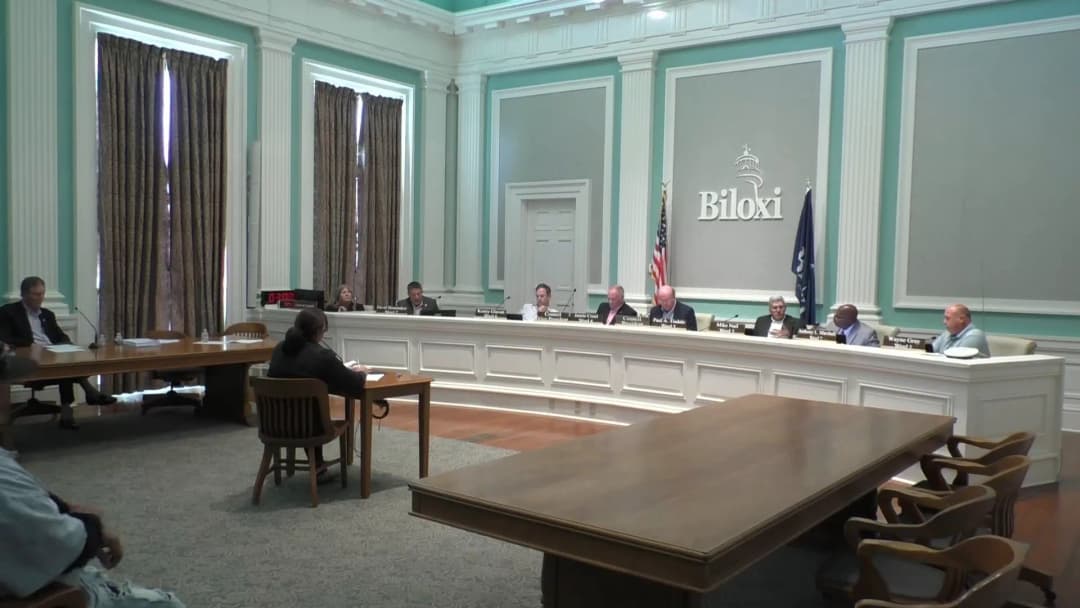
The Biloxi City Council held a workshop on October 21, 2026, from approximately 3:50 PM to 5:32 PM to discuss potential projects funded by the General Obligation Bond Series 2026 and to review proposed water and sewer rate changes. No formal votes were taken; the council reached consensus on several projects and scheduled a follow-up workshop for the next week. Consent Calendar - The agenda was approved by a 6-0 vote (Councilman Marshall was absent at the time). Discussion Items - Previously Approved Projects: The council confirmed projects approved in prior sessions, including roof replacements at the Creole Cottage, Nadatorium, public safety building on Porter Avenue, and six other buildings; HVAC repairs at the visitor center and Civic Center library; generator replacements at the public safety and communications buildings; and Rodenberg sewer drainage repairs north of the railroad. The East Biloxi Recreation Building remained under discussion. - Shriner's Boulevard Widening (Ward 7): Councilman Shoemaker presented the project to widen Shriner's Boulevard from I-10 north to Woolmarket Road. The city holds a $2.76 million MDOT grant requiring a $1.5 million match (20% of the total $7 million project). The council reached consensus to move forward, citing its importance as an evacuation route and connector to the medical complex and future Pops Ferry corridor. - Woolmarket Acres Subdivision (Ward 7): Water and sewer improvements for residents promised service 26 years ago during annexation. The city's $2 million match would leverage an $8 million water grant (total project about $8.5 million). The council reached consensus to proceed. - East Biloxi Recreation Building (Ward 3): Councilman Marshall advocated for the project, calling it a long‑standing promise and a necessity for redevelopment. Councilman Shoemaker and others expressed concerns about ongoing operational costs and classified it as a “want” rather than a “need.” No consensus was reached; the item remains on the list for continued discussion, with potential MIMA funding to be evaluated. - Edgewater Estates Water Line Replacement (Ward 5): Councilman Glavin reported 25 water main breaks in five years from aging transite pipes. Estimated cost is $1 million. The council reached consensus to proceed. The project is MIMA‑eligible but is not a grant match. - Pine Grove Sewer and Drainage Repairs (Ward 6): The area has suffered persistent drainage issues and road cave‑ins. Director Labata noted that paving has stopped due to ongoing failures. The council reached consensus to proceed. - Matzi Road / Belmont Gardens Drainage (Ward 3): Residents have waited nearly 20 years for drainage improvements. A developer may help reduce costs. The council reached consensus to proceed, citing repeated flooding and sandbagging efforts. - Brody Road and Tribe Drive Sidewalks (Ward 3): Proposed to provide safe pedestrian access in a rapidly growing area. Councilman Creel opposed, suggesting other funding sources (e.g., SS4A grants). No consensus was reached. - Shorecrest Road Widening (Ward 7): The narrow road serves new subdivisions. Councilman Shoemaker supported the project; Councilman Creel opposed, citing other priorities. No consensus was reached. - Wash Fayard Road Widening / Bellevue Boulevard Extension (Ward 7): Staff recommended building a permanent boulevard to shift traffic from the narrow Wash Fayard Road. Councilman Creel requested more information before supporting. No consensus was reached. - MIMA Funding Strategy: Mayor and staff proposed using Municipal Infrastructure Modernization Act (MIMA) funds (approximately $4.4–$5 million per year) to supplement bond projects. Councilmembers were asked to submit lists of MIMA‑eligible projects. A detailed spending plan combining bond money and MIMA will be presented at the next workshop. - Water and Sewer Rate Structure: The council previously tabled a proposed flat‑rate sewer charge. During the workshop, the Mayor indicated he would provide actual data comparing a flat rate versus tiered rates. The council agreed to hold a workshop immediately after the regular council meeting on October 27, 2026, to review the data and discuss the rate structure. Key Outcomes - Consensus to proceed: Shriner's Boulevard Widening, Woolmarket Acres Subdivision, Edgewater Estates water line replacement, Pine Grove sewer/drainage repairs, and Matzi Road/Belmont Gardens drainage. - Continued discussion: East Biloxi Recreation Building, Brody Road/Tribe Drive sidewalks, Shorecrest Road widening, and Wash Fayard Road widening. - Next workshop: Tuesday, October 27, 2026, immediately following the regular council meeting, to review MIMA funding plans and water/sewer rate models. - No formal votes were taken; all decisions are subject to future resolutions.