Browse by city
Date range
Search help

Search titles, summaries, topics and stored transcripts together. Keywords may match separately; put the whole query in double quotes for a phrase. Matching follows word analysis, so punctuation is not exact. Both dates are included. Documents are not searched.

SHOWING 2271–2280 ENTRIES
2271
OCT 14, 2026 · COLUMBUS, OHIO · CITY COUNCIL
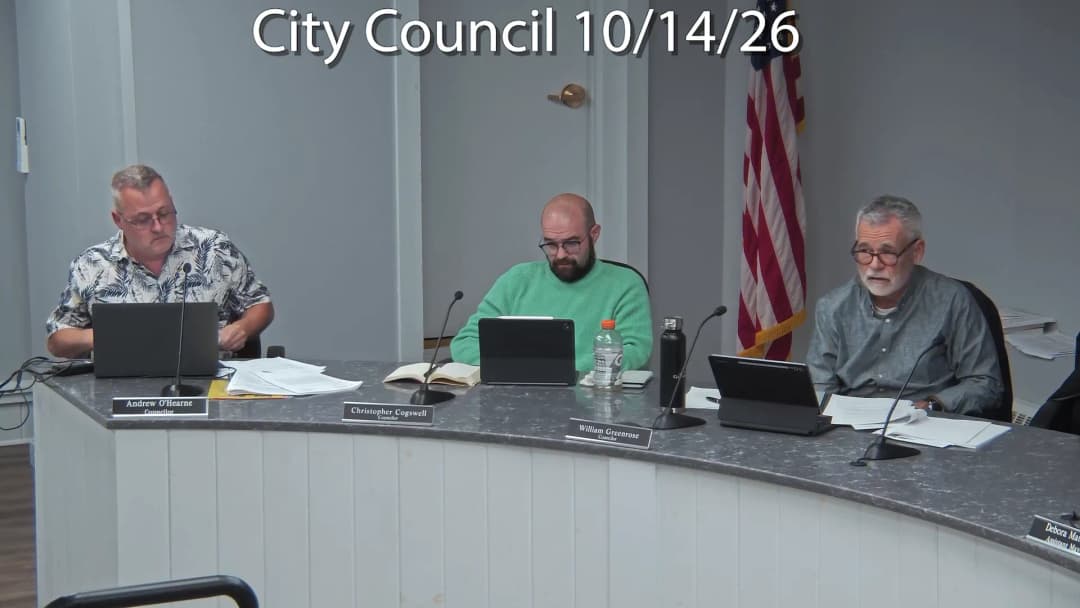
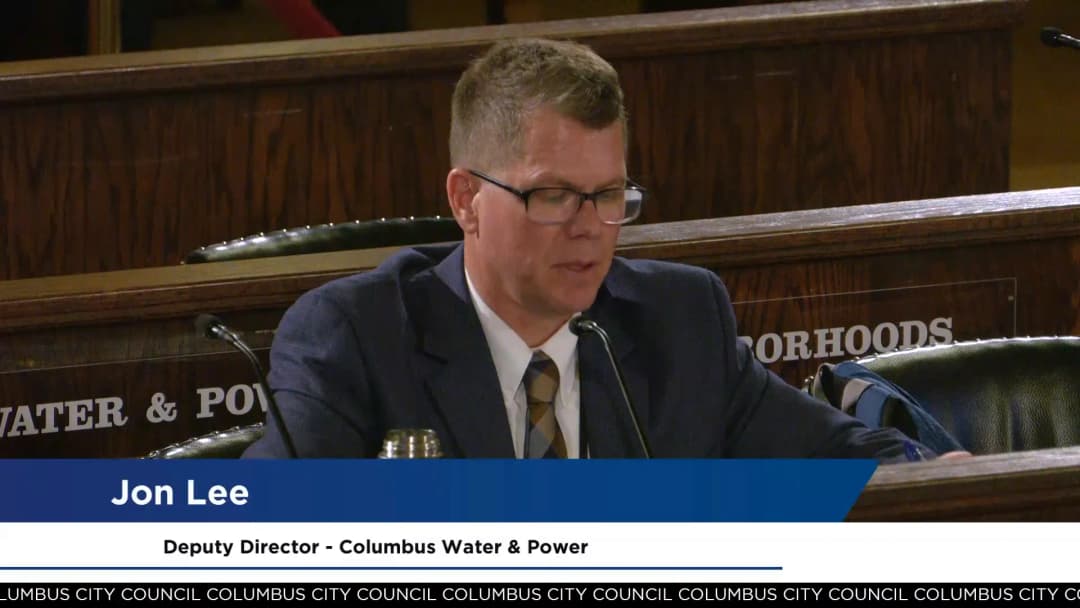
Columbus Public Utilities Committee Hearing on High Demand Water Surcharge - October 14, 2026

On October 14, 2026, the sixth public utilities sustainability committee hearing of the year convened, chaired by Councilmember Weich. The committee heard a presentation from Deputy Director John Lee of Columbus Water & Power (CWP) on a proposed high demand surcharge for high volume peak water users. The chair also provided an update on the data center policy package, noting that feedback is still being accepted. Public Comments & Testimony - One individual (Darcy Odom) signed up to speak but was not present. Four pieces of written testimony were received and made available on the council web page. Discussion Items - Deputy Director John Lee presented the proposed high-peaking, high demand surcharge. The surcharge aims to recover additional system capacity costs from commercial customers whose water demand significantly exceeds their normal usage. The proposed structure: customers averaging at least 100 CCF per month and having a peak month at least twice their average monthly usage (peaking factor ≥2.0) would be subject to a surcharge of $1.62 per CCF. Approximately 426 customers would qualify, generating an estimated $6 million annually. The surcharge would be based on a 12-month evaluation period, with billing beginning in late 2027 or early 2028. Lee noted that the rate is based on cost of service and that the primary lever for adjusting revenue is the peaking factor and volume threshold, not the rate itself. He also outlined a notification plan to allow customers to adjust usage before the surcharge takes effect. - Councilmember Weich asked about applicability to schools and other institutions with seasonal peaks. Lee responded that it could apply but CWP would work with customers to understand individual cases. - Councilmember Ross expressed that $6 million seemed like a small amount and questioned whether it adequately reduces the burden on residential ratepayers. He suggested adjusting the peaking factor to a lower level (e.g., 1.5) to increase revenue. Lee noted that lowering the peaking factor to 1.5 could generate $10–15 million, but emphasized that the surcharge must be cost-justified. Ross also mentioned the significant infrastructure costs from data centers and the need for the surcharge to meaningfully offset those costs. - Vice Chair Reamy, in opening remarks, thanked Chair Weich for moving the conversation toward a rate proposal and expressed interest in understanding how the rates reflect actual infrastructure costs and ensure fairness for residential ratepayers. Key Outcomes - No formal vote or decision was taken. The committee will continue to accept feedback via email to the chair's aide. The CWP team will continue refining the proposal based on input. The proposed surcharge rate of $1.62 per CCF is expected to be codified, while parameters like peaking factor and volume threshold may be set administratively to allow flexibility. Council is expected to discuss further as rate decisions for 2027 approach.

WATER AND WASTEWATER MANAGEMENT 88% · TECHNOLOGY AND INNOVATION 3% · PUBLIC ENGAGEMENT 3% · BUDGET EQUITY ANALYSIS 3%
2272
OCT 14, 2026 · SPRINGFIELD, VERMONT · SELECTBOARD
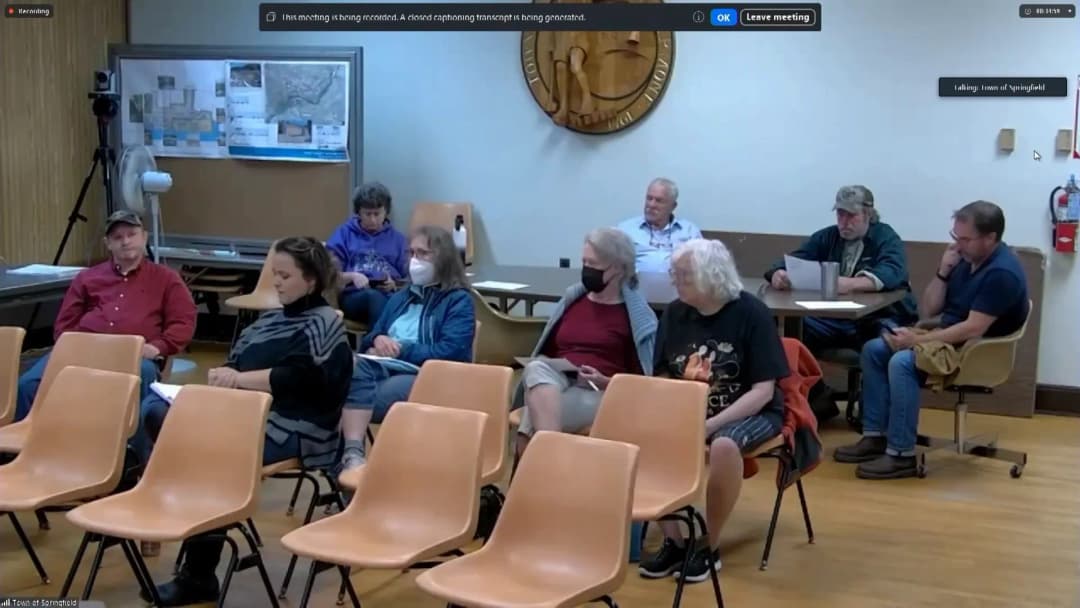
Springfield Selectboard Meeting Summary – October 14, 2026

The Springfield Selectboard convened on October 14, 2026, with members Doug Johnston, Christy Moore, Chase, and Mike Schmidt present and one member absent. The meeting opened with the Pledge of Allegiance and covered property enforcement updates, grant and loan authorizations, the library roof bid, capital project planning, and public comment. All votes were approved unanimously by the four attending members. Consent Calendar - Approved the September 28, 2026 regular meeting minutes as amended, removing a reference on page 3 (motion by Doug Johnston, seconded; unanimous). - Added two items to the agenda without objection: an additional Budget Advisory Committee application and an update on properties and municipal action complaints. Public Comments & Testimony During the property update, residents raised concerns: - Scott Nesler questioned whether the town would recover cleanup costs if 1012 Central is sold, asserting the town needs to be bolder in enforcement; the board responded that the lien remains attached to the property. - Christina Jennings asked whether 104 Valley Street is in a flood zone and buildable, and whether new deadlines would be set. Officials explained portions are in the floodplain and that different legal standards apply now that the property is habitable. - Serge Bowers asked why the owner could not be blocked from buying more rental properties given past issues in Brattleboro. Board members explained Dillon Rule limits and suggested civil action by citizens. - Ronna reported her own property (22 Chester Road) cleanup progress and warned that a motel in Bellows Falls may be closed on Friday for fire-safety noncompliance; several unhoused people from 1012 Central were refusing the offered relocation. - Nicole asked about the timeline for court action and whether an inspection could be escalated for safety. The board said it is pursuing a probate/civil action to determine ownership, which would allow enforcement. In the formal public comment period: - Cemetery Commissioner Ron Griffin, on behalf of the commission, reminded residents to remove personal items from graves before end-of-season cleanup, and praised student council volunteers for their work in the cemeteries. - Barbara Schultz of the Springfield Trails and Rural Economy Committee criticized the I-91 re-route process for lacking meaningful communication with the committee and requested maps, consultation on trail barriers and signage, and inclusion in future decisions. She also reported that Apple Fest attracted 8,000 people and 150 vendors, with the highest vendor satisfaction ratings ever. Discussion Items - Property updates: The town manager met with the owner of 1012 Central, who may sell the property to an interested buyer; enforcement is paused to allow the transfer, but liens will be resolved at sale. An on-site inspection for another property was cancelled after the owner failed to appear, and the town is continuing legal efforts through its attorney. Cleanup promised for 104 Valley had not occurred. - Vermont Historic Preservation Grant: The board endorsed a 2027 grant application for the Spencer Hollow School, a 50% match grant. The $10,000 local match was approved conditionally, first seeking eligible Eureka Schoolhouse public funds. - State Equipment Loan Fund: The town manager was authorized to apply for a $150,000 loan at 2% interest for a new snow-removal truck for the 2027-28 budget; truck prices were cited at $308,000 (prior year), $325,000 (current), and projected $340,000 (next). - Budget Advisory Committee: John Vaughn, Jim Fogg, Sharon Ayers, and new applicant Robert Lewis were approved as members. - SRF loan: The board authorized a State Revolving Fund loan application (loan 372) for the Main Street sewer line replacement. - Library roof: After a rebid, the board awarded the roof contract at a total bid price of roughly $174,000 and authorized an additional $40,000 from fund balance, subject to confirmation of a 20-year material warranty and 5-year workmanship warranty. - Capital projects update (informational): The manager presented a 20-year wastewater treatment plant review (est. $30-35 million), including regionalization and PFAS/PFOA considerations; FEMA grant changes for the Weathersfield Dam (+$44,500) and Lake Street project (now about $857,000); a pedestrian bridge design review; and an unsuccessful Toonerville Trail grant application that will be resubmitted. - Foundry Building feasibility study: The board approved $15,000 from the town economic development fund to study redevelopment of the foundry building for childcare, indoor track, and public use; full project cost is estimated at about $20 million. Key Outcomes - Approved the amended September 28 minutes. - Approved the $10,000 match for the Vermont Historic Preservation Grant, conditioned on grant award and prior use of Eureka Schoolhouse funds. - Authorized applying for a $150,000 State Equipment Loan Fund for a snow-removal truck. - Approved four Budget Advisory Committee appointments. - Authorized the SRF loan application for the Main Street sewer project. - Awarded the library roof contract for about $174,000 and authorized $40,000 from fund balance. - Approved $15,000 for the foundry building feasibility study. - Unanimously voted to enter executive session to review a union contract.

MUNICIPAL PROPERTY MANAGEMENT 24% · ENGINEERING AND INFRASTRUCTURE 19% · PROCEDURAL 11% · PUBLIC ENGAGEMENT 10%
2273
OCT 14, 2026 · EDISON, NEW JERSEY · TOWNSHIP COUNCIL
Edison Township Council Combined Work Session and Regular Meeting – October 14, 2026

The Edison Township Council held a combined work session and regular meeting on October 14, 2026, beginning at 6 p.m. The agenda included a resolution recognizing National History Day students, introduction of an ordinance to prohibit data centers, approval of a consent calendar of resolutions, and extensive public comment focusing on Flock automated license plate reader cameras and data centers. The meeting was extended to 10:12 p.m. National History Day Recognition - The council unanimously adopted a resolution commending students from Woodrow Wilson Middle School and J.P. Stevens High School for their participation in the National History Day program. Council members and the public praised the students and their advisors. - Public comment: Wendy Hurwitz (club founder) and Marissa Salah (teacher) thanked the council. John Tar (Cultural Arts Commission) commended the students. Consent Calendar - All resolutions listed on the agenda were approved in a block vote, except Resolution 520 which was pulled for a separate roll call vote. The consent calendar included: - Resolution 521: Five‑year renewal of Verizon wireless services (state contract; amount not stated). - Resolution 523: $5,518,000 for road paving (funded from a previously bonded $7 million; came under budget). - Resolution 524: $1,000,000 for Town Hall parking lot improvements. - Resolution 535: Exact‑dollar change order for contract design resources. - Resolution 522: Renewal of grant‑consulting services with Millennium Strategies. - Resolution 520 was approved separately: Authorizing settlement with JVS for the Glendale property, including a land swap and a $50,000 payment to the township. Adopted 6–0–1 (Council Vice President Kentos abstained). Discussion Items - Data Center Ordinance: Council debated an ordinance (2289‑2026) to amend Chapter 37 (Zoning) to designate data centers as prohibited uses in all zones. Council President Coyle and Council Vice President Kentos expressed reservations about a complete ban, preferring strict regulations. Councilman Brescher and Councilman Petil strongly supported the ban, citing concerns about utility costs, environmental impact, and quality of life. Councilman Schmuel noted the importance of ratable revenue but acknowledged current zoning already prohibits data centers. The ordinance was introduced on first reading (7‑0), with a public hearing set for October 26, 2026. - JVS Glendale Settlement: Council members questioned the acreage and land swap details. Councilman Brescher requested a meeting with the township attorney to review the property maps before the final vote. The Business Administrator and attorney confirmed the settlement includes a recorded map and deed. - Verizon Wireless Contract: Councilman Brescher asked the administration to explore competitive options, noting state‑contract pricing may not be the lowest. - Police Vehicle Purchase: The council discussed purchasing one Ford Police Interceptor; Councilman Brescher suggested evaluating hybrid or electric vehicles for future fleet use. The Business Administrator noted lifecycle analyses have favored conventional vehicles for traffic units. - Flock Cameras: While the contract had already been approved, several council members and the public debated the expansion. Council President Coyle offered to form a committee to further discuss concerns about privacy, data retention, and oversight. Public Comments & Testimony - Data Centers – Opposition: A large majority of speakers supported the ban. Samita (J.P. Stevens student) warned about environmental harm and the impact of AI on learning; Walt Stoshel called for a complete ban with no loopholes; John Shu contrasted large‑scale AI data centers with existing facilities; others cited water and electricity usage. - Data Centers – Cautious: Anthony T. Ameron urged more thorough study and pointed to Loudoun County (VA) as an example where data centers coexist with strong tax bases. - Flock Cameras – Opposition: Numerous residents spoke against the expansion. John Shu raised Fourth Amendment and misuse concerns; Gabriel Franco urged a public vote; Patrice Swerbrick asked for crime data before proceeding; Laura Ramirez, Liana Liu, Lawrence Liu, Amon, Jordan White, Adair Dick, and others cited privacy, profiling, AI inaccuracies, and data sharing with external agencies. Many called for rescission or a public ballot. No residents spoke in favor of the expansion during the meeting. - Other Topics: - Trisha Lensis: Reported dangerous street parking on Nevsky Street during mosque services; requested no‑parking signs. Administration will evaluate through the traffic unit. - Gudrender Dhamija: Questioned the $1 million parking lot project and suggested direct tax relief for seniors. - Elizabeth Conway: Criticized the voting process on the Care One zoning application (approved after closed‑door negotiation) and noted the lack of women on the zoning board. - Neil Jareth: Described the Care One board’s reversal under a revised settlement; asked the council to consider an appeal. - Dr. Mali Him Mohammed Poor: Requested animal‑crossing signs, lower speed limits, and traffic calming, especially near parks. - McKenna Lundy: Raised commercial truck traffic and speeding on Vineyard Road. - Sarah Nasser: Reported on the successful Friends of the Library 5K run on October 11, thanking the council for support. - Walt Stoshel: Commented on federal and state budget impacts, health‑care costs, tariffs, and the need for electric‑vehicle fleet conversion. - Several residents asked for sidewalks, better road maintenance, and community input on major decisions. Key Outcomes - Resolution of Recognition adopted unanimously. - Data Center Ordinance introduced (7‑0); public hearing set for October 26, 2026. - Consent Agenda approved (all but 520); Resolution 520 adopted 6‑0‑1. - Flock Cameras: Council President committed to establishing a committee to address resident concerns; no vote taken at this meeting. - Care One Zoning Decision: Council acknowledged the statutory appeal process but declined to take a position; the public was advised to follow proper legal procedure. - Traffic Safety: Requests for stop signs on Safran Avenue, parking restrictions on Nevsky Street, and truck enforcement on Vineyard Road will be reviewed by the traffic unit and public works. - Next Meetings: Data center public hearing, October 26, 2026; potential committee on Flock cameras to be scheduled; follow‑up meeting on JVS property maps for council members.

TECHNOLOGY AND INNOVATION 22% · PUBLIC SAFETY 20% · PROCEDURAL 7% · ZONING AND LAND USE 7%
2274
OCT 14, 2026 · GREAT BARRINGTON, MASSACHUSETTS · SELECTBOARD & TOWN BOARDS
Great Barrington Select Board Declares Local Emergency for Housatonic Waterworks - October 14, 2026

The Great Barrington Select Board met on October 14, 2026, to consider a declaration of local emergency concerning the Housatonic Waterworks Company, a private water supplier serving approximately 850 connections. After extensive discussion and public comment, the board voted unanimously to adopt a declaration, with amendments requiring select board approval for emergency expenditures and referencing a prior request for the governor to declare a statewide emergency. Public Comments & Testimony - James Arzon (84 North Lane Road) opposed the declaration, arguing the board already has tools and the declaration would give unchecked spending authority. He cited years of mismanagement, including willful withholding of test results and a fire hydrant failure, and urged the town not to purchase the waterworks. - Donna Jacobs (260 Park Street, Housatonic ratepayer) expressed encouragement for the preparedness step but stressed the need to hold Housatonic Waterworks accountable and avoid shifting improperly incurred liabilities to taxpayers. - Eileen Mooney (the newsletter) asked about coordination with the Board of Health, suggesting the Board of Health needs more preparation and involvement before a declaration. - Ruby Chang (Long Pond Road, Board of Health member) requested that the Board of Health be included in preparations, noting the need for public communication about water storage and testing, and asked about construction on Christian Hill Road. - Deborah Herman (373 North Plain Road, Housatonic ratepayer) raised concerns about the invisible health risk of HA5 and questioned the company's insolvency while paying salaries and attorneys, suggesting possible criminal activity. Discussion Items - Town Manager Liz presented a detailed memo on the legal authority under MGL Chapter 44 Section 31, distinguishing between a declaration (stronger) and a resolution (weaker). She emphasized the declaration is precautionary, does not transfer ownership or authorize expenditures, and is intended to strengthen municipal preparedness, interagency coordination, and eligibility for grants such as USDA project planning grants. - Board members discussed the merits: Phil stated the declaration is underwhelming but supports it due to potential benefits; Ben argued it is a critical first step to communicate urgency and push state officials to act; Eric supported it as a tool for preparedness and grant eligibility, and stressed the need for regular reviews; Garfield urged swift action; Kate (conservation agent and ratepayer) highlighted a recent near-miss at the fire district meeting and questioned communication requirements. - Legal counsel Michael D'Artensio clarified that the select board's authority under the declaration is internal (authorizing expenditures without prior appropriation) and cannot compel third parties. He noted the distinction from Board of Health or governor actions. - The board debated amendments: Steve moved to require select board approval for any emergency expenditures in a public meeting, and to reference a previous letter asking the governor to declare a statewide emergency. The motion passed unanimously. Key Outcomes - The select board unanimously voted to adopt the Declaration of Local Emergency for the Housatonic Waterworks Company, effective immediately. The declaration recognizes a threatened interruption of essential drinking water service and directs the town manager to coordinate emergency planning, including identification of vulnerable populations, emergency water distribution, and interagency coordination. - Amendments were incorporated: (1) any emergency expenditures require select board approval in a public meeting; (2) the declaration references the board's earlier request for the governor to declare a statewide emergency. - The declaration explicitly does not assume town ownership or control of Housatonic Waterworks, impose obligations on the Great Barrington Fire District, or authorize independent expenditures. - The board will periodically review the declaration and may rescind it when circumstances warrant. - During select board time, Phil suggested re-evaluating the use of executive session for negotiations; Ben thanked participants; Garfield expressed frustration about the pace; Eric corrected misinformation about tax impacts of separate town projects.

WATER AND WASTEWATER MANAGEMENT 40% · EMERGENCY MANAGEMENT 22% · PUBLIC SAFETY 18% · PUBLIC ENGAGEMENT 6%
2275
OCT 14, 2026 · CLAREMONT, NEW HAMPSHIRE · CITY COUNCIL
Claremont City Council Meeting Summary - October 14, 2026

The Claremont City Council met in regular session on Wednesday, October 14, 2026. The council approved routine minutes and appointments, heard citizen testimony from candidates for state office, took first readings on merit-system and property-tax ordinances, authorized payment for engineering work and new police equipment, and ultimately approved a CDBG application after reconsideration. Consent Calendar - Minutes of the September 23, 2026 meeting were accepted by voice vote. - Heather Irish was appointed to Seat 1 on the Claremont Development Authority. The appointment carried over a councilor's objection that the CDA should be reviewed before more members were added. - Doreen Cusilo was appointed to Seat A2 and Sharon Wood to Seat 3 on the Fisk Free Library Board of Trustees. Public Comments & Testimony - State Rep. John Clutier, running for an 18th term, said he would fight to reduce property taxes, lower electric rates, and provide more money for roads and bridges. He cited a roughly 95% attendance record in the House and committee meetings. - Lisa Goslin, a state representative candidate, said she was running because of rising property taxes, disappearing affordable housing, and lack of school funding reform. She emphasized that good government begins with listening and called for fairness for communities like Claremont. - David Trumbull, candidate for State Senate District 8, argued the state has a constitutional duty to fund public schools under the Claremont decision. He said Claremont would have received almost $150 million more in revenue over the last 30 years if the state had met ConVal funding obligations, and he called for state investment in rural schools, health care, housing, childcare, and arts. - A councilor read a letter from Dr. Michael Harrington recognizing Stevens High School student Gene Gagnon as a Commended Student in the 2027 National Merit Scholarship Program. Approximately 34,000 students nationwide were recognized, with Gagnon in the top 50,000 out of about 2 million test-takers. Discussion Items - Merit system update: HR Director Shannon Thibodeau presented the merit-system modernization project, including updated job classifications, a proposed 5% increase to minimum and maximum salary ranges, comp-ratio adjustments, and a four-year path toward pay-for-performance. The merit-system handbook is subject to a 30-day council veto. Councilors agreed to schedule public comment at a later meeting. Councilor Irish warned against micromanaging professional staff, Councilor Hearn raised questions about inactive versus cleared disciplinary records, and Councilor Kaloski questioned the lack of public input and raised lifeguard recruitment concerns. The Personnel Advisory Board reviewed the plan on September 24. - Ordinance 650: First reading to amend the merit-system classification plan, remove obsolete positions, create grade 11 deputy fire chief positions for operations/training and fire prevention, and add general part-time and seasonal classifications. It passed 7-1. - Ordinance 651: First reading to increase the minimum and maximum of every non-union pay grade by 5%. Councilors noted this adjusts salary ranges and does not guarantee individual 5% raises, and that budget appropriation remains a separate future decision. It passed 7-1. - Ordinance 652 - Elderly property-tax exemption: Assessor Steve Hamilton recommended inflation adjustments to income and asset limits. After updated CPI data was discussed, the council used the current 3.7% inflation figure rather than the originally drafted 3.4%. First reading passed 7-1. Applications are due April 15, and staff encouraged public outreach about exemption programs. - Ordinance 653 - Disabled property-tax exemption: The council approved first reading of similar inflation-based increases to income and asset limits for the disabled exemption, which provides a $35,000 reduction in assessed value. It passed 7-1. A councilor asked about a veterans exemption; the assessor said none was ready at this time. - Resolution 2027-20: The council held a public hearing and approved transferring $4,250 from the general fund balance to pay Simpson Gumpertz & Heger for exploratory structural work at the Visitor Center, 14 North Street. The contract had allowed up to $5,000 for subcontracted exploratory work, but the expense was not in the FY26 budget. Some councilors expressed concern about the process and the lack of a contractor presentation, but the resolution passed unanimously. - Resolution 2027-21: The Police Department requested a five-year Axon Enterprise lease for 23 Taser 10 conducted energy weapons with associated equipment and training. The total is $155,895.40, payable in five equal payments of $31,179.08, with a non-appropriation termination clause. The council approved an amendment specifying the five-year term and then passed the resolution unanimously. - Resolution 2027-22: The council approved acceptance of a $5,000 Byrne Foundation grant to Fisk Free Library for a free local author series focused on the Upper Valley region. It passed unanimously. - CDBG - 143-147 Main Street: The council re-read a motion approving the Community Development Block Grant application for the Claremont Learning Partnership's acquisition and rehabilitation project, with corrected language authorizing the city manager to execute all documents and amendments. Councilor Kaloski asked for more information about prior CDBG grants and raised concerns about removing rental units and future tax status. The corrected motion initially failed 4-4, then a motion to reconsider passed 7-1, and the corrected motion passed 7-1. Committee Reports & Future Agenda Items - Committee updates included ongoing concerns about the Tolls home board and planned board training, CCTV work on searchable meeting records, EPA grant negotiations for the Riverwalk site, historic district matters, energy advisory/community power work, planning-board work on a data-center definition, the arts committee exhibit at the Visitor Center, recent ZBA decisions, and a procurement policy expected to come before the council in November. - Councilors raised future agenda items including e-bike and sidewalk enforcement, draft ordinances for racetracks, e-bikes, and data centers prepared by Councilor Kaloski, downtown banners and holiday lights, a Pleasant Street parking/enforcement presence, tenant-rights information, mandatory training for board members, improved city asset disposal, resuming Facebook streaming of council meetings, sign and safety issues at Sullivan and Mulberry, a walk signal at Romantos, trash pickup at the train station, and follow-up on water/sewer impact fees and mill-district contracted services. Key Outcomes - The merit-system handbook was left in its 30-day review period, with councilors planning to schedule public comment at a later reading. - Ordinances 650, 651, 652, and 653 each passed first reading and are scheduled for second reading. - Resolutions 2027-20, 2027-21 as amended, and 2027-22 were approved. - The CDBG motion for 143-147 Main Street was approved after reconsideration. - Staff were directed to follow up on numerous administrative items, including park bathroom access, track repairs, CDL training revenue, board training, enforcement questions, and sign and maintenance issues.

PERSONNEL MATTERS 29% · PROCEDURAL 13% · PUBLIC COMMENT 6% · PUBLIC SAFETY 6%
2276
OCT 14, 2026 · SALEM, NEW HAMPSHIRE · TOWN COUNCIL
Salem Town Council Budget Review Meeting – October 14, 2026

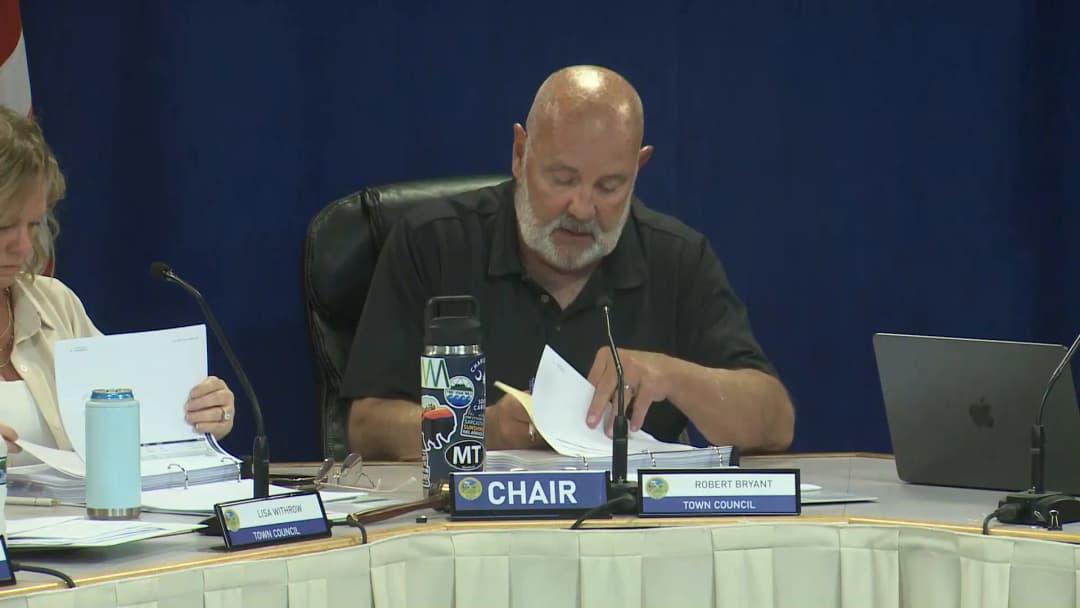
The Salem Town Council met on October 14, 2026, for its final budget review session, making line-item adjustments to the proposed FY2027 budget before forwarding it to the Budget Committee. Members present were Chair Bob Bryant, Vice Chair Joe Sweeney, Secretary Lisa Whithrow, Bonnie Wright, DJ Betancourt, Paul Pelletier, Jeff Hatch, Kathy Stacey, and Key Stromaya. Town Manager Joe Devine, Assistant Town Manager Colin Mayu, and finance staff Nicole McGee and Cindy Kenderson also participated. No public comment period is reflected in the transcript. This summary is based solely on the transcript; no agenda or minutes were provided. Revenue Adjustments - Councilor Lisa Whithrow moved to add $150,000 to the building permits line. After discussion, the motion was amended to $200,000. Staff noted that the fire chief had indicated $150,000 was appropriate and that $200,000 was within range. The amended $200,000 increase was approved unanimously. Operating Budget Deliberations - Town Manager: Councilor Kathy Stacey moved to reduce the proposed cost-of-living adjustment (COLA) from 4% to 3%, saving $17,367. The motion was approved 9-0. - The council reduced the statute books line item (line 4405) from $4,000 to $2,000 on a motion by Stacey, seconded by Whithrow. Approved 9-0. - Chair Bryant asked Town Manager Devine to provide a return-on-investment analysis for municipal association dues, noting that the dues increased again this year. No vote was taken. - Community Development and Planning: Staff clarified that the planning director position is not a dual role; it oversees the planning department, GIS, and inspectional services as part of a reorganization. The council approved a motion to fund the Community Development Director position for six months instead of a full year, with the six-month total cost set at $103,189, including benefits; $66,304 was cited as the salary component. The council also noted that it had previously removed the flyover item by a 9-0 vote. - Police and Fire: The council made no new changes. It noted prior actions, including a car wash line reduction for police and a 9-0 vote on fire equipment rental. - DPW/Municipal Services: The council asked for accurate per-ton recycling and trash costs, noting that current figures are estimates based on recent bids from other towns. Town Manager Devine confirmed that the council has the authority to decide whether to continue the recycling program without a separate town vote; residents could seek to restore funding at the deliberative session or Budget Committee hearing. Councilor Betancourt questioned an engineering services increase; staff explained that it reflects MS4 requirements and a $50,000-to-$100,000 increase in outside engineering services because an in-house civil engineer position was eliminated. - Human Services: The council added $30,000 to the direct assistance line (account 601104433), increasing it from $47,500 to $77,500. Approved 7-2, with Bonnie Wright and DJ Betancourt opposed. Supporters cited transparency now that charity warrant articles go to voters and the risk of shortfalls if those articles fail; opponents questioned the need given the history of those articles passing. - Fireworks: On a motion by Jeff Hatch, the council voted 7-2 to use $45,000 in prior-year gaming revenue for Fourth of July fireworks. The price quote was about $20,000 excluding details, and the town will go to bid. Voting no were Wright and Betancourt. Betancourt said he was not convinced there was a problem with the current fireworks arrangement; Wright cited recent cuts to nonprofits and recycling and raised concerns about high school bleachers capacity. Capital and Fund Balance - The council discussed using unreserved fund balance for capital needs. Councilors referenced an unreserved fund balance of about $16.6 million, with a $9.6 million practical floor. Some members supported applying money to the future fire station project; Councilor Whithrow said impact fees and donations could bring that project to roughly $4.7 million. The council approved a motion to use $300,000 of unreserved fund balance for DPW equipment replacement (line 4729) by a 9-0 vote, with the fire station funding to be considered later through the warrant article process. Final Budget Numbers - Town staff reported that the all-in FY2027 budget, including enterprise funds, is $73,272,691. Assuming the road program is funded at $3 million, the estimated increase over FY2026 is 3.4%, based on the estimated FY2026 tax rate. The operating/capital budget alone is now projected to be down 3.35%, compared with the original down 2.7%; the comparison is complicated by outstanding collective bargaining agreements and by FY2026 warrant articles such as road funding. - Chair Bryant praised the council's work and urged the Budget Committee to scrutinize the school budget with the same level of accountability. Key Outcomes - Added $200,000 to building permit revenue (unanimous). - Reduced the proposed COLA from 4% to 3% (9-0). - Reduced the statute books line from $4,000 to $2,000 (9-0). - Funded the Community Development Director position for six months instead of a full year (9-0). - Added $30,000 to human services direct assistance (7-2; Wright and Betancourt opposed). - Used $45,000 in gaming revenue for fireworks (7-2; Wright and Betancourt opposed). - Appropriated $300,000 from unreserved fund balance for DPW equipment (9-0). - The budget will be forwarded to the Budget Committee for review. The council adjourned 9-0, and the next regular town council meeting is scheduled for October 19.

BUDGET EQUITY ANALYSIS 51% · HUMAN SERVICES 10% · FLEET MANAGEMENT 10% · PROCEDURAL 9%
2277
OCT 14, 2026 · BEDFORD, NEW HAMPSHIRE · TOWN COUNCIL
Bedford Town Council Meeting October 14, 2026: Conservation Purchase, Development, IT Bid, Budget

The Bedford Town Council met on October 14, 2026, to hold a conservation land public hearing, receive a development activity update, award an IT infrastructure bid, schedule budget workshops, and approve updates to its rules of procedure. Public comments, a town manager report, and council committee reports were also presented. No agenda or minutes were available with the transcript. Public Comments & Testimony - A resident asked how recent council-approved spending was funded, citing $200,000 for fire department equipment, $165,000 for a Route 3 vehicle detection system, $516,000 for police body cameras and Tasers, and $145,000 for legacy lights. He asked whether voters had approved the expenditures. Officials responded that the projects were funded through capital improvement funds, impact fees, and capital reserves, and that detailed staff reports were attached to each agenda. - Ed Comasky, 40 Maple Drive, asked about the conservation parcel at 555 Wallace Road, noting it sits near existing conservation land and asking how the trail access and trust land would work. Discussion Items - Conservation land purchase – 555 Wallace Road: Planning staff and the Conservation Commission requested authorization to spend up to $335,950 from the conservation fund to buy approximately 2.4 acres from the Marsha A. Marston Trust at Tax Map 3, Lot 2. An additional $30,000 would cover due diligence and closing, for an estimated total of $365,950. The conservation fund balance is $2.15 million, with $800,000 in committed expenses, leaving a projected $1.7 million after the purchase. The Conservation Commission voted unanimously on September 22 to recommend the purchase. Staff said the land was identified for conservation in 2009, is surrounded by protected land, and would include a 100-foot non-disturbance deed restriction on the remaining frontage of Lot 3-5, a trail lease with the town and Piscataqua Lands Conservancy, and preservation discussions regarding the Dunlap House. Funding comes from current-use land sale receipts, not general taxpayer funds; the property currently pays about $6,000 in taxes. A paperwork reference to New Boston Road was corrected to Wallace Road. - Development activity update: Planning Director Hebert presented an overview of projects across Bedford. Commercial activity is concentrated in the performance zone along the South River Road corridor. Highlights included the renovated former Rite Aid plaza at 1 South River Road with a new Jersey Mike's and Sola Salon; Market & Main phase two substantially complete with J. Crew as the most recent tenant; a new 3,840-square-foot car wash at the Narea gas station; a restaurant planned in the former IHOP building; the 32,000-square-foot Genesis dealership; a 9,000-square-foot veterinary clinic; a proposed 19,000-square-foot medical office building; a proposed 48-unit River Road Landing apartment project with five workforce affordable units; a conditionally approved 35-unit workforce housing development at 9 Sunset Lane with 14 one-bedroom, 14 two-bedroom, and seven three-bedroom units, with 85% affordable; an approved 150,000-square-foot warehouse/light manufacturing building at 308 South River Road; a cardiovascular center expansion in a renovated 16,000-square-foot building; a Yatco gas station and 5,790-square-foot convenience store under construction; a Flex Warehouse building; Millennium Running and Humble Warrior Yoga expansions; St. Anselm's track and field facility; two cottage court developments (30 units at Rumlet Hill and 21 at Bedford Heritage Reserve); Riddlebrook Acres, a 54-townhome 55+ independent living project; and Merrill Farm, a 15-lot subdivision with 24 acres of turtle habitat conservation. She reported about 406,000 square feet of new commercial space approved or under construction, with 97% in the performance zone, and 83 approved multifamily units not yet built, including 35 workforce housing units. Councillors discussed the merits of cottage courts, emergency service impacts of senior housing, and affordability constraints. Staff noted senior housing is independent living, assisted living is not a permitted use and would require a zoning change, and affordability set-asides are set by state law with rates tied to the Manchester HUD region. - IT bid award – Bid 2026-1002: The town opened bids for servers and two storage devices, advertised since September 14. Two vendors submitted bids, and staff recommended the low bid of $126,570 from VARESORS LLC, funded by a capital reserve with a balance over $174,000. IT Director Paul Connolly said initial quotes were about $250,000, the town's infrastructure is aging, some equipment dates to 2012 or 2018, and the town is three versions behind on some manufacturer-supported equipment. He recommended a roughly three-to-five-year server rotation and said the town lacks formal versioning/sunsetting policies but mitigates risk by zoning and firewalling older systems. - Bedford Women's Club Festival of Trees: Councillor LeVec brought a request from the Bedford Women's Club for the council to donate and decorate a tree at the Fifth Annual Festival of Trees and Holiday Market. The council reached consensus to participate voluntarily, with individual contributions of about $15–$20 each, and no taxpayer funds would be used. - Budget workshop scheduling: Town Manager Sawyer noted the budget presentation is scheduled for the October 28 meeting, and the council must finalize the budget on December 9. The council decided by consensus to hold split budget workshops rather than a single six-hour session, starting Wednesday, November 4 at 5:30 p.m. and continuing Saturday, November 7, with an additional session possible if needed. - Changes to council rules of procedure: Town Manager Sawyer presented revised rules incorporating Councillor Fehey's proposed changes: councilors should provide updates during the council comment/committee update portion of the agenda; council appointees to boards are members or alternates rather than liaisons, with alternates voting only in place of absent members; and a council member expecting to miss a meeting must also notify their alternate. Town Manager Report & Council Reports - Town Manager Sawyer reported the Bedford Safety Complex open house drew an estimated 700–1,000 people, praised police/fire/DPW staff, and promoted fire prevention week recommendations on safe charging. He noted Bedford is essentially out of drought conditions for the first time in 60 weeks, with only a small southeast area still abnormally dry. Upcoming events included the Bedford Boomers Model Train Show October 24–25, Red Ribbon Week October 23–31, National Drug Take Back Day October 24, Halloween October 31 from 6–8 p.m., the November 3 general election from 7 a.m.–7 p.m. at Bedford High School, voter registration deadline October 28, and a DES PFAS public information meeting November 16 at 6 p.m. in Merrimack, broadcast on BCTV. - Councillor reports covered a Water & Sewer Committee meeting on October 1, conservation committee work, a BCTV board meeting October 29, the safety complex open house, Joppa Hill Educational Farm's fall fair, a Polls & Wires discussion of Millennium Running's pavement waiver, and the facility committee's RFQ for contract owners. Key Outcomes - Authorized the town manager to complete the purchase of the 2.4-acre Marston Trust parcel at 555 Wallace Road for up to $335,950, plus up to $30,000 for closing and due diligence, by voice vote with no opposition. - Awarded Bid 2026-1002 for IT servers and storage devices to VARESORS LLC for $126,570, by voice vote with no opposition. - Approved changes to the town council rules of procedure, by voice vote with no opposition. - Approved the minutes of the September 23, 2026 public session, by voice vote with no opposition. - Scheduled budget workshops for November 4 and November 7 by consensus, with an additional session possible. - Reached consensus to participate voluntarily in the Bedford Women's Club Festival of Trees without using taxpayer funds.

ECONOMIC DEVELOPMENT 17% · PUBLIC ENGAGEMENT 14% · AFFORDABLE HOUSING 12% · COMMUNITY EVENTS 12%
2278
OCT 14, 2026 · DAYTON, OHIO · CITY COMMISSION
Dayton City Commission Meeting - October 14, 2026

The Dayton City Commission convened on October 14, 2026, at 04:00:00 UTC. Mayor Turner Sloss presided with Commissioners Joseph, Shaw, Beckham, and Fairchild present. The meeting featured presentations on the Revive 35 corridor reimagining and breast cancer awareness initiatives. Public comments focused heavily on the West Dayton public hospital, police transparency and use of force policies, and housing code enforcement. The commission passed legislation including the second reading of the property tax levy for the public hospital. Presentations - Revive 35 Corridor Project: Chief Engineer David Escobar presented the planning initiative funded by a $2 million Reconnecting Communities Pilot Program grant from the Federal Highway Administration. The project aims to re-envision US 35 from Gettysburg Avenue to Steve Whalen Boulevard. Key objectives include restoring the neighborhood network that was disrupted by the highway's original construction, building community through transparent engagement, and producing an implementation-ready plan by January 2028. The consultant team is led by Colliers Engineering & Design. Engagement structures include a Technical Advisory Committee, a Community Advisory Committee (30–40 members), and a Racial Equity Subcommittee. Commissioners discussed the Abbey Avenue intersection, community selection processes for committees, and post-planning funding, with Mayor Turner Sloss highlighting the importance of including stories of displacement from the original construction. - Breast Cancer Awareness: Sybil Martin, Executive Director of the Norma J. Ross Memorial Foundation, presented on breast cancer statistics and community initiatives. Martin cited American Cancer Society estimates of over 322,000 women diagnosed nationally and noted that 31% of women in Montgomery County between 2018 and 2022 were diagnosed at a later stage. The foundation provides mammogram screenings and transportation assistance. Upcoming events include a mobile screening unit for National Mammography Day on October 16, and educational events at Wright Dunbar Cigar Lounge on October 14 and 22. Public Comments & Testimony - West Dayton Public Hospital: Multiple residents expressed full support for the voter-approved 1-mil property tax levy for the establishment of a public hospital in West Dayton. Speakers including Alec Johnson, Sharon Screech, Rodney Stark, and Ebony Hastings called on the commission to move from endorsement to implementation. Johnson requested a public progress report identifying completed steps, application timelines for trustees, and public consideration dates. Hastings argued the city must present a transparent funding strategy and tangible milestones, stating residents should reject the notion that difficulty equates to impossibility. - Police Transparency and Use of Force: - Joyce Propst McAlpine criticized the pace of the independent investigation into the police department's use of Flock camera data, which a departing police chief revealed had been used for immigration enforcement searches over 7,000 times. She opposed mass surveillance and called for the cancellation of the contract and removal of cameras. - Rodney Stark expressed deep distrust in the commission, specifically regarding the Use of Force Committee. He stated the committee has been inactive since November 2023, demanded its abolition or significant reform, and criticized restrictions on public speech by committee members. - O.R. Moore critiqued the city's speed camera system in school zones, stating she received tickets when school zone lights were not flashing. She argued the city lacks proper signage for school zone hours, making enforcement feel like a revenue generator (citing a jump from $300,000 in 2024 to $4.3 million in 2025) rather than a public safety measure. - Housing and Building Concerns: - Sharon Screech reported that elevators in her building at 515 West Grand Avenue have been broken for almost two weeks, creating dangerous conditions for senior and disabled residents. - Paul Kerrigan provided a list of 14 dilapidated properties in Lyndon Heights owned by LLCs registered outside Dayton (including Nevada, Florida, and New Jersey), arguing the rental industry is unregulated and wealth is extracted from the city. - Other Public Comments: - Mary Sugaminor urged the commission to prioritize children and violence prevention in the budget. She noted most free recreation programs are concentrated at Northwest Rec Center, with few at GDRC, and advocated for fully funded violence interrupter models like Cure Violence. - Ebony Hastings questioned the transparency of the $80,000 contract for the city manager recruitment firm. - Alec Johnson advocated for the city to support a community wealth building import replacement study through the Miami Valley Community Wealth Initiative Network (MVC Win). Legislation & Key Outcomes - Public Hospital Tax Levy (Emergency Resolution 6962-26): Passed on second reading, authorizing the levy of the voter-approved 1-mil property tax for a West Dayton public hospital and requesting advance payment of tax monies. Vote: 4 in favor (Turner, Joseph, Shaw, Beckham), 1 abstention (Fairchild). - Firefighters Grant (Emergency Resolution 6963-26): Authorized acceptance of a $110,510.00 FEMA Assistance to Firefighters grant with $11,051.00 in matching funds. Vote: 5-0. - Civil Citations Ordinance (Ordinance 32218-26): Passed on second reading, amending codes related to property and civil citations. Vote: 5-0. - Calendar Items / City Manager's Recommendations: Approved, including contracts for renovating 3975 Dayton Park Drive to house Water Department and Police services, and Phase 5 of the Wolf Creek Sanitary Liner project. - Commissioner Closing Statements: - Commissioner Beckham stated applications for the Use of Force Committee would open this month and highlighted the launch of Breeze Airways at Dayton Airport and the 'Do Something Weekend' pilot. - Commissioner Fairchild requested updates on the Flock camera investigation, the de-escalation policy, and reminded residents of the October 21 budget presentation. She offered a closing reflection on forgiveness and King's concept of 'soul force' as a path to breaking cycles of violence. - Commissioner Joseph promoted the October 17 Old North Dayton Neighborhood Association cleanup. - Mayor Turner Sloss provided extensive closing remarks. On the city manager search, he defended the selected firm and process. On the hospital, he stated the process requires deliberate vetting. He detailed a recent trip to New York to discuss gun violence with Mayor Mandani, highlighting partnerships with Omega CDC and Learn to Earn. He confirmed the Flock camera investigation is being negotiated, curfew data has been provided to the commission (curfew is in effect for 18 and younger starting at 11 PM), and providing better signage for road diets and school zones is a priority.

PROCEDURAL 17% · COMMUNITY ENGAGEMENT 14% · ENGINEERING AND INFRASTRUCTURE 12% · YOUTH PROGRAMS 10%
2279
OCT 14, 2026 · NASHUA, NEW HAMPSHIRE · BOARD OF ALDERMEN MEETINGS
Nashua Board of Alderman Regular Meeting – October 13, 2026: Bonds, Education Cuts, and Disability Access Ordinance

The Nashua Board of Alderman convened on Tuesday, October 13, 2026, at 7:30 p.m. in the Aldermanic Chamber. The meeting addressed a significant reduction in state education aid, approved multiple bond issues for capital projects including a $43.5 million public works garage and $5 million for pool repairs, and adopted an ordinance allowing remote public comment for individuals with disabilities after extensive debate. The meeting also included public comments on bond spending and ADA accommodations, and routine consent items. Consent Calendar - Copier Lease & Maintenance: Approved multi-year contract with Toshiba Financial Services for $35,220 ($587/month for 60 months). - Internet Service Extension: Approved 36-month extension with Fidium Enterprises Services LLC for $29,484. - Microsoft Software Assurance: Approved three-year contract with SHI International Group for $68,310. - Wastewater Treatment Facility Phase 1 Upgrade Construction: Approved contract with Loreto Building Construction LLC for $11,692,041.56, contingent on bond approval. - Wastewater Treatment Facility Phase 1 Upgrade Construction Engineering: Approved contract with Wright-Pierce for $1,361,000. - Renaissance Park Audio System Change Order: Approved change order 1 with Any Mobile Audio for $3,597. - Right of First Refusal Waiver: Approved waiver of city's right of first refusal for NH DOT right-of-way adjacent to Main Dunstable Road. Public Comments & Testimony - Lauri Ortolano (Nashua resident): Expressed concern that bond resolutions under $2.5 million should include language allowing surplus funds to pay down bonds rather than bonding. Criticized the city's practice of using surplus for unbudgeted projects ("Christmas shopping in June"). Regarding the disability access ordinance, argued that the analysis had changed from February, that documentation was not defined, and that the ordinance only covers full Board meetings. Questioned whether legal counsel supported the ordinance beyond form, and urged direct questions to corporation counsel. Also criticized remarks about private education, stating the mayor and aldermen who send children to private schools should not be attacked. - Paul Shea (Board of Public Works Commissioner): Spoke in favor of all bond items for public works (garage, pool, wastewater). Expressed strong support for the ordinance allowing electronic public comment for people with walking disabilities, calling it a "move in the right direction." Argued that the infrastructure exists from the pandemic period and that many people are excluded from speaking. Recommended opening the ordinance to people with non-physical disabilities (e.g., autism, neurodivergence) and to committee meetings, including Board of Public Works. Also noted the challenge of parents attending long meetings with children. Discussion Items State Education Funding Reduction - Mayor Jim Donchess reported that the city learned state school aid will be approximately $4.5 million less than the prior fiscal year, exceeding the budgeted assumption of a $2 million decrease. He criticized the state's lack of support for public education, noting the New Hampshire Supreme Court has repeatedly found the state fails its constitutional obligation. He linked the reduction to state policies cutting business taxes and the rapid growth of the voucher program (up 600% in five years, projected at $64 million). He argued this shifts costs to property taxpayers and threatens programs. - Alderman Tebow agreed, stating Nashua ranks 50th in state education aid and criticized the governor for not supporting public education. He warned of cuts to programs, teachers, and schools. - Alderman O'Brien criticized the Republican-led legislature for neglecting larger communities like Nashua and Manchester. He suggested radical measures, including withholding state taxes and collaborating with Manchester, and called for voters to hold state representatives accountable. - Alderman Johnson countered that the school district also faces internal challenges: declining enrollment (240 fewer free/reduced lunch students, 210 fewer children overall) and a $150,000 shortfall in the lunch program due to giving benefits without funds. He argued the district must make tough decisions and not blame everything on the state. Bond Resolutions and Capital Projects - R-26-057 (PFAS Pilot Test at Four Hills Landfill): Approved 13-0 for $345,000 from Clean Water State Revolving Fund. - R-26-059 (Wastewater Treatment Plant Phase 1 Upgrades): Approved 11-2 for up to $3 million. Alderman Sullivan questioned whether the funding would be a bond or a loan; Assistant Public Works Director Carolyn O'Connor clarified the SRF loan carries interest but may be lower than bond rates. - R-26-060 (Sewer Infrastructure Improvement): Approved 12-1 for $4,275,000. - R-26-061 (Wastewater Capital Improvements): Approved 11-2 for $2,550,000. - R-26-062 (Solid Waste Improvements at Four Hills Landfill): Tabled 10-3 after a motion by Alderman Dowd. - R-26-063 (Solid Waste Capital Equipment): Approved 12-1 for $2,678,828. - R-26-065 (School Fund Transfer for Food Services): Approved 13-0 to transfer $150,000 from Department 191 Computer Equipment to Food Services Special Revenue Fund. - R-26-066 (Repair/Renovation of Two In-Ground Pools): Approved 12-1 for $5 million. Alderman Tebow noted Centennial Pool was installed in 1856 and is nearly 70 years old. Alderman Johnson opposed, arguing small projects should not be bonded to avoid high interest costs. Alderman Sullivan noted the costs are for rip-and-replace, not just repair. - R-26-072 (Public Works Garage and Fleet Maintenance Facility): Approved 12-1 for $43,500,000. Extensive discussion: Alderman Dowd cited savings that would almost pay for the garage, sustainability, and employee health benefits. Alderman Tebow noted the savings estimates were from architects, not BPW, and expressed concern about future bonding for fire and library. Alderman Sullivan changed from a hard "no" after touring the current facility, citing liability and supply chain risks. Alderman Clemens argued the savings cover debt service, making it a "wash." Alderman Senate noted the sticker shock but said delaying increases costs. Alderman O'Brien emphasized the city's role as custodians. Alderman Johnson voted no, citing cumulative bonding impact on taxpayers and the need to prioritize. Alderman Smith supported, saying the city must reinvest in crumbling infrastructure. - R-26-073 (Reallocation of Unexpended Bond Proceeds to Garage Project): Approved 11-2 for up to $3,183,200. - R-26-074 (Creation of Expendable Trust Funds): Approved by voice vote for $790,387 transfer from prior year escrows for various infrastructure and deferred maintenance funds. - R-26-064 (Capital Equipment Bonds): Withdrawn from budget review committee, amended to specify fire department equipment details, then re-referred to budget review committee with a public hearing scheduled for October 26. Ordinance O-26-002: Electronic Public Comment for People with Disabilities - Alderman Johnson introduced the ordinance, initially focused on "walking disabilities." She withdrew her own amendment after lengthy debate. Alderman Clemens offered an amendment to change the title to "people with disabilities as defined in the Americans with Disabilities Act" and add specific procedures: five business days notice to the Board of Alderman's office, documentation of disability, eligibility determination by risk management, and an effective date of November 15, 2026. The amendment passed 10-3, and the ordinance as amended passed 10-3. - Debate: Corporation Counsel Steve Bolton advised that the ADA already requires accommodations and that the city is currently in an interactive process with one requester. He warned against making corporation counsel part of the approval/appeal process to avoid conflicts in litigation. Several aldermen argued the ordinance was too prescriptive or unnecessary. Others felt it was needed to provide clear direction. Alderman Tebow and Senate advocated for opening Zoom to everyone. Alderman Dowd and Smith raised concerns about limiting to full Board meetings versus committees. Key Outcomes - State Aid Reduction Acknowledged: The board noted the $4.5 million cut and expressed frustration; no immediate action taken beyond discussion. - Bond Resolutions Passed: R-26-057, R-26-059, R-26-060, R-26-061, R-26-063, R-26-065, R-26-066, R-26-072, R-26-073, R-26-074 all approved. R-26-062 tabled. R-26-064 amended and re-referred. - Disability Access Ordinance Adopted: O-26-002 passed as amended (10-3), effective November 15, 2026, allowing remote public comment for individuals with disabilities under ADA with five business days notice and risk management eligibility determination. - First Readings Assigned: R-26-075 (Taylor Falls/Veterans Bridges rehab) to Finance Committee; R-26-076 (Police grant) to Human Affairs Committee; O-26-026 (Gas/electric contracts) to Personnel Administrative Affairs Committee. - Other: Confirmation of mayor's appointments to Arts Commission, Business & Industrial Development Authority, Electric Aggregation Committee, and Homeless Services Gap Analysis Committee. Minutes from previous meetings accepted. Remarks by members included recognition of domestic violence awareness month, condolences, and announcements of upcoming city events.

PUBLIC WORKS 17% · PUBLIC ENGAGEMENT 15% · PUBLIC EDUCATION 13% · DISABILITY RIGHTS 13%
2280
OCT 14, 2026 · VERMILLION, SOUTH DAKOTA · CITY COUNCIL
District 17 Legislative Candidate Forum Held in Vermillion on October 14, 2026

This candidate forum for South Dakota District 17 legislative seats took place in Vermillion on October 14, 2026. It was organized by the Vermillion Chamber and Development Companies Governmental Affairs Committee, facilitated with University of South Dakota political science students, and hosted by the City of Vermillion. The event aired on MidCode Channel 3 and the City of Vermillion YouTube channel. No agenda or minutes were provided; the following summary is based on the raw transcript, which does not record exact start and end times. Four candidates participated: Leslie Garish, Austin Bernick, incumbent Representative Chris Cassen, and Troy Rudler. Unopposed candidates recognized included Senator Sidney Davis, county commissioners Jeffrey Greyloebe and David Teasey, County Auditor Carrie Crumb, Register of Deeds Lisa Trewilliger, and Sheriff Andy Howe. Opening Statements - Leslie Garish: owns two Main Street businesses and works as a nonprofit event planner; running because she cares about vulnerable people and wants to use her efficiency, integrity, and cross-partisan skills in Pierre. - Austin Bernick: from Sioux Falls, later moving to North Sioux and then Oak Point; running to protect future generations and to stop corporate and special interest money from making South Dakota a tax haven for the ultra-wealthy. - Chris Cassen: incumbent for four years and a member of the Joint Committee on Appropriations; emphasized limited government, responsible spending, low taxes, strong schools, public safety, and accessibility to constituents. - Troy Rudler: pharmacist and second-generation small business owner in Dakota Dunes; his company serves 60 facilities in three states with 2,000 vulnerable people; running to make South Dakota more affordable, protect rural health care, support USD, and create opportunities for young families. Budget & Taxes - Property tax relief (SB 245): Garish called the bill a bad bill, noted all three current District 17 legislators voted against it, and said relief should be targeted using income and property value. Bernick said the fund will not be measurable until 2027 and that the accompanying sales and use tax increase from 4.2 to 4.5 percent will hurt vulnerable residents; he cited that South Dakota's bottom 20 percent pay 11.4 percent of annual income in sales and use taxes. Cassen said property taxes are the top issue he hears and that it will take time to evaluate SB 245 and SB 96. Rudler said he supports the approach but would measure actual homeowner savings and investigate assessments, local levies, and offsets. - Reserve fund: Bernick called the reserve a rainy day fund and said it is pouring, urging immediate relief. Cassen said a special session would be needed to appropriate reserves and that the state traditionally spends down to 10 percent; he identified McCook Lake flood mitigation, an eastside veterans home, USD, and child advocacy as one-time priorities. Rudler defended the reserve as a strength and supported one-time investments such as McCook Lake. Garish noted the surplus was tied to unspent Department of Social Services funds, supported a 10 percent reserve, and mentioned mental health infrastructure such as Yankton's overnight mental health facility. - Income and corporate tax: Cassen and Rudler opposed both income and corporate income taxes, citing South Dakota's business climate. Garish said she would not bring an income tax bill but expressed support for some form of wealth tax and noted the sales tax is regressive. Bernick supported a targeted income tax on household income over $300,000, citing a plan estimated to generate about $400 million and provide up to 30 percent property tax relief. Health & Social Services - Rural health transformation: Rudler referenced about $189.4 million in federal funding and said he would measure outcomes, workforce placement, patient travel, and sustainability. Garish said the project is technology-focused and does not address direct patient care or rural provider shortages. Bernick said it will not keep rural facilities open and warned of federal cuts. Cassen said about $500 million is coming to the state through a grant program, noted grants already received by EMS, Lewis and Clark Behavioral Health, and Siouxland Urology, and called for continued emphasis on EMS, maternity care, and medical education. - Medicaid: Bernick said health care is a human right, supports Medicare for All, and favors Medicaid expansion. Cassen distinguished traditional Medicaid from expansion, citing a 90/10 federal match for expansion, a current state cost of about $35 million, and a projected $150 million state cost if the match became 50/50. He also noted every 1 percent for the big three areas of education, state employees, and Medicaid providers equals $25 million, so a 50/50 match would be similar to giving up a 6 percent increase. Rudler said he would assess access, emergency room utilization, and long-term financial exposure. Garish stated one in four babies in South Dakota is born on Medicaid, that Medicaid expansion is only 8 percent of the Medicaid budget, and that the state should stop attacking Medicaid. Education - Workforce training: Rudler highlighted CNA programs in his family, and called for internships, apprenticeships, and closer employer-university connections. Garish said young people tell her they do not feel valued and that workforce programs cannot replace a sense of being valued. Bernick cited South Dakota's 46th-place teacher pay ranking and teacher pay being $10,000 to $15,000 lower than in neighboring states. Cassen highlighted maintenance and replacement funding near 2 percent and investments in university facilities. - Charter schools (SB 218): Garish said public dollars should stay with public schools and noted South Dakota already has flexible open enrollment. Bernick opposed using tax dollars for private or charter schools, citing Iowa voucher tuition increases. Cassen said he supports school choice options, including the Partners in Education Scholarship Fund and a coming federal education freedom tax credit, but has questions about charter schools and local control. Rudler said he is not fundamentally opposed to charter schools but requires academic accountability, financial transparency, and local control; he specifically opposed the provision allowing an unelected Department of Education secretary to override local school boards. Economic Development & Housing - Economic policy priority: Bernick repeated his support for a progressive income tax over $300,000 and said it could create a virtuous circle. Cassen said he would protect South Dakota's no-income-tax climate, which the Tax Foundation ranks second in the nation, and reduce red tape. Rudler said he would prioritize workforce housing by removing infrastructure and regulatory barriers while respecting local zoning. Garish said she would pursue targeted relief such as coverage for diagnostic mammograms and better state investment in local businesses. - Housing infrastructure (SB 41): The question noted the program helped finance infrastructure for 236 planned multifamily units in Vermillion. Cassen said the $200 million grant and loan infrastructure program was a big idea, but grants went quickly while loans were slower; he supports state help without ongoing costs. Rudler said he would evaluate how many homes were built and at what price points before adding more money. Garish said the bill helps but that tariffs are making construction more expensive and South Dakota should reduce construction costs and invest in itself. Bernick said Vermillion received roughly $2.4 million for about 236 units and argued that housing is expensive by design, called for regulation of private equity, and supported a state affordable housing program. - Data centers (SB 135): Rudler said the law strikes the right principles and opposed subsidies for large data centers. Garish said it falls short and supports a moratorium on hyperscale data centers to protect water and accountability. Bernick also supported a year-long moratorium, describing AI and crypto data centers as far more power- and water-intensive and harmful in some communities. Cassen said the law started a needed process and preserves local control; he noted the option for local moratoriums such as Yankton's. He referred to the law as SB 145 during the forum, while the question cited SB 135. Public Comments & Audience Questions - Amendment L: Garish opposed it, saying a 60 percent requirement would make it harder for ordinary citizens and easier for billionaires. Bernick opposed it, arguing the will of the people should be 50 percent plus one. Cassen supported it, saying constitutional amendments should require a higher bar than initiated measures. Rudler supported it, comparing it to the supermajority needed to change the U.S. Constitution. - State vs. local control: Bernick said state government should step in when local governments ignore their citizens, citing data centers, flock cameras, and the Clay County budget decision involving Vermillion Feeding Vermillion. Cassen said decisions should begin with individuals and families and that government closest to the people is best. Rudler said local control should be the default unless there is a compelling statewide interest or cross-boundary impact. Garish said the state should act as a resource for local governments but not override local control merely because it disagrees, citing the Vermillion school board bathroom decision as an example. - Party alignment: Cassen said he agrees with his party on local control, low taxes, and business climate, and disagreed with beef import policy. Rudler agreed on low taxes and less regulation, said he is fiscally conservative but disappointed in federal fiscal discipline, and also disagreed with beef imports. Garish said she has been a Democrat since 1998 and believes in helping those who need the most help, while also describing herself as a capitalist. Bernick said he agrees with the Democratic Party on giving voice to the voiceless and progressive taxation, but disagrees with the national party's rural strategy, noting South Dakota went from three Democratic federal representatives to three Republicans. Closing Statements - Rudler asked voters to send him to Pierre, promising to remember who he works for and to focus on affordability, rural health care, education, and opportunity. - Garish told a personal story about bravery and asked voters to hire her because she would work hard in Pierre; she reminded attendees to register to vote by October 19. - Bernick cited South Dakota's rankings under decades of one-party control, including 50th in equality and 46th in teacher pay, and urged voters to think critically about whether candidates offered real solutions. - Cassen highlighted his accomplishments, including the unclaimed property trust fund and student teacher stipend program, and compared governing to coaching, noting the need to adapt and compromise. Key Outcomes - No formal votes or binding decisions occurred at the forum. - Candidates shared positions on taxes, health care, education, housing, data centers, and local control. - The forum moderator noted that several written audience questions could not be asked, including questions on competency, integrity, transparency, data centers, PAC money, party dynamics, Medicaid support, and role models. - The forum was recorded and made available on the City of Vermillion YouTube channel.

PROCEDURAL 12% · ECONOMIC DEVELOPMENT 11% · PUBLIC HEALTH 11% · BUDGET EQUITY ANALYSIS 9%
OPENPUBLICA · PUBLIC MEETING INDEXUPDATED DAILY · openpublica.com