Browse by city
Date range
Search help

Search titles, summaries, topics and stored transcripts together. Keywords may match separately; put the whole query in double quotes for a phrase. Matching follows word analysis, so punctuation is not exact. Both dates are included. Documents are not searched.

SHOWING 3681–3690 ENTRIES
3681
OCT 1, 2026 · BLOOMINGTON, INDIANA · CITY COUNCIL
Bloomington City Council Work Session on Budget Amendments — October 1, 2026

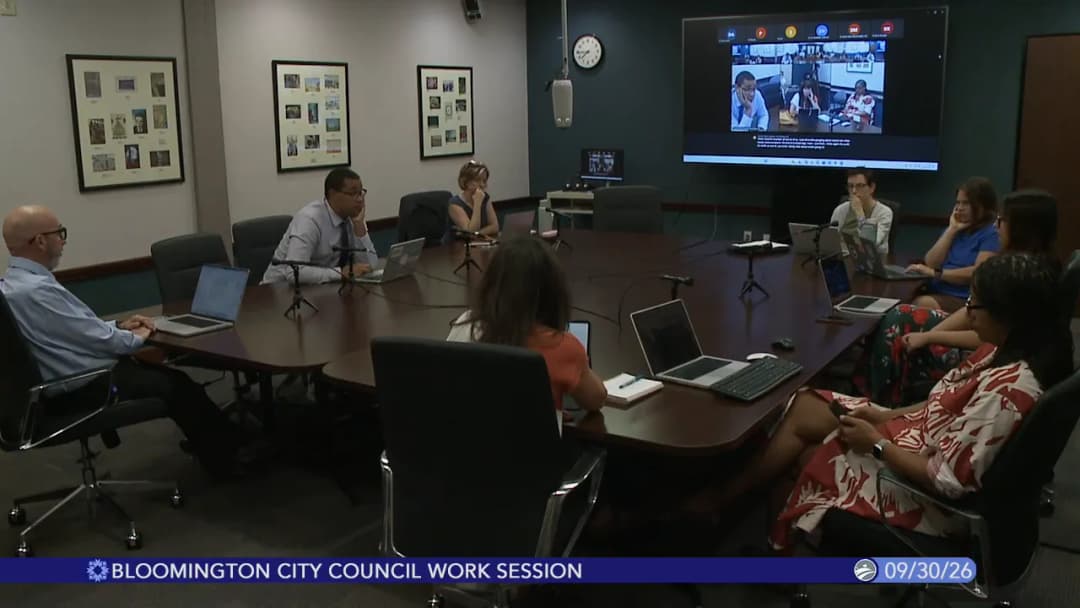
At the Oct. 1, 2026, work session, Bloomington city councilmembers met beginning at 6:30 p.m. to discuss draft budget amendments ahead of the upcoming budget adoption. No votes were taken and no public comment was offered. Participants included councilmembers Isaka, Courtney, Isabel, Hope East Osberg, Sydney Zoe, and later Dave Rallo; City Controller Jeff McKim answered technical questions. The agenda and minutes were not included in the source materials. Discussion Items - Sanitation subsidy: An amendment would reduce the sanitation subsidy by $600,000, from $1.6 million to $1 million. Supporters cited the sanitation department's rate-increase plan, presented to the fiscal committee, which assumes only $1 million in subsidy; if the rate increase is not approved, funds could be reallocated later. Councilmember Isabel agreed to co-sponsor, and final language will be worked out with Larry Allen. - Election operations/public works line: A councilmember proposed trimming the election operations line, which grew from $575,000 last year to $1.2 million. Controller McKim said the line includes $650,000 for the city's general election portion, $350,000 for Brighton B Town, $218,000 carried from the 2026 adopted budget, and smaller items. He also noted the 2023 election cost $471,804. A councilmember said she would reduce the line to the $218,000 base if the remaining components were not clarified. - Branding implementation: Amendments proposed cutting $10,000 budgeted for branding implementation; a broader version also cut other items such as leadership development. Councilmembers did not settle on a version. - Transportation demand manager: Councilmembers discussed eliminating the vacant TDM position in the Economic and Sustainable Development Department and the matching salary-ordinance line. Supporters said the position did not meet its carpool/transit goals, BT ridership is down, and planning staff already do effective outreach. Some hoped to redirect the funding to food security or climate-action work. - Parking study implementation: An amendment would remove the $2.5 million placeholder for parking-study implementation until the administration explains what will be purchased and how the funds will be used. There was broad support for requiring more detail before appropriation. - Housing trust fund: Amendments would reduce or possibly eliminate the housing trust fund appropriation. One proposal left $1 million available and required reporting before more was spent. A councilmember said they had not received a response from housing staff after a week and was inclined to take it down to zero. Councilmembers stressed support for affordable housing funding, but wanted transparency, clearer priorities, and possibly an ad hoc committee to oversee major allocations. The controller said he had compiled the requested list of capital expenditures over $100,000 and would share it. - Controller software/ERP: A $600,000 appropriation for new financial/ERP software was questioned because the budget narrative tied it to outcome-based budgeting, but the administration reportedly said there would be no near-term outcome-based budgeting. Controller McKim and others countered that the New World system is outdated and core financials must be upgraded before HRIS; the administration is preparing a detailed response memo. - Planning studies: An amendment would cut $265,000 for a corridor/sub-area study and $225,000 for additional studies/projects. Supporters said the city has spent too much on studies and should start implementing; opponents noted some studies are prerequisites for future MPO funding, can stay relevant longer than plans, and may help implement projects like the Kirkwood corridor. No consensus was reached. - Historically overfunded accounts and telemetry: One amendment reduced several accounts that have been regularly underspent and removed $274,250 from the risk-management fund for fleet telemetry. The controller said telemetry is intended to improve vehicle safety and reduce accidents. Some councilmembers warned against cutting contingency cushions and second-guessing staff. - Travel reduction: A 25% across-the-board cut was discussed. One participant noted clerk's office staff are required to obtain certifications, with individual costs up to about $2,000 including registration, hotel, and travel; the clerk's own recent travel costs were offset by the Clerk's League. Others questioned travel funded from the parking meter fund and opposed blanket cuts. - Licensing/procurement: A councilmember proposed cutting $90,000 from a licensing line but could not recall the exact basis at the meeting and said they would provide more information. No decision was made. - Special legal services: An amendment proposed cutting special legal services by $350,000. The sponsor said there was no need for the increase if annexation and litigation are not continuing. Councilmembers requested updates on the annexation lawsuit, the Beacon lawsuit, and a recently lost condemnation/eminent domain case involving the Showers business. - Legal/risk administrative assistant: A councilmember proposed eliminating the grade 4 legal/risk administrative assistant position (about $79,000 fully loaded). Though it had been vacant, it has since been filled. Supporters saw it as overinvestment in risk management; others argued the city manages substantial public-space and workforce risk. No decision was made. - Communications and community-relations positions: Councilmembers floated cuts to the public engagement director (vacant), a second communications position in the mayor's office (filled), a legislative affairs specialist, parks community relations manager, and health/wellness coordinator. A councilmember argued centralized communications overemphasize mayoral promotion, citing the branding report and a delayed citywide boil-water notice, and proposed funding the communications director for only half the year to force a restructuring discussion. Others cautioned about losing staff and urged a more deliberate review. - ESD restructuring: One councilmember argued the Economic and Sustainable Development Department has become unwieldy, with high arts-administration overhead, and proposed moving economic development back to the mayor's office, relocating sustainability to parks or planning, and increasing direct community funding. To force that conversation, they suggested funding ESD positions for only part of the year. Other councilmembers asked for a workshop and raised concerns about the budget calendar and staff retention. Key Outcomes - No formal votes were taken; the session was discussion-only. - The administration will provide a written response memo addressing each amendment before the budget's first reading next week. - Councilmembers will continue drafting amendments; co-sponsorship and text changes were arranged for the sanitation amendment, with final language coordinated through Larry Allen. - Controller McKim will share the capital expenditure list and follow up on the election-line breakdown and the licensing question. - Budget timing: first reading is scheduled for next Wednesday, with a meeting on Oct. 14 and a deliberation session on Oct. 21. If the council makes complex cuts, the adoption meeting would be continued to a later date; the budget must be passed by Oct. 31, and a special session could be scheduled if needed.
BUDGET EQUITY ANALYSIS 44% · PERSONNEL MATTERS 14% · CAPITAL PLANNING 5% · PROCUREMENT 5%
3682
OCT 1, 2026 · STAMFORD, CONNECTICUT · BOARD OF REPRESENTATIVES
Appointments Committee Meeting - October 1, 2026

The Appointments Committee of the Stamford Board of Representatives met on October 1, 2026, to interview and vote on five nominees for various city boards and commissions. All nominees were approved unanimously. Consent Calendar - No consent calendar items were listed or discussed. Public Comments & Testimony - No public comments were made. Discussion Items - Citation Officer (Alan DeLuca): Mr. DeLuca, a retired Stamford police officer of 46 years, described his transition from patrol to abandoned vehicle enforcement and now to part-time security aide for the mayor and citations officer. He explained that citations officers primarily issue warnings, but need sworn status to write citations. He noted that the top complaint is illegal dumping. Committee members praised his service and asked about workload (10–14 hours/week for mayor, 7 hours/week for citations) and the process for enforcing violations. - Environmental Protection Board Alternate (Patrick Blessinger): Mr. Blessinger, a teacher and adjunct professor, moved to Stamford for affordability and safety. He expressed interest in environmental protection. Committee member explained the EPB’s statutory role focuses on wetlands review, while a recent ordinance created a separate Conservation Commission for broader advisory duties. Blessinger indicated he would learn on the job. - Patriotic and Special Events Commission (Brendan Leiden): Mr. Leiden, a veteran and longtime volunteer, was appointed to complete a term. He noted the commission focuses on parades and veteran support. Committee members welcomed his background and teamwork. - Zoning Board Alternate (Jenny Johnson): Ms. Johnson, with a family background in architecture and development, discussed her interest in zoning, sustainability, and community involvement. She emphasized the need for affordable housing and rejected an either/or mentality. Committee members highlighted her potential to bring aesthetic awareness to the board and urged her to consider housing equity. - Planning Board (Peter Janov): Mr. Janov, a former attorney and real estate asset manager, offered broad qualifications. He critiqued the Stamford Town Center as a dead mall and suggested residential redevelopment. He discussed capital budget priorities aligning with the city’s comprehensive plan and stressed leaning on developers for good design. Committee members queried him on UConn’s growth, affordable housing, and pedestrian safety. Key Outcomes - All five nominees were approved unanimously by voice vote: Alan DeLuca (Citation Officer), Patrick Blessinger (EPB alternate), Brendan Leiden (Patriotic and Special Events Commission), Jenny Johnson (Zoning Board alternate), and Peter Janov (Planning Board). - The meeting was adjourned at 8:18 PM.

ZONING 14% · PERSONNEL MATTERS 11% · AFFORDABLE HOUSING 9% · EDUCATION 8%
3683
OCT 1, 2026 · MANITOWOC, WISCONSIN · COMMON COUNCIL & COMMITTEES
Tourism Committee Reviews 2027 Room Tax Discretionary Expenditures - October 1, 2026

The Tourism Committee met on October 1, 2026 at noon to review discretionary expenditures of room tax dollars for the 2027 budget. The meeting included discussion on revenue trends, marketing strategies, grant programs, and future needs. A quorum was present. Committee members introduced themselves to new administrator Sue Keppi. Consent Calendar - Approved minutes from the previous meeting by unanimous voice vote. Discussion Items - Room Tax Revenue & Budget Overview (Courtney): The room tax collection has averaged $725,000 per year, but the city budgets conservatively at $700,000. Collections are trending up in 2026, partly due to the new Hampton Inn. The department has a reserve fund of approximately $800,000–$1,000,000 from prior years. The 2027 budget will reflect changes, including lower salaries and a revamped visitor guide (two-to-three-year lifecycle, Manitowoc-centric). Future office space needs were discussed; plans for a build on green space near Shipbuilders have been developed (Abacus plans) but direction is pending. Financing options exist within the reserve. - Marketing and Sales Priorities: Committee members emphasized the need for more in-person sales outreach (conference/group tourism) and increasing sponsorships at events like Circle Wisconsin and NTA. The department plans to improve CRM usage and shift to more customized FAM tours after cancellations this year. Paid broadcast opportunities (e.g., Morning Blend in Milwaukee, Minneapolis co-op) have been successful. Photography and video assets are a high priority for 2027 investments. - Grant Programs: The Discover Manitowoc grant (budgeted at $40,000) has seen demand double the available funds. Members suggested creating a separate grant for meetings/conferences or a sustainability grant for established events. Chad Harrington and Kevin Cullen expressed support for expanding parameters to better distinguish between events that bring 'heads in beds' and those that enhance community appeal. Haley Remel suggested applying for MPI (Meeting Planners International) membership to reach planners. The committee discussed potentially increasing the grant total to $50,000. - Other Ideas: A hop-on hop-off trolley connecting attractions on peak days (similar to Sheboygan/Fox Cities) was raised. Waterborne tourism opportunities (e.g., cruise ships, bike cruises) were noted as long-term possibilities. Key Outcomes - The committee's feedback and recommendations will be presented by staff to the Room Tax Commission for final 2027 budget approval (due August 21, 2026 to finance, with Room Tax Commission approval first Tuesday of October). - Staff will consider adding a meetings/conferences grant or expanding the existing grant program parameters. - The next committee meeting is scheduled for December 9, 2026 at noon to discuss overall goals and visioning for 2027. - Chad Harrington offered to assist with redesigning the grant process. - The meeting was adjourned by unanimous voice vote.

TOURISM PROMOTION 68% · BUDGET EQUITY ANALYSIS 18% · PROCEDURAL 8% · PUBLIC ENGAGEMENT 6%
3684
OCT 1, 2026 · WASHINGTON, DISTRICT OF COLUMBIA · COUNCIL OF THE DISTRICT OF COLUMBIA
Council Committee Holds Hearing on Utility Affordability, Consumer Protection, and DOEE Reporting Bills (October 1, 2026)

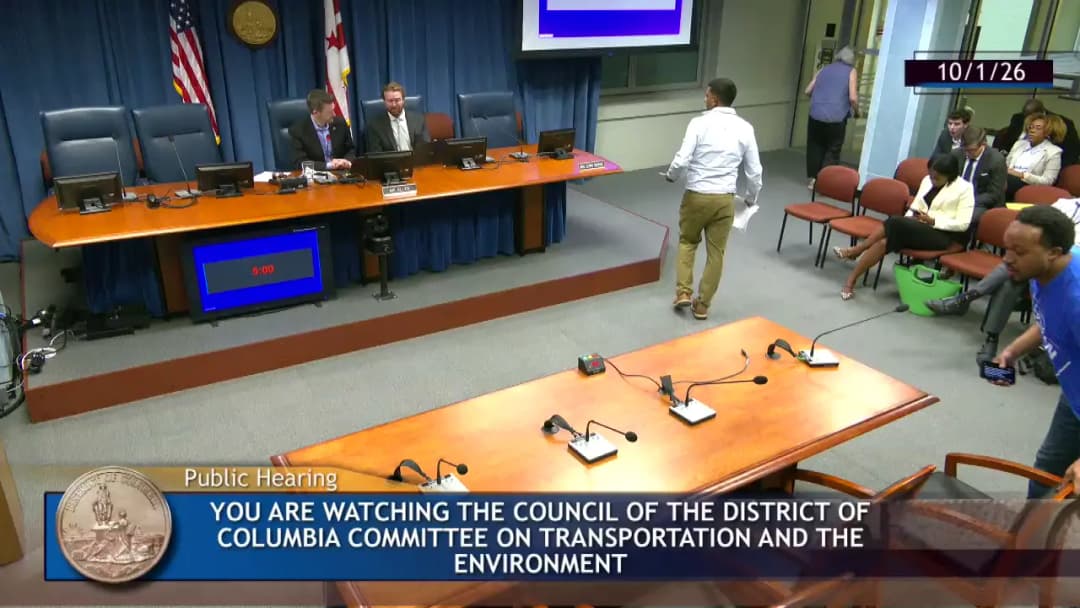
The Committee on Transportation and the Environment, chaired by Councilmember Charles Allen, held a public hearing on Thursday, October 1, 2026, to consider three bills addressing utility costs, third-party energy supplier practices, and agency reporting efficiency. The hearing included testimony from public witnesses, industry representatives, environmental advocates, and government agencies. Key themes included the disproportionate burden of rising energy bills on low-income households, the need for transparency in utility capital expenditures, and the impact of third-party supplier marketing. Public Comments & Testimony - Panel 1 – Third-Party Suppliers: Jennifer Spinosi (Clean Choice Energy) opposed price caps, arguing they would eliminate customer choice and innovation, as seen in Maryland. Todd Sanford (WGL Energy) warned that caps would force suppliers out, harming customers who saved on fixed-rate contracts. Maurice Simpson (Constellation) supported targeted protections but opposed the 110% cap, noting 70% of their DC customers currently pay below the standard offer. Frank Khaliva (Retail Energy Supply Association) argued price caps are fundamentally flawed due to the mismatch between forward-looking supplier offers and backwards-looking utility rates. - Panel 2 – Environmental and Advocacy Groups: Romita Biswas (Electrify DC) supported the consumer protection bill, citing predatory tactics harming low-income tenants. Claire Mills (CCAN Action Fund) supported all three bills, emphasizing that capital expenditures drive rate increases and that audits of utilities are overdue. Ann Scanley (Sierra Club) supported the price cap and urged strengthening consumer protections. Chris Weiss (DC Environmental Network) commented on the DOEE reporting bill, urging care to preserve transparency while reducing burdens. - Panel 3 – Community and Senior Advocates: Nathan Brown (Washington Interfaith Network) shared personal experience of being misled by a third-party supplier and urged passage of consumer protections. Charles Turner, Phyllis Love, Herb Jones, and Ron Hampton (AARP DC) testified in support of the retail market bill, detailing deceptive marketing, high rates for seniors, and the need for stronger enforcement. They recommended protecting LIHEAP recipients from third-party enrollment and exploring solar energy for seniors. - Government Witnesses: Richard Jackson (DOEE) supported the consumer protection bill, presenting DOEE data showing third-party supplier customers pay 70% more on average, and LIHEAP recipients pay 80% more. He supported the utility transparency bill with recommendations to include non-wire alternatives. Ted Trabue (Interim Chair, PSC) supported the consumer protections but noted the PSC already conducts many required audits and disclosures; he committed to improving accessibility of information. Jen Dickman (DOEE) explained the reporting requirements bill would streamline redundant reports and save agency resources. OAG and OPC witnesses strongly supported both utility bills, recommending additional amendments to require alternatives analysis and reliability metrics. Discussion Items - B26-0750 – Retail Energy Market Consumer Protection Amendment Act: Chair Allen and Councilmember Lewis George led discussion on balancing consumer choice with protection from predatory pricing. Debate focused on the 110% cap vs. higher exemptions for renewable suppliers, the administrative feasibility of a dual system for low-income customers, and the practice of suppliers selling customer arrears back to utilities, which drives up rates for all ratepayers. - B26-0704 – Public Trust and Utility Regulation Act: Discussion centered on whether existing PSC regulations already require the information the bill mandates. OAG and OPC argued that additional upfront disclosure and quantification of reliability benefits are needed to prevent unnecessary spending. PSC maintained that most data is already collected but acknowledged the need for better public presentation. - B26-0697 – DOEE Reporting Requirements Amendment Act: Testimony highlighted the tension between reducing agency burden and ensuring timely public access to key reports like the Carbon Neutrality Action Plan. DOEE stated the changes would allow more efficient use of staff time while maintaining transparency. Key Outcomes - No votes were taken; the hearing was for testimony and record-building. - The record will remain open until October 15, 2026, for written submissions. - Chairperson Allen committed to follow-up discussions with stakeholders, particularly on refining the price cap exemptions for renewable energy, protecting LIHEAP recipients, and strengthening audit and transparency requirements in the Public Trust Act. - PSC Interim Chair Trabue pledged to work with the committee to improve data accessibility and consider administrative adjustments for the consumer protection bill. - DOEE provided updates on the neighborhood microgrid pilot program finalist selection and agreed to send additional compliance data on third-party supplier enforcement actions.

UTILITY RATE REGULATION 25% · ENERGY REGULATION 18% · PUBLIC ENGAGEMENT 17% · CONSUMER PROTECTION 13%
3685
OCT 1, 2026 · EVANSVILLE, INDIANA · CITY COUNCIL
Evansville Tree Advisory Board Meeting – October 1, 2026

The Evansville Tree Advisory Board met on October 1, 2026, at 9:06 AM. The board reviewed multiple requests to remove park and street trees, discussed a new framework for resolving tree and sidewalk conflicts, and approved several tree removals with replacement commitments. Upcoming community planting events and educational opportunities were also announced. Discussion Items - Park Tree Removals: The board considered removal requests for dead, dying, or structurally weak trees at Tepe Park (3 trees), Caldwell Park, Diamond Valley Park, Helfrich Golf Course, Pagoda, and West Branch Library Park (4 trees). At Helfrich Golf Course, approximately 20 trees of size will be cleared to access a power transformer. The board discussed replacement strategies, deciding on a canopy-for-canopy approach at Helfrich (rather than tree-for-tree) and the standard two-for-one replacement for the other parks. A motion to approve the removals with the canopy replacement caveat passed unanimously. - Street Tree Removals: Requests included a dead tree at 5 E. Powell, a dying ornamental cherry and maple at Alvord & Bellemeade, a dying oak at 1116 Madison, a dying oak at 1037 Ravenswood, and a structurally weak Tree of Heaven at 600 Taylor (Garvin Street side). For the Alvord & Bellemeade trees, one-for-one replacement was approved (boulevard constraints). The Tree of Heaven stump will be treated to prevent regrowth. The motion, including tree-for-tree replacement on Ravenswood and stump treatment, passed unanimously. - Tree & Sidewalk Conflicts: Aaron presented a new decision-making tool developed with the city engineer to objectively evaluate trees causing sidewalk conflicts. The tool uses a scoring system and will be piloted on three trees along Lincoln Avenue between Garvin and Governor. The board discussed the larger oak tree (growing over the curb) and two smaller trees. A motion passed to remove the large oak, trim roots of the other two, and allow sidewalk repair. A second motion approved a two-for-one tree replacement in the green space between Garvin and Governor, also passed. - IU Environmental Resilience Institute Cohort Program: An update was given that Bia is finalizing a proposal for the urban forestry management plan update. The city is receiving 10 free trees, to be planted on October 24 at 9 AM in partnership with the Tepe Park Neighborhood Association. - Invasive Plant, Pest & Disease Update: The Twilight Tours at Oak Hill Cemetery (October 24, 5 PM, $15/person) will fund emerald ash borer treatments for city ash trees. The event includes historical reenactments. - Ongoing Removal/Planting: Recent planting of native arborvitae at Wesselman Park (donated by Colonial Classics) was noted. Upcoming plantings: November 7 at Locust Hill Cemetery (Cratzville Road, 9 AM) and November 14 at Howell Park (close to 100 trees, 9 AM). Key Outcomes - Approved park tree removals with canopy replacement at Helfrich Golf Course and two-for-one replacement at other parks (unanimous). - Approved street tree removals with one-for-one replacement on Alvord & Bellemeade and stump treatment for the Tree of Heaven (unanimous). - Approved removal of the large oak on Lincoln Avenue, root trimming for two other trees, and a two-for-one replacement in the green space (both motions unanimous). - The board adopted the new tree/sidewalk conflict framework as a pilot, with Aaron to distribute a one-page workflow summary. - Upcoming events: Weed Wrangle at Hartman Arboretum (October 8, 9 AM), Weed Wrangle at Northwoods, Igleheart Park (October 17, 9 AM), Twilight Tours (October 24, 5 PM), Tree Pruner's Licensing Seminar (November 10, 6 PM at Wesselman Woods), and tree plantings on November 7 and 14.

TREE MANAGEMENT 66% · PARKS AND RECREATION 14% · PUBLIC WORKS 8% · ENGINEERING AND INFRASTRUCTURE 7%
3686
OCT 1, 2026 · MILWAUKEE, WISCONSIN · COMMON COUNCIL
Milwaukee Public Safety and Health Committee Meeting - October 1, 2026

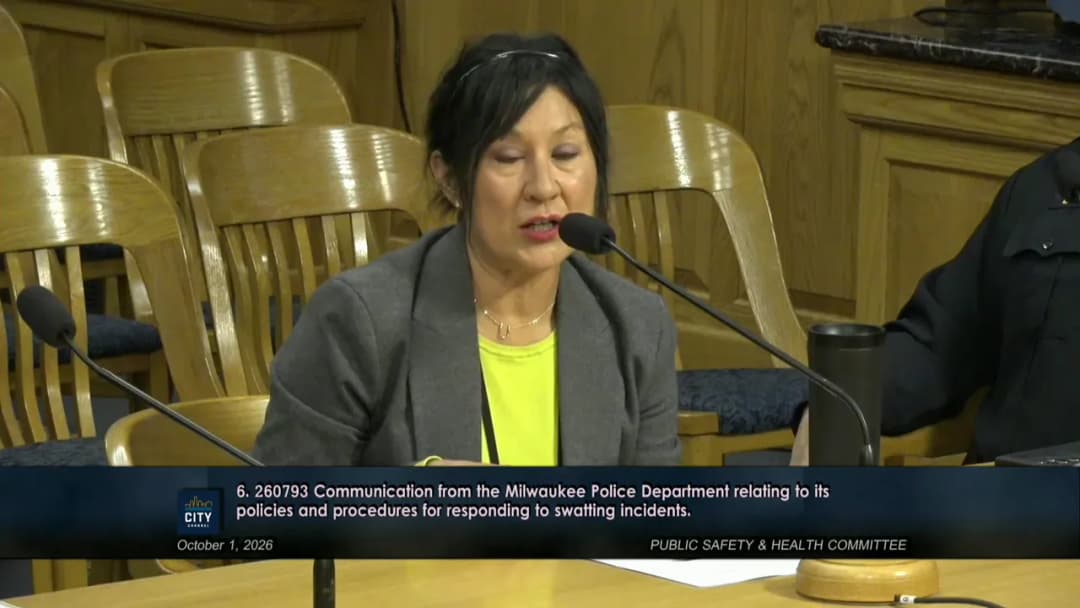
The Public Safety and Health Committee of the Milwaukee Common Council met on Thursday, October 1, 2026, in Room 301-B of City Hall. The meeting convened at 9:07 AM and adjourned at 10:27 AM. All five committee members were present: Chair Ald. Scott P. Spiker, Vice-Chair Ald. Peter Burgelis, Ald. Larresa Taylor, Ald. Sharlen P. Moore, and Ald. Mark Chambers Jr. The committee considered eight items related to parking and traffic controls, a Board of Health reappointment, lead abatement, habitual parking violator enforcement, MPD swatting procedures, a public alert system grant, and fireworks enforcement. Every formal committee vote was unanimous (5-0). Discussion Items Item 1 - Parking controls (File 260727) Scott Reinbacher of the Department of Public Works described several parking regulation changes: a new no parking anytime zone on the east side of Cambridge Avenue from Royal Avenue to a point 30 feet south; two-sided overnight parking on North Palmer Street from Vine Street to Center Street year-round; removal of two-hour parking restrictions on the west side of Hoyt Place from Fond du Lac Avenue to Leon Terrace; removal of no parking 7 AM-5 PM signs on the west side of 41st Street from Greenfield to Orchard; and removal of a two-hour parking zone on Lisbon Avenue from 37th to 39th. The changes were coordinated with local aldermen. Ald. Burgelis moved to recommend passage; the motion prevailed 5-0. Item 2 - Traffic controls (File 260728) A substitute ordinance was before the committee. Ald. Taylor moved substitution; the motion prevailed 5-0. DPW's Scott Reinbacher presented a proposed yield sign for eastbound traffic at Euclid Avenue and 53rd Street, and a southbound parking restriction on South 51st Street from a point about 200 feet north of West Fillmore Drive to the KK River Parkway. The package also prohibits trucks of three tons or more in the southbound direction. Ald. Burgelis noted recurring heavy truck problems in the neighborhood, including semi trucks attempting to turn around on the KK River Parkway grass. DPW confirmed state law still allows trucks access for deliveries, but the rule targets shortcut and through trucking. Ald. Burgelis moved to recommend passage; the motion prevailed 5-0. Item 3 - Board of Health reappointment (File 260785) The committee reviewed Mayor's reappointment of Tahira Malik to the Board of Health for the 15th Aldermanic District. Her attendance record over the term was 16 of 20 meetings attended and 4 excused absences. Ald. Moore moved to recommend confirmation; the motion prevailed 5-0. Item 4 - Lead abatement intergovernmental agreement (File 260531) Tyler Weber, Deputy Commissioner of Environmental Health, explained that Milwaukee County now has its own HUD lead abatement grant and will accept residential referrals from the city. The city plans to start with about five referrals and phase in more over time. The program serves Milwaukee residents. Weber reported the city has over 2,000 children poisoned a year at 3.5 micrograms per deciliter and above. Ald. Taylor moved to recommend adoption; the motion prevailed 5-0. Item 5 - Habitual Parking Violators update (File 251583) Peter Knox, Parking Enforcement Manager, provided a status update on the habitual parking violators ordinance. The ordinance became operational November 1, 2025, after a 60-day moratorium, and allows towing of vehicles with five or more citations 60 days past due. Through September 28, 2026, 3,957 vehicles were towed; 1,699 owners paid at the tow lot and 1,850 elected court dates. About 48% paid at the tow lot and 52% went to court. During the moratorium, 455 people paid nearly 2,000 citations. Since the ordinance began, 1,094 habitual violators proactively set up payment plans, a 22% increase, and citations paid by habitual violators rose 33% compared with the prior year, from 8,977 to about 12,000, generating approximately $303,000 in additional citation revenue. Combined with payment plan increases, the city saw just under $400,000 in additional revenue from habitual violators who were not towed. Of towed vehicles, about $650,000 was collected at the tow lot and roughly $100,000 was paid online before retrieval; an additional $1.072 million in citation value was referred to court, with collection dependent on court outcomes. The average habitual violator had 7.86 citations, and about 22,142 people were identified as habitual parking violators. The committee asked for further data comparing the number of habitual violators year over year, the number not on payment plans, and geographic breakdowns by aldermanic district. The chair also noted the proposed budget would double nighttime parking permit fees and raised equity questions about compliance costs. Ald. Chambers moved to hold the communication to the call of the chair; the motion prevailed 5-0. Item 6 - MPD swatting policies (File 260793) Milwaukee Police Department Chief of Staff Heather Hough, Assistant Chief Paul Lough, Inspector Andrew Tischer, and Lieutenant Steven Stelter presented MPD policies for responding to swatting. Swatting was defined as reporting a false violent emergency to trigger a high-priority police response. MPD data from January 1, 2025 to September 22, 2026 identified approximately 21 swatting incidents out of more than 3,500 keyword search results, and 16 reports filed under Wisconsin's swatting statute. Lt. Stelter said arrests have been made in some hoax-threat investigations. Ald. Moore raised a specific repeated swatting case involving roughly 55 calls over about three years, which she said cost over half a million dollars and raised questions about how repeat locations are flagged and handled. MPD said each call must be assessed case by case, no policy changes have been made in response to the anomaly, and addresses can be flagged but there is no set number of calls triggering flagging. Ald. Burgelis requested a timeline of when the repeat address was flagged and asked for involvement of the Department of Emergency Communications and the City Attorney's Office in future discussions. Ald. Moore moved to place the communication on file; the motion prevailed 5-0. Item 7 - Public alert system grant (File 260815) Samantha Mejia, Finance Manager, and Rick Malsch, Project Manager from the Department of Emergency Communications, presented a $165,000 Wisconsin Emergency Management Homeland Security Grant Program award with no city match. The grant funds a Motorola Solutions community alerting platform including RAVE Alert and App Armor. Ald. Chambers moved to recommend adoption; the motion prevailed 5-0. Item 8 - Fireworks enforcement ordinance (File 260551) Ald. Burgelis presented a substitute ordinance addressing unlawful possession and use of fireworks. Fireworks complaints in Milwaukee rose from 261 in 2022 to 461 in 2025, while citations remained very low: 5 in 2022 and 23 in 2025. Over July 3-4, 2026, six structure fires occurred in the city, at least half attributed to fireworks. MPD said enforcement is difficult because officers generally must observe a specific person lighting fireworks. The ordinance aligns the city's fireworks definition more closely with state law and creates a new tool to cite private property occupants who cause, suffer, or allow illegal fireworks on their property. Assistant City Attorney Elizabeth Miles confirmed it is not a strict liability standard; the same cause-suffer-allow language is used in the noise ordinance. Parent or guardian liability for minors remains in the code. MPD representatives and Milwaukee Fire Department Chief Aaron Lipski supported the measure, citing fire risk, sleep disruption, impacts on veterans with PTSD, and pets. Committee members also emphasized neighborhood respect and public safety. Ald. Burgelis moved to recommend passage; the motion prevailed 5-0. Key Outcomes - All eight agenda items were resolved unanimously on 5-0 votes. - Recommended for passage: File 260727, File 260728, and File 260551. - Recommended for confirmation: File 260785. - Recommended for adoption: File 260531 and File 260815. - Held to the call of the chair: File 251583, with additional data requested from DPW. - Placed on file: File 260793, with an expectation of a future broader communication involving the Department of Emergency Communications. - The meeting adjourned at 10:27 AM.

PARKING ENFORCEMENT 32% · PUBLIC SAFETY 31% · POLICE PROCEDURES 21% · PUBLIC HEALTH 4%
3687
OCT 1, 2026 · SHORELINE, WASHINGTON · PLANNING COMMISSION
Shoreline Planning Commission Public Hearing: Comp Plan Amendments and SEPA Ordinances - October 1, 2026

The Shoreline Planning Commission held a regular meeting on Thursday, October 1, 2026, at 7:00 PM in the Council Chamber at City Hall. The meeting included the swearing-in of new Commissioner Janice Gedland, public hearings on six Comprehensive Plan amendments, and two separate public hearings on Light Rail Subarea SEPA Planned Action Ordinances. The Commission voted on recommendations to the City Council on all items. Commissioner Gedland abstained from all votes. Consent Calendar - Approved the agenda unanimously. - Approved the draft minutes of September 17, 2026, unanimously. Public Comments & Testimony - No general public comment was received. - Public Hearing on 2026 Comprehensive Plan Amendments: 29 written testimonies were submitted. Four in-person speakers testified (Milena Mast, Todd Greenwood, Neil Woods, Dea Dreyer) and one remote speaker (Alisa Anderson) could not be heard due to technical issues. Later, Jonathan Moon spoke. Testimony focused on Amendment 5 (rezoning 11th Avenue NW), with residents expressing opposition to NR2 zoning due to walkability, safety, emergency vehicle access, and traffic concerns. Dea Dreyer also argued that the public hearing process violated the Open Public Meetings Act by not clearly explaining the interconnected effects of the planned action ordinances and the 2033 timeline. - Public Hearing on Shoreline North 185th Light Rail Subarea SEPA Planned Action Ordinance: One written testimony was received; no in-person speakers. - Public Hearing on Shoreline South 148th Light Rail Subarea SEPA Planned Action Ordinance: One in-person speaker (Dea Dreyer) opposed the expansion of the planned action boundary, arguing it would effectively unlock development before the promised 2033 phase two, increasing property taxes and incentivizing displacement. Discussion Items - 2026 Comprehensive Plan Amendments (6 items): Staff presented each amendment. Key discussion points: - Amendment 1 (Surface Water Master Plan update): Uncontroversial; approved. - Amendment 2 (Town Center Subarea Plan update): Staff recommended placing on 2027 docket; approved. - Amendment 3 (Shoreline North 185th Light Rail Station Subarea Plan): Commissioners appreciated staff's work on connectivity; approved. - Amendment 4 (Shoreline South 148th Light Rail Station Subarea Plan): Similar to North; approved. - Amendment 5 (Privately initiated rezoning of 11th Avenue NW from NR2 to NR3): Extensive debate. Residents presented concerns about walkability, safety, and emergency access. Commissioners noted the objective criteria used in 2024 and the importance of consistency and forward-looking planning. A motion to approve the amendment failed for lack of a second. A subsequent motion to deny (as recommended by staff) passed 5-1-1. - Amendment 6 (Neighborhood Greenways program): Supported for its quick-build approach; approved. - Shoreline North 185th SEPA Planned Action Ordinance (Ordinance 1075): Staff explained the separate public hearing requirement. Changes since September 17 included separating the north and south ordinances and adding mitigation measures for noise and air pollution near the interstate. Commission supported the planned action as a cost-saving incentive for developers. - Shoreline South 148th SEPA Planned Action Ordinance (Ordinance 1074): Same rationale as north; motion passed after clarifying that the overlay boundary expansion discussed earlier was not related to the planned action area. Key Outcomes - Amendment 1: Approved (6-0-1). - Amendment 2: Approved to place on 2027 docket (6-0-1). - Amendment 3: Approved (6-0-1). - Amendment 4: Approved (6-0-1). - Amendment 5: Denied (5-1-1, Commissioner Povik voted no). - Amendment 6: Approved (6-0-1). - Shoreline North 185th SEPA Planned Action Ordinance (Ordinance 1075): Approved (6-0-1). - Shoreline South 148th SEPA Planned Action Ordinance (Ordinance 1074): Approved (6-0-1). - All recommendations will be forwarded to the City Council for final action. - The next meeting is scheduled for October 15, 2026, to discuss the draft tree code.

LAND USE PLANNING 46% · PROCEDURAL 17% · PUBLIC ENGAGEMENT 17% · LEGISLATIVE PROCESS 9%
3689
OCT 1, 2026 · CLEVELAND COUNTY, OKLAHOMA · BOARD OF COUNTY COMMISSIONERS & BOARDS
Cleveland County Employee Benefits Committee Regular Meeting - October 1, 2026

The Employee Benefits Committee of Cleveland County, Oklahoma, met in regular session on October 1, 2026. The committee reviewed a status update from Classen Family Medicine, discussed extending urgent care benefits to county retirees, and finalized plans for the October 19–23 open enrollment period. Consent Calendar - Meeting called to order by Chairman Rod Cleveland. Roll call established Pam Howlett and Tammy Richards as present; Raimie McDaniel and Marilyn Williams were absent. - Minutes of the September 3, 2026, regular meeting and the September 22, 2026, special meeting were approved unanimously. Public Comments & Testimony - No members of the public provided comment. Discussion Items - Status Update – Classen Family Medicine: Emergency Manager George Mauldin reported that a new clinic site is in use. August 2026 saw 194 patient encounters, consistent with the historical average of approximately 198 encounters per month. On-site clinic utilization has increased considerably. As part of the financial context, the committee noted the existing encounter reimbursement rate for Classen: $132 per encounter for the first 1,000 encounters per period, dropping to $82 per encounter thereafter. - Extending Classen Urgent Care Benefit to Retirees: The committee discussed a proposal to extend the county's Classen Urgent Care benefit to retirees. A significant challenge identified is the county's inability to accurately track retiree coverage usage after they leave employment. Staff previously requested retiree data from the Oklahoma Public Employees Retirement System (OPERS) but was told it could not be provided. The committee discussed building an internal retiree list to move forward. Members debated whether the benefit extension should be retroactive to the date the county entered the Classen agreement or applied only to future enrollment. No action was taken, and staff was directed to continue information gathering. - Open Enrollment Planning: Open enrollment was scheduled for the week of October 19–23, 2026. The committee planned a benefits fair with vendors including Aflac, Liberty National / Nationwide, EGID, and a pending invitation to Washington National. Staff is preparing a detailed breakdown of plan usage statistics for employees (e.g., urgent care visit frequency, impact on deductibles) — a level of analytical detail the committee noted had never been provided before. The plan involves distributing printed copies with payroll so employees can review their options before meeting with vendors. Cross-departmental cooperation from the Payroll, Assessor, and Treasurer offices was recognized. Key Outcomes - Minutes Approved: Regular meeting minutes (09/03/2026) and special meeting minutes (09/22/2026) were approved. - Retiree Benefit Deferred: The proposal to extend Classen Urgent Care to retirees was continued for further research into tracking and implementation. - Open Enrollment Finalized: The schedule, vendor participation, and information distribution plans for the October 19–23, 2026, open enrollment period were finalized. - Adjournment: The meeting was adjourned following a motion. Prior to adjournment, a birthday milestone for Pam Howlett was acknowledged by the committee.

HEALTHCARE BENEFITS 53% · PROCEDURAL 47%
3690
OCT 1, 2026 · WESTCHESTER COUNTY, NEW YORK · BOARD OF LEGISLATORS & COMMITTEES
Families Task Force Meeting - October 1, 2026: Workforce Development and Economic Stability

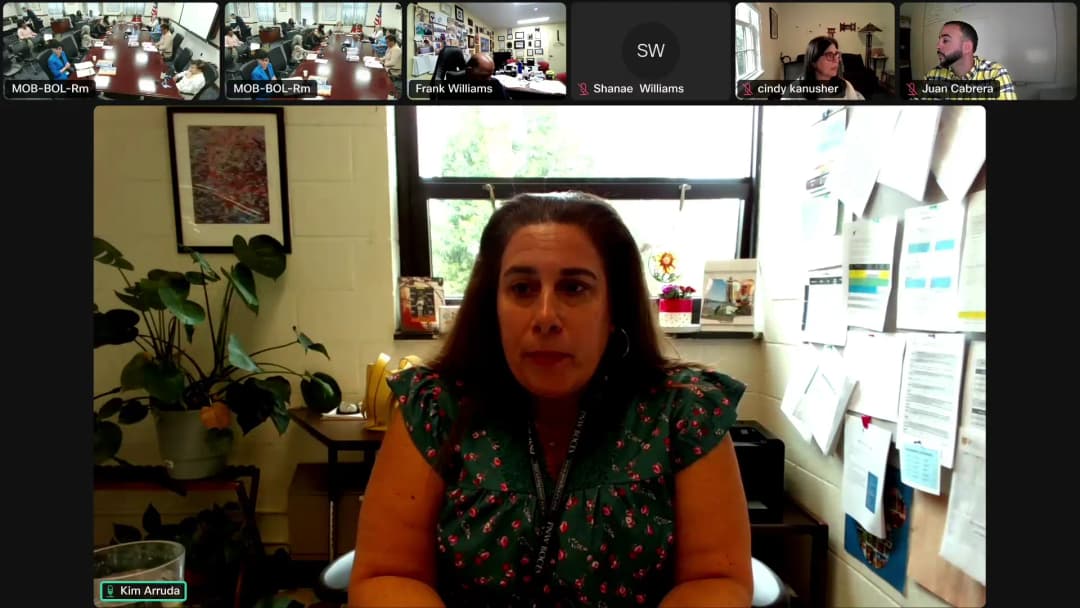
The Families Task Force convened on October 1, 2026, to discuss economic and workforce development initiatives supporting Westchester County families. Presentations were delivered by representatives from Westchester Community College (WCC), the Westchester County Association, the Department of Social Services, Southern Westchester BOCES, and Putnam Northern Westchester BOCES. The conversation highlighted existing programs, gaps in digital access, and the need for streamlined, human-centered resource navigation for job seekers at all skill levels. Discussion Items Workforce Development Resources: Jason Chapin (Westchester County Association) outlined free resources including the Westchester Library System’s job search tools, Career One Stop, SUNY Reconnect (for adults 25–55 pursuing degrees in high-demand fields), and Workforce Pell grants for short-term credentials. He noted the county’s upcoming job fair on October 28, 2026, at the County Center (2–4 PM) and encouraged in-person attendance over online applications. Challenges for Recent Graduates: Legislator Pierce raised concerns about graduates struggling to find jobs despite applying to hundreds of positions, exacerbated by AI replacing entry-level roles. She asked about strengthening apprenticeship connections and tracking outcomes. Panelists advised job seekers to focus on quality, seek mentors, and consider certificate programs to differentiate themselves. Strengthening Pathways: Kimberly Arruda-Gulitz (PNW BOCES) described secondary work-based learning partnerships with 50+ external site partners and union events. She advocated for offering shorter, affordable credential programs (e.g., nail tech vs. full cosmetology) to lower barriers. Nicole Eschler (SW BOCES) highlighted affordable non-credit courses (e.g., electrical for $700) and externship-to-hire pipelines (60–70% placement). Youth Services: Liz Oliveto (Dept of Social Services) detailed the W Day program serving 350 youth (ages 16–24), with $1 million spent on vocational training in the past year. The program uses paid work experiences to confirm career interest before funding training, then partners with the Department of Labor for job placement. Funding for trainings ended when program funds ran out. Digital Access as a Foundational Barrier: A speaker (unidentified but passionate) noted that 100% of jobs require digital skills, yet many applicants apply via phone from shelters. The speaker advocated for digital needs screening via 211 and cited a 4:1 return on digital inclusion investments. A Connect Westchester Digital Program exists but lacks funding for full implementation. Populations with Specific Needs: A participant working with domestic violence survivors stressed the need for warm handoffs rather than flyers, as clients are often overwhelmed. Another raised the challenge for disabled adults needing 80 hours of work/volunteerism per month to maintain benefits (Medicaid, SNAP). Panelists suggested leveraging career centers, JobStar, and the Disability Office’s resource fairs (e.g., Diverse Ability Shop fairs). Proposed Solutions: The group discussed creating a centralized resource sheet or short PSA video (potentially filmed by youth videographers) explaining benefit requirements and available services. WCC is developing an updated middle skills report and plans a November 20th event to map community resources and collaborations. Key Outcomes Next Meeting: November 20, 2026 (morning) – WCC will host an event for nonprofits and community organizations to inventory resources and identify collaboration opportunities. PSA Video: Liz Oliveto will develop a proposal for a county PSA video explaining benefit-hour requirements and linking to services. The video could be produced with youth videographers and include bilingual versions. Resource Sharing: Attendees were encouraged to share information with J Cabrera (j.cabrera@uwwp.org) for inclusion in the United Way database. A resource cheat sheet for general inquiries was requested and will be developed. Continued Dialogue: The task force acknowledged that many ideas were only scratched and agreed to reconvene with updates on the digital access screening proposal and other initiatives.

WORKFORCE DEVELOPMENT 59% · EDUCATION AND TRAINING 20% · PUBLIC ENGAGEMENT 13% · DIGITAL LITERACY 4%
OPENPUBLICA · PUBLIC MEETING INDEXUPDATED DAILY · openpublica.com