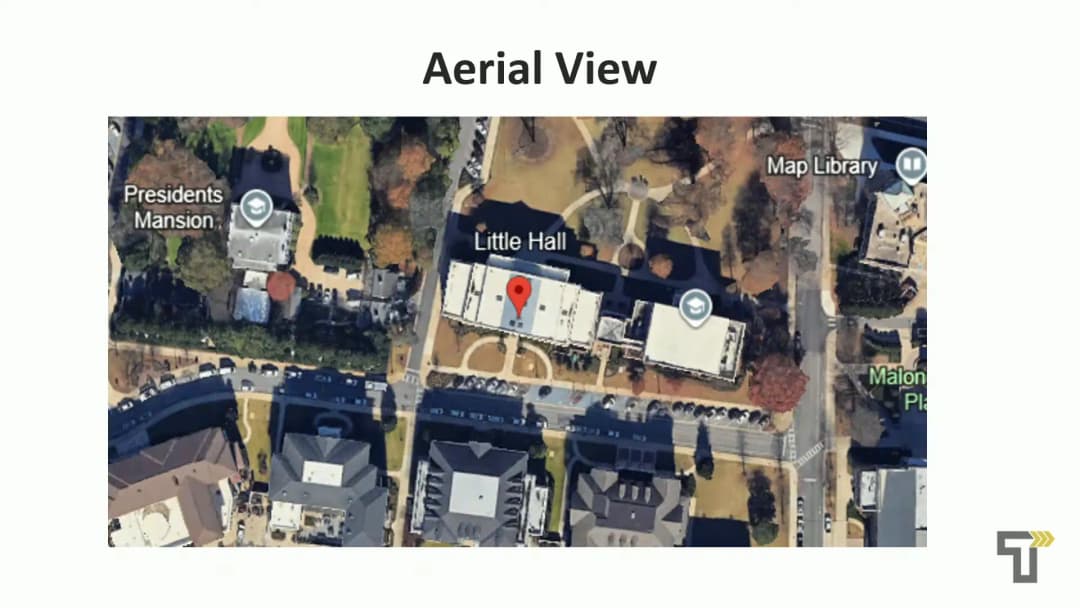
The Tuscaloosa City Council convened its pre-council meeting on September 29, 2026, to review items scheduled for the upcoming formal council meeting. The agenda included department reports on demolitions and special permits, a detailed briefing on the consent and regular agenda by the city attorney, a discussion on the procedure for electing the council president, and recognition of staff. The meeting concluded with a motion to enter executive session to discuss security plans. Consent Calendar (Proposed) The following items were briefed as part of the consent and regular agenda: - Demolitions: Two non-contested demolitions were presented by Mr. Williams: 2615 18th Street (damaged by fire in April 2026, cannot be rebuilt due to structural and zoning constraints involving two structures on one parcel) and 3535 23rd Street. - Special Event Permits: Downtown Social LLC received approval for two events: a UA National Young Alumni Tailgate at Little Hall (670 Bonner Drive) on October 10th, and The Pits at Champions Corner at Malmore Athletic Facility (1090 Coliseum Drive) on October 24th. - Public Works and Infrastructure: Items included right-of-way permits for New Corse Steel, condemnation for the 36th Avenue East Drainage Project, traffic signal removal and roadway lighting maintenance agreements with ALDOT, and multiple minor public works contracts (Alabama Pro Stripe, $98,082; Tuscaloosa Metal Buildings, $14,496; Straight Line Fence, $3,639; Renovations Plus, $29,800; Night Sign Industries, $56,068; Backyard Solutions, $11,000; John Wayne Plumbing and Train Service, $6,350; Building Specialties, $11,985; Black Warrior Asphalt Consultant, $4,500). - Parks and Facilities: A contract amendment with TTL for the Freeman Park and Pool Improvements Project was noted (total amended amount $262,919). A contract for professional engineering services for downtown lighting phase one ($23,000) was also presented. - Real Estate: Authorizations were requested for the purchase of 10.14 acres from multiple heirs (Nancy Waugh Dowling, et al.) for $515,000, the purchase of 0.5 acres from Harold Brown LLC for $210,000, and the donation of 8.07 acres from Harold Brown LLC. All parcels are related to the Northern Riverwalk Phase 2 project. - Grants and Budget: Items included amendments to the Emergency Solutions Grant program, the city’s consolidated annual performance report (CAPER) for HUD, and budget amendments for the Water and Sewer fund. - Finance and Professional Services: Contracts were presented for audit services (Warren Averett, $25,000), long-term flow monitoring (CSL Services, $138,096), stream flow gauging (USGS, $22,600), and city insurance policy renewals. Public Comments and Testimony No members of the public provided testimony during this pre-council session. Discussion Items - Election of City Council President: An ordinance to elect the council president was placed on the formal agenda by Councilor Howard. Councilor Busby raised procedural concerns, stating that previous practice involved the council reaching an internal consensus and voting before the ordinance was formally drafted and adopted, often with a blank item filled in during the organizational meeting. The Mayor stated he would abstain from the vote, clarifying he considers the selection of the council president a decision strictly for the city council, despite his legal ability to break a tie under general legislative votes. City Attorney Holmes confirmed the process presented has been the standard in recent terms. Key Outcomes - Executive Session: A motion was made and seconded to enter executive session. City Attorney Holmes certified the session to discuss security plans, procedures, and assessments for the safety of persons and critical infrastructure. - Upcoming Dates: October 12th was noted for the Police and Fire Pension Board meeting in the Caver Room. - Council President Vote: The ordinance to elect the council president remained on the agenda for the regular council meeting, with the procedural path and the Mayor’s intended abstention clarified.
The Public Meeting Index
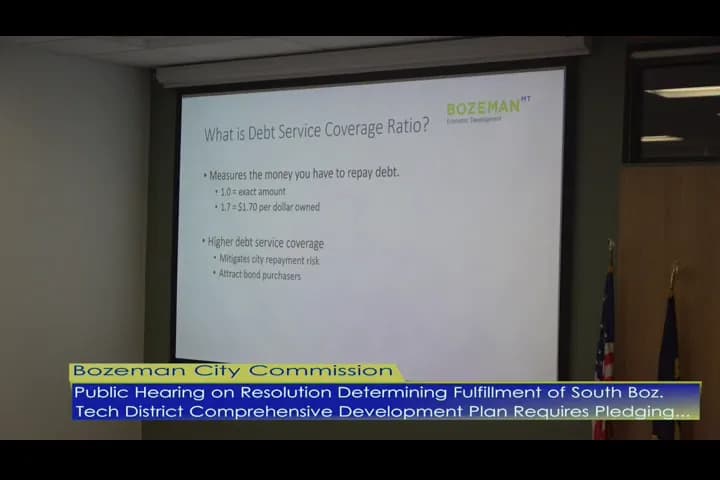
The Public Meeting IndexSeptember 29, 2026 On September 29, 2026, the Bozeman City Commission and the Belgrade City Council held a joint meeting to discuss regional growth, infrastructure, behavioral health, and joint legislative priorities. The meeting began at 6:30 PM and extended past midnight due to extensive public comment and deliberation on a later agenda item regarding tax increment financing (TIFF) for the South Bozeman Technology District. After the joint discussion, the Bozeman commission convened its regular business session, which included annual assessments and two resolutions concerning the extension of the TIFF district and the issuance of bonds. Joint Meeting Discussion (Bozeman & Belgrade) Regional Growth & Infrastructure - Participants discussed the Bozeman-Belgrade corridor growth projection for 2045, focusing on where urban growth should occur. - Belgrade Commissioner Chris Minacucci noted that Belgrade has handed back extraterritorial planning to Gallatin County after changes in state law (MLUPA) and emphasized the importance of utility coordination. - Bozeman Commissioner Alison Sweeney expressed a preference for preserving an open-space greenbelt between the two cities to protect wetlands and wildlife corridors. - Belgrade Mayor (or representative) Mike Meese highlighted the need for joint infrastructure planning, especially water, sewer, and roads. - Commissioner Matt McGee (Belgrade) discussed Belgrade's identity shift from a bedroom community to a growing city with a young, active population, noting 3,000 people commute into Belgrade daily. - Transportation and multimodal options were discussed, including expansion of the Streamline bus system (the pink line) to the airport and potential microtransit in Belgrade. Bozeman Commissioner Douglas Fisher noted that the pink line would serve the airport with four trips per day, with a goal of increasing to ten trips. Commissioner Sweeney raised concerns about bike/pedestrian safety on connector roads. Behavioral Health - The group identified behavioral health as a critical unfunded mandate, straining police, fire, and hospital resources. - Bozeman Commissioner Terry Cunningham (former mayor) and others emphasized the need for regional collaboration, including with Gallatin County. - Potential solutions discussed include a mobile crisis response unit, a crisis receiving center (possibly at the former warming center location), and the need for dedicated funding from the state or voters. - Commissioner Bowdy (Bozeman) noted that the mobile crisis unit has been highly effective but funding is not secure. 2027 Legislative Priorities - Both bodies agreed on the need for a local option sales tax or other revenue sources to relieve property tax burdens and fund services, especially given the tourism impact. - Belgrade Councilmember (unidentified) noted that Belgrade has the highest-grossing liquor store in the state and the highest per-square-foot grocery sales, and cautioned that a poorly designed sales tax could distort commercial behavior between cities. - Commissioner Fisher (Bozeman) raised the idea of a tax on rental cars or an increase in the bed tax, with revenue directed back to municipalities. - Mayor Morrison (Bozeman) stressed the importance of the state recognizing the “big eight” cities’ growing population and political weight. Public Comments & Testimony (Joint Portion) - Gallatin County Commissioner Zach Brown expressed support for the joint effort and offered the county’s partnership. He noted the county is undertaking a growth-area zoning reform process that will impact the triangle area between Bozeman, Belgrade, and Four Corners. - Mike Magrins (Alla Real Estate Partners) praised the collaboration and offered the development community’s input on why Belgrade is currently growing faster than Bozeman. - Gabe (MSU student) linked cost of living and mental health, advocating for housing affordability. Bozeman Regular Business – Consent Agenda & Annual Assessments Consent Calendar (Items G1–G7) - Approved 5-0 without discussion. Business Improvement District Assessments (FY27) - The total assessment is $295,000, billed through Gallatin County property tax bills. Approved 5-0. Annual Lighting District Assessments (FY27) - Total billing of $583,600 for 84 districts; some districts with sufficient fund balance were not assessed. Approved 5-0. Delinquent Snow Removal Charges - For the winter season, 213 notices were issued, 21 abatements performed, 4 appeals with 2 partially or fully approved. Three outstanding bills originally $6,675; one was paid, leaving $5,450 for two bills. Approved 5-0. Delinquent Weed Removal Charges - Between July 1 and September 17, 64 abatements were performed; 8 appeals. Originally 7 bills totaling $1,917.50; after one payment, 6 bills totaling $1,731.25. Approved 5-0. Delinquent Utility Charges (Water, Sewer, Stormwater, Garbage, Recycling, Organics) - Originally 52 bills totaling $26,955.87; one paid, leaving 51 bills for $26,838.20. Approved 5-0. South Bozeman Technology District – TIFF Extension & Bond Authorization Resolution to Extend TIFF Provision (Item 6) - David Fine, Urban Renewal Program Manager, presented the staff recommendation to issue bonds to reimburse a developer $3.894 million for public infrastructure at the innovation campus. The bond would be secured by tax increment from the district and would extend the district’s termination beyond its original 15-year term (to a maximum of 25 years). Staff argued the developer met all obligations, and the city must honor the agreement to avoid litigation and damage to its bond rating. - Public Comment: Over 30 people spoke, the vast majority opposing the extension. Many cited ties to military technology and the war in Gaza (companies such as Reveal Technology and Metria, and the “Department of War on-ramp hub”). Others argued the money would be better spent on community services like transit, housing, and schools. A few supportive comments came from MSU representatives emphasizing research and job creation. - Commission Discussion: Commissioners expressed frustration but felt legally obligated to proceed. Commissioner Bowdy moved a supplemental motion to direct staff to explore methods to limit TIFF support for military-industrial activities and have the TIFF board review options. After debate, the motion was amended to: “Direct staff to explore methods to limit the ability of beneficiaries of TIFF to participate in particular activities within urban renewal districts, and for those possible methods to be reviewed by the TIFF board.” This motion passed 5-0. - Vote on Main Resolution: The resolution to determine that fulfillment of the development plan requires pledging tax increment to bonds extending the TIFF provision beyond 15 years passed 5-0. Resolution Authorizing Private Negotiated Sale of Bonds (Item 7) - Authorizes the administration to proceed with a private bond sale of up to $3.894 million with terms including at least 1.7x debt service coverage and a 25-year term. Staff will seek call provisions to allow early payoff. - Public Comment: Several speakers reiterated opposition, calling for the commission to “name and shame” the innovation campus and MSU for war profiteering. A handful expressed gratitude for the earlier supplemental motion. - Commission Discussion: Commissioner Bowdy made a supplemental motion to direct staff to explore bond options allowing early payoff, which passed 4-1 (Deputy Mayor Fisher voting no). - Vote on Main Resolution: The resolution passed 5-0. Key Outcomes - Joint Meeting: Agreed to collaborate on regional infrastructure, behavioral health, and LOST legislative advocacy. Next joint meeting scheduled for 2027 in Belgrade. - Annual Assessments (Bozeman): All five assessments approved 5-0. - TIFF District Extension: The resolution to extend the TIFF provision beyond 15 years passed 5-0. - Bond Authorization: The resolution to pursue private bond sale passed 5-0. - Supplemental Directions: Staff directed to explore (1) methods to limit TIFF support for specific activities and have TIFF board review, and (2) bond options with early payoff provisions. - Next Steps: The bond sale will proceed with private placement; results and final terms will be brought back to the commission for approval.
The city's Personnel and Public Employee Committee convened on September 29, 2026, to receive and review the annual reports of five charter officers appointed by the city council: City Attorney Gustavo Martinez, City Auditor Parisha, City Clerk Mindy Keppy, City Manager Mara Keisha Smith, and City Treasurer John Colville. The meeting centered on their offices' recent work, caseloads, financial impacts, challenges, and goals for the upcoming fiscal year. The committee voted unanimously to forward all reports to the full city council. Discussion Items Annual Report: City Attorney (Gustavo Martinez) – Martinez presented the office's report for fiscal year 2526, highlighting 10,500 legal assignments, 457 active civil cases (209 new, roughly four per week), and a staff of 54 out of 62 budgeted positions. He noted a significant spike in litigation costs, with outside counsel billing $350–$600 per hour compared to in-house costs of $98–$160. The office is managing 33 amicus briefs and three direct lawsuits against the Trump administration. Councilmembers expressed strong support for a proposed litigation incentive pay program to attract and retain seasoned litigators and reduce reliance on expensive outside counsel. Vice Chair Kaplan and Vice Mayor Telemonte voiced strong support for filling vacancies. Martinez stated his 'why' is the office's respectful, DEI-focused culture and the ability to see the direct impact of their work on the community. Annual Report: City Auditor (Parisha) – Parisha reported completing eight projects, including audits of the city's homeless response, emergency medical services, and Measure L. Since 2010, the office has identified $100 million in potential benefits, with $41.9 million realized. Over 150 recommendations were tracked, with more than 60 implemented. The office is now fully staffed and launched a fellowship program with California State University, Sacramento. Goals for 2027 include leveraging AI for audit efficiencies, expanding the fellowship, and enhancing audit recommendation tracking and implementation. Councilmember Vang praised the office's work on the language access and Measure L audits. Parisha stated her 'why' is the ability to see the community impact of her office's recommendations. Annual Report: City Clerk (Mindy Keppy) – Keppy reported that her office staffed 271 public meetings, processed 1,700 staff reports, and managed 5,000 public records requests (82% closed within 10 days). The June 2026 primary election was successfully managed without a November runoff. The office assisted in the recruitments for city manager and city attorney. Priorities for the coming year include a new agenda management platform for improved accessibility, a citywide commission effectiveness assessment, and updating the city's records retention schedule. Keppy stated her 'why' is demystifying public agencies and ensuring the public and council have the tools they need to participate and make informed decisions. Annual Report: City Manager (Mara Keisha Smith) – Smith detailed her first eight months, closing a $66.2 million general fund budget gap and helping adopt a $1.7 billion budget. She launched the 'One City, One Future' strategic plan. Key statistics included a 28% decrease in shootings, 42% decrease in homicides, 2,800 potholes patched, and 418,000 service requests handled through 311. She emphasized strengthening accountability, improving internal coordination, and a renewed focus on quality-of-life issues. Councilmembers praised her communication, community presence, and leadership. Smith stated her 'why' is creating a legacy for underrepresented communities and ensuring equitable services across the city. Annual Report: City Treasurer (John Colville) – Colville reported the office manages $2.1 billion in assets. Highlights included a $5.65 million savings from bond refunding, $12 million in investment earnings returned to the general fund, and the SAFE (SCRS) pension fund reaching a 115% funding status. The office is working on a social responsible investing policy. Succession planning is a key concern due to the office's average age of 56. Colville stated his 'why' is his team and seeing capital projects tangibly improve the city. Councilmembers recognized the office's critical role in generating revenue and emphasized supporting competitive compensation to fill vacancies. Key Outcomes - The committee voted unanimously to forward the annual reports of the City Attorney, City Auditor, City Clerk, City Manager, and City Treasurer to the full City Council. - Councilmembers directed the City Attorney to develop a formal litigation incentive proposal to improve recruitment and retention. - The committee underscored the need for workforce development, competitive compensation, and strong succession planning across all charter officer departments, particularly given high vacancy rates and aging tenures. - The City Auditor was encouraged to continue improving audit recommendation tracking and implementation workflows to ensure council-directed recommendations are followed through. - The City Manager was tasked with continuing to refine strategic priorities to better align organizational capacity with council direction.
The Infrastructure & Housing Committee of the Westchester County Legislature met on Tuesday, September 29, 2026, to receive updates from the Planning Department on two initiatives: the suitability analysis of county-owned land for affordable housing and the rollout of $10 million in capital funding for income-restricted housing. Discussions focused on the scope of the land study, environmental constraints, next steps, and the application process for the housing fund. Discussion Items Land Suitability Analysis for Affordable Housing - The Planning Department presented a 75-page report, "From Surplus to Housing: A Suitability Analysis of County-Owned Land." Starting with 714 parcels (over 19,000 acres), they focused on 63 residual parcels (declared no longer needed) and screened for floodplains, wetlands, and steep slopes. This yielded 14 parcels (16.5 acres) with development potential. - Commissioner Blanca Lopez noted that a 1992 study did not consider environmental constraints. Most county parcels are in active use or parkland; 11 of 14 identified parcels lie in single-family zones. - Legislator David (a sponsor of the review) questioned why only residual parcels (0.5% of all county land) were analyzed, expressing a desire for evaluation of all 714 parcels, including parkland. Planner Matthew Castro responded that parkland alienation is a lengthy, complex process and the initial report focused on parcels where action could be immediate. - Chairman Goshi emphasized the need for a holistic understanding of all county-owned property, stating that alienation is possible though challenging. He urged future analysis of parkland and building additions (e.g., building on top of county structures). - Legislator Nancy Barr inquired about the cross system inventory (created in 2008) and its updates. Recommendations include updating the system and improving inter-departmental collaboration. - The committee discussed next steps: site assessments, title reviews, engaging operating departments, and incorporating affordable housing into the Parks Master Plan. No formal action was taken on the study. $10 Million Housing Capital Funding Program - Commissioner Lopez outlined the program: $10 million from the capital budget for capital improvements (roofs, fire protection, elevators) in income-restricted properties. Applications open October 15, close end of November 2026, with bonding expected in first quarter 2027. - Eligible applicants are for-profit or non-profit owners of income-restricted housing, with priority to units at risk of losing affordability after 30 years. Rent and income compliance must be verified. - Legislator Holstein asked about eligibility for elevator upgrades in a rent-controlled building. Commissioner confirmed multiple projects can be prioritized in one application. - Chair Williams noted the importance of demand data for future budget cycles. Commissioner reported that the $25 million flex fund received 17–18 applications requesting over $100 million, indicating high need. - Vice Chair Pierce (via chair) requested a walkthrough of the parkland alienation process. Commissioner gave a general overview: requires state legislation, often replacement parkland, and federal review if federal funds were used. Accessory Dwelling Units (ADUs) - A legislator requested information on which municipalities allow ADUs and the number being built. Commissioner noted over half of municipalities now allow ADUs in some form, with various restrictions. The department previously presented to the planning board and will share the presentation. - The report on the 14 parcels includes ADU zoning information for each site. Key Outcomes - No formal votes were taken. The Planning Department presented findings and recommendations for both land analysis and the housing fund. - The committee will continue discussions and may request analysis of all county-owned parcels, including parkland. - The $10 million housing fund application process launches mid-October 2026; application data will inform future budget decisions. - The committee requested the Planning Department share its ADU regulatory presentation. - Land study recommendations include updating the cross system, conducting site assessments, and collaborating with operating departments and the county executive’s office.
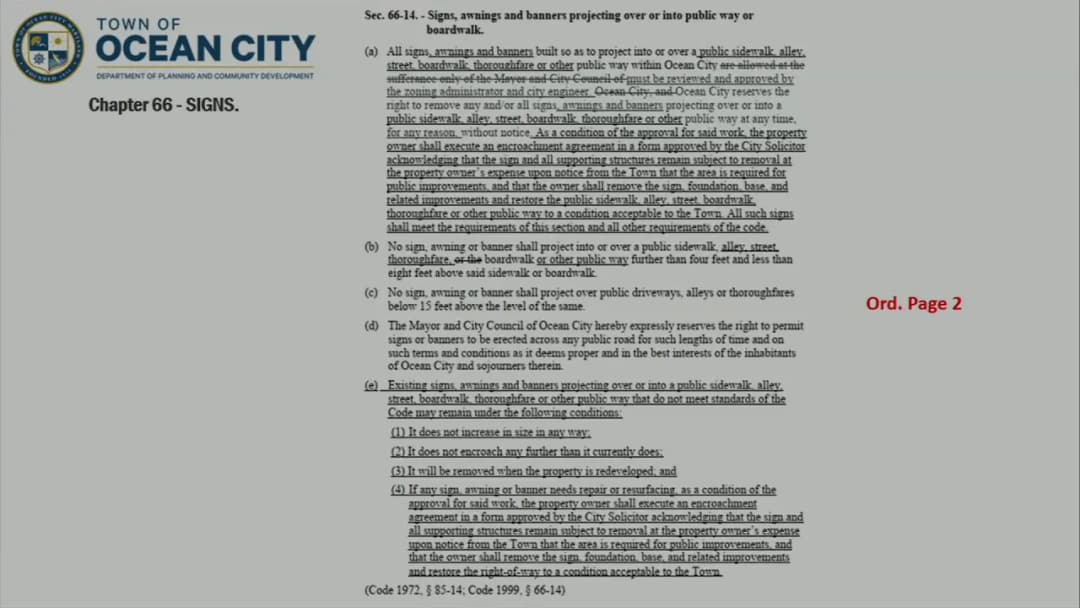
The Mayor and City Council held a work session on Tuesday, September 29, 2026, at 1:00 PM at City Hall. The meeting included reports on closed sessions, approval of minutes, a bid opening for the Racquet Center renovation, a fire prevention commission restructuring, renewal of a Coca-Cola beverage franchise contract, and discussion of signage regulations in the unimproved right-of-way along Baltimore Avenue. All votes were taken with seven council members present and in favor. Closed Session Reports - The Council reported on two closed sessions: one held prior to the work session (12:00-1:00 PM, topics: legal, real estate, public security) and one following the September 21, 2026 open session (topics: real estate matters). Both sessions were properly closed with motions and votes. Attendees included the Mayor, City Manager, Council members, City Clerk, City Solicitor, and others. Consent Calendar - Approval of Minutes: The minutes from Regular Session 14 (September 21, 2026) were approved by a motion from Councilmember Garrick, seconded by Councilmember Buis, with seven in favor. - Bid Opening – Ocean City Racquet Center Renovation: Staff reported a budget of $2.4 million (staff estimate $2.15 million). Seven bids were received: Harkins Contracting ($2,379,000), Delmarva Veteran Builders ($2,573,275), Gillis Gilkerson ($2,918,000), Kent Construction ($2,986,205), Wayland ($2,625,000), Oak Contracting ($3,450,586), and Henley Construction ($2,343,000). A motion to acknowledge the bids and remand them to staff for review carried unanimously. Public Comments & Testimony - No members of the public spoke. Discussion Items - Fire Prevention Commission Restructuring: The Fire Prevention Committee presented proposed code updates to change the commission's composition. The new structure would replace the four volunteer fire chiefs with the career fire chief as chair, plus the deputy chief of Fire/EMS, a deputy chief of the volunteer division, and at-large citizen representatives. Changes also addressed term limits, staggering terms, and quorum definitions. The Council approved the recommendation and set the ordinance for first reading on October 5, 2026. - Coca-Cola Beverage Franchise Renewal: Procurement Manager Matt Perry presented a staff recommendation to renew the exclusive beverage franchise agreement with Coca-Cola Consolidated Inc. for an additional five years, extending the contract from March 31, 2027 to March 31, 2032. The initial contract began in May 2022. Renewal notification was required by September 30, 2026. Staff reported strong revenue performance from the initial term. The Council approved the renewal unanimously. - Signage in the Unimproved Right-of-Way along Baltimore Avenue: Planning and Community Development Director George Bendler presented amendments to the code to allow administrative approval of signs projecting into public rights-of-way by the Zoning Administrator and City Engineer instead of requiring Mayor and Council approval. The changes also required that signs be removed upon property redevelopment and included insurance requirements. The Council approved the proposed code changes. Key Outcomes - Minutes approved (7-0). - Bid opening acknowledged and remanded to staff (7-0). - Fire Prevention Commission restructuring approved with first reading scheduled for October 5, 2026 (7-0). - Coca-Cola franchise renewal approved for five years through March 2032 (7-0). - Signage code amendments approved to allow administrative review of signs in the right-of-way (7-0). - Meeting adjourned at 1:42 PM.
The Economic Culture and Civic Development Committee of the Mobile City Council convened on September 29, 2026, at 6:00 PM. The meeting was chaired by Councilman Corripean and Councilman Ben Reynolds. Also present were President Small, Vice President Gregory, Councilman Woods, Councilman Fleming, and City Attorney Jonathan Maples. The sole agenda item was a presentation by Kelly Shirazi, Director of the Mobile Film Office, to provide an overview of the office's activities, economic impact, workforce development, and stewardship of its $175,000 annual performance contract budget. The meeting lasted approximately 45 minutes. Discussion Items - Film Office Overview: Director Kelly Shirazi described the office as an economic development, workforce development, and community engagement hub that supports a wide range of productions (feature films, TV, commercials, music videos, documentaries, video games, etc.). She emphasized that the office helps recruit productions, coordinates location scouting, permits, crew hiring, and community outreach, and works to maximize local economic impact. The office operates with two employees. - Budget and Staff: Councilman Reynolds asked about the number of employees (two) and the current year's budget ($175,000 performance contract). - Impact of Budget Decrease: Councilman Corripean asked whether the budget reduction would affect services. Shirazi responded that all education programs are conducted voluntarily by local film professionals at no cost to the office, so the decrease would not directly impact those programs. She highlighted the dedication of the local crew, many of whom give back to the community. - Production Statistics: In the current year (2026), the film office recorded: 7 feature films, 15 TV shows, 426 commercials, 16 music videos, 14 documentaries, 9 proof-of-concept short films, 25 student films, 30 YouTube series episodes, and 20 creative content videos. These numbers represent only productions that interacted with the office; additional unrecorded filming occurs. - Film Recruitment and Process: Councilman Woods asked about the process for a production to film in Mobile. Shirazi explained that the office actively recruits productions (e.g., calling producers, sending location packages) and assists with the state incentive application process. She cited an example of a recent last-minute scout for a film that was assembled in under 24 hours. - Economic Impact Examples: Vice President Gregory asked about the direct economic benefits to local businesses. Shirazi described a recent film that purchased food from local grocery stores (Costco, Greers), used Barton Academy and Ladd-Peebles Stadium as locations (school system), rented a church as base camp, and even rented a therapist's office—whose earnings were used to provide free therapy to local residents. A slide shown listed categories of local businesses impacted, but the specific numbers were not fully detailed in the transcript. - Workforce Development: Shirazi highlighted the office's shadow program (50 students, ages high school to college) that provides real-world set experience, resume building, and IMDB credits. They have placed students on productions such as American Idol and the feature film Adulting. A quarterly student film showcase at the Crescent Theater drew 30 submitted films from across Lower Alabama and filled the theater. - Crew Base and Local Hiring: The local crew base numbers over 100 professionals who work nationally (e.g., on The Mandalorian). Shirazi expressed enthusiasm for productions that employ local crew, allowing them to work at home. She cited a film from the previous year that spanned Mobile, Dauphin Island, Gulf Shores, Orange Beach, and Daphne, housed in Mobile, and hired 46 crew members plus two of her shadow students. - Councilmember Comments: Councilman Fleming praised the film office's work, referencing Nicholas Cage films and the importance of state incentives in competing with Georgia. He and other council members expressed strong support for the office's efforts. Key Outcomes - The committee requested a copy of the presentation for all members. Councilman Woods asked for it specifically. - No formal votes or actions were taken; the meeting served as an informational session. - The meeting was adjourned after the presentation and Q&A.
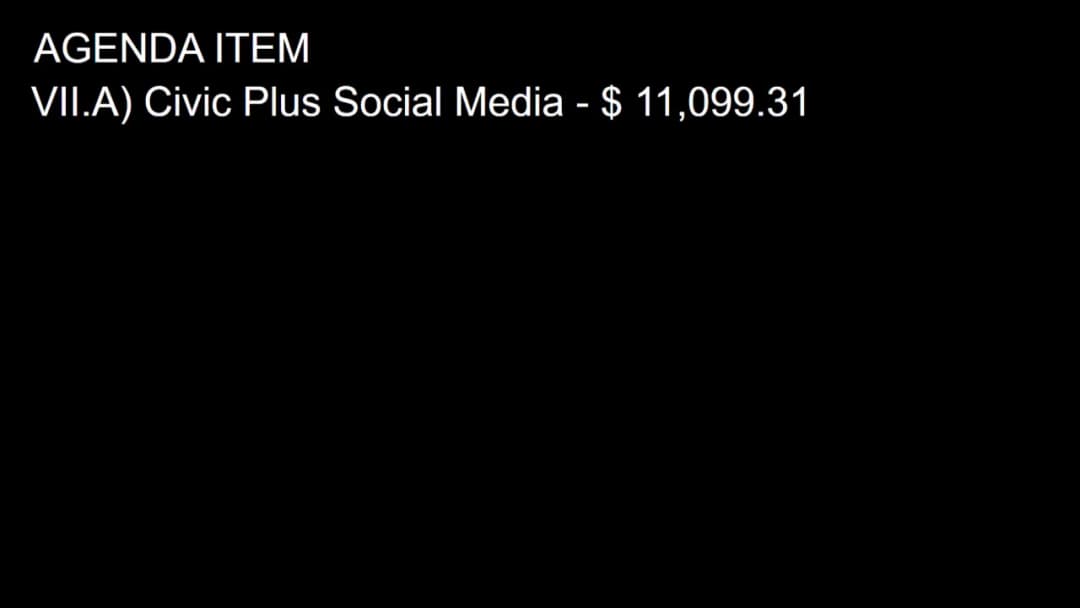
This meeting was originally scheduled for August 31, 2026 at 7:00 PM per the agenda, but the provided timestamp indicates the meeting occurred on September 29, 2026 at 6:00 PM UTC (2:00 PM EDT). No minutes or transcript were available; this summary is based solely on the published agenda, which includes several test and placeholder items. Consent Calendar - Approval of Civic Plus Social Media expenditure of $11,099.31 (listed on consent agenda, no discussion recorded). Unfinished Business - Test items for a work session and VoteCast session were listed but no details or outcomes provided. New Business - A test lease item was listed. - "Frosty Friday!!!" – an item regarding a potential event or program. - "Summer Friday's are a thing, or they should be!!" – an item discussing summer Fridays as a workplace policy or event. Key Outcomes - No votes, decisions, or directives are recorded in the available agenda. The consent item was likely approved but not confirmed without minutes.
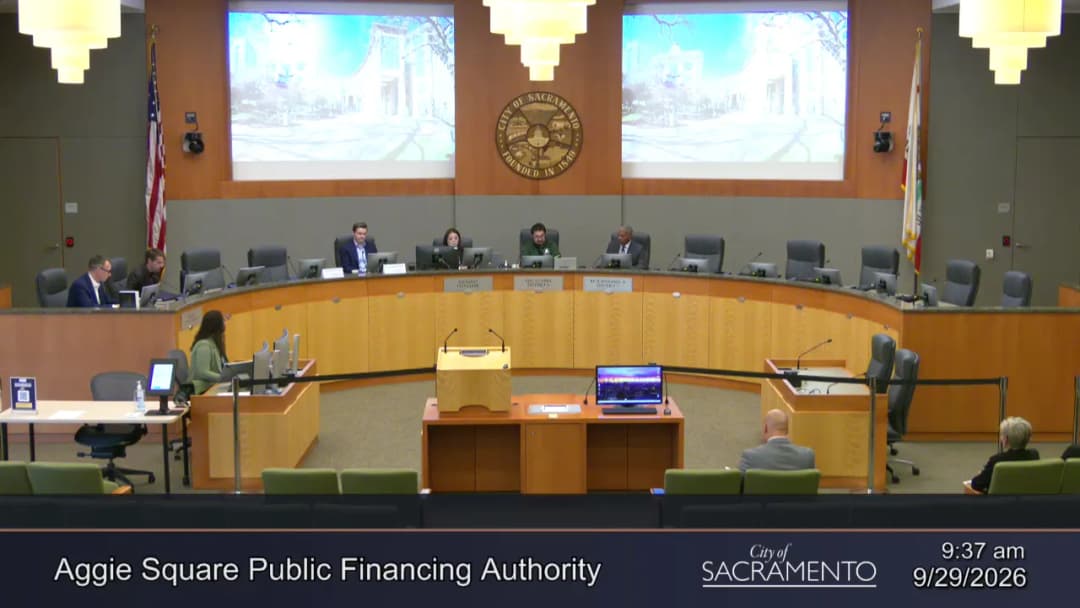
The Aggie Square Enhanced Infrastructure Financing District (EIFD) Public Financing Authority held a special meeting on September 29, 2026, at Sacramento City Hall. Vice Chair Eric Guerra called the meeting to order at 9:34 a.m. and adjourned at 9:43 a.m. Members present: Rick Jennings (District 7), Christopher Romney, and Vice Chair Eric Guerra (District 6). Members absent: Yzabelle Dela Cruz (District 5) and Chair Caity Maple (District 5). The meeting included a consent calendar, one public hearing, and commissioner comments. Consent Calendar - Approval of Minutes: The Authority unanimously approved the special meeting minutes of June 17, 2025, and August 25, 2026. (File ID: 2026-01578) Public Comments & Testimony - No members of the public signed up to speak on any agenda item. Discussion Items - Second Amendment to the Infrastructure Financing Plan and Third Amendment to the Master Funding Agreement (File ID: 2026-01482) - Sini Makasini (Senior Development Project Manager, Finance Department) presented the staff report. The proposed second amendment to the Infrastructure Financing Plan makes two minor changes: (1) amends the list of public facilities to be financed by the EIFD, and (2) amends the list of authorized financing methods to allow the EIFD to pay impact fees as a financing method. The City Council approved these same amendments on September 22, 2026. - The Authority conducted a public hearing, closed it, and then voted unanimously (3-0, with two members absent) to adopt the resolution approving the second amendment and to authorize the PFA Executive Director to enter into the Third Amendment to the Master Funding Agreement with the University of California, related LLCs, and the City. - Vice Chair Guerra emphasized the importance of ongoing public engagement and noted that an annual Aggie Square community meeting is upcoming. Commissioner Jennings echoed the need to keep the community informed and involved throughout the process. Commissioner Comments-Ideas and Questions - Vice Chair Guerra raised concerns about parking accessibility at Aggie Square, noting that parking costs can be a barrier, and encouraged exploring solutions. He also expressed appreciation for seeing students on campus tours. - Commissioner Jennings reiterated the importance of creative public engagement to ensure community voices are heard. - Leslie Fritzsche (Economic Investment Manager) responded that the Authority holds regular meetings with the SACMA Investment Without Displacement Group (next one in October) and quarterly community meetings (the next potentially on October 21). She noted that the last annual report recorded over 300 community meetings held at Aggie Square, reflecting its role as a community hub. She also acknowledged the parking issue and mentioned that parking validation is often provided for community meetings tied to the Community Benefits and Partnership Agreement. Key Outcomes - Approved the Consent Calendar (minutes) unanimously. - Adopted the Second Amendment to the Infrastructure Financing Plan and authorized the Third Amendment to the Master Funding Agreement for the Aggie Square Project (unanimous vote, 3-0). - No further actions or referrals.
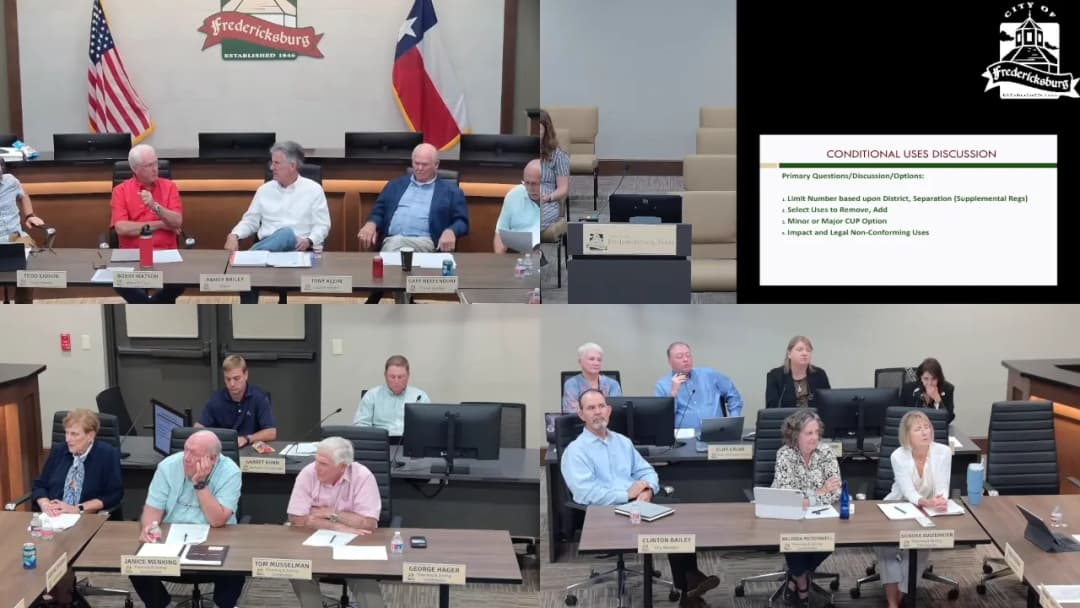
The Fredericksburg City Council convened a special meeting on Tuesday, September 29, 2026, at 5:30 PM, in a joint session with the Planning and Zoning Commission. The agenda included a resolution to authorize a revised conceptual alignment for a future roadway (part of a potential Waldorf Astoria development), executive sessions, and a joint discussion on amending the Zoning Ordinance regarding Conditional Use Permits (CUPs) in the Central Business District (CBD). Public Comments & Testimony - Charlie Keeney (former mayor): Asked whether Resolution 2026-05 is binding, if the developer is obligated to make improvements, whether the road will be open to the public, and how drainage will be affected. He expressed hope the development would be good for the community. - Dr. Mike Braden (property owner east of proposed development): Stated the new alignment may be the best approach but expressed concerns about the road being built in the floodplain, extra costs for building a bridge and curves, and the impact on other property owners. He urged that the road be built to state standards and paid for before development. - Greg Davis (co-owner of Coliseusellers Winery, 414 Goehmann): Expressed excitement about the potential Waldorf Astoria resort, stating it would help his business with seven-day-week traffic and allow him to employ more full-time staff. - Tony Smith (owner of Avast Winery, Stonewall): Voiced strong support for the Waldorf Astoria project, saying the resort would bring the “right kind of tourism” and provide vital midweek business for local wineries and restaurants. He noted the project is not walled off and will include public spaces. - Randy Box (owner of Fredericksburg Inn and Suites): Supported the project, calling it a unique amenity that elevates the town’s perception for tourists. - John Crenwelge: Stated he does not oppose the Waldorf but objects to the proposed roadway alignment near his property on safety grounds. He urged keeping the previous alignment, which he believes would be safer and less prone to accidents. - Mike Davis (nearby ranch owner): Expressed empathy for neighbors but indicated general support for the Waldorf project, hoping it contributes positively to the town. - Julie Herbert (COO of Heat Family Brands, 30-year resident): Voiced strong support, stating the Waldorf will attract the needed customer base, bring new residents, and help the community grow. She said “growth does not scare me” and that not growing is “dying.” Discussion Items - Resolution 2026-05 – Revised Conceptual Roadway Alignment at 405 Goehmann Lane: The Council heard from engineers and staff regarding the proposed roadway, which is part of a potential development agreement with Waldorf Astoria. Questions from Council focused on floodplain issues, FEMA approval, cut and fill requirements, safety of curves, and the eventual dedication of the road to the city. The developer’s attorney confirmed the road will be built to arterial standards as a two-lane private road initially, with the city having the right to take ownership and expand to four lanes in the future. The floodplain engineer explained that the areas to be filled are off-channel ineffective flow areas, and FEMA has already approved a Conditional Letter of Map Revision (CLOMR). - Joint P&Z/City Council Discussion on Amendments to the Zoning Ordinance – Conditional Use Permits (CUPs): Council and P&Z members discussed requiring CUPs for certain businesses in the Central Business District, particularly alcohol-related uses (wine tasting rooms, bars, etc.). Development Services Director Cliff Cross presented on the purpose and process of CUPs. City Attorney Barbara Quirk provided examples from San Marcos, including caps on the number of bars (14) and restaurants with alcohol (25) in their downtown, as well as time-limited CUPs and distance requirements. Councilmembers expressed differing views on whether there is a current problem or a perception problem, and on the need to preserve retail diversity. A consensus emerged to avoid regulating all CBD businesses and to focus on specific uses, with an agreement to form a subcommittee (possibly with stakeholders) to study the issue further before drafting amendments. Key Outcomes - Resolution 2026-05 (approving the revised conceptual roadway alignment) passed 4-1. - Council and P&Z agreed to direct staff (led by Cliff Cross) to form a subcommittee to evaluate potential Zoning Ordinance amendments regarding Conditional Use Permits in the Central Business District. The subcommittee will consider regulating uses such as alcohol-related businesses, explore tools like distance separations, caps, and time-limited permits, and examine market data to ensure retail diversity. The goal is to bring forward specific recommendations for a future public hearing. - The meeting noted that the order of the agenda was adjusted for efficiency, with public comments heard before the executive session on the roadway resolution.