Browse by city
Date range
Search help

Search titles, summaries, topics and stored transcripts together. Keywords may match separately; put the whole query in double quotes for a phrase. Matching follows word analysis, so punctuation is not exact. Both dates are included. Documents are not searched.

SHOWING 5361–5370 ENTRIES
5361
SEP 16, 2026 · WASHINGTON, DISTRICT OF COLUMBIA · COUNCIL OF THE DISTRICT OF COLUMBIA
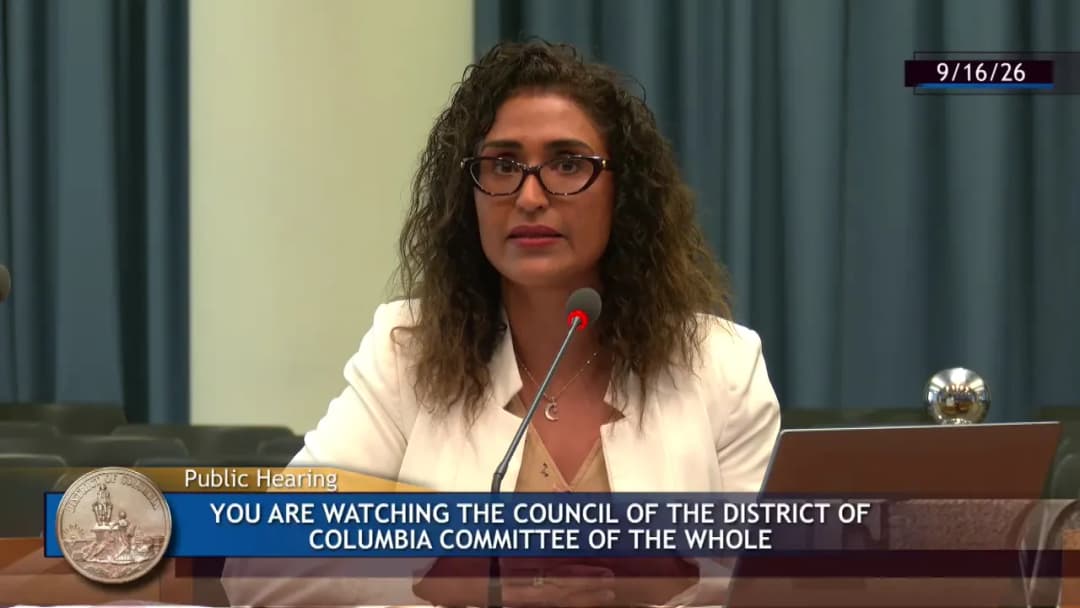
Committee of the Whole Hearing on Society for Science Tax Exemption and Combined Reporting Bill - September 16, 2026

Chair Phil Mendelson presided over a public hearing on two bills: Bill 26-94, the Society for Science Real Property Tax Exemption Amendment Act of 2025, and Bill 26-708, the Combined Reporting Amendment Act of 2026. The hearing began at 2:19 PM in Room 412 of the John A. Wilson Building. Seven witnesses testified on the first bill and six on the second, followed by government testimony. The record will remain open until 5:00 PM on September 30, 2026. Society for Science Real Property Tax Exemption (Bill 26-94) Public Testimony: - Maya Ajmera (President and CEO, Society for Science) testified in support. She described the organization's 104-year history and its new 96,000-square-foot headquarters at 1776 Massachusetts Avenue NW, acquired in 2024. The building is envisioned as a community asset including a STEM research hub (partnering with Kid Museum), a 300-seat convening center, and a multimedia newsroom. She stated a goal of serving 25,000 DC students and educators annually and noted that 95% of elementary school students served reported joy in STEM. She argued that the tax exemption would allow more resources for programming rather than property taxes. - Tara Walker (DC science educator) testified in support, sharing personal experiences with Society programs and emphasizing the need for sustained STEM opportunities for underserved students. - Eric Brooks (Ward 6 resident, alumnus of the Science Talent Search) testified in support, describing his transformative week as a finalist in 2010 and how the experience shaped his career. - Michelle Hackman (Ward 1 resident, alumnus) testified in support, highlighting the importance of public access to science and the Society's role in connecting students to research. Discussion: Chair Mendelson noted that the CFO's tax abatement financial analysis (TAFA) concluded the exemption was unnecessary, assuming immediate rental income from three floors and citing healthy unrestricted reserves. Ajmera countered that rental projections were unrealistic given current market conditions, that multi-year grants are booked as immediate revenue but paid out over time, and that the $20 million reserve is for emergencies only. She committed to providing supplemental financial details. The chair asked for clarification on the properties covered: the bill originally included three parcels (1719 N St, 1723 N St, 808 8th St) but only the N Street properties have been sold; the Society now owns only 1776 Massachusetts Avenue, and the exemption is sought for that property, though the bill text does not reflect it. Combined Reporting Amendment Act (Bill 26-708) Public Testimony: - Robert Branham (DC Federation of Civic Associations) testified in support, arguing that the Finnegan method would fairly allocate tax burden from multi-state corporations. - Alan Pasetsky (Global Business Alliance) testified with concerns. He supported the transition to Finnegan but opposed two provisions in Section 5 of the bill (based on the MTC model) that go beyond apportionment: (1) changing "effectively connected income" to "U.S. source income" for foreign entities, and (2) removing treaty-protected income exemption for the 20% intangible income test. He argued these would lead to double taxation, override federal treaties, and make DC an outlier, urging the council to revert to existing DC language. - Patricia Stamper (DC resident, educator, entrepreneur) testified in support, but asked for transparency: how much revenue would be gained, which corporations are affected, how enforcement works, and how success will be measured. - Kelsey Johnson (Global Business Alliance – VP of State Affairs) testified in support of the Finnegan change. - Michael Masarov (former CBPP tax analyst) testified in support, stating Finnegan is the correct method and that the MTC model is well-considered. He argued the two provisions do not create double taxation and are needed to prevent profit shifting. - Professor Shensky (tax law expert) testified in support of retaining the MTC provisions as sound base-broadening measures. Government Testimony: Aisha Hashmi (Corporate Tax Counsel, Office of the Chief Financial Officer) explained the existing Joyce method and the transition to Finnegan enacted in 2024. She stated that Bill 26-708 is necessary to implement the transition with conforming and technical amendments. She recommended delaying the applicability date to tax years beginning after December 31, 2026, because there is insufficient time to implement for 2026. She defended the two disputed provisions as deliberate and consistent with practices in New York, New Jersey, and California, noting that federal tax treaties do not automatically bind state income tax systems. Discussion: Chair Mendelson explored the two challenged provisions. Pasetsky identified them as Section 4 and Section 5 language that removes treaty protection and expands the base beyond effectively connected income. Hashmi argued these provisions broaden the tax base and are not inadvertent. Masarov and Shensky supported the provisions as tools to prevent income shifting, while Pasetsky countered that DC already has robust add-back and anti-abuse rules. The chair noted the need for additional analysis and requested supplemental submissions from all parties. Key Outcomes - The record will close on Wednesday, September 30, 2026, at 5:00 PM. All parties may submit supplemental testimony. - Society for Science to provide detailed financial responses to the TAFA analysis. - For Bill 26-708, the OCFO will provide a fiscal impact assessment of delaying applicability to 2027. Chair Mendelson indicated a possible mark-up in October and final action by December. - Chair encouraged stakeholders to submit written arguments on the two disputed provisions to inform potential amendments.

TAX POLICY 52% · BUDGET 23% · PUBLIC EDUCATION 14% · PUBLIC ENGAGEMENT 5%
5362
SEP 16, 2026 · SAN DIEGO, CALIFORNIA · CITY COUNCIL
San Diego City Council Meeting - September 16, 2026

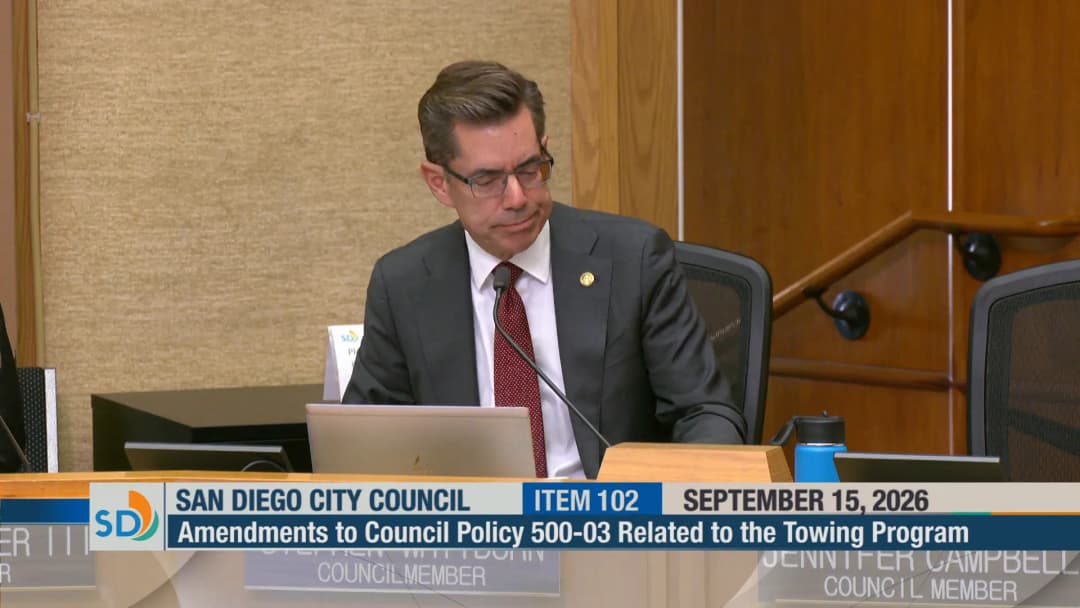
The San Diego City Council met on Tuesday, September 15, 2026 (per the provided date, the meeting is noted as September 16) to consider proclamations, consent items, and a policy amendment on towing. The council voted on multiple items, including a new policy to issue citations instead of towing for vehicles with expired registrations, and recognized several community organizations and individuals. Proclamations - Item 30: Proclamation declaring September 20, 2026 as Buddhist Temple of San Diego’s 100th Anniversary Day. - Item 31: Proclamation declaring September 19, 2026 as Lyle Prijoles Day (honoring a Filipino human rights advocate killed in the Philippines). - Item 32: Proclamation declaring September 2026 as Childhood Cancer Awareness Month. - Item S500: Proclamation declaring September 2026 as San Diego River Park Foundation’s 25th Anniversary. - Item S501: Proclamation declaring September 2026 as 11th Annual Lao Boat Racing Festival Day. - Item S503: Proclamation declaring September 22, 2026 as Tony Hicks Day (honoring a restorative justice advocate). - Item S507: Proclamation declaring September 16, 2026 as Mexican Independence Day. - Additionally, Councilmember Moreno proclaimed September 15, 2026 as Julie Corales Day for her community leadership in Barrio Logan. - Public testimony: Multiple speakers expressed support. One speaker (Maximilian Schmidt) criticized the proclamations as part of a “Marxist cultural revolution” and called for more Christian recognition. Councilmembers spoke in favor, highlighting the honorees’ contributions. The proclamations were approved unanimously (8-0). Consent Calendar The consent agenda included items 100-106 (excluding item 102) and items S504-S506. Key items: - Item 100: Authorization to apply for and accept up to $5 million in California Natural Resources Agency grant funds for Boston Avenue Linear Park. - Item 103: Amendment to increase outside counsel contracts by $5.5 million. - Item 104: Approval of a $269,000 settlement with former city employee Aliyah Curry for a wrongful conduct claim. - Item 105: Appointment of Rudy Lopez to the Board of Library Commissioners. - Item 106: Reappointment of Arnav Bhagat to the Youth Commission. - Items S505 and S506: MOUs with the Police Officers Association and lifeguards (Teamsters Local 986). - Public testimony: Speakers supported digital literacy programs, expressed concerns about outside counsel spending, supported the lifeguard MOU, and criticized the settlement due to lack of transparency. Councilmember Foster voted no on Item 103, citing liability concerns. The consent agenda passed 8-0, with Councilmember Foster voting no on Item 103 alone. Discussion Items Item 102 – Amendments to Council Policy 500-03 (Towing Program) Councilmember Whitburn introduced amendments to end the practice of towing vehicles solely for expired registration (over six months) and instead issue citations. The presentation cited that between 2017-2022, 25,000 vehicles were towed for expired registration, with 12,000 sold at lien sales. The policy would also require reporting to the Public Safety Committee at least every three years. - Public testimony: Support from multiple speakers, including a survivor of such a tow and Andrea Guerrero of Alliance San Diego, who also asked to address 72-hour parking tows. Opposition from Paul Kruger, who raised concerns about quality of life issues with RVs and abandoned vehicles. Council debate: Councilmember Whitburn argued it addresses structural inequity; Councilmember Campbell opposed, citing state law and potential for pretext stops; Councilmember Foster supported but expressed concerns about pretext stops. The motion passed 7-1, with Councilmember Campbell voting no. Public Comments & Testimony (Non-Agenda) Speakers in person addressed: - The need for city support to preserve Jim Bell’s legacy property in Ocean Beach. - DMV identification card issues affecting marginalized individuals. - Sea level rise and flooding in the Midway district, urging the city to adopt adaptive construction techniques. - Support for Save Starlight Bowl, a historic venue in Balboa Park. Virtual non-agenda public comment was deferred to the afternoon session. Key Outcomes - All proclamations approved (8-0). - Consent agenda approved (8-0, with Councilmember Foster voting no on item 103). - Item 102 approved (7-1), directing the police to issue citations for expired registration instead of towing, with reporting requirements. - The meeting recessed at noon and will reconvene at 2:00 PM for the afternoon session, including virtual non-agenda public comment.

PUBLIC COMMENT 27% · TOW TRUCK REGULATION 17% · PROCEDURAL 13% · PUBLIC SAFETY 12%
5363
SEP 16, 2026 · ANCHORAGE, ALASKA · ASSEMBLY & COMMITTEE MEETINGS
Housing and Homelessness Committee Meeting - 2026-09-16

The Housing and Homelessness Committee met on 2026-09-16 from 11:00 a.m. to 12:30 p.m. to receive updates on homelessness and health metrics, shelter operations, and a fall shelter update. The meeting was convened by Jared Gerker. City staff from the Anchorage Health Department, Anchorage Police Department, and a shelter provider presented; no formal votes were taken. Homelessness and Health Metrics Dashboard - Kimberly Rash (Anchorage Health Department), Steve Williams (APD), and Frankie Dahl (AHD) presented data on the dashboard, which has not significantly changed since the last meeting. - Anchorage Safety Center admissions in 2026 year-to-date (as of June) totaled 6,826. - In quarter one and quarter two of 2026, 935 people used shelter/transitional housing for the first time. - Linda's Place has a surge capacity of 150 people; the Alex Hotel remains at a standard 100. - The Hope team coordinates a daily multidisciplinary outreach team meeting at 9 a.m.; APD also works with True North Recovery on outreach. - AFD's core team is providing Suboxone and working with AHD on Sublocade; funding comes from the state Rural Health Transformation Program, and a connection to the Healthy Connect health information exchange is being developed. - Health Department staffing is limited: 2-3 public health nurses, one medical assistant, and one coordinator; a billing/coding FTE is currently vacant, making reimbursement challenging. - A member asked what proportion of reimbursable services offset city spending; Director Rash noted the vacant billing/coding position is a major barrier. - The chair noted that an update to a municipal code provision referred to as "16.12.0" was on the prior evening's agenda. Fall Shelter Update - A shelter provider reported real-time communication across the shelter system, flexible bed use (e.g., moving beds between male and female sides), and the addition of 20 beds the day before the meeting. - In the last two weeks of the reporting period, 13 shelter clients moved into housing: three from Linda's Place, two from a facility referred to as "56," and eight from the Alex shelter; Good Neighbor funds supported six of those moves, averaging about $250 each. - The provider estimated 20-25 turnaways per day systemwide due to lack of capacity. - Shelter rules prohibit weapons and substances; intoxication alone is allowed unless it presents a safety concern. Some very sick individuals use shelters as homes and need higher levels of care (e.g., assisted living). - Barriers to assisted living include clients' unwillingness to pay benefits to assisted living facilities and home-upgrade costs needed for licensing; a health department division manager called 101 locations identifying as assisted living centers. Asked whether the community has assisted-living care at the needed scale, presenters answered no. - Director Rash offered to arrange a future presentation on the Anchorage Recovery Center and Willow Commons. Public Comments & Testimony - One commenter requested that committee members and community councils volunteer as stewards for different parts of town to check on people as cold weather approaches. - Another commenter argued that attaching services to police officers will fail, and that people may not be able to speak freely when police are present. - A commenter pointed out an apparent data discrepancy: text said 42 were connected to treatment, but the table listed only 29. Key Outcomes - No formal votes were taken. - Funding for a new electronic health record (EHR) system will be considered at the October 6 meeting. - Staff will continue working with fire and planning departments on assisted-living capacity. - A deeper future presentation on the Anchorage Recovery Center and Willow Commons was offered. - The committee was reminded that provider presentations would follow and that time should be reserved for those conversations.

HOMELESSNESS 57% · PUBLIC HEALTH 20% · AFFORDABLE HOUSING 9% · PUBLIC SAFETY 9%
5364
SEP 16, 2026 · TULSA, OKLAHOMA · CITY COUNCIL
Tulsa City Council Budget and Special Projects Committee Meeting - September 16, 2026

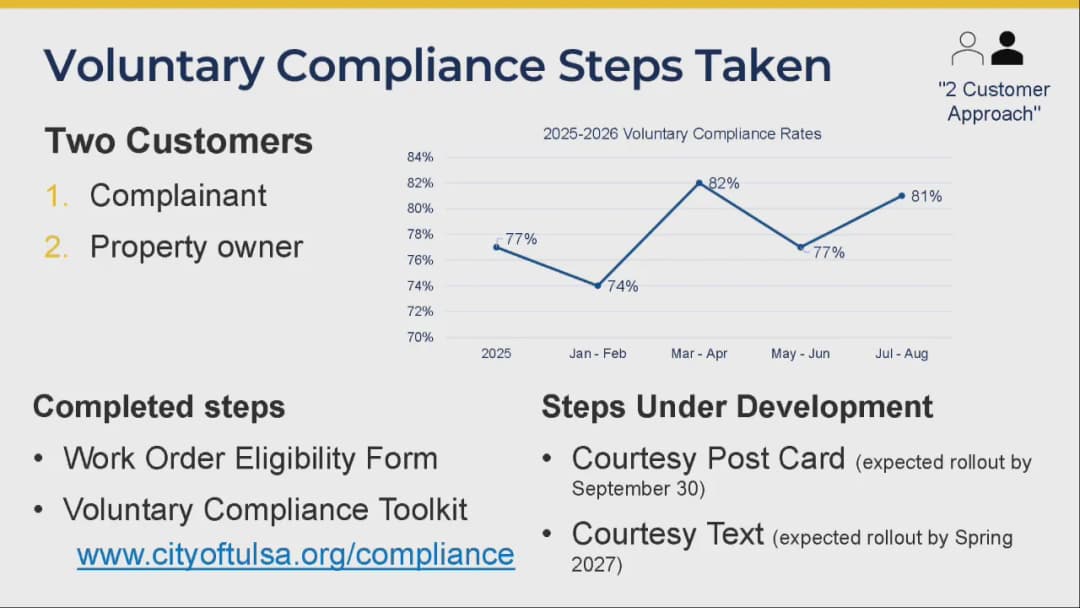
On September 16, 2026, at 1:00 PM, the Tulsa City Council Budget and Special Projects Committee met in Room 411, One Technology Center, 175 E. 2nd St., Tulsa, OK, with Chair Gilbert and Co-Chair Bengal presiding. The committee reviewed seven supplemental appropriation ordinances, a non-binding eviction prevention and legal representation resolution, an update on code enforcement backlog efforts, and a travel authorization. No minutes were available. The raw transcript opens with separate Planning Commission proceedings before the Budget and Special Projects Committee segment begins; this summary covers only the committee agenda items. Supplemental Appropriations (Items 2-7) - Item 2 - TSET / North Tulsa Wellness Initiative ($7,604,163.81): Ordinance amending the FY2026-2027 budget to appropriate $7,604,163.81 recognized from Oklahoma Tobacco Settlement Endowment Trust (TSET) grant revenues into the Social and Economic Development Non-Federal Grants SubFund. Staff requested waiver of City Charter, Council Rules and Order of Business, and approval and adoption on first reading. Staff described a reimbursement-based, multi-year grant; the first-year award was discussed as part of a total grant described as $17.6 million and later as $17.3 million in the same discussion. The funds support the North Tulsa Wellness Initiative with eight partners, including two new primary care residency spots per year at Crossover Health Services, an outdoor sports complex at Hawkover Park, 11 miles of mountain biking and hiking trails in Flat Rock Creek, an urban farm supplying a neighborhood grocery store, mental health programming, a bike club, and Fresh RX food-as-medicine work. Staff said the program was supposed to begin January 1, but reimbursement delays caused financial strain and some partner layoffs, creating urgency to move the funds. - Item 3 - Cherokee Health Grant ($125,000): Ordinance appropriating $125,000 from the Cherokee Health Grant into the Social and Economic Development Non-Federal Grants SubFund. Staff described a three-year grant with $125,000 in the current year and the next two years for culturally relevant lung cancer screening initiatives for Cherokee citizens in North Tulsa. The program will use community input, local data, and the Neighborhood Condition Index to define priorities. No city match is required. Funding will support a part-time community health worker plus overhead, marketing, and outreach. - Item 4 - Telligen Community Initiative Grant ($25,000): Ordinance appropriating $25,000 from the Telligen Community Initiative Grant for the Mayor's Office of Health and Well-Being. It will fund a part-time community outreach coordinator who will work with neighborhoods identified through the Neighborhood Condition Index. During discussion, Councilor Dr. Wright raised questions about part-time staffing and long-term fiscal sustainability. Dr. Pasha counted seven total staff positions in the office, many grant-funded, and said this grant creates a part-time position. Councilor Dr. Wright asked for a fuller accounting of grant-funded staff before the council retreat to avoid future general fund pressure. Councilor Dutton asked whether Neighborhood Condition Index thresholds were predetermined; Dr. Pasha said the approach is fluid and the office is working toward a neighborhood health index. Councilor Archie requested a map showing district-level impacts of the health initiatives, and Dr. Pasha agreed that mapping is important. - Item 5 - Byrne Justice Assistance Grant ($413,630): Ordinance appropriating $413,630 from U.S. Department of Justice grant revenues into the JAG Reimbursements Grants SubFund. Staff said the Tulsa Police Department received the annual JAG award; $395,253 would go to TPD's Riverside Division and $18,000 would pass through to the Tulsa County Sheriff's Office under a memorandum of understanding. Specific uses were identified in the award documents and presentation, but staff had not yet seen the final MOU. - Item 6 - Convention and Visitors Fund ($293,750): Ordinance appropriating $293,750 from Convention and Visitors Fund revenues. Staff said about $200,000 of the amount was FY26 revenue above the original budget estimate and would be distributed as a one-time amount to Visit Tulsa for promotional marketing campaigns. The remaining $93,000 was from the FY26 original budget and needed reappropriation to pay FY26 bills because of the June/July billing timeline crossing fiscal years. - Item 7 - Cities for Financial Empowerment Fund ($20,000): Ordinance appropriating $20,000 from Cities for Financial Empowerment Fund grant revenues. The funds go to the Department of Resilience and Equity for financial counseling services. Staff described this as an amendment to a 2021 grant after the original scope was completed; the funder provided additional dollars to continue the program. Eviction Prevention and Legal Representation Resolution (Item 8) - Councilor Bellis presented a non-binding resolution expressing the City's intent to support the establishment and funding of an eviction prevention and legal representation program. She emphasized that the resolution does not change policy and does not commit specific public funds, but it allows partners to be convened and program design to move forward. - Bellis cited Tulsa County statistics: about 14,000 eviction filings per year; Tulsa ranked about 11th in the nation for eviction filings; about 74,000 eviction filings since COVID; and about 3,000 Tulsa Public Schools students affected per year. She also cited an average landlord cost of about $2,015 per eviction plus an average vacancy of 1.5 months, and about $4.21 in economic impact return for every $1 invested in similar eviction prevention programming. - The revised resolution language includes education, early dispute resolution, and legal representation as essential program components. It states that public funding sources identified for legal assistance should focus on landlords and tenants with extenuating circumstances such as a sudden medical event or similar hardship, and on tenants facing substandard housing conditions. Program development would be led by a mayor-designated department, and that department would engage landlords, tenants, and service providers in the program development process. Eligibility criteria were broadened so partners can help define income and targeting details. - Bellis noted that only one organization currently provides these services in Tulsa, that capacity has fluctuated with funding, and that one organization cannot represent both sides of a dispute, so additional capacity may be needed. - Mark Smith of Housing Solutions said legal representation will not prevent a lawful eviction, but it provides clarity, helps correct inappropriate filings, and gives tenants and landlords access to legal information that non-attorneys cannot provide. He also said SafeMove is focused on street homelessness, while eviction prevention is an upstream intervention. - Several councilors expressed positions. Councilor Lake reported concerns from landlords about unintended consequences such as increased screening requirements and higher deposits, and asked whether the funding might be better used for rental assistance or for a broader stakeholder debate. Councilor Bush relayed calls from small mom-and-pop landlords with pandemic-related concerns and encouraged them to participate in future program development. Councilor Dutton expressed support for the resolution and said the program development language properly includes landlords, tenants, and service providers. Councilor Bengal said he wants to respect private contracts, use mediation first, and narrowly target public funds to extenuating circumstances such as predatory leases, rather than broadly funding representation for routine nonpayment cases. Code Enforcement Update (Item 9) - James Wagner, Director of Planning and Neighborhoods, and Brent Pitchburg, Code Enforcement Manager, provided the follow-up update requested from the August 26 Urban and Economic Development Committee meeting. - The FY2026-2027 budget added four new code enforcement positions. Current staffing is 31 total positions: one manager, three supervisors, two administrative technicians, and 25 field staff. Vacancies were about 10 as of the prior week, reduced to nine, with additional hires expected. One administrative officer started recently and allowed an experienced officer to return to the field. Three new code officer I positions were offered; one had started and the others were expected to begin within about two weeks, with a target of all new staff working by about October 5. - The current case backlog was reported as about 3,324 cases. Caseload has increased by 54% since 2018, and the May through August backlog comparison shows about a 17% increase over the prior year. Staff said the backlog typically drops to around 1,400 cases in the winter. - Staff described a two-customer voluntary compliance approach: the complainant and the property owner. Voluntary compliance was reported at about 82%, up from about 77% earlier. Planned tools include weekly postcards with QR codes directing property owners to cityoftulsa.org/compliance, text notifications for water-account holders, door hangers, and courtesy contacts. The legal notice period remains 10 days, or 10 business days under local ordinance. The goal is to make first contact within the first week or two once the backlog is caught up, with enforcement action targeted within about 30 days for routine cases. Priority 1 and 2 cases involving immediate life and safety issues are handled within about a week. - Councilor Hall-Harper asked about training timelines, the number of contractors, and how residents can verify a property has been reported. Staff said new code officer I staff can be trained in about six weeks, there is currently one contractor, and a public map on the compliance website shows whether a case has been reported. Councilor Bangle asked about the 311 app being unavailable; staff explained that app-store account renewal was delayed after the death of a city employee, with the Android app restored and the Apple app still being resolved. Bangle also raised the challenge of inoperable or commercial vehicles that cannot be towed under current rules and asked whether ordinance or penalty changes may be needed. Councilor Dutton asked whether the new four staff positions would be enough to reach the 30-day benchmark. One councilor suggested exploring site-specific or neighborhood-level code enforcement case managers; staff said they want to evaluate the new approach before requesting additional staffing. Key Outcomes - The committee heard the supplemental appropriations, the eviction prevention resolution, and the code enforcement update, and then took up the travel authorization for Councilor Hall-Harper to attend the African-American Leadership Conference in Omaha, Nebraska, September 30 through October 3, 2026, at an estimated cost of $1,300 for registration, hotel, transportation, and per diem. The meeting was then adjourned. - No formal roll-call or voice vote tallies are captured in the raw transcript for the committee segment. The agenda indicates that several appropriation ordinances were scheduled for subsequent full City Council action on September 23, 2026, while the TSET item was requested for waiver and first-reading adoption on September 16, 2026, and the eviction prevention resolution was also listed for City Council consideration on September 16, 2026.

EVICTION MITIGATION 32% · CODE ENFORCEMENT 22% · ZONING 9% · PUBLIC HEALTH 6%
5365
SEP 16, 2026 · TOLEDO, OHIO · CITY COUNCIL
Toledo Transportation Committee Meeting: Lake Erie West Regional Council – September 16, 2026

The Transportation Committee of the Toledo City Council held a formal agenda meeting on Wednesday, September 16, 2026. The sole substantive agenda item was a presentation on the Lake Erie West Regional Council. Because of the meeting location, no livestream was available. This summary is based solely on the agenda, as no minutes or transcript were available. Meeting Details - Agenda-listed time and location: 2:00 PM, 21st Floor Large Conference Room, One Government Center, Toledo, OH 43604. - The source materials' timestamp records the meeting as taking place at 2026-09-16 19:00:00+00:00 (3:00 PM EDT), a one-hour discrepancy from the agenda-listed time. This conflict is noted rather than resolved. - The agenda included an Americans with Disabilities Act accommodations notice, requesting 48 hours' advance notice by calling 419-245-1060. Agenda Items - Presentation on Lake Erie West Regional Council (agenda item TRANSP20260916). The stated purpose of the meeting was to discuss this item. The agenda does not describe the content of the presentation. - Any other matter that may properly come before the Committee. Records Note - No meeting minutes were available. - The raw transcript was empty. - As a result, no public comments, committee discussion, or speaker positions can be reported. Key Outcomes - No decisions, votes, directives, referrals, or next steps are recorded in the available materials.

5366
SEP 16, 2026 · TULSA, OKLAHOMA · CITY COUNCIL
Tulsa Planning Commission Special Meeting - September 16, 2026

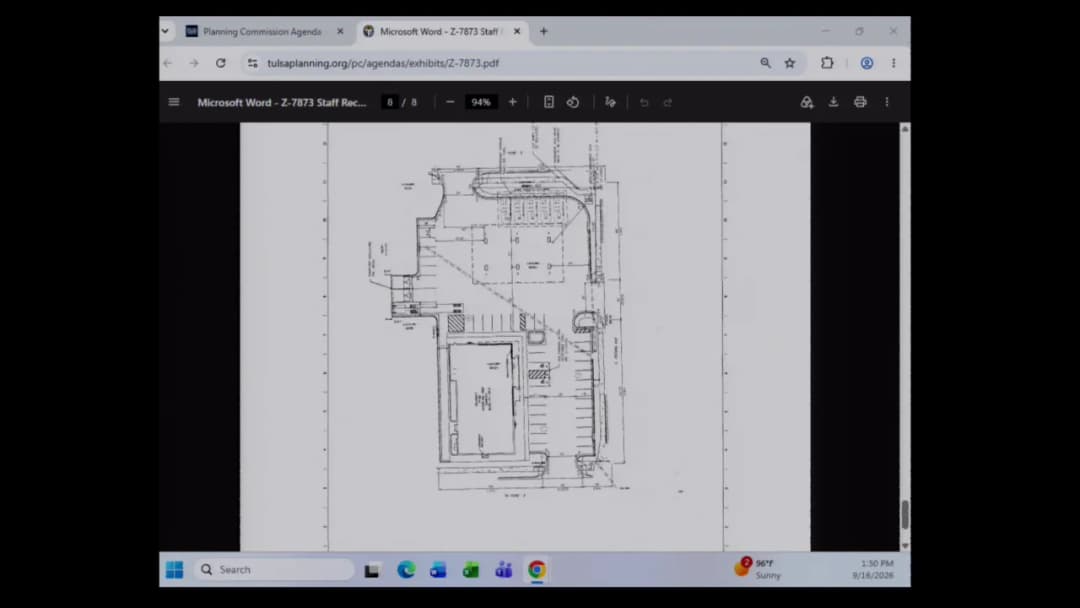
The City of Tulsa Planning Commission met on September 16, 2026, to consider several rezoning requests and preliminary plats. The meeting included public hearings on two rezoning cases and approvals of subdivision plats. Consent Calendar - No items from the consent calendar were discussed in the transcript. The agenda listed two minor amendment signage cases (CO-16-1 and CO-16-2), which were presumably approved as part of the consent agenda. Public Comments & Testimony - Janice Zimmerman (336 S. 190th E. Ave) spoke on Z-7872. She did not oppose senior living but expressed concern about potential flooding issues from the new development, as her property is in a flood zone and she cannot get flood insurance. - Janet Deacock (1852 E. 1st St) spoke on Z-7872. She requested that if the school building is demolished, some bricks be preserved for former students. She also inquired about road impacts. - Angela Edwards (18909 E. 3rd St) opposed Z-7872. She argued that a senior living facility with up to 160 units would generate too much traffic for the quiet neighborhood, that the notice period was only four days, and that the property should be used for single-family homes instead. - Robert Walpole (1133 E. 36th St) spoke on Z-7873. He noted ongoing issues with trash from the existing QuickTrip and expressed concern about changing the character of the street. He did not strictly oppose but hoped for mitigations like fencing. - Grace Whitten (1131 E. 36th St) opposed Z-7873. She cited trash, noise from deliveries, an increase in unhoused individuals, and argued that the rezoning would encroach on the residential Brookside neighborhood, breaking the established balance. Discussion Items - Z-7871 (Rezoning from RS-1 to AG-R): Located near 101st St S and 74th E Ave. The applicant sought a rezoning to allow horse keeping (AG-R zoning). Staff recommended approval. The item was moved and seconded; roll call vote resulted in unanimous approval (6-0). (Note: this item was not discussed in detail beyond the motion.) - Z-7872 (Rezoning from RS-3 to RM-1): Located near 3rd St S and 193rd E Ave. The applicant, Vintage Housing, plans to develop a senior living facility on the former Sandburg Elementary School site. The property is 9.69 acres. The applicant stated that they bought the property from Tulsa Public Schools and plan an 80-unit phase one, with a potential second 80-unit phase. They will seek low-income housing tax credits. Public comments raised flooding concerns, requests for school memorabilia, and opposition due to traffic and notification issues. Commissioners supported the project as beneficial for seniors to remain in their neighborhood. Motion to approve staff recommendation passed unanimously (6-0). - Z-7873 (Rezoning from RS-3 to CH): Located near 36th St S and Peoria Ave. The applicant, QuickTrip, seeks to rezone an adjacent lot to expand their existing store. The new store would be about 6,400 square feet with fewer curb cuts, a sidewalk, and improved landscaping. The Brookside Business Association and Neighborhood Association voted to support. Public comments raised concerns about trash, traffic, noise, and encroachment on residential area. The applicant noted that the use is consistent with the comprehensive plan, that they will have fencing, and that the number of gas pumps will decrease. Motion to approve staff recommendation passed unanimously (6-0). - Settler's Hill Phase II Preliminary Plat: Located near 31st St S and 177th E Ave. A 119-lot residential subdivision. Staff recommended approval. No speakers. Motion passed unanimously (6-0). - Hayden Industrial Park Preliminary Plat: Located near 56th St N and 97th E Ave (Mingo Rd). Zoned industrial high. The plat is for a manufacturing facility for cooling systems for data centers. Staff recommended approval. Motion passed unanimously (6-0). - Hayden Industrial Park Accelerated Release of Building Permits: Related to the above plat. Staff recommended approval with financial guarantees for outstanding infrastructure. Motion passed unanimously (6-0). Key Outcomes - All agenda items were approved as staff recommended, each by unanimous votes (6-0). The meeting adjourned following Commissioners' comments.

ZONING 52% · AFFORDABLE HOUSING 19% · COMMUNITY ENGAGEMENT 17% · BUDGET EQUITY ANALYSIS 4%
5367
SEP 16, 2026 · ST PAUL, MINNESOTA · BUDGET COMMITTEE
St. Paul City Council Policy Committee Meeting – September 16, 2026

The St. Paul City Council Policy Committee met on September 16, 2026, to discuss two agenda items: a proposed dust mitigation ordinance for the Southport industrial area and an analysis of options for establishing an independent city council attorney. Presentations were given by residents, advocates, the Port Authority, and council staff, followed by discussion and next steps. Public Comments & Testimony - Samantha Sanchez, a resident of the Southport area, shared that her son has required daily nebulizer treatments since four months old due to respiratory issues, and that she and her family are moving out of the neighborhood because of the health impacts. She expressed full support for the dust mitigation ordinance, stating it should have been implemented years ago. - Miguel (Westsiders for Environmental Justice Campaign) provided context: the Southport neighborhood is 87% people of color, 46% of households are below 200% of the federal poverty level, and residents have documented excessive dust, odors, and health problems. He argued that unpaved surfaces in the industrial area are preventable sources of dust. - Ashlyn Kenzior, staff attorney at the Minnesota Center for Environmental Advocacy, presented the proposed ordinance modeled on a Detroit ordinance. It would require facilities in covered areas (active commercial/industrial with unpaved roads) to submit fugitive dust plans, with enforcement through complaints and fines that could be directed to community improvements. - Todd Hurley, President/CEO of the St. Paul Port Authority, stated that the roads in Southport are city-owned, that tenants currently sweep roads at least weekly, and that tenants are expected to comply with MPCA regulations. He noted that if an ordinance is adopted, the Port Authority would work with tenants to comply. Discussion Items - Dust Mitigation Ordinance Proposal: Council members expressed broad support. Council President Naker thanked the presenters and noted the city already has a wage theft ordinance as a precedent for local enforcement. Councilmember Bowie praised the grassroots organizing and asked about industry standards for truck covers. Councilmember Coleman shared personal ties to the 55107 zip code. Councilmember Joost highlighted the asthma statistics and her own son's asthma. Councilmember Johnson asked about the geographic scope, and the presenters recommended a citywide ordinance covering unpaved roads. Vice President (name not stated) expressed support and asked about next steps for drafting language. Council President Naker indicated they would work with the city attorney's office on language. A community tour was announced for October 9th. - City Council Legislative Attorney Analysis: Councilmember Johnson introduced the item as a budget priority. Mr. Greenfield presented research: the city charter does not currently allow an independent council attorney without a charter change. He reviewed a survey of 70 cities, finding few with independent legislative attorneys, and described three models (Seattle, New Orleans, Jacksonville). He outlined two pathways without charter change (increasing staffing within the city attorney's office or adjusting the administrative code) and two requiring charter change. Councilmembers discussed the need to address capacity issues and power imbalances with the mayor. Councilmember Coleman emphasized identifying specific obstacles before choosing a solution. Key Outcomes - No formal votes were taken on either item. - For the dust mitigation ordinance, the council president's office will work with the city attorney's office to draft ordinance language, with continued community engagement. - For the independent council attorney, the discussion will continue, with potential exploration of budget amendments to increase council staff capacity and possible referral to the charter commission for structural changes.

ENVIRONMENTAL PROTECTION 43% · PUBLIC POLICY 38% · PUBLIC SAFETY 8% · PUBLIC ENGAGEMENT 5%
5368
SEP 16, 2026 · CARROLL COUNTY, MARYLAND · COUNTY COMMISSIONERS & BOARDS
MDOT Consolidated Transportation Program (CTP) Tour and Discussion – September 16, 2026

The Carroll County Board of Commissioners hosted Maryland Department of Transportation (MDOT) Secretary Katie Thompson and her leadership team for the annual fall CTP tour on Wednesday, September 16, 2026, from 2:00 p.m. to approximately 5:00 p.m. The meeting focused on MDOT's draft six-year $21.9 billion capital budget, major transportation projects affecting Carroll County, and the challenges of balancing safety, state-of-good-repair, and new capacity under fiscal constraints. Commissioners, town officials, and state legislators discussed specific corridor needs, safety improvements, and the need for sustainable transportation funding. Public Comments & Testimony - Councilman Steve Dodomore (Mount Airy) emphasized that Route 27 is the rate-limiting step for any new development in Mount Airy due to traffic safety concerns. He noted that without fixing the corridor, the state's housing goals cannot be achieved. - Mayor Christopher Miller (Manchester) reported that the town invested $130,000 in public safety last year and $300,000 this year, including a speed camera that reduced violations from 270 per day to under 100. He requested continued partnership on the southern bypass easement and development of a portion of the bypass road. - Senator Justin Reedy (District 5) highlighted that over half of the transportation trust fund goes to mass transit, leaving only about 26% for roads. He urged MDOT to help with capacity and safety on Route 26, Route 27, Route 30, and other failing intersections, and noted the challenge of out-of-state commuters from Pennsylvania. - Commissioner Susan Krebs provided extensive testimony on the urgent need for improvements on the Route 26 corridor in Eldersburg, stating that every intersection is failing (E- or worse) and that 1,300 new homes are in the pipeline. She called for a stop to new development until infrastructure is addressed, and stressed that safety and gridlock are critical issues. Discussion Items - MDOT Secretary Katie Thompson presented the three pillars of the draft CTP: safety, state-of-good-repair, and making existing assets work harder. She noted a constrained budget but highlighted a 21.9% decrease in roadway fatalities statewide over the past two years. - State Highway Administrator Will Pines reported progress on several projects: the MD 26 bridge deck replacement (full detour preferred, construction likely 2029); design changes on MD 31 in New Windsor; completion of shared-use path on MD 27 near Westminster (delayed by utility conflicts); and ongoing planning for safety improvements on Liberty Road (MD 26) in Eldersburg, including additional lane capacity, bike lanes, and sidewalk sections. - District Engineer Andrew Radcliffe emphasized the strong partnership with Carroll County and the importance of trust and direct communication. - MTA Director Travis Johnson announced $1.3 million in grants to support Carroll County's local transit operations, including preventative maintenance, a new small bus, and ride share funding. - MVA District Manager Paul Taylor reported that for the third consecutive year, average wait times in branch offices are five minutes, and noted that 422,000 in highway safety grants were awarded to Carroll County organizations. He also stated that Carroll County had 21 roadway fatalities last year and 4 so far this year. - MAA Airport Services Manager Stephen Edgin said MAA will administer $3.5 million in statewide aviation grants, including $350,000 for runway improvements and security cameras at Carroll County Regional Airport. - Commissioner Michael Guerin raised the need for Route 27 improvements from the county line to Gillis Falls Road, citing traffic density and potential growth in Mount Airy. He thanked MDOT for quick repair of the eastbound lane on Route 70 after a vehicle strike. - Commissioner Kenneth Kiler and Commissioner Tom Gordon discussed the Manchester intersection of MD 27 and MD 30, noting the town's interest in a bypass and the difficulty of acquiring properties. Commissioner Kiler relayed the town manager's regret over opposing the bypass in the 1970s. - A lengthy discussion on adequate public facilities ordinances (APFOs) and developer contributions occurred. Secretary Thompson explained that 40 separate APFOs exist in Maryland and offered to return for a deeper dive on best practices. She noted that state law defers to county APFOs, and that most housing does not directly tie into state roads, making mitigation on state roads difficult. - Commissioner Krebs asked for clarity on federal and state funding buckets. Administrator Pines summarized major federal programs: STBG, NHPP, PROTECT, carbon reduction, NEVI, local bridge, rec trails, transportation alternatives, and safe routes to schools. He explained that county match funding improves project scores in MDOT's cost-benefit prioritization. - Senator Reedy raised a parochial issue about an unfinished sidewalk on MD 27, citing constituent frustration. Administrator Pines explained delays due to unidentified utilities and environmental permitting, but noted the project cannot be diverted to other uses because the funds are dedicated for trails. Key Outcomes - No formal votes were taken; the meeting was a briefing and discussion. - MDOT committed to continued collaboration and to providing more information on the MD 26 bridge detour plan and the MD 27 shared-use path completion. - The county and MDOT agreed to explore ways to better align local investments with state prioritization, including the use of breakout projects and safety-focused justifications. - The delegation and commissioners expressed intent to work together on sustainable transportation funding advocacy at the state and federal levels. - MDOT offered to return for a detailed session on APFO best practices and funding strategies.

TRANSPORTATION PLANNING 40% · TRANSPORTATION SAFETY 28% · PUBLIC SAFETY 14% · PROCEDURAL 7%
5369
SEP 16, 2026 · BOZEMAN, MONTANA · CITY COMMISSION
Bozeman Downtown Business Improvement District Board Meeting – September 16, 2026

The Bozeman Downtown Business Improvement District (BID) Board met on Wednesday, September 16, 2026, at 12:00 p.m. The meeting covered operational updates, staffing, downtown improvements, and planning initiatives. The board approved the August minutes and received reports from staff and board members. Consent Calendar - Approval of August Minutes: The board held a roll call vote and unanimously approved the minutes of the August meeting (6-0). Board members participating: Susan Nybauer, Randy Scholey, Eric Nelson, Elena Andrewin, Mark Kiki, and Eric Woman. Public Comments & Testimony - No public comments were offered, either in person or online. Emily Cope confirmed there were no attendees online. Discussion Items - Flower Basket Performance: Emily Cope reported that flower baskets declined earlier than normal due to a hot, dry summer. The standard twice-weekly watering was insufficient; three times per week is recommended in extreme heat. Aphid infestations exacerbated the issue, particularly on south-side baskets. Oak Gardens, the contractor, noted that stressed plants attract aphids. The board discussed removing dead baskets sooner and storing them temporarily. A suggestion was made to arrange preventative aphid spraying with Oak Gardens, though Oak Gardens indicated spraying outdoor baskets is more complicated. Staffing for flower watering was successful, with Heather continuing to water pocket parks and water bags. Patty, a former flower waterer, returns for weekend and winter maintenance. - Staffing Update: The Downtown Bozeman Partnership is interviewing for a new operations manager; an announcement is expected next week. - HRDC De-escalation Training: A four-hour training is offered on September 17, 2026, in partnership with HRDC, aimed at frontline employees. A board member reported an anecdotal increase in unhoused individuals seeking shelter downtown, attributing it to HRDC incentives, but no other board member had heard this. - Zoning Update (B3C District): The August board meeting featured Chris Saunders discussing the B3C height allowance. The city commission maintained the 90-foot height limit but directed staff to explore zone edge transition options. Commissioner Fisher indicated the current code will be given a year to settle before further changes. - Bozeman Creek Plan: Consultants will visit next week; the next public engagement is in November, with a vision plan presentation expected mid-December. - Future Meetings: Commissioner Fisher noted upcoming city meetings with Belgrade, ballot issue discussions on October 6th, and potential advisory board restructuring (e.g., forming committees for projects like Fowler). A board member asked about city charter ballot changes; updates are available on the city website. - Trick-or-Treating: Scheduled for Friday, October 30th, from 3-5 or 4-6 p.m. Main Street will be closed from Rouse to Broadway for pedestrian safety, not for vendors. - Monday Walks: A recurring weekly event organized by DBA board members, touring different downtown businesses. Molly Bryan (Element) leads coordination; attendance averages about eight people. - Parking Garage AEDs: The board is purchasing AEDs for the parking garage through the fire department’s contract. They will meet with Nick Faulkin to confirm locations. - Parking Garage Restrooms: HRDC and the City of Bozeman are working to reopen the parking garage bathrooms, which are in poor condition due to a sewer issue. HRDC may help fund improvements. - Passenger Rail: Board member reported progress with the passenger rail authority; BNSF and Montana Rail are involved. - MSU Strategic Plan: Board member served on the committee; the plan is nearing adoption by the Board of Regents in November. One more feedback opportunity will be provided. - URD Projects: The Babcock Street project (curb extensions, pedestrian ramps) is complete. A board member noted a grade discrepancy at one corner; Emily Cope will review photos. Pedestrian lighting will be installed on the north side of Main Street from Fifth to Wells Fargo, with potential expansion to the south side. - Finance Report: Flower basket expenses were paid before July 1. New downtown banners were printed at modest additional cost. Finances are otherwise on track. - Christmas Decor Update: New garland and bows are in storage; old garland (faded, dusty, with broken lights) is available free to property owners. Key Outcomes - Minutes approved (6-0). - No formal action items were voted on besides the minutes. - Directives: Staff will discuss early aphid spraying with Oak Gardens, remove dead baskets more promptly, and investigate storage options. Emily Cope will follow up on the sidewalk grade issue at Babcock and Black. - Next Steps: The October board meeting may be canceled or rescheduled; Emily Cope will email board members to confirm. - Training: De-escalation training (Sept. 17) is still open for registration.

URBAN FOREST MANAGEMENT 22% · URBAN REDEVELOPMENT 19% · PUBLIC ENGAGEMENT 18% · PUBLIC SAFETY 10%
5370
SEP 16, 2026 · RICHMOND, VIRGINIA · CITY COUNCIL
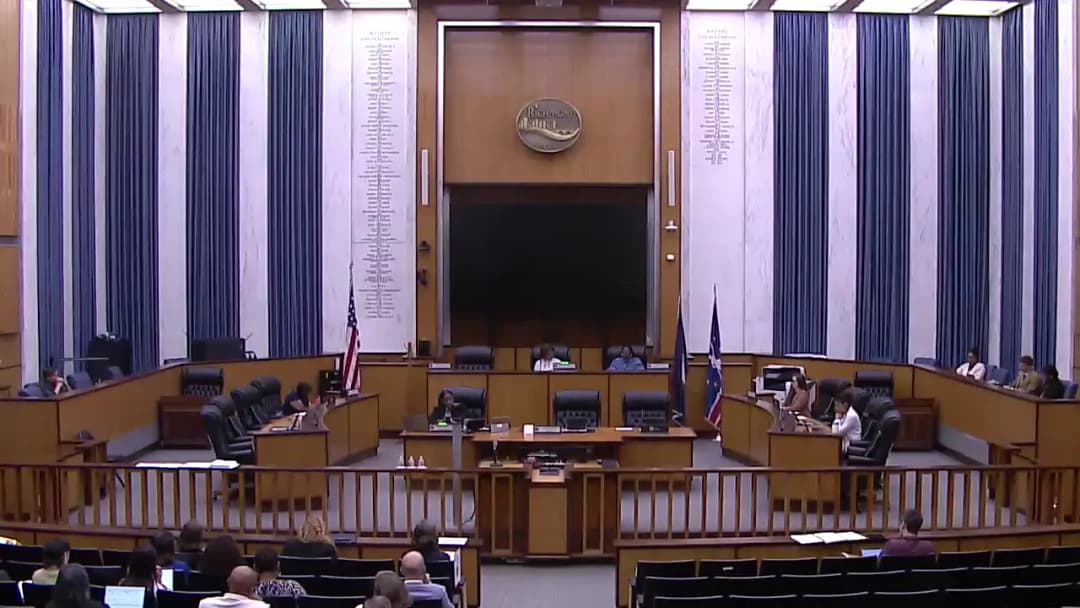
Finance and Economic Development Standing Committee Meeting - September 16, 2026

The Finance and Economic Development Standing Committee met on September 16, 2026, at 18:45 UTC. Chair Robertson presided, joined by Vice Chair Jones and Councilmember Gibson. The committee considered 13 ordinances, a discussion on ARPA fund closeout, and heard one public comment. All items were forwarded to the full council, most with recommendations to approve, except one forwarded without recommendation. Public Comments & Testimony - Public Comment on Item 1 (Ordinance 2026-081): Authigon Selo (6th District) spoke in opposition. He argued the council should investigate why the city has not followed the existing payment register law before amending it, and contended that transparency saves taxpayer money overall. Discussion Items - Item 1 – Ordinance 2026-081 (Payment Register Transparency Amendments): Lassen Wijay Saria, Chief of Staff to the Mayor, presented the administration's amended proposal to narrow proactive disclosure to vendor payments and employee reimbursements, remove invoice descriptions (often blank or requiring redaction), remove fund code (adds risk without public value), and replace payment document with type of disbursement. The timeline for publication was set at a maximum of 60 days after month-end. Councilmember Gibson expressed concern that reducing proactively released information undermines public trust and legislative oversight. Vice Chair Jones asked about an implementation plan; the administration expects to meet the 90-day timeline. The committee voted 2-0 to forward to council with a recommendation to approve. - Item 2 – Ordinance 2026-192 (Pump House Roof Replacement Funding): Chris Berlkey, Director of Parks and Recreation, reported acceptance of $500,000 from the Historic Richmond Foundation for the Pump House roof replacement. Combined with federal funds and capital dollars, sufficient funding for the first phase is secured. Approved unanimously. - Item 3 – Ordinance 2026-193 (Neighborhood Climate Resilience Grants): Laura Thomas, Director of Sustainability, presented the third annual cohort of the neighborhood resilience grant program, distributing $150,000 to eight organizations. She committed to providing a list of projects and district distribution before the next council meeting. Approved unanimously. - Item 4 – Ordinance 2026-194 (License Agreement with Friends of East End Cemetery): Director Berlkey highlighted this as the final of three major community goals: public land transfer, cultural landscape study, and formalizing partnership with the Friends. Approved unanimously. - Item 5 – Ordinance 2026-195 (Ernst & Young Pro Bono Services): An administration representative described a donation of services valued at $268,209.20 to improve certificate of occupancy processes via a voice-of-customer survey and AI proof of concept. Ernst & Young approached the mayor. Approved unanimously. - Item 6 – Ordinance 2026-196 (Real Estate Tax Rate of $1.16 for 2028): The ordinance was patroned by council members. Vice Chair Jones moved to forward with no recommendation, noting the need for full council deliberation. Councilmember Gibson called for data on revenue projections and expenditure needs, referencing mixed messages from city leadership. RJ Warren (Council Chief of Staff) said revenue projections would be presented at the October budget work session. Motion to forward without recommendation passed 2-0. - Items 7 & 8 – Ordinance 2026-202 and 2026-205 (Youth Climate Action Fund): Laura Thomas announced a $50,000 Bloomberg Philanthropies award for microgrants ($1,000-$5,000 each) to youth aged 15-24, administered through Next Up RVA. Applications open until November 6, 2026. Approved unanimously. - Item 9 – Ordinance 2026-203 (Family Crisis Fund Transfer): An administration representative explained the transfer of $100,000 to Area Congregations Together in Service (ACTS), selected through a competitive NOFA process, to administer the Family Crisis Fund starting FY27, with transition targeted for October 13, 2026. Approved unanimously. - Item 10 – Ordinance 2026-204 (CARITAS Surge Shelter and Warming Center): An administration representative reported that in FY26, the surge shelter activated for 87 nights out of 121 possible (72% likelihood), a 290% increase over the contracted 30 nights. It served 4,877 instances of service and 671 unique individuals. The warming center operated 10 nights averaging 45 guests. The new contract funds up to 90 surge nights and 20 warming center activations for up to 60 individuals. Approved unanimously. - Item 11 – Ordinance 2026-206 (IT Contract Governance): The administration stated the amendment provides leverage to require Virginia law governance in IT contracts. Approved unanimously. - Item 12 – Ordinance 2026-276 (Medication Assisted Treatment Pilot Program): Anna Jones, Opioid Response Strategist, noted this is the third year of funding for the Richmond City Sheriff's Office MOUD program, which has served 176 individuals to date. The program will expand from one to two registered nurses and add harm reduction materials and discharge planning. Councilmember Gibson asked about monitoring; Anna Jones described monthly reports and quarterly meetings. Approved unanimously. - Item 13 – Ordinance 2026-277 (Second Amendment to Opioid Funds Agreement): Companion ordinance to Item 12, authorizing the amendment to the agreement with the sheriff. Approved unanimously. Key Outcomes - Approved and forwarded to City Council with recommendation to approve: Items 1, 2, 3, 4, 5, 7 & 8, 9, 10, 11, 12, 13. - Forwarded to City Council without recommendation: Item 6 (real estate tax rate). - All votes were 2-0 (Vice Chair Jones and Chair Robertson voting aye; Councilmember Gibson did not vote on all items but participated in discussion). - ARPA Update: Megan Quinn, Senior Manager of Grants, reported that the city was awarded $154 million in ARPA funds, with 94% expended as of the report. All funds must be expended by December 31, 2026. The next quarterly report to Treasury is due October 31, 2026. - Future Presentations: A disparity study update from the Office of Minority Business Development is scheduled for the next meeting.

PROCEDURAL 21% · TRANSPARENCY AND OVERSIGHT 14% · PUBLIC ENGAGEMENT 13% · TECHNOLOGY AND INNOVATION 11%
OPENPUBLICA · PUBLIC MEETING INDEXUPDATED DAILY · openpublica.com