Houston, Texas — Public Meeting Index
Search help
Summaries & topics includes titles; words may match separately. Transcripts match a literal word or phrase, with case and whitespace normalized. Punctuation and contractions must match. Documents are not searched. Results have separate pages by source; a meeting may appear in both. Both dates are included.
Summaries & topics
On Thursday, May 7, 2026, the Houston City Council Resilience Committee, chaired by Councilmember Twyla Carter, held a meeting focused on recycling contamination and solid waste management. The committee heard a presentation from FCC Environmental Services, the city's recycling processor, regarding the high contamination rate in Houston's recycling stream. Public speakers addressed the airport master plan, a university resilience course, and solid waste funding. No formal votes were taken, but committee members committed to follow up with the Solid Waste Department on contract amendments and public education efforts. Public Comments & Testimony - Rich Herwick, Vice President of Strategy at H21000, presented a conceptual master plan for Bush Intercontinental Airport, emphasizing the need for infrastructure improvements to accommodate projected passenger growth. He noted that a meeting with airport leadership was scheduled for May 22, 2026. - Alex Landon, Professor of Practice at the University of Houston's Cullen College of Engineering, invited committee members to attend final presentations on May 29, 2026, from students in a course on coastal resilience, comparing Houston and the Netherlands. - Bill Kelly, on behalf of Environment Texas, expressed support for the proposed administrative fee for solid waste in the mayor's budget. He highlighted the need for increased public education and outreach, citing a 42% contamination rate and a 16% diversion rate (less than half the national average). He advocated for reliable service, transfer stations, and proper funding to reduce contamination and worker burnout. - William Martinez submitted a letter regarding personal experiences with gang stalking and gaslighting at a facility in Deer Park, requesting assistance. Discussion Items - Presentation by FCC Environmental Services: Cesar Garcia (General Manager) and Andrea Rodriguez (VP of Engineering) presented on the contamination crisis. They reported that Houston's contamination rate is 42% (based on an April 13, 2026 audit), well above the national average of 30% and the 25% threshold in the contract. Common contaminants include electronics, styrofoam, tanglers (e.g., straps, wires), batteries, and propane tanks, which cause fires, equipment damage, and downtime. The financial impact in 2025 was approximately $2.5 million due to higher processing, maintenance, and disposal costs, plus lost revenue. FCC has been seeking a contract amendment with the Solid Waste Department to recoup some losses, but only one meeting (in January 2026) has been held, with no follow-up. - Councilmember Questions and Discussion: - Councilmember Martinez asked about the impact of the proposed solid waste administrative fee; FCC noted that fees often reduce contamination. - Councilmember Castex Tatum's office inquired about the status of contract amendment discussions; FCC stated they have been unable to get a second meeting despite attempts. - Councilmember Ramirez's office asked about contamination trends, education efforts, and which contaminants are most dangerous. FCC identified propane tanks and batteries as top hazards. - Councilmember Alcorn's office asked about the RFP information on contamination rates; FCC confirmed the city provided lower rates during bidding. - Councilmember Peck's office asked if FCC could participate in community events; FCC agreed to consider setting up booths. - Chair Carter requested FCC send educational materials in multiple languages for council offices to distribute. Key Outcomes - No formal votes were taken. - Committee members committed to follow up with the Solid Waste Department regarding the contract amendment and communication issues raised by FCC. - The committee agreed to distribute FCC's educational materials to help reduce contamination. - The next Resilience Committee meeting was scheduled for June 4, 2026, at 10 a.m.
The Budget and Fiscal Affairs Committee, chaired by Vice Chair Mario Castillo, met on May 6, 2026, to receive the proposed FY2027 budget and five-year forecast from Finance Director Melissa Dubowski. The meeting covered the city's financial outlook, including two major structural reforms: moving the Solid Waste Department into the combined utility system (CUS) with a $5/month administrative fee, and implementing a 5% right-of-way rental fee from the CUS to the general fund. The proposed budget reduces the projected $209 million gap to $25 million through these changes, efficiency savings, and conservative revenue estimates. Council members posed detailed questions on fee structures, property tax cap usage, overtime budgeting, and the impact on water and wastewater infrastructure. Public speakers offered additional perspectives. Public Comments & Testimony - Jack Valinski questioned the wisdom of using excess water fund reserves for solid waste when infrastructure needs remained, and expressed skepticism about overtime projections. - Ruben Garza (Strong Towns Houston) applauded the right-of-way fee but advocated for a transportation utility fee based on development density to better align costs with infrastructure consumption. - Felix Kapoor requested clearer explanations of the CUS fee structure, noted that the $5 administrative fee would not directly improve worker safety or equipment, and flagged a 16% reduction in the "quality of life" category (parks, libraries, health) in the mayor's budget. - Dominic Mazok suggested starting budget processes earlier, contracting out services in outlying areas, and raised concerns about the city's role in hospitality ventures and potential World Cup shortfalls. Discussion Items - Structural Budget Reforms: Director Dubowski presented the plan to reorganize Solid Waste as a division of Houston Public Works within the CUS, funded by a $5/month administrative fee (rising to $25 over time). The fee covers only the administrative portion ($7.57 per household per month per the Burns & McDonald study) and will not directly fund new trucks or salary increases. The right-of-way rental fee of 5% of CUS gross revenues ($104M in FY27) is common among Texas cities and uses the CUS's excess fund balance. - Property Tax and Revenue Cap: The budget assumes no tax rate increase, keeping it at $0.51919 per $100 valuation, with property tax revenue of $1.5 billion—$20 million below the state and local cap. Councilmember Pollard criticized this choice, arguing it undermines arguments for future cap relief. The administration responded that raising the cap would require a tax rate increase not desired at this time. - Overtime Budgeting: The FY27 budget includes $6.6 million more for police overtime and $9.1 million more for fire overtime compared to FY26 adopted, based on a new methodology using five-year averages. Actuals are expected to be higher, but offset by savings elsewhere. Councilmember Ramirez pressed for details on fire overtime (projected $82.6M in FY26 actuals vs. $53M budgeted for FY27). - CUS Fund Balance and Infrastructure: Multiple council members questioned the use of CUS reserves for solid waste rather than water/wastewater projects. Director Dubowski and Chief Operating Officer Randy explained that the CUS has excess reserves (debt service coverage ratio 2.15 vs. required 1.2, cash reserves 550 days vs. policy 300 days) due to efficient operations and front-loaded capital appropriations. The East Plant replacement ($4 billion) will be financed via low-cost Texas Water Development Board loans, not cash reserves. - Five-Year Forecast: The structural changes reduce the projected gap from $523 million in FY31 to $172 million. The out-year gaps remain and will require continued efficiency measures, potential new revenue, and legislative monitoring. - Fee Implementation and Guardrails: The $5 administrative fee will be established via the budget ordinance, with future increases requiring a cost-of-service study and council ordinance. The right-of-way fee is set at 5% for FY27, with future increases potentially capped by master bond ordinance amendments. The administration committed that the $25 maximum fee will not be exceeded without a rate study, but Mayor Whitmire stated he would not go above $25. - Managed Competition: Councilmember Davis raised the idea of private sector competition for solid waste. The administration noted that major vendors require 10-15 year contracts, 50-60,000 customer maximums, and the ability to select favorable neighborhoods, making managed competition challenging. Key Outcomes - No formal votes were taken; the committee received the presentation and will continue with budget workshops (May 12-19), a public hearing (May 20), and a virtual town hall (May 20 evening). Council members are to submit questions via SharePoint. The budget will be considered as amended on June 3. - The administration confirmed that the $6 rebate for private trash pickup will remain in FY27. - The recycling and container lease special revenue funds will be closed and their balances transferred to the CUS upon budget adoption. - The administration will develop a discounted rate structure for seniors and low-income residents for future fee increases, but not for the $5 fee in FY27. - The committee directed that detailed questions on the CUS, solid waste, and other departments be addressed in upcoming workshops.
The City Council of Houston convened on May 5, 2026, for a regular session that included multiple proclamations, public testimony on the proposed budget and a street renaming, and votes on several ordinances including a high-risk apartment inspection program and updates to the BARC Foundation. The meeting featured extensive public comment on the proposed $5 monthly trash fee and the diversion of $104 million from water and sewer funds to the general fund, as well as strong support for renaming Cesar Chavez Boulevard after longtime activist Maria Jimenez. Consent Calendar - Routine approvals and unanimous actions included adoption of minutes from April 21st-22nd and April 28th-29th, and procedural motions to add speakers to the non-agenda list. - Consent items under the categories of Accept Work (items 2-5), Property (item 6), and most Purchasing and Tabulation of Bids (items 7-9, 12-13, 15, 17) were approved en bloc. - Resolutions for public hearing on the FY2027 budget and a TWDB drinking water loan application (items 18-19) passed without discussion. - Several ordinances were approved on consent including items 25 (FY26 CIP projects), 30 (HPD records management amendment), 32 (contract amendment with Air Products and Chemicals), 34 (rescheduling council meetings), 36 (alley vacation), and 41 (Salvation Army sub-recipient agreement). Public Comments & Testimony - Trash fee and budget (multiple speakers): Audrey Nath requested a progressive trash fee and ending the subsidy for private trash pickup. Alice Liu criticized the proposed budget for taking $104 million from water infrastructure to fund police raises and called the $5 fee regressive. Danny Hernandez, Cesar Espinosa, Francisco Arguelles, Rhonda Sepulveda, Jessica Campos, and others spoke in favor of renaming Cesar Chavez Boulevard after Maria Jimenez, noting her decades of civil rights and immigrant advocacy. Yulin Shu, David Espinosa, Beth Lumillo, Rita Robles, Becky Sell, Josiah Rector, and others opposed cuts to drainage and water infrastructure, citing flood risks and lead contamination. Rain Eatman and Jacobed Henley proposed alternatives such as a one-cent property tax increase and expiring tax abatements. - Street renaming (Maria Jimenez): Multiple speakers (Danny Hernandez, Cesar Espinosa, Francisco Arguelles, Rhonda Sepulveda, Jessica Campos) urged the council to rename Cesar Chavez Boulevard after Maria Jimenez, a lifelong East End activist. Councilmember Martinez publicly supported the change. - Other public comments: Anthony Henderson (Joseph Amari) alleged police misconduct and FOIA denial. Jacob Clementich spoke on election reform. Dominique President commented on the Eisenhower Park pipeline public hearing location. Clay Kane and Jeff Dustin requested a pilot program for BMX bikes at Lee and Joe Jamail Skate Park. Carlos Miranda advocated for approval voting for city elections. Carolyn Rivera opposed the trash fee, citing high water bills. Ruben Garza urged a focus on infill development and traffic calming. Discussion Items - Item 10 & 11 (SAP B2G optimization): Councilmember Castillo highlighted that the assessment will eliminate manual data entry for time cards in police and fire, improving efficiency. Mayor Pro Tem Casteel-Tatum noted the disparity study showed extensive manual inputting. Approved. - Item 16 (Heavy trash supplemental for District J): Councilmember Pollard explained the need for an additional $50,000 for heavy trash and tree waste collection due to city service challenges, noting the contractor is an MBE/SBE. Approved. - Item 20 (National League of Cities support): Councilmember Castillo was endorsed as representative and board candidate. Several councilmembers praised his tech and innovation leadership. Approved. - Item 21 (High-risk apartment inspection program): Mayor Pro Tem Casteel-Tatum and Councilmember Thomas presented the ordinance as a starting point to target repeat-offender properties with fines up to $2,000 per day. Councilmembers Kaman, Alcorn, Salinas, Davis, Pollard, and Evans-Shabazz commended the community engagement process and emphasized the need for mold remediation in future iterations. Approved. - Item 22 (BARC Foundation bylaws): Councilmember Alcorn described the restructured foundation will allow more aggressive fundraising with a part-time executive director. Councilmember Carter compared it to the Houston Zoo model. Approved. - Item 30 (HPD RMS amendment): Councilmember Kaman noted the add-on for the fire department's Arson Bureau and an expanded citizen portal. Approved. Key Outcomes - Approved: All consent items, items 10, 11, 14, 16, 20, 21, 22, 25, 30, 32, 34, 36, and 41. - Public hearing closed on the proposed pipeline expansion at Eisenhower Park (Energy Transfer) with no opposition testimony. - Councilmember announcements: Budget town halls announced for May 16 and May 20; Proposition A for online sign-up at council meetings to be voted on May 20; updates on District B Economic Development Academy; upcoming community engagement meetings in District K. - Exchange on budget: Councilmember Pollard asked Mayor Whitmire several questions about the proposed $5 trash fee, including whether it would improve service and why not propose the full $25 cost. Mayor Whitmire agreed to a private meeting to discuss the budget in detail.
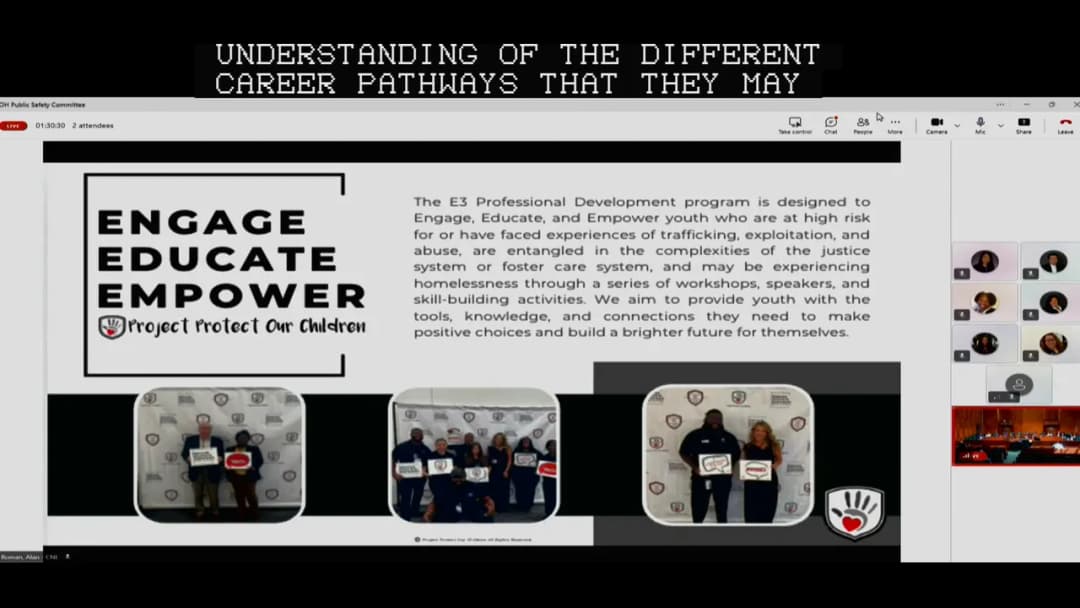
The Houston Safety Committee convened on May 4, 2026, with Councilmember Carter and Councilmember Evan Shabazz (virtual) among attendees. Staff from multiple council offices were present. The meeting featured two presentations: one on domestic violence by AVDA (Aid to Victims of Domestic Abuse) and one on human trafficking by Project to Protect Our Children. No public speakers appeared. The next meeting is scheduled for Tuesday, June 9, 2026, at 10:00 a.m. Discussion Items Presentation on Domestic Violence by AVDA - Mycia Coulter (CEO of AVDA) and retired Lieutenant Julie Pleasant (HPD Victim Services Division) presented domestic violence as both a public safety and public health issue. Key statistics: In Texas, nearly 250,000 family violence offenses were charged in the most recent year, with tens of thousands in Houston. Houston-specific data: 48,147 offenses in 2023; 49,947 in 2024; 46,396 in 2025. They noted that 52% of victims sought help before being killed, the presence of a gun increases homicide risk by 500%, and prior strangulation increases homicide risk by 750%. - The presenters described system gaps, including a 59% denial rate for shelter due to lack of space, and a lack of follow-up and coordination. They highlighted AVDA's co-location with HPD since 2008, providing legal advocacy, counseling, and civil protective orders. A case example "Miriam" illustrated a survivor who initially declined services but later obtained a 20-year protective order; the abuser violated it within nine days. - 2024 impact: AVDA supported 5,615 adults and children through legal advocacy, filed 2,062 lawsuits, and obtained $11 million in awards (child support and property divisions). 734 abusers participated in the Batterer Intervention and Prevention (BIP) program. - Councilmember Carter commented on domestic violence fatalities: state fatalities decreased from 176 (2023) to 161 (2024), but Houston increased from 38 to 47. He noted that 70% of all calls to law enforcement in Harris County are domestic/family violence related and emphasized awareness and education. Presentation on Human Trafficking by Project to Protect Our Children - Denise Mears, Executive Director and founder, presented on child trafficking prevention. She explained the AMP model (Action + Means + Purpose) and defined child sex trafficking as a commercial sex act involving a minor for anything of value, noting that Texas does not require proof of force, fraud, or coercion for minors or individuals with disabilities. - Data challenges: No unified database exists. In 2024, the National Human Trafficking Hotline received 1,360 cases involving over 2,400 victims in Texas. HPD 2025 data showed 86 victims recovered (over half juveniles). In early 2026, a single initiative rescued 29 victims, including 11 juveniles. The FBI Houston task force identified, located, and rescued over 200 child victims and arrested 286 predators. The Texas Attorney General's office now requires mandatory reporting of trafficking investigations as of September 1, 2025. - A University of Texas Austin study (almost 10 years old) estimated 79,000 children were being commercially sex trafficked in Texas at any given time, not including migrant children. Online enticement increased 156% in 2025, and cyber tip reports related to child sex trafficking rose 1,100% (from 8,480 in 2023 to 105,877 in 2025) due to the REPORT Act. - Project to Protect Our Children's programs include the Youth Action Board (a student-led anti-trafficking club now in multiple Texas schools), an E3 professional development program for at-risk youth, educator training, and a free 23-minute Human Trafficking 101 for employees (available in English and Spanish). The Youth Action Board raised awareness to over 32,715 peers in the past year. The presenter requested that the City of Houston consider requiring human trafficking training for all 20,000 employees. - Councilmember Carter noted that Houston is a major hub due to geographic location, interstate access, the port, and major events. He cited a study showing 275,000 online ads for sex trafficking in Texas over two months in 2024, with Houston at the top. Councilmember Alcorn expressed interest in the training and requested the link. Councilmember Carter also mentioned emerging trends in online gaming grooming. Key Outcomes - No formal votes or motions were taken. Councilmembers expressed support for the presenters' work and requested the training link from Project to Protect Our Children to share with all council offices. - The committee adjourned, with the next meeting scheduled for Tuesday, June 9, 2026, at 10:00 a.m.

The Houston Planning Commission convened on Thursday, April 30, 2026, at 2:32 PM in the City Hall Annex (900 Bagby) with 17 members present. Chair Lisa Clark presided. The meeting covered a presentation on proposed amendments to the Parks and Private Parks Ordinance (Chapter 42), numerous plat approvals, variance requests, and a special minimum lot size renewal. The meeting adjourned at 4:15 PM. Consent Calendar - Approval of April 16, 2026 Meeting Minutes: Unanimously approved. - Sections A and B (Items 1–76): Consent and replat items not requiring notification. All staff recommendations approved, with recusals noted for items 16, 17, 18, 25, 28, 30, and 34 (separate motions for recused items). - Sections G, H, I, J (Items 96–107): Extensions of approval, name changes, certifications of compliance, and administrative items approved as a group. Public Comments & Testimony - Chapter 42 Amendments: Doug Smith, member of the public, expressed concern about lack of transparency in the Parks and Recreation Dedication Fund. He noted that $100 million has been collected since inception but that detailed project-level financial data is not publicly available. He called for more granular reporting by district. - Item 86 (MEC Alpine Terraces): Zima Ortiz, school principal, expressed concern about traffic congestion from 100+ cars during school drop-off and pickup, as the proposed 10 single-family lots are near the school. She asked for information on access points. - Item 87 (Reserved at Westheimer): Harrison Rusk (owner of RMS Auto Care) and his builder spoke in favor of the variance, arguing that required dedication would severely impact business operations and that they proposed a wider sidewalk instead. Margot Fendrich, former vice president of the local civic club, opposed the variance, citing pedestrian safety for hundreds of children walking to Lanier Middle School and the need for consistent right-of-way dedication. - Item 113 (2360 Rice Boulevard): Chris Gibbs (neighboring business owner) and Guy Streetfield (tenant) opposed the variance, citing obscured business visibility, traffic hazards, a disputed property line, and concerns about tree removal and project scale. The applicant (John Cadenhead) argued the building is compliant and the requested encroachment (zero-foot build line for canopy, stair, and ramp) enhances public safety and aesthetics. - Special Minimum Lot Size Renewal (Oakdale Street): Lewis D. Santos and Elizabeth Eicher, residents, strongly supported renewal, citing property value protection, family-oriented character, and infrastructure capacity. Discussion Items - Proposed Amendments to Chapter 42 (Parks and Private Parks Ordinance): Directors Von Tran (Planning) and Kenneth Allen (Parks) presented a detailed analysis. Key changes required to comply with Texas Local Government Code Chapter 212 (effective Jan 1, 2024) include: designating all territory as suburban, urban, or central business district; adopting a lower fee option (not exceeding 2% of median household income); moving fee collection to certificate of occupancy; and adding an appeal process. Additional recommended changes: allowing 30% of park dedication fees to be allocated citywide to address sector disparities, extending the obligation period from 3 to 5 years, and shifting fund management authority from Parks Board to Parks Director. Director Allen reported that since 2007, the fund generated over $100 million, with FY26 collections at $6.6 million, and $36 million committed to future projects. He highlighted stark disparities: five sectors generated 53% of revenue, while Sector 5 generated only $80,500. The 30% citywide allocation is intended to rebalance investment. Commissioners discussed the strategy, partnership opportunities (e.g., with TIRZs), and requested annual reporting. A public hearing was set for May 14, 2026. - Item 87 (Reserved at Westheimer): Variance request to not dedicate 5 feet of right-of-way along Westheimer Road. Staff recommended denial, citing pedestrian safety, future street widening needs, and lack of hardship. The applicant had not submitted revised plans during deferral. Commissar Baldwin noted that inconsistent right-of-way creates future costs for the city. The variance was denied; the plat was approved with the required dedication. - Item 88 (South Post Oak Commercial Reserve): Deferred at the request of Councilmember Castex-Tatum to allow community review. Staff recommended deferral. - Item 108 (2015 Alabama Street): Deferred two weeks at applicant’s request to explore alternative site access. - Item 111 (1420 Oxford Street): Deferred at applicant’s request to coordinate with legal on deed restriction issues. A neighbor disputed the violation claim. - Item 113 (2360 Rice Boulevard): Deferred for notice and further applicant meeting. Staff recommended deferral; public comment raised concerns about property lines and safety. Key Outcomes - Chapter 42 Amendments: Public hearing established for May 14, 2026. Commission will take action after that hearing. - Item 87 (Reserved at Westheimer): Variance denied (motion by Baldwin, second by Garza; all in favor). Plat approved with required 5-foot right-of-way dedication. - Item 88 (South Post Oak Commercial Reserve): Deferred (motion by Garza, second by Ballard; all in favor). - Item 108 (2015 Alabama Street): Deferred two weeks (motion by Garza, second by Ballard; all in favor). - Item 111 (1420 Oxford Street): Deferred two weeks (motion by Garza, second by Ballard; all in favor). - Item 113 (2360 Rice Boulevard): Deferred two weeks (motion by Baldwin, second by Garza; all in favor). - All other plat items (78–86, 89–95, 109–110, 112): Approved as per staff recommendations, with relevant votes noted. - Special Minimum Lot Size Renewal (Oakdale Street): Forwarded to City Council for approval (motion by Ballard, second by Garza; all in favor). - Public Hearing Date Established: May 28, 2026, for multiple items (Cervedo property, bridgestone mud lift station, etc.) (motion by Garza, second by Ballard; all in favor).
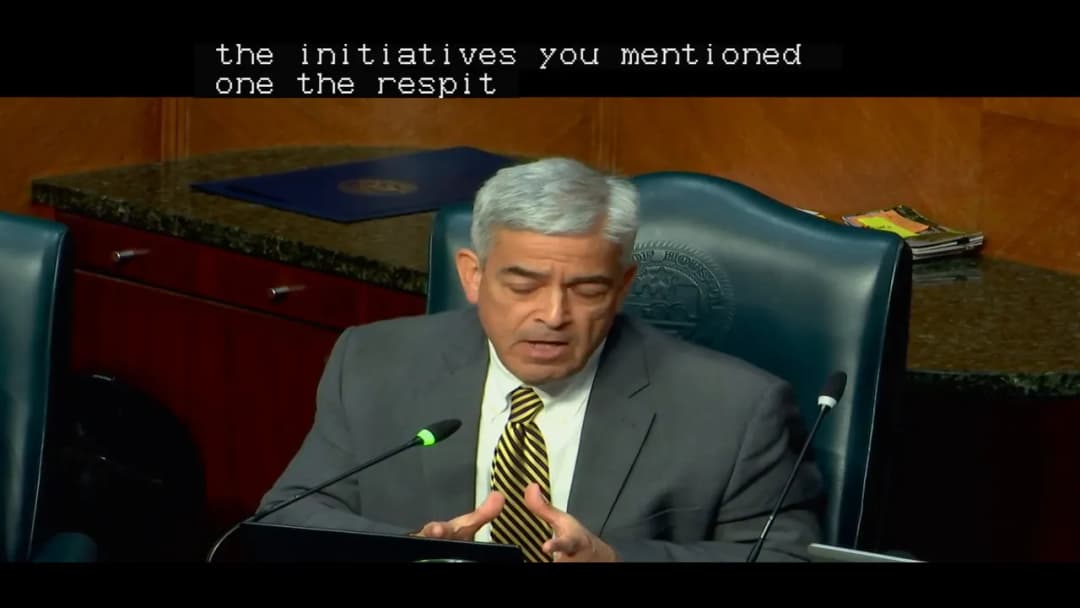
On April 29, 2026, the Houston City Council's Service Delivery Committee, chaired by Councilmember Tarsha Jackson, convened to receive a comprehensive overview of the Houston Health Department from Director Dr. Tran. The meeting highlighted the department's services, funding challenges, and ongoing initiatives. No public testimony was delivered. Discussion Items - Health Department Presentation: Director Dr. Tran provided an overview of the Houston Health Department, noting it is a full-service public health department with 1,222 employees and an operating budget of $179.5 million, of which $34.7 million comes from the city's general fund. The department is the largest in Texas and one of the largest in the nation, serving Houston and 17 surrounding counties. Key accomplishments included: a wastewater center of excellence, rapid ART (anti-retroviral treatment) for HIV, a syphilis outbreak response that reduced cases below outbreak threshold, 95% of HISD schools meeting herd immunity coverage rates, a recidivism rate of 10% through the credible messenger program (compared to the state average of 20%), and the construction of a $13 million laboratory on Holcomb. Dr. Tran also highlighted the Safe Watch Dashboard for firearm injury data, the Harris Collaborative (with Harris County Public Health, Harris Health, and others), and a joint data website with Harris County. She noted that the department's special fund (Fund 2010) is at risk of depletion within two years due to the loss of the Medicaid 1115 waiver. - Food Inspection Staffing: Councilmember Alcorn raised concerns about delays in food inspections for new restaurants. Dr. Tran explained that the department faces a shortage of environmental health investigators due to low pay and difficulty hiring, with 12 open positions out of 37 inspectors for 25,000 restaurants. A salary study was recently completed, and pay increases were implemented, but further support is needed. The department prioritizes education over citation but sometimes must shut down establishments for public health hazards. - My Brother's Keeper (MBK) Program: Staff from Councilmember Carter's office expressed ongoing concerns about the MBK initiative, including lack of data tracking, schools unaware of the program, and a deviation from the original focus on boys of color. Dr. Tran acknowledged that she had not yet completed a deep dive into MBK and that the program is funded from the dwindling 2010 fund, making sustainability uncertain. She pulled the related agenda item from council to better understand the program. - Funding and Collaboration: Councilmember Martinez discussed the need for additional public health funding, noting that the city's general fund contribution is low compared to overall needs. He suggested exploring a dedicated tax or enterprise fund through Harris Health. Dr. Tran expressed openness to greater alignment or consolidation with Harris County Public Health, citing joint efforts like the shared data dashboard and an access-to-care report. She also described a proposed respite facility for medically vulnerable individuals discharged from hospitals, with lease funding earmarked and fundraising underway. - Transitional Housing / Respite Facility: Dr. Tran outlined a plan to create a transitional housing facility for individuals who are too sick for shelters but not sick enough for hospital admission, providing wraparound services. The department is seeking HUD funding and private support from the medical community. - Cancer Cluster in Kashmir Gardens: Councilmember Jackson asked about the status of the Union Pacific Railroad contamination site (Creso Plume). Dr. Tran noted that an EPA study on dioxin levels is pending, and a community advisory board has submitted recommendations. Permitting and relocation efforts have stalled. She agreed to arrange a community update meeting, as the last one was over a year ago. - Laboratory and Revenue: Councilmember Ramirez asked about laboratory revenue. Dr. Tran explained that the lab serves as a reference laboratory for infectious disease surveillance (17 counties) and is not a revenue-generating entity; it is funded through the general fund and epidemiology grants. Key Outcomes - Dr. Tran will conduct a deep dive into the My Brother's Keeper program and provide updated data and sustainability plans to Councilmember Carter's and Huffman's offices. - The committee will continue discussions on food inspection staffing and fee adjustments to align revenue with costs. - Dr. Tran will coordinate with the EPA and city staff to provide a public update on the Kashmir Gardens contamination site. - The department will pursue funding for the respite/transitional housing facility through HUD and private partnerships. - Ongoing collaboration with Harris County Public Health will continue, with potential alignment or consolidation under consideration.
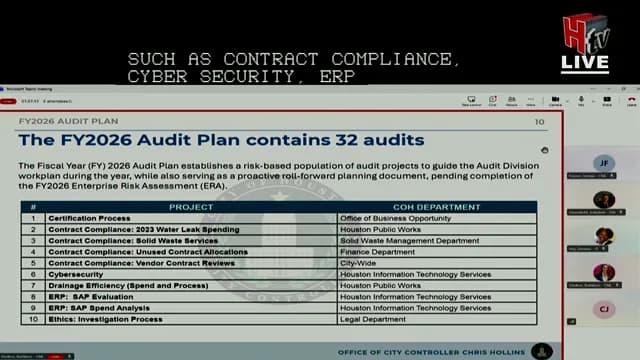
The Budget and Fiscal Affairs Committee, chaired by Sally Alcorn, met on April 28, 2026, to review the quarterly financial report, progress on the EY contract management project, upcoming financial transactions, overtime usage, and the audit division's update. Key presentations were made by the Finance Director, Deputy Controller, Chief Procurement Officer, and Audit Director. Public comments addressed vehicle pooling, Metro cards, budget process timing, and concerns about financial reporting. Public Comments & Testimony - Jack Valinski suggested pooled vehicles and Metro cards to reduce mileage on city vehicles, and urged respectful debate among council members. He also recommended starting the budget process earlier (February 1) to allow more time for review. - Doug Smith expressed shock at the manual payroll system and questioned the accuracy of the Ernst & Young savings projection. He noted discrepancies in fund balance reporting and requested a presentation from Public Works on unspent funds in the DDSRF fund. Discussion Items - Quarterly Financial Report (Period Ending March 31, 2026): - General fund projected ending balance of $276.1 million (10.4% of expenditures, less debt service and pay-go). This is $23.8 million lower than the prior month’s projection, driven by a $16.4 million higher TERS municipal service fee estimate by Finance (which the Controller's office questioned) and $39.6 million in expenditure increases, including $22.2 million for the Fire Department (partly due to a March 2026 arbitration ruling). - The fire department's total increase since the adopted budget is $73 million, now larger than the entire Solid Waste ($101M) or Parks ($88M) budgets. - Projected deficit $204 million, with revenues down $12 million and expenditures up $117 million since adoption. - Controller's office reported a general fund ending balance of $299.9 million (11.3% of expenditures) based on different revenue assumptions. - Enterprise funds: Combined Utility System transfers decreased by $15 million due to project delays; Convention & Entertainment fund saw lower HOT collections; Stormwater fund expenditures decreased by $15 million. - Investment pool: $7.43 billion, yielding 4.035%, up from 4% previous quarter. - Swap positions: net paid $431,000; fair value negative $59 million (more negative than prior quarter). - EY Contract Management Update: - Chief Procurement Officer Jed Greenfield reported that $17.2 million in projected savings from category management have not been realized (only $0.3 million achieved). Reasons included time required to build a spend dashboard and that many existing contract prices were already competitive. Future savings are expected from multi-year contracts and rebate structures, but not yet quantified. - The spend dashboard was demonstrated as a tool to identify non-contract spend and consolidate purchasing. - Councilmember Ramirez noted the $17.5 million expectation from EY was inflated; Greenfield confirmed a more conservative approach for FY27 budget. - Upcoming Financial Transactions: - A $33 million Texas Water Development Board loan application for lead/copper rule compliance, with $17 million forgivable, $8 million zero-interest, and $7 million at 3% interest. To be submitted May 6, closing next spring. - Overtime Usage: - HPD overtime budget trued up to $30 million (YTD $23M); HFD overtime $82.6 million (YTD $60M); Solid Waste $6.3 million (YTD $4.9M). HFD overtime decreased $5M from FY25 actuals due to increased headcount. - Councilmember Flickinger referenced a previous report of one employee earning nearly $500k in overtime; a question referred to fire department budget workshop. - Audit Division Update: - Director Jennifer Pierce presented the FY25 enterprise risk assessment (156 risks across 11 categories), the FY26 audit plan (32 risk-based engagements), and findings from a payroll system audit. - The payroll audit identified seven findings: heavy reliance on manual processes (e.g., manual time cards for HPD/HFD), weak access controls, and risk of errors. Management reported implementing five corrective actions. - Council will receive a risk survey soon. Key Outcomes - No formal votes were taken; the committee received reports and asked questions. - Upcoming schedule: Budget released May 5; five-year forecast May 6; budget workshops May 12-19; town halls May 16 and 20; public hearing May 20; budget vote June 3. - The general appropriation ordinance (truing up budget to current estimates) is on council agenda for April 29. - Finance working group recommended proceeding with TWDB loan application; council vote scheduled May 6. - The committee will hold a special meeting May 6 at 2 p.m. to review the proposed FY27 budget and five-year forecast.
The Houston City Council convened on April 28, 2026, for a regular session that included public testimony, financial updates, and votes on numerous agenda items. The meeting began with an invocation and pledge, followed by a series of public comments addressing local housing, transportation, infrastructure, and public safety. Later, the council received the monthly financial report from the Controller and Finance Director, highlighting significant budget pressures, particularly in the fire department and unrealized savings. Several ordinances were approved, including funding for the Trinity East Senior Apartment Complex. Consent Calendar - Approval of traffic calming devices citywide. - Items 2, 3, 5, 6, and 7 were approved en bloc. - Numerous ordinances (Items 8, 11, 16, 17, 21) were received and approved. - Items 9, 10, 11, 20, 22, and 24 were removed for separate consideration and later voted on individually. Public Comments & Testimony - Trinity East Senior Project (Support): Ken Rogers, Rev. Melinda Owens, Dr. Marilyn White, Herbert Green, and Dolores Rogers spoke in strong support of the Trinity East Village Senior Apartment Complex, emphasizing the need for affordable housing for seniors in the Third Ward and the project’s role in keeping residents from the CUNY Homes community in their familiar neighborhood. Councilmember Evans-Shabazz voiced her full support. - Blodgett Street Bike Lanes (Opposition): A large group of residents and community leaders spoke against the bike lanes on Blodgett Street. Ken Rogers, Maya Tyler, Arva Howard, Lionel Howard, Sister Mama Sonia, Margaret Samuel, A. Keith Edwards, and Thomas Dale described the lanes as dangerous, underused, and imposed without community engagement. They cited congestion, emergency vehicle access issues, drainage problems, and negative impacts on Texas Southern University. Many requested the removal of the bike lanes and restoration of the original four-lane configuration. Councilmember Evans-Shabazz and others expressed solidarity, noting the project was a county initiative lacking proper council approval. - Cesar Chavez Street Renaming (Support): A series of speakers – retired Brig. Gen. Joe Ramirez Jr., Brittany Ramirez, Rick Noriega, Richard Vega, Daniel Veloz, Melissa Gallegos, and former Councilmember Robert Gallegos – advocated for renaming Cesar Chavez Street in the East End after Master Sergeant Joe E. Chaco Ramirez, a Korean War POW and community hero. They described his military service, community contributions, and the broad support from local veterans’ groups and the Magnolia Park neighborhood. Councilmembers Martinez, Davis, and Ramirez acknowledged the strong community backing. - Wastewater Consent Decree (Concerns): Representatives from Bayou City Waterkeeper (Guadalupe Fernandez, Kristen Schlemmer, Danielle Newton, Usman Mahmood) and Stephanie Valdez from the Coalition for the Environment, Equity, and Resilience detailed delays in the consent decree projects, rising costs ($9 billion), and inequitable distribution of sewage overflows in districts B, D, F, H, and I. They called for greater transparency, data access, and accountability from Public Works. - People’s Budget and Flooding (Advocacy): Several speakers (Uniqua Parker, Leola Cornett, Haven Bale, Taylor Brown, Bonnie Austin Whitley, Ikra Tariq) urged the council to prioritize funding for drainage, ditch re-establishment, public works staffing, and social services over police budgets. They shared personal experiences of flooding and called for investment in infrastructure and community services. - HPD/ICE Cooperation (Mixed Views): Matthew Graf and Jay Boost spoke on the city’s immigration enforcement ordinance. Graf urged council to ensure crime victims feel safe reporting, while Boost expressed disappointment that the revised ordinance backed away from stronger protections. - Other Comments: Lee Mercer proposed a crime prevention program, Shelton Modellas raised a personal dispute with an “illegal alien,” Ridwan Kwanda suggested an app for emergency gate access, and Lakshmi Ravendrin promoted a teacher appreciation event. A resident, Sunny Moss and Farron Manual, highlighted dangerous traffic conditions at Pierce and Emancipation after a fatal crash. Discussion Items - Monthly Financial Report (March 2026): Controller Melissa reported a projected ending fund balance of $276.1 million (10.4% of expenditures), $76.9 million above the 7.5% target. She noted a $39.6 million increase in expenditure projections from the prior month, including $22.2 million in the fire department ($11.8 million from an arbitration ruling, $10.4 million in other costs) and $17.2 million in general government due to unrealized category management savings. The combined utility system operating transfers decreased by $15 million due to delays in the roadside ditch reestablishment program. Controller also criticized the administration for withholding information about the arbitration ruling. - Finance Director’s Report: Director Debowski presented the 9+3 report. Revenue projection was $12.2 million above adopted budget; expenditure projection was $117 million higher. The ending fund balance was estimated at $299.9 million (11.3% of expenditures). She explained that the $17.2 million general government variance stemmed from lower-than-anticipated savings from the category management initiative, which had been a budget placeholder. She also noted that the fire department’s holiday buyback program contributed to overtime costs. - Councilmember Pollard’s Questions: Councilmember Pollard pressed for details on the category management savings and the fire department overtime plan. Controller reiterated that the budget relied on unrealistic assumptions. - Councilmember Alcorn’s Comments: Acknowledged the categorization of savings struggles but noted operational benefits from the consultant’s dashboard. Called for a different approach to overtime budgeting in the upcoming fiscal year. Key Outcomes - Financial Report Accepted: Council voted to accept the quarterly financial report for the period ending March 31, 2026. - Trinity East Senior Project Approved: Item 11, supporting the Trinity East Village Senior Apartment Complex, was approved by voice vote. Councilmember Evans-Shabazz and Thomas praised the project for promoting affordability and community stability. - Consent Agenda Approved: Items 1-7, 8, 11, 16, 17, 21, and others were adopted en bloc or after separate votes. - Other Ordinances Approved: Items 9, 10, 20, 22, and 24 were approved after individual consideration. - Ongoing Issues: Councilmember Carter raised continued concerns about 11th Street bike lanes, while Councilmember Huffman noted that her community listening session on 11th Street showed overwhelming support for the project. No vote was taken on bike lane removal. - Next Steps: The city’s budget for FY2027 is expected to be released next week. The apartment ordinance is anticipated to reach the council agenda soon.
The Houston Archaeological Historical Commission (HAHC) met on April 23, 2026, beginning at 2:43 PM with 13 commissioners present. The commission considered three landmark/referral items and 31 certificates of appropriateness (COAs). Key actions included approving protected landmark status for a Freedmanstown cottage, referring two National Register nominations, and deciding numerous COA applications, some with conditions or deferrals. The meeting also featured public testimony on several items. Consent Calendar - Approved as a single motion (with one abstention) the following items per staff recommendations: D1 (1246 Alston), D2 (1235 Yale), D9 (1519 South Blvd), D15 (415 Harvard – alteration), D16 (415 Harvard – garage), D17 (202 E 31½ St – deferred by applicant), D20 (525 Tyshorn), D22 (824 W Temple), D23 (824 W Temple – garage), D24 (1316 Harvard), D25 (1316 Harvard – garage), D27 (300 Main), D28 (1907 Decatur), D29 (2110 Decatur), D30 (1112 Jerome), D31 (3709 Montrose). - Commissioner Garcia abstained from D2 due to a potential conflict of interest. Public Comments & Testimony - Item D3 (528 Woodland – addition): Applicant Sam Janukas (Creo Design) and owners Martina and Sam Stevens spoke in favor, citing family needs and neighborhood support. Neighbor Ariel Pragner also spoke in support. No opposition. - Items D4/D5 (1521 Columbia – addition & garage): Applicant Sam Janukas and owner Lisa Osborne spoke in favor. Osborne described her personal commitment to restoring the home and requested approval of the double-column porch design. No opposition. - Item D6 (405 Highland – second floor addition): Owner Ariel Pragner spoke passionately about multi-generational living needs and demonstrated neighborhood support (35 letters). Architect Sam Janukas explained design constraints to preserve interior historic fabric. Neighbors Martina and Sam Stevens also spoke in support. No opposition. - Items D10-13 (1108 Victor – relocation & alteration): Emily Arduin (Preservation Houston) spoke in support, emphasizing cultural preservation in Freedmanstown. Architect Gregory Lake (Heinz AD) answered questions about window and column details. - Items D18/D19 (528 Columbia – remediation): Contractor Sabas Lel and architect Alia Deanda explained that work had been done without COA approval, and they now seek to correct errors. No opposition. - Item D21 (1118 Two Lane – addition): No public speaker. - Item D26 (505/503 Sol Ross – conversion to commercial): Architect Katie Garvey and neighborhood representative Steve Longmire spoke in support, noting extensive community engagement and restoration efforts. Discussion Items - Protected Landmark Designation – 1317 Ruthven Street (Item A): Staff presented the circa-1894 cottage in Freedmanstown as meeting criteria 1,4,5,8 for landmark and 1,2,3 for protected status. Unanimously approved. - National Register Referrals: - Style and Steel Townhouses (Item B): 1968 steel demonstration homes at 4156-4160 Meyerwood Drive. Unanimously approved referral. - Olivewood Cemetery (Item C): Houston’s first private African American cemetery, established 1875-1961. Unanimously approved referral. - D3 – 528 Woodland (addition): Staff recommended approval. Commissioner Broadbeck moved to defer due to new renderings shown at the meeting (3D views not in packets). No second; motion failed. Commissioner Blakely moved to approve staff recommendation, which passed (Broadbeck abstained citing policy concerns, later advised by legal that abstention only for conflict). - D4/D5 – 1521 Columbia (addition & garage): Staff recommended approval with conditions (single column on porch). Applicants requested double columns, presenting examples from the neighborhood. After debate, Commissioner Garcia moved to approve as submitted (including double columns). Seconded and passed. - D6 – 405 Highland (second floor addition): Staff recommended denial because the proposed second-floor massing encroached beyond the rear 50% of the house (violating criteria 10 and 11). Commissioner Davis moved to approve as submitted. Vote failed (5-4). A subsequent motion to approve staff denial lacked a second. Motion to defer passed. - D7/D8 – 607 Harvard (addition & garage): Staff recommended approval with conditions (setback adjustment on south elevation, ridge height reduction). Approved. - D10-13 – 1108 Victor (relocation & alteration): Staff recommended approval. Commissioner Hill questioned column originality. Architect agreed to consider 6x6 or 8x8 posts, but motion to accept staff recommendation as presented passed without conditions. - D14 – 815 West Cottage (COR): Home raised without COA, damaging chimney. Staff recommended denial of COA and issuance of COR with remediation. Approved. - D18/D19 – 528 Columbia (remediation & revision): Work performed without COA included removal of siding, shiplap, windows, porch steps, and brick pony wall. Staff recommended denial of COA for remediation (D18) and approval with conditions for revised COA (D19). Approved. - D21 – 1118 Two Lane (addition): Staff recommended approval, but commissioners raised concerns about incomplete drawings (no foundation shown, stone vs. siding issue) and lack of detail. Motion to approve failed (5-4). Deferral motion passed, with directions to provide more developed plans and address foundation questions. - D26 – 505/503 Sol Ross (commercial conversion): Staff recommended approval with conditions (stucco sample, window restoration). Approved. Key Outcomes - Approved Landmark Designation: 1317 Ruthven Street (protected landmark). - Approved National Register Referrals: Style and Steel Townhouses (4156-4160 Meyerwood Dr) and Olivewood Cemetery (1300 Court St). - COA Decisions: - D3 (528 Woodland): Approved per staff. - D4/D5 (1521 Columbia): Approved with applicant’s double-column design. - D6 (405 Highland): Deferred to May meeting. - D7/D8 (607 Harvard): Approved with conditions. - D10-13 (1108 Victor): Approved as submitted. - D14 (815 West Cottage): Denial of COA, issuance of COR. - D18/D19 (528 Columbia): Denial of COA for unauthorized work, COR issued; new COA approved with conditions. - D21 (1118 Two Lane): Deferred for more detailed plans. - D26 (505/503 Sol Ross): Approved with conditions. - Consent Calendar: 15 items approved en bloc. - Director’s Report Highlights: Norhill Design Guidelines public hearing held March 24; revised draft to be presented in May. New hard deadline for applicant submissions (Wednesday before meeting). Year-to-date COA count: 99; pre-design reviews: 20; administrative approvals: 22. - Preservation Officer’s Report: Staff processed pre-designs, conducted site visits, and implemented the Houston Preservation Tracker survey (open through April). Ethics training completed March 12.
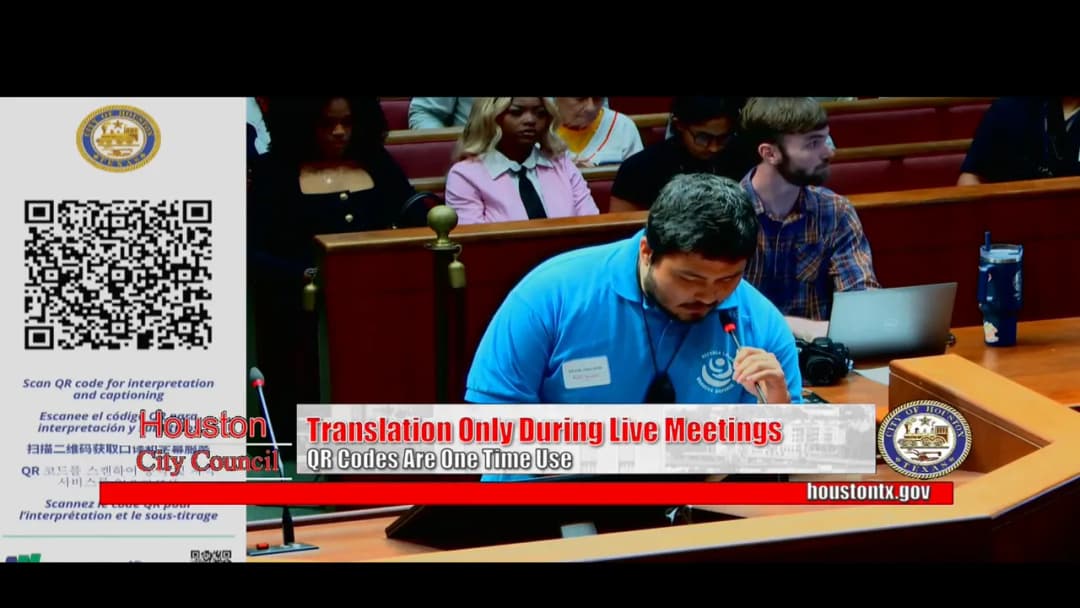
The City Council of Houston convened on April 21, 2026, to honor several community groups, hear extensive public testimony, and deliberate on a proposed amendment to Proposition A, the ordinance limiting police cooperation with ICE. The council ultimately voted 13-4 to amend the ordinance after the state threatened to withhold $114 million in public safety funding. Proclamations and Recognitions - Texas MS-150 City of Houston Cycling Team: Mayor Pro Tem Castax Tatum presented a proclamation declaring April 21, 2026, as Texas MS-150 City of Houston Cycling Team Day. The team of 35 riders has raised over $22,000 this year for multiple sclerosis research, and the team has raised over $300,000 to date. - National Library Workers' Day: Mayor Whitmire recognized April 21, 2026, as National Library Workers' Day in Houston. Library Director Ms. Gal highlighted the system's 44 locations spanning 600 square miles. - Magpies and Peacocks: Councilmember Martinez presented a proclamation celebrating 15 years of the sustainable fashion nonprofit, which has diverted 375 tons of textiles from landfills and created employment pathways for underserved communities. - National Crime Victims' Rights Week: Councilmember Carter recognized April 19–25, 2026, as National Crime Victims' Rights Week, with 18 partner organizations including Crime Stoppers, Harris County DA's Office, and HPD. - National Arab American Heritage Month: Councilmember Ramirez presented a proclamation declaring April 2026 as National Arab American Heritage Month, honoring the contributions of the Arab American community. Consent Calendar - Items 1–3, 4 (ordinance), 5, 7, 8 were approved unanimously. - Items 10–16, 23, 29, 30 were removed for separate consideration and later approved individually. Public Comments & Testimony The majority of public comments focused on Proposition A and the proposed amendment. Over 70 speakers addressed the council, with many urging members to oppose any repeal or amendment. - Supporters of the original ordinance (against amendment): Numerous speakers, including community organizers, attorneys, and residents, argued that the original ordinance protects Fourth Amendment rights and that the state's threat is unconstitutional coercion. They cited the Supreme Court case Rodriguez v. United States, stating that police cannot prolong a stop without reasonable suspicion of a crime. Speakers like Kevin Huachin (Workers' Defense Action Fund), Randall Callanan (civil rights lawyer), and Aaron Erickson urged the council to defend the ordinance in court. Many expressed fear that cooperation with ICE erodes trust and makes communities less safe. - Opponents of the original ordinance (supporting amendment): Speakers such as Tomorrow Bell (Hope Local 123) and J.K. Washington (former law enforcement) argued that the city cannot risk losing $114 million in funding, which supports public safety, equipment, and programs like FIFA security. They emphasized that the ordinance could lead to layoffs of up to 2,000 city workers and that the state has a right to enforce its laws. Bishop James Dixon of the NAACP urged careful deliberation and time to review the amended language. - Other public comments: A few speakers addressed unrelated issues, including a noise complaint about Camp Nightclub, a gas station proposal near historic homes, and a request for park renovations at Wiley Park. Discussion Items The primary discussion centered on Item 11: An ordinance to amend Proposition A (the immigration enforcement ordinance). - Councilmember Salinas, one of the original sponsors, questioned the legality of the proposed amendment (drafted by the governor's office). She noted that the City Attorney had previously stated the original ordinance was lawful and that the new language could be vague. She proposed a further amendment to clarify that "administrative warrants" are civil and that detentions must be for "criminal law enforcement purposes." - City Attorney Michelle clarified that the proposed amendment does not materially change the original ordinance: it still prohibits detaining someone solely on a civil administrative warrant, and the 30-minute rule will not be reinstated. He stated that the word "only" is superfluous and that the amendment is necessary to restore state funding. - Several council members debated the implications. Councilmember Cayman argued the city should fight the state in court rather than capitulate, citing past legal victories. Councilmember Huffman emphasized the need to protect the $114 million, especially with FIFA and hurricane season approaching. Councilmember Pollard noted that the amendment does not change the substance of the original ordinance but that the governor's pressure is political. - After extended discussion, Councilmember Salinas withdrew her proposed amendment after the City Attorney's assurances. The council then voted on the main amendment. Key Outcomes - Amendment to Proposition A passed 13-4. Voting yes: Mayor Whitmire, Vice Mayor Pro Tem Peck, and Councilmembers Jackson, Evan Shabazz, Flickinger, Huffman, Castillo, Martinez, Castex Tatum, Ramirez, Davis, Carter, Alcorn. Voting no: Councilmembers Cayman, Thomas, Pollard, Salinas. - The amendment was designed to restore $114 million in state funding that was frozen after the original ordinance passed. City Attorney stated the amendment does not materially change the original ordinance's protections. - Other items approved: - Item 6: Net installation at Gus Wortham Golf Course to prevent golf balls from hitting vehicles (unanimous). - Item 10: Revised financial policies including increase of Rainy Day Fund replenishment requirement (unanimous). - Items 12–16: Various housing and public safety grants and ordinances. - Items 23, 29, 30: Park and infrastructure improvements (Mason Park, pedestrian safety on Airline Drive, Buffalo Bayou connector). The meeting adjourned with a recess until the next day.
Transcripts
No published pilot transcripts are available for this city. The current pilot covers Sacramento City Council only.
Transcript coverage details
The pilot includes June 9 and two June 23, 2026 sessions. Recording completeness is unknown. Missing, cancelled, incomplete, or changed transcripts can leave gaps. No match does not establish that something was never discussed.