Aurora City Council Study Session: CERT Process, Oil & Gas Leasing, and Legislative Positions – February 25, 2026
STREAMING COPY IN PREPARATION — RECORDING AVAILABLE FROM THE ORIGINAL SOURCE
Aurora City Council Study Session: CERT Process, Oil & Gas Leasing, and Legislative Positions – February 25, 2026
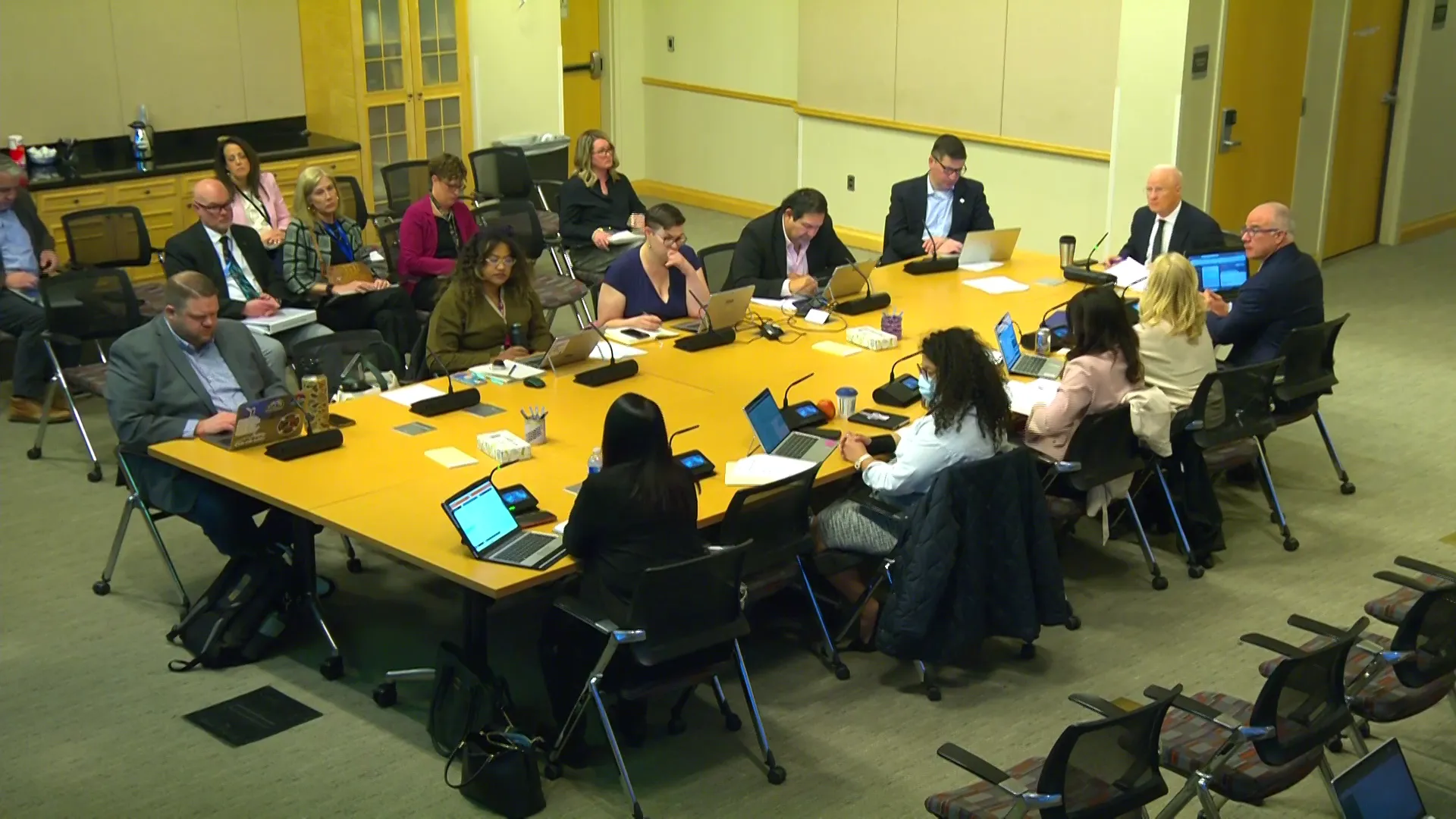
The Aurora City Council held a study session on February 25, 2026 (the transcript audio states February 23, 2020, a discrepancy) to receive presentations on the Critical Incident Response Team (CERT) process and oil/gas mineral leasing, and to discuss and vote on positions for two state legislative bills.
Consent Calendar
- Items 2A through 2F were approved by unanimous consent.
Critical Incident Response Team (CERT) Presentation
- District Attorney Amy Padding of the 18th Judicial District presented the CERT process.
- CERT investigates officer-involved shootings, in-custody deaths, and uses of force resulting in serious bodily injury or death.
- Investigators from multiple law enforcement agencies collaborate; the employing agency does not lead the investigation.
- The team collects evidence and the DA's office makes the final charging decision.
- If no charges are filed, a detailed letter is published on the DA's website.
- Grand jury can be used for additional investigation or indictment; Colorado grand juries are described as independent.
- Councilmembers asked about witness outreach; DA confirmed CERT typically conducts interviews, not the employing agency. City Attorney noted a double-check process to ensure CERT notification.
Oil, Gas, and Mineral Leasing Presentation
- Jeffrey Moore, Manager of the Energy and Environment Division, delivered an educational presentation.
- The state (ECMC) has primary authority; the city regulates surface impacts only.
- Aurora has 33 well sites under operator agreements and 4 under the oil and gas manual; all in Ward 2; Civitas Resources is the main operator.
- Production is about 73,000 MCF of natural gas, 27,000 barrels of oil, and 9,000 barrels of water per day.
- Royalty payments over the last 12 months were about $1 million to the city general fund and about $1 million to Aurora Water.
- Satellite data show no large hydrocarbon emissions in Aurora; this is attributed to strong regulations, inspections, and direct pipeline transport.
- Geologic review shows consistent shale without faulting; 203 wells were drilled in the last 10 years with no reported earthquakes or damage.
- Mineral leasing process was explained; if the city rejects offers, DSUs may be reconfigured or wells geosteered around city minerals, potentially affecting other mineral owners.
- Council can accept, reject, or negotiate lease terms.
Legislative Positions and Miscellaneous
- A prior committee split on certain bills; the items were inadvertently placed on the consent calendar and pulled for discussion.
- Senate Bill 26005 (rights violation and immigration enforcement remedy): The committee split 1-1; staff recommended monitor. Supporters cited impacts on Aurora's immigrant community and the ICE facility; opponents said it was not a city role and could be unconstitutional or expand exposure. A majority of council indicated support, changing the position to support.
- House Bill 1134 (transparency in municipal court): The committee position was monitor. Mayor Pro Tem Coombs proposed support for discovery access and prohibiting flat-fee indigent defense. Council noted Aurora's in-house public defender and minimal impact; no majority for support, so it remains monitor.
- Councilmember Gardner cautioned against taking positions on bills that don't affect city operations, calling it "partisan posturing."
Key Outcomes
- Consent calendar approved.
- Council adopted a position of support on SB 26005.
- Council retained a monitor position on HB 1134.
- CERT and oil/gas presentations were informational; no formal action taken.
Meeting Transcript
Study session of the Aurora City. For the Aurora City Council for Monday, February 23rd, 2020. So let's call the order with the clerk, please call the rule. Mayor Kaufman. Here. Councilmember Andrews. Councilmember Bergen. Here. Mayor Po Tim Coombs present. Councilmember Gardner. Councilmember Hancock. Councilmember Horton. Councilmember Jackson. Councilmember Lawson. Councilmember Medina? Councilmember Wiles. There are no uh there's no mayor's update. Um item 1A1. Uh this is uh I talked to our district attorney, a uh Amy Padding from the 18th Judicial District uh about uh giving a presentation that she I think very effectively gave to the Aurora chapter of the NAACP uh over the the cert uh process uh so uh district attorney floor is yours all right well mayor thank you for having me as the mayor mentioned um uh I along with uh sometimes Sheriff Brown or other people from the sheriff's office have been giving presentations to just further explain the critical incident response team process. So this is our process that we have if there is an officer involved um shooting. So um I'm the district attorney for the 18th judicial district. We serve only Arapo County, so we cover the part of Aurora that is south of Colfax essentially. So for example, if there was a shooting north of Colfax, that would be in the 17th judicial district in in Adams County, and they have a similar but slightly different um protocol. Um and so you know what is CERT? So CERT is critical incident response team, and it's a group of investigators from various um police departments within the 18th judicial district, so within Arapaho County, and they work together and also investigators from my office. I have um numerous investigators in my office, essentially have a detective squad in my office, and so um we all get together when there's a uh uh a critical incident uh and respond. And so uh in our district, the CERT investigates where an officer uh uses uh deadly force or or the or the other series spotily injury. And the investigators look into the facts uh about what happened. And so um we've listed here the various um law enforcement agencies that contribute people to the to the scene. Um and it's important to note that once there is a critical incident report, let's say it there was an Aurora police officer involved in the shooting, Aurora uh police department will not take the lead on that cert investigation. So we're trying to you know have a bit of separation. So for example, the sheriff's office might take the lead on that investigation, or Littleton Police Department or Engwood Police Department, something like that. So we don't have the law enforcement agency conducting the investigation itself. Um actually before I get to this slide, essentially what will be going on is if there is a uh a fatality uh or a uh serious injury involving an officer's use of force. Uh we we respond right away. So it and I personally get a phone call. I've uh come down to APD in the middle of the night. If I'm in town, I come myself. Um attorneys from my office will come, investigators, and then other members of the cert team. Uh and so we're on scene uh right that day, right when it happens to start the investigation. And the reason we do things um this way is because we have state law that requires first of all that we we um establish a cert team, and um that we post the protocol for the cert team on our website, which we have on uh it's on my office's website, it's C O D 18.gov. And we do have protocols there. They are protocols that were uh passed at the end of the last administration, so we are in the process of updating those, and we hope to have those updated um fairly soon. And so the cert teams were established to ensure independent, thorough, and transparent investigation following critical incidents involving law enforcement. So um officer involved shootings, or also be in custody death or other critical uses of force resulting in serious bodily injury or death. And again, as I mentioned, we have uh these different law enforcement agencies all will have individuals respond, and then um one law enforcement agency will designate as the lead investigator, but it will not be the agency that's employing the officer who was involved in the shooting. So they go through this process, they uh investigate the facts, they will interview witnesses, they will take photos, they will look at flock cameras, body cameras, all those sorts of things. Um, but they're just focused on determining what the facts are, what evidence is available. Um after that occurs, then they will give a presentation of the cert team will give a presentation to my office of those facts and evidence, and then our office takes that under review. And then once we review all those facts and evidence, and um, you know, my folks will look at everything again with a fresh eye.
openpublica.com