Aurora City Council Study Session - May 19, 2026
STREAMING COPY IN PREPARATION — RECORDING AVAILABLE FROM THE ORIGINAL SOURCE
Aurora City Council Study Session - May 19, 2026
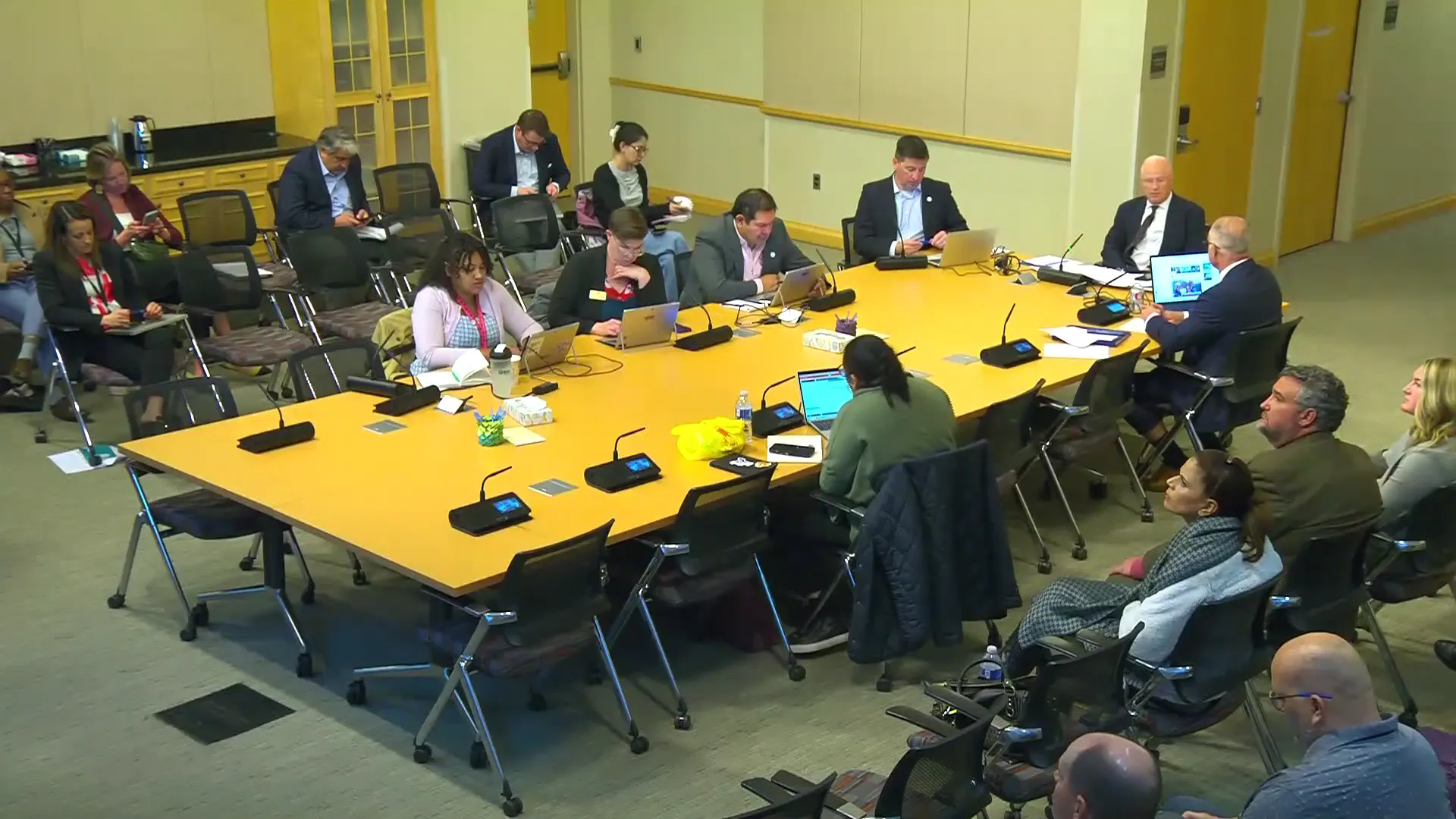
The Aurora City Council met for a study session on May 19, 2026, to discuss and provide direction on several significant items, including a proposed infrastructure bond program, an update from the Citizens Advisory Committee on the consent decree, an ordinance to establish the Office of Public Safety Accountability, and a detention center disease reporting ordinance. Councilmember Wiles was not yet online, and Councilmember Gardner was absent due to a family emergency.
Consent Calendar
- Items 2A through 2E were moved forward without objection.
Discussion Items
Build Up Aurora Infrastructure Bond Program (Items 4A-4D)
- Deputy City Manager Laura Perry presented the Build Up Aurora process, which began with an infrastructure task force created by council in July 2024.
- Master planning efforts resulted in a $2 billion capital improvement master plan.
- Community outreach included over 54 events, 3,700+ interactions, 21,400+ website visits, 22 facilitated discussions, and 5,800+ infrastructure ideas.
- The recommended bond program is $264,515,000, funded by a 0.325% sales and use tax increase with a 30-year sunset.
- The program would fund 65 projects across transportation infrastructure (47 projects), public safety ($52 million), and community facilities (parks, libraries, recreation).
- The recommendation includes three ballot questions for the November 3, 2026 ballot, plus a companion resolution outlining specific projects and requiring annual reporting to council.
- Councilmembers were asked for direction on each ballot question; no objections were raised, so the items received direction to move forward.
Citizens Advisory Committee Consent Decree Briefing
- Jeanette Rodriguez, chair of the Community Advisory Council (CAC), presented an update on the consent decree process, reflecting on four and a half years of work.
- She noted substantial progress in policies, training, and transparency, but emphasized that the work is not over and that permanent structures for accountability are needed after the monitoring period.
- Another CAC member highlighted the importance of data collection, recruitment and retention, and the establishment of an independent monitor.
- Councilmembers thanked the committee and asked questions about community engagement and the impact of community input on the monitor's assessments.
Office of Public Safety Accountability (Item 4F)
- The City Manager presented a proposed ordinance to create the Office of Public Safety Accountability, modeled after the Office of the Internal Auditor.
- The office would have oversight of police, fire, 911, and detention functions, with unfettered access to systems and data, and would provide family liaisons for critical incidents.
- Councilmember Horton expressed support, highlighting community engagement and transparency. Councilmember Bergen raised concerns about council's role in hiring and the potential for political influence; the City Manager clarified that council would be consulted, not approve, and that the hiring decision remains with the City Manager.
- Councilmember Hancock asked about professional qualifications and ensuring neutrality. No objections were raised to moving the ordinance forward.
Detention Center Reportable Disease Notification (Item 5A)
- Councilmember Horton presented an ordinance to amend city code requiring detention facilities to report reportable diseases, including a 48-hour notification requirement.
- Horton cited reports from community organizations about health issues at the GEO detention center and lack of cooperation with Adams County Public Health.
- Councilmember Bergen questioned enforceability and the practicality of requiring GEO to comply. Councilmember Lawson asked about enforcement mechanisms.
- Councilmember Hancock objected, calling the ordinance "premature," "clearly political," and a "veiled attempt to attack the ICE facility." Despite the objection, the mayor moved the item forward.
Key Outcomes
- The council provided direction to refer the three infrastructure ballot questions to the November 3, 2026 ballot.
- The Office of Public Safety Accountability ordinance was moved forward.
- The detention center disease reporting ordinance was moved forward over Councilmember Hancock's objection.
Meeting Transcript
The study study session for May 18, 2026 for the Aurora City Council's call to order. Would the clerk please call the role? Mayor Kaufman. Here. Councilmember Andrews. Here. Councilmember Bergen. Here. Mayor Pro Tim Coombs. Councilmember Gardner. Councilmember Hancock. Councilmember Horton. Here. Councilmember Jackson. Here. Councilmember Lawson. I'm here. Councilmember Medina. Councilmember Wiles. That's all. Okay. There's no mayor's update. Um Councilmember Wilser, she notified me that she may not be able to be online yet. I guess you're all in route to a conference. Okay. That's the council regarder. Oh. Councilmember Gardner has a family emergency. There's more no mayor's update. Are there any issue updates? Is there any objection to moving the consent calendar forward under number 2A through 2E? See non-consent calendar will move forward. Um Councilmember Gardner, Councilmember Bergen, Laura Perry. Thank you, Mayor. Do you want me to go ahead and just make a statement about this? Please do. Yes, so on behalf of Councilmember Gardner and myself being the council-appointed members to the task force that started almost two years ago, believe it or not. Um we want to bring this forward to council for consideration. It's really the culmination of all the work that staff has done as well as uh the outreach that to the community. And um, I believe Laura Perry will step us through in terms of what the priorities um identified are and what the ballot measures um to be put on the ballot if council approves would be. Uh Deputy City Manager Laura Perry. Good evening, Mayor, City Council members, uh Laura Preary, Deputy City Manager, uh, to walk you through the build-up Aurora process. And if you're following the agenda, these are items 4A through 4D that I'm gonna present as a block via this presentation. So in July of 2024, the City Council unanimously approved the creation of an infrastructure task force to look at long-term solutions to address capital infrastructure within the city, all while receiving community input along the way. The members of the infrastructure task force that met and convened over the last year and a half are listed here on this slide. They had five main tasks that were outlined in the resolution, including developing a short midterm and long-term phase strategic plan to address the city's capital needs, establish criteria for prioritizing our city's infrastructure needs, foster effective communication and collaboration, all while engaging with Aurora residents to understand residents' infrastructure needs and preferences, and finally review funding options to address the party needs that were identified. There were four main tenets of the Build-up Aurora process, which included strategic capital planning, which were done through a series of capital mastery planning efforts over the last three years, each of which included community engagement, uh public engagement for the Build-up Aurora specific initiative, which will involved uh several surveys and community outreach efforts, transparency at every step of the way. Information was posted on the Engage Aurora website and different fact sheets, different presentations, as well as the infrastructure task force presentations and agendas and packets, and then last fiscal responsibility, which included taking a look at specific projects, their scope, how much they cost, as well as the city's financial means to fund our capital project needs. This sundial represents the various capital master planning efforts that were undertaken over the last three years with the ADA transition plan currently still underway. And as reminder again, each of these efforts involved community outreach, feedback, and identification of priority city needs for the city.
openpublica.com