Bend City Council Meeting – June 20, 2024: Work Session, BURA, Budget, and Tree Code First Reading
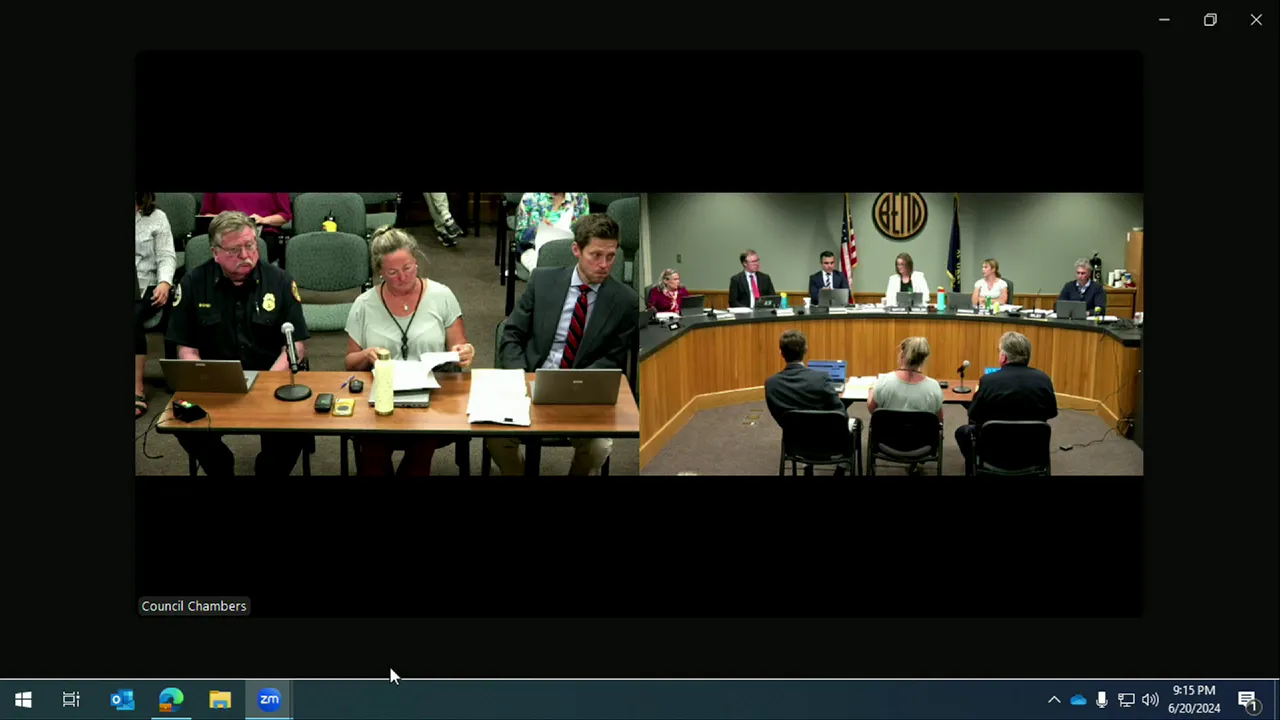
STREAMING COPY IN PREPARATION — RECORDING AVAILABLE FROM THE ORIGINAL SOURCE
Bend City Council Meeting – June 20, 2024
The Bend City Council held a hybrid work session at 5:00 PM, followed by a Bend Urban Renewal Agency (BURA) meeting, and a regular meeting at 7:00 PM on June 20, 2024. Key topics included an introduction from the U.S. Interagency Council on Homelessness, a work session on a potential 100-acre Urban Growth Boundary (UGB) expansion under Senate Bill 1537, BURA budget adjustments, city budget resolutions for FY2024-2025, and a first reading of a comprehensive tree preservation and street tree code update. Public testimony was heard on several items, and council voted on numerous consent agenda items, budget resolutions, and code amendments.
Consent Calendar
- Minutes Approved: Minutes from the June 5, 2024 work session and regular meeting, June 10 joint special meeting with Warm Springs Tribal Council, and the June 10 Public Safety Open House were approved.
- Insurance and Benefits: Renewal of property, general liability, auto, and cyber/crime insurance policies; workers' compensation insurance with SAIF (not to exceed $1,484,138); and health, dental, telemedicine, and EAP benefit plans were authorized.
- Contracts and Agreements: Authorized agreements for: NE Quimby Avenue Water Main Replacement (Jack Robinson & Sons, $830,888.75); Simpson Avenue Waterline Improvements (K & E Excavating, $248,195); Memorandum of Understanding with Central Oregon Civic Action Project for a Civic Assembly on Youth Homelessness; vehicle lease for Police Department (Bancorp Bank, $720,000); amendment for Newport Corridor Improvements/South Awbrey Butte Drainage (Parametrix, $512,288); amendment for Crosstown Bikeways design (David Evans & Associates, $1,423,139); network/hardware/software from CompuNet ($951,800); computer equipment from CDW Government ($599,100).
- Shelters and Services: Lease agreements for shelters with Shepherd’s House Ministries (154 NE Franklin Avenue, 275 NE 2nd Street) and NeighborImpact (2346 NE Division Street); amendment to contract with Shepherd’s House for Lighthouse Navigation Center services (not to exceed $1,329,787, extended to Dec 2026); grant agreement with COIC for $1,455,555 and amendment with Shepherd’s House for Franklin Avenue Shelter (total not to exceed $2,304,994).
- Transportation Grant: Grant agreement with Federal Railroad Administration for Reed Market Corridor preliminary design ($1,050,000).
- All consent items were approved unanimously by voice vote.
Public Comments & Testimony
- General Visitor Comments:
- Hal DeShow (Bend resident, cyclist) advocated for narrower, slower streets to improve safety for cyclists and pedestrians. He expressed that wide streets encourage speeding and endanger vulnerable road users.
- David Green (River West neighborhood) criticized the Greenwood Quick Build Project proposal, stating that the current design does not include protected bike lanes, creates dangerous merging issues between 2nd and 3rd streets, and that the public engagement process has eroded trust.
- Duran Tai (Bend resident) raised concerns about lead emissions from the Bend Municipal Airport, citing EPA data showing highest airborne lead emissions in Oregon. He requested monitoring, testing, and land use changes to protect children's health.
- Testimony on Tree Code (Items 8-10):
- John Halen asked for a one-year sunset on the tree code to evaluate its impact on housing production.
- Morgan Greenwood (Central Oregon Builders Association) opposed mitigation requirements for residential developments on sites one acre or smaller, arguing it disincentivizes higher-density infill. Also recommended allowing street trees and decorative rock as a cost-effective alternative to full landscaping.
- Jacob Clark (Hayden Homes) requested that existing master plan communities be exempt from the new tree preservation code, as earlier phases already carry costs for later phases.
- David Welton (volunteer with Bend DMV) argued the code should be delayed until tree mitigation fees are known, warning it could increase housing costs and force essential workers out of town.
- Michelle Walker (Bend resident) supported the planning commission’s amendments except the affordable housing exemption, urging consistent standards.
- Tyler Nees (Central Oregon Association of Realtors) asked for clarity on wildfire code interactions and raised concerns about three-year tree preservation conditions running with the land.
- Jim Roberts (former TruAC member, founder of Bend YIMBY) opposed the proposal, stating there is no evidence of canopy loss and that the code will increase housing costs without proven environmental benefit.
- Mark Gentle (new Bend resident from Austin, Texas) urged strong tree protections, but noted incentives should be graduated rather than a simple menu.
- Chad Bettisworth (Empire Construction) requested industrial and commercial exemptions, citing that mitigation costs (e.g., $500,000 for a 7.8-acre site) constitute a taking.
- Brent Landells (land owner) argued the code will increase costs for attainable housing and urged council to visit actual development sites before voting.
- Kirk Schuler (Brooks Resources) highlighted conflicts with wildfire codes and recommended a one-year review to assess impacts on development.
- Joey Shearer (AKS Engineering) stated the code will complicate design, increase costs, and reduce housing production, citing mitigation costs of $100,000 to $700,000 on three active projects.
- Cory Bittner (Pahlisch, former TruAC member) opposed the code, requesting more developer input, a field trip to a development site, and annual review. He noted master plans are not conceptual and that financing is sensitive to added costs.
- Karen Johnson (TruAC member) supported the code and urged hiring a full-time arborist to oversee compliance and monitoring.
Discussion Items
- Work Session – U.S. Interagency Council on Homelessness: Katy Miller (Senior Regional Advisor) and Gina Rendina (Policy Director) presented their federal coordination role, highlighting a day of site visits including China Hat encampments. They thanked the city for leadership and discussed strategies for addressing unsheltered homelessness.
- Work Session – 100-Acre UGB Expansion (SB 1537): Lynn McConnell, Brian Rankin, and Michael Selkirk presented. The one-time expansion requires 30% affordable housing, a minimum density of 10 units/acre, and proof of housing need based on rent burden. Staff recommended pursuing the option with a tight timeline (applications by October 2024, comprehensive plan amendment by summer 2025), not requiring more than 30% affordability, and not subsidizing infrastructure—developers must pay. Council expressed support, noting it is a down payment on future growth planning. No formal vote was taken at the work session.
- Bend Urban Renewal Agency (BURA) Meeting:
- Approved minutes from February 7, 2024.
- Approved budget adjustment ($100,000 increase in short-term loan) and authorized promissory notes for loans from City to BURA for Murphy Crossing, Juniper Ridge, Core Area, and Operating Loan.
- Held public hearing and approved 2025-2029 Capital Improvement Program (CIP) for BURA.
- Adopted resolution levying ad valorem taxes.
- Affirmed Core Area Advisory Board appointments: John Fisher, Catherine Austin, Elaine Fardella, Jeff Baker (three-year terms).
- Regular Meeting – Budget Resolutions (Items 7-A through 7-H): Director Dan Quick presented eight budget items for FY2024-2025. Public hearings were held for items requiring hearings (7A, 7C, 7E). Council approved all items unanimously, with the following recusals:
- Councilor Norris recused on 7.3 (fees and charges) due to employment conflict.
- Councilor Riley declared a potential conflict on 7.4 (solid waste rate increase) but participated and voted.
- Tree Code First Reading (Items 8-10):
- Staff and Planning Commissioner Suzanne Johansson presented the proposed amendments to Bend Development Code, Municipal Code, and Standards & Specifications. Key elements include: regulated trees (≥6” DBH) and priority trees (≥20” DBH); preservation options (20% of priority trees, 25% of DBH, or 5% with mitigation); mitigation via on-site replacement or fee-in-lieu; incentives for exceeding preservation thresholds; new street tree requirements; water-efficient planter strips (no turf, efficient irrigation).
- Council deliberated on four planning commission recommendations:
- Added a discretionary track for industrial zones (approved).
- Struck the Southeast Area Plan height incentive for consistency (approved).
- Retained the “whichever comes first” trigger for the three-year preservation period (land division final plat or building final inspection) – council voted to keep original staff language including both triggers.
- Exempted all residential developments on sites one acre or smaller from all tree preservation requirements (approved).
- Council also passed a separate motion directing staff to: bring back fee resolution in August with options for affordable housing discounts; evaluate the code’s implementation by August 2025 with annual reviews; study best practices for incentives; review impact on housing production; and assess how the four options and incentives are being used.
- Southeast Area Pump Station (Item 11): Authorized two contract amendments: Early Work Amendment #2 with Slayden Constructors ($8,892,695, total $11,358,622) for materials and construction activities including a trenchless bore crossing of TransCanada gas lines; and owner’s representative services amendment with Brown and Caldwell ($559,835, total $920,278). Approved unanimously.
- Midtown Multimodal Connections (Item 12): Council postponed discussion of the Guaranteed Maximum Price amendment to July 17, 2024, to allow more time for deliberation.
Key Outcomes
- Consent Agenda: Approved unanimously.
- Downtown Economic Improvement District (Item 6): Resolution approved assessing $0.30/sq ft on commercial property, increasing $0.01/sq ft in each of the next two years. No remonstrance votes were received.
- Budget Resolutions: All eight items (7A-7H) approved as motions, with public hearings held for 7A, 7C, 7E, 7.3, and 7.4. Tax levies, fees, solid waste rates, CIP, staffing (+9 FTE), investment policy, and fiscal policies all adopted.
- Tree Code Amendments (Items 8-10):
- First reading of ordinance amending Bend Development Code (Item 8) passed with four technical amendments (industrial discretionary track, removal of Southeast Area incentives, preservation trigger wording, exemption for residential under one acre). Vote: 6-0 (Councilor Norris recused on Items 8-10).
- Staff direction motion passed unanimously: annual review, affordable housing fee discussion in August, and evaluation of code impacts.
- Resolution amending Standards & Specifications (Item 10) approved unanimously.
- Item 9 (Municipal Code amendments) postponed to July 17 meeting to ensure consistency.
- Second Readings:
- Ordinance to modify Petrosa and Easton Master Planned Developments (Item 13): Adopted by roll call vote (6-0).
- Ordinance to allow Neighborhood Commercial Sites adjacent to Bend Central District (Item 14): Adopted by roll call vote (6-0).
- Ordinance to annex land in Southeast Area (Item 15): Adopted by roll call vote (5-0, Councilor Norris recused).
- Ordinance to vacate portion of NE Penn Avenue right-of-way (Item 16): Adopted by roll call vote (6-0).
- Public Safety Comment: Councilor Campbell reported that the Pilot Butte fire station is now the busiest for ambulance calls; long-term plans include remodeling to add another engine and ambulance.
Next Steps: The council will hold its next regular meeting on July 17, 2024, where the tree code ordinance second reading and the Midtown Multimodal project will be addressed.
Meeting Transcript
I think we're about ready. Ready, Morgan. Okay. So we're going to get started with our Bend City Council work session. We'll we are all here except for Council Norris, who will be joining us later via Zoom. And our first item, um, Eric or maybe Megan, if we want to introduce, we have some folks here from the United States Intergovernmental Council on Hallness. Yeah. Um today we had a really exciting event from the coordinate house's response office, brought together uh a bunch of federal partners to talk about camping on federal land specifically China Hat and had an incredible conversation, and I'm happy to have um Gina and Katie here today to just share with us a little bit about what they do with the United States inner council, wait interagency council on homelessness. I first want to thank Mayor Kepler and Mayor Pro Tem Perkins for inviting us. And we've had a wonderful day here visiting. We spent the morning in China Hat. We've also spent the afternoon touring many of your programs and meeting with teams. We're going to be tomorrow. We're going to be in encampments in the county. So we'll be with Jesus County in the morning, and we're going to be in other parts of this area, really seeing what's going on on the ground. So I just wanted to thank you both for your leadership and bringing us to this issue. I'm Katie Miller. I'm a senior regional advisor for the United States Interagency Council on Homelessness. USICH coordinates the federal response to homelessness across 19 federal agencies at the highest levels in Washington. So at the cabinet level with the White House and with cabinet secretaries. Because it's critical that we all work together and we align these efforts and drive this work so that we can ensure that we're working with urgency. So my job, I'm based in Seattle, I work across the West. And as your contact with the U.S. Interagency Council on Homelessness, I'm eager to continue to work with you and support the work that you're doing here and help share best practices and lessons learned from other parts of the country, but also just to help you connect with our work in Washington as well. So I'm also I'm glad to have a policy director from our Washington team here with me. Hi everyone, thanks for having us as uh Katie mentioned. I'm Gina. I'm also with USICH. I'm on the policy side. We uh work at a variety of levels at USICH because obviously collaboration, partnership, and coordination happens at a variety of levels, right? So Katie works primarily with um localities, and I work mainly with the federal agencies to talk about federal policies that might impact um addressing homelessness. And something that might be relevant to to you all here in Bend is that recently um I have been working with federal agencies to come up with a common approach for addressing homelessness. So that involves the FARS Service, the National Park Service, um, a variety of law enforcement arms and really having these conversations around what have we been doing, what isn't working, what would work, um, and trying to really be on the same page at the federal level because when we all are on the same page at the federal level, that can also have a really uh positive impact at the local level. So just one example of how um the federal policy work um might look like and uh we do a variety of other things with um coordinating through working groups and things like that. So thanks for having us. Thank you both for being here. Um really appreciate it. Yeah, we have this. We have a press release that went out today highlighting the conversation. And one of the one of the cool things that's linked in there is um something that recently came out of the the council was the strategies for encampments and how to um address those humanely and effectively, and that includes on on places like China had another federal land. So we appreciate the policy guidance and we appreciate you being here with us at our city council meeting all the way from DC from the federal level. Um this just represents how important it is from top to bottom to be coordinating on this issue. It is not just a city issue, not a county or a region, it's everybody together that um really we're gonna need to help solve this. So any other comments from counselors? We know we had some time to chat as well before the meeting, so we just really appreciate you being here and wanted to highlight your visit. Yes, thank you so much. Thank you for having me. You all are doing great work here. It's very, very hard, and the issue of unsheltered homelessness is very, very hard, but you're doing great work. So thank you.
openpublica.com