Bend City Council Meeting - November 20, 2024: UGB Site Selection, Code Amendments, and More
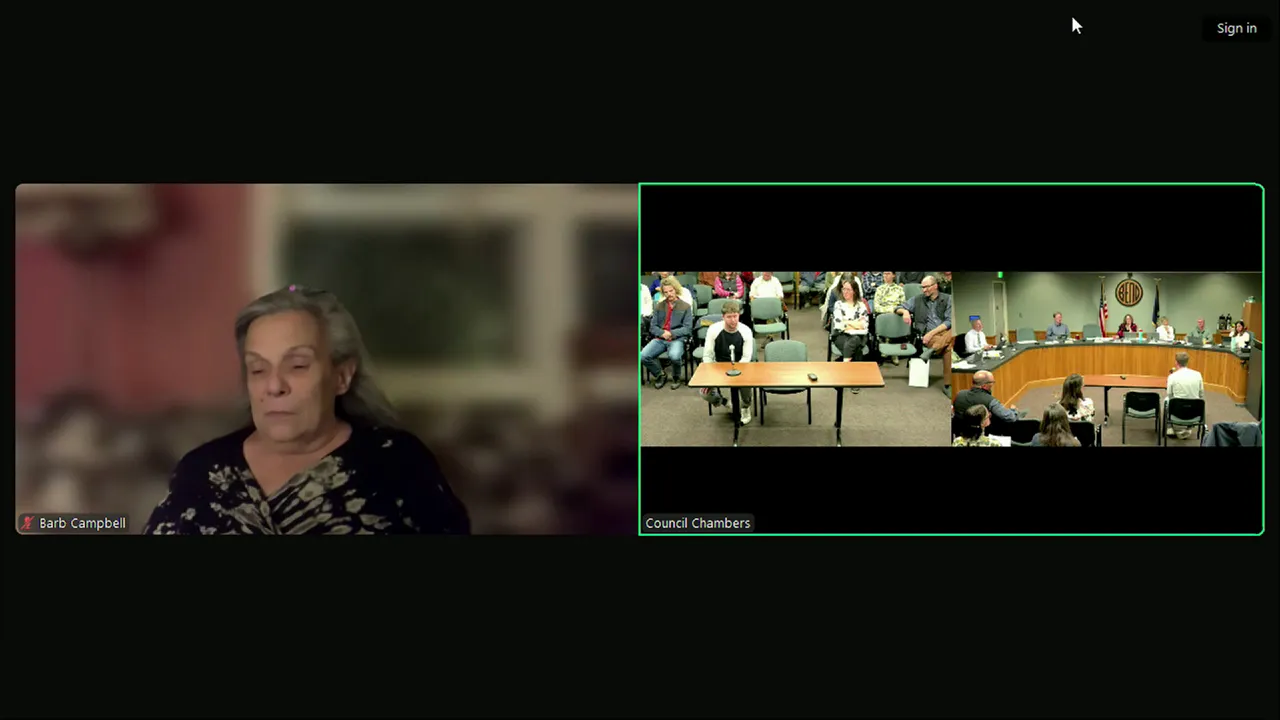
STREAMING COPY IN PREPARATION — RECORDING AVAILABLE FROM THE ORIGINAL SOURCE
Bend City Council Meeting - November 20, 2024
On November 20, 2024, the Bend City Council held a work session beginning at 5:00 p.m. followed by a regular meeting at 7:00 p.m. The meeting covered a one-time Urban Growth Boundary (UGB) site selection, updates on advisory board communication and goal setting, and multiple public hearings including significant amendments to the Bend Development Code (BDC) to implement state housing laws. The council also approved consent agenda items, a street name change, and an eminent domain resolution for a road project.
Consent Calendar
- Approval of Minutes: Minutes from the October 29, 2024 Joint City Council and Park & Recreation District meeting and the November 6, 2024 City Council meeting were approved.
- OLCC Report: Accepted.
- Contract Amendment with WSP Inc.: Authorized an amendment for planning, engineering, and surveying services for the Butler Market Road and Wells Acres Roundabout and Boyd Acres and Butler Market Key Routes for Walking and Biking Project, increasing the contract amount by $177,737.41 to a total not to exceed $1,924,198.75.
- Clean Water State Revolving Fund Loan: Adopted a resolution amending Resolution No. 3364 to increase the loan amount by $175,000 for the Water Reclamation Facilities Plan Update, total loan not to exceed $1,700,000.
- Grade Crossing Agreement with BNSF and ODOT: Authorized a maintenance agreement for the Cooley Road Quiet Crossing improvements, with annual maintenance costs beginning at $18,349.13.
Public Comments & Testimony
Visitor’s Section:
- Joe Craig expressed full support for building electrification and net-zero homes, urging council to adopt strong climate policies.
- Brendan Reeve (volunteer, Shoots Youth Climate Coalition) urged council to prioritize electrification for health and cost benefits, and to take meaningful steps to protect the climate.
- Corey Harlan (Cities and Towns Program Director, Central Oregon Landwatch) urged council to defer the UGB site selection and instead focus on infill, the 20-year growth plan, and other tools to manage growth effectively.
- Freddie Finney Jordan (organizer, Deschutes Youth Climate Coalition and Fridays for Future Bend) urged council to select a bold path to electrification, including mandatory policies, and to allow no new fossil fuel infrastructure on city rights-of-way.
Public Hearing on Development Code Amendments (Item 9): Multiple speakers addressed the proposed code amendments:
- Susie Fagan (online) questioned the definition of income-qualified housing and expressed concern about the 120% AMI threshold, asking why the city is not using the state's term "affordable housing."
- James Cagney opposed allowing housing in public facility (PF) zones, citing the need to protect parks.
- Jim Roberts (West Hills Neighborhood) supported the code amendments as tools to address the housing crisis, noting that many workers cannot afford to live in Bend.
- Violet Davy (youth) asked to protect public lands so kids have places to play.
- Bradley Garrick expressed concern that the city's new definition of "income qualified housing" does not align with the state's definition of affordable housing, potentially opening avenues for development on parks.
- Lauren Davey shared her personal housing struggles and urged council to prioritize housing while protecting open spaces, specifically opposing housing in PF zones.
- Ian Karatz supported the code amendments, stating they would remove barriers for affordable housing and help retain young workers and professionals in Bend.
- Sean Bauer asked council to remove “income qualified housing allowed outright” from the PF zone, arguing it goes beyond state law and could threaten protected lands.
- Tom Scott opposed the term “income qualified housing” and the inclusion of PF zones, saying the city’s language diverges from Senate Bill 8 and could allow development on non-public lands like Greenwood Cemetery.
- Isaac Zinda supported the code changes, emphasizing the need for affordable housing for friends who are nurses and therapists struggling to live in Bend.
- Ruth Douglas (longtime resident) opposed development on Greenwood Cemetery and urged protection of mature trees and green spaces.
- Hunter Crittenden supported the amendments, arguing that concerns about park development are unfounded and that income-qualified housing targets those earning 80%-120% of AMI, which is still below market rate.
- Christy McKee (43-year resident) questioned the need for changes to the PF zone, urging focus on ADUs instead and stating that the amendments strip oversight and endanger green spaces.
- Ellen Colton (resident) opposed development on parks, quoting John Muir and Roosevelt, and expressed concern that five west-side and ten east-side parks could be targeted.
- Julia Olson (20-year resident) asked to remove PF zone language, arguing the changes are broader than state law and could allow housing in natural areas without public input.
- Jenny Lindgar opposed the code changes, stating they remove council oversight and make appeals more expensive and less accessible.
- Diana Brown (26-year resident) asked to delete “income qualified housing outright” from PF zones, stating it would make building on parks a type-one application with no public notification.
- Ian Austin (attorney) discussed the Greenwood Cemetery non-conforming use issue and suggested adding a specific reference to state statute ORS 197.451 to define income-qualified housing.
- Adam Smith (attorney representing a private PF-zone landowner) supported most amendments but opposed the new definition of “public lands,” arguing that privately owned PF land should be rezoned rather than excluded via definition.
- Susie Newcomb (31-year resident) opposed housing in PF zones, stating it sends a message that Bend will pave over everything and that only 7% of city land is protected.
- Jeremy Botta (native Bendite) opposed the PF zone language, asking for a new protected-lands zone and warning against incremental loss of green spaces.
- Kristen Reidelberger (Central Oregon Landwatch) urged the council to adopt staff’s amendment clarifying public lands, to monitor the impact of the code changes, and to consider additional amendments for neighborhood-scale commercial uses.
- Nancy Gold opposed the changes, stating that the city is replacing “affordable housing” with “income qualified housing” and that the PF zone term is not in state law. She argued that the changes reduce public involvement and could hurt the very low-income households the city aims to help.
Discussion Items
1. 100-Acre One-Time UGB Site Selection (Work Session):
- Brian Rankin and Brianne Gale presented two proposals: Jasper Ridge (east side, ~132 acres, ~1,000 units) and Caldera Ranch (southeast, ~90 acres, ~700 units). Both meet the state's minimum density of 10 dwelling units per net acre and include at least 30% affordable housing as defined by the state (80% AMI for rent, 130% AMI for sale). Key differences: Jasper Ridge has more affordable for-sale units and commercial space (3 acres), while Caldera Ranch phases more affordable units earlier (90% in first phase) and is closer to a school. Councilors requested information on feasibility, timing, dependencies (e.g., tax credits, infrastructure), and the partnership plan for delivering affordable housing. The public hearing and potential site selection are scheduled for December 4, 2024.
2. Update on Council-Advisory Board Communication (Work Session):
- Kate Schneider presented findings from liaison interviews, highlighting that quarterly updates lack clarity, advisory body input for goal setting could be better integrated, and there is confusion about communication channels. Recommended actions include an Advisory Body Summit on January 14, 2025, improved onboarding, and clarifying that there is “no wrong door” for communication. Council discussed the need for diversity on advisory boards and better inter-board communication on cross-cutting issues.
3. Overview of Goal Setting Process (Work Session):
- Eric and Stephanie outlined the 6-month goal-setting process that begins with council election and concludes with adoption alongside the budget in June 2024. Inputs include a community survey, an advisory body summit, and community pop-up events. Key dates: the council retreat on February 3-4, 2024, and a public input session on January 22, 2024. Council supported targeted outreach to underrepresented communities.
4. Fire Station Alerting System Replacement (Item 6):
- Elizabeth Oschell presented a request to use a Best Value procurement method due to project complexity (operational stations, unknown as-builts). The council approved the motion unanimously.
5. Street Name Change (Item 7):
- Erin Henson presented a request to rename SW Taylor Court to SW Innovation Way, consistent with the planned extension. The planning commission unanimously recommended approval. The council approved the resolution.
6. Stevens Ranch Master Plan Amendments (Item 8):
- Karen and the applicant team presented a quasi-judicial hearing to reorient commercial and residential designations in the Stevens Ranch Master Plan to improve marketability and align with infrastructure (roundabouts). The changes are consistent with the comprehensive plan and do not increase trips. Public comment: one in support, one opposed. The council approved the first reading of the ordinance.
7. Eminent Domain for Butler Market Road Project (Item 10):
- Matthew Jarisowski presented a resolution to authorize eminent domain for temporary and permanent easements for the roundabout and pedestrian improvements. 25 out of 40 agreements have been reached; the resolution allows acquisition if negotiations fail. The council approved the resolution.
8. Development Code Amendments (Item 9) – Major Discussion:
- Russ Grayson, Colin Stevens, and Paulina provided a detailed presentation on four state bills (SB 8, HB 2984, HB 3151, HB 3395, and SB 1537) requiring cities to allow affordable housing on public lands, commercial zones, and other areas. The proposed code amendments create a new category of “income qualified housing” (with specific income limits from each bill), allow residential development in PF zones, eliminate council appeal for certain decisions, and add new flexibility for middle housing (cottage clusters, shared courts, lot coverage). Key debated points:
- PF Zone: Staff recommended an amendment to define “public lands” to exclude privately owned PF land (35 acres). Council did not support this amendment after discussion, so PF zones (including privately owned) remain eligible.
- Income Qualified Housing Definition: Council clarified that the term reflects state-law income limits (80% or 60% AMI, etc.) and does not change the city’s existing affordable housing definition.
- Appeals: The amendments remove council appeal for most development decisions, channeling appeals to the Land Use Board of Appeals (LUBA). Council reasoned this is rarely used and restricts their ability to engage with the public.
- The public hearing included extensive testimony for and against. The council approved the motion 5-1 (Councilor Campbell opposed) for first reading.
Key Outcomes
- UGB Site Selection: No decision made; a public hearing is set for December 4, 2024, with potential site selection.
- Council-Advisory Board Communication: Staff will hold an Advisory Body Summit on January 14, 2025, and improve onboarding and communication protocols.
- Goal Setting: Council will use community surveys, pop-up events, and an advisory body summit to gather input; retreat on February 3-4.
- Fire Station Alerting System: Approved use of Best Value procurement (motion passed unanimously).
- Street Name Change: Adopted resolution renaming SW Taylor Court to SW Innovation Way (unanimous).
- Stevens Ranch Amendments: Approved first reading of ordinance (unanimous).
- Eminent Domain: Adopted resolution authorizing eminent domain for Butler Market Road project (unanimous).
- Development Code Amendments: Approved first reading of ordinance 5-1 (Councilor Campbell opposed). Second reading scheduled for December 4, 2024.
- Sign District Boundary Update: Adopted second reading and ordinance by roll call (6-0, Councilor Norris recused).
- Tree Preservation Exemptions: Adopted second reading and ordinance by roll call (5-1, Councilor Campbell opposed; Councilor Norris recused).
- Council Appointments and Reports: Committee updates; will appoint new members at next meeting.
Meeting Transcript
Thank you. Good evening, everyone. We're gonna get started with our Ben City Council work session. Councillor Norris is recused on this item. And Councillor Broadman is excused until later in the meeting. And Barbara's online. Okay, and Councillor Campbell's online personality. So I already voted. Great. So we're gonna start with our 100 acre one-time UGB site selection. Here we go. Being mayor and council and community. Brian Rankin, long-range planning manager and Brianne Gale, senior planner here in the growth management division. Tonight we have, let's see, I'm just gonna do some quick quick introductory remarks and turn it over to Brianne here. This summer, you directed us to begin on a three-phase growth management strategy and plan that has three main components. The first is the one-time EGB addition, and that is what is before you tonight. That would be the potential to add up to a hundred net acres of residential and some other ancillary uses to the urban growth boundary with some special conditions, uh, most notable of which are a high percentage of that, around 30% being affordable housing. Uh the second phase of that growth plan is a more comprehensive look at our 20-year land needs for residential and employment, um, and also combined with an update of our transportation systems plan and then other related documents. So that's a 20-year look. Um then after that, um a discussion of potentially moving forward with urban reserves, which would then provide an additional uh 10 to 30 years of supply within an urban reserve for future urbanization. Um, so tonight is really the first step in a multi-year process. Um Brianne's gonna do uh do a really good job here. I want to commend her on doing really good work very quickly under a new bill, um, and as well as the whole team, including Mary and Russ, uh Ryan Oster and others with on the city team. Uh but tonight this is really the first time you get to take a look at a couple different uh sites that have applied and begin that discussion. She'll describe some of the future steps, but the purpose of the evening is really to kind of orient you on the two proposals that we've received, uh, and then you'll have another chance and a deeper dive on December 4th during a public meeting slash hearing where you'll be able to receive more testimony and we'll do even more of a deeper dive into the proposals and I think and have the ability for more of a discussion. So tonight the hope is that we present this to you and you'll have the applicants here. I'm sure they're here in the audience, and so it's a chance for you to kind of provide some of those questions to applicants that you would like to be addressed during the hearing. Uh with that, I will turn it over to Brianne. Sure, thanks, Brian. Um, the only thing I would add is that any land that's added through this one-time um UGB edition is not additive to any land that we would be adding to the 20-year growth plan. I think that's kind of important to understand. This is kind of like an early buy-down on that future on that future land. So jumping into it, um, just a refresher tonight. We're just gonna give a refresher on the bill and then just what we've done today, and then kind of high-level overview of the two proposals that we received. Um Senate Bill 1537 is essentially legislation that one portion of the legislation um is essentially allows for a one-time urban growth boundary expansion of up to 100 net residential acres. Um the kind of really key of the bill is to really accelerate housing and specifically affordable housing. Um, it's this portion of the bill, it's not about adding uh more land or more capacity to our UGB. That's not gonna be developed, it's really about getting housing developed. So we want to um timeliness is kind of the impetus of this entire project, and then kind of uh one of the key requirements of the bill is for uh proposals to include 30% of the units as affordable to different types of households, um, either 80% of area media income for if they're for rent product or um up to 130 percent of area media median income if they're for sale product. So jumping into the eligibility criteria. Um for cities to be eligible for this, um, they need to have a greater percentage of severely cost-burdened households than the state average. Um meets that threshold. Um, we continue to meet that threshold, and we there is a kind of a land need that we need to demonstrate. Um, this is a percentage of your urban growth boundary expansion areas that are either developed or have certain um comprehensive plan designations and public facility and financing plans. Um, we meet that threshold as well. And then for sites to be eligible, um, the site needs to be adjacent to our existing urban growth boundary. It needs to be non-resource land, meaning that it can cannot be forest or farmland essentially. So the actual site itself can actually be greater than 100 acres. You'll see one of the sites proposals is over 100 acres, but the actual um residential the acreage can't be over 100 acres. So this doesn't account for like rights of ways or open spaces, things like that.
openpublica.com