OPENPUBLICA · PUBLIC MEETING RECORD
Record of Proceedings
Cook County Board of Commissioners Budget Hearing: Cook County Health FY2027 Budget – October 28, 2026
Board of Commissioners — Wednesday, October 28, 2026
BodyCook County, Illinois
SessionBoard of Commissioners
DateWednesday, October 28, 2026
StatusNEW · FILED
Video Record
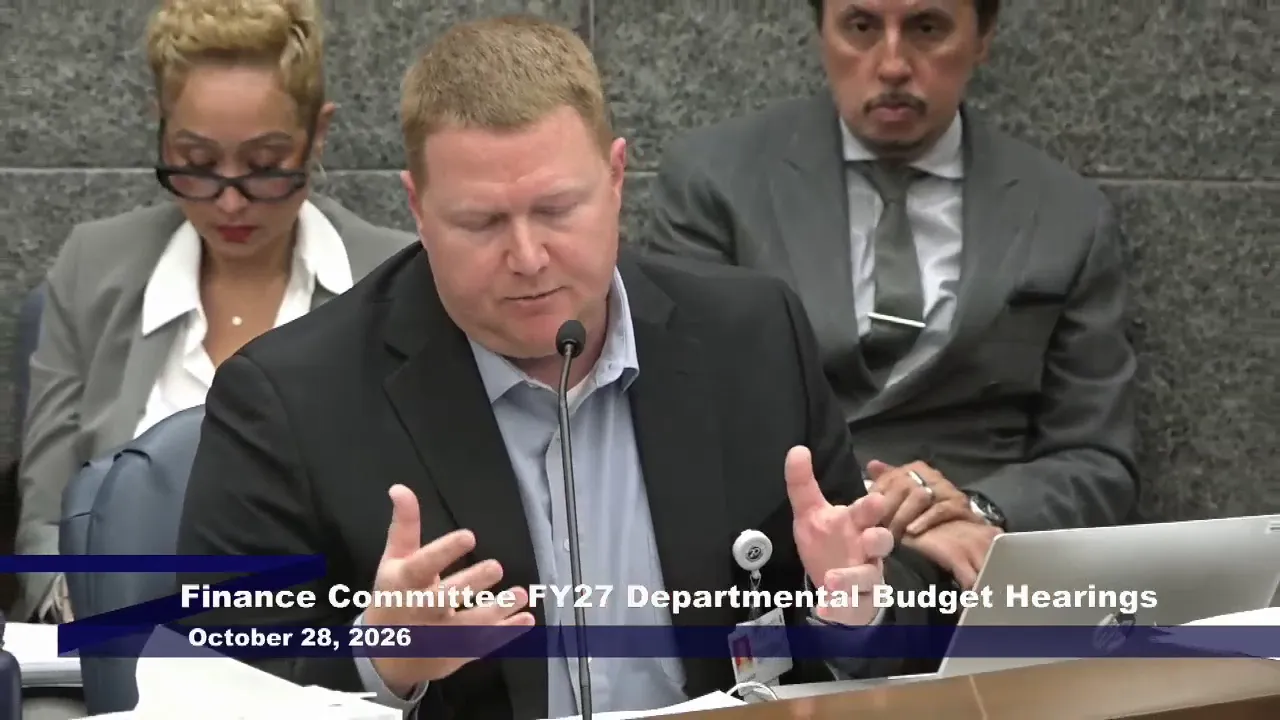
STREAMING COPY IN PREPARATION — RECORDING AVAILABLE FROM THE ORIGINAL SOURCE
Transcript — Verbatim
Speaker numbers apply only to this recording.
Discussion Breakdown — Share of Meeting
Public Health52%
Medicaid/Insurance14%
Mental Health Awareness11%
Behavioral Health7%
Budget Equity Analysis4%
Language Access3%
Personnel Matters2%
Public Engagement1%
Food Security1%
Summary of Proceedings
Cook County Board of Commissioners Budget Hearing: Cook County Health FY2027 Budget – October 28, 2026
On October 28, 2026, the Cook County Board of Commissioners held a budget hearing for the Cook County Health (CCH) proposed Fiscal Year 2027 budget. The CCH Board Chair, Raul Garza, CEO Dr. McKaitis, Interim CFO Scott Spencer, and other health system leaders presented a $4.7 billion budget facing severe financial pressure from federal Medicaid cuts and policy changes (HR 1), projected to leave 330,000 Illinois residents uninsured. The budget relies on an additional $40 million in county support to close the gap and preserve access to care.
Discussion Items
- Federal Policy Impact on CCH Budget: Chair Garza highlighted the impact of HR 1, which drastically reduces federal Medicaid funding. CCH projects a $138 million decline in patient care revenue and a $100 million increase in charity care, reaching a total of $485 million in charity care costs. Dr. McKaitis stated that over the past three years, CCH has eliminated approximately $315 million in expenses and reduced agency FTEs by 53% (from 1,366 to 637) to prepare for federal cuts.
- County Support and Financial Sustainability: The proposed budget includes a $40 million increase in direct Cook County support, reflecting President Preckwinkle's commitment. Chair Garza noted that direct county funding has fallen from supporting one-quarter of the CCH budget in 2013 to less than 5% in the proposed FY2027 budget. Commissioners acknowledged the tight fiscal environment but praised CCH leadership for protecting services and workforce.
- Uncompensated Care and Coverage Losses: Commissioner Trevor expressed concern that the $100 million charity care estimate might be too low given the scale of federal changes. Commissioner Lowry queried the rise of uninsured patients from area hospital closures (e.g., South Side, Roseland, Trinity). Dr. McKaitis reported the uninsured rate in CCH's patient mix rose from 20% to 25% in January 2026 following the end of the enhanced ACA tax subsidy.
- CERMAC Health Services (Correctional Health): Commissioner Lowry raised concerns about a net decrease of 15 FTEs in CERMAC health services. Manny Estrada (COO) and Dr. Nutter clarified that while the budgeted FTE line decreased, actual staffing increased as the department filled 40+ vacancies and realigned positions, reducing vacancies to just six. The reduction was in mental health positions, offset by increased direct patient care staff.
- Behavioral Health and ARPA Programs: Several ARPA-funded programs were sunset or reduced in the FY2027 budget. Commissioner Aguilar noted the Healthy Workers Initiative was cut from $3 million to $1.5 million. Commissioner Morrison commended CCH for retaining a net increase of 50 behavioral health positions post-ARPA. Dr. Nutter stated that the behavioral health program at the JTDC (Juvenile Detention Center) sees only 63% of patients receiving individualized counseling, which Commissioner Degnan criticized as insufficient, demanding 100% access for detained youth.
- Health Plan Services (County Care): Aaron Galiner discussed investments in community outreach, text messaging, and data flows to prepare members for redetermination. Commissioner Aguilar inquired about the CareLink charity care program, confirming it is handled by the same financial counseling team.
- Provident Hospital Services: Dr. McKaitis explained the temporary closure of the Medical ICU at Provident due to an average daily census of one patient, while the Emergency Room remains open. He highlighted a 15-16% improvement over budget in operating room performance and a plan to expand outpatient access by 40% through consolidation.
- Workforce and Settlement (Guidehouse): Commissioner Degnan inquired about the Guidehouse labor settlement hiring. CCH reported that of the 135 new PIDs allocated in FY2026, 72 have been filled, with 106 offers made. An additional 25 positions will be added via a technical amendment in FY2027.
- Maternal Health and OB/GYN: Commissioner Degnan raised concerns about cuts to OB/GYN FTEs on budget pages G106 and G112. Dr. McKaitis clarified the positions were repurposed for insourcing, but the overall OB/GYN coverage is expanding through a partnership with the University of Illinois, growing from 6 to 13 providers, supported by a $3 million increase in medical consultation funding.
- Public Health and Operations: Dr. Joshi (CCDPH) noted the Department is essentially flat year-over-year in FTEs, with changes being reclassifications. Dr. McKaitis highlighted an increase in annual wellness visits to 41% (up from 4%) and a 50% year-over-year increase in quality outcomes under value-based care contracts.
Key Outcomes
- The FY2027 CCH budget is presented without cuts to patient care services, maintaining a flat FTE count and avoiding any layoffs or clinic closures.
- The budget relies on $40 million in additional county support to help offset a projected $138 million decline in patient revenue and $100 million increase in charity care.
- CCH will continue its multi-year cost reduction strategy, having achieved over $300 million in cumulative savings and reducing agency reliance by 53%.
- A technical amendment is planned to add the final 25 positions related to the Guidehouse labor settlement, totaling 160 positions.
- CCH leaders acknowledged that FY2027 is a temporary reprieve and that future fiscal years may require increasingly difficult measures including workforce reductions or health center closures if federal funding shortfalls persist.
- Commissioners and CCH leaders agreed to strengthen state-level advocacy to protect programs like the Health Benefits for Immigrant Seniors (HBIS) and negotiate broader reforms for charity care distribution among private health systems.
Meeting Transcript
I'm not too technical technically adept. Thank you, Dr. McKaitis. Good morning. My name is Raul Garza, and I have the privilege of serving as the chair of the Cook County Health Board. And I want to thank the Cook County Board of Commissioners for the opportunity to discuss the Cook County Health's proposed 2027 fiscal year budget. I think we're all too well familiar with HR1. The federal law enacted about a little less than 18 months ago that drastically reduces Federal Medicaid funding and changes that will have uh requirements on people that that will have to meet in order to retain coverage. Uh and this will restrict how states uh financially care uh for those individuals. Uh for our board, the challenge is to understand how these changes affect both residents of the county and our ability to serve them in spite of those changes. Residents who lose coverage will still need here's our here here's the reality. Residents who lose coverage will still need prescriptions, they will still require treatment and continuing care. Our FY2027 budget projects charity care costs to reach nearly half a billion dollars, 485 million dollars to be exact. That's an increase of over a hundred million dollars over what was compared in the FY 2026 estimate. And knowing that we must prepare for the need while managing the resources available to meet that exact need. In communities across the country, I'm sure we've seen this on a national level in the media. Public health care providers are consolidating clinic services while local governments are providing temporary financial support and requiring independent reviews of operations, and even in one state, voters next week will decide whether to levy a one-time tax on billionaires with most of those proceeds directed to health care uh in support of health care. Uh the approaches differ, but I think what's consistent is that the challenge is all too familiar, controlling costs while sustaining the care that residents will need. In Cook County, our work our work uh began well before the budget cycle. Uh as it relates to HR 1, it began the day after HR 1 was passed. But over the past three years, Cook County Health has eliminated approximately $314 million in expenses. Our board, the Cook County Health Board, has worked very hard with Dr. McKaitis and his leadership who are all represented here today to improve these areas, quality, strengthen the operations of Cook County Health System, build a more sustainable financial foundation. So with that, I want to recognize the leadership of Dr. McKaitis and especially his team and the employees around the direct service line providing care to the residents of Cook County. Um they are the ones that are putting the improvements into practice. Preparation also means helping eligible residents keep the coverage that they have right now. Cook County Health uh convened, and this has been nationally recognized, a Medicaid impact work group last year that brought providers from every aspect of health care together and beyond uh to include social service organizations, community-based organizations. And the focus between Cook County Health and County Care has been to educate residents about the coming requirements and offering uh renewal assistance at every level that we can uh serve that patient, regardless of what door they walk through in the Cook County Health System. Protecting access begins before a coverage interruption becomes a disruption in treatment.
SUMMARIZED BY OPENPUBLICA AI
TRANSCRIPT VIA PUBLIC VIDEO
openpublica.com
openpublica.com