Denver Community Multi-Segment Presentation and Discussion - March 11, 2025
STREAMING COPY IN PREPARATION — RECORDING AVAILABLE FROM THE ORIGINAL SOURCE
Denver Community Multi-Segment Presentation and Discussion - March 11, 2025
This hybrid meeting covered a wide range of topics including paleontology education, art conservation, a DUI public safety testimony, and a media access podcast introduction. The session began with a detailed paleontology presentation on Madagascar fossils, followed by a question-and-answer session with two schools. It then transitioned to a conservation discussion about a Clifford Still painting, a curator's talk on an upcoming exhibition, a personal DUI testimony, and a podcast about Denver Community Media.
Public Comments & Testimony
- A former firefighter delivered a personal testimony about causing a high-speed rollover accident while driving under the influence, resulting in two permanently disabled individuals. He stated, "Everything that I had worked my whole life for has been erased due to drinking and driving." This served as a public safety warning.
Presentations and Discussions
- Paleontology Presentation: Presenters Sierra and Dave discussed dinosaur growth, ontogeny, and osteology using a baby Rapetosaurus humerus. They described the discovery of over 25,000 vertebrate specimens from Madagascar over 30 years, including 14 mammal specimens—most notably the complete skull of Vintana (meaning "luck" in Malagasy) and the nearly complete skeleton of Adalatherium ("crazy beast"). Coprolites (fossilized feces) were also presented as trace fossils providing environmental and dietary information. Schools Clara H. Carlson Elementary (Elmont, NY) and Compass Montessori asked questions about the devil toad (Beelzebufo), dinosaur lifespan, Majungasaurus relationships, island uniqueness, fossil dating methods (radiometric and biostratigraphy), and soft tissue preservation. Presenters noted that Madagascar's long isolation (broken from Africa ~165 million years ago and from India ~88 million years ago) led to unique, "funky" fauna.
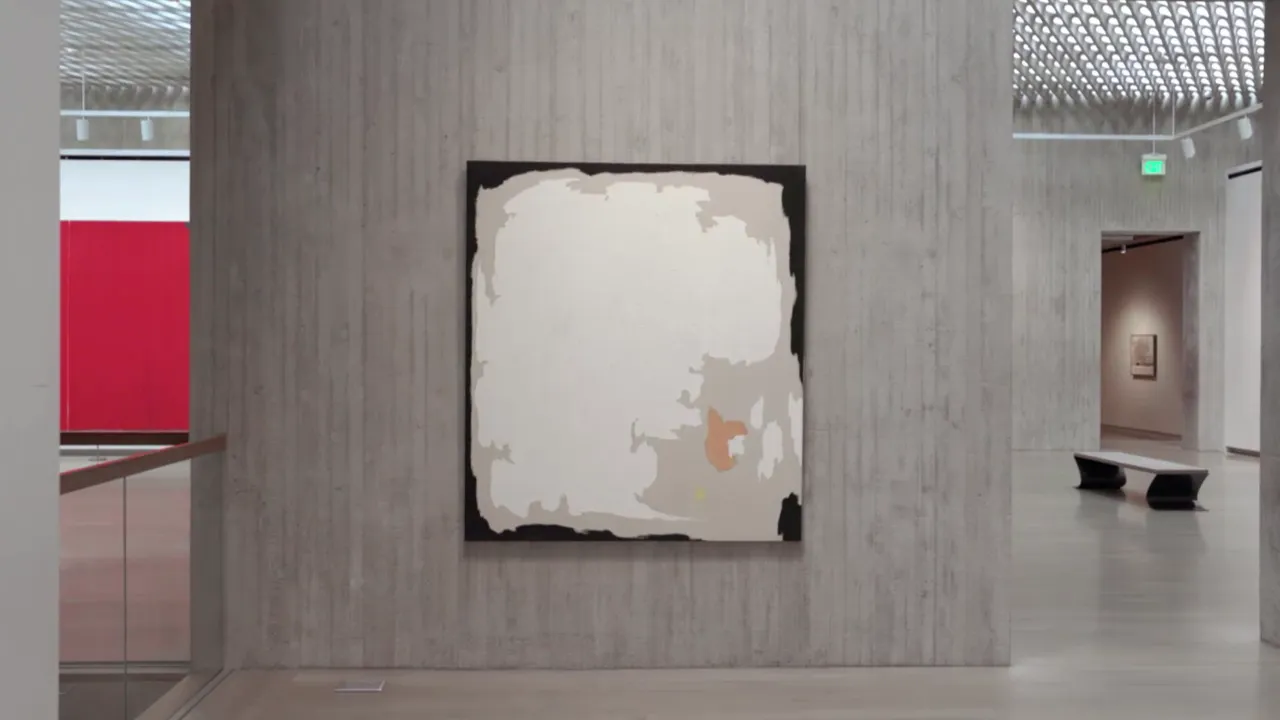
- Art Conservation: Conservation staff examined a Clifford Still painting with fatty acid exudates in the gray areas. They identified three treatment options: (1) no treatment, (2) mechanical removal of fatty acid exudates only, or (3) full restoration including reduction of yellowing and toning/scumbling to recreate forms. They noted that treatment would darken the painting and transform its current cultural perception. A proposal to create a teaching moment with before-and-after windows was discussed. The team agreed to consult with Bailey and Joyce about the treatment's implications.
- Exhibition Planning: Guest curator Valerie Hellstein (PhD, art history) discussed the upcoming exhibition "Dialogue and Defiance: Clifford Still and the Abstract Expressionists" at the Clifford Still Museum. She explained that because no other artists' works can be brought into the museum, the exhibition will feature large quotes and catalogs of works by Mark Rothko and Barnett Newman. Hellstein described her favorite painting, PH 1071, a grayish-blue work with a yellow streak. She praised the museum's architecture for enhancing the viewing experience.
- Media Access Podcast: An introduction to the "Set Talks" podcast featured guests Corinne Marie (Community Access Manager for Denver Community Media) and Denisha Lartiste (active DCM member). Corinne shared her career path from music venue management to media services (hired in 2015) and her role in developing the community access facility. They emphasized DCM as an affordable multimedia one-stop shop providing training, tools, and platform.
Key Outcomes
- No formal votes or decisions were recorded. The art conservation team planned further discussions with Bailey and Joyce regarding treatment options. The paleontology session concluded with an announcement of the next "Scientist in Action" event on January 23rd (year unspecified) about looking for life in the universe. The education and exhibition components were informational with no immediate action items.
Note: The transcript appears to be a compilation of unrelated segments; the date and time (2025-03-11 10:45:00+00:00) were provided but not explicitly referenced in the content.
Meeting Transcript
A baby Rapatosaurus humerus. So the exact same bone as the big one I was showing you on the table before, but obviously this is much, much smaller. And it's finds like this that make paleontologists start to question how did dinosaurs grow? How do we go from something this teeny tiny to something this huge? And it has now become a whole field of study about ontogeny and osteology. So that's bones and growth, or growth and bones, rather, um, looking at the inside of bones to try to understand how they're growing over time, whether it's fast or slow, if they grow more like us or more like lizards or more like birds, and they do things like make these slides. So this, I'll also hold this in front of the vest, because that one might be even harder to see. But this is one tiny thin slice of a dinosaur bone, a rapetosaurus bone, actually. And you can see it's got lots of different parts on the inside, and scientists can look at all the different parts of the bone in there and make determinations about how fast something was growing. Um, and we know now that dinosaurs, at least sauropod dinosaurs, grew pretty quickly. So they'd go from this little tiny baby to this huge adult pretty fast, um, faster than people used to think they did, and that's pretty amazing. All right, Dave, want to hit mammals? All righty. So let me talk about mammals. And in the context of the project that we have, we have found over 30 years about 25,000 specimens of backboned animals, and that's a pretty phenomenal number. I'm really a specialized uh paleontologist. I study fossil mammals. And so I went to Madagascar trying to find fossil mammals. And so of those 25,000 specimens, there's only 14 mammals. 12 of those are just little bits of teeth or little bits of jaw. But then in 2010, we discovered this. This is a complete skull of a fossil mammal. And there's many things that are interesting about it. First of all, is its size. This is the largest sorry, the second largest mammal that lived during the age of dinosaurs. But like all the things that Sierra and I have been showing you, it's funky. It's different in a number of different ways. So one of the things is that it has this big flange on the side of its skull, and that's used for big muscles to attach for chewing. Using some techniques that we use in medicine today, we've looked inside of the skull, and we see that the brain is very different than in most mammals as well. Again, because all of these animals that we find are new to science, we get to name them. We named this one vintna because we found it in a big plaster jacket that we thought was filled with fish. And then when we did a scan of it to look at the inside, we saw a skull of this. And that was what I had been looking for for about 15 years up to that point. And I was so excited to see this inside the scan. I didn't sleep for two days. So for that reason, we named it vintna, which literally means luck in the Malagasy language in the Madagascar language. And this is the reconstruction of what ventinum might have looked like. So it was big, probably um uh about the size of a beaver today. And uh it from the outside, it doesn't look that strange, right? But if you look at the skull itself, it is quite different. And then to top things off, remember we had 12 just fragments of teeth and isolated uh bits of jaw. Then we found this skull, and then we found that, which is almost a complete skeleton of another fossil mammal. Belongs to the same group of mammals as Vincena, but it's really, really weird. For one thing, it's got more parts of the backbone than any other mammal living today or extinct that we know of. It's also pretty big for a mesozoic mammal. Most mesozoic mammals were the size of shrews or mice or rats, but this thing was much bigger, and it's got things on the skull that we have no idea what they were used for. So there's holes on the top of the skull. We don't know what those holes, what pass through those holes. And because it's so unique and because it was new to science, we got to name that one too. And we used a Malagasy word, and we used a Greek word, and its name is a Dolitherium, but in Malagasy and Greek, that means crazy beast, because it's a really crazy beast.
openpublica.com