OPENPUBLICA · PUBLIC MEETING RECORD
Record of Proceedings
Eagle Mountain City Council Work Session and Policy Session - November 4, 2026
City Council — Wednesday, November 4, 2026
BodyEagle Mountain, Utah
SessionCity Council
DateWednesday, November 4, 2026
StatusFILED
Video Record
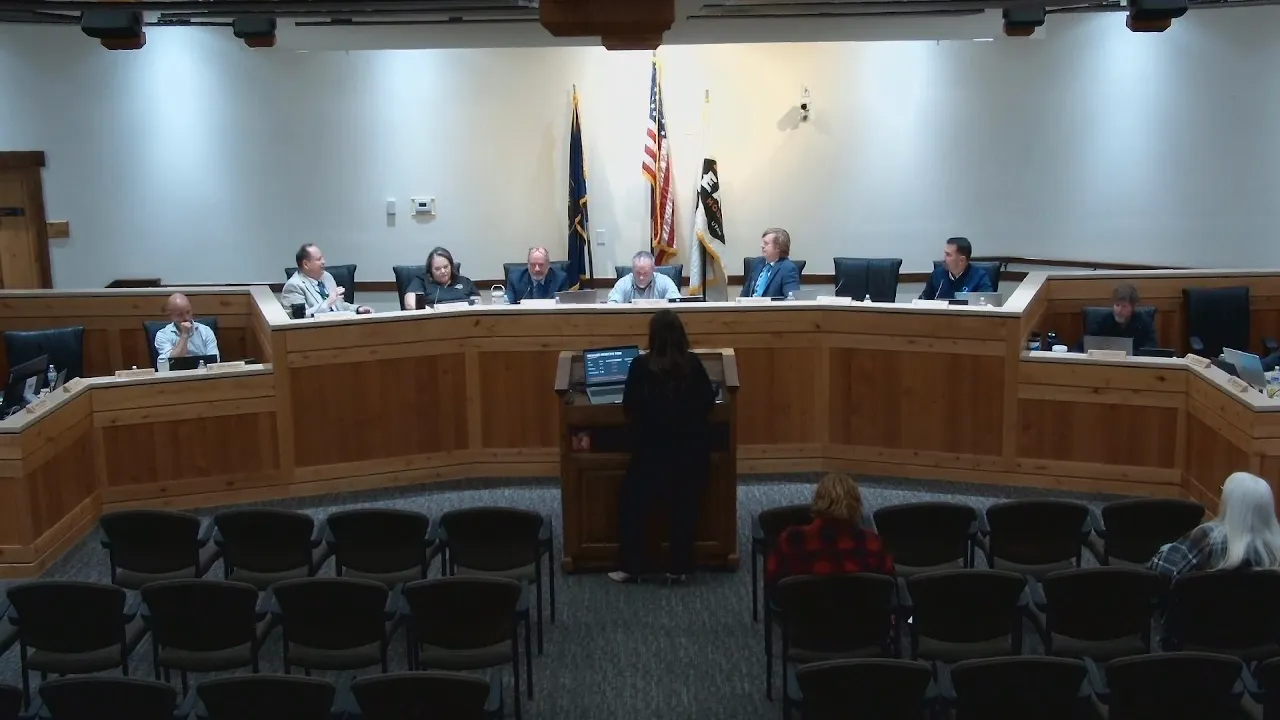
STREAMING COPY IN PREPARATION — RECORDING AVAILABLE FROM THE ORIGINAL SOURCE
Transcript — Verbatim
Speaker numbers apply only to this recording.
Discussion Breakdown — Share of Meeting
Engineering And Infrastructure24%
Water And Wastewater Management20%
Economic Development13%
Community Engagement13%
Procedural11%
Parks and Recreation4%
Public Engagement4%
Affordable Housing3%
Land Use Planning2%
Summary of Proceedings
Eagle Mountain City Council Work Session and Policy Session - November 4, 2026
The Eagle Mountain City Council met on November 4, 2026, beginning with a work session at 4:00 PM and a policy session at 7:00 PM. Councilmember Wood was absent due to illness; Councilmember Whiting left early for a family event. The meeting covered discussions on economic development incentives, water rights code revisions, concept plans, design exceptions, wildlife corridor naming, and public hearings on zoning and artificial turf regulations.
Consent Calendar
- Approved bond release for Parkway Fields Phase E, Plat 2 (into warranty).
- Approved minutes of the October 20, 2026 regular meeting.
- Approved site plan for UCCU Express.
- Approved resolution for the Second Addendum to the Ranches Golf Course Agreement.
- All consent items passed by a 4-0 roll call vote.
Public Comments & Testimony
- Tiffany Ulmer raised concerns about poor road conditions on Lake Mountain Road, water accumulation, and uncollected trash. She also noted increased data center traffic damaging the dirt road. Staff explained state law limits the city's ability to compel John Hancock Charter School to extend the road.
Discussion Items
1.A. Strategic Industry Performance Incentive Program for Business Recruitment
- Abby Ivory (Economic Development) presented a proposed framework to incentivize targeted industries (advanced manufacturing, energy, life sciences, aerospace/defense) using post-performance property tax reimbursement. The framework would require at least 100 full-time jobs at 100% of county average wage ($60,000+) and $50M capital investment.
- Council members expressed reluctance to publicly disclose incentive limits, preferring to maintain negotiating leverage. They directed staff to focus on updating the general plan and creating targeted zoning (e.g., RTI overlay) to attract businesses rather than codifying a rigid incentive program. Council also emphasized supporting small and mid-sized businesses. Abby Ivory was encouraged to continue gathering site selector feedback.
1.B. Water Rights Code
- Brandon presented a comprehensive code revision to clarify water dedication timing, create a Water Rights Analyst position, and require utility plans earlier in the development process. Key changes include dedicating residential water at master development plan (MDP) stage (instead of building permit) and requiring a will-serve letter at concept plan.
- Developers (Scott Hazard) argued that dedicating water at MDP imposes an extraordinary capital exaction, and recommended dedication at final plat instead. Staff acknowledged the concern and proposed a water banking solution where water rights are moved to city wells but remain owned by the developer until plat.
- Council directed staff to work with developers to refine the code, potentially allowing dedication at final plat or through a banking mechanism, while ensuring water rights are not rehypothecated. Discussion to continue outside the meeting.
1.C. Deer Run Concept Plan
- Ivory Homes presented a revised concept plan for Deer Run (Foothill Residential zone). Changes include removing two parcels and adjusting the wildlife corridor alignment per council feedback. The wash area is not part of the wildlife corridor; staff noted code requires 75-foot setback from natural washes, but applicant disputed applicability. Council discussed selling city-owned land (approximately 3 acres) to incorporate into the development.
- Council expressed support for proceeding to a draft development agreement, with conditions: water dedication to be discussed; potential equestrian overlay on large lots; and inclusion of the city parcel. Next step: formal master development plan application.
1.D. Harmony Phase A Plat MF 3 - Design/Code Exception(s)
- The applicant (Flagship Homes) sought to convert a 90-unit condo plan to 68 townhomes. A prior code change requires townhouses to front on streets, not service drives. The proposed design uses Lulu Lane as a service drive, which does not comply. Options discussed: flipping units to face inward with a service drive maintained by HOA, or keeping the current layout with an overbuilt service drive.
- Council favored flipping units to face the interior, with a 10-foot landscape buffer along Walden Parkway and a private service drive maintained by the HOA. Staff and applicant will meet to resolve utility conflicts and refine the design.
1.E. Proposed Renaming of the Wildlife Corridor
- Council agreed to name the wildlife corridor the "Todd A. Black Wildlife Corridor" (without the word "Memorial") to honor Todd Black's contributions. A resolution will be prepared for the next meeting. Council also discussed potential future signage at bridge and access points.
14.A. Resolution Authorizing Land Disposal Application (Parcel 38:257:0108)
- Applicant Mark Baum built a concrete wall on city property to mitigate water runoff into his yard. He requested to purchase the 0.04-acre parcel or donate the wall. Council approved the resolution to begin the public hearing process, with intent to sell the property to the applicant to avoid city liability for the wall. Vote: 4-0.
Key Outcomes
- Strategic Incentive Program: Council directed staff to focus on general plan updates and targeted zoning rather than a formal incentive framework.
- Water Rights Code: Staff to revise the code to allow water dedication at final plat or through banking; continued collaboration with developers.
- Deer Run Concept Plan: Council approved moving forward with a draft development agreement, including potential sale of city-owned land.
- Harmony Phase A: Council directed staff and applicant to redesign with units facing inward and a private service drive.
- Wildlife Corridor Naming: Name set as "Todd A. Black Wildlife Corridor"; resolution forthcoming.
- Land Disposal: Approved to proceed with public hearing for sale of city parcel to Mark Baum.
- Public Hearings (15.A and 15.B): Approved zoning map amendments for Oak Hollow and Parkway Crossroads (4-0). Approved artificial turf code amendments (4-0).
- Consent Agenda: Approved unanimously.
- Liaison Reports and Legislative Priorities: Updates provided; standard wall design discussion deferred to next meeting.
- Closed Sessions: Council held two closed sessions (at 6:19 PM and 8:16 PM) for litigation, personnel, real property, and development agreement discussions. No action taken in open session thereafter.
Meeting Transcript
No, all right. Welcome everybody. It is four o'clock on the money on November 4th, and we'll welcome you to our work session here with City Council in Eagle Mountain and uh get right started with our first item. It's a discussion on the strategic uh performance incentive programs, and this is Abby Ivory. Why she's setting up. Abby and I had a discussion, and she told me she's so excited for this. Oh, and I was I thank you for reminding me. Um we Rich called in just a little while ago, uh Council Member Wood and he is ill today and not able to join us, so we'll excuse him and remind me I'll do that again later. I'm like, I remember I have to drag it or something like that. Okay, while he's getting that up and going, I'll go ahead and start kind of talking a little bit about this here. Um, thank you so much for letting me come the uh this afternoon. That's not it, and talk about it. Okay. Okay, thank you. Thank you, appreciate it. So thank you so much. Um, for letting me come out here. Um, I am proposing, and this is just really just to talk about this and what are the possibilities, a strategic industry performance incentive program. Um, the reason why we are doing this is because we're looking at diversifying our local industries here in Eagle Mountain. And most of the time, when we have companies that are looking at us, they're looking for um certain things that we just don't have, such as rail, freeway access, airport proximity, um, and then existing buildings as well. Um, the other thing that they look at is workforce, which we do have. So we're trying to find ways to really incentivize companies to come here and invest in Eagle Mountain. Um, we're really looking at doing things like as a targeted industry, so only certain types of businesses can do this. And that we're hoping that um by creating a preliminary incentive policy that it makes it transparent for our city staff, the companies looking to locate here, city council and residents on what's a possibility. So, our goals for this is really to uh create local jobs, build a stronger economy resilient to industry layoffs like we've seen at Tyson, and create public value. So these are things that the public gets out of having these companies come in. Um, our targeted industries are advanced manufacturing, energy development, life sciences, aerospace and defense. And as a general rule, we would exclude retail and data centers from any kind of incentives this way. Um, some of the uh just a synopsis of the report that I uploaded was um that we have at least a hundred full-time jobs in Eagle Mountain. The average wage would be at least 100% of the county average right now. It's just over 60,000. They would have at least 50 million in capital expenditure, and and the project must fall into that targeted industry. And then this is just goes over like the points. So what what we would do is just preliminary score these as they come in. So if a project came in and talked about what they would like to do, we would preliminary score them on jobs creation, wage level, capital investment, the targeted industry fit, and then they can get some little bonus points as I like to call them for working with the sustainability and community compatibility, infrastructure and public benefit, and then also for workforce development. And then at the bottom there it says the score determines the proposed tier. It does not guarantee an incentive or the tier maximum. So this is just a general guideline. Abby, what's the difference in your mind between workforce development and jobs created? So jobs create is just like how many jobs they're bringing in. So a lot of times we'll get something that says, hey, we're gonna we want to do a one and a half billion capex with 2,500 jobs in this type of industry, and so workforce development is more working with the local high school with the colleges to create internships and some work trade programs, things like that. So are they creating going above and beyond what they normally have to do?
SUMMARIZED BY OPENPUBLICA AI
TRANSCRIPT VIA PUBLIC VIDEO
openpublica.com
openpublica.com