Everett Community Health and Safety Committee Meeting - November 5, 2025
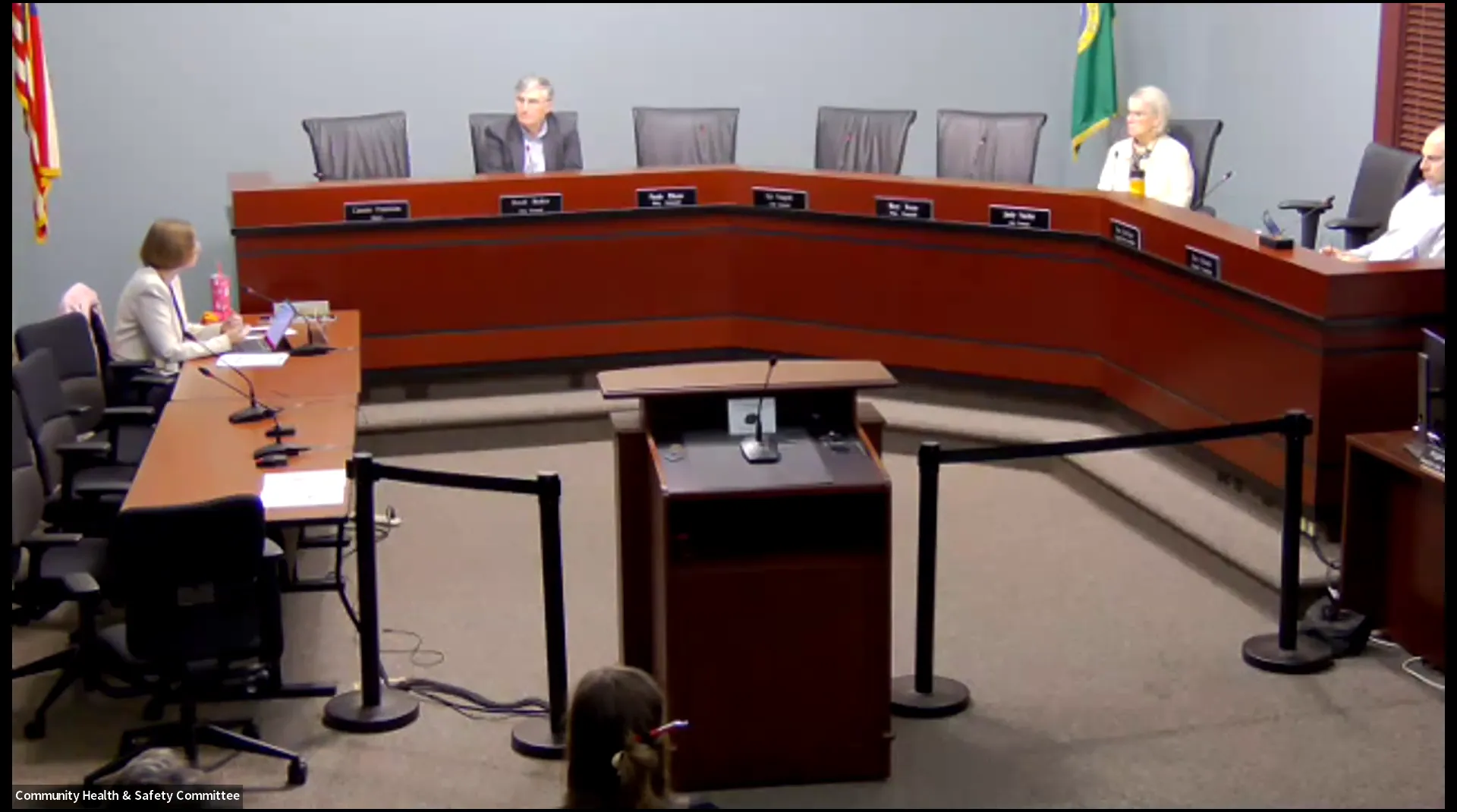
STREAMING COPY IN PREPARATION — RECORDING AVAILABLE FROM THE ORIGINAL SOURCE
Everett Community Health and Safety Committee Meeting - November 5, 2025
The Community Health and Safety Committee met on Wednesday, November 5, 2025, at 5:30 PM in City Council Chambers. The agenda included briefings on the Fire Department's Standards of Cover Analysis and unlicensed street food vendors. Both items were informational; no formal votes were taken.
Fire Department Standards of Cover Analysis Update
- Chief Dave DeMarco introduced the project, funded by councilmatic funds earlier this year. The department selected Dark Horse Emergency, a Canadian public safety software company, through a competitive RFP process.
- Madison and Andrew from Dark Horse presented an update, noting the project is approximately 50% complete. Final delivery is expected in late January or early February 2026.
- The analysis will use five years of computer-aided dispatch data, overlay community risk data (demographic, infrastructure, environmental, language), and simulate future scenarios based on the city’s 2044 comprehensive plan.
- Councilmember Bader asked about interjurisdictional benchmarking; Dark Horse indicated that such comparisons are not within the current contract but they use experience from other clients to inform recommendations.
- Councilmember Tui questioned post-project access to the software; it would require an additional contract.
- Councilmember Fosse expressed concern about population growth and future station placement, urging long-term projections to 2044. Dark Horse confirmed they are using city planning forecast data at a parcel level.
- The community risk tour was described as a method to incorporate local context that data alone may miss.
Unlicensed Street Food Vendors Briefing
- Staff member Jennifer (last name not provided) presented the briefing, noting the issue was raised by Councilmember Bader, Mayor Franklin, and others.
- This is a statewide issue; most street vendors operate without permits or licenses, posing public health risks. Documented cases include food prepared in unsanitary conditions, lack of running water, and improper temperature control.
- Enforcement is challenging due to the mobile nature of vendors, lack of permanent addresses, and communication barriers. Everett Police and Snohomish Health District have had mixed success in shutting down operations.
- Staff have consulted with Seattle-King County Health, Washington State Patrol, and sheriff's offices; no solution has been identified.
- The mayor has directed staff to develop a response plan, including assisting operators with licensing and potentially closing non-compliant operations.
- Councilmember Bader asked about property owners' roles; staff noted some vendors set up in parking lots where owners may not be aware.
- Councilmember Tui asked if any vendors have permits; staff stated that no known vendor in the city is permitted.
- Dan Templeman from City Administration acknowledged potential liability and said Everett PD removes vendors from right-of-way when identified.
- Councilmembers suggested public education on warning signs (e.g., no handwashing stations, improper food holding) and reporting mechanisms.
Future Agenda Items
- A Health District visit is tentatively scheduled for December, with a broader scope beyond the vendor issue.
- A potential update on jail fees and operations is being considered; staff have contacted jail staff.
- Cold weather shelter update: Since November 1 (four days prior), shelters activate when temperatures are projected below 34°F. Current locations include Every Gospel Mission at UCC Church (26th and Rockefeller) with 40 beds, men's mission with 30 overflow beds, and family shelter; youth directed to Cocoon House. An additional Everett location is anticipated soon.
Key Outcomes
- No formal votes taken; both briefings were informational.
- Fire Standards of Cover final report to be presented to council in January/February 2026.
- Staff to continue developing a response plan for unlicensed food vendors, including enforcement and public education.
- Future agenda items identified: Health District update, jail fees/operations update, and cold weather shelter updates.
Meeting Transcript
Good afternoon and welcome to the community health and safety council committee meeting for November 5th, 2025. I'm Councilmember Tui along with Councilmember Bader and Schwab for our meeting tonight. So we're going to start out with our first agenda item, Fire Department Standards of Cover Analys Udate, and we'll turn it over to Chief DeMarco. Good evening, Council Committee members. Dave DeMarco, Fire Chief. You may recall that this year council allocated councilmatic funds for a standard of cover development process for the fire department. Standard of cover is essentially a snapshot of the fire department's performance performance, both leading up to the current year, and then using the current year's data to give you more information and us more information about how we're performing against adopted standards. Years ago, the department adopted the NFPA published standards for response. And we measure that, but but we're often asked to answer questions. For example, how will the department react if we allow taller buildings in North Everett? That sort of thing. And as the comprehensive plan was developed, we were asked to provide input on what may or may not be required to provide fire and EMS services into the future. And we can provide some expertise, but typically a standard of cover guides the answering of those questions. And so thanks to the funding that you provided, we were able to engage with procurement, go through a request for proposals process, and we selected uh at the end of the day a company out of Canada called Dark Horse, and we have representatives from their company here tonight. They are about 50% through the project. The project is due to deliver a product in January of next year, uh, late January, early February, uh, when we'll become back to council council with a finished product. But for the for the moment, um, on my right here is uh Madison and Andrew from Dark Horse, and they're going to walk you through uh the process that they have engaged uh the department with and where they are in that process. So I'll hand it over to them. Thank you, Chief. Good evening, counselors, and thank you for welcoming us to your beautiful city and for the opportunity to join you tonight. We're honored to be here to mind like bringing the mic closer there, something. Thank you. We are honored to be here to discuss the Everett Fire Department Standard of Cover and Community Risk Assessment Project with you. As uh the Chief introduced us, my name is Madison and this is Andrew, and we're part of the team from Dark Horse Emergency, working with the City of Everett and the Everett Fire Department on this initiative. Our work is focused on helping the department and city develop a data-driven understanding of community risk and emergency response performance. This analysis will guide decisions about how to best set response targets, use fire department resources to their best potential, and position the fire department to serve Everett's residents today and into the future. This project will assess community risk, provide direction into defining baseline emergency response performance targets, assess the distribution and concentration of fixed and mobile resources, measure service delivery performance, and support strategic planning and policy development relative to resource procurement and allocation. The goal of this project is to ensure the Everett Fire Department is positioned to deliver the highest level of service to the community from now and into the future. This work is designed to support evidence-based decisions about future fire department planning, ensuring that fire resources are aligned with the city's public safety goals and the needs of the community. To help make this vision a reality, we are working with the City of Everett and the Everett Fire Department to bring data, technology, and experience together into one integrated approach. As for who we are in all of this, we are Dark Horse Emergency, and we're a Canadian public safety software company that helps fire departments make smarter, faster, and data-driven decisions. We began as a research lab at the University of Alberta and have grown to providing our fire industry experience and unique algorithms to fire departments across the continent, including Raleigh, North Carolina, Vancouver and Toronto, Canada, as well as Spokane, Snohomish County, and Pierce County, right here in beautiful Washington State. Using our custom software, which incorporates instant and response data. Using our custom software, which incorporates instant and response data, fire departments can answer questions like where's the best location for a new fire station? How do I use my current resources in the most efficient way possible? And what should my risk reduction plan focus on? From a consulting lens, our findings and recommendations come from the same tools, allowing us to provide evidence-based recommendations, not recommendation-based evidence. We use these custom-built analytics tools to clean and analyze five years of raw data from your computer aided dispatch system to understand and quantify how the department is doing and performing against its current response targets, identify any barriers to achieving those targets, and simulate what changes could improve performance. We then overlay this incident data over community risk data sets, which include demographic, infrastructure, environmental, and language data to name a few, to develop a unique community risk profile for Everett. This combines incident probability with consequence to identify where risk is concentrated and what factors drive it. After exploring, analyzing and understanding historical incident response data, we will evaluate future population and development growth to model expected response performance travel times and instant volume into the future. From this modeling, we can identify, evaluate, and recommend potential alternative service delivery models, deployment configurations, and response performance goals that best fit Everett's future. Throughout this process, we're engaging with those who know the department and community best, including firefighters and community leadership. Since this project began, we've been meeting biweekly with representatives from the fire department, the union, and the city to ensure the transparent development of the report. This is also being accomplished during our time here in Everett, where we've been visiting fire stations, going on a community risk tour, and having the opportunity to discuss this project with you guys. While the foundation of this project is data analysis, we'll also look to incorporate relevant local context where it helps explain or validate what the data shows. These conversations allow us to better understand the environment, current deployment methodologies, and levels of service around the community. This ensures that our analysis reflects both operational realities and community priorities. As the chief said, this document, which can be expected in early 2026, will provide the city and fire department with a clear data-driven roadmap for public safety planning. Together, it will show where risks are highest, how resources are performing, and where future growth will create new service demands.
openpublica.com