Zoning Board of Appeals Meeting - May 24, 2016
STREAMING COPY IN PREPARATION — RECORDING AVAILABLE FROM THE ORIGINAL SOURCE
Zoning Board of Appeals Meeting - May 24, 2016
The Zoning Board of Appeals met on May 24, 2016 at 7:00 PM in City Hall. The meeting was scheduled to consider approval of the April 19, 2016 minutes, a conditional use application (ZBA16-314CU) for Vini Culture at 20 North Market Street, and a zoning determination (ZBA16-130) for 17 Western Drive. However, the provided transcript does not correspond to the actual meeting proceedings. It contains an extended promotional narrative about Carroll Creek Park, the Frederick Police Department, and other city features, but no discussion of the listed agenda items, no board member remarks, no public testimony, and no votes. Therefore, no substantive summary of the meeting's business can be derived from the transcript. The agenda indicates that old business was none and that general public comments were scheduled, but no such comments appear in the transcript.
Discrepancy Note
- The agenda lists specific items (approval of minutes, conditional use hearing, zoning determination), but the transcript is a pre-recorded promotional video rather than a live meeting recording. The transcript does not include any of the board's deliberations, applicant presentations, public comments, or decisions. The minutes were not available for review.
Meeting Transcript
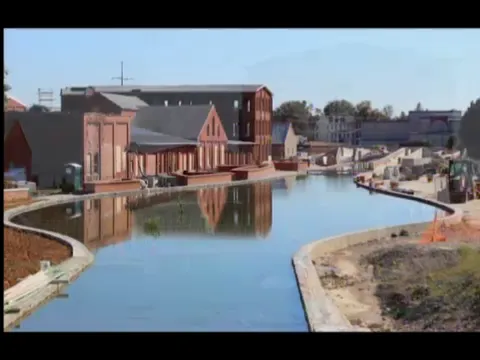
And yeah, they had a couple of choices. A big concrete ditch through the middle of town to carry the water through or do something creative. We were involved in only creating a vision of what might happen on the creek. And so we had this land in the heart of our downtown that was prime for development once the flood issue was taken care of. And uh and more than sixty million dollars was spent 20 million by the city, approximately 20 million by the county, and about 20 million by the state to put in place uh a really uh a unique flood control measure that protects downtown 1.3 miles from uh from flood waters. Each administration, from Ron Young's all the way through. I mean, to use a football metaphor, we've all tried to bring the ball forward. The leadership at the time decided to do something different. And they decided to send the floodwater safely underground from Baker Park on the west all the way to the natural stream channel out past Highland Street, a total of 1.3 miles. We have this engineering marvel that runs beneath the city carrying flood waters away from the vibrant downtown, and people are walking above it in a beautiful park setting. You see about a 550-foot-long wall, it's called a weirwall, and that is set at an elevation to help control when those flood waters go over the wall and down through the conduits, and it's set it up at an elevation to help protect the buildings downtown. There are four large conduits. So these they're huge tunnels, they're big enough for dump trucks to drive through. Along the tunnel, there are storm drain connectors connecting the tunnels to one another. There are flapper valves, which are just big openings that allow water to come in from storm drain systems. As far as the FEMA floodplain, without the project, um there would be a large floodplain on both sides of that creek. With the flood control project, now those waters are are uh squeezed down and sent through those four large culverts. So those properties have been removed from the floodplain. So while we may get some localized flooding during a large rain event, we won't get the massive flooding that we would have otherwise had without the culverts and the storm drains. I think what we have with the historic downtown and Carroll Creek Park is a great synergy between the two parts of downtown Frederick. Carroll Creek Park also represents a social uh knitting together of the community as well. When you have an environment where you have a tremendous community uh outreach, it has to have someplace to situate itself. And Carroll Creek is that place. The suspension bridge uh that we designed and built, which was as you know, is is an iconic figure or feature in the park was named after William O. Lee, a former alderman in the city of one of our first uh African American uh elected leaders. Well, the the Cale Creek Park is um in the world of transportation, we referred to it as a ribbon facility or a linear facility, and it's one that um interacts with automobiles, but it also suffices for bicyclists and pedestrians. For you know, the person that's commuting to Washington, DC, and they're taking the mark train, it provides a uh a connection. It provides a transportation resource. Transportation was always a key component of the potential here. Originally when the park was planned, it was planned to have a lot more residential units on it to get the people, you know, pulling in towards downtown and have that interaction. It actually transitions uh within the linear park from a from the uh sort of uh rural kind of feel at one end uh to then into uh the core, which is a more urbanized section. And I think that the you know tying sort of old Frederick with with East Frederick rising, this this ribbon is going to be just exciting. I mean, I um I'm looking for property myself. I mean, I want to live on the creek eventually, so shortly after the the park, the first park, which was phase one, was completed with um it became very apparent that there was a huge problem with water quality issues. Uh algae began to appear in the creek, different forms of algae. Water gardeners have known for um really thousands of years how to deal with algae. I mean, this wasn't something that I invented, this is something that started with the Egyptians. If we can cover the water surface with about 40 to 60 percent with plant material, we can we can decrease the sunlight enough to really limit the algae growth. It's not going to get rid of it entirely, but it makes a huge difference. You think about those lily plants, they're taking up nutrients from the water. They are shading the water so it's cooler, and they're you know diverting the sun rays away from the algae. So that seemed to be the magic bullet that made it happen, and we've had a couple years now of success, and I know that project is expanding every year. Uh, you know what a great story that is. To take one of the small issues we had with the creek when it was developed, which was the slow water flow creating that algae problem and turn that not only into fixing the problem but into a wonderful attribute, which in many ways is you know a metaphor for the for the creek and the and the park itself. Think of all the other local cities that have grown and what's attracted people to them. It's that downtown shopping area where folks can come either as families or as individuals and enjoy some time there. And that's what really is uh I think that that part is pretty important for Frederick and its future growth as well. So the great thing about downtown Frederick is we've created this new gathering space all located along Carroll Creek Park. Uh it's important for us as a parks and rec department, uh, you know, to to be able to make sure that we're offering programs and activities, uh, that there are festivals in that new space. Uh it makes um it makes the city of Frederick an interesting place to come to where you don't even have to take a dollar out of your pocket.
openpublica.com