Raleigh City Council Work Session: Sociable City Assessment and Glenwood South Safety Pilot – May 13, 2025
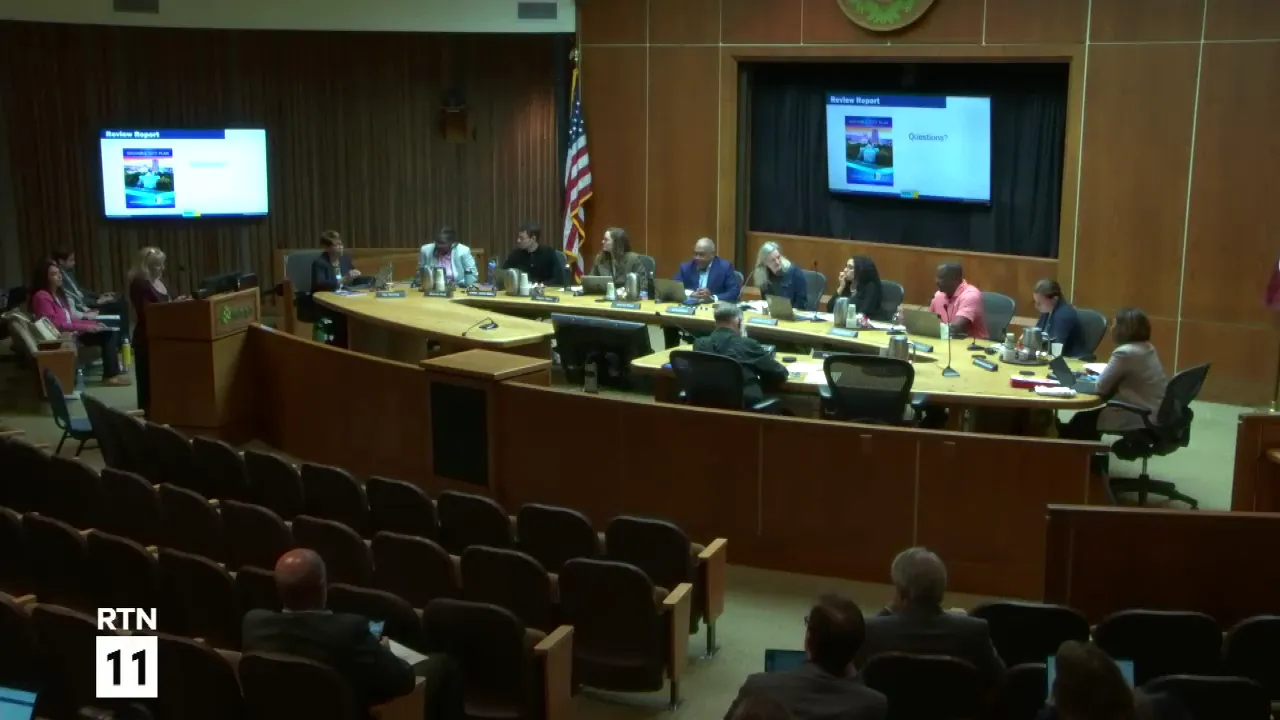
STREAMING COPY IN PREPARATION — RECORDING AVAILABLE FROM THE ORIGINAL SOURCE
Raleigh City Council Work Session: Sociable City Assessment and Glenwood South Safety Pilot – May 13, 2025
The Raleigh City Council held a work session on May 13, 2025, at 4:00 PM to review the Sociable City Assessment results and receive an update on the Glenwood South Safety Pilot. The meeting featured presentations from the Office of Special Events, the Responsible Hospitality Institute (RHI), and the Transportation Department. Council members discussed findings, recommendations, and next steps for improving nightlife, safety, and mobility in downtown districts.
Sociable City Assessment Presentation
- Presenters: Whitney Schoenfeld (Office of Special Events), Rachel Bain (Hospitality and Nightlife Team), Jocelyn Kane (Responsible Hospitality Institute)
- Process: RHI conducted 26 meetings from July to October 2024, engaging 42 city staff from 12 departments, 30+ dining and entertainment venues, 18 residents from various downtown areas, and other stakeholders (including state ABC, NC Department of Public Safety, NC Harm Reduction Coalition). The study focused on two districts: Glenwood South and Fayetteville Street.
- Key Findings:
- Strengths: Social district (sip and stroll), outdoor seating, diversity in Glenwood, record visitation and spending.
- Challenges: A trust gap between venue operators and city government (stemming from the office’s COVID enforcement role), narrow sidewalks in Glenwood South, lack of data on complaints, inconsistent noise ordinance enforcement, and siloed city departments.
- Recommendations (presented as an action plan):
- Governance: Improve business education and support (concierge approach), rebrand the Nightlife and Hospitality team to rebuild trust, enhance ABC notification and internal data sharing, create an agent of change policy for new development.
- Mobility: Standardize private parking lot operations (permits, lighting, safety), enhance public communication on transportation options, reimagine the R-line, preserve public right-of-way during construction.
- Quality of Life: Implement a 311 system (customer experience program rolling out summer 2025), revive a downtown living advocates group.
- Public Safety: Revisit noise ordinance for better compliance (move toward objective decibel standards), revive interagency NetForce venue visits with a focus on education, conduct pre-holiday safety visits, set baseline security standards and professionalize security officers, provide women’s safety training to prevent sexual harassment and gender-based violence.
- Venue Safety: Educate staff on mental health/homelessness referrals, organize a Raleigh Nightlife Association for unified advocacy, improve loading zones.
- Public Space: Ensure consistency in event rules (including social district guidelines), develop a streetscape plan for Glenwood South (wider sidewalks, ADA accessibility), address pedestrian safety.
- Already initiated actions: Safety closure on Glenwood improved (flashing lights changed to solid blue), occupancy data made accessible to fire marshals, code revision discussions for dumpsters, NetForce enhanced with RPD alcohol coordinator and building inspector, DRA agreed to include OSE staff in new business meetings, DRA hired a PR firm to generate positive stories about Fayetteville Street, six new sidewalk maintenance positions approved.
Council Discussion on Sociable City Assessment
Council members raised questions and comments on various aspects:
- Councilor Branch: Asked about legal limits on mandating venue security standards. Staff clarified that some recommendations may be beyond city authority but can be encouraged, and the state may consider minimum standards for unarmed security.
- Councilor Jones: Inquired about the trust gap origins (COVID enforcement role) and the 311 system (being developed by customer experience manager). Noted that DRA previously did not include OSE in new business meetings; this will now change. Highlighted alignment with the upcoming Safe and Vibrant Committee meeting on May 27.
- Councilor Silver: Emphasized need for a streetscape plan with wider sidewalks and public plazas, referencing comprehensive plan goals. Downtown plan aligns with these recommendations.
- Councilor Patton: Questioned low resident participation (18 residents) and suggested proportionality concerns. Raised issues with private parking lot predatory towing and recommended exploring city standards like permits. Debated noise ordinance: recommended objective decibel standards over reasonable person standard, possibly offering a pre-screening service for venues to verify sound levels.
- Councilor Harrison: Supported reviving the downtown living advocates group and suggested including edge neighborhoods. Asked about PR for Glenwood South (DRA covers all downtown). Praised pre-holiday safety visits. Suggested shifting liability to private parking lot managers.
- Mayor Cowell: Asked about sound ordinances: preferred decibel-based metrics and administrative citations over criminal. Discussed agent of change policies for new development to manage noise conflicts. Addressed enforcement for repeat violators—consultant recommended using enforcement tools firmly as a deterrent.
- Mayor Pro Tem Forte: Asked about strategies for repeat violators; consultant recommended consistent and firm enforcement, noting that a few bad actors can be made examples.
Glenwood South Safety Pilot Update
- Presenter: Monique Guiant, Transportation Department
- Background: Initiated by City Council in response to safety concerns. $200,000 allocated for quick-build improvements at three intersections on Glenwood Avenue (Johnson, Tucker, and North Streets).
- Community Engagement: Survey with over 750 participants in one month; top priorities were increased pedestrian visibility and reduced vehicle speeds. Preferred improvements were hardscaped features like raised crosswalks and raised intersections.
- Proposed Improvements:
- Phase 1: Painted curb extensions (using durable MMA paint, similar to Hargett and Salisbury intersection) at all corners.
- Phase 2: Raised crosswalks at select intersections.
- Timeline: Manager's update by end of May 2025, implementation anticipated fall 2025.
Discussion on R-Line
- Councilor Lambert-Melton: Expressed support for reinstating free fares on the R-line, arguing it encourages downtown mobility and economic development, especially connecting free city parking decks to districts without city-owned parking. Proposed wrapping the R-line and adjusting the route to better serve economic hubs. Requested data on revenue generated since fare reinstatement to evaluate the impact.
Key Outcomes
- The Council received the Sociable City Assessment report and the Glenwood South Safety Pilot update as information.
- Staff will conduct a deep dive on the assessment recommendations and bring back an action plan focusing on low-hanging fruit for quick implementation.
- Further discussion on many items is expected at the Safe and Vibrant Committee meeting on May 27, 2025.
- Councilor Lambert-Melton’s request for R-line revenue data will be considered.
- No formal votes or motions were taken.
Meeting Transcript
Can we burn them through the thing? Can I find it? We do have a quorum and I don't think anybody has an excused absence. Uh so hopefully people will be uh coming. But we have uh the sociable city assessment results, and so we will invite up Whitney Schoenfield and Monique. Yeah. Good afternoon, Mayor and members of council. Once again, I'm Whitney Schoenfeld with the Office of Special Events. While our office is well known for managing special event permits, we do have work that extends well beyond that scope. So we also have a hospitality and nightlife team comprised of two full-time staff members from our office who play a key role in helping support and shape our city's social and nighttime economy. So each of you has a printed copy of our sociable city assessment plan in front of you, in addition to the digital version provided in your agenda materials. Please note that this final report serves as a recommended work plan outlining potential actions and implementation steps should we choose to do them. We acknowledge that not all of the recommendations presented may be feasible, and some of these may fall outside of the city's authority to do. However, there are actional items that we can take. The report generally provides a framework to guide and enhance the work of various city departments, partner agencies, and community stakeholders. At this time, I'd like to introduce Rachel Bain, who leads our hospitality and nightlife team to share a few remarks and introduce our consultant who will walk us through the presentation of the findings. We'll take questions at the end of our portion of the presentation, and then we also have transportation staff here to provide updates on the Glenwood South traffic safety study that they've done as well. Thank you, Whitney. Good afternoon, Council. As Whitney mentioned, my name is Rachel Bain, and I am on the hospitality and nightlife team within the Office of Special Events. Today we are so excited for y'all to see the report findings of the Sociable City Assessment, which has been years in the making. So how exactly did we get here? Our team has been guided by the principals of the responsible hospitality institute. You may hear us say or see it written as an acronym, RHI. So I just wanted to preface that if that rolls off the tongue easier than responsible hospitality institute. We have attended their annual conference for the past four years, and we've been able to network and learn best practices from other nightlife offices such as New York City, Nashville, Sacramento, Austin, Washington, D.C., Philadelphia, Savannah, and more. And finally, our community for bringing their lived and experiences throughout downtown Raleigh to be a part of this report. I would like to mention that tomorrow night at 6 p.m. in the chapel at Dix Park, we will also be doing an overview of this assessment. We've invited all of our project participants in the community to come out and hear in case they weren't able to attend today's session or tune in. And we are also launching a web page on the city's website so the community will be able to access and read this report in full. So without further ado, I'm going to introduce Jocelyn Kane from the Responsible Hospitality Institute. She's going to share a little overview of them, what the process was for this assessment, and the findings for the city of Raleigh. Thank you. Good afternoon. Let's see if I can thanks. All right, we're going to maneuver through this PowerPoint. Hopefully you can uh hold your questions till I get through it. But if there's something burning, let me know. We'll go we'll go through it. Okay, so RHI, as Rachel mentioned, is a nonprofit. We were founded in 1983, maybe before some of you were born, with a mission to assist businesses and communities to create safe and vibrant places to socialize. We are the leading North American source of events, resources, and consultation services on nightlife and what we call the social economy. And we have provided technical service like this to over 80, probably closer to 90 communities in five countries. So I think we know a little bit about what we're talking about. Again, as Rachel mentioned, we had to narrow this study to two districts, Glenwood South and Fayetteville. But again, some of these recomm many of these recommendations can be thought of as assisting and help helpful in other neighborhoods. We didn't come here to tell you how to fix Raleigh from our perspective. We came here to listen to the city of Raleigh. So we were here three times.
openpublica.com