OPENPUBLICA · PUBLIC MEETING RECORD
Record of Proceedings

Shoreline Planning Commission Meeting - August 5, 2021: CEPA Amendments and Beach Access Discussion
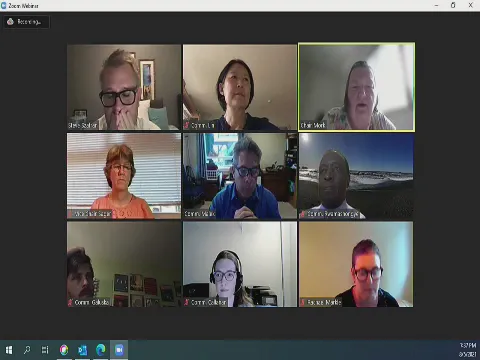
Planning CommissionThursday, August 5, 2021
BodyShoreline, Washington
SessionPlanning Commission
DateThursday, August 5, 2021
StatusFILED
Video Record

STREAMING COPY IN PREPARATION — RECORDING AVAILABLE FROM THE ORIGINAL SOURCE

Transcript — Verbatim
0:01

Welcome to the August 10th Planning Commission meeting.

0:06

We start off with role call and first month in the August.

0:24

Thank you.

0:40

Present.

0:48

Can I see that?

0:53

Thank you.

0:54

Next item, the next item on the agenda is the approval of the agenda.

0:59

Are there any changes that anyone would like to make that?

1:06

The next item is the appeal on the minutes.

1:09

Are there any concerns or changes that it's all like to make moving on then to general public comment?

1:19

Is there anyone sign up for general public comment?

1:28

At that then, we will turn to standard items.

1:33

Okay.

1:34

Thank you, Commission.

1:36

Good evening.

2:11

Okay, yeah, don't see that.

2:13

That's it.

2:14

Okay.

2:16

So we're here tonight to discuss the um still in amendment batch number two for year 2021.

2:23

And this group of topic topics is the CEPA amendments.

2:29

So on tonight we'll go to the post changes uh related to permit types of CEPA and have any public comment, teaching discussion, and um question for uh this will bring back to the council uh sorry commission um at the public hearing.

2:50

Um like I said that's another two for 2020 meetings that is the three topic batches on the last meeting with the slaves amendments, and it's the uh CEPA amendments, and then we'll go over the uh tree-related amendments in the future and I'll spend a little bit.

3:12

So um I apologize SEBA is a pretty dry subject, so we'll try to get through this unless I mean.

3:21

Um so you know, first question asks is what is CEPA?

3:26

So the State of Environmental Policy Act process identifies and analyzes environmental impacts associated with governmental decisions, uh these decisions may be related to issues building the next for private projects and structuring public facilities or adopting regulations, policies, and plans.

3:48

Um, and the CEO review also helps um the city um applicants in the public understand how a proposal uh will affect the environment.

4:00

Um use to modify or uh deny a proposal um to avoid reduce and uh policy for probable impacts that we occur.

4:12

Um another thing uh to know about tonight's topic is the list of permits that the city um has.

4:30

So the city has four types of permits, and they all involve different processes and different approval authorities.

4:39

Um there are also different appeal authorities uh for any of these types of current appeal that we see.

4:48

Um, appeal to the hearing examiner, some to the state for the hearing board, some go to superior board, and some uh goes in the growth and hearings board.

5:00

So the amendments discussed tonight attempt to clearly define the appeal for you for different types of lending permits and also clearly identifying the process for SIBA appeals when they are required by using the project.

5:16

So the first amendment, and this is the first type of amendment, type A permits.

5:22

These are administrative way approved.

5:24

And this amendment clarifies that some type A permits are subject to the CB review of AC, the threshold established by the city.

5:33

And then it's also a reference to the appeal section, only to where you can try to find the appeal information.

5:43

Lastly, the planned action determination type of permit is taken out of the taken out of the type A table since the planned action determination is always associated with another type of such building permit with the body.

6:12

This another also strikes SIBA and the type B table since CIPA in itself is not a separate permit because the conduction type.

6:42

All of the C languages need being moved to the appeal section of the code, so it's all located in one logical place.

6:57

Number four, this will make it clear that there is no administrative appeals of the type L action, this type L action is approved by council.

7:10

And depending on the permit site, you would explain where it appealed to be.

10:00

Process is going to find action area and not require uh formally filled out that decided by the document being action.

10:05

Um as a reminder to the condition of file action area as an area in the system is pretty previously evaluated environmental impacts.

10:15

So that finds that in this area, uh, do not have to do an additional super analysis on these areas um to the two modules areas on the same as number lemon verifies that a super determination is a final direct year.

10:40

Um is outline in the CBA appeal section.

10:51

Uh of an environmental checklist is required for all projects that feel review, including those C and Pication as uh planary action.

11:02

Um is the outlook's responsibilities to complete all sections of this coverage and see what you see per year and uh city issue and determination.

11:19

And then it allows uh the allocation called by professional or the department to prepare the environmental impact statement and to indicate the contents of the CIS uh based on the EIS scoping process, which informs what topics will be evaluated within the uh number number 14.

11:44

This clarifies that a notice of the determinations are mail, it's it on the subject site and advertised in the general paper circulation uh which we see as you see all times.

11:57

So all determinations that are subject um to the stock chapter and number 15, this would uh strike whether A on your screen uh current languages is uh very confusing and um really doesn't um and then the second amendment to the section as more recent by asking as an initiative that the department relies on issuing a sea of determinations from inventory and uh so I'm gonna sustain the strategy to run on the action plan and so on the C all of these analysis and C is clarifying us that there are no straight fields of CIA other than those that are associated with a type of action and visitors that are very um other CPA appeals that we can solid in the underlying lead scale um in the appeal and that appeal for the subscribe in SMT 23, um which is the premium PL session.

13:27

Um that is kind of super minus that uh preliminary people and stuff in that question.

14:18

I did it.

14:19

I I'm going to want to talk about it.

14:27

Thank you, thank you for interesting for um listen.

14:32

I saw a lot of the slides uh that you see both the policies and that these phrases uh processes.

14:41

The question I have is when you make amendments to add a CPU in order to implement those wire those policies that actually uh used to implement as the guidelines within the Clive Guideline, how you see postplay, or how do you see how we see those things as being implemented without courses in place?

15:00

The question I have is when you make amendments to in order to implement those are policies that actually uh I used to implement as the guidelines within this thing that language called how you see police display or how you see how we see those things as being implemented without voices and this while also the the um the class is mail because we need our policies in order to implement those things that are referring to them and all of the slides I think it's uh yeah maybe uh secret determination we always start um by the policies and uh our meetings and policies like the minute I I'm referring to amendment number 15 and describe the language the policy and set up and stuff for mentioned to those is authorization of this while you have to that's like yeah yeah so I don't I don't have an entire transaction defining which um it's being shut but the language um doesn't the policies of those that were in this session is probably mentioned to those in the system authorization of CO it's not saying so make a whole lot of sense um it I guess it could be rewritten to research that the goals and policies uh uh super review is modify the goals and policy step or uh in uh compensation plan or some other language I got this language explaining uh um as you uh I I feel like this thing so probably somewhere I like to suggest that probably somewhere we also do that those policies need to be there because without policies and both um send my uh my the director or something that I don't know assigned that is like implement by asking especially if these challenge uh so you don't have policies in there that these policies are necessary, but again that's just a man's remote one out with uh generating party.

19:15

Um, question is uh for um commitment number fourteen.

19:22

Um statement uh this is um actually in my system now uh the applicant or qualified um professional uh I guess my question is um um so the anyway can it doesn't need to uh themselves uh decide that they are to do that by themselves.

20:00

And uh it does is uh it does not require a competition that uh the type of information that's in the chain in the IS are very technical um transportation uh data um gear has to be so um almost always uh put together like all five pressing topic and you know that that email that is happening from it would be might be almost impossible for someone like the compare and that's not uh function.

Discussion Breakdown — Share of Meeting
Environmental Protection████████████████████████████████████████████44%
Procedural██████████████████████22%
Parks and Recreation██████████████14%
Permitting██████6%
Engineering And Infrastructure████4%
Public Engagement████4%
Tree Preservation████4%
Land Use Planning██2%
Summary of Proceedings

Shoreline Planning Commission Meeting - August 5, 2021

The Shoreline Planning Commission met to discuss amendments to the State Environmental Policy Act (SEPA) permit types and processes under batch two of the 2021 SEPA amendments. Commissioners also received an update on efforts to acquire beach access property. No public comments were submitted. The meeting included deliberative discussion on the proposed amendments and a follow-up on property acquisition, with no formal votes taken.

Discussion Items

  • SEPA Amendments: Staff presented a series of amendments aimed at clarifying the city's SEPA review process, permit types (Type A, B, L), and appeal procedures. Key proposals included: removing SEPA from the Type B permit table because SEPA is not a separate permit; moving all SEPA appeal language to a single section; clarifying that Type L actions (legislative) have no administrative appeal; updating notice requirements for SEPA determinations; allowing applicants or qualified professionals to prepare environmental impact statements (EIS) and indicating EIS content through scoping; and striking confusing language regarding policies. Commissioners asked questions about how the amendments relate to existing policies, the feasibility of applicants preparing EIS (noting most projects are small and technical analysis is needed), and consistency of appeal routes across different decision bodies (e.g., hearing examiner vs. Shoreline Hearings Board). One commissioner noted that the amendments greatly improve clarity and thanked staff.
  • Beach Access Property: A commissioner followed up on a prior discussion about purchasing private property to secure public beach access. Staff reported that the Parks manager researched properties but found issues including private property constraints, erosion, and the possibility that the property could be underwater within 50 years. The commission discussed that the best path for future land purchases is through policy development in the upcoming Comprehensive Plan update and the Parks and Recreation Cultural Services Plan, which would identify capital improvement projects and be approved by the council. The commissioner expressed appreciation for the information and noted the need for policy direction.

Key Outcomes

  • No formal decisions or votes were taken on the SEPA amendments; the discussion will continue at a future public hearing.
  • The commission acknowledged that policy updates (Comprehensive Plan, Parks Plan) are the appropriate mechanism to guide future property acquisitions for beach access.
  • The next regular commission meeting is scheduled for September 7th (with the August 19th meeting potentially canceled), and a planning retreat is set for September 16th, possibly held in person.

Meeting Transcript

Welcome to the August 10th Planning Commission meeting. We start off with role call and first month in the August. Thank you. Present. Can I see that? Thank you. Next item, the next item on the agenda is the approval of the agenda. Are there any changes that anyone would like to make that? The next item is the appeal on the minutes. Are there any concerns or changes that it's all like to make moving on then to general public comment? Is there anyone sign up for general public comment? At that then, we will turn to standard items. Okay. Thank you, Commission. Good evening. Okay, yeah, don't see that. That's it. Okay. So we're here tonight to discuss the um still in amendment batch number two for year 2021. And this group of topic topics is the CEPA amendments. So on tonight we'll go to the post changes uh related to permit types of CEPA and have any public comment, teaching discussion, and um question for uh this will bring back to the council uh sorry commission um at the public hearing. Um like I said that's another two for 2020 meetings that is the three topic batches on the last meeting with the slaves amendments, and it's the uh CEPA amendments, and then we'll go over the uh tree-related amendments in the future and I'll spend a little bit. So um I apologize SEBA is a pretty dry subject, so we'll try to get through this unless I mean. Um so you know, first question asks is what is CEPA? So the State of Environmental Policy Act process identifies and analyzes environmental impacts associated with governmental decisions, uh these decisions may be related to issues building the next for private projects and structuring public facilities or adopting regulations, policies, and plans. Um, and the CEO review also helps um the city um applicants in the public understand how a proposal uh will affect the environment. Um use to modify or uh deny a proposal um to avoid reduce and uh policy for probable impacts that we occur. Um another thing uh to know about tonight's topic is the list of permits that the city um has. So the city has four types of permits, and they all involve different processes and different approval authorities. Um there are also different appeal authorities uh for any of these types of current appeal that we see. Um, appeal to the hearing examiner, some to the state for the hearing board, some go to superior board, and some uh goes in the growth and hearings board. So the amendments discussed tonight attempt to clearly define the appeal for you for different types of lending permits and also clearly identifying the process for SIBA appeals when they are required by using the project. So the first amendment, and this is the first type of amendment, type A permits. These are administrative way approved. And this amendment clarifies that some type A permits are subject to the CB review of AC, the threshold established by the city. And then it's also a reference to the appeal section, only to where you can try to find the appeal information. Lastly, the planned action determination type of permit is taken out of the taken out of the type A table since the planned action determination is always associated with another type of such building permit with the body. This another also strikes SIBA and the type B table since CIPA in itself is not a separate permit because the conduction type. All of the C languages need being moved to the appeal section of the code, so it's all located in one logical place. Number four, this will make it clear that there is no administrative appeals of the type L action, this type L action is approved by council. And depending on the permit site, you would explain where it appealed to be. Process is going to find action area and not require uh formally filled out that decided by the document being action. Um as a reminder to the condition of file action area as an area in the system is pretty previously evaluated environmental impacts. So that finds that in this area, uh, do not have to do an additional super analysis on these areas um to the two modules areas on the same as number lemon verifies that a super determination is a final direct year. Um is outline in the CBA appeal section. Uh of an environmental checklist is required for all projects that feel review, including those C and Pication as uh planary action. Um is the outlook's responsibilities to complete all sections of this coverage and see what you see per year and uh city issue and determination. And then it allows uh the allocation called by professional or the department to prepare the environmental impact statement and to indicate the contents of the CIS uh based on the EIS scoping process, which informs what topics will be evaluated within the uh number number 14. This clarifies that a notice of the determinations are mail, it's it on the subject site and advertised in the general paper circulation uh which we see as you see all times. So all determinations that are subject um to the stock chapter and number 15, this would uh strike whether A on your screen uh current languages is uh very confusing and um really doesn't um and then the second amendment to the section as more recent by asking as an initiative that the department relies on issuing a sea of determinations from inventory and uh so I'm gonna sustain the strategy to run on the action plan and so on the C all of these analysis and C is clarifying us that there are no straight fields of CIA other than those that are associated with a type of action and visitors that are very um other CPA appeals that we can solid in the underlying lead scale um in the appeal and that appeal for the subscribe in SMT 23, um which is the premium PL session.

SUMMARIZED BY OPENPUBLICA AI
TRANSCRIPT VIA PUBLIC VIDEO
openpublica.com