Browse by city
Date range
Search help

Search titles, summaries, topics and stored transcripts together. Keywords may match separately; put the whole query in double quotes for a phrase. Matching follows word analysis, so punctuation is not exact. Both dates are included. Documents are not searched.

SHOWING 1–10 ENTRIES
01
NEWNOV 2, 2026 · SHORELINE, WASHINGTON · CITY COUNCIL
Shoreline City Council Regular Meeting and Budget Hearings, November 2, 2026

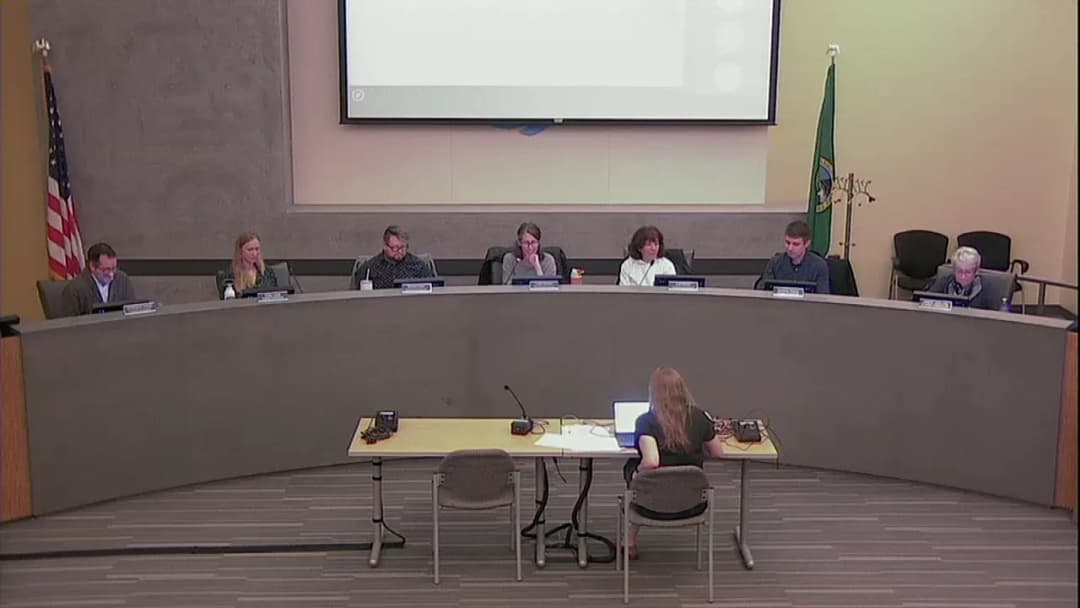
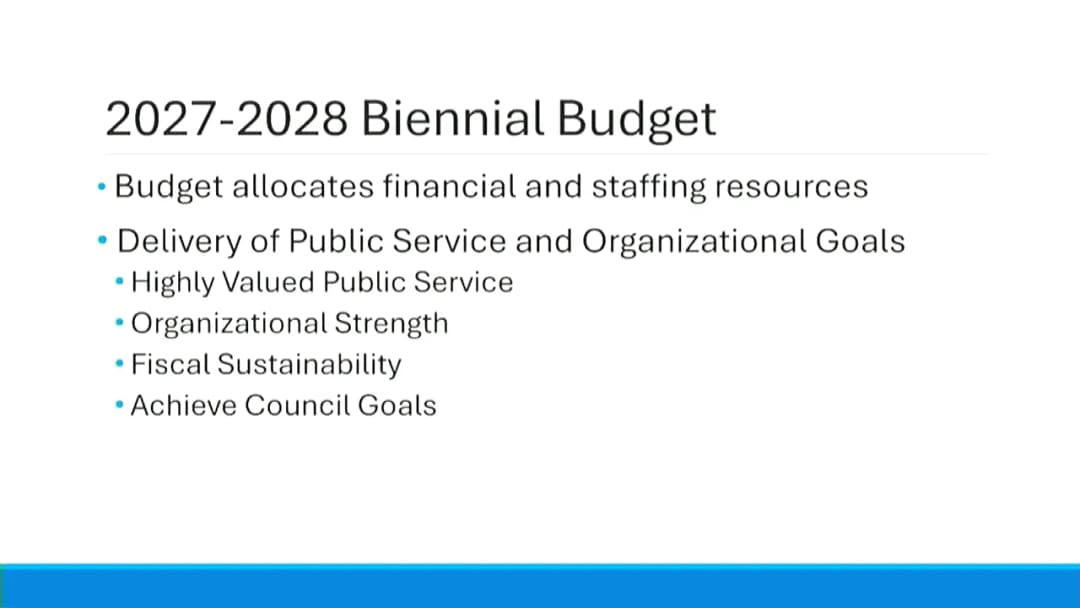
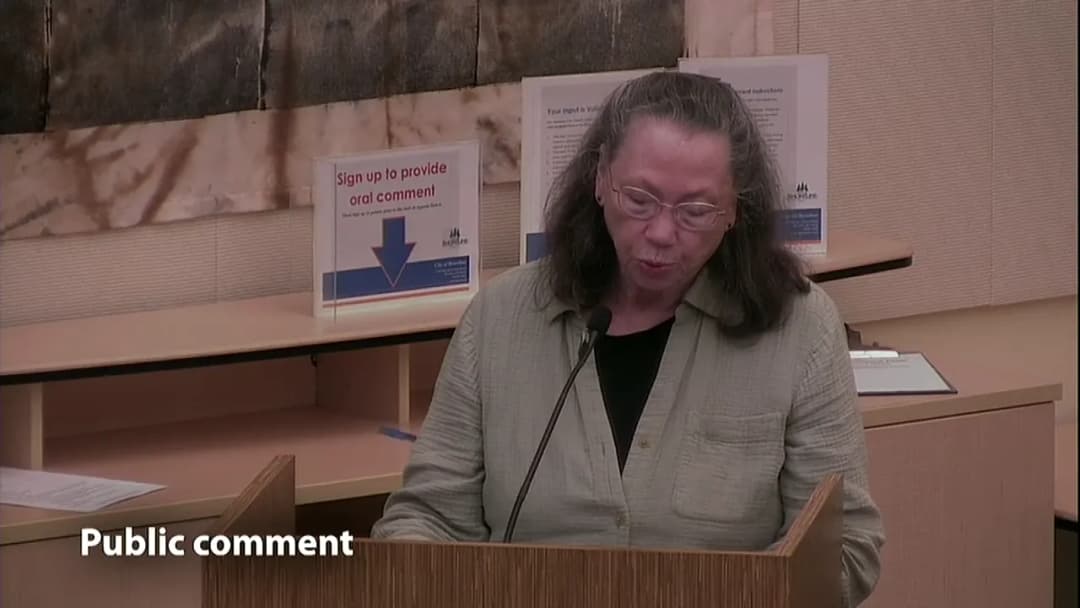
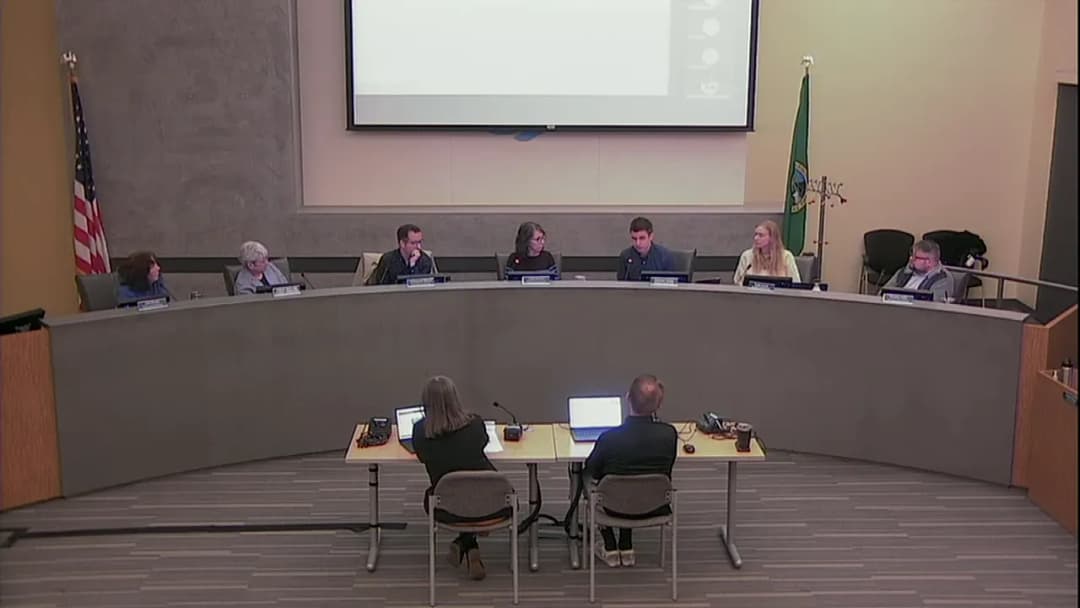
On November 2, 2026, the Shoreline City Council held a regular meeting and continued deliberations on the 2027–2028 biennial budget. All seven councilmembers were present, with Mayor Robertson attending via Zoom. The Council adopted the agenda by unanimous consent and approved the consent calendar 7–0. Staff presented revenue and expenditure details and held two public hearings on the property tax levy, budget, capital improvement plan, impact fees, and fee schedules. No members of the public testified at either budget hearing. Councilmembers discussed several potential budget amendments and a 2025–2026 budget amendment; no formal votes on those amendments were recorded in the transcript. City Manager and Council Reports - City Manager Ellington reminded residents that Election Day was Tuesday, November 3, 2026, with ballot drop boxes at the Shoreline Library, Shoreline Park and Ride, and Shoreline College; ballots were due by 8 p.m. She also promoted the November 3 Shoreline Walks outing from 10 a.m. to noon at Bitter Lake Park, starting at St. Dunstan's Church on North 145th Street, designed for adults 50 and older but open to all ages and abilities. - Councilmember Mork reported attending K4C, where possible changes to executive operations were discussed, and the AWC legislative priorities committee. Consent Calendar - Approved the consent calendar 7–0, authorizing the City Manager to execute a Local Agency Agreement with the Washington State Department of Transportation to obligate $4,400,000 in federal grant funds for the 15th Avenue NE Pavement Preservation Project. - Adopted the agenda by unanimous consent with no objections. Public Comments & Testimony - The public comment period was limited to 30 minutes, with three speakers signed up and three minutes per speaker. - Alice Darnton, regional manager for the Alder Region of the King County Library System, reported that the Richmond Beach Library had reopened after a five-week roof-replacement closure, though construction noise and disruption would continue for a few weeks; holds rerouted to Shoreline can again be picked up at Richmond Beach. She said the Shoreline Library now has two public 3D printers available by appointment, with classes for teens and adults, and that KCLS expanded hours at 48 of 50 locations, including Shoreline and Richmond Beach, to 10 a.m.–8 p.m. on Tuesdays and Wednesdays, adding four open hours per week. - Lathan Wayne of Shoreline wished Mayor Robertson a speedy recovery and invited people to a client advisory council meeting, providing a contact name and phone number. - No one testified during the public hearing on the 2027 property tax levy and other revenues. - No one testified during the public hearing on the 2027–2028 proposed budget, 2027–2032 capital improvement plan, 2027 impact fee schedules, and 2027 fee schedules; one previously signed speaker, Jack Malik, declined to speak. Discussion Items - 2027–2028 revenue and property tax levy (Ordinance No. 1068). Administrative Services Director and Budget and Tax Manager Christy Hopkins presented the fourth budget discussion. Staff estimated total resources at about $446.6 million, with 29% from taxes, 22% from charges for goods and services, and 15% from intergovernmental revenues; about 15.7% of fund balance would be used for one-time project expenditures. General fund revenue was estimated at about $138.8 million, with property tax at 40%, sales tax about 20%, and utility tax 8%. Staff estimated 2027 property tax at about $27.35 million, including new construction and refunds, with an estimated levy rate of $1.63; the excess park levy was estimated at about $2.95 million for 2027. The 2022 levy lid lift allows property tax growth by CPI; staff cited a 4.5% figure and a 3% figure for 2027, plus new construction and refunds. Sales tax was projected at about $28.2 million for the biennium, a 1.6% increase in 2027 and 0.8% in 2028. Staff recommended Ordinance No. 1068 return on the November 16 consent agenda. - Council discussion included Councilmember Mork asking about wastewater fee revenue increases of 18.7% in 2027 and 4.7% in 2028; staff said the slide showed utility-tax revenue rather than rates, that 2026 estimates were low, and that staff was analyzing the 6% utility-tax growth and whether utility tax could be adjusted without changing revenue collected. Another councilmember asked about the surface water rate increase from 4.9% to 8.5% for 2028–2030; staff said it came from the 2025 rate study and master plan and enterprise-fund needs including capital, debt service, and operations. Mayor Robertson asked about real estate excise tax projections; staff said REET was projected down 16.8% in 2027 and up 6% in 2028, tracking about 10% below the September year-to-date budget at around $2.5 million, due to slower sales and high interest rates, and that staff budgeted conservatively using Puget Sound, King County, and Seattle forecasts. - 2027–2028 budget, capital improvement plan, impact fees, and fee schedules (Ordinances Nos. 1067 and 1069; Resolution No. 568). Staff presented a total budget of $434.3 million, with 38% for city services and 30% for capital funds. Operating expenditures were about $165.6 million, including 29% for public safety and 26% for support services. The capital fund budget was 80% transportation, 20% facilities and parks, and less than 1% facilities major maintenance. Surface water expenditures were $36.8 million, with 47% for capital projects and 27% for planning and operations; wastewater expenditures were about $79 million, with 57% for maintenance and 24% for capital projects. Fee schedules generally increase by June-to-June CPI of 4.53% for 2027; impact fees increase by the Seattle-area construction cost index of 0.39% for 2027. Staff presented a 75% permit cost-recovery option to phase in over four years, convert hourly rates to flat fees, and streamline revisions, with an average overall adjustment of 11.83% across all fees. - Councilmember Scully asked whether the Shoreline Business Center and Storage Court remained revenue neutral; staff said both were budgeted revenue neutral for 2027–2028, with a separate 2025–2026 amendment for Storage Court. Councilmember Adamasu expressed support for the 75% permit cost recovery and suggested staff consider a lower-cost boilerplate street vacation permit for small-business events. She proposed four amendments: $250,000 in seed money for permanently affordable homeownership through middle housing; retaining the current $3,325 fee for authorized removal of significant trees 24 inches DBH and greater and deferring fee changes to the tree code update; $100,000 for Dale Turner YMCA holiday basket gift cards; and $2,000 for compostable to-go containers and utensils for struggling small businesses. Councilmember Roberts raised concerns about long-term budget sustainability and asked about limited-term positions; staff said the ending fund balance before council amendments was projected at about $16.8 million, or 24%, within the 20–25% target but advised caution due to challenging forecasts and a pending levy lid lift. Staff also said limited-term positions such as an HR analyst may have a smaller candidate pool than ongoing positions. Councilmember Scully clarified support for the $250,000 affordable-housing seed set-aside as a property-purchase reserve and stated opposition to the 75% permit cost recovery. Deputy Mayor Povey said she had considered amendments for drinking fountains at two parks but did not advance them due to budget tightness. Staff clarified that street vacations eliminate right-of-way and differ from temporary street closures. Staff said Ordinance No. 1069 and the fee schedule resolution would return November 16, with a council amendment on the fee schedule. Mayor Robertson also asked about the $3 million fund-balance set-aside and the approximately $17 million debt-service decrease; staff said the set-aside was not a cut and the decrease was tied to bond defeasance. - 2025–2026 final biennial budget amendment (Ordinance No. 1066). Staff presented an amendment increasing appropriations by $5.3 million in expenditures and $4.7 million in transfers out, funded by $0.8 million in revenue, $4.7 million in transfers in, and $4.5 million in accumulated fund balance. The projected 2026 ending fund balance was $14.5 million, about 22% of general fund expenditures and within the 20–25% target. Ordinance No. 1066 was scheduled for action on the November 16 consent agenda. Councilmember Adamasu initially requested that Ordinance No. 1066 not be placed on consent in order to add $50,000 for Dale Turner YMCA holiday basket gift cards for 2026; staff said fund balance and budget authority allowed the contribution without an amendment. Councilmember Snyder proposed increasing it to $55,000, a 10% increase, citing food insecurity, federal funding losses, and SNAP benefit losses; staff indicated authority existed if that was Council direction. Councilmember Snyder also proposed $500 for a new Shoreline flag; staff said a citywide flag process was already on the work plan for next year and could not be completed before year-end. Key Outcomes - Approved the consent calendar 7–0, including the $4,400,000 WSDOT local agency agreement for the 15th Avenue NE Pavement Preservation Project. - Held both budget public hearings; no public testimony was offered at either. - Staff planned to return November 16 with Ordinance No. 1068 for the property tax levy and revenues on consent; Ordinance No. 1067 for the 2027–2028 budget and capital improvement plan, Ordinance No. 1069 for impact fees, and Resolution No. 568 for fee schedules for action, with the fee schedule amendment. - Council discussed but did not vote on proposed 2027–2028 budget amendments: $250,000 affordable homeownership seed funding; retaining the $3,325 significant-tree removal fee and deferring changes to the tree code update; $100,000 for YMCA holiday gift cards; and $2,000 for compostable to-go containers. Additional amendments were due by Thursday close of business before the November 16 adoption. - Ordinance No. 1066 for the 2025–2026 final budget amendment was scheduled for November 16 consent. Council discussion indicated support for a 2026 YMCA holiday basket contribution, with Councilmember Adamasu requesting $50,000 and Councilmember Snyder proposing $55,000; no formal vote on the amount was recorded in the transcript. - Staff reported projected ending fund balances of $14.5 million for 2026, about 22% of general fund expenditures, and $16.8 million for 2027–2028 before council amendments, about 24%, both within the 20–25% target, while advising caution about future budget forecasts.
BUDGET EQUITY ANALYSIS 32% · PUBLIC ENGAGEMENT 21% · PROCEDURAL 12% · PUBLIC WORKS 7%
02
OCT 26, 2026 · SHORELINE, WASHINGTON · CITY COUNCIL
Shoreline City Council Regular Meeting - 2026-10-26

The Shoreline City Council held a regular meeting on 2026-10-26 at Shoreline City Hall. The meeting included a community presentation from the Shoreline Sister Cities Association, followed by a detailed study session on the 2027-2028 Proposed Biennial Budget and the 2027-2032 Capital Improvement Plan (CIP). Key topics covered the general fund, public works, surface water utility, wastewater utility, and capital project funding. Consent Calendar - The council approved the Consent Calendar unanimously (7-0), which included the regular meeting minutes of October 5, 2026, the workshop dinner meeting minutes of October 12, 2026, and the approval of expenses and payroll as of October 7, 2026, in the amount of $4,037,985.93. Public Comments & Testimony - Kevin Atkinson (President, North City Neighborhood Association): Expressed strong support for a flood vault project on 175th Avenue, a $3 million stormwater mitigation project. He urged the council to add a budget line item for a cool public amenity or pocket park on the parcel, noting the project is entering its design phase in 2027 and that such an amenity would complement planned street improvements. - David Stegstra (Shoreline Resident): Expressed concern about the city's ability to deliver planned public works projects at current staffing levels. Cited the returned grant money for the Meridian Avenue North Project, which was attributed to insufficient project management staff. Noted that a limited-term engineering position was converted to regular status with no net change to overall engineering staff count. Community Presentation - Shoreline Sister Cities Association - Laura James (President) presented on the delegation's recent trip to Akropong, Ghana, made official as Shoreline's sister city in 2024/2025. The delegation of eight attended the Odira Festival, a five-day harvest spiritual celebration marking its 200th anniversary. - The association outlined goals for the trip: meeting governmental and traditional counterparts, understanding local culture, and identifying opportunities for collaboration. - Next Steps: The association is developing a mobile museum for local schools, exploring a student-to-student program with Shoreline College, planning a community celebration for Ghanaian Independence Day on March 6, 2027, and hopes to host their Akropong counterparts in Shoreline in 2027. Discussion Items: 2027-2028 Proposed Biennial Budget & 2027-2032 Capital Improvement Plan - Budget Overview: The city manager's office (Joseph Branstader) provided context for the budget discussion, noting the public hearing is scheduled for November 2nd and adoption for November 16th. Baseline budget increases include a 4.53% cost-of-living adjustment and an 11% increase in health and dental insurance premiums. - Public Works (Trisha Yuke): - The department has undergone a realignment. Proposed one-time supplementals include wire theft prevention, guardrail repair, and implementation of residential parking zones (RPZs) near light rail stations. - Automated Speed Enforcement: Established fines of $50 per infraction may not cover the program's operational costs. - Staffing: Proposed a net increase of 1.25 positions. This includes converting a 0.75 ground maintenance worker to a full 1.0 FTE due to new park bonds, converting a term-limited engineer to a regular position funded by capital, and creating limited-term positions for a GIS technician and a Public Works Management Analyst (to handle franchise agreements and grant coordination). - Surface Water Utility (Trisha Yuke): - This enterprise fund is expanding its green stormwater infrastructure program per the 2025 Master Plan. The budget includes rate increases through 2030. Two new CIP projects were introduced: a gravity line at Serpentine and storm drainage stabilization on 16th Avenue. - Staffing: Two new utility-funded positions: a Surface Water Program Specialist and a maintenance worker. - Funding: No general fund dollars are used for surface water capital or operations. - Wastewater Utility (Trisha Yuke): - Expenditures are increasing significantly ($26 million), driven by a $9 million pass-through increase in treatment costs from King County and Edmonds, plus higher electricity costs. - Proposed spending includes migrating the Springbrook billing system to the cloud and acquiring Granite AI defect detection software, which uses video from sewer cameras to identify defects and prioritize replacements. - A new Infiltration and Inflow (I&I) study will help target repairs to reduce treatment costs. New CIP projects focus on lift station replacements. - Capital Improvement Plan (Liz Kelly): - REET Revenue: The Real Estate Excise Tax (REET), a primary funding source for general and roads capital, is volatile. Collections dropped from nearly $6.5 million in 2021 to about half that in 2023, creating significant funding shortfalls. - General Capital & Facilities: Includes $18.3M for parks maintenance, $22.6M for facilities (North City Commons, Hamlin Maintenance Facility), and $35.3M for parks bond project completion. - Roads Capital: Pedestrian projects total $92M, safety/operations total $200M (including a new safety project on 175th), and system preservation totals $20M. Staff expressed significant concern about the chronic underfunding of the annual road surface maintenance program. - Asset Maintenance: The city is performing emergency HVAC repairs at the Spartan Gym facility (shared with the school district) due to leaking heat exchangers, impacting programming. Staff assumed a 4% annual increase in construction costs. - General Fund Transfers & Debt Service (Christy Hopkins): - General fund transfers out total approximately $11.4 million, with $5.5 million going to capital projects and $3.8 million subsidizing the street fund. Total debt service across seven funds is roughly $20.5 million. Key Outcomes - Unanimous Approvals: The meeting agenda and the consent calendar were both approved by unanimous consent (7-0). - Budget Schedule: Staff requested council amendments to the budget by November 2, 2026, for analysis. The public hearing on the budget, property tax levy, and fee schedules is scheduled for November 2, 2026. Final amendments are due by November 5, 2026, with adoption scheduled for November 16, 2026. - Staff Directives: Staff committed to providing follow-up information on questions raised by the council, including details on utility taxes charged on stormwater and wastewater funds, the soak-it-up program's community resources and common questions, benchmarks for road maintenance, and the cost recovery and partnership agreement with the school district regarding the Spartan Gym facility.

PUBLIC WORKS 28% · WATER AND WASTEWATER MANAGEMENT 22% · INTERNATIONAL RELATIONS 21% · PROCEDURAL 8%
03
OCT 19, 2026 · SHORELINE, WASHINGTON · CITY COUNCIL
Shoreline City Council Regular Meeting - October 19, 2026

The Shoreline City Council held a regular meeting on October 19, 2026, from 7:00 PM to approximately 8:43 PM. The primary focus was the presentation and discussion of the 2027-2026 Proposed Biennial Budget, including departmental budgets and a permit fee recovery study. The meeting began with a consent calendar and one public comment, followed by extensive departmental presentations and council discussion. Consent Calendar - Approval of Regular Meeting Minutes of September 28, 2026: Approved unanimously by voice vote. Public Comments & Testimony - Janelle Cammerling, a Shoreline resident, expressed support for the urban forester budget position recommended by staff and requested that the position be placed under the direction of the city manager to ensure it can work across all organizational boundaries. She urged council to discuss this option. Discussion Items - Budget Process Overview: Administrative Services Director Joe Branstetter outlined the budget schedule, noting that the council has opportunities to ask questions after each department presentation. He highlighted that expenditure increases across departments are largely due to a 4.53% cost-of-living adjustment for 2027 and an 11% increase in health and dental benefits. - City Council Budget: Deputy City Manager John Norris presented the council budget, which increases significantly due to the city council salary commission decision to raise council salaries effective January 1, 2027, and include annual cost-of-living adjustments. Mayor Robertson expressed astonishment at the increase, stating that to justify it, council must change how they do their job, such as appearing at more community events. He noted that council cannot easily revise the salary commission's decision without amending the municipal code. - City Manager's Office: Norris presented proposed supplemental requests, including $150,000 for a city website redesign (complete overhaul of content management system), funding for the Shoreline Farmers Market SNAP Benefit Market Match program, and an ongoing addition for the Shoreline Pride Festival. A term-limited senior management analyst position was proposed for two more years to support a potential levy lid lift ballot measure for 2028. Councilmember Snyder asked about the website cost; Eric Bratton (Communications Program Manager explained that $150,000 is at the top end for a complete CMS overhaul after 10 years. Councilmember Adamasu expressed support for the small business outreach and Shoreline Small Business Development Center advising for 84,000 and $119,000 in one-time supplements to improve dining and entertainment options, noting that only 27% of survey respondents were satisfied. - Deputy Mayor Povey questioned the reduction in the Shoreline Secure Storage Fund's operating expenses (down 23%) because it reflects varying costs like roof repairs, not reduced debt service payments. Councilmember Roberts asked about the $29,000 for the Farmers Market SNAP benefits; it matches the request from the dinner meeting; staff will provide usage data for future consideration. - Human Resources Department: Libby Smith-Eua (HR Director) requested a one-time supplemental of $20,000 for labor relations consulting and a limited-term Senior HR Analyst for organizational development work. Deputy Mayor Povey asked about the long-term plan for limited-term positions, noting that creating value but not funding ongoing is unsustainable. John Norris responded that limited-term positions reflect ongoing need without ongoing revenue; the city is being fiscally conservative. Councilmember Scully objected to limited-term budgeting, saying if there is a long-term need, it should be funded long-term. Councilmember Roberts asked if similar cities have HR teams of six to seven people. Mayor Robertson acknowledged limited-term positions could become permanent if revenue permits. Councilmember Mork noted that the unemployment operations budget cut in half due to actuals. - Parks, Recreation, and Community Services: Director Mary Reedy presented a $32.6 million biennial budget. The community support specialist (community support specialist) position was proposed for elimination; Councilmember Mork expressed concern, especially given the addition of $350,000 for HR, and requested the question matrix include cost and feasibility of adding it back. The mayor noted that Deputy Mayor Povey had already requested this. Councilmember Mork also asked about the increase in public art funding (28%) due to shifting a coordinator position from bond funding to general fund. Councilmember Scully expressed opposition to cutting the community support specialist position while adding funds to HR. The department also proposed an urban forester position, mostly revenue-backed through the King County Parks Levy. - Administrative Services and Citywide: Director Branstetter presented $21.56 million biennial budget, including a request for AI governance and training program for up to 10 staff per year, and a management analyst position to coordinate citywide grants. Councilmember Roberts asked about AI policy; the city adopted one in summer 2026 that prohibits using generative AI to create staff reports or generate images. AI training will be balanced. Councilmember Snyder emphasized the need for cybersecurity investment; the IT budget includes cybersecurity measures. Councilmember Scully requested a separate session to discuss AI policy. - Police Department: Chief Tommy Collins reported a projected six percent increase in the police contract for 2027 and 2028, with 53 FTEs authorized but 7 vacant. Response time for priority X calls decreased to 4.24 minutes. On-view activity increased due to a dedicated traffic unit and DUI officer. Councilmember Mork asked why the department aims to maintain or increase public complaints; Chief Collins explained that complaints signal community communication. Councilmember Snyder noted overall budget increase of 13-14% but no FTE increase. - Criminal Justice: Christina RCD reported a $6.8 million biennial budget with no FTEs. Costs are driven by jail, court, and public defense. Requests no one-time supplements; base budget increase of $1.4 million (26%) due to rising jail population and court filings, particularly from parking enforcement and traffic enforcement. Public defense costs increase due to state Supreme Court limits on case loads for defenders. - Planning and Community Development: Andrew Bauer presented $11.5 million biennial budget. Proposed permit fee fee recovery study recommends moving from 55% cost recovery to 75% over four years (option three) with fee adjustments. Option one is CPI adjustment; option two is 65% recovery; option three is 75% with phased increases. Councilmember Roberts supported option three; Councilmember Scully opposed any increase, preferring general fund subsidies to avoid burdening development. Councilmember Snyder supported 75% and suggested going closer to 100%. Councilmember Mork supported option three but also encouraged exploration of pre-approved plans to reduce fees. Key Outcomes - Consent Calendar: The minutes of September 28, 2026, were approved unanimously. - Permit Fee Recovery: Council expressed clear support for option three (75% cost recovery over four years) from several members; staff will bring a proposed fee schedule for adoption at a future meeting. No formal vote was taken at this meeting. - Budget Amendments: Council is asked to submit proposed amendments prior to November 2, 2026, for the budget adoption public hearings scheduled for November 2 and November 16. The budget adoption is planned for November 16. - Limited Term Positions: Several councilmembers expressed reservations about the long-term use of limited-term positions, with Mayor Robertson acknowledging these positions could become permanent if revenue allows. - Community Support Specialist Position: Councilmember Scully, Mork, and others expressed concern about eliminating the position; Mayor Robertson confirmed the project will be included in the budget analysis for further discussion. - Urban Forester Position: The single public comment urged placing the position under the city manager; no council direction was given on this request during the meeting.

BUDGET EQUITY ANALYSIS 27% · TECHNOLOGY AND INNOVATION 8% · HUMAN SERVICES FUNDING 8% · PARKS AND RECREATION 7%
04
OCT 15, 2026 · SHORELINE, WASHINGTON · PLANNING COMMISSION
Shoreline Planning Commission Tree Code Update Discussion – October 15, 2026

The Shoreline Planning Commission met on Thursday, October 15, 2026, at 7:00 PM in the Council Chamber at City Hall to discuss proposed updates to the city's tree code. The meeting focused on the second discussion of the tree code update, specifically addressing hazard, nuisance, and emergency tree removal, replanting requirements, and code exemptions. The meeting lasted approximately 2.5 hours and included a public comment period with 32 written comments and 14 in-person speakers. Consent Calendar - Roll call: Commissioners Povick, Cabe, Gedland, Susa, Laura, Vice Chair Mosier, and Chair Brinson were present. - Approval of the agenda and the October 1, 2026 meeting minutes were approved unanimously by acclamation (thumbs up). Public Comments & Testimony - Jack Malik (former planning commissioner) urged the commission to revise the tree code so that requirements are clear, proportionate, and grounded in both canopy data and housing feasibility. He noted a lawsuit where the city lost on counting trees in rights-of-way and argued that same reasoning applies to critical areas. - Siegrid Strom (Shoreline resident) stated that the overwhelming majority of residents value trees and that trees are integral to addressing climate change. She emphasized that a 50-year-old tree takes 50 years to replace. - Jean Link (Innis Arden) noted that many lots in Innis Arden have 80% critical area and asked for consideration of lots with extensive critical areas. - France Giddings (Shoreline resident) described herself as a "tree hugger" and asked the commission to think long-term, citing examples of urban cooling from trees in Nanjing, China. - Sarah Kennedy (Innis Arden Club board member) advocated for two changes: (1) trees in critical areas should count toward a property's minimum tree credits, and (2) an explicit exemption from replanting where recorded view covenants would conflict. She noted that Innis Arden has 84% of properties with mapped critical areas and 45% tree canopy coverage. - Robert Allen (Innis Arden) said residents maintain trees because they enhance property enjoyment and asked for a responsible, affordable, and practical tree policy. - John Husagan (retired tree care company owner, consulting arborist) urged that the term "hazard tree" be stricken in favor of "risk assessment," and supported counting trees in critical areas toward tree credits. - Sarah Kennedy (personal capacity) expressed concern that the draft tree code appears disconnected from the city's 2023 Urban Forest Strategic Plan and asked for a formal alignment process to ensure equitable canopy distribution. - Bonnie Beerie (Shoreline) noted the loss of trees from road expansions, light rail, and infill housing, and asked that every tree lost be replaced, suggesting rooftop plantings for multi-unit buildings. - Soren Suver (Shoreline) questioned the commission's sincerity in taking comments and warned that not counting critical area trees could reduce property values in high-revenue areas like Innis Arden. - Susan S (long-term Shoreline resident) asked that every tree lost be replaced to preserve the city's "Sylvan Beauty." - Lance Young (Shoreline Preservation Society, Tree Pack) urged the commission to keep the city's responsibility to the planet in mind and requested that every significant tree removed be replaced. - Kathleen Russell (Safe Shoreline Trees) requested that hazard and nuisance tree removals require replacement trees or fee-in-lieu, and that the city establish a program to sell replacement trees at wholesale cost to property owners. Discussion Items - Tree Code Update 2 – Hazard, Nuisance, and Emergency Trees: Senior Planner Sierra Carson and consultant Kim Frappier (Facet) presented the draft code's definitions and proposed regulations. Emergency trees (imminent danger) would remain exempt from permits and replacement. Hazard trees (high or extreme risk with defect and target) would require a TRAQ (Tree Risk Assessment Qualification) report from a certified arborist. Nuisance trees (causing physical damage to structures or hardscape) would require documentation—either clear photos or a professional report—but not necessarily from an arborist. - Commissioner Feedback on Hazard/Nuisance Trees: Commissioners expressed confusion about the distinction between emergency and hazard trees, concern about the cost of TRAQ reports (estimated $500–$1,000), and worry that requiring professional assessments for every scary tree would burden low-income homeowners. They suggested allowing alternative professional opinions (e.g., from plumbers or engineers) for nuisance trees and exploring fee waivers or subsidized assessments. They also discussed the need for clear, plain-language guidance for residents. - Replanting Requirements: Staff proposed that replacement trees be required only when the removed tree is the last tree on the property. Commissioners were divided, with some arguing that replacement should be required in all cases to preserve canopy, and others citing cost burdens and lack of space on small lots. They asked for a side-by-side cost comparison of all scenarios, including replacement tree costs. - Code Exemptions: Staff introduced new exemptions for hedges (defined as maintained shrubs not allowed to arborize), city-owned parks and facilities (still subject to public tree code and critical areas regulations), master plan developments and vegetation management plans, and trees in critical areas (regulated solely under critical areas code). Commissioners requested more information on how hedges are defined (with photos), how the city's public tree code aligns with canopy goals, and how vegetation management plans work. - Citywide Canopy Coordination: Several commissioners asked for a briefing from the city arborist and other departments (Parks, Public Works) on how all tree-related policies—private tree code, public tree code, urban forest strategic plan, PROSA plan—work together to achieve the city's 40% canopy goal. They noted that regulating private property owners without consistent city standards felt uneven. Key Outcomes - No formal votes were taken; the discussion was for direction to staff. - Staff will bring back at the November meeting (or a later date) additional information on: elective tree removal pathways, a comprehensive cost matrix for all removal scenarios (including arborist reports and replacement trees), and clearer definitions (including photos) for hedges and hedgerows. - Staff will coordinate a briefing from the city arborist and other departments on the citywide tree canopy strategy, to be scheduled on a non-discussion night. - The November 5, 2026 regular meeting was considered canceled by consensus (no formal vote, but Chair Brinson stated the meeting would be canceled).

TREE PRESERVATION 80% · PUBLIC ENGAGEMENT 7% · PUBLIC WORKS 5% · PROCEDURAL 3%
05
OCT 12, 2026 · SHORELINE, WASHINGTON · CITY COUNCIL
Shoreline City Council Regular Meeting: Budget Transmittal and Affordable Housing Policy Tools - October 12, 2026

The Shoreline City Council met on Monday, October 12, 2026, at 7:00 PM in the Council Chamber at Shoreline City Hall. Mayor Betsy Robertson presided over the flag salute, an Indigenous Peoples' Day proclamation, roll call, agenda approval, city manager and council reports, a public comment period, and unanimous approval of the consent calendar. The council then received two study items: the 2027-2028 proposed biennial budget and 2027-2032 Capital Improvement Plan (CIP), and a discussion of policy tools from the Affordable Housing Feasibility Study. No formal votes were taken on either study item. Indigenous Peoples' Day Proclamation - Mayor Robertson read and signed a proclamation designating October 12, 2026, as Indigenous Peoples' Day in Shoreline, honoring Indigenous nations of the Salish Sea region, including the Duwamish, Muckleshoot, Snoqualmie, Snohomish, and Tulalip peoples. - Pamela Sea Monster, a Shoreline resident and advocate, thanked the council, acknowledged Chief Seattle's great-great-great grandnieces Desiree Fagan and Veronica Ramirez and a visitor from Pine Ridge, South Dakota, and spoke about the cultural significance of Ronald Bog Park. She expressed a desire to work with Duwamish women to restore cranberries to the bog and create a historical site, saying the city should create "friends, not allies" and move forward together. City Manager's Report and Council Reports - City Manager Mr. Ellington reported community updates: the Seattle Latino Film Festival is coming to Shoreline's Crest Cinema, Hamlin Halloween Haunt will take place October 16, and a community emergency response team (CERT) training exercise will be held at City Hall October 16-18, including a simulated disaster exercise on October 18 from noon to 4 p.m. He reminded residents the exercise is planned, not an actual emergency. - Councilmember Mork reported on the Solid Waste Advisory Committee, noting the draft environmental impact statement is open for comment and includes three alternatives: shipping trash by rail, incineration with energy recovery, and a half-and-half option. He encouraged councilmembers to attend the related lunch-and-learn. - Councilmember Adamasu reported attending the Realtor's Housing Initiative briefing and an anti-racist organizers convening. Mayor Robertson reported attending the small business forum at City Hall, which was well attended. Public Comments & Testimony - No public comments were offered. The sign-up sheet was blank, and the public comment period was closed. Consent Calendar - The consent calendar was approved unanimously by roll-call vote. It included: - Approval of the regular meeting minutes of September 14, 2026, and September 21, 2026. - Approval of expenses and payroll as of September 25, 2026, in the amount of $6,621,752.79. - Adoption of Ordinance No. 1071, amending the 2025-2026 final biennial budget to accept a $600,000 Washington State Department of Commerce grant for the Home Electrification and Appliance Rebate Grant Program. - Authorization for the City Manager to execute amendments with Resicon and Gensco to implement Washington's Home Electrification and Appliance Rebates (HEAR) Program funds for the Energize Shoreline program. - Authorization for the City Manager to extend the interlocal agreement with Lynnwood for jail services through December 31, 2027. Discussion Items 2027-2028 Proposed Biennial Budget and 2027-2032 CIP - Administrative Services Director Joseph Brandstadter and Budget and Tax Manager Christy Hopkins presented the City Manager's proposed biennial budget. The budget totals just over $434 million and is balanced in all funds. - The city has received the highest possible S&P Global bond rating upgrade, from AA+ to AAA, along with 28 consecutive unmodified financial statement audit opinions and 25 years of Government Finance Officers Association budget awards. - The 10-year forecast assumes spending 99% of expenditures. The original forecast assumed a 1% decline in assessed value, but King County's latest data shows about a 4.8% decline. Under the forecast, which assumes voter approval of a levy lid lift beginning in 2028, the city projects about a $14.7 million deficit over the six years of the next levy lid lift through 2034, requiring one-time funds and cost-cutting. - Property tax remains the largest general fund revenue source, estimated at $55.4 million for the biennium. The 2027 rate is currently projected at $1.63 per $1,000, based on a 4.53% June-to-June Seattle CPI-U increase plus new construction and refunds. The 2022 park bond excess levy is about $2.95 million per year, or about 18 cents per $1,000. - Budgeted one-time investments include sidewalks at 200th Street and 25th Avenue, Aurora Avenue landscaping improvements, wire theft prevention, small business outreach, and continued implementation of the modern permitting system. Ongoing additions include a school zone automated traffic enforcement program and continued funding for Shoreline Pride and Juneteenth celebrations. - The budget adds 4.5 ongoing FTE positions, with 1.58 FTE from operating funds partially backed by revenue; limited-term staffing remains net zero, with six reductions and six additions. - Wastewater utility costs reflect a 12.75% increase in King County treatment charges in 2027, while surface water and wastewater increases are also driven by capital projects and a one-time transfer to the city maintenance facility. - During council discussion, Councilmember Adamasu asked about enterprise fund increases; staff cited capital projects and King County charges. Councilmember Snyder asked about a 2026 expenditure spike; staff explained it was use of fund balance for one-time projects such as the maintenance facility and park bond contributions. Councilmember Scully raised concerns about deferred maintenance for sidewalks, landscaping, and streets, noting the need for a mechanism such as a set-aside or redirecting some funding from new projects; staff noted the $10 increase in the Transportation Benefit District vehicle fee is dedicated to asphalt maintenance and that asset management work is underway. - The budget document is approximately 500 pages and was distributed to the council; it was posted online the next day. Department-level budget presentations are scheduled for October 16 and October 23, and council adoption is anticipated in November. Affordable Housing Feasibility Study: Analysis of Policy Tools - Community Services Manager Bethany Wahlberg Dunn and Kevin Ramsey of BERC Consulting presented preliminary findings from the study, funded with $100,000 in one-time council funding. The study goals are to produce new income-restricted affordable housing at 50% of area median income (AMI) and support permanent affordable homeownership for households below 80% AMI. - The study reviewed three groups of policy tools: affordable housing requirements and incentives, regulatory changes to expand housing options, and funding tools. Overall, BERC found that incentives and requirements are unlikely to succeed in the current market due to high construction, borrowing, investor-return, and economic uncertainty, and modeled policy options remained below feasibility thresholds. - BERC concluded the most impactful city actions would be funding affordable housing or providing land donations to serve as local match. Average local funding contribution per low-income housing tax credit project in Washington over the past year was $5.8 million. - An affordable housing levy could generate $4.5 million to $6.7 million annually, costing the median homeowner roughly $200 to $300 per year, and could support roughly 90 to 140 rental units or 30 to 50 ownership units per year as local match. Similar levies have passed in Seattle, Vancouver, and Bellingham, with no unsuccessful housing levies identified in Washington. - A large-home fee on square footage above a threshold such as 2,500 square feet could generate an estimated $200,000 to $500,000 annually. Typical rental project costs were estimated at about $400,000 per unit with $44,000 local match per unit, while ownership townhomes cost about $730,000 to build with $125,000 local match per unit. - BERC also discussed extending inclusionary zoning to homeownership to close a loophole in areas where ownership projects currently avoid affordability requirements; this would require a city homeownership program, potentially through a nonprofit partner such as Homestead Community Land Trust or Habitat for Humanity. Regulatory changes such as streamlined permitting, pre-approved plans, modular construction, and tiny homes on wheels could also reduce costs. - Councilmember Scully said the report was helpful and clarifying, expressed full support for requiring homeownership units within inclusionary zoning, and was excited about streamlined permitting. She questioned the townhome cost assumption and raised condominiums as a possible alternative, but concluded rentals may be the more realistic approach. She was skeptical of affordable housing levies as regressive and said government at the state or federal level, rather than the city, may need to build a significant portion of affordable housing. - Councilmember Roberts said the report showed the city's limitations, argued that deep subsidies from federal and state government are needed especially for households at 30% AMI, and expressed concern that inclusionary zoning could reduce total housing production and that the MFTE program has a 20-year property tax cliff. - Councilmember Snyder preferred nonprofit partnerships and land-lease models, and said the city's property tax burden was already high compared with neighboring cities, making additional levies unattractive. Councilmember Adamasu asked for clarification that impact fee waivers would apply only to the affordable portion, asked about King County partnerships, noted the city's housing trust fund currently has zero dollars, supported adding a homeownership option but suggested looking at middle housing rather than only townhomes, and asked whether the city could do anything immediate on vouchers; staff said a city-run basic-income or voucher-style program would require a significant ongoing commitment but rough cost estimates could be prepared by December. - Councilmember Mork was interested in modular housing as a cost-saving approach. Mayor Robertson expressed interest in further exploring the large-home fee, the lodging tax, and ADUs/tiny homes on wheels, while Councilmember Roberts cautioned that homeowners would bear inclusionary zoning costs, large-home fees could be gamed, and impact fee waivers would require the city to fund its own impact fee accounts. Key Outcomes - The agenda was adopted by unanimous consent. - The consent calendar was approved unanimously. - The 2027-2028 budget transmittal and 2027-2032 CIP were received as a study item; no formal action was taken. The budget process will continue with department presentations on October 16 and October 23, with adoption anticipated in November. - The Affordable Housing Feasibility Study discussion was for council input only; no formal action was taken. Staff and BERC will return in December with the final report and staff recommendations. - The meeting adjourned after the housing discussion and no further council business.

AFFORDABLE HOUSING 42% · BUDGET EQUITY ANALYSIS 20% · HISTORIC PRESERVATION 7% · PROCEDURAL 4%
06
OCT 5, 2026 · SHORELINE, WASHINGTON · CITY COUNCIL
Shoreline City Council Regular Meeting - October 5, 2026

The City Council of Shoreline held a regular meeting on October 5, 2026, at 7:00 p.m. in the Council Chamber at City Hall, adjourning at 8:00 p.m. All seven council members were present. The primary focus was a study session discussion on the future of the city's scooter and bike share pilot program and public comments covering traffic enforcement, tree preservation, and transit equity. The consent calendar was approved unanimously. Consent Calendar - The Council unanimously approved the Consent Calendar (7-0), which included: - Ordinance No. 1072: Adopting amendments to the Unified Development Code as part of the 2026 Development Code Batch Amendments. - Memorandum of Agreement with King County: Authorizing the City Manager to execute an agreement for Indigency Screening Services. Public Comments & Testimony - Nancy Malek (Shoreline Resident): Expressed concerns about the presence of traffic cameras in the city and the installation of electronic surveillance tags in grocery stores. She cited potential privacy violations, biometric data collection, surveillance pricing, and disparate impacts, requesting the city consider an ordinance prohibiting such tags. - David Stygstra (Shoreline Resident): Expressed full support for making the Scooter and Bike Share program permanent. He highlighted that one-third of all trips are to or from a light rail station, 20% of riders utilize the reduced-fare Lime Access program, and the system provides critical last-mile connectivity. He recommended the city invest in improved bike infrastructure and designated parking corrals. - Kathleen Russell (Shoreline Resident, Save Shoreline Trees): Reported that 118 significant trees are being removed for the Sound Transit NE 145th / SR 522 project (58 on the Shoreline side, 60 on the Seattle side), including large-diameter western red cedars and Douglas firs. She voiced strong concern that the tree community was not given advance notice of the removal, which began during the week of the meeting. - Laethan Wene (Shoreline Resident): Urged the Council to continue the ORCA card support program, stating the program is a vital resource for himself and his friends. Discussion Items - Scooter and Bike Share Pilot Program - Staff Presentation: Alan Budde, Senior Transportation Planner, and Kendra Dedinsky, Transportation Manager, presented the evaluation. The pilot originated from the 2022 Climate Action Plan. Lime operates roughly 800 e-devices at peak season. Key ridership statistics include 162,000 rides in the last 12 months, a peak month of 24,000 rides in July, and 20% of trips utilizing the reduced-fare Lime Access program. A community survey of 383 respondents identified rider safety and improper parking as top concerns. Staff reported 80,000 kilograms of CO2 avoided and noted that one-third of all trips connect to light rail transit. The official staff recommendation is to continue the program. - Council Deliberation: - Support for Continuation: Councilmembers broadly supported making the program permanent, citing its popularity, transit connectivity, and environmental benefits. - Infrastructure Needs: Several Councilmembers stressed that the program's success is contingent on expanding protected bike lanes, noting funding constraints but urging making bike infrastructure a higher priority. - Speed Limits: Councilmember Ademasu proposed lowering the e-scooter speed limit from 15 mph to 12 mph, citing a Finland study that showed a 40% reduction in reported injuries. Staff indicated the city can regulate this and is willing to look into it. - Equity and Education: Councilmember Scully highlighted equity, as shared e-bikes are more accessible than privately owned ones, and suggested investing program revenue into school education, particularly for middle school students. Councilmember Ademasu questioned the safety of battery charging by subcontractors ("juicers") and requested user education campaigns. - Parking and Enforcement: Deputy Mayor Pobee and others discussed the persistent challenge of improper parking. Ideas included designated parking corrals, geofencing improvements, and exploring a citation system for improper parking. Staff noted that a competitive procurement process would likely be used to select a long-term vendor. - Necessary Evil Sentiment: A Councilmember described the program as a "necessary evil" due to sidewalk clutter and rider behavior issues but acknowledged the community's need for the service and supported its continuation with enhanced management. Key Outcomes - Directives to Staff: The Council reached a strong consensus to continue the scooter and bike share program. Staff was directed to: - Investigate lowering the e-scooter speed limit from 15 mph to 12 mph. - Research the safety protocols of Lime's subcontractors charging lithium-ion batteries. - Develop a framework for improved parking compliance, including potential penalties and dedicated parking corrals. - Prepare for a competitive vendor selection process for a long-term agreement. - Explore educational partnerships with local schools regarding safe e-vehicle use. - Next Steps: The item was a study session. The discussion will inform future Council actions and the City Manager's preparation for a permanent program. The next regular City Council meeting was announced for October 12, 2026.

SHARED USE MOBILITY 48% · PUBLIC SAFETY 13% · MICRO TRANSIT 10% · PROCEDURAL 7%
07
OCT 1, 2026 · SHORELINE, WASHINGTON · PLANNING COMMISSION
Shoreline Planning Commission Public Hearing: Comp Plan Amendments and SEPA Ordinances - October 1, 2026

The Shoreline Planning Commission held a regular meeting on Thursday, October 1, 2026, at 7:00 PM in the Council Chamber at City Hall. The meeting included the swearing-in of new Commissioner Janice Gedland, public hearings on six Comprehensive Plan amendments, and two separate public hearings on Light Rail Subarea SEPA Planned Action Ordinances. The Commission voted on recommendations to the City Council on all items. Commissioner Gedland abstained from all votes. Consent Calendar - Approved the agenda unanimously. - Approved the draft minutes of September 17, 2026, unanimously. Public Comments & Testimony - No general public comment was received. - Public Hearing on 2026 Comprehensive Plan Amendments: 29 written testimonies were submitted. Four in-person speakers testified (Milena Mast, Todd Greenwood, Neil Woods, Dea Dreyer) and one remote speaker (Alisa Anderson) could not be heard due to technical issues. Later, Jonathan Moon spoke. Testimony focused on Amendment 5 (rezoning 11th Avenue NW), with residents expressing opposition to NR2 zoning due to walkability, safety, emergency vehicle access, and traffic concerns. Dea Dreyer also argued that the public hearing process violated the Open Public Meetings Act by not clearly explaining the interconnected effects of the planned action ordinances and the 2033 timeline. - Public Hearing on Shoreline North 185th Light Rail Subarea SEPA Planned Action Ordinance: One written testimony was received; no in-person speakers. - Public Hearing on Shoreline South 148th Light Rail Subarea SEPA Planned Action Ordinance: One in-person speaker (Dea Dreyer) opposed the expansion of the planned action boundary, arguing it would effectively unlock development before the promised 2033 phase two, increasing property taxes and incentivizing displacement. Discussion Items - 2026 Comprehensive Plan Amendments (6 items): Staff presented each amendment. Key discussion points: - Amendment 1 (Surface Water Master Plan update): Uncontroversial; approved. - Amendment 2 (Town Center Subarea Plan update): Staff recommended placing on 2027 docket; approved. - Amendment 3 (Shoreline North 185th Light Rail Station Subarea Plan): Commissioners appreciated staff's work on connectivity; approved. - Amendment 4 (Shoreline South 148th Light Rail Station Subarea Plan): Similar to North; approved. - Amendment 5 (Privately initiated rezoning of 11th Avenue NW from NR2 to NR3): Extensive debate. Residents presented concerns about walkability, safety, and emergency access. Commissioners noted the objective criteria used in 2024 and the importance of consistency and forward-looking planning. A motion to approve the amendment failed for lack of a second. A subsequent motion to deny (as recommended by staff) passed 5-1-1. - Amendment 6 (Neighborhood Greenways program): Supported for its quick-build approach; approved. - Shoreline North 185th SEPA Planned Action Ordinance (Ordinance 1075): Staff explained the separate public hearing requirement. Changes since September 17 included separating the north and south ordinances and adding mitigation measures for noise and air pollution near the interstate. Commission supported the planned action as a cost-saving incentive for developers. - Shoreline South 148th SEPA Planned Action Ordinance (Ordinance 1074): Same rationale as north; motion passed after clarifying that the overlay boundary expansion discussed earlier was not related to the planned action area. Key Outcomes - Amendment 1: Approved (6-0-1). - Amendment 2: Approved to place on 2027 docket (6-0-1). - Amendment 3: Approved (6-0-1). - Amendment 4: Approved (6-0-1). - Amendment 5: Denied (5-1-1, Commissioner Povik voted no). - Amendment 6: Approved (6-0-1). - Shoreline North 185th SEPA Planned Action Ordinance (Ordinance 1075): Approved (6-0-1). - Shoreline South 148th SEPA Planned Action Ordinance (Ordinance 1074): Approved (6-0-1). - All recommendations will be forwarded to the City Council for final action. - The next meeting is scheduled for October 15, 2026, to discuss the draft tree code.

LAND USE PLANNING 46% · PROCEDURAL 17% · PUBLIC ENGAGEMENT 17% · LEGISLATIVE PROCESS 9%
08
SEP 28, 2026 · SHORELINE, WASHINGTON · CITY COUNCIL
Shoreline City Council Regular Meeting - September 28, 2026

The Shoreline City Council held its regular meeting on Monday, September 28, 2026, at 7:00 p.m. in the Council Chamber at Shoreline City Hall. Mayor Betsy Robertson presided, with Councilmembers Valerie Snider, Laura Mork, Keith Scully, Annette Ademasu, and Christopher Roberts present. Deputy Mayor Eben Pobee was excused by a 6-0 vote. The Council approved the consent calendar, adopted a sales and use tax ordinance for children and family services, approved a preliminary subdivision, and discussed multifamily composting and a home electrification grant. Council Reports - Mayor Robertson reported on a weeklong Sister Cities visit to Akropong, Ghana, describing it as a remarkable experience where the delegation built bridges, formed new friendships, and met with government leaders and local chiefs. A community presentation by the Shoreline Sister City Association is planned. - Councilmember Snider reported attending the King County Child Sexual Awareness Conference, emphasizing the importance of believing children or victims when they come forward. Consent Calendar The Council approved the consent calendar by a 6-0 vote, including: - Approval of Workshop Dinner Meeting Minutes of September 14, 2026 - Approval of Expenses and Payroll as of September 11, 2026, in the amount of $5,646,612.86 - Adoption of the 2027 Community Development Block Grant Funding and Contingency Plan and the 2027-2028 Human Services Funding Plan - Authorization for the City Manager to enter into an agreement with DKS Associates for professional services in the amount of $416,953.80 for design of the NE 175th Street—5th Avenue NE to 15th Avenue NE Safety Improvement Project - Authorization for the City Manager to execute the annual Microsoft Enterprise Licensing Agreement through third-party reseller CDW Government, LLC, in the amount of $132,208.04 Public Comments & Testimony - Quang Vo, Shoreline property owner and resident, expressed frustration with contractor pricing under the Home Electrification and Appliance Rebate (HEAR) Grant Program. He stated that an approved vendor on the city’s roster quoted over $17,000 for a heat pump installation, while he found an independent Mitsubishi Diamond-certified installer for $13,345. Because the program uses a closed roster of approved vendors, he was ineligible for the $2,500 rebate. He urged the Council to allow open competition and not let the grant money be squandered on a broken model. - Kathleen Russell, representing Save Shoreline Trees, acknowledged the importance of balancing transportation needs with the preservation of mature trees. She noted that the tree community was surprised by the posting of tree removal notices on September 17 for the Sound Transit Stride 3 project on NE 145th Street, but appreciated that mitigation is planned: 21 of the 28 trees to be removed will be replaced and a fee in lieu will be paid into Shoreline’s restricted tree fund. - Chad M., Shoreline resident, requested that the City adopt an algorithmic pricing ban ordinance similar to one recently enacted in Seattle. He expressed concern about grocery stores using AI in coordination with personal data to set dynamic prices, calling it “wrong, immoral, and should be illegal.” - Norbert Steele, Shoreline resident, commented on declining public trust in institutions and expressed frustration that Save Shoreline Trees has been advocating for over a year for a one-to-one tree replacement policy without headway. He stated that planting replacement trees is “obviously the right thing to do” and urged the Council to act. Discussion Items Action on Ordinance No. 1070 – Authorizing a 0.01% Sales and Use Tax to Fund Services for Children and Families Joe Brandstatter, Administrative Services Director, presented the staff report. He explained that the Washington State Legislature authorized cities and counties in 2026 to impose a 0.01% sales and use tax to support eligible services for children, youth, and families. The tax is estimated to generate $130,000–$145,000 annually for Shoreline, increasing the local sales tax rate from 10.50% to 10.51% (approximately one cent on a $100 purchase). Proposed uses include approximately $100,000 annually for youth and teen mental health services and $30,000–$45,000 for rental assistance through HopeLink. If King County also adopts the tax, the county would collect the revenue in Shoreline unless the City adopts its own ordinance to retain the revenue locally. Councilmember Ademasu expressed full support, stating services for children and families are needed in Shoreline. Councilmember Scully stated that while the services are important, he believes the City already funds them and is not comfortable raising taxes simply because there is authority to do so, calling it “a shell game.” Councilmember Roberts also expressed concerns. The motion to adopt Ordinance No. 1070 carried 4-2 (Councilmembers Scully and Roberts opposed). Staff will notify the Department of Revenue by October 16, with collections to begin January 1, 2027. Action on Preliminary Formal Subdivision No. PLN24-0009 – 45 Townhome Lots in North City Elise Keim, Planning Manager, presented the staff report for the proposal to divide eight existing parcels into 45 townhome lots in the North City neighborhood, zoned mixed-use residential 35. The project is vested under the 2024 development code, which required retention of 25% of significant trees after exempt trees were removed from calculation. The hearing examiner and staff recommended approval, subject to conditions detailed in the hearing examiner’s recommendation. Councilmember Snider questioned whether the project complies with the City’s tree code, expressing confusion about how the tree retention calculation works. Keim explained that each of the seven residential parcels allowed exempt removal of three trees (21 total), plus three from a prior exemption, for 24 exempt trees not subject to replacement requirements. Of the remaining 19 significant trees, 25% (rounded to five) were required to be retained; the remainder may be removed subject to replacement. Councilmember Ademasu expressed empathy for neighboring residents whose backyards will have townhomes towering over them and noted that the area needs more businesses and green space to support increasing density. Councilmember Scully welcomed that this is the last such quasi-judicial subdivision review for the Council, as the code has since changed. The motion to approve carried 5-1 (Councilmember Snider dissenting). Discussion of Options to Increase Multifamily Compost Participation Sarah Bruemmer, Environmental Sustainability Coordinator, presented an overview of compost participation in Shoreline. She reported that while compost service is nearly universal among single-family customers (approximately 100% subscription, included with garbage service), multifamily participation has historically lagged but has increased from near zero in 2019 to approximately 20% in 2025. Business subscriptions average about 24%. The increase in multifamily participation is attributed to the City’s voluntary incentive program started in 2021, which used two FTEs for on-site education, provided free compost service for limited periods, supplied kitchen containers, and conducted contamination checks every three months. The State’s Organics Management Law will require compost service for businesses beginning January 1, 2026, and for single-family homes and more businesses by April 1, 2030. King County’s comprehensive solid waste management plan, due by the end of 2030, will include source separation requirements for new and remodeled multifamily properties. Bruemmer reviewed multiple policy approaches: maintaining and expanding voluntary participation, mandatory service requirements, mandatory source separation (prohibiting compostables from garbage), and a phased-in mandate. She noted that all mandatory options require substantial ongoing staffing and funding for education, enforcement, and contamination management, citing challenges in Boulder, Colorado, which experienced contamination rates high enough to divert compost loads to the landfill and had to pause enforcement. Staff recommended continuing the voluntary approach through the 2027–2028 biennium to allow coordination with the upcoming solid waste contract procurement (competitive bidding begins early 2027) and alignment with King County’s planning process. Councilmember Roberts expressed support for voluntary efforts but voiced concern that mandatory requirements could increase contamination rates and costs. Councilmember Ademasu indicated a preference for expanding the voluntary program with $50,000 in incentive funding and requested cost analysis for embedding composting infrastructure in multifamily construction. Councilmember Scully supported waiting for contract negotiations. Councilmember Mork requested tonnage data on actual diversion behavior and encouraged considering requirements for new construction to ensure convenient composting and recycling access, noting that regional landfill capacity is projected to be exhausted by 2040. Mayor Robertson emphasized improving diversion rates and suggested reviewing development codes to ensure adequate space for composting systems in multifamily properties. Discussion of Ordinance No. 1071 – Budget Amendment for Home Electrification and Appliance Rebate Grant Sarah Bruemmer and Bethany Wolbrecht-Dunn presented the proposed amendment to the 2025–2026 Final Biennial Budget to accept a $600,000 grant from the Washington State Department of Commerce for the Home Electrification and Appliance Rebate (HEAR) Grant Program. The program, funded through the state’s Climate Commitment Act, expands the City’s existing Energize Shoreline program. No local match is required, and all funds must be expended by June 30, 2027. The grant will fund rebates for moderate-income households (estimated $6,000 per household), free heat pump installations for low-income households (80% of King County area median income or below), and free installations for approximately seven to ten licensed adult family homes. The existing Energize Shoreline program has supported 74 heat pump installations and 20 free low-income installations since 2022, with educational workshops reaching over 500 people. Councilmembers asked about the process for becoming an approved vendor: contractors must be Mitsubishi Diamond dealers and are scored on business practices, customer service, and industry experience; of 19 applicants for 2026, 15 were accepted. The City recommends but does not require homeowners to obtain three bids. Councilmember Ademasu questioned the $2,500 standard rebate amount versus the $6,000 moderate-income rebate and the vendor cap. Councilmember Snider raised questions about the timing of expenditures across different funding sources. No action was taken; the item is scheduled to return on October 12 for placement on the consent calendar. Key Outcomes - Deputy Mayor excused: Motion carried 6-0. - Agenda approved: By unanimous consent. - Consent Calendar approved: Motion carried 6-0. - Ordinance No. 1070 adopted (0.01% sales and use tax for children and family services): Motion carried 4-2 (Councilmembers Scully and Roberts opposed). Collections to begin January 1, 2027. - Preliminary Formal Subdivision PLN24-0009 approved (45 townhome lots): Motion carried 5-1 (Councilmember Snider dissenting). Approval subject to conditions in the hearing examiner’s recommendation. - Multifamily compost discussion: No formal action taken. Council directed staff to continue the voluntary approach through the 2027–2028 biennium, develop options in conjunction with the solid waste contract procurement, and provide tonnage data. Potential code amendments for new construction will be considered. - Ordinance No. 1071 (HEAR grant budget amendment): No action taken. The item is scheduled to return on October 12, 2026, for consent approval.

WASTE MANAGEMENT 28% · ENERGY AFFORDABILITY 13% · PROCEDURAL 11% · PUBLIC ENGAGEMENT 10%
09
SEP 21, 2026 · SHORELINE, WASHINGTON · CITY COUNCIL
Shoreline City Council Regular Meeting - September 21, 2026

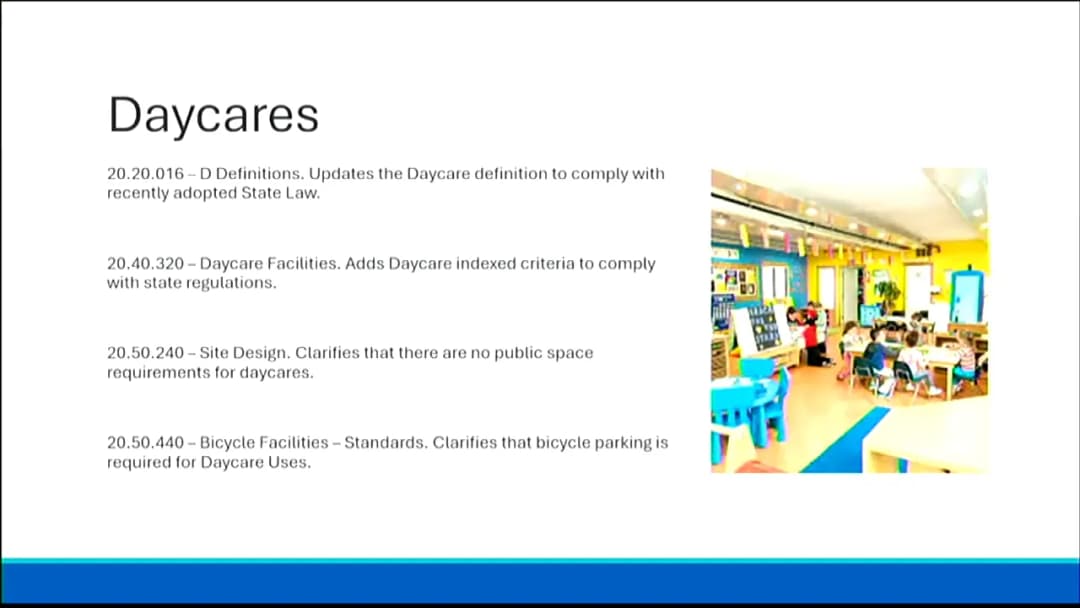
The Shoreline City Council held a regular meeting on Monday, September 21, 2026, at 7:00 p.m. in the Council Chamber at City Hall. Temporary Presiding Officer Snider called the meeting to order. Four councilmembers were present (Snider, Mork, Scully, Roberts); three were excused (Mayor Robertson, Deputy Mayor Pobee, Councilmember Ademasu). The council approved the consent calendar, appointed a new planning commissioner, discussed the 2026 Resident Satisfaction Survey results, and reviewed the 2026 Development Code batch amendments. The meeting adjourned at 8:55 p.m. Consent Calendar - Approval of Regular Meeting Minutes of August 17, 2026: Approved by unanimous consent (4-0). - Authorize the City Manager to Execute a Construction Contract with Clear Excavating, LLC in the Amount of $639,108.30 for the 10th Avenue NE Stormwater Improvements Project: Approved by unanimous consent (4-0). Public Comments & Testimony - Anthony Portugal (Shoreline resident) expressed opposition to the police drone first-response pilot program, warning of civil liberty and privacy violations and potential mission creep. He urged the council to end testing and further investment in drone programs. - Iris Peters (Shoreline resident) recounted witnessing an ICE detention in the Meridian Park neighborhood and urged the council to push back against ICE activities. She praised ordinary citizens who intervened and called for official recognition of their actions. - Lathan Weyne (Shoreline resident) shared that Lieutenant Michael Cooper of the Shoreline Fire Department had passed away. Discussion Items - 2026 Resident Satisfaction Survey Results: Communications Program Manager Eric Bratton introduced Jason Morado, Vice President and Director of Community Research at ETC Institute, who presented the survey findings. The survey received 891 responses (target 800) with a margin of error of ±3.3% at the 95% confidence level. Key findings included: residents have a very positive perception of Shoreline; overall satisfaction with city services is high; satisfaction increased in 57 of 71 areas since 2024 (including 26 areas with increases of 5% or more); the city outperforms national and regional averages in parks, police, stormwater, communications, and leadership; top priorities for the next two years are homelessness response, parks and recreation, human services, and police services. Councilmember Scully suggested adding LGBTQ identity to future surveys and requested searchable data by demographic groups. Mr. Morado confirmed crosstabs are available and a public-facing dashboard will be posted on the city website. Councilmember Roberts noted alignment with anecdotal input and the importance of sidewalk maintenance. Councilmember Mork asked about the survey timing (conducted in April–May) and environmental questions. - Discussion of Ordinance No. 1072 – Amending the Unified Development Code for the 2026 Development Code Batch Amendments: Senior Planner Steve Szafran presented 15 proposed amendments covering daycare uses (aligning with 2025 state law requiring daycare allowed in all zones without special permits), subdivisions (allowing permit extensions tied to active building permits), building and site design (reducing fenestration requirements from 30% to 20%, clarifying that site design features cannot overlap, and specifying parking cannot encroach into side/rear setbacks), traffic-related changes (requiring traffic calming in commercial-to-residential transition areas, shifting traffic impact analysis from vehicle PM peak trips to person-based trips), and use table cleanup. Planning Commission recommended approval. Councilmembers asked clarifying questions about fenestration impacts, traffic impact analysis methodology, and specific code provisions. Staff explained the changes codify current practices and allow mitigation measures to reflect all modes of travel. Councilmembers indicated the amendments made sense and supported moving the item forward on the Consent Calendar. Key Outcomes - Motion to excuse absent councilmembers: Carried 4-0. - Consent Calendar approval: Carried 4-0. - Appointment of Janice Gedlund to the Shoreline Planning Commission: Carried 4-0. She will serve the remainder of Commissioner Lauren Hadley's term through March 31, 2028. - The 2026 Development Code batch amendments (Ordinance No. 1072) will be placed on a future Consent Calendar for formal action. - The 2026 Resident Satisfaction Survey results will be posted on the city website with a public dashboard; staff will consider adding LGBTQ identity options in future surveys and providing further crosstab data.

PUBLIC ENGAGEMENT 21% · MISCELLANEOUS 19% · STRATEGIC PLANNING 13% · PROCEDURAL 12%
10
SEP 17, 2026 · SHORELINE, WASHINGTON · PLANNING COMMISSION
Shoreline Planning Commission Regular Meeting - September 17, 2026

On September 17, 2026, the Shoreline Planning Commission held a regular meeting to discuss updates to the Light Rail Subarea Plans, including policy revisions, draft Planned Action Ordinances, the 185th Zoning Overlay boundary, and a Connectivity Framework. The meeting featured public comments and commissioner deliberations ahead of a scheduled public hearing on October 1, 2026. Consent Calendar - Approval of agenda and minutes from September 3, 2026, accepted as presented. Public Comments & Testimony - Dolapo Martins, a resident near 180th Street and 10th Avenue NE, expressed concern about proposed zoning near the 185th Street light rail station, citing an abrupt transition from seven-story mixed-use to MUR-35’ zoning, inadequate shadow impact consideration, and safety issues from two impaired-driving crashes that struck nearby homes within the past five years. - Dia Dreyer, Shoreline, asked the City to confirm that the Comprehensive Plan update will not supersede the station subarea plans and that Phase 2 zoning will not take effect before 2033, as promised during the 2015 planning process. She also raised concerns that expanding the Planned Action Ordinance boundary and updating the environmental impact statement could allow earlier Phase 2 zoning, and urged that property-maintenance enforcement focus on developer-owned properties rather than existing residents. Discussion Items - Policy Updates: Staff presented revised transportation, community design, parks, and natural environment policies based on feedback from the September 3 meeting. Key changes included adding connectivity through parks, updating references to the 185th Multimodal Corridor Strategy, and a new policy on sports field lighting to minimize light pollution and glare within the 185th station overlay. - Planned Action Ordinance: Staff reviewed the draft ordinance, which replaces existing ordinances and sets development thresholds for each station area. For Shoreline North (185th Station), the ordinance assumes 3,700 additional dwelling units and 2,736 net PM peak hour trips. Mitigation measures include cultural resource protections, multimodal connectivity policy compliance, and noise/light/glare conditions for the 185th overlay. Commissioners discussed parking needs and concurrency with the 185th Corridor project, which is not yet scheduled or funded. - 185th Zoning Overlay: Staff recommended Option 2, a smaller boundary extending north to approximately 192nd-193rd Street, to focus on properties zoned MUR-70’ and better accommodate transit-oriented housing development per HB 1491. Commissioners unanimously supported the smaller boundary, noting it concentrates sports/recreation uses and supports housing near transit. - Connectivity Framework: Staff presented updated maps using a hybrid methodology (buffer overlap and prioritized connections) and added community assets and informal trails. Commissioners requested removing several east-west connection areas: west of I-5 near 195th (where the 195th Street overpass already provides access), south of 148th Station (where a planned bridge may eliminate the need), and blocks adjacent to I-5 on 145th (due to existing large buildings unlikely to be redeveloped). Staff agreed to review and adjust the maps. - Connectivity Implementation: Staff showed illustrative cross-sections (mid-block pedestrian path, alleyway, community courtyard, pedestrian plaza) to be refined in Q1 2027 code amendments. Commissioners noted that the alleyway description should better balance pedestrian priority with operational functions, and that dumpster/operational obstructions should not block pedestrian and bicycle spaces. Developer interviews indicated larger multifamily projects generally did not find connection requirements infeasible, while smaller projects may require flexibility. Key Outcomes - Commissioners directed staff to include the smaller 185th Zoning Overlay boundary (Option 2) in the final draft subarea plan and Planned Action Ordinance. - Staff will remove or adjust specific connectivity priority areas identified by commissioners (west of I-5 near 195th, south of 148th Station, and blocks adjacent to I-5 on 145th) and incorporate flexibility language in the future development code. - The Commission will hold a public hearing on October 1, 2026, to consider the updated subarea plans, Planned Action Ordinances, and related policies. If no agreement is reached, existing Planned Action Ordinances remain in effect until growth thresholds are exceeded.

LAND USE PLANNING 37% · CONNECTIVITY FRAMEWORK 21% · TRANSPORTATION SAFETY 11% · PROCEDURAL 8%
0102
NEXT →
OPENPUBLICA · PUBLIC MEETING INDEXUPDATED DAILY · openpublica.com