Saint Paul Planning Commission Meeting – March 21, 2025
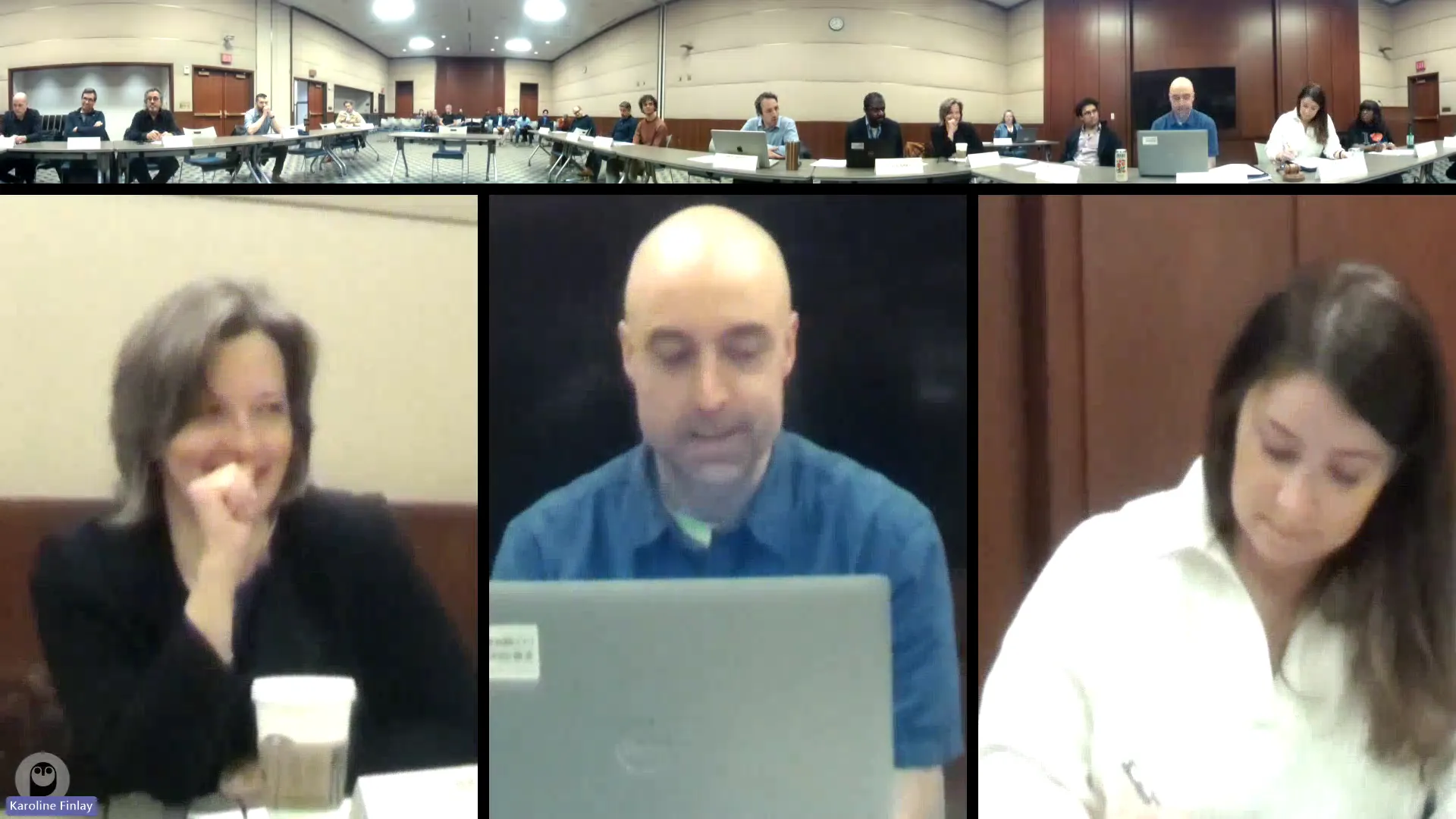
STREAMING COPY IN PREPARATION — RECORDING AVAILABLE FROM THE ORIGINAL SOURCE
Saint Paul Planning Commission Meeting – March 21, 2025
The Saint Paul Planning Commission met on March 21, 2025, at 8:30 a.m. in City Hall Conference Center Room 40. The meeting covered approval of prior minutes, updates on a city council reversal of a planning commission decision, a comprehensive study of the Mississippi River Corridor Critical Area (MRCCA) zoning, a layover request for a nonconforming use permit, and transportation committee announcements.
Consent Calendar
- Approval of minutes from the March 7, 2025, Planning Commission meeting were approved by a unanimous vote (motion by Commissioner Presley, second by Commissioner Risberg, no discussion).
Chair’s Announcements
- Chair Grill announced that items would be taken out of order (Comprehensive and Neighborhood Planning Committee before Zoning Committee) to allow staff more time.
- She welcomed Bill Germany (city attorney) and the acting planning director.
Planning Director’s Announcements
- The acting planning director reported that item 560 Randolph (similar use determination) was appealed to the city council and reversed unanimously (5-0). The planning commission had previously affirmed the zoning administrator’s decision that the use was similar to a public works yard. Next steps are not yet known.
Discussion Items
Mississippi River Corridor Critical Area (MRCCA) Zoning Study
- Tony Johnson presented the study, which updates the city’s MRCCA regulations to comply with 2017 state rules. The proposal deletes the 1982 MRCCA language and adopts the state’s model ordinance (without optional provisions). Key changes include new overlay districts, setback and height limits, vegetation management standards, and moving floodplain management standards into Chapter 68.
- Bird-safe glass was discussed: it was in an earlier draft but removed in this version because it is not required by state rules, only 7.5% of recent construction permits are in the MRCCA area, and there are unresolved legal and cost issues. Staff recommended a separate study on bird-safe glass.
- Commissioners asked about height limits in downtown districts (e.g., RC4 district with conditional use permits above 75 feet) and the map delineation (prescribed by the DNR, not alterable locally).
- The committee recommended releasing the study for public review and setting a public hearing for May 2, 2025. The motion (by Commissioner Holst, second by Commissioner Hood) passed unanimously. Staff noted that further delay could result in the DNR adopting an ordinance on the city’s behalf.
237 Richmond Nonconforming Use Permit – Layover Request
- The Zoning Committee item (25-007-238) was presented. Staff requested a layover to further consider how the application relates to state law.
- Commissioner Taghioff moved to suspend the rules to allow a layover motion (second by Commissioner Starling). The motion to suspend passed unanimously.
- Commissioner Taghioff then moved to lay the matter over to the next full planning commission meeting (scheduled for April 4, 2025). The motion was seconded by Commissioner Starling.
- Several commissioners expressed frustration that this was the second time the item was pulled from a vote at the last minute, and asked for better advance notice to the public and committee members. Commissioner Hood raised a procedural question about whether significant staff recommendation changes might warrant reopening the public hearing; the city attorney noted that in this case the changes were substantially the same.
- The motion to lay over passed unanimously. The item will return on April 4, 2025.
Transportation Committee Announcements
- A transportation committee meeting was announced for Monday, March 24, 2025, at 4:30 p.m. in the City Hall Annex (13th floor) to discuss the new West 7th Street corridor concept. The concept includes bus rapid transit, pedestrian improvements, on-street parking, a regional multi-use trail, and dedicated lanes for BRT on a railroad spur. Public open houses are scheduled:
- In-person: April 8 (6:30–8 p.m.) at Highland Park Community Center
- Virtual: April 9 (noon–1 p.m.)
- In-person: April 10 (5–6:30 p.m.) at Palace Community Center
- Commissioner Riley announced the grand opening of the Gold Line BRT on Saturday, March 22, 2025, with a ribbon cutting at 10 a.m. in Woodbury and celebrations along the corridor.
Key Outcomes
- Minutes approved unanimously.
- MRCCA study released for public review with a public hearing set for May 2, 2025; motion passed unanimously.
- 237 Richmond permit laid over to the next full planning commission meeting (April 4, 2025) on a unanimous vote.
- No other business; meeting adjourned.
Meeting Transcript
March 21st meeting of the Campbell Planning Commission to order our first order of business is approval of the minutes from the March 7th 2025 Planning Commission meeting. Do I have a motion on the minutes? So moved by Commissioner Parsley. Do you have a second? Seconded by Commissioner Risberg. So we have a motion and a second on the minutes. Do we have any discussion? All right, seeing no discussion on the minutes, we'll now move forward with the vote. All those in favor on all those post. All right. So the minutes pass. Next up is the chair's announcements. Well, first of all, uh, we have Bill Germany here with us today and the planning director. So that's my first announcement. And then my uh second announcement is that I believe that we're gonna take our items today out of order. So the comprehensive neighborhood planning committee will go before um zoning committee today as we go through, um, just to give staff a little bit more time. Next up is the planning director or acting planning director. Okay, I have only one announcement, and that's that one item that came before the uh planning commission also was in front of the city council this week, and there was a decision. So that was 560 Randolph, similar use determination. Planning commission had affirmed the zoning administrator decision on that, that the uh use was similar to uh public works yard and city council reversed that. They granted the appeal uh unanimously, five zero vote. And um, I'm sure your next question is what's the next steps? And I honestly do not know at least what the next steps are. So we'll we'll see about that. That's it for my announcements. All right. Um, and then as I mentioned, we're gonna take items out of order today. So Tony is with us next um from comprehensive neighborhood. Oh, please meet Commissioner Riceberg. I just wanted to um make a comment that I appreciate the follow-up on a decision that we made, what happened with City Council and uh sometimes I'd wonder often what what happened with the rest of the story. And so it's uh appreciate that. So uh thank you, Commissioner Risberg. I agree. Um I don't know if you want to introduce uh the item with us today, or if you want Tony to just take it. Go ahead. All right, please. Uh morning, Commissioners. Uh I'm here today with uh the Mississippi River uh critical area zoning study. Uh this is something that you have heard before about a year ago. Um, but we took a step back because of the amount of time and kind of our restarting the process. And so here it is again. Uh so for a little reminder, so the Mississippi River uh corridor critical area is a joint state and regional and local program that provides a coordinated land use planning and zoning regulations uh along the Mississippi River and the Seventh County Metro area. Uh so if you look to the map on your guys' left, uh those are the communities uh that have to adopt Merca provisions. Uh so Merca was uh originally designated in 1976 through executive order. Um the purpose of it is to protect the river's natural cultural and resources. Um and these resources are protected through development standards uh that are then administered through uh local government land use plans and zoning work since so why are we here today? Uh we're here because the state uh adopted new rules in 2017, um, and then in 2019 they developed a model ordinance uh for local municipalities to uh follow. Um and in this model ordinance, uh there's specific zoning code provisions, definitions, and regulations that the local units of government are required to adopt to comply with Merka rules. Uh there is optional language uh that is uh supposed to provide better resource protection uh than the minimum MERCA standards uh that we could adopt if we wanted to. Um so how does uh uh old Merka to new MERCA?
openpublica.com