The Saint Paul Library Board convened on Wednesday, November 4, 2026. The meeting covered the approval of routine items, acceptance of a $1,000,000 federal grant for library reconstruction projects, a presentation on a new Timberwolves-themed library card, and a detailed update on the Rondo Community Library's renovation and planned return to its 461 Dale Street location. Consent Calendar - Approval of Minutes (Min 26-33): The minutes from the October 7, 2026, Library Board meeting were approved unanimously (5-0). - Acceptance of Travel Gift (RES 26-1820): The board approved accepting a gift of travel and lodging expenses from the Digital Public Library of America (DPLA) for Library Director Maureen Hartman to attend a convening of library and civic leaders in Seattle, Washington, on November 12 and 13, 2026. The resolution passed without objection. Discussion Items - Resolution PH 26-231 (HUD Grant for Reconstruction): The board discussed a resolution authorizing the acceptance of $1,000,000 from the U.S. Department of Housing and Urban Development (HUD) for the Hayden Heights Library and Riverview Library reconstruction projects. Councilmember Johnson expressed full support for continued investment in the library systems and stated she looks forward to closing funding gaps to make an even bigger investment in Riverview from the amounts that was allocated for Hayden Heights this year. The resolution was adopted unanimously (6-0). - Staff Report 26-251 (Timberwolves Special Edition Library Card): Stacey Opitz presented the launch of the library's third special edition card, created in partnership with the Minnesota Timberwolves. The card was designed by St. Paul-based artist Delia Touche, who drew on the history of basketball as a tool for assimilation that was transformed into a source of cultural connection and resilience by the Native American community. The library printed 7,000 copies and aims to attract new cardholders. Board members praised the design, with Council President Noecker highlighting the significance of a library card as a first card for children. Councilmember Bui inquired about the availability of past designs; Stacey Opitz explained the library rotates designs and keeps a menu of standard options. A Lynx-themed card is planned for the spring of 2027. - Staff Report 26-234 (Rondo Community Library Update): Marlena Okechuku, Public Services Manager, provided an update on the Rondo Community Library renovation. The library has been operating at the Hallie Q. Brown Community Center since January 3, 2026, and will continue services there through November 23, 2026. The renovated library at 461 Dale Street is scheduled to reopen on December 31, 2026, with a grand opening celebration planned for January 2027. Renovations include relocating bathrooms deeper into the space, adding study rooms, making tech-rich upgrades as part of the Transforming Library initiative, and installing a new public art mural in the entryway. Board members discussed the artist selection criteria. Councilmember Bowie emphasized the importance of ensuring the city's investment is regenerative and directly supports artists from the Rondo neighborhood, noting the significant distinction between requiring an artist to be a Rondo resident versus having ties to the area. Key Outcomes - Votes & Approvals: The board approved the October meeting minutes (5-0) and accepted the DPLA travel gift (unanimous). The $1,000,000 HUD grant for the Hayden Heights and Riverview Libraries was formally authorized (6-0). - New Library Card: The Timberwolves special edition library card, designed by Delia Touche, is now available at all St. Paul Public Library branches while supplies last. - Rondo Library Timeline: The temporary location at Hallie Q. Brown closes November 23, 2026. The renovated 461 Dale Street location reopens December 31, 2026, with a grand opening ceremony in January 2027. - Artist Contracting: The library has selected an artist for the Rondo Library entryway mural following a request for qualifications that drew roughly 25 applicants and is currently in the contracting phase.
Public Meetings - St Paul, Minnesota
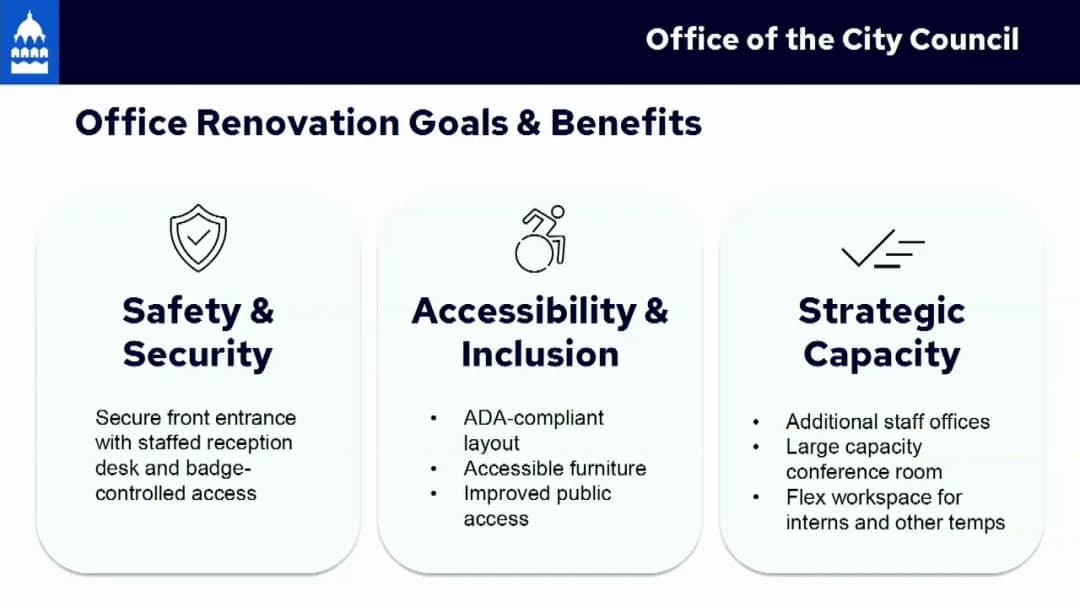
Public Meetings - St Paul, MinnesotaThe Budget Committee of the Saint Paul City Council met on November 4, 2026 to continue its 2027 budget series. The meeting included presentations on Ramsey County property tax trends, the proposed budget for the Department of Human Rights and Equal Economic Opportunity (HREEO), and supplemental requests from the Office of the City Council. Chair Cheniqua Johnson presided, with Councilmembers Bowie, Coleman, and Jost present, and Council President Naker arriving later. No consent calendar or public testimony items were on the agenda. Discussion: Ramsey County Tax Valuation Trends Ramsey County Director Chapman and County Auditor Tracy West presented the 2026 property valuations (which set 2027 taxes). St. Paul's total assessed value is approximately $36.5 billion out of the county's $78 billion total. The overall change in St. Paul property values was about 2%, described as a flat year. Residential values rose 1.5%, while industrial and apartment properties saw higher increases (5% and 4.5% respectively). The combined levy for the county, city, and school district is increasing by 6.8% to a total of $730 million. The city's share of the levy is increasing by 6.8%, while the county's St. Paul share is up 8.9%. The proposed tax rate for St. Paul is 56.6%. For the median single-family home in St. Paul (valued at $290,300), the estimated tax increase is $172 (3.7%). West 7th saw the largest tax increase by planning district (6.6%), while Downtown values decreased by 6.3%, driving a decrease in property taxes of 5.3%. West noted that outreach for the state's Property Tax Refund (PTR) program is largely limited to mentions in presentations and on tax statements, with no formal county coordinated education or partnership outreach efforts. Several councilmembers inquired about the significant amount of PTR funds left unclaimed annually. Discussion: HREEO 2027 Budget Interim Director Andrea Letcher presented the HREEO budget, highlighting the department's focus on fiscal sustainability through vacancy management. The department is proposing a reduction from 33.1 FTEs to 30 by eliminating two positions (Contract Compliance Coordinator and Labor Standards Investigator 1) to meet budget targets. The department ended its work-share agreements with HUD and the EEOC over concerns about protecting sensitive resident data. The most contentious topics were the long-vacant Director of HREEO position and a proposal to increase the Police Civilian Internal Affairs Review Commission (PCARC) commissioner stipend. PCARC Stipend: The budget includes $27,000 for a potential increase to the $50 commissioner stipend, which has not been changed since 1993. Councilmembers Johnson and Bowie criticized the timing of the proposal and the lack of prior consultation with the full council. Councilmember Coleman explained her office was involved in the early timing to align with the budget process and required ordinance amendments. Letcher noted the work involves significant emotional labor for the volunteers. HREEO Director Vacancy: The director position has been vacant since late 2022. Chair Johnson and Councilmember Bowie expressed strong frustration that a requested timeline for filling the position was not provided in the meeting materials, despite being raised in the pre-meeting. Letcher stated the hiring process is a mayor's office decision. Councilmember Jost urged directing concerns to the mayor's office. Ms. Mitchell from the Office of Financial Services confirmed the mayor's office intends to fill the position in 2027, having prioritized the Fire Chief search. Bowie criticized the ongoing allocation of over $200,000 in salary for an unfilled role without a defined plan to fill it. Discussion: Office of the City Council Supplemental Requests Director of Operations Jay Welms presented two supplemental funding requests. 1. Office Renovation Interfund Loan Repayment: The renovation project initially had a $1.95 million budget from ARP funds. A funding gap of approximately $360,000 led to an interfund loan approved in August 2026. Welms requested $120,000 per year for three years (FY27-FY29) to repay the loan. Chair Johnson and Councilmember Bowie questioned the mechanism of an interfund loan and requested a full accounting from OFS of all interfund loans citywide and the precedent for their use. 2. Administrative Citations Implementation: Welms requested one-time funding for a technology and workflow consultant to ensure the council's role in the forthcoming administrative citations program is seamless, specifically regarding the handoff from the administration's Pauly system. Council President Naker asked if the work could be done internally by the Office of Technology and Communications (OTC). Welms confirmed he had reached out to OTC but noted external consultants may be needed to align with existing city technical service agreements. Key Outcomes - No formal votes were taken on the substantive budget items presented during the meeting. - PCARC Stipend: Scheduled for a first reading at the following City Council meeting to align with the budget timeline. - Budget Amendments: The committee is scheduled to consider budget amendments on November 18, 2026. - Follow-up Items: Chair Johnson committed to sending a follow-up email to gauge interest in formally adding the Office of the City Council requests to the budget conversation. A comprehensive list and explanation of all current interfund loans was requested from the Office of Financial Services. - HREEO Director: The mayor's office was identified as the lead on the hiring process, with an informal target for filling the position in 2027.
The Saint Paul Housing & Redevelopment Authority (HRA) Board of Commissioners met on Wednesday, October 28, 2026, at 2:00 p.m. in Council Chambers, City Hall. Vice Chair Saura Jost called the meeting to order at 2:04 p.m.; four commissioners were present and three were absent. Commissioner Yang was excused, and Chair Johnson and Commissioner Kim later joined during the staff report portion. The Board voted 4-0 on two resolutions, received a staff introduction to a proposed Model Cities commercial loan restructuring, and continued the 2026 third-quarter budget report to the next meeting. Roll Call and Opening - Present: Commissioners Noecker, Bowie, Jost, and Coleman. Absent: Commissioners Yang (excused), Johnson, and Kim. - Chair Cheniqua Johnson joined remotely during the meeting; Commissioner HwaJeong Kim arrived during the staff report portion. Discussion Items - RES 26-1793 – Smith Avenue Parking Ramp easements: Sponsored by Chair Johnson. Executive Director Melanie McMahon presented the request to grant the City of Saint Paul a temporary easement via a right-of-entry permit for the Capital City Bikeway project, and to grant District Heat and Energy (or an affiliate/subsidiary) a permanent easement for heating and chilled water piping at the HRA-owned Smith Avenue Parking Ramp and Transit Center, 145 N. Smith Avenue, District 17, Ward 2. McMahon said no interior ramp access was needed, HRA parking operations would not be affected, and the two-part construction was expected to take about two months. - RES 26-1794 – Maryland Park Apartments HOME loan actions: Sponsored by Commissioner Yang. According to the minutes, Commissioner Coleman moved adoption approving the assignment and assumption of an existing HOME loan, extension of its maturity date, subordination to a new first mortgage, and execution of related loan documents for Maryland Park Apartments at 1619 Maryland Avenue East, District 2, Ward 6. Staff Report: Model Cities BROWNstone Commercial Loans (SR 26-236) - Debt Administrator Jenny Wolfe presented proposed amendments to loans related to the Brownstone, a four-story mixed-use building with 35 rental housing units and approximately 20,000 square feet of commercial/retail space on the north side of University Avenue at Victoria Street. - Background: Model Cities began operations in 1967 and has been active in community development in Summit-University and Frogtown since 1987. The commercial project was financed separately; the development cost about $5.5 million, and the HRA and city loans totaled more than $3 million. - The HRA loan originated through a 2003 $2.5 million St. Paul & Minnesota Foundation agreement for the Housing 5000 initiative, was later tied to Green Line transit-oriented development, and $2.3 million was approved for the Brownstone in 2016. The foundation loan matures December 1, 2026, with a current balance of about $1.5 million and a $500,000 recourse obligation for the HRA. Model Cities could not obtain a private loan to repay the maturing balance; staff said the existing HRA loan also had a $1.5 million balloon that came due June 5 and was unpaid. - Proposed restructuring: amend the foundation loan to extend it 10 years, with first payment due February 2027, maturity in December 2036, 240-month amortization, and potential forgiveness of up to $650,000 at three measurement dates if operating metrics are met. The amended HRA loan would mirror those terms, with payments due 15 days before HRA pays the foundation, 2% interest compared to the 1% rate charged to the HRA, and the HRA's first mortgage retained. Staff said the terms are contingent on forgiving two older city loans. - Staff also proposed forgiving a $300,000 STAR loan and a $356,000 CDBG loan, and deferring a $120,000 STAR loan with payments beginning January 2037. The two forgiveness amounts total $656,000. The past-due loans placed Model Cities on the adverse lending list; it could be removed after six consecutive on-time payments. - Staff said the deferral of the $120,000 STAR loan would reduce next year's STAR budget revenue by about $17,000, a roughly 5% variance not considered material. Staff stated that forgiving the CDBG loan would not harm the city's relationship with HUD because it was structured as a cash-flow loan and the HUD national objective had been met. Commissioner and Stakeholder Positions - Commissioner Noecker said she was uncomfortable with the HRA remaining in a middleman position with a large recourse obligation. She noted staff's first request had been for the foundation to deal directly with Model Cities, but the foundation declined. She called the large balloon payment structure unrealistic and, at some point, cruel, and encouraged pushing philanthropic partners to support the community; she also took responsibility for not catching the 2016 terms. - Chair Johnson said she was supportive of Model Cities and had advocated for it behind the scenes, but stressed that any HRA recourse payment would come from public HRA dollars. She asked whether metrics failure would trigger the $500,000 recourse; staff clarified that the HRA's obligation would not be triggered by missed monthly payments, only at loan maturity in 2036. - Commissioner Bowie praised Model Cities' deep community ties, affordable housing leadership, and low-barrier commercial opportunities for entrepreneurs in the Rondo/Frogtown/University corridor. - Commissioner Kim said the balloon payment structure was not something she would counsel clients to take on and called it predatory, while expressing trust in Model Cities' leadership. - Model Cities CEO Kizzy Downie and Community Development Director Dean Carlson thanked the board and described challenges: commercial tenants struggled, especially during the period around Operation Metro Surge; two leases ended and spaces were being refilled; Model Cities also pays rent in the building; and property taxes on the commercial parcel rose from about $45,000 to about $93,000 per year. The transcript at one point says 9300, but later context indicates $93,000. Downie said the organization is making its first-half property tax payment and may structure the second-half payment over five years if needed. Carlson said Ramsey County reduced the property's assessed value for taxes payable in 2027 by roughly 70 percent, which should lower taxes from the 2026 level. Downie asked the board to consider sharing more of the risk that Model Cities carries. Staff Report: 2026 Third Quarter Budget to Actual (SR 26-237) - Deputy Director Green began the budget presentation, noting that the board had asked for all information in one place with graphic visuals and that reporting had been adjusted. Because of time constraints, the board agreed to continue the item rather than rush the presentation. Key Outcomes - RES 26-1793 was adopted 4-0 (Noecker, Bowie, Jost, and Coleman voting yes; Yang, Johnson, and Kim absent). - RES 26-1794 was adopted 4-0 on Commissioner Coleman's motion, with the same vote and absentees. - SR 26-236 was received and filed; formal resolutions authorizing the Model Cities loan amendments and forgiveness are scheduled for November 4, 2026. - SR 26-237 was referred/continued to the HRA meeting due back November 4, 2026. - The next regular meeting is November 4, 2026, at 2:00 p.m. The meeting adjourned at 2:56 p.m.
The Saint Paul Public Safety Committee, chaired by Anika Bowie, convened on October 28, 2026, at 12:30 PM in Council Chambers. The meeting focused on exploring innovative housing models to address unsheltered homelessness and expand affordable housing options. Presentations were delivered by the Low Income Housing Institute (LIHI) from Seattle, the City of New Ulm, and Avivo of Minneapolis. Six council members were present (Vice Chair Coleman, Johnson, Jost, Kim, Noecker, Bowie); Councilmember Yang was excused. No public comments were heard, and no formal votes were taken. Agenda Item 1: Tiny-Home Villages – Supportive Services, Housing Pathways, and Collaborative Public Safety Solutions (SR 26-239) - Presenters: Sharon Lee (Executive Director), Donna Anderson (Regional Shelter Operations Manager), and Marta Kidane (Community Engagement Manager) of the Low Income Housing Institute (LIHI), joining virtually from Seattle, Washington. - LIHI operates 19 tiny house villages with 803 tiny houses, in addition to 4,000 units of affordable housing, five hotel conversions, and two urban rest stops providing free showers and laundry. Each tiny house is 8x12 feet, costs about $5,000 in materials, and includes electricity, heating, air conditioning, and insulation. Villages are fenced, staffed 24/7, and have one secured entrance. Residents agree to a code of conduct; case managers and behavioral health specialists are on site. Meals are provided, and bathrooms are individual and handicap accessible. - LIHI partners with 11 faith organizations (churches) that lease land for villages, as well as city, transit, and private property owners. In 2025, they served 1,600 adults and children who were unsheltered. - The City of Seattle has streamlined permitting, declared a civil emergency around homelessness, and passed legislation allowing transitional encampments, increasing village capacity up to 150 people (and up to 250 in one village), and allowing direct negotiation with private landowners. - LIHI also operates RV safe lots to address RV dwelling and redevelops former village sites into permanent affordable housing after 3–5 years. - Councilmember Jost asked about operating costs. Lee responded that costs vary by size and site complexity (water, sewer, electricity) and offered to provide examples. Council President Noecker asked why villages are replaced with affordable housing; Lee explained that sites are often acquired with the intent to build permanent housing, and villages serve as interim use. Councilmember Johnson praised the model and noted that LIHI assembled the presentation in under two weeks. Chair Bowie highlighted the importance of Seattle’s permitting flexibility and the hygiene centers as a potential model for St. Paul. Agenda Item 2: Alternative Housing Development – Zoning, Financial Feasibility, and Scalability of Barndominium Models (SR 26-244) - Presenter: Chris Dalton, City Manager of New Ulm, Minnesota, appearing in person. - New Ulm’s Land Haven Barndominium Project combines residential spaces with large garages/storage/business areas on 2.5 acres of industrial (I-1) zoned land. The project includes 22 joint storage/residential units and 6 storage-only units. It was enabled by a Planned Unit Development (PUD) that allowed reduced setbacks. All internal maintenance is handled by an association; noise complaints are governed by business hours. - Financing is private. Three barndominiums have pulled permits at roughly $410,000 each; four storage units at about $145,000 each (building value only). The city provided public assistance of $217,000, including selling the land for $1 and paying 50% of special assessments ($115,000). Tax abatement and TIF remain available but have not been requested. - The project is not affordable housing per se but targets “snowbirds,” empty nesters, and tradespeople who need combined living and workspace. Dalton noted that freeing up existing lower-priced homes (under $200,000) may benefit first-time homebuyers. - Councilmember Johnson asked about site size (2.5 acres) and zoning discussions. Dalton explained that the PUD allowed residential use in an industrial zone and that staff worked closely with the developer and city attorney. A separate tiny home project in New Ulm used the same PUD mechanism. Council President Noecker characterized the public benefit as removing undesirable industrial uses from residential neighborhoods and expanding housing choices. Johnson added that this model helps address the gap between high mortgages and need for extra space/business operations. Agenda Item 3: Indoor Village Shelter Models – Public Safety, Community Partnerships, and Operational Considerations (SR 26-246) - Presenter: Kelly Matter, President & CEO of Avivo, appearing in person. - Avivo Village in Minneapolis (100 units, opened December 2020) and a newly opened 48-unit village in St. Cloud (opened less than 10 days prior) serve individuals with the highest acuities who are sleeping outside. 92% of those served in Minneapolis were chronically homeless; 99% had a long-duration disability; 40% had a chronic health condition; 90% had a serious mental health diagnosis; 89% had substance use disorder; 29% had a developmental disability. - The model is low-barrier: allows pets (64 dogs, 21 cats last year), partners, privacy (individual lockable 8x8 units), and possessions (with storage). 24/7 staffing includes a third-party security team (Relative Intel) and a minimum of five staff on site (four resident advocates and one leadership staff). The average length of stay is around 100 days; there are no term requirements for residents, though St. Cloud has a 120-day ordinance. - Minneapolis: $4 million rehab of an existing warehouse (COVID dollars); annual operating budget of $5 million (including $36,000/month rent). St. Cloud: $9 million new construction (city contributed $1.1 million; state contributed approximately $8.2 million); annual operating cost of $3.1 million. 40% of residents move to permanent supportive housing; many go to treatment with housing. - Councilmember Johnson asked about term requirements (none) and cost comparisons. Matter provided the figures above. Councilmember Kim (via questions/comments) had requested tour details. Matter emphasized partnerships with all levels of government, neighborhood associations, and a good neighbor agreement. Chair Bowie noted the importance of providing a place to go during Minnesota winters rather than simply closing encampments. Key Outcomes - The committee received information on three alternative housing models. No formal votes or resolutions were adopted. - Chair Bowie indicated an interest in reviewing St. Paul’s permitting system and exploring ordinances to facilitate tiny house villages, as well as following up on Seattle’s hygiene center model. - Councilmember Johnson and Chair Bowie committed to follow-up communications with LIHI, New Ulm, and Avivo to obtain detailed cost data and explore potential partnerships. - Chief Gibbs (Interim Fire Chief) and a deputy chief were present for the barndominium discussion; no comments were recorded from them. - The meeting adjourned without further business.
The Saint Paul Budget Committee, chaired by Councilmember Cheniqua Johnson, met on October 28, 2026, to review the 2027 budget proposals for the City Attorney's Office (CAO) and the Office of Neighborhood Safety (ONS). Discussions centered on staffing levels, the sustainability of grant-funded positions, the increasing burden of data practices compliance, and the need for clearer metrics to evaluate the impact of community safety investments. Discussion Items City Attorney's Office (CAO): City Attorney Irene Gow presented the CAO's 2027 budget, prioritizing technology, data practices, and a new civil attorney. - Data Practices: CAO requested two new Data Practices Specialists to address a historic surge in requests. The city is on track to receive over 24,000 total requests in 2026, up from 1,569 general city requests in 2025. Council President Noecker questioned the long-term strategy of adding staff versus adopting technological solutions. CAO argued legal review requirements necessitate the additional capacity regardless of technology improvements. - Immigrant Legal Defense: A $300,000 carry-forward from 2026 was requested for the Immigrant Legal Defense and Naturalization Support program. CAO explained the funds were unspent due to prioritizing work related to Operation Metro Surge. Councilmember Kim voiced strong support for the carry-forward, citing continued impacts of immigration enforcement in Saint Paul. - Separation Ordinance: CAO estimated that implementing the new Separation Ordinance would require approximately 800 hours of staff time for annual training and reporting, supporting the request for additional staffing support. - Operations: CAO noted a paralegal position was cut, and a senior attorney position was under-filled to an associate level to meet reduction targets. Remaining ARPA funds were proposed for a one-time victim witness position. Office of Neighborhood Safety (ONS): ONS Director Toy Vic Savan presented the 2027 budget, highlighting the challenge of maintaining current staffing levels as temporary grants expire. - Funding Cliffs: The DOJ grant supporting the Familiar Faces program ends in May 2027. ONS is requesting to roll over $366,000 in remaining ARPA funds to sustain the team. A 0.5 FTE is also proposed for transfer to general funding. Council President Noecker expressed concern about the large number of positions (6.5 FTEs) that will need new funding or general fund support in 2028. - Performance Metrics: Councilmembers Johnson, Bowie, and Kim emphasized the need for quantified data on caseloads and program impact (e.g., Project Peace life coaches) to better justify funding and advocate for the office, especially as other community safety programs (CARES, Co-Responders) are being discontinued. Director Savan stated the evaluation showed their work is 'saving lives'. - Downtown Cameras: Funds originally allocated for downtown cameras were re-obligated to support data management and dashboarding for Project Peace, as ONS lacked the staffing to implement the camera program. - General Fund Shifts: ONS utilized unspent grant funds to relieve general fund pressure in prior years. These expenses are shifting back to the general fund in 2027, including a $160,000 community grants program. Key Outcomes - CAO Data Practices: CAO will follow up on correlations between policing incidents and data practice request volumes. - ONS Performance Data: ONS was directed by Chair Johnson and Councilmember Bowie to provide quantified workload data (caseloads, service interactions) for Project Peace and Familiar Faces staff to improve budget justifications and public narratives. - General Fund Impact: Council President Noecker flagged the $160,000 community grants line item returning to the general fund and requested confirmation from ONS. The committee noted the significant pressure on ONS as other community-first safety responses are discontinued. - No Formal Votes: The meeting was a discussion and did not include formal votes on the budget.
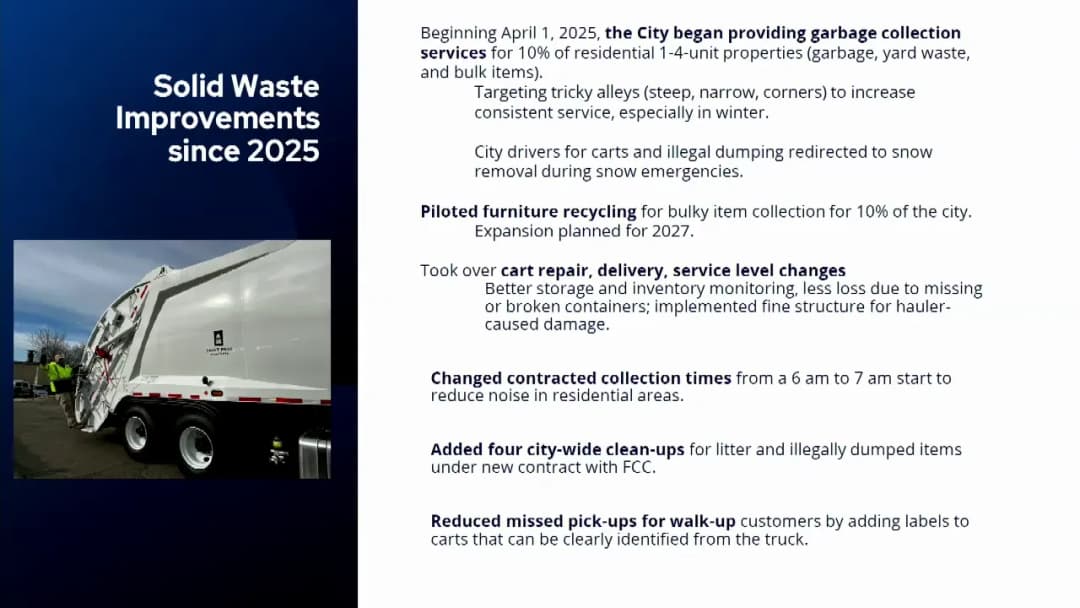
The Saint Paul City Council met on October 28, 2026, at 3:30 PM in Council Chambers. Six members were present (Council Vice President Yang was excused). The meeting included first readings of ordinances, public hearings on several items, and a lengthy quasi-judicial appeal regarding a proposed triplex at 2094 Goodrich Avenue. Key actions included approval of a new mobile sauna ordinance on first reading, adoption of a commercial development district for liquor licenses near University and Snelling, and denial of an appeal against the triplex development. Consent Calendar - Items 3 through 13 were approved unanimously by roll call vote (6-0). These included: accepting a donation from Responsive Cities Network for employee travel (RES 26-1654); approving assessments for securing/emergency boarding services (RES 26-1671); approving liquor license additions and changes for Habanero Tacos, Barrel Theory Beer Company, Mexifino Boxing Studio, and Aldossari Auto Sales (RES 26-1748, 26-1750, 26-1751, 26-1752); accepting a conference registration gift for Fire District Chief Sam Breckenridge (RES 26-1768); authorizing amended joint powers agreements with Ramsey County for Computer Aided Dispatch and Mobile Data (RES 26-1774) and Radio Subscriber (RES 26-1775); extending a lease agreement with Twin Cities Public Media Commons (RES 26-1788); and approving the naming of Koom Siab Park (RES 26-1782). Public Comments & Testimony - Item 17 (University/Snelling Liquor District): John Purdy (West Side resident) testified, urging the council to consider broader community engagement and cautioned against limiting future public hearings by creating a district that could be amended only by a four-vote majority. - Item 18 (Prevailing Wage for Carpenters): Bert Johnson (General Counsel, Northern Midwest Regional Council of Carpenters) testified in strong support, arguing the amendment would allow federal residential wage rates for qualifying wood frame projects, aligning with state law and negotiated union rates, and would not reduce contractor compliance. - Item 20 (Salvation Army Tree of Lights Sound Variance): Jeff Bark Walsh (Landmark Tower resident) supported the version two modifications (lower decibels, reduced bass, redirected speakers) to balance holiday vibrancy with residential quality of life. Dan Furry (Salvation Army) expressed concerns that 80 decibels and cutting off bass at 80 Hz would degrade sound quality, and proposed a compromise of reducing sound at 9 PM every night instead of 8 PM on weekdays. - Item 21 (2094 Goodrich Avenue Appeal): 18 members of the public testified, nearly all in support of granting the appeal. Speakers included neighbors, an acoustical engineer, an architect, and local residents who described the proposed 18-bedroom, four-story building as a "partyplex" incompatible with the single-family neighborhood. They argued the zoning administrator erred by classifying it as a triplex without proper site plan review, citing building code discrepancies (e.g., a 2,484 sq ft fourth-floor gathering space with a calculated occupancy of 166, yet submitted as 49), lack of sound/privacy buffers, and concerns about long-term housing stability. The appellant, Joe Galante (adjacent property owner), detailed how the building's physical capacity and design exceeded triplex standards and should trigger site plan review under Section 61.402. - Item 24-31 (Legislative Hearing Consent): No public testimony was offered. Discussion Items - Item 14 – Mobile Saunas (Ordinance 26-53, First Reading): Director Andy Rodriguez (Parks) and Deputy Director Dan Nanjali (DSI) presented the pilot program for mobile wood saunas on park property, initially at Como Regional Park. The ordinance creates a new license class (Class R) with an annual fee of $106, aimed at cost recovery. Councilmember Kim, the sponsor, asked about implementation timelines and future expansion to lakes/rivers. The item was laid over for a public hearing and second reading. - Item 15 – Rezoning 1201 Rice Street (Ordinance 26-55, First Reading): Chris Hong (PED) reported the applicant seeks to rezone from T2 to B3 to allow auto sales and repair. The District Council recommended denial; public comment was mixed. Laid over for public hearing. - Item 16 – Garbage Rate Changes (Ordinance 26-56, First Reading): Lydia Haas (Garbage Program Manager) presented proposed 2027 rates with a 3.5% collection cost increase and 12% disposal increase (set by Ramsey County), resulting in overall bill increases of 5-7.5% depending on cart size. Key operational changes include aligning collection and disposal rate increases to January 1, clarifying cart cleanliness responsibilities, adjusting yard waste collection dates for weather flexibility, and allowing mixed-use dwellings to opt into coordinated collection. The presentation also highlighted service improvements. Laid over for public hearing. - Item 17 – University/Snelling Commercial Development District (Ordinance 26-49): Councilmember Coleman moved approval of version two, citing extensive community engagement and responsiveness to concerns about safety and neighborhood character. Councilmember Bowie supported the motion, emphasizing that version two addresses public feedback and that community engagement will continue. The ordinance passed unanimously (6-0). - Item 18 – Prevailing Wage for Carpenters (Ordinance 26-51, Public Hearing): Director Ledger explained the narrow amendment allowing federal residential carpenter rates (about 15% lower than commercial) for certain city-financed wood frame projects, consistent with 2025 state law for low-income housing. No additional discussion. Public hearing closed, ordinance laid over for final adoption. - Item 20 – Salvation Army Sound Variance (Resolution 26-291): Council President Noecker introduced version two, lowering the decibel limit from 90 to 80 dB at 8 PM Monday-Thursday, prohibiting bass below 80 Hz, and requiring speakers to be directed away from eastern residences. The council adopted version two (6-0) over Salvation Army’s compromise suggestion of a 9 PM reduction. - Item 21 – 2094 Goodrich Avenue Appeal (ABZA 26-5): The council sat as a quasi-judicial body. After public testimony, Councilmember Coleman moved to deny the appeal, stating that under current law the building qualifies as a triplex (three dwelling units) and is exempt from site plan review. Council President Noecker and Ms. Jost supported the motion, noting that building code and enforcement issues are separate processes. Ms. Bowie voted no, citing unresolved legal interpretations and complexity. The appeal was denied (5-1). - Items 22-23 – Police Grants (Resolutions 26-293 and 26-294): Staff presented two grants: $22,000 from the Saint Paul Police Foundation for the Women’s Leadership Conference and Honor Guard, and $508,350 from the Minnesota Department of Public Safety for traffic enforcement (Toward Zero Death). Both were approved unanimously with no public hearing. - Items 24-31 – Legislative Hearing Consent: Items regarding fire inspection appeals, nuisance abatement appeals, and tax assessments were approved as recommended by the legislative hearing officer. Key Outcomes - Consent Agenda (Items 3-13): Approved 6-0. - Item 14 (Mobile Saunas): First reading approved; public hearing scheduled for next week. - Item 15 (1201 Rice Rezoning): First reading approved; public hearing scheduled for next week. - Item 16 (Garbage Rates): First reading approved; public hearing scheduled for next week. - Item 17 (University/Snelling Liquor District): Ordinance adopted 6-0, creating a commercial development district with three liquor licenses distributed among four quadrants. - Item 18 (Prevailing Wage for Carpenters): Public hearing closed; final adoption scheduled for next week. - Item 19 (Aragon Grant): Resolution adopted 6-0. - Item 20 (Salvation Army Sound Variance): Version two resolution adopted 6-0, with modified limits (80 dB after 8 PM weekdays, bass below 80 Hz prohibited, speakers directed away from residences). - Item 21 (2094 Goodrich Appeal): Appeal denied 5-1; Councilmember Bowie dissented. The council affirmed the zoning administrator’s and BZA’s classification of the project as a triplex, making site plan review inapplicable. - Items 22-23 (Police Grants): Resolutions adopted 6-0. - Items 24-31 (Legislative Hearing Consent): Adopted 6-0 as recommended.
The Saint Paul City Council met on October 22, 2026, to address a full agenda highlighted by a resolution establishing a coordinated response to unsheltered homelessness, the amendment of a commercial development district ordinance, and several public hearings on grants and projects. The council also officially declared October as Domestic Violence Awareness Month and approved the appointment of a new Ward 5 legislative aide. (Note: The published agenda for this meeting was dated October 21, 2026.) Consent Calendar - The council approved the bulk of the consent agenda (Items 5-22) in a single vote, pulling Items 16 and 22 for separate discussion. The approved consent items included liquor license approvals for Asian Flame, Khue's Kitchen, and Yoerg Brewing Company; accepting technical rescue equipment; authorizing water revenue bonds and grant anticipation notes; settling the Historic Summit Avenue lawsuit; approving labor agreements; and authorizing a legislative hearing for vacant building registration fees. Public Comments & Testimony - RES 26-1771 / West 7th Arts District Grant (Item 16): Tim Reardon, representing the West 7th Ford Road Federation, described the Color the Corridor Project. He stated the $25,000 Ward 2 Neighborhood STAR grant would fund license agreements with 15 local artists for banners on light posts, describing it as the largest outdoor art gallery of its type in the country. - RLH VO 26-45 / 855 Third Street East (Item 36): Property owner Paris Getty spoke to her appeal for an extension on a condemnation order. She cited serious personal health issues (a 70-day hospitalization following a stroke) and a difficult tenant situation as reasons for her inability to complete repairs, requesting an extension until the end of January 2027. Discussion Items - Coordinated Response to Unsheltered Homelessness (RES 26-1765 – Version 2): Councilmembers unanimously supported the resolution establishing a three-phase blueprint for the city. Council President Noecker framed it as a necessary step, calling for better systems instead of looking away. Councilmember Kim argued that encampment evictions "have failed all of us," citing a $440,000 cost for a previous sweep and a count of 410 people at a single encampment. Councilmember Johnson detailed the strategy: a 60-day strategic investment period with a navigation tent, a temporary six-month low-barrier winter shelter, and a permanent low-barrier indoor village. Councilmember Coleman emphasized the resolution was the "starting line" of a long-term process. Councilmember Jost called the previous August sweep a failure. Councilmember Bowie shared personal connections to housing instability and supported the resolution as a step toward rebuilding public trust. - University-Snelling Commercial Development District (Ord 26-49 – Version 2): Councilmember Coleman introduced Version 2 of the ordinance, which decreases the number of new allowable liquor licenses while grandfathering existing businesses. Councilmember Bowie noted the initial request during the World Cup from immigrant businesses seeking greater flexibility. The council reopened the public hearing and laid the ordinance over for final adoption on October 28, 2026. - Prevailing Wage for Wood Frame Construction (Ord 26-51): The ordinance received its first reading. President Noecker explained it aligns city code with state law to allow federal residential prevailing wage rates for city-financed wood frame construction projects. The staff report and public hearing were delayed to the following week due to the staff presenter's illness. Key Outcomes - Homelessness Resolution Adopted (RES 26-1765, Version 2): The council voted 6-0 to adopt the resolution outlining the coordinated response. The vote was briefly reconsidered to ensure the correct version was passed. - Commercial Development District Laid Over (Ord 26-49, Version 2): Final adoption was continued to October 28, 2026. - Domestic Violence Awareness Month Proclaimed (RES 26-1770): October was officially declared Domestic Violence Awareness Month. Shelley Klein accepted the resolution on behalf of victim advocacy organizations. - Legislative Hearing Decision on 855 Third Street East (Item 36): The council adopted the hearing officer's recommendation, granting a final extension to November 10, 2026, for the owner to comply. The second-floor unit must be vacated if not made safe, but the property owner may remain. The council and hearing officer formally apologized to Ms. Getty over an inspector misgendering her. - All Public Hearing Items (Items 27-33) Adopted: The council approved accepting a $50,000 donation for Dousman Park, adding $14 million in federal grant funding for the Safe Streets for All (SS4A) project, $200,000 for the Point Douglas Regional Trail, $250,000 for Sackett Park trail connections, $500,000 for the Merriam Park Skatepark, enhanced street sweeping grant funds, and a sound variance for the Turkey Trot. - New Ward 5 Aide Appointed (RES 26-1762): The council approved the appointment of Luke Mielke as the Legislative Aide for Ward 5. Councilmember Kim swore him in.
The Saint Paul City Council Policy Committee convened on October 22, 2026, for a workshop on the potential resumption of the city's honorary street co-naming practice. The meeting reviewed the history of existing co-named streets, considered two council proposals for new standard operating procedures (SOPs), and debated administrative logistics, funding responsibilities, and volume controls. Discussion Items History, Existing Locations, and Costs: Public Works official Randy Newton presented findings on current co-named streets, identifying 13 known locations but only 8 corresponding council resolutions (adopted between 2012 and 2017). He estimated one-time installation costs at approximately $775 for a set of four signs, with a recurring 15-year replacement cycle for maintenance. The department recommended limiting co-namings to continuous street segments, a maximum of four signed intersections, and avoiding county or state roadways. Policy Frameworks: Chief Policy Officer Tim Greenfield outlined the legislative pathway, emphasizing that no new co-namings can proceed until a resolution adopting SOPs is passed. He detailed two approaches: Councilmember Bowie's proposal routing applications through the Heritage Preservation Commission (HPC), and a resolution from Councilmember Johnson that left the reviewing body undetermined, introduced a 10-year sunset for designations, and required conflict review with emergency services. Councilmember and Administration Positions: - Councilmember Bowie (Ward 1) argued for housing the process under the HPC, citing its existing role in street name changes and the simplicity of the application. She framed co-naming as a low-cost, direct response to community requests. - Councilmember Johnson (Ward 7) expressed conditional support but opposed the HPC as the reviewing body. She emphasized the need for a sunset provision, public safety vetting, and incorporating feedback from emergency dispatch and the fire department. - Councilmember Jost stated her categorical opposition to restarting co-naming, arguing it does not serve a critical public purpose and diverts limited public works resources from essential infrastructure needs like pedestrian safety, street lighting, and pavement markings. - Chair Noecker stressed the need for a neutral third-party review body to remove political pressure from decisions, and suggested a cap of one designation per calendar year to manage staff workload. - Assistant Mayor Stu Mullinger and PED Director Melanie McMahon recommended against routing co-naming through the HPC, distinguishing the commemorative act from the comprehensive preservation review required for official street renaming. They committed to collaborating with the council on an alternative process. - Councilmember Kim clarified that both proposals were purely commemorative and did not alter official legal street names, an important distinction from the formal renaming process. Key Outcomes No formal vote or official action was taken during the workshop. Councilmember Bowie stated she would collect feedback from council members and administration officials and draft a formal resolution establishing standard operating procedures. The resolution must be adopted by the full City Council before any new honorary street co-naming requests can be accepted.