OPENPUBLICA · PUBLIC MEETING RECORD
Record of Proceedings
Walnut Creek Zoning Administrator Special Meeting - October 28, 2026
City Council — Wednesday, October 28, 2026
BodyWalnut Creek, California
SessionCity Council
DateWednesday, October 28, 2026
StatusFILED
Video Record
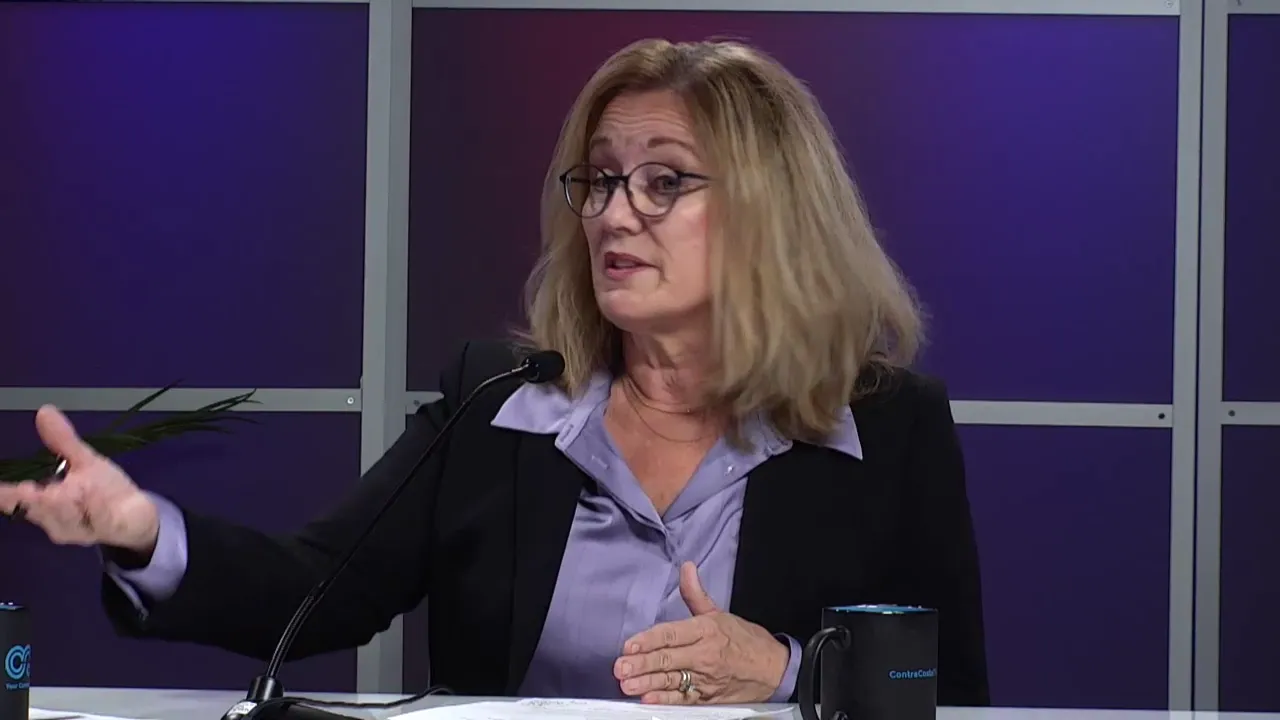
STREAMING COPY IN PREPARATION — RECORDING AVAILABLE FROM THE ORIGINAL SOURCE
Transcript — Verbatim
Speaker numbers apply only to this recording. Names come from transcript evidence. “Possibly” marks uncertain attribution.
Discussion Breakdown — Share of Meeting
Public Transit76%
Public Engagement16%
Affordable Housing6%
Election Procedures2%
Summary of Proceedings
Walnut Creek Zoning Administrator Special Meeting - October 28, 2026
A Zoning Administrator special meeting was scheduled for October 28, 2026, at 4:00 p.m. in the Second Floor Conference Room, City Hall, 1666 N. Main Street, Walnut Creek. The agenda contained one public hearing item: a Minor Use Permit for a six-foot-tall fence at Congregation B’nai Shalom. No meeting minutes were available, and the supplied raw transcript is from an unrelated roundtable about the Regional Transit Measure, so this summary reflects the agenda and notes the transcript discrepancy.
Agenda Items
- Opening & Roll Call – scheduled to begin the meeting.
- Public Communications – reserved for comments on items not on the agenda; under the Brown Act, the Zoning Administrator cannot act on non-agenda items but may respond briefly, request clarification, or refer items to staff.
- Public Hearing – Congregation B’nai Shalom Religious Facility Front Yard 6-Foot Fence (MUP Y25-098) – Location: 74 Eckley Lane, APN 180-250-003. The applicant requested a Minor Use Permit to allow a proposed six-foot-tall wrought iron fence and gate within the required front yard setback along Eckley Lane, where a three-foot-tall fence is normally allowed. The fence would replace the existing three-foot-tall fence and gate in the same location and was requested for privacy and security concerns. The project is categorically exempt under CEQA Guidelines Section 15303 (New Construction or Conversion of Small Structures). Staff contact: Gerardo Victoria, Associate Planner, (925) 943-5899, x2369.
- Adjournment – scheduled to close the meeting. The agenda also listed the next Zoning Administrator meeting as November 25, 2026, at 4:00 p.m.
Public Comments & Testimony
- The agenda provided for in-person and written public comment, including a general two-minute speaker limit for public comment, but no testimony or written comments from this meeting appear in the available materials.
Key Outcomes
- No decision, vote, or staff recommendation can be confirmed from the available materials. The agenda lists appeal rights: any interested party may appeal a Zoning Administrator decision within ten calendar days after the mailing of the decision by filing a written appeal with the City Clerk’s Office and paying applicable fees.
Discrepancy Note
- The supplied raw transcript is not a record of this Zoning Administrator meeting. It is a roundtable discussion about the 2026 Regional Transit Measure (RTM) moderated by Bob Butler and sponsored by the League of Women Voters of Diablo Valley and the League of Women Voters of West Contra Costa County. The panelists were proponent Laura Tolkoff, Transportation Policy Director for SPUR, who expressed support, and opponent Deborah Allen, former BART board director, who expressed opposition.
- Tolkoff said the measure would stabilize BART, Caltrain, Muni, and AC Transit after one-time pandemic-era federal relief expires and that it includes accountability and oversight provisions. Allen said the transit agencies did not stabilize their budgets, argued BART increased spending while ridership remains around 50% of pre-COVID levels, and said the measure lacks real accountability.
- Specific figures mentioned in that discussion included: a half-cent sales tax for 14 years, with one cent in San Francisco; an estimated $17 billion over 14 years; a projected roughly $400 million annual BART revenue decline; warnings of more than 60% service cuts and up to 15 BART station closures; a Spur estimate of $7 per month or $82 per year for lower-income households in Contra Costa County at the half-cent rate; and an estimated $3,300 per year in added driving costs if riders whose stations close must drive instead. Allen also cited a roughly 30% BART spending increase from 2020 to 2024; Tolkoff noted that a 40% pandemic service cut saved only about 12% because of fixed infrastructure costs and that ridership has recently posted double-digit recovery.
Meeting Transcript
Hello, I'm Bob Butler. I spent 42 years covering news at KCBS Radio in San Francisco. I can't tell you the number how many stories I did on BART delays, on transit delays, on bad traffic around the Bay Area. This is a roundtable conversation on the regional transit measure or RTM. The RTM includes the counties of Alameda, Contra Costa, San Francisco, San Mateo, and Santa Clara counties. It would include a half cent sales tax all counties except one cent in San Francisco for a 14 years. It'll avert catastrophic service cuts threatened by the largest transit operators. It will fund transit improvements to safety, cleanliness, and convenience. Partial support for today's round table is provided by Contra Costa County Measure X Community Service Funds. It's sponsored today by the League of Women Voters of Diablo Valley and the League of Women Voters of West Contra Costa County. We're recording this at the studios of Contra Costa Television. Today's roundtable panelists are proponent Laura Tolkoff and opponent Deborah Allen. Prior to the start of the program, we had proposed the participants draw a lot to determine the speaking order, and we'll begin with Laura Tolkov. Tell us about yourself and why you support this regional transit measure. Well, thank you so much for having me. My name is Laura Tolkoff. I'm the Transportation Policy Director for Spur. Very pleased to be here. Thanks for the invitation. So Prop RTM is very much designed to stabilize our regional transit systems in the face of a sudden and severe drop in revenue that was really triggered by the pandemic, but masked by one-time COVID relief funding from the federal and state government, which really buoyed our systems till today, but unfortunately expire at the end of this year. And what that means is that BART, Caltrain Muni, and AC Transit are going to have to make very significant service cuts as a result of those declines in revenue. What this measure also does, in addition to safeguarding our communities against those transit cuts is really invest in more seamless customer experiences, support local transportation priorities like road repaving and transit routes and more local bus service. And critically, financial efficiency is really central to this. It includes a package of meaningful oversight provisions for long-term savings. Thanks very much. Well, thank you, Bob. I spent eight years as a BART board director focusing on two things public safety and making BART financially sustainable for future generations. So I I know that um we agree on some things, and it is that transit is important and it needs a rescue plan, and it's the solution we disagree on. I look forward to the discussion. So you were on the BART board for you said eight years. What is wrong with BART's financial system fiscal system that makes this necessary or isn't necessary? That makes the measure necessary. It ran out. And the purpose was that the transit agencies were supposed to stabilize themselves and figure out how to stabilize their budgets and and become sustainable. Instead, they spent that money, plus they continued to increase spending every single year, almost every single year, except one, uh, from at least at BART, from 2020 to the present day. And that spending increase happened while ridership still today sits at only 50 percent of the pre COVID numbers. So 30 percent increase between 2020 to 2024 in spending, while their uh ridership still languishes around the halfway mark. Sounds pretty logical, but why do we need this? Thank you so much. Um actually you asked what's wrong with BART's financial system. What is unique about BART in particular is that it was heavily reliant on fares pre-pandemic. Another way of saying that is that it was actually largely self-sufficient for its operating costs pre-pandemic. Um it had the highest fare box recovery second only to um to the subway in New York City. And so it was very much the NV, but it became the Achilles heel in the pandemic when revenues dropped because ridership dropped. And so we're looking at what is really a revenue problem of a decline in approximately 400 million dollars a year because of the lasting changes in the pandemic, uh, since the pandemic, I'm sorry, um, that have changed how and where we work. And so we are seeing significant increases uh rebounding, uh ridership is rebounding on BART um and the other systems, just more slowly slowly than we would like. Um the federal funds, those were one-time funds really intended to keep essential workers being able to get to work during the pandemic and to um avoid mass layoffs. So BART has said that if it does not get this measure passed, it's going to be cutting back on service and closing stations. Um specifically, I live in East Contra Costa County, and a couple of those stations are going to be closed.
SUMMARIZED BY OPENPUBLICA AI
TRANSCRIPT VIA PUBLIC VIDEO
openpublica.com