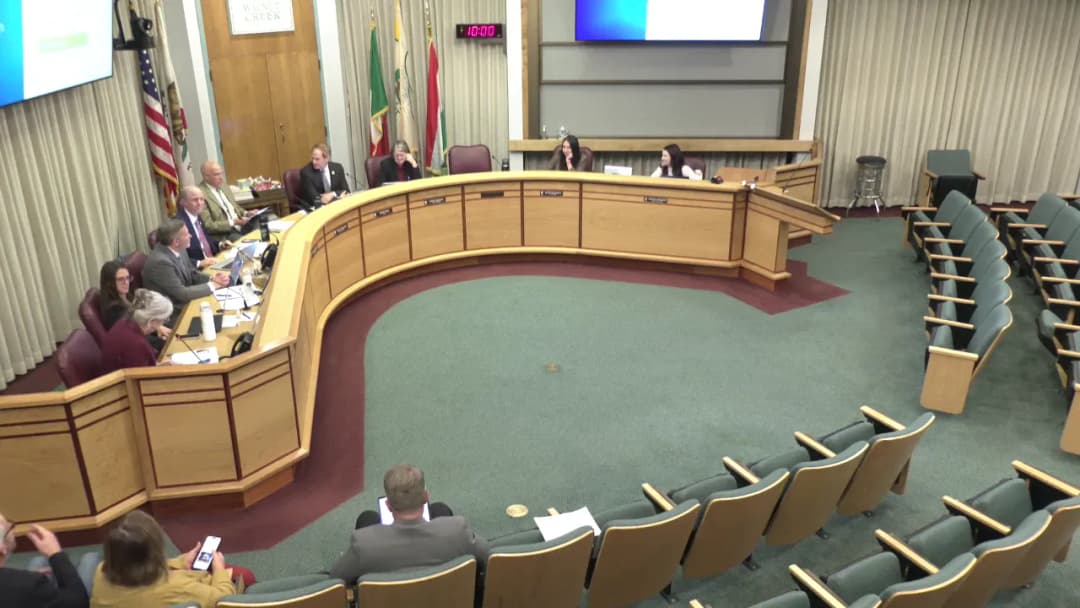
Consent Calendar - Items A-F: Approved unanimously. Included approval of minutes, warrant registers, salary plans, an easement for the New Aquatic Center at Heather Farm Park, on-call tree maintenance service agreements (up to $1,250,000 over five years), acceptance of a $1,000,000 Byrne Discretionary Grant, and acceptance of a $265,000 Measure J grant. - Item G (Pulled by Councilmember DeVinney): The $265,000 TRANSPAC Measure J Line 20a grant award for the Transportation Program. Councilmember DeVinney highlighted that the funding supports critical transportation services (minibus, lift, concierge) for seniors and people with disabilities, providing over 6,900 rides for over 350 unique riders annually. The item passed unanimously. Public Comments & Testimony - Heather Farm & Civic Park Master Planning (Item 5a): Michael Beck, a Walnut Creek resident and member of Walk Bike Walnut Creek, spoke in support of the comprehensive master planning effort. He argued that without a master plan for Civic Park, specific design and funding for projects like an east-west bicycle connection from the Iron Horse Trail to downtown cannot be achieved. - FY 2027 Budget & Measure O Funding (Item 5c): Kathy Hemingway, Executive Director of the Walnut Creek Downtown Association (WCD), expressed strong support for continued Measure O funding. She detailed the positive economic impact of their downtown programming, citing the Locust Street Festivals (5,000–6,000 attendees each), Oktoberfest (20,000 attendees, a 5,000-person increase), and documented sales increases for participating businesses like Mellow's Italian Table. Discussion Items - Proclamations & Presentations: The council issued proclamations for United Against Hate Week, Substance Abuse Prevention Month/Red Ribbon Week, and National Arts & Humanities Month. Chris Farrow, Arts & Recreation Director, noted that the arts generate over $36 million in economic activity locally. The Youth Leadership Commission was introduced, and students from the Youth Ambassador Exchange Program presented on their trips to sister cities in Italy and Hungary. - Consent Calendar Discussion: Councilmember DeVinney drew attention to Item 2G, emphasizing the importance of Measure J funding for providing mobility to vulnerable populations. - City Manager & Councilmember Reports: - City Manager Dan Buckshi reported on El Niño preparations. Public Works has inspected over 4,000 storm drain inlets, sent 850 letters regarding ditch cleaning to the flood-prone Eccleston area, coordinated with the Lakewood Dam Association, and stocked five sandbag locations (Lancaster Road, Heather Farm, Larkey Park, Howe Homestead, Rudgear Park). He urged residents to sign up for WC Alert and the County Community Warning System. - Councilmember Darling reported that MCE rates have reached parity with PG&E for the first time in 18 months, thanks to long-term wind, geothermal, and battery storage projects. She also reminded the public of the city's safe firearm storage ordinance following a school shooting in Bend, Oregon. - Councilmember DeVinney gave updates on a newly formed countywide e-bike safety committee involving 10 cities, and on TransPAC efforts to create youth ride-free transit programs. - Mayor Pro Tem Francois reminded residents to get flu and COVID vaccines, and noted Colonel Eileen Collins would be speaking at the Lesher Center. - Mayor Wilk expressed concern that County Connection faces a 22% service reduction if regional transit funding (Measure RTF) fails, and announced the Broadway Plaza 75th anniversary and the upcoming Diwali Fair. - 5a: Heather Farm Park & Civic Park Master Planning: - Chris Farrow presented the Parks, Recreation and Open Space (PROS) Commission recommendation to combine the $250,000 Clark Pool repurposing project with a full Heather Farm Park Master Plan update and a new Civic Park Master Plan for a total of $500,000. The funding would come from reallocating the original $250,000 in Measure O funds to Civic Park and using $250,000 from the Glen at Heather Farm Community Benefit Agreement (CBA) for the Heather Farm update. Interim landscaping ($100,000) for the Clark site after demolition is already budgeted. Council discussed the extension in timeline (about one year) versus the efficiency of scale. The motion to approve the PROS recommendation passed unanimously. - 5b: FY 2026 4th Quarter Revenue & Expenditure Report: - Administrative Services Director Kirsten Lacasse reported. General Fund: Revenues exceeded budget by $1.3 million, but this was driven by one-time sources ($2M Glen CBA, $600k SARA). Excluding these, revenues were $350k below budget. Sales tax was $770k below budget; property tax was $239k below budget. Expenditure savings of $1.22 million were achieved through managed vacancies. Contribution to fund balance was $357,000. The city did not need to use $1 million in budgeted pension resources. Measure O: Revenues were $1.3M higher than budget, with a $3.32 million contribution to the Measure O Reserve. Parking Fund: $669,000 contribution. Boundary Oak Golf Course: $1.09 million contribution. Public Works Director Rich Payne noted the driving range shade structure design is being revisited due to cost and functionality issues. The motion to adopt the resolution passed unanimously. - 5c: FY 2027 Budget Amendment: - To address a $2.26 million sales tax shortfall, staff proposed adjusting the budgeted vacancy rate from 6% to approximately 10% (saving $2.35 million, with no change to authorized positions). The budget also authorized $2.95 million from the General Fund Facilities Reserve for urgent repairs to the 1979 City Hall veneer (total project cost $4.5 million). - Measure O Funding for WCD: Staff recommended $196,000 for one-time beautification projects (tree lighting, crosswalk art, etc.) and program subsidies. Councilmember DeVinney proposed an amendment to add $56,000 ($40,000 for Walnut Creek on Ice marketing and $16,000 for Locust Street Festival marketing), arguing for a more consistent level of support. Councilmember Darling and Mayor Pro Tem Francois supported the addition. Kathy Hemingway clarified that WCD was asked not to include staff time in their requests, but staffing constraints are limiting their capacity. The amendment bringing the total WCD allocation to $252,000 passed unanimously. Key Outcomes - Master Planning: Unanimously approved the PROS Commission recommendation to undertake a $500,000 combined Master Plan update for Heather Farm Park and a new Master Plan for Civic Park, funded by Measure O and the Glen CBA. - FY 2026 Budget: Unanimously adopted the resolution accepting the 4th Quarter Revenue & Expenditure Report and authorizing the allocation of the year-end fund balances. - FY 2027 Budget & WCD Funding: Unanimously adopted the resolution amending the FY 2027 budget. The plan addresses a $2.26 million sales tax shortfall via a higher vacancy rate, provides $2.95 million for City Hall repairs, and allocates $252,000 to the Walnut Creek Downtown Association for beautification and programming.
Public Meetings - Walnut Creek, California
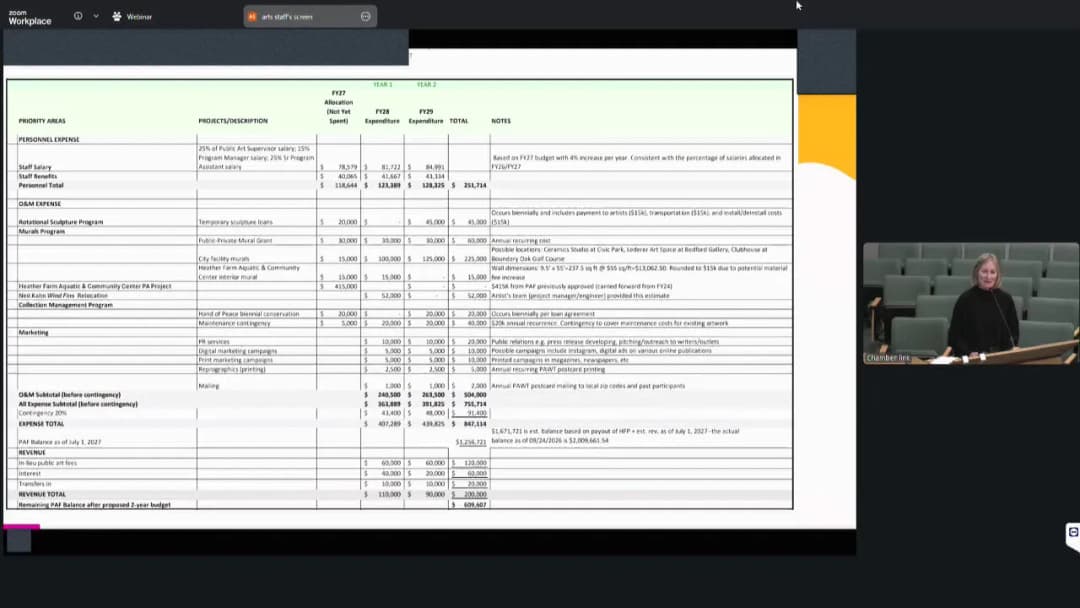
Public Meetings - Walnut Creek, CaliforniaThe Walnut Creek Arts Commission held a regular meeting on October 19, 2026, beginning at 6:00 PM in the Council Chamber at 1666 North Main Street. Chair Peter Magnani presided. Commissioners present included Jill Dresser, Netsanet Tesfay (Vice Chair), Iasmine Klauber, Sasha Perelman, and newly appointed student commissioner Alexandra Milne. Commissioner Sarah Baltazar was absent. The meeting covered consent items, a detailed presentation on the General Plan update, review of the Public Art Fund budget for fiscal years 28 and 29, and the Public Art Annual Report for FY2026. Consent Calendar - Approval of Minutes: The Commission unanimously approved the Arts Commission Regular Meeting Minutes of July 20, 2026. - 2027 Meeting Schedule: The Commission approved the regular meeting schedule for 2027. - Lesher Center Annual Report: The Commission received and filed the Lesher Center for the Arts, Center Rep, and Bedford Gallery Annual Report for FY26. All items passed without discussion. Public Comments & Testimony - No members of the public provided comments during the public communications portion. No comments were received on consent or discussion items. Discussion Items - General Plan Existing Conditions Report and Draft Vision Statement (Item 4a): City staff (Allison Rustic) and consultants (Tiffany Ng of Alta Planning and Design, David Plettner Saunders of Cultural Planning Group) presented the Walnut Creek 2050 General Plan update. The presentation covered demographic trends (population 70,736, 4% increase since 2015; household growth 7%; age 25-34 cohort up 31%; city increasingly diverse) and arts and culture conditions (Lesher Center sold 145,000 tickets; Bedford Gallery 22,000 visitors; public art fund balance $1.7 million; creative economy $54 million in earnings). Six key themes were identified: vibrant arts/culture, facilities, public art, cultural ecosystem, creative economy, and community well-being. Commissioners raised several points: - Commissioner Dresser asked about the "missing middle" of adult learners in arts education; David clarified this referred to working adults facing barriers to creative practice. - Commissioner Milne noted the absence of the Walnut Festival and youth parades, expressing a desire for their return. - Commissioner Kurland addressed the ceramics program at capacity, seeking avenues for expansion and improved resident access. Staff responded that longer-range plans would be addressed through the General Plan and budget process, while near-term fee and registration concerns could be taken up with the PROS Commission. - Vice Chair Tesfay argued that arts and culture should be considered a core need, not an amenity, noting that city priorities omitted arts. He also urged inclusion of the two public libraries (downtown branch is busiest in county) in the cultural ecosystem. - Commissioner Dresser highlighted access issues: school tours to Bedford Gallery have dropped due to transportation costs; insurance barriers limit outreach to East County schools. - Commissioner Milne raised the impact of AI on artists, questioning how the city is preparing for technological changes. No immediate solution was offered. - Public Art Fund Budget FY28-29 (Item 4b): Public Art Manager Mariah Nelson presented a proposed budget totaling $847,000 for the two-year period. Key allocations included: $30,000 per year for mural grants; $100,000 (FY27) and $125,000 (FY28) for city facility murals; $415,000 for Heather Farm Aquatic Center public art; maintenance, marketing, and contingency funds. The budget also includes $52,000 for relocating the "Wind Fins" sculpture. Commissioners asked clarifying questions: - Commissioner Kurland suggested keeping mural funding flexible given pending Civic Park master plan; staff agreed to roll forward unspent funds. - Commissioner Dresser questioned the contingency amount (20% of operating budget) and whether it was sufficient; staff acknowledged it was a hope that it would be enough. - Commissioner Perelman noted that the mural grant program appears to favor professional organizations like ABG Art Group; Mariah explained that solo artists face barriers in finding walls and navigating city process, but staff would provide hand-holding. Commissioner Klauber, a solo artist who completed a mural, confirmed the process was manageable with staff help. - Public Art Annual Report FY2026 (Item 4c): Mariah Nelson presented highlights: sculptures for Heather Farm being fabricated; four murals realized through the grant program; successful public art walking tours (often selling out); and launch of a free app, Bloomberg Connects, featuring the public art collection and Bedford Gallery. The app provides analytics on visitor engagement. No action was required. Key Outcomes - Consent Calendar: Approved unanimously. - Public Art Fund Budget: Motion to approve the budget as presented by Commissioner Kurland, seconded by Commissioner Dresser. Passed 5-0 (Commissioner Baltazar absent). - General Plan Update: No vote taken; staff and consultants incorporated commissioner feedback on issues and opportunities (e.g., libraries, youth access, AI) for further refinement. The next step is a presentation to City Council on December 15, 2026. - Public Art Walking Tours: Scheduled for November 21, 2026 (Tour 4) and February 2027 (library tour). - Next Meeting: Monday, January 25, 2027 at 6:00 PM.
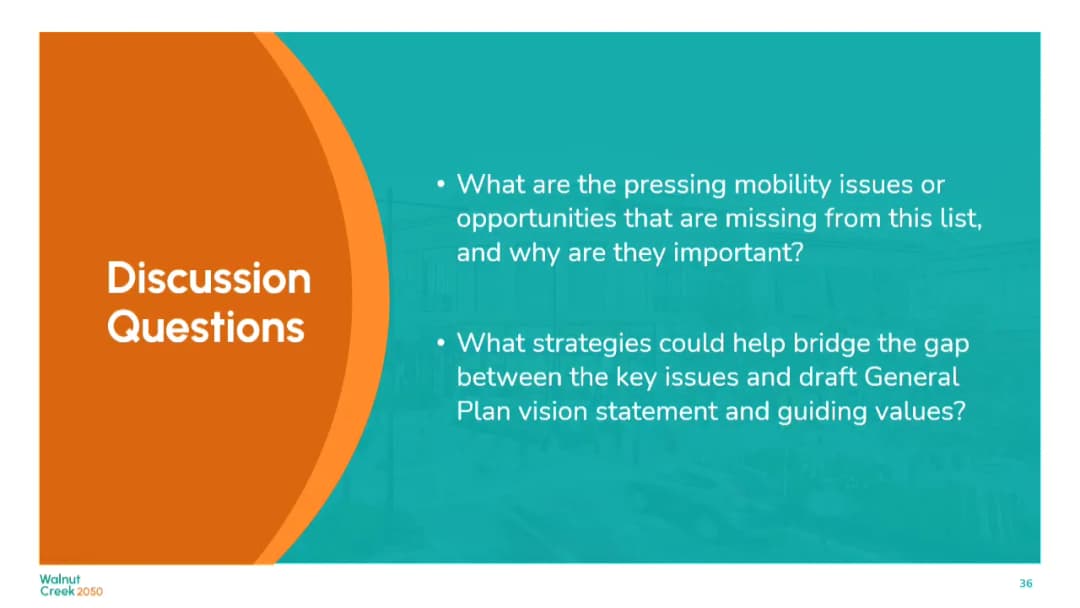
The Walnut Creek Transportation Commission held a special meeting on Thursday, October 15, 2026, from 6:00 to 6:59 p.m. in the Council Chamber at City Hall, 1666 N. Main Street, Walnut Creek. The Transportation Commission is an advisory body to the City Council. The meeting was a study session on the 2050 General Plan Update, covering the Mobility Existing Conditions Report, the draft General Plan vision and guiding values, and community feedback received to date. It was for discussion only; no formal action or recommendation was requested or taken. Roll call showed Chair Charles Kreling, Vice Chair Laura Patch, Commissioners Edward Guerrero and Ryan McMahon, and Student Commissioner Adam Zelin present; Commissioner Jared Asch was absent. Chair Kreling left at 6:51 p.m. Note: The agenda packet lists a different commission membership (Kevin Wilk, Chris Hansel, Danny Milks, Thomas O'Toole, Melissa Ward) than the minutes/transcript roll call (Charles Kreling, Laura Patch, Jared Asch, Edward Guerrero, Ryan McMahon, Adam Zelin). The raw transcript opening says "October 13th, 2026" while the agenda and minutes state October 15, 2026. Consent Calendar - None. Public Comments & Testimony - Because this was a special meeting, public comments were limited to agenda items and were received during the Commission's consideration of the item. - Michael Vecchio commented that many mobility report themes—such as improving multimodal connectivity, creating low-stress bike connections, and addressing limited east-west bicycle facilities—were also in the 2025 General Plan adopted about 15 years earlier. He suggested extending the 16-foot multi-use path on the north side of Ygnacio Valley Road east of California to the Einharst Trail, and noted that a five-story building at the southwest corner of Ygnacio Valley Road and Civic could connect to the Iron Horse Trail and BART by crossing Ygnacio Valley Road. A written public comment was also received, provided to the Commission, and posted online as part of the meeting record. Discussion Items - Staff and consultants presented the update process and existing conditions. Erika Vandenbrande, Community Development Department Director, introduced the item; Eric Kirkevich, Principal at Alta Planning and Design, presented the draft vision and guiding values; and Sara Chan of Fehr & Peers reviewed the Mobility Existing Conditions Report. - The previous General Plan 2025 was adopted in 2006 with an emphasis on keeping traffic moving efficiently while expanding walk, bike, and transit networks. - The draft guiding value on mobility calls for a safe, connected, and accessible mobility network supporting convenient and comfortable travel for all users, including walking, biking, rolling, transit, shared mobility, and driving. - Demographics: Walnut Creek had about 71,000 residents in 2025, a 4% increase since 2015, and about 33,000 households, a 7% increase; household size is declining. The population of 25- to 34-year-olds grew 31% from 2015 to 2024, while youth declined and older adults increased. The city is becoming more diverse by race and ethnicity; in 2015 about 14% of residents identified as Asian or Pacific Islander. - Mobility existing conditions: Walnut Creek has about 200 miles of streets; Ygnacio Valley Road and Treat Boulevard are regional routes and are on the high-injury network. Total collisions increased from 2020 to 2024, and killed or seriously injured collisions rose from 6 to 25. Unsafe speed is the leading cause of injury collisions, while DUI and pedestrian-involved collisions are prominent among severe and fatal crashes. - Commute patterns changed sharply: driving alone fell from about 60% of commutes in 2019 to about 50% in 2024, working from home tripled from about 9% to 30%, transit fell from 19% to 6%, and walking/biking stayed around 4%. - About a third of all local trips are short enough to walk or bike, and about 30% of car trips by Walnut Creek residents and about 30% of downtown visitor trips are under two miles, yet very few of those trips are walked or biked. About 50% of BART travelers drive alone to the station; about 30% walk or bike to Pleasant Hill Station compared with about 20% to Walnut Creek Station, likely reflecting Iron Horse Trail access. - The city has over 50 miles of bike facilities, but most are shared lanes and only about one mile is separated bikeway; east-west and low-stress connections into downtown and BART are limited. There are over 240 miles of sidewalks and more than 800 marked crossings, with gaps near some elementary schools and parks. Transit includes two BART stations and County Connection routes, including free Routes 4 and 5 between BART, downtown, and Creekside; highest ridership is at BART/downtown stops and school routes. - Community feedback themes included improving walkability near centers of activity, improving traffic flow on corridors such as Ygnacio Valley Road, maintaining high-quality infrastructure, improving multimodal and low-stress bike connections, increasing transit ridership, and managing parking and curbside space. - State law now requires VMT-based transportation impact analysis and, under SB 932, a safe system approach and implementation of identified projects within two years of General Plan adoption. The city also recently adopted a curbside management plan. - Commissioners asked questions about crash trends despite increased working from home, data collection methods, Ygnacio Valley Road peaking and potential use of spare lane capacity, bike facility usage by type, and the share of residents who work in Walnut Creek. Staff said some data would need follow-up. - Chair Kreling urged looking at what is behind the data, including school siting, BART design and ridership changes, employers requiring return-to-office, Silicon Valley commutes, and weather-related barriers to walking and biking. - A commissioner raised concerns about regional transit funding uncertainty and coordination with Concord on signal timing, especially on Treat Boulevard. Another commissioner asked whether Vision Zero has reduced serious crashes; staff said the policy guides project decisions but the recent crash data does not yet show that result. - Student Commissioner Adam Zelin expressed support for more frequent bus service and transit signal priority, noting Routes 1 and 9 run only once an hour. Another commissioner called for more comfortable and enjoyable travel environments, greater investment in non-auto modes, bike parking that fits modern family bikes, and willingness to try innovative options such as a tram. Another commissioner supported more engagement with residents under 18. - Vice Chair Patch invited public comment, and commissioners gave their comments to the consultants. Key Outcomes - No formal action, vote, or recommendation was taken; the item was a discussion-only study session. - Staff will use commission comments as the General Plan Update continues. The online feedback form and virtual workshop remain available until October 25, 2026. - Upcoming milestones: Arts, Planning, and Design Review commission sessions next week; City Council consideration of vision and guiding values on December 15, 2026; next regular Transportation Commission meeting on November 19, 2026. - Staff indicated they would follow up on data questions, including the number of Walnut Creek residents who work in the city and bicycle facility usage by type.
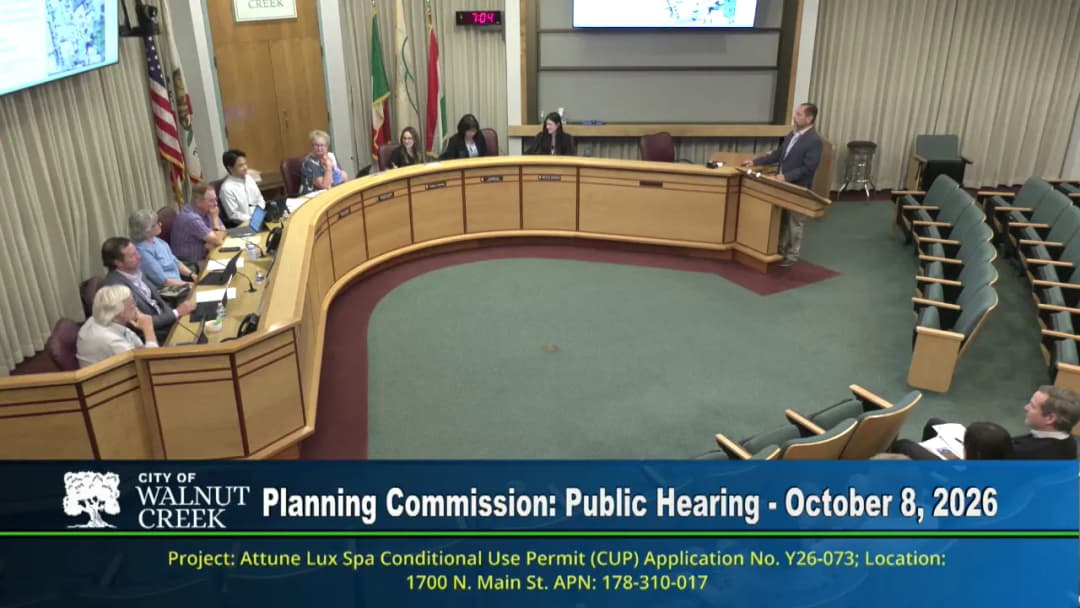
The Walnut Creek Planning Commission met on Thursday, October 8, 2026, at 6:00 PM in the Council Chamber. Chair Pamela Nieting presided. The Commission unanimously approved a consent calendar and held public hearings for two Conditional Use Permits (CUPs). Consent Calendar - The Commission unanimously voted (7-0) to adopt the meeting minutes from September 24, 2026. - Item 4a (EBMUD Maintenance Facility): Approved a second two-year extension of the previously approved Design Review (Resolution No. 3149) for upgrades and site improvements at 2658 North Main Street. The extension keeps the approval valid through November 13, 2028. No changes to the approved plans were proposed. Public Comments & Testimony - Masses Bar & Grill: Saul Tallerico, a 30-year hospitality veteran and former employee of the applicants' family, expressed strong support for the project. - Attune Lux Spa: (Discrepancy in record). The official meeting minutes state Aaron Williams provided public comment. However, the meeting transcript records the Chair asking for public speakers and receiving no response before closing the hearing, creating an unresolvable conflict in the record. Discussion Items - Item 4b: Masses Bar & Grill (CUP Y26-053): Staff presented a proposal for a full-service restaurant and bar at 1411 Locust Street, seeking a CUP to serve alcohol until 1:30 AM. Discussion focused on the troubled history of prior tenants at the location and the ABC designation of the area as a "high crime" area, which staff and the Commission debated, noting it is based on calls for service rather than serious crime. Applicants Melissa Barrett and Eric Paden emphasized their family-friendly vision and responsible management history. The Commission discussed and voted to amend the alcohol service start time to 9:00 AM in the resolution to accommodate NFL football. - Item 4c: Attune Lux Spa (CUP Y26-073): Staff presented a proposal for a personal service spa at 1700 N. Main Street. Applicant Rob Bacon described the concept as a trauma-informed wellness space integrating massage with mental health awareness without crossing into clinical therapy. The Commission praised the thorough business plan, community outreach, and sensitive enhancement of the existing building's character. Key Outcomes - Adoption of Consent Calendar: Motion by Steven Kwok, seconded by Molly P. Clopp. Unanimously approved (7-0). - Approval of Masses Bar & Grill (Resolution No. 4026): Motion by Molly P. Clopp, seconded by Ken Strongman. Unanimously approved (7-0). (Note: Official minute text approves alcohol sales "after 11:00pm", but the agenda featured an Amended Draft Resolution and the transcript confirms the Commission voted to amend the alcohol service start time to 9:00 AM, making the effective CUP hours 9:00 AM to 1:30 AM at 1411 Locust Street, Application Y26-053). - Approval of Attune Lux Spa (Resolution No. 4027): Motion by Cherise Khaund, seconded by Ken Strongman. Unanimously approved (7-0). The CUP allows personal service use at 1700 N. Main Street (Application Y26-073). - Commission Reports: Vice Chair Clopp reported on the TransPAC meeting. Staff Secretary Meily Sheehan announced the next meeting on October 22 is a joint meeting with the DRC for the General Plan Update Existing Conditions Report. - Adjournment: The meeting was adjourned at 6:56 PM.
The Design Review Commission regular meeting scheduled for Wednesday, October 7, 2026 at 6:00 p.m. was cancelled due to no business to conduct. The next regular meeting is scheduled for October 21, 2026, and a joint/special meeting on October 22, 2026. Consent Calendar - No items. Public Comments & Testimony - None. Discussion Items - None. Key Outcomes - Meeting cancelled; no decisions or actions taken.
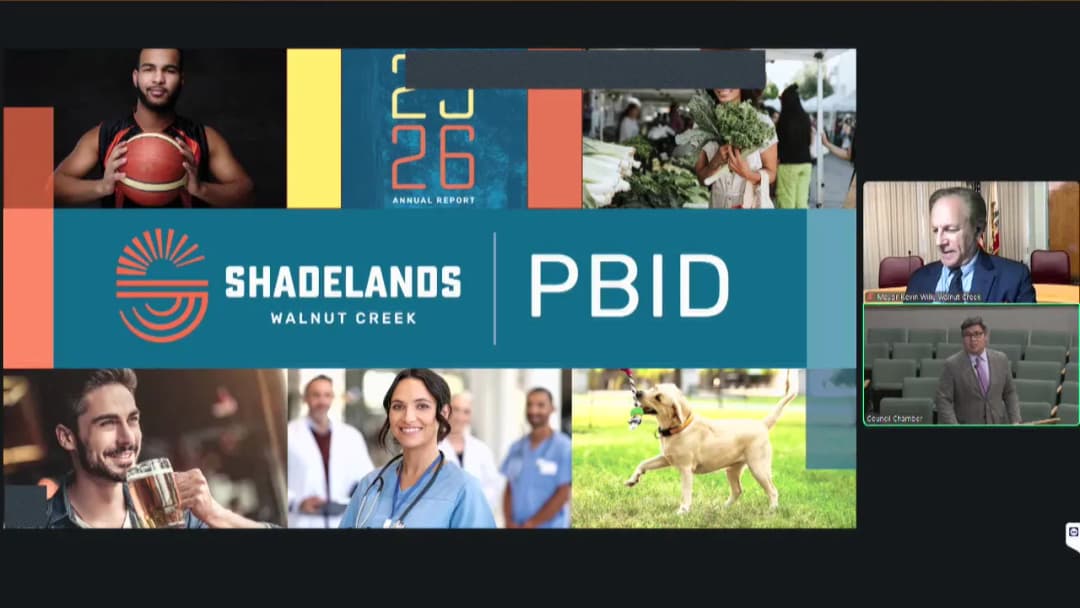
The Walnut Creek City Council held its regular meeting on Tuesday, October 6, 2026, at 6:00 p.m. in the Council Chamber. Mayor Kevin Wilk participated via teleconference, and Councilmember Cindy Darling was absent due to a planned vacation. The meeting, which adjourned at 9:32 p.m., featured presentations from BART and County Connection, a review of the 2026 state legislative session, and unanimous endorsements of four November ballot measures. Consent Calendar - The majority of items were approved in a block (4-0). Note a discrepancy between the agenda/minutes and the transcript: the opening roll call stated Councilmember Darling was absent, yet the minutes for Item 2f specifically list her as voting 'Yea' on that item. - Item 2f (Heather Farm Park Synthetic Sport Field): Approved (4-0). Mayor Pro Tem Francois pulled the item to discuss public access. Arts & Recreation Director Chris Farrow detailed a pilot program offering public use during school breaks and highlighted the need to balance public access with protecting the $7 million investment in the turf. - Item 2i (2027 Meeting Schedule): Approved (4-0). Mayor Wilk successfully amended the schedule to keep the April 20, 2027 meeting date, clarifying that Passover begins the evening of the 21st. - Other approved items included the adoption of Ordinance No. 2258 (ADU/Zoning updates), authorization of temporary staffing agreements (WORKERS.COM and PeopleReady, up to $625,000 each) and a security contract (AX9 Security, $237,175), acceptance of CDBG grant funding for ADA improvements ($210,000), and a proclamation declaring October 12, 2026 as Indigenous Peoples’ Day. Public Comments & Testimony - Non-Agenda Item Comments: Denise Burian (AAUW) spoke on domestic violence awareness. Jan Warren inquired about damaged bollards on Mitchell Drive. Annie Harlan (Assemblymember Farias’ office) provided a legislative update. Pamela West announced her candidacy for County Board of Education. - State Legislative Session (Item 5a): Marc Joffe (Contra Costa Taxpayers Association) criticized the extended response timelines for public records under the new AB 1821. - Ballot Measure Endorsements (Item 5b): Marc Joffe urged the Council not to endorse measures outside the city’s direct purview. Multiple students from the Acalanes Union High School District (Ingrid Yott, Henry Pickett, Ember Auker, Lorelei Fairclough, Shahin Mohebafi, Students for Measure W) spoke passionately in favor of Measure W, citing budget cuts impacting class sizes, counseling services, and libraries. The students expressed a desire for the Council’s endorsement. Discussion Items - Presentation on the 2026 State Legislative Session (Item 5a): Assistant City Manager Joe Carozza and Casey Elliott of Townsend Public Affairs briefed the Council on significant legislation. Topics included the failure of wildfire liability reform (SB 492), new e-bike laws, housing streamlining bills (AB 1621, AB 1751, AB 2296, AB 1117), and the impact of the upcoming gubernatorial transition in 2027. No formal action was taken. - Endorsement of November 2026 Ballot Measures (Item 5b): The Council unanimously voted to adopt resolutions supporting four separate measures after discussion. - Measure W: A parcel tax to support Acalanes Union High School District. Council stressed the link between school quality, property values, and the local economy. - Measure T: A measure to change the City Treasurer from an elected to an appointed position. Council argued it provides better professional oversight and aligns with over 90% of California cities. - Measure RTM: The Regional Transit Measure to fund Bay Area transit. Councilmembers cited the catastrophic alternative service plans (up to 70% cuts), the economic necessity of transit, and the efficiency measures already undertaken by BART. - Proposition 1: The Veterans and Affordable Housing Bond Act of 2026. Council highlighted the critical need for state subsidies to address the housing crisis. - Shadelands Property and Business Improvement District (PBID) Annual Report (Item 5c): Chamber CEO Caity Meaney Burrows and Steering Committee Chair Blair Stientjes presented the FY 2025-2026 annual report. Key accomplishments included a flat assessment rate, a new district-wide wayfinding strategy, and maintaining the free Route 7 shuttle service. Councilmembers discussed the long-term funding for the Route 7 shuttle, vacancy rates in the district, and the implementation of wayfinding. No formal action was required. Key Outcomes - Votes: - Adopted Resolution No. 26-51 supporting Measure W (4-0). - Adopted Resolution No. 26-52 supporting Measure T (4-0). - Adopted Resolution No. 26-53 supporting Measure RTM (4-0). - Adopted Resolution No. 26-54 supporting Proposition 1 (4-0). - City Manager Announcement: Announced that the City received the Platinum Level Beacon Spotlight Award from the Institute for Local Government for achieving a 32% reduction in community-wide greenhouse gas emissions compared to the 2005 baseline. - Upcoming Business: The Council noted that the General Plan update process has officially launched with community workshops, and recommendations from the Finance Committee regarding the FY 2026-2027 budget will be presented at the next Council meeting on October 20, 2026.
The Park, Recreation, and Open Space (PROS) Commission of Walnut Creek, California, met on 2026-10-05 at 6:00 p.m. per the agenda in the City Hall Council Chamber, 1666 North Main Street. Chair Sharon Pinkstaff presided; Vice Chair Gloriann Sasser and Commissioners Matthew Brockhaus and Fran Garland were present, as was newly appointed student commissioner Aisha Sandju (called "Sandu" in the roll call). The agenda listed Art Oller and student commissioner Eli Konson; Art Oller did not answer roll call and the roll call used Aisha Sandju instead of Eli Konson. The Commission approved routine items, heard public comment, reviewed the General Plan 2050 existing conditions report and draft vision statement, and acted on Heather Farm planning and aquatic center naming items. All roll call votes were 5-0. Public Comments & Testimony - Jeff Maddox (coach, Walnut Creek area high school/middle school mountain bike team) requested a formal allowance to practice at Lime Ridge on certain days/times, with signage, supervision, and a stated 5-to-1 kids-to-coaches ratio; he noted other agencies such as Mount Diablo and Briones already permit similar use and asked that the item be placed on a future PROS agenda. - Scott Bartlebaugh (Bicycle Trails Council of the East Bay) asked the Commission to request staff implement 2020 Trails Committee Recommendation 5.5H — a trail-use checklist for changing bicycle designation on single-track at Lime Ridge — and to add a status update on 2020 Trails Committee action items to a future agenda. He argued mountain biking at Lime Ridge is an existing, manageable use and that formalizing it would improve local access and quality of life. - Barbara Gannis (resident since 1996) spoke about new open-space signage and said the project to authorize social trails is on hold for more community discussion; she urged that residents and commissioners be consulted before trails open and mentioned the endangered Lime Ridge plant and threatened Alameda whip snake. - Glenn McBee (Walnut Creek Racket Club board member/city liaison) reported that Heather Farm tennis court lights are failing, the fixtures are obsolete halogen bulbs/ballasts, and the club of about 1,200 members is experiencing extended outages; he called the situation urgent. - General Plan item (4a) public comment: - Matthew Tarlack (Mount Diablo Bird Alliance board member, speaking personally) advocated making natural habitat a priority in parks/open-space master planning, restoring creeks and riparian areas, and restoring the natural lake/pond at Heather Farm, which he described as a local treasure and critical year-round water body for wildlife. - Barbara Gannis argued the draft vision statement's "destination for recreation" language belongs under parks rather than open space; she said high-intensity bike use is not appropriate in Walnut Creek open spaces and noted the city has no enforcement officers, unlike the East Bay Regional Park District (which she said has 77 police officers). - Bob Wheedy (Walnut Creek Open Space Foundation) said the Foundation submitted policy proposals for the 2050 General Plan: make ecological protection a primary open-space objective, measure ecological health, identify and protect wildlife corridors, evaluate significant changes before they occur, and ensure meaningful public review. - Rochelle Fortier (Mount Diablo Bird Alliance membership chair, speaking personally) said the Heather Farm nature pond/lake is falling between categories and should receive its own paragraph in the General Plan; she cited Fremont's 2030 General Plan as an example. She was not granted additional speaking time because the organization's allocation had already been used. - Scott Bartlebaugh noted that the East Bay Regional Park District is updating its 2013 master plan and encouraged partnerships, including with youth mountain bike teams for trail stewardship. Consent Calendar - The Commission unanimously approved the minutes of the August 31, 2026 regular meeting. No public comment was offered on the consent item. Discussion Item: General Plan Existing Conditions Report and Draft Vision Statement - City staff and consultants presented an update on the General Plan 2050 process. Chris Lie Castro (Principal Planner/General Plan project manager), Tiffany Ng, and Darren Newfield (consultants) described the schedule, outreach, draft vision, and baseline conditions. - Key dates and outreach: a June joint commission meeting, July City Council kickoff, a September 24, 2026 community workshop at Civic Park, pop-ups at events including Locust Street Festival (400 attendees) and Once Upon a Street (150 attendees), and about 40 community partner meetings. The online engagement hub is open September 25 through October 25, 2026; remaining commission presentations are planned in October, with City Council deliberation on December 15, 2026. - Draft Vision Statement: "Walnut Creek is a welcoming and inclusive city defined by its cultural vibrancy, accessible open spaces, walkable downtown, safe and livable neighborhoods, and innovative local economy. It is a regional destination rooted in community, thoughtfully evolving to maintain a high quality of life where people can live, work, connect, and thrive." - Guiding values presented: well-being; accessible housing opportunities; mobility options; parks, open space, and natural landscape; vibrant arts and culture; and safety and resiliency. - Existing conditions highlights: 2025 estimated population 70,736 (up 4% since 2015); 33,359 households (up 7%); over-65 residents are the largest age group at about 30%; residents aged 25-34 grew by about 31% over ten years. The transcript states average household size declined from 2.15 to 2.8 people per household, but those figures are internally inconsistent with a decline (2.8 would be an increase). - Parks/open-space baseline: the city manages more than 3,000 acres of open space, parks, and recreation areas and about 61 miles of trails; 19 parks total about 238 acres; four special-use recreation areas total about 174 acres; more than 2,700 acres are open-space preserves. Many residents live within a 5-15 minute walk of a park, but some outlying areas and much of Rossmoor are more than 25 minutes away. - Policy background included the 2025 General Plan Chapter 3, the 2008 Open Space Vision Project, the 2013 East Bay Regional Park District Master Plan (a commissioner noted that plan applies to regional district properties, not city properties), Your Parks Your Future, the 2023 Sustainability Action Plan, the 2026 Safety Element, and the 2023 Housing Element. New state requirements include SB 1425, AB 1889, SB 1000, and Executive Order N-82-20/California Biodiversity Collaborative goals. - Preliminary issues and opportunities discussed included climate change hazards, balancing recreation with habitat, wildfire risk, maintaining and expanding tree canopies, and working with volunteers such as the Walnut Creek Open Space Foundation and Walnut Creek Watershed Council. Workshop input included more off-leash dog areas, preserving Heather Farm lake, and creating micro-habitats/community gardens, especially downtown. - Commissioner discussion raised: - Transportation and safe routes to parks, citing roadway barriers such as Ignacio Valley Road. - Changing recreation trends such as pickleball demand and noise, and e-bike use. - Wildfire risk and insurance challenges. - Underutilized parks, parking spillover near neighborhood parks, and the need to respect neighboring residents. - Demographic forecasting, amenity planning for aging and younger populations, and facility upgrades such as restrooms at Civic Park. - Potentially expanding the ranger force, increasing youth involvement in open-space stewardship, and pursuing partnerships with agencies such as East Bay Regional Park District and water districts. - Heat-absorbing playground surfacing and park design for extreme heat. - No formal vote was taken on the General Plan item; it was an information/discussion item. Discussion Item: Heather Farm New Aquatic and Community Center (NAQCC) Phase 3 Planning Options - Director of Arts and Recreation Chris Farrow reviewed options for the former Clark Pool/Heather Farm planning effort. The Commission had previously recommended broadening the scope from a pool-site-only repurpose to a Heather Farm Park master plan update, with questions about timing and interim use after demolition. - Staff reported a revised timeline and an interim plan: after demolition, the parcel would receive minimal landscaping/irrigation and be available for passive uses (picnics, informal play) until future construction. - A new third option was presented: within the same timeframe as the Heather Farm master plan update, also prepare a Civic Park master plan, which does not currently exist and has been in the 10-year Capital Improvement Program without funding. Public Works Director Rich Payne said Civic Park had not had a master plan and saw only systematic improvements, with some work in the early 2000s. - Commissioners asked whether the timeline could be accelerated; staff said no, but reiterated the interim landscaping. They also asked about existing community buildings at Civic Park; staff said their future would be evaluated through the public master-planning process. - No public comment was received on this item. Discussion Item: Heather Farm Aquatic Center Amenity Naming Approvals - Staff requested approval of three donor recognitions for the new aquatic center: Michael and Mailee Lazell Foundation for the diving board, and Curtis Lynn and Leo Lynn as two lane captains. Recognition would appear on a plaque on the large donor wall, with no separate diving board sign. - Staff also updated a previous item: after donor confirmation, nicknames will be shown in quotes in a consistent format (for example, Robert "RJ" last name) for this and future donations. - No public comment was received. The Commission unanimously approved the three naming requests. Key Outcomes - Unanimously approved the August 31, 2026 meeting minutes. - Unanimously selected option three for the Heather Farm/Civic Park master-planning effort, directing staff to recommend to City Council that both Heather Farm Park and Civic Park be included. Staff plan to bring the recommendation to Council at its second meeting in October 2026. - Unanimously approved the three donor naming requests for the Heather Farm Aquatic Center. - The Chair indicated that requests regarding Heather Farm tennis court lights and Lime Ridge mountain bike trail access would be brought to a future PROS agenda. - General Plan feedback will be incorporated into the ongoing 2050 General Plan update; the online portal remains open through October 25, 2026, with a City Council meeting scheduled for December 15, 2026. Announcements - Commissioner announcements included a tour of the Heather Farm construction site, which is progressing well, with additional tours offered as construction continues. - The Commission liaison to the Walnut Creek Open Space Foundation reported on the Foundation's work; another commissioner expressed interest in becoming the new liaison. - The next regular PROS Commission meeting is scheduled for Monday, December 7, 2026, at 6:00 p.m.
The Finance Committee convened on October 1, 2026 at 3:31 PM (agenda listed 3:30 PM) in the City Hall 3rd Floor Conference Room, 1666 North Main Street, Walnut Creek. The meeting adjourned at 4:38 PM. The committee reviewed the FY26 4th Quarter revenue and expenditure results and proposed FY27 budget amendments. Both items were unanimously referred to the City Council. No public comments were received. Consent Calendar - Approval of Minutes (June 23, 2026): Motion by Craig DeVinney, second by Matt Francois, carried unanimously. Discussion Items - FY26 4th Quarter Revenue & Expenditure Results and Year-End Fund Balance Allocation (3:33 PM): Budget Manager Ryndie Azevedo presented the quarter-end financial results, summarizing the city's fiscal year-end position. The report included the FY26 General Fund Summary and Measure O Fund Summary. The committee voted unanimously (Craig DeVinney and Matt Francois) to refer the report to City Council with a recommendation to accept. - Proposed FY27 Budget Amendments (3:57 PM): Budget Manager Ryndie Azevedo presented proposed amendments to the FY27 budget. The presentation included the FY27 General Fund Proposed Amended Budget, Measure O Proposed Amended Budget, and a summary of proposed budget adjustments by fund and department. An addendum with revisions to Table 4 and Attachment 2 was noted. The committee voted unanimously (Craig DeVinney and Matt Francois) to refer the report to City Council for further discussion. Key Outcomes - Both discussion items were referred to the City Council with unanimous support (Craig DeVinney and Matt Francois voting in favor). - No public comments were made. - The meeting adjourned at 4:38 PM.
The Walnut Creek Planning Commission met on Thursday, September 24, 2026, at 6:00 p.m. in the Council Chamber, 1666 North Main Street, Walnut Creek, with Chair Pamela Nieting presiding. Six commissioners attended; Commissioner Brendan Moran was absent. The Commission took action on the consent calendar and held one public hearing on a Conditional Use Permit (CUP) requested by Chevron Stations Inc. for concurrent sales of alcoholic beverages and gasoline at the Chevron Extra Mile station, 2895 North Main Street. The Commission voted 6–0 to approve the CUP via Resolution No. 4025. No public comments or ex-parte communications were received. Consent Calendar - Adoption of the September 10, 2026, meeting minutes: motion by Commissioner Ken Strongman, seconded by Vice Chair Molly P. Clopp, carried unanimously (6–0). Public Comments & Testimony - No members of the public commented on the consent calendar or the public hearing; the Chair noted that no speaker cards were submitted. Public Hearing: Chevron Concurrent Sales of Gas & Alcohol — CUP Application (Y2619; staff stated Y26019) - Staff presentation: City staff member Gerardo Victoria recommended approval of the CUP and a Categorical Exemption under CEQA Guidelines Section 15301 (Existing Facilities). The project site is zoned Service Commercial (S-C) and is developed with an existing 2,064-square-foot convenience market with gasoline sales. A 1968 Board of Zoning Adjustment use permit to Standard Oil predated concurrent alcohol sales; concurrent sales now require a CUP. The draft resolution contained the standard and additional findings. - Project and security attributes described by staff and applicant: 24-hour operation; 2–4 employees per shift; approximately 39-square-foot alcohol display area; alcohol sales prohibited and inventory locked after 2 a.m., enforced via register-scanning; 12–15 security cameras with 30-day video retention; no-loitering and no-open-container signage; and employee ABC (alcohol) training. - Applicant testimony: Steve Rawlings, representing Chevron Stations Inc., agreed with the staff recommendation and all draft conditions. He explained that the store holds a Type 20 (beer and wine) license but requires a Type 21 license to sell popular ready-to-drink (RTD) products, some of which are distilled-spirits-based; a failed state bill that would have redefined the alcohol-by-volume measurement kept these products under the Type 21 requirement. He noted Chevron Stations Inc. operates more than 300 stores in California, about 140 of which sell alcohol, and that this store had no police issues; Type 21 licenses are purchased on the open market and can cost up to approximately $250,000 (e.g., in Sonoma County), which is why not every Chevron sells alcohol. He said the plan is to replace some beer and wine inventory with RTDs without adding floor area. - Commission discussion: Commissioners asked about neighborhood safety and access to alcohol, the 2 a.m. cutoff (verified through two-method enforcement), the small display size, and the difference between Type 20 and Type 21 licenses. A commissioner thanked the applicant for the detailed business plan and the store's clean police record. Reports & Announcements - Commissioner Khaund noted that she attended a Habitat for Humanity event and thanked city staff and City Council for collaborating with the nonprofit on a project for the city. Key Outcomes - Motion by Vice Chair Molly P. Clopp, seconded by Commissioner Ken Strongman, to adopt Resolution No. 4025 approving the CUP: carried unanimously with six votes. YEAS: Brandt Andersson, Cherise Khaund, Ken Strongman, Steven Kwok, Molly P. Clopp, Pamela Nieting. Commissioner Moran was absent. - Note on record discrepancy: The application number appears as "Y2619" in the agenda, the Chair's introduction, and the motion, while staff stated it as "Y26019" during the presentation.
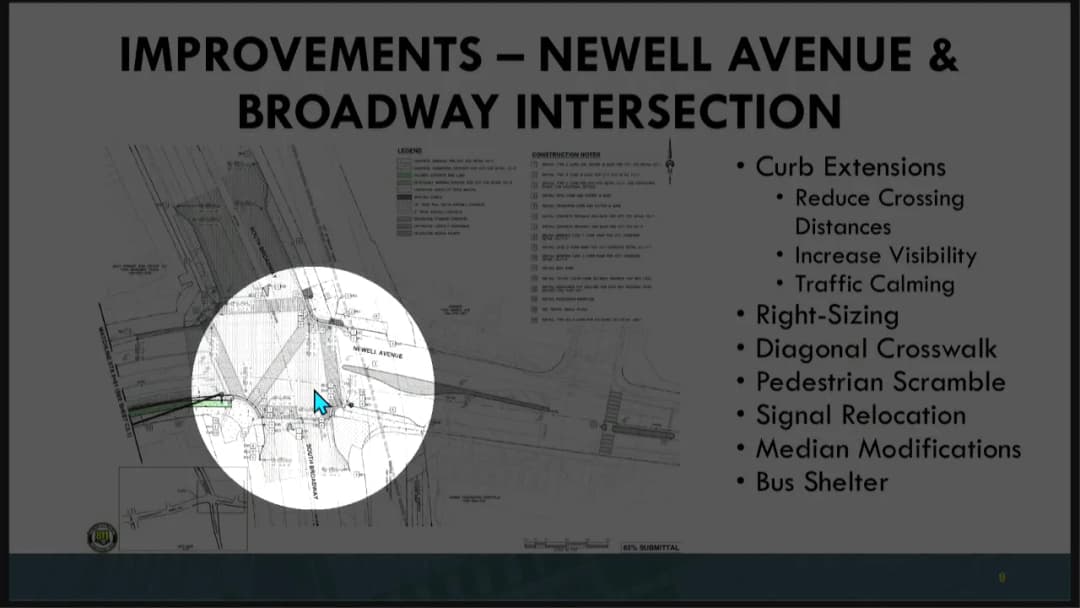
The Walnut Creek Transportation Commission met on September 17, 2026, from 6:02 PM to 8:27 PM in the Council Chamber at City Hall. Commissioners present were Chair Charles Kreling, Jared Asch, Edward Guerrero, Ryan McMahon, and Student Commissioner Adam Zelin. Vice Chair Laura Patch was absent. The meeting focused on two major bicycle and pedestrian infrastructure projects: the Newell Avenue Bicycle and Pedestrian Infrastructure Projects (Phase 1 funded, Phase 2 conceptual) and the Parkside Drive Cycle Track Improvements. The commission provided feedback to staff; no binding votes were taken on these items. Consent Calendar - Approval of Minutes (May 21, 2026): Motion by Jared Asch, seconded by Edward Guerrero, carried unanimously (4-0, with Vice Chair Patch absent). The minutes were approved without edits. Public Comments & Testimony - Item 4a (Newell Avenue Projects): Three speakers addressed the commission: - Michael Vecchio (resident, member of Walk Bike Walnut Creek) expressed strong support for the project, raising concerns about adequate signage to separate bicyclists from pedestrians on the raised bike lane, signal operations to prevent right turns during the scramble phase, and the potential for bicyclists to continue using the roadway instead of the new facility. - Tony Phillips (resident of Parkmead neighborhood) supported the project and requested that speed limits be reduced to 25 mph on Newell Avenue before the underpass to improve safety for cyclists. - Tony Almeida (resident on Newell Avenue, Parkmead area) emphasized the need for protected right-turn signals to prevent “right hook” collisions between cars and cyclists, and noted a design inconsistency where a bike lane buffer disappears near a bus stop. - Item 4b (Parkside Drive Cycle Track): One speaker: - Michael Vecchio supported the project, noting that Parkside Drive is currently unsafe for children walking or biking to school (Buena Vista Elementary and Walnut Creek Intermediate) and that a better east-west connection to BART could be achieved further north on Ygnacio Valley Road. - No public comments were received on items not on the agenda. Discussion Items - 4a. Newell Avenue Bicycle and Pedestrian Infrastructure Projects - Staff Presentation: Austin Pato (Assistant Engineer) presented Phase 1 (Broadway to Capwell) and Briana Byrne (Associate Engineer) presented Phase 2 (Capwell to city limits). Phase 1 is funded through the One Bay Area Grant (OBAG) Cycle 3: $7 million in federal funds, of which $4.5 million is dedicated to the Newell/Broadway intersection, plus $600,000 in local traffic impact fee match. Phase 2 is unfunded, estimated at $7.8 million for a sidewalk-grade cycle track or $6.3 million for an at-grade buffered bike lane. - Key Design Features: A pedestrian scramble (all-pedestrian phase) at Newell and Broadway, raised bike lanes (Phase 1), curb extensions to reduce crossing distances (from 100 ft to 70-80 ft), diagonal crosswalk with decorative theme (horse/horseshoe motif), and removal of a southbound vehicle lane on Broadway to add metered parking. Phase 2 would extend buffered bike lanes to city limits, including a mid-block crosswalk with a rectangular rapid-flashing beacon (RRFB) near Kaiser Permanente. - Traffic Analysis: At most, average vehicle delay increases by 17-23 seconds during peak hours at the Newell/South Broadway intersection; all intersections operate at LOS D or better. Queue lengths are expected to increase at some locations. - Timeline: Environmental clearance received August 2026; 65% design plans reviewed; right-of-way clearance anticipated November 2026; final plans and construction funding expected January 2027; construction targeted for summer 2028. - Commissioner Feedback: Commissioners expressed strong support for the intersection improvements and scramble, but some (Commissioner Guerrero, Chair Kreling) questioned whether the bicycle traffic volume justified the corridor-wide investment in Phase 2. Commissioner McMahon noted that safer facilities would encourage more use. Commissioners requested clearer before-and-after overlays and more detailed cyclist/pedestrian count data. The student commissioner suggested coordinating with Los Lomas High School on bike-to-school days. - 4b. Parkside Drive Cycle Track Improvements - Staff Presentation: Briana Byrne presented the project, which aims to add a protected bikeway along Parkside Drive between San Juan Avenue and Civic Drive. The project is funded by the Affordable Housing and Sustainable Communities (AHSC) grant, tied to the 93-unit 100% affordable housing project at 699 Ygnacio Valley Road (under construction). Cost estimate is less than $1 million. - Alternatives: Alternative 1 (recommended) – a two-way cycle track on the south side of Parkside Drive, retaining one westbound vehicle lane; Alternative 2 – one-way cycle tracks on both sides, requiring removal of one lane in each direction. Alternative 1 reduces conflict points from 47 to 30, while Alternative 2 reduces to 37. Operational analysis showed LOS D or better for both, with some stop-controlled approaches exhibiting LOS F (but overall intersection LOS A). - Constraints: Parkside Drive carries 14,000 vehicles per day (9,000 westbound, 5,000 eastbound), with a posted speed limit of 30 mph. Existing pavement width of 24 ft cannot accommodate standard bike lanes without removing travel lanes. Heavy trucks use the corridor to access I-680. - Commissioner Feedback: All commissioners preferred Alternative 1. Concerns were raised about the impact on auto dealerships (loading needs) and the need for ongoing outreach. Commissioner McMahon noted that the reduction in conflict points is a key safety benefit. Commissioner Ash asked about displaced parking (under the BART overpass); staff indicated those spaces are used by commuters walking to BART. Commissioners supported moving forward with design. Key Outcomes - Consent Calendar: Approved minutes of May 21, 2026 (unanimous). - Newell Avenue Projects: Staff will incorporate commissioner feedback (e.g., clearer overlays, consideration of bicycle traffic data) into further design. No formal motion was made; the item was for feedback only. - Parkside Drive Cycle Track: Staff will advance Alternative 1 (two-way cycle track on south side) to a 10% concept design, incorporating feedback from businesses and the public. The commission expressed clear support for this alternative. - Commissioner Announcements: - The Walk and Roll program (presented in January 2026) received a Fan Favorite award from Sustainable Contra Costa. - Safe Routes to School maps are available on the city website. - Staff are pursuing multiple grant opportunities (CCTA, HSIP, Sustainable Communities). - The General Plan Workshop will be held on September 24, 2026, at Civic Park from 5-7 PM. - An update on Woodlands neighborhood improvements is pending due to limited funding; staff are determining the best scaled-back approach.