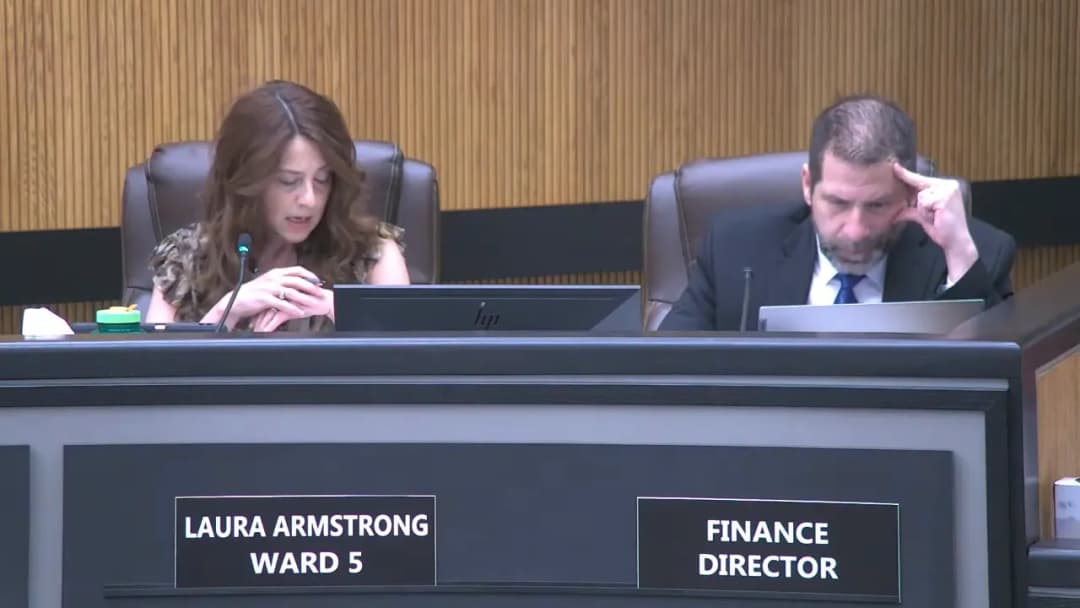
The Rapid City Council convened for its regular meeting on November 3, 2026, addressing administrative appointments, procedural rule changes, and a complex video lottery licensing request. Public comment periods were dominated by criticism of data center development and concerns over the council's decision to move general public comment to the end of the agenda. Consent Calendar - The agenda was adopted, and Items 3-37 were approved with the exception of Items 10 (tabled), 14, 18, 21, and 29 which were pulled for separate consideration. Public Comments & Testimony - James Bailata, identifying himself as an investigative journalist, alleged corruption regarding Main Street Square and TIF funds, suggesting embezzlement and prior restraint of the press. He called for the creation of a state Office of Inspector General. - Shannon Caperton thanked the city for ensuring polling access in District 32 and for addressing e-bike path issues. - William Wagner strongly criticized the resolution moving public comment to the end of the agenda, calling it an "intentional barrier". He also opposed data center developments on water rights grounds, citing the Public Trust Doctrine. - Xander Hunter requested a balanced presentation on the negative environmental effects of data centers, specifically water usage in cooling, and called for a public vote or moratorium. - Kurt Polkart argued the change in order of business undermines the spirit of open meetings law and the principle of public rule. - Sean Clausen, owner of Break Room Billiards, appealed for the council's help to secure a video lottery license, detailing his investments in the community and business. Discussion Items - Parks and Recreation Director Appointment: Scott Anderson was confirmed unanimously and sworn in as Director. Mayor Solomon praised his 17 years of city service. - Item 14 (Sidewalk Variance): The council debated a variance to waive sidewalk installation on Pioneer Drive. Councilor Maher supported the waiver, arguing the street lacked existing sidewalks. Councilor Temang opposed, advocating for consistent pedestrian infrastructure. The motion to approve the waiver passed 7-3. - Item 18 (Employee Discipline Policy): Councilor Armstrong sought clarification on the updated policy, specifically regarding departmental authority. HR Director Amber Cornella confirmed the policy clarifies existing procedures and that directors retain final authority. The policy was approved 9-1. - Item 21 (Order of Business): Resolution 2026-084, which moves general public comment to the end of the meeting, was approved 7-3. Supporters argued it improved efficiency for agenda items; opponents viewed it as a barrier to public participation. - Item 29 (Main Street Square Funding): $500,000 was approved from the infrastructure contingency fund for 2027 improvements. Councilor Meyer abstained. - Item 44 (Video Lottery License Allocation): The council addressed a unique request from Break Room Billiards. Finance Director Daniel Ainsley and City Attorney Carla Cushman explained that the requested transfer of a video lottery license from a liquor license is prohibited by state law. Instead, the council voted unanimously to allocate one of the city's four available video lottery licenses to the business, bypassing the standard lottery process. Key Outcomes - Appointments: Scott Anderson was confirmed as Parks and Recreation Director. - Policy Changes: The employee discipline policy was updated. The meeting order of business was revised to move general public comment to the end. - Zoning & Variances: A sidewalk variance on Pioneer Drive was approved (7-3). Rezoning requests were approved for properties on Garden Lane, Homestead Street/Elkville Road, Campbell Street, and Valley Drive. - Finance & Contracts: $500,000 was allocated for Main Street Square. A $6,131,686.58 supplemental appropriation and a $15,123,151.58 bill list were approved. - Alcohol Licensing: A video lottery license was allocated to Break Room Billiards outside of the standard lottery draw. The 2027 alcohol beverage license renewals were approved.
Public Meetings - Rapid City, South Dakota
Public Meetings - Rapid City, South DakotaThe Rapid City Council met for a regular meeting on Monday, October 19, 2026 (transcript timestamp: October 20, 2026, 00:26 UTC). The meeting opened with an invocation by Dale Barcher, the Pledge of Allegiance, and adoption of the agenda. No agenda or minutes were available; this summary is based solely on the transcript. Recognition - The council recognized the Rapid City Stevens girls tennis team for winning the 2026 Class AA Girls Tennis State Championship. It was the team's third consecutive state title, fifth in six years, and ninth overall. Stevens finished first, second, or third in all nine flights (six singles and three doubles). Ella (surname not stated) won singles flight one and teamed with Bella Nelson to win doubles flight one. Coach Jason Olson coached Ella's mother to the same doubles title 20 years earlier; Olson's many coaching honors were noted, along with his role in supporting the Sioux Park tennis complex, which the United States Tennis Association recognized as one of the top new facilities in America. The team has won the state tournament every year since the facility was completed. Public Comments & Testimony - Isabel Schmidt, chair of the Rapid City Youth City Council, thanked the council for approving an expenditure request to attend a Washington, D.C. conference and encouraged council connection meetings; she recognized Councilmember Lehman. - Renee McFarland Hagelin (listed as Renee Hagland), a Rapid City resident and voter, requested a pause of active construction at the West Park apartments on 11th and South Street during polling hours (7 a.m.–7 p.m.) on Election Day, November 3. She argued that written permit conditions do not guarantee accessible routes and that construction barriers can suppress voting; she asked council members to walk the ADA-compliant route after dark if a pause is not possible. - Tom Cadus, former state senator for District 32, Ward 5, urged the council to make the polling site as open as possible on Election Day, describing blocked streets and danger to elderly and disabled voters. He also raised a streets complaint about 821 Upper Pines and asked the city to address it. - William Wagner challenged the perimeter fence at Memorial Park and the locked public restrooms, citing more than 800 logged health and safety incidents. He argued the city has documented that most unhoused park users have dual diagnoses (severe mental illness and chemical dependency), that the fence constitutes disability-based exclusion under the ADA and South Dakota law, and that locking the restrooms violates SDCL 9-32-5. He demanded the fence be dismantled. - Xander Hunter opposed the data center project, saying the public never voted on it, that water-use comparisons are misleading, and that opposition is bipartisan and overwhelming; he asked the council to put the matter to a vote. - James Bayalata (also rendered Bailato), a media owner, alleged corruption by councilmembers and city entities, including false testimony about free drinking wristbands at the Beerboards Festival, police perjury, and retaliation against the press; he called for action against those involved. - Lexi Meyer, a Rapid City native now living in Box Elder, opposed the data centers, describing the prior proposal meeting as a PR move and criticizing water use during drought, noise concerns, and what she called disrespectful double talk; she urged council members to listen to citizens. - There were no speaker request forms for items 2–20 or items 21–30, so public comment closed without testimony on those items. Consent Calendar - Items 2 through 20 were approved in one motion, with Item 13 pulled for separate consideration. Motion by Bieberdorf, second by Tamang. - Item 13, Resolution 2026-068 (nuisance abatement assessments), was approved after Finance Director Daniel Ainsley noted that payment had been received for one property (830 Wilsie, tax ID 26851), which was removed from the council's action. Motion by Bieberdorf, second by Strowman. Discussion Items - Item 21: First reading of Ordinance 6754 (supplemental appropriation 5, $6,131,686.58) was approved. - Item 22: Second reading of Ordinance 6750 (supplemental appropriation, $7,202,497.23) was approved. - Item 23: First reading of Ordinance 6735 (rezoning from Flood Hazard District to Light Industrial District, Boom Shakalaka/Indigo Design property near Campbell Street) was approved. - Item 24: First reading of Ordinance 6751 (rezoning from Low Density Residential District 1 to Mobile Home Residential District, 859 Valley Drive, Logan and Megan Beckett) was approved. - Item 25: First reading of Ordinance 6752 (rezoning from Flood Hazard District to General Commercial District, same Boom Shakalaka/Indigo Design area) was approved. - Item 26: The council considered the contested tree-trimming abatement at 220 East Watertown Street. Finance Director Ainsley noted a $100 late fee made the total balance $990, not $890. Community Development Director Vicky Fisher said staff reduced the bill by $290 to $600 based on the work performed and to avoid setting a precedent, though the city would absorb the difference. Councilmember Roberts said the reduction set a bad precedent and voted no; Councilmember Secrets also questioned the precedent and voted no; Councilmember Strowman supported the committee's decision. The motion to uphold the abatement at $600 passed with Roberts and Secrets voting no. - Item 27: Preliminary subdivision plan for Pioneer No. 3 Subdivision (3035 Pioneer Drive) was approved with stipulations. - Item 28: The petition of annexation for the same property was approved to waive the annexation requirement and deny the petition. - Item 29: The attached 2027 alcohol beverage licenses were approved without recommendation. - Item 30: The council approved an appropriation from City Council contingency funds to match community chili cook-off fundraiser proceeds. The agenda item text referenced up to $5,000, while the recommendation stated up to $10,000; the motion approved the recommendation. - Public hearing Item 31 was continued to the next council meeting for further data collection by city staff. Motion by Tamang, second by Roberts. - Item 32: A special event on-sale malt beverage license for Elevate Rapid City (18 East Main Street, event October 28, 2026) was approved. - Item 33: Second reading of Ordinance 6749 (rezoning from Medium Density Residential District to Public District for parks property at the eastern terminus of Nollwood Drive) was approved. Executive Session - The council moved into executive session under SDCL 1-25-2.3 (consultation with legal counsel about proposed or pending litigation/contractual matters) and SDCL 1-25-2.4 (preparation for contract negotiations with employees or their representatives). Motion by Roberts, second by Meyer. The council later voted to come out of executive session via motion by Armstrong, second by Tomang; no report was provided in the transcript. Key Outcomes - The agenda was adopted. - The consent calendar (items 2–20) was approved, with Item 13 amended to remove a paid property. - All non-consent items 21–30 were approved; Item 26 (tree-trimming abatement) passed with two no votes (Roberts, Secrets). - Public hearing items: Item 31 was continued; Items 32 and 33 were approved. - The bill list was approved; Finance Director Ainsley reported a remaining total of $12,431,966.42, and Councilmember Meyer abstained on an initial motion. The meeting then adjourned.
The Rapid City Council met on October 6, 2026, with Mayor Jason absent. The meeting opened with an invocation and pledge, followed by awards, public comment, consent agenda, non-consent items including a debated AI policy resolution, and public hearings including a contentious triplex appeal. The council recognized a hometown hero and a sustainability partner, debated AI governance, and voted to allow a triplex development over neighborhood opposition. Awards & Recognition - Hometown Hero Award: Jameson Mallon Eccles, a South Dakota Mines football captain, was honored for rescuing three teenagers from a burning car in Houston on June 11, 2026. He ran toward the crash, helped extract the teens, and carried them to safety moments before the car was engulfed. - Goodwill of the Great Plains Sustainability Award: Recognized for recycling services, including e-waste (2,000 pounds at Earth Day Expo), and annual recycling of 221,000 pounds of textiles and 6,000 pounds of paper at two Rapid City stores. The organization is also prototyping battery recycling. - Personal Privilege: Councilor Strowman noted Rapid City was recognized for the best-tasting water in the state for the 24th out of the last 25 years, commending the water department. Consent Calendar - Items 3 through 46 were approved unanimously without discussion. Public Comments & Testimony - General Public Comment: William Wagner opposed a proposed data center (Secretor/Janus AI) expansion, alleging a 50% infrastructure creep from 10 MW to 15 MW. He argued that high-density AI computing (20-40+ kW per rack) would spike water and electricity consumption, violating South Dakota water laws (SDCL 46-1-3 and 46-1-5). He also demanded unweighted sound measurements for low-frequency and infrasound vibrations. His time expired before council response. - Non-Consent Public Comment (Item 49): Jordan Mason, former council member and now AI developer, opposed the proposed AI policy resolution. He argued the four-page document contains undefined terms (e.g., "AI tools," "sensitive data"), could penalize employees using common AI features, and fails to address autonomous AI systems already in use (e.g., grid balancing, 911 dispatch). He recommended voting no and using National League of Cities toolkits to create a clearer policy. - Public Hearing Comment (Item 58): Multiple neighbors spoke against the proposed triplex at 401 Hanover Drive: - Clayton Severson: argued the three-unit building (six parking spaces, no garage) would create congestion, make the neighborhood unsightly, and lower property values. He called the housing shortage justification "lame." - Wes Habiger: cited parking issues on the 30-foot street, fire hydrant and postal pedestal across the street, and said a triplex does not fit the single-family neighborhood. - Paula Habiger: presented a map showing single-family homes on Hanover Street versus nearby apartments on Winfield Street; expressed concern about emergency vehicle access during softball tournaments. - Steve Anderson (father of applicant Caleb Brooks): countered that the lot is zoned MDR (duplex), and a triplex would actually have fewer bedrooms (6 vs. 8) than a duplex. He noted the proposed drive aisle improves traffic safety by preventing backing into the street, and that soil conditions require deep foundations. He asked the council to uphold the planning commission's approval. Discussion Items - Item 49 – AI Policy Resolution (LF093026-02): - Councilor Meyer expressed concerns about ambiguous language ("human oversight," "appropriate disclosure") and warned against outsourcing decision-making to AI, noting AI does not think and can create confirmation bias. - Councilor Armstrong questioned Director Gilbert and City Attorney Carla Cushman. Gilbert explained the resolution is a high-level guide; a detailed toolkit for employees is near completion. He noted the policy aims to protect data and is focused on generative AI, with agentic AI to be addressed later. Cushman suggested an alternative motion to direct staff to draft a more thorough policy. - Councilor Roberts made a substitute motion to direct staff to bring a more robust AI usage document, stating the current resolution lacks defined terms. Councilor Strowman and Evans supported, with Evans criticizing putting "the cart before the horse." - The substitute motion passed unanimously. - Item 58 – Triplex Appeal (26 PD 016): - The appeal challenged the planning commission's approval of a major amendment to a planned development overlay to allow a triplex on a lot with a 75-foot frontage (requiring 100 feet). Staff found the triplex consistent with medium-density residential zoning, promotes infill development, and is not injurious to the area. - Councilor Evans opposed, arguing the triplex would stick out among single-family homes and prioritizing maximum rent over neighborhood character. He said "just because you can do something doesn't mean you should." - Councilor Armstrong asked community development, fire, and police about parking and safety. Director Fisher confirmed the site provides six off-street parking spots (five required), vehicles must enter forward, and the street meets local road standards (26-foot pavement). Fire and police chiefs stated no safety concerns and that on-street parking during events is manageable. - Councilor Strowman cited staff findings that the triplex is harmonious with the area and supported the development. - Councilor Roberts opposed due to lack of garages and the amount of concrete, noting the neighborhood's 20-year PUD history to limit density. - The council voted on a motion to deny the appeal (allowing the triplex). After confusion, the clerk clarified the roll call: 7 votes in favor, 3 opposed. The motion passed, upholding the planning commission's decision and permitting the triplex. Executive Session - The council entered executive session under SDCL 1-25-2 (consultation with legal counsel on pending litigation). They later exited and adjourned. Key Outcomes - AI Policy: The council voted to direct staff to draft a more comprehensive AI usage document instead of passing the current resolution. The motion passed without opposition. - Triplex Appeal: The appeal was denied 7-3, allowing construction of a triplex at 401 Hanover Drive with six parking spaces and forward-entry access. - Other Non-Consent Items: All were approved, including rezoning (item 47), supplemental appropriations totaling $7,202,497.23 (item 48), a preliminary subdivision plan (item 50), and a special event liquor license (item 51). - Consent Items/Public Hearings: Items 52-55 approved on consent; items 56 and 57 (right-of-way vacation and rezoning) approved individually.
The Rapid City Council met on Monday, September 21, 2026, at 6:30 PM (as implied by the transcript's opening). The meeting included an invocation, Pledge of Allegiance, adoption of the agenda, two proclamations, public comments, approval of multiple consent items and non-consent resolutions, and an executive session. Notable actions included the approval of the Impact Endowment Fund's inaugural board members and authorization to hire outside counsel for utility collections, both over vocal opposition. Proclamations - Fall Prevention Awareness Week (September 21-25, 2026): Mayor Jason Solomon read the proclamation, citing South Dakota Department of Health data for 2024: 180 deaths, 1,649 hospitalizations, and 8,012 emergency department visits among older adults due to unintentional falls. The proclamation highlighted prevention strategies and recognized partners including the Rapid City Fire Department, Monument Health, and others. - Suicide Prevention Month (September 2026): The mayor noted provisional national data showing 48,789 U.S. suicide deaths in 2025, making it the 11th leading cause of death. Pennington County experienced 45 suicide deaths in 2025 vs. 38 in 2024 (an 18% increase). A representative from Journey On and the Lost Team shared personal testimony, urging the community to "notice, ask, listen, and choose compassion." Public Comments & Testimony - William Wagner (resident): Opposed a proposed ordinance (likely related to data centers or water usage), arguing the city is breaching fiduciary trust by prioritizing industrial uses over domestic water. He cited South Dakota Codified Law 46-1-3 and 46-1-5, claiming water belongs to the people and domestic use has highest priority. He also criticized the city's water infrastructure losing 33% of treated water and objected to noise ordinances allowing 60 decibels for commercial operations near Black Gap. - Unnamed resident (first-time speaker): Requested to be opted out of the Main Street Square tax, which they have paid for 14–15 years, citing perceived corruption and perks for the manager. - Nevada Ellison (representing Black Hills Cannabis Care): Requested the council to honor the original 2021 medical cannabis dispensary lottery order. Noting that six of the 15 selected dispensaries never became operational, Ellison asked the city to award forfeited licenses to waiting-list applicants per state law and the Puffius case. They emphasized they are not asking for a new lottery or favoritism. - James Piolato (resident): Made numerous allegations against council members and city staff, accusing councilor John Roberts of texting him, councilor Callie Meyer of telling police to suppress issues, councilor Greg Stroman of legal conflicts, and alleging forged documents filed by Stroman's firm. He demanded a bar complaint be filed or he would add names himself. He also called for dissolving Main Street Square and Visit Rapid City, and criticized the use of authority against citizens. - James Bailata (public comment on item 14): Criticized the Impact Endowment Fund board as an "elite slush fund," questioning the purpose, selection process, and funding ($3 million), and whether board members are paid or will carry private insurance. Discussion Items - Item 14 – Impact Endowment Fund Inaugural Board Members: Motion to approve the initial board (Don Warren, Hanny Shaffee, Jim Skull, Kyle Wees, Marnie Herman, Paulette Davidson, Daniel Ainsley, Brianna Vandepole, Kristen Consett). - Councilor Evans opposed, stating the appointments are inappropriate and remove control from citizens who pay the tax; he urged tabling for more discussion. - Councilor Criss (Seacrist) defended the board, explaining the $3 million city allocation matched by a $500,000 John T. Vukhovich Foundation award (total $3.5 million) held by Black Hills Area Community Foundation. The board aims to raise the endowment to at least $6 million, ideally $10 million, to fund nonprofit capital projects. - Councilor Armstrong raised concerns about lack of transparency in selection (mayor's office reached out to individuals), lack of diversity (no middle-class or people of color), and that the funds ceased being taxpayer money per a prior council contract. - Mayor's office staff (Leah Braun) explained the RFP process, application window, and that some request after deadline was not considered for fairness. - Vote: Approved with two no's (Armstrong and Evans). - Item 15 – Outside Counsel for Utility Collections: Motion to authorize staff to hire outside counsel for collection actions on certain unpaid utility accounts (related to Zadiq Rapid City Portfolio 1 LLC properties, including Star Village). - Councilor Armstrong moved to table, but the tabling motion failed (2-8). She then expressed concerns about escalating costs and the need for a working session to understand the situation. - Councilor Roberts argued that legal action is necessary because landlords ignore bills until forced; he supported the collection effort. - City Attorney Carla Cushman confirmed the agreement is hourly (not contingency) with a $50,000 cap, and that most debts are post-bankruptcy and collectible. - Councilor Evans expressed skepticism about the city's ability to match wealthy opponents' legal resources, predicting displacement of Star Village residents. - Vote: Approved with two no's (Evans and Armstrong). - Item 24 – Historic Preservation Committee Reappointments: Reappointed Jen Johnson, Emily Calhoun, and Pat Roseland. - Councilor Evans opposed, arguing the committee has failed to protect historic structures (e.g., Rushmore Mutual Building, Christian Science Church, St. John's Church), not fulfilling state statutory duties. - Councilor Armstrong suggested the committee provide an update to council; Director Fisher noted a presentation is scheduled for December. - Vote: Approved with two no's (Strowman and Evans). - Consent and Non-Consent Items: - Items 4–21 (consent calendar) approved with exceptions of 14 and 15. - Item 22 (rezoning request by Black Hills Area Community Foundation) approved unanimously. - Item 23 (FY2027 appropriation ordinance) approved with two no's (Strowman and Armstrong). - Item 25 (special event alcohol license for Firehouse Brewing at O'Hara Stadium on September 26, 2026) approved unanimously. - Items 26–27 (public hearings) approved unanimously. Key Outcomes - Impact Endowment Fund Board Approved (9-2): The inaugural board members were confirmed, with opposition citing transparency and representation concerns. - Collection Action Authorized (9-2): The city will hire outside counsel to pursue unpaid utility debts from Zadiq entities, with a $50,000 legal fee cap. - Historic Preservation Reappointments Approved (7-2): Reappointments confirmed despite criticism of committee inaction. - Executive Session Conducted: Council entered and exited executive session with no action reported. - Bill List Approved: Bills for Main Street Square and Visit Rapid City totaling $173,63 and 24 cents (likely $173,063.24) were approved, with one abstention from Meyer. - Next Steps: Historic Preservation Committee to present an update in December; future discussion on utility collection process may occur at a working session (as proposed by Armstrong, though not scheduled).
The Rapid City Council met on September 9, 2026, to address a consent calendar, public comments, several land-use items, and a controversial ordinance creating a reasonable accommodation procedure. Key actions included restoring $100,000 to the mayor's office budget, approving a supplemental appropriation for a police station remodel, and passing Ordinance 6726 after a failed amendment to add neighbor notification. Consent Calendar - Items 2 through 47 were approved with the exception of Item 30, which was pulled for separate consideration. - Item 30: Approved a first amendment to the facilities management agreement with Sports Facilities Management LLC. Director Ainsley explained the amendment expands the firm's role during design and construction, saving the city an estimated $659,000 to $900,000 compared to hiring a separate owner's representative. Council members expressed initial surprise but ultimately supported the change. Public Comments & Testimony - William Wagner (constitutional advocate) opposed surveillance cameras (Flock safety), arguing they violate South Dakota law and the state constitution. He cited South Dakota Codified Law 31-18-2, 32-14-9, 23A-35-4.3, and 55-7-3, and noted that Aberdeen and Codington County have rejected similar systems. He urged the council to reject the surveillance network. - Tammy Hopp (Rapid City Disability Awareness and Accessibility Committee / Black Hills Works Foundation) spoke in favor of Ordinance 6726, stating it provides a clear administrative process for reasonable accommodation requests without requiring public disclosure of private information. She thanked city staff for their work. - Barbara Horton (Red Rock Estates HOA) opposed Ordinance 6726, citing a letter from attorney Richard Huffman. She argued that the ordinance would deprive residents of notice and the ability to enforce property covenants, and that Oxford Houses should not be treated as single-family residences but as businesses requiring council approval. Discussion Items - Personal Privilege: Councilor Strowman thanked workers and first responders, noting the upcoming 25th anniversary of 9/11. The mayor announced a ceremony on Friday, September 11, 2026, at 8 a.m. at the base of M Hill. - Item 48: Second reading of Ordinance 6747 – supplemental appropriation of $1,280,319 for the North Police Station remodel. Councilor Armstrong noted the bid came in $500,000 under budget. Approved unanimously. - Item 49: First reading of the FY2027 appropriation ordinance. Councilor Bieberdorf moved to restore $100,000 to the mayor's office budget (chief of staff position), arguing the budget was already the lowest in five years ($890,61). After debate, the motion passed 9-1 (Strowman opposed). Councilor Armstrong raised potential additions (SCBA equipment for fire department, HR professional services, airport project manager). A motion to add $125,000 for an airport principal project manager was withdrawn; the first reading as amended (including the $100,000 restoration) was approved 7-2 (Strowman and Armstrong opposed). - Item 50: Preliminary subdivision plan for Black Hills Industrial Center. Approved with stipulations. - Item 51: Preliminary subdivision plan for Shepherd Hill South Subdivision. Councilor Seacris raised concerns about traffic congestion on Diamond Ridge Boulevard due to construction. Director Fisher noted mitigation measures (speed monitors) and that the future East Anamosa connection (designed, construction fall 2026) and the Homestead to Valley Drive project (months away) will provide relief. Approved with stipulations. - Item 62: Rezoning from General Commercial to General Agricultural at 136 Krebs Drive. Approved. - Item 63: Second reading of Ordinance 6726 (reasonable accommodation procedure). Councilor Tamang abstained. Councilor Strowman made a substitute motion to add neighbor notification and a conditional use permit (CUP) process. Councilor Evans expressed concern about ADA litigation risk; Deputy City Attorney Kinsley Groot explained that similar uses (e.g., vacation rentals, daycares) do not require CUPs and that adding such requirements could invite discrimination lawsuits. The substitute motion failed (2 ayes, 8 noes, 1 abstention). The original motion then passed (8 ayes, 2 noes – Maher and Strowman opposed). Key Outcomes - Ordinance 6747 (supplemental appropriation for police station) passed unanimously. - FY2027 budget first reading approved with restoration of $100,000 to mayor's office (motion 9-1; final vote 7-2). Airport position discussion tabled for later supplemental. - Ordinance 6726 (reasonable accommodation) passed after a failed amendment (substitute motion failed 2-8-1; original passed 8-2). - Preliminary subdivision plans (items 50, 51, 62) approved with stipulations. - Bills approved: Main Street Square and Visit Rapid City ($192,125.40) with one abstention; remaining bills ($16,884,467.17) with one opposition.
This meeting of the Rapid City Council focused primarily on the mayor's proposed 2027 budget, with multiple motions to adjust funding for various departments and community programs. Votes were taken on several items, including reductions and increases to specific budget lines. The council also approved a construction manager agreement and authorized a grant application. Consent Calendar - Authorize mayor and finance director to sign sports complex construction manager at risk agreement with Skull Construction. Approved unanimously. Public Comments & Testimony - Mark Millar spoke on item 2, asking for clarification about the Department of Justice Model Cities grant application. He expressed concern about the city taking grants that might not suit them. Chief Hedrick responded that the city would only accept the grant after full review and council approval. The application was approved. Discussion Items - Item 2 – DOJ Model Cities Grant Application: Chief Hedrick explained the grant would focus on violent crime, firearm investigation, homeless support, and prosecution coordination. The council approved submitting the application. - Item 3 – Mayor's 2027 Budget Discussion: The council debated and voted on numerous amendments: - Reduce council contingency fund to $100,000: Motion by Armstrong, seconded by Roberts. Passed (1 no vote). - Allocate one FTE for code enforcement ($93,443): Motion by Secrets, seconded by Roberts. Passed. - Take CPI increase for property taxes (approx. $780,000): Motion by Maher, seconded by Armstrong. Roll call: 7-3 in favor. - Add one FTE to community development (planner, $145,946): Motion by Roberts, seconded by Armstrong. Passed. - Reduce mayor's office budget by $200,000: Motion by Strowman, seconded by Roberts. A substitute motion to reduce by $100,000 (Secrets, seconded by Evans) passed 6-4. - Reduce 4th of July celebration from $500,000 to $100,000: Motion by Armstrong, seconded by Strowman. Roll call: 8-2 in favor. - Increase funding for Canyon Lake Activity Center and Meneluzahan Senior Center to $50,000 each: Motion by Strowman, seconded by Roberts. Passed (1 no vote). - Fund rapid transit driver compensation ($182,523): Motion by Meyer, seconded by Armstrong. Passed. - Increase Journey On allocation: Maher initially moved but withdrew after clarification that the mayor's budget already included the full $475,000 request. - Additional funding for parks (4 FTEs, $124,969; professional services, $120,000; emergency planning, $7,423): Director Ainsley requested these. Motions by Armstrong, Roberts, etc. All passed. - Item 4 – First reading of ordinance 6748 (FY2027 appropriation): The council moved to continue to the September 8, 2026 meeting due to Labor Day. Passed with 1 no vote. Key Outcomes - The council contingency fund was reduced to $100,000. - One new code enforcement FTE was approved. - The city will take the CPI increase on property taxes, adding approximately $780,000 in revenue. - One new community development planner FTE was approved. - The mayor's office budget was reduced by $100,000. - The 4th of July celebration budget was reduced to $100,000 from $500,000. - Senior center funding was increased to $50,000 each for two centers. - Rapid transit driver compensation was increased by $182,523. - Parks received additional funding for four FTEs, professional services, and emergency planning. - The appropriation ordinance first reading was postponed to September 8, 2026. - The mayor's proposed budget for Journey On ($475,000) was retained. - Total reduction in undesignated cash use: $1,021,035, leaving revised undesignated cash use at $2,513,285.
This meeting of the Rapid City City Council, originally recorded as occurring on August 17, 2026, covered a range of topics including beautification, water infrastructure, sidewalk requirements, reasonable accommodation for disabilities, alcohol-related litter, and a naming rights agreement with Sanford Health. Numerous public comments were heard, and several ordinances were passed. Consent Calendar - Items 1 through 20 were approved unanimously, including routine approvals and financial items. Public Comments & Testimony - Sandra Lashley (Beautification Committee) requested a $2,500 annual operating budget for beautification projects, emphasizing curb appeal and the need to revise zoning codes and landscape ordinances. - William Wagner urged the city to prioritize repairing water infrastructure over corporate expansions, citing state law regarding NDAs and public participation protections. - Jeff Jacobson proposed a city ordinance to place a traffic cone on the head of any presidential statue where the president is a convicted felon, and questioned whether his protest at the Trump statue would lead to arrest. - James Biolota criticized the city for allowing agents to refuse service on public property and for charging for public restrooms at Main Street Square, threatening federal legal action. - Brandon Ferguson (speaking on items 21 and 27) addressed the history of alcohol among tribal members and argued that banning single-serving bottles would not solve the litter problem; he suggested inmate cleanup crews. - Angelo Schraldi raised concerns about ADA sidewalk accessibility issues at Milwaukee and Denver Street, and also commented on national economic issues. - Adrian Epp linked affordable housing to car dependency, calling for expanded bus routes and bike infrastructure, and objected to Axon cameras at Star Village as a Fourth Amendment violation. - Carl Hodson III spoke in support of Oxford Houses for recovery, citing high success rates. - Tammy Hopp (Rapid City Disability Awareness and Accessibility Committee/Black Hills Works) supported Ordinance 6726, noting it removes public hearing requirements for reasonable accommodation for disabilities, which protects privacy and reduces lawsuit risk. - Kathy Minick expressed continued concerns about occupancy limits but appreciated the city’s work on the ordinance. - Sam Larson (Powder River Construction/Admiral Beverage Corporation) argued for a sidewalk variance on Creek Drive, noting the lack of existing sidewalks and the area’s low pedestrian traffic. Discussion Items - Item 21 – Ordinance 6726 (Reasonable Accommodation): First reading of an ordinance creating a reasonable accommodation procedure for individuals with disabilities. Debate centered on lack of neighbor notification. City staff explained that requiring notification would be discriminatory compared to other similar uses (e.g., vacation homes, daycares). Councilor Maher voted against due to lack of notice; Councilor Temang abstained. The ordinance passed on first reading 8-1-1. - Item 24 – Sidewalk Variance for Admiral Beverage Corp: Council debated whether to require a sidewalk at 2720 Creek Drive. Proponents of the variance (no sidewalk) cited lack of pedestrian traffic and no other sidewalks in the area. Opponents argued the company could afford the sidewalk and the city should start building connectivity. A motion to deny the variance failed 4-6, and a motion to approve passed 6-4. - Item 25 – Sanford Health Naming Rights Agreement: Approved for the sports complex, a 20-year, $350,000/year agreement. Councilor Temang abstained. Kyle Weiss of Sanford Health spoke in support. - Item 27 – Request to Research Alcohol Litter Ordinances: Councilor Temang’s request to direct the city attorney to explore restrictions on single-serving alcohol sales. After debate, the motion passed 7-3. Several councilors emphasized a data-driven approach and the need for stakeholder involvement, including retailers and those with lived experience. Key Outcomes - Approved: Consent items 1-20 (unanimous). - Approved: Ordinance 6726 (first reading) – Reasonable Accommodation Procedure (8-1-1). - Approved: Supplemental Appropriation No. 3 (item 22, unanimous). - Approved: Rezoning for Sweet Creek LLC (item 23, unanimous). - Approved: Sidewalk variance for Admiral Beverage Corp (item 24, 6-4). - Approved: Sanford Health Sports Complex Naming Recognition Agreement (item 25, unanimous with one abstention). - Approved: Preliminary Subdivision Plan for Stever Heights (item 26, unanimous). - Approved: Motion to direct city attorney to research alcohol litter ordinance (item 27, 7-3). - Approved: All public hearing items 28-39, with most consent items passed unanimously and non-consent items approved (item 39 had one no vote from Evans). - Approved: Bill lists (items 40-41) with one abstention on item 40. Note: The transcript indicates the meeting was held on Monday, August 17, 2026, but the user specifies the meeting date as August 18, 2026.
The Rapid City Council met on August 4, 2026, beginning with a ceremony welcoming a delegation from Nico City, Japan, including student translators. The council then heard general public comments on transportation barriers, the Pledge of Allegiance, and corporate favoritism, followed by votes on multiple consent items, zoning changes, and a downtown business improvement district assessment. An executive session was held for a cybersecurity update. Opening Ceremony - Mayor and council welcomed a delegation from Nico City, Japan, including students Sama Mimi, Rico, Ayaka Hukada, and Kara Hori. The mayor presented each guest with a challenge coin as a token of friendship. General Public Comment - Lee Strubinger (John T. Vucurevich Foundation) presented the report "It's Literally Limiting," summarizing that transportation insecurity is a major employment and economic barrier in Rapid City. He noted that with a 1.7% unemployment rate, many people who want to work cannot due to transportation issues. He expressed that the Rapid Transit System is vital but limited to 6 am to 6 pm hours, and committed to continuing the conversation. - Mark Thallacher requested a change to the city council agenda format: adding a note beside the Pledge of Allegiance (similar to the invocation) stating participation is welcome but not required. He argued that the words "under God" were added in 1954 during the Cold War and are not original to the pledge. - William Wagner accused the city administration of corporate favoritism, specifically criticizing the use of tax increment financing (TIF) to subsidize infrastructure for a data center, contrary to South Dakota's data center law. He also cited the Chapel Lane Bridge weight restrictions as an example of neglected public safety infrastructure while corporate projects are prioritized. - James Bialata made multiple allegations against city officials and employees, including claims that city staff were terminated after he reported them, that police officers (Sergeant Hunt and Sergeant Alexander) mishandled public duties, and that city council members held secret meetings in violation of open meetings laws. Council Discussion & Decisions Consent Calendar Items 2-22 - The council approved items 2-22 with the exception of items 11, 12, and 13, which were pulled for separate discussion. - Items 11-13 (Sidewalk Variances): Public Works Director Mike Tice explained that for all three locations, sidewalks were impractical due to lack of curb/gutter, roadside ditches, no existing sidewalks in the area, and highway or industrial contexts. Councilor Temay questioned the precedent of granting variances and asked about a fee-in-lieu program. City Attorney Carla Cushman noted that the city is researching such a program (led by Kinsley Groot) and that the council retains authority to order sidewalks later. All three variances were approved unanimously. Consent Items 23-31 - Public Comment on Items 25-29: Mark Millar questioned rezoning several properties from industrial/business park to general agricultural district, arguing it allows landowners to hold property at lower tax rates while the city funds development on other agricultural land. Community Development Director Vicky Fisher clarified that the properties are owned by Jim Bailey, who intends to keep them as green space, and that county taxation is based on use, not zoning. Councilor Meyer confirmed the tax impact is negligible. Items 23-31 were approved with the following notable votes: - Item 30 (Rezoning to mining district): Approved with two no votes (Armstrong and Evans). Public Hearing Items 32-38 - Public Comment on Item 36: James Bialata urged the council to table or remove Item 36 (downtown Business Improvement District assessment), alleging that the Visit Rapid City board held illegal private meetings, targeted churches for taxation, and suppressed advertising of a religious festival. He referenced minutes from past meetings. - Item 36: Councilor Meyer abstained. The resolution levying assessments for the Downtown Business Improvement District 2026 was approved with one no vote (Bieberdorf) and one abstention (Meyer). Items 37-38 - Item 37 (Rezoning from cement plant to Low Density Residential 1): Approved unanimously. Vicky Fisher explained the property was formerly owned by the state as part of the cement plant, and the new zoning aligns with the surrounding area. - Item 38 (Right-of-way vacation at 3415 5th Street): Approved unanimously. Executive Session - The council entered executive session for a cybersecurity update under SDCL 1-25-2-6 and 2-7. They returned without staff direction. Bill List - Finance Director Daniel Ainsley presented bills for Main Street Square and Visit Rapid City totaling $229,327.96. The bill list was approved with one abstention (Meyer). Adjournment - The meeting was adjourned following approval of the remaining items. Key Outcomes - Approved three sidewalk variances with explanation of impracticality (Items 11-13). - Approved multiple rezoning requests, including several to general agricultural district with planned development designations. - Approved downtown BID assessment (Item 36) with one no and one abstention. - Approved rezoning from state-owned cement plant land to residential (Item 37). - Approved right-of-way vacation (Item 38). - Held executive session for cybersecurity update. - Approved bill list of $229,327.96 for Main Street Square and Visit Rapid City.
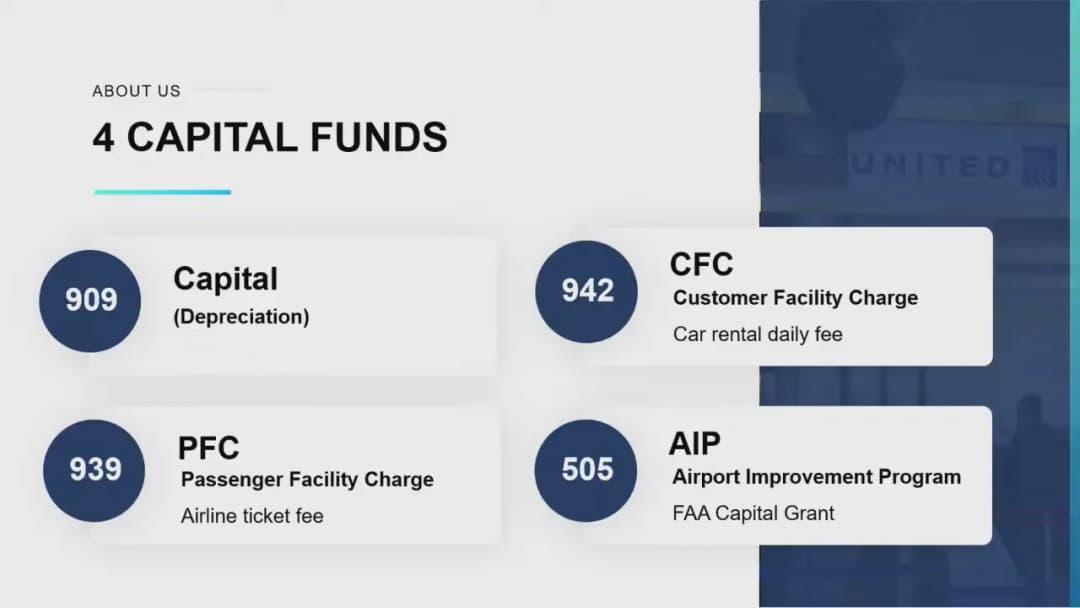
The Rapid City Council held a meeting on July 30, 2026, to receive budget presentations for the 2027 fiscal year from the City Attorney's Office, Finance Department, Community Development Department, Rapid City Regional Airport, and the Rapid City Public Library. The presentations covered operational highlights, proposed budgets, future plans, and staffing challenges. No formal votes were taken on the budgets, but council members provided feedback and direction. City Attorney's Office Budget Presentation - Key Statistics: The office managed 344 claims (workers' comp and liability), opened 450 pro law matters, reviewed 123 contracts, processed 572 criminal citations/complaints, and staffed at least 140 meetings. Personnel comprises 94% of the budget (5 attorneys, 1 risk management coordinator, 1 admin assistant). The proposed 2027 budget includes a $12,000 increase for a Westlaw AI research upgrade. - Discussion: Two attorney positions remain open. Outside counsel costs are typically covered by insurance or individual department budgets. The office plans to hire two new attorneys in 2026, review risk management services for a potential additional FTE in 2028, and leverage AI tools for contract review and efficiency. Finance Department Budget Presentation - Key Statistics: The department processes over $1/3 billion annually in payments, with 12 staff handling accounts payable/receivable. Grants division secured $24.6 million in awards (38 active grants). Treasury services generated significant interest income (e.g., $12 million in 2024 on $220 million invested). Total new revenue from savings, grants, interest, and TIFFs over three years: $129 million. - Discussion: A budget analyst position is transferring from Public Works (no net new FTE). One new FTE is proposed for succession planning (Dave Uhas retiring 2027/2028). Professional services decreased due to reduced grant contingency. Other operating expenses increased $364,000 for direct grant implementation. Future initiatives include centralized purchasing, travel policy, internal reviews, and fee analysis. - Council Feedback: Councilor Strowman praised the department's performance and education efforts. Councilor Maher inquired about TIFF reimbursement timing. Community Development Budget Presentation - Key Statistics: Overall budget $11.2 million, 73 FTEs. City population grew 45% and annexed area 42% in 25 years. Building permits and fees are at record highs (61% residential). Code enforcement averages 1,600 violations annually with only 3 officers. Parking operations is an enterprise fund with revenues exceeding expenses. RTS ridership increased 30,000 over five years; 6 of 26 driver positions are vacant. - Discussion: The division plans to replace aging parking meters with kiosks ($500,000 one-time cost, saving $50,000 annually in maintenance). RTS starting wage ($20/hr) is insufficient to attract drivers; a market analysis is pending. GIS is expanding asset management. Fee rates for permits and services have not been raised in over 40 years; a rate analysis will be completed by end of 2026. Director Fisher requested future additional FTEs (2 code enforcement, 1 planner) funded by increased fee revenue. - Council Feedback: Councilor Evans expressed concern about code enforcement effectiveness and developer-driven planning. Councilor Strowman asked about reuse of old parking meters. Councilor Maher inquired about e-submission of building plans (implementation in progress). Airport Budget Presentation - Key Statistics: Record 905,000 passengers in 2025. Operating revenue $14 million, expenses $9.4 million, net income $5.3 million. The airport is operationally self-funded (no general fund). Five airlines, soon to be four due to merger. Parking and car rental are top revenue sources. - Discussion: Terminal expansion phase 1 ($70.4 million) is nearing completion; phase 2 concourse expansion ($110 million) is in design (60% complete) with CMAR proposals received. Runway redevelopment (estimated $100 million) will begin environmental assessment in the next three years. The airport is exploring common-use ticket counters for flexibility. Councilor Strowman asked about runway status and future federal funding. - Council Feedback: Councilor Meyer noted the terminal is overcrowded; excitement for expansion. Library Budget Presentation - Key Statistics: 1 million checkouts, 97,000 database uses, 17,000 event attendees in 2025. 42% of residents have library cards. Estimated value of services: $43 million. Proposed general fund request: $3.88 million (down $175,000 from previous year due to FTE transfers to maintenance and shared FTE with finance). - Discussion: The library achieved efficiencies through centralized maintenance and a shared FTE with finance (saving $100,000 annually). Cataloging costs reduced by $50,000 by purchasing records from vendors. 2027 goals include a community access study, adding study pods, a blood pressure station, and potential kiosk for motor vehicle licensing. County funding is a challenge: Pennington County proposed $81,000, far below the $373,000 requested to serve 4,500 county cardholders; options include significant cuts or charging fees to county residents. - Council Feedback: Councilor Meyer asked about county negotiations and feasibility of fees for non-residents. Councilor Strowman inquired about charitable support (Friends of the Library and Library Foundation provide project-specific funding). Key Outcomes - No votes were taken on the presented budgets; they are part of the ongoing budget process. - Council expressed support for fee studies and additional FTEs in Community Development, contingent on revenue generation. - The Library board will continue to explore options for county funding, including potential fees for county residents. - The Airport's terminal expansion and runway redevelopment will proceed with federal and local funding. - The meeting adjourned without further discussion.
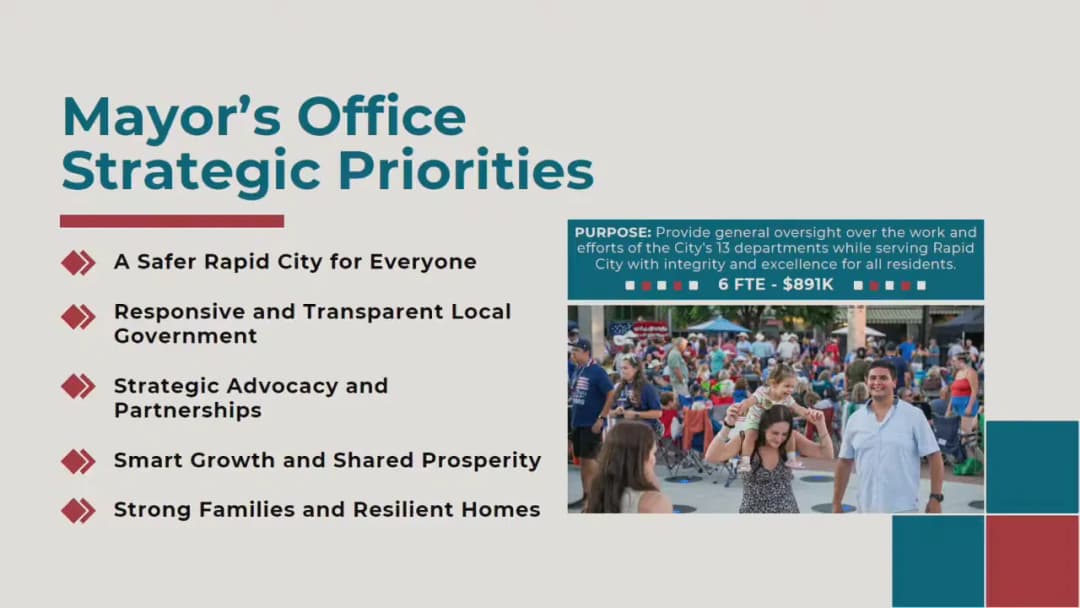
The Rapid City Council convened on July 29, 2026, to review proposed 2027 budgets for the Human Resources, Information Technology, Mayor's Office, and Parks and Recreation departments. Department heads presented priorities, staffing, and financial changes, with council members asking questions about health insurance reserves, cybersecurity costs, recreation demand, and infrastructure needs. No consent calendar or public comments were included on the agenda. Human Resources Budget Presentation – Director Amber Cornella - Director Cornella presented a $1.7 million proposed budget for 2027, a decrease of about $14,000 from 2026. The department has 11 full-time employees serving over 1,800 city employees. 86% of the budget is personnel costs. - Efficiency gains were highlighted: onboarding now completed in Tyler (replacing manual PDF packets), compensation studies moved in-house, and expanded benefits (dental, vision, employee assistance program with digital access and increased counseling sessions from 3 to 5 per topic per year) without significant cost increases. - A key investment is a learning management system (LMS) costing approximately $68,000 annually, intended to standardize training across all departments, reduce compliance risk, and support leadership development. The increase in software maintenance is offset by reclassifying recognition platform costs. - Health insurance premiums for the HR department are expected to decrease due to changes in employee plan enrollments (more single vs. family coverage). The city's health care reserve now stands at $6.6 million, well above the $4 million policy target, according to Finance Director Daniel. - Councillor Maher inquired about the health care reserve; Councillor Armstrong asked about rental costs ($21,000 for employee events at The Monument) and professional services (employee assistance program). Councillor Secrets questioned the LMS recurring cost and the FTE count (11). The safety position previously in public works was converted to an organizational development manager in HR. Information Technology Budget Presentation – Director Jim Gilbert - Director Gilbert presented an IT budget with a 32% increase over 2026, driven by the shift to Office 365 subscriptions (from a one-time $90,000 purchase to $500,000 annually) and cybersecurity software. The first year of O365 is covered by $500,000 in Secure SD state funds. - The department has 13 FTEs (aiming for 15), supporting all city operations including police cars, civic center, phones, and email. Gilbert noted that Gartner recommends 22 FTEs for a city this size, but the team handles more than average due to in-house expertise. - Hardware costs are rising dramatically: laptops increased from $880 in October 2025 to $1,340 in April 2026, due to the "AI tax" on RAM and storage manufacturing. The council previously approved a $400,000 expedited purchasing fund to lock in prices. - Key investments include $60,000 for expanded threat locker (zero-trust security) and $40,000 for GovAI (citywide AI with data governance). Gilbert expressed concern about staff salaries lagging behind market, and plans to request more FTEs in 3–5 years. - Councillor Maher asked about airport network usage (segmented from city network). Councillor Secrets asked about interdepartmental charges for O365; Finance Director Daniel clarified that the cost will be allocated via interdepartmental charges beginning in 2028, not in 2027. The new city website is expected to go live in 1–2 months. Mayor's Office Budget Presentation – Mayor Jason Solomon - Mayor Solomon presented the mayor's office budget, which is slightly decreased from 2026 due to staff transitions and the shift of website development costs elsewhere. The office supports the entire city, including customer service, public information (Daryl Schumaker), marketing (Brett Mattis), and chief of staff (Leah Braun). - Priorities include: supporting public safety (police, fire, water, solid waste), addressing addiction and mental health through weekly caregiver meetings and opioid settlement advocacy, responsive and transparent communication (new website, social media), and strategic advocacy with state and federal officials (e.g., airport funding, parole reform via Rapid City-Sioux Falls calls). - The mayor emphasized building relationships with legislators and fostering strong families through school visits, foster care promotion, and a focus on the next generation. Travel costs are minimal (mostly in-state). - Councillors asked no questions, and the presentation was accepted. Parks and Recreation Budget Presentation – Director Jeff Biegler, Matt Brandhagen, Scott Anderson - The proposed 2027 budget is $15.2 million with 73.5 FTEs. Three new parks are coming online: Johnson Ranch Park, Knowwood Park, and Homestead Park. The department will update food truck and special events policies and begin implementing the new parks and recreation master plan. - Recreation Division Manager Matt Brandhagen (4 months in role) reported high demand: 135 pickleball teams (courts at capacity), 44 bocce teams, over 600 volleyball teams (20–30 on waiting list), 40 basketball teams (10 on waiting list), and summer camp with 550 kids (sold out in 30 minutes, 20 on waiting list). A new van could add 10 more campers per session. The proposed sports complex will provide additional court space Monday–Thursday evenings. - Golf: 75,000 rounds at Meadowbrook and Executive courses. Ice Arena: 75,000 annual visits, 300 adult hockey players. Aquatics: 1,900 swim lesson participants, 117,000 pool visits. - Parks Division Manager Scott Anderson highlighted Vision Fund projects: Vicky Powers Park dog park, Canyon Lake Park revitalization ($3.5 million), Mary Hall Path (TAP grant), median revival on Mount Rushmore Road ($15,000 with $1,500 donation). The department maintains 116 irrigation systems (40 on central control), 70 miles of sidewalk/bike path, 1,000 acres of turf, and 30–50 seasonal workers. The new park ranger program has four rangers, improving weekend coverage. - Councillor Strowman asked about irrigation (mostly treated water; golf courses pump from creek). Councillor Criss raised Meadowbrook Golf Course irrigation needs ($3–4 million, planned for future Vision Fund). Councillor Meyer encouraged bringing forward a plan to eliminate the summer camp waiting list. Councillor Maher inquired about the bike park across from Founders Park (design nearly complete). - Cemeteries: cremations now exceed traditional burials; columbariums on a hillside will add 288 niches, with room for up to a dozen units extending cemetery life by 10–20 years. Key Outcomes - No formal votes were taken on the budgets; the presentations were informational for council review. A motion to adjourn was approved with a second and unanimous voice vote. - Action items noted: Recreation staff will provide cost estimates for additional summer camp vans; the city will continue exploring raw water irrigation alternatives; the IT department will work with HR on salary competitiveness and future FTE requests. - The council thanked all presenters, and the meeting adjourned.