On July 19, 2021, the Measure U Community Advisory Committee and the Sacramento Community Police Review Commission held a joint teleconference meeting starting at 6:00 p.m. The meeting focused on key findings from a UC Davis public deliberation study on police reforms, the Sacramento Police Department’s FY2021/22 budget, and potential collaboration between the two commissions. The police department did not attend, drawing criticism from commissioners and the public. The meeting concluded with agreements to hold another joint meeting in the fall and to explore joint ad hoc committees. Consent Calendar - Item 1: Police Department Fiscal Year 2021/22 Budget Update – This item was originally on the consent calendar but was pulled for discussion by Member Bliss. The committee voted to receive and file after discussion. No formal vote was needed as it was a receive-and-file item, but the discussion highlighted concerns about lack of police department attendance and insufficient detail in the budget documents. Public Comments & Testimony - Jeffrey Tardagia (Item 2) – Questioned the sample size of the UC Davis study (42 participants in Sacramento) and sought clarification on the 16% statistic. - Dr. Corinne Macintosh Sako (Item 2) – Expressed strong support for incorporating the study’s findings and called for more substantial police reform, noting that increased police funding has not reduced violence. - Brian Powers (Item 2) – Raised concerns about the study’s scientific validity, sample size, and lack of crime statistics provided to participants. He also asked who commissioned the study. - Maria Elena (Items 1 and 3) – Criticized Measure U funding going to police rather than youth, and accused the police department of using youth as scapegoats. She also cited a problematic event hosted by a community group that photoshopped a gun into a child’s hand. - Evan Minton (Item 2) – Thanked the commissions for their work, expressed fear for his biracial nephew’s safety, and criticized the city council for ignoring the police commission’s recommendations. - Corinne Macintosh Sako (Item 1) – Detailed the police budget ($165,871,667 total, with Measure U making up only 3% or $45-47 million) and argued that law enforcement does not keep communities safe. She criticized the chief’s narrative linking gun violence to summer heat and black youth. - Ramon Rodriguez (Non-agenda) – Called for less funding for police and more for social services, citing systemic racism and the police department’s handling of protests. Discussion Items - Item 2: Key Findings from a Public Deliberation Study on Police Reforms – Pat Powers and Dr. Shawnee Bugs from UC Davis presented findings from a study of 126 participants across three communities (42 in Sacramento). The study asked participants to choose among four reform options: (1) increase transparency/accountability, (2) enhance training, (3) reduce policing by shifting nonviolent responses, (4) replace and reimagine policing. In Sacramento, 38% chose option 3 and 38% chose option 4; 12% each for options 1 and 2. Over 80% said the session expanded their views, and 1 in 10 changed their preferred option after deliberation. Participants favoring a smaller police presence increased by 16 percentage points. The researchers recommended making police budget information more transparent and using deliberation to inform policy. Commissioners discussed the study’s limitations, the need for larger local samples, and the importance of engaging communities not typically at commission meetings. - Item 1: Police Department FY2021/22 Budget Update – Commissioners expressed disappointment that no police department representatives attended. Member Bliss criticized the lack of meaningful responses to questions about program outcomes and metrics. Member Lujan noted that crime rates are 70% above the national average, questioning the budget’s effectiveness. Dawn Holm, Director of Finance, answered questions about budget breakdowns, explaining that the city does not do programmatic budgeting but can provide more detail for Measure U funds. The Measure U budget is being realigned to remove most public safety funding, and a presentation will be given in August. - Item 3: Open Discussion Regarding Potential Collaboration – Commissioners discussed ways to work together, including holding another joint meeting in the fall, forming a joint ad hoc committee (though the deputy city attorney advised each commission to create its own ad hoc), increasing transparency and metrics for police spending, and possibly hosting a public conversation with the city council. Member Kivel suggested using Measure U funds for public deliberations on police reform. Member Sala advocated for a 2% annual reduction in police funding. Member Bliss proposed a joint budget ad hoc to examine overtime and other expenditures. The vice chair, Williams, summarized the consensus: continue collaboration, establish a joint ad hoc (to be discussed at each commission’s next meeting), request police attendance at the next joint meeting, and review the city survey on public safety. Key Outcomes - Item 1 was received and filed after discussion, with the understanding that more detailed budget information will be presented at the August 16, 2021 Measure U committee meeting. - Item 2 was received and filed; the slide deck will be shared with commissioners. - Item 3 resulted in an agreement to: - Hold another joint meeting in the fall (targeting before the end of 2021) with the police department present to answer questions. - Each commission will consider forming a budget/public safety ad hoc committee at their respective August meetings, and those ad hocs could coordinate. - Continue exploring ways to increase budget transparency and outcome metrics for police spending. - Possibly organize a public community conversation with the city council. - The meeting adjourned at approximately 8:30 p.m.
Public Meetings - Sacramento, California
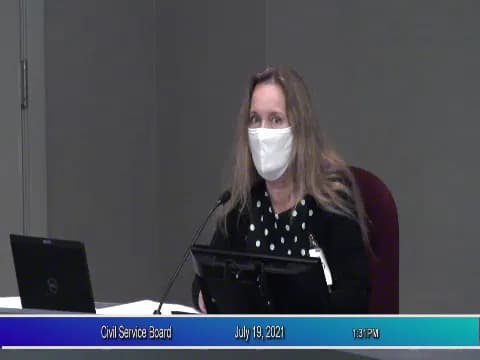
Public Meetings - Sacramento, CaliforniaThe Sacramento Civil Service Board held a teleconference meeting on July 19, 2021, at 1:00 p.m., chaired by Gwynnae Byrd. The board addressed one appeal, approved the previous meeting’s minutes, and revised the 2021 meeting calendar. Commissioner Shalinee Hunter was absent. Consent Calendar - Approval of Minutes (June 21, 2021): The board voted unanimously (3-0) to approve the minutes from the June 21, 2021 meeting. Discussion Items - Appeal of Henry Galan, Jr. (Item 2): This item was withdrawn by the appellant prior to the meeting, so no board action was taken. - Appeal of Richard Taylor (Item 3): Richard Taylor appealed his disqualification from the Dispatcher III recruitment, citing a possible technical issue with uploading his POST certificate. Staff recommended denial, noting that Mr. Taylor did not provide proof of the required certification by the filing deadline and that NeoGov had no record of a technical problem. Mr. Taylor acknowledged that he had attached the same documents in previous years without issue, but this time he did not receive an error message and assumed the upload was successful. He also stated that the hiring process had already concluded and that a late addition would be inequitable. The board affirmed the Director’s disqualification unanimously (3-0). - 2021 Meeting Calendar (Item 4): The board discussed rescheduling the December 20, 2021 meeting because City Council is in recess that week. Members approved a motion (3-0) to move the meeting to December 6, 2021, at 1:00 p.m. A broader discussion about changing the regular Monday afternoon time slot was deferred pending input from the absent member. Key Outcomes - Minutes approved for June 21, 2021 (3-0). - Appeal denied: Richard Taylor’s disqualification was affirmed (3-0). - Calendar revised: The December 20, 2021 meeting was rescheduled to December 6, 2021 (3-0). - Staff will work with the Clerk’s office to identify alternative dates that may better accommodate all board members, with follow-up at a future meeting.
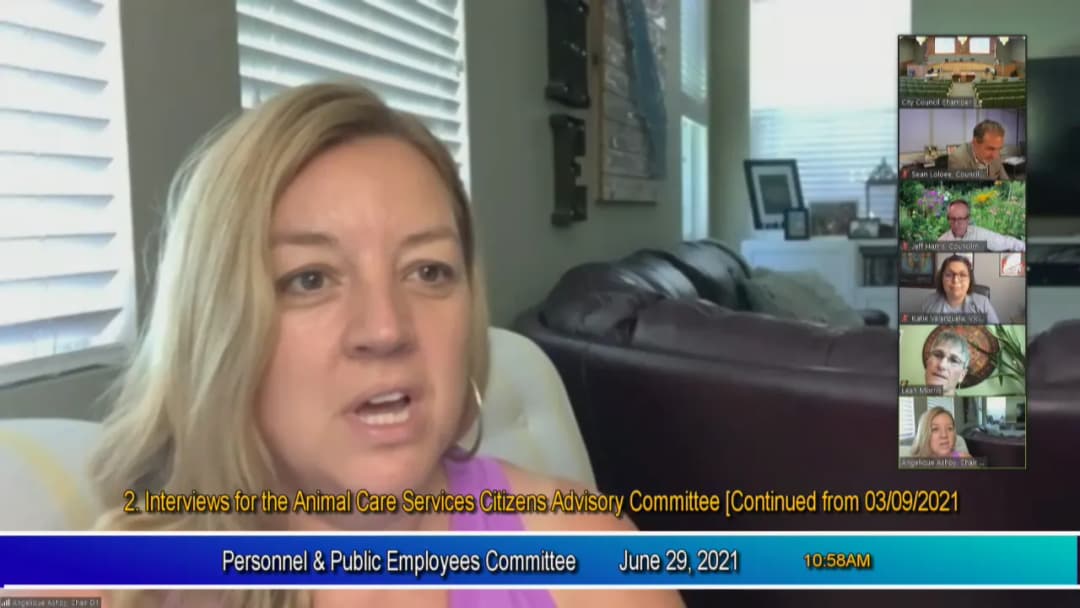
The Sacramento Personnel and Public Employees Committee (P&PE) held a special teleconference meeting on Tuesday, June 29, 2021, from 10:03 a.m. to 11:14 a.m., in accordance with Governor's Executive Order N-29-20 and the City's COVID-19 local emergency resolution. Chair Angelique Ashby (District 1) presided with members Katie Valenzuela (District 4), Sean Loloee (District 2), and Jeff Harris (District 3) present, constituting a quorum. The meeting covered three agenda items: staff recommendations for a new Animal Welfare Commission Ordinance, interviews for the Animal Care Services Citizens Advisory Committee, and establishing annual performance metrics for City Council appointive officers. Item 1: Staff Recommendations for a New Animal Welfare Commission Ordinance Phillip Zimmerman, Animal Care Services Manager, presented initial recommendations for a new Animal Welfare Commission, highlighting three major changes from the current committee structure: (1) standard four-year term limits, (2) a city of Sacramento residency requirement (the current advisory committee allows Sacramento County residents), and (3) requiring meetings to comply with the Brown Act as public meetings rather than being held at the shelter. Zimmerman noted a community survey is being finalized with the city auditor's office and would inform additional recommendations. One public caller expressed confusion about the proposed changes, stating they were unsure if the changes were good ones. The caller argued that the current committee's purpose already covered policy and legislative advice, questioned whether four-year terms and city residency were truly standard across all 33 city boards and commissions (noting only 21 of 33 use four-year terms), and expressed concern about a sunset clause not seen in other boards. Councilmember Harris questioned the proposed quorum of five of seven members, asking why not the standard four-member quorum; Zimmerman acknowledged it may have been a typo. Chair Ashby clarified that the proposal would not go to the Law and Legislation Committee—P&PE handles its own committee and commission changes and would forward directly to the full City Council. Ashby stated the three governance recommendations (term limits, city residency, Brown Act compliance) should be non-controversial and directed Zimmerman to include them in his final proposal. Councilmember Valenzuela emphasized the importance of continuity and institutional knowledge, citing a returning applicant who has been patiently waiting for the committee to restart. Harris also asked about staggering terms and how the two-full-term limit interacts with an initial one-year term; Zimmerman clarified appointees could serve the initial term plus two additional four-year terms. No formal vote was taken; the committee provided direction for staff to return with a more complete package. Item 2: Interviews for the Animal Care Services Citizens Advisory Committee The committee conducted interviews for seven seats (A through G) on the Animal Care Services Citizens Advisory Committee, continuing from March 9, 2021. Three candidates withdrew prior to the meeting: Christopher Wooten, Ashley Hoffman, and Robert Shanks. Twelve candidates were interviewed live, with five additional applicants not present: - Cynthia Karsten (Seat A) – Board-certified veterinarian specializing in shelter medicine, a field focused on individual animal care, herd health, and population management. - Kenn Altine (Seats B, C, or D) – CEO of the Sacramento SPCA, served on the committee in 2017-2018, 10 years in animal welfare, runs one of the largest spay/neuter clinics in the nation performing more than 18,000 surgeries annually, and serves on the state animal welfare association legislative committee. He emphasized the partnership between the SPCA, Front Street Shelter, and county shelter. - Denise Bell (Seats C and D) – Retired pediatric nurse performing trap-neuter-return for cats in the community for 7-8 years, engaging with residents about city shelter needs. - Elise Mize – Grew up in Meadowview and lived in Del Paso Heights, administers the largest lost-and-found Facebook group for the Sacramento area, fosters for a rescue, and noted she lives in Sacramento County (approximately one mile from the shelter director), making her potentially ineligible if the city residency change is adopted. - Julie Virga – Sacramento native, longtime volunteer, foster, and fundraiser for Front Street Animal Shelter, and a real estate broker who served on Sacramento Association of Realtors committees. - Dawn Basciano – Born and raised in Sacramento, lead project manager for the Office of Legal Services at the State Department of Public Health, with background in project management, policy, regulatory development, and community engagement. Ashby noted she was the lone candidate from District 1. - Linda Morgan – Coordinator for community outreach, education, and intervention at Sacramento Feral Resources (8 years), focused on feral cats and proactive rather than reactive approaches. - Dawn Tomita – 53-year Sacramento resident, described having four rescue dogs, over 50 adopted hamsters, three rabbits, a cat, and currently fostering two kittens; she expressed a desire to help Front Street improve. - Hilary Bagley-Franzoia – Recently retired veteran prosecutor from the DA's office who worked on animal abuse and cruelty cases for 30 years, chaired the Sacramento County cruelty task force, and worked on anti-pound seizure and euthanasia reform initiatives. - Jessica Rewers McCabe – Master's degree in public policy, adopted her dog from Front Street, worked on the collaborative "There is No Poop Fairy" social outreach video and Pups in the Parkway program. - Kathleen Garcia – Registered nurse with prior service on the previous advisory committee, worked with former staff member Gina Nepp on a zip-code-based statistical survey of community perceptions of the shelter 3-4 years ago, and adopted a special-needs dog from Front Street 11 years ago. - Leah Morris – Retired after 40 years in human health care as a family nurse practitioner, including early team-building for Covered California, with experience in program development, legislative process, and serving families facing stress or loss. Chair Ashby requested that staff assess whether Hilary Bagley-Franzoia might qualify for additional seat categories beyond those she initially identified, given her extensive cruelty-unit experience. Ashby also asked Philip Zimmerman to consider expanding the commission from seven to nine members to accommodate the high level of qualified interest and diversity of perspectives (citing the varied animal interests represented, from hamsters to rabbits to cats and dogs); Councilmember Harris noted that a nine-member board would also make the proposed five-member quorum work. The committee continued the item to the next meeting for nominations, and Ashby encouraged applicants not selected to reapply. The clerk noted there were no phone callers for this item. Item 3: Establishing Annual City Council Appointive Officer Performance Metrics and Evaluations Mindy Cuppy, City Clerk, presented a request from the Mayor to create clear communications and metrics for performance evaluations of direct reports to the City Council, with P&PE serving as the reviewing body. Chair Ashby noted a related request is coming to P&PE to annually review city committees and commissions, and suggested the two efforts be combined for efficiency. Councilmember Valenzuela recommended starting with the charter-mandated job descriptions as a foundation and soliciting input from each charter officer on goals they have set for themselves and the feedback they would find most useful. The committee directed staff to: (1) prepare a schedule of when reviews would be due, (2) list all individuals covered, (3) have the City Attorney create a checklist of charter-required duties for each office, and (4) have the City Clerk reach out to each charter officer to prepare their own checklist of responsibilities. Chair Ashby specified the format should be checklists, not essays. Councilmember Harris noted that prior work with former Councilmember Larry Carr on linkage policies had already established evaluation frameworks for direct reports, and he agreed to meet with the City Clerk to walk her through those documents. Councilmember Loloee emphasized that reviews should not be late, and the schedule should allow sufficient time for items to reach the full council in a timely manner. The committee discussed that substantive performance reviews would occur in closed session per California HR law, while conversations about roles and duties would happen in open session. The City Clerk anticipated returning to P&PE with a proposal in August. Key Outcomes - The committee provided direction to staff on the Animal Welfare Commission Ordinance, directing that the three governance recommendations (four-year terms, city residency, Brown Act compliance) be included in the final proposal, with further recommendations to follow the community survey. No formal vote was taken. - The committee interviewed 12 candidates for the Animal Care Services Citizens Advisory Committee and continued the appointment item to the next meeting for nominations. - Chair Ashby requested staff consider expanding the Animal Welfare Commission from seven to nine seats. - The committee directed the City Clerk, City Attorney, and charter officers to prepare schedules, checklists, and charter-required duty lists for the annual performance evaluation process, with a proposal expected back in August.
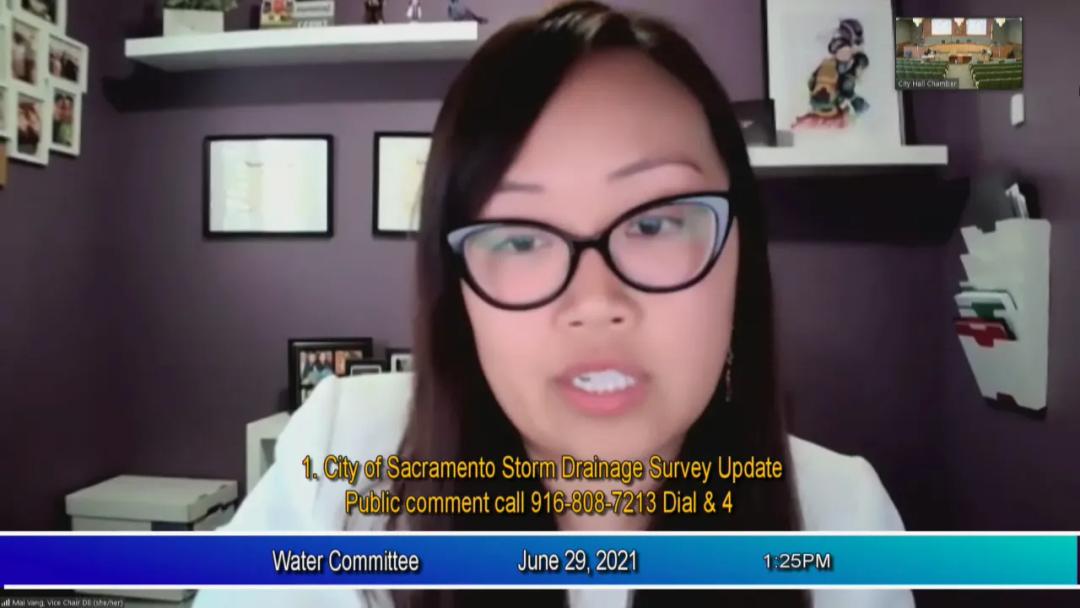
The Water Committee of the Sacramento City Council met via teleconference on June 29, 2021, from 1:01 p.m. to 1:56 p.m. The committee received two oral reports: a storm drainage survey update and an update on sustainability and water efficiency efforts. Key discussion focused on the results of a scientific survey of single-family property owners regarding potential storm drainage rate adjustments, and the committee expressed support for pursuing an 'increase only' option that would generate approximately $20 million annually. The committee also heard public comment and discussed drought conditions and water conservation efforts. Public Comments & Testimony - Chris Brown, a water conservation expert, called in to comment on the sustainability presentation. He expressed two concerns: (1) the American River Basin study used data from about 15 years ago, which he said is not accurate, and better, more recent data should have been used; (2) the per capita water use figure (25% below 2013 levels) does not reflect the fact that the city achieved lower usage in subsequent years and then per capita use rose again. He supported the city’s programs but urged staff to provide more detailed data in the future. Discussion Items - Item 1: City of Sacramento Storm Drainage Survey Update – Staff from the Department of Utilities and consultants from TBWBH Props & Measures and FM3 Research presented results of a scientific survey of single-family property owners regarding three potential storm drainage fee structures: replacement only (maintain current revenue, $40 million/year), increase only (add $20 million/year on top of current revenues), and replace and increase (replace existing fee and add $10 million/year for total $50 million/year). The survey found 63% support for the replacement only option, 54% for increase only, and 48% for replace and increase. Committee members discussed the need for additional revenue due to a $300 million capital improvement backlog and 25 years since the last rate adjustment. Councilmember Vang expressed strong support for moving forward with the increase only option, noting the urgency of deferred maintenance. Chair Harris asked about the impact of choosing increase only versus combining with replacement; consultants advised that a smaller increment now could build a track record for future increases. Staff indicated that the next steps involve finalizing a schedule with the city manager’s office and bringing a proposal to the city council. The committee concurred with pursuing the increase only approach. - Item 2: 2021 Update on Sustainability and Water Efficiency Efforts – Sustainability Manager Roshini Das presented on the department’s sustainability initiatives, including a demonstration garden, climate change studies, and a sustainability plan. She also reported on current drought conditions: Folsom Lake at 36% capacity, the city using 25% less water per person than in 2013, a shift to draw more from the Sacramento River and groundwater (reducing American River diversions by 30%), doubled incentive rebates starting July 1, and continued two-day-per-week watering restrictions with no fines yet. Chair Harris noted the rapid change in conditions since the last meeting and praised the city’s conservation efforts. Councilmember Valenzuela asked about how staff plan to adjust estimates as climate data evolves; Brett Ewart responded that the urban water management plan now includes references to more recent climate studies and that the city is investing in groundwater and surface water resilience. The item was received and filed. Key Outcomes - The committee received and filed both oral reports (Item 1 and Item 2). - The committee voiced support for the Department of Utilities to pursue the 'increase only' storm drainage rate adjustment option (adding $20 million annually) and directed staff to bring a proposal and schedule to the city council. - Staff agreed to communicate updates to the committee via email before the next meeting, given the accelerated timeline for a potential mail ballot in early 2022. - The committee took no formal action on the sustainability update but acknowledged the urgency of drought response and conservation efforts, with further discussion expected at the city council meeting later that evening regarding the urban water management plan and water shortage contingency plan.
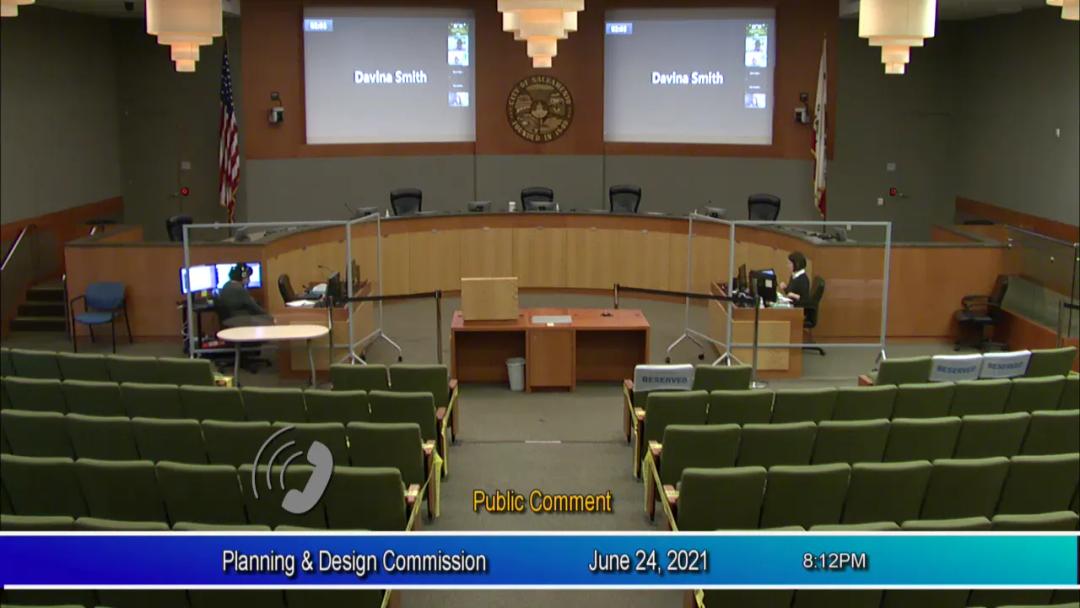
The Sacramento Planning and Design Commission met on June 24, 2021, at 5:30 p.m. to consider five agenda items, including a consent calendar, two citywide code amendments, and a land-use study for cannabis in Council District 2. The meeting featured extensive public testimony, particularly on the cannabis item, and resulted in approvals on two items and a forwarded recommendation to City Council on the cannabis ordinance. Consent Calendar - Item 1 – Approval of Minutes (June 10, 2021): Approved unanimously. Commissioners Buckley and Hernandez abstained as they were absent for that meeting. Public Comments & Testimony - Item 5 – Cannabis in District 2: Over 20 callers testified. Supporters (primarily residents of District 2) argued that the area has been overburdened with cannabis businesses, requested caps and buffers, and stated that the community had been fighting for years. Opponents (including core program participants, NAACP representatives, and business owners) argued that the proposed buffers (1,000 ft from residential, 1,500 ft from schools/parks/churches) would effectively ban cannabis in D2, disproportionately harm equity entrepreneurs, and constitute redlining. Many requested that pending pipeline projects be exempted. Discussion Items - Item 3 – Drive-Through Restaurants Ordinance (M21-003): Staff presented an ordinance adding a City Council call-up provision for drive-through conditional use permits, similar to the cannabis call-up process. Commissioners discussed potential conflicts with the existing 10-day appeal period but ultimately voted unanimously to recommend approval. (Motion by Commissioner Lindsey, seconded by Commissioner Chase; passed 9-0.) - Item 4 – Massage Therapy as a Home Occupation (M21-004): Staff proposed allowing massage therapists to provide services in their homes via a home occupation permit. The Sacramento Police Department expressed concerns about enforcement and worker safety. After discussion, Commissioner Wong Connolly made a motion to reject the amendment; it failed (4-6). A substitute motion to approve also failed (2-8). The item will still proceed to the City Council without a commission recommendation. - Item 5 – Cannabis Land Use Study and Ordinance for District 2 (M21-005): Staff presented a study showing 1.3 million sq. ft. of cannabis production and 29 approved dispensaries in D2, proposing buffers of 1,000 ft from residential zones and 1,500 ft from schools, parks, and places of worship. Commissioners debated the merits of district-specific rules versus a citywide approach, and the impact on equity applicants. After lengthy public comment, Commissioner Wallace moved to forward the ordinance to City Council with the following amendments: exempt all pending pipeline projects, analyze citywide square footage and cost, consider both buffers and caps, enforce core program incentives, and recommend that the Council hold BOP approvals until 50% equity participation is achieved. The motion was seconded by Commissioner Masias Reed and passed 9-1 (Vice Chair Pluckybaum dissenting). Key Outcomes - Item 3: Approved to forward to City Council with a recommendation of approval. (Motion passed 9-0.) - Item 4: No recommendation from the Commission; the item will proceed to City Council regardless. (Both motions to approve and reject failed.) - Item 5: Motion to forward the ordinance to City Council with amendments passed 9-1. The Commission recommended that pipeline projects be exempt, that the city evaluate citywide land-use policies, and that the Council consider holding BOPs for equity participants. The Council will make the final decision. - Director’s Report: No items presented. - Adjournment: The meeting adjourned at approximately 8:50 p.m. The next meeting is scheduled for July 22, 2021.
The Defined Contribution Plans Committee met on June 23, 2021, to review first-quarter 2021 plan performance, consider a fund lineup overhaul, approve administrative budgets, and discuss legal updates. The committee approved data sharing with the Employee Benefit Research Institute, adopted a comprehensive fund restructuring (Scenario 3), and approved the administrative allowance budget and NAGDCA conference attendance. Consent Calendar - Item 1 – Approval of April 28, 2021 Meeting Minutes: Approved with one abstention (Amy Milstein). The minutes noted a late start (10:05 AM) due to login issues. Public Comments & Testimony - No public comments were made. Discussion Items - Item 2 – Authorization to Nationwide and ICMA-RC to share plan data with EBRI: Murray Levison presented, arguing that sharing anonymized participant and plan-level data with the Employee Benefit Research Institute would benefit the public sector retirement community. The motion passed unanimously (7-0). - Item 3 – Review of 2021 1st Quarter by Hyas Group: Rosh from Hyas Group presented market commentary, plan performance, and compliance. Key points: Total plan assets reached $660 million; average account balance was $96,000 (above NAGDA average of $65,000); net cash flow was negative $2 million for the quarter, partly due to December retirements. Five core funds showed underperformance, with three (Goldman Sachs Large Growth, Nationwide Bailard, Invesco Oppenheimer International Growth) flagged for two consecutive quarters. The committee discussed including a rollover destination report in future Nationwide reports. - Item 4 – Fund Lineup Recommendation and Revisions to Investment Policy Statement: Rosh presented three scenarios (1: move to zero-revenue share classes with marginal cost increase; 2: + replace three underperforming funds; 3: comprehensive overhaul including target-date fund replacement, consolidation of underutilized funds, and addition of a bond index fund). After discussion, the committee voted unanimously to adopt Scenario 3, which reduces the weighted expense ratio from 41 to 30 basis points, saving participants an estimated $701,000 per year ($100 per participant). The target implementation date is November 16, 2021, to allow for participant communications. The related Investment Policy Statement revisions were tabled to the September meeting for fuller review. - Item 5 – Legal and Regulatory Updates from Hyas Group: Rosh highlighted the SECURE Act 2.0 (likely effective July 2022) and the new Department of Labor’s review of ESG and proxy voting rules. No action taken. - Item 6 – Administrative Allowance Account Budget: The budget (allocating $7,500 for conference registration and travel, plus set-aside funds for RFP and other needs) was approved unanimously (7-0) after clarifying the line item description. - Item 7 – NAGDCA Annual Conference Designees: The committee unanimously authorized all primary/alternate members and supporting staff to attend the virtual conference (September 13–16, 2021; $200 per government member). Attendance is to be confirmed with staff by a deadline. - Item 8 – Committee Work Plan and Outstanding Items Update: Staff noted progress on implementing the Deemed Roth IRA, scheduling ICMA-RC for a September presentation, and exploring non-career employee 457 contributions. Murray requested adding a policy on reserve limits in the Administrative Allowance Account. The September meeting agenda will include discussion of a strategic long-range plan. Key Outcomes - Data Sharing Approved: Unanimous vote to authorize Nationwide and ICMA-RC to share plan data with EBRI. - Fund Restructuring Adopted: Unanimous vote to implement Scenario 3 (full lineup overhaul) with a November 16, 2021, effective date. An informal working group will assist with communications ahead of formal subcommittee creation at the September meeting. - Administrative Budget Approved: Unanimous approval of the Administrative Allowance Account Budget. - Conference Attendance Authorized: Unanimous approval for all interested committee members/staff to attend the virtual NAGDCA conference. - Policy Revisions Deferred: The updated Investment Policy Statement (reflecting Scenario 3) and formal subcommittee creation will be addressed at the September meeting. - Future Items: Staff will bring a rollover destination report to future meetings; a policy on reserve accumulation in the Administrative Allowance Account will be drafted.
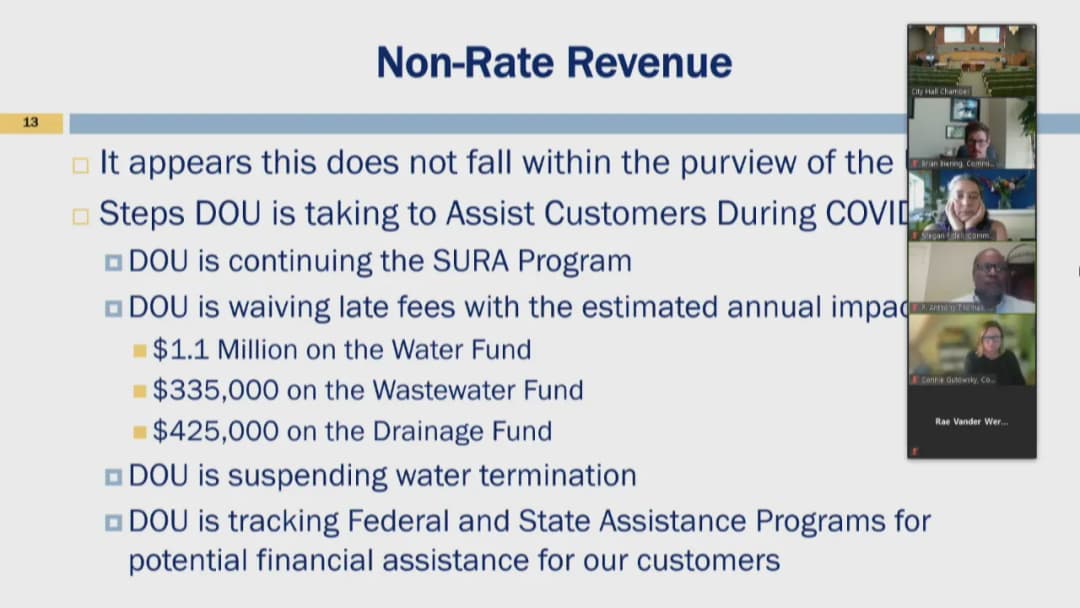
The Utilities Rate Advisory Commission (URAC) held a teleconference meeting on June 23, 2021, starting at 5:31 p.m. The primary agenda item was the Department of Utilities Accountability Plan Update for the third quarter of Fiscal Year 2021, which included financial reporting, updates on the SUERA rate assistance program, and an overview of the Proposition 218 process for a potential storm drainage rate adjustment. Commissioners also discussed water conservation efforts, COVID-19 impacts, and changes to city staff. Consent Calendar - Approval of Minutes for May 26, 2021: The minutes were approved with a vote of 5 yes, 1 abstention (Commissioner Vanderwerf abstained as she was not present at the prior meeting). Motion passed. Public Comments & Testimony - No public comments were received during the meeting. Discussion Items - Department of Utilities Accountability Plan – 3rd Quarter FY2021: Director William Busath presented the update. Key points included: - Financing: A $173 million State Revolving Fund loan for the water fund had $131 million expended and $18 million encumbered; approximately $20 million will not be spent, reducing debt service. A $32 million wastewater bond issued in 2019 had $18.8 million spent and $3.5 million encumbered, with a deadline to spend 85% by April 2022. - Fund Balances: Water fund balance stood at $117 million, with a 120-day working capital requirement of $36 million. Surpluses were attributed to conservative rate modeling, lower project costs, and favorable interest rates. The wastewater fund was balanced. The storm drainage fund, which has not had a rate adjustment in nearly 25 years, showed a high balance due to deferred capital improvements. - Rate Adjustment Timing: No water rate adjustment is anticipated until FY2026, and no wastewater adjustment until FY2025. - SUERA (Rate Assistance) Program: 8,300 participants were enrolled. Third-quarter FY2021 expenses were nearly $900,000, with $2.7 million spent from the $3.8 million budget. Staff will bring recommendations to City Council in July/August 2021 to shift from a rate-adjustment-based discount to a flat percentage discount for sustainability. - Water Conservation: Due to drought conditions, the city plans to message a voluntary 10% water conservation target. Ongoing programs include rebates for river-friendly landscaping, smart controllers, toilet replacements (including “Redo the Loo” for disadvantaged communities), and leak detection. - COVID-19 Impacts: Revenue was not significantly impacted by COVID-19. The city waived late fees totaling $1.1 million (water), $335,000 (wastewater), and $425,000 (storm drainage). Suspension of water termination will likely continue. Federal and state assistance is being coordinated. - Proposition 218 Process for Storm Drainage Rates: Senior Deputy City Attorney Mike Voss explained that storm drainage rate increases require a two-step process: a protest mailer (45 days) and a mailed ballot election requiring a majority of returned ballots to approve the increase. This differs from water, wastewater, and solid waste rates. Staff emphasized that education and outreach would be conducted but the city cannot advocate for a “yes” vote. - Commissioner Questions: Commissioners inquired about COVID-19 revenue impacts, SUERA changes, storm drainage outreach plans, and details on water efficiency rebate guidelines. Director Busath noted that many residents automatically enroll in SUERA through SMUD data matching and that the city will likely return to normal late fee collection when the COVID-19 emergency is rescinded. - Member Comments: Commissioner Fidel noted that the City of Sacramento is hiring an Integrated Waste General Manager to replace Jerome Council, who left on June 11, 2021. Commissioners expressed appreciation for Council’s service and discussed sending a farewell acknowledgment. Key Outcomes - The minutes from the May 26, 2021 meeting were approved. - The Department of Utilities Accountability Plan Update for the third quarter of FY2021 was received and filed without objection. - Staff will continue to develop a storm drainage rate increase proposal, including a Proposition 218 process involving a mailed ballot election. - Recommendations for adjustments to the SUERA program will be presented to City Council in July/August 2021.
The Measure U Community Advisory Committee met on June 21, 2021, at 6:00 p.m. via teleconference due to the COVID-19 pandemic. The meeting included training on the Brown Act and conflict of interest policies, an update on the participatory budgeting pilot program, discussion of ad hoc committee updates, and approval of the agenda log and consent calendar. The committee dissolved two existing ad hoc committees and formed two new ones. Public Comments & Testimony - No public comments were received during the meeting. Discussion Items - Overview of the Ralph M. Brown Act (Item 1): Supervising Deputy City Attorney Gerald Hicks provided an oral report on the Brown Act, covering what constitutes a meeting, legislative bodies, serial meetings, open meeting requirements, and closed session exceptions. No public comment was made. - Conflict of Interest Policy and Government Code Section 1090 (Item 2): Gerald Hicks explained the Measure U conflict of interest policy, which prohibits members from having a direct or indirect interest in Measure U appropriations, and the broader state conflict-of-interest law (Gov. Code §1090). Members were advised to recuse themselves and notify the city manager's office in writing if a conflict arises. - Participatory Budgeting Pilot Program Development Update (Item 3): Staff reported that an implementation partner has been selected and the contract is expected to be executed in the coming weeks, with work commencing toward the end of July. A request for proposals for an evaluation consultant will be reissued soon. Committee members expressed support and thanked staff and the ad hoc committee for their leadership. - Ad Hoc Committee Updates: The Budget Oversight and Transparency Ad Hoc Committee had no report. The Civic and Community Engagement Ad Hoc Committee reported on goals including coordinating with the participatory budgeting team, increasing response diversity to the city survey, creating social media accounts, and requesting inclusion of Measure U updates in council member newsletters and town halls. The Annual Report Ad Hoc Committee had no update; the 2021 report will be developed later in the year. - Investment Committee Report (Item 8): Member Pray reported on the city's jobs incentive program, noting the current minimum of 500 new jobs may be too high, and discussed potential revisions including lowering the threshold to 200 or 50 jobs and focusing on job quality and advancement opportunities. - City Manager’s Office Report: Michael Jasso updated the committee on the city's process to revise the jobs incentive policy with an equity lens, and announced that the city will begin conversations in July on the use of over $112 million in American Rescue Plan Act funds, with input sought from the investment committee and potentially the Measure U committee. - Agenda Log (Item 4): The committee discussed items for future meetings, including a joint meeting with the Police Review Commission in July. Members suggested focusing the joint meeting on alternatives to policing and survey data, and discussed rescheduling a presentation on economic development and performance metrics due to timing. The agenda log was approved as updated. - Updates to Ad Hoc Committees and Membership Composition (Item 5): Following legal concerns about ad hoc committees exceeding 12 months, the committee dissolved the Budget Oversight and Transparency and Civic and Community Engagement Ad Hocs via the consent calendar. Two new ad hocs were formed by motion: the Measure U Community Communication Ad Hoc Committee (members: Member Mora, Member Sala, Member Goris) and the Research on Universal Basic Income Ad Hoc Committee (members: Member Kivel, Member Dickinson, Member Mora, Member Odo-Kent). Staff clarified that ad hocs must be limited in purpose and duration to comply with the Brown Act. Consent Calendar - Item 6: Approved the meeting minutes of May 17, 2021. - Item 7: Dissolved the Budget Oversight and Transparency Ad Hoc Committee and the Civic and Community Engagement Ad Hoc Committee. - Item 8: Received and filed the committee letter to the City Council regarding the Fiscal Year 2021/22 Proposed Budget. The consent calendar was approved unanimously with one abstention (Member Tracy Thomas). Key Outcomes - The committee approved the updated Agenda Log as discussed (motion carried unanimously). - Two new ad hoc committees were established: the Measure U Community Communication Ad Hoc Committee and the Research on Universal Basic Income Ad Hoc Committee (motion carried with one abstention). - The consent calendar was approved, including dissolution of two ad hoc committees and approval of minutes. - Staff will follow up on the possibility of hybrid or in-person meetings; no changes are expected before the council recess. - The meeting adjourned at approximately 8:03 p.m.
The Civil Service Board met on June 21, 2021, at 1:00 p.m. via teleconference. The meeting included the introduction of two new board members, approval of a consent calendar, and deliberation on three appeals of candidate disqualifications. Key issues included notification failures and the interpretation of minimum qualification language in job specifications. Consent Calendar - Approved unanimously: Items 1–4, including the April 19, 2021 meeting minutes, revisions to the Building Inspector I classification specification, establishment of the Supervising Code Enforcement Officer classification, and revisions to Police Clerk I/II/III classification specifications. Discussion Items - Item 5 – Appeal of Alexandra Gonzales (Code Enforcement Officer): City staff presented that Ms. Gonzales had two years and one month of relevant experience, below the required three years. A bachelor’s degree was not a substitute in this recruitment. The board initially voted to affirm the disqualification, but later learned that Ms. Gonzales had not been notified of the meeting. The board then voted unanimously (4-0) to table the item to the next meeting (July 2021) with a requirement to verify proper notification. - Item 6 – Appeal of Victoria Buszinski (Public Information Coordinator): Ms. Buszinski was disqualified because she did not submit acceptable proof of education (a registrar’s letter) by the filing deadline. The board discussed that the applicant had made good faith efforts but was delayed by the university. The board voted 4-0 to reject the city’s recommendation and place Ms. Buszinski back into the process to proceed with the examination phase. - Item 7 – Appeal of Henry Galan, Jr. (Code Enforcement Officer): Due to similar notification concerns, this item was tabled to the next meeting without discussion. Key Outcomes - Consent Calendar: Passed unanimously. - Item 5: Motion to affirm disqualification passed (3-0), but later reversed and tabled to July meeting by unanimous vote (4-0) after discovering applicant was not notified. - Item 6: Motion to reject the city’s recommendation and reinstate the applicant to the recruitment process (for examination) passed 4-0. - Item 7: Tabled to the next meeting. - The board discussed the need for clearer language in job specifications regarding “any combination of education and experience.” City staff noted a citywide classification and compensation study is underway to update hundreds of outdated classifications. - The board’s next meeting is scheduled for July 2021; future meeting times may be adjusted based on member availability.
The scheduled meeting of the Active Transportation Commission for Thursday, June 17, 2021, from 6:00 p.m. to 8:00 p.m. was cancelled. No public comments, discussion items, or votes occurred. The meeting notice was published by the Public Works Department.