Browse by city
Date range
Search help

Search titles, summaries, topics and stored transcripts together. Keywords may match separately; put the whole query in double quotes for a phrase. Matching follows word analysis, so punctuation is not exact. Both dates are included. Documents are not searched.

SHOWING 1271–1280 ENTRIES
1271
SEP 10, 2020 · SACRAMENTO, CALIFORNIA · PLANNING & DESIGN COMMISSION
Sacramento Planning & Design Commission Meeting on September 10, 2020

This was a regular meeting of the Planning and Design Commission, held via teleconference due to the COVID-19 pandemic. The meeting began at 5:30 p.m. and adjourned at 9:17 p.m. It included a consent calendar, three public hearings, and a special planning district. Controversy arose over the Gateway West Commercial project, where technical issues prevented many opponents from speaking during the public comment period. The Commission ultimately voted to forward that project to the City Council with a recommendation of approval. Consent Calendar - Approval of Meeting Minutes of August 27, 2020 and Director’s Report: Approved unanimously (10-0-1, Commissioner Ogilvie absent). Public Hearings 3. 6020 Freeport Boulevard Delivery Only Cannabis Dispensary (P20-011) - Staff recommended approval for a conditional use permit to establish a non-storefront, delivery-only cannabis dispensary within an existing 5,419-square-foot building on a 0.41-acre parcel. Applicant Dennis Chan, a local veteran and property owner, expressed support, citing the need to serve veterans with PTSD. Commissioner Macias-Reed noted the applicant’s efforts to keep the property clean and voiced support. The Commission approved the staff recommendation (10-0-1). 4. The Boulevard (P17-031) - Staff recommended approval for a commercial development at 2070 Fair Oaks Boulevard, including 18,000 square feet of office and 29,000 square feet of retail, a PUD amendment, and a tree permit to remove two city trees. Applicant Paul Petrovich described the project as a gateway to Sacramento, with a contemporary design, outdoor spaces, and a planned left-turn access. Discussion included site design, electric vehicle charging, and landscaping water meters. The Commission approved (8-2-1, with Commissioners Wang-Connelly and Kaufman voting no, Commissioner Ogilvie absent). 5. Gateway West Commercial (P17-057) - This item was the most contentious. The applicant proposed a rezone to General Commercial (C-2-PUD) to allow an 8-pump gas station, two drive-through restaurants, a convenience market, a hotel, and alcohol/tobacco sales at the northeast corner of Arena Boulevard and Duckhorn Drive. Staff recommended denial, arguing the project was inconsistent with the 1994 North Natomas Community Plan and the 2035 General Plan, which envision employment center uses rather than highway-oriented commercial. The applicant countered that the uses are permitted under the existing PUD and that staff had previously expressed support. During the public comment period, five callers spoke in favor of the project. However, later in the meeting, during the “Public Comments-Matters Not on the Agenda” section, many callers reported they were unable to get through to speak on this item and expressed strong opposition. The Commission debated a substitute motion to approve the project. The substitute motion passed (8-2-1, with Commissioners Lenzi and Farrell voting no, Commissioner Ogilvie absent), forwarding the project to the City Council with a recommendation of approval. The Commission acknowledged the technical difficulties and noted that the City Council would provide another opportunity for public input. 6. Folsom Boulevard Special Planning District (M20-002) - Staff recommended approval to create two new Special Planning Districts along Folsom Boulevard between 63rd and 69th Streets and between Howe and Watt Avenues. The SPDs would prohibit massage parlors, check cashing facilities, tobacco retailers, and cannabis dispensaries, aiming to promote a greater mix of land uses and attract new private investment. The Commission approved (10-0-1) and forwarded the recommendation to the City Council. Key Outcomes - Consent calendar items approved. - Items 3, 4, and 6 approved as recommended by staff. - Item 5: The Commission voted 8-2-1 to recommend approval to the City Council, overturning staff’s denial recommendation. Technical issues with the teleconference system prevented many opponents from speaking during the public hearing; staff will convey these issues to the City Council. - The meeting adjourned at 9:17 p.m.
LAND USE PLANNING 43% · PUBLIC COMMENTS 13% · TRANSPORTATION SAFETY 9% · PROCEDURAL 7%
1272
SEP 1, 2020 · SACRAMENTO, CALIFORNIA · BUDGET AND AUDIT COMMITTEE
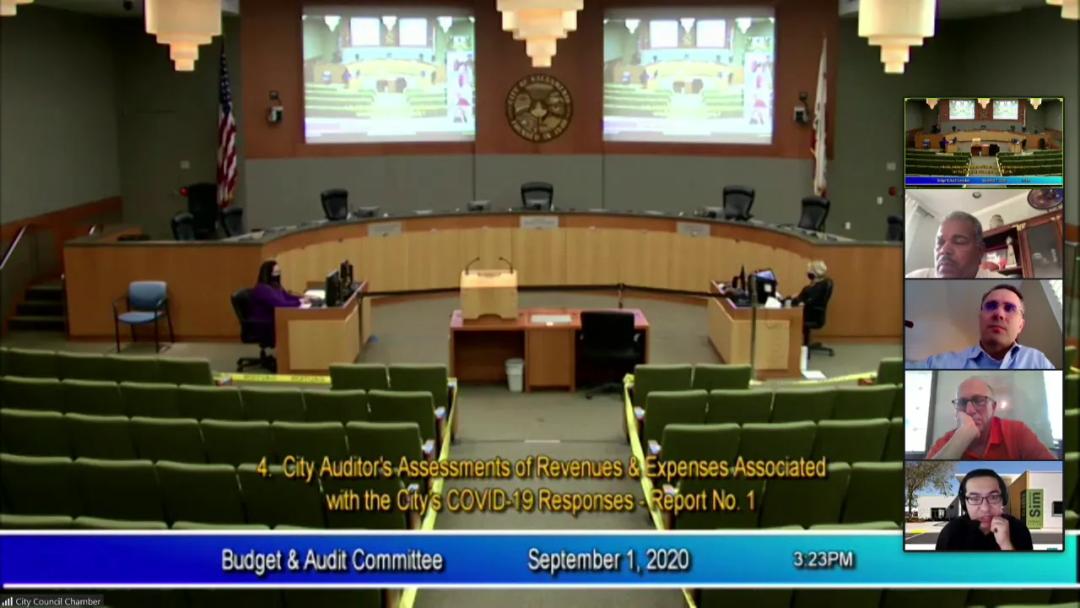
Budget and Audit Committee Meeting - September 1, 2020

The Budget and Audit Committee of the Sacramento City Council met on September 1, 2020, from 3:19 PM to 3:24 PM via teleconference. Vice Chair Eric Guerra presided with Councilmembers Rick Jennings and Jay Schenirer present; Mayor Darrell Steinberg was absent. The committee approved three consent calendar items and discussed a report on COVID-19 response finances. Consent Calendar - Item 1: City Auditor’s Activity Report for the 4th Quarter of FY 2019/2020 – accepted and forwarded to City Council. - Item 2: City Auditor’s Recommendation Follow-Up Report for the six months ending June 30, 2020 – accepted and forwarded to City Council. - Item 3: Proposed Business Operating Permit fees for cannabis nurseries – reviewed and forwarded to City Council for a public hearing. All items passed unanimously (3-0). Public Comments & Testimony - No public comments were received on any agenda item or matters not on the agenda. Discussion Items - Item 4: City Auditor’s Assessments of Revenues and Expenses Associated with the City's COVID-19 Response - Report No. 1. City Auditor Jorge Oseguera presented the report, summarizing the office's activities including assisting with internal controls, reviewing proposals, conducting real-time auditing, and surveying businesses and residents. The committee received the report and forwarded it to the full City Council for approval. Councilmember Guerra thanked the auditor and staff for working around the clock. Councilmember Schenirer suggested incorporating equity audits into future reports, referencing the National Association of State Auditors' efforts. The motion passed unanimously (3-0). Key Outcomes - All three consent calendar items were approved and forwarded to City Council. - The COVID-19 response assessment report was received and forwarded to City Council. - Meeting adjourned at 3:24 PM.

PROCEDURAL 80% · COVID-19 RESPONSE 20%
1273
SEP 1, 2020 · SACRAMENTO, CALIFORNIA · LAW AND LEGISLATION COMMITTEE
Law and Legislation Committee Meeting Summary – September 1, 2020

The Sacramento City Law and Legislation Committee met on Tuesday, September 1, 2020, at 1:00 p.m. via teleconference due to the COVID-19 pandemic. The meeting was called to order by Chair Jay Schenirer and included members Eric Guerra, Steve Hansen (arriving at 1:01 p.m.), and Jeff Harris. The committee reviewed five agenda items, heard extensive public testimony, and took actions including forwarding ordinances to the City Council and providing staff direction on fireworks policy. The meeting adjourned at 3:03 p.m. Consent Calendar - Item 1 – Law and Legislation Log (File ID 2020-00207): Approved unanimously (4-0) by a motion from Member Harris and second by Member Guerra. The log covers routine governmental affairs. Public Comments & Testimony - Item 2 – Fireworks Ordinance: 14 callers spoke, nearly all opposing a ban on state-approved “safe and sane” fireworks. Speakers included Gloria Dodson (Committee Assembly), John (Victory Outreach), Charles Baldwin (Sacramento Area Sports), Ed Garcia (Let’s Get Moving), Dean Burdein (Love Inc.), Mike Duffick (Sacramento Youth Band), Mary Willick (St. Mary Church), Felix Duncan (Enlightened Minds), Shannon (Manna Food Bank), Ross Hendricks (Del Paso Heights Community Association), Megan Blackwell (Richmond Sacramento Inc.), Marvin Perkins, Edgar Alvarez Cornejo, and Jeff Johnson (Love Inc.). They argued that illegal fireworks are the real problem and that banning legal fireworks would hurt nonprofit fundraising and potentially increase illegal use. Shannon noted her food bank feeds 200-300 families weekly and relies on fireworks sales for operating funds. Ross Hendricks called for a zero-tolerance policy on aerial mortar explosives. - Item 3 – Massage Ordinance: One caller, Michelle Huang (licensed massage therapist), expressed concern about a provision prohibiting residing on commercial premises, fearing it could harm legitimate home-based practitioners. She noted many cities follow Sacramento’s lead. - Item 4 – Tobacco Retailer Amendments: Four callers opposed the proposed exemptions. Marissa Greenband (District 4 resident) cited studies showing 5× more tobacco retailers in low-income neighborhoods. Jen Graham Lahano (American Cancer Society Cancer Action Network) urged keeping the strong 2019 ordinance. Rachel Alvarez (health educator at Sacramento State) argued that retailer density affects youth tobacco use. Abdilaziz (SOL Project) highlighted that African Americans in Sacramento have a life expectancy of 73 years vs. 87 for Hispanics, linking high tobacco density to shorter lifespans. Discussion Items - Item 2 – Fireworks Ordinance Amendment (File ID 2020-01025): Fire Marshal Jason Lee presented. He reported that in 2020, 90 fireworks booths were approved (down from an average of 120), with gross sales of $2.4 million, 50% going to vendors. The illegal fireworks problem worsened in 2020 due to COVID-19 limiting professional shows and reducing task force funding (no funding in 2020 versus $100,000 in 2018 and 2019). Lee noted that banning state-approved fireworks might increase illegal use. Councilmember Guerra (who requested the item) favored a comprehensive policy approach rather than a ban, including administrative penalties, surcharges, and stronger education. Councilmember Harris advocated for restricting use to July 4th only and asked for a clear resource estimate to tackle illegal fireworks. The committee directed staff to return within 60-75 days with a holistic policy addressing illegal fireworks, potential surcharges, stakeholder meetings with industry and nonprofits, and analysis of cities that have banned fireworks. No vote was taken; direction only. - Item 3 – Massage Ordinance (File ID 2020-00919): Tessa St. John (Finance) presented. The ordinance removes massage from adult-related establishment codes, requires all massage businesses to obtain a special business permit (currently few are issued), and expands operational standards (lighting, attire, visibility, prohibits condoms in rooms, prohibits residing on commercial premises). Staff noted San Jose shut down 172 of 300 businesses (≈60%) after similar changes. Councilmember Guerra moved to forward to City Council with amendments: a one-year lookback on the ordinance’s impact, tracking of penalty fines collected, and a report on how fines might support victim services. Member Schenirer seconded. Councilmember Harris supported, noting the ordinance does not affect home-based practitioners (they can still do out-calls). Councilmember Hansen asked for a future path to regulate home practitioners. The motion passed unanimously (4-0). The item will go to City Council for consideration. - Item 4 – Tobacco Retailer Amendments (File ID 2020-01049): Jose Mendez (Code Enforcement) presented three proposed amendments: (1) exempt locations that submitted a planning application before January 1, 2020 (14 locations identified, three currently without a license would benefit); (2) exempt locations that devote ≤5% shelf space to tobacco and sell fresh produce, dairy, meat, bread (the “fresh food” exemption); (3) allow retailers to close for up to one year for construction without losing license. Councilmember Hansen, who requested the item, moved to forward only the pipeline amendment (grandfathering three in-process businesses) with an additional cap of no more than two tobacco retailers within 1,000 feet. The motion was seconded by Chair Schenirer. Councilmember Harris opposed, arguing the pipeline projects sought CUP’s after ordinance adoption and that exemptions undermine public health. Councilmember Guerra was conflicted but ultimately voted no. The vote was 2-2 (Hansen and Schenirer aye; Harris and Guerra no). Because the vote was tied, the item will be forwarded to City Council without a recommendation. Councilmember Hansen noted he had committed to revisit these issues when the original ordinance passed. - Item 5 – Laid-Off Employee Recall Rights (File ID 2020-00874): Councilmember Hansen requested postponement because the state recently passed AB 3216 (by Assemblymember Ash Kalra), which is similar to the proposed city ordinance and is awaiting the governor’s action. The committee agreed to postpone the item to a future meeting to allow staff to review the state law and report back. No vote was taken on the item itself. Key Outcomes - Item 1: Approved unanimously. - Item 2: Staff directed to develop a comprehensive fireworks policy (not a ban) with emphasis on enforcement, surcharges, stakeholder input, and analysis of other cities; report back in 60-75 days. - Item 3: Ordinance forwarded to City Council for approval with amendments (one-year lookback, tracking of fines, potential use for victim services); passed 4-0. - Item 4: Pipeline amendment only forwarded to City Council without recommendation (2-2 vote); fresh food and construction closure amendments not advanced. - Item 5: Postponed pending review of state law AB 3216. - Meeting adjourned at 3:03 p.m. The Budget Committee meeting (Committee of the Whole) was scheduled to start approximately 15 minutes later.

FIREWORKS REGULATION 52% · CANNABIS REGULATION 12% · HUMAN TRAFFICKING 11% · BUSINESS REGULATION 8%
1274
AUG 31, 2020 · SACRAMENTO, CALIFORNIA · UTILITIES RATE ADVISORY COMMISSION
Utilities Rate Advisory Commission Reviews Recycling and Solid Waste Finances on August 26, 2020

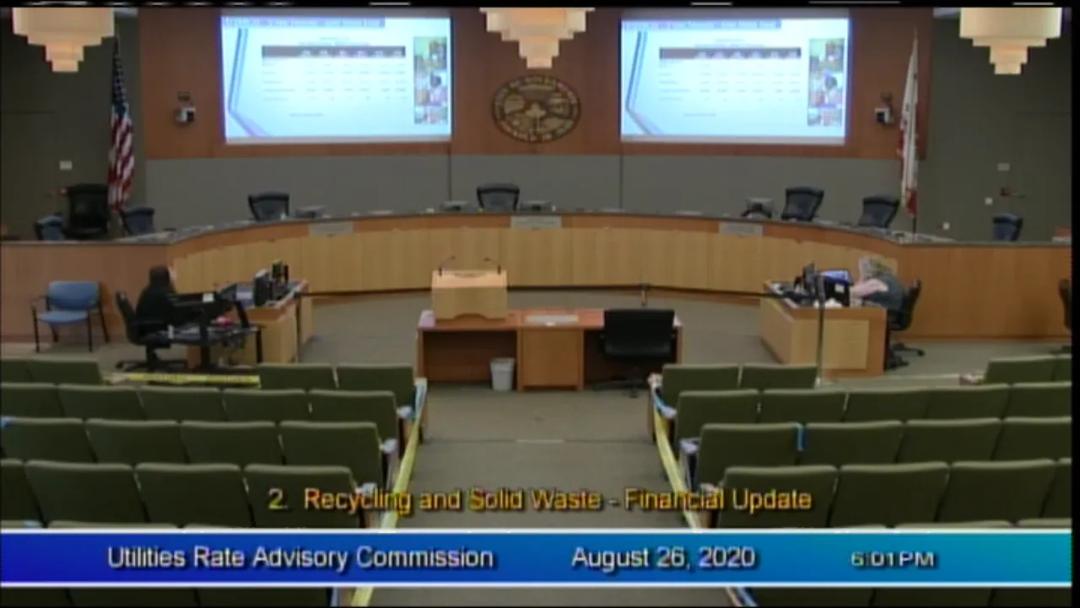
The Utilities Rate Advisory Commission (URAC) met on August 26, 2020, at 5:30 p.m. at 915 I Street, 1st Floor, Council Chambers, Sacramento, CA, to receive a financial update on the Recycling and Solid Waste division. The commission approved the consent calendar and heard a detailed presentation from Jerome Council, Integrated General Waste Manager, and Janice Conerly-Coleman, Support Services Manager. The discussion focused on the division's financial outlook, challenges, and the need for a future rate adjustment. The meeting adjourned at 6:13 p.m. Consent Calendar - Motion to approve minutes of July 22, 2020: Passed unanimously (8-0). All commissioners voted yes: Melissa Lee, Brian Beering, Megan Fidel, Rachel Ann Vanderwerf, Connie Gutowski, April Javis, and P. Anthony Thomas. Public Comments & Testimony - No public comments were made during the 'Matters Not on the Agenda' period. Discussion Items - Recycling and Solid Waste Financial Update (Receive and File): - Organizational Overview: Jerome Council summarized services provided by the utility, including weekly garbage collection with two bulky item appointments and one free junk coupon, weekly yard waste (year-round containerized, plus leaf season November–January), every-other-week recycling with appliance/e-waste pickup, seasonal street sweeping (February–October, currently every 6 weeks), and additional services like battery/lamp drop-off, used oil collection, and household hazardous waste drop-off. - Financial Overview: Janice Conerly-Coleman presented a high-level financial snapshot. FY20 closed June 30 with numbers about 80% finalized. The current rate increase (approved for 1.5 years, not the requested 3.5 years) covered six months of FY20 and all of FY21. The fund is projected to fall below the 90-day reserve target beginning in FY22 and into a deficit by FY25 without further rate increases. The accounting was revised to allocate fund balance to each service (garbage, recycling, green waste, street sweeping) to show fee-for-service cost coverage. Garbage and recycling are projected to finish FY20 and FY21 strong, but garbage falls below reserve targets in FY22. Recycling's healthy balance is partly due to an additional 12% allocation and unexpended processing costs still under negotiation. Green waste faces a 100% increase in disposal costs (not the assumed 10%), leading to deficits by end of FY23. Street sweeping will also be in deficit by end of FY22 if no increase is approved. - Accomplishments: New equipment and staff for street sweeping frequency improvement (aim to move from 6-week to monthly service), five additional side loaders ordered, five equipment operators hired (not yet onboard), and a CNG station approved in June 2020. - Challenges: Expenses continue to exceed revenue; ongoing negotiations with Waste Management on recycling processing terms (affected by China National Sword); staffing and equipment needs; COVID-19-related disposal cost increases of 10-15% and operational impacts. - Next Steps: A rate proposal will be brought to URAC next month with more details. Member Comments & Questions - Street Sweeping Frequency Change: Commissioner Gutowski asked why street sweeping is changing from 6-week to 4-week (likely a misstatement; the presentation says increasing frequency). Jerome Council explained that customer satisfaction surveys rated street sweeping low, and a more robust schedule would reduce debris in storm drains, improving water quality. - Recycling Fund Balance: Commissioner Beering questioned the positive recycling balance given past revenue losses. Council clarified that the China National Sword policy cut off the Chinese market, and some recyclables now have negative value (e.g., mixed paper). The city is negotiating with Waste Management to pay only for negative-value materials, rather than a flat rate. The balance is inflated because costs for processing have not yet been realized. - Planning for Rate Case: Commissioner Beering requested a clearer picture of the sustainable 90-day fund balance path, including uncertainties in contracting and hiring. - Council's Previous Rejection: Commissioner Fidel noted the City Council had rejected the 3.5-year rate increase and asked what would be different this time. Council stated he couldn't speak to the Council's rationale, but Janice Conerly-Coleman noted that this time they have concrete green waste contract costs, which the Council is aware of. - Creativity in Funding: Commissioner Vanderwerf asked about creative funding methods beyond rate increases. Council cited operational efficiencies, such as installing oil boxes on recycling trucks to eliminate a dedicated used-oil collection route, freeing up staff for appliance/e-waste appointments. - Electric Vehicle Interest: Commissioner Fidel requested cost and savings data for the new electric side loader truck; Council agreed to provide it. - Timing Concerns: Commissioner Fidel expressed concern that the schedule for the upcoming rate process is similar to last time, leaving inadequate time for meaningful commission input before 218 notifications. She suggested more collaborative work. - Outreach and COVID: Commissioner Vanderwerf inquired about public outreach during COVID-19. Janice Conerly-Coleman described using alert systems, updating the website, resuming compost seminars (next on September 10), and managing route interruptions with notifications. - Commissioner Terms: Commissioner Beering noted his and April Javis's terms expire at the end of 2020, and discussed transitioning for new commissioners. Council indicated that commissioners can continue serving until reappointed or replaced, and that new commissioners may be briefed before voting. Key Outcomes - Consent Calendar Approved: Minutes of July 22, 2020 approved unanimously. - Receive and File: The Recycling and Solid Waste Financial Update was received and filed with no formal vote needed. - Future Actions: Staff will return next month with a detailed rate proposal and answer outstanding questions (e.g., electric vehicle costs). The commission will consider the proposal in upcoming meetings, with the goal of a rate adjustment to avoid fund deficits.

SOLID WASTE 36% · BUDGET AND FINANCE 16% · RECYCLING SOLID WASTE 16% · PROCEDURAL 12%
1275
AUG 27, 2020 · SACRAMENTO, CALIFORNIA · PLANNING & DESIGN COMMISSION
Planning and Design Commission Reviews 2040 General Plan Outreach, Mobility, and Land Use on August 27, 2020

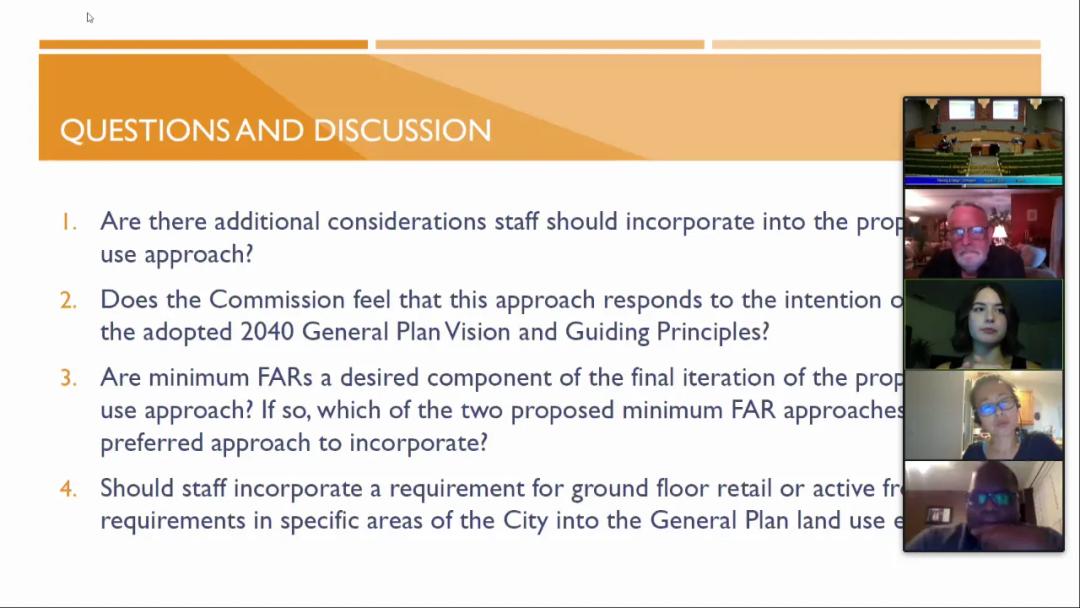
The Sacramento Planning and Design Commission met on Thursday, August 27, 2020, at 5:30 PM via teleconference due to the COVID-19 pandemic. The meeting included consent calendar items, a withdrawn item, and three study sessions on the 2040 General Plan update: Phase 2 community engagement, mobility element, and land use element. Commissioners provided feedback on proposed strategies and approaches, and all study session items were received and filed. Consent Calendar - Approval of August 13, 2020 Minutes: Moved, seconded, and carried (Covill/Pluckebaum); (8:0:2:1). Abstain: Commissioners Hernandez and Burke (both absent from the previous meeting). Absent: Commissioner Macias-Reed. - Director’s Report: Staff announced: - City Council approved the West Broadway Specific Plan. - New ministerial housing process effective August 27, 2020. - Historic district plans awarded a Preservation Design Award by the California Preservation Foundation. - Tom Pace selected as the new Community Development Director. Public Comments & Testimony - A caller expressed concerns about the 2040 General Plan outreach, stating that the virtual format is difficult for seniors to access. The caller asked about the inclusion of unincorporated areas and study areas in the plan, and requested better communication between communities and the city. Discussion Items 1. 2040 General Plan - Phase 2 Community Engagement Update (File ID: 2020-00976) - Staff presented results from the Virtual Citywide Workshop (May 18 to June 26, 2020). Over 1,100 households participated. Key findings: - 93% support or are neutral about compact mixed-use development along key commercial corridors. - 82% support or are neutral about expanding the city’s sphere of influence to include the Natomas Joint Vision Area. - 81% support or are neutral about electrification requirements for new buildings; 75% for gradual electrification in existing buildings. - 97% support or are neutral about using an equity framework for infrastructure investments. - Commissioners asked about demographic and geographic data collection, outreach to underserved communities (e.g., through schools and community-based organizations), and the need to ask trade-off questions (e.g., willingness to give up parking for tree canopy). Staff noted a scientific survey of 10,000 residents is underway, and additional virtual community plan area workshops are planned for October. - The item was received and filed. 2. 2040 General Plan Mobility Element Study Session (File ID: 2020-00968) - Staff presented four big and bold strategies: free/affordable transit passes for low-income residents, youth, and seniors; eliminating city-mandated parking minimums and introducing parking maximums; transportation demand management; and right-sizing streets to prioritize active transportation and transit. - Commissioners discussed: - Need for a representative from Regional Transit (RT) at future meetings to discuss coordination and plans. - Ideas for bike superhighways, closing streets to cars, free transit for all, and converting parking spaces to other uses. - Challenges of cost and maintenance for protected bikeways (approximately $2 million per mile). - Importance of addressing safety and comfort for all ages and abilities. - Staff noted that lane reduction maps are being developed and will be presented in upcoming community workshops. The item was received and filed. 3. 2040 General Plan Land Use Element Study Session (File ID: 2020-00945) - Staff proposed three major changes: 1. Removing density (dwelling units per acre) as a regulatory standard and moving to floor area ratio (FAR)-based intensity. 2. Decoupling land use designations from intensity requirements. 3. Simplifying land use designations from 27 to 11 categories, including consolidating nine residential designations into one “Neighborhood” designation. - Commissioners discussed: - Ground floor retail requirements: Most commissioners favored flexible active frontage requirements over mandated retail, citing concerns about vacant retail spaces. - Minimum FARs: Commissioners sought visualization of how buildings would look and emphasized avoiding unintended consequences (e.g., underutilization of space). - Anti-displacement policies: Staff noted that these will be incorporated into the General Plan and subsequent zoning updates. - The relationship between the Land Use Element and Housing Element update (2021–2029). - Staff will incorporate feedback and return with maps and more detailed proposals. The item was received and filed. Key Outcomes - All three discussion items were received and filed (no formal votes). - Consent calendar approved with noted abstentions. - Item 6 (Folsom Boulevard Special Planning District) was withdrawn and rescheduled for September 10, 2020. - Commissioners requested that an agenda item be placed for a future meeting to discuss commission process improvements, including better coordination among city commissions and committees. - The meeting adjourned at 8:12 PM.

LAND USE PLANNING 26% · TRANSPORTATION SAFETY 13% · PROCEDURAL 10% · COMMUNITY ENGAGEMENT 10%
1276
AUG 20, 2020 · SACRAMENTO, CALIFORNIA · ACTIVE TRANSPORTATION COMMISSION
Sacramento Active Transportation Commission Special Meeting - August 20, 2020

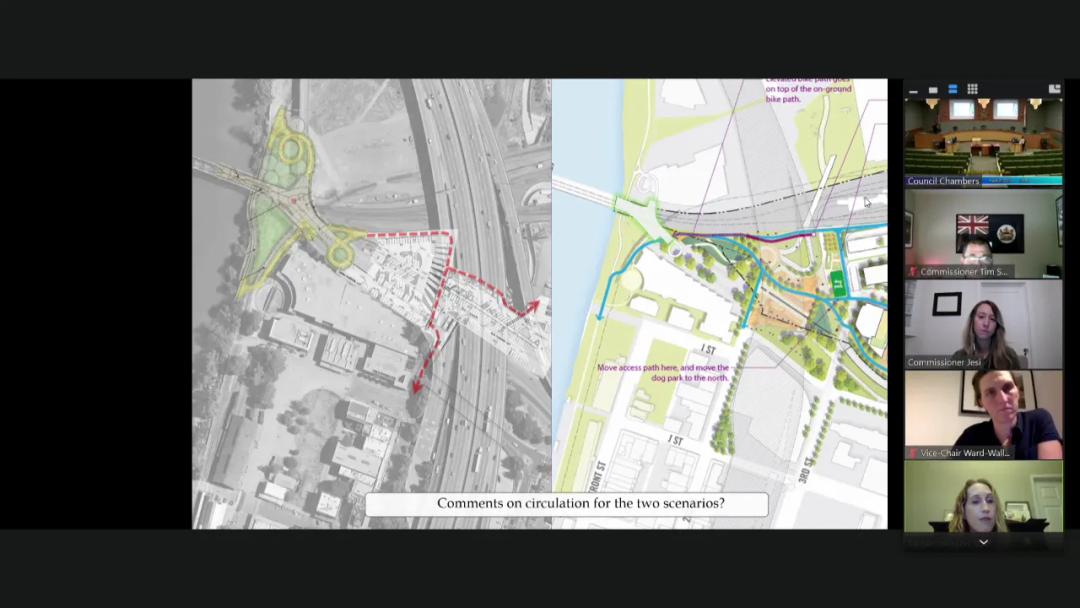
The Active Transportation Commission (ATC) held a virtual special meeting on Thursday, August 20, 2020, beginning at 6:00 p.m. Vice Chair Ward Waller presided in the absence of Chair Heim; Commissioner Brazzle was also absent. The commission handled a heavy agenda, including consent items, informational presentations, and four action items forwarded to the City Council. All action items passed, with one vote occurring under an acting chair due to recusals. Consent Calendar - Approved the July 30, 2020 meeting minutes and received and filed the ATC Log by unanimous consent. Commissioner Haupt noted that he had been absent for the consent calendar in the prior meeting and asked that the record reflect that correction. Public Comments & Testimony - A public e-comment asked the commission to place on a future agenda the creation of a letter requesting the City Council to implement a slow streets program, noting support from individual council members and the mayor's commission on climate change. - A second e-comment, apparently affiliated with the Sacramento Rail Preservation Action Group, opposed the Del Rio Trail project, asserting that the city failed to consider alternatives to destroying a portion of the Sacramento Southern Railroad and that a lawsuit (court date postponed to August 28) would likely result in a major loss. The comment also claimed the project benefits wealthy, politically connected interests and diverts resources away from equity priorities and the Sacramento River Bike Trail. - No call-in public comments were received during the meeting. Discussion Items - Commission Staff Report – Jennifer Donlon Wyant reported that the Del Rio Trail had not been delayed by COVID, with a preliminary CEQA ruling expected August 28 and 60% design anticipated this fall. The Sacramento Valley Station grant was partially awarded, funding bike/ped access to the Railyards Plaza. The West Broadway Specific Plan goes to City Council on August 25; no dates were set for the Broadway Bicycle Master Plan Amendment or Vision Zero School Safety Study. Staff apologized for failing to agendize a slow streets subcommittee, but the city attorney advised that the chair could appoint an ad hoc subcommittee outside the Brown Act because it would be fewer than a quorum. - 2040 General Plan Mobility Element (Information) – Ryan Dodge, Jennifer Donlon Wyant, and Matt Hertel presented proposed ‘right-sizing’ of streets, including many lane reductions, with the goals of prioritizing walking, biking, and transit, improving safety, and advancing equity. A scientific survey on these strategies had been mailed to 10,000 randomly selected households. Commissioners expressed general support while asking about survey methodology, engineering criteria, and future community engagement opportunities. - Railyards Specific Plan Bicycle Master Plan Amendment (Action) – Greg Taylor presented amendments to the bikeway network, including class I and class IV facilities. A class IV segment had been mislabeled in the staff report as class II, and the commission agreed to reference the corrected exhibit. The motion to forward the recommendation to City Council passed unanimously. - I Street Bridge Deck Conversion Project (Information) – Megan Johnson presented two ramp concept options: a spiral ramp (lower cost, more compact, less direct to Sacramento Valley Station) and a straight ramp (more direct, approximately 20% higher cost, smaller footprint). Commissioners asked about ADA accessibility, ground-level uses, and safety for the movable bridge. No action was taken. - Downtown Traffic Controller and Communication Upgrade Project (Information) – John Matoba presented completed upgrades at 132 intersections, including new cabinets/controllers, 100,000 feet of fiber-optic cabling, and CCTV cameras. The project finished about one month ahead of schedule and was under budget. Commissioner Carpenter asked about near-miss detection technology; staff said it was being explored but faced technical and cost challenges. - Highway Safety Improvement Program (HSIP) Cycle 10 Grant Applications (Action) – Leslie Mancebo presented two proposed applications: advanced dilemma zone detection on Marysville Boulevard and up to $250,000 for RRFBs (rectangular rapid flashing beacons) at pedestrian crossings. Two commissioners with Caltrans connections recused themselves, and Commissioner Cole served as acting chair for this item. The motion to forward the recommendation to City Council passed 6-0. - Vision Zero Top 5 Corridors Draft Plan (Action) – Leslie Mancebo summarized the draft plan for the city’s five highest-crash corridors, covering data analysis, community engagement, countermeasures, and policy recommendations such as automated speed enforcement. The public comment period was open through August 28. The motion to forward the recommendation to City Council passed unanimously. - Draft City of Sacramento Criteria and Guidance for Creative Crosswalks (Action) – Valerie Hermanson presented draft guidelines allowing only organizations (not individuals) to apply, restricting treatments to standard crosswalks at stop-controlled or signalized locations with speed limits of 30 mph or less, and requiring permits, insurance, and maintenance. Commissioners raised questions about liability for community groups and whether the city itself could apply. The motion to forward the recommendation to City Council passed unanimously. Key Outcomes - Approved the consent calendar, including the July 30, 2020 minutes and the ATC Log. - Forwarded a recommendation to City Council to approve the Railyards Specific Plan Bicycle Master Plan Amendment, referencing the corrected exhibit. - Forwarded a recommendation to City Council to approve the HSIP Cycle 10 grant applications (passed 6-0, with two recusals). - Forwarded a recommendation to City Council to approve the Vision Zero Top 5 Corridors Draft Plan. - Forwarded a recommendation to City Council to approve the Creative Crosswalks Criteria and Guidance. - The commission chair will appoint a subcommittee to develop a slow streets letter for a future meeting; staff will provide a forward look at upcoming agenda items to help the commission prepare.

TRANSPORTATION SAFETY 37% · PUBLIC WORKS 19% · PROCEDURAL 12% · PUBLIC COMMENTS 5%
1277
AUG 19, 2020 · SACRAMENTO, CALIFORNIA · ARTS, CULTURE, AND CREATIVE ECONOMY COMMISSION
Sacramento Arts, Culture, and Creative Economy Commission Special Meeting - August 19, 2020

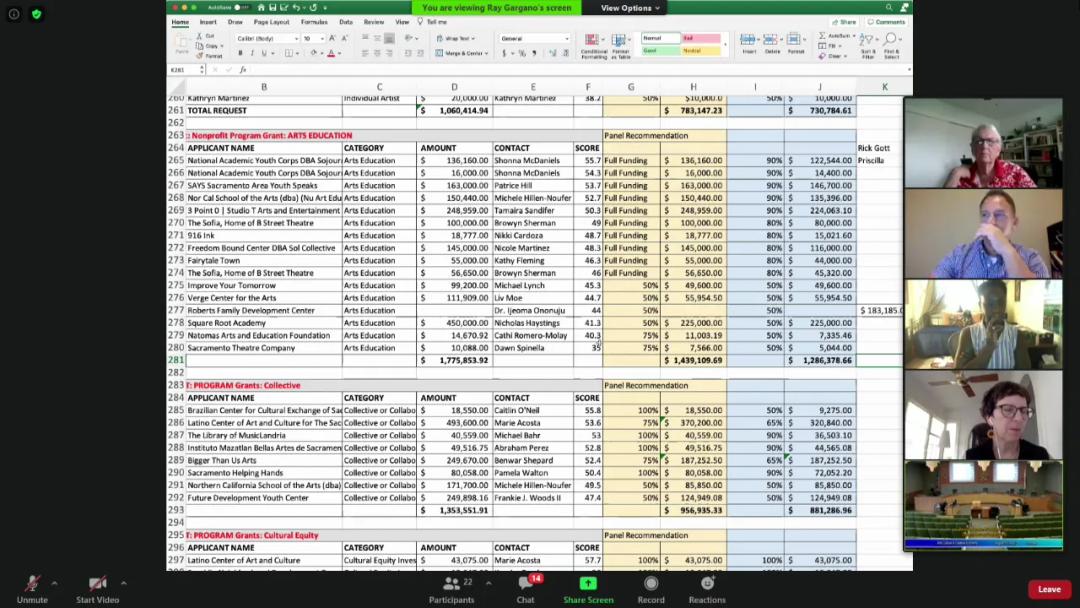
The Arts, Culture, and Creative Economy Commission held a special meeting on Wednesday, August 19, 2020, to allocate $7.5 million in CARES Act Creative Economy Recovery Program Grants. The meeting, which ran from 9:00 AM to approximately 2:40 PM with a lunch break, involved reviewing panel recommendations, declaring conflicts of interest, and approving funding allocations across multiple grant categories. Commissioners debated funding priorities, reduced requests by approximately $2.5 million, and passed motions to approve the allocations. The meeting concluded with a call to action for commissioners to advocate for additional funding from the City Council. Consent Calendar - Allocation of Additional $2.5 Million: The Commission unanimously approved the acceptance of an additional $2.5 million in CARES Act funding for the Creative Economy Recovery Program, bringing the total to $7.5 million. This funding had been approved by the City Council the previous night. Public Comments & Testimony - No public comments were made during the meeting. Discussion Items - Overview and Process: Raymond Gargano (Arts Program Coordinator) presented an overview of the program's timeline, statistics, and the application process. He highlighted that the creative economy was significantly impacted by COVID-19, citing that the arts and entertainment sector was the most impacted industry, and that over 40% of arts organizations nationwide believed they might not survive the pandemic. The original $89.6 million CARES Act allocation included $20 million for arts, creative economy, and tourism, with the Commission now managing $7.5 million. - Conflict of Interest Declarations: Multiple commissioners declared conflicts of interest for specific applicants. Cecily Hastings (her business and a nonprofit), Rick Gott (family member and affiliated organization), Andrea Lapore (a business associate), Priscilla Enriquez (board member of Fairy Tale Town), and Julian (a community panelist) recused themselves from related votes. - Roberts Family Development Center: Staff reported that the organization was under an active city audit. The Commission voted (with one recusal) to remove the organization's program grant (requesting $183,000) from the funding list due to risk, but to consider their reimbursement request with the condition that if the audit was not resolved by mid-November, the funds would be reallocated. - Panel Recommendations and Reductions: The Commission reviewed panel recommendations for each category, with total requests of $7.6 million against $5.1 million available. After extensive discussion, they adopted a tiered funding approach (e.g., 100%, 75%, 50% of requests) tailored to each category's scores and needs. They also implemented a $100,000 cap for creative business reimbursements and a $10,000 cap for individual artist reimbursements, with the intent to prioritize these unmet needs in a potential second round of funding. - Final Adjustments: To meet the budget, the Commission voted to eliminate funding for the two lowest-scoring applicants in several categories, and reduced the Square Root Academy grant by $220,000, resulting in a balanced allocation of exactly $5.1 million. Key Outcomes - Motion Passed: The Commission unanimously approved the allocation of the additional $2.5 million in CARES Act funding (all commissioners present voted yes). - Funding Allocations Approved: The Commission approved funding for all grant categories as follows (with recusals noted): - Nonprofit Arts Education Reimbursement: Approved (Rick Gott recused). - Creative Business Reimbursement: Approved (Cecily Hastings, Isela Perez, Rick Gott recused). - Cultural Equity Investment Reimbursement: Approved (Cecily Hastings recused). - Arts and Cultural Equipment Reimbursement: Approved (no recusals). - Individual Artist Reimbursement: Approved (Andrea Lapore recused). - Arts Education Program Grants: Approved (Priscilla Enriquez, Rick Gott recused). - Collective Programs: Approved (no recusals). - Cultural Equity Program Grants: Approved (no recusals). - Directives and Next Steps: Staff were directed to email the final funding summary to commissioners. The Commission urged members to contact City Council members before the August 25 meeting to advocate for additional funds, with a recommendation that any new funds be used for reimbursements. A special meeting may be scheduled if additional funding is received.

GRANT MANAGEMENT 34% · ARTS AND CULTURE 30% · PROCEDURAL 12% · BUDGET AND FINANCE 12%
1278
AUG 18, 2020 · SACRAMENTO, CALIFORNIA · LAW AND LEGISLATION COMMITTEE
Sacramento Law and Legislation Committee Meeting: August 18, 2020

The Sacramento Law and Legislation Committee met via teleconference on August 18, 2020, from 1:00 p.m. to 1:47 p.m. The committee approved the consent calendar, discussed a proposed temporary shelters and encampments ordinance, and reviewed amendments to tobacco retailer regulations. Public comments were not made on any agenda item. Consent Calendar - Item 1: Law and Legislation Log – Approved unanimously (4-0). - Item 2: Legislative Advocacy Correspondence – Received and filed unanimously. Public Comments & Testimony - No public comments were received on any agenda item or on matters not on the agenda. Discussion Items Item 3: Temporary Shelters and Encampments Ordinance - Staff Presentation: Tom Pace, Interim Community Development Director, outlined a proposed interim emergency ordinance to allow private parties to sponsor small temporary residential shelters and temporary shelter facilities (e.g., on church parking lots or in commercial/industrial zones, with a 300-foot separation from sensitive uses). Staff recommended returning in early October with a draft ordinance. - Councilmember Hansen (motion maker) emphasized the need for a process to permit “safe ground” sites, noting pending lawsuits and the mayor’s homelessness plan to purchase 500 tiny homes. He moved to direct staff to return within 30 days (by mid-September) with an emergency ordinance, including stakeholder outreach. - Councilmember Guerra (second) supported the motion and urged expedited standards for utility connections (electricity, plumbing, sanitation) and use of modular or manufactured housing, citing state and federal standards. - Councilmember Harris expressed support for creating a process but opposed allowing tents, citing unsightliness and sanitation issues from the Modesto Outdoor Emergency Shelter Program. He requested staff explore a 500-foot separation from sensitive uses and favored hard-sided structures like pallet shelters. - Chair Schenirer noted that such shelters may become permanent due to the prolonged shelter crisis and emphasized the need for community engagement, even over objections. Item 4: Ordinance Revisions to Chapter 5.138 – Tobacco Retailers - Staff Presentation: Jose Mendez, Code Enforcement Manager, proposed two amendments: (1) a “pipeline” exemption for eight locations that applied for a planning entitlement before January 1, 2020, and (2) an exemption for stores that sell fresh food (e.g., fruits, vegetables, meat, dairy) and devote no more than 5% of shelf space to tobacco. Staff sought direction, not a formal motion. - Councilmember Guerra asked for clarification that the eight locations are not smoke shops (they include 7-Elevens, AM/PMs, gas stations, and a neighborhood market). He supported the fresh food exemption as a way to incentivize healthy food access. - Councilmember Hansen described the amendments as “cleanup” from the 2019 ordinance and supported forwarding to council, noting the fresh food exemption was a compromise to help businesses in underserved areas. - Councilmember Harris expressed concern about the pipeline exemption, arguing that applications made after the ordinance’s adoption (April 2019) but before its effective date (January 1, 2020) should not be grandfathered. He requested detailed information on application dates and investments before moving forward. - Chair Schenirer proposed a compromise: staff will prepare a matrix of the eight locations with dates, investments, and other relevant facts. If Councilmember Harris is satisfied, the item may go directly to council; otherwise, it will return to the committee on September 1, 2020. Key Outcomes - Item 3: Motion passed unanimously (4-0) to direct staff to develop an emergency ordinance for temporary shelters and encampments within 30 days, conduct stakeholder outreach, and return to the committee or full council. Staff will also explore a 500-foot separation from sensitive uses and consider excluding tents. - Item 4: Committee provided direction to staff to compile a detailed matrix of the eight affected locations. If the information resolves concerns, the ordinance will be forwarded to the city council; otherwise, it will return to the Law and Legislation Committee on September 1, 2020. - Committee Comments: Councilmember Guerra requested staff return with a report on outdoor interactive digital media policy. Chair Schenirer announced he will bring a resolution on expanding the definition of public safety to include prevention programs.

HOMELESSNESS 35% · CANNABIS REGULATION 28% · BUSINESS REGULATION 18% · PUBLIC SAFETY 7%
1279
AUG 17, 2020 · SACRAMENTO, CALIFORNIA · MEASURE U COMMUNITY ADVISORY COMMISSION
Measure U Community Advisory Committee Meeting - August 17, 2020

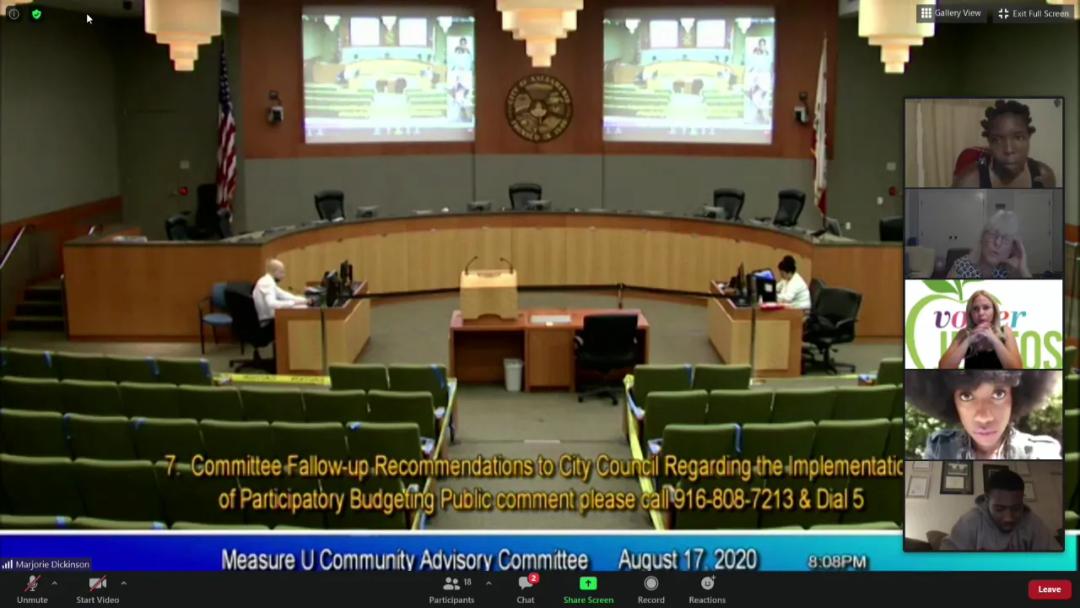
The Measure U Community Advisory Committee met virtually on August 17, 2020, from 6:00 p.m. to approximately 9:00 p.m. due to the COVID-19 pandemic. The meeting included updates on financial reporting, police and fire department budgets, a proposed charter amendment, the committee's annual report, and participatory budgeting recommendations. Members expressed concerns about data timeliness, performance metrics, and the committee's advisory effectiveness. Consent Calendar - Item 1: Approved the meeting minutes from July 20, 2020, by unanimous voice vote. - Item 2: Received and filed the Financial Reporting Schedule and Overview of Inclusive Economic Development, including a five-year sales tax forecast and budget cycle calendar. - Item 3: Received and filed Follow-up Information on the Police Department's FY 2019/20 Overview, Objectives, and Performance Measures. Discussion included crime rate targets (target 35.25 per 1,000 residents, actual 18.51 from a six-month FBI dataset), deployment strategies, and costs for SB 1421 compliance ($625,000 in FY20, $788,000 in FY21 from Measure U). Public Comments & Testimony - Eleven written public comments were submitted on Items 2, 3, 5, and others. The Chair acknowledged and thanked commenters, noting the committee would consider their input in future deliberations. No phone-in public comments were received. Discussion Items - Item 4 (Fire Department Budget Update): Fire Chief Gary Loch and team presented the department's history, service area, and FY19/20 ($18.9 million) and FY20/21 ($21.6 million) Measure U budgets. Topics included staffing brownouts (temporary apparatus closures due to vacancies), first-responder fee recovery ($1 million/year), and diversity initiatives (e.g., social media, youth programs, partnerships with colleges). Members questioned response efficiency (e.g., sending fire engines to medical calls) and requested cost-benefit analysis of current deployment models. - Item 5 (Proposed Charter Amendment – Sacramento Mayoral Accountability and Community Equity Act of 2020): The committee discussed implications for its advisory role, particularly the mayoral appointee seat expiring in December 2020 and whether the committee would continue to advise both mayor and council. City Attorney Clarissa Wood confirmed the committee would remain advisory to the full city council. Members raised concerns about the timeline for responding to a potential mayoral line-item veto and recommended clarifying the committee's advisory structure. - Item 6 (Measure U FY 2018/19 Annual Report): The committee reviewed the draft report, noting that audited carried-forward funds doubled from the initial estimate to $36.234 million, potentially increasing available funds for FY20/21. The report recommended caution about structural spending, especially personnel costs and pension obligations. The committee voted unanimously to authorize the Annual Report Ad Hoc Committee to finalize and forward the report to City Council. - Item 7 (Participatory Budgeting Recommendations): The committee debated urgency, with members emphasizing the need for a $5 million allocation in the current fiscal year, not waiting for the charter amendment outcome. A motion passed (with one abstention) requesting the Mayor and City Council to agendize a meeting before September 30, 2020, to approve the recommendations from the committee's July 27 letter on participatory budgeting. - Item 8 (Agenda Log): The Chair proposed future agenda items, including a budget dive into the Department of Youth, Parks, and Community Enrichment (September), housing discussions with SHRA and the City's Housing Manager (September/October), website improvements, and potential collaboration with other city commissions (e.g., Police Commission on 911 response changes). Key Outcomes - Approved minutes from July 20, 2020. - Received and filed financial report and police department overview. - Received and filed fire department budget update. - Authorized finalization and forwarding of FY 2018/19 Annual Report to City Council. - Passed motion requesting Mayor and Council to schedule a meeting by September 30 to consider participatory budgeting recommendations. - Identified future agenda items: Youth/Parks/Community Enrichment budget, housing presentations, website update discussion, and cross-commission process recommendations. - Chair reported on meetings with city leadership (City Manager Howard Chan, Mayor, several councilmembers) and a joint meeting of commission chairs to improve city governance processes and feedback loops.

BUDGET AND FINANCE 29% · PUBLIC SAFETY 10% · PROCEDURAL 8% · COMMUNITY ENGAGEMENT 8%
1280
AUG 17, 2020 · SACRAMENTO, CALIFORNIA · CIVIL SERVICE BOARD
Civil Service Board Special Meeting – August 17, 2020: Closed Session Actions and Future Meeting Schedule Discussed

This special meeting of the Sacramento Civil Service Board, held teleconference-only due to the COVID-19 pandemic, focused primarily on closed session discussions of three employee discipline/dismissal appeals and a brief open session to report out those actions and plan future meeting schedules. The meeting was adjourned to closed session early, and the open session was resumed only for the closed session report and board discussion. The record does not indicate that the board considered or voted on the consent calendar items (approval of March 3, 2020 minutes, and specification revisions) or the six individual appeal disqualification items listed on the agenda during the open session portion captured in the transcript. Consent Calendar - The meeting transcript does not include discussion or action on the consent calendar items (Items 1–5: approval of March 3, 2020 minutes, Pick-up Driver, Junior Plant Operator, Property Assistant, and Senior Property Assistant classification specifications). It is not possible from the available record to confirm whether these items were approved. Public Comments & Testimony - No public comments were made during the open session portion of the meeting. Discussion Items - Closed Session Report (Items 14–16): The board reported out the following actions taken in closed session: - Item 14 (Public Employee Discipline/Dismissal): The committed moved to continue the matter to a future meeting, with city staff directed to provide the full transcript to the board in advance. - Item 15 (Public Employee Discipline/Dismissal): The committee passed a motion adopting the arbitrator’s proposed decision to sustain the originally imposed discipline of an 80-hour suspension without pay. - Item 16 (Public Employee Discipline/Dismissal): The committee moved to adopt the administrative law judge’s proposed decision denying the employee’s appeal of release. - Future Meeting Schedule: Board members discussed the need for a regular meeting schedule. The board agreed to hold monthly meetings to avoid backlog, and staff will compile potential dates (using a survey tool like Doodle.com, pending Brown Act compliance) and communicate them to the board. Key Outcomes - Closed Session Actions: The board continued one discipline appeal for further review, sustained an 80-hour suspension without pay for another employee, and denied an appeal of release for a third employee. - Meeting Schedule: The board expressed preference for monthly meetings and directed staff to propose a set of regular meeting dates for adoption at a future open meeting. Note: The agenda listed 13 items for open session action, including five consent calendar items and six individual appeal disqualifications. The available transcript covers only the concluding portion of the open session (closed session report and scheduling discussion). No votes or decisions on the listed open session agenda items are recorded in the transcript.

PROCEDURAL 61% · CALENDAR MANAGEMENT 33% · PERSONNEL MATTERS 6%
OPENPUBLICA · PUBLIC MEETING INDEXUPDATED DAILY · openpublica.com