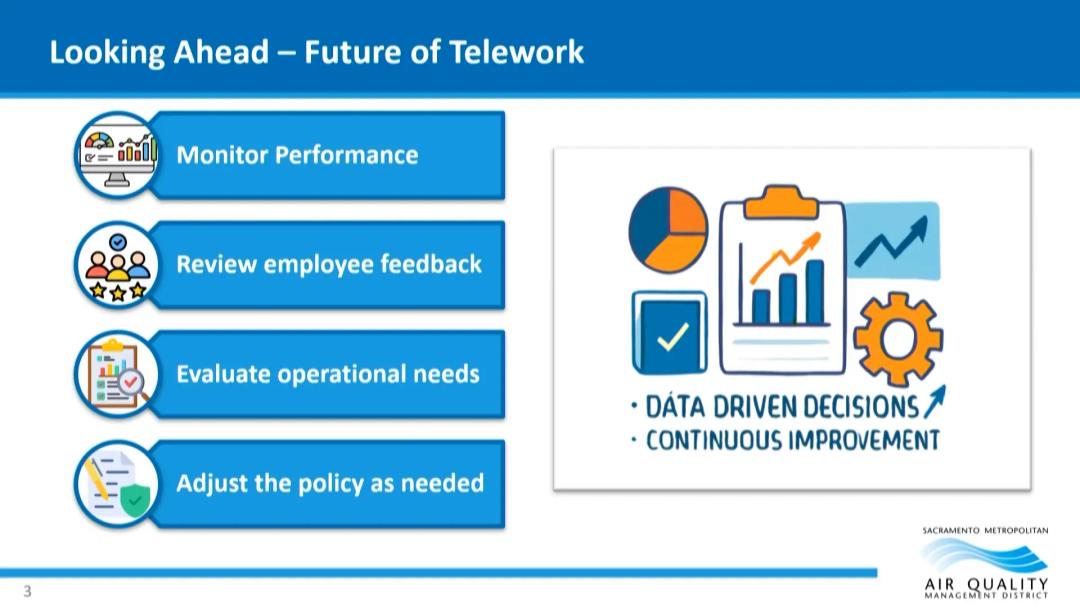
The Sacramento Metropolitan Air Quality Management District Board met on July 23, 2026, to discuss several key items. The meeting began after achieving quorum and included a consent calendar approval, a presentation on ambient lead monitoring near Sacramento Executive Airport, a proposal for a local carbon bank to facilitate carbon sequestration and offsets, an update on telework policy and headquarters, and the Air Pollution Control Officer's report. Board members engaged in detailed discussions on each topic, and public testimony was heard on the lead monitoring item. Consent Calendar - The consent calendar passed unanimously after quorum was established. No questions or public testimony were requested. Public Comments & Testimony - Jennifer Holden, president of the Mangan Park Neighborhood Association, expressed full support for continued air monitoring and urged the board to protect the neighborhood's air quality. She noted that the census tract for Mangan Park and Hollywood Park scores around the 94th percentile for respiratory disease compared to other U.S. census tracts. She also requested that the city release lead test results for the former city tree nursery on 34th Avenue. She reported developing adult-onset asthma after living in Mangan Park for 10 years and anecdotally stated that nearly every family she has asked in the neighborhood reports a respiratory disease such as asthma or COPD. - Kendra Masius Reed, former deputy director of the Franklin Boulevard Business Association and current board member, expressed gratitude for the Community Greening Incentive Program, which awarded $338,000 to finance tree canopy, landscaping, and maintenance for the Franklin Boulevard Complete Streets project, an area disproportionately affected by air pollution due to its proximity to Highway 99. Discussion Items - Item 6.1: Assessing Ambient Lead Concentrations around Sacramento Executive Airport - Air Quality Scientist Catherine Chen Chu presented a follow-up plan to assess ambient lead concentrations near the airport, addressing board questions about distinguishing lead from aviation gasoline emissions versus lead from the decommissioned gun range at Mangan Park. The proposed approach includes placing both an upwind and a downwind monitor to collect real-time particle measurements and daily chemical fingerprint data. Five analytical methods (particle size, chemical fingerprints, trends, wind analysis, and statistical modeling) will be used. A threshold of 0.033 micrograms per cubic meter — derived from OEHHA methodology and equivalent to a one-in-a-million cancer risk — will prompt detailed analysis only when lead concentrations indicate a potential health risk. Board members asked about applying the methodology to other projects. Staff clarified the threshold is for triggering analysis, not for regulatory compliance, and that the chemical fingerprints are specific to this context. Director Kennedy confirmed staff reviewed the extensive soil remediation documents from the prior county-led cleanup. The board concurred with proceeding with the sampling plan, collaborating with the airport on construction schedules, and engaging the community steering committee on the monitoring timeline. - Item 6.2: Carbon Sequestration and Offsets – Facilitating Local Progress - Program Manager Paul Philly presented a framework for a local carbon bank to provide cost-effective, verifiable carbon credits for CEQA mitigation, stating that existing Rule 250 (adopted 2010) remains unused. The program would voluntarily offer projects a new mitigation option, keeping investment in the Sacramento region. Staff noted that at least one pilot project will be launched in fall 2026, and a formal bank may be operational within a year. Director Lopez Taft inquired about fiscal impacts and potential costs to residents and businesses. Staff emphasized this is voluntary, not a regulation, and is intended to lower costs by expanding options. Director Dickinson raised the possibility of using carbon credits for VMT mitigation under SB 743. Staff said the idea is possible if legally allowed and the bank is designed to be flexible, but further discussion with regional agencies is needed. The board received the presentation and anticipates a detailed pilot proposal in the fall. - Item 6.3: Telework, Headquarters, and Contract Administrative Updates - Director of Administrative Services Megan Shepherd reported that an annual review of the telework policy confirmed the hybrid model continues to support district mission and performance. Over half of employees are on location more than half of the time due to fieldwork. The headquarters building sale remains challenging due to the soft downtown commercial real estate market; leasing and targeted improvements are being considered. A new MOU with the SAC Air District Employees Association (expiring June 30, 2027) will be negotiated in four sessions beginning August 2026. Board members discussed balancing telework benefits with the need for in-person collaboration for new hires. Vice Chair Maple noted the importance of modeling behavior consistent with the district's clean air goals. Dr. Ayala indicated that data from employee surveys show a desire for more face-to-face interaction for new employees, and that may be formally addressed. The board received the report. Key Outcomes - Item 6.1: The board concurred with the proposed monitoring plan, including engagement with the airport and community steering committee. No formal vote was recorded on a motion; consent was indicated by discussion. - Item 6.2: The board received the presentation and will receive a more detailed pilot proposal in fall 2026. No vote was taken. - Item 6.3: The board accepted the update on telework policy, headquarters, and labor negotiations. No vote was required.
Public Meetings - Sacramento County, California
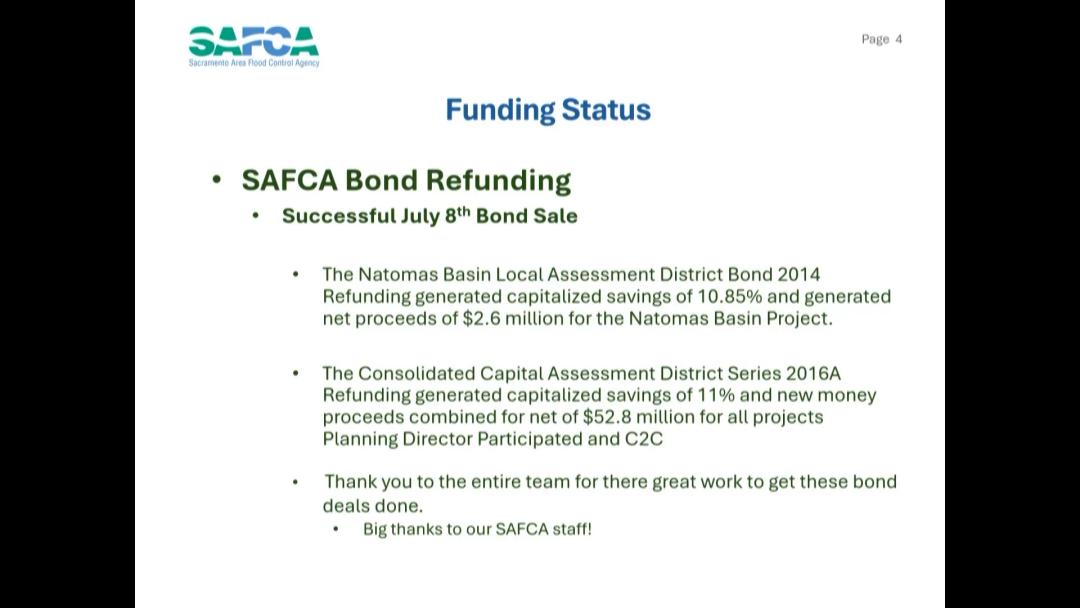
Public Meetings - Sacramento County, CaliforniaThe Sacramento Flood Control Agency (SAFCA) Board of Register convened on July 20, 2026, but lacked a quorum, preventing any formal actions. The meeting proceeded with public comment and an executive director's report. Public Comments & Testimony - Lisa Sanchez, a volunteer with the nonprofit River City Waterway Alliance, provided an update on the organization's efforts. She reported that the group has removed over two million pounds of trash from waterways including Steelhead Creek, Arcade Creek, and Robla Creek within SAFCA's jurisdiction. Sanchez requested that SAFCA consider revitalizing its invasive species removal program (last active about a decade ago) and sought monetary or manual labor assistance, specifically for aquatic-safe spraying to control water hyacinth and water primrose. Chair Kennedy noted that items not on the agenda could not be discussed and encouraged Sanchez to reach out individually. Supervisor Munoz asked how to engage with the organization; Sanchez directed inquiries to RiverCityWaterwayAlliance.org. Discussion Items - Executive Director Jason Campbell delivered a report covering several topics: - Federal Cost Share: SAFCA's federal programs have a 65% federal share, with a local cost share typically at 10.5%. Appropriations for fiscal year 2027 remain identified in the President's budget and the House Appropriations Energy and Water Development Bill, but Senate action is pending. SAFCA continues to support the $108 million needed for the Herd Notomas project. - Construction Activity: Numerous projects are active, with construction ramping up for the season. Updates and photos will be presented at future meetings, focusing on achieving 200-year level protection in the Thomas area. - Bond Refunding: On July 8, 2026, SAFCA successfully sold bonds for the Natomas Basin Local Assessment District and CCAD2, achieving savings of 10.8% and 11% on the refunding portions, respectively. The transaction generated nearly $5.55 million in additional cash for projects, which will be used for cost shares and mission priorities. Campbell thanked staff, consultants, and advisors for the successful issuance. Key Outcomes - No formal actions were taken due to lack of quorum. - Chair Kennedy announced the next meeting is scheduled for August 20, 2026, and will include a closed session. Directors were urged to attend. - The meeting adjourned without further business.
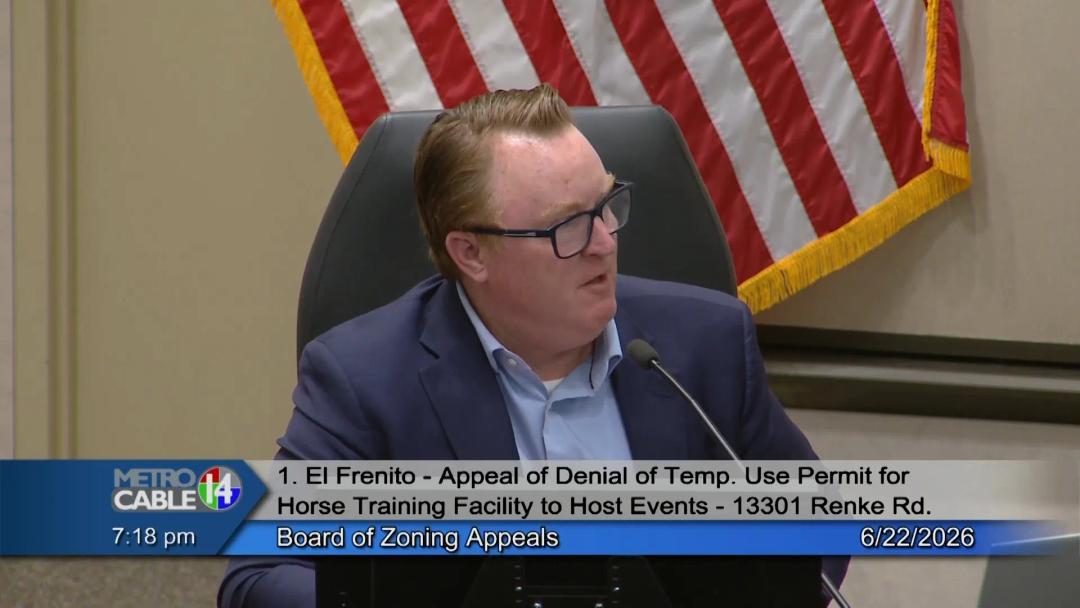
The meeting was called to order at approximately 7:00 PM. The commission heard an appeal of the denial of a temporary use permit for El Penito Horse Training Facility, located at 13301 Reneke Road. After extensive deliberation, the commission voted to deny the appeal, upholding the zoning administrator's denial. The commission also adopted written findings, amended to include a non-prejudicial clause for future applications. Consent Calendar - No consent calendar items were noted. Public Comments & Testimony - No public comments were received in person or in writing for this item. Discussion Items - Appeal of Temporary Use Permit Denial (PLMP 2026-00035): The applicant, property owner David Davila (represented by Chris Trapp and a family spokesperson), appealed the planning staff's denial of a temporary use permit to host up to 10 events per year at an equestrian training facility. Staff detailed past non-compliance, including events outside approved dates, failure to notify the sheriff, lack of a business license, and unresolved code enforcement cases (12 documented communications, six inspections). The property owner claimed a language barrier and blamed a former agent for mismanagement, but staff maintained the owner was responsible. The commission discussed the option of granting the appeal with conditions (e.g., limited events, parking plan) versus denying to encourage a permanent conditional use permit (CUP) process. Key Outcomes - Motion to Deny Appeal: Commissioner Borja moved, seconded by Commissioner Rakenstein, to deny the appeal, thereby upholding the zoning administrator's denial of the temporary use permit. The motion included adoption of written findings as drafted with an amendment adding a sentence that the decision is not intended to be prejudicial to any future application for a temporary or permanent conditional use permit. The motion carried with a majority (3–2 or similar; the transcript indicates a straw poll leaned toward denial, and the vote passed without further dissent). No formal tally was given, but the chair declared the motion passed. - Effect: The applicant must wait one year (per zoning code) before reapplying for a temporary use permit, but may immediately apply for a permanent conditional use permit. Code enforcement case remains open until the property ceases unpermitted events and obtains required business licenses for the commercial stable.
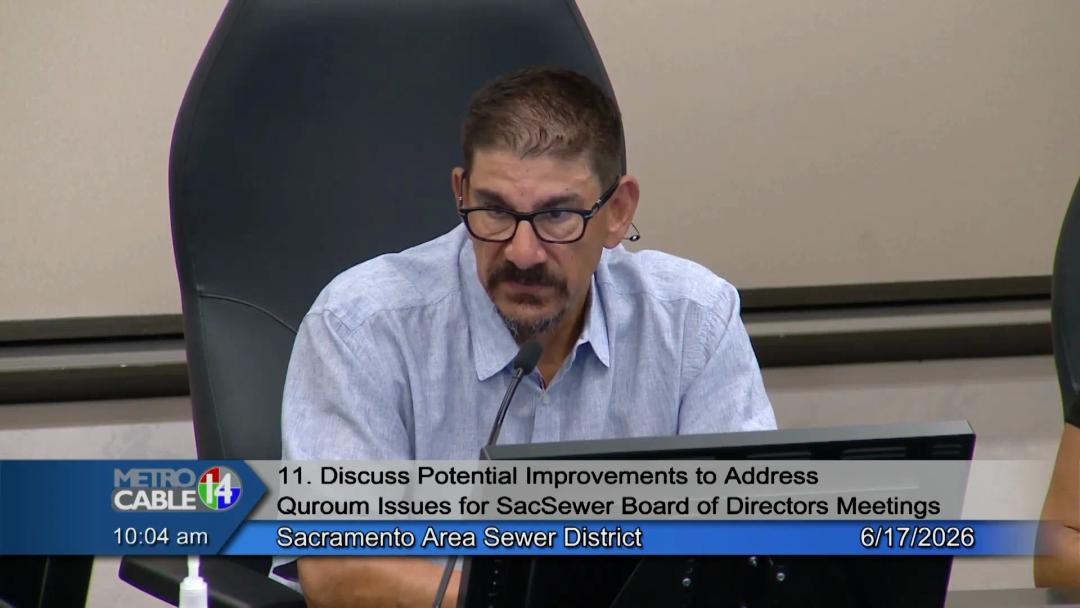
The Sacramento Area Sewer District Board met on June 23, 2026, to adopt the fiscal year 2026-27 budget, approve ordinance amendments, award a construction contract, discuss quorum challenges, and receive a quarterly update on the Harvest Water program. All votes were unanimous. Consent Calendar - Items 1–6 (consent matters) were approved unanimously (12–0). No public comments or pull requests were made. Public Comments & Testimony - Anthonosis Casuris (Eurostile Management) protested the proposed award of the sedimentation tanks rehabilitation contract to Pro Builders. He argued that Pro Builders' bid did not meet the mandatory experience requirements (similar magnitude and character at municipal wastewater facilities) and that the district was changing the rules after bid opening. He requested the board enforce the bid requirements as written. - Staff and legal counsel responded that the bid was responsive; Pro Builders demonstrated the requisite experience, including work at wastewater facilities, and the protest was meritless. Discussion Items - Adopt Fiscal Year 2026-27 Final Budget – Presenter Christoph Dobson highlighted a $372 million operating budget and a $486 million capital budget. He addressed prior questions: new positions are funded through operating revenues, not reserves; chemical cost increases (especially liquid chlorine) drive the budget; generating chlorine on-site would increase salinity and strain permit limits. Bond revenues on the treatment side were reduced from $150 million to $100 million due to a $50+ million state grant for Harvest Water. The budget was adopted unanimously (12–0). - Adopt Ordinance Amendments – Mike Hewitt presented amendments consolidating two district ordinances into one, updating impact fees for industrial customers, and lowering liquid waste haul rates. The public hearing had no comments. The amendments were adopted unanimously (13–0) and will take effect July 17, 2026. - Award of Contract – Secondary Sedimentation Tanks 10 & 16 Rehabilitation – Sunny Lundy recommended awarding the contract to Pro Builders (lowest responsive bidder at $3,448,000) despite a formal protest from Eurostile Management. Staff and counsel determined the protest meritless. After public comment and staff rebuttal, the board awarded the contract unanimously (12–0; Director Viegas did not vote). - Discussion: Quorum Issues – Christoph Dobson led a discussion on potential improvements: better communication (collecting cell phone numbers), alternate meeting locations (e.g., the Echo Water facility or Gaty community room), and governance changes (board size, appointment of alternates). Directors expressed interest in a smaller ad hoc committee to explore options but took no formal action. The board agreed to have the district engineer meet with the mayor regarding two vacant city of Sacramento seats. - Harvest Water Quarterly Report (Jan–Mar 2026) – Mike Crooks and Joe Phil Borha presented capital program updates: pipeline construction essentially complete, pump fabrication challenges, on-farm connections in two phases (56 sites in phase one, 35 in phase two). The construction budget is $323.4 million with $250 million spent; projected completion $310 million due to fewer on-farm connections. Joe Phil Borha reported on outreach, ecological plan development, and grant funding: $417 million awarded from the Water Storage Investment Program (WSIP), with additional federal and state grants. The program is nearly 80% grant-funded. No action was taken. - District Engineer Miscellaneous Matters – Christoph Dobson introduced two new managers: Pat Flaherty (Risk Manager) and Christopher Borders (Human Resources Manager). No board action. Key Outcomes - Budget approved (FY 2026-27) – unanimous. - Ordinance amendments adopted – unanimous. - Contract awarded to Pro Builders for sedimentation tank rehabilitation – unanimous (one abstention). - Quorum discussion: No formal action; board consensus to pursue an ad hoc committee and further outreach to fill vacancies and address attendance issues. - Next board meeting scheduled for July 2026.
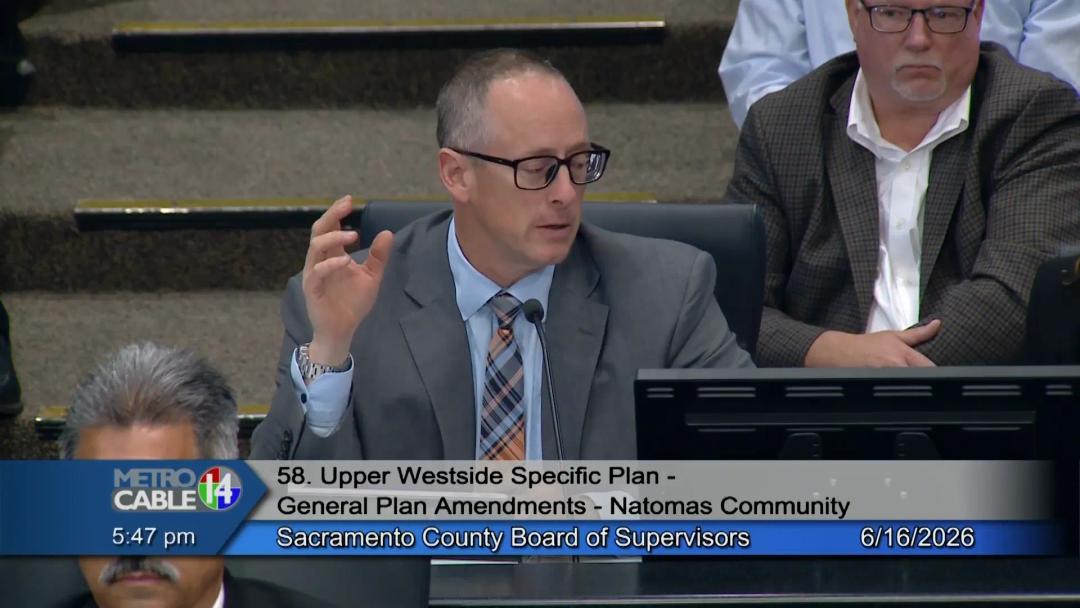
The meeting was called to order at approximately 9:30 AM and adjourned at 6:34 PM, spanning a full-day session with a lunch recess. The Board addressed a wide range of items including budget adjustments, grant awards, land use planning, and public safety. Notable actions included the approval of the Upper West Side Specific Plan and the reconsideration of budget cuts to the Sheriff and District Attorney. Note: The transcript consistently references Tuesday, June 16, but the instructed meeting date is June 23, 2026 – a discrepancy in the source material. Consent Calendar - Items 3-49 were approved unanimously (5-0). The consent calendar included an ordinance on roosters (item 12) and several road overlay projects (items 11, 15 continued, 17). Supervisor Hume and Desmond offered supportive comments on specific items. Item 15 (AC Overlay Project 2026 Phase A) was continued to July 14, 2026. Item 50 (employee layoffs) was dropped. Item 51 continued to July 14, 2026; Item 53 to July 28, 2026; Item 57 to July 14, 2026 at 2:00 PM. Public Comments & Testimony - Budget Cuts (Sheriff & DA): Multiple speakers (John Frias Morales, Karen Corbs, Bay Meary, John Vignoki, Dean Barusani, Kenya Bell, Rudy Aguilera, Jennifer Bowdy, Adrian Bankert, Ron Harlow) opposed the reduction of $5.9 million from the Sheriff's Office and $2.7 million from the District Attorney's Office. Speakers argued that public safety should be prioritized, cited rising crime and homelessness, and called for restoring funding. Some noted that the homeless spending ($277 million countywide) has produced poor outcomes (e.g., only 203 homeless transitioned out of shelter in first half of 2025, 77% did not complete treatment). Business representatives stressed the value of POP teams and Community DA programs. The Board Chair acknowledged a speaker’s suggestion for a forensic analysis on homelessness. - Roosters Ordinance (Item 12): Two speakers: one opposed the ordinance due to neighbors with roosters, and another (Vince B.) opposed, explaining he raises roosters for show (about 100 roosters on 5 acres) and argued the ordinance unfairly targets hobbyists. Supervisors noted the ordinance was a second reading and had been deliberated previously. - TOT Grants (Item 54): Numerous speakers supported various nonprofit applicants, including youth programs (Classy Inc.), food banks (Manna Food Bank), veteran services, cultural organizations, and more. Many urged continued funding. One speaker noted the grant program received 271 eligible applications requesting $7 million total, with only $1 million available. - Upper West Side Specific Plan (Item 58): Over 70 speakers addressed the Board. Supporters (e.g., landowners, business groups, housing advocates) emphasized the need for housing, jobs, and smart growth near existing infrastructure. Opponents (residents, environmental groups, City of Sacramento representatives, ECOS) raised concerns about traffic, water supply, habitat impacts, school funding, flood risk, and inconsistency with the Natomas Basin Habitat Conservation Plan. Several speakers urged postponement or denial. The City of Sacramento formally opposed the project. The Board also received a letter from the Department of Fish and Wildlife expressing concerns. Discussion Items - Item 1 – Bark of Supervisors: An update on adoptable pets, featuring “Rain,” a 5-year-old American bully mix. Staff noted all pets are spayed/neutered and vaccinated. - Item 52 – Folsom Garden Apartments Loan: Approval of $3.9 million loan for 40 units (10 permanent supportive housing) at 30-60% AMI. Supervisor Kennedy expressed concerns about co-locating permanent supportive housing with family units, but the item passed 5-0. - Item 54 – TOT Grant Program: Staff reported 271 applications, $7 million requested, $1 million available. 101 grants recommended across districts. Supervisors encouraged nonprofits to engage early in the process. - Item 55 – Urban Water Management Plan: Public hearing; no public comments. The Board adopted the plan and water shortage contingency plan for the Sacramento County Water Agency (5-0). - Item 56 – Development Impact Fee Deferral Program: Adoption of resolution expanding fee deferrals to all residential projects per SB 937, excluding park district fees. Passed 5-0. - Item 58 – Upper West Side Specific Plan: Detailed staff and applicant presentations covered the 2,066-acre plan with 9,356 residential units, 3.5 million sq. ft. of commercial, schools, parks, and a town center. Key discussion points: - Traffic mitigation: Alternative circulation plan (Radio Road emergency vehicle access only, traffic calming on Garden Highway) was adopted to reduce trips from 8,500 to 5,600 ADT. - Public art endowment: $500,000 minimum funded via the financing plan. - Water supply: Relies on conversion of agricultural water rights via Natomas Mutual Water Company; condition requires proof of available water before tentative maps. - Schools: Funding gap identified; developer committed to further negotiations. - Habitat mitigation: Ratios exceed those required by the Natomas Basin HCP (1:1 vs 0.5:1 for Swainson's hawk). - The Board heard extensive public comment and then deliberated. Supervisor Cerna moved approval with amendments, seconded by Supervisor Hume. - Item 59 – Own Ranks Appointment: Supervisor Kennedy reappointed to the Regional Water Authority (5-0). - Item 60 – County Executive Comments: Wishing staff a safe summer. - Item 61 – Supervisor Comments: Supervisor Rodriguez recognized Juneteenth. Key Outcomes - Budget Reconsideration: On a motion by Supervisor Hume, the Board voted 4-1 (Cerna no) to reconsider the earlier budget cuts to the Sheriff and DA, indicating intent to restore funding. - Upper West Side Specific Plan (Item 58): Approved 5-0 with amendments, including: - Adoption of CEQA findings (attachment 32-B) supporting the “Alternative Five” traffic plan. - Radio Road extension limited to emergency vehicle access only. - Traffic calming measures on San Juan and Bright Bend Roads, and a roadway safety audit for Garden Highway (including potential shoulder improvements if ADT exceeds 6,000). - $500,000 public art endowment requirement in the development agreement. - Water supply assessment including Natomas Mutual Water Company option. - Condition requiring continued school funding negotiations. - Other Approvals: All remaining items (TOT grants, loan commitment, water plan, fee deferral, appointments) passed unanimously (5-0). - Continuances: Items 15, 51, 53, 57 continued to future dates as noted. - Public Comment: Over 70 speakers on the Upper West Side plan; all comments were taken under advisement. The meeting adjourned at 6:34 PM.
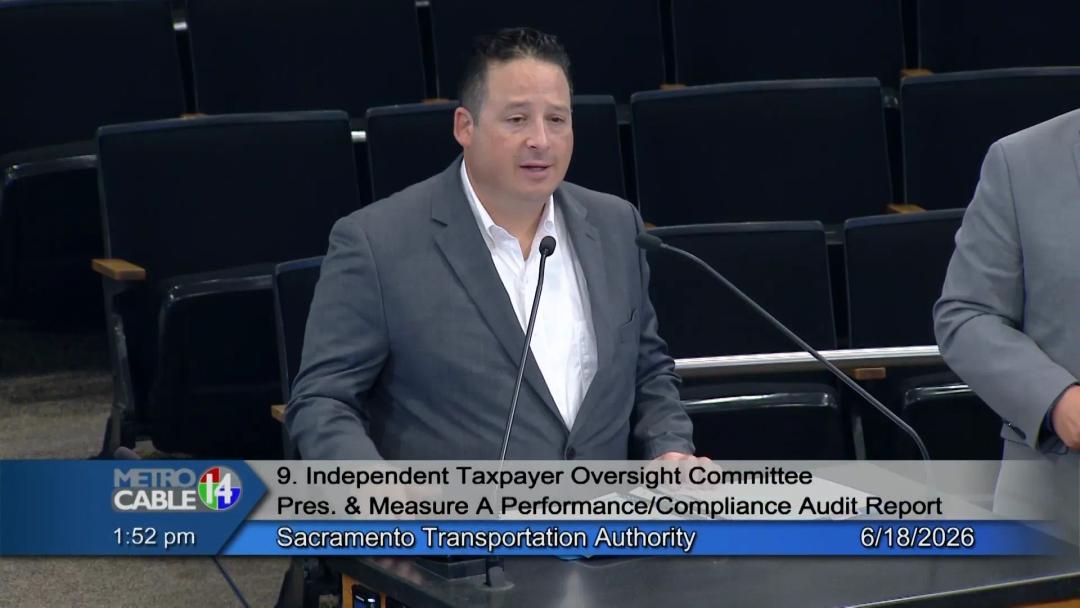
Note: The transcript indicates the meeting occurred on June 18, 2026, but the provided date for this summary is June 23, 2026. The Sacramento Transportation Authority (STA) convened on this date to consider consent items, a budget, an audit, the I-5 managed lanes project, and an executive director's report. The meeting was chaired by Chair Raphel with a quorum present. Consent Calendar - Item 5 – Smart Growth Fund Strategy: Pulled from consent by Director Hume, who questioned the staff-recommended formulaic allocation approach versus a competitive, first-come-first-served method. Hume expressed concern that the proposed 22.5% transit share was lower than the Measure A split (roughly one-third), arguing a competitive process incentivizes better projects. Staff explained the formula ensures geographic fairness and simplicity, and that transit agencies may use their allocated funds for transit anyway. The remainder of the consent calendar (excluding item 5) was approved unanimously. Public Comments & Testimony - No public comments were made during the meeting. Discussion Items - Item 5 (continued): After the consent calendar vote, the board separately considered item 5. A motion to approve failed. A motion to reconsider passed after a director (likely prevailing party) argued the body composition had changed and funds could be jeopardized. The reconsidered motion to approve item 5 passed, adopting the formulaic allocation strategy for Measure A smart growth funds. - Item 8 – FY 2026-27 Budget: Dustin Puritan (CFO) presented the final budget, noting no material changes since May. The budget is balanced using revenue and fund balance. The board approved it. - Item 9 – Performance/Compliance Audit: Dustin Puritan and Jose Luis Caceres (ITOC member) presented the audit for the two-year period ending June 30, 2025. The independent taxpayer oversight committee (ITOC) found no significant findings. Exceptions included: the City of Ileton lacked supporting documentation (staff will escrow funds if not resolved by June 2027), and the cities of Folsom and Sacramento had reporting mismatches (remedied after audit). All jurisdictions met maintenance-of-effort requirements. The board approved the audit. - Item 10 – I-5 Managed Lanes Project: Kevin Busey (Executive Director) outlined the project to add a high-occupancy toll (HOT) lane from downtown Sacramento to the airport. The project uses Measure A funds to leverage federal/state grants. Director Dickinson clarified the scope includes a longer segment than the original expenditure plan (to the airport) and that no lane removal is planned south of downtown; existing HOV lanes would convert to HOT. Director Talamantes raised equity concerns, noting public skepticism about tolling. Staff confirmed toll revenues must be used in the corridor, and CARTA oversees operations. The board approved the item with Directors Hume and Maple abstaining. - Item 11 – Executive Director’s Report: Busey reported on community listening sessions (one held in Arden Arcade, two more planned in Folsom and Rancho Cordova, plus a virtual session) to gather input on transportation priorities, possibly informing a future sales tax measure in 2028. He also highlighted SB1 grant applications submitted (e.g., US 50 corridor for $86.4 million, I-5 for $20 million). No questions from the board. Key Outcomes - Adopted SMART Growth Fund Strategy (item 5) with a formulaic allocation (22.5% transit, 77.5% cities/counties) after initial failure and reconsideration. - Approved FY 2026-27 Budget (item 8) unanimously. - Approved Measure A Performance/Compliance Audit (item 9) for FY 2023-2025, with exceptions noted for Ileton, Folsom, and Sacramento. - Authorized I-5 Managed Lanes Actions (item 10): MOU with CARTA, amendment of Measure A capital allocation contract with Caltrans, budget amendment, consultant contract, and grant nominations. Passed 9-0-2 (Hume, Maple abstaining). - Staff directed to coordinate I-5 managed lanes project with the proposed I-5 cap study near Crocker Art Museum. - Meeting adjourned at 2:24 PM.
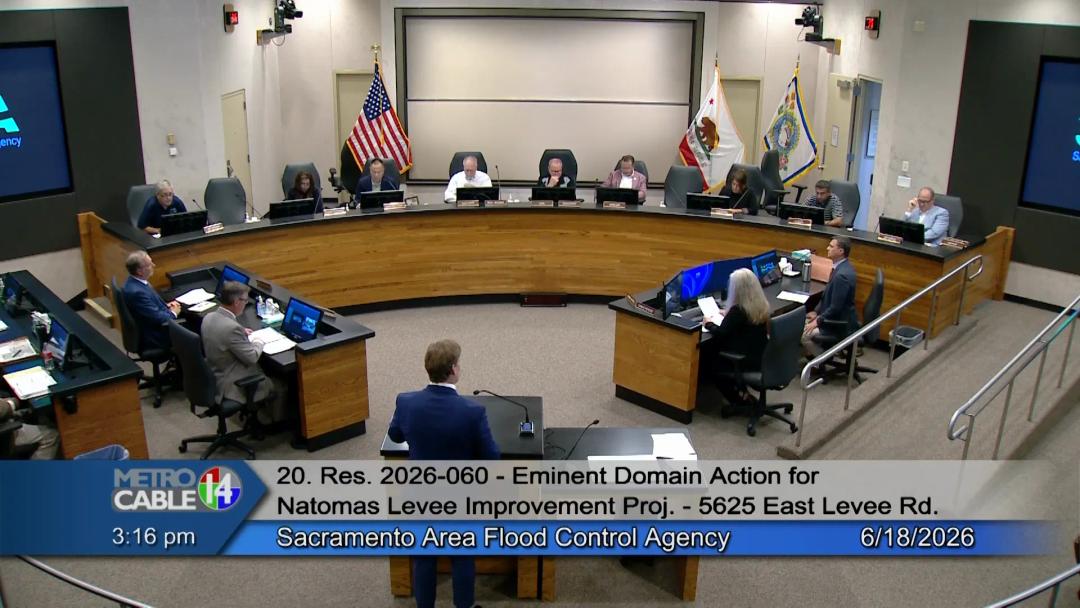
The Secretary of Flood Control Agency (SAFCA) Board of Directors met on June 23, 2026, to discuss staff vacancies, adopt the FY 2627 budget, and consider two resolutions of necessity for property acquisitions related to the Natomas levee improvement project. The meeting was called to order with an eight-member quorum, later expanded to ten members after a recess. No public comments were made on any agenda item. Consent Calendar - Items 1 through 16 were approved unanimously with a motion and second. No public comments were offered. Public Comments & Testimony - No members of the public addressed the board on any items, including non-agenda items and public hearing items. Discussion Items - Item 18: Annual Report on Staff Vacancies, Recruitment, and Retention (AB 2561) – Executive Director Jason Campbell presented the required annual report. The agency's overall vacancy rate was 11% during the reporting period (June 2025 through May 2026), which is below the 20% threshold that would trigger additional reporting requirements. The agency uses temporary agencies, executive recruitments, and direct prospecting to fill positions, and retains staff through competitive salaries and benefits, with a five-year comprehensive review cycle. The public hearing was opened and closed with no testimony. The board approved the report via Resolution 2026-058. - Item 19: Adoption of FY 2627 Budget – Jason Campbell presented the recommended budget, noting a total projected budget of approximately $104 million across four funds: Operations & Maintenance Assessment District No. 1 (general fund), Development Impact Fee, Natomas Basin Local Assessment District, and Consolidated Capital Assessment District No. 2. Key figures included $11.45 million in general fund reserves (about 11% of overall budget), 5% contingencies in appropriations, and a capital program of $70.6 million (primarily for levee systems and infrastructure). Staff salaries and benefits account for about 4% ($4.4 million) of the budget. The budget also anticipates bond issuances of over $50 million for capital projects. The public hearing yielded no comments, and the board adopted Resolution 2026-059 approving the FY 2627 budget. - Item 20: Resolution of Necessity for Property at 5625 East Levy Road (APN 226-0010-002) – Matthew DeGroot of Real Estate presented the necessity for acquiring a portion of the property for the NIMDEC West Levy Reach G component of the Natomas levee improvement project. The required interests include a fee acquisition, permanent access easement, and temporary construction easement. The agency and property owners (Spirit on E and Georgia Avdis) had been in negotiations since 2022, with multiple communications and amendments to a Possession and Use Agreement (PUA). The PUA required the agency to initiate eminent domain proceedings by June 30, 2026, to avoid inverse condemnation action. The board initially voted but fell one vote short of the required two-thirds majority due to an abstention by Director Munoz. After a 15-minute recess and the arrival of Director Pluckibaum, the motion was reconsidered and passed on a roll call vote: 9 in favor (Desmond, Hume, Kennedy, Rodriguez, Jennings, Kaplan, Pluckibaum, Holloway, Johns, Chan, Baines, Stevens – all but Munoz) and 1 abstention (Director Munoz). The resolution was approved. - Item 21: Resolution of Necessity for Property at 5311 East Levy Road (APN 226-0010-003) – Matthew DeGroot presented a similar resolution for the adjacent property owned by Nick Avidis. The acquisition is also required for the same levee improvement project (Reach G). The agency had a PUA with this owner as well, with a June 30, 2026 deadline to initiate eminent domain. The public hearing was opened and closed with no testimony. The board approved the resolution on a roll call vote with Director Munoz abstaining. Key Outcomes - Consent calendar items 1-16 were approved unanimously. - Resolution 2026-058 (staff vacancy report) was adopted. - Resolution 2026-059 (FY 2627 budget) was adopted. - Resolution of necessity for 5625 East Levy Road was approved with a 9-0-1 vote (Director Munoz abstaining). - Resolution of necessity for 5311 East Levy Road was approved with Director Munoz abstaining. - The board noted that negotiations with property owners will continue even after the resolutions. - The next SAFCA board meeting is scheduled for July 16, 2026.
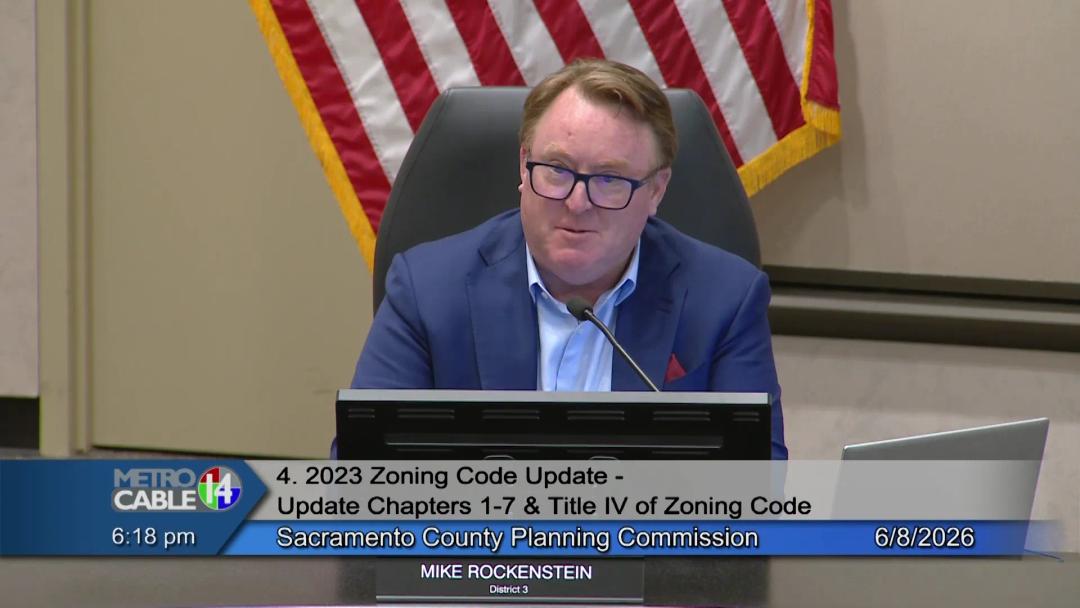
Note on date discrepancy: The provided timestamp indicates the meeting occurred on June 9, 2026, but the chair explicitly opened the meeting as "June 8th 2026 County Planning Commission meeting." This discrepancy is noted for clarity. The Sacramento County Planning Commission convened on the date above (with the noted discrepancy) to consider four agenda items, including routine subdivisions, a mining amendment, a wireless communication facility, and a major zoning code update. All items received unanimous approval or recommendation. No public comments were submitted for any item. Consent Calendar - Item 1 – PLMP 2025-00198 (Morabi Singh subdivision vesting map): A non-contested specific plan amendment, rezone, vesting tentative subdivision map, and design review for a property at 9494 Flooring Road in the Vineyard community. Staff noted a minor revision (June 3) adjusting off-site improvement conditions from 43 to 22, then to 19, due to a reduced SMUD public utility easement. The applicant (Beezer Homes) expressed excitement about building in the area. Motion to approve as presented passed unanimously (all members present voting yes). - Item 2 – PLMP 2025-00-130 (Carly Mine Use Permit Amendment): A non-contested use permit amendment to allow mining on an additional 11 acres, a reclamation plan amendment, and a development agreement amendment at 6875 Eagles' Nest Road in the Vineyard community. The applicant thanked staff. Motion to approve passed unanimously. Discussion Items - Item 3 – PLMP 2025-00173 (ATT Wireless Communication Facility at 8040 16th Street): A conditional use permit, special development permit, and design review to install a 55-foot cell tower disguised as a water tank in the Rio Linda Alberta community. The tower would fill a significant coverage gap and include FirstNet (band 14) for first responders. Staff and the applicant (Jared Kierseley, 51 Wireless on behalf of ATT) provided details: co-location at 36 feet, capacity for two carriers, landscaping, and screening. Two members of the public expressed opposition during a community planning committee meeting (design and proximity concerns), but no public comments were submitted at this hearing. A special development permit was needed due to a future street expansion (10-foot deviation from setback). The Design Review Advisory Committee supported the project. Commission discussion focused on height, future modifications, aesthetics, and outreach. The applicant confirmed the tower could structurally accommodate a third carrier with a height increase. Motion to approve passed 4-0 (Commissioner Devlin arrived late, not recorded as voting; all present voted yes). - Item 4 – PLMP 2023-0058 (2023 Zoning Code Update): A comprehensive ordinance amendment updating Chapters 1–7 of the Sacramento County Zoning Code, encompassing 134 amendments (increased from 131 at the April workshop). Lead planner Matthew Jamamwe presented the update, emphasizing clarifications (ratings 1–2) over policy changes (3–5). Key changes include: increased height allowance for residential accessory structures (24 feet with 10-foot setbacks), modernized home occupation rules, relaxed standards for tuck-under parking, new “training, tutoring, or testing center” use classification, revised temporary use allowances (food trucks, 30-day events for large shopping centers), battery energy storage system standards, reduced hearing body levels for tattoo shops/arcades/fire stations, and ADU terminology updates. Staff addressed concerns from the April workshop on pesticide spraying, caretaker dwellings, battery technology, home-based vehicle sharing (limited to 5 vehicles), and express processing of state mandates (notifying CPACs of hearings). The update also directs staff to make ADA-compliant administrative changes to the development code. The commission commended staff for the thorough process. Motion to recommend approval to the Board of Supervisors passed unanimously. Planning Director’s Report - June 10, 2026 (tomorrow): Board of Supervisors hearing on the crowing fouls and encoded amendments (zoning and county code amendments). Staff incorporated planning commission direction and held stakeholder meetings with the Hmong community. - June 16, 2026: Board hearing on the Upper West Side Specific Plan. - June 23, 2026: Planning Commission meeting with an appeal of a temporary use permit denial. - July 13, 2026: Appeal of the assault and parcel map; another zoning code amendment on design review. Key Outcomes - Item 1: Approved unanimously (all members present voting yes). - Item 2: Approved unanimously. - Item 3: Approved 4-0 (all present voting yes). - Item 4: Recommended to the Board of Supervisors (scheduled for July 28, 2026) unanimously. - No public comments were received on any item. - The next regular planning commission meetings are scheduled for June 22, July 13, and July 27, 2026.
The Sacramento Metropolitan Cable Television Commission (SMCTC) held a meeting on June 9, 2026, at 4:05 PM. The primary focus was the adoption of the preliminary Fiscal Year 2025-26 general fund and PEG fund budgets, along with discussions on future financial sustainability and governance. The commission approved a motion to adopt the budgets as drafted and established two new advisory committees to review the financial model and long-term strategic direction over the next 90 and 270 days, respectively. Consent Calendar - Item 2: The commission adopted a resolution approving the 16th amendment to the license and operations agreements for the use of community programming channels. The motion passed with all members present voting yes, except for member Read, who abstained. Public Comments & Testimony - Item 4 (Personnel Policies Manual): Two speakers (Ella Tomlin and Renee Balcom) initially signed up but were redirected to the budget item because their comments pertained to Access Sacramento’s budget. - Item 5 (Preliminary Budgets): Sixteen members of the public provided comments, all in support of fully funding the budgets for Access Sacramento, Sacramento Educational Cable Consortium (SECC), SAC Life TV, and KVIE. Key points included: - Thomas Spencer spoke as a constituent and filmmaker, emphasizing Access Sacramento’s role in providing affordable training and opportunities for underserved communities. - Hester Wagner, chair of the Access Sacramento board, requested greater transparency in budget presentations, particularly regarding revenue projections. - Joe Barr, executive director of Access Sacramento, thanked commissioners for civil discussions and asked for continued funding to pursue sustainability and workforce development. - David Lowe, President of KVIE, argued that PEG funding should not be eliminated for public and educational access while government access is preserved, and urged a balanced approach. - Pete Coletto, finance director for the City of Sacramento, expressed concerns about budget assumptions, including revenue projections, OPEB payments, and salary/benefit line items, and offered to work with commission staff on alternatives. - Aaron Heinrich (SECC) noted 600 pages of emails in the agenda packet representing community support. - Christopher Just (Access Sacramento) shared a personal story of how public access helped him rebuild his life and urged continued funding. - Ella Tomlin spoke on behalf of her son Will, a heart transplant recipient, who used Access Sacramento to pursue filmmaking and was accepted to Sacramento State. - Renee Balcom (business owner) highlighted SAC Life TV’s role in promoting small businesses. - Kevin Dredge, a volunteer producer, stressed the need for transparent public discussion before further budget cuts. - Sue Buske (newly appointed board member of Access Sacramento) proposed greater collaboration among PEG entities and member agencies, and supported the city’s call for a working group. - Naressa Hall (SECC) framed the budget decision as a leadership and stewardship choice for the future of PEG services. - Several other community members, film students, and representatives of Afghan community media also voiced support for the budgets. Discussion Items - Item 5: Preliminary FY 2025-26 General Fund and PEG Fee Fund Budgets - Executive Director Sean Ayala presented the proposed budgets. General fund carryover was $6.6 million, with recommended expenditures of $5.27 million, leaving a projected carryover of $1.33 million into FY 2026-27. He projected cable revenue of $6.4 million next year, a decline of about 13% year-over-year. For the PEG fund, carryover was $2.4 million, with requests totaling $4.22 million (including encumbered JPA member projects), resulting in a projected deficit that would be covered by future PEG revenue. - Director Munoz asked whether the commission reviews specific PEG requests; Mr. Ayala clarified that the Metro team and counsel review them for compliance with infrastructure requirements. - Director Hackett Little asked about revenue projections; Mr. Ayala confirmed the presented budget does not include future revenue but his projection of $6.4 million is included in a summary column. - After public comments, Chair Speace presented a four-step plan to adopt the budget while initiating a structured review: 1. Adopt the FY budget as drafted to ensure continuity. 2. Establish a finance working group of SMCTC staff and member agency finance staff to analyze budget assumptions (operating surplus, franchise fee revenue, salary/benefit increases, OPEB/PERS) and report to the budget ad-hoc committee. 3. Reconstitute a budget ad-hoc committee (under Brown Act) to review the working group’s findings and present recommended budget amendments to the full commission by September 3, 2026. 4. Create a strategic ad-hoc committee to evaluate the long-term operating model, including revenue sharing, governance, sustainability, and direction, with recommendations due by March 4, 2027. - Chair Speace emphasized that all parts of the budget are subject to review, and stakeholders should not make financial commitments based solely on the initially adopted budget until the review is complete. - Directors expressed support: Riley (supported, volunteered for both committees), Sloan (supported, volunteered, stressed need for collaboration), Hackett Little (supported, asked about committee size), Gull (supported, noted potential for member agency distributions in September), Hedges (supported, volunteered for budget committee), Munoz (thankful, offered to serve), McCarthy Omstead (supported, volunteered for strategic), Masias Reid (first meeting, supported, volunteered for strategic), Sandu (supported, stressed transparency), Middleton (supported, offered city of Citrus Heights finance expertise for strategic), Leary (asked about message to jurisdictions, acknowledged need for caution in budget planning). - The motion to adopt the budget as drafted along with the chair’s plan was made by Riley, seconded by Sloan, and passed unanimously (all members present voting yes). Key Outcomes - Vote: The commission unanimously approved the FY 2025-26 general fund and PEG fee fund preliminary budgets as presented, along with the four-step review process proposed by Chair Speace. - Finance Working Group: To be convened voluntarily; staff from interested member agencies will analyze budget assumptions and provide findings to the budget ad-hoc committee. - Budget Ad-Hoc Committee: Members appointed: Directors Speace, Riley, Sloan, Hackett Little, Hedges, and Munoz. This committee will review the working group’s findings and recommend budget amendments to the full commission by September 3, 2026. - Strategic Ad-Hoc Committee: Members appointed: Directors Speace, Riley, Sloan, Gull, McCarthy Omstead, and Masias Reed. This committee will evaluate long-term operating model and provide recommendations by March 4, 2027. - Cautionary Note: The chair advised all stakeholders to avoid making significant financial commitments or operational assumptions based on the adopted budget until the review process is complete. - Next Meeting: The commission will receive the budget ad-hoc committee’s report on September 3, 2026. Other Items - Item 6 (Reports of Channel Licensees): Representatives from Access Sacramento, KVIE, SECC, and SAC Life TV reported on recent activities, thanked the commission for the budget vote, and highlighted ongoing efforts toward sustainability. - Item 7 (Reports of State Franchisees): No reports were given. - Item 8 (Executive Director Report): Mr. Ayala thanked his staff and expressed readiness to implement the commission’s plan. - Item 9 (Board Comments): Director Gull invited members to the City of Sacramento’s “Pops in the Park” concert series starting June 13. No other comments.
The Sacramento Local Agency Formation Commission (LAFCO) met on June 9, 2026, to approve the consent calendar, discuss a proposed office lease, review the public member selection process, and receive staff reports on municipal service reviews (MSRs). Commissioner Hume raised concerns about fire service delivery in the South Delta and requested agendizing a study of potential consolidation. Note: The transcript mentions this meeting’s replay on Sunday, June 7, 2026, which conflicts with the provided meeting date of June 9, 2026; the summary follows the official date. Consent Calendar - Items 3–8 were approved unanimously after item 2 was pulled for separate discussion. - Item 6 (annual review of consulting contracts) passed after a commissioner inquired about the CV Strategies retainer ($2,500/month for 15 hours) and was assured it averages out over the year. Discussion Items - Item 2 – Approval of April 1, 2026 Action Summary: Commissioner Hume noted that the action summary omitted an approved annual update for the Florin County Water District. The commission amended the summary to include that update and approved it unanimously. - Item 9 – Office Lease for 1000 G Suite 380: The executive officer presented a proposed five‑year lease with two five‑year renewal options. LAFCO would occupy 72% of the space, sharing the remainder with the California Association of LAFCOs (CalAFCO), resulting in a monthly cost of approximately $4,370 for LAFCO. The space includes shared amenities such as a large conference room. The commission authorized the executive officer to sign the lease consistent with the staff report parameters. Motion passed unanimously. - Item 10 – Update on Public Member Selection Process: Staff reported that applications for the public member and alternate public member positions (terms ending this year) are due by July 3, 2026. Recruitment is passive per government code, with notices sent to all local agencies and media. - Item 11 – Executive Officer Reports and Staff Updates: Staff provided updates on ongoing MSRs, including the Florin Resource Conservation District detachment (late summer/early fall), Metro Fire MSR sent to staff, and the Sakslewer annexation of Hood and Franklin (August). Commissioner Hume initiated a discussion on the three South Delta fire districts (Delta Fire, River Delta Fire, Ialton Fire Department), noting that their last MSRs were in 2014 and that Ialton is struggling. He requested the commission consider a study of economies of scale or consolidation for these districts. Chair expressed support. The executive officer confirmed that fire districts are within the current five‑year MSR plan and that a commissioner‑requested study can be agendized. Commissioner Hume asked that this be placed on the August 2026 meeting agenda. Key Outcomes - Consent calendar items 3–8 approved unanimously. - Item 2 (April 1 action summary) approved with an amendment adding the Florin County Water District update. - Item 9 (office lease) authorized with unanimous approval. - Direction given to agendize a discussion on South Delta fire district consolidation study for the August 2026 meeting. - The commission was 94% funded as of the meeting, with a few outstanding payments.