The Economic Development and Intergovernmental Relations Committee met on February 5, 2025, at 10:00 AM (UTC). Chair Sean Elo-Rivera (Campillo) presided, with Pro Tem Marni von Wilpert (Lee) and Vice Chair Vivian Moreno (Foster) present. The committee approved a consent agenda, adopted the 2025 work plan, and discussed five substantive items including the defederalization of a revolving loan fund, the FY2024 citywide grants report, the Tourism Marketing District annual performance report, and a progress report on World Design Capital 2024. Consent Calendar The consent agenda included three items: (1) Approval of committee minutes from December 11, 2024; (2) Amendments to the San Diego Municipal Code to consolidate the Department of Real Estate and Airport Management under the Economic Development Department; and (3) A compensation agreement with Civic San Diego for the construction of the 14th Street Greenway Block Number 2 project. All items were approved unanimously by the three members present. Public Comments & Testimony Public comment was taken separately for non-agenda items and each agenda item. Key speakers and their positions: - Cesar Javier (multiple items): Expressed strong opposition to a ceramics manufacturing operation at 5238 Streamview Drive, alleging toxicity, air pollution, and safety impacts on residents, particularly children and seniors. He criticized the mayor and councilmember for absenteeism and called for enforcement of state laws (SECA, Proposition 65). He also challenged the consent agenda items, questioning their legal basis and alleging corruption in the city's grant and financial management. - Janet Bourgeois: Urged the city to protect existing low-income buildings, citing the Claremont Hotel (historic African American hotel) and California Theatre as neglected properties. She called for demolition or redevelopment of 101 Ash Street if housing is not feasible. - Madison (virtual): Expressed concern about the commercialization of cannabis, specifically DoorDash's delivery of THC/CBD products, warning of increased youth access and negative economic consequences on vulnerable populations. - Blair Beekman: Supported efforts to address the ceramic factory issue and encouraged dialogue for relocation. Also stressed the need for accountability in parking commission processes and the Quick Check placement and removal program. - Terry Ann Skelly: Applauded the city's tobacco retailer licensure program and enforcement against illegal tobacco sales to youth. Quoted a student reporter on the proximity of vape/smoke shops to schools. - Becky Rapp: Cited a study claiming legal cannabis did not deliver on promises (reduced opioid addiction, safer products, tax revenue) and highlighted increased consumption and opioid-related deaths. Called for a comprehensive assessment of marijuana's impact. - Peggy Walker: Referenced a January 2025 CBS8 article on oversupply in San Diego's cannabis market, with city communications director Nicole Darling stating 80% of permitted businesses are barely surviving and black market holds 75% market share. Urged the committee to spearhead a full assessment of marijuana's economic and health impacts. - Joy Sonyata (District 3): Spoke on multiple items. On the budget, she emphasized the importance of intergovernmental relations and urged departments to use an equity lens. On the grants report, she requested a full presentation at budget hearings. On the Tourism Marketing District, she asked the industry to apply an equity lens. On World Design Capital, she praised its success and systemic change. - Gordon Borner: As former advisory board chair for the Revolving Loan Fund (RLF), he testified that the fund successfully provided funding to small and mid-sized businesses over 20+ years, including COVID-era loans that created and maintained jobs. Discussion Items - 2025 Committee Work Plan (Item 4): Chair Campillo presented the work plan, focusing on strengthening the local economy, bolstering tourism and creative economies, supporting child care, fair labor standards, and small business access to capital. The plan also includes intergovernmental advocacy for funding, federal housing programs, and behavioral health collaborations. The work plan was approved unanimously. - Defederalization of San Diego Region Revolving Loan Fund (Item 5): Elizabeth Studebaker (Assistant Deputy Director for Economic Development) presented. The RLF, established in 2002 with $2.7 million (half EDA grant, half local match), has managed over 100 loans. The city is eligible for defederalization (release of federal interest) after operating for more than seven years. Staff recommended (a) approving a new MOU with Chula Vista to unwind the partnership, (b) submitting a request to the EDA to defederalize, (c) maintaining $2 million for lending activities (via intermediary lending through CDFIs), and (d) establishing a $1.6 million fund for non-lending activities (grants to nonprofits, federal grant matches). The advisory board will continue. The item passed unanimously. - FY2024 Citywide Annual Grants Report (Item 6): Walt Bishop (Director of Government Affairs) and Brittany Bailey (Grants & Special Projects Manager) presented. In FY24, the city submitted 120 grant applications totaling over $332 million and received 82 awards worth $204 million. Awards were 65% state, 33% federal, and 2% local/private. Top grants included $10 million for urban forestry (Ready Set Grow San Diego), $6.2 million for homeless domestic violence victims, $5.6 million for the Fleet Science Center, and $4.1 million for the Coastal Rail Trail. The Transportation Department led with $130 million in applications. The report was received; no vote required. - FY2024 San Diego Tourism Marketing District Annual Performance Report (Item 7): Colleen Anderson (Executive Director, San Diego Tourism Marketing District) presented. The TMD invested $51 million, generating $1.6 billion in hotel room night revenue (ROI of 31:1). San Diego ranked 3rd among top 25 U.S. hotel markets in occupancy (73.5%). TOT collections were $311 million; $169 million was fueled by TMD investment. Over 200,000 San Diegans are employed by tourism-related businesses. The San Diego Tourism Authority, which receives 90% of TMD budget, returned a 32:1 ROI. Sports San Diego returned 19.1:1. The report was received; no vote required. - Progress Report: Implementation of World Design Capital 2024 (Item 8): Jonathan Glus (Director, Department of Cultural Affairs), James White (Chief Programs Officer, WDC), and Christine Jones presented. WDC 2024 organized/supported over 600 events with 350,000+ attendees. Raised $11.3 million total ($7.5 million cash, $3.8 million in-kind); $3 million from the city. Media impressions reached 1.17 billion, with an 8.4x return on media investment. The Exchange Pavilion in Balboa Park hosted over 70 activations. Future plans include publishing an impact report in Q3 2025, establishing a foundation, evolving the design policy conference into a biennial Ideas Festival, and prototyping a community-centered design pilot with a chief design officer (outside funding only). Councilmember Lee expressed frustration that the $1 million council intended for grants was not fully delivered as such; only $550,000 went to 17 organizations, with the remainder used for the pavilion. Chair Campillo thanked staff and noted the importance of the designation for San Diego's global brand. Key Outcomes - Consent Agenda: Items 1–3 approved unanimously (3-0). - 2025 Work Plan: Approved unanimously (3-0). - RLF Defederalization: Motion to approve staff recommendations passed unanimously (3-0). - Grants Report: Received and filed. - Tourism Marketing District Report: Received and filed. - World Design Capital Report: Received and filed. Chair Campillo directed that an update be brought to full council, possibly after the impact report is completed in Q3 2025. Councilmember Lee requested a detailed accounting of all $3 million city expenditure. - Next Meeting: Scheduled for March 5, 2025 at 2:00 PM.
Public Meetings - San Diego, California
Public Meetings - San Diego, CaliforniaThe Active Transportation and Infrastructure Committee of the San Diego City Council met on January 30, 2025, at 1:00 PM. The meeting was chaired by Councilmember Whitburn and included Vice Chair Council President Pro Tem Lee, Councilmember Foster, and Councilmember Von Wilpert. The committee considered consent items, an informational parking study, and three discussion items regarding development impact fees, emergency contracts, and contract time extensions. Consent Calendar - Approved the consent agenda (items 1–3) unanimously (4-0). Item 1: Approval of committee minutes from November 13, 2024. Item 2: Adoption of final environmental impact report and third amendment with Burns & McDonnell for the Los Peñasquitos Lagoon Restoration Phase 1. Item 3: Extension of job order contract for sewer and water work. Councilmember Von Wilpert noted that item 3 expires next Tuesday and requested it be placed on the Monday council agenda to avoid an expired contract. Public Comments & Testimony Non-Agenda Public Comment: Several members of the public spoke on a variety of topics: - Mike praised the city's "Get It Done" program and city staff responsiveness, and urged highlighting their work to build confidence in local government. - Joy Seniata (District 3) thanked Mike and reported on a sidewalk improvement near Broadway and 4th, and emphasized self-advocacy for pedestrian safety. - Terri Ann Kelly (planning group member) raised concerns about impaired driving, particularly marijuana, and suggested removing marijuana billboards from roadways. - Blair Beekman expressed worries about city government accountability and wildfire preparedness, and mentioned tech placement/removal programs. - Peggy Walker (public health advocate) cited statistics on marijuana-impaired driving accidents and urged public education and better detection tools. - Kelly McCormick (public health educator) echoed concerns about marijuana driving, citing a Triple A survey showing 14.8 million motorists drove within an hour of using marijuana. - Megan Stewart urged expanding smoking bans to prohibit marijuana and e-cigarette use at transit stops, bike paths, and multi-use trails. - Becky Rapp (parent and planning group member) also addressed marijuana-impaired driving and called for education and enforcement. Public Comment on Agenda Items: - Item 7 (Parking Study): Dominic Lemandry (East Village BID) supported reorganizing community parking districts and preserving local input. Ben Nichols (Hillcrest Business Association) urged continuing partnership with parking districts, deploying meters at the beach, parks, and zoo, and increasing rates during events. Michael (Bankers Hill resident) supported the initiative but stressed the value of institutional knowledge from parking districts. Jerry Tressel (Uptown Community Parking District) reported resident and business owner concerns about rate increases and asked for comprehensive planning and continued district involvement. Cesar Javier criticized governance and parking placard exemptions. Andrew Bowen asked about residential permit parking. Chris Gomez (Little Italy Association) requested that community parking districts be included in council policy amendments. Peter Komsky (Balboa Park Cultural Partnership) noted that the study's rationale for parking meters in Balboa Park (increasing turnover) conflicts with the goal of encouraging longer visits. Blair Beekman urged caution about blaming tourists and emphasized tourism's importance. David Modi (Kensington-Talmadge Planning Group) asked that late-night parking enforcement consider surrounding neighborhoods. Joel H. (Downtown San Diego Partnership) stressed that parking meter revenue should remain invested in the communities where it is generated. Joy Seniata appreciated the study and asked about dynamic pricing for underserved communities. - Item 4 (Development Impact Fees): Cesar Javier criticized the city's approach. Blair Beekman raised concerns about oversight and wage issues. - Item 5 (Emergency Contracts): Cesar Javier questioned the emergency justification and referenced the Tijuana River issue. Joy Seniata praised the work and asked about follow-up plans. Blair Beekman mentioned tech accountability. - Item 6 (Contract Time Extensions): Cesar Javier called for leadership changes. Joy Seniata gave a "five-star presentation" and asked the city attorney about policy gaps. Discussion Items Item 7 – Parking Demand Management Study (Informational): Staff presented results of a parking study covering 16,500 spaces in five community parking districts and two regional parks. Key findings: downtown had highest occupancy; on-street parking is 50–90% cheaper than off-street; current rates are significantly lower than other jurisdictions. Recommendations included: establishing a framework for dynamic pricing, expanding paid parking hours to evenings and Sundays, implementing special event pricing, and prioritizing enforcement. Staff proposed changes to municipal code and council policies to enable these reforms. The IBA noted that the study is a first step and that additional revenue could fund right-of-way safety and transportation demand management. Committee discussion: Chair Whitburn emphasized the need to engage parking districts and consider resident impacts, expressing hesitation to extend hours or add meters in District 3 without other areas contributing. Vice Chair Lee supported a broader view tying parking management to mobility and economic development, and asked about distinguishing between tourists and residents. The item was informational only; no action taken. Item 4 – Development Impact Fees Annual Report, FY2023 CIP Allocations, and Related Actions: Staff presented the annual report, including: total fees collected ($66.8 million) and expended ($66.6 million) in FY2023; allocation of community-specific fees to five projects; a loan repayment from Torrey Highlands FBA fund to Rancho Peñasquitos FBA fund using citywide mobility DIF funds; and amendments to municipal code for automatic annual fee increases and a buyout fee option for VMT reduction measures. Councilmember Von Wilpert raised concerns about the buyout fee option (items 4,5,6) and moved to approve staff recommendations for items 1,2,3 only and return items 4,5,6 to staff. The motion was seconded by Vice Chair Lee and passed unanimously (4-0). Councilmember Foster reserved the right to vote no at council. Item 5 – Ratification of 29 Emergency Sole Source Contracts for FY2024: Staff presented 29 emergency contracts totaling $52 million, mostly for stormwater infrastructure repairs. Councilmember Von Wilpert praised the presentation and asked about funding sources; staff noted that advance planning allowed a dedicated emergency budget. The motion to approve staff recommendation was made by Councilmember Von Wilpert, seconded by Chair Whitburn, and passed unanimously (4-0). Item 6 – Time Extension Requests for Consultant Agreement and Construction Contracts: Staff requested time extensions for one consultant agreement and four construction contracts to allow final payment and closeout. Part A covered four contracts where work was completed; Part B covered one contract (Sunset Cliffs Natural Park Phase 2) with remaining landscape maintenance. Councilmember Von Wilpert stated she would vote yes on Part A but no on Part B due to her policy against retroactive extensions with work remaining. The motion to approve staff recommendation was made by Chair Whitburn, seconded by Vice Chair Lee, and passed (4-0 on Part A; 3-1 on Part B with Councilmember Von Wilpert voting no). Key Outcomes - Consent Agenda: Approved unanimously (4-0). - Item 4 (DIFs): Approved items 1–3 of staff recommendation; items 4–6 returned to staff (unanimous). - Item 5 (Emergency Contracts): Ratification of 29 contracts approved unanimously (4-0). - Item 6 (Contract Time Extensions): Approved with Councilmember Von Wilpert voting no on Part B (Part A: 4-0; Part B: 3-1). - Next Meeting: Scheduled for Thursday, February 20, 2025, at 1:00 PM.
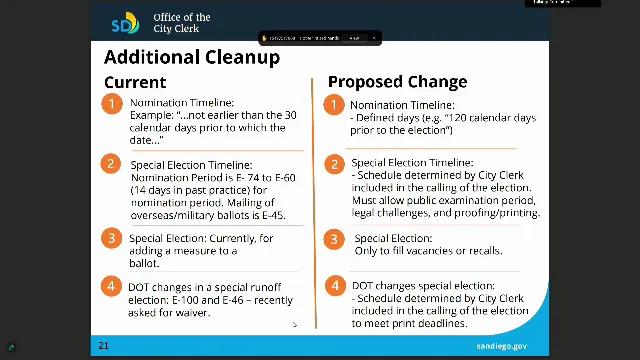
The Rules Committee of the San Diego City Council met on Wednesday, January 29, 2025, at 9:00 AM (local time) to consider a consent agenda, a committee work plan, an informational presentation on elections code, and two council policy amendments. All five committee members were present. The committee took public testimony on all items and unanimously approved all actions. Consent Calendar - Item 1 – Approval of committee minutes from October 30, 2024. Approved unanimously (5-0). - Item 2 – Amendments to the Rules of Council. Approved unanimously (5-0), with a note from the City Attorney that the draft is subject to legal review and the final version may differ. Public Comments & Testimony Non-Agenda Public Comment (before agenda items): - Caller ending in 7968 (Joy from District 3) expressed confusion about a “Footnote 7” issue from the previous day’s Encanto item, criticized a lack of noticing, and referenced the Brown Act as a potential tool for public lawsuits. - Blair Beekman commended the council’s commitment to CEQA and affordable housing, and raised concerns about “smart tech placement and removal programs” by police, urging public review processes for exigent circumstances. - Judy Strang argued that a billboard advertising a cannabis product (“Cake House”) with child‑appealing imagery violates state law (prohibiting marketing attractive to minors) and urged enforcement. - Lori Saldaña cited two recent fatal hit‑and‑run accidents in Claremont, linking them to increased traffic and ADU development. She noted that many ADUs are used as short‑term rentals rather than permanent housing, and encouraged the council to review ADU and bonus density programs. - Devin Rapp discussed state cannabis advertising laws (Control, Regulate, and Tax Adult Use of Marijuana Act, etc.), supporting stricter regulations on unlicensed operators and alignment of hemp marketing rules, and emphasized protecting youth. Public Comment on Consent Agenda (Items 1 & 2): - Caller 7968 thanked the City Attorney for clarity on Item 2 and praised the placement of proclamations early in meetings. - Lori Saldaña seconded a request for evening committee meetings to increase public participation, and noted that the council has been sued over closed‑session issues related to ceremonial items; she urged compliance with the Brown Act. - Blair Beekman inquired why the memo on proclamations listed the item as fourth on the agenda instead of first, and thanked for the change. Public Comment on Item 3 (2025 Work Plan): - Caller 7968 asked for flexibility in the final work plan, supported KPI and customer service discussions, and suggested reviewing board/commission recruitment. - Peggy Walker strongly supported early consideration of ballot measures, requesting clearer pro/con language and a review of who writes ballot measure summaries. - Blair Beekman emphasized the importance of boards and commissions, tech accountability, and community participation processes. - Lori Saldaña urged the council to consider a “mentoring” or “shadowing” program similar to the mayor’s “Mayor for a Day,” targeting underrepresented groups to foster civic education. Public Comment on Item 6 (Elections Code Workshop): - Aaron Sorimoto Grassi (Alliance San Diego) – testified in person. He expressed general support but opposed several proposed charter amendments: 1) Concern about write‑in candidates if primary is canceled; 2) Opposed appointments over special elections (voters should decide); 3) Strongly opposed allowing council to fill vacancies (as it takes power from the district); 4) Concern that with three candidates in a general election, a candidate could win without a majority. - Lori Saldaña asked about ranked‑choice voting and suggested a “caretaker” role for vacant seats when a member is incapacitated. - Caller 7968 thanked the clerks for proactive outreach, requested translation into Persian and Somali (as the County does), and asked for clearer ballot measure language. - Blair Beekman praised the City Clerk’s dedication to community involvement and urged a “shared cooperative process” rather than internal government practices. Public Comment on Item 4 (CP 000-17 Backup Materials): - Caller 7968 appreciated the City Attorney’s note on drafts and hopes backup materials remain available online without reduction due to cost. - Blair Beekman thanked staff for smooth community process. Public Comment on Item 5 (Repeal of CP 000-19): - Caller 7968 supported the repeal, agreeing that the policy is outdated and that the municipal code and annual legislative platform work well. Discussion Items - Item 3 – 2025 Rules Committee Work Plan: Abby Reuter (policy advisor to Council President LaCava) presented the proposed work plan, which includes six priorities: council policy review, customer service improvements (311/Get It Done), early consideration of ballot measures, open government (clerk’s presentation), possible charter revisions, and board/commission oversight. Councilmember Lee noted the need for standardized public outreach for construction projects; Council President LaCava clarified that customer service was addressed last year and is being handled via administrative regulations. The work plan was approved unanimously (5-0) after a motion by Vice Chair Lee and second by Councilmember Rivera. - Item 6 – Presentation and Discussion of San Diego Elections Code with Possible Charter Amendments: City Clerk Deanna Fuentes, Deputy Director Christina Hernandez, and Elections Analyst Mark Moreno presented a workshop covering proposed updates to the municipal election code. Key proposals included: codifying pre‑election notices with translation; clarifying candidate residency requirements (30 days prior to nomination); extending the filing period by five days if an incumbent does not file; moving form regulations to administrative guidelines; randomizing the order of arguments in ballot measures; and flagging four potential charter amendments (cancel primary if two or fewer candidates, extend 30‑day appointment window, adjust special election timeline when term nearly expired, and update tie‑vote procedures). The committee discussed each proposal. Councilmember Campio asked about setting a fixed residency date; Clerk Fuentes noted legal constraints and said the proposal aims for a single uniform deadline. Councilmember Rivera emphasized flexibility and simplicity; he supported aligning with the county and addressing tie‑votes by lot via alternative methods. Vice Chair Lee raised concerns about charter amendment four (three candidates in general) and suggested a city‑funded recount before lot. Council President LaCava noted the need to separate code changes (returning in March) from charter amendments (more research needed). No vote was taken; the item was for information and direction. - Item 4 – Amendments to Council Policy 000-17 (Furnishing Backup Materials for Council Docket): Abby Reuter explained that the policy, last updated in 2016, is being updated to reflect current digital access options, including email, website, printed copies in chambers, and mail/pickup. The fee remains 25 cents per page as set by the user fee schedule. The City Attorney again noted the draft is subject to legal review. Council President LaCava moved to recommend his office work with the City Attorney to draft a resolution for council consideration. Seconded by Vice Chair Lee, passed unanimously (5-0). - Item 5 – Repeal of Council Policy 000-19 (Legislative Policy Guidelines 2000-2001): Abby Reuter presented that the policy is outdated (last updated in 2000) and its function is now served by Municipal Code Section 22.1901, which requires an annual legislative platform. The City Attorney noted that the 30‑page policy is still being evaluated for full repeal vs. amendment; the final version may differ. The Mayor’s representative expressed support. Council President LaCava moved to recommend his office work with the City Attorney to draft a repeal resolution. Seconded by Councilmember Rivera, passed unanimously (5-0). Key Outcomes - The consent agenda (Items 1 and 2) was approved 5-0. - The 2025 Rules Committee Work Plan (Item 3) was approved 5-0. - The committee received the elections code presentation (Item 6) for information and provided direction; the City Clerk will return in March with a clean draft of municipal code changes and further research on charter amendments. - Proposed amendments to Council Policy 000-17 (Item 4) were recommended 5-0 for a resolution to the full City Council. - The repeal of Council Policy 000-19 (Item 5) was recommended 5-0 for a resolution to the full City Council. - The meeting adjourned at approximately 11:10 AM local time. The next regularly scheduled Rules Committee meeting is Wednesday, February 19, 2025, at 9:00 AM.
The Community and Neighborhood Services Committee met on January 29, 2025, to consider consent items, a discussion item on joint use agreements with the San Diego Unified School District, and three information items on refugee student support, downtown public restrooms, and committee priorities for 2025. The consent agenda and the joint use agreement item were both approved unanimously. Public comment was heard on all agenda items and on non-agenda topics. Consent Calendar - Item 1: Approval of the committee minutes from July 25, 2024. Passed unanimously (3-0). - Item 2: Authorization to receive $850,000 from the FY24 Economic Development Initiative Community Project Funding for Marie Whitman Memorial Park. Councilmember Foster expressed gratitude to Congressmember Vargas and requested language adjustments before City Council. Passed unanimously (3-0). Public Comments & Testimony - Non-Agenda Public Comment: - Cesar Javier and Parita Javier raised concerns about a non-metallic mineral product manufacturing home business in a residential zone (District 9), alleging code enforcement failures and lack of action since 2021. - Lori Saldania presented video of two recent hit-and-run accidents in Claremont, urging traffic safety improvements near schools and joint-use facilities. - Terry Ann Skelly cited a JAMA study on marijuana's effects on working memory and expressed concern for teen health. - Devin Rapp opposed marijuana advertising that appeals to children, noting risks of accidental ingestion and psychiatric disorders. - Blair Beekman (mention of tech accountability and park issues). - Judy Strang thanked the committee for a child-friendly city initiative, criticized a marijuana billboard (Cake House) as attractive to children, and raised concerns about Tijuana water pollution. - Consent Agenda (Items 1 & 2): - Cesar Javier criticized the minutes for not highlighting governance failures and budget deficits. - Joyce (virtual, phone ending 7968) praised the grant for Marie Whitman Park and collaboration with Congressman Vargas. - Item 3 – Joint Use Agreements: - Cesar Javier urged focus on work over rituals. - Lori Saldania praised cooperation but urged traffic safety near schools. - Joyce (virtual) commended the agreements as a long-running success. - Item 4 – Refugee Student Grant Update: - Cesar Javier warned about proper use of the $1.7M grant and noted a closed city road used by a Waldorf school. - Lori Saldania emphasized the need for trauma-informed services for refugee children and parent engagement. - Joyce (virtual) urged applying for future grants and commended the program. - Item 5 – Downtown Public Restrooms: - Cesar Javier criticized the city's failure of rule-making and alleged misuse of money. - Lori Saldania highlighted public health impacts (hepatitis outbreaks, sepsis, criminalization of homelessness) and urged more restrooms. - Joyce (virtual) acknowledged complexity but supported political will to solve the issue. - Item 6 – Committee Priorities: - Cesar Javier requested speed bumps on Streamview Drive for safety and cited volunteer governance. - Gloria Daniel thanked Councilmember Foster for 10 priorities but criticized Councilmember Campillo for leaving early; questioned tourism as a priority and urged restroom access. - Joyce (virtual) asked for updates on code enforcement, youth homelessness metrics, and digital equity. - Becky Rapp encouraged the committee to address sale of hemp-derived THC products to minors. Discussion Items - Item 3 – Joint Use Agreements with San Diego Unified School District: - Staff (Tom Tomlinson, Shannon Scoggins) presented eight agreements (renewals and new sites) for shared use of school fields and facilities. Six facilities open FY25, others in FY26-27. The program is over 75 years old, with 94 existing agreements. Maintenance costs included in current budget. Councilmembers Campillo and Foster praised the collaboration for expanding green space. Motion to approve passed unanimously (3-0). - Item 4 – Update on $1.7M Grant for Refugee Students: - Staff (Tara Ryan, Carrie Schottler) reported on progress: grant awarded April 2023, welcome centers opened at five high schools in August 2024. Services include orientation, interpretation, referrals, mental health support. Served 184 students and 66 families to date. Expanded to site-based appointments. Focus on language translation, job placement, housing, transportation, food access. Committee members expressed support and gratitude. - Item 5 – Grand Jury Report on Downtown Public Restrooms: - Staff (Kelly Matheson, Samita Rao, Katie Stanko) presented case studies (LA, SF, Santa Monica, NYC, Paris). San Diego has 350 public restrooms (25 per 100,000 people), but only 22 accessible downtown in 2022. Efforts include a public map, land development code incentives, Blueprint SD policies, and a pilot partnership with Throne Labs (tested during December Nights). Challenges: funding, maintenance, security. Councilmembers discussed gender-neutral restrooms, partnerships with Throne and advertisers, and collaboration with MTS and Caltrans. - Item 6 – Committee Priorities for 2025: - Councilmembers submitted memos on topics such as libraries, parks, senior services, code enforcement, youth homelessness, digital equity. Chair Campbell summarized focus areas. Councilmember Foster emphasized equitable resource allocation during budget deficit. No vote required; committee will finalize priorities at next meeting. Key Outcomes - Consent Agenda approved unanimously (3-0): Items 1 and 2. - Item 3 approved unanimously (3-0): Joint use agreements with San Diego Unified School District. - Item 4, Item 5, and Item 6 were informational; no motions or votes taken. - Committee will reconvene on Wednesday, February 19, 2025, at 2:00 PM.
The San Diego City Council convened on January 22, 2025, for the annual State of the City Address delivered by Mayor Todd Gloria. Council President Joe LaCava presided over the meeting, with all nine councilmembers present. The program featured a StoryCorps oral history presentation, followed by formal council proceedings. StoryCorps Oral History Presentation - The event began with a series of recordings from StoryCorps, produced in partnership with the City of San Diego. Residents shared personal stories about growing up in San Diego, community resilience (including the 2003 Cedar Fire), the impacts of gentrification, and the experiences of immigrant and border communities. - A StoryCorps representative stated the recordings would be archived at the Library of Congress and on the city's website to preserve the diverse voices of the community. Consent Calendar - No consent calendar items were considered during this part of the meeting. Public Comments & Testimony - Council President LaCava noted that public comment on the State of the City item was taken during the 2:00 p.m. session of the council meeting, prior to the evening's formal ceremonies. Mayor Gloria's State of the City Address - Budget and Fiscal Outlook: Mayor Gloria devoted much of his address to the city's $258 million budget deficit, which represents about 12% of its $2.1 billion operating budget, a consequence of the defeat of Measure E. He declared the city must permanently "right-size" its budget without gimmicks. Immediate actions include a non-essential hiring freeze, a comprehensive review of office leases, and a directive for all departments to build budgets from a zero base. - Public Safety: The Mayor reported crime reductions: homicides down 30%, sexual assaults down 12%, robberies down 10%, and car thefts down 20%. The city's emergency services responded to a record 188,000 calls last year. - Infrastructure: The city has resurfaced a quarter of its road network in the last four years, and the city's credit rating was raised from AA to A+ in June. - Housing: The Mayor championed housing reforms, stating the city permitted 10,000 homes in 2023 and 8,500 in 2024, far exceeding the historical average of 4,300. Average permit review time is eight days against a 30-day mandate. He announced a new program to incentivize "starter homes" (row homes, townhomes, condos) for first-time buyers. The city has invested $90 million creating nearly 2,000 affordable apartments across the city, and the Home Key program has secured over 600 homes. - Homelessness: The Mayor stated city programs have served over 25,000 people and placed 4,700 into housing. The Mayor strongly criticized the County of San Diego for failing to provide adequate behavioral health services, stating the city cannot solve the regional crisis alone. He demanded the State of California either clear encampments on Caltrans property or fully reimburse the city to do so, declaring "enough is enough." Key Outcomes - No formal votes were taken during this address. It served as the annual formal communication from the Mayor to the City Council on the state of the city and set the agenda for the upcoming year. - Mayor Gloria committed to solving the structural budget deficit in the current fiscal year without one-time measures. - The administration pledged to continue aggressive housing production and to pressure the county and state for greater responsibility in addressing homelessness and mental health.
The San Diego Public Safety Committee met on January 22, 2025, to discuss public safety priorities for the year, hear updates on wildfire preparedness, and consider a contract extension. Chair von Wilpert led the meeting, with Vice Chair Campillo, Committee Members Campbell and Whitburn present. City Attorney Laura Easton, IBA representative Boko Patel, and Mayor's office representative Coda Zeiser were also in attendance. The meeting began with a moment of gratitude for first responders who had been battling multiple fires in San Diego over the previous three days, including a fire in Rancho Bernardo that morning. Consent Calendar - Approval of Committee Minutes (November 20, 2024): Approved unanimously by voice vote. A public commenter, Lori Saldania, expressed confusion about the minutes' content, stating that an item on voting safety appeared to be copied and pasted without relevant detail. Public Comments & Testimony - Non-Agenda Public Comments: - Francine Maxwell (Southeastern San Diego resident) thanked first responders and requested a public hearing on the Community Police Partnership (CPP), citing trust issues and concerns about appointments and staffing. - Lori Saldania (Claremont resident) highlighted two recent pedestrian deaths near Genesee Avenue and urged traffic calming measures as density increases. - Terry Ann Skelly (parent) applauded the enforcement of flavored tobacco bans but noted a smoke shop near a high school continues to sell prohibited products, calling for easier complaint processes and stronger enforcement. - Becky Rapp (parent and planning group member) described a tobacco retailer selling flavored products and psychoactive CBD, urging robust enforcement and zero tolerance policies. - Catherine Douglas called for a state of emergency during Santa Ana winds and the removal of homeless encampments, citing fire risks. - Madison (speaker) urged policies to prevent cigarette-sparked wildfires, including education and stricter penalties. - Peggy Walker, Kathleen Lippett, and Megan Stewart advocated for stronger regulation of marijuana products, citing health and safety risks, including high-potency THC and youth targeting. - GW (resident of Mariposa/Mission Pacific) requested brush clearing on conservation land and raised concerns about blasting buffer zones near the rock quarry. - Neil Fisher (resident of Bernardo Chopin, property owner in Carmel Mountain) called for more aggressive brush management on undeveloped lands, citing the Ted Williams fire his area. - Item 3 - Fire Preparedness: - Public commenters expressed support for fire prevention and shared personal experiences. Moshe Kraftow presented a silvicultural management plan to reduce fire risk by configuring dead fuels. Lori Saldania supported Kraftow's work and suggested additional apps and indoor evacuation facilities. Bob Ilko urged city council to enact AB 3074 (home ignition zone standards). Judy String requested an update on city reservoirs. Others, including Don Lockhead, described unclosed brush complaints and advocated for increased staffing and a public dashboard on fire prevention progress. - Item 4 - 2025 Priorities: - In-person commenter Lori Saldania encouraged prioritizing traffic calming near schools and considering fire prevention measures like home hardening. - Virtual commenter Joyce (District 3) praised the priorities, highlighting hate crime prevention, EMS updates, and the nurse navigation program savings. Discussion Items - Item 3: Informational Update on Fire Preparedness and Mitigation (Presented First): - Assistant Chief Dan Eddy reported that the city has 52 fire stations fully staffed, with 994 firefighters and 35 recruits in the 100th Academy. He noted that the city has received only 0.16 inches of rain so far this season, compared to an expected 4 inches, and warned of a year-round fire season. The department upstaffed with three strike teams and two water tenders during the Santa Ana winds. Chief Eddy emphasized the importance of aerial resources and regional collaboration. He urged the public to use the Genasys app for evacuation zones and to evacuate when asked. - Deputy Chief Fire Marshal Tony Tosco described prevention efforts, including a new one-stop wildfire preparedness website, defensible space compliance (100 feet from structures), a proactive program for 46,000 acres in Very High Fire Hazard Severity Zones, and grant-funded projects (San Diego River Conservancy, Greater Fire Safe Council). He requested additional staffing: an Information Systems Analyst, a Program Manager, a Wildfire Prevention Specialist Supervisor, and two additional staff to support community outreach. - Key questions and discussion: - Vice Chair Campillo asked about how normal rain would reduce fire risk; Chief Eddy explained that vegetation would be less flammable at 8-15% fuel density. - Campillo asked about fire hydrant readiness; Chief Eddy explained regular testing and cross-departmental collaboration with PUD for known issues. - Campillo asked about state partner coordination; Chief Tosco acknowledged challenges with Caltrans on preventative brush clearing and mentioned referral processes. - Councilmember Campbell referenced the 2023 audit on brush management, noting coordination issues among departments; Chief Tosco stated they had reduced the city-owned land to be managed from 3,023 acres by half. - Councilmember Whitburn emphasized the audit's recommendation for the fire department to monitor city-owned land compliance and asked about hiring; Chief Tosco said they could fill positions immediately with funding but faced budget constraints. - Chair von Wilpert asked about preparedness improvements since 2003/2007; Chief Eddy cited enhanced regional collaboration, technology (FLIR images), and training. - Chair von Wilpert also mentioned plans to expedite construction of new fire stations (48 and Otay Mesa) and thanked the committee's support for helicopter funding and pilot pay raises. - Item 2: Ordinance to Authorize Contract Extension with Brycer LLC: - Deputy Chief Fire Marshal Tony Tosco and Deputy City Attorney Dana Orloff presented. The contract for the cloud-based compliance engine (TCE) by Brycer LLC had an original term ending January 2, 2025, but due to an error in the effective date, the city sought a six-month extension to June 30, 2025, at no extra cost. The extension would allow time to potentially switch to the city's 3DI software. No public comments other than a brief question from a caller. The committee unanimously approved the ordinance (4-0). - Item 4: Public Safety Committee Priorities for 2025: - Chair von Wilpert noted alignment on issues like gun violence prevention, wildfire preparedness, fentanyl, and behavioral health. Memos from committee members were discussed: - Councilmember Campbell prioritized supporting first responders, replacing the North Mission Beach and Ocean Beach lifeguard stations, and improving the county's SB 43 conservatorship implementation. - Councilmember Whitburn highlighted emergency preparedness and wildfire prevention, specifically implementing the brush management audit's recommendationschers; also police recruitment and updates on neighborhood policing and the unsafe camping ordinance. - Vice Chair Campillo highlighted technology like smart street lights and automated license plate readers, noting a 50% reduction in car thefts in Mid-City, and behavioral health collaboration with the county. Key Outcomes - Approved the minutes from November 20, 2024 (voice vote). - Approved the ordinance to extend the contract with Brycer LLC through June 30, 2025 (4-0 vote). - Directed the fire department to provide a follow-up update on progress in filling brush management staffing positions (accepted by the chair). - Requested the fire department's presentation on wildfire preparedness be scheduled for a full City Council meeting. - Agreed to compile a 2025 work plan for the committee based on member priorities. Next regular meeting: Wednesday, February 12, 2025, at 2 p.m.
The Budget and Government Efficiency Committee met on January 15, 2025, to discuss and act on fee adjustments for short-term residential occupancy, set committee priorities for the 2025 work plan, receive informational reports on charter-obligated services and prevailing wage compliance, and hear public testimony on various topics. Key actions included approving consent calendar items, advancing revised short-term rental fees with additional analysis, and adopting a work plan. Consent Calendar - The committee unanimously approved the consent agenda, which included the approval of committee minutes from December 11, 2024. No items were pulled. Public Comments & Testimony - Non-Agenda Public Comment: Speakers addressed a range of issues. Cesar Javier voiced concerns about a ceramics manufacturing operation in a residential zone and called for stronger enforcement. Other speakers advocated for youth internships, marijuana prevention, equity reporting in budget documents, and fiscal responsibility. Several speakers emphasized the economic costs of substance abuse and the need for prevention funding. - Consent Agenda Comment: Cesar Javier urged publicizing meeting records for transparency. Blair Beekman stressed the importance of accountability and best practices in the five-year plan. - Item 2 – Short-Term Rental Fees: - Jay Goldberg (NICENABERBERS.org, volunteer STR compliance) argued that proposed fees are too low compared to other cities and noted that 23% of San Diego short-term rentals are corporate-owned, calling for higher fees and stronger enforcement. - A virtual speaker (phone ending 7968) asked the committee to consider the program’s impact on the housing crisis and suggested raising fees, especially for corporate owners. - Item 3 – Committee Priorities: - Speakers supported the committee’s priorities, with one noting the importance of key performance indicators, IT upgrades, equal opportunity contracting, employee morale, alternative revenue, and homeless shelter feasibility. - Blair Beekman praised the city council and urged accountability. - Becky Rapp, a public health educator, requested a deep dive into marijuana business tax collections, citing a city auditor report that less than 50% of businesses paid taxes, and asked for a presentation on current collections and allocations. - Item 4 – Charter Obligated Services: - Cesar Javier asked for legal assistance for community issues. Other speakers requested a fuller report and highlighted the need to understand legally obligated services for budget planning. - Item 5 – Prevailing Wage Report: - Speakers praised the compliance work but raised concerns about language barriers for workers and the relatively low amount ($68,000) of back wages recovered. One speaker suggested tying prevailing wage to broader immigration and equity issues. Discussion Items - Item 2: Short-Term Residential Occupancy Application and Licensing Fee (Revised) - Matt Wood (S Tier Program Manager, Office of City Treasurer) presented a proposal to revise fees effective March 1, 2025, for full cost recovery of program administration and enforcement. Key statistics: Since program inception, over 10,000 licenses issued, $7.9 million collected; projected total revenue by April 2025 $8.5 million; total program costs projected at $9.18 million for the first two years. Proposed fees: Tier 1 license fee from $100 to $173, Tier 2 from $225 to $262, Tier 3/4 from $1,000 to $1,090; application fees adjusted. The program is 99.9% cost recoverable under Prop 26. - Councilmember Elo Rivera expressed concern that the fee does not cover broader costs such as police, fire, trash services, and enforcement of illegal ADU operations. He requested additional benchmarking and analysis of all eligible expenses, including public safety costs. Norma Medina (DSD) confirmed enforcement on tier 2 (home share) and ADU complaints. - Council President Pro Tem Lee questioned proactive enforcement and noted that San Diego’s fees appear lower than some other cities. He emphasized matching fees to service levels and suggested the fee study should account for enforcement outcomes. - The committee voted unanimously (4-0) to advance the item to City Council with a request for additional analysis on benchmarking and potential inclusion of other eligible costs. - Item 3: Committee Priorities and Input for 2025 Work Plan - Chair Foster opened the discussion, noting alignment among members on priorities such as equitable contracting, new revenue, and supporting communities of concern. He emphasized not balancing the budget on vulnerable populations and the need for transformative operational changes. - Vice Chair Moreno highlighted two priorities: (1) Coordinating with the rules committee to clarify the process for adding unclassified positions outside the regular budget cycle, and (2) Developing a multi-year plan to protect infrastructure and services in communities of concern from budget deficits. - Councilmember Elo Rivera seconded and expressed confidence in the committee’s composition to address challenges. - Council President Pro Tem Lee underscored the importance of collective input during a challenging budget year. - Chair Foster added that key performance indicators (KPIs) and a broad contracting review will be central to the work plan. - The committee unanimously approved the staff recommendation to create a 2025 work plan based on member input. - Item 4: Report from Office of City Attorney on Services Obligated Under the San Diego Charter (Informational) - Chief Deputy City Attorney Kathy Steinman presented a preliminary update to a 2011 report, summarizing charter obligations: city must staff certain offices, conduct redistricting every 10 years, appropriate funds for debt service, and use proceeds from property sales for capital improvements (Charter Section 77, with possible one-year suspension by two-thirds council vote). Charter Section 11.1 requires prioritizing police protection. The report will be updated as soon as possible. - Chair Foster noted the importance of understanding charter obligations during the budget process and requested further examination of public health obligations (transferred to county via Prop R) and homelessness spending. - Item 5: Fiscal Year 2024 Prevailing Wage Annual Report (Informational) - Christina Gagger (Chief Compliance Officer) and Aaron Lunis (Program Manager) presented: In FY24, the city executed 726 contracts subject to prevailing wage, monitored 1,090 contracts, conducted 596 preconstruction meetings, 346 site visits, interviewed 401 workers. Recovered $68,000 in back wages, issued 46 violation notices to the state Department of Industrial Relations (DIR), and reported 35 apprenticeship violations. - Councilmember Elo Rivera questioned the gap between reported violations ($485,000 assessed) and wages recovered. Staff explained many violations were resolved through contractor corrections, with one contractor accounting for $300,000 in uncured fringe benefits sent to DIR. The program focuses on voluntary compliance; penalties are assessed by the state. Staff noted potential future tools such as withholding payments and contractor debarment. - Chair Foster highlighted the state requirement for enforcement and the potential for personal liability of officials, and encouraged exploring legacy labor compliance program certification to recover costs. Key Outcomes - Consent Agenda: Approved unanimously (4-0). - Item 2 (STR Fees): Motion to advance to City Council with additional benchmarking analysis and exploration of broader cost recovery (including police, fire, and enforcement costs). Passed 4-0. - Item 3 (Work Plan): Motion to approve staff recommendation for 2025 work plan based on member input. Passed 4-0. - Item 4 & 5: Informational items; no votes required. City Attorney’s office will provide an updated charter services report. Chair Foster directed further discussion on prevailing wage enforcement tools and potential state advocacy. - The next regularly scheduled meeting of the committee is Wednesday, February 5, 2025, at 9:00 a.m.
The Land Use and Housing Committee of the San Diego City Council met on Thursday, December 12, 2024, with Chair Councilmember Lee presiding. A quorum was present (Council President Lacava, Councilmember Whitburn, Councilmember Moreno). The committee considered two consent agenda items (land acquisitions) and two discussion items (nonprofit leases), along with public comments on non-agenda topics. Consent Calendar - Item 1: Approval of committee minutes from November 21, 2024. - Item 2: Acquisition of 9.4 acres of unimproved land in East Elliott for habitat conservation and open space. - Item 3: Acquisition of 5.5 acres of unimproved land in East Elliott for habitat conservation and open space. All three items were approved unanimously (4-0) after public comment. Public commenter Sharon Calkin (graduate student, Scripps Institution of Oceanography) expressed support for the acquisitions and requested inclusion of Indigenous land management acknowledgment. Joyce Yata (District 3) also supported the acquisitions but questioned the use of development funds for maintenance given the city's budget deficit. Public Comments & Testimony Non-Agenda Public Comment: - Valerie Triena (District 4) expressed anger that Councilmembers Whitburn and Moreno had not supported legislation to ban rodeos, citing animal welfare concerns and the San Diego Humane Society's presentation. - Joyce Yata (District 3) discussed the city's structural budget deficit and suggested using the time to shadow departments and reevaluate governance, including the definition of affordable housing. - Peggy Walker, a public health advocate, spoke against retail outlets selling illegal intoxicating products (Delta 8/9 THC, psilocybin) targeted at youth, noting that 60% of tested samples contained controlled substances, and requested committee oversight. Item 4 Public Comment: - Christy Green, operation manager and volunteer at the Blind Community Center of San Diego, spoke in support of the lease, describing the center’s free daily lunches and its role as a home away from home for blind and low-income individuals. - Joyce Yata also spoke in support, praising the center’s work and the IBA’s analysis, but questioned the rent calculation and noted the center had operated without a lease for 23 years. Item 5 Public Comment: - Joyce Yata spoke in support of the College Area Economic Development Corporation lease, again questioning the rent calculation and comparing it to the Blind Community Center lease, and reiterated the need for fiscal belt-tightening due to the budget deficit. Discussion Items Item 4: 25-Year Nonprofit Lease – Blind Community Center of San Diego - Staff (Ian Riley and Jim Manler, Economic Development Department) presented a 25-year lease with one 10-year extension option for the city-owned property at 1805 E Street in Balboa Park (14,580 sq ft, appraised at $5,980,000). Annual base rent is $4,532.52 (approx. $380/month or 3 cents/sq ft/month). The tenant is responsible for all maintenance, repairs, and improvements. The Blind Community Center, founded in 1949, serves blind and visually impaired residents. - The Independent Budget Analyst (Noah Fleischman) commended the lease but recommended the city revisit its leasing strategy to better align with market rates given fiscal challenges, suggesting the first quarter of 2025 when the comprehensive user fee study is considered. - Council President Lacava expressed support, citing the public benefit and the center’s good stewardship. Councilmember Lee seconded, acknowledging the IBA’s broader fiscal concerns but emphasizing the value of nonprofit services. The motion passed unanimously (4-0). Item 5: 10-Year Nonprofit Lease – College Area Economic Development Corporation - Staff (Charlotte Alexander, Economic Development Department) presented a 10-year lease with no extension option for a city-owned building at 4704 College Avenue (1,534 sq ft, appraised at $997,000). The same annual base rent of $4,532.52 applies (approx. $380/month or 25 cents/sq ft/month). The tenant administers Business Improvement District and Maintenance Assessment District contracts, supporting 550 small businesses and 250 commercial property owners. The tenant is responsible for all maintenance and improvements. - The IBA reiterated similar comments about reviewing lease pricing. - Councilmember Whitburn questioned the equity of providing a nonprofit lease to this organization while other BID/MAD organizations in his district (District 3) pay market rates. Economic Development Director Christina Bibler confirmed that the city supports BIDs/MADs through other means (SBAP funds) and is open to conversations with other organizations. Councilmember Whitburn expressed appreciation for the discussion. Councilmember Moreno moved the item, Councilmember Lee seconded, and it passed unanimously (4-0). Key Outcomes - Consent agenda approved unanimously (4-0). - Item 4 (Blind Community Center lease) recommended to full City Council for approval (4-0). - Item 5 (College Area EDC lease) recommended to full City Council for approval (4-0). - The IBA’s comments on reviewing nonprofit lease pricing and the city’s overall real estate strategy were noted for future discussion, particularly in relation to the comprehensive user fee study expected in early 2025. - The meeting was adjourned; the next regular meeting is scheduled for Thursday, January 16, 2025, at 1:00 PM.
Budget and Government Efficiency Committee Meeting - December 11, 2024\n\nThe Budget and Government Efficiency Committee met on December 11, 2024, to consider several items including a consent agenda, a request to exempt a program manager position, the fiscal year 2026-2030 five-year financial outlook for the general fund and public utilities, and a proposal to set a public hearing for a water rate pass-through from the San Diego County Water Authority. The meeting featured extensive public comment and discussion on budget challenges, with the committee voting to return one item to staff and forwarding another without recommendation to full council.\n\n Consent Calendar\n- Item 1: Approval of committee minutes of November 13, 2024.\n- Item 2: Authorization to retain outside counsel for appellate law and workers' compensation law for an amount not to exceed $500,000 over a term of five years.\n- Both items were approved unanimously (4-0) after public comment.\n\n Public Comments & Testimony\n- Non-Agenda Public Comment: Multiple speakers addressed concerns about marijuana advertising and youth, tech accountability, broadband access, and public health costs related to cannabis and tobacco use. Speakers included Terry Ann Skelly, Blair Beekman, Madison, Becky Rapp, Joy Sunyata, and Judy Strang.\n- Item 3 - Program Manager Exemption: Mike Zuquet of the San Diego Municipal Employees Association (MEA) presented detailed data showing the city has added 323 program manager/coordinator positions since 2015 (a 461% increase), costing approximately $80 million. He urged the committee to freeze and cut vacant such positions. Eleven other individuals ceded time to him. Virtual speaker Joy Sunyata expressed support for the item but urged focus on structural issues.\n- Item 5 - Five-Year Financial Outlook: Public speakers included Patrick Stewart (Library Foundation), Mike Zuquet (MEA) again, Kim Phillips P (Arts and Culture SD), Mary Soriano (La Jolla Town Council), and others. Many urged equitable cuts and protection for libraries, parks, and arts. Virtual speakers Nicole Lilly (Our Time to Act) and Christine Martinez (Arts and Culture SD) called for creative revenue solutions and protection of underserved communities.\n- Item 6 - Public Utilities Outlook: Virtual speakers Joyce Sunyata and Blair Beekman commented on structural issues and the need for open discussions on subsidies. Michael Dwyer expressed confusion about revenue vs. expenditure charts.\n- Item 4 - CWA Pass-Through: Virtual speakers Joyce Sunyata supported the IBA's recommendation against multi-year authority, Michael Dwyer questioned cost projections, and Blair Beekman urged open dialogue on subsidies.\n\n Discussion Items\n- Item 3: Exemption of Program Manager Position in ESD from Classified Service: The Mayor's Office requested the item be continued or returned to staff, citing the need to consider it within the FY26 budget context. After public comment, a motion to return to staff was made by Chair Lee and seconded by Councilmember Foster. Council President Lacaba supported. Vice Chair Moreno voted no, noting she had voted against 41 prior exemptions. The motion passed 3-1.\n- Item 5: Fiscal Year 2026-2030 Five-Year Financial Outlook: Presented by CFO Matt Vespie and Finance Director Rolando Travel. The baseline deficit for FY26 is projected at $258 million, rising to $329 million when including new facilities and planned commitments. Key drivers include increased personnel costs, pension payments, homelessness programs, and infrastructure needs. IBA Director Charles Monica noted this is one of the most sobering outlooks and urged the council to consider revenue options like a trash fee and parking fee increases while preparing for significant cuts. Councilmembers discussed the need for strategic cuts, protecting underserved communities, and exploring revenue. The item was informational only; no vote taken.\n- Item 6: Public Utilities Fiscal Year 2026-2030 Financial Outlook: Presenters outlined significant rate increases needed for water (11-14.5% annually) and wastewater (7-8% annually) due to rising costs from the County Water Authority, energy, chemicals, and infrastructure. IBA noted these are the highest projected increases in recent years. Council President Lacaba asked about revenue exceeding expenditures in some years; staff explained the smoothing mechanism and fund balance needs. Chair Lee expressed concern about affordability and asked about ratepayer assistance programs; staff committed to exploring options. Informational item.\n- Item 4: Authorization to Set Public Hearing for 2025 CWA Pass-Through and Pass-Through Authority: Staff requested approval to set a public hearing for a 5.5% pass-through (effective May 1, 2025) to cover higher-than-expected CWA rates, and also requested authority for future pass-throughs through 2029. IBA recommended approving the initial hearing but recommended against the multi-year authority at this time, suggesting it be considered during the upcoming rate case. Chair Lee initially moved to approve the hearing, deny multi-year authority, and direct research on ratepayer assistance. After clarification from the City Attorney that the item could not be split, Council President Lacava made a substitute motion to forward the entire item to full council without recommendation. That motion passed 2-1 (Chair Lee and Council President Lacava in favor; Councilmember Foster opposed; Vice Chair Moreno absent).\n\n Key Outcomes\n- Consent Agenda: Approved unanimously (4-0).\n- Item 3: Motion to return to staff passed 3-1 (Vice Chair Moreno dissenting).\n- Item 5: Informational; no action taken.\n- Item 6: Informational; no action taken.\n- Item 4: Motion to forward to full council without recommendation passed 2-1 (Councilmember Foster dissenting; Vice Chair Moreno absent). The direction for PUD to work with IBA on ratepayer assistance was noted but not formally part of the motion.
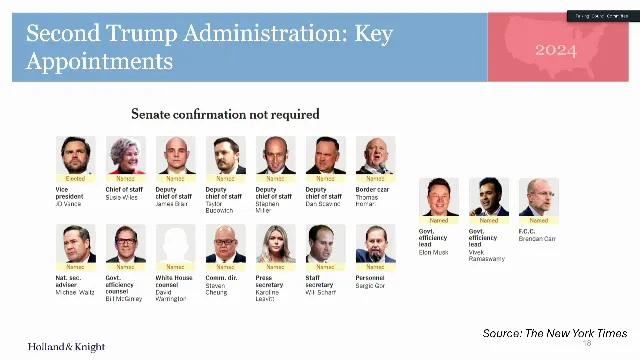
The Economic Development and Intergovernmental Relations Committee met on December 11, 2024, chaired by Councilmember Campillo, with Vice Chair Lee, Councilmember Campbell, and Councilmember Foster present. The meeting covered the adoption of the Creative City Cultural Plan, an update on the Bridge to Home affordable housing program, a federal affairs update, and a presentation from the San Diego Diplomacy Council. Public comments addressed health inequities, illegal cannabis products, youth substance use, the Tijuana River pollution, and community diplomacy. Consent Calendar - Item 1: Approval of the committee minutes from October 30, 2024. - Item 2: Approval of a nine-year flat rate ground lease agreement with Sorby Aircraft Maintenance for approximately 98,930 square feet of hangar space and 25,420 square feet of land at Montgomery Gibbs Executive Airport. - Both items were approved unanimously without discussion. Public Comments & Testimony Non-Agenda Public Comments: - Jan Bourgeois (downtown resident) urged the committee to continue developing the civic center area, reopen the closed restaurant at the civic theater (formerly Downtown Johnny Brown's), and enforce improvements on derelict buildings downtown, including the California Theatre. He also advocated for hiring freezes and budget cuts. - Terry Ann Skelly (parent, public health educator) cited a Kaiser Family Foundation survey on health inequities, noting that 66% of adults report personal or family substance use addiction. She highlighted that white adults (51%) are more likely than Black or Hispanic/Latino adults (35%) to receive treatment for substance use disorders, and urged reducing the number of predatory businesses selling alcohol, tobacco, and marijuana in lower-income neighborhoods. - Blair Beekman spoke about tech accountability and open practices, emphasizing that local government must be responsive and trusting in conversations about technology and public safety. - Peggy Walker (public health advocate) warned that gas stations, convenience stores, and smoke shops sell illegal intoxicating products (Delta 8/9 THC, CBD, mushroom blends) targeted at youth. She noted that 60% of samples tested by the county sheriff contained controlled substances, and called for oversight and stiff penalties. - Madison (concerned citizen, not a named affiliation) cited an Atlantic article on cannabis-induced psychosis, chronic vomiting, and paranoia among teens. She argued that unregulated THC products harm youth development, increase healthcare costs, and reduce workforce productivity, urging stronger regulation and prevention. - Phone number ending in 7968 (anonymous) recited a statement about the San Diego-Tijuana binational region, declaring interdependence and calling for a single transnational vision. - Michael Schmidt (Morning Bonds District) requested road repair on Gold Coast Drive in Miramar. - Judy String (public health advocate) noted that the San Diego County Board of Supervisors renewed an emergency proclamation regarding transborder pollution, emphasizing that communities near the border (Imperial Beach, San Ysidro, Otay Mesa, Tijuana River Valley) face high pollution burdens, linguistic isolation, and poverty. She referenced a new Surgeon General’s report calling for eliminating tobacco-related disease and addressing disparities, including from cannabis use. Consent Agenda Public Comment: - Blair Beekman supported the inclusion of state legislative updates on the agenda, praising the sharing of knowledge from outside sources. Public Comment on Item 3 (Creative City Cultural Plan): - Phone number ending in 7968 praised the plan, especially the equity fund and connection with philanthropy. They highlighted the digital divide and the role of Idea Labs at libraries, and supported free access to arts. Public Comment on Item 4 (Bridge to Home NOFA Round 4): - Phone number ending in 7968 thanked staff for the data, appreciated childcare and older adult support, and asked if the public can access the applicant evaluation method and quantifiable metrics for the competitive process. Public Comment on Item 5 (Federal Affairs Update): - Phone number ending in 7968 expressed excitement about Tijuana River funding in appropriations, asked about potential impacts of immigration policies on that funding, and requested attention to digital access for underserved communities. - Blair Beekman hoped the Trump administration would work toward peace but expressed concern about prolonging wars in Ukraine and Israel, and emphasized local open democracy as a model for peace. Public Comment on Item 6 (San Diego Diplomacy Council): - Phone number ending in 7968 thanked the presenters and embraced the concept of “we are all diplomats,” vowing to be a better diplomat. - Blair Beekman praised the work on tech accountability and hoped the council could contribute to local policy making, such as an Office of Immigration Affairs. Discussion Items Item 3: Adoption of the City of San Diego’s Creative City Cultural Plan - Jonathan Glus, Executive Director of the Commission for Arts and Culture, presented the plan, developed over 18 months through more than 70 community events, an online survey, and targeted convenings. Three key findings: the city has one of the largest portfolios of city-owned facilities; tourism authorities recognize arts and culture as a key growth area; and affordability was the top issue raised by artists and organizations. - David Plettner Saunders (Cultural Planning Group) outlined four goal areas: (1) Centering artists, creatives, and space (with strategies for affordable creative spaces, an equity fund, and streamlined procurement); (2) Arts in community (increasing access through cultural districts and targeted investments); (3) Creative entrepreneurship (creating a strategic creative economy plan and supporting targeted industries like music, film, visual arts); and (4) Global creative city (cultural tourism, international awareness, and transborder artist support). - The plan includes a funding toolkit: implementing a penny for the arts, creating an arts foundation, exploring an admissions fee, and allocating general funds. The Commission for Arts and Culture unanimously recommended the plan. - Committee Discussion: Chair Campillo emphasized that the plan creates good jobs and careers, noting the words “business” (55 times), “workforce” (19), “economic” (43), and “economy” (73) in the plan, with zero mention of “fun and games.” Vice Chair Lee highlighted the need for affordable creative spaces and the equity work. Councilmember Foster asked about cross-department collaboration and creative enterprise zones. Staff responded that early engagement with city departments has occurred, and joint use agreements with San Diego Unified School District are being explored for facilities like the new theater at Morse High School. - Outcome: Motion to adopt the plan passed unanimously. Item 4: Bridge to Home Notice of Funding Availability (NOFA) Round 4 Informational Update - Michelle Morano and Angela Nazareno Clark presented the program’s accomplishments: Rounds 1-3 resulted in 16 approved loans totaling $64 million, creating 1,344 affordable rental homes (285 with supportive services). Six projects are under construction; one is completed and leasing up. - Round 4 offered $24 million ($20 million from LMI Housing Asset Fund + $4 million CDBG). Twelve applications requested $57 million; six projects were recommended: 1. 40th and Alpha (Community Housing Works, Council District 9): 91 units (16 supportive), on-site childcare, $4.5M city loan ($48,913/unit). 2. 73rd Street Apartments (Eden Housing, District 9): 119 units (30 supportive), on county land. 3. Goodwin on Glacier (Wakeland Housing + City Thinkers, District 7): 130 senior units (21 supportive), on county land, on-site childcare, Green Point Gold rating. 4. Market Street Apartments (Affirmed Housing + COMPASS, District 4): 137 senior units (47 at 30-40% AMI), on county land, on-site childcare, Head Start services, community garden. 5. Sarah Mesa Apartments (Community Housing Works, District 7): 59 units (30 for veterans, 29 for homeless), on former library site, $3.5M city loan. 6. Swift Avenue Apartments (Community Housing Works, District 9): 56 units (20 for veterans), $4M city loan. - All projects have 55-year affordability covenants, 3% simple interest loans. Next steps: negotiate loan terms, present to City Council in 2025. A fifth round of NOFA (estimated $15-20M from CDBG) may be released in late 2024 or early 2025. - Committee Discussion: Chair Campillo asked about the separate funding sources (city NOFA vs. Housing Commission). Monica Hardman (Assistant Director) explained that the city’s direct funds (LMI, PLHA, CDBG, HOME) are used to avoid administrative burden on developers. Councilmember Foster asked about senior-only units and the role of Neighborhood House and Project New Village at Market Street Apartments. Staff clarified that all 137 units at Market Street are for seniors, with 47 at 30-40% AMI. No formal vote was taken as the item was informational. Item 5: 2024 Fall Federal Affairs Update - Dion Akers (Senior Advisor) and the Holland & Knight team (Eve Maldonado O'Toole, Lori Hedinger, Joe O'Brien) provided an update. - Election Recap: Republicans won the trifecta (House 220-215, Senate 53-47). Speaker Mike Johnson retained his position; Senate Majority Leader is John Thune. - Appropriations: FY2025 funding expires December 20, 2024; a continuing resolution through March 2025 is likely. An emergency supplemental includes $310 million for Tijuana River pollution, expected to pass with reductions. - WRDA: House passed the Water Resources Development Act, authorizing $200 million for countywide water projects and $10 million for the Tijuana River Valley watershed. Senate expected to pass. - Budget Reality: The Trump administration will likely use budget reconciliation for tax credits, border/immigration, and healthcare reforms. Surface transportation authorization (expiring Sept 2026) will emphasize roads, bridges, and freight over transit. - Policy Impacts: Anticipated priorities include immigration enforcement (mass deportation, Remain in Mexico, pressure on sanctuary cities), HUD budget cuts, focus on fentanyl, deregulation (EPA, water sector), and rescinding Biden-era police accountability orders. - Action Items: Obligate outstanding grant agreements before January 20, 2025; develop internal rapid response for immigration issues; leverage remaining discretionary grants from the Bipartisan Infrastructure Law. - Committee Discussion: Chair Campillo asked about leveraging the military angle for Tijuana River funding, noting national security and troop readiness. Holland & Knight confirmed bipartisan support due to the military impact. Campillo also questioned potential deregulation of PFAS and lead/copper rules; the team responded that PFAS regulation under Safe Drinking Water Act is likely to continue, but Superfund designation may not proceed. Vice Chair Lee asked about federal water ratepayer assistance; the team noted bipartisan support for a permanent Low-Income Water Assistance Program. No formal action. Item 6: Presentation from the San Diego Diplomacy Council - Heidi Nuff (Executive Director) and Lulu Bonning (Senior Manager) described the council’s 45-year mission of citizen diplomacy, connecting San Diego leaders with global counterparts via State Department exchange programs. In 2023, they hosted 673 international visitors from 124 countries across 59 programs, generating an estimated $2.5 million in economic impact from hotels and transportation. Programs include professional exchanges (e.g., social media influencers from South Korea, Romanian wheelchair basketball players) and youth programs (binational youth summit, summer camp, sports diplomacy). The council competes against 90 other U.S. cities for these 50% State Department-funded programs. - Funding: Historically received a TOT grant from the city, which was cut in the last budget; they are seeking cultural funding. They also pursue state and private foundation support. - Committee Discussion: Chair Campillo asked about the number of students impacted. Staff cited thousands through school visits and 25 interns per year. They are surveying alumni of their summer camp to track career pathways. Campillo praised the program and offered continued partnership. No formal action. Key Outcomes - The committee unanimously adopted the Creative City Cultural Plan (Item 3), directing staff to develop an implementation plan considering the defeat of Measure E. - The Bridge to Home Round 4 recommended projects were presented as informational; loan agreements will be brought to City Council for approval in 2025. - The federal affairs update was received as information; staff will continue to obligate grants and monitor immigration, housing, and water policies. - The San Diego Diplomacy Council’s presentation was received as information; the committee expressed support for its work.