Browse by city
Date range
Search help

Search titles, summaries, topics and stored transcripts together. Keywords may match separately; put the whole query in double quotes for a phrase. Matching follows word analysis, so punctuation is not exact. Both dates are included. Documents are not searched.

SHOWING 111–120 ENTRIES
111
MAR 31, 2026 · TOLEDO, OHIO · CITY COUNCIL
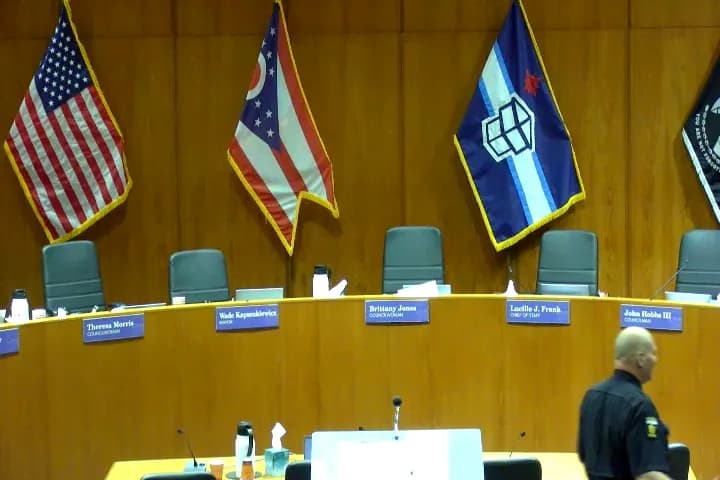
Toledo City Council Meeting - March 31, 2026: Budget Passed, Waste Contract Debate, and Multiple Ordinances Approved

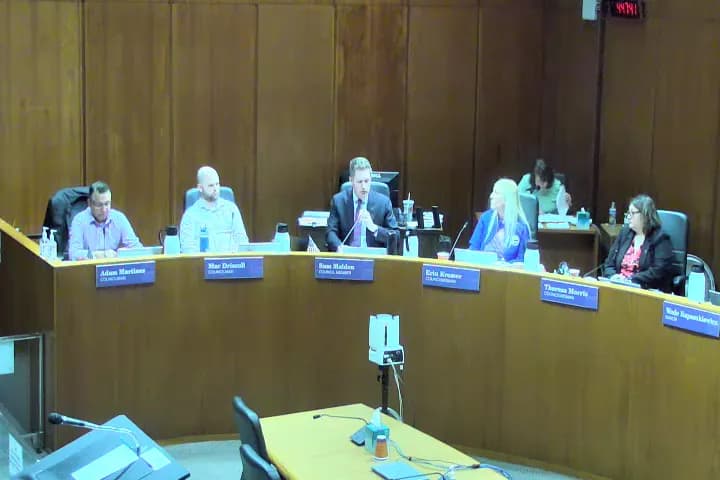
The Toledo City Council convened on March 31, 2026, at 9:00 AM with 12 members present. The meeting included an invocation, approval of an appointment, passage of numerous ordinances, and extensive discussion on the upcoming refuse collection contract decision and the city budget. The council also heard reports on lead hazard reduction, sidewalk programs, and infrastructure projects. Appointment Confirmation - Appointment 108-26 – Cody Brown was confirmed to the Troy Township JEDD Board, replacing Brandon Sellhorse, for a term expiring July 1, 2030. Approved unanimously (12-0). Second Reading Items - Ordinance 60-26 – Authorizing $100,000 for the Customer Assistance Grant Program (water/sewer/stormwater). Councilmember Martinez moved it to the Water Quality Committee for quarterly AMI progress updates. Approved without objection. - Ordinance 71-26 – 2026 Sidewalk Program ($3.5 million total from Capital Improvement, Special Assessment, and Tree Assessment Funds). Passed unanimously (12-0). - Ordinance 72-26 – Multi-Use Path Project on Parkside Boulevard (cooperative grant with ODOT, up to $1,116,495). Passed unanimously (12-0). - Ordinance 107-26 – Crosstown Water Main Route Study ($1 million from Water Replacement Fund). Passed unanimously (12-0). New Items from City Council - Ordinance 109-26 – First reading: Biometric Data Collection (Chapter 557 of Toledo Municipal Code). - Ordinance 111-26 – National League of Cities 2026 membership dues ($17,366). Passed unanimously (12-0). New Items from Administration - Ordinance 112-26 – Lead Hazard Reduction Grant Program ($7,750,000 from HUD). Passed unanimously (12-0). - Ordinance 113-26 – First reading: Five-year refuse and recycling contract with Priority Waste LLC (annual expenditure up to $13,560,000). - Ordinance 114-26 – Rodent abatement and demolition at public nuisance properties ($40,000 annually). Passed unanimously (12-0). - Ordinance 115-26 – Clean Toledo Center: collection, hauling, and processing equipment ($65,000). Passed unanimously (12-0). - Ordinance 116-26 – Heather Downs Pump Station Repair ($100,000). Passed unanimously (12-0). - Ordinance 117-26 – Sanitary Sewer Improvement 44D (loan up to $317,210 from Ohio EPA and OWDA). Passed unanimously (12-0). - Ordinance 118-26 – Cybersecurity improvements ($154,900). Passed unanimously (12-0). - Ordinance 119-26 – Cooman Drive Bridge deck replacement and abutment modifications (federal grant up to $2 million). Passed unanimously (12-0). - Ordinance 120-26 – Avenue Bridge over Buckeye Street project (federal grant up to $1,735,000). Passed unanimously (12-0). Zoning and Planning Items - Ordinance 121-26 – Zoning map amendment for 3360 and 3356 Monroe Street. Passed unanimously (12-0). - Ordinance 122-26 – Special use permit for community recreation at 2858 and 2860 LaGrange Street. Passed unanimously (12-0). - Ordinance 123-26 – Special use permit for used auto sales at 631 South Reynolds. Passed unanimously (12-0). - Ordinance 124-26 – Amendment to special use permit for a school at 6004 Hill Avenue. Passed unanimously (12-0). Council Member Comments & Discussion - Budget (General Fund) – The 2026 city budget was passed during the meeting. Councilmember Meldon noted his amendment maintaining a police presence in West Toledo received seven votes. Councilmember Sarantu thanked the administration and colleagues, emphasizing the need to monitor revenues and expenditures. - Refuse Contract Debate – Several council members addressed the upcoming decision between Republic Services and Priority Waste LLC. Council President Williams expressed support for Republic, citing improvements under local managers Sheryl and Rochelle, union affiliation, and a stable price. Councilmember Gaddis voiced strong opposition to Republic, detailing service failures in District 4 (e.g., bulk pickup delays, rat infestation), and stated she was initially leading the charge for replacement. She clarified that the proposed solid waste fee increase is not tied to the contractor choice. Councilmember Kramer thanked the public for feedback on the contract. The ordinance (113-26) received first reading; final vote is scheduled for April 14, 2026. - Lead Hazard Reduction – Councilmember Jones highlighted the $7.75 million HUD grant and discussed a partnership with the Sickle Cell Disease Association of America, noting that 60% of Detroiters carry the trait and Toledo data is pending. She also announced a tenant town hall (“Our Homes, Our Rights”) on April 6. - Community Events – Councilmember McPherson invited the public to an Easter egg scavenger hunt at Nelson Grace Park on April 4 (2-4 PM). Councilmember Morris promoted a Point Place Business Association Easter Egg Hunt at Friendship Park on April 4 at 10 AM. Councilmember Colmes touted the Clean Toledo Center and free glass recycling program (GRIT) for bars and restaurants. - Infrastructure Updates – Councilmember Gaddis reported that viaduct lighting in East Toledo is being repaired and that ODOT will host a meeting at Bowser High School on March 31 at 6 PM regarding the odor from the hole on Arlington Avenue. Councilmember Driscoll thanked the transportation department for approving a road closure on Delaware for the Old West End Festival. - Youth and Safety – Councilmember Martinez provided an update on the Urban Air teen takeover incident, noting a productive meeting with management and urging parents to supervise children. Councilmember Kramer recognized Trans Day of Visibility and thanked police for safety at a weekend rally. Key Outcomes - Budget Approved – The 2026 city budget was passed. Additional amendments may be made throughout the year. - Refuse Contract Delayed – Ordinance 113-26 (Priority Waste contract) received first reading; final vote set for April 14, 2026. Council members continue to weigh public feedback. - Ordinance 60-26 Referred to Committee – The customer assistance grant program was moved to the Water Quality Committee for quarterly reports on AMI progress. - Lead Grant Accepted – $7.75 million from HUD for lead hazard reduction was approved; implementation will include contractor recruitment and neighborhood targeting. - Infrastructure Projects Authorized – Multiple projects (sidewalk, path, bridge, pump station, sewer, cybersecurity) were approved for funding and bidding. - Appointment Confirmed – Cody Brown seated on the Troy Township JEDD Board. - Meeting Adjourned – The council will reconvene on April 14, 2026, for the refuse contract vote.
PROCEDURAL 41% · MISCELLANEOUS 31% · ENGINEERING AND INFRASTRUCTURE 10% · HOUSING AND COMMUNITY DEVELOPMENT 4%
112
MAR 26, 2026 · TOLEDO, OHIO · CITY COUNCIL
Housing, Community Development & Public Health Committee Meeting - March 26, 2026

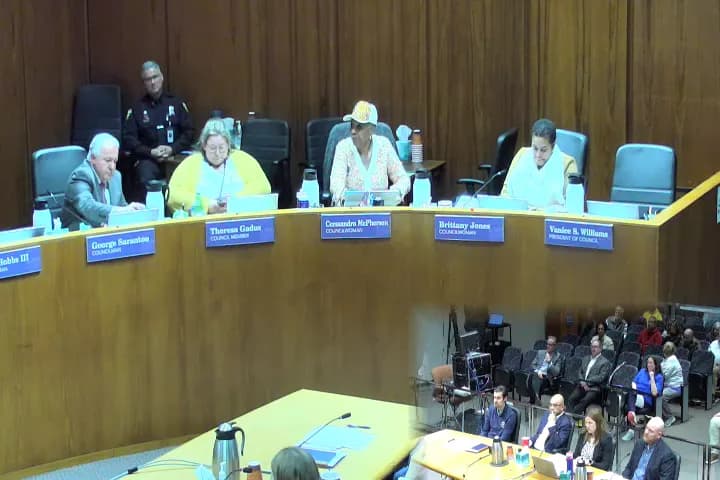
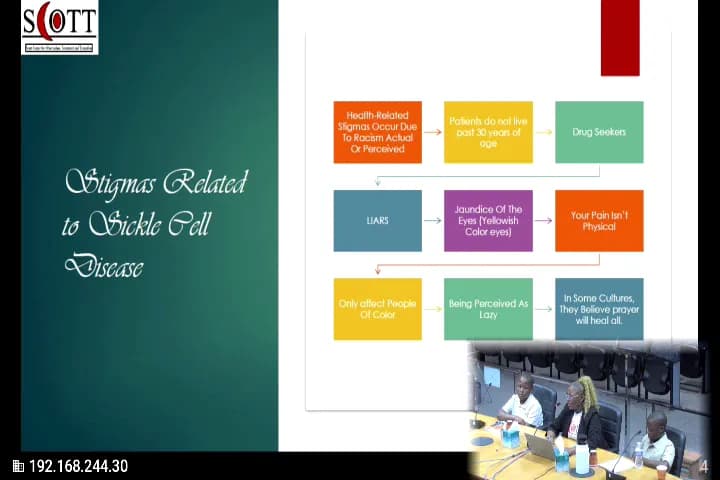
On Thursday, March 26, 2026, at 3:30 PM, the Toledo City Council's Housing, Community Development & Public Health Committee met to discuss sickle cell disease awareness and a proposed lead hazard reduction grant. Three council members were present (Brittany Jones, Theresa Gadus, Erin Kramer); four were absent. The meeting featured a presentation from the Scott Center for Observation Treatment and Transition (SCOTT), public testimony, and a detailed presentation on the city's new federal lead grant. Public Comments & Testimony - Emory Scott (age 11, sickle cell warrior and Ohio child ambassador) gave a personal testimony about living with sickle cell disease, describing daily pain, missed school, and the importance of support systems. He urged leaders to support organizations and education. - Sheree Barhe (grandmother of sickle cell warriors) shared her experience with sickle cell trait and promoted her grandson's book. - Joyce Doublefield (former sickle cell support group worker) highlighted that family members often miss school due to caregiving responsibilities, and noted historical blood donation challenges. - Tyela Smith (sickle cell anemia patient) described difficulties: her daughter missing school to accompany her to treatments, her husband's employer (Amazon) not understanding sickle cell, and being forced to travel to Cleveland for emergency care. She reported that a teacher threw her daughter's makeup work in the trash despite a doctor's note. - Kelly Mofield (Executive Director, Kidney Foundation of Northwest Ohio) noted the link between sickle cell and kidney disease, and shared that people of color are three times more likely to end up on dialysis. - Chelsea Benton (American Red Cross) announced partnerships with SCOTT to increase blood donation, especially minority donation. - Emily Mills (special education coordinator) shared best practices for 504 plans and urged parents to know their rights under Ohio's Parents' Rights Guide in Special Education. - Blair Johnson (licensed abatement contractor and risk assessor) urged approval of the lead grant, noted that 90% of Toledo's housing stock was built pre-1978, and stressed the need for more lead abatement workers and trade school partnerships. He also called for penalties on sellers who conceal lead hazards. - Kimberly Dixon (real estate professional) raised concerns about placard properties (homes with lead orders) being sold without disclosure. She suggested a system to flag such properties through title companies. Discussion Items - Sickle Cell Awareness Presentation (Dr. Scott, SCOTT) - Dr. Scott (mother of two sons with sickle cell disease and two with trait) explained SCOTT's mission: eliminating health disparities, acting as a liaison between medical professionals, reducing stigma, and addressing infant mortality. SCOTT serves 11 counties in Northwest Ohio (Lucas County is largest). - Key facts: 1 in 365 African Americans, 1 in 16,300 Hispanic Americans have sickle cell disease. Both parents must carry the trait (25% chance per pregnancy of disease, 50% chance of trait). - Myths addressed: not only affecting African Americans (also affects people from Saudi Arabia, India, Mediterranean, etc.); patients can live into their 80s; pain is real, not drug-seeking behavior. - Sickle cell trait can cause complications during strenuous exercise, high altitudes, scuba diving. - The only cure is bone marrow transplant (not universal) or gene therapy (cost $2.2 million per patient, requires chemo, two-year process). A gene therapy hub may open at Nationwide Children's Hospital. - Data: about 300 trait babies and 10-15 disease babies per year in Toledo. A food access survey of under 100 families linked food deserts to hospitalization due to pain crises. - Council member questions: housing challenges for sickle cell patients (frequent hospitalizations affect ability to work and pay rent), school accommodations (504 plans, training for teachers), and the need for more data on local prevalence. - Lead Hazard Reduction Grant (Deputy Director Colleena Ali and Program Manager Jerry Kukowski) - The city received a highly competitive federal grant from HUD's Office of Lead Hazard Control and Healthy Homes: $55,000 marketing budget over four years, targeting 141 homes. - 82% of the budget is direct costs (tied to specific addresses); 1.8% is administrative. The budget was approved by HUD. - Priority: homes with orders from the health department due to elevated blood lead levels (EBL) in children under six. 41 high-risk census tracts are targeted, but any eligible city home can apply. - The grant allows for owner-occupied and rental units, including vacant units. The city will use an online application portal, referrals from the health department, and outreach via billboards, health fairs, and landlord networks. - Staffing is in place, and a pipeline of units from previous grants will be merged. - Potential new federal requirement: proof of citizenship for applicants – still awaiting HUD guidance at orientation in late April. - Lead Resource Center (Candice Buckley, Executive Director) plans to be located at Swain Field (Inglewood area), providing training for lead workers, risk assessors, and contractors. Buckley announced she will present at the Ohio Housing Network and the national Lead and Healthy Housing Conference. - Lead Safe Coordinator Monica Smith added that placard properties (with lead orders) are posted on health department websites, and efforts are underway to attach these orders to property titles to prevent undisclosed sales. Key Outcomes - The committee heard the sickle cell presentation and public testimony; no formal vote was taken on this item, but council members expressed strong support for SCOTT's work and pledged to help with awareness and addressing barriers. - The lead grant ordinance (O-112-26) was discussed in detail; the committee is expected to move it forward. Council members requested quarterly updates on the grant's progress and for marketing materials to be shared with their offices. - The committee will monitor the citizenship requirement issue and its impact on program eligibility. - No formal action was taken at this meeting; the lead grant ordinance is anticipated to be voted on the following week.

LEAD SAFETY 54% · MISCELLANEOUS 19% · HOUSING AND COMMUNITY DEVELOPMENT 8% · PUBLIC ENGAGEMENT 7%
113
MAR 26, 2026 · TOLEDO, OHIO · CITY COUNCIL
Housing, Community Development & Public Health Committee Meeting - March 26, 2026

The Housing, Community Development & Public Health Committee of the City of Toledo convened on Thursday, March 26, 2026, at 3:30 PM in Council Chambers. The agenda focused on a proposed ordinance related to Sickle Cell Disease and a Lead Grant, as well as a presentation on Sickle 101. No minutes were available, and the provided transcript does not contain substantive discussion or decisions. Discussion Items - Proposed Ordinance O-112-26: The committee was scheduled to discuss the ordinance concerning Sickle Cell Disease/Lead Grant. - Sickle 101 Presentation: A presentation was listed on the agenda to provide information on sickle cell disease. - Any other matter that may properly come before the Committee. Key Outcomes - No formal decisions, votes, or directives are reflected in the available materials. The transcript provided does not capture Councilmember or public testimony.

MISCELLANEOUS 100%
114
MAR 26, 2026 · TOLEDO, OHIO · CITY COUNCIL
Housing, Community Development & Public Health Committee Meeting on March 26, 2026

The Housing, Community Development & Public Health Committee of the City of Toledo met on Thursday, March 26, 2026, at 3:30 PM in City Council Chambers. The meeting was called to order to discuss sickle cell disease and lead grant initiatives. No transcript, minutes, or detailed records are available beyond the formal agenda. Discussion Items - Proposed Ordinance O-112-26: An ordinance related to Sickle Cell Disease and Lead Grant funding was introduced for discussion. Specific provisions were not detailed in the agenda. - Sickle 101 Presentation: A presentation on sickle cell disease was scheduled on the agenda. - Other Matters: Any additional items properly coming before the committee were included. Key Outcomes No votes, decisions, or directives are recorded in the available agenda. The outcomes of this meeting are not documented due to the absence of minutes or transcript.

115
MAR 26, 2026 · TOLEDO, OHIO · CITY COUNCIL
Toledo Housing and Community Development Committee Meeting - March 26, 2026

The Housing and Community Development and Public Health Committee of the Toledo City Council met on March 26, 2026, at 3:30 PM. The meeting featured a presentation on sickle cell disease and trait awareness from the S.C.O.T.T. Center, followed by a discussion on a Lead Hazard Reduction Grant from the U.S. Department of Housing and Urban Development (HUD). Council members and the public provided comments and testimony on both topics. Public Comments & Testimony - Sheree Barhe, a grandmother of sickle cell warriors and trait carrier, spoke on the challenges of fatigue and pain associated with the trait. - Joyce Doublefil of the Sickle Cell Support Group highlighted the broader family impact, including school attendance issues for siblings caring for ill family members. - Taquila Smith, who has sickle cell anemia, described significant obstacles including a school teacher discarding her daughter's make-up work despite a doctor's note, her husband's employer (Amazon) denying FMLA requests, and lack of local healthcare options requiring travel to Cleveland. - Kelly Mofield, Executive Director of the Kidney Foundation of Northwest Ohio, noted the connection between kidney disease and sickle cell and the shared health disparities affecting communities of color. - Chelsea Benton of the American Red Cross announced a partnership with Dr. Scott to increase minority blood donations for sickle cell patients. - Emily Mills, a Special Education Coordinator, advocated for parents to learn their rights regarding 504 plans to ensure schools properly accommodate students with sickle cell. - Blair Johnson, a licensed abatement contractor and risk assessor, urged council to approve the Lead Hazard Reduction Grant, argued rejecting it "would be a bad idea," and requested the city conduct greater outreach to licensed contractors and trade schools to build a workforce for lead abatement. Discussion Items Sickle Cell Disease Awareness and the S.C.O.T.T. Center - Dr. Scott, founder of the S.C.O.T.T. Center (established 2022), presented information on the organization, which serves 11 counties in Northwest Ohio and is the first and only nonprofit in the state providing transition programs for sickle cell patients combating mental health. - She stated approximately 1 in 365 African Americans and 1 in 16,300 Hispanic Americans are impacted by the disease. - She emphasized that sickle cell is not exclusively a disease impacting Black communities and addressed myths regarding patient life expectancy and drug-seeking stigmas. - Dr. Scott reported counseling roughly 300 families of trait babies and 10 to 15 families of babies with the disease annually. A preliminary study linked food deserts to higher hospitalization rates. - Emory Scott, 11-year-old Sickle Cell Child Ambassador for Ohio, gave a personal testimony about living with sickle cell, his desire to become a civil engineer, and his plea for community support and access to care. - Councilmembers expressed strong support for the organization’s work. - Councilmember Gaddis inquired about the intersection of sickle cell and housing access, given job instability and disability challenges. - Councilmember Clay asked about school accommodations and local data. - The committee chair offered to assist in promoting the organization’s awareness events. Lead Hazard Reduction Grant - Deputy Director Colina Ali and Program Manager Jerry Kukowski of the Department of Housing and Community Development presented the HUD Lead Hazard Reduction Grant. - The four-year, highly competitive grant is budgeted to target 141 homes. - The budget allocates 82% of funds to direct costs, with only 1.8% to administrative costs. $55,000 over four years is allocated for marketing and outreach, focusing on 41 high-risk census tracks. - The program will prioritize homes with health department orders due to lead-poisoned children. - A new federal requirement regarding proof of citizenship for applicants remains an unresolved question. - Candice Buckley, Executive Director of the Lead Resource Center, expressed passion for the initiative and stated the center is planned to be located at Swain Field. She announced upcoming presentations at the Ohio Housing Network to share Toledo’s strategies. - Councilmember Gaddis requested regular updates on the grant’s progress following implementation, noted the importance of the grant given federal funding constraints, and stated the grant "will change lives." - The committee discussed how the grant complements the city’s lead safe ordinance and other local lead abatement funds. Key Outcomes - The committee received an informational presentation on sickle cell disease from the S.C.O.T.T. Center; no formal action was taken, but council members pledged to support awareness efforts and follow up on policy issues raised by public testimony. - The Lead Hazard Reduction Grant ordinance was discussed and received strong verbal support from the committee. A vote by the full city council was anticipated the following week. - The committee requested that the Department of Housing and Community Development provide regular updates on the implementation and progress of the lead grant.

LEAD SAFETY 51% · PROCEDURAL 16% · COMMUNITY ENGAGEMENT 12% · PUBLIC HEALTH 9%
116
MAR 26, 2026 · TOLEDO, OHIO · CITY COUNCIL
2026-2027 Action Plan Meeting #1 - March 26, 2026

This was the first meeting to discuss the City of Toledo's 2026–2027 Action Plan, held on March 26, 2026, at 10:30 AM UTC. The agenda included a presentation on the One Year Action Plan and a related PowerPoint and AI presentation. However, the available transcript is extremely limited and fragmented, providing no coherent record of public comment, discussion, or decisions. No minutes were provided. Discussion Items - The meeting was convened to review the 2026–2027 Action Plan, with attached materials including a presentation titled "One Year Action Plan Presentation 032526" and "2026-27 Action Plan PP". - The only recognizable phrase in the transcript, "parents have salary argued," is ambiguous and cannot be attributed to any specific speaker or position. Key Outcomes - No votes, decisions, or next steps were recorded in the available documentation.

PROCEDURAL 100%
117
MAR 26, 2026 · TOLEDO, OHIO · CITY COUNCIL
First Public Hearing for 2026-2027 One-Year Action Plan - March 26, 2026

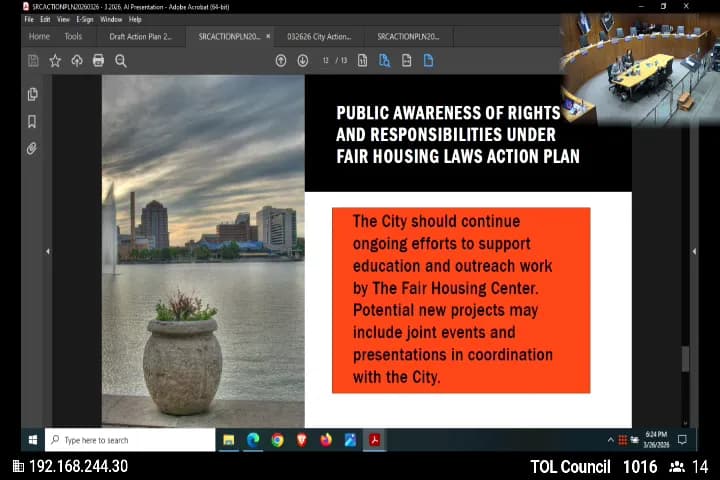
The Toledo Department of Housing and Community Development held the first of two public hearings on March 26, 2026, for the 2026-2027 one-year action plan, a HUD-required document describing activities funded with annual block grants (CDBG, HOME, ESG). The hearing included presentations from city staff, the Homelessness Board, the Fair Housing Center, and Lucas Metropolitan Housing. A 30-day public comment period runs from March 25 to April 24, 2026; written comments may be sent to the Department. A second public hearing is scheduled for Thursday, April 2, 2026, at 5:30 PM. Public Comments & Testimony - Laurie Hammond (Old West End resident) questioned how new developments like "The Glen" or "The Grand" are considered affordable when two-bedroom rents start at $1,300 and are not income-based, despite being referenced as income-driven. She also asked about coaching and wraparound services for individuals transitioning from homelessness to permanent housing to ensure properties are maintained, citing an example where an out-of-state landlord was collecting vouchers but not maintaining the property. Finally, she expressed concern about the number of demolitions leaving vacant parcels in the Old West End and asked how to preserve housing stock. - A resident from Old South End asked whether a demographic profile (income, age, etc.) was developed for the NURSA designation and how to access the information. Monica Brown confirmed the profile is in the NURSA plan on the city’s website and offered to email it. Discussion Items - Overview of the Action Plan (Monica Brown, CPD Grants Manager): - The action plan is a HUD requirement submitted each year of the five-year consolidated plan. It identifies strategic projects and performance measures funded by annual HUD allocations plus carryover funds. - Timeline: Applications were due February 6, 2026; first public hearing March 26; second hearing April 2; legislation to city council proposed by April 14, with possible committee meetings April 14–21 and council vote April 21. Final HUD submission deadline May 18, 2026. HUD has 45 days to review. - Funding requested: 34 non-homeless CDBG applications totaling $4.5M; 1 HOME application for $400K; 9 ESG applications totaling $1.3M. - Anticipated level funding: CDBG $7,046,960 + $1.8M carryover = $8.9M total; HOME $1,965,724 + $5M carryover = $6.9M total; ESG $627,000. - Allocations (CDBG): Planning/administration $1.4M (16%); housing program delivery $900K; public services $1,057,000 (15% cap); affordable housing $1.8M plus $1.1M carryover; neighborhood parks/community centers $1M; economic development $747K; capacity building institute $150K; NERSA public services $220K; NERSA housing $825K; NERSA code-compliance demolition $250K; strategic economic development in NERSA $500K. - HOME: Administration $196,572 (10%); total set-aside $844,859 (including $550K carryover for homeowner rehab); rental housing development $1.4M; down payment assistance using $1M carryover; home buyer development using $1M carryover. - ESG: Essential services $376,225 (shelters); stabilization $48,539; administration $47,000; HMIS $155,251. - NERSA (Neighborhood Revitalization Strategy Areas): Three designated NERSAs (O South End, Inglewood, Junction). A possible fourth in Vistula as a Choice Neighborhood. - Homeless Initiatives (Lisa Pangove, Toledo Lucas County Homelessness Board): - The Continuum of Care created a strategic plan in 2024 to reduce barriers and improve data sharing. - Moving to an open HMIS system so providers can share client history, avoid duplication, and reduce trauma. - 2026–2027 focus: Coordinated entry improvements (with United Way 211), key performance indicators (track housing speed and stability), and data quality. - Hive program (Housing Integration Visibility and Engagement): 113 properties listed, 987 units, 148 currently open and ready to rent. - Expanding youth advisory board (ages 18–24 who experienced homelessness) to inform policy at local and state levels. - Fundraising for Point-in-Time counts, Code Blue events, and targeted outreach. - Fair Housing (George Thomas, Fair Housing Center CEO): - Fair housing ensures access regardless of race, color, national origin, sex, religion, familial status, disability, etc. - The Analysis of Impediments (AI) identifies barriers to fair housing choice, including access to homeownership, source of income discrimination, land use/zoning issues, and substandard housing conditions. - Recommendations: Better enforcement of local law prohibiting source-of-income discrimination (including housing choice vouchers); homeownership education (city planning a fair later in 2026); removing barriers for people with disabilities; addressing NIMBYism for affordable housing. - Emphasized that substandard housing conditions are a major barrier due to aging housing stock and historic disinvestment. - Public Housing (Singor Mans, Lucas Metropolitan Housing CEO): - LMH manages about 2,400 public housing apartments (2,600 total including market-rate and tax-credit units), making it the largest regional landlord. - Public housing waitlist has over 4,000 families; the waitlist opened in fall/winter and received 3,500 applications within three days; list is now closed. - Five-year strategic plan (2024–2028) goals: invest in employee growth, diversify revenue (currently 95% HUD-funded), create accessible housing opportunities, streamline processes, improve communication, and promote homeownership (voucher homeownership component available). - Planned projects: renovations at multiple properties (McClinton Roman, Viste owner, Port Lawrence, etc.); Speiker Terrace demolition and rebuilding (deconcentration of poverty with replacement units); new construction (e.g., Collingwood Green). Grand opening in May 2026 for a new building. - Financial Opportunity Center (first in Ohio housed at a housing authority) to help residents achieve homeownership. Key Outcomes - No votes or decisions were taken; this was a public hearing to gather input. - The 30-day comment period continues through April 24, 2026. - The second public hearing will be held on Thursday, April 2, 2026, at 5:30 PM. - Legislation proposing funding allocations will be submitted to city council on or around April 14, 2026, pending receipt of HUD allocations (expected by March 28 or early April). - Final approval by council anticipated April 21, 2026.

HOUSING AND COMMUNITY DEVELOPMENT 49% · PROCEDURAL 21% · HOMELESSNESS 13% · FAIR HOUSING 13%
118
MAR 25, 2026 · TOLEDO, OHIO · CITY COUNCIL
Toledo-Lucas County Planning Commission Meeting - March 25, 2026

The Toledo-Lucas County Planning Commission met on March 25, 2026, at 2:00 PM to consider a final plat and three zone change requests, all located in Springfield Township. The meeting was called to order with a quorum present. Commissioner Grossweiler arrived later in the meeting, as noted in the record. Consent Calendar - Final Plat S126 – Legacy Business Park Replat (north of Monclover Road, east of Jerome Road, Monclova Township): Staff recommended approval and all final clearances had been received. A motion to approve was seconded and carried unanimously. Public Comments & Testimony - Z19-C704 (7850 Garden Road, zone change from R1 to RA3): Applicant Scott Hasty addressed the commission, stating he had no questions regarding staff's recommendation for approval. No other public testimony was offered. - Z19-C703 (9253 Geyser Road, zone change from RA4 to C2): Applicant Jacob Barnes spoke in favor, stating the property is an existing auto sales lot that has been operating since 1988 and is in a transitional area. He sought to rezone the westernmost parcel to expand parking and provide buffering. Commissioner Hampton questioned whether the parcel was subject to enforcement action. Township staff representative Josh Hounger testified that the township agreed with the planning commission's recommendation for denial, citing incompatibility with the land use plan and noting that vehicles were being stored on the property, including non-operable and damaged vehicles visible from a nearby school. The property owner was not present. - Z19-C705 (multiple parcels on Door Street and West Bancroft Street, zone change from RA, C2, and M1-PUD to C2): Applicant Nick Stutzman of Kleinfelder indicated no questions. Property owner Mike Cott also expressed agreement with the staff recommendation. Discussion Items - Z19-C704: Staff recommended approval because the zone change would introduce compatible land use and is consistent with the 2020 Springfield Township Land Use Plan (low to medium residential). The commission voted to approve the staff recommendation. - Z19-C703: Staff recommended disapproval for three reasons: incompatible land uses, adverse impacts on surrounding properties, and inconsistency with the 2020 Springfield Township Land Use Plan (which recommends residential and agricultural uses). Commissioner Hampton questioned the timeline of vehicle storage on the subject lot. The applicant argued the lot is part of a transitional area and that he has worked with the township to remove disabled vehicles. Township staff supported denial, citing enforcement issues and visual blight. A motion to accept the staff recommendation of disapproval was seconded and carried. - Z19-C705: Staff recommended approval, citing compatible land uses, no adverse impacts, and consistency with the Dorr Street Interchange area designation in the land use plan. The commission voted unanimously to approve. Key Outcomes - Final Plat S126: Approved unanimously. - Z19-C704 (7850 Garden Road): Approved (zone change from R1 to RA3) as recommended by staff. - Z19-C703 (9253 Geyser Road): Denied (the motion to accept staff recommendation of disapproval carried; the request to rezone from RA4 to C2 was not approved). - Z19-C705 (multiple parcels on Door Street and West Bancroft Street): Approved (zone change to C2) unanimously.

ZONING AND PLANNING 91% · PROCEDURAL 9%
119
MAR 25, 2026 · TOLEDO, OHIO · CITY COUNCIL
Toledo Committee of the Whole Meeting on Solid Waste Contract – March 25, 2026

The City of Toledo Committee of the Whole met on Wednesday, March 25, 2026, at 4:00 PM in City Council Chambers to discuss a proposed new refuse and recycling contract. The administration recommended entering into a five-year contract with Priority Waste, citing improved accountability, technology, and bulk collection. The meeting included presentations, council member questions, and public testimony, with many speakers opposing the switch due to cost, union labor concerns, and Priority Waste's track record. Consent Calendar - None noted. Public Comments & Testimony - Janet Beam (Hill Avenue resident) expressed support for Republic Services, noting A+ Better Business Bureau rating (Priority rated F), and stated her neighborhood has no complaints and issues are resolved quickly. - Diana Schreiner (Bancroft Hills resident, United Neighborhood Residents representative) supported Republic, criticized Priority as non-union, and said Republic has resolved issues since weekly bulk pickup began. - Mark Schmiehausen (Principal Officer/President, Teamsters Local 20) accused Priority of violating union rights: claimed that after Teamsters Local 247 won an election to represent 30 drivers in Detroit, Priority fired 20 of them the next day. He urged council not to replace union workers with a non-union contractor. - Carlton Surtman (Toledo homeowner since 1971, Point Place) praised Republic's service improvements since January (weekly bulk pickup without scheduling) and called switching to Priority a gamble with taxpayers' money. - Blair Johnson (South Toledo resident, entrepreneur) questioned Priority's capacity, accountability, and operational readiness, noting the tight timeline for hiring and equipment. He also cited illegal dumping as a broader issue and asked about cost impacts on residents. - Slinda Hendrix (East Toledo resident, community activist) cited 1984 city blight commission proposals, praised Republic's recent improvements, and insisted on mandatory union labor in any contract. - Miranda Napier (East Toledo resident) reported positive experiences with Republic, with issues resolved same day, and opposed switching to a non-union company. - Rick Rolfe (General Manager, Republic Services) stated Republic submitted the lowest cost proposal ($1.7 million lower than Priority in year one) and noted Ohio law requires selection of lowest and best bidder unless a real emergency exists, which he argued does not. He also highlighted Republic's 154 Toledo employees (82 living in city/county) and recent service improvements. - Gary Lenhart (community activist) criticized Republic historically but acknowledged recent improvements; opposed Priority due to non-union status, high cost ($8.7 million over five years vs. Republic), and Priority's documented struggles in Michigan (missed pickups, default proceedings). He called for a two-year contract with performance renewal. - Fanny Effler (Old West End Association, Toledo Old Town Neighborhood Association) expressed frustration with lack of notice about the meeting, praised Republic's responsiveness, and opposed the switch. - Renee Dallas (Bancroft Hills area resident) urged council to address landlord and tenant accountability rather than solely blaming Republic or Priority. - Mike Haynes (President, Toledo Police Patrolmen's Association) highlighted budget pressures, urged against paying more for similar service, and supported shorter contracts with opt-out clauses based on performance. - Tony Toddy (UAW Local 14 President, downtown Toledo resident) cited his experience with union-busting trash company Value Point and opposed Priority, warning of similar problems. - Paul Konwinski (Secretary-Treasurer, Teamsters Local 20) cited multiple Michigan communities (Dexter, Orient Township, Macomb Township, West Bloomfield) with service complaints, defaults, and fines against Priority. He argued the higher contract cost could force cuts to city employees (police, blight team). - Mark Sobczak (former Council President) requested data on Priority's non-union wages, questioned where Priority would house vehicles, and stressed that enforcement of set-out rules is key regardless of provider. - Susan Tyson (Arlington area resident) supported Republic for two years with closer oversight, criticized rental property blight, and worried about cost increases on fixed income. - Kathy Shotty (South End resident) supported Republic and called for more enforcement staff. - Dylan Keel (resident) noted Priority fired its founder/CEO in February 2026, detailed higher daily cost ($4,856 more per day than Republic), and recited complaints from Michigan communities (Macomb Township default, Bloomfield Hills switch). - Daniel Rabb (President, Toledo Police Command Officers Association) opposed higher cost given city budget cuts and delayed police classes; noted only 3,600 residents responded to survey out of 200,000+. - Redon Jones (UAW Local 12 member, Point Place) opposed outsourcing to non-union company. - Larry Keel (Republic employee, 15 years, former city solid waste worker) said he would be displaced and appealed to council to retain Republic. - Jerry Harris (Republic sales) stated he hears negative comments about Priority from businesses daily due to rapid expansion and service issues. - Cheryl Gaston (Republic employee) asked council to give Republic a chance to fix issues, noting many council members have called her directly to resolve problems. - Jade Sendley (Republic swing driver) shared her positive experience: Republic provided CDL training and career advancement. Discussion Items - Administration Presentation: Megan Robson (Chief of Operations), Ryan Murphy (Commissioner of Solid Waste), Vince Huyumpa (CEO of Priority Waste), and Austin Azaretti (Priority's Director of Integrated Technologies) presented the recommendation. They noted the current contract with Republic via Lucas County Solid Waste Management District expires August 31, 2026. The city received proposals from Republic, Priority, Rumpke, and FCC Environmental. Selection committees narrowed to Priority and Republic. Priority's bid was $1,120,000/month (modified); Republic's was $977,600/month. Priority's original bid was $935,300/month, lowest at first. - Key Selling Points for Priority: - Five-year contract with five-year renewal option. - Service Level Agreement (SLA) with performance metrics (e.g., call answer within 90 seconds, 98% route completion). - Weekly bulk collection (up to 5 items) on same day as refuse. - Technology: cameras on every truck, real-time route monitoring, dedicated Toledo customer service (LDCs), and a resident portal. - Commitment to unionization (met with Teamsters Local 20); bid includes union wages. - Commitment to hire Toledo residents. - No impact on city employees (contract covers curbside only). - Cost Comparison: The administration stated Priority's higher cost ($1.12M/month vs. Republic's $977,600/month) provides value through reduced blight and improved accountability, potentially lowering the city's $1.7 million annual blight team expense. Republic's bid is 3% lower than current rates. - Reasons for Bypassing Solid Waste District: The city wants direct contract control to enforce SLAs; the county's contract lacked enforcement mechanisms. - Council Concerns: - Unionization: Several council members (Kramer, Martinez, Sarantou, McPherson) questioned Priority's union stance. Priority stated future Toledo workers could choose to unionize; they are neutral. Councilwoman McPherson expressed skepticism, noting Republic is Teamster Local 20 (54 union employees). Councilman Komives highlighted that Republic's contract lacked SLAs and accountability for 10 years. - Cost: Councilman Sarantou calculated $8.75 million more over five years with Priority. Councilman Martinez asked about fuel escalators; administration confirmed no changes to quoted prices. - Service Record: Councilman Komives cited Republic's 2021 notice of breach for bulk collection failures. Councilwoman Kramer noted Republic improved bulk only after competition from Priority. Councilwoman Jones raised Priority's CEO shakeup (founder fired Feb. 2026) and Michigan complaints; Priority's Vince Huyumpa acknowledged change was due to ideological differences but insisted company is stable. - Transition: Questions about timeline (Sept. 1 start, hiring in July/August), equipment availability, and contingency if Republic walks away. Priority cited experience with Flint and Hamtramck transitions under tight timelines. - Contract Length: Council members (McPherson, Gaddis) favored two- or three-year terms with performance reviews; administration preferred five years with renewal option. - Referrals: Council members requested data on blight team history (Gaddis), communications with Lucas County Solid Waste regarding Republic complaints (Sarantou), and a timeline of administration actions (Gaddis). Key Outcomes - No vote was taken. The ordinance (O-113-26) is on first reading; a final vote is expected in approximately three weeks. - Council directed the administration to provide additional data: blight team statistics, survey results, sample dashboards from Priority's other communities, and details on Priority's recruitment plan and union wage comparisons. - Council member Komives emphasized the body will continue asking questions and doing homework before a decision. - Public comments and council discussion made clear that union labor, cost, and track record are central issues. Several council members (McPherson, Sarantou, Komives) indicated leaning toward Republic or a shorter contract with strong SLAs.

ENGINEERING AND INFRASTRUCTURE 55% · SOLID WASTE MANAGEMENT 11% · PUBLIC ENGAGEMENT 10% · PROCEDURAL 5%
120
MAR 24, 2026 · TOLEDO, OHIO · CITY COUNCIL
Toledo City Council Agenda Review – March 24, 2026

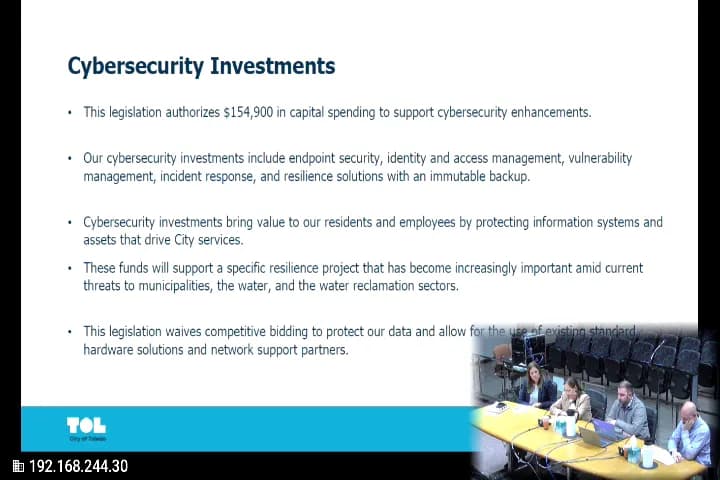
The Toledo City Council held an Agenda Review meeting on March 24, 2026, at 2:00 PM in the Council Chambers to prepare for the March 31, 2026, full council meeting. The review covered multiple ordinances and resolutions, including a major $7.75 million federal lead hazard reduction grant, a new refuse and recycling contract, infrastructure projects, and new legislative proposals. All council members were present except one (12 present). Discussion Items - Lead Hazard Reduction Grant (O-112-26) – Department of Housing and Community Development Chief Rosalyn Clemens and grant manager Jerry Kolkowski presented a $7,750,000 grant from HUD for lead abatement in pre-1978 housing. The four-year program targets households at or below 80% AMI, prioritizes units with children under six with elevated lead levels, and funds up to $30,000 for lead hazard reduction and $15,000 for healthy homes repairs. The budget breakdown includes 22% for personnel, 1.5% for travel/training, 0.8% for supplies, 38% for property owner grants, and 25.9% for direct contractor payments. A portion supports the Lead Resource Center for outreach, education, and contractor training. Council members questioned overhead costs, staffing funded by the grant vs. general fund, enforcement of income restrictions, marketing, and contractor capacity. The item was recommended for a committee hearing on March 27, 2026, and the department requested SCP (send to council with positive recommendation). - Refuse and Recycling Contract with Priority Waste (O-113-26) – Chief of Operations Megan Ropeson and Public Service Director Joe Fausnaugh presented a five-year agreement (with a five-year renewal option) with Priority Waste for curbside collection services, estimated at $13.56 million annually. The contract includes enhanced technology (real-time truck monitoring, dedicated customer service) and will replace the current Republic Services contract ending August 31, 2026. A committee hearing was scheduled for March 25, 2026, at 4:00 PM. Council members asked about key performance indicators and contract details. Recommended for first read and SCP. - Rodent Abatement and Demolition (O-114-26) – Commissioner of Urban Beautification Sara Stacy requested $40,000 annually for rodent abatement services at properties declared public nuisances, under an existing MOU with the Toledo-Lucas County Health Department. The cost is $85 per property. Council President Williams humorously questioned rodent release locations, and Council member Gadus asked about other pests (bed bugs, cockroaches). The item was recommended for SCP, with a referral to the health department for additional information. - Clean Toledo Center (O-115-26) – Authorization of $65,000 for a recycling drop-off center at 3900 Creekside Avenue, set to open spring 2026. The center will accept scrap metal, yard waste, food waste, electronics, and donation items. Revenue from scrap metal will go to the general fund. Hours: Tuesday–Saturday, 8:30 AM–4:30 PM. Recommended for SCP. - Heatherdowns Pump Station Repair (O-116-26) – DPU Commissioner Andy McClure requested $100,000 for repair of pump three at the Heatherdowns pump station. Vibration monitors indicated needed refurbishment; three contracts will cover removal/installation, pump repair, and motor repair. The station has redundancy. Recommended for SCP. - Sewer Tunnel Preliminary Design (O-117-26) – Authorization to accept an Ohio EPA loan of up to $317,210 for the preliminary design of the secondary tunnel replacement at the Bay View Water Reclamation Facility (Improvement 44D). The project uses a construction manager at risk delivery method; construction is estimated at $12–14 million. Recommended for SCP. - Cybersecurity Enhancements (O-118-26) – CIO Ann Bennett and project manager Josh Rasso presented a $154,900 allocation from 2025 capital funds for cybersecurity resilience and recovery projects amid current threats to municipalities and the water/wastewater sector. Funds will leverage existing vendor contracts. Council member Sarantou confirmed the funds were not spent last year due to hope that they wouldn't be needed. Recommended for SCP. - Bridge Projects (O-119-26 and O-120-26) – Deputy Director Jeremy Mikolajczyk presented two ODOT cooperative agreements: $2,000,000 (5% city match) for Kuhlman Drive bridge deck replacement over Norfolk Southern Railway, and $1,735,661 (5% city match) for removal of the Central Avenue bridge over Buckeye Street. The Central bridge removal includes replacing access ramps with an intersection and addressing illegal dumping. Council President Williams requested engagement with the nearby prison and neighborhood. Recommended for SCP. - Zoning and Planning Items – Four items were reviewed: a zone change at 3360 & 3356 Monroe Street; a special use permit for used auto sales at 631 S. Reynolds Road; a special use permit for community recreation-active at 2858 & 2860 Lagrange Street; and an amendment to a special use permit for a school at 6004 Hill Avenue. All were recommended for placement on the full council agenda. - Biometric Data Collection Ordinance (TMP-12343 / O-109-26) – Council member Gadus introduced an ordinance to amend the Toledo Municipal Code by enacting Chapter 557, “Biometric Data Collection”. Council member Sarantou asked about applicability to security cameras. Gadus explained that the ordinance targets businesses that collect biometric data (retina scans, fingerprints, facial recognition processed through software) and would require posting a sign; standard video cameras not using biometric analysis software are exempt. The Chamber of Commerce was consulted. The item was placed on the agenda. - Budget Reduction Resolution (TMP-12360 / R-110-26) – A resolution urging the Mayor's office and City Council to reduce the 2027 and 2028 budgets by $10 million per year was introduced by all council members. No discussion occurred beyond noting its placement. - National League of Cities Membership Dues (TMP-12341 / O-111-26) – Authorization of $17,366 for 2026 membership dues, sponsored by Council President Williams. Placed on the agenda. - Appointment – Cody Brown was appointed to the Troy Township JEDD Board. Key Outcomes - All agenda items received recommendations for placement on the March 31, 2026, full council meeting. Most were recommended for SCP (send to council with positive recommendation) or first read. - The Lead Hazard Reduction Grant and the Priority Waste contract were scheduled for additional committee hearings on March 27 and March 25, respectively, for further discussion. - A referral was made for the rodent abatement item to obtain clarification from the health department about pest types and release locations. - The Central Avenue bridge removal item will involve outreach to the prison and neighborhood, as requested by Council President Williams. - Council member Sarantou reminded members of the Finance Committee hearing at 4:00 PM on March 24 to discuss delinquent water/sewer bill collection, February financials, and the 2026 budget proposal.

LEAD SAFETY 49% · SOLID WASTE MANAGEMENT 12% · PRIVACY RIGHTS 9% · ENGINEERING AND INFRASTRUCTURE 8%
OPENPUBLICA · PUBLIC MEETING INDEXUPDATED DAILY · openpublica.com