A representative from the Westchester County Archives delivered a detailed presentation on the county's rare copy of the Declaration of Independence, known as the Holt Broadside, during a meeting on May 6, 2026, at 7:00 PM. The presentation covered the document's history, preservation efforts, and an upcoming public exhibit. Presentation on the Holt Broadside Declaration of Independence - The speaker, a caretaker from the Westchester County Archives, described the copy as one of five surviving copies of the Holt Broadside, printed by John Holt in New York City in 1776. It was read aloud on the court steps of the White Plains Courthouse on July 9, 1776. - The document is 250 years old as of 2026 and was appraised by Stuart Lutz (of Pawn Stars) for a retail replacement value of $2.2 million for insurance purposes. The speaker emphasized the document is priceless. - The National Institute of Standards and Technology (NIST) is building a custom environmentally controlled encasement made of aluminum and titanium, filled with argon and helium inert gases to aid preservation. The encasement will include ultraviolet glass donated by Eastman and an advanced continuous monitoring system to detect leaks. - The speaker highlighted that NIST has previously created similar cases for the Smithsonian and the National Museum of African American History and Culture. - The Neuberger Museum (referenced as "Newburger Museum" in the transcript) is collaborating with Westchester 250 on an exhibit about the American Revolution and the 250th anniversary, where the document will be displayed publicly for school groups and the community. Key Outcomes - No formal votes or decisions were made; the meeting consisted solely of the informational presentation. - The document will be housed in the new NIST-built encasement to ensure its preservation for another 250 years or longer. - The public will have the opportunity to view the document in person at the upcoming Neuberger Museum exhibit as part of Westchester County's 250th celebration.
Public Meetings - Westchester County, New York
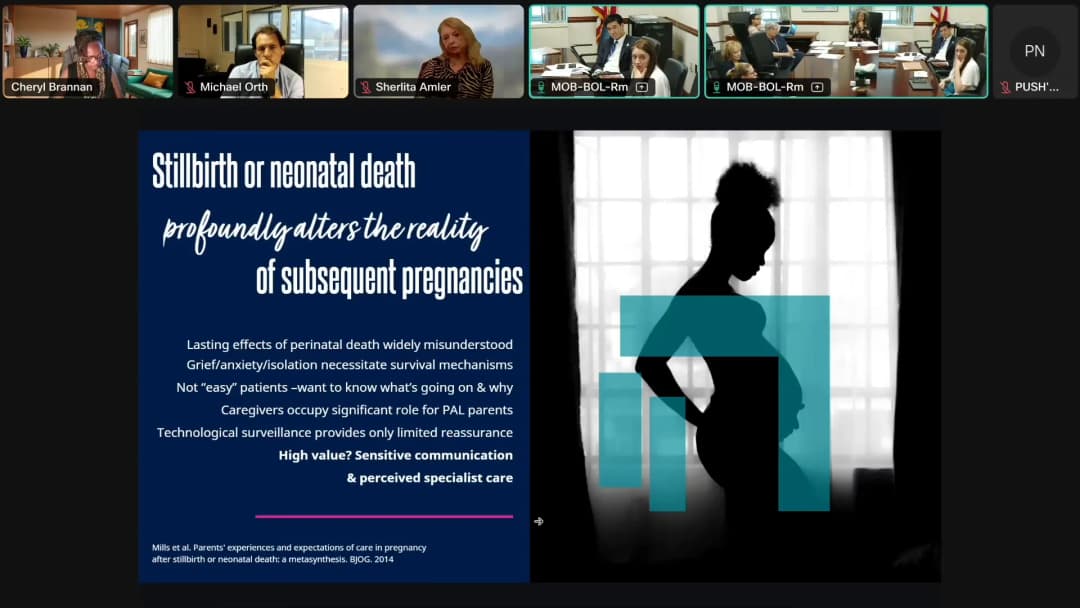
Public Meetings - Westchester County, New YorkOn May 6, 2026, the Westchester County Board of Legislators Health Committee, chaired by Legislator Jewel Williams Johnson, convened at 11:05 AM to discuss maternal mental health in recognition of National Postpartum Week, Maternal Mental Health Awareness Week, and National Maternal Mental Health Day. The meeting featured presentations from Dr. Leah C. Susser (Weill Cornell Medicine), Cheryl Brannan (Sister to Sister International), Samantha Banerjee (PUSH for Empowered Pregnancy), and County Health Commissioner Dr. Sherlita Amler and Mental Health Commissioner Michael Orth. The meeting adjourned at 12:41 PM. Consent Calendar - Minutes from April 8, 2026, and April 22, 2026, were approved unanimously on a motion by Legislator Pierce, seconded by Legislator Imamura. Discussion Items - Dr. Leah C. Susser presented on the importance of treating psychiatric conditions during pregnancy and postpartum. She emphasized that untreated mental illness (e.g., depression, ADHD) carries significant risks to both mother and fetus—comparable to untreated medical conditions like gestational diabetes. Dr. Susser noted that stigma often leads women to fear medication, but the risk of non-treatment (e.g., stress-induced fetal brain changes, preterm birth, maternal suicide) must be weighed against medication risks. She cited that 10–20% of women experience postpartum depression, and half of cases begin during pregnancy. Her program at NYP/WCM provides reproductive psychiatry consultations and time-limited care. - Cheryl Brannan described Sister to Sister International’s work addressing Black maternal health disparities, including a monthly work group, a team birth initiative at St. John’s Riverside Hospital (supported by $400,000 in county funding), a birth equity dashboard with the Health Department, and upcoming town halls (next on June 16, 2026). She stressed that Black women die at much higher rates from preventable causes and called for holistic, patient-centered care. Sister to Sister received the Health Commissioner’s Award and launched a podcast, “Joy,” during Black Maternal Health Week. - Samantha Banerjee presented on stillbirth prevention, noting that 21,000 babies die annually in the U.S. from stillbirth (defined as loss after 20 weeks), with Black women more than twice as likely to experience it. She reported that 1 in 4 pregnant people experience some type of loss, and that stillbirth is the leading cause of death for children ages 0–14 (more than prematurity, SIDS, car accidents, and guns combined). She highlighted that at least 47% of term stillbirths are preventable, and if U.S. rates matched the best international peers, 75% could be prevented. The U.S. ranks 48th out of 49 high-income countries in stillbirth reduction. Banerjee advocated for the Rainbow Clinic model—a trauma-informed, patient-centered care model for subsequent pregnancies—which in the UK produced 20–30% immediate drops in stillbirth rates. She noted that stillbirth survivors are nearly five times more likely to have severe maternal complications and that 60% of maternal deaths occur postpartum (80% preventable). She called for making Westchester a center of excellence for pregnancy after loss. - Commissioner Michael Orth and Dr. Sherlita Amler participated virtually, affirming the county’s commitment to maternal mental health and birth equity. Key Outcomes - The committee approved minutes from prior meetings. - A proclamation designating May 6, 2026, as Maternal Mental Health Day and recognizing National Postpartum Week and Maternal Mental Health Awareness Week was displayed and endorsed. - A video produced by the Westchester County Health Department highlighting Black maternal health disparities, team birth, and the county’s dashboard was screened. - Legislators expressed interest in further exploring the Rainbow Clinic model and expanding in-person community events. Chair Williams Johnson noted that a resolution urging the state to address inequities in paid leave for bereaved mothers was previously included in the NYSAC packet. - No formal legislation was voted on; the discussion was informational and intended to raise awareness and spur future action.
This joint committee meeting focused on the revival of the Westchester County FAVOR (discount) program for veterans, led by Veterans Service Agency Director Joshua Gaccione and Program Administrator Travis Melby. Discussion covered program design, outreach, staffing, and related services. Consent Calendar - The committee approved the meeting minutes from February 11, March 4, March 18, and April 1, 2026, on a motion by Legislator Nambiar, seconded by Legislator Nolan. The motion carried with Legislators Nolan, Nambiar, and Smith voting aye; Legislators Holstein and Woodson-Samuels absent. Discussion Items - FAVOR Program Revival: Director Gaccione and Administrator Melby introduced plans to relaunch a county-wide discount card for veterans (the FAVOR card), modeled after the existing parks card. The card will be barcoded for secure registration and will be rolled out in time for Veterans Appreciation Day at Playland on August 9, 2026. A companion online directory of veteran-owned businesses and participating merchants is also being developed. Registration will require secure verification via the county IT system (social security numbers needed). - Outreach: The agency reported 925 client interactions (veterans and family members) in the final quarter of 2025, an increase attributed to stepped-up social media outreach and visits to new locations. Legislators suggested partnering with local chambers of commerce, American Legion posts, and using events at Kensico Dam to distribute the card and identify veterans. Director Gaccione and Administrator Melby expressed openness to collaborating with legislators to disseminate information via newsletters and district events. - Staffing and Budget: The Veterans Service Agency has a staff of about nine, with only three Veteran Service Officers (VSOs) currently—one salary position (grade 12) is vacant. Gaccione noted that staff is at or near capacity, hampering outreach and program development. He stated that adding at least one more level 10 VSO would significantly increase capacity to serve the estimated 40,000–60,000 veterans in Westchester County. - Digitization of Records: The agency is digitizing paper records from 1980 to present through an intern program funded by the VA Work Study program. Records are being organized and transferred to archives, while active claims are uploaded to the VETPRO online system. A new intern, Desmond, recently joined via a 120-day early military separation internship, allowing him to develop civilian skills while completing his service. - Veterans Advisory Committee: The committee discussed the need to reconstitute the Veterans Advisory Committee. Several previously identified members have not been sworn in; Legislator Nolan committed to working with the county executive’s office and the appointments committee to finalize new members and resume regular meetings. - Employment Partnerships: Legislators inquired about partnerships with Department of Defense-affiliated employers and veteran organizations (e.g., Reserve Organization Association). Director Gaccione welcomed such partners to the upcoming town hall and job fair on September 26, 2026. Key Outcomes - The consent calendar minutes were approved unanimously. - The FAVOR card program will launch at Playland on August 9, 2026, with online registration and merchant sign-up forms being developed with IT. - The agency will continue to seek new members for the Veterans Advisory Committee; Legislators will assist with nominations. - No formal votes were taken on program proposals, but the committee expressed support for moving forward with the FAVOR revival and outreach efforts. - The meeting adjourned at 3:51 PM following a motion by Legislator Nambiar, seconded by Legislator Nolan, with the same voting tally.
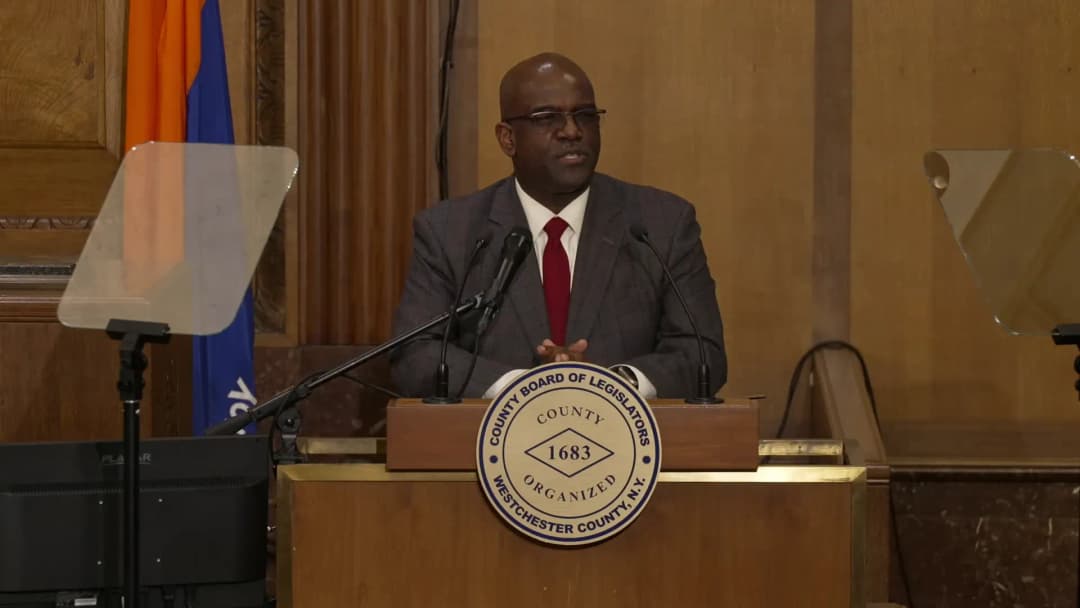
The special meeting of the Westchester County Board of Legislators was called to order at 6:32 PM on Wednesday, May 6, 2026. Following the Pledge of Allegiance led by County Clerk Tom Roach, a moment of silence, and the national anthem, invocations were delivered by Rabbi Leora Frankel, a Hindu prayer leader, Imam Dr. Shafiq Chase, and Reverend Kim McNair. The roll call established a quorum with 17 members present. The sole agenda item was County Executive Kenneth W. Jenkins' State of the County address. Opening and Invocations - The meeting opened with ceremonial elements: the national anthem performed by Sergeant Joetta Crump of the Department of Corrections, and prayers from faith leaders representing Jewish, Hindu, Muslim, and Christian traditions, emphasizing unity, service, and civic responsibility. - The Board recognized all elected officials past and present in attendance. State of the County Address by County Executive Kenneth W. Jenkins County Executive Jenkins presented his second State of the County address, highlighting fiscal stability, public safety gains, housing initiatives, mental health services, transportation improvements, and community investments. Key points included: - Fiscal Strength: Westchester County received AAA bond ratings from S&P and Fitch, reflecting healthy reserves and fiscal discipline. The 2026 budget included a tax increase averaging about $3 more per month for homeowners, after cutting the county workforce and reducing each department by approximately 8%. The Board of Legislators supported this by an overwhelming majority. - Public Safety: Major index crime declined 17% overall from 2024 to 2025, violent crime dropped 25%, and property crime fell 15%. Mount Vernon reported zero shooting incidents from January through March 2026. Jenkins credited investments in law enforcement technology and Governor Kathy Hochul's support. - Affordable Housing: The county funded projects in Peekskill (22 units for youth aging out of foster care), Greenburgh (single-family homes for first-time buyers), Yonkers (160 rental units), and other municipalities, spanning supportive housing, homeownership, and rehabilitation. - Mental Health and Reentry: A new safety net mental health clinic opened in White Plains, restoring direct outpatient services after 16 years. The Lives Forward program trains justice-involved individuals as certified peer counselors; graduate Alfredo Rodon was recognized. - Transportation: The B-line bus system fully adopted OMNY contactless fare payment. Solar-powered lighting was installed at select stops. A $3 million NYSERDA grant will launch a zero-emission microtransit pilot in Peekskill and surrounding areas. - Westchester County Airport: Jenkins emphasized that the planned terminal upgrades are modernization, not expansion, aiming to improve passenger comfort, security, and restroom capacity (the current terminal served 2 million passengers annually with only two public restrooms). - Economic Development: The IDA supported billions in private investment; over $250 million in contracts went to MWBE-certified businesses in five years. A new degree completion program with RPI and SUNY Westchester Community College allows engineering students to earn a bachelor’s degree without leaving the county. - Environment: A program offers up to $49,999 in interest-free support for septic system repairs and sewer connections. A solar canopy study was launched at Croton Point. The county targets an 85% recycling rate by 2050. - Historic Preservation: The rare Holt Broadside printing of the Declaration of Independence will be displayed at the Neuberger Museum at Purchase College through end of 2026, encased in a custom titanium and aluminum housing. The county also purchased the Ward House in partnership with the Lenape community to create a gathering place for healing and education. - Legislation: Jenkins signed the Giovanni Cipriano Act, requiring county police to carry and train on epinephrine auto-injectors. He announced proposed legislation to ban deceptive e-cigarettes and vaping devices that resemble everyday items. - Diapers Act: Bipartisan law requiring diaper changing stations in all park restrooms and publicly accessible floors of county buildings, co-sponsored by 13 legislators. - Child Care: The county’s Child Care Scholarship Program supported 406 families (559 children) in 2025 and 232 families (301 children) so far in 2026. - Housing Counsel Office: In less than a year, the office prevented 282 evictions and kept 369 households from entering the shelter system. - Corrections: Westchester became the first county jail in New York State to achieve accreditation from the American Correctional Association, National Commission on Correctional Health Care, and Prison Rape Elimination Act (the ‘triple crown’). A new phone system facilitated nearly 1,300 calls between incarcerated clients and their attorneys in 2025. - Playland: The Dragon Coaster restoration is complete; the coaster will reopen on May 23, 2026. - Population: Westchester reached a record 1,015,743 residents, the largest increase of any New York county between 2024 and 2025. - Communications: Launched “This Week in Westchester” podcast and “Westchester Explained” companion; transitioned the county website to WestchesterCountyNY.gov. Adjournment - A motion to adjourn was approved unanimously (17-0). The next regular meeting is scheduled for Monday, May 18, 2026 at 7:00 PM.
The Public Safety & Veterans Committee of the Westchester County Board of Legislators met on Tuesday, May 5, 2026 at 3:06 PM in Committee Room at the Michaelian Office Building. Chair David Tubiolo presided. Legislators present: Tubiolo, Clements (remote), Cunzio (remote), Smith. Absent: Woodson-Samuels. Guests: Joshua Gaccione (Director, Westchester County Veterans Service Agency) and Travis Melby (Program Administrator, Veterans Service Office). The meeting focused on the revival of the FAVOR discount program for veterans, agency performance, outreach, staffing, digitization of records, internship programs, and the Veterans Advisory Committee. The meeting adjourned at 3:51 PM. Discussion Items - FAVOR Program Revival: Director Gaccione announced plans to relaunch the FAVOR card, a discount card for veterans at participating Westchester County businesses. The card will be a barcoded card (similar to the Parks card) rather than the previously envisioned card with photo/rank. An initial order of 5,000 to 10,000 cards is planned. The target launch date is August 9, 2026 (Veterans Appreciation Day at Playland). Registration will require an online form with secure transmission of personal information (including Social Security numbers) for veteran verification; the IT department is involved. The program will also include a comprehensive online directory of veteran-owned businesses and participating merchants. - Agency Performance & Outreach: The agency reported over 925 client interactions (veterans and family members) in the fourth quarter of 2025, with an increasing number of post-9/11 veterans. Staffing: 9 personnel total, but only 3 Veteran Service Officers (VSOs). There is one vacant Grade 12 VSO position. A Grade 10 VSO position was identified as needed to increase capacity. Outreach efforts include social media, newsletters, events, partnerships with local chambers of commerce and American Legion halls, and legislators' district newsletters. The number of veterans in Westchester County is estimated between 40,000 and 60,000 (conservative estimate; not more than 60,000). The agency is also handling pension work for Putnam and Rockland counties. - Digitization of Records: Records from 1980 to present are being digitized in two efforts: (1) transfer of older records (10+ years untouched) to county archives, with work done by interns; (2) uploading records of active clients to the VETPRO system for efficient claims processing. The work is ongoing due to accuracy requirements. - Internship Programs: The agency has established a VA Work Study site, allowing veterans enrolled in school or training to work as paid interns (funded by VA) on qualifying veteran-related tasks. Additionally, a new intern named Desmond joined through a military early-release program (SkillBridge or similar), allowing him to work at the agency 120 days before his military separation, with the military providing his compensation. - Veterans Advisory Committee: The committee has lost members and needs new members to be identified, recommended by legislators, and sworn in. Director Gaccione acknowledged delays in the appointments process and committed to working with the County Executive's office to get pending candidates sworn in. Chair Tubiolo noted the matter would be handled through the Appointments Committee. - Other Outreach Opportunities: Discussion included coordination with the Business Council of Westchester, chambers of commerce, and using large public events (like Kensico Dam Sunday events) for program promotion. Key Outcomes - No formal votes were taken on policy items. Minutes of a prior meeting and adjournment were approved unanimously (Ayes: Tubiolo, Clements, Cunzio, Smith; Absent: Woodson-Samuels). - Next steps: Director Gaccione and Program Administrator Melby will work with IT on the online registration form and card design, finalize the business registration process, and aim for an August 9 launch. They will also follow up with legislators on outreach support, including attending district events, providing QR codes/literature, and introductions to chambers of commerce. - Legislators committed to assisting with communications and outreach, and to facilitating the filling of vacant positions on the Veterans Advisory Committee. - Multiple legislators offered to connect the agency with veteran-support organizations (e.g., ROA, MOAA, DOD-affiliated employers) and to attend outreach events.
On May 5, 2026, the Westchester County Board of Legislators’ Intergovernmental Affairs and Infrastructure & Housing committees held a joint public meeting to discuss the Emergency Tenant Protection Act (ETPA), its impact on rent-stabilized units, and potential county-level actions to improve housing conditions for both tenants and property owners. The meeting featured presentations from the Building and Realty Institute (BRI) of the Hudson Valley and the Fiscal Policy Institute (FPI), along with robust Q&A and deliberation among legislators. Guest Presentations - Timothy Foley (CEO, BRI) provided an overview of rent stabilization in Westchester County: approximately 28,000 units (about 20% of the county’s 131,000 rental units) are rent‑stabilized, all in buildings constructed before 1974. He explained that the 2019 Housing Stability and Tenant Protection Act (HSTPA) eliminated vacancy bonuses, severely capped Major Capital Improvement (MCI) and Individual Apartment Improvement (IAI) cost recovery, and created permanent rent stabilization with no pathways to market rate. He noted that MCI applications dropped from roughly 50 per year pre‑2019 to four in 2025, and IAIs are now capped at $30,000 (formerly $15,000) per unit over 10 years, which often falls short of actual repair costs (e.g., lead remediation averaging $50,000). - Alana Ciuffetelli (Chair, Apartment Owners Advisory Council of BRI) presented a case study of a 21‑unit building where a $30,000 IAI in a unit with $800 legal rent yields only a $178.28 monthly increase, while the operating cost per unit is $1,152 per month. She reported that her real estate taxes increased 62% and insurance costs rose 50% over the last five years, and interest on debt jumped from $22,000 to $62,000 annually. She argued that landlords are being asked to subsidize tenants without means testing, and called for property tax relief, an insurance fund, and better data to target assistance. - Emily Eisner (Acting Executive Director and Chief Economist, FPI) compared New York City’s robust Rent Guidelines Board reporting (with dedicated staff and detailed operating income/expense data) to Westchester’s limited reports (six pages, no projections, no cohort breakdowns). She suggested that Westchester could leverage property tax data and advocated for policy solutions addressing high debt costs and capital remediation needs. Discussion Items - Legislators expressed concern about rising rents, low vacancy rates, and the financial strain on tenants, while acknowledging the challenges faced by property owners. Several noted that ETPA is a state law beyond county control, but the county can influence the Rent Guidelines Board (RGB) appointments and data collection. - Data gaps were a central theme. The RGB receives only aggregate data from the state’s Division of Homes and Community Renewal (HCR), lacking building‑level operating income, debt burdens, and demographic information. Legislators and guests agreed that better data is needed to understand whether landlords are experiencing negative net operating income and to avoid “skewed results.” - Vacancy and unit loss: The number of rent‑stabilized units declined from 29,638 in 2020 to 28,755 in 2024 – a net loss of about 900 units. Whether this reflects normal churn or intentional vacancy is unclear, as anecdotal reports of owners leaving units offline have not yet shown up in the data at scale. - Rent Guidelines Board composition: BRI noted that one public member seat and one owner's representative seat are vacant, and urged the Board of Legislators to fill them promptly. The RGB currently has no staff; all members are volunteers. - County capital funds: The 2025 capital budget included $10 million for infrastructure upgrades, but the planning department has not yet finalized eligibility details. BRI requested that rent‑stabilized buildings be included, especially for smaller owners. - Potential county tools: Discussion included the possibility of a targeted property tax exemption for financially distressed smaller owners (triggered if RGB increases lag inflation), and an insurance captive model similar to one New York City is exploring. Both would require state or municipal legislative action. Key Outcomes - Legislators committed to sending a letter to the Westchester County Rent Guidelines Board requesting better data reporting, including a breakout of buildings that are 90%+ rent‑stabilized (as recommended by HCR). - BRI and FPI will jointly provide a list of desired data points (e.g., net operating income distributions, mortgage percentage, debt costs) to inform future policy. - The committees will follow up with the county planning department to advocate that rent‑stabilized units qualify for the $10 million capital improvement program. - Legislators will engage state representatives to discuss potential reforms to the IAI/MCI caps and explore insurance relief mechanisms. - The meeting adjourned at 2:21 PM. No formal votes were taken.
The Infrastructure & Housing Committee, jointly with Intergovernmental Affairs, met at 1:05 PM on May 5, 2026, to discuss Emergency Tenant Protection Act (ETPA) concerns and ideas for improving housing conditions for both residents and owners. The committee heard from representatives of the Building and Realty Institute of the Hudson Valley and the Fiscal Policy Institute, followed by a wide-ranging discussion on rent stabilization, data collection, and potential policy solutions. Minutes Approval - Approval of the April 27, 2026 minutes was continued to a future meeting. Discussion Items - Building and Realty Institute (BRI) representatives Tim Foley, Alana Ciuffetelli, and Valentina Gojcaj described the impact of the 2019 Housing Stability and Tenant Protection Act (HSTPA) on rent-stabilized owners. They noted that rent stabilization applies to approximately 28,000 of Westchester County's 131,000 rental units (about 20%), located in roughly 420 buildings. BRI also stated that the rent-stabilized stock declined from 29,638 units in 2020 to 28,755 in 2024, attributing the change mostly to normal vacancy churn rather than wholesale loss. - BRI reported that Major Capital Improvement (MCI) filings fell from about 50 per year to just 4 last year, citing the 2% cap and 15-year recovery period as making projects infeasible. They also said the Individual Apartment Improvement (IAI) cap, raised from $15,000 to $30,000 per unit, is insufficient to cover typical renovation costs, which can exceed $50,000–$80,000 with lead remediation or electrical work. - BRI expressed concerns about rising operating costs, including a 62% increase in real estate taxes over five years, 50% increases in insurance, and higher debt costs. Alana Ciuffetelli stated that some units are being taken offline because owners cannot afford to renovate them, and called for tax breaks, insurance relief, and inclusion in county assistance programs. - Legislators acknowledged the need for a balanced approach, with several expressing strong support for protecting tenants and preserving affordable housing. Legislator Nancy Barr objected to any proposal that would reduce property tax revenue for schools. Legislator Erica Pierce noted that affordable housing stock, including HCR-subsidized buildings, is deteriorating and needs investment. - Emily Eisner, Ph.D., Acting Executive Director of the Fiscal Policy Institute, contrasted the New York City Rent Guidelines Board's robust data (including net operating income and expense projections) with the limited six-page report Westchester receives. She suggested that policy solutions such as insurance captives and capital remediation programs could help struggling landlords while preserving affordability. Key Outcomes - Legislators and BRI agreed to compile a detailed list of requested data, which will be sent to the Westchester County Rent Guidelines Board, with input from Emily Eisner. Legislator Jewel Williams Johnson and Chair Williams will lead a letter asking for that data. - The committee committed to following up with the Planning Department regarding the rollout of $10 million in infrastructure capital funding and to advocate for the inclusion of rent-stabilized properties. - Legislators agreed to engage state leaders to discuss potential legislative changes and support for property owners. - The meeting was adjourned at 2:21 PM.
On May 5, 2026, the Westchester County Board of Legislators’ Committees on Legislation and Labor held a joint meeting at 1:11 PM in the Michaelian Office Building. The main agenda item was ACT-2026-118, the Westchester County Lessor Prevailing Wage Act, which would require lessors of county-leased property to use contractors paying prevailing wage for certain construction projects. The committee also approved previous meeting minutes. The meeting adjourned at 2:04 PM. Consent Calendar - Minutes Approval (March 30, 2026): Approved by unanimous vote (9 ayes). - Minutes Approval (April 13, 2026): Approved by unanimous vote (9 ayes). Discussion Items - ACT-2026-118 – Westchester County Lessor Prevailing Wage Act: The law department presented the act, which applies to leases of 10 years or more where construction projects exceed $250,000. The act requires lessors to contract only with contractors and subcontractors paying prevailing wages as defined by New York Labor Law §220. - Legislator Cunzio asked whether the act would apply to existing leases that have not yet started construction. Shawna MacLeod (Senior Assistant County Attorney) clarified that original lease parameters would apply. - Legislator Cunzio further asked whether a lease revision would trigger the act. Stacey Dolgin-Kmetz (Chief Deputy County Attorney) stated that a renewal would apply, but she was unsure about revisions. - Legislator Smith noted a separate upcoming lease vote (airport hangar lease) and questioned whether capital projects by the lessee (a private entity) would be covered. The law department explained that state law public-work tests (public money, public land, public benefit) may not apply to such leases, but additional state laws (e.g., Labor Law §224-f) might cover projects with substantial public financing. - The committee entered executive session from 1:27 PM to 1:59 PM to discuss legal advice. Key Outcomes - Vote on ACT-2026-118: On a motion by Legislator Nolan, seconded by Legislator Barr, the committee voted unanimously (9 ayes) to sign the act and refer it to the full Board of Legislators. - Meeting Adjournment: Moved by Legislator Cunzio, seconded by Legislator Nolan, the committee adjourned at 2:04 PM by unanimous vote.
The Social Services, Disabilities and Human Rights Committee of the Westchester County Board of Legislators met on May 5, 2026, at 11:00 AM in the Michaelian Office Building, White Plains, and via WebEx. Chairwoman Nancy Barr called the meeting to order at 10:05 AM (the minutes note 10:05 AM, though the agenda listed 11:00 AM). The committee received an update from the Westchester County Human Rights Commission (HRC) on its enforcement, education, and outreach activities. Present were Legislators Barr, Williams, Williams Johnson, and Pierce; Legislator Imamura was absent; Legislator Puja attended remotely. Guests included HRC Executive Director Tejash V. Sanchala, Deputy Director Julia De Persia, and Housing Director Joshua Levin Fair. Discussion Items - HRC Overview and Systemic Enforcement: Executive Director Sanchala described the HRC's dual mission of enforcement and education. For enforcement, complaints can be filed individually or initiated by the Executive Director for pattern-or-practice cases. Three recent Executive Director-initiated complaints were highlighted: - A low-income housing case involving a superintendent who allegedly sexually harassed multiple tenants over seven years, including a minor, resulting in a private settlement of approximately $12.5 million. The property management company failed to take effective action despite complaints. The HRC also uncovered discriminatory hiring practices (preference for married men) and lack of a non-fraternization policy; training and policy improvements were implemented. - A condominium case where the pool and recreational area were inaccessible to people with disabilities for decades. The resolution required two construction projects to provide accessibility, a $50,000 payment to the county, and policy improvements. - A cooperative housing case with accessibility barriers at the front entrance and building entry. A ramp was constructed, a five-figure payment was made to the county, and policies were improved. The HRC noted that proposed alternative access (a steep driveway) was unsafe and inadequate. - Committee members asked clarifying questions about the interaction of criminal investigations and HRC investigations. - Education and Outreach: The HRC conducts a film education series on discrimination history, including a recent screening on Yonkers segregation and one on slavery during Black History Month. An upcoming Asian American Heritage Month program featuring Judge Denny Chin (U.S. Court of Appeals, Second Circuit) will be held on May 16 at 2 PM at the White Plains Library. The HRC also partners with community organizations (e.g., Neighbors Link, El Centro Hispano) for bystander-intervention workshops and participates in cultural festivals, street fairs, and school outreach. Legislator Puja thanked the HRC for its training and requested a bystander workshop in her district. - Housing Discrimination and Fair Housing vs. Affordable Housing: The HRC explained the distinction between fair housing (addressing discrimination and equal access) and affordable housing (addressing cost and availability). Housing Director Levin Fair noted that the HRC deals with discriminatory treatment during housing applications, threats of ICE involvement by landlords, and cooperatives' compliance with disclosure laws. Chairwoman Barr asked about threats of ICE involvement; Sanchala replied that citizenship status is a protected basis under the Human Rights Law, but referrals to legal clinics may be the first step. The HRC works with the District Attorney's office on hate incidents. - AI and Discrimination: The HRC is monitoring the use of artificial intelligence in employment screening and housing applications, which may produce discriminatory outcomes without the applicant's knowledge. The committee agreed that the HRC should assess whether emerging patterns require additional education, enforcement, or policy responses. - Visibility and Collaboration: Committee members stressed the importance of the HRC's community presence, noting that it helps residents feel comfortable reporting concerns. The HRC regularly tables at events, partners with houses of worship (including follow-up with county staff member Kim), and provides materials in English and Spanish. Legislators requested advance notice of events, even with tentative details, to improve attendance. - Cooperatives and Disclosure: Housing Director Levin Fair noted that Westchester County is the only jurisdiction in New York State requiring cooperatives to provide rejection reasons. He cautioned that the HRC has limited data on compliance and cannot control how cooperatives respond. Some legislators expressed that earlier calls to weaken the law have diminished. Key Outcomes - The HRC will complete and distribute its 2025 Annual Report to all legislators and post it prominently on its website. - The HRC will monitor discriminatory developments in AI-based employment and housing systems. - The HRC will continue implementing training and policy improvements for housing providers identified through Executive Director-initiated complaints. - The HRC will coordinate with the Office for People with Disabilities on accessibility-related referrals. - A flyer for the May 16 Judge Denny Chin program will be distributed to participants; advance notice of future events will be provided when possible. - The HRC will follow up with community leaders on potential bystander-intervention workshops and with Kim on outreach opportunities with houses of worship. - The committee and HRC will continue discussing opportunities for legislative cooperation. - The meeting was adjourned at 12:02 PM.
Consent Calendar - Minutes Approval (March 30, 2026): The minutes were approved unanimously by a roll call vote of Legislators Puja, Clements, Nolan, Tubiolo, Ulaj, and Gashi (all present). Discussion Items - ACT-2026-86 – Westchester County Lessor Prevailing Wage Act: (Note: The transcript references item number 2026-18, but the official minutes list ACT-2026-86; this appears to be the same item.) The Law Department representatives, Chief Deputy County Attorney Stacey Dolgin-Kmetz and Senior Assistant Shawna MacLeod, presented the act. The act defines "prevailing rate of wage" as equivalent to New York Labor Law §220, regardless of whether the work would otherwise be considered a public work. It applies to county leases entered into 120 days after adoption, with a term of 10 years or more, and construction projects exceeding $250,000 that benefit the county. Legislators asked about applicability to existing leases and renewals; the attorneys clarified that the act would apply to new leases and renewals after the effective date, but not to existing leases unless revised. A brief discussion about a separate airport hangar lease (City Bank hangar) raised the question of whether such a lease (where the county leases out property) would be covered; the attorneys noted that it would not fall under this act, but could potentially be subject to state public works laws or other legislation. The committee then moved into executive session at 1:28 PM to obtain legal advice and returned at 1:59 PM. No further questions were raised after the executive session. Key Outcomes - Vote on ACT-2026-86: The committee voted unanimously to sign the item and refer it to the full Board of Legislators. The motion was made by Legislator Nolan, seconded by Legislator Clements, and carried with all six members present (Puja, Clements, Nolan, Tubiolo, Ulaj, Gashi) voting aye. The act is now forwarded to the full Board for consideration. - Adjournment: The meeting was adjourned at 2:03 PM.