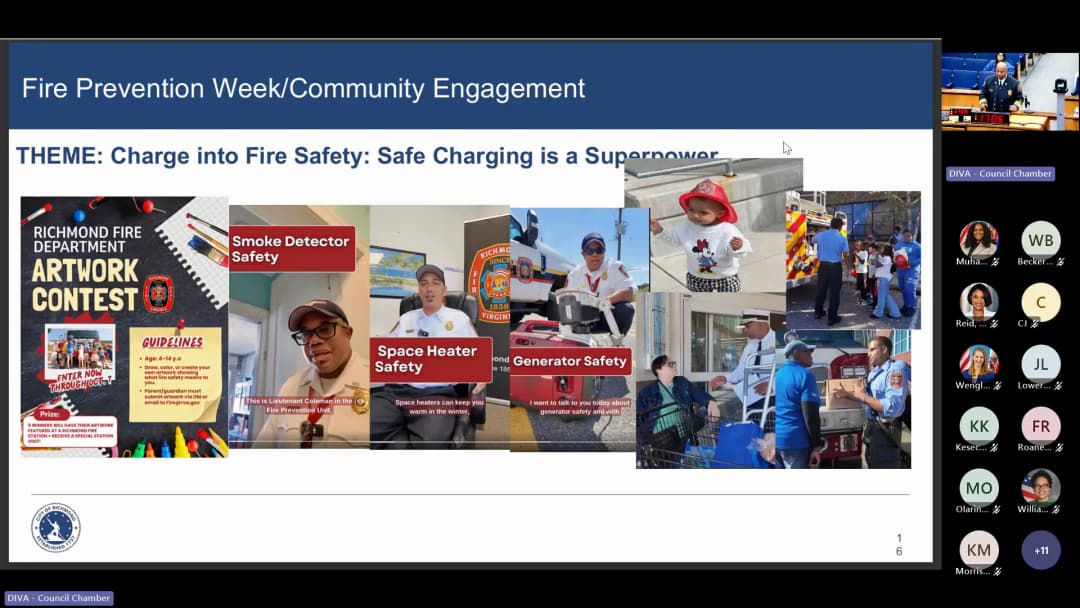
The Richmond Public Safety Standing Committee met on October 27, 2026, at 20:45 UTC. No agenda or minutes were available, so this summary is based on the meeting transcript. The committee approved prior minutes, heard public comment, deferred a criminal justice board appointment, and received presentations from the Richmond Police Department and Richmond Fire Department. Consent Calendar / Routine Business - The minutes of the September 22, 2026, Public Safety Standing Committee meeting were approved without amendment. - The committee voted to postpone the appointment decision for the Community Criminal Justice Board vacancy until the next quarter; the motion was approved. Public Comments & Testimony - Keith Andy, president of Local 995 Richmond Professional Firefighters Association, asked the committee to honor retired RFD firefighter Paul Von Mill, known as 'Zach,' who died the previous Thursday. Von Mill served 35 years with the Richmond Fire Department and then volunteered with the Richmond Flying Squad, joining in October 2023, rising to district captain, supervising two stations, serving on command staff, and being named Member of the Year in 2024. Andy noted Von Mill continued this work while receiving dialysis three times a week and requested a moment of silence in his honor; the chair thanked him and said she wanted to do something to recognize Von Mill. Andy also raised concerns about speed bumps on the road to DECPR and the Southside transfer station possibly causing tire damage for members and asked the committee to help address it. - Jing Lee, a First District resident, spoke in support of community-centered public safety and mutual aid, citing the case of Rosalind and her three children whose car was mistakenly flagged by Flock cameras, towed, and totaled. Lee reported that more than $6,000 had been raised for the family and asked the city to consider additional support, repair, and prevention strategies. - A District 7 resident described long-running conditions around 2438 Venable, saying there had been 4,075 calls for service to the property, that she herself called over 300 times between June 2022 and June 2024, and that neighbors had called thousands of times each year over the five years she lived nearby. She described drug activity on the 1000 and 1100 blocks of North 25th Street, up to 250 people in her alleyway in a 24-hour period, and decades of inaction despite notification to the city attorney, police leadership, Precinct 1, and the District 7 council office. She called for measurable change, assistance as apartments are built, and revocation of the liquor license for 2438 Venable. She also said court proceedings in Manchester were not holding repeat offenders accountable. Committee members acknowledged her frustration and committed to follow-up with police leadership. Discussion Items Richmond Police Department – Crime Statistics Update and Use of Technology and Enforcement - Chief Rick Edwards reported third-quarter year-to-date 2026 statistics showing homicides down 24% from the same period in 2025 and 32% from the five-year average; robbery-individuals down 27% year over year and 30% from the five-year average; and non-fatal shootings down 15% year over year and 31% from the five-year average. Rapes were flat, and aggravated assaults were slightly up, driven by domestic aggravated assaults and expanded reporting definitions. - Homicides totaled 34, the lowest third-quarter figure since 2015 and below the 10-year average of 46. Non-fatal shooting victims totaled 109, the lowest since 2013 and below the 10-year average of 155. Combined fatal and non-fatal gunshot victims totaled 139, the lowest since 2014 and below the 10-year average of 197. - Domestic assault reports rose to 1,010 from 907 at the same point last year, partly because of a July 1, 2026, state law broadening the definition of intimate-partner assault to include dating relationships. - Accidental shootings totaled 33 year-to-date, including 23 reckless-handling events, two gun-cleaning incidents, and nine events in which a person was shot. The chief cited recent fatal examples in Henrico and Richmond, including a 14-year-old who shot himself with a stolen firearm taken from an unlocked vehicle. - Property crime: shoplifting rose 21% to 1,682 reported incidents, overtaking motor-vehicle theft as the city's top property crime; the chief said one repeat shoplifter had been arrested 19 times in two years, and seven others had more than 10 arrests. Commercial burglary rose 2%, and 344 firearms were stolen from cars, down 4%, mostly from unlocked vehicles. - Motor-vehicle theft was 658 year-to-date versus a 10-year average of 741. After a spike of 25 Honda CR-V and Accord thefts since September 14, police worked with Petersburg PD, used community AirTag tracking and Philadelphia intelligence, and executed a search warrant on a chop shop; no Hondas had been stolen since the arrest. - The chief highlighted a new law effective July 1, 2026, making it unlawful to leave a firearm unattended in a motor vehicle unless secured out of view in a locked hard-sided container; the violation is a Class 4 misdemeanor and permits police to seize the firearm. He also credited ALPR with helping solve two high-profile hit-and-run fatality cases and said RPD expected to finish the year with a strong homicide clearance rate, citing 21 of 23 murders solved in RHA communities last year. - In question-and-answer discussion, Chief Edwards said Mayor Avula had decided not to renew the Flock ALPR contract, though other vendors and options could be considered after community conversations; he had agreed to reduce data retention from 21 days to seven days. He acknowledged concerns about ALPR misuse but said Richmond had not experienced that type of abuse. - The chief apologized for the mistaken towing of Ms. Crump's car during a shooting investigation. He explained that the car matched the suspect-vehicle description, was towed during the investigation, was released once probable cause dissipated, and that the towing company was addressing damage. He said Ms. Crump did nothing wrong. - The chief said over 600 gun safes had been distributed, gun-safety education continued, and the last gun buyback was in 2024; he was open to another buyback. He also said RPD investigates deaths outside hospital settings and would share suicide data. Richmond Fire Department – Fleet Replacement, Facilities, and Fire Prevention Month Updates - Chief Jeffrey Siegel said the department replaces two fire engines and one truck each year, requiring about $6.3 million annually under its apparatus replacement plan. Fire engine costs have increased from a 2021 estimate of $646,000 and a projected $809,000 for 2027 to about $1.3 million today; tiller trucks have risen from a projected $1.7 million to about $3.1 million. Three manufacturers (Rev Group, Rosenbauer, and Oshkosh) control nearly 80% of the market, and prices have roughly doubled since 2020. - Deferring replacements is costly: engine maintenance rises from about $10,000 in year one to $52,000-$53,000 in years eight and nine; skipping an engine purchase costs about $179,000, and skipping a truck purchase about $395,000. - RFD has funding for a new modular burn building at the Sandston Fire Training Academy, with completion expected in the third quarter of 2028 and an estimated cost of $2.7-3.2 million. It will include burn chambers, high-angle rescue, elevator-shaft, and hazmat training features. The chief said a brick-and-mortar version would have cost an estimated $8-10 million. - Station 12 and Station 21 community rooms are being activated through a Trusted Community Partner initiative for civic-type uses and quarterly public CPR/fire-prevention training; Station 21 parking is limited, and the elevator issue was reported as resolved. - Future facility needs include replacing Station 18, adding a downtown fire station, and eventually building a new fire headquarters and a training academy closer to or in the city. - Fire Prevention Week in October 2026, themed 'Charge into Fire Safety: Safe Charging is a Superpower,' produced over 139 events and 8,856 citizen engagements, up by more than 5,002 from the previous year. Year-to-date, RFD knocked on more than 28,300 doors, made over 11,000 contacts, installed over 857 smoke alarms, attended over 558 community events, and spoke to over 50,544 people. - Arson/investigation data presented by fire investigators: 137 fires investigated year-to-date, 85 closed, 12 closed by arrest, for a 53% clearance rate versus the national average of 27%. RFD welcomed new ATF-trained accelerant-detection canine Justine and handler Brian Akers after Ernie retired. - Councilmembers asked for total fleet maintenance and replacement budgets to support full funding; one councilmember noted RFD arrived at her home in 239 seconds, below the 320-second benchmark. Apparatus delivery lead time is currently about three to four years, with efforts to reduce it to 22-24 months. Key Outcomes - Approved the September 22, 2026, meeting minutes. - Approved deferring the Community Criminal Justice Board appointment consideration to the next quarter. - The committee committed to follow up on the District 7/2438 Venable concerns, the DECPR/Southside transfer station speed-bump/tire issue, and Ms. Crump's vehicle situation. - The police chief agreed to share suicide data and expressed openness to another gun buyback; councilmembers supported additional gun-safety education and community partnerships. - The fire chief was asked to provide combined maintenance and fleet replacement cost data; the committee expressed support for fully funding apparatus replacement, facility needs, and fire-prevention outreach. - A staff report was distributed, and the committee discussed holiday-period scheduling for November/December; no December public safety meeting was noted. The meeting then adjourned.
The Public Meeting Index
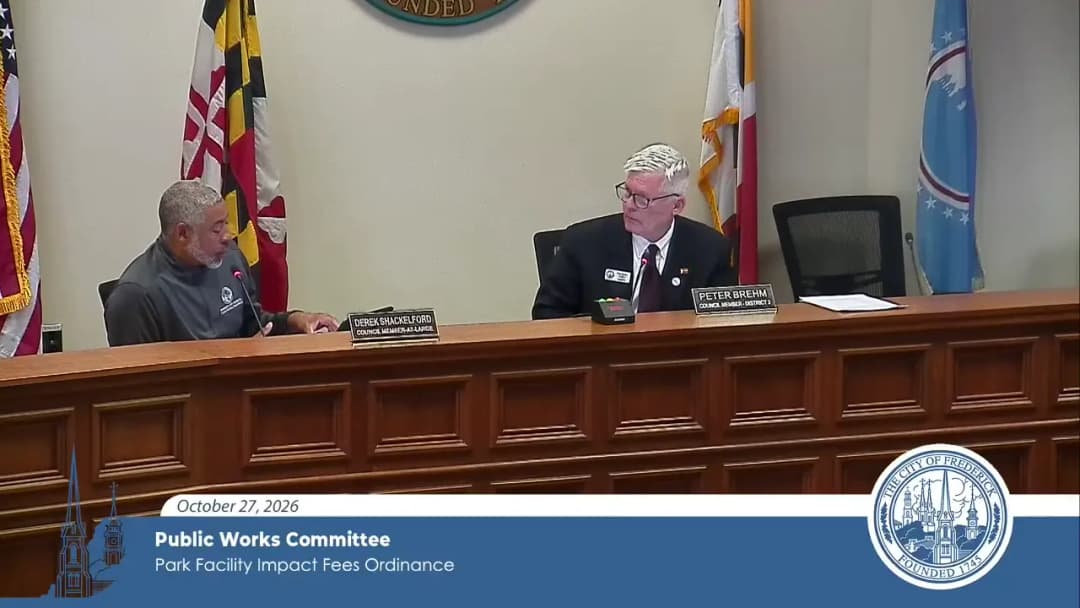
The Public Meeting IndexThe Public Works Committee met on October 27, 2026, at 3:30 p.m. to approve the previous meeting minutes and hold initial workshop discussions on updates to the Moderately Priced Dwelling Unit (MPDU) ordinance and the Park Facility Impact Fees ordinance. No public comments were offered, and the substantive items were discussion-only, with no final ordinance votes. Consent Calendar / Approval of Minutes - The committee reviewed and unanimously approved the October 13, 2026 Public Works meeting minutes by voice vote. Public Comments & Testimony - No members of the public offered comments on either workshop topic. Workshop: MPDU Ordinance Update (Initial Discussion) - The committee's initial MPDU update goals include retaining the option to accept in-lieu fees while also incentivizing construction of MPDU units. The presiding member noted this was a significant topic in District 3, where there was discussion about whether to forbid in-lieu fees and require developers to build affordable units. - Staff feedback described MPDU in-lieu dollars as a core catalyst for funding affordable housing development in Frederick and noted that developers face economic difficulty building MPDUs, so additional city incentives should be considered. - A council member added that homebuyers also face costs such as electricity and water, and said the city must advocate for equitable housing opportunities while working with developers' business models. The council member said in-lieu fees offer flexibility for LITEC projects and low-interest loans and give the city room to incentivize developers who meet its goals. - Proposed changes include exempting 100-percent affordable housing developments from MPDU program requirements, creating incentives, and clarifying the MPDU definition so it applies to dwelling units constructed within market-rate housing developments and sold or rented under the City of Frederick MPDU program. - The committee discussed lowering the MPDU threshold from developments of 25 or more dwelling units to 10 or more dwelling units at one location, as suggested by the Mayor's Affordable Housing Task Force. A 10-unit threshold would still trigger the 12.5 percent MPDU obligation. - The committee also discussed using Frederick County-specific Area Median Income standards rather than the HUD-designated Washington AMI. LITEC projects must still use the HUD definition, while city projects may have more flexibility. One council member advocated for eventually developing the city's own AMI criteria using local data, and another agreed. Workshop: Park Facility Impact Fees Ordinance (Initial Discussion) - The committee reviewed proposed definitions and an editorial restatement requiring payment of a park facilities development impact fee before a certificate of occupancy is issued; the draft also says no final inspection or certificate of occupancy may be approved unless the section has been satisfied. - A proposed exemption would apply to residential developments where 100 percent of dwelling units are affordable and occupied by households at or below 80 percent of AMI, with affordability restrictions running with the property for the duration of the affordability covenant. The Department of Housing and Human Services would verify eligibility. Asked why 80 percent was chosen, the presiding member explained that 80 percent is the top of the range of incomes the city has discussed helping, including 80, 70, 60, 50, and 30 percent AMI. - The committee discussed moving the impact fee amount out of the ordinance and into the city's fiscal fee schedule to allow annual review. The fee calculation is based on the assessed cost of new development on existing and future park development improvements. One council member expressed hesitation, preferring to observe the fees for a few years and noting that reviewing housing fees as part of a larger fee schedule has challenges. The presiding member said developers look for certainty, not stability, and that keeping fees in the ordinance provides that clarity. He also said the goal is not to add fees but to cover the city's part of park costs. - Additional proposed edits include making the Chief Operating Officer, rather than the Director of Public Works, responsible for appeals; expanding eligible uses of impact fee proceeds to include design, construction, purchase, and installation of park improvements and amenities; and staff clarified that this fee is separate from the park fee-in-lieu and is specifically for amenities. - Park location standards discussed would prioritize parks where not less than 75 percent of new dwelling units are within one-quarter mile, measured in a straight line, provided the distance is not interrupted by an arterial street or freeway. The committee debated whether arterial streets such as Monocacy Boulevard should block eligibility, and one member was uncertain about treating them as a significant barrier. Next-nearest parks measured in a straight line would also be eligible. - A proposed expenditure process would require Parks and Recreation to develop a draft plan, post it online for at least three weeks of public comment, notify neighborhood advisory councils and Main Street organizations with MOUs, hold no fewer than one public meeting, give substantial weight to public feedback, and bring the final plan to City Council for review and vote. The presiding member noted that District 3 residents said the process has sometimes been skipped in practice, so it is being codified in the ordinance. Key Outcomes - Approved the October 13, 2026 Public Works meeting minutes. - No ordinance amendments were adopted; both items are at the initial workshop discussion stage and will continue to be refined.
The City of Roswell held its committee meetings on October 27, 2026, at 8:44 PM ET. Present were Mayor Mary Robichell, Councilmembers Sarah Beeson, Aaron Brumley, Christine Hall, Alan Sells, and Christopher Zack, along with City Administrator Randy Knight, City Attorney Joe Cusack, and Deputy City Clerk Rachel Reigns. The committee reviewed and moved forward several items, including a flooring replacement contract, vehicle financing, style guide updates, zoning text amendments, and a right‑of‑way agreement with Google Fiber. Consent Calendar - Approval of Minutes: The minutes from the September 29, 2026 committee meeting were approved unanimously. Discussion Items - Flooring Replacement at the Cultural Arts Center (Item 2): Director of Recreation Parks Historic and Cultural Affairs Mr. Malone presented a proposal to replace approximately 9,500 square feet of carpet in high‑traffic areas with commercial‑grade luxury vinyl tile (LVT) at a contract amount of $99,279.30 (total project authorization $102,200.70). The LVT comes with a 15‑year warranty and is funded from the hotel‑motel fund. Councilmember Beeson inquired about per‑square‑foot cost ($7.54) and the use of Prime Contractors via a state consortium. Mr. Malone explained that using the state contract allows a holiday‑season shutdown to minimize disruption; going to bid would delay the project until summer 2027. Concerns about sound abatement were raised; Mr. Malone noted that the theater and breezeway will retain carpet. The project was moved forward unanimously. - Vehicle & Equipment Financing (Item 3): Finance Director Adam Novotney presented a financing lease with the Georgia Municipal Association (GMA) for nine replacement vehicles and equipment, not to exceed $1,034,238, at 4.3% interest over five years. The list was reduced from 14 vehicles after a fleet strategy review. Councilmember Hall asked about disposal of replaced vehicles (surplused). Councilmember Beeson questioned vehicle efficiency and take‑home use; fleet services confirmed assessments and no take‑home vehicles. Councilmember Sells clarified that the agreement is effectively a dollar‑purchase financing (ownership at end). Total payments over five years would be about $1.17 million. Motion to move forward passed unanimously. - Historic District Style Guide Presentation (Item 4): Community Design Manager Alan Buchan presented a 90‑page style guide intended to provide visual specifications and character‑area guidance for the historic district (Canton Street, Warehouse District, Town Square, Mill Village). The guide is meant to reduce subjectivity, speed reviews, and create a public‑facing repository of materials and finishes. Next steps include adoption by the Historic Preservation Commission on November 12, 2026, and a three‑month evaluation period after publication. Councilmember Hall praised the guide and asked about public input (workshops and contact information will be available). Councilmember Brumley raised concerns about stifling creativity; Mr. Buchan explained that the guide sets clear parameters that still allow creativity. Councilmember Sells asked about specifying manufacturers; Mr. Buchan noted that the district‑wide specifications are for city‑used items, while character‑area guidance focuses on look and feel. This was a presentation only, with no vote. - Text Amendment to Reference Historic District Style Guide (Item 5): Planning and Zoning Director Jenny Payton proposed amendments to UDC sections 1.4, 9.7.15, 13.6, and 13.7 to formally reference the style guide. Councilmember Zack requested a clause ensuring the UDC supersedes the style guide in case of conflict. Motion to move forward passed unanimously. - Text Amendment on Sign Illumination in Historic Overlay District (Item 6): Ms. Payton presented a proposal to clarify definitions of sign illumination. The amendment would classify backlit signs as internally illuminated (banned in the historic district) and require separate external fixtures. Examples of external illumination (allowed) and internal/backlit (disallowed) were shown. Councilmembers Hall and Mayor Robichell expressed concern about a blanket ban, noting that the style guide’s character areas might allow backlit signs in the Warehouse District. Councilmember Beeson noted confusion between the style guide’s “districts” and the UDC’s zoning districts. The item was combined with Item 7 for further refinement. - Text Amendment on Sign Variances in Historic Overlay District (Item 7): Ms. Payton proposed allowing mayor and council to hear sign‑code variances within the historic overlay district (currently limited to setback/building material via BZA). Discussion included the need to align with the style guide’s character areas. Councilmember Sells stressed the importance of full red‑line documents for clarity. A motion by Councilmember Beeson, seconded by Mayor Robichell, moved both items forward with directives to: (1) provide a full section red‑line for the next reading, (2) improve visual presentation of the UDC changes, (3) explore mechanisms to incorporate style guide neighborhoods into variance considerations. Motion passed unanimously. - Google Fiber Right‑of‑Way Agreement (Item 8): City Attorney Joe Cusack presented a non‑exclusive license agreement with Google Fiber allowing them to file encroachment permits for fiber installation. The city will receive 2% of gross revenues (negotiated from an initial 1%), with a performance bond higher than Google’s initial proposal and a 10‑year term with renewal options. Councilmember Sells confirmed the city has audit rights. Motion to move forward passed unanimously. Key Outcomes - Item 2 (Flooring replacement): Motion to move forward passed unanimously. - Item 3 (Vehicle financing): Motion to move forward passed unanimously. - Item 5 (Style guide UDC reference): Motion to move forward passed unanimously. - Items 6 & 7 (Sign illumination and variances): Combined motion to move forward with specific directives passed unanimously. - Item 8 (Google Fiber agreement): Motion to move forward passed unanimously. - No votes were taken on Item 4 (Style Guide presentation) as it was informational only.
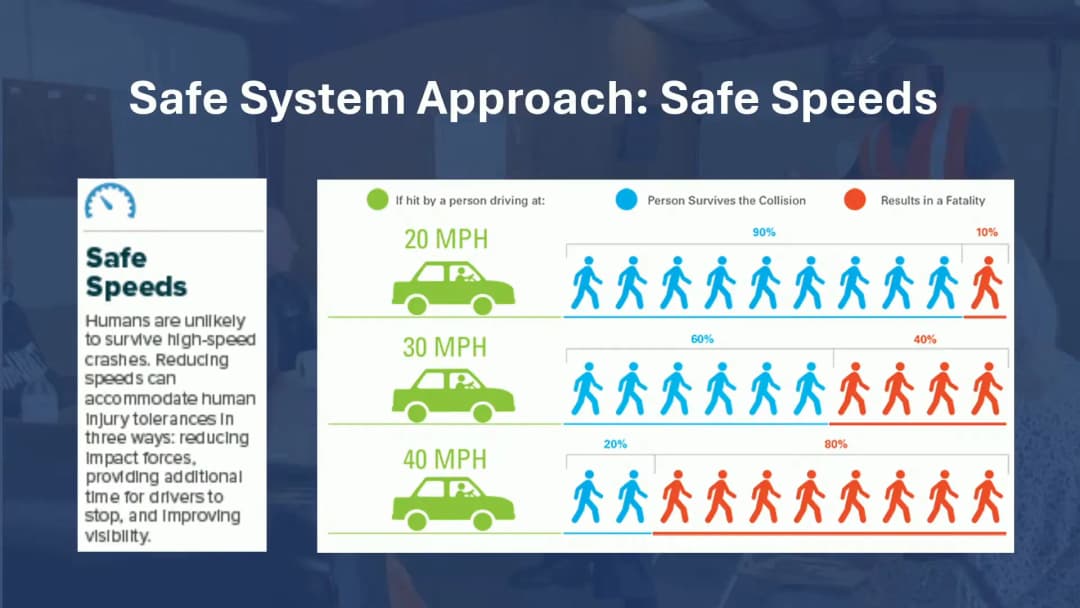
The Tuscaloosa City Council Public Safety Committee met on October 27, 2026. The agenda included a monthly report from Chief Delk of the Tuscaloosa Fire Rescue Department, an affiliation agreement with Louisiana State University, a resolution for an ambulance franchise extension, several business license recommendations, the annual Toys for Tickets program, and a presentation on the West Alabama Regional Safety Action Plan. All items on the agenda were approved unanimously. Consent Calendar - Louisiana State University (LSU) MOU: The committee approved an affiliation agreement with LSU to create a social work internship pipeline. Currently, the department hosts interns from the University of Alabama, Troy University, and Grand Canyon University. One LSU master's student is confirmed to start in January 2027, with capacity for four interns per semester. - NorthStar Franchise Agreement Extension: A resolution of intent to offer NorthStar Emergency Medical Services a two-year extension was approved. The extension incorporates three amendments related to response time call processing, monthly franchise fee calculation (1% built vs 1% collected), and an expanded clinical scorecard tracking patient outcomes. - Riverside Package Store License: A favorable recommendation was issued for a specialty retailer of consumable hemp products license for Riverside Market (401 Almond Avenue, Suite B). - L Calentano Mexican Grill License: A favorable recommendation was issued for a restaurant retail liquor license for L Calentano Mexican Grill (C343 Interstate Drive), which has an occupancy of 95. - Toys for Tickets Program: The committee approved the annual program, allowing a $15 toy donation to satisfy a $25 overtime parking ticket from November 2nd to November 30th. Discussion Items - Tuscaloosa Fire Rescue Department Monthly Report: Chief Delk provided an update on department activities. Twenty-two employees were recognized with Excellence Awards, including a large cohort for 25 years of service. Twenty-five personnel were promoted, including two new battalion chiefs, Hollis Bond and Will McCafferty. The department currently has 7 vacancies out of 259 funded positions. Six new hires will begin on November 2nd, with a recruitment test scheduled for October 29th. Chief Delk also highlighted the department's strong performance at the state Alabama Mutual Aid Systems (AMAS) training, where the structural collapse and confined space team completed their scenario 1 hour and 4 minutes faster than any other team. A department-wide rebranding initiative was unveiled, and a new recruitment video was shown to the committee. - West Alabama Regional Safety Action Plan Kick-Off: Mr. Beal, Dr. Rod Tarotchi (Auburn University Transportation Research Institute), and Kathy Gregory (50 Fund) presented the plan. Funded by a federal Safe Streets for All grant, the plan requires no local financial match from the city. Key preliminary data included approximately 22,000 reported crashes over five years leading to 55 fatalities (18 pedestrians). The city's overall crash rate is 36% higher than the state average, and the pedestrian crash rate is roughly 80% higher. Failure to yield (27%) and following too closely (20%) were identified as the most common primary contributing factors. Council members raised concerns about the safety of emerging mobility devices (e-scooters and e-bikes); the planning team agreed to consult peer cities on their regulatory approaches. Key Outcomes - Approvals: The committee unanimously approved the LSU MOU, the NorthStar franchise extension resolution, the Riverside Market and L Calentano Mexican Grill licenses, and the Toys for Tickets program. - Next Steps: The Safety Action Plan will proceed to the community engagement phase, requiring 45 community members across three focus groups. The Fire Department will continue recruitment to fill remaining vacancies, with a test on October 29th. - Adjournment: The meeting was adjourned.
The finance committee convened on October 27, 2026, to consider three agenda items regarding actuarial and arbitrage valuation service agreements. Committee members discussed the status of the city’s pension plans and approved all items unanimously. Discussion Items - Item 8 – Authorization to execute an agreement with Milliman for actuarial valuations: A motion was made to approve an agreement with Milliman, an actuarial firm, to prepare valuations for the city’s hourly pension plan (plans GASB 67 and 68). Discussion clarified that the city now has three pension plans (the police and fire pension having moved to RSA, leaving the hourly plan, the police and fire supplemental plan, and the OPEB health insurance fund for retirees). The hourly plan is a closed plan from the late 1990s/early 2000s; it will continue until all participants are no longer on it. The presenter noted that the cost for each valuation would be paid by the respective plan itself. - Item 9 – Authorization to execute an agreement with Kavanaugh McDonald for actuarial valuations: A motion was made to engage Kavanaugh McDonald, another actuarial firm, to perform valuations for GASB 67, 68, and 75 for the police and fire pension fund (which ended October 1, 2026), the police and fire supplemental pension plan, and the other post‑employment benefit (OPEB) health insurance plan for retirees. The supplemental plan currently has five people being paid out and a few more eligible but no longer accruing benefits. - Item 10 – Authorization to execute an agreement with Arbitrage Group: A motion was made to enter into an agreement with the Arbitrage Group to perform arbitrage valuations for all outstanding debt issuances. Costs are estimated between $1,000 and $1,500 per debt issuance and cover series 2016 A/B, 2019 A, 2020 A, 22 A/B/C, 25 B/C, and 26 A/B. The valuations are required by law every three years, but the city performs them annually for conservative planning. Payment will come from outside services budget. Key Outcomes - Item 8: Approved unanimously by voice vote (all aye). - Item 9: Approved unanimously by voice vote (all aye). - Item 10: Approved unanimously by voice vote (all aye). - The meeting was adjourned following the conclusion of business.
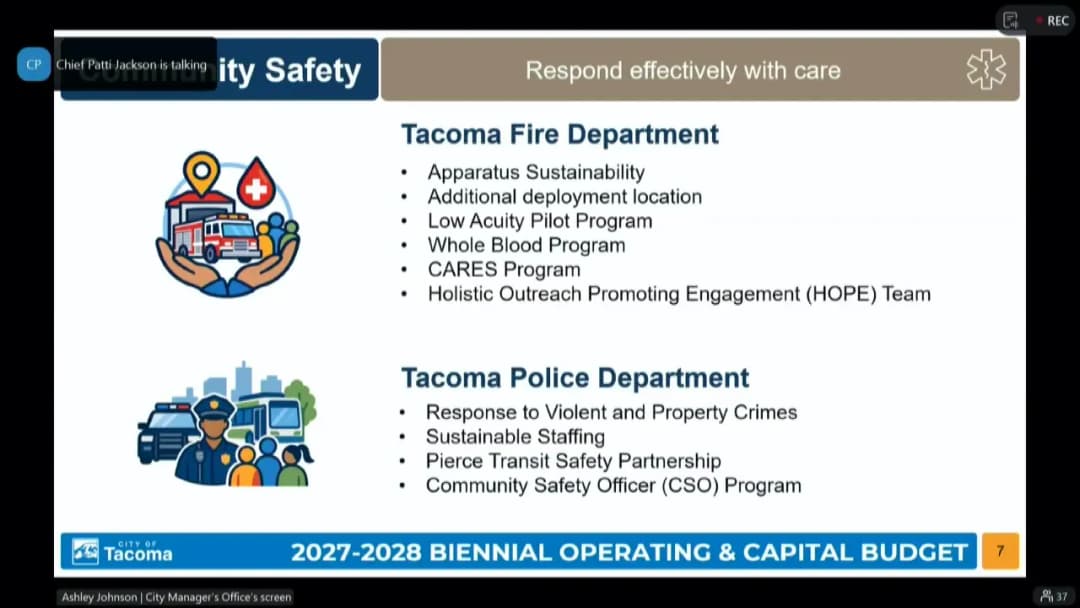
The Tacoma City Council met in study session on October 27, 2026, beginning at 12:00 PM, with Mayor Ibsen presiding and Deputy Mayor Bushnell and Councilmembers Diaz, Heinz, Palmer, Rumbaugh, Sadalgay, Scott, and Walker present. The session covered the Municipal Court therapeutic approach request, the 2027-28 budget workshop for community safety and housing/homelessness, a downtown Tacoma holiday market sponsorship request, and the City Manager's weekly report. No formal action was taken on agenda items; the council adjourned by voice vote after a motion and second. Therapeutic Court Approach Model - Municipal Court Judges Steve Krupa and Sergio Flores, joined by Judge G. Sontag, presented their prioritized staffing needs for Tacoma's therapeutic approach to criminal justice. - They said all four requested positions are still needed, but their top priorities are a court support services supervision specialist and a court information technology/data analyst. - The supervision specialist would provide pretrial and post-trial case management, risk and needs assessments, and connections to housing, treatment, and other services. Judge Krupa said the intent is to reduce unnecessary detention and improve individual outcomes, not simply save money. - Judge Krupa noted the total requested funding is $533,000 and is not currently in the budget, as confirmed by Councilmember Walker. - He explained that Tacoma once contracted with the county for probation, but a mid-to-late-1990s budget crisis shifted the city to bench probation, leaving Tacoma with no dedicated supervision staff. A comparison slide showing municipal courts such as Fife, Lakewood, and Puyallup with supervision staff was described as the 'shame slide.' - The data analyst position would support data-driven decisions, grant competitiveness, evidence-based programs, and accountability, including work connected to the mayor's Bloomberg project. - Councilmembers generally supported the request. Councilmember Hines asked how Tacoma ended up with zero supervision; Councilmember Walker asked how the supervision specialist would work day to day; Councilmember Sadalgay asked whether the positions serve the whole municipal court, not only therapeutic courts; and Councilmember Palmer raised potential jail-cost savings and asked whether the county could provide the service. The judges said contracting with the county was explored but was not affordable and did not align with Tacoma's therapeutic approach. - Judge Sontag echoed support for the presentation and asked the council to fund the positions. Budget Workshop: Community Safety - Fire Chief Sionna Stallings-Ala'ilima, Police Chief Patti Jackson (remote), and Neighborhood and Community Services Director Toni Esparza presented the community safety portions of the proposed 2027-28 budget. - They reported more than $557 million in all funds is invested citywide in community safety, with approximately 86 percent in police and fire. - TPD has eight Community Liaison Officers with a plan to add at least four more, and has a state grant to add 12 entry-level officers. Chief Jackson said the 12 officers would be used for primary response, additional CLOs, and investigations. - Chief Jackson discussed the Community Safety Officer (CSO) pilot, saying it showed limitations in scope and staffing. Councilmember Sadalgay said the proposal she had been told about would reduce CSO staffing by 40 percent, and she questioned why CSOs responded to only 17 percent of about 28,000 eligible calls over two years, with District 4 having the lowest call response. She said District 4 residents have trust concerns with uniformed response. Chief Jackson responded that CSO capacity, shift availability, and some tasks requiring certified peace officers explain some limits, and she welcomed further expert review of alternative response. - TFD reported it trained 2,100 community members in CPR in 2025, conducted more than 6,000 fire and safety inspections, and processed nearly 8,000 fire protection compliance reports. - The whole blood program launched as a county effort with Central Pierce and TFD carrying blood; 105 patients received whole blood countywide in 2025, 72 by TFD, and year-to-date numbers are 30 percent above last year. - The CARES program served over 1,200 individuals in 2025 and 800 in the first quarter of 2026. The HOPE team has responded to more than 760 calls year-to-date, but staffing challenges remain, and Chief Stallings-Ala'ilima said 99 percent of HOPE responses are co-responses. She suggested HOPE may be more effective in a social services environment, with potential future billing and 988 dispatch pathways. - NCS reported HEAL engaged 506 prohibited encampments in 2025 and 409 through September 2026, coordinating removal of more than 1.7 million pounds of waste in 2025 and approximately 1.3 million in 2026. HEAL offers 90-day belongings storage. - Other community safety investments include BRAVE serving almost 2,400 youth in 2025 and 2,200 this year; domestic violence services supporting more than 1,000 residents in 2025 and almost 800 through September; designated crisis responders serving almost 800 in 2025 and more than 600 through September; and community trauma response responding to 22 incidents in 2025 and 16 through September, with a proposed $100,000 reduction. Budget Workshop: Housing and Homelessness - Director Esparza presented the housing and homelessness portion of the proposed budget, with over $90 million dedicated to this goal area: over half in NCS and just under half in Planning and Development Services. - The city is working with Pierce County governments on an interlocal agreement, standardizing HMIS use, and standardizing inclement weather protocols. New 2026 investments include a 100-bed Tacoma Rescue Mission expansion, an emergency hotel expansion with St. Vincent de Paul, and a medical/social service shuttle. - HEAL outreach served more than 1,800 individuals in 2025 and more than 1,500 through September 2026; more than 1,100 accepted services in 2025 and 900 this year; and 418 people were placed into shelter in 2025 and 188 through September. - City-funded shelter investments supported more than 5,000 individuals in 2025 and approximately 4,500 through September. Known transitions into housing were 838 in 2025 and 528 this year. - The proposed budget anticipates 518 shelter beds. Of those, 378 are funded for the full biennium, while 140 rely on state commerce funding that ends in June 2027 and are at risk without renewal or replacement funding. - Thames 3, the temporary emergency micro-shelter for families, is relocating near 69th and Proctor, with a community meeting scheduled for that week and an expected opening by mid-November. The stability site with 58 micro-shelters must move from a floodplain; $850,000 in congressional appropriation funding is on the council agenda for that relocation. - The budget includes approximately $31.6 million in human services contract funding, an approximate $1 million reduction, including reducing Tacoma-Pierce County Health Department funding to the amount identified in the interlocal agreement. - Affordable housing work includes the MFTE program approving 725 new homes this biennium, including 144 affordable to households earning 70 percent of area median income. Four city-supported developments placed 138 affordable homes into service in 2025 and 227 through September 2026; five under-construction projects are expected to deliver 311 homes; the city has invested more than $23 million in these projects. - Homeownership support helped 25 Tacoma residents with down payment assistance. Home repair investments funded seven major rehabilitations and 60 minor repairs. - Eviction/instability prevention includes a landlord-tenant program completing more than 1,000 intakes in 2025 and 881 through September; legal assistance for more than 280 residents in 2025 and 150 through September; and nearly $740,000 in rent/financial assistance in the recent biennium, with approximately $900,000 proposed for 2027-28. - Councilmembers expressed support for continued state advocacy and for the human services needs assessment. Councilmember Rumbaugh asked about right-of-way housing referrals and the 140 commerce-funded shelter beds; Councilmember Palmer asked about grant-seeking capacity; and Councilmember Heinz noted the city funds 518 shelter beds and wants to keep working with state legislators. Downtown Tacoma Holiday Market Sponsorship - Councilmember Rumbaugh requested $30,000 in council contingency funds for Downtown for the Holidays, co-sponsored by Councilmembers Heinz and Walker. - The 2025 Downtown for the Holidays Market received $35,000 in contingency funds and was a single-day, free family event on December 13 from 1 to 6 p.m. at Theater Square, with 25 vendors and more than 1,000 attendees. The request would expand the market to two days. - Funding would support approximately $10,000 for tented vendor booths, heaters, and a covered gathering area; holiday decor such as window paintings and lights; and event production, permits, insurance, marketing, signage, entertainment, and family activities. - JD Elk, Director of Placemaking and Experience for the Downtown Tacoma Partnership, said the event cost about $45,000 overall last year, and the organization is moving toward a sponsorship-funded model. He said the goal is to make the event self-funding and not return with a similar request next year. - Councilmember Scott questioned whether the city should provide such a large share of the event budget and whether contingency fund practices should be reviewed. Councilmember Sadalgay noted the council generally does not provide year-over-year event funding through contingency requests and said many District 4 events did not receive such requests. Councilmember Diaz asked about including businesses outside the DTP footprint and suggested seeking sponsors such as UW Tacoma. Committee Reports and City Manager's Weekly Report - No committee reports were given. - City Manager Hyun Kim reported two proclamations for that evening: October 28, 2026 as National Immigrants Day and October 2026 as National Co-op Month. - He noted a staff-recommended agenda modification to move the city manager report earlier in the evening, a presentation by Tacoma Public Schools Superintendent Dr. Garcia on Beyond the Bell and youth programming, public comment periods, a public hearing on the proposed 2027-28 operating and capital budgets, and a special Transportation Benefit District governing board meeting immediately after the council meeting. Key Outcomes - No formal votes were taken on the briefing items; the requests remain under council consideration during the budget process. - The therapeutic court request is prioritized around the supervision specialist and data analyst, with the $533,000 ask not currently in the proposed budget. - The CSO program reduction and future of alternative response remain open policy questions, with Chief Jackson saying TPD would welcome further expert review. - The holiday market resolution is expected to be voted on November 10, 2026. - The meeting adjourned by voice vote on a motion and second.
The Planning, Economic Development and Community Services (PECS) Committee of the DeKalb County Board of Commissioners met on October 27, 2026. The meeting was chaired by Commissioner Nicole Missayan (District 3) and included Commissioners Robert Patrick (District 1), Long Spears (District 2), Ladina Bolton (Super District 7), and Commissioner Terry. The committee reviewed appointments, human services and victim assistance grants, new economic development financing tools, and funding for homeless services. Consent Calendar - Agenda Item 2026-1529: Approved the minutes from the August 25, 2027 PECS meeting. - Agenda Item 2026-1130: Appointed Ronald Mangum to Post Seven of the DeKalb County Board of Family and Children's Services. Mr. Mangum discussed his experience as a former director of DeKalb CASA and his tenure on the DFACS board. - Agenda Item 2026-1492: Awarded $200,000 in Victim Assistance Grants to 10 state-certified nonprofit agencies. - Agenda Item 2026-1477: Approved a five-year rental agreement with the Arabia Mountain National Heritage Area Alliance for two facilities at an annual fee of $10. Discussion Items Human Services Grants (Agenda Item 2026-1489) Director Scott presented the 22nd year of the Human Services Grants program, recommending 53 of 121 applicants for a total of $650,000 from the county's operating budget. Commissioner Terry requested a $20,000 increase for each of eight agencies under the homelessness category, adding a total of $160,000 to the allocation. The CEO suggested drawing from the broader $13 million housing budget if the board desired additional funding. Commissioner Patrick made a motion to approve the grants as presented, which carried. Commissioner Terry voted in opposition, citing unmet needs in homelessness prevention. C-PACER Program (Agenda Item 2026-1535) Jacob Vallow and Tiffany Wills (Decide DeKalb) presented a resolution to authorize a Commercial Property Assessed Conservation Energy and Resilience (C-PACER) program, making DeKalb the fifth county in Georgia to adopt the program. The program uses 100% private capital, has no cost to the county, and is intended to finance energy efficiency, flood mitigation, and seismic improvements for commercial and multifamily properties. Commissioner Patrick asked for national data on program default rates. Commissioner Bolton noted that owner-occupied condos are not eligible. The item was held in committee, to be advanced to the full board on November 10 after a final resolution is distributed and reviewed. DeKalb Development Corporation (Agenda Item 2026-1537) Mr. Vallow proposed the creation of the DeKalb Development Corporation, a non-profit subsidiary of Decide DeKalb, to take over the functions of the Office of Economic Development and focus on large-scale catalytic projects. The proposal requests $1,975,000 in annual funding for staffing and operations. Commissioner Patrick requested clarity on how commissioner-led projects would be vetted. Commissioner Terry inquired about cost-saving measures like sharing office space. Commissioner Bolton asked about the composition of the seven-member board of directors. The item was held pending the completion of an intergovernmental agreement and resolution for committee review. Affordable Housing Fund Allocation for Unhoused Services Dr. Ferguson and Director Mitchell presented a $1,316,927 request from the Affordable Housing Fund to increase capacity for homeless services. The funds would be used for five district-based street outreach workers, coordinated entry staff, day center management, shelter contract operations, warming/cooling centers, and a HMIS coordinator. Commissioner Patrick expressed strong support, noting the effort took six years to accomplish. Commissioner Bolton questioned the administrative overhead relative to direct service provision. Commissioner Terry requested a clear operational plan for the recently passed urban camping ordinance, expressing frustration over a lack of response from staff. Director Mitchell stated that comments had been provided to the board months prior. The item was discussed extensively and moved to the full Board of Commissioners for action. Key Outcomes - Appointments and several consent items were approved unanimously. - The Human Services Grants ($650,000) were approved, with Commissioner Terry casting a dissenting vote. - The C-PACER and DeKalb Development Corporation items were held in committee pending review of final legal documents. - The Affordable Housing Fund allocation for homeless services ($1.3M) was discussed and moved forward to the full Board of Commissioners for a vote.
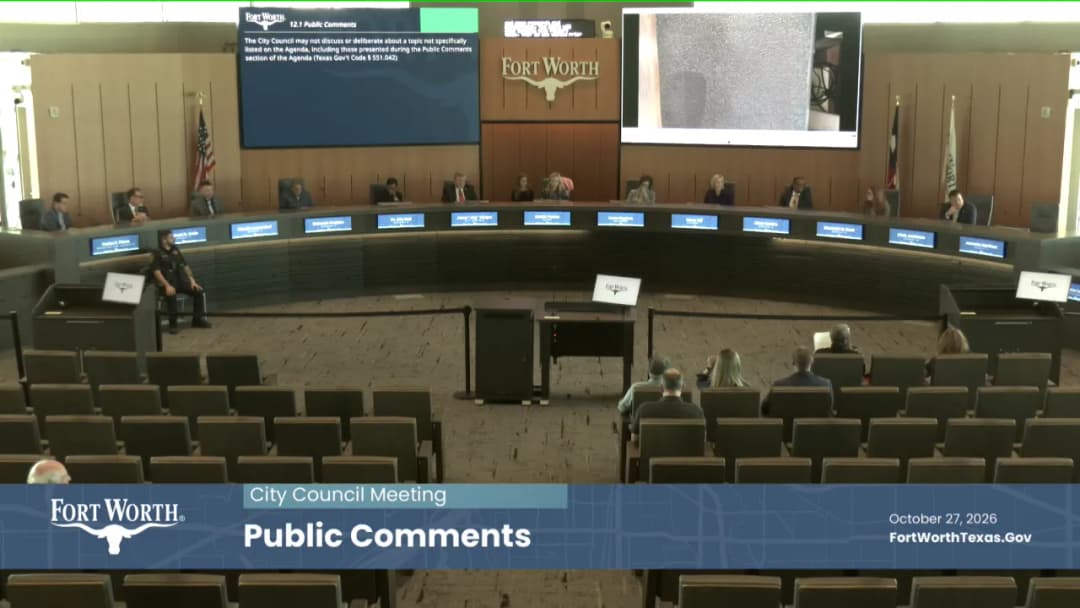
The Fort Worth City Council convened on October 27, 2026, for a regular meeting presided over by Mayor Parker. The agenda included a consent agenda, council announcements, appointments to boards and commissions, and several public hearings. Major discussion centered on a proposed 10-year, 65% tax abatement for A-Turn Z Semiconductor Testing Corporation, a subsidiary of Taiwan-based KYEC, which would invest $1.3 billion and create 630 jobs in District 8. Public comment addressed topics ranging from water department spending and campaign finance to police accountability and noise ordinances. The council approved most items on the consent agenda and voted in favor of the tax abatement. Consent Calendar - The council approved a consent agenda (motion carried) after hearing two speakers: the first speaker alleged misuse of $1 million on a city employee's water line, accusing the mayor and council of waste; Adrian Smith (District 9) spoke in favor of two items (26-1012 and 26-1111) regarding environmental services department name changes and housing funding, but criticized the name change as insufficient without substantive action. Public Comments & Testimony - Michael Rawlson (District 2) opposed the A-Turn Z tax abatement, arguing it contradicts the council's earlier stance on data center incentives, would strain water and electricity resources, and was negotiated opaquely. He linked the company to AI chip manufacturing. - Stephen Sanchez (District 2) echoed opposition, stating the company relies on fossil fuels and would deplete local resources, urging denial of the abatement. - George Chiles raised questions about campaign contributions from Rick Bennett (Black Mountain) to council members, highlighting disparities and questioning motivations. - Conley Brewer (District 6) requested clarification on Councilmember Nettles' child care and meal programs, citing public-facing data that may be outdated or inaccurate. - Michael Rawlson (second appearance) criticized Flock camera surveillance technology, citing constitutional concerns and potential use for immigration enforcement, and urged termination of the contract. - Adrian Smith (District 9) advocated for remote public speaking and standalone votes, criticizing the council's top-down approach and lack of transparency highlighted by a $97 million shortfall. - Carolyn Rodriguez spoke at length about police accountability, specifically detailing incidents involving Fort Worth police officer Matthew Kruger, alleging a history of violence and lack of accountability due to union agreements and campaign contributions from the police union to the district attorney. - Jack Bowen thanked council for responsiveness on public safety issues, urged better workers' compensation for first responders, and cautioned against tax cuts that harm police services. - Bobby Sanchez (declined to speak) and another speaker withdrew. - Brian Patman spoke against the A-Turn Z tax abatement, questioning job residency requirements (minimum 30% local), environmental risks from undisclosed chemicals, and fire department preparedness. Discussion Items - MNC 26-1298 – A-Turn Z Semiconductor Testing Corporation Tax Abatement: Brianna Brown (Assistant Economic Development Director) presented a 10-year, 65% tax abatement on real and business personal property for a $1.3 billion investment (minimum) at 273 West Everman Parkway (District 8). The project would create 630 full-time jobs with an average salary of $80,000. Estimated incentive value is $50 million; the city cash-positive by year one with $26.8 million net new tax revenue over 10 years. Councilmember Flores clarified the facility is for testing and research and development, not manufacturing, and does not use heavy water/electricity like data centers. Councilmember Abels moved to close the public hearing and approve, noting the investment in District 8. Motion carried. - MNC 26-1040 – Alcohol Variance for DFW Caribbean Marketplace: Adrian Smith questioned the applicant (not present) about business plans, neighborhood outreach, and operating hours. The public hearing was closed and motion to approve carried. - ZC26-132 (unclear details): Councilmember Hill thanked the applicant (Carlos and Asmund Hospitality Group) for working with neighborhoods on parking. Motion to approve carried. - Council Announcements: Councilmember Larsdorf introduced new District 4 director Brian Goff (Army retiree, Ranger, Black Hawk pilot). Councilmember Back (Dr. Hallman) recognized students from Crowley ISD for civic engagement. Councilmember Beck highlighted upcoming events: Fire Station Community Center groundbreaking (opening early 2028), Art Scoggle (taking two-year hiatus), Dia de los Muertos celebration, JPS lung cancer screenings, downtown parks meeting, arts incubator meeting, Veterans Day rucksack, and more. Councilmember Jameson announced a state of the district event on November 5th. Mayor Parker noted the passing of Officer Brian Gentry and invited attendance at his funeral. - Boards and Commissions Appointments: Appointments approved: Elizabeth Brands to Park and Recreation Advisory Board; reappointments of LaCrucia Powell and Willie Rankin; at-large appointments to Art Commission; MNC 26-1123 and other items passed unanimously. Key Outcomes - Consent Agenda approved (motion carried). - Tax Abatement (MNC 26-1298) approved: 10-year, 65% abatement for A-Turn Z Semiconductor Testing Corporation; motion carried after public hearing. - Alcohol Variance (MNC 26-1040) approved (motion carried). - Zoning Change (ZC26-132) approved (motion carried). - Board Appointments approved as listed. - Several motions on non-consent items (26-6154, 26-6157, MNC 26-1032, MNC 26-1040) carried. - The meeting adjourned after the final speaker (Brian Patman).
The Loudoun County Communications Commission held a meeting that began on October 26, 2026, and concluded on October 27, 2026. The commission adopted the agenda and previous minutes without objection, heard no public comments, and focused on cross-commission outreach efforts, potential collaboration with Loudoun County Public Schools (LCPS), and broadband connectivity challenges. Consent Calendar - The agenda was adopted as drafted without objection. - The minutes of the September 28th meeting were adopted without objection, with a note from Commissioner Sustaining regarding their absence at the prior meeting. Public Comments & Testimony - No members of the public signed up to speak. Discussion Items - Cross-Commission Outreach: Chair reported on reaching out to five commissions: - Economic Development Advisory Commission: Call scheduled for October 28 with Chair Tim Shinbaro and staff. - Zoning Ordinance: Call scheduled for October 30 with Chair Michael Capretti, Vice Chair Tia Earman, and staff. - Planning Commission: Coffee scheduled for November 9 with Chair Cliff Pierce. - Rural Economic Development Council: Exchanges with Chair Jan Kernan; meeting postponed due to harvest season. - Economic Development Authority: No response via county portal; chair seeking staff assistance (Brian) to connect. - Commissioners discussed standardizing folder structures and agenda/minutes organization across county boards to improve citizen access. This was identified as low-hanging fruit for collaboration. - LCPS and Technology Initiatives: Commissioners debated engaging with the school board on topics such as device deployment, broadband access for students, and the recent ban on cell tower co-location on school property. LCPS staff representative noted e-rate funding cuts for hotspot allocation and bus Wi-Fi, shifts in device deployment strategy, and upcoming budget work sessions. The commission considered leveraging relationships with Board of Supervisors members to foster informal conversations with school board members, but noted the lack of direct oversight between bodies. - Broadband and Wireless Gaps: The commission reviewed the history of unsuccessful efforts to address wireless coverage in western Loudoun, attributed to zoning restrictions, public resistance to towers, and regulatory hurdles. Commissioners suggested inviting tower infrastructure companies (e.g., Verizon, AT&T, T-Mobile) to present their top permitting and zoning challenges. Commissioner Baby volunteered to coordinate such presentations to inform future discussions with the Planning and Zoning commissions. Key Outcomes - Chair to distribute recordings and materials from LCPS instructional technology meetings to commissioners. - Commissioner Baby to reach out to tower companies to arrange a guest speaking slot at a future commission meeting. - Brian to assist in establishing contact with the Economic Development Authority. - The November and December meetings will be combined into a single meeting scheduled for December 7, 2026 (backup date December 14, 2026), pending room availability. - The January 2027 meeting will include the election of a new chair and vice chair, as well as adoption of the 2027 meeting schedule. - Action items were updated to include five outstanding tasks: the three from the prior meeting plus the two new items.
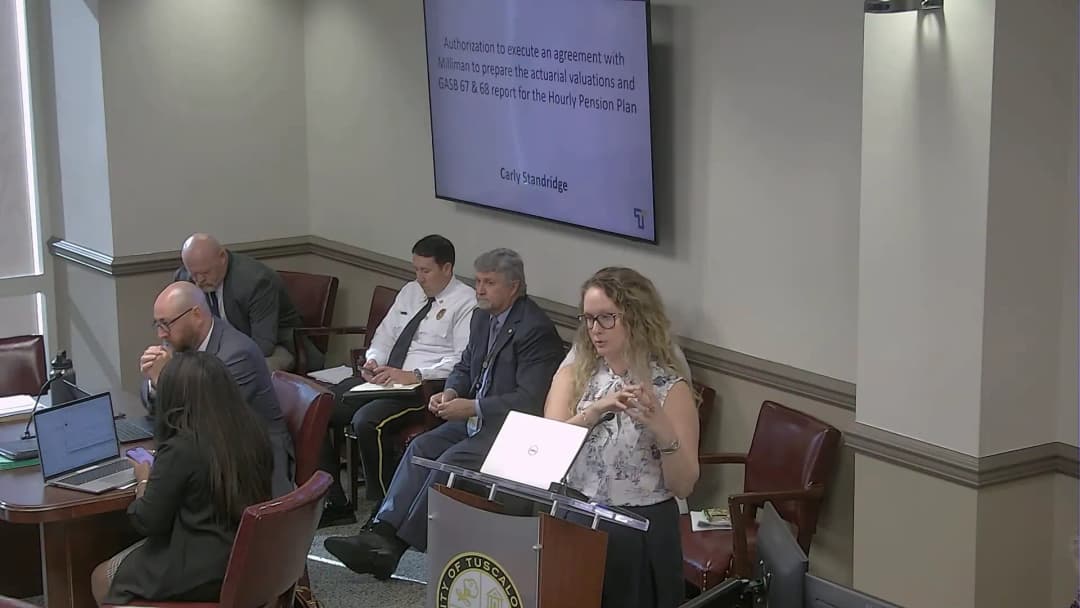
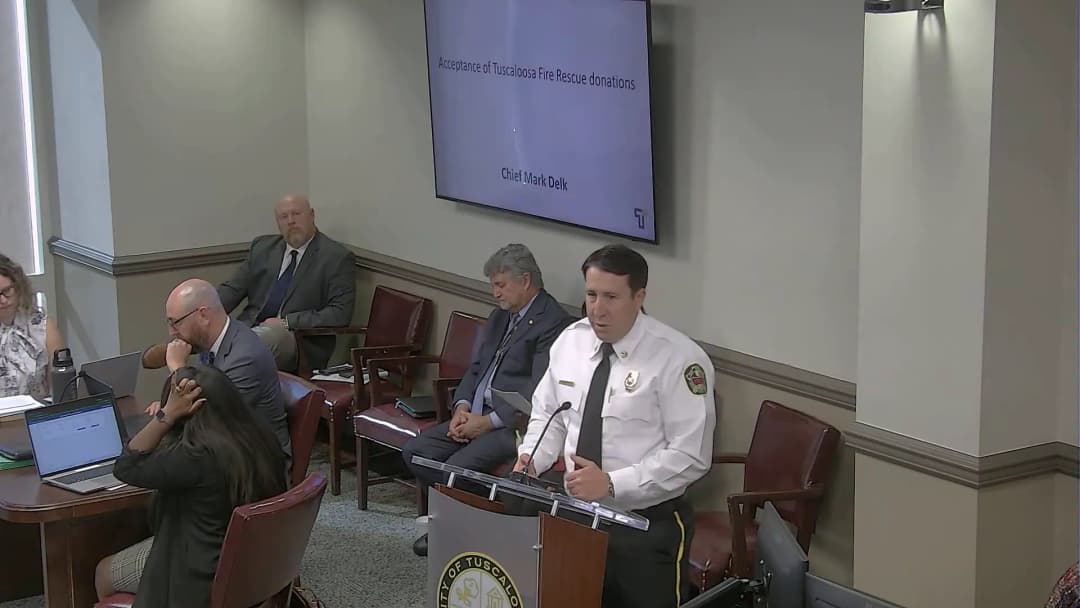
The Tuscaloosa City Council met on October 27, 2026, beginning at 20:00 UTC; no agenda or minutes were included with the transcript. Members approved routine district improvement fund disbursements and a donation acceptance, reviewed a $238,000 general fund budget revision, and then entered executive session. Consent Calendar - A motion to adopt the previous meeting's minutes was seconded and approved by voice vote. - District 1 improvement fund: Councilman Ever said the funds would help restart the West Lawn Middle School PTA and get parents involved. Another council member praised the effort, noting a push to have a PTA at every school. Approved by voice vote. - District improvement fund: Councilman Eaton requested support for Stillman College's alumni flag football fundraiser, saying it relates to the college's campus cleanup and beautification work. Approved by voice vote. - District improvement fund: A council member requested $5,000 for the DCH Foundation. Approved by voice vote. - District improvement fund: A council member requested $1,500 for 'the boys,' following an earlier similar award for 'the girls.' Approved by voice vote. - District improvement fund: Councilman Lanier requested $1,000 for an alumni flag football event. Approved by voice vote. - Donation acceptance: Chief Delk reported $1,988.62 in proceeds from the SERFPRO annual golf tournament and a separate Boundary Medical donation/reimbursement for EMS Challenge catering, bringing the bundled donation total to $2,488.62 for fire rescue. Approved by voice vote. Discussion Items - General fund budget revision: Ms. Standridge presented a two-part revision. The first part budgeted the two fire rescue donations just accepted, totaling $2,488.62, into the fire rescue operating budget. The second part requested reinstatement of $238,000 for the Manager of Web and Digital Strategy and Web Developer positions, including benefits, using funds currently in contingency. The positions had been vacant for about 90 days and were covered by an intern during that time. - Mr. Moore said the positions would move into his office/operations on a 90-to-120-day review. He stated that the budget revision restored the old positions with the same job descriptions and no pay grade changes, not the revamped positions he had proposed during budget hearings. He expected difficulty hiring at the current pay grades, noting the manager is Grade 28 and the developer is Grade 22, and cited recent University of Alabama comparable hires; he planned to work with Ms. Herbert and Mr. Foster on appropriate salary ranges and return to the council for possible job description or pay grade upgrades. - Asked whether the positions had been filled while in Strategic Communications, staff responded that they had waited to complete a deep dive on the positions' future use. The consensus was to revamp and move them into operations because of the technical responsibilities, but the city needed to move forward with the old positions to avoid a months-long stalemate. - Councilmember Henry asked about options to offset the reduction in contingency so health care cost relief could still be considered. Ms. Standridge said no alternative proposal had been discussed last week, but she believed the priority was getting these positions filled and that options for health care offset funding were not off the table. Executive Session - The city attorney certified that the council could enter executive session under Alabama law to discuss security and safety plans, procedures, assessments, measures, or systems for structures, facilities, and other infrastructure, including critical flood infrastructure, where disclosure could reasonably be expected to be detrimental to public safety or welfare. - The council had been asked about taking the remaining three items out of order so executive session could be held at the end, but a member wanted to go immediately while the matter was fresh. A motion to enter executive session was seconded, and the council voted all in favor. Key Outcomes - The council approved the prior meeting minutes and all six routine agenda items by voice vote. - No vote was recorded on the general fund budget revision before the council entered executive session; the transcript ends with the executive session underway. - The council entered executive session under the certified security/safety exception; any remaining agenda items were not addressed in the available transcript.