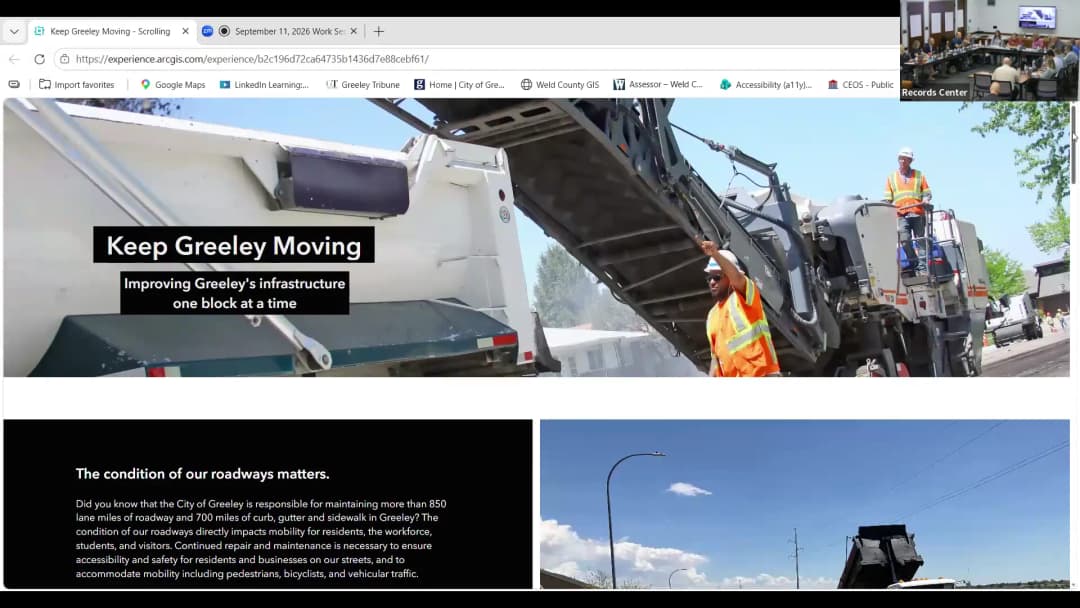
The Greeley City Council held a special work session and budget retreat on September 11, 2026, to conduct an in-depth review of the proposed 2027 budget. The meeting began at 9:00 AM and focused on closing an $18 million structural deficit in the general fund. Council deliberated on department budgets, staffing levels, utility rates, and financial transparency, reaching consensus on several staff action items and future work session commitments. Budget Overview and Financial Framework - City Manager Brian McBroom opened the retreat by highlighting the team's collaborative effort through target-based budgeting, emphasizing the importance of maintaining core services. He noted that the voluntary separation program was instrumental in reducing the size of city government. - Budget Director Nathan presented the financial assumptions. Total all-fund revenues are projected at $481.2 million against expenditures of $503.7 million, a gap explained by capital project carryovers. The general fund is projected at $144.5 million in revenues and $137.7 million in core expenditures. - The proposed budget results in a net reduction of 67.75 full-time equivalent (FTE) positions within the general fund, bringing the total to 1,195.25 FTEs. The five-year plan demonstrates a move from a structural deficit to a sustainable balance. KGM and Pavement Management - Council discussed the Keep Greeley Moving (KGM) fund at length. Public Works Director Seth presented the Pavement Quality Index (PQI) system and noted the current average city PQI of 69.09. The program receives about $12 million annually against a roughly $100 million deferred maintenance need. - Councilman Olson requested the development of defined service level targets to better communicate gaps to the public. Councilwoman DeBoutez advocated for considering neighborhood context in project selection. Staff committed to scheduling a work session on the 2027 pavement plan and long-term asset management. CPRD: Culture, Parks, Recreation and Community Services - Councilman Olson pointed out the budget book showed a 31.20% reduction in funding for museums on page 142 and a 45.53% reduction for natural areas and trails. CPRD Director Diana Frick clarified that a significant portion of the administration budget sits in that line due to internal charges for IT and equipment. - Staff added $150,000 back into the budget for museums and open space. This allows the retention of two part-time interpreter positions to support school district tours and maintain existing levels of service in natural area operations. Homeless Solutions - The proposed budget includes a $1.2 million total contribution to the homeless shelter in 2027 ($200,000 ongoing plus a $1 million one-time contribution). Staff are pursuing an RFP to transition case management to a community partner. - Staff reported a 90% stable housing rate for families in the rapid rehousing program and a 97% stable housing rate for chronically homeless individuals in permanent supportive housing. Employee Compensation - The budget proposes one-time bonuses in lieu of permanent raises. The plan is a 2% bonus for most employees and 1% for department directors and above, totaling roughly $1.3 million. This approach avoids adding permanent costs to the budget while helping employees offset rising insurance premiums. - Councilman Huddleston raised questions about employees receiving promotions alongside the bonus. HR Director Martha explained the pay plan, market adjustment processes, and the position control protocols that prevent unauthorized cost creep. - Councilman Olson expressed concern about the use of the 2.7% temporary public safety tax for ongoing operational expenses, calling it a structural problem that should be addressed in future budgets. Utility Rate Increases - Director Sean Chambers proposed rate increases for enterprise funds: Water at 3%, Sewer at 4.5%, and Stormwater at 6%. The stormwater increase was a deviation from a planned 20% increase; staff recommended leveraging debt to alleviate pressure on ratepayers. - Council requested improved communication to help citizens understand what drives each component of their utility bill and how the city plans for future infrastructure needs. Key Outcomes and Next Steps - Formal Action: No votes were taken during this work session. Staff was directed to use the recommended budget as the foundation for the final document. - Staff Action Items: - Provide detailed breakdowns of 'other purchase services' and 'IT charges' over $3.5 million. - Produce a clear summary of dedicated tax fund revenues and allocations (Food Tax, Quality of Life Tax, KGM). - Prepare a report on the status and allowable uses of all special revenue funds. - Develop enhanced communication materials explaining operating versus capital budgets and utility rate drivers. - Future Work Sessions Scheduled: - City Manager's Proposed Budget Work Session: October 13, 2026. - KGM Pavement Management Program. - Compensation Plan and Pay Plan Authority. - Communication and Engagement Restructuring. - Department Cleanup Ordinance. - Adoption Timeline: First reading and public hearing in October, with final adoption anticipated by November 17, 2026, and a statutory deadline of December 15, 2026.
The Public Meeting Index
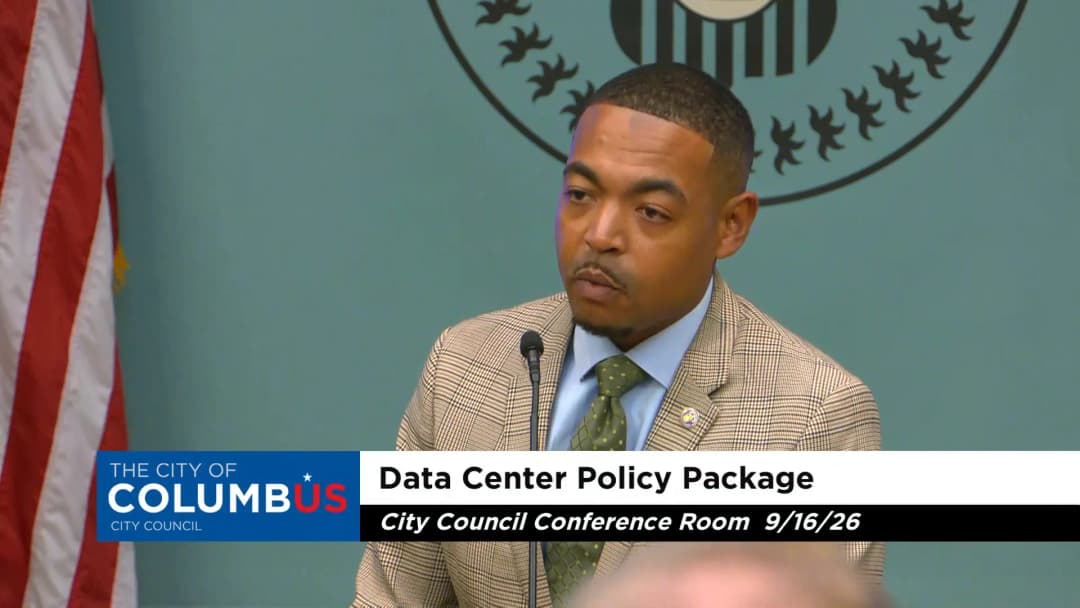
The Public Meeting IndexOn September 11, 2026, Columbus City Council held its third hearing on high water usage data centers, focusing on financial impacts and rate fairness. Council President Harden and Councilmember Weish introduced Ordinance 2560-2026, directing Columbus Water and Power (CWP) to develop a rate structure ensuring large users (including data centers and heavy industrial facilities) pay their fair share of infrastructure costs, rather than shifting the burden to residents. The hearing also reviewed revisions to water conservation and decommissioning policies and introduced a behind-the-meter generation draft. Public Comments & Testimony - Annalisa Raka, Central Ohio Regional Director for the Ohio Environmental Council Action Fund, expressed strong support for the ordinance, stating that large users should pay for the infrastructure they require. She cited polling showing over two-thirds of Ohioans favor this approach, including over 90% of Democrats and over 80% of independents. - A resident voiced concern that data centers devastate communities, particularly affecting young people. Councilmember Weish responded that no new data centers are being built within Columbus proper, and the council's focus is on ensuring fair water rates for high-volume users. - Several journalists questioned council members: one asked why a moratorium on data centers was not pursued; another inquired about water rate increases and affordability; a third asked about enforcement penalties for non-compliance. Discussion Items - Ordinance 2560-2026: Council President Harden detailed the background: CWP's analysis found that some large users have peak water demand up to 12 times their average, requiring costly infrastructure. The ordinance directs CWP to create a rate structure that accounts for these costs, with the utility advisory board reviewing it and any rate changes requiring council approval. The ordinance had its first reading on September 8 and is scheduled for a vote on September 28, 2026. - Water Conservation & Decommissioning Policy Changes: Councilmember Weish outlined updates introduced in July, designed to strengthen requirements for high-volume users. - Behind-the-Meter Generation Draft: A new draft policy was introduced to address potential pollution from on-site power generation by industrial users. - Jurisdiction Limits: Councilmember Weish acknowledged that Columbus cannot impose a moratorium because data centers are not being built within the city, but the city can create regulatory frameworks for other municipalities to adopt. He also noted that the city lacks authority over clean energy requirements, AI regulation, or a statewide ban. - Capital Budget Dispute: Council President Harden expressed frustration that the mayor announced a capital budget with $21 million for fire apparatus and $3 million for facility upgrades without prior council consultation. She stated council would conduct due diligence with hearings before approving the budget, denying any intention to divert capital funds to the operating budget. Key Outcomes - Council will vote on Ordinance 2560-2026 on September 28, 2026, directing CWP to propose a new rate structure by year-end to ensure large users pay infrastructure costs. - Enforcement penalties for water conservation non-compliance are expected to increase substantially, likely starting at $10,000 per day, compared to current hundreds-of-dollars fines. - Council rejected a moratorium on data centers as counterproductive, emphasizing that regulatory solutions are more effective and Columbus does not host data centers within city limits. - Council committed to reviewing the mayor's capital budget through public hearings, maintaining that they will not rush approval without adequate briefings.
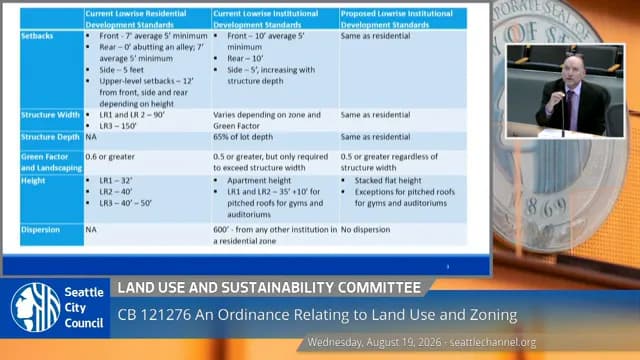
The Land Use and Sustainability Committee of the Seattle City Council met on Friday, September 11, 2026, at 9:30 a.m. in Council Chamber at Seattle City Hall, 600 4th Avenue, Seattle, for a special meeting and public hearing. The meeting also constituted a meeting of the City Council, with action limited to committee business. The committee heard public comment, received a briefing on Council Bill 121276 — an ordinance amending Seattle Municipal Code Sections 23.45.506, 23.45.570, and 23.51.A.004 to modify development standards for institutions in multifamily zones — and discussed the bill. No formal vote was taken. The agenda and minutes also list Council Bill 121268, related to the 2026 Comprehensive Plan annual amendment process, but the transcript does not reflect any discussion of that item. Call to Order and Agenda Approval - The minutes record a 9:33 a.m. call to order; the transcript states 9:34 a.m. Councilmember Eddie Lin presided. - The agenda was adopted without objection. Public Comments & Testimony The public comment period was up to 60 minutes and included one in-person speaker and three remote speakers; each speaker had two minutes. - Steve (in-person): Criticized Seattle land-use outcomes, saying policy has been 'all carrots, no sticks' for developers, that penalties for developers are minimal, that the public has been removed from design review, and that the committee has become 'the province of developers.' He urged the committee to let the public back into the process. - Sandy Settler, Tree Action Seattle: Opposed CB 121276, stating it reduces or eliminates tree requirements in the neighborhoods that need them most and will hit overburdened communities hardest. She said parking lots with 20 or more spaces currently must retain or plant one tree for every five spaces, that the bill eliminates that requirement and leaves the decision to the SDCI director with no clear basis, and that the bill weakens the green factor and adds asphalt, heat, and pollution to frontline communities. - Steve Zemke, Tree Pack and Friends of Seattle's Urban Forest: Urged a councilmember to request a director's report on CB 121276 so the public and Council know SDCI's position. He opposed removing the specific one-tree-per-five-spaces requirement for large parking lots, questioned why the bill sets green factor at 0.5 when neighborhood residential development uses 0.6, and asked that the summary and fiscal note address climate-change resiliency instead of saying not applicable. - Jennifer Godfrey: Expressed concern that removing the stormwater clause for everything under 4,000 square feet could cause significant adverse impacts to aquatic life and that pervious pavement is not a cure-all. She argued that the bill, combined with what she identified as CD121093 and other deregulation, conflicts with endangered species recovery plans, and said converting existing empty buildings in the densest part of Seattle would be more eco-friendly and could provide faster, low-cost housing. She also said Seattle has failed to provide needed and available housing despite having the very best transit. Discussion Items Staff briefing on CB 121276 by Ketil Freeman, Council Central Staff: - An institution is a structure and related grounds used by organizations to provide educational, medical, cultural, social, or recreational services to the community; examples include places of worship, child care centers, and community centers. Major institutions such as colleges and hospitals are regulated separately through the major institution master plan process. - The Council passed Ordinance 127376 last year implementing House Bill 1110, which relaxed development regulations for institutions in neighborhood residential and multifamily zones. - Non-major institutions are administrative conditional uses subject to a Type II master use permit decision by the SDCI director that is appealable to the City Hearing Examiner. Current criteria address impacts such as parking and traffic, operating hours, and dispersion. - Dispersion currently prevents institutions from locating within a certain distance of each other; staff described the distance as 600 feet. Dispersion has already been removed in neighborhood residential zones. CB 121276 would remove it in multifamily zones as well. - The bill would make multifamily-zone institutional regulations nearly identical to those in neighborhood residential zones, allow institutions to meet the development standards that apply to multifamily residential development, apply similar green factor and screening/landscaping requirements, and remove the dispersion requirement. - The changed development standards apply mostly to low-rise residential zones. Green factor is currently 0.6 in low-rise zones for multifamily residential uses and 0.5 in high-rise and midrise zones; the bill reflects a policy choice of 0.5. - Net effects identified by staff: new institutional uses would find it easier to locate in multifamily zones, and existing institutions could more easily redevelop with a mixed-use concept that keeps the institutional use and adds residential development. Committee discussion: - A councilmember asked staff to confirm that dispersion no longer applies in neighborhood residential zones, still applies in multifamily zones, and would be removed by the bill for consistency between the two zone types. Staff confirmed. Discrepancies in the Record - The agenda and minutes list two business items: CB 121268 (2026 Comprehensive Plan annual amendment; public hearing, briefing, and discussion) and CB 121276 (institutional development standards in multifamily zones; briefing and discussion). The transcript addresses only CB 121276; it does not mention CB 121268, although the minutes state that a public hearing on CB 121268 was held and the bill was discussed. - The transcript opening says 'August 19th, 2026' and refers to a Wednesday morning meeting, while the agenda and minutes date the meeting Friday, September 11, 2026. - The minutes record a 9:33 a.m. call to order and 10:03 a.m. adjournment; the transcript states 9:34 a.m. and 9:53 a.m. - The minutes list four members present (Lin, Strauss, Foster, and Rinck) and Joy Hollingsworth excused; the transcript's roll call indicates three members present and states that Vice Chair Strauss and Councilmember Foster were excused. Key Outcomes - The committee took no vote and made no formal decision on CB 121276. - Staff said a public hearing on CB 121276 is scheduled for September 16, 2026, with further committee discussion later in September. - Public comments opposing CB 121276, requesting a director's report, and recommending changes related to tree requirements, green factor, stormwater, and climate resiliency will be part of the committee record.
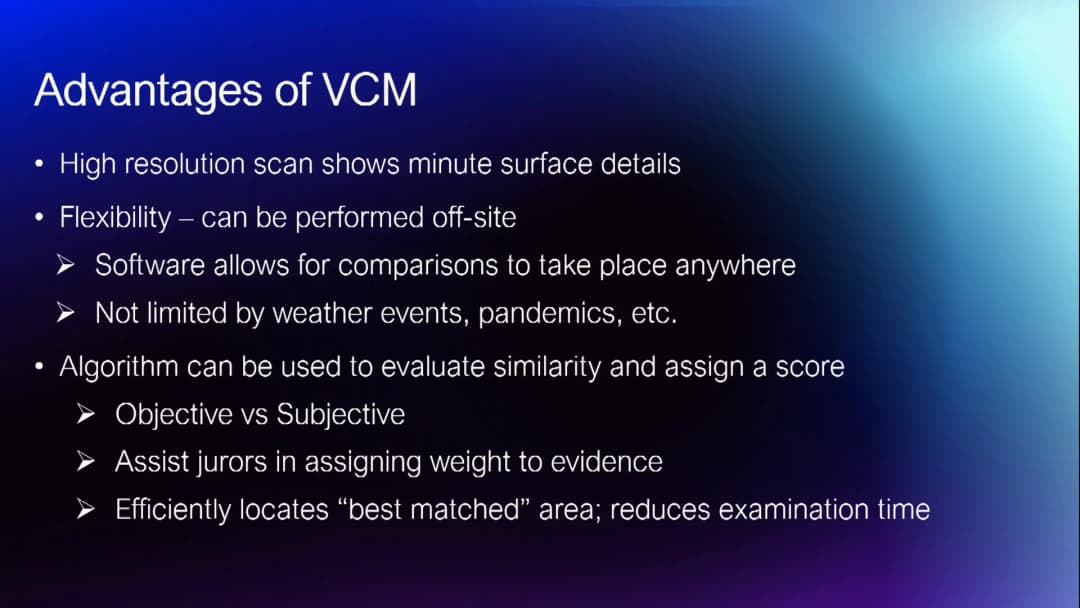
The Houston Forensic Science Center (HFSC) Board of Directors met on September 11, 2026, to observe the 25th anniversary of the 9/11 attacks, welcome newly appointed board member Chris Tritico, and discuss operational updates, contract approvals, and a detailed presentation on firearms section challenges. The board approved contracts for DNA outsourcing and an interlocal agreement with Metro Police, and was briefed on staff turnover, backlog management, and the introduction of 3D virtual comparison microscopy (VCM) technology. Public Comments & Testimony - No members of the public signed up to speak. The public comment period was closed. Discussion Items - Recognition of September 11 and New Board Member: Chairwoman Cohen led a moment of silence in remembrance of the 25th anniversary of the 9/11 attacks and acknowledged former board member Jed Silverman. Newly appointed Director Chris Tritico, a defense attorney with experience in forensic science from the Oklahoma City bombing case, was welcomed and offered brief remarks. - Contract with Signature Science for DNA Outsourcing: Dr. Castillo explained that the same contract is being renewed under a new grant source (FY25 federal grant under the biology capacity enhancement and backlog reduction program). The outsourcing, primarily for sexual assault kits, has helped keep turnaround times under 90 days while building internal capacity. A new RFP will be issued in fall 2026. - Interlocal Agreement with Metro Police Department: The agreement allows HFSC to provide forensic services to Metro for a fee, with the ability to decline work if capacity is insufficient. Dr. Castillo clarified that this work previously came through HPD and that HFSC will implement policies to avoid evidence pickup delays. Metro’s board has already approved the agreement. - Operations and Technical Updates (Dr. Castillo): - Backlogs in forensic biology and seized drugs are declining, but an overtime/incentive program ended in July. Kits remain under 90 days due to outsourcing. Seized drugs expects three new examiners in early 2027. - Firearms staffing remains critical; a presentation followed (see below). - Client services/case management has been restructured: records management now reports to legal, evidence management remains under operations. - HPD’s transition to a new records and evidence management system (live date October 10, 2026) will impact HFSC’s systems, requiring IT updates. Item number formats are changing, and HFSC is about 70% ready. October is expected to be a rough month as examiners adjust. - Firearms Section Presentation by Kimberly Zeller (Supervisor) and Melissa Nally (Operations Coordinator): - Zeller presented the history and current crisis: from 10 examiners in 2010 to backlog elimination in 2015, then turnover and COVID impacts. A 2023 training group saw 80% attrition (4 of 5 left). Current examiner count is critically low, with backlog steady at 450 requests since July 2025. Two examiners retired, one returned part-time as a 3D technician. Five new trainees will start external training in early 2027; one experienced examiner is expected to join in 4-5 months. By mid-2027, full-time examiner count may increase from 2 to 4, with output equal to 6 examiners, still insufficient to meet demand. Priority court requests dominate capacity. Serial number restoration has been eliminated due to low demand and cost. - Discussion included challenges of training the younger generation, budget constraints (CFO noted that underfunding leads to larger costs later), industry-wide shortage of firearms examiners, and the “CSI effect.” Internship program receives 50-100 applicants for 6-12 spots. - Nally presented validation of a new 3D scanning system (Cadre Forensics TopMatch 3D) for virtual comparison microscopy (VCM). Phase 1 (instrument validation) is complete; Phase 2 (examiner competency) is underway. Benefits include remote work, algorithmic match scoring, and reduced time. Challenges include software updates and cleanliness. Board members asked about legal admissibility and comparisons to other digital evidence (e.g., StarMix for DNA). Key Outcomes - Approved minutes from the July 10, 2026 board meeting by voice vote (all in favor). - Approved contract with Signature Science, LLC for forensic outsourcing services in forensic biology, total budget not to exceed $429,520, by voice vote (all in favor). Dr. Stout to execute. - Approved interlocal agreement between HFSC and Metro Police Department to provide forensic services, by voice vote (all in favor). Dr. Stout to execute. - Noted that annual performance evaluation of Dr. Stout will occur at the November 13, 2026 board meeting; members are urged to attend.
The Mesa City Council held a study session on September 10, 2026, primarily focused on the proposed Legacy Park and Gateway Crossing development, a major public-private partnership. The council also reviewed several agenda items for the upcoming Monday council meeting, including temporary staffing contracts and a dark fiber license. No public comments were heard. Consent Calendar - Council unanimously acknowledged receipt of board minutes and approved the consent calendar. Discussion Items Legacy Park & Gateway Crossing Development (Agenda Item 7) - Presentation by City Manager Scott Butler and staff: The project aims to capture sales tax leakage, create a hospitality and retail destination, and generate significant economic impact. Key statistics: - Minimum build-out: $7.4 billion economic impact, $545 million tax revenue, 1,687 permanent jobs over 30 years. - Full build-out: $58.8 billion economic impact, $1.4 billion tax revenue, 13,500 jobs. - Reimbursement for public infrastructure (e.g., park, lake, pedestrian tunnel, road improvements) capped at $76.4 million plus finance costs, funded from 45% of on-site sales tax and a portion of transient lodging tax. City retains 55% during reimbursement period, then 100% after. - Developer required to build minimum: 500-room luxury hotel (STR luxury brand), 225,000 sq ft retail, 120,000 sq ft office, 300 multifamily units, 10-acre community lake, and pedestrian tunnel linking to Arizona Athletic Grounds. - Water for lake and landscaping from privately acquired type2 groundwater rights, not from city supply. Developer responsible for all water costs and well construction. - Maintenance of public improvements (lake, park, landscaping) in perpetuity by developer at no cost to city. - Quality benchmarks: retail and hotel must equal or exceed standards of specified benchmark centers (Keirland Commons, Scottsdale Quarter, etc.) for at least 15 years to qualify for reimbursement. - Developer statements (David Larcher, Ryan Ash, Vestar): Expressed commitment to creating a "generational project" and "crown jewel of the East Valley." Phase 1 groundbreaking targeted January 2028 with grand opening October 2029. They emphasized underpromising and overdelivering, and assured council that their internal standards exceed city minimums on shading, landscaping, and pedestrian experience. - Council member comments: - Councilmember Duff advocated for higher development standards (e.g., 75% minimum shade factor) and submitted written concerns. Developer noted their plans already meet or exceed such standards. - Councilmember Taylor stressed architectural aesthetics, warning against "boxes" and urging quality design. - Councilmember Heredia questioned traffic impacts and coordination with ADOT on SR24 expansion (scheduled for completion 2029) and Crisman Road improvements. - Vice Mayor praised the partnership and staff's work on the agreement. - Councilmember Summers asked about public improvements (Williamsfield Road, access to AAG) and the pedestrian tunnel. Other Agenda Items - Item 3A – Temporary Staffing for IT/Communications: $99,000 increase to $500,000 contract with Insight Global for temporary staffing in emerging technologies department. Justified by need to fill critical gaps during a hiring freeze pending organizational effectiveness review. Councilmember Taylor questioned the need; staff explained it avoids permanent hires during review and supports TRWC (public safety radio system) needs. - Item 3B – Temporary Staffing for Police Video Redaction: Contract transition from Axon to Insight Global using existing lifecycle funds. Assistant Chief Dom Sterling and manager Liz Will Trout explained the need to reduce backlog on body-worn camera video redactions. Current turnaround times: simple reports 6-8 weeks, complex video 7 months (down from 36 months). Temporary staffing contributed to significant improvement. - Item 4A – Dark Fiber License (MMR Fiber): License for a new fiber route in Southeast Mesa terminating at Elliott Tech Corridor. Discussion on "fiber fatigue" from repeated construction. Council expressed frustration with delays and disruption. City Attorney Jim explained legal obligations to provide non-discriminatory licenses. Transportation Director Lance discussed improving permit enforcement and exploring a small business assistance program for impacted businesses. Council suggested early completion incentives and penalties. Key Outcomes - The study session was informational; formal action on Legacy Park (annexation, community plan, development agreement, theme park district) is scheduled for the September 14 council meeting. - Council directed staff to continue improving right-of-way permitting and enforcement, and to develop a small business assistance program for construction impacts. - Temporary staffing contracts (3A, 3B) and the dark fiber license (4A) are on the consent agenda for Monday, with plans to discuss further if needed. - Council members expressed overall support for the Legacy Park project, with some requesting additional time to review documents (noted that materials were uploaded less than 12 hours before the session).
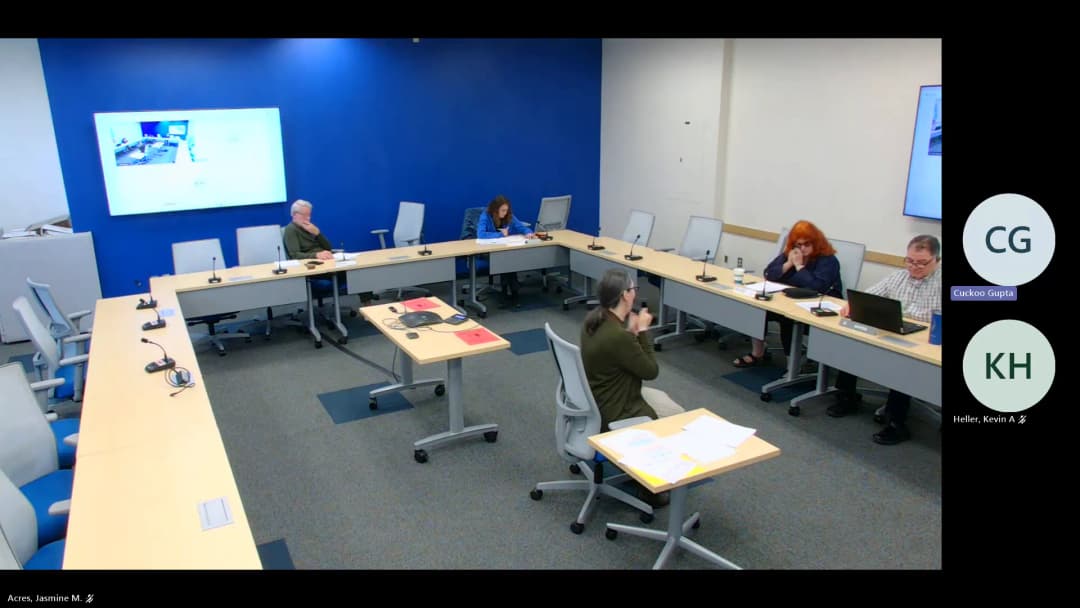
The Anchorage Public Naming Commission met on September 10, 2026, to consider several naming proposals, approve meeting minutes and a process flowchart, and discuss the application of the 36-month posthumous naming rule. The meeting included a land acknowledgement, public hearings on three naming proposals, and a review of commission membership. Consent Calendar - The June 2026 meeting minutes were approved unanimously. - The August 2026 meeting minutes were approved as amended to reflect that no quorum was present and the meeting was a work session. - A flowchart outlining the public naming and renaming process was approved unanimously. Public Comments & Testimony - Pipples Field Park (Eagle River): The proposer, representing the Eagle River Parks and Recreation Board, spoke in favor of naming the park after pioneers of the Eagle River area. They noted that the Eagle River Parks and Recreation Board had passed a resolution of approval, but the GDA Community Council had not yet submitted a written resolution due to the summer hiatus. The commission continued the public hearing to October 14, 2026, to allow time for advisory opinions from the Board of Supervisors. - Girdwood Lions Club Shelter Naming (John Troutner): No public testimony was given. Staff confirmed that the Girdwood Board of Supervisors (which also serves as the community council) had provided a resolution strongly supporting the naming. The commission voted to recommend approval to the assembly. - Northeast Connector Trail Naming (Karen Bronga): Several individuals testified in support, including: - Jennifer (Parks and Recreation representative) – explained the trail was a project Karen Bronga championed. - State Senator Forrest Dunbar – spoke in his personal capacity, noting the trail would not exist without the Brongas, that Karen Bronga’s death galvanized the community, and that the trail addresses a dangerous road section. He supported naming without waiting 36 months. - Tom Bronga (Karen’s husband) – described Karen as a lifelong trail maker and noted the bridge is already called “Karen’s Bridge” colloquially. - A community member (name not stated) – voiced support, noting the trail is used daily. - Jim (last name not given) – spoke in favor. - Chair of the Clip (unclear affiliation) – spoke in favor. Commissioner Heller expressed nervousness about bypassing the 36-month posthumous requirement, worrying about setting a precedent for comparison. Staff explained that the assembly can waive the requirement by ordinance, and the commission can include a detailed rationale for departure from policy. The public hearing was continued to October 14, 2026, to obtain an advisory opinion from the Parks and Recreation Commission. Discussion Items - Agenda Reordering: The commission voted to reorder the agenda to start with new business (public hearings) before approving minutes and unfinished business. - Review of Public Naming Process: The commission discussed a minor edit to the flowchart regarding application submission. Staff clarified that a community council may submit either an application or a resolution. The flowchart was approved as presented. - 36-Month Posthumous Rule: Extensive discussion occurred regarding the 36-month posthumous naming requirement in the code. Commissioner Heller asked for context on the rule’s origin and expressed concern about making exceptions. Staff (Dean) noted that the code allows departure with a detailed rationale. Commissioner Gupta suggested creating guidelines for exceptional circumstances, but others noted each case is nuanced. The commission discussed potentially recommending a shorter timeline to the assembly in the future. - New Commission Members: Staff reported that at least one new applicant (Hillary Morgan) is on the next assembly agenda, and another applicant from Girdwood had an interview scheduled. One commissioner announced plans to resign at year-end and had suggested a replacement applicant. Key Outcomes - Approved: June 2026 meeting minutes. - Approved: August 2026 meeting minutes as amended. - Approved: Public naming/renaming process flowchart. - Approved Recommendation: The commission voted to recommend naming the shelter in Girdwood Lions Park after the late John Troutner. (Motion by Member Gupta, second by Commissioner Gilbert; no opposition.) - Continued: Public hearing for Pipples Field Park naming to October 14, 2026, to receive advisory opinions from the Eagle River Board of Supervisors and the GDA Community Council. - Continued: Public hearing for the Karen Bronga Northeast Connector Trail naming to October 14, 2026, to allow the Parks and Recreation Commission to provide an advisory opinion. - Adjourned: Meeting adjourned on a motion by Commissioner Gilbert, seconded by Commissioner Heller.
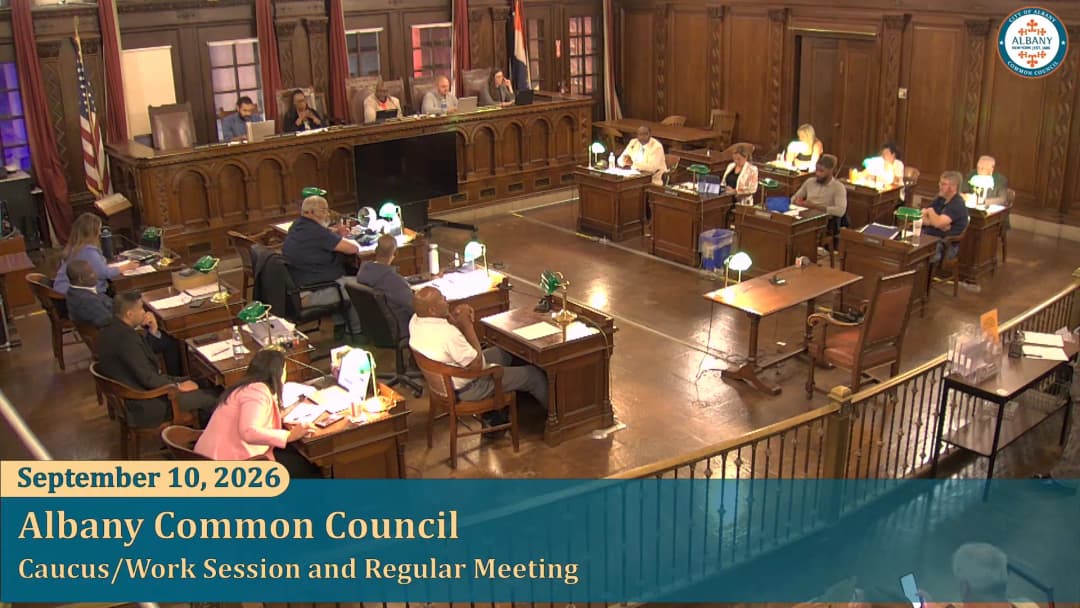
The Albany Common Council held its regular meeting on Thursday, September 10, 2026, beginning at approximately 22:38 UTC. The meeting included public comments on multiple issues, passage of several ordinances and resolutions, committee reports, and councilmember discussion on data centers, surveillance cameras, speed cameras, and the city budget. A total of 14 councilmembers were present at the time of votes. Public Comments & Testimony - Ukraine Solidarity: Multiple speakers (Susan DuBois, Ulina Lake, Peter Warren, Lawrence Whitner, Irina Holden) urged the Council to support a proclamation condemning Russia's war in Ukraine and affirming support for Ukrainian democracy. Speakers emphasized the ongoing humanitarian crisis, the need for grassroots solidarity, and the importance of local government statements. Lawrence Whitner noted that the UN General Assembly voted 141-5 to demand Russian withdrawal, and that Vladimir Putin has been indicted by the International Criminal Court for child deportation. - Data Center Opposition (Kenwood Tech Center): Several residents (Alex Gable, Hilary Justinous, Jacob Feinland, James Giacologie, Michael Bronstein, Liz Espinoza) spoke against the proposed data center at the Kenwood Commons site. Alex Gable highlighted that the site would need rezoning and that the governor's executive order does not cover facilities primarily used for manufacturing or medical care. Hilary Justinous cited asthma hospitalization rates in the South End in the 99th percentile for New York State and 38% higher than in other historically redlined neighborhoods like Arbor Hill. Jacob Feinland, a computer scientist, argued that AI adoption is being artificially inflated and that data centers would increase energy bills. James Giacologie of the Capital District Democratic Socialists of America called for a categorical ban, citing risks of AI misuse. Michael Bronstein said it would be "sadistic" to force residents to live near noise, heat, and electromagnetic pollution. Liz Espinoza, a clinical social worker, described the health burdens already faced by South End families. - Flock/Surveillance Cameras: Multiple speakers (Merrill Sunderland, Mariana Ashelug) condemned the use of Flock automated license plate readers, citing a recent Times Union report of a senior investigator conducting over 3,000 unauthorized searches. They called for termination of the contract. Mariana Ashelug, from Indivisible Albany, also criticized the Council for not moving forward with a moratorium on data centers and for inaction on ranked-choice voting. - Speed Camera Complaint: Almika Cobb complained about a speed camera at a school zone near the former St. Mary's School, stating it is a "money grab" and that no children cross at that point. He requested help moving the camera. Councilmember Keegan responded by saying the Council worked to get state law changed to protect pedestrians, and that drivers must exceed 30 mph to get a ticket. Councilmember Johnson defended the speaker's right to voice concerns, and Councilmember Robinson apologized on behalf of his colleague for belittling the speaker. Councilmember Howie suggested bringing in traffic engineering to discuss the camera's location. - Other: Wendy Dwyer supported Ukraine and opposed Flock cameras and data centers, emphasizing environmental concerns and civil liberties. Discussion Items - Data Center and AI Risks: Councilmember Ballarin spoke at length about the need for government to safeguard against unchecked technology, citing a CNN article about a 10% chance AI could wipe out humanity and the rapid pace of technological advancement. He stated that the first question to any developer should be, "Would you put this in your neighborhood?" Councilmember Johnson noted that media reports have created confusion, as no council member has expressed support for the data center. - Flock Cameras: Councilmember Howie, chair of public safety, announced that a public safety committee meeting will be held with Police Chief Cox and possibly the sheriff's department to discuss Flock cameras and recent misuse reports. He acknowledged data security risks but argued that similar risks exist with other technologies. - Budget Deficit: Councilmember Keegan reported from the finance committee that the city is projected to spend approximately $249 million against a $228 million cap, and will need a revenue anticipation note to cover payroll, meaning deficit spending will begin in January 2027. - Appointments: The Council discussed appointments to boards and commissions. Justin She-will-been (name unclear) was announced as the new water commissioner pending approval, and John Riley Jr. as Corporation Counsel. Resolutions for their confirmation will be taken up within 45 days. - Street Renaming: Council President announced a street renaming ceremony for Helen and Helen Tory on October 10 at 1:00 PM. - Moment of Silence: Councilmember Howie asked for a moment of silence for victims of the September 11, 2001 attacks, and Councilmember Johnson specifically remembered Stephen Mulderry. Key Outcomes - Minutes Approved: The August 17, 2026 meeting minutes were approved unanimously by voice vote. - Ordinance 158126 (Domestic Partnership Fees): Passed 14-0. The ordinance amends Article 5 of Chapter 245 of the City Code to increase the domestic partnership fee from $35 to $40 (matching marriage license fees) and updates documentation requirements. In 2025, 68 domestic partnerships were processed; 38 have been processed so far in 2026. - Resolution 959126R (Labor Day): Passed unanimously (voice vote). Recognizes September 7, 2026 as Labor Day; all councilmembers were co-sponsors. - Resolution 969126R (Hispanic Heritage Month): Passed unanimously. Recognizes Hispanic Heritage Month (September 15 to October 15) and celebrates Latino contributions. - Resolution 979126R (Suicide Awareness Month): Passed unanimously. Recognizes September as Suicide Awareness Month and promotes the 988 Lifeline. - Resolution 888126R (Chester Bennett to Parking Authority): Passed 14-0. Consents to the appointment of Chester Bennett to the Albany Parking Authority Board of Directors. - Resolution 908226R (Jonathan Nix to Monuments Commission): Passed 14-0. Reappoints Jonathan Nix to the Commission on Monuments and Public Art. - Resolution 91826R (Judy Duchette to Assessment Review): Passed 14-0. Reappoints Judy Duchette to the Board of Assessment Review. - Amendment to Local Law R: Passed unanimously. The specific content of the amendment was not detailed in the transcript. - Future Actions: A public safety committee meeting on Flock cameras will be scheduled. The Council will take up confirmations for the new water commissioner and corporation counsel within 45 days. The Council will continue to discuss data center concerns and a possible moratorium.
The Southern Nevada Enterprise Community Board convened on September 10, 2026, with Chair Neal presiding. A quorum was present. The board unanimously approved the minutes from May 28, 2026. No public comments were offered. Consent Calendar - Unanimously approved the minutes from May 28, 2026. Public Comments & Testimony - No members of the public spoke. Discussion Items - Marble Manor Redevelopment Initiative (Item 5): A team from the Southern Nevada Regional Housing Authority (SNRHA) gave a comprehensive update on the $400 million project, seeded by a $50 million HUD Choice Neighborhood Initiative grant. Chief Housing Officer Kathy Thomas explained that 235 families have been temporarily relocated with options to return or take vouchers. Phased redevelopment will include units at various income levels (30% to 80% AMI plus market rate). Demolition is nearly complete; grading and utilities are underway. - Subcontractor and Workforce Outreach: Raven McSwain (Some New Marketing) described a two-track system for contractors: a fast track for those ready to contract and a development track for those needing technical assistance (licensing, bonding, etc.). Two solicitation events were held in August and September 2026, with 60 and 30 attendees respectively. The goal is to ensure local businesses can participate and sustain beyond the project. - Section 3 and Davis Bacon: Frank Stafford, SNRHA Director of Modernization, outlined federal requirements: Davis Bacon prevailing wages must be paid to all workers, and certified payroll will be tracked. Section 3 mandates that 25% of total labor hours be performed by Section 3 workers, with 5% from targeted Section 3 workers (public housing or voucher residents). Businesses may qualify as Section 3 if 51% owned by low-income individuals or public housing residents. - FLEX Program (Jobs Plus): Shahara McGee, FLEX Program Manager, presented the $3 million federal grant serving 640 workable-age adults across five properties (including Marble Manor and others on the historic west side). The program (rebranded as FLEX – Fostering Lasting Employment Experiences) started in 2025 and runs through 2029. As of August 2026, 263 participants were enrolled (exceeding the year-two target of 256), 74 were employed, and 16 were in training. The program provides intensive case management, a transportation van, Uber accounts, peer mentors, and financial incentives – participants' rents do not increase as their earned income rises, with the grant covering the difference. EmployNV has a seated career coach; 28 referrals have been made, with 4 completing training and employed at livable wage. A partnership with CSN will launch an apprenticeship-ready program in December 2026. The program also coordinates with Section 3 goals to connect residents to construction jobs on the Marble Manor project. - Capital Stack: The financing for Phase 2A/2B (223 units) includes approximately 10% from HUD Choice Neighborhood funds, 82% from private sources (low-income housing tax credits, state tax credits, mortgage bonds, developer fees, seller financing), and 6.7% from public funds (city/county HOME funds, city green space funds, and state gap funds). - Board Questions and Discussion: Board members, including Vice Chair Armstrong, Member Brooks, and Assemblywoman Monroe Moreno, asked detailed questions about construction training timelines, subcontractor turnout, and the FLEX program's funding and outcomes. Chairwoman (who also spoke extensively) raised concerns about workforce coordination, noting that other agencies (EmployNV, Workforce Connections) have existing funds for on-the-job training and WIOA that could be better leveraged instead of using FLEX grant dollars for the same purpose. She suggested a potential Bill Draft Request (BDR) for the 2027 Nevada Legislature to reform workforce funding and ensure it reaches target populations effectively. The board also discussed Opportunity Zone 2.0, with a public comment deadline of September 12, 2026, and the possibility of including the Marble Manor census tract. Kathy Thomas explained that the state's GOED is accepting comments, and SNRHA is advocating for census tracts that require coordinated investment. Key Outcomes - The board unanimously approved the May 28, 2026, meeting minutes. - The presentation was received and discussed; no formal action was taken on the Marble Manor project. - Future agenda items will focus on crafting BDRs related to workforce development and the Opportunity Zone 2.0 designation. The board agreed to consider scheduling an October meeting to allow timely input before the final OZ deadline (September 28, 2026) and to begin BDR drafting.
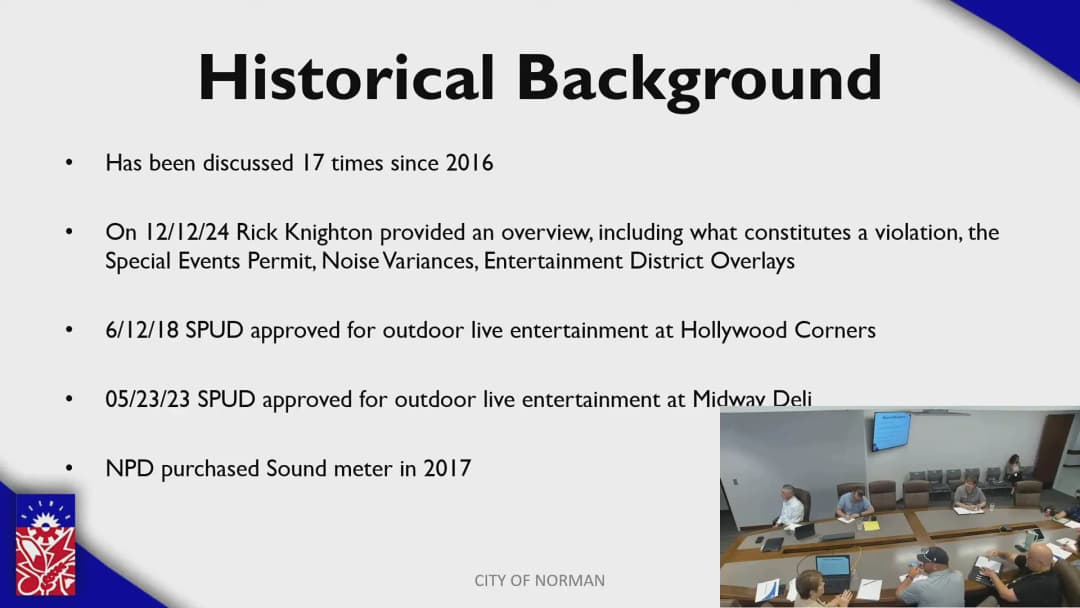
The Norman Planning Commission met on September 10, 2026 at 5:30 PM. The meeting included a consent docket, public comment on a preliminary plat, discussion and votes on zoning and plat items, and a postponement request. The commission also received a staff update on the upcoming code assessment release. Consent Calendar - Item 1: Approval of the planning commission meeting minutes from August 13, 2026. Motion to approve, seconded, and passed unanimously. - Item 2 (PP-2627-4): Preliminary plat for 108th Avenue Business Edition was pulled from the consent docket for separate discussion. Public Comments & Testimony - James Maxwell (property owner at 2601 120th Avenue SE, adjacent to the proposed Dollar General project): Expressed opposition to the preliminary plat due to concerns about the proposed aerobic sprinkler system (15–20 feet from his property line), potential sprayback and watershed onto his agricultural property, potential chemical treatment mishandling by Dollar General employees, impact on his use of the land (mulch, compost, wood, walnuts, acorns), and proximity to the Lake Thunderbird watershed (WQPZ). He also cited increased crime associated with Dollar General stores and noted that other jurisdictions require produce sections to mitigate crime. He requested the commission consider these issues. Discussion Items - Item 2 (PP-2627-4): Commissioners discussed the distance from the proposed wastewater discharge to the WQPZ and a private well. Staff noted a 300-foot requirement from DEQ and a possible 200-foot requirement from city ordinance (section on water pollution hazard). The exact distance on the site plan was unclear regarding the adjacent property lines. Commissioner Steve raised the need to verify compliance. A motion was made to postpone the item to obtain accurate measurements and ensure all guidelines are met. Motion seconded and passed 6-0. - Items 3 & 4: Consideration of ordinance 0-2526-65 (rezoning from A2, PL, PUD to R1) and preliminary plat PP-2627-3 for Cedar Lane Edition. Staff and applicant presented. The project would add approximately 129 homes on one portion and 23 on another, with a total of 412 single-family homes and one commercial lot on 116.55 acres. A lift station would serve the area. Discussion included a commissioner questioning why the development is at lower density despite the AIM Norman plan designating the area as urban high (due to anticipated commuter rail stop). The commissioner voted no, citing the need for higher density to meet housing goals. The motion to approve passed 5-1. - Item 5 (0-2627-1): Rezoning for 201 West Apache Ward 4. Applicant requested postponement to the October 8, 2026 planning commission meeting. Motion passed 6-0. Key Outcomes - Item 2: Postponed to a future meeting pending verification of WQPZ and well setback distances (motion carried 6-0). - Items 3 & 4: Approved (5-1) with recommendation to city council, noting that preliminary plats do go to council (clarified by staff later). - Item 5: Postponed to October 8, 2026 (6-0). - Staff Announcements: The upcoming code assessment (90-page document) will be released within the next week on NormanDevCode.com for public comment. A joint council and planning commission meeting is scheduled for October 6, 2026 at 5:30 PM in the executive conference room to review the assessment. Note: The meeting adjourned without further discussion.
No agenda, minutes, or transcript were provided for this meeting. As a result, no discussion items, public comments, or decisions can be summarized. The meeting date is confirmed as September 10, 2026, but no content is available.