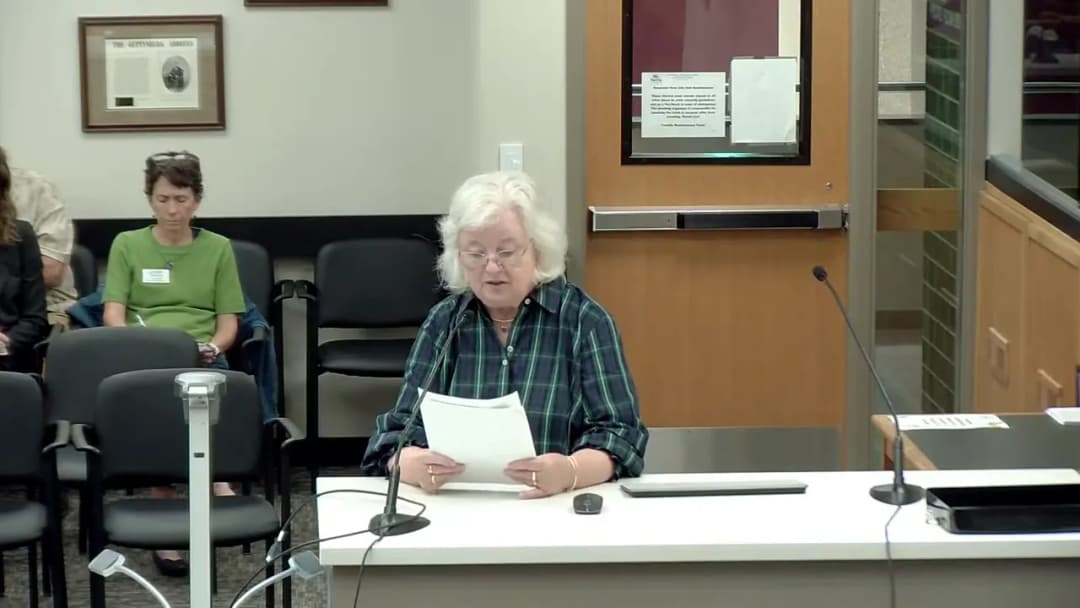
The Rapid City Council met on September 9, 2026, to address a consent calendar, public comments, several land-use items, and a controversial ordinance creating a reasonable accommodation procedure. Key actions included restoring $100,000 to the mayor's office budget, approving a supplemental appropriation for a police station remodel, and passing Ordinance 6726 after a failed amendment to add neighbor notification. Consent Calendar - Items 2 through 47 were approved with the exception of Item 30, which was pulled for separate consideration. - Item 30: Approved a first amendment to the facilities management agreement with Sports Facilities Management LLC. Director Ainsley explained the amendment expands the firm's role during design and construction, saving the city an estimated $659,000 to $900,000 compared to hiring a separate owner's representative. Council members expressed initial surprise but ultimately supported the change. Public Comments & Testimony - William Wagner (constitutional advocate) opposed surveillance cameras (Flock safety), arguing they violate South Dakota law and the state constitution. He cited South Dakota Codified Law 31-18-2, 32-14-9, 23A-35-4.3, and 55-7-3, and noted that Aberdeen and Codington County have rejected similar systems. He urged the council to reject the surveillance network. - Tammy Hopp (Rapid City Disability Awareness and Accessibility Committee / Black Hills Works Foundation) spoke in favor of Ordinance 6726, stating it provides a clear administrative process for reasonable accommodation requests without requiring public disclosure of private information. She thanked city staff for their work. - Barbara Horton (Red Rock Estates HOA) opposed Ordinance 6726, citing a letter from attorney Richard Huffman. She argued that the ordinance would deprive residents of notice and the ability to enforce property covenants, and that Oxford Houses should not be treated as single-family residences but as businesses requiring council approval. Discussion Items - Personal Privilege: Councilor Strowman thanked workers and first responders, noting the upcoming 25th anniversary of 9/11. The mayor announced a ceremony on Friday, September 11, 2026, at 8 a.m. at the base of M Hill. - Item 48: Second reading of Ordinance 6747 – supplemental appropriation of $1,280,319 for the North Police Station remodel. Councilor Armstrong noted the bid came in $500,000 under budget. Approved unanimously. - Item 49: First reading of the FY2027 appropriation ordinance. Councilor Bieberdorf moved to restore $100,000 to the mayor's office budget (chief of staff position), arguing the budget was already the lowest in five years ($890,61). After debate, the motion passed 9-1 (Strowman opposed). Councilor Armstrong raised potential additions (SCBA equipment for fire department, HR professional services, airport project manager). A motion to add $125,000 for an airport principal project manager was withdrawn; the first reading as amended (including the $100,000 restoration) was approved 7-2 (Strowman and Armstrong opposed). - Item 50: Preliminary subdivision plan for Black Hills Industrial Center. Approved with stipulations. - Item 51: Preliminary subdivision plan for Shepherd Hill South Subdivision. Councilor Seacris raised concerns about traffic congestion on Diamond Ridge Boulevard due to construction. Director Fisher noted mitigation measures (speed monitors) and that the future East Anamosa connection (designed, construction fall 2026) and the Homestead to Valley Drive project (months away) will provide relief. Approved with stipulations. - Item 62: Rezoning from General Commercial to General Agricultural at 136 Krebs Drive. Approved. - Item 63: Second reading of Ordinance 6726 (reasonable accommodation procedure). Councilor Tamang abstained. Councilor Strowman made a substitute motion to add neighbor notification and a conditional use permit (CUP) process. Councilor Evans expressed concern about ADA litigation risk; Deputy City Attorney Kinsley Groot explained that similar uses (e.g., vacation rentals, daycares) do not require CUPs and that adding such requirements could invite discrimination lawsuits. The substitute motion failed (2 ayes, 8 noes, 1 abstention). The original motion then passed (8 ayes, 2 noes – Maher and Strowman opposed). Key Outcomes - Ordinance 6747 (supplemental appropriation for police station) passed unanimously. - FY2027 budget first reading approved with restoration of $100,000 to mayor's office (motion 9-1; final vote 7-2). Airport position discussion tabled for later supplemental. - Ordinance 6726 (reasonable accommodation) passed after a failed amendment (substitute motion failed 2-8-1; original passed 8-2). - Preliminary subdivision plans (items 50, 51, 62) approved with stipulations. - Bills approved: Main Street Square and Visit Rapid City ($192,125.40) with one abstention; remaining bills ($16,884,467.17) with one opposition.
The Public Meeting Index
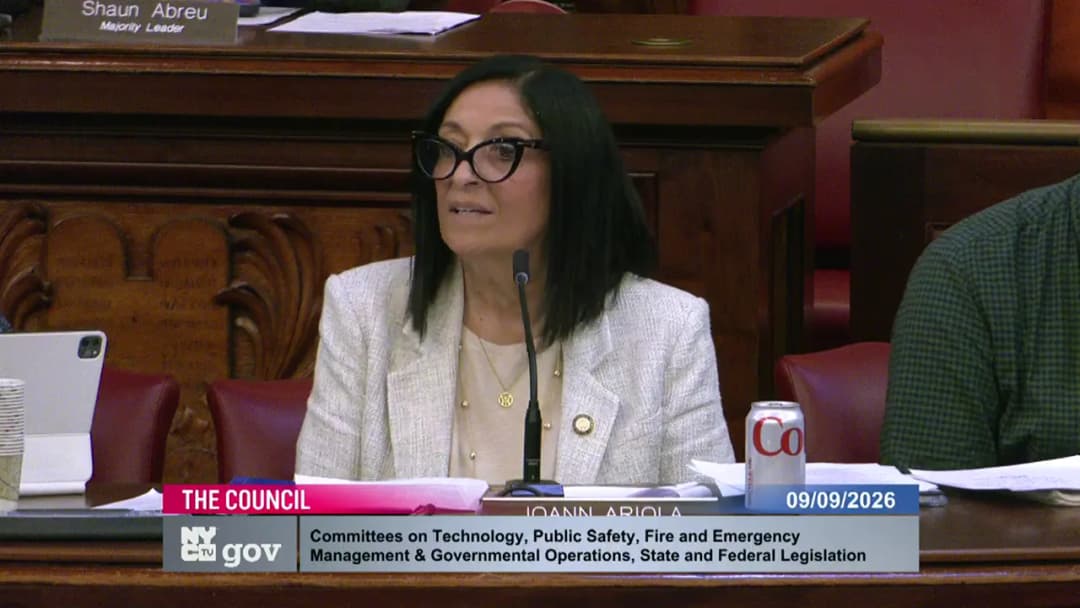
The Public Meeting IndexThis joint oversight hearing, held by the Committees on Technology, Public Safety, Fire and Emergency Management, and Governmental Operations, State & Federal Legislation, examined the seven-hour 911 system outage that occurred on August 18, 2026. The outage, caused by a Motorola firmware update at the Bronx Public Safety Answering Center (PSAC 2), left approximately 113 unique 911 callers unable to reach emergency services. Officials from the Office of Technology and Innovation (OTI), NYPD, and FDNY testified, and council members expressed strong concerns about delayed detection, lack of public notification, and insufficient redundancy. Public Comments & Testimony - Jordan Rosenthal (Director of Advocacy, Community Access / Correct Crisis Intervention Today coalition) argued for an independent 911 system separate from the NYPD, citing best practices from Seattle and Austin, and a University of Chicago Health Lab report recommending equal status for emergency communication centers. - Michelle Amp Lomanville and Beverly Lonmanville spoke on behalf of Havana syndrome victims, raising concerns about potential misuse of 911 technology and requested meetings to discuss protections. Discussion Items - Timeline and Detection Failures: Councilmembers highlighted that the outage began at 3:13 AM, but the first call-taker alert came around 6:00 AM, a ticket was filed at 6:40 AM, and the full scope (affecting 911 calls) was not understood until 9:30 AM. OTI Commissioner Galopter acknowledged that electronic monitoring did not catch the issue and that manual monitoring has since been instituted. - Public Notification: Multiple councilmembers (Feliz, Ariola, Brewer, Morano, Riley) criticized the city for not notifying the public during the outage. OTI stated that once they knew 911 calls were affected (9:30 AM), the focus was on remediation, and only 45 minutes elapsed before resolution, so they chose not to deter callers. Councilmembers argued that notification should be immediate, especially given a similar texting outage in May 2026. - Vendor Accountability: Councilmembers pressed on Motorola's role, asking why the firmware update was deemed low risk, why testing failed, and what contractual remedies exist. OTI declined to assign blame until a root cause analysis is complete but noted a freeze on new deployments and daily executive-level meetings. - Redundancy and System Design: Questions were raised about why calls did not automatically failover from PSAC 2 (Bronx) to PSAC 1 (Brooklyn). OTI explained that the redundancy did not trigger because 70% of calls were still being handled, making the issue appear intermittent. Councilmembers called for automatic failover mechanisms. - Staffing and Next-Gen 911: NYPD reported progress on 911 operator staffing (1,370 operators currently, up 10% from last year) and projected voluntary overtime within 3–6 months. Next-gen 911, originally slated for summer 2026, is now expected in Q3 2027; OTI committed to a disciplined review. - Prior Outages: The hearing referenced a May 2026 texting outage (110 minutes) and a 2024 configuration error. OTI noted that the May outage affected 12 texters who received bounce-back messages. Key Outcomes - The hearing was filed by committee without immediate action. - Council committees will send a follow-up letter with unanswered questions, including details on the 113 unserviced callers, Motorola's liability, and public notification protocols. - OTI committed to completing a root cause analysis (timeline not specified) and to revisiting risk assessment criteria, change management, and public communication policies. - NYPD committed to honoring the call-taker and principal who escalated the issue with a Commander's Day. - No deaths or injuries were attributed to the outage based on preliminary review, but outreach to affected callers continues.
This joint oversight hearing, convened by the Committees on Technology, Public Safety, Fire and Emergency Management, and Governmental Operations, examined the seven-hour 911 system outage on August 18, 2026. City officials from OTI, NYPD, and FDNY testified about the cause, response, and impact of the outage, which affected approximately 1,696 calls, including 742 911 calls. The hearing focused on delayed detection, failure to notify the public, vendor accountability, and systemic improvements. Public Comments & Testimony - Jordan Rosenthal (Director of Advocacy, Community Access): Testified in favor of making the 911 system independent of the NYPD, citing best practices from Seattle and Austin, and a recommendation from the University of Chicago Health Lab. Argued that the current multi-agency structure complicates accountability. - Michelle Amp Lomanville: Spoke as a health educator and advocate for Havana syndrome victims, alleging unlawful experimentation and technology-based harassment. Raised concerns about 911 system involvement in surveillance. - Beverly Lonmanville: A retired technology analyst who testified about personal concerns regarding biometric data access and security. Discussion Items - Timeline and Detection: Chairs Feliz, Ariola, and others pressed on why the issue was not detected for hours. The first indication of a problem came at 6 a.m. from an NYPD call taker, but OTI did not confirm that 911 calls were affected until 9:30 a.m. The outage lasted from 3:13 a.m. to 10:19 a.m. OTI Commissioner Galopter acknowledged that automated monitoring failed to catch the issue. - Public Notification Failure: Multiple council members criticized the administration for not notifying the public during the outage. OTI stated that because 70% of calls were still going through and the issue was resolved within 45 minutes of detection, they prioritized remediation over notification. Chairs Feliz and Ariola strongly disagreed, noting that even partial outages require immediate public alerts. - Motorola's Role and Contractual Liability: OTI confirmed that Motorola's firmware upgrade caused the outage, but would not assign blame until a root cause analysis is complete. Council members questioned why Motorola was not present, why the upgrade was deemed low-risk, and what contractual remedies exist. OTI noted that Motorola is a managed service provider and that the city is self-insured. - Staffing of 911 Operators: NYPD Chief of Staff Ryan Merola reported that the department has added 400 operators in the last year, with 1,370 operators currently. Overtime averages 32 hours per month per operator, and they aim to make overtime entirely voluntary within 3-6 months. - Next Generation 911 (NG911): Commissioner Galopter stated NG911 is now expected to be completed in Q3 2027, delayed from earlier projections. She committed to a disciplined review of the project's schedule and scope. - Independent Verification and Vendor Management: Councilmember Morano raised concerns that Motorola is involved in its own root cause analysis and asked who independently verifies the city's findings. OTI said they are reviewing governance and contract terms. - Previous Outages: The hearing reviewed several past 911 system failures: a May 2026 texting outage (110 minutes), a September 2024 configuration error, a 2022 accidental power-off by a contractor, and 2021 FDNY dispatch outages. OTI and FDNY described corrective measures but council members noted a pattern of insufficient public disclosure. Key Outcomes - Root Cause Analysis: OTI committed to a comprehensive root cause analysis, but could not provide a deadline for completion. A freeze on non-critical system changes is in place pending the analysis. - Interim Monitoring: OTI has implemented manual hourly call recording reviews and daily executive-level status meetings. A freeze on new deployments is in effect except for critical updates under strict exception protocols. - Public Notification Policy: OTI agreed to revisit internal and external communication protocols, including coordination with NYCEM and Notify NYC. No specific policy changes were announced. - Council Follow-Up: The committee chairs will send a joint letter to OTI requesting additional information on contract terms, vendor liability, and detailed callback data for the 113 callers who never reached an operator.
On September 9, 2026, the New York City Council Committees on Technology, Fire and Emergency Management, Public Safety, and Governmental Operations, State & Federal Legislation held a joint oversight hearing to examine the 911 system outage that occurred on August 18, 2026. The outage, caused by a Motorola firmware update at the Bronx Public Safety Answering Center 2 (PSAC 2), lasted approximately seven hours (3:13 AM to 10:19 AM), affecting 1,696 calls, including 742 911 calls. Of those, 319 unique callers were impacted, with 206 eventually connected and 113 unserviced. The hearing focused on the timeline, lack of public notification, redundancy failures, vendor accountability, and steps to prevent recurrence. Public Comments & Testimony - Jordan Rosenthal (Director of Advocacy at Community Access) testified in support of making the city's 911 system independent of the NYPD, citing a University of Chicago Health Lab study and the example of Seattle’s independent crisis response system. He argued that independence would clarify accountability and improve responses to mental health calls. - Michelle Amp Lomanville and Beverly Lonmanville testified about Havana syndrome victims and concerns regarding biometric technology abuse, requesting a meeting to discuss 911's role in potential surveillance. Discussion Items - Timeline and Detection: OTI Commissioner Lisa Golopter testified that Motorola performed a low-risk firmware upgrade at PSAC 2 on the night of August 17, completed at 4:13 AM. The first indication of trouble came at 6 AM when a call taker reported audio issues with alarm company calls, but the full impact on 911 was not realized until 9:30 AM. NYPD first notified OTI of alarm call problems at 6:40 AM. The outage was resolved by rerouting traffic to PSAC 1 by 10:19 AM. - Public Notification: Multiple council members criticized the failure to promptly notify the public. Chair Felice and others argued that by 6:40 AM, the city knew of a partial outage and should have alerted New Yorkers via Notify NYC. The administration defended the delay, saying the focus was on restoring service and that 70% of calls were still being handled; they committed to revisiting notification protocols. - Redundancy and Monitoring: OTI acknowledged that existing redundancy (PSAC 1 and PSAC 2) did not automatically reroute calls during the outage. Monitoring systems failed to detect the error, prompting interim manual monitoring of call recordings. Commissioner Golopter stated that a root cause analysis is ongoing and that a freeze on non-critical updates has been implemented. - Vendor Responsibility: Motorola performed the firmware update that triggered the outage but was not aware of the problem. OTI stated it is premature to assign blame or discuss contractual penalties until the root cause analysis is complete. NYPD did not have advance notification of the upgrade beyond a standard change advisory board process. - Staffing and Next-Gen 911: NYPD reported progress in hiring 911 operators (1,370 currently, up 10% from last year) and expects to reduce mandatory overtime within 3-6 months. Next-Gen 911, originally due in 2018, is now scheduled for Q3 2027, with OTI promising a disciplined review. - Earlier Outages: The hearing also reviewed a May 2026 text-to-911 outage lasting 110 minutes (12 callers affected), a 2024 configuration error, and a 2022 accidental power shutoff. FDNY noted that separate dispatch systems have been stable since initial 2021 glitches. Key Outcomes - The committee will send a follow-up letter requesting additional information on the root cause analysis, contractual penalties for Motorola, and a timeline for notification protocols. - OTI committed to completing a thorough root cause analysis (estimated months) and will reevaluate risk classification for software updates, vendor oversight, and public communication policies. - No injury or death attributable to the outage has been identified to date; NYPD called back hundreds of affected callers, reaching 32 individuals who reported no remaining crisis. - The hearing was adjourned with plans for continued oversight and legislative action if necessary.
The Belgrade City Council held a workshop on September 9, 2026, to discuss the draft 2026 Transportation Master Plan (TMP). The meeting included a presentation by consultant Dan Collie of Farron Pierce, followed by extensive council questions and discussion. No public comments were offered. The plan is expected to return for final adoption in October 2026. Discussion Items - Presentation of the 2026 Transportation Master Plan: - Greg Trent, Assistant City Manager, introduced the plan, noting it has been three years in development, with coordination among city master plans (parks, land use, utilities) and population estimates provided by the state. The plan has been reviewed by city directors and MDT. - Dan Collie presented key aspects: the plan builds on the 2018 Long-Range Transportation Plan, covers all modes (auto, pedestrian, bicycle, transit), and aligns with new regional partners (Gallatin Valley MPO, Urban Transportation District). Community engagement included a February 2024 open house, virtual meetings, and a survey with a high response rate. - The plan establishes a vision, 10 goals, and a prioritized project list across four categories: roadway projects, intersection projects, bike/pedestrian projects, and priority crossing improvements. Projects are ranked high, medium, or low tiers as a guide, not a fixed schedule. Annual monitoring and updates are recommended. - Immediate next steps: adoption, incorporation into other planning processes, advancing high-priority projects (e.g., JackRabbit at BNSF rail crossing), and continued engagement with MDT and MPO. - Council Questions and Comments: - Council members raised several topics: - Surprise at strong community interest in cycling infrastructure, especially across I-90 and to Bozeman. - Concern about parking regulations for multifamily developments increasing on-street congestion; Collie suggested parking maximums and alternative modes as incremental solutions. - Discussion of motorized bicycles and e-bikes: legal status on sidewalks vs. roads; a council member noted the need for regulation and enforcement capability, with staff to bring policy ideas. The city manager observed that many neighborhoods lack sidewalks, making bike/pedestrian infrastructure a funding challenge. - Connectivity to the new pump bike track was highlighted, along with a suggestion to acquire road-painting equipment for bike lane striping (discussions with Bozeman and county stalled due to budget caution). - Safety concerns about children on e-scooters and e-bikes; a council member suggested education campaigns and potential youth certification, similar to hunter safety. - Need for better sidewalk connectivity for pedestrians; a council member emphasized walking to schools and stores, noting that cycling is seasonal. - Traffic calming: Collie noted that vertical measures (speed humps) conflict with snow removal; council members advocated for designating parking/snow storage in street standards (60-foot width) without widening, and for avoiding problematic designs like narrow medians or mini-roundabouts seen in some developments. - Lighting standards: Collie acknowledged the trade-offs between safety and resident preferences; not included in the plan but important for safety. - Intersection blocking by parked vehicles in denser housing areas, and the need for creative solutions. - The Weaver Road corridor was specifically noted as a proactive planning need for future four-laning, despite likely being years away. - Council member expressed support for calling out a potential northwest interchange near Weaver, noting positive public feedback, but also recognizing that growth would follow such infrastructure. - Update on the Cruiser project (JackRabbit to Dry Creek): still in right-of-way acquisition; MDT has re-approved plans after several reviews; the traffic signal portion may go to bid this year, with the roundabout later. - I-90 corridor study: expected early 2028, per MPO board update from Mayor. Key Outcomes - No formal actions were taken; this was a workshop for discussion and feedback. - Staff will incorporate council feedback (e.g., snow storage designation in street diagrams, traffic calming guidance, avoidance of problematic designs) into the final plan. - The plan is scheduled to return to the council in October 2026 for a final adoption vote. - Staff will prepare policy ideas regarding e-bike regulations and enforcement for future discussion. - Continued coordination with MDT, MPO, and Gallatin County on corridor studies and equipment sharing.
The Council convened at 6:00 PM to discuss FY27 budget reductions, the special events portfolio, and the pedestrian bridge project. They also confirmed their prior direction on the voter‑approval tax rate. After a budget‑themed icebreaker, the City Manager presented a list of potential program and service reductions totaling $245,610, from which the Council selected $176,960 in permanent cuts. Budget Reduction Options - The City Manager presented a three‑page list of recurring reduction options, emphasizing that proposed cuts were “nice‑to‑have” programs and would not be brought back. - Council members debated each item, voting to keep most community‑facing programs (e.g., Citizens Academy, Fire Open House, National Night Out, Youth Police Academy) while eliminating or reducing others. - Key decisions: - Kept: Citizens Academy, Keep Murphy Beautiful recycling events, Park & Rec month events, budget video (5 kept/1 opposed), Boards & Commissions dinner (reduced from $12,500 to $5,000 via gift cards), Fire Open House, Executive Retreat (reduced by $10,000 to $15,000), Council Retreat (reduced by $5,000), employee Field Day, Town Hall, tuition reimbursement, detective take‑home vehicle program, National Night Out, Citizens Police Academy. - Cut or reduced: Local option election ($25,000, non‑recurring, already dropped), Parks training ($5,000), budget video initially on bubble but kept; Boards & Commissions dinner reduced; employee relations field day kept; tuition reimbursement kept; challenge coin program ($2,000 reduction); second patrol officer position deferred (no new hire in FY27). - Total recurring reductions: $176,960. Special Events Budget - Events Director Matt presented the FY27 events budget, which reduces the number of events from 19 to 14 and cuts the budget from approximately $892,000 to $795,000 (an 11% reduction). - Eliminated events: Hop & Hunt, Moonlight Movies, Scalbration (Halloween), Arbor Day (shifted to tree giveaway), Volunteer & Sponsor Banquet. - Events on watch list for a third‑year evaluation: Food Truck Fridays, Backyard BBQ, and Jingle Jog. - The City’s sponsorhip revenue and in‑kind contributions totaled $111,000 in FY26, exceeding the budgeted $55,000. Pedestrian Bridge - Engineer Donald presented three design options for the pedestrian bridge over SH 544: 1. Basic design (bowstring arch, amber LED lighting, 8‑foot path, 18‑month schedule) – estimated $1.27 million. 2. Improved design (same style, beefier arch, more steel) – estimated $4.5 million. 3. Enhanced design (previously bid twisted arch with colored LEDs) – low bid was $5.6 million (over budget). - Council unanimously selected the basic design as recommended by staff. The project still includes both bridges, connection to Maxwell Road, and amenities (landscaping, pillars, benches). Remaining budget is approximately $5 million; redesign will cost about $128,000. Any savings will remain in the MMD fund. Tax Rate Confirmation - The City Manager asked for clarity on the tax rate direction. Council confirmed that the prior direction to adopt the voter‑approval tax rate (3.5% increase) remains unchanged. The final budget will be presented on September 15, with the tax rate due to the county by noon on September 16. Key Outcomes - $176,960 in permanent budget reductions adopted for FY27, with most community programs preserved. - Second patrol officer position deferred; no increase in police staffing for FY27. - Special events budget cut by 11%, with five events eliminated. - Pedestrian bridge design direction: basic bowstring arch with amber lighting, 18‑month schedule, moving forward to redesign. - Voter‑approval tax rate reaffirmed; final budget adoption scheduled for September 15, 2026.
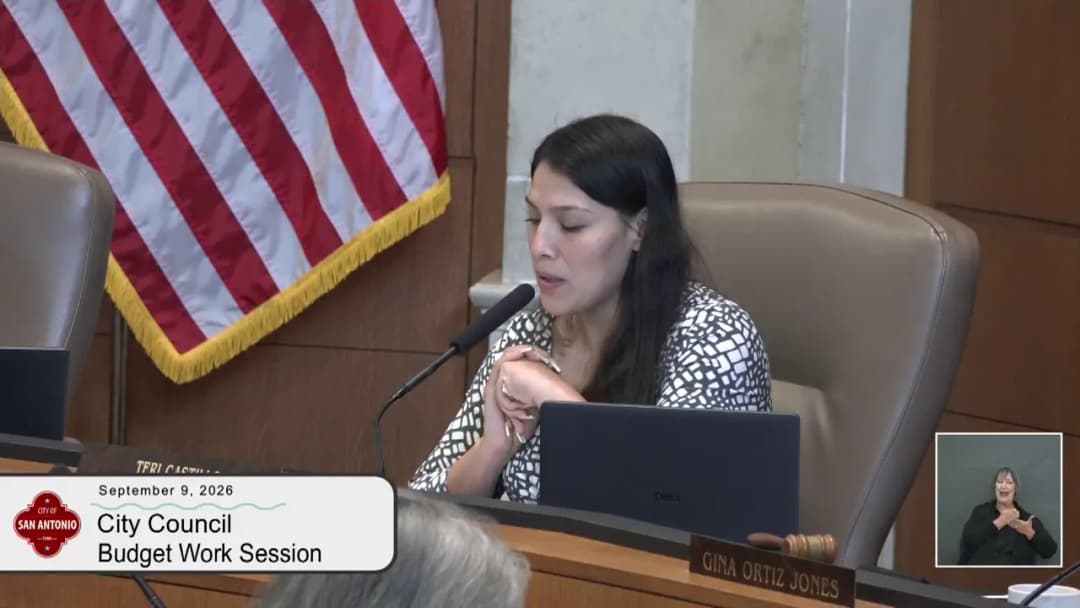
On September 9, 2026, the San Antonio City Council held a budget work session to review proposed FY 2027 budgets for the Parks & Recreation, Economic Development, Solid Waste Management, and Public Library departments. The meeting began in the afternoon and adjourned at 4:04 PM. Presenters included department directors and a library board trustee. Council members asked questions and raised concerns about service levels, staffing reductions, and fee increases. No formal votes were taken; the session informed upcoming budget deliberations. Parks & Recreation (Director Omer García) - Proposed budget: $120.4 million, with $71 million from the general fund. - The department oversees 278 parks, 106 miles of trails, 30 recreation centers, and 25 pools. It is an accredited agency. - Key initiatives: $10.4 million for tree preservation and mitigation, with a goal of planting 13,753 trees in FY 2027. A survival study found an 81% survival rate for trees planted in FY 2025, and 89% of adopted trees survived. - Greenway development: 190+ miles of trails completed, with 17 miles remaining to be funded. The 2022 bond allocated $103 million for trails. - Capital projects: Playground Shade program (12 shade structures per year), Benavides Park completion, Woodland Park improvements, and three new park locations with $175,000 in collaboration. - The department secured $6.2 million in competitive grants, including $3 million for Lake Woodland and $1.5 million for aquatic communities. - Council members discussed tree irrigation rules, greenway safety, and the need for a comprehensive park accessibility map. Economic Development (Director Brenda Hex) - Proposed budget: $16.9 million, a reduction of $9 million from the previous year, reflecting the elimination of two positions and a $172,000 reduction in the construction mitigation program. - The department supports business retention, attraction, and international engagement. Key programs: Lift Fund (0% interest loans for small businesses; since 2016, over 400 loans totaling $195 million in economic impact). - Strategic framework update: New goals include strengthening San Antonio as a global destination, stimulating private investment, developing workforce skills, and focusing on advanced manufacturing and AI. - A prospective rocket manufacturing investment of $9 million and 200 jobs is in the pipeline. Industrial projects include $200 million in capital investment and up to 3,000 jobs by 2030. - Council members asked about the Lift Fund's impact, business retention rates, and how the department supports small businesses in underserved areas, especially South Side. Solid Waste Management (Director Josephine Valencia) - Proposed budget: Two funds – one for collection and one for maintenance. The department serves 385,452 customer accounts. - Storm response: Over 11 million pounds of tree debris and vegetative waste were collected following recent storms. The department completed priority areas and expects to be fully caught up by the following week. - Proposed rate increases: $0.75 per month for each service level, plus a $0.25 environmental fee. The annual permit fee for commercial collectors would increase to $2,250. - A new transfer station is being operated by city staff after the previous contract ended. $3.1 million is proposed for facility renovations to allow public access and voting. - The department's internal fleet maintenance shop saves costs: $95/hour vs. $150/hour at private shops. A mechanic apprenticeship program is being developed. - Council members noted concerns about illegal dumping, shopping cart litter, and the impact of proposed metal recycling regulations on small businesses. Public Library (Director Cuasmami and Board Vice President Joan Harris) - Proposed budget: $60.8 million, a 4% increase over the prior year. The increase is driven by national wage pressures. - Key investments: $379,000 for operations and $2.1 million for furniture, equipment, and computers at the new Carver Ranch Library. $480,000 in computer budget reductions are planned through efficiency measures. - Staffing reduction: 39 positions will be eliminated, with 17 currently vacant. The remaining 22 staff will be reassigned to other city positions. The reduction is based on a 40% decline in physical material circulation and a 62% decline in staff-handled physical transactions, while digital circulation increased 24%. - New fee proposals: $10 fee for lost items (currently $20 for lost cards) and a $20 annual fee for non-resident library cards. Estimated revenue: $1 million annually. - The library system serves 3 million visits annually, provides 2.1 million hours of Wi-Fi, and answers 1.3 million reference questions. Customer satisfaction is 96%. - Council members expressed concern about the reduction in staff, the impact on adult learning programs (e.g., Learn SLP with 638 sessions, over 4,000 participants annually), and the potential loss of human touch in services. Some requested a detailed plan for measuring satisfaction post-changes. Key Outcomes - No formal votes were taken; the session was informational to guide council decisions on the FY 2027 budget. - Council members requested additional information: a list of city properties with lease agreements (Parks), a map of park accessibility features, a memorandum on adult learning program locations and impact, and a list of planned library service changes. - Several council members expressed support for retaining the 39 library positions and exploring alternative funding to avoid cuts. - The next budget work session is scheduled for the following day (September 10) with public hearings at 5 PM, where 108 speakers have registered to comment.
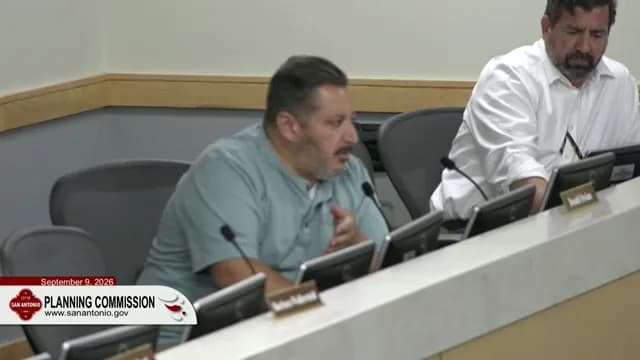
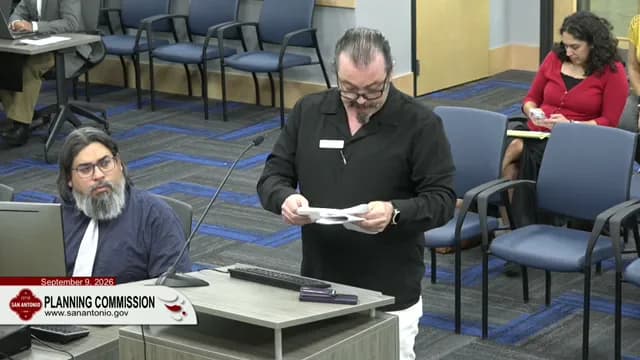
The Planning Commission met on September 9, 2026, at 2:00 p.m. to consider a consent agenda, the FY2027 proposed budget, and two land-use plan amendments. Commissioner Bustamonte recused himself from consent items 1, 5, and 7. The meeting concluded at 3:32 p.m. Consent Calendar - Motion to approve the combined hearing agenda (items 1–11, except 12, 13, and 15) carried unanimously (7–0). Commissioner Bustamonte was not present for the vote due to recusal. Discussion Items FY2027 Proposed Budget (Item 15) - Craig Dudek, Interim Assistant Director of Management and Budget, presented a $4.4 billion total budget with a $1.76 billion general fund. The city faced a $158 million shortfall over two years due to revenue growth of 2.3% versus expenditure growth of 6.9%. - Strategies to close the gap included: $90 million in spending reductions (101 civilian positions targeted, 54 filled – no layoffs planned), use of the 3.5% property tax increment authority (adding $28M in FY27 and $64M in FY28), and $30 million in fee increases (notably police/fire EMS fees, towing, and a $20 non-resident library card fee). - Average homeowner impact: $2.95/month increase in property taxes; 47% of homesteads exempt due to existing exemptions or frozen values. - Investments: $38.8M for homeless services (including $9M capital for emergency relocation); $37.7M for housing (targeting 29 units, 50% completion of 14,000 home repairs); animal care services (10 new positions, 5.2% increase in spay/neuter surgeries); 27 new airport police officers; conversion of 22 park police vacancies to police officers; $5.4M police overtime reductions; and 9 new fire uniform positions. - Capital budget (Christy Chapman): $1.4 billion, 61% for airport Terminal C. Public Works will deliver 534 street miles, 22 miles of sidewalks, 36 channel restorations, and 44,000 gutter miles swept. Capital Delivery reported 78% of the 2022 bond program complete or under construction; the 2027 bond program will be presented to council on September 30. - Commission vote: Motion to approve passed 7–0 (Bustamonte abstained). I-10 East Corridor Plan Amendment (Item 12) – 4400 block of Nanto Drive - Staff recommendation: Approve the change from urban living to community commercial. The property is adjacent to I-10 and currently has three zoning stripes; the amendment would align with surrounding commercial designations. - Public opposition (three speakers): Joe Most, Amelia Peacock, and Candice Breland argued the change would harm the residential character, increase traffic, and pose safety risks. They noted the land is physically inside their neighborhood and that a previous proposal for a 24-hour gas station/convenience store was incompatible. - Applicant (Hernan Jaramillo): Stated the property was always planned for commercial in the master plan (2009); they withdrew a special-use request for a car wash and now seek only standard C2 zoning (permits retail, restaurants, medical offices – not heavy commercial). - Commission actions: Motion to continue to September 23 failed (4–4). Motion to deny failed (2–6). Motion to approve passed 5–3 (Orion, Cooper, Miller, Siegel, Peck yes; DeSucci, Wallersted, Bustamonte no). Arena District Eastside Community Plan Amendment (Item 13) – 142 Gembler Road - Staff recommendation: Deny the change from community commercial to light industrial, stating the property currently serves as a buffer between residential and industrial uses; eliminating the buffer would allow industrial encroachment. - Applicant (Ken, rodeo representative): The property is used for overflow parking for the San Antonio Stock Show & Rodeo (about one month/year). They need light industrial to accommodate permanent agricultural structures for year-round rodeo activities. The applicant noted the neighborhood association supports the IDZ (infill development zone) request after earlier opposition to full industrial zoning. - Commission discussion: Some commissioners expressed reluctance without written neighborhood support. A motion to continue to September 23 (to obtain a letter of support from the neighborhood association) passed 4–2 (Siegel, Cooper, DeSucci, Miller yes; Orion, Peck no; Bustamonte not recorded; Wallersted had left the meeting at 3:26). Key Outcomes - Consent agenda approved unanimously (7–0). - FY2027 budget approved (7–0, with one abstention). - Item 12 (I-10 East Corridor) approved (5–3). - Item 13 (Arena District) continued to September 23, 2026, to allow the applicant to provide a letter of support from the neighborhood association.
The City of San Antonio held a budget work session on Wednesday, September 9, 2026, to review proposed fiscal year 2027 budgets for the Parks and Recreation, Economic Development (EDD), Solid Waste Management, and San Antonio Public Library departments. The meeting included presentations by department directors and discussion by Mayor Ron Nirenberg and City Council members. No formal votes were taken. Parks and Recreation Department - Director Homer Garcia presented a proposed total budget of $120.4 million across all funds, with $71.1 million from the general fund (a slight increase over the current year). Key revenue enhancements include fee updates for gyms, sports fields, and mass pavilions (estimated $445,000) and an increase of $0.25 in the environmental fee on CPS bills, projected to generate $2 million. - Proposed reductions and efficiencies total $3.2 million, including a $200,000 decrease in funding to the San Antonio Botanical Garden (tied to a lease agreement ending in 2039), elimination of three vacant positions (equipment operator, marketing specialist, building maintenance supervisor), and transfers of 17 positions to other funds. - Growth funding of $1.1 million will add eight skilled trades and park sanitation positions to maintain 9 miles of new greenway trails (Bidow Creek and Calibra to Helotus Connector). - The department plans $10.4 million from the Tree Canopy Preservation and Mitigation Fund for planting 13,700 trees (including 9,000 adoptions/giveaways, 2,000 residential plantings, and 600 bond project trees). Survival rate for 2025-planted trees is 81% (industry standard). - Edwards Aquifer Protection Program will add 5,500 acres (eight properties) to reach over 190,000 protected acres. - Greenway trails: 106 miles complete, 17 miles funded for construction, and 17 miles remain unfunded to complete the ring. Councilmember Mungia noted District 4 has the largest gap and urged inclusion in a future bond. - Capital projects include year four of a five-year playground shade program (12 locations in six districts), deferred maintenance ($1.725 million including basketball court rehabilitation at Bean Benavitas Park and pool resurfacing at Woodlawn Lake Park), and collaboration with Capital Delivery on HVAC replacements. - Councilmember Castillo requested continued support for a tree assistance program for seniors (funded in FY25 but expended) and was assured by Assistant City Manager David McCary that the Tree Mitigation Fund might support it. - Councilmember Via Gran requested a citywide list of park lease agreements and their return on investment. Economic Development Department - Director Brenda Hicks Lawrence presented a proposed general fund budget of $16.9 million, a 9.6% reduction from FY26. Restricted funds total $7.5 million. - Two positions are eliminated (an economic development manager and a vacant senior specialist) due to process efficiencies from a prior process improvement review. - The department refreshed the Economic Development Strategic Framework with TIP Strategies, to be presented for discussion on October 14, 2026. The framework includes goals for global competitiveness, place-based redevelopment, and economic mobility. - Highlights include: Blackwave (high-tech tanks) announced $95 million investment and 250 jobs at Port San Antonio; a $200 million, 1 million-square-foot manufacturing facility at Brooks (up to 3,000 jobs by 2030). - The $500,000 zero-interest loan program (with LiftFund) continues; since 2016, over 400 loans totaling nearly $14 million have facilitated an estimated $195 million in economic impact. Councilmember Mungia requested data on loan locations and recipients. - A site readiness assessment of 10 sites (8 in District 4) was completed; two to three sites will be targeted for addressing gaps in FY27. - Wolf Stadium redevelopment master plan will be presented later in fall 2026. - Incentive policy updates will be presented to the Economic and Workforce Development Committee on September 22, 2026. - Councilmember Alarcon asked about TURS (Texas Urban Revitalization Strategy) engagement; Mayor encouraged monitoring the economic impact of an ICE facility on the East Side. Solid Waste Management Department - Director Josephine Valencia reported on storm debris cleanup: over 11 million pounds of brush collected in 11 days, with priority area first sweep completed and second sweep ongoing. Bulky collection delays are being resolved. - Proposed budget includes three initiatives: customer growth (2 drivers, 1 truck, $661,000 for an estimated 3,500 new customers); transfer station facility upgrades ($3.1 million one-time to open to private waste haulers, generating revenue); and rate increases ($0.75 per cart, $0.25 environmental fee) and expansion of waste hauler permit fee to recycling trucks (funds go to street maintenance). - Fleet services fund: a new mechanic apprenticeship program aims to reduce outsourcing (in-house cost $95/hour vs. private $150/hour). - Councilmember Corr asked about owning a landfill (deemed impractical; 15-year permitting timeline). Recycling revenue is down due to tariff uncertainty and processor consolidation. - Councilmember Alarcon requested information on shopping cart collection costs and noted that large retailers have reduced cart loss through wheel-locking mechanisms. San Antonio Public Library - Director Sukrit Goswami presented a proposed total budget of $60.8 million, with $58.1 million from the general fund (4% increase). The increase covers COLAs, mandates, and $2.1 million one-time for furniture, fixtures, and equipment. - $400,000 and 4 new positions are allocated for the expanded Carver Branch Library on the East Side. - Efficiencies: $480,000 from reduced software costs (academic pricing); $950,000 from a new branch staffing model that eliminates 39 positions (27 library aid, 12 circulation attendant positions). Of these, 17 are vacant; the 22 affected employees will be offered positions at other city departments with no reduction in pay or tenure. - The staffing model was justified by a 40% decline in physical check-ins and a 62% decline in staff-assisted checkouts since 2019, while digital circulation grew 161%. Library hours, programs, and staffing for librarians, library assistants, and training officers are maintained. - Proposed revenue: increase lost-item processing fee from $5 to $10 (estimated $10,000); new $20 annual fee for library cards for non–San Antonio residents (estimated $1 million). Joanne Harris, Vice Chair of the Library Board of Trustees, spoke in support of continued investment. - Councilmembers raised concerns: Councilmember Castillo requested the council districts of affected employees; Councilmember Galvan noted unease about cutting positions given libraries' roles as community hubs; Councilmember Corr asked for comparisons to other cities (San Antonio was slightly above median staffing per branch before cuts) and a plan to measure customer satisfaction post-change. Councilmember Mickey Rodriguez expressed interest in amendments to preserve all positions. - Mayor Nirenberg asked about the cost to reopen Central Library on Sundays and to make parking free; staff will follow up. Key Outcomes - No formal votes were taken; all presentations were for discussion. - Staff will provide follow-up memos on: library staffing model details by branch, affected employee home districts, customer satisfaction measurement plan; Economic Development loan program locations; Parks tree assistance program funding; list of park lease agreements; and TURS incentive history. - Councilmembers signaled potential budget amendments to restore some library positions and to adjust tax rate, with several supporting a variable rate increase to generate additional revenue. - The next budget work session is scheduled for Thursday, September 10, 2026, with an updated amendment list expected by Friday. - A public hearing on the budget and property tax increase was scheduled for 5:00 p.m. the same day.
The San Antonio Planning Commission met on September 9, 2026, at 2:00 PM. The meeting included approval of the consent agenda, a presentation and vote on the Fiscal Year 2027 budget, and deliberations on two rezoning cases. Commissioners present: Suzuki, Cooper, Miller, Wallester, Oren, Bustamante, Siegel, and President Peck. Commissioner Bustamante temporarily recused himself during the consent agenda vote. Consent Calendar - The consent agenda (all items except 12, 13, and 15) was approved unanimously with a motion by Commissioner Miller and second by Commissioner Siegel. Vote: 7-0 (Commissioner Bustamante absent). Discussion Items Fiscal Year 2027 Proposed Budget (Item 15) - Arturo, representing the city budget office, presented the FY2027 budget, calling it a "challenging financial year." Key points: - Revenue growth projected at 2.3% (down from 6.9%), while expenditures grow at 6.9%. - A $158 million deficit over two years is addressed through a three-part strategy: 1) $90 million in spending reductions (including 150 position cuts, service reductions, and transfers to other funds); 2) property tax revenue increase of 3.5% (the maximum allowed without voter approval under state law), generating $28 million in FY2027 and $65 million in FY2028; 3) fee and tariff increases totaling $39 million, including $20 million from police and fire department fees (e.g., vehicle towing, ambulance) and a $20 annual non-resident library fee. - The city's total proposed budget is $4.4 billion across all funds, compared to $4.06 billion in FY2026. Projected city property tax rate: $2.95 per $100 valuation, with 47% of residents unaffected due to exemptions or homestead freezes. - Investments include $30.8 million for homelessness services (focus on shelters and housing frameworks), $37.7 million for housing (14,000 units targeted by end of FY2027), opening a new animal hospital on the west side (FY2027 winter) with 10 staff and $9 million, adding 27 new police officers and 8 new uniformed firefighter positions, and $129 million for street maintenance (over 1,000 miles of projects). - Capital budget: $1.4 billion, with the largest share for airport (Terminal C construction). Also: $316.6 million for capital delivery in FY2027, including projects from the 2022 bond program (78% completed or under construction). - Commissioners asked questions about fee structures, the Alamodome's funding (supported by hotel occupancy tax), property tax assessment methods (replacement cost vs. appraised value), and traffic safety investments ($1 million for speed controls, considered insufficient by some). - A motion to approve the proposed budget was made by Commissioner Siegel, seconded, and passed unanimously (8-0). Rezoning Case: I-10 East Corridor Plan Amendment (Item 12) - Request to change land use designation from Urban Residential and Community Commercial to C2 (Community Commercial) on a 0.5-acre parcel, to allow commercial development such as convenience stores, medical offices, or auto service. Sixteen notifications sent; no public support or opposition registered officially outside of the hearing. - Four residents spoke in opposition: Joe Moss, Emilia Peacock, Kent Spillan, and another. Concerns included: incompatible adjacent residential neighborhood (Paloma community), narrow streets, lack of traffic calming, drainage stress, potential for a 24-hour gas station or liquor store, and disruption of the "buffer" between I-10 and homes. Speakers emphasized the need to protect the residential character and mentioned the ongoing "San Antonio Tomorrow" comprehensive plan. - The applicant (representative Hernán Jaramio of Bain Medina Bain?) described the property as part of a planned development (MXD) approved in 2009, with existing commercial zoning on the front and rear strips but a residential strip in the middle. He stated no specific development plan yet; the request is simply to rezone to C2 to facilitate sale. He noted that a prior special-use permit for a car wash was withdrawn after community opposition. - Commissioners questioned whether C2 would allow uses like convenience stores without gas stations, and discussed potential alcohol restrictions. A motion to postpone to the next meeting (September 23, 2026) by Commissioner Bustamante failed (3-5: Bustamante, Oren, Siegel in favor; Suzuki, Cooper, Miller, Wallester, Peck opposed). A motion to deny by Commissioner Siegel also failed (2-6: Siegel, Wallester in favor; Suzuki, Cooper, Miller, Oren, Bustamante, Peck opposed). A motion to approve by Commissioner Cooper succeeded (5-3: Suzuki, Cooper, Wallester, Siegel, Peck in favor; Miller, Oren, Bustamante opposed). The rezoning was approved. Rezoning Case: Eastside Community Plan Amendment (Item 13) - Request to change a 40-50 year old parcel from C2 (Community Commercial) to IDZ (Industrial Development Zone) to allow light industrial uses, primarily for parking and future permanent structures for the San Antonio Rodeo. The property is adjacent to a golf course and industrial uses, with a residential neighborhood to the east. Staff recommended denial, citing the need for a transition buffer. - Applicant Ken Brown (representing property owner and Brown McDonald Association) stated that the neighborhood association was consulted via monthly meetings and that the rodeo needs additional year-round space. He submitted an updated site plan showing the buffer area, but commissioners expressed uncertainty about whether the buffer would be maintained. - No public speakers registered. - Commissioner Siegel requested a letter of support from the community, noting past passionate opposition to similar changes. A motion to postpone to September 23, 2026, by Commissioner Siegel was seconded and passed (5-3: Siegel, Cooper, Suzuki, Miller, Bustamante in favor; Wallester, Oren, Peck opposed). The item is continued to the next meeting. Key Outcomes - Consent Agenda: Approved unanimously. - FY2027 Budget (Item 15): Approved unanimously (8-0). The budget includes $90 million in reductions, property tax increase of 3.5%, and $39 million in fee increases, with a target to close the $158 million deficit and achieve a $48.9 million fund balance by FY2028. - I-10 East Corridor Rezoning (Item 12): Approved (5-3). The property will be rezoned to C2. No specific development plan is associated; future uses will require compliance with C2 regulations. - Eastside Rezoning (Item 13): Postponed to the September 23, 2026 Planning Commission meeting, pending a letter of community support. - Meeting adjourned at 3:32 PM.