Browse by city
Date range
Search help

Search titles, summaries, topics and stored transcripts together. Keywords may match separately; put the whole query in double quotes for a phrase. Matching follows word analysis, so punctuation is not exact. Both dates are included. Documents are not searched.

SHOWING 1–10 ENTRIES
01
NEWNOV 3, 2026 · ANCHORAGE, ALASKA · ASSEMBLY & COMMITTEE MEETINGS
Anchorage Planning & Zoning Commission Work Session on 2027 CIP and Budget – November 3, 2026

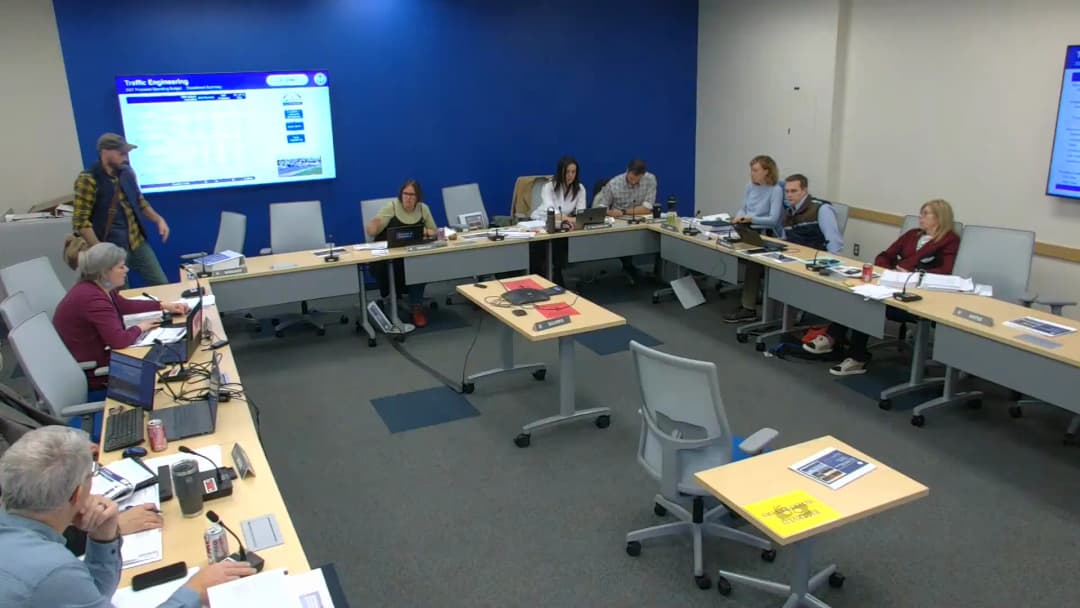
On November 3, 2026, at 5:30 PM, the Planning and Zoning Commission (PZC) held a work session to review the proposed 2027 Capital Improvement Program (CIP) and general government budget. The session featured presentations from Long-Range Planning and the Office of Management and Budget (OMB), followed by commissioner questions. The meeting was constrained to 45 minutes (ending at 6:15 PM) to prepare for the subsequent regular meeting. Consent Calendar - No consent agenda items were discussed during the work session. Public Comments & Testimony - No public testimony was taken during this work session. Discussion Items Long-Range Planning Presentation (Daniel McKenna Foster) - The code requires the PZC to review the MOA CIP/CIB and school district CIP/CIB annually. The review focuses on alignment with the 2040 Land Use Plan, which calls for concentrating investments in areas best able to accept new growth. - The 2027 proposed CIP includes about 20 projects, with PME (Project Management & Engineering) road projects consuming roughly 60% of bond funding. - Specific project examples were highlighted: - 57/58th Avenues (Noran Subdivision): A $6.7 million road project serving about 57 dwelling units. The area is designated to remain stable under the 2040 plan, raising questions about whether investment aligns with growth projections. - Duben Avenue (Patterson to Muldoon): Final cost $8.2 million. Post-construction, average speeds increased from 28 mph (2013) to 37 mph (2025), and the percentage of drivers exceeding 35 mph rose from 12% to 27.3%. - Academy/Vanguard (off Abbott): A project identified since 2009, originally $8.7 million, now budgeted at $21.2 million. The Muni purchased a property that reduced annual tax revenue from $12,000 to $300. The project requires four design exceptions, indicating potential misalignment between standards and needs. - Alley Paving: A $3.5 million program to pave unpaved alleys (shown in red on maps), which supports desired urban design (e.g., fewer front driveways). - Trends noted: School district closures affecting travel behavior; DOT road transfers to MOA; AMATS covering local project funding gaps; deferred maintenance; and the need to consider long-term maintenance costs for new infrastructure. - Recommendations included: aligning investments with comp plan priorities, using capital to spur development in growth areas, off-ramping outdated projects, updating the comp plan if misalignments persist, and creating reinvestment focus areas (which have not been formally designated). OMB Presentation (Director Ona Brouse) - The 2027 proposed capital budget is $87.95 million, with major sources: bonds ($87.95M requested), state funds ($21.4M), federal funds, and other sources. The property tax increase proposed is $11 per $100,000 assessed valuation (total $19.8M increase). - The general government operating budget faces a $15 million gap in 2027, closed with one-time funds (legacy MLNP accounts, increased hydropower dividend, vacant position reductions, and contractual service cuts). The 2028 gap is projected at $15–30 million due to limited one-time funds, decreased state/federal support, and rising costs. - Historical context: The municipality's budget in the 1980s was $194M operating; in 2025 it was $648M, but per capita spending is $500 less than in the 1980s. Anchorage misses $100–150M in annual state funding that previously supported streets and schools. - The state capital grant profile shows $1.15 billion total from 1997 onward, but only $300M in the last 10 years, reflecting a sharp decline. - Department spending breakdown: Police, fire, maintenance & operations, and debt service remain the top four categories. - Energy efficiency retrofits (e.g., at LUSAC and the Performing Arts Center) are highlighted as cost-saving deferred maintenance investments. - Regarding revenue alternatives: A sales tax could generate hundreds of millions annually, while a bed tax yields $4M per percent. The current marijuana tax ($5M/year) is dedicated to early education/childcare, and alcohol tax ($13–15M/year) funds categories including homelessness, first responders, and domestic violence prevention. These combined $20M are insufficient for all needs. - OMB encouraged commissioners to bring insights from their work to municipal leadership and participate in assembly and community council budget discussions. Director Bob Dole (Community & Economic Development) – Closing Remarks - Director Dole stated that the long-range planning memo presented to the commission was a new approach prepared outside the usual process, without coordination with project departments, and in a compressed time frame. He asserted that the report lacked technical information and should be disregarded. - This statement created a notable conflict with the earlier presentation from long-range planning staff. Key Outcomes - No formal votes were taken during the work session. The session was informational only, designed to gather commissioner perspectives and provide context for the upcoming regular meeting and future deliberations. - Commissioners were encouraged to engage with OMB, Director Dole, and other leadership on budget priorities. - The commission will continue discussions in subsequent meetings, including a work session on neighborhood plans scheduled in two weeks. - The controversial request by Director Dole to disregard the long-range planning report was not resolved during the session.
CAPITAL IMPROVEMENT PLANNING 50% · BUDGET EQUITY ANALYSIS 19% · FISCAL SUSTAINABILITY 9% · PROCEDURAL 3%
02
NEWNOV 3, 2026 · ANCHORAGE, ALASKA · ASSEMBLY & COMMITTEE MEETINGS
Anchorage Planning and Zoning Commission Meeting - November 3, 2026

The Planning and Zoning Commission met on November 3, 2026, to consider a rezoning request, discuss Title 21 code amendments, and deliberate on a recommendation to the Assembly regarding the advisory status of neighborhood and district plans. The meeting included approval of the consent agenda, public hearings, and commissioner comments. Consent Calendar - Approved the minutes of October 19, 2026. - Approved the consent agenda without objections. Public Hearings - Two cases (2026-0136 and 2026-0120) were postponed to November 9 and December 14, respectively. - Case 2026-0132: Rezoning of two parcels from R-5 (low density residential) to R-2D (two-family residential). Staff presented that the rezoning meets all three abbreviated criteria, no public comments were received, and the community council had no opposition. Petitioner Tony Hoffman spoke in favor. The commission voted unanimously to recommend approval to the Anchorage Assembly. Discussion Items - Title 21 Discussion: Staff announced that an omnibus amendment will address a park use issue previously identified by the commission, clarifying that certain uses are accessory uses. - Commissioner Comments – Advisory Status of District/Neighborhood Plans: Commissioner Ron proposed that the commission make a recommendation to the Assembly that neighborhood and district plans should be advisory to the comprehensive plan, not having the same force of law. Commissioner Pullis and others expressed support. Commissioner Krishna requested clarification on the scope. Commissioner McKee raised the second component of the original AR regarding mechanisms for Girdwood and Eagle River to amend their comprehensive plan elements. Staff noted that part was not finalized. The commission agreed to handle the advisory question separately. Staff will prepare a package for future discussion. Commissioner Baza requested clarification on the practical effect of advisory status. Commissioner Krishna asked for a summary of how the change would affect the department's work plan. Key Outcomes - Case 2026-0132: Motion to recommend approval passed unanimously (no vote count given, but no opposition). - Advisory Recommendation: No vote taken. The commission directed staff to bring back a case for further discussion on the question of making neighborhood and district plans advisory. The mechanism for Girdwood and Eagle River plan updates will be addressed separately. - Title 21 Omnibus: A future omnibus will include corrections to accessory use definitions for parks.

LAND USE PLANNING 74% · BOARD AND COMMISSION MANAGEMENT 10% · MEETING PROCEDURES 9% · PARKS AND RECREATION 3%
03
NEWOCT 30, 2026 · ANCHORAGE, ALASKA · ASSEMBLY & COMMITTEE MEETINGS
Anchorage Fiscal Future Workshop Wrap-Up and FY27 Budget Hearing Details – October 30, 2026

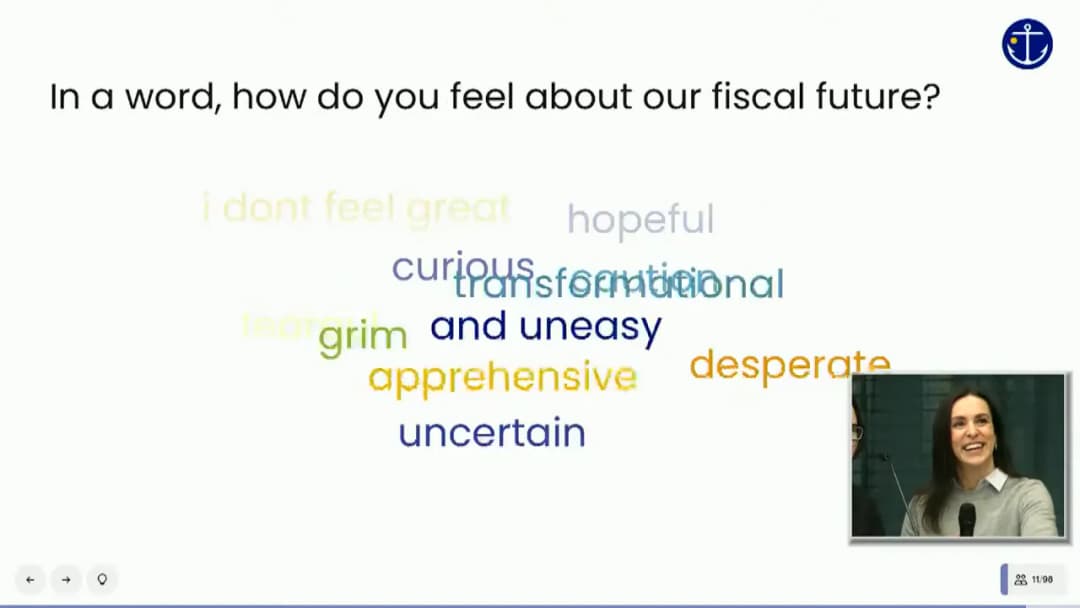
On October 30, 2026, Anchorage municipal hosts closed a Fiscal Future community workshop with reflection, interactive polls, and next-step announcements. Participants had grappled with scenarios and options for the municipality's fiscal future; no formal votes were taken. No agenda or minutes were available, so this summary is based solely on the raw transcript. Discussion Items - Wrap-up and reflection: The session ended a little early after the main scenario discussions. Attendees were reminded to submit Menti responses, and a final word-cloud poll asked for one-word feelings about the fiscal future. Responses included 'don't feel great,' 'bleak,' 'potential,' 'fearful,' 'determined,' 'motivated,' 'hopeful,' and 'woof.' The host identified the top four feelings as determined, apprehensive, motivated, and hopeful. - Last audience question: The host read the final question of the day: 'What can the average person do to help their neighbor understand these issues?' The rest of the wrap-up answered this by urging attendees to take materials, host conversations, correct misinformation, and share what they learned. - Calls to continue the work: The host emphasized that the conversation is not over, that the municipality has agency to change its structure, shape, and operations, and that 'no one is coming to save us' — but Anchorage has what it needs to build a thriving future. The host also framed the work as trying to give people 40–50 years from now a better starting point. - Participant engagement: Attendees were asked to raise their hands if they learned something new, learned from someone in their group, met someone new, had a better handle on what is happening at the Municipality, felt better equipped to talk about the fiscal present, were willing to host a 'Fiscal Future in a Folder' event, and were ready to keep working on the issue. Many hands were raised, and the host encouraged attendees to sign up. - Comment about oil taxes: One Menti comment raised oil taxes again. The host responded that this is 'other people's decisions to make' and reminded attendees to vote by Tuesday, November 3, at 8 p.m. - FY27 budget process: The host announced that the fiscal year 2027 municipal budget will be on the agenda for public hearing on Wednesday, November 4, in the Assembly Chambers at the Loussac Library. The meeting starts at 5 p.m., and budget testimony is expected after 6:30 p.m. People can testify in person, sign up to receive a phone call from the clerk at least 24 hours in advance, or email comments to assembly@anchorageak.gov. The Assembly will vote on the FY27 budget at its meeting on November 17. - Spring Fiscal Future summit: The host mentioned a planned summit in the spring, focused on building solutions and the structural adjustments needed for the municipality's future. Attendees were asked whether they would return and whether they would bring a friend; responses appeared strongly supportive. - Thanks and materials: Thanks were given to the Legislative Services staff — Claire, Allie, Jen, Noah, and new budget analyst Molly — as well as the mayor's team, including Nolan Clauda, Ona Brouse, and other department staff. Attendees were directed to the Assembly website, the Assembly email newsletter, and printed packets to stay involved. Key Outcomes - No formal votes or motions occurred during this wrap-up session. - The next public engagement opportunity is the FY27 municipal budget public hearing on November 4, 2026. - The Assembly is scheduled to vote on the FY27 municipal budget on November 17, 2026. - Menti questions and audience feedback from the workshop will be used to inform the next phases of the Fiscal Future project.

MISCELLANEOUS 100%
04
NEWOCT 30, 2026 · ANCHORAGE, ALASKA · ASSEMBLY & COMMITTEE MEETINGS
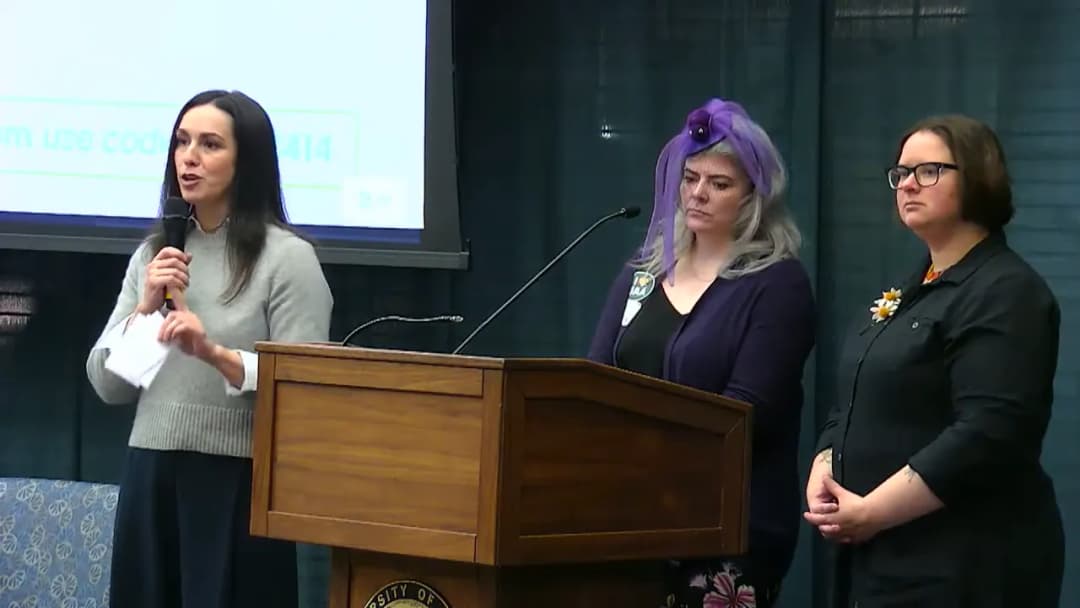
Anchorage Fiscal Future Summit – October 30, 2026

The Anchorage Assembly convened a public "Fiscal Future Summit" on October 30, 2026, to confront the municipality's structural budget deficit and declining infrastructure. Led by Assembly Chair Anna Brawley and Member Aaron Baldwin Day, and featuring Mayor Suzanne LaFrance, department directors, and division chiefs, the summit combined presentations, a panel discussion, and interactive exercises to educate roughly 100+ attendees on the city's financial challenges and gather community input on potential solutions. Public Comments & Testimony - Audience participation via Menti polling revealed low confidence in the municipality's ability to deliver services currently (average 2.2) and in the future (average -2) on a -10 to +10 scale. Confidence dropped further by the end of the day. - Audience member Trevor Stores expressed high confidence in municipal staff but low confidence in the resources available to them. - Questions from the audience targeted the scope of the ASD budget (45% of property taxes, separate process), the structure and fairness of the 1983 tax cap, and the inequities of the 61 service-area tax districts. - Several attendees questioned the premise of the budget balancing exercise, suggesting no viable cuts remain without eliminating core programs. Discussion Items - Mayor LaFrance Address: The Mayor highlighted a $15 million operating budget shortfall for 2027, closed using one-time funds, with the 2028 gap projected to nearly double. She emphasized a $1 billion+ stormwater backlog and aging public facilities, arguing against further deferral of maintenance. - Fiscal Overview (Baldwin Day & Brawley): Detailed the 1983 voter-approved tax cap, which limits budget growth to inflation, population, and new construction. Noted the collapse of state revenue from 42% of the operating budget in 1983 to roughly 0.5% now. - Service Delivery Panel: - APD Chief Case: Status quo prevents community policing expansion. To meet demand, an additional 50 officers are needed immediately, with at least 100 total to fully achieve community expectations. - AFD Chief Troggy: Status quo means eroding response times and the end of the four-year wildfire mitigation program. Achieving a "thriving" operation would require a fourth platoon (100 new employees) at an annual cost of $20 million. - Public Works Director Colhayes: State road grants dropped from $450M (2005-2014) to $16M (2015-2026). The annual operating budget for facility maintenance is only $475,000. - Municipal Manager Falsey: Noted that every budget since 2015 has started with how to fund essential public safety, squeezing all other departments. Defunding long-term needs (e.g., fleet) has historically balanced the budget. - Budget Scenarios and Polling: The audience participated in a budget-balancing simulation using real 5% cut scenarios submitted by departments. Many tables found it impossible to balance the budget without eliminating specific community programs. - Economic Development: John Bittner (AEDC) presented the parallel SEDS economic strategy, linking a thriving economy to stable municipal finances. Key Outcomes - No binding votes were taken, as the summit was a community workshop. However, consensus emerged that the current fiscal path is unsustainable and requires structural reform. - Assembly leadership committed to using summit input (questions, scenario rankings, and public feedback) to inform future policy development on tax reform, service area consolidation, and revenue generation. - "Fiscal Future in a Folder" take-home kits were distributed to residents to expand the conversation into neighborhoods and professional networks. - It was strongly emphasized that any change to the tax cap or service area model requires an Assembly vote to refer (minimum 8 votes) and a subsequent public ballot initiative.

PROCEDURAL 17% · POETIC EXPRESSION 17% · BUDGET EQUITY ANALYSIS 13% · PUBLIC ENGAGEMENT 11%
05
OCT 28, 2026 · ANCHORAGE, ALASKA · ASSEMBLY & COMMITTEE MEETINGS
Anchorage Assembly Work Session on MHOP Ordinance Amendments – Oct 28, 2026

The Anchorage Assembly held a work session to discuss amendments and the substitute version of the Missing Middle Housing Opportunity Overlay (MHOP) ordinance (AO 2026-85). The session focused on refining zoning rules to increase housing supply along transit corridors while addressing neighborhood compatibility, seismic safety, and infrastructure capacity. Public Comments & Testimony No public testimony was taken during this work session, but members frequently referenced strong community feedback received during prior hearings. Discussion Items - Level Set (Sponsors Baldwin Dave & Martinez): Explained the ordinance implements the 2040 Comprehensive Plan. A 30+ pound physical copy of the plan was displayed to illustrate the difficulty of singular interpretation. Planning Director Melissa Babb noted the department tries to be consistent with interpretations. - Amendment 1 (Baldwin Day Park): Limits lot coverage to 40% for single-family homes without ADUs to prevent overly large structures ("McMansions"). Excludes properties with ADUs or short-term rentals. - Amendment 2 (Baldwin Day Martinez): Replaced the overlay map with Exhibit A1, aligning it with the 2025 multifamily tax abatement map. Cleaned up boundaries (e.g., eliminating street slicing), added parcels near future transit corridors (36th Ave), and excluded the JBER crash zone. Parcel count changed from 31,947 (TISDO v6) to 32,102 (MHOP boundary). - Amendments 5-8 (Silvers / Handeland): - 5: Requires a shared wall for structures on a lot line. Planning staff considered it duplicative. - 6: Creates graduated 5-foot height transitions by zone. Planning staff noted 5 extra feet rarely enables a full additional floor; 40 feet is standard for 3-story contemporary construction. - 7: Requires drainage plans over 50% total building coverage. Baldwin Dave noted current code allows paving entire lots. CED Director Bob Dole confirmed a wider code update on impermeable surfaces is being explored. - 8: Requires site plan review for larger developments in R2A/R2B. Silvers argued this is a reasonable mitigation for introducing nineplexes into single-family neighborhoods. - Mayor LaFrance's Amendment: Extends the 30-foot height limit and a 10-foot front setback to R1A, R2, R2A, and R2D zones to reduce visual impact and provide snow storage. Bob Dole stated it preserves neighborhood feel. - Substitute Version (S Version) by Ms. Park: - Introduced a tiered overlay (5 categories), seismic zone exclusions, a 10-year sunset with a 3,000-unit production trigger, and a mandatory reversion. - Ms. Park clarified she intended to first work through amendments to the original version. - Baldwin Dave queried complexity, as Planning staff confirmed no existing overlay uses subcategories, increasing administrative burden. - Martinez questioned how excluding seismic zones from the overlay made those areas safer, noting the increased cost of seismic engineering. - Amendments 9-11 (Baldwin Day): Require annual reporting and a 5-year policy evaluation (9), clarify Comprehensive Plan interpretation authority is reserved for the Planning Commission and Assembly (10), and add a technical code abbreviation (11). Key Outcomes - Amendment Withdrawn: Amendment 4 (medium community facilities) was withdrawn by the sponsor for future standalone consideration. - No Votes Taken: This was a work session; no formal votes or decisions were recorded. - Next Steps: The item is tentatively scheduled for the November 4, 2026, Assembly meeting, acknowledging a crowded agenda. Ms. Park confirmed her intent to try reaching a compromise on the original version first. - Record Correction: Long-Range Planning Manager Daniel McKenna Foster corrected a previously stated height increase from 36 feet to 31 feet.

LAND USE PLANNING 59% · ZONING 18% · PROCEDURAL 11% · PUBLIC TRANSPORTATION 3%
06
OCT 28, 2026 · ANCHORAGE, ALASKA · ASSEMBLY & COMMITTEE MEETINGS
Anchorage City Meeting Summary - October 28, 2026

This summary is based solely on the available raw transcript. No agenda or minutes were provided. The transcript contains only a brief exchange, which appears to be a test of the audio system and a call to order. No substantive discussions, votes, or official business are recorded. Audio Test and Call to Order - The meeting begins with an audio check: "Testing. Yes, we can hear you." - A participant is then told, "You are out of order, sir. I know. I mean, make your order." This suggests a procedural interruption or an attempt to restore order at the start of the meeting. Consent Calendar - No items were discussed or approved. Public Comments & Testimony - No public comments or testimony were recorded. Discussion Items - No discussion items were presented. Key Outcomes - No decisions, votes, or actions were taken. The transcript ends without any recorded outcomes.

PROCEDURAL 100%
08
OCT 27, 2026 · ANCHORAGE, ALASKA · ASSEMBLY & COMMITTEE MEETINGS
Municipal Audit Committee Meeting Summary – October 27, 2026

The Municipal Audit Committee convened on October 27, 2026 at 1:05 PM. The meeting focused on the presentation of an internal audit of the Community Development Block Grant (CDBG) program and a preliminary discussion on reforming the sunset review process for boards and commissions. One member of the public provided testimony regarding an advisory board experience. Public Comments & Testimony - A public commenter shared an experience with the Homelessness Lived Experience Advisory Board, which he said was abruptly disbanded after only a few months. He characterized it as a “political vehicle” and criticized the lack of shared power in advisory bodies. Discussion Items - CDBG Internal Audit Presentation: Dr. Kimberly Rash (Anchorage Health Department) presented a 27-slide review of the CDBG internal audit, which had not been performed in several years. The audit identified nine findings grouped into four themes: performance oversight, grant agreement/contract management, reporting and public participation, and documentation controls. Key issues included: lack of consistent tracking of goals and deliverables, expired agreements not amended in a timely manner, missing public hearing documentation for the 2024 annual action plan, and incomplete files for subrecipient agreements. Corrective actions already implemented include: use of Microsoft Planner for project tracking, standardized solicitation and agreement templates, pre-execution compliance checklists, and a formal monitoring escalation process (including notices to cure). Dr. Rash noted that 25 mobile home repairs had been completed against a goal of 40, and that 95 of 101 monthly subrecipient reports had non-compliance issues. Committee members asked detailed follow-up questions about enforcement actions, procurement compliance status (three or four grantees still out of compliance), and the status of individual corrective actions. - Pre-Sunset Reporting Requirements for Boards and Commissions (AL2026-132): Member Scout presented a proposal to change the approach to sunset audits, which currently require about 40–50 hours per audit from the internal audit team. Internal Auditor Alden Thurm expressed support, noting that annual self‑reports from commissions could provide more timely information than the current three-year retrospective audits. Suggestions were made to adjust language to reflect that most boards use meeting recordings rather than minutes, and to consider the role of the Mayor’s Office in managing boards. The item is scheduled for a future agenda with opportunity for co-sponsorship. Key Outcomes - The committee received and discussed the CDBG audit results. The Health Department confirmed that all corrective actions from the audit have been implemented, including new tracking tools, compliance checklists, and enforcement procedures. Follow-up on specific grantee compliance is ongoing, with a target of January 1, 2027 for full compliance. - The proposal to revise sunset reporting requirements was socialized; it will appear on a future agenda for formal consideration. Member Scout welcomed co-sponsors. - The meeting adjourned at 2:07 PM.

AUDIT COMMITTEE 58% · BOARD AND COMMISSION MANAGEMENT 15% · GRANT MANAGEMENT 8% · PUBLIC WORKS 5%
09
OCT 23, 2026 · ANCHORAGE, ALASKA · ASSEMBLY & COMMITTEE MEETINGS
FY27 Budget Work Session - October 23, 2026

The Anchorage Assembly held its second work session on the proposed FY27 budget on Friday, October 23, 2026, from 11:00 AM to approximately 4:00 PM. The session focused on the general government operating budget, capital projects previously deferred, and detailed departmental presentations. Mayor LaFrance and OMB Director Brouse provided an overview of the fiscal challenges, including a projected $15 million budget gap and the use of one-time funds to close it. The administration presented potential 5% reduction scenarios across departments, emphasizing that deeper cuts would likely require personnel reductions. Departments discussed included Health, Fire, Police, Public Works, Maintenance & Operations, Traffic, Parks & Recreation, Library, Transit, Housing & Development, and the ACE Fund. No public testimony was taken. Consent Calendar - No items were identified as consent calendar items. Discussion Items - Budget Overview & Fiscal Cliff: OMB Director Brouse presented the 2027 proposed budget ($692.5 million total, $383 million tax cap), noting the use of one-time ML&P sale funds to close the gap. A discussion ensued on trade-offs between using one-time funds versus making structural reductions. - Potential 5% Cut Scenarios: The administration detailed hypothetical cuts across departments, including elimination of 21 CSO positions and CAP team at APD ($4.7M), reduction of Anchorage Safety Patrol and fire battalion chiefs ($6M), elimination of snow removal heavy equipment operators ($1.6M), reduced janitorial and security at public facilities ($1.4M), discontinuing bus Route 51 and reducing Route 65 frequency ($1.8M), closing Bartlett and Diamond pools ($1.1M), closing the Moulding library and reducing Sunday hours ($700K), and cutting senior center and Brother Francis shelter funding ($300K). Assembly members noted these cuts disproportionately impact specific neighborhoods and vulnerable populations. - Safe Anchorage & Alcohol Tax: The administration presented the consolidated Safe Anchorage budget ($31 million from all sources). The alcohol tax revenue is slightly down. The budget includes $1.4 million increase for shelter surge to maintain 450 beds seasonally. Discussion on the appropriate use of these funds and the distinction between homelessness services and broader safety initiatives. - Fire Department: Chief Shrogi reported near full staffing with 416 positions, but noted an expected large wave of retirements in FY27 (approximately 50 eligible). The cost to run an academy is about $2 million. Discussion on the challenges of retention without a defined benefit program and the possibility of a third academy. - Police Department: Chief Wilson reported 416 sworn officers with 42 vacancies; 21 CSO positions are budgeted. The capital request includes $3.75 million for vehicles and $500,000 for the Elmore station parking lot repair (a drainage issue). Members expressed concern about past bond failures and the need for alternative strategies. - Maintenance & Operations: The budget permanently includes seven heavy equipment operator positions for snow removal (net zero due to reduced contractual costs). Discussion on the cost of snow operations (specific figures to be provided later) and the challenges of absorbing utility cost increases. - Transportation: Transit Director Rudolph noted 7 driver vacancies and an in-house CDL training program is in development. The AnchorRides contract is expected to increase by $1.5–$1.6 million in FY27, not yet accommodated in the budget. A feasibility study found it is currently cheaper to contract out than bring service in-house. - Parks & Recreation: Director Gamble presented a net-zero reorganization converting seasonal positions to full-time, funded by the Healthy Spaces surcharge. Discussion on the high cost of utilities and the challenge of contractual services. - Public Works & Project Management: Director Colhays and team discussed the capital road projects list ($64 million total, including $43.5 million in bond requests). Assembly members questioned the prioritization of projects and capacity of PME to deliver given staffing constraints. - ACE Fund / Marijuana Tax: The FY27 proposal includes $2 million for ASD pre-K programs, continued from prior years. Assembly members debated whether this aligns with voter intent and noted the tax cap limitation prevents local tax increases until 2028. Key Outcomes - No formal votes were taken; the session was informational. Assembly members directed staff to follow up on specific data requests (e.g., snow removal costs, IGC breakdowns, detailed staffing numbers). - The next work session on assembly amendments is scheduled for Friday, November 6, 2026. The legislative branch budget will also be discussed. - Deadline for draft budget amendments is Wednesday, November 4, 2026; final amendments are due by November 11, 2026. A public hearing is set for November 4, 2026, with potential continuation to November 17, 2026, when the budget is scheduled for a vote. - Members were encouraged to submit amendments early to allow time for technical analysis.

BUDGET EQUITY ANALYSIS 26% · HOMELESSNESS 10% · PUBLIC SAFETY 9% · PUBLIC WORKS 9%
10
OCT 21, 2026 · ANCHORAGE, ALASKA · ASSEMBLY & COMMITTEE MEETINGS
Health and Homelessness Committee Meeting - October 21, 2026

The Anchorage Health and Homelessness Committee convened on October 21, 2026, at 11:02 AM to receive a six-month progress report on the Willow Commons transitional housing project, an update on shelter surge capacity, a legal update on civil abatement litigation, an update on the new housing voucher program, and to discuss the committee's purpose statement. Public testimony was heard from community members and advocates. Public Comments & Testimony - Colette Thibodeau (Russian Jack resident): Expressed support for sanctioned encampments and opposition to forced removals, stating that the homeless population in her neighborhood "are not going." She described the diverse faces of homelessness, including college students, veterans, and trafficking victims, and urged the committee to reconsider a sanctioned camping model. - Jamie (formerly homeless): Criticized the low service acceptance rate (approximately 7-8%) of police outreach, arguing the city is "driving people like cattle and they're not getting help." He stated Willow Commons is not accessible to those on the street without going through recovery programs. He detailed a specific failure (Black Angus motel) where stranded individuals were given substandard conditions, calling it "trauma-induced" rather than trauma-informed. He asserted "there is no money to keep people alive." Discussion Items - Willow Commons 6-Month Progress Report (Kimberly Rash & Thea Agnew Bemben): The project was funded with $1.2 million in opioid settlement funds for construction and $500,000 for startup services via Anchorage Recovery Center (ARC). The 32 units were built in 120 days. As of October 13, 2026, 58 individuals had been served, with 27 planned treatment completions and 8 transfers. 400 treatment sessions were delivered. There were 15 incident reports from March to October (medical, substance use, bears). The startup funds were fully spent by July. The operating model relies on billing for clinical services, as no additional municipal funds are currently provided. - Thea Agnew Bemben (Mayor's Office): Emphasized the project is a treatment-based model and strongly opposed a "sanctioned camping" model where "anyone can be there and do whatever they want," referencing the failed experiment at Centennial Park. She stated that operating such a facility safely is neither easy nor cheap. - Cost Discussion: Member Baldwin Day requested detailed costs of the housing intervention versus shelter or sanctioned camping. Thea Bemben provided some utility costs ($4,611/month) and stated the ongoing costs are covered by treatment billing. - Legal Update (Joe Biusa, Deputy Municipal Attorney): The four cases challenging the constitutionality of Anchorage's civil abatement code have all been concluded at the trial court level in the city's favor, with judges upholding the code against claims involving the 4th Amendment, due process, and state law. All cases are now on appeal to the State Supreme Court. No stays have been issued preventing enforcement of abatement during the appeal. - Shelter Surge Capacity Update (Kimberly Rash & Kathleen McLaughlin): Currently there are 400 beds (150 East 56th, 150 Linda's Place, 100 Alex Hotel). East 56th will surge to 200 beds by November 30th. Targeted placement efforts resulted in 11 of 15 individuals from the Safety Center remaining in shelter. Officials noted a gap in engaging hard-to-reach populations in downtown Anchorage. - Housing Voucher Program Update (Frankie Dahl & Darcy Montavo): A new partnership with AHFC to provide up to 40 housing vouchers for people ready to exit homelessness was presented. Funding includes $531,380 from HOME funds and AHFC matching. The program has faced delays due to HUD waiver approvals and software implementation (Neighborly). Implementation is expected in stages, with applications anticipated to open in January 2027. Member Baldwin Day raised concerns about the definition and capacity of case management and the potential for clients to get lost in the multi-step process. - Committee Purpose Statement Discussion: The committee discussed the draft mission statement for the newly renamed Health and Homelessness Committee. Member Dean Gates suggested the current language reads primarily as a homelessness committee, and proposed separating "Health" and "Homelessness" into two distinct topics to give them equal weight. Members agreed to continue workshopping the statement via email through the clerk. Key Outcomes - Willow Commons has established its six-month benchmark data; Director Rash committed to returning in one year with a full progress update. - The administration provided reassurance that no judicial decrees are currently preventing the city from using its civil abatement code. - The Housing Voucher Program contract is expected to be presented to the Assembly for approval soon, with a target application launch in January 2027. - The committee agreed to finalize its purpose statement through an email chain managed by the clerk, following concerns raised by committee members about the scope of the mission.

HOMELESSNESS 49% · AFFORDABLE HOUSING 15% · PUBLIC HEALTH 12% · PUBLIC SAFETY 8%
0102
NEXT →
OPENPUBLICA · PUBLIC MEETING INDEXUPDATED DAILY · openpublica.com