91
AUG 5, 2026 · ANCHORAGE, ALASKA · ASSEMBLY & COMMITTEE MEETINGS
Anchorage City Meeting - August 5, 2026: No Agenda or Transcript Available
No agenda, minutes, or transcript were provided for this meeting. Consequently, no discussion items, public testimony, or decisions can be summarized.
The meeting was scheduled for August 5, 2026, at 10:07 AM. However, no agenda, minutes, or transcript were provided, so no summary of discussions, public comments, or decisions can be generated. No additional sections are applicable.
The Anchorage Planning and Zoning Commission met on 2026-08-04. The transcript's roll call refers to an 'August third' meeting, but the provided meeting date is 2026-08-04; this summary follows the provided date. The commission acted on two abbreviated rezones, a combined comprehensive plan amendment and rezone, and a unit lot subdivision text amendment. The commission issues recommendations to the Anchorage Assembly, which is the decision-making body for rezones. Consent Calendar - The commission established a quorum and approved the minutes of the July 6 and July 13 meetings. - Disclosures and abstentions: Commissioner Eber and Commissioner Ron were absent for the July 6 meeting and abstained from resolutions 2026-031 through 2026-033; Commissioner Gardner was absent for the July 13 meeting and abstained from resolutions 2026-034 through 2026-039. - Commissioner McKee disclosed HDR contracts with Huddle and the Municipality of Anchorage involving cases 2026-0069 and 2026-0078, with no prior knowledge or personal financial gain, and participated. - The consent agenda was approved without discussion. Public Comments & Testimony - No public testimony was offered during any public hearing; each hearing was opened and closed without public comment. - The department received no public comments for case 2026-0091, one written comment in support for case 2026-0092, and no public or agency opposition for cases 2026-0096/0097. Discussion Items Case 2026-0091: Rezone R1 to I2 - Staff presented a rezone request for one parcel from R1 single-family residential to I2 heavy industrial. The department sent 591 notices, received no public comments, and found all three abbreviated rezone criteria met. - Petitioner Glenn Ball of Leona LLC stated the property would be used for a construction laydown and equipment storage yard, consistent with the 2040 municipal long-term plan. In response to Commissioner Krishna, he acknowledged wetlands on site, about nine feet of peat, and said the wetlands are diminishing. - No public testimony was offered. Commissioner Pullis moved to recommend approval, seconded by Eber, citing the three criteria and required wetland permitting. Commissioner Ron added a finding that development comply with the Anchorage Wetlands Management Plan. The motion passed. Case 2026-0092: Rezone B1A to R2M - Staff presented a rezone for two parcels from B1A local and neighborhood business district to R2M mixed residential district. The department sent 47,646 notices, received one written comment supporting, no reviewing agency opposition, and the Scenic Foothills Community Council did not comment. - Petitioner Paul Hatcher, president of the Patterson Town Home Condominium Association and a Muni senior planner not assigned to the case, said B1A does not permit the existing multifamily use and the rezone brings his association and the adjacent Tudor Townhouse Condominium Association into compliance with the 2040 plan. - No public testimony was offered. Commissioner McKee moved to recommend approval, seconded by Pullis, noting the criteria were met and the request does not add new homes. The motion passed. Cases 2026-0096 and 2026-0097: Chugach Electric North Campus - Staff presented a comprehensive plan map amendment for five properties from light industrial/commercial to general industrial, including removal of the Greenway Supportive Development feature, and a corresponding rezone of about 9.5 acres from B3 general business to I2 heavy industrial. Staff found the five comp plan criteria and nine rezone criteria met. A 50-foot combined streamside and riparian setback applies on each side of Ship Creek. - Staff explained the Greenway Supportive Development feature was tied to a possible future north-south connection and is not clearly applicable to this site. - Petitioner Carly LaMothe of Dowell represented Chugach Electric; the properties are Chugach Electric's North Campus, used for utility infrastructure since the 1960s, and no new development is proposed. She cited the October 2025 draft planning and environmental linkages study (alternatives 5 and 11) and the 2050 Metropolitan Transportation Plan as supporting the conclusion that the Seward-to-Glenn connection will not affect the properties. She also reported that the Fairview Community Council was supportive on May 14 and adjacent Brother Francis Shelter and Navigation Center raised no concerns. - No public testimony was offered. The commission approved motions to recommend the comp plan amendment (Pullis/Eber) and the rezone (Pullis/Gardner). Case 2026-0069: Unit Lot Subdivision Text Amendment - Staff presented a text amendment to expand unit lot subdivisions from multi-unit zones to all urban zones in the Anchorage bowl, without changing density, design standards, lot sizes, or zones in Chugiak, Eagle River, and Girdwood. - Staff and AWU discussed utility service preferences: individual water and sewer connections per unit, about 30 feet of frontage for such connections, and clear billing; shared services are less ideal and require an HOA. AWU tariff conformance and pre-design meetings were central. - Commissioner discussion covered HOA guidance, ADU interplay, access, short-term rentals, and AWU billing. AWU representative Kaylee said existing unit lot examples are billed through HOAs or meters, and that retaining the pre-design meeting requirement and tariff conformance requirement would be sufficient. - No public testimony was offered. Commissioner Ron moved to recommend approval of the ordinance as amended by striking items 5E, 6J, 7C, and 7D, and retaining a pre-design meeting with AWU and AWU tariff conformance; seconded by Gardner. The motion passed. Committee Reports - Commissioner Ron reported on a recent AMATS Citizens Advisory Committee meeting. The CAC approved two letters to the AMATS Policy Committee: one urging consideration of all available safety measures in project road design, and one asking the Policy Committee to reconsider its recent vote to include the Safer Seward Highway project in the 2040 Metropolitan Transportation Plan. - Ron also noted AMATS is redrawing MPO boundaries after the census and DOT disagrees with the proposed boundaries, including a 0.8-mile extension to the south along the Seward Highway. Other Business and Commission Comments - Staff reported that 19 abbreviated rezones have now been processed, calling the tool popular. - One commissioner suggested that a duplex plus ADU configuration with three owners could create an affordable ownership model. - Director Babb warned about an AI-based phishing scam that mines CityView data to send fraudulent fee requests impersonating staff; victims have lost thousands of dollars. He urged people not to wire money and to forward suspicious emails to the department. - Staff confirmed that case 2026-0078, the Girdwood Parks Master Plan, was postponed and the packet should be kept for a future meeting. Key Outcomes - The commission recommended Assembly approval for: case 2026-0091 (R1 to I2 rezone), case 2026-0092 (B1A to R2M rezone), case 2026-0096 (comprehensive plan amendment), case 2026-0097 (B3 to I2 rezone), and case 2026-0069 (unit lot subdivision ordinance as amended). All motions passed. - Case 2026-0078 was postponed. - Staff will consider developing an informational handout or roadmap for unit lot subdivision applicants. - The meeting adjourned after a motion by Eber and second by Abaza.

On August 3, 2026, the Anchorage Assembly held a special meeting from 10:30 a.m. to 12:30 p.m. in Conference Room 155. The sole substantive item was an annual legal briefing from the NOA Department of Law, conducted in executive session. No formal votes were taken on the briefing itself, but procedural motions were adopted to enter the session and maintain confidentiality. Public Comments & Testimony - One member of the public commented, expressing curiosity about the executive session and referencing a report (available 2025?). They criticized a perceived lack of focus on people outside who are not receiving help, stating the report did not address their suffering. Discussion Items - The assembly moved into executive session to receive the legal briefing required by AMC 3.20.070A, citing AMC 2.30.036a.1 and 5 for discussion of pending litigation and attorney-client privilege. The motion was made by Mr. One (presumably Member Kirker or similar) and seconded by Ms. Baldwin Day. No objection was raised. - During the executive session, a procedural motion was made to extend the session time to 12:40 p.m. No other actions were taken. Key Outcomes - Motion to enter executive session: Adopted without objection. Members present included those in the room and on the phone; roll call established attendance. - Motion to keep recordings confidential: Following the executive session, a motion was made by Mr. Rolland (presumably Mr. Rolland) and seconded by Ms. Park to maintain confidentiality of the recorded executive session for the duration of attorney-client privilege. Adopted without objection. - Chair noted upcoming work sessions: one on August 7 (Friday) regarding tax exemption for nonprofits, and another in September on the Board of Equalization. - The meeting adjourned without further business. Note: The transcript states the meeting occurred on July 31, 2026, but the user explicitly specifies the date as August 3, 2026. This summary uses the user-provided date.
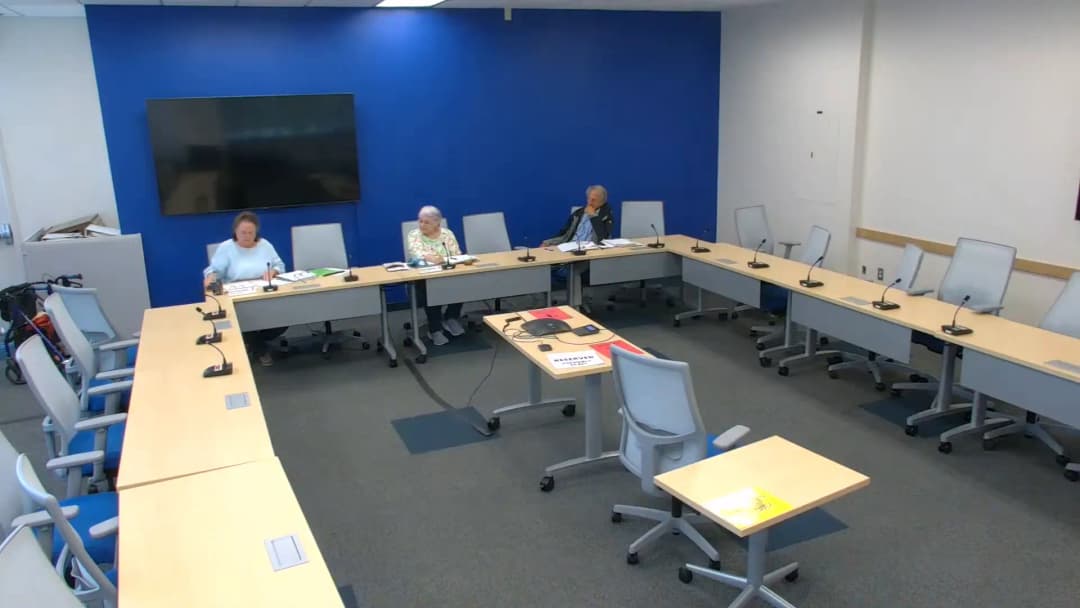
At 12:07 PM on July 30, 2026, the Anchorage Salary and Emoluments Commission convened with Vice Chair Redman presiding (Chair Hayes excused). A quorum was present. The draft agenda and minutes from the June 16, 2026 meeting were approved unanimously. No disclosures were made. Discussion Items - Mayor's Salary Adjustment: The commission reviewed data on municipal employee salary increases and salaries of other Alaska mayors, the UAA Chancellor ($314,648), and the school district superintendent ($250,000). Municipal workforce increases over recent years ranged from 2.3% to 8% (e.g., police 7.8%, fire 8%). The last mayor's salary adjustment was in 2020, effective 2021. Members noted that without adjustment, inflation effectively reduces the salary. Using Urban Alaska CPI data, a 25.6% increase from 2020 to 2026 would bring the salary to approximately $182,612–$182,913. A motion was made to set the mayor's salary at $183,019.20 (to conform with payroll rounding), which would also include an additional 2.5% to match executive increases. The motion passed unanimously. Key Outcomes - Motion Approved: The commission passed a motion to instruct staff to draft a resolution revising the mayor's salary to $183,019.20, effective for the next elected mayor (2027). The resolution will be subject to refinement based on actual CPI data. Staff will provide CPI data for 2021–2026 and a best estimate for 2026. - Next Meeting: A future meeting will be scheduled in August or September 2026 to hold a public hearing and formally adopt the resolution. The commission noted the need to recruit new members as current members' terms end, to maintain a quorum. - Public Comments: None were offered. - Adjournment: The meeting was adjourned.
The Municipal Audit Committee met on July 22, 2026, from 12:31 PM to 1:59 PM to discuss the 2024 Purchasing Card (P-Card) Audit Report and receive an update on the municipality's financial audits. The meeting focused on persistent compliance issues, the trade-off between efficiency and compliance, and the need for improved accountability and policy updates. Public Comments & Testimony - Shine (Dominicia Williams), President/CEO of Shiloh Community Housing expressed concerns about the procurement and RFP process, citing a lack of transparency and questioning why Shiloh has never been selected for funding in 23 years. She highlighted an instance where a bid amount nearly doubled without re-bidding and asked how the Consolidated Plan projects are selected without a clear RFP process. - Jamie Lopez criticized the anti-camping ban ordinance, noting that only 6.2% of those contacted accepted services (72 out of 1,157 contacts, with 123 arrests and 962 voluntary complies). He asked about missing drone reports required by AO 2018-5 and a missing report from AO 2025-74S2, and questioned the use of drones purchased by the police department. Discussion Items - 2024 P-Card Audit Overview (Alden Thurn, Internal Auditor): The audit covered 2024 P-card transactions totaling over $20 million across 40,000 transactions. Eight findings were identified: disallowed purchases, excessive luxury items, fire department contract issues, seat upgrades, monetary contributions, excessive gratuity (over 15% policy), failure to use supply contracts, and split transactions (51 instances totaling $130,000). Thurn noted that seven of the eight findings are recurring annually, with the fire department issue likely a one-off. - Administration Response (Bill Falsey, Administration): Falsey acknowledged the findings and emphasized that the municipality had updated the Disallowed Purchases Policy in January 2026 to allow director-approved purchases for items like balloons, microwaves, and logo wear. He argued that perfect compliance is impossible without sacrificing efficiency and that the P-card system provides a $361,000 rebate from JP Morgan in 2025. He reviewed flagged transactions, noting that many were justified (e.g., SWAT rain gear, Adobe stock for APD recruitment, gaming computers for the real-time crime center). He also noted that the P-card policy itself is still being updated. - Committee Questions and Concerns: - Member Kirker expressed frustration that the same findings appear year after year and questioned the effectiveness of repeated training. He asked whether any P-cards had been suspended as a result of the audit (none were) and urged stronger enforcement, including requiring employees to pay back improper purchases. - Member Brawley distinguished between whether a purchase was appropriate and whether it followed the correct method. She asked about differences between the first and second halves of 2024 (different administrations) and noted that training and staffing were lacking during the transition. - Member Handelin asked about the approval process, clawbacks, and whether the policy applies to the assembly. Discussion revealed that assembly staff hold P-cards and are subject to the same rules, though the assembly is a co-equal branch. - Member Scout requested more specificity in audit responses and asked about the timeline for policy updates. She noted that the Disallowed Purchases Policy was updated in January 2026, but the P-card policy is still pending. She also asked whether approval requests for purchases above the limit are tracked and if denials correlate with split transactions. - Chair Baldon Day highlighted specific split transactions: legitimate ones (dumpster lids, seeds) and concerning ones (APD drone purchases: $37,000 in 12 transactions over 10 days in December 2024). She questioned whether the $5,000 transaction limit and 15% gratuity limit should be updated for inflation and modern norms. She also asked about criteria for suspending P-cards (no objective criteria; rarely done). - ACFR and Single Audit Update (Ms. Mariner, Auditor): The 2023 single audit is nearly complete (draft due tomorrow). The 2024 single audit will begin after that. The 2025 ACFR is in planning, with testing expected to start mid-August 2026. The solid waste agreed-upon procedures report was submitted. Ms. Mariner will present the 2024 ACFR in September. Key Outcomes - No formal votes were taken. The committee extended the meeting by 15 minutes (from 1:34 PM to 1:50 PM, then to 1:55 PM) to accommodate discussion. - The committee acknowledged the need to revisit the P-card transaction limit ($5,000 maximum) and the gratuity policy (15% limit) to reflect current economic conditions. - Chair Baldon Day flagged the APD drone purchases as a potential intentional circumvention of rules and stated she would follow up with administration. - The committee emphasized the need for stronger accountability, including suspending P-cards for repeated violations and requiring reimbursement for improper personal purchases. - The administration committed to finalizing the updated P-card policy and enhancing training and reporting tools, including exploring AI-based flagging systems. - The next meeting will include a deep dive into the 2024 ACFR, scheduled for September 2026.
The Anchorage Assembly met on July 22, 2026, to address a wide range of topics including budget priorities, short-term rental registration, a public safety commission, and resolutions regarding Assembly Member George Martinez. The meeting featured extensive public testimony, debate on multiple agenda items, and several votes. Key outcomes included the passage of a censure resolution against Assembly Member Martinez, approval of budget priorities, and the failure of the public safety commission ordinance due to lack of a second. The meeting adjourned at midnight with one item deferred to the next regular meeting. Consent Calendar - Approved the minutes of the special meeting of June 26, 2026 (unanimous). - Laid on the table for action: Recommendation to award an asphalt concrete hot mix contract to Granite Construction Company (12-0). - Failed to lay on the table: Informational memorandum on status and location of behavioral health facilities (5-7). - Approved the consent agenda minus pulled items (unanimous). Public Comments & Testimony - Michael Patterson (Party for Socialism and Liberation) called for Assembly Member Martinez to resign, citing misuse of campaign funds and hostility to transparency. - Ann Ringstad (NAMI Alaska) testified in support of the Anchorage Public Safety Partnership Commission, emphasizing the need for multidisciplinary collaboration, including individuals with lived experience. - Melissa Gould (East Anchorage, police spouse) opposed the public safety commission, arguing it would be an attack on police and should include patrol officers. - Danielle Price (family member of Micah, who died after APD responded to a 911 call) urged for independent reviews of use-of-force incidents involving mental health crises. - Catherine Jones (mother of Tyler May) called for a public safety commission with real independence and authority to seek truth. - Amber Batz (formerly incarcerated, community advocate) opposed the S1 version, calling for a commission with subpoena power and independent staff. - Rebecca (17-year-old) asked the Assembly to consider the loss of Easter Leafa, a 16-year-old killed by APD. - Roger Ketzler (father of Emil McCord, killed by APD) demanded accountability and release of body camera footage. - CJ Williams (community member) urged for oversight, noting that mental health crises can happen to anyone. - Cynthia Gatchupine (Empowerment Advocate Alaska) advocated for a victim-centered approach and independent investigations. - Scott McCord (brother of Emil McCord) stated "Justice delayed is justice denied." - JC (community member) argued that without subpoena power and consequences, a commission is pointless. - Dominic Eubank (Anchorage Police Officer, 10 years) shared his experience of being shot in the line of duty and urged that any commission include members with police training and background. - Emily Clock (Alaska Coalition of Justice) supported amendments to strengthen the commission with investigatory and subpoena authority. - Christopher Martin (Anchorage resident) shared a personal story of police saving his brother and argued oversight is necessary. - Alyssa Spect (former APD officer) described being attacked on duty and urged a vote against the ordinance that excludes APD from the process. - Maxine Dugan (Community United for Safety and Protection, sex worker advocate) opposed the version until it includes independent investigations and subpoena power. - Tomas Franhul (APD officer, 15 years) described a hostage rescue and emphasized the importance of informed review. - Sarah Short (homeless camp walker) requested more work on the commission and criticized the Assembly for not funding mental health treatment. - Karen Barnard (diagnostic engineer) compared oversight to engineering, stressing the need for a commission with authority. - Jamie Lopez (formerly homeless) argued that the S1 version lacks real independence and that the mayor's cherry-picked commissioners undermine trust. - Adrian (FCDC) spoke in favor of the HUD grant for housing development. - Karen Barnard (also testified on housing) asked for better oversight and elder-specific shelter solutions. Discussion Items - Mayor's Report: Reported progress on housing (increased permits), highlighted the need for 10,000 homes in 10 years and 2,000 more for JBER expansion. Expressed support for a public safety advisory commission but opposed subpoena power or access to personnel files. Introduced the Youth Employment and Parks program (YEP) class of 2026, noting 26 teens employed, 9 high schools, 5 languages, and projects including trail rehabilitation and tree planting. - Chair's Report: Discussed budget challenges (deferred maintenance, potential cuts to school funding), short-term rental registration deadline (July 30, 2026; 1,100 operators registered for 1,900 units), and a proposed resolution for a grace period. Also noted streaming issues (YouTube only, not on meeting management software). - Committee Reports: Transportation Committee reported youth transit ridership up 34% year-to-date. Infrastructure Committee reported on methane gas issue at Anchorage Regional Landfill (now resolved, levels zero), waste-to-energy project, and NPDES permit renewal. - 10 A1 - Recognition of Chugiak High School Softball Champions: Approved unanimously. Coaches and athletes spoke. - 10 B4 - Anchorage Commons Initiative (Social Capital): Motion to postpone indefinitely passed 11-1. Sponsor (Martinez) argued it was about recognizing volunteerism; opponents said it was a legislative roadmap better suited for ordinances. - 10 B5 - Cannabis Land Use Review: Motion to postpone indefinitely passed 10-2. Sponsor (Martinez) wanted administration review; opponents preferred an assembly-led AO. - 10 B6 - Budget Policy Priorities for FY27: Approved 12-0. Includes request for a high-level deferred maintenance inventory and consideration of population density in capital project prioritization. - 10 B7 - Infrastructure for Housing Growth: Approved 12-0 after amendment striking Section 3 (which requested an implementation framework). The amendment passed 12-0. - 10 F1 - Report on Tax Exempt Property: Initially moved to postpone, then withdrawn and accepted 12-0. Work session scheduled for August 7. - 13A - Public Safety Commission (AO 2026-62): After extensive public testimony, motion to approve the S1 version failed due to lack of a second. The item died. - 13B - HUD Annual Action Plan: Approved 11-0 (S version). - 14A-14F - Labor Agreements: All six administrative agreements approved unanimously. - 14G - Sullivan Arena Surcharge Repeal: Approved 12-0. - 14H - Laurel Acres Property Acquisition: Approved 12-0. - 14I - Tesler Drive Property Disposal to Cook Inlet Housing: Approved 12-0. - 15A-15C - Liquor and Marijuana Permits: All approved unanimously. - Short-Term Rental Registration Grace Period: Laid on the table for action (9-3). Amended to extend grace period until September 30, 2026, with 30 days to cure. Approved 12-0. - 12A - Censure of Assembly Member George Martinez: After motion to postpone indefinitely failed (3-8), an amendment to require a public apology was withdrawn. Another amendment corrected language to reflect compliance. The censure resolution (as amended) passed 8-3. - 12B - Investigation into Assembly Member Travel: Multiple versions (S1, S2). Motion to substitute S1 (which included APOC references and predetermined outcome) failed 4-7. The S2 version (facts-first, no predetermined outcome, includes systemic review) was debated. An amendment to strengthen language on policy changes was adopted. Debate continued until midnight; meeting adjourned. Item will roll to August 4 meeting. Key Outcomes - Censure of Assembly Member Martinez (AR 2026-191 as amended) passed 8-3, expressing disapproval of campaign finance violations and lack of credibility before APOC. - Public Safety Commission (AO 2026-62) died for lack of a second after public hearing. - Budget Policy Priorities (AR 2026-211) passed 12-0, setting the stage for FY27 budget discussions. - Infrastructure for Housing Growth (AR 2026-212 as amended) passed 12-0, directing priority consideration for infrastructure in areas with housing growth. - Short-Term Rental Registration Grace Period (unnumbered resolution) passed 12-0, extending compliance deadline to September 30, 2026, with a 30-day cure period. - Investigation into Assembly Travel (AR 2026-192) not resolved; debate will continue on August 4, 2026. - All six labor agreements and several land use/permits approved unanimously. - The meeting adjourned at midnight.
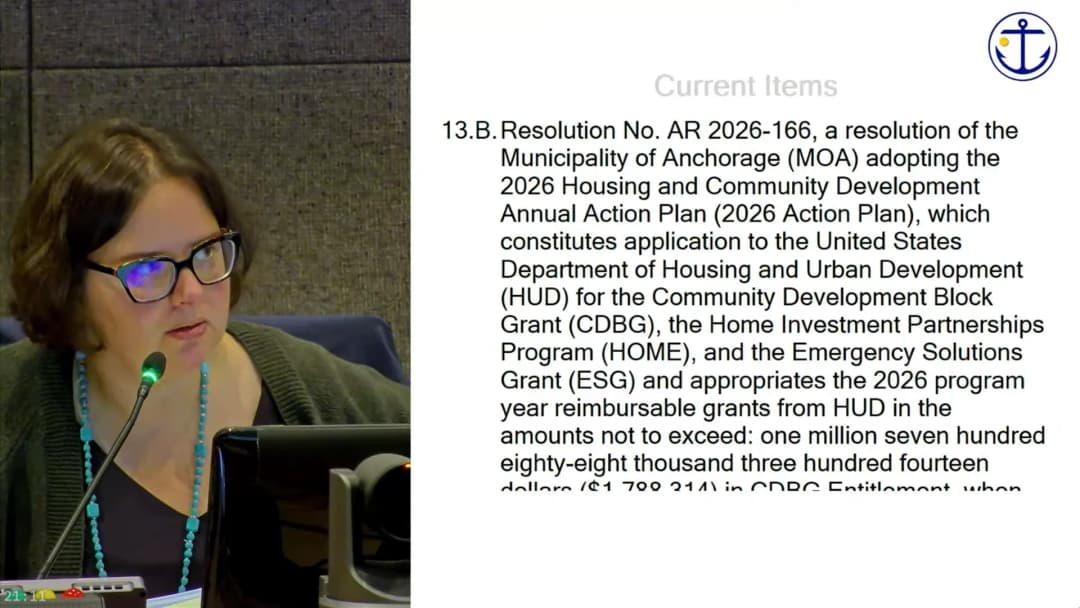
The Anchorage Assembly held a regular business meeting on July 22, 2026 (beginning July 21), addressing a range of topics including budget priorities, short-term rental registration, a public safety commission, and disciplinary actions against Assembly Member George Martinez. Key votes included censuring Martinez for APOC violations and approving a resolution to extend STR registration deadlines. An investigation into Martinez's official travel was deferred to the next meeting due to time constraints. Consent Calendar - 10A1: Resolution recognizing Chugiak High School as 2026 ASAA Division 1 softball state champions — adopted unanimously. - 10B4: Resolution on social capital and volunteerism (Anchorage COMMONS initiative) — postponed indefinitely (12-2 vote). - 10B5: Resolution regarding cannabis business land use equity — postponed indefinitely (12-2) after debate over process. - 10B6: Resolution setting initial policy priorities for FY2027 municipal budget — adopted unanimously (12-0) after discussion on deferred maintenance and density-based capital prioritization. - 10B7: Resolution on equitable growth-related capital prioritization — adopted unanimously as amended (striking Section 3). - 10F1: Informational memorandum on fully tax-exempt property — accepted unanimously; work session scheduled. Public Comments & Testimony - Public Safety Commission (13A): Extensive public testimony from families of police shooting victims, advocates, law enforcement officers, and community members. Many speakers urged strong independent oversight with subpoena power and independent investigations, while others opposed such powers, citing need for officer support and expertise. Notable speakers included families of Emil McCord, Tyler May, and Easter Leafa, along with officers Dominic Eubank and Alyssa Spect. The hearing concluded with no second to the motion for the S1 version, causing the item to die for lack of action. - HUD Action Plan (13B): Brief testimony in support; adopted unanimously. Discussion Items - Budget Resolution (10B6): Ms. Baldwin-Day highlighted the need for a high-level deferred maintenance inventory and population density prioritization. Passed 12-0. - Short-Term Rental Registration (10B8): A resolution requesting a grace period for enforcement was laid on the table (9-3) and then adopted as amended (12-0), extending compliance deadline to September 30, 2026, and providing 30 days to cure violations. - Censure Resolution (12A): After debate about conflation with other allegations and due process, the censure (as amended) was adopted 8-3, reprimanding Martinez for his APOC testimony and violation. - Investigation Resolution (12B): Multiple versions debated. The S2 version (requesting investigation without predetermined outcome) was the main motion. Debate continued until midnight, when the item rolled to the August 4, 2026 meeting without a final vote. Key Outcomes - Censure of George Martinez: Adopted 8-3 (AR 2026-191 as amended). - Short-Term Rental Grace Period: Adopted 12-0 after amendment (effective until Sept 30, 2026). - Budget Priorities Resolution: Adopted 12-0 (AR 2026-211). - Equitable Growth Resolution: Adopted 12-0 as amended (striking Section 3). - Labor Agreements (14A-F): All six administrative agreements with municipal unions adopted unanimously. - Sullivan Arena Surcharge Repeal (14G): Adopted 12-0. - Property Acquisitions (14H, 14I): Adopted 12-0 (Laurel Acres and Tesheler Drive parcels). - Liquor and Marijuana Permits (15A-C): All three special land use permits approved unanimously. - Public Safety Commission (13A): Died for lack of second on motion; no action taken.
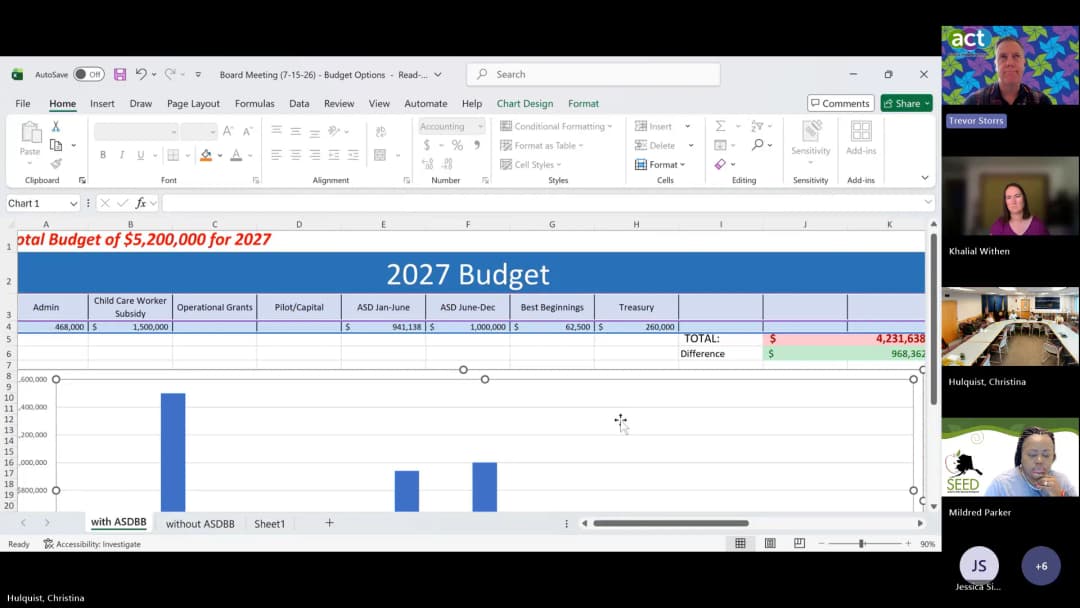
The Anchorage ACE (Alcohol and Cannabis for Early Childhood Education) Fund Board met on July 21, 2026, to discuss the Fiscal Year 2027 budget, review the strategic plan progress, and address meeting logistics. The board examined two budget scenarios – one including funding for Anchorage School District (ASD) and Best Beginnings, and one excluding them – and heard public testimony strongly advocating for operational grants over pilot and capital projects. Straw polls guided draft budget decisions, with final approval scheduled for August 19, 2026. Consent Calendar - Approval of previous meeting minutes: passed unanimously with no objections. - Finalization of the agenda: no changes were proposed. Public Comments & Testimony - Laura (Anchorage Montessori School): Expressed support for operational grants, noting that capital funds reach only a few providers while operational grants distribute more equitably. Also noted challenges with the child care worker subsidy timeline. - Amy Collins (Executive Director, Best Beginnings): Thanked the board and clarified that the alcohol tax fund was intended to support early literacy programs. Urged the board to keep early literacy in the budget, emphasizing that home-based programs are part of the early education system. - Vicky Long Nether (Co-executive Director, Alaska Center Education Fund / Trailside Discovery Camp): Strongly advocated for prioritizing operational grants, stating they provide the most flexible and equitable support to keep programs running and families affordable. Warned against shifting to capital projects. - Melanie Hooper (President & CEO, Campfire Alaska): Supported operational grants as the most important funding source and urged both budget scenarios to keep operating grants as the largest line item. Noted that state operating grants are supplemental, not replacements. - Nate (President & CEO, YMCA of Alaska): Echoed previous comments, emphasizing that operational grants are sustainability grants that prevent closures. Offered to share data and testimonials. - Gustavo Bilgueta (on behalf of his wife, a child care administrator): Expressed gratitude for municipal support and stressed that without funding, sustaining child care is impossible in the long term. - Cindy (Discovery Camp Director): Shared personal experience as a single mother and provider, emphasizing that operational funds help maintain staffing and provide scholarships. Noted increased behavioral health needs and declining enrollment. Discussion Items - FY27 Budget Scenarios: The board discussed two scenarios: - Scenario A (with ASD and Best Beginnings): The draft included full funding for ASD ($1M for six months to finish the year) and 50% for Best Beginnings ($75k), plus child care worker subsidy ($1.5M), admin (9%), and funds for operational grants and pilot/capital. The board was over budget and debated the split between operational and pilot/capital. - Scenario B (without ASD and Best Beginnings): This freed up approximately $2.98M. The board considered a 50-50 split, then adjusted to $2M operational and $1M pilot/capital based on a suggestion to approximate previous proportions. - Straw polls showed divided opinions. The board agreed to set ASD at 75% funding in Scenario B (reducing from $1M to $750k) and to use a 50-50 split for operational and pilot/capital in Scenario A. Final decisions will be made in August after public comment. - Strategic Plan Update: Christina presented Quarter 2 progress, noting that the plan is shifting operations from reactive to intentional investments. Key accomplishments include budget development, data collection, and partnerships. Upcoming focus: community assessment, program evaluation, and refined budget recommendations. Board members requested more data on program effectiveness, provider demographics, and barriers to accessing funds. - Meeting Logistics: The board discussed switching to fully Zoom meetings versus maintaining hybrid. Most members prefer in-person but value the Zoom option. They agreed to draft group agreements to encourage in-person attendance when possible, with Zoom for exceptions. A retreat may be scheduled. - August Meeting Date: The regular meeting on August 19, 2026, conflicts with the first day of school. The board agreed to shift the time from 9:00 AM to 10:00 AM – 12:00 PM to accommodate members with school drop-off responsibilities. Key Outcomes - Draft Budgets for Public Comment: The board approved draft budgets for both scenarios (with and without ASD/Best Beginnings) to be released for public comment with specific questions about operational vs. pilot/capital preferences. Feedback will inform the final vote in August. - Letter to Mayor: Staff will draft a letter reiterating the board's recommendation that ASD and Best Beginnings be funded outside the ACE fund (e.g., alcohol tax or general funds) and advocating for broad grant programs rather than earmarks. - Strategic Plan Priorities: The board emphasized collecting and analyzing data on the child care landscape, program effectiveness, and provider needs. Christina will refine the plan accordingly. - Next Meeting: August 19, 2026, from 10:00 AM to 12:00 PM (hybrid). Formal vote on the FY27 budget and adoption of meeting group agreements.
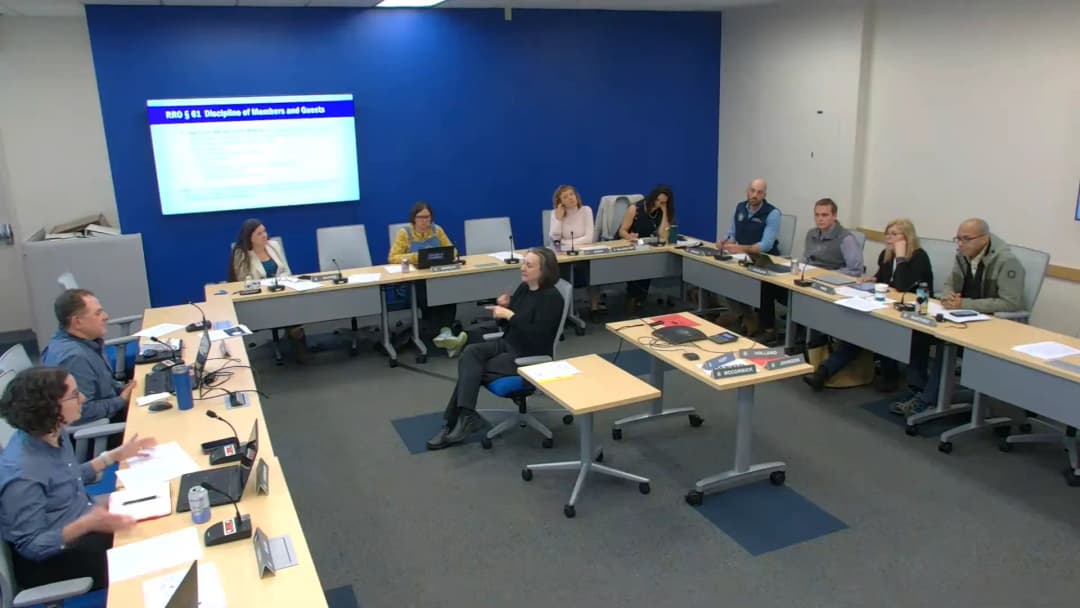
The Anchorage Assembly held a work session on July 17, 2026, from approximately 2:15 PM to 3:30 PM to discuss and clarify the legal processes available to the body for expressing disapproval of a member's conduct, including censure and removal. The session, led by Assembly Chair Brawley, was strictly focused on procedural definitions and legal frameworks, deliberately avoiding any discussion of the merits of specific pending complaints or allegations. The Chair introduced the session as an opportunity for the body to understand the legal structures, due process considerations, and precedents that govern their potential actions. Discussion Items - Scope and Opening Remarks: Chair Brawley convened the work session, stressing it was solely for discussion of the removal procedure under Anchorage Municipal Code (AMC) Section 2.70.030 and procedures for expressing disapproval. The Chair noted that the merits of any specific items on the agenda were not to be discussed. Member Martinez was allowed to participate as the conversation was about process. - Legal Framework for Discipline: Municipal attorney Mr. Gates presented the legal sources for the Assembly's disciplinary actions, including the inherent power recognized in the U.S. Supreme Court case Houston Community College System v. Wilson (2022), the Alaska Constitution's home rule powers, and Roberts Rules of Order (12th Edition). The presentation outlined a spectrum of actions from calling a member to order to formal censure by resolution. - Roberts Rules of Order Options: The presentation detailed actions for conduct during meetings, including calling a member to order, naming a member in the minutes, and verbal or written censure. Attorneys noted that penalizing a member by removing them from the chambers or suspending rights could conflict with their duty to vote and represent their district. The body was advised that any censure involving "meaningful punishment" requires a trial-like procedure. - Removal Process (AMC 2.70.030): A detailed flowchart of the removal process was presented. The process begins with a majority vote to submit an accusation, transitioning the matter from a policy discussion to an adjudicative proceeding. Key steps include a 10-day legal sufficiency review by the Municipal Attorney, selection of an independent hearing officer from the American Arbitration Association, a formal hearing, and a final two-thirds Assembly vote on removal. - Due Process and Costs: Attorneys clarified that the removal process provides extensive due process, including the municipality funding a defense attorney of the accused's choosing. Estimated costs provided included attorney time (between $50,000 and $100,000) and a special election (approximately $160,000 for a mail-only election). The hearing uses a "clear and convincing evidence" standard. - Member Clarifications: Assembly members asked clarifying questions about the initiation of disciplinary actions (Ms. Baldwin), the consequences of refusing an apology (Mr. Handelin), the relevance of conduct during meetings versus private capacity (Mr. Martinez), legal standing for complaints (Ms. Park), the definition of "meaningful punishment" (Ms. Scout), ex parte communication restrictions and due process (Mr. Balbonde), the Assembly's role in investigations (Ms. Silvers), and the use of executive session. Key Outcomes - Procedural Clarification: The Assembly received a comprehensive overview of the legal tools and processes available for censuring or removing a member. - Commitment to Follow-Up: Members submitted several questions that could not be fully answered during the session. Attorneys committed to providing written responses and making themselves available for one-on-one consultation. - No Decisions Taken: The work session was strictly informational. No votes were taken, and no specific disciplinary actions or investigations were initiated. The Chair concluded by reiterating that decisions on "what the assembly should do" are political matters for the body to grapple with separately, armed with the newly clarified procedural understanding.