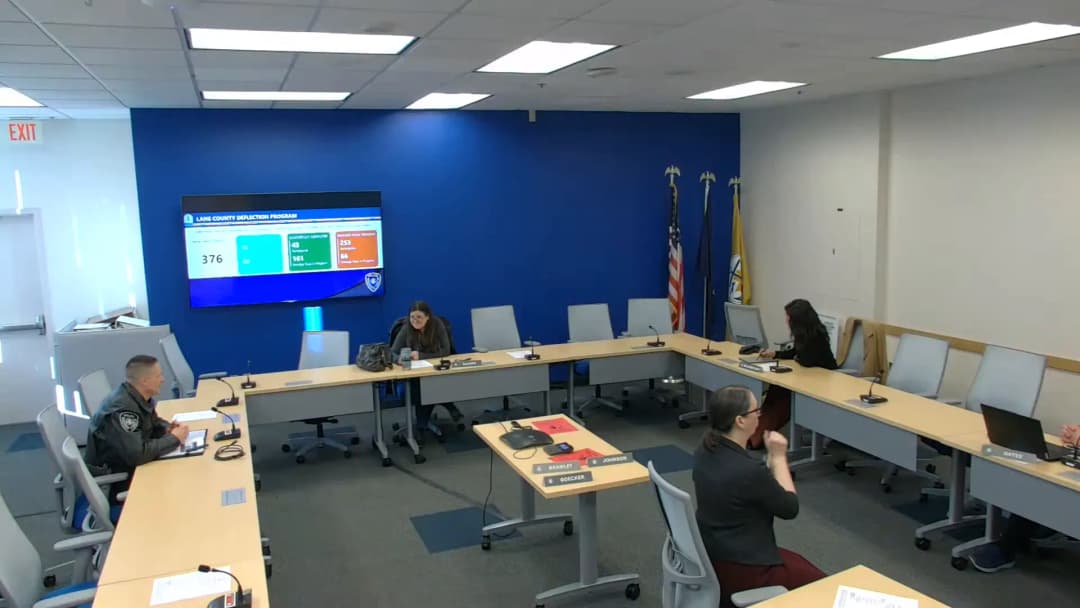
The Anchorage Housing and Homelessness Commission held a regular meeting on March 6, 2026, to discuss a resolution supporting a municipal sanctioned campground pilot program, review updates on housing and homelessness initiatives, and hold a public hearing on a new residential rehab program. The meeting was called to order at an unspecified time and adjourned after approximately 1 hour and 15 minutes. Consent Calendar - Approval of the agenda and minutes were moved and seconded without opposition. - No disclosures or conflicts of interest were reported. Public Comments & Testimony - Sam Longing Crew (United Way of Anchorage) commented during the public hearing on the residential rehab program, suggesting that rent caps be tied to the HFC payment standard and/or require properties to accept vouchers to keep them accessible. Discussion Items - Resolution 2026-01: Sanctioned Campground Pilot Program – The commission debated a resolution supporting a municipal sanctioned campground pilot program, which recommends establishing three separate campgrounds for men, women, and families, with features like secured fencing, 24-hour security, allotted spaces, secured storage, and rigid tents. The resolution references the 2025 report of the Sanctioned Camp Task Force and Ordinance 2025-04, which prohibited camping on public premises but allowed alternative sites. Key points of discussion included: - Commissioner concerns about investing in a seasonal pilot versus year-round solutions, and whether the resolution should recommend rather than mandate. - An amendment was offered and added: a whereas statement acknowledging the program is not a permanent solution to homelessness but can meet the needs of some individuals. - Kimberly White (Housing Services Division Manager) provided context, noting that the task force recommendations partly inspired the micro-units project (Willow Commons), which was built quickly but faced operational challenges. She stated the 2026 budget has no funding for new projects, and the pilot cannot happen in summer 2026. She suggested exploring alternatives like changing Centennial Park’s 14-day limit rule or partnering with private entities. - Laila (Housing and Homelessness) emphasized the need for lower-barrier options and noted the resolution’s purpose is to open broader conversation. - Commissioner Singletary expressed safety concerns and asked if the commission could instead prioritize indoor shelter. - Updates from Housing and Homelessness – The commission received updates on: - Willow Commons (micro-units): still in process for a provider. - Surge beds: 200 at East 56, 150 at Linda’s Place, 100 at the non-congregate shelter (Alex), all still active due to cold weather; no definite decompression timeline. - New initiatives: a voucher carve-out program with AHFC for 40 vouchers/year; a supportive housing RFP for $1.35 million; 2026 action plan process starting with first public hearing on March 18, 2026. - Mayor’s Office updates (Jed): Safety center still operating; overflow location open with 25 extra beds; efforts to re-engage evacuees from the Tyonek fire; focus on increasing very affordable housing through code changes and exploring modular/micro units. - Public Hearing: Residential Rehab Program – The commission held a public hearing on substantial amendments (2021 Action Plan Amendment 5 and 2025 Action Plan Amendment 1) to reallocate $500,000 in CDBG funds and $200,000 in HOME funds for a new Residential Rehab Program. The program aims to revitalize existing housing, prevent homelessness, and may include grants, forgivable loans, deferred loans, or amortized loans. Commissioner questions focused on caps, prioritization of safety/efficiency over curb appeal, income requirements, and coordination with existing weatherization programs. Comments noted that $692,000 total is modest and will require careful structuring. Key Outcomes - Resolution 2026-01 passed with a vote of 7 in favor and 1 opposed (Commissioner Singletary). The resolution supports the sanctioned campground pilot program as a recommendation to the Assembly and administration. - The commission decided to postpone discussion of 2026 goals and annual report preparations to a future work session, which staff will schedule via email. - Meeting was adjourned slightly early after routine commissioner comments.
Public Meetings - Anchorage, Alaska
Public Meetings - Anchorage, AlaskaThe Anchorage Platting Board met on March 5, 2026, at 6:43 PM and adjourned at 8:22 PM. The agenda included two public hearings: a contested right-of-way vacation on Sean Street (Case S12860) and a routine subdivision vacation for a hotel development (Case S12876). The board also held its annual election of officers, retaining the current chair and vice chair. Note: The meeting transcript references March 4, 2026, but the provided date is March 5, 2026; this summary uses the date supplied. Consent Calendar - Approved the abbreviated plat action summaries dated February 22, 2026, and February 23, 2026, by unanimous consent. - Approved the consent agenda without objection after no items were polled for discussion. Disclosures and Reordering of Agenda - Patrick Jones disclosed prior work with petitioner representative Jonathan Lang; the board voted to allow his participation. - The agenda was reordered to hold the election of officers before public hearings. Public Comments & Testimony (Case S12860 – Sean Street Vacation) - Brian Hall (lot 85): Expressed concern that if the Native Village of Aklutna develops a gaming hall on nearby lots, those lots could be taken into trust, removing municipal jurisdiction. Urged the board to vacate Sean Street now to avoid future conflict. - Michael Schechter (attorney for Native Village of Aklutna): Agreed with the staff report and recommended denial. Argued that vacating Sean Street would diminish the village’s ability to obtain a return on its investment in lots 79 and 80 for residential use. Stated that any future commercial development would require a full Title 21 process, where traffic and access concerns could be properly vetted. - Marilyn Sarvella (Alluvial Street resident since 1975): Reported that lot 80, owned by the Native Village of Aklutna, is being used for storage and heavy equipment operations at night, contrary to residential zoning. Also noted trash and alcohol bottles in ditches from the gaming hall. Asked the board to support the vacation. - Tiffany Loafman (phone testimony): Supported vacating Sean Street, stating that the road has no demonstrated public need and that building it would burden taxpayers prematurely. Discussion Items Case S12860 – Preliminary Plat and Vacation of Sean Street Right-of-Way - Staff Presentation (Sean): The petitioner sought to subdivide two lots and vacate an unconstructed 60-foot right-of-way (Sean Street) dedicated in the 1980s for future access to lots to the north. Staff found the vacation would not meet municipal criteria because the right-of-way may be needed for residential access to lots 79 and 80 (each 2.5 acres) and for future traffic circulation. Several municipal agencies (Traffic Engineering, Right-of-Way, Street Maintenance, Private Development) objected, noting that the right-of-way is not in excess of municipal needs and that vacating it would preclude a loop road or grid pattern. Staff recommended denial. - Petitioner Presentation (Jonathan Lang, Langan Associates, for Julie Jorlett and Sean/Lori Barnett): Argued that lots 79 and 80 already have legal and buildable access via 50-foot patent right-of-way reservations, making Sean Street unnecessary. Noted that the adjacent gaming hall (Native Village of Aklutna) is using residential-zoned lots for parking without authorization. Presented a site plan showing a permanent gaming hall with ingress/egress across lot 80. The petitioners asked the board to find the right-of-way in excess of municipal need and to protect the Alluvial Street neighborhood from commercial traffic. - Board Deliberation: Members discussed whether the vacation would harm future residential development of lots 79 and 80. Some expressed concern that removing Sean Street could force those lots to rely on a right-of-way through the gaming hall parking lot. Others argued that the board should decide based on current zoning, not speculative commercial redevelopment. After two motions (one to deny the vacation, one to approve the plat with conditions) both failed, the board did not approve the vacation or plat. Motion 1 (by Brenda Mills to approve the vacation denial – effectively support staff recommendation): Failed 2–3 (Jones no, Bryan no, others? The transcript shows two no votes, implying motion failed because it needed majority; exact tally unclear but motion failed). Motion 2 (by Brenda Mills to approve the plat for 24 months): Failed 2–3. Case S12876 – Commercial Park Subdivision and Vacation of Interior Right-of-Way - Staff Presentation (Sean): A preliminary plat to subdivide two lots into two lots and vacate a 20-foot and a 10-foot right-of-way and a telephone/electric easement along the eastern boundary. The property is zoned B3 and is intended for a hotel development. All municipal agencies expressed no objection. Staff recommended approval. - Petitioner Presentation (Melissa Branch, Edge Survey & Design): Confirmed the subdivision and vacation were the final step to clear title encumbrances for the hotel project. No public testimony was offered. - Board Deliberation: Unanimously supported. Board members noted that the right-of-way was not part of the Official Streets and Highways Plan, was not on the quarter/half-mile grid, and had no agency objections. Motion to approve vacation and plat passed. Motion 1 (by Kaya Merka to approve the vacation): Passed unanimously (Jones yes, Bryan yes, others yes). Motion 2 (by Kaya Merka to approve the plat for 24 months): Passed unanimously. Annual Election of Officers - Moved to retain the current officers: Patrick Jones as Chair and [not specified but likely Kaya Merka as Vice-Chair? Actually the chair is Scarlet Quinn per roll call; Mr. Jones is Vice-Chair? The transcript says “Mr. Jones, what do you think?… more than happy to continue serving as vice chair.” So Chair is Scarlet Quinn, Vice-Chair is Patrick Jones. The motion passed unanimously, retaining Chair Scarlet Quinn and Vice-Chair Patrick Jones. Key Outcomes - Case S12860 (Sean Street Vacation): Not approved. Two motions to deny and to approve the plat both failed. The right-of-way remains dedicated, and the vacation is not granted. The board stated that the applicant did not meet the burden to show the right-of-way is in excess of municipal need, and that speculative concerns about future commercial use did not justify deviation from staff findings. - Case S12876 (Commercial Park Subdivision): Approved unanimously. The 20-foot and 10-foot right-of-way and the telephone/electric easement are vacated subject to conditions, and the plat is approved for 24 months to allow the hotel development to proceed. - Officer Elections: Current officers retained. - Next steps for unresolved case: The applicant may resubmit a vacation request if lots 79 and 80 are rezoned to commercial or if future development plans justify the change.
On March 4, 2026, the Assembly Public Health and Safety Committee met to receive an update from the Anchorage Police Department (APD). The meeting covered a range of topics including new policing technologies, a new diversion program, enforcement of Title 8 (the updated criminal code), and public testimony on enforcement and housing issues. Consent Calendar - None. Public Comments & Testimony - Jamie Lopusy Sandres, formerly homeless, testified that APD was citing people for walking in the street when sidewalks were buried in snow, alleging at least five cases on one night in Mountain View. She provided video evidence of two citations and a snow-filled sidewalk. She also criticized the anti-camping dashboard, stating that out of 463 voluntary compliances, only 37 accepted services, calling the program ineffective and traumatizing. She asked the Assembly to limit enforcement of walking-in-roadway laws to arterials only. - Sophia O'Neill, a resident of Eagle River, described her struggles with an unlivable apartment, noting she continued paying rent while living elsewhere to allow repairs. She expressed frustration with code enforcement and urged better landlord accountability. - Michelle Wozniak, calling in, questioned whether APD's policy 7.07 on the real-time crime center (RTCC) has moved from draft. She raised concerns about surveillance technology being used against First Amendment activities, data sharing with federal partners, and the lack of strong civil liberties safeguards in the draft policy. Discussion Items APD Technology Updates - Body Worn Cameras (BWC version 4): Chief Sean Case announced the arrival of the fourth-generation body cameras. A key upgrade allows real-time translation for non-English speakers, both for officers and dispatch. The department is seeking funding for this feature. - Taser 10: The new Taser model, already in the field, doubles standoff distance (to approximately 40–45 feet), improving safety and reducing the need for lethal force. - Less Lethal Rounds: A new projectile allows officers to engage threats at even greater distances, particularly when subjects are armed with objects like knives or bats, reducing the likelihood of lethal force. - Drones First Responder: The program is being onboarded. A radar system is being installed to identify all aircraft in the area. The program is expected to go live by June 2026. Three roof-mounted drones will be launched from the real-time crime center. - License Plate Readers (LPRs): APD has completed an extensive work process addressing privacy and data access concerns. All readers will be mobile (dash-mounted), not stationary. Data is automatically purged after 14 days unless tied to an ongoing criminal investigation, in which case it is preserved as evidence. The system only hits on vehicles loaded into a standalone database (e.g., stolen vehicles, those wanted for violent felonies). The department will begin testing within 30 days. - Real-Time Crime Center (RTCC) – FUSUS: The RTCC is partially operational. Chief Case cited a recent bank robbery where the center identified the suspect via cameras and had the person in custody within seven minutes—before the bank even called to report the crime. Diversion/Deflection Program - Chief Case presented the new diversion program, which uses a third-party provider (navigator) selected through an RFP. The program targets individuals aged 18+ for municipal crimes (excluding domestic violence and OUI initially) who have behavioral health conditions, substance use disorders (including alcohol), or mental health disorders. Participation is voluntary. - The navigator would screen, direct to services (e.g., detox, treatment), and provide case management. Participants can re-enter the program if they fail, recognizing that recovery often requires multiple attempts. If they drop out, they revert to the normal criminal justice system. - Comparison with Lane County, Oregon: Lane County runs a comparable program with a 32% success rate and about 23 participants per month. Chief Case aims for 20–30 participants per month in Anchorage, with a 20% success rate considered successful. The Lane County program has a $2 million annual budget; Anchorage's initial grant is $400,000 for calendar year 2026, provided with help from the Health Department. - Staffing: The program will require a team of at least four navigators. The 400,000 grant is expected to cover initial operations, but scaling up will need more funding. - Integration: The program is designed to integrate with existing municipal services, including the new computer system being built to link partners and track individuals. - Capacity Gaps: Chief Case noted that crisis stabilization beds could be used as transitional housing, but some partners worry about filling all beds immediately. He remains optimistic. Title 8 (Criminal Code Update) Enforcement - The updated Title 8 is expected to go live in 7–10 days, pending court system upload of charges. - APD is already running an overtime detail (8 a.m. to 10 p.m.) in the downtown corridor, expected to run through September, for foot patrol and Title 8 enforcement. - Dashboard: A dashboard will be produced once the new CAD/RMS system is operational. For now, data will be provided to the committee. - Comparison to Camping Ordinance: Chief Case anticipates a similar enforcement pattern: low arrests initially, then a rise, then a drop. He predicts significant results in 6–9 months, possibly sooner given the camping ordinance's success. - Officer Training: Training for officers begins next week, focusing on scenarios like bar break and distinguishing First Amendment activities from disorderly conduct. APD will continue its longstanding practice of minimal enforcement at protests unless there is a specific threat. Enforcement of Walking-in-Roadway Laws - Replying to public testimony, Chief Case confirmed awareness of one citation issued for walking in the roadway when a sidewalk was available. Member Constant asked him to verify if there were multiple citations, as alleged. The chief agreed to follow up. Key Outcomes - No formal votes were taken; the meeting was informational. - Committee members requested the presentation be posted on the committee page or emailed. - Chief Case agreed to provide updated numbers on Title 8 citation and arrest statistics, and to verify the number of walking-in-roadway citations issued in Mountain View. - The APD diversion program will issue an RFP for a third-party navigator, with funding from a $400,000 grant for 2026. Future funding decisions will be based on the program's performance. - The drones-first-responder program is on track for a June 2026 launch. - The license plate reader testing phase will begin within 30 days. - The meeting adjourned after public testimony.
Note: The transcript states the meeting was called to order on March 3, 2026, at 5:04 PM. The metadata provided indicates the meeting took place on March 4, 2026, at 05:17:16 UTC. This summary uses the date provided in the instruction. The Anchorage Assembly held its regular business meeting on March 4, 2026, covering a wide range of legislative items, including resolutions, ordinances, and public hearings. Key topics included homelessness, animal care, land use, and emergency management. Consent Calendar - Approved minutes of previous meetings (unanimous). Public Comments & Testimony - William Baxter (Fairview): Expressed support for animal care improvements, noting recent progress in youth agricultural programs (FFA, 4-H). - Jamie Lopez (formerly homeless, formerly Coalition): Raised concerns about the animal neglect ordinance, arguing it could be used to target homeless individuals with pets. Also criticized enforcement of sidewalk ordinances, citing a recent operation in Mountain View where pedestrians were cited for walking on roads when sidewalks were snow-covered. He questioned the fairness and motivation behind such enforcement. - Annette Alphonse (Executive Director, Empowering Education): Provided education on brain injury recovery, including the Buffalo Concussion Treadmill Test, neurooptometry, and cognitive rehab apps. She urged the Assembly to integrate brain injury awareness into homelessness and public safety services. - Steve Rydell (Spenard): Presented a request to run a sewer line through parkland instead of through wetlands, citing environmental concerns. He asked the Assembly to consider allowing an easement through park property. Discussion Items - Chair’s Report: Chair Constant announced that for the first time in memory, Anchorage has no major encampments or tent city. He attributed this to coordinated efforts involving year-round shelter, expanded housing, behavioral health investments, and the new Healthy Spaces team. He noted that enforcement alone was not the cause. - Mayor’s Report: Mayor LaFrance highlighted Black History Month and Women’s History Month, upcoming municipal election (April 7) with seven bonds and a school district levy, and the introduction of an agriculture resolution (10 G6). She also celebrated the doubling of the Healthy Spaces team. - Heritage Land Bank Advisory Commission Representation (AO 2025-144): A proposal to require two seats on the HLB Advisory Commission to be reserved for Girdwood residents. Member Johnson argued that Girdwood holds half of HLB’s land and faces unique development challenges. Member Silvers offered a substitute amendment (S version) that would limit any one assembly district to no more than two members, citing equity concerns. The substitute failed 3-8, then the original ordinance failed 4-7. - Animal Care Ordinance (AO 2026-26): Amended code to clarify animal neglect, prohibit leaving animals unattended in vehicles for 8+ hours, and establish cost-of-care bonds. Public testimony raised concerns about enforcement against homeless pet owners. The ordinance passed unanimously. - Data Centers Land Use Review (AO 2026-27): Proposed to clarify review processes for energy-intensive facilities. Public hearing continued to March 24 after sponsor indicated a substitute version was being prepared. - Public Comment & Labor Agreements (AO 2026-23): Amended and passed to improve communication between the Assembly, administration, and bargaining units during negotiations. The amendment clarified notice requirements. - Extension of Ground Lease (AO 2026-25): Authorized extension of the lease for the municipal permit center at 4700 Elmore Road. Passed unanimously. - Convention Center Capital Improvements (AR 2026-40): Appropriated $1.932 million from the convention center reserve fund for improvements at the Dena’ina and Egan Convention Centers. Passed unanimously. - Beverage License Renewal Protest (AR 2026-42): Quasi-judicial hearing on conditional protest of license for Single Toe, 111 West 38th Avenue. Passed without opposition. Key Outcomes - Women’s History Month Resolution (AR 2026-48): Passed unanimously. - Brain Injury Awareness Month Resolution (AR 2026-51): Passed unanimously. - Wildland Fire Interface Service Area (AR 2026-52): Postponed to April 14, 2026. - Contract with 120 Peaks Consulting (AM 142-2026): Approved for enterprise software implementation for permitting, $1.6 million. - Grant to Anchorage School District for Early Childhood Education (AM 145-2026): Approved $2 million from marijuana tax funds. - Internet Crimes Against Children Task Force Grant (AR 2026-44): Approved $1,358,678 federal grant with $7,088 local match. - Medicaid Counseling Services Grant (AR 2026-46): Approved $13,031.31 state grant. - Heritage Land Bank Advisory Commission Representation (AO 2025-144): Failed (4-7). - Public Comment & Labor Agreements (AO 2026-23): Passed as amended. - Animal Care Ordinance (AO 2026-26): Passed unanimously. - Data Centers Land Use Review (AO 2026-27): Continued to March 24, 2026. - Audience Participation: Multiple residents spoke on enforcement of sidewalk ordinances and animal care.
Note: The transcript begins by referring to a "March 2nd meeting," but the provided timestamp indicates March 3, 2026. This summary uses the date supplied with the source material. The Planning and Zoning Commission met to consider three public hearing items: a conditional use permit for an oversized horse arena, a rezoning to light industrial, and a comprehensive land use plan amendment affecting multiple institutional properties. The meeting also included officer elections, disclosures, and administrative business. Consent Calendar - Minutes from previous meetings were approved unanimously. - Consent agenda approved without items pulled. - Case 2026-0033 (conditional use review) was withdrawn because rezoning from R4-SL to R4 eliminated the requirement for a public hearing. Disclosures - Commissioner Eber disclosed absence from the February 2 meeting and abstained from votes on certain resolutions. - Commissioner Abaza disclosed absence from the February 9 meeting and abstained from votes on certain resolutions. - Commissioner Pullis disclosed a personal friendship with the applicant in Case 2026-0019 but stated he could remain impartial. The commission voted to allow his participation. Public Comments & Testimony - Case 2026-0019 (Arena): Tony Reetz, a neighboring property owner, expressed concerns about traffic on narrow Tarmigan Terrace, increased stormwater runoff, noise from fans, and the visual impact of a 10,080-square-foot metal building (16–20 feet tall). He also worried that future owners might operate commercially. Mr. Reetz asked about sewage, drainage, and the building’s height. - Case 2025-0138 (Land Use Plan Amendment): - Maggie McKay (St. Mary’s Episcopal Church) spoke in favor, noting the church plans to develop 120 housing units on its property and that the land use update would simplify their rezoning process. - Paul Hatcher (President, Patterson Townhouse Condominium Association) opposed changing the designation of the South Central Foundation parcel at Patterson and Tudor from Neighborhood Center to Main Street Corridor. He cited traffic safety concerns, potential height increases, and the site’s suitability for neighborhood commercial use. He suggested the owner could instead remove the special limitations (SL) to rezone to B1B. - Steve Callahan (UMed/Tudor Community Council) testified in strong support, stating the council passed a resolution favoring the changes to help institutional partners like South Central Foundation and UAA expand. Discussion Items - Case 2026-0019 – Conditional Use for Large Animal Arena: Staff recommended approval subject to four conditions. The applicant’s representative (Ron Thompson) argued that the conditional use was unnecessary because the arena is for two horses (under the definition of a large domestic animal facility, which requires four or more). He noted the owner incurred over $7,000 in costs and a nine-month delay due to the requirement. Commission questions clarified that the conditional use is solely for exceeding 8,000 square feet; use-specific standards for number of animals and commercial activity are separate and by-right within the zoning. The Rabbit Creek Community Council provided a letter in favor but with questions about future commercial use. One public comment was received. - Case 2026-0020 – Rezone from R2M to I1: Staff presented a request to rezone a 0.97-acre parcel from Mixed Residential to Light Industrial/Commercial to align with the 2040 Land Use Plan and legalize an existing auto body shop. No public testimony was offered. The petitioner’s representative praised the abbreviated rezone process and municipal support. Staff found all three approval criteria met. - Case 2025-0138 – 2040 Land Use Plan Amendment: Long-range planner Daniel McKenna Foster presented a comprehensive update to change land use designations for 10 sites (later reduced) to better support institutional growth and clean up inconsistencies (e.g., split-designated lots, outdated designations). Notable changes include: - Debar Road (CIHA): Update to align with recently rezoned R4 for senior housing. - Providence Drive (UAA): Change to Main Street Corridor. - South Central Foundation campus (Tudor area): Change to Town Center to allow future development under B3 zoning. - St. Mary’s Church: Change to support planned housing. - Patterson & Tudor (SCF parcel): Change from Neighborhood Center to Main Street Corridor (controversial – see public comment). - Other sites: AHFC building, Totem site, Walmart lot, and a port-area parcel to open space/park. Staff emphasized that this is a policy map change only; rezones would follow later if property owners choose. The amendment is intended to give institutional partners flexibility and align the map with existing zoning and development realities. Key Outcomes - Case 2026-0019: Motion to approve the conditional use for the arena (subject to conditions 1–4) carried. Vote: unanimous (Commissioner Pullis participated; Commissioners Eber and Abaza abstained due to prior absences). - Case 2026-0020: Motion to recommend the Assembly approve the rezone from R2M to I1 carried. Vote: unanimous. - Case 2025-0138: Motion to recommend the Assembly approve the 2040 Land Use Plan amendment as presented carried. Vote: unanimous. - Election of Officers: Chair Andre Spinelli and Vice Chair Radika Krishna were retained by acclamation. - Staff Announcements: Future meetings will feature shorter staff summaries to save time; staff will seek feedback. An open house on planning initiatives is scheduled for April 14, 2026. A presentation on findings of fact from the legal department may be arranged. Administrative Items - The commission agreed to reorder the agenda to hear officer elections after public hearings. - Committee reports: None. - Title 21 discussion: None. - Commissioner comments: Staff discussed improvements to findings-of-fact documentation and separation of factual findings from commissioner opinions. A motion to adjourn was approved.
This meeting of the Anchorage Audit Committee focused on two primary topics: a review of the city's grant management practices following an internal audit, and an update on the delayed fiscal year 2024 Annual Comprehensive Financial Report (ACFAR) and related single audit. Key speakers included Stephanie (grants division), Mr. Burr (providing historical context), Joy Mariner (audit principal from the external audit firm), and Philippe (CAO representative). Committee members raised concerns about training, data accuracy, and resource constraints. Public Comments & Testimony - Mr. Hergsen (via phone) thanked the committee for convening and expressed that there appeared to be several questions that needed to be answered. Discussion Items - Grants Management Audit Update - Stephanie reported on progress made over the past 18 months, including improved communication with departments, quarterly reminders, and efforts to document processes. She highlighted that the division is working to develop cohesive policy manuals and desk procedures with help from a temporary staff member loaned through HANA. A quarterly calendar and updated reporting deadlines are being implemented for 2026. She also noted that staff are working to update outdated SAP grants training materials. - Mr. Burr provided context: the entire grants team departed a few years ago, resulting in lost institutional knowledge. He stated that the city has suffered on the grant side for about five years, exacerbated by the large volume of COVID-era grants. He emphasized three core issues: accurate numbers (different contact points showing different amounts), training (not mandatory or monitored), and resource constraints (a $1,000 grant requires the same work as a $10 million grant). He urged the assembly and administration to consider resources when accepting grants. - Discussion revealed that there is no comprehensive master list of active grants with assigned grant administrators within SAP. Stephanie stated that her team is working on reassignment and a quarterly review process, but SAP does not easily produce a reliable list. - Regarding training, it was noted that the grants team itself had not completed the SAP grants accounting training, which is outdated. Stephanie said they have been tasked with updating the training in the first quarter of 2026. - Philippe (CAO representative) added that HR and IT are collaborating on a new system to track employee training needs, but a timeline was not provided. He acknowledged the city started with a significant deficit due to vacancies (only half the contract division staff when Stephanie started 18 months ago). - Fiscal Year 2024 ACFAR and Single Audit Update - Joy Mariner (audit principal) presented the status: the 2023 single audit is still ongoing, with the main outstanding item being reconciliation of FEMA expenditures between the municipality, state, and federal levels. The 2024 financial statement audit has multiple components: the CIVIC, PAC, CDA, and transportation procedures are completed; AWO is issuing on February 28; solid waste and port audits have drafts with management; the ACFAR draft is in hand but incomplete. - Key challenges included: SAP's complexity preventing normal trial balance production (multiple trial balances need manual combination under GAAP), the general ledger not balancing with the trial balance in some areas, and ongoing grant reconciliation issues (version four still not final). Mariner stated that typically audits don't begin without a balanced trial balance, and grants remain a major obstacle. - She clarified the relationship between the ACFAR and the single audit: the single audit tests compliance for major grant programs and cannot be completed until grant revenue numbers in the financial statements are finalized. The 2023 single audit is overdue; 2024 will start only after 2023 is issued. - Philippe said management is prioritizing the ACFAR (target March 31, 2026 issuance) to meet bond rating agency requirements, but the single audit work continues in parallel. Letters have been sent to major grant providers (e.g., HUD) to explain the delay. He noted that while some rating agencies accept draft financials, failure to issue timely reports could eventually affect bond ratings, but the city is not at that point yet. Key Outcomes - The committee received the grants management audit update and the ACFAR/single audit update without formal votes. No binding decisions were made. - Stephanie committed to producing a draft of policies and procedures by March 2026 and final adoption by July 2026, noting the process is continuous. - The team will continue working toward an ACFAR issuance by March 31, 2026, though significant work remains on trial balance accuracy and grant reconciliation. - The 2023 single audit will proceed concurrently, but completion depends on resolving FEMA data discrepancies and finalizing grant listings. - No additional meetings or deadlines were set; the committee will receive ongoing weekly updates from the audit team. Meeting adjourned at 2:01 PM.
The Anchorage Assembly held a work session on February 27, 2026, from 1:01 PM to approximately 2:00 PM to discuss AO 2026-27, an ordinance amending the municipal code to clarify the land use review process for data centers and similar energy-intensive facilities. The session was co-sponsored by Vice Chair Riley and Member Voland. The discussion focused on the characteristics of data centers, their potential impacts, and the need for proactive regulation. No public testimony was taken, and no votes were held. Discussion Items - Presentation on Data Centers: Vice Chair Riley presented an overview of data centers, their rapid growth, energy and water use, noise impacts, and limited operational employment. She highlighted examples from other communities (e.g., Ohio, Virginia) where unregulated data centers caused utility rate increases and noise complaints. - Gap in Current Code: The existing code defines "data processing facility" and "warehouse" but does not adequately address modern data centers. The ordinance would create a new use category, allow data centers only in industrial zones (conditional use), and require 200-foot setbacks from residential areas, visual screening, noise mitigation studies, and utility capacity confirmation. - Definition and Threshold: The ordinance initially uses 20 megawatts of electricity as a threshold for large facilities. Member Johnson questioned the scale of a 20-megawatt facility; Vice Chair Riley noted the threshold came from state HB 259 and considered removing it or using a server count instead. Member Constant pointed out that the municipal code already requires large power users to demonstrate utility capacity (marijuana code precedent). - Energy and Environmental Impacts: Member Baldwin Day asked about air quality impacts and whether data centers could be required to use renewables. Vice Chair Riley noted that state bills (SB 250, HB 259) address utility and renewable commitments, but local land use authority is limited. Members discussed potential tools like tax incentives (Chapter 12.75) or a consumption tax to fund infrastructure and renewables. - Economic Development vs. Regulation: Member Constant emphasized that the ordinance is not an attempt to block economic development but to ensure thoughtful siting and public input. He cited a slide showing a data center built directly adjacent to a residential cul-de-sac as an example of why setbacks are necessary. Key Outcomes - No Formal Action: The work session was informational; no votes were taken. The ordinance is scheduled for a regular meeting on Tuesday, March 3, 2026. - Refinements Identified: The sponsors will consider lowering or removing the 20-megawatt threshold, exploring renewable energy requirements, and incorporating utility capacity verification similar to the marijuana code. - Next Steps: The Planning Department is requested to develop use-specific criteria for energy-intensive uses. The ordinance waives referral to the Planning and Zoning Commission to expedite proactive regulation, but future research and adjustments are anticipated.
The Anchorage Assembly held a work session on February 27, 2026, to discuss proposed amendments to municipal code concerning animal neglect, including unattended animals in vehicles, repeat violations, and cost-of-care bonds. The ordinance was prompted by AR 2024-379 after a 2024 vehicle fire killed several dogs. Presenters from the Health Department and the Animal Control Advisory Board (ACAB) detailed the changes and answered assembly questions. Public Comments & Testimony - No public testimony was taken during this work session. However, the Health Department held a public comment period from September 10 to October 24, 2025, and received feedback that led to reducing the unattended time limit from 12 to 8 consecutive hours. Discussion Items - Background and Process: Kimberly Rash and Tamaya Lieber Spock (Anchorage Health Department) presented the ordinance, noting a working group and ACAB drafted changes. The board voted to send the proposal to the assembly after incorporating public input. - Changes to Chapter 8.55 (Penal Code): Aligned definitions with Title 17; added specific conditions for vehicular neglect (extreme temperatures, lack of ventilation, food/water, space to turn around, sit, stand, lie down); established that two or more violations of certain Title 17 sections within 10 years automatically escalate to animal neglect charges. - Changes to Title 17 (Animals): Updated the definition of “humane care” to require adequate space; added a new prohibition on leaving an animal unattended in a vehicle for more than 8 consecutive hours, with welfare checks required every 8 hours; added cost-of-care bond provisions allowing animal control to petition an administrative hearing officer for a bond when animals are taken into protective custody. - Enforceability of 8-Hour Rule: Assembly members questioned how the 8-hour unattended rule would be enforced. Staff acknowledged challenges but cited potential evidence from security footage, neighbor testimony, or prior sightings. - Owner and Third-Party Custodian Definitions: Ownership is determined by records; third-party custodians cannot be in the same household and are vetted. For large facilities (e.g., mushers), custodians may care for animals on the owner’s property to avoid removing them. - Cost-of-Care Bond Concerns: Assembly member asked about 2025 costs; staff noted the horse case cost over $135,000, paid from the health department operating budget. Board member Pam Schamberg (retired pediatrician and dog musher) expressed initial concerns about the bond’s burden on mushers but voted yes after the third-party custodian provision was added, though she noted it remains imperfect. - Community Perception: Staff reported minimal negative feedback, attributing transparency and public engagement. The mushing community did not object to the 8-hour rule. - ACAB Acronym: Assembly member suggested the Animal Control Advisory Board change its name to avoid the acronym ACAB. Key Outcomes - No formal votes were taken during this work session. - The assembly will consider ordinance AL2026-26 at its next regular meeting on Tuesday (date not specified). - The Animal Control Advisory Board was informally asked to consider renaming itself.
The Anchorage Assembly held a work session on February 27, 2026, to review an internal audit report on the contract for management of the Sullivan Arena, Ben Boeke Arena, and Dempsey Anderson Arena by O'Malley Ice and Sports. The audit identified 14 findings of non-compliance, including failure to submit audited financials, improper revenue calculations, missing performance bonds, and unapproved expenditures. The administration has issued a notice of default and is pursuing separate RFPs for the facilities. The vendor disputed several findings, citing operational challenges and good faith efforts. The Assembly will hold a follow-up work session before April 24, 2026. Discussion Items - Internal Audit Presentation: The internal auditor presented findings from the contractual review of the Sullivan, Ben Boeke, and Dempsey contract, conducted from August 2025 to early January 2026. Key findings included: - Audited financials not submitted, making verification difficult. - Inconsistencies in contractor's financial records. - Revenue incentives miscalculated, leading to lower payments owed to the city. - Ticket surcharge requirements not always met, reducing city revenue. - Operating budget expenditures not always approved. - Performance and payment bonds never submitted. - Repairs and purchases made without written approval. - Utility payments not accepted as required after August 1, 2025. - Various reporting requirements not met. - Annual inventory not performed, capital assets not tagged. - Insurance requirements not met. - Subcontracts and use agreements not signed or approved. - Facility maintenance subsidy of $60,000/year not allocated to M&O department. - Capital reserve account contributions not made (5% of gross revenue from Sullivan). - Administration Response: Bill Falsey, Chief Administrative Officer, stated that the audit capped a long process where the contractor requested reimbursement for $250,000 in improvements, but the city discovered the contractor owed over $300,000. The administration issued a notice of default on February 3, 2026, triggering a 30-day cure period. Two new RFPs have been issued to operate the venues separately. Falsey noted the contract's structure lacked remedies short of termination. - Vendor Testimony: Steve Agney, co-managing member of O'Malley Ice and Sports, argued the company performed its duties, citing increased usage of the facilities and over $500,000 in payments to the city. He stated the utility costs were unsustainable and that the company faced unresponsive municipal maintenance. He disputed the audit's premise and claimed insurance was in place, though unaware of specific deficiencies. Key Outcomes - The Assembly did not make a final decision but agreed to schedule a second work session in the three-week period between the next regular meeting and April 24, 2026, to further review the audit and vendor responses. - A forensic-level audit to determine total owed to the municipality was discussed, with a potential timeline of a few months, possibly before first-quarter budget revisions. - The administration will continue the cure period and evaluate RFP responses.
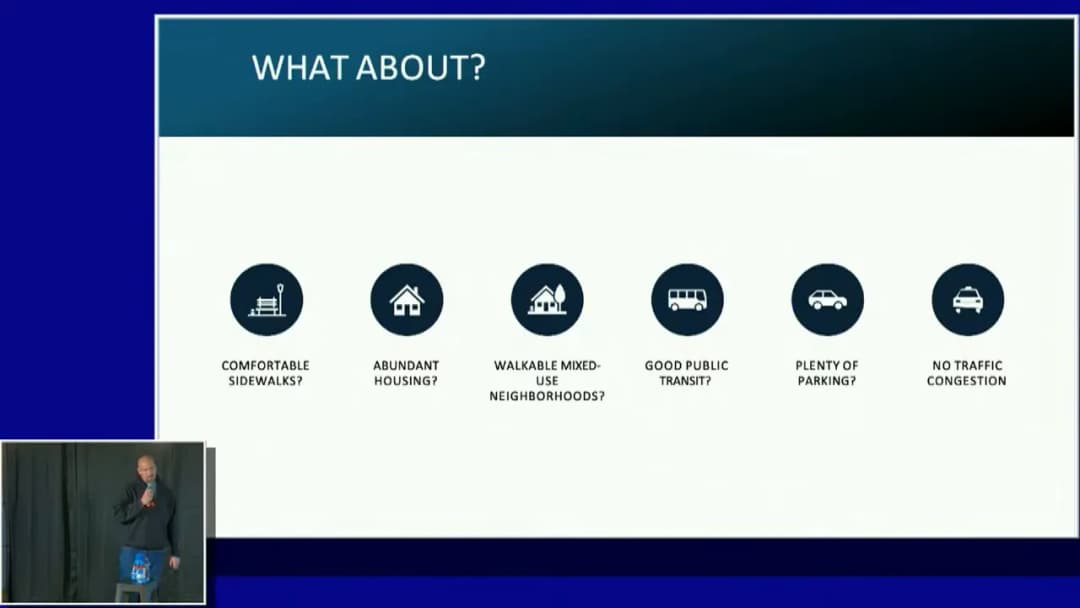
On Thursday, February 26, 2026, the Municipality of Anchorage's Assembly Legislative Services Office hosted City Nerd Night at the Seed Lab as part of Anchorage Design Week. The event gathered community members, creatives, and local leaders to discuss how to make Anchorage a better winter city through presentations, dialogue, and shared vision. Seven \"nerds\" delivered seven-minute talks followed by a moderated Q&A session. Presentations - Aaron Baldwin Day (Assembly Member, Midtown) opened by reframing the experience of winter darkness. Drawing on personal memory and a fat-bike ride under moonlight, he argued that darkness is not something to fear but a space of possibility and heightened senses. He encouraged the audience to \"discover what we can see in the dark\" and find courage and community in challenging times. - Julie (designer and former museum curator) presented international examples of winter city design, including warming huts in Toronto, ice skating trails in Finland, and the Art Shanty project in Minneapolis. She argued that Anchorage should treat winter as a competitive advantage rather than a problem, using simple, creative infrastructure to turn cold into joy. She cited the \"Freeze\" snow-installation project she organized in Anchorage nearly 20 years ago as an example of temporary winter placemaking. - Tony (Community Partnership Coordinator, Dark Days Music Festival) described the Dark Days Music Festival, a four-day all-ages winter event in downtown Anchorage. In 2025, the festival attracted 500 attendees (double the previous year) with 30 bands from across Alaska and the Pacific Northwest, generating an estimated $74,000 in economic impact. He emphasized the festival's role in supporting youth music access and downtown economic revitalization during the slow winter season. - Carrie Lynch (Board Member, Bike Anchorage) shared her five years of winter fat-tire biking experience. She noted that Anchorage's climate is ideal for year-round cycling, and that winter biking supports local bike shops as a year-round business. She called for better pathway maintenance, more bike parking (including snow removal from racks), and improved lighting to make winter biking safer and more practical for transportation. - Mandy and Liza (community members) recounted organizing a \"ski bar crawl\" for their friend Laura's birthday in January 2026. They attempted to connect Nordic ski trails to breweries and bars but faced challenges because trails do not intersect with business districts and sidewalks were not groomed. They emphasized the need for trail-to-business connectivity, noting that such access would benefit winter tourism and local commerce. - Mike (Alaska Botanical Garden) proposed a \"Chalet East\" concept: a public facility in East Anchorage that would serve as a hub for winter activities such as ice sculpting, kick sledding, and skating trails. He highlighted existing trails around the botanical garden and suggested leveraging the \"Project Anchorage\" tax proposal to create a smaller initial structure. He also introduced Rob Earl's idea for wild skating trails through the nearby wetlands, similar to Quebec's maintained ice trails. - Jason Norris (policy advocate) closed the presentations with a call to examine how local policies—particularly Title 21 (land use code) and street design standards—shape the winter city. He argued that current policies prioritize cars over pedestrians, cycling, and transit, and that trade-offs are inevitable. He challenged the audience to notice the built environment, engage in community councils and assemblies, and decide what they are willing to give up (e.g., abundant parking or wide roads) to achieve a more walkable, bikeable, and winter-friendly city. Q&A and Discussion The moderated Q&A covered several themes: - Lighting balance: Panelists discussed the tension between safety lighting and preserving night skies. Ideas included motion-sensor lights at crosswalks, red lights to protect wildlife (as seen in Nordic countries), and temporary artistic lighting installations (e.g., Westchester Lagoon ice carousel). Julie noted that many public spaces already have outlets for temporary lighting. - Role of employers: Panelists urged businesses to recognize winter assets near their locations, such as Cuddy Park's skating oval. Suggestions included providing skate exchanges for employees and designing buildings to be more welcoming (e.g., not locking bathrooms). Mike emphasized being open to partnership opportunities. - Zoning and infrastructure: In response to a question about zoning around trails, Aaron acknowledged the complexity of overlapping plans (comprehensive plan, land use plan, Title 21) and cited Emily Weiser's work on a non-motorized highway system. He stressed the need for public vocal support to overcome car-centric norms and budget constraints. - Youth access: Tony clarified that while the Dark Days festival targets all ages, transportation barriers exist; many youth attend from nearby West High School, and the team is surprised by the turnout. - Connectivity: Mandy and Liza reiterated the need for trails that link directly to businesses, and Mike confirmed that existing trails can connect the botanical garden to Russian Jack Park via the Tudor overpass and UAA trails. Key Outcomes - No formal votes or binding decisions were made, as the event was a community dialogue. - Panelists issued challenges to attendees: notice the built environment, attend community council meetings, write testimony, and advocate for policy changes that prioritize non-motorized infrastructure and winter placemaking. - The \"Big Fat Ride\" fat-tire bike event was promoted for Saturday, March 1 (during Fur Rondy), starting at 4th and E Street. - The outdoor film screening originally scheduled for February 27 was postponed to March 13 due to cold temperatures.