Browse by city
Date range
Search help

Search titles, summaries, topics and stored transcripts together. Keywords may match separately; put the whole query in double quotes for a phrase. Matching follows word analysis, so punctuation is not exact. Both dates are included. Documents are not searched.

SHOWING 81–90 ENTRIES
81
MAR 25, 2025 · BERKELEY, CALIFORNIA · CITY COUNCIL
Berkeley City Council Special Meeting - March 25, 2025: Pavement Management Plan and Referral Prioritization

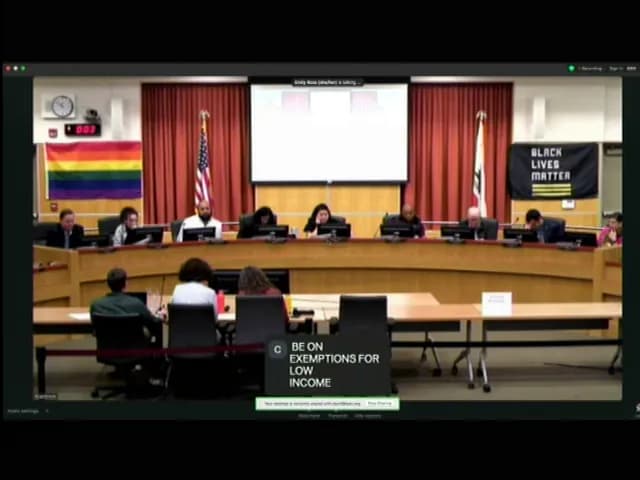
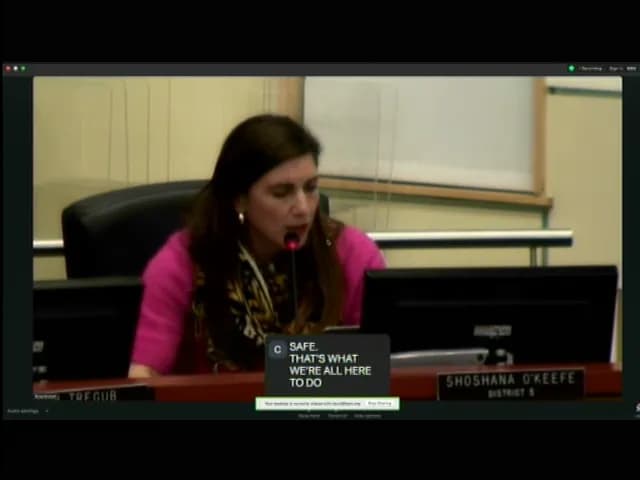
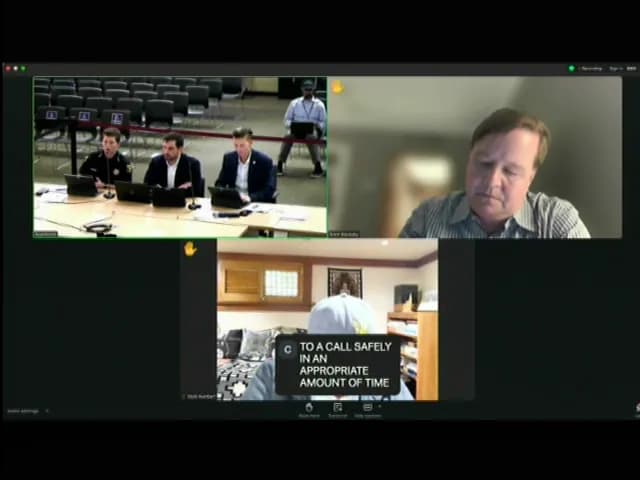
The Berkeley City Council held a special meeting on March 25, 2025, at 4:00 PM at the School District Board Room, 1231 Addison Street. The meeting focused on two major action items: a presentation on pavement management and infrastructure planning, and the review and adoption of the 2025 City Council Referral Prioritization results using Re-Weighted Range Voting (RRV). The meeting was conducted in a hybrid format with both in-person and remote participation. Consent Calendar - Item 1: Amend Memorandums of Understanding (MOUs) to include Cesar Chavez Day as a paid city holiday. The City Manager recommended adopting a resolution to add Cesar Chavez Day (last Monday of March) as a paid holiday for represented employee groups, beginning in 2025. The item was on the consent calendar and was adopted without discussion as part of a unanimous consent motion. Public Comments & Testimony On Pavement Management & Infrastructure Planning (Item 2): - Margot Shuler (former Public Works Commissioner) commented on the street saver concept, noting it is geared for asphalt and makes integration of innovative materials difficult. She highlighted the need for coordination with parks department on street trees and heat impacts, and raised concerns about asphalt's environmental effects on salmon and the Bay. She also questioned bundling utility requests with neighboring cities. - Ray Yep (former Public Works Commission and Transportation Infrastructure Commission member) praised the presentation and credited former commissioners, auditors, and council members for advancing infrastructure funding and awareness. - An unnamed speaker thanked Councilmember Kesarwani for thoughtful comments and questioned the status of a grant writer position. - Former Councilmember Gordon Wozniak expressed concern that the PCI (Pavement Condition Index) has not improved after 14 years. He urged reducing indirect costs, earning higher interest on idle funds, and considering permeable pavers for arterial streets. - Nancy Rader (on behalf of Berkeley's for Accessible Rights of Way) stressed the need to prioritize ADA compliance and accessibility in Measure FF implementation, urging a holistic approach to serve disabled and senior populations. - Blair Beekman commented on the meeting procedure (public comment before council questions) and urged tech accountability in infrastructure planning. - Helen Walsh (Commission on Disability) emphasized that accessibility and the ADA transition plan must be integrated into roadway planning, and asked how ADA updates would be funded. - Meryl Siegel requested inclusion of businesses in infrastructure planning to support economic vitality. On 2025 Referral Prioritization (Item 3): - Blair Beekman briefly commented on the item, expressing hope for a good process. Discussion Items Pavement Management & Infrastructure Planning (Item 2): The presentation by Public Works Director Terrance Davis outlined the current condition of Berkeley's streets, the impact of Measure FF funding (which began billing in January 2025 with an 18-month initial period), cost escalation drivers (labor, traffic control, regulations), and a proposed unified planning framework. Council members asked questions and discussed: - Councilmember Kesarwani asked about regional coordination, leveraging Measure FF for grants, community notification, and the potential for a user charge (impact fee) for large vehicles or electric vehicles. She requested a chart showing the funding needed to achieve Measure FF goals. - Councilmember Lunaparra asked about street safety after repaving (risk of increased speeds) and was told that post-construction analysis and engineering treatments are planned. - Vice Mayor Bartlett asked about cost escalation drivers (labor, traffic control subcontracting, prevailing wage regulations). He suggested communicating with city lobbyists on potential policy fixes. - Councilmember O'Keefe asked about the holistic prioritization process for Measure FF, Complete Streets, and other plans. Staff indicated that the prioritization criteria and policy recommendations would come before council for approval before significant project design begins. - Mayor Ishii expressed support for a community-facing dashboard to improve transparency. 2025 City Council Referral Prioritization (Item 3): City Clerk Mark Numainville presented the results of the Re-Weighted Range Voting (RRV) process, where council members scored 43 outstanding referrals. The final prioritized list placed Public Works as the top department (four of the top six). Staff noted that the city manager has discretion to adjust assignments based on departmental capacity. Councilmember Taplin moved adoption of the resolution approving the prioritized list, seconded by Councilmember O'Keefe. A brief discussion occurred on bundling related arts referrals; the city clerk preferred keeping them separate. The resolution was adopted unanimously. Key Outcomes - Consent Calendar: Adopted unanimously, including the Cesar Chavez Day paid holiday resolution. - Pavement Management Presentation: No vote required; the report was received and discussed. Council direction emphasized transparent communication, community engagement, and a unified prioritization policy. - 2025 Referral Prioritization Resolution: Approved unanimously (8-0). The final ranked list (Attachment A) will guide staff work, with the city manager retaining discretion for departmental capacity. Councilmember Taplin and O'Keefe made and seconded the motion.
MISCELLANEOUS 16% · PUBLIC COMMENT 15% · PROCEDURAL 11% · PUBLIC ENGAGEMENT 9%
82
MAR 18, 2025 · BERKELEY, CALIFORNIA · CITY COUNCIL
Berkeley City Council Regular Meeting – March 18, 2025

The Berkeley City Council met on March 18, 2025, at 6:19 PM in the School District Board Room (1231 Addison Street) and via teleconference. The meeting included ceremonial matters, approval of a consent calendar, a public hearing on the 2024 Local Hazard Mitigation Plan, and extensive debate on a proposal to transition the city's fixed surveillance camera program to Flock Safety and add new camera locations. Key votes were taken on the camera program and a substitute motion to exclude the Telegraph & Durant intersection. Ceremonial Matters - The Council adjourned the meeting in memory of Sarah Reynoso, a former city attorney and HR director who served Berkeley for 27 years. Her family attended and spoke. Consent Calendar - Items 1–8 were approved unanimously (8-0, with Councilmember Tregub abstaining on Item 10 as noted). Notable items included: Contract amendment with Rolling Orange for website maintenance ($120,000); Pride Industries citywide custodial services ($5.5M); SubTerra Construction sewer rehabilitation ($8.96M); Mercury Associates fleet consulting ($100,000); APB General Engineering urgent sewer repair ($470,910); FY2026 street lighting assessment proceedings; establishment of a Measure FF SAFE STREETS Citizen Oversight Committee (Councilmember Blackaby indicated he would later propose adding a disability community representative); and relinquishment of council office funds to support the California Triathlon Club (Councilmembers Lunaparra, Humbert, Blackaby, Bartlett, Taplin, Kesarwani, and Ishii contributed $250–$500 each). - Item 10 (Sex Trafficking Task Force) was moved to the consent calendar and referred back to the Commission on the Status of Women for a subcommittee to develop recommendations. Several speakers urged referring it to the Health, Life Enrichment, Equity & Community Policy Committee instead, but the council agreed to send it to the commission with the intent that the commission would form a task force without direct BPD staffing. Public Comments & Testimony - Non-Agenda Matters (beginning): Multiple speakers addressed: (1) The Special Care Unit (SCU) should be preserved as a non-police crisis response, citing the CAHOOTS model in Eugene; (2) Urgent need to protect after-school programming (LEARNS) at BUSD, with a speaker noting over 200 families were waitlisted; (3) The ceasefire violations by Israel and a request to expedite the Peace and Justice Commission resolution; (4) A proposal for the city and BUSD to use the former Oxford school site as a shelter modeled on the Horizon site. Mayor Ishii announced a special meeting in April to discuss Middle East issues and expressed support for Mahmoud Khalil. - Public Comment on Consent Items: Several speakers supported the sex trafficking task force, noting prior work by the Commission on the Status of Women and commitments from BPD and an external expert. - Public Hearing on Item 9 (Local Hazard Mitigation Plan): No public comments. - Public Comment on Item 11 (Surveillance Cameras): 16 speakers on Zoom and multiple in-person commenters. Positions were divided: - Opposition: Student and community advocates argued the cameras threaten privacy, particularly for immigrants, people of color, LGBTQ+ individuals, and student activists; cited risks of federal access under the Trump administration; noted lack of consultation with student groups; pointed to a transparent hub showing high vehicle detection (500,000 vehicles in 30 days); and argued cameras do not deter crime. A speaker from the Police Accountability Board flagged process concerns, noting the proposal conflates vendor replacement with a materially different surveillance model and that the STO process should allow broader vendor consideration. - Support: Business representatives (Downtown Berkeley Association, Telegraph BID, McDonald's franchisee, David Brower Center, Chamber of Commerce) cited recent violent incidents, retail theft, and the need for tools to identify suspects; SafeBears members described a shooting near Telegraph & Durant in October 2024 where cameras helped arrest a suspect found with 11 weapons. A retired UCPD detective emphasized the value of such technology. Discussion Items Item 9: 2024 Local Hazard Mitigation Plan (LHMP) - Deputy Fire Chief Keith May and Emergency Services Coordinator Jamie Albrecht presented the 400-page plan, required every 5 years by FEMA. The plan includes 34 mitigation actions, new hazard chapters (air quality, high wind, sea level rise, utility interruption, infectious disease), and a community education element. Public feedback led to additions on hazardous vegetation, evacuation concerns, and interactive online maps. The plan received approval pending adoption from FEMA on January 13, 2025, and positive recommendations from the Disaster & Fire Safety Commission and Planning Commission. - Councilmembers praised the thoroughness and engagement, noting that Cal OES gave kudos. The motion to adopt the resolution and amend the General Plan passed unanimously (8-0, with Bartlett joining). Item 11: Revised External Fixed Surveillance Camera Locations & Vendor Transition - Chief Jennifer Louis and IT Analyst Arlo presented the proposal: transition from Edgeworth Integration to Flock Safety, reallocate camera placements from major thoroughfares (now covered by ALPRs) to high-pedestrian areas, and seek grant funding. Proposed primary locations include Telegraph & Durant, Center/MLK, College/Ashby, among others; additional sites (Ashby/Domingo, etc.) if funding permits. - Key discussion points: - Data security: Flock data is encrypted in transit and at rest, stored on AWS GovCloud; retention is 30 days for ALPR, 180 days for fixed cameras (with extension for active investigations). No live monitoring is currently permitted; changes would require council approval. - Privacy protections: Current policy prohibits sharing with federal immigration enforcement; state law (SB 54) provides additional safeguards. Councilmember Tregub proposed a resolved clause requiring Flock to not share data with external agencies absent a court order, with contract termination as a remedy. Councilmember Bartlett proposed language about liquidated damages and local storage, but it was not added as a friendly amendment to the main motion; instead, it was referred for negotiations. - Location-specific concerns: Councilmember Lunaparra moved a substitute motion to exclude the Telegraph & Durant intersection, citing lack of student consultation and disproportionate impact on immigrant and activist communities. Several councilmembers noted the intersection's high pedestrian volume and history of violent crime (e.g., 2022 murder). - Council discussion: A majority (Kesarwani, Taplin, Bartlett, Tregub, O'Keefe, Blackaby, Humbert, Ishii) supported the main motion, arguing the cameras are a tool for solving serious crime, that the process includes further review by the Police Accountability Board and a later use policy vote, and that the data protection language addresses federal overreach fears. Councilmember Lunaparra opposed, citing risks to sanctuary city commitments and student trust. Key Outcomes - Item 9: 2024 Local Hazard Mitigation Plan – Adopted unanimously (8-0). The General Plan is amended to incorporate the 2024 LHMP. - Item 11: Surveillance Camera Program – Main motion (Humbert/Blackaby) passed 7-1 (Lunaparra opposed). The resolution authorizes the City Manager to: (1) begin the Surveillance Technology Ordinance process to explore transitioning to Flock Safety; (2) seek grant funding; and (3) approve the proposed camera locations, including the four additional sites (Ashby/Domingo, Ashby/San Pablo, Ashby/6th, University/San Pablo) if funding allows. The substitute motion to remove Telegraph & Durant failed 1-6-1 (Lunaparra voted no, with the rest opposed or absent? Actually roll call: Lunaparra voted no on her own substitute? Wait: On substitute motion, roll call showed: Kesarwani no, Taplin no, Bartlett yes, Tregub? transcript says 'I. Oh. Keith. No.' likely 'aye'? Let's check: transcript: "Traegeb. I. Oh. Keith. No." That appears garbled. Later: "Blackaby. No. Lunaparra. Abstain? No, she voted no? Actually: "Lunapara. Abstain. Humbert. Yes. No, I mean, sorry. Okay. No. Uh, Mayor Ishi. No. Motion fails." So substitute motion failed 1-6-1? Not critical to specify exact tally, but indicate failure. The main motion passed 7-1. - Data protection: The resolution includes councilmember Tregub's language requiring Flock to not share data with outside agencies absent a court order, with immediate notification and termination rights. Councilmember Bartlett's proposed language regarding liquidated damages and local storage was referred to the City Manager for negotiation with the vendor. - Next steps: The Police Accountability Board will review the acquisition report and use policy; the item returns to council for final approval before any cameras are installed.

SURVEILLANCE TECHNOLOGY 36% · PUBLIC SAFETY 17% · PUBLIC COMMENT 16% · PROCEDURAL 11%
83
MAR 18, 2025 · BERKELEY, CALIFORNIA · CITY COUNCIL
Berkeley City Council Special Meeting on 2024 BPD Annual Report - March 18, 2025

On March 18, 2025, the Berkeley City Council held a special meeting (worksession) to receive the 2024 Berkeley Police Department Annual Report. The meeting began at 4:00 PM in the School District Board Room with hybrid participation. Chief Jennifer Louis, Deputy Chief Den Gent Tate, and Strategic Planning and Accountability Manager Arlo Malmberg presented the report, covering crime trends, traffic safety, accountability measures, and staffing challenges. Councilmembers discussed the report extensively, asked questions, and expressed appreciation for the department's transparency and professionalism. Public Comments & Testimony - A speaker (unidentified) commended the department and expressed hope for increased CIT training and downtown safety escorts. - Kelly Hamergren noted national instability and requested longer historical data for context. Staff noted that the transparency hub provides data back to 2016. Discussion Items - BPD 2024 Annual Report Presentation: The department reported on operational workload (61,666 calls for service; 140 available sworn officers out of 154 authorized; 17 of 36 dispatchers staffed; 21% vacancy rate). Crime reductions included shootings falling by 26%, robberies by 43%, and vehicle thefts by 23%. Hate crime data showed anti-LGBTQ as the most common bias motivation, with anti-Jewish incidents at 20%, anti-Arab at about 7%, and anti-Muslim at about 5%. Traffic safety statistics included 877 total collisions (4 fatal, 559 injury), with speeding as the primary factor. Use of force occurred in 0.48% of calls, and bias tests (veil of darkness, search yield rates) indicated no evidence of implicit bias. New initiatives included expansion of Community Service Officers (3 in training), ALPR cameras (32 active, contributing to 14 arrests in first 3 months), organized retail theft operations (12 operations, 79 arrests), KIND training (40 hours for nearly all officers), and an early intervention system. - Council Questions and Dialogue: Councilmembers raised questions on staffing and attrition (net +2 per year; retention focus), traffic enforcement (need for speed surveys, automated enforcement possibilities), mental health calls (about 5% of calls have mental health nexus; collaboration with Specialized Care Unit), hate crimes, bias testing comparisons to peer cities, recruitment (partnership with All-Star Recruiting; CSO pipeline), data definitions (NIBERS categories, force levels), and the Drive Safer Drive Longer program (about 20 attendees per class). - Councilmember Comments: Councilmember Kesarwani requested further breakdown of 911 calls in District 4 and praised retail theft operations. Councilmember O'Keefe asked about speeding enforcement support and mental health data integration. Councilmember Bartlett commended the department's equity metrics and asked about the ceasefire initiative (described as city-led gun violence intervention). Councilmember Blackaby focused on north star metrics and requested future comparisons to peer cities. Councilmember Humbert defended stop data against profiling claims and supported ALPR and traffic safety. Mayor Ishii requested future reports include more mental health data and collaboration with Reimagining Public Safety. Key Outcomes - The council received the report and acknowledged the department's efforts. No formal votes were taken, as this was a worksession. - Councilmembers requested future reports include comparisons to peer cities, more detail on mental health responses, and continued updates on staffing and accountability initiatives. - The meeting adjourned at 6:00 PM with a 15-minute break before the regular council meeting.

PUBLIC SAFETY 54% · POLICE ACCOUNTABILITY 12% · PUBLIC ENGAGEMENT 8% · TRANSPORTATION SAFETY 7%
84
MAR 11, 2025 · BERKELEY, CALIFORNIA · CITY COUNCIL
Berkeley City Council Meeting March 11, 2025: Islamophobia Resolution, Algorithmic Rent Ban, Tax Lien Appeal

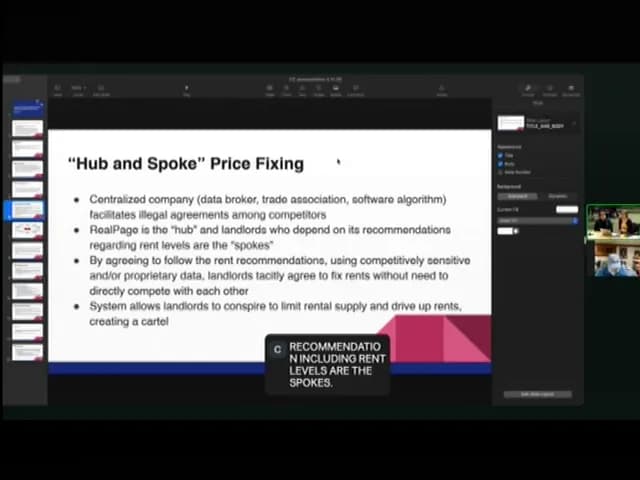
The Berkeley City Council met on Tuesday, March 11, 2025, at 6:00 PM in the School District Board Room. The meeting included an urgency resolution condemning anti-Muslim hate, a public hearing on a special assessment tax lien appeal, and adoption of an ordinance banning algorithmic devices used to set rents. The council also approved a consent calendar of routine items and heard extensive public comment, primarily regarding the Israel-Gaza conflict and local hate incidents. Consent Calendar - Urgency Resolution (Item added before consent): Adopted an urgency resolution condemning the recent Islamophobic incident and all acts of Islamophobia in Berkeley, reaffirming unwavering support for the Muslim community. Vote: unanimous (8-0). The resolution was introduced by Councilmembers Tregub, Taplin, and Lunaparra. - Item 1: Inclusionary Housing Ordinance In-Lieu Fee amendment (second reading). Adopted. - Item 2: Zoning ordinance amendments for EV charging consistency with state law (second reading). Adopted. - Item 3: Appointment of Randy Wells to the Police Accountability Board. Adopted. - Item 4: 2025 Commissioners’ and Board Members’ Manual. Adopted. - Item 5: Contract with Edgeworth Integration LLC for new security server at Animal Care Services ($57,908). Adopted. - Item 6: Authorization of bid solicitations and requests for proposals. Adopted. - Item 7: Annual purchase orders for L.N. Curtis and Sons for fire department PPE and equipment (not to exceed $1,040,324). Adopted. - Item 8: Amendment to Health Officer coverage contract with Dr. Lisa B. Hernandez ($60,000 increase, total $180,000). Adopted. - Item 9: Joint Homekey+ application for MLK House permanent supportive housing for veterans. Adopted. - Item 10: Resolution authorizing integration of BUSD workforce housing preferences with City of Berkeley’s Housing Preference Policy for the 1701 San Pablo project. Adopted. City Manager clarified that BUSD preferences apply first, then City preferences are layered within those tiers; remaining units would be filled by City preference. - Item 11: Salary adjustments for Deputy Director of Public Works ($110.98/hr) and Deputy Director of Health, Housing, and Community Services ($107.05/hr). Adopted. - Item 12: Three side letters with Berkeley Fire Fighters Association (probationary period to 18 months, pre-promotional academies, vacation slots). Adopted. - Item 13: Side letter with Berkeley Chief Fire Officers Association (battalion coverage). Adopted. - Item 14: Referral to City Manager to study transfer tax exemption for 100% affordable housing projects owned by nonprofits or community land trusts. Adopted per policy committee’s qualified positive recommendation. - Item 15: Referral to 4×4 Committee on removing on-site manager exemption loophole. Withdrawn due to potential conflict of interest. - Item 16: “First Year Free – Fill Empty Storefronts Act” – referral to City Manager. Adopted per policy committee’s negative recommendation (take no action). Council expressed continued interest in addressing empty storefronts. Public Comments & Testimony - Non-Agenda Matters: Over 20 speakers addressed the council. The majority called on the council to pass a ceasefire resolution and end silence on the Gaza genocide. Speakers displayed banners with names of Palestinian children killed. Several speakers criticized the urgency resolution as “performative” without a ceasefire stance. Others urged support for the Muslim community and condemned recent hate crimes against Jaffa Coffee and Berkeley Community Physical Therapy. There were also comments about Berkeley High School student safety incidents and police interactions with unhoused individuals. - Employee Union Comment: A representative of SEIU 1021 spoke in support of a ceasefire resolution and urged passage of the algorithmic rent-setting ban (Item 18). - Consent Calendar Items: Public comment included support for Item 14 (transfer tax exemption study) by Courtney Powell of Resources for Community Development, and requests for clarity on Item 10 (BUSD housing preferences). Several speakers urged action on Item 16 (empty storefronts) but acknowledged the negative committee recommendation. - Item 18 (Algorithmic Rent Ban): Approximately 10 speakers, including representatives from the Berkeley Rent Stabilization Board and tenant unions, strongly supported the ordinance. One speaker cautioned against overbroad definitions, distinguishing between non-public data and algorithmic devices. - Item 17 (Tax Lien Appeal): The appellant, Jonathan Hicks (representing owner Peter Wright), did not dispute the violations but requested a fee reduction due to financial constraints. Multiple public commenters opposed the reduction, arguing that landlords must comply with housing codes. Action Calendar – Public Hearing Item 17 – Appeal of Special Assessment Tax Lien (1806 Walnut St) - Staff presented that the property failed proactive inspections in 2022-2023, including missing smoke/CO alarms, damaged electrical outlets, and missing GFCI protection. After four total inspections (initial + three reinspections), fees and penalties accumulated to $6,230. The owner’s management company (KNS) failed to correct violations promptly. - Appellant requested a reduction, citing rising costs and rent control limits. - Councilmembers noted KNS is a large, sophisticated management company and expressed little sympathy. The public hearing was closed, and council voted unanimously (8-0) to adopt the staff recommendation denying the appeal and authorizing the lien. Action Calendar – New Business Item 18 – Ordinance to Prohibit Sale or Use of Algorithmic Devices to Set Rents - The Housing Advisory Commission presented: algorithmic devices like RealPage’s YieldStar facilitate hub-and-spoke price fixing among landlords, driving up rents. 57% of Berkeley residents are renters; 60% are low-income; half are rent-burdened. Six property management firms named in class actions control about 1,300 units in Berkeley. - Councilmember Lunaparra introduced a supplemental with technical amendments, clarifying that “pricing algorithms” used in direct or indirect coordination with competitors are prohibited. Further on-the-fly edits removed explicit naming of East Bay Rental Housing Association and Berkeley Property Owners Association. - Debate: Councilmember Humbert opposed, arguing the definitions were overbroad, unenforceable, and potentially unconstitutional; he favored focusing on building more housing. Councilmember Blackaby supported, emphasizing the need to target collusion, not technology itself. Councilmember O’Keefe (computer science teacher) endorsed the refined language. - Motion by Councilmember Lunaparra to adopt the amended ordinance; seconded by Councilmember Tregub. - Vote: 7-1 (Humbert opposed). Motion carried. The ordinance amends BMC Chapter 13.63. Key Outcomes - Urgency Resolution (Islamophobia): Adopted unanimously (8-0). - Consent Calendar: All remaining items (including items 1-14, 16) approved; Item 15 withdrawn. - Tax Lien Appeal: Denied; appeal rejected, lien recorded. Vote 8-0. - Algorithmic Rent-Setting Ban: Ordinance adopted with amendments (7-1). Effective upon second reading. - Adjourned in memory of former District 8 Councilmember Polly Armstrong. A separate adjournment for Marty Shiffenbauer was postponed to the next meeting. - Next Steps: The ceasefire/peace resolution from the Peace and Justice Commission is expected to go to Rules and Agenda Committee on April 1, then to Council on April 15.

PUBLIC COMMENT 28% · AFFORDABLE HOUSING 20% · PROCEDURAL 13% · PUBLIC SAFETY 11%
85
MAR 11, 2025 · BERKELEY, CALIFORNIA · CITY COUNCIL
Berkeley City Council Special Meeting on Referral Prioritization – March 11, 2025

The Berkeley City Council held a special meeting on March 11, 2025, at 5:00 PM to conduct the first phase of the 2025 Council Referral Prioritization Process using Re-Weighted Range Voting (RRV). The Council reviewed 20 long-standing referrals nominated for removal, heard public testimony, and voted to remove 14 items while retaining 6 for prioritization. The City Manager was directed to run the RRV algorithm and return a final ranked list for adoption at the March 25, 2025 meeting. Public Comments & Testimony - Several speakers urged the Council to retain the Tenant Opportunity to Purchase Act / Community Opportunity to Purchase Act (TOPA/COPA) referral, arguing it is critical for preserving affordable housing and preventing displacement, and noting its alignment with the city's Housing Element. Speakers included Jasmine Zazi (Bay Area Community Land Trust), Avery Harbour (Berkeley Tenants Union), Kelly DeWolf, Sophia DeWitt, and Vinita Gaulle. - Multiple speakers, including Cameron Wu (Civic Arts Commission) and Kim Anno, advocated for retaining referrals related to affordable housing for artists, citing the cultural and economic importance of artists and the need for live-work units. - Kelly Hamergan spoke against the removal of the Dark Skies Ordinance and the Pollinators and Habitat referral, emphasizing biodiversity and bird migration impacts. - Maria, an elder and disabled resident, urged the Council to prioritize holistic support for vulnerable populations, including homeless services. - Aram James attempted to comment on an unrelated matter (ceasefire in Palestine) and was redirected to the regular meeting by the Mayor. Discussion Items - City Clerk Mark Numainville presented an overview of the RRV process: each Council member rates referrals 0–5; after the first priority is identified, scores are reweighted. From 2014–2024, there were 557 City Council referrals, of which 299 were long-term, 154 short-term, and 104 originated from commissions. Of those, 145 long-term, 134 short-term, and 62 commission referrals have been completed, leaving 76 long-term, 15 short-term, and 31 commission referrals still pending. - The Council debated which of the 20 referrals nominated for removal should be retained. Councilmember Tregub initially moved to retain seven items, later amending to six after discussion: No Right Turn on Red, Prioritizing Pedestrians at Intersections, Hard Hats (upzoning), COPA/TOPA, Berkeley Food Utility and Access Resilience (Farm item), and Telegraph Density Bonus. Councilmember Kesarwani proposed a substitute motion to retain only three items (No Right Turn on Red, Prioritizing Pedestrians at Intersections, and Hard Hats), but later withdrew it. - Councilmembers discussed the rationale for removal: Hard Hats was considered moot due to state legislation; the Public Bank feasibility study was deemed infeasible under the current federal administration; Pollinators and Habitat was potentially already partially implemented. Councilmember Bartlett advocated for retaining the Farm item as the only referral for the Office of Economic Development (OED). Key Outcomes - The Council voted unanimously (8–0) to approve the removal of 14 of the 20 referrals nominated for removal, retaining the following six: No Right Turn on Red, Prioritizing Pedestrians at Intersections, Hard Hats (upzoning), COPA/TOPA, Berkeley Food Utility and Access Resilience (Farm item), and Telegraph Density Bonus. - The Council directed the City Manager to run the RRV ranking algorithm using the updated list and to present a final ranked list for adoption at the March 25, 2025 Council meeting.

PROCEDURAL 39% · PUBLIC ENGAGEMENT 19% · AFFORDABLE HOUSING 13% · PUBLIC COMMENT 7%
86
FEB 25, 2025 · BERKELEY, CALIFORNIA · CITY COUNCIL
Berkeley City Council Regular Meeting - February 25, 2025

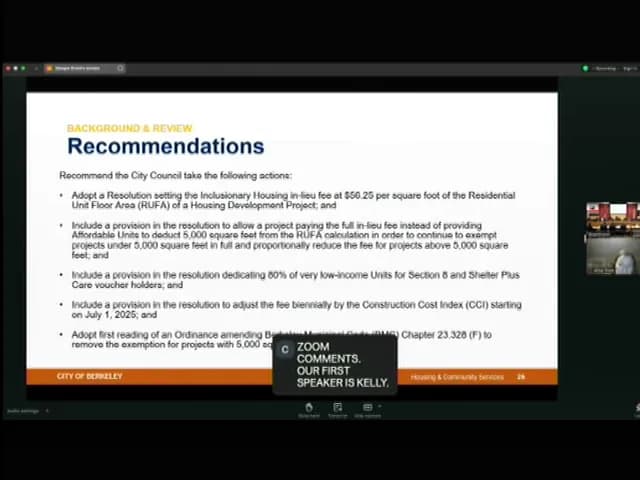
The Berkeley City Council held a regular hybrid meeting on Tuesday, February 25, 2025, at the School District Board Room. The meeting included an urgent item added to the consent calendar, approval of 12 consent items, a public hearing on the Inclusionary Housing Ordinance in-lieu fee, and extensive public comment on both agenda and non-agenda matters. Due to time constraints, the second public hearing (Zoning Ordinance Amendments for EV charging) was not reached before the transcript ended. Urgent Item - Mayor Ishii submitted an urgent item to adjust council committee appointments due to a conflict of interest with BUSD and scheduling conflicts. The item was added to the consent calendar by unanimous consent and approved. Consent Calendar - Item 1: Approved minutes from the January 21, 2025 regular meeting. - Item 2: Authorized submission of a $150,000 National Endowment for the Arts grant application. - Item 3: Approved formal bid solicitations and RFP issuance. - Item 4: Authorized a three-year contract (with two optional one-year extensions) with Forster & Kroeger for chipping services, not to exceed $1,400,000. Councilmember Blackaby highlighted the program's success, noting 6,000 cubic yards of debris removed in 2,300 pickups over 56 weeks. - Item 5: Amended contract with JSI Research & Training Institute for community health assessment consulting, increasing by $25,000 to a total of $274,413. - Item 6: Approved a side letter with the Berkeley Police Association amending retiree medical benefits. - Item 7: Removed by the City Manager. - Item 8: Amended contract with TruePoint Solutions for IT professional services, increasing by $180,000 to $1,477,200 and extending through June 2027. - Item 9: Awarded a contract to Ashlar Structural LLC for Strawberry Creek Culvert Maintenance Phase 1, not to exceed $4,544,232. - Item 10: Awarded a contract to Bay Construction Co. for Fire Station 2 improvements, not to exceed $1,104,000. - Item 11: Amended contract with Telegraph Property and Business Management Corporation for janitorial maintenance of the new 24/7 public restroom, increasing by $150,000 and extending through June 2026. Councilmembers Humbert, Lunaparra, and Tregub expressed strong support. - Item 12: Amended contract with Pacific Site Management for landscaping services, increasing by $150,000 to $300,000 and extending through June 2027. - Item 13 (Council Consent): Adopted a resolution Supporting the Free and Safe Passage of Whales, Sea Turtles, and other Marine Animals in California coastal waters, aligning with the state's Vision Zero target. Authored by Councilmember Lunaparra, co-sponsored by Councilmember O'Keefe. Public Comments & Testimony Non-Agenda Matters (beginning of meeting): - Several speakers urged the council to agendize and vote on a ceasefire resolution from the Peace and Justice Commission, criticizing the city's inaction. One speaker requested the council stop 'greenwashing' by focusing on marine animals while ignoring Gaza. - A resident complained about an unpermitted garage door blocking a sidewalk on the block before Rose Garden, requesting enforcement. - Andrew Pritchett (Hop Watch) raised concerns about police non-cooperation with the Specialized Care Unit (SCU) and the police accountability board's recommendations regarding racist texts. - A speaker opposed a rumored effort to exclude dogs from Cesar Chavez Park, urging the council to keep the park inclusive. - A speaker spoke in support of preserving the United Artists Cinema on Shattuck Avenue, opposing its demolition for a project that she argued violates CEQA. Consent Calendar & Information Items: - Multiple speakers supported Item 13 (whales resolution) and Item 2 (NEA grant). - Speakers supported Item 11 (public restroom) and criticized misinformation linking restrooms to crime. - Some speakers connected support for marine life to broader concerns about Gaza and urged the council to act on a ceasefire resolution. - Representatives from the Center for Biological Diversity and other groups explicitly endorsed Item 13. Inclusionary Housing Ordinance Public Hearing (Item 14): - Nikki Moose (chair of Berkeley Finance Union) argued against reducing inclusionary fees, stating that affordable housing is needed to undo past redlining and exclusionary covenants. - A speaker urged that Section 8 and Shelter Plus Care vouchers continue to be prioritized for very low-income units, and requested broader language to cover potential future voucher programs. - Glenn Turner (District 5 resident) supported exemptions for smaller projects but opposed returning the voucher set-aside from 80% back to 100%, arguing that the most vulnerable should be protected. - A tenant union representative opposed referring to rental units as 'products' but acknowledged the need for regulations. She supported the fee structure but cautioned against exempting luxury units. - Kelly Hammergran (online) recommended lowering the 5,000 sq ft exemption to 2,500 sq ft and opposed exempting detached single-family homes (McMansions). She also sought clarification on how the in-lieu fee is calculated for density bonus projects. - Another online speaker agreed with Kelly and criticized too many developer discounts, citing past failures to meet affordable housing goals. - Dan (online) asked for more accessible language, noting jargon like 'pencil' was confusing. Discussion Items Item 14 – Inclusionary Housing Ordinance In-Lieu Fee: Staff from Health, Housing, and Community Services, Planning, and consultants presented the findings of a feasibility study. Key points: - Current in-lieu fee is $56.25 per square foot of residential unit floor area (RUFA). Staff recommended keeping this fee but restructuring the exemption for small projects. - Proposed change: Replace the current tiered exemption (0-5,000 sq ft exempt, then phased) with a flat 5,000 sq ft exemption for any project paying the full in-lieu fee. This removes disincentives to build just under 5,000 sq ft and simplifies the code. - The 5,000 sq ft exemption would not apply to projects using mixed compliance (on-site units + fee) or density bonus projects, which already pay reduced fees. - Staff recommended biennial indexing by the Construction Cost Index (CCI), with an increase scheduled for July 2025. - Staff recommended reverting to prior policy: 80% of very low-income units must be offered first to Section 8 and Shelter Plus Care voucher holders (down from 100% set in 2023). - The Housing Advisory Commission recommended excluding detached single-family homes from the 5,000 sq ft exemption and conducting a new feasibility study within three years of the middle housing zoning amendments. - Planning commission supported staff recommendations. Council questions and deliberation: - Councilmembers asked about the impact on trust fund revenue; staff said most revenue comes from larger projects using mixed compliance, so the change is likely cost-neutral. - Councilmember Tregub asked for clarification on the definition of missing middle (2-9 units vs. 2-18 units). Staff noted the feasibility study included prototypes up to 10 units, and the three missing middle prototypes tested showed two (small-lot single-family and four-plex townhomes) are financially feasible as ownership products, while a 10-unit multifamily project is not. - Councilmember Kesarwani clarified how BMR unit sizes are calculated (proportional to bedroom mix) and supported the referral for a future feasibility study. - Councilmember Bartlett asked about the impact of LA fires on labor and materials; staff said it was not factored in but could be significant. Councilmember Lunaparra made a motion to adopt staff recommendations (including the 5,000 sq ft exemption and 80% voucher set-aside) with an added referral: direct staff to conduct an economic and legal analysis of extending the in-lieu fee to new detached single-unit dwellings greater than 2,500 square feet on a single parcel (excluding ADUs, renovations, or replacement of existing homes). Councilmember Blackaby offered a friendly amendment to analyze a range of square footage thresholds (not just 2,500), which was accepted. Councilmember Trageub expressed support for the motion, noting that the per-square-foot fee structure prevents gaming. Councilmembers O'Keefe, Humbert, and Bartlett also voiced support, praising the policy's elegance and balance. Item 15 – Zoning Ordinance Amendments for EV Charging: Not discussed in the provided transcript; the meeting adjourned for a break after Item 14. Key Outcomes - Consent Calendar: All 13 items (including the urgent item) approved unanimously. - Inclusionary Housing Ordinance (Item 14): - Public hearing closed unanimously. - Adopted the first reading of an ordinance amending BMC Chapter 23.328 to remove the exemption for projects with 5,000 sq ft or less of RUFA, replacing it with a 5,000 sq ft deduction from the RUFA calculation for projects paying the full in-lieu fee. - Set the in-lieu fee at $56.25 per sq ft of RUFA, with biennial indexing by CCI starting July 1, 2025. - Directed that 80% of very low-income units be offered first to Section 8 and Shelter Plus Care voucher holders. - Referred to staff and the City Attorney: (1) economic and legal analysis of extending the in-lieu fee to new single-family dwellings over 2,500 sq ft on undeveloped parcels, including a range of thresholds; (2) conduct a new feasibility study within three years of the middle housing zoning ordinance adoption. - The motion passed unanimously (8-0). - Item 15: Not acted upon; no votes recorded in the transcript.

AFFORDABLE HOUSING 43% · PUBLIC COMMENT 20% · PUBLIC WORKS 10% · ZONING AND LAND USE 8%
87
FEB 25, 2025 · BERKELEY, CALIFORNIA · CITY COUNCIL
Berkeley City Council Special Meeting on Economic Dashboards – February 25, 2025

The Berkeley City Council convened a special worksession on Tuesday, February 25, 2025, to receive the 2024 Berkeley Economic Dashboards update from the Office of Economic Development (OED). The presentation covered employment trends, hospitality performance, innovation sector activity, commercial real estate vacancy, sales tax revenue, housing development, and OED program initiatives. Public comments raised concerns about federal workforce reductions and downtown vacancy rates. Council members discussed strategies to support small businesses, improve business licensing, retain startups, and address commercial vacancies. No formal votes were taken. Public Comments & Testimony - First speaker (in-person): Requested that the boundaries of each commercial district be clearly listed to avoid confusion, and asked for explanations behind significant vacancy rate increases or decreases. The speaker noted an upbeat presentation but questioned which positive trends are at risk given current economic uncertainties. - John Caner (Downtown Berkeley Association): Stated that the downtown vacancy rate is actually 28.2% after removing about 1 million square feet of non-commercial uses (parking garages, Berkeley High School) and including pending development vacancies. Reported that six housing projects with 2,900 units in downtown are on hold due to high interest rates and construction costs. Requested council support for storefront improvement programs (e.g., window film, art pop-ups), safety ambassadors, and security cameras. - Kelly Hamergan (online): Noted that four of her Berkeley neighbors lost federal jobs this week and urged council to press staff on how the gutting of federal employees, funding, and grants might impact Berkeley’s economic outlook. Discussion Items - Presentation by Eleanor Hollander, Liz, Vincent, and Jennifer (OED): - Employment: Unemployment slightly up; East Bay jobs grew 0.9% in 2024. Top sectors: educational/health services, government, hospitality. Smaller sectors like architecture/engineering also grew. - Hospitality: Berkeley outperformed neighboring East Bay cities and San Francisco in occupancy rates. 2.4 million visitors spent an average of $187.5 per night, generating about $7.1 million in Transient Occupancy Tax. Events like Berkeley Restaurant Week and Bioneers Conference drew visitors. - Innovation Sector: Over 400 companies citywide, with 35% software, 32% biotech/healthcare, 15% climate tech. UC Berkeley ranked 1 globally for venture-backed startups. Total venture capital raised in 2024: $1.2 billion (up from 2023), though fewer companies raised money. Top deals: KoBold Metals ($537M), Twelve ($245M), Perfect Day. Government R&D grants increased to $14.3 million. - Commercial Real Estate: Wet lab vacancy at 48.6% (inflated by large spaces like Berkeley Commons); office vacancy at 18% (up from 14% in 2023). Average office rent: slightly over $3/sq ft. - Retail & Commercial Occupancy: Citywide ground-floor vacancy dropped from 8.1% to 7.5%. Decreases on San Pablo Ave, Solano Ave, South Berkeley, University area, and Telegraph. Increases in downtown (10.9%), Elmwood, North Shattuck, West Berkeley, and neighborhood commercial districts. Retail makes up 31% of ground-floor uses; food/beverage 13%. - Sales Tax: Q2 2024 revenue higher than 2023 but below 2022 peak; retail 45% of sales tax, food/beverage 37%. - Housing: 1,600 units approved in 13 projects in 2024. Median single-family home price: $1.4 million (second only to Piedmont); sales volume down 12%; rents slightly increased (studio up 1.7%). - OED Programs: Resiliency Loan Program (RLP) and other loan funds; business district support; Discover Berkeley marketing campaign (over 4 million impressions, 180,000 engagements); 79 green business certified; 125 STEM career visits by Berkeley High students; 111 arts grants totaling $760,000; two major public art projects completed; and ongoing work on economic impact study and resilient sector plan. - Councilmember Humbert: Asked if the 1.7% studio rent increase accounted for unit mix; staff said it was a high-level average. Questioned whether below-inflation rent increases signal stabilization due to increased housing supply. - Councilmember Bartlett: Asked about the decrease in South Berkeley vacancy (19.2% to 10.9%)—whether it reflected office/professional services replacing retail. Staff noted removal of residential properties from commercial count and unlicensed businesses. Bartlett stressed need for lower rents to support walkable retail and cultural vitality, and encouraged free public art projects. - Councilmember Lunaparra: Asked about the impact of the R&D grant tax exemption (passed unanimously last year) and about support for small businesses (e.g., flower shop downtown). Staff reported 15 companies approved for the waiver anecdotally, calling it a net positive for business license compliance and reputation. On small business support, staff noted business licensing speed, shared facilities, and the Project Equity worker-cooperative program. - Councilmember Blackaby: Asked what more the city can do to retain startups (especially biotech) that leave for Emeryville, Alameda, or San Leandro. Staff cited opportunities for city pilots of new technologies, matching building stock to startup needs (e.g., grad labs), and leveraging UC Berkeley innovation. A Startup Cluster Advisory meeting is scheduled for March 12, 2025. - Councilmember Tregub: Asked about services to save struggling businesses before they close. Staff acknowledged businesses often go quiet; efforts include convening commercial districts, offering workshops, and helping with data. The OED newsletter and one-pager can connect businesses to services. - Mayor Ishii and others: Thanked staff for the report, praised the arts program and green business certification, and encouraged use of the DiscoverBerkeley hashtag. Key Outcomes - No formal votes, motions, or decisions were taken at this special worksession. The council received the economic dashboard update and directed OED staff to continue collaboration with the council and downtown partners on addressing commercial vacancy, improving business licensing, and supporting small businesses. - Upcoming next steps include the Berkeley Startup Cluster Advisory meeting (March 12, 2025) and continued exploration of storefront improvement programs, pop-ups, shared facilities, and potential city pilot projects with local startups.

ECONOMIC DEVELOPMENT 58% · TECHNOLOGY AND INNOVATION 12% · ARTS AND CULTURE 12% · PUBLIC WORKS 6%
88
FEB 11, 2025 · BERKELEY, CALIFORNIA · CITY COUNCIL
Berkeley City Council Regular Meeting Summary – February 11, 2025

The Berkeley City Council met on Tuesday, February 11, 2025, at 6:00 PM in the School District Board Room. The meeting included ceremonial adjournments, public comment on non-agenda matters, a consent calendar, and action items on a lease audit follow-up and amendments to the Building Emissions Saving Ordinance (BESO). The council also reported on a closed session settlement. Consent Calendar - Item 6 – Golden State Energy Resolution: Unanimously adopted a resolution supporting a state feasibility study for a not-for-profit public utility model to replace investor-owned utilities like PG&E. The council also approved sending letters of support to state officials. - Item 7 – Traffic Diverter Study: Unanimously approved a referral to the City Manager to study intersections with traffic diverters lacking stop signs, and to review past council referrals for NACTO street design standards. The study was prompted by the fatal crash at Ada and California streets that killed Elise Lusk. - Other consent items (minutes, bid solicitations, contract amendments, classification changes) were approved en bloc. Public Comments & Testimony - Non-agenda matters (opening): Speakers addressed encampments, sanctuary city expansion, fire safety, and the UA Theater appeal. One speaker criticized the city’s ADA compliance regarding encampment evictions. - Item 6 (Golden State Energy): Multiple speakers (including union representatives, climate activists, and residents) expressed strong support, citing PG&E’s high rates, wildfire liabilities, and profit-driven failures. One IBEW representative opposed, warning of taxpayer liability and job impacts. - Item 7 (Traffic Diverters): Several residents and commissioners spoke in favor, emphasizing the need for immediate action to prevent further traffic deaths. A relative of Elise Lusk urged council members to visit the intersection. - Item 9 (BESO): Over a dozen public comments. Supporters (including climate activists, commissioners, and a young student) urged passage, calling it essential for climate goals. Opponents (mostly realtors) argued the $7,000 escrow deposit would burden first-time homebuyers and that costs could be higher. Some realtors offered alternative proposals. - Non-agenda matters (closing): Speakers criticized the council for not agendizing a Peace and Justice Commission resolution on a Gaza ceasefire, with several calling the delay undemocratic. One speaker also requested support for televising Planning Commission meetings. Discussion Items - Item 8 – 2009 Leases Audit Follow-Up: City Auditor Jenny Wong presented findings that the city still lacks a centralized lease management system, a complete inventory, and updated policies. Eight recommendations from 2009 remained unimplemented. Staff from Public Works committed to creating a central repository, updating the lease policy, and developing standard templates. Council members expressed support and noted potential budget savings. - Item 9 – BESO Amendments: Staff presented a flexible resilience standard for small residential buildings (1–4 units) at time of sale, requiring a minimum of 6 points from a menu of upgrades (e.g., heat pump water heater, insulation, panel upgrades). An escrow deposit of $7,000 (proposed) would be refunded upon compliance within 3 years. Exemptions exist for all-electric homes, low-income buyers, and condos. The council discussed two main motions: the staff recommendation with $7,000 escrow vs. a substitute motion (by Councilmember Kesarwani) reducing escrow to $5,000, exploring a 50-50 buyer-seller split, and giving panel upgrades full credit. After debate, the substitute motion passed 9–0. Key Outcomes - Item 8 (Leases Audit): Council adopted the auditor’s recommendations and directed staff to report back in fall 2025 with implementation progress. - Item 9 (BESO): Council approved the first reading of amendments to BESO (Chapter 19.81) with the following changes: - Escrow deposit reduced from $7,000 to $5,000. - Staff to study feasibility of a 50-50 split between buyer and seller, with a report back before second reading. - Panel upgrades (electrical service capacity) to receive full 6 points toward compliance. - An evaluation report due three years after implementation (2029). - The ordinance will take effect for single-family homes and duplexes in 2026, and for 3–4 unit buildings in 2028. - Closed Session: The council approved settlements in two workers’ compensation cases (BER2200103 and BER0100193) on February 3, 2025. - Adjournment: The meeting adjourned at approximately 10:45 PM in memory of the San Pablo Park stabbing victim, Elise Lusk, and Gwen McNeil.

PUBLIC COMMENT 32% · ENVIRONMENTAL PROTECTION 19% · PUBLIC WORKS 14% · PROCEDURAL 12%
89
FEB 11, 2025 · BERKELEY, CALIFORNIA · CITY COUNCIL
Berkeley City Council Special Meeting on EMBER Wildfire Resilience – February 11, 2025

This special meeting of the Berkeley City Council was held on Tuesday, February 11, 2025, at 4:00 PM in the School District Board Room. The council heard a comprehensive presentation from the Berkeley Fire Department and other city staff on the EMBER (Effective Mitigations for Berkeley’s Ember Resilience) initiative, a package of four proposals aimed at reducing catastrophic wildfire risk. The meeting included extensive public comment, council deliberation, and a unanimous vote to advance the proposals. Public Comments & Testimony - Former Vice Mayor Susan Wengraf spoke in strong support of the EMBER package, urging the council to take action based on science and best practices. - Greg Murphy (Disaster Fire and Safety Commission vice chair, speaking as resident) supported the initiative, noting his own home hardening efforts. - Todd Darling (Disaster and Fire Safety Commission, speaking personally) supported zone zero regulations and urged citywide consideration. - Henry DeNaro (President, Berkeley Fire Safe Council) offered longer-term recommendations including upgraded vegetation enforcement, systematic eucalyptus removal, home hardening via property tax credits, and a five-year strategic plan. He also accepted Mayor Ishii’s proposal to partner on defensible space work for low-income, elderly, and disabled residents. - Michael Downs (resident of proposed zone) expressed concern about cost burden on homeowners and potential impacts on property values and insurability. - Dan Lieberman (resident) questioned the focus on home hardening, citing water supply issues in LA and noting that some measures may conflict with historic home preservation. - Jim Hanson (landscape architect) urged flexibility in zone zero regulations, referencing the Board of Forestry’s expert panel suggestions for occasional plants within five feet if surrounded by rocks. - Doug Kidder (Firewise community co-founder) supported the initiative, noting the need for collective action. - Cheryl Drinkwater (architect and Diablo Fire Safe Council president) supported the initiative, emphasizing home hardening and regular maintenance. - Ruth Aaron Kranz (resident, Firewise certified) supported regulation and enforcement. - Fern Wild Truth (ecology PhD candidate) praised the science-informed plan and urged coordination with UC Berkeley facilities management. - Isabel Gaston (resident) urged support, comparing the science to following Fauci during COVID, and noted she had removed camellias from zone zero. - Yen Track (resident) strongly supported the proposal, stating it will save his neighborhood. - Maria (former volunteer) supported the plan, emphasizing community action and concerns about density and evacuation for elders/disabled. - Michelle Sweeney (former Tahoe resident) lauded the presentation, asked for a five-year strategic plan and assistance for those in need, and stressed coordination with Oakland and UC Berkeley. - Elizabeth Watson (former Sonoma County councilmember) supported the plan and offered lessons from Sonoma, including landscaping competitions, insurance industry engagement, and neighbor engagement. - A speaker who experienced the 2017 Tubbs fire expressed gratitude for the proposal. - Sybil Hatch (resident) strongly supported all proposals, particularly the Safe Passages program, and urged expanded red curbs on key corridors. - Rachel Bradley (resident) stressed the need for serious parking restrictions on narrow roads and reopening Wildcat Canyon Road between Inspiration Point and Camino Pablo. - Chris Cullander (resident) fully supported the EMBER proposal and is implementing zone zero. - Charles Scalthorne (structural engineer, professor) supported the proposal, but urged the city to work with EBMUD to install firefighting water tanks/cisterns at the Summit Reservoir site. - Candace Hyde Wang (League of Women Voters) noted that wildfire danger extends to the whole city, including the Berkeley Marina, and emphasized the need for refuge locations. - Lori Volan (resident of Wildcat Canyon) expressed willingness to comply but noted impossibility due to eucalyptus debris from adjacent land; she also urged promoting preemptive evacuation as a community service. - Nancy Rader (resident) strongly supported a focus on zone three and four for broad compliance, and called for a detailed five-year plan and budget for Measure FF funds. - Margot Smith (resident) urged careful consideration of evacuation routes, citing bicycle infrastructure that may impede car flow. - Michael Goldhaber (resident) questioned coordination with Tilden Park and noted difficulties for elderly evacuees in finding shelter. - Jeff Bloomfield (resident) urged limiting or banning new ADU permits in fire zones. - George Porter (Commission on Aging) highlighted the challenges for elderly residents with mobility issues during evacuation. - Former Mayor Shirley Dean urged revisiting the concept of carrying capacity of the land and involving a panel of commissioners to work on details. - Umway (resident) criticized the focus on hills, noting flatlands also have wildfire risk from jet fuel lines and infill construction. - Debbie Sanderson (resident) praised the presentation and fully supported the recommendations. - Richard Ilgin (former senior deputy city attorney) noted that many residents did not receive evacuation notices, urged identification of evacuation routes, designation of one-way streets, and declaration of eucalyptus trees as a public nuisance. Discussion Items - Item 1a: Fire Code Amendments – Presentation by Fire Chief David Sprague, retired Chief Dave Winnaker, and OES Director Sarah Lana. The proposal includes creating a new Fire Zone 4 (areas east of Grizzly Peak Blvd to Wildcat Canyon Rd., and Panoramic Hill), adopting Zone Zero (removal of all combustible material within 5 feet of structures), and repealing/re-enacting the fire code to include ember-resistant best practices. Staff also proposed researching the Quantifying the Negative (QTN) approach to measure the economic value of the EMBER initiative. - Item 1b: Building Code Amendments – Staff plan to return to council by end of 2025 with a resolution adopting triannual amendments to the 2025 California Building Standards for Fire Zones 3 and 4. Proposed amendments include requiring Class A roofs during partial replacement, replacing combustible siding with Chapter 7A compliant materials, installing metal gutters and screens, replacing combustible decks and fences, and requiring 6 inches vertical separation from ground to siding. Staff will investigate federal, state, or municipal incentives and loans. - Item 1c: Leave Early and Fire Department Staffing – Staff proposed evaluating thresholds for Extreme Fire Weather designation and NOAA’s Particularly Dangerous Situation (PDS) designation, and returning to council by May 2025. Staff also sought council affirmation of four staffing recommendations from the Fire Department Standards of Coverage study (Recommendations 1, 5, 6, and 10). - Item 1d: Safe Passages Program – Referral from Councilmember Blackaby (co-sponsored by Humbert and O’Keefe) to direct Public Works, Police, and Fire to collaboratively implement a Safe Passages Program for EMBER Phase 1 and 2, focusing on no-parking zones and enforcement during extreme fire weather. Report back by May 2025. Key Outcomes - Council unanimously (8-0, with Councilmember Kesarwani absent and Councilmember Bartlett absent at start but later present) voted to: - Refer Items 1a, 1b, and 1c back to staff to conduct additional community outreach, incorporate feedback from the public and council, refine proposals, and prepare final versions for council consideration in March 2025. - Adopt Item 1d (Safe Passages Program) immediately, directing the City Manager to implement the program and report back by the second week of May 2025. - Councilmembers expressed strong support for the EMBER initiative, with several emphasizing the need for financial assistance for homeowners, coordination with regional partners (UC Berkeley, Oakland, EBRPD), and a comprehensive evacuation plan that includes vulnerable populations. Councilmember Bartlett suggested exploring a special assessment district or citywide bond for home hardening. Councilmember Tregub requested an integrated timeline, funding sources, and opportunities to leverage state/federal programs. Councilmember Humbert asked for clarity on performance-based standards and a chart of code applicability by zone. The city manager noted that unfunded staffing recommendations would be considered during the upcoming budget process.

FIRE SAFETY 52% · PUBLIC SAFETY 18% · WILDFIRE MITIGATION 12% · PUBLIC ENGAGEMENT 5%
90
JAN 21, 2025 · BERKELEY, CALIFORNIA · CITY COUNCIL
Berkeley City Council Regular Meeting - January 21, 2025: Sanctuary City Reaffirmation, Council Appointments, and Infrastructure Referrals

The Berkeley City Council met on Tuesday, January 21, 2025, at 6:00 PM in a hybrid format. The meeting covered a wide range of topics, including reaffirming Berkeley as a sanctuary city, a budget referral for daylighting infrastructure, expanding homeownership opportunities, and contentious council committee appointments. The Zoning Adjustments Board (ZAB) appeal for 2708 Prince Street was withdrawn before the meeting. Public comments were heavily focused on support for the sanctuary city resolution, with many speakers sharing personal stories and organizational endorsements. Consent Calendar - Approved unanimously (with modifications): Items 1–21 (routine contracts, grants, and appointments) plus three items moved from the Action Calendar: Item 26 (Expanding Homeownership Opportunities), Item 27 (Reaffirming Berkeley as a Sanctuary City), and Item 28 (Budget Referral for Curb Marking/Daylighting). - Item 22 (Council appointments, seating, vice mayor term) was moved to the Action Calendar for discussion. - Notable consent items include: $2,683,395 for the FY 2025 Curb Ramp Improvement Project (Item 4), $320,000 predevelopment loan for MLK Jr. House and $500,000 reserved for Haste Street rehabilitation (Item 12), a $40,000 NEA grant for arts programming (Item 8), and a $200,000 contract for an early intervention system for police (Item 16). Public Comments & Testimony - Sanctuary City (Item 27): Over a dozen speakers expressed strong support. Representing East Bay Sanctuary Covenant, the Peace and Justice Commission, OASIS Legal Services, the Multicultural Institute, and other groups, speakers urged the council to codify sanctuary protections into ordinance, allocate funds to community-based organizations, and ensure sensitive sites (schools, hospitals, places of worship) remain safe from ICE. Several Japanese American community members shared family histories of incarceration during WWII, drawing parallels to current threats. One speaker noted that over 21% of Berkeley residents are immigrants. The council also heard from a union representative (SEIU 1021) who voiced support. - Daylighting (Item 28): Speakers from Walk Bike Berkeley and the Transportation & Infrastructure Commission emphasized that 80% of pedestrian fatalities and serious injuries in Berkeley occur at intersections and that daylighting could reduce pedestrian injuries by up to 30%. Residents described dangerous blind spots caused by illegally parked vehicles. - Homeownership (Item 26): A few speakers cautioned about potential loss of open space and lack of affordability guardrails in middle housing proposals. - Other: Comments were also made about early morning noise at the People’s Park construction site, the need for public restrooms (University & San Pablo location), and a constituent’s parking ticket dispute. Discussion Items - Council Committee Appointments (Item 22): Mayor Ishii’s original proposal placed Councilmember Lunaparra on the Agenda & Rules Committee and Councilmember Blackaby on the Land Use Committee, with Councilmember Bartlett on Public Safety. Councilmember Taplin offered a substitute motion to instead appoint Councilmember Humbert to Agenda & Rules and swap Bartlett and Blackaby on Public Safety and Land Use. The substitute motion failed (3 yes, 4 no, 1 abstain). The main motion—which also set the vice mayor rotation by seniority (with ties broken by vote percentage) and included the AC Transit Committee appointments (Kesarwani primary, O’Keefe alternate)—passed 5-3 (Mayor Ishii voting no). Councilmember Lunaparra expressed disappointment, noting the message it sends to young people and dissenting voices. Councilmember Taplin defended the change as a matter of process and fairness. - Sanctuary City Reaffirmation (Item 27): Moved to the consent calendar and approved unanimously. The resolution reaffirms Berkeley’s sanctuary city status, asks the City Attorney to explore legal support for sensitive sites, and creates a mayoral task force to codify protections into ordinance. Councilmembers spoke passionately about protecting immigrant communities in light of the new federal administration’s threats. Mayor Ishii noted her family’s history of Japanese American incarceration and the importance of local resistance. - Expanding Homeownership (Item 26): Moved to consent and approved. The referral directs the City Manager to develop zoning and subdivision code modifications to enhance middle-income homeownership opportunities, consistent with state law SB 684. A supplemental clarified that the hillside overlay zone (fire-prone areas) is excluded pending completion of an evacuation study. - Daylighting Budget Referral (Item 28): Moved to consent and approved. Recommends $1,250,000 to the June budget process for curb marking and preventive infrastructure upgrades at high-risk intersections to comply with California’s new daylighting law (AB 413). Key Outcomes - Sanctuary City reaffirmation approved (unanimous consent). City Attorney to explore legal defense for sensitive sites; task force to be formed. - Council committee appointments approved as amended: Agenda & Rules Committee will include Councilmember Humbert (replacing Lunaparra); Land Use Committee will include Councilmember Blackaby (replacing Bartlett); Public Safety Committee will include Councilmember Bartlett (replacing Blackaby). Vice mayor rotation set by seniority. - Budget referral for daylighting ($1.25M) referred to June 2025 budget process. - Homeownership ordinance development referred to City Manager and Planning Commission, with hillside exclusion. - Consent calendar (including 21 routine items plus three moved items) approved unanimously. - Public hearings on bond financing for 2001 Ashby Avenue (Item 23) and recreation fee changes (Item 24) were closed and items approved. ZAB appeal (Item 25) withdrawn; ZAB decision stands. - Adjournment in memory of those lost in the Southern California wildfires. Meeting adjourned at approximately 9:30 PM.

IMMIGRATION 27% · PUBLIC COMMENT 16% · PROCEDURAL 13% · PUBLIC SAFETY 11%
OPENPUBLICA · PUBLIC MEETING INDEXUPDATED DAILY · openpublica.com