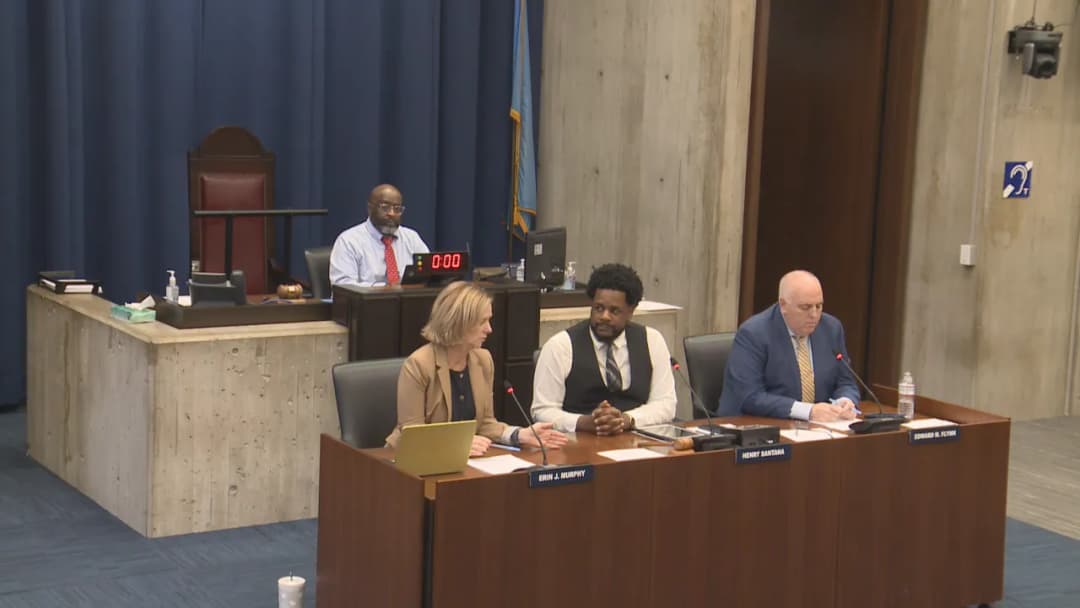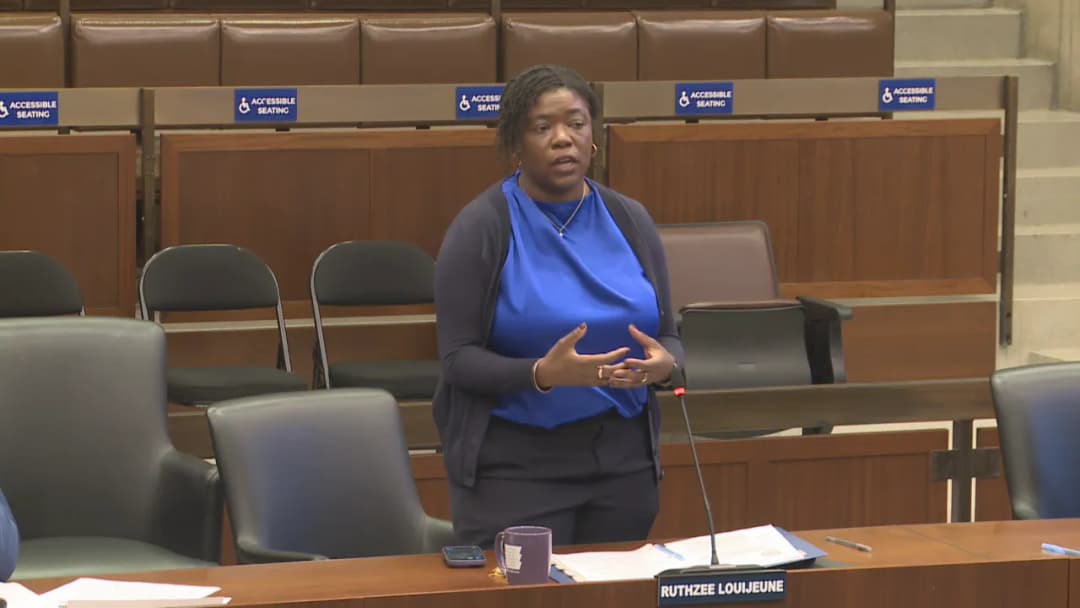
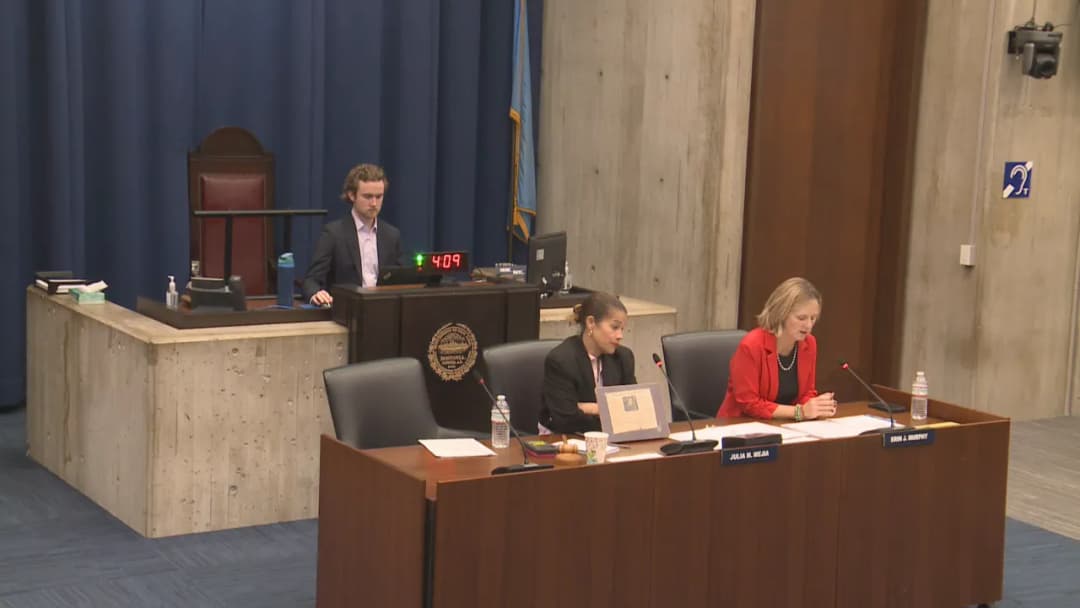
The Boston City Council convened at 5:15 PM on November 4, 2026, following the November 3 election. The meeting opened with an invocation by Rabbi Korf, a pledge of allegiance, and roll call, establishing a quorum with 13 members present. The council recognized the 50th anniversary of Boston by Foot, heard emotional testimony from the family of traffic victim Louisa Gag, and discussed multiple hearing orders and resolutions on issues including the proposed closure of Charlestown High School, Boston Police Crime Lab leadership, street safety, and the exclusion of English/New Mission High School from the state football tournament. Several dockets were passed, referred to committees, or voted on, with notable roll call votes. Consent Calendar - Dockets 2087-2088: Two in-kind donations were unanimously approved: basketball referee services and league awards ($6,000) for BCYF Curtis Hall, and office chairs ($630) for BCYF Quincy Center. Roll call votes passed 12-0 and 12-0. - Dockets 2089-2091: Placed on file. - Dockets 2092-2095: Placed on file (mayoral communications and first quarter FY27 budget report). - Dockets 2113-2114: Personnel orders passed unanimously. Public Comments & Testimony - Louisa Gag’s Family: Emily Gag, along with parents Steve and Laura, addressed the council. She reported that over $100,000 had been raised in Louisa’s honor and would be distributed to ten Boston Vision Zero Coalition organizations. She called for the council to attend the November 19 hearing on a street safety ordinance similar to Somerville’s, and to ensure the Streets Cabinet is adequately resourced. She urged the council to turn statements into action and to pass the ordinance by year-end. The family also announced upcoming state legislative priorities for World Day of Remembrance. Discussion Items - Recognition of Boston by Foot (50th Anniversary): Councillor Pepin and Durkin honored the organization. Executive Director Samantha highlighted its 200+ volunteer docents, free city hall tours, and advocacy for safer streets. The council adopted a resolution declaring November 6, 2026, as Boston by Foot Day. - Charlestown High School Closure (Docker 2097 & 2106): Councillor Coletta Zapata and Mejia filed a hearing order on the proposed closure. A resolution (Docker 2106) calling for postponement of the December 2 School Committee vote was amended and adopted 11-0 (Durkin present). Councillors expressed concerns over lack of transparency, community engagement, and the impact on vulnerable students (56% Latino, 26% Black, 37% ELL). Councillor Mejia demanded release of data and criteria, clear transition plans, and a defined community process. - BPS Transportation Performance (Docker 1920): Councillor Mejia reported on a November 2 hearing. Issues included Zoom app failures, late buses, safety concerns, and Transdev fines ($400,000 in late FY27). A working group was proposed. The docket remains in committee. - Congdon Conversion Ordinance (Docker 1711): Councillor Coletta Zapata reported progress on amendments from a working session. The ordinance remains in committee for formatting. - El Niño Climate Phenomenon (Docker 2098): Councillor Santana filed a hearing order on preparing for a “super El Niño” with heavy rain, freeze-thaw cycles, and coastal flooding. Referred to Environmental Justice committee. - Restaurant Zoning Reforms (Docker 2099): Councillor Flynn filed a hearing order citing lack of community engagement. Referred to Planning, Development, and Transportation. - Boston Police Crime Lab (Docker 2100 & 2107): Councillor Flynn filed a hearing order on a state forensic oversight board review. Also a resolution (Docker 2107) to waive the residency requirement for the Crime Lab Director. Debate ensued on whether the salary ($117k-$153k) is sufficient and whether qualified Boston residents exist. Resolution referred to Public Safety committee. - Bomb Threats at Schools (Docker 2101): Flynn and Murphy filed a hearing order on October 27 bomb threats. Referred to Public Safety committee. Mejia noted the full calendar. - Delivery Provider Ordinance (Docker 2102): Durkin filed a hearing to review trip data from DoorDash, Uber Eats, Grubhub. Referred to Planning, Development, and Transportation. - Bike Lane Costs (Docker 2103): Flynn’s request for info on funds spent on O’Connor Way bike lane (installed August 2026, removed a month later due to emergency vehicle access issues). Passed 11-1 (Durkin present). - Block Party Permits (Docker 2104): Flynn requested info on O Street block party approval. Failed 4-5-1. - BPS-BPD MOU (Docker 2105): Flynn requested info on an unsigned MOU. Passed 10-0. - Parking Enforcement Officers (Docker 2108): Durkin filed a resolution to hire more officers. She noted 139 current officers and $60M annual revenue. Referred to Planning, Development, and Transportation after a procedural challenge (vote 7-3-1 to keep in that committee). - Veterans Day Resolution (Docker 2109): Flynn and Murphy adopted a resolution honoring veterans and criticizing budget cuts. Unanimous. - World Remembrance Day for Road Traffic Victims (Docker 2110): Durkin and Pepin adopted a resolution recognizing November 15, 2026, and read names of local victims. Unanimous. - Transgender Day of Remembrance (Docker 2111): Mejia, Braden, Santana adopted a resolution honoring Rita Hester and victims of anti-trans violence. Unanimous. - Survivors of Homicide Victims Awareness Month (Docker 2112): Mejia, Warrell, Louijeune adopted a resolution for November 20-December 20. Adopted 11-0. - MIAA Football Exclusion (Late File Emergency Resolution): Weber, Pepin, Warrell condemned the MIAA for excluding the English/New Mission High School football team from the state tournament due to a clerical error (game not entered into Arbiter Live system by BPS). The team won 4 straight games after a 1-2 start. Adopted with 11-0 (meeting late file). Key Outcomes - Docker 2087-2088 (Donations): Passed 12-0 each. - Docker 2096 (Police Age Waiver): Passed 12-0. - Docker 2103 (O’Connor Way bike lane info): Passed 11-1. - Docker 2104 (Block party info): Failed 4-5-1. - Docker 2105 (BPS-BPD MOU): Passed 10-0. - Docker 2106 (Charlestown HS closure delay): Adopted 11-0 (Durkin present). - Docker 2107 (Crime Lab residency waiver): Referred to Public Safety committee. - Docker 2108 (Parking enforcement hiring): Referred to Planning, Development, and Transportation after procedural vote (7-3-1 to keep there). - Docker 2109 (Veterans Day): Adopted unanimously. - Docker 2110 (Road Traffic Victims): Adopted unanimously. - Docker 2111 (Transgender Day of Remembrance): Adopted unanimously. - Docker 2112 (Homicide Survivors Month): Adopted 11-0. - Late File (MIAA Football): Adopted with 11-0. - Docker 1772 (Broadband Grant $1.36M): Passed 11-0. - Docker 1788 (Block Party Grant $25K): Passed 10-1 (Flynn against). - Docker 0976 (Recycling Dividend $60K): Passed 11-0 after being pulled from committee. - Personnel Orders (2113-2114): Passed. - Consent Agenda: Adopted. The council adjourned in memory of Matthew Sweeney, Tarad Ball, Eileen Rumble, and Anna Zamy, and will reconvene on November 18, 2026, at 12:00 PM.
Public Meetings - Boston, Massachusetts
Public Meetings - Boston, MassachusettsOn November 2, 2026, at 2:07 PM local time (19:00 UTC), the Boston City Council Committee on Education held a hearing on Docket 1920 concerning Boston Public Schools transportation performance at the opening of the 2026-2027 school year, contractor accountability, and corrective action. Chair Julia Mejia presided, with Councilors Flynn, Murphy, Pepén, Breadon, Weber, Worrell, Fitzgerald, and Culpepper participating at various points; Councilor Murphy was the lead sponsor. No minutes were available, so this summary is based on the transcript. Public testimony came first, followed by a presentation and questioning of BPS Transportation Executive Director Dan Rosengard, Deputy Director Jackie Hayes, and Transdev Area General Manager Jim Folk. No formal votes were taken. Public Comments & Testimony - Parents and students described chronic lateness, unreliable Zoom tracking, missed instruction and breakfast, unsafe stops, and weak complaint follow-up. Mira Godo said her five-year-old was erroneously not assigned a bus route and later had no head count on bus B153; she described conflicting answers about whether drivers check students on and off and where the stop was, and said the bus arrived up to 25 minutes early. She called student safety "non-negotiable." - Lindsay Fertita raised safety concerns about routes H242 and B153, especially the stop at Seaport Boulevard and Pier 4 Boulevard in a bike lane, where young children must navigate parked cars, bicycle traffic, and vehicles. She also questioned a retraced morning route, a possible prohibited left turn from Atlantic Avenue onto Seaport Boulevard, and inaccurate Zoom notifications; she said she had received no transportation email response since September. - Cassandra Xavier, a disability advocate and former BPS student, asked about winter pathway clearance and bus monitor staffing, emphasizing safety for young riders. - A virtual parent, Sean, said BPS was failing obligations under Massachusetts General Law chapter 71, section 68 and its own eligibility policies; he estimated his son's bus at Warren Prescott was on time less than 25% of the time and asked for a written determination of legal and policy obligations, an explanation of current service, and corrective action plans with timelines. - A sixth grader at Rafael Hernandez K-6 said bus B147 was constantly late, causing tardy passes and stress and affecting grades; the student asked BPS to address consistent small delays. - Aaron Ramsey Teuer, a Roslindale parent of four Rafael Hernandez students, said the bus had been more than 10 minutes late on 94% of occurrences and after the morning bell 71% of the time; he said tickets, hotline calls, and emails had not produced change and asked for a threshold for intervention and a clear improvement plan. - Giovanni Burgos, vice president and a bus monitor for more than 20 years, said monitors are blamed for management failures and that staffing does not match one-to-one student needs; he described routes requiring multiple monitors operating with one and monitors injured while trying to supervise students. - Sadie Jasmine, president of Local 2936 and a bus monitor for over 26 years, said BPS ordered buses without required safety restraints, that later-installed restraints may create new hazards if not properly secured, and that monitors have been disrespected. She asked the City Council to investigate and audit the Transportation Department's budget and staffing practices. - Graham Murphy, a sixth grader at Rafael Hernandez, described family stress, missed math class, and lost breakfast time when bus B147 was late; he asked BPS to improve bus times and consider starting the route earlier. - Lori Murphy, Graham's mother and a BPS parent for eight years, said Roslindale families with resources can carpool but families without resources cannot; she said Zoom tracking had become erratic, tickets were useless, and a driver clicked drop-off at Washington and School Streets before the bus was physically at the school. - Anastasia said her son's bus from downtown Boston to Charlestown was 30 minutes to one hour late almost daily or did not show up; she said children were marked absent or tardy, families paid for Ubers, and a bus stopped in the middle of Staniford and Merrimack Streets. - Catherine Randahan said her first grader's bus was perpetually late, sometimes by 45 minutes, leaving children hungry and frustrated and disrupting dismissal; she said Zoom did not update consistently and tickets disappeared into a "black hole." - Catherine Wang said her K0 and K2 children ride route 150/B153; on the first ride this year no head count was taken and the family tracked the bus into Seaport/Southie by AirTag. She said the ride took about 50 minutes, that she was told under an hour was acceptable, and that because of food-allergy and supervision concerns the family opted out of afternoon bus service. She said the morning B140 route worked well. - Tia Washington said her daughter had experienced physical violence and sexual assault on a school bus; she said an eight-year-old was told to walk home despite domestic-violence safety concerns, that complaint follow-up was hostile or absent, and that trained bus monitors are needed. She said she had reported the assaults and received no written communication from BPS transportation about them. Discussion Items - BPS Transportation presented systemwide metrics: about 610 buses on the road each school day, transporting more than 18,000 students; roughly 107,000 trips so far this school year; and more than 12,000 tickets. BPS reported morning on-time performance of 61% on the first day, 84% in September, and 91% in October; afternoon performance was 73%, 82%, and 86%, respectively. BPS called this the second-strongest performance on record but acknowledged it was not good enough. - BPS reported 94 uncovered trips this year, or 0.09% of about 107,000 trips, a reduction of more than 80% from the same period last school year and on par with the lowest levels in five years. Dan Rosengard said on-time performance is calculated from GPS arrival times, so a driver marking a stop early would affect family communication but not the on-time performance calculation. BPS said a bus is on time if it arrives before the bell, and morning buses are scheduled 15 minutes before the bell. - Transdev's Jim Folk said Transdev manages 610 routes, maintains about 770 buses, travels about 500,000 miles per month, and provides about 55,000 scheduled trips monthly, or about 2,750 trips each school day. He said tablet usage was 98% and needed to be 100%, and that Transdev uses coaching, retraining, and progressive discipline. - On contractor accountability, Rosengard said non-performance damages of $500 per trip apply only to trips more than one hour late or uncovered. BPS assessed about $400,000 last year from February onward and about $10,500 in September this year. Councilor Murphy asked whether that money returns to BPS or affected families; Rosengard said the reimbursement does not stay in the Transportation Department. - On budget, Rosengard said about $125 million flows through the Transdev yellow-bus contract and Transdev's management fee is about $21 million; Councilor Murphy cited the BPS FY27 budget book showing just under $200 million total for transportation. - Councilor Murphy said the ticket system was ineffective and requested all tickets and calls to transportation so far this school year. BPS acknowledged families may wait weeks for ticket responses. Councilor Flynn requested data on assaults on buses since the start of the school year, including how many involved a monitor; BPS said such reports are handled at the school level and it did not have aggregate numbers immediately. - On bus monitors, BPS said it targets about 650 monitors and has about 640. Rosengard said every smaller HS/MS/WB bus transporting door-to-door or monitor-required students has at least one monitor assigned, while about 300 morning and 300 afternoon trips on full-size buses do not have monitors. Councilor Flynn challenged the claim that every bus has a monitor. BPS also said monitors receive eight hours of summer training and an additional eight hours this school year. - Dan Rosengard said the Rafael Hernandez route would change the following Wednesday by removing a Renaissance 7:30 trip so the bus could serve Hernandez first; he said this should solve a persistent problem but is not an option for every route. - Councilor Braden noted Transdev has held the BPS contract since 2013 and asked whether the district should divide routes or introduce competition; he raised six blowout trips at the Edison, buses arriving as late as 7 PM, and electric-bus range anxiety. Rosengard said route pairings are constrained by three bell times, long cross-city assignments, and limited buffers. - Councilor Worrell asked about athletic transportation coverage, the on-time definition, and before- and after-school transportation. BPS said it can cover about 40-50 athletic trips per day, or 20-25 buses, depending on time, and that it does not have data on athletic trips not requested for bus service. Councilor Flynn asked about the Carter/CATA school; Rosengard said 86% of Carter school bus trips had been on time so far this year. - Councilor Culpepper raised driver complaints about late pay and reimbursement for license and training renewals. Folk said drivers should be paid within the week, that reimbursement is company policy, and that he would ensure any missing reimbursements were addressed within 10 days. Culpepper also asked about a backup if the Zoom app were hacked or went down. - Chair Mejia raised a real-time Zoom app problem in the chamber: parents saw "ride status unavailable" and an in-progress ride. Rosengard said one bus was still completing a prior trip and another driver had not logged in. Mejia pressed Transdev on consequences for drivers not using tablets and announced plans for smaller working groups with families to rebuild trust and co-govern transportation oversight. Mejia also said she had voted against the city and BPS budgets because they did not meet the moment; Flynn said he voted against the BPS budget because of cuts to bus monitors and paraprofessionals and that a supplemental budget proposal was denied. Key Outcomes - No formal votes were taken; the hearing was informational and ended with adjournment of Docket 1920. - BPS and Transdev were directed to follow up on specific requests: identify Lindsay Fertita's email/ticket; address the in-chamber Zoom tracking issue; report on assaults on buses since the start of the school year, including monitor presence; provide all transportation tickets and calls this school year; provide data on athletic trips not scheduled for bus transportation; and address driver pay and reimbursement complaints. - Dan Rosengard committed to a Hernandez route change effective the following Wednesday and to continued daily review of persistently late routes. Transdev's Jim Folk committed to holding drivers accountable for tablet use and for the reported profanity toward a parent. - Chair Mejia said her office would create working groups with families, including student organizer Graham Murphy, and would send the parents' and students' questions to BPS/Transdev for written responses.
The Boston City Council Committee on Planning, Development, and Transportation, chaired by Councillor Sharon Durkin, held a hearing on Docket 1337 to discuss the fulfillment of community benefits funded by development projects. The hearing was called by lead sponsor Councillor Enrique Peppen and co-sponsors Councillors Benjamin Weber and Russie Louisjean. The meeting featured testimony from administration officials, residents, and community advocates, focusing on the gap between promised benefits and actual delivery, enforcement mechanisms, and potential improvements to the Article 80 process. Public Comments & Testimony - Greg Tobin (former member of Walk Up Roslendale) testified that in his experience, community benefits were agreed to verbally but never put in writing, leading to non-fulfillment of crosswalks, bus shelters, public pathways, and street trees. He urged that all commitments be documented in writing. - Lori Radwin (Roslendale resident, via video) presented an audit of eight small Article 80 projects approved between 2018 and 2023, finding that approximately 73% of financial contributions were designated for bicycle-related purposes (bike share, bike paths). She questioned whether residents had an effective voice in choosing benefits and called for disclosure of who proposed benefits, where funds go, and whether benefits reflect community feedback. - Rick Yoder (Mount Hope Canterbury Neighborhood Association) noted that promises for community benefits often disappear and suggested placing money into escrow at the beginning of negotiations, so the city can use the funds if the developer fails to deliver. He cited examples of bus shelters and traffic signal upgrades that never materialized after six years. - Tim Nay (Fenway resident) shared his experience with Impact Advisory Groups (IAGs) and proposed two models: the Mission Hill Fenway Neighborhood Trust (a private nonprofit funded by community benefits that invests principal and makes annual awards) and the Red Sox beautification fund (a 10-year capital commitment with annual panel awards). He suggested these could reduce the burden on City Hall and increase resident engagement. Discussion Items - Opening Statements: Chair Durkin noted that community benefits are finalized when projects are approved but usually fulfilled during or after construction; stalled projects leave communities waiting. Councillor Peppen highlighted a project on Washington Street where a bus shelter was promised but not installed, and a Hyde Park project (30 Thorn Street and 745 River Street) that did not proceed despite a $10,000 agreement for upgrades to Ross Field. Councillor Fitzgerald and Councillor Braden emphasized the need to distinguish between mitigation (addressing project impacts) and community benefits (additional contributions). - Administration Panel Overview: Teresa Palhimas (Executive Director/Secretary of Planning) outlined that mitigation obligations are included in BPDA board memos and codified in cooperation agreements, transportation access plans, or community benefits agreements. Aaron Halquist (Manager for Developer Compliance) described the tracking system using Salesforce, with milestones at building permit and certificate of occupancy (COO). He noted that most developers comply, but some require persistent follow-up, including demand letters and payment plans. Todd Lyming (Chief Engineer, Public Improvement Commission) explained that public realm improvements come to PIC for design review and implementation, sometimes revealing domino effects like sidewalk width issues. - Mitigation vs. Community Benefits: Aaron Halquist clarified that mitigation addresses impacts (e.g., parking, traffic, construction disruption), while community benefits are additional monetary or in-kind contributions (e.g., to Blue Bikes, parks, nonprofits). For large projects, these are codified in cooperation agreements; for smaller projects (under 50,000 sq ft), community benefits agreements are used. - Enforcement Challenges: Councillor Weber asked what happens if developers fail to deliver after COO. Aaron Halquist stated the city can issue demand letters, set up payment plans, and as a last resort pursue legal action. Teresa Palhimas noted that community benefits agreements are relatively new (last 5-7 years), and enforcement power for in-kind improvements may be weaker than for monetary contributions. Councillor Braden raised the issue of repeat offenders and project flipping; Aaron explained that successor developers must sign an assignment assuming all commitments, and an estoppel certificate is required to clean title before a sale—if benefits are unmet, the certificate is not issued. - Project-Specific Examples: Councillor Weber cited 1400 Center Street in West Roxbury, where the building is occupied but sidewalks were never installed. Aaron Halquist described that the project had skipped review steps, and the city is now planning to take on the construction work and seek reimbursement from the developer. Councillor Culpepper asked about monitoring 45 Townsend Street ($300,000 in public realm improvements, funding for nonprofits, community space). Aaron said tracking is done via Salesforce and walkthroughs, but there is no written requirement for community involvement; the planning department could potentially use project webpages for transparency. - Pre-COO Enforcement: Councillor Louisjean asked about ensuring benefits before COO is issued. Aaron suggested a pre-COO meeting or checkbox with ISD to review all commitments, but noted legal questions about the delineation between building code and zoning code. Chair Durkin commented that specificity in board memos and cooperation agreements is critical, as developers follow exact language. - Article 80 Modernization: Chair Durkin raised the potential impact of modernization (e.g., moving from IAGs to community advisory teams) and the need to avoid piecemeal obligations. Councillors discussed the importance of broader neighborhood goals versus one-off contributions. Key Outcomes - Docket 1337 remains in committee; no vote was taken. - Councillors will follow up on specific projects: 3992-3996 Washington Street (bus shelter), 1400 Center Street (sidewalk), 45 Townsend Street (community benefits tracking), and the South Station Air Rights project (Summer Street repaving). - Administration officials committed to improving communication with councillors, including sharing executed MOAs for monetary contributions. - Ideas for future reform included: a pre-COO checklist or meeting, escrow accounts for community benefit funds, greater community notification requirements, and using estoppel certificates as leverage. - Chair Durkin emphasized that increasing housing production would generate more community benefits, and that spreading out funds over time helps sustain neighborhood activism.
The Boston City Council held a regular meeting beginning at 12:10 p.m. in the Christopher A. Iannella Chamber, City Hall, with President Breadon presiding. A quorum of 13 councilors was present; Councilor Pepén was absent for several early roll calls and joined later. Rev. Dr. Gregory G. Groover Sr. of Charles Street AME Church delivered the invocation. The council approved the October 21, 2026 minutes, acted on grant orders and appointments, referred multiple hearing orders to committees, and adopted a 27-item consent agenda before adjourning at 2:01 p.m. in memory of Eileen G. Rumble, Maria Fonseca, John Covert, Gretchen Crowley, Larry Culpepper, and Dolores Huerta. The next regular meeting was scheduled for November 4, 2026 at 12:00 p.m. Consent Calendar - Minutes of October 21, 2026 were approved by voice vote. - Docket 2041, constable bonds for Ron Cobb, Burton Malkofsky, Alexa McNeil, and Rouseline Torres, was approved under the usual terms and conditions. - The consent agenda (Dockets 2053-2079) was adopted without additions. It contained resolutions recognizing individual residents and honorees, including Alexa Gomberg, Jenny Marcelin, Pamela Carver, Honorable Neil A. Hourihan, Ryan Whitcomb, Ken Sazama, four community leaders honored at the 2026 Gala Solidaridad, four Codman Academy Charter Public School educators, Dale Elliott Jr., 12 EMPath Economic Mobility Program graduates, Lovante Dixon, Chant D'esperance Tour members, Andre Kearns, Sinaï Rimpel, Jean Daniel St. Marc, the Fifth Annual Night in the Stacks, Sarah Benat, Allen Knight, the Charles Yancey Book Fair, Roxbury Action Program, Tamika Turner, Amanda Turner, Sharmaine Jones, Barbara Ogarro, Kioumara Estrada, Yrmaris Matias, and Zabdieli Diaz-Rodriguez. Grants, Appointments, and Notices - Docket 2025 ($2,409,496.20 WIOA Youth Program Grant) and Docket 2026 ($1,822,840.20 WIOA Adult Activities) were referred to the Committee on Labor and Economic Development. - Docket 2027 ($760,000 FY27 Hazardous Materials Response Team Earmark Grant) was passed by voice vote after a rules suspension. Councilor Santana recommended passage, noting the grant supports the Boston Fire Department's Hazmat team. - Dockets 2028 ($300,000 Bloomberg Harvard City Leadership Fellow) and 2029 ($190,105.22 Apprenticeship Building America) were referred to the Committee on Labor and Economic Development. - Docket 2030 ($187,000 East Boston Foundation Fund II, administered by the Age Strong Commission) passed 12-0-1 after a rules suspension. Councilor Murphy sponsored and said the grant funds the East Boston Senior Center's director and assistant director salaries. - Docket 2031 confirmed Mercy Robinson as an Alternate Member of the Zoning Board of Appeal for a term expiring May 1, 2029, by a 12-0-1 vote. Councilors Durkan, Murphy, Flynn, Louijeune, Santana, and Mejia spoke in support. - Docket 2032 confirmed new constables authorized to serve civil process for May 1, 2026-April 30, 2029. The official minutes record 12 yeas and 1 not present; the live transcript announced the roll call as 11 affirmative votes. - Dockets 2033-2040 (mayoral appointments and communications) were placed on file. Committee Updates: Crime Lab and In-Custody Deaths - Docket 0180, an order for a hearing on resources for the Boston Police Crime Laboratory, remains in the Committee on Public Safety and Criminal Justice. Councilor Santana reported that no panelists appeared. Councilor Flynn said the lab was in violation of state law requiring sexual assault kits to be tested within 30 days, lacked stable leadership, and may not be using Y-screening; he requested an investigation by the Massachusetts Forensic Science Oversight Board and, if necessary, by the U.S. attorney. Councilor Murphy noted that the administration did not attend. - Docket 0870, an order for a hearing on in-custody deaths at the Suffolk County House of Correction, remains in the same committee. Santana reported testimony that more than 20 people have died at the facility in the last five years, with descriptions of illegal chokeholds, restraint techniques such as kneeling on the neck or back, and sexual assault. Councilor Culpepper thanked the advocates and a mother who testified and said he hopes future hearings can include testimony from individuals currently in custody. Motions, Orders, and Resolutions - Docket 2042, a home rule petition directing the Boston Police Department to waive the maximum age requirement for Marcus Alexis, was passed on suspension of the rules. Councilor Culpepper described Alexis's Roxbury roots, degrees in criminal justice and counseling, and work as a co-response clinician with Boston Police. The official minutes record 13 yeas; the transcript announced 12 affirmative votes. - Docket 2043, a hearing order on the opportunity gap for young women and women of color, was referred to the Committee on Labor and Economic Development. Councilors Coletta Zapata, Louijeune, and Mejia spoke about systemic barriers, DEI rollbacks, mentorship, and the need to institutionalize opportunities. - Docket 2044, a hearing order on implementing an elected Boston School Committee, was referred to the Committee on Education. Councilors Mejia, Worrell, and Santana supported the hearing; Santana noted Boston is the only district in Massachusetts with a non-elected school committee and has over 40,000 students. - Docket 2045, a hearing order to review Boston's updated 311 system, was referred to the Committee on City Services. Councilor Murphy said 311 is often residents' first contact with city government and raised concerns about accountability across departments. - Docket 2046, a hearing order on proposed 2030 Census changes under Code of Federal Regulations Part 60 and Part 70, was referred to the Committee on Census, Redistricting, and Elections. Councilors Breadon and Louijeune said the changes could exclude upwards of 80,000 Boston residents, compared with a 25,000 undercount in 2020, and threaten the distribution of over $2.8 trillion in federal assistance across more than 350 programs. The public comment period closes November 2, 2026. - Docket 2047, a hearing order on the City's decision-making and permitting process for a South Boston block party, was referred to the Committee on City Services. Councilor Flynn described a city-funded block party promoted on social media to more than 125,000 followers, with no 48-hour notice to neighbors and concerns about commercial use of public funds. - Docket 2048, a hearing order on the O'Connor Way bike lane in South Boston, was referred to the Committee on Planning, Development, and Transportation. Flynn said the bike lane served a 46-unit affordable senior housing development, was installed in August with no connection to a bike network, created ambulance and fire access problems, and was removed after residents and elected officials raised concerns. - Docket 2049, a hearing order on public safety and quality of life challenges in South Boston, was referred to the Committee on Public Safety and Criminal Justice. Flynn cited open-air drug dealing, encampments, discarded needles, and incidents including the armed robbery of a child's lemonade stand, a shooting, a stabbing, and property damage. - Docket 2050, a hearing order on public safety and storage of lithium-ion batteries in micromobility devices, was referred to the Committee on Public Safety and Criminal Justice. Flynn cited about a 300 percent increase in nationwide emergency department visits, nearly a dozen Massachusetts battery fires reported in July 2026, a two-alarm Roxbury fire that forced 40 residents to evacuate, and actions taken by New York City and San Francisco. - Docket 2051, a Section 17F order requesting information on youth jobs, was passed unanimously. Councilor Mejia cited FY27 budget cuts, outstanding questions about approximately 2,000 promised summer jobs, and the need for timely answers from the administration. - Docket 2052, a resolution in support of waiving the 10-year residency requirement for Boston Police civilian employees transferring to sworn officers, was not adopted on this date. Councilor Flynn argued for fairness and recruitment. Councilor Durkan objected to the vote, calling it an individual personnel matter. Councilors Worrell and Weber said they would vote no without a hearing; Councilor Pepén requested a hearing; Councilor Murphy warned that previous hearings lacked administration attendance. It was referred to the Committee on Public Safety and Criminal Justice. Late-Filed Matters - Two late-file matters were offered: an emergency hearing order to discuss the October 27, 2026 bomb threats at Boston Public Schools and multiple universities, colleges, and nonprofits, and a resolution in support of an emergency investigation. Objections were raised, so neither matter was considered. Key Outcomes - Dockets 2027, 2030, 2031, 2032, 2041, 2042, and 2051 were approved or confirmed. Dockets 2025, 2026, 2028, 2029, 2033-2040, and 2043-2050 were referred or placed on file as indicated above. - Docket 2052 was referred to committee after an objection, rather than being voted on. - The consent agenda was adopted. - The council adjourned at 2:01 p.m. and will meet again on November 4, 2026 at 12:00 p.m.
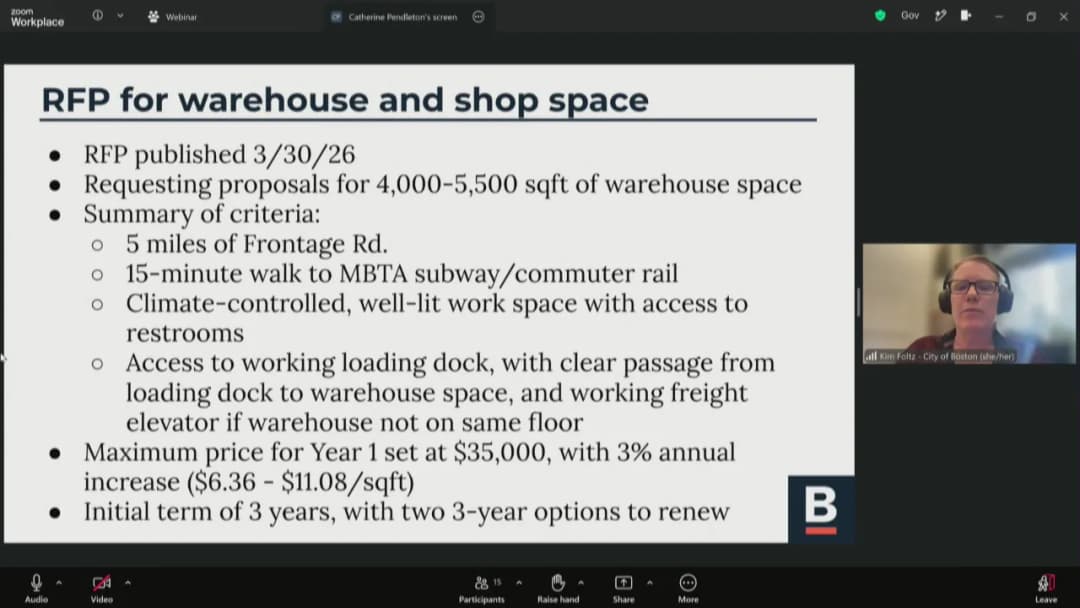
The Boston Public Facilities Commission (PFC) convened on October 28, 2026, at 3:00 PM to consider vote requests from the Boston Transportation Department (BTD), Public Facilities Department (PFD), and Mayor's Office of Housing (MOH). All presented votes were approved unanimously (2-0), with one MOH vote tabled. The meeting was broadcast live. Boston Transportation Department Vote - Vote 1: Lease at 25 Beach Street, Dorchester — BTD Director Kim Foltz presented a request to enter into a three-year lease with Work Inc. for 5,384 sq ft of warehouse/maintenance space for the city's fleet of 500 bicycles. The lease value is $355,568.72 over the term, with year-one rent of $35,000 (inclusive of all fees) and 3% annual increases. The space supports bike education programs reaching over 5,000 residents annually. The RFP received one proposal from Work Inc., which was rated highly advantageous. Commissioners asked about scalability; BTD confirmed flexibility. Motion to approve via roll call passed (Commissioner Mamoli: yes, Commissioner Wright: yes). Public Facilities Department Votes (Votes 1–4) - Votes 1 & 2: Roof Replacement Consulting Contracts — Lisa Schwab presented contracts for roof replacement at three schools (Boston Adult Tech Academy, Hurley Elementary, Mildred Ave School). Owner’s Project Manager (OPM) contract awarded to LeRoi Program Construction Management PEPC for $30,000; design services contract awarded to CGKV Architects Inc. for $200,000 ($172,150 base + $27,850 additional). Term through December 31, 2027. - Votes 3 & 4: Window and Door Replacement Consulting Contracts — For three additional schools (including Mendel School), OPM contract awarded to Vertex Companies LLC for $20,000; design services contract awarded to SLAM Collaborative Inc. for $297,640 ($218,800 base + $78,840 additional). Term through December 31, 2027. Commissioners approved all four votes via separate roll calls; each vote passed unanimously (2-0). No questions were raised. Mayor's Office of Housing Votes - Vote 1: Conveyance at 4 Adams Street, Hyde Park — Jamie Smith presented the sale of city-owned land to Easy Street LLC for $100,000. The developer will construct a three-family dwelling (two or three-bedroom units) with off-street parking and open space. The property had been in MOH inventory for 8 years. RFP process yielded five proposals; Easy Street was deemed highest responsive/responsible. Community notification occurred in 2024, tentative developer designation approved March 2025, with extensions. Approved unanimously (2-0). - Vote 2: Conveyance at Levin Chipman Street, Dorchester — Min Wynn presented the sale of a vacant parcel to Regine Foster for $25,000 (appraised value). The buyer will use the land as additional yard space under an open space restriction. Property had been in inventory for 9 years. One proposal received. Approved unanimously (2-0). - Vote 3: Ground Lease at 135 Dudley Street / 2406-2430 Washington Street, Roxbury — Joe Backer presented a 99-year ground lease to Cruise Development Corporation for $10/year with an option to purchase for $100 upon lapse. The project will create 60 income-restricted rental units, 110 condo units, two stories of commercial/retail, parking garage, and public plaza. Comprehensive community engagement occurred from 2016–2018; tentative developer designation approved July 2019 with multiple extensions. Commissioner Wright disclosed a potential conflict but participated after providing a sign disclosure. Vote passed unanimously (2-0). Commissioners commended the team for progress. - Vote 4: Tabled — MOH requested that vote 4 be tabled until further notice; it was not heard. Key Outcomes - All presented votes (BTD 1, PFD 1–4, MOH 1–3) were approved by a 2-0 roll call vote. - MOH vote 4 was tabled at the request of the Mayor’s Office of Housing. - Next steps: Contracts will be executed; design and construction to commence upon approvals. The Roxbury ground lease project is expected to begin construction after all legal documents are finalized.
On October 26, 2026, at 2:18 PM, the Boston City Council Committee on Public Safety and Criminal Justice, chaired by Councilor Henry Santana, held a hearing on Docket 0870, an order to examine the circumstances surrounding in-custody deaths at the Suffolk County House of Correction and systemic factors contributing to mortality in custody. The hearing was live-streamed and broadcast, with public testimony taken at the end. No minutes were available for this meeting. The Suffolk County Sheriff's Department and the Boston Police Department did not send representatives, and no currently detained individuals testified, which multiple councilors and community members condemned as disrespectful and a barrier to accountability. Opening Statements - Chair Santana opened by saying a single death in custody, one act of guard brutality, or one person denied food, water, or health care is unacceptable, and framed oversight of correctional facilities as a core council responsibility. - Councilor Culpepper, lead sponsor, said he filed the hearing order in April 2026 because more than 20 people have died in Suffolk County correctional facilities over the past five years. He highlighted the December 7, 2025 death of Shacobi Kenny, which the Office of the Chief Medical Examiner ruled a homicide caused by cardiac arrest during physical restraint by correctional officers. He also cited a Prisoners' Legal Services letter documenting allegations of excessive force, including prohibited chokeholds, and said he was disappointed by the Sheriff's Department's lack of cooperation and its failure to facilitate testimony from people in custody. - Councilor Mejia said the city pays $150 per person per day to hold people before they see a judge, and argued the council must exercise oversight over conditions for detained people and staff. Councilor Murphy, Councilor Flynn, Councilor Fitzgerald, Councilor Louijeune, and Councilor Weber also expressed support for the hearing, with several noting that most people in jail are held pretrial, that people retain their humanity and rights while incarcerated, and that Shacobi Kenny was a young man in pretrial detention on $2,500 bail. Public Comments & Testimony - Arian Morrison, a Roxbury resident, read testimony from Kelsey DeBayo, who described abuse at South Bay from 2020 to 2022, including SERT team members bending her wrists, verbal abuse, witnessed beatings of other incarcerated women, and a permanent wrist injury. DeBayo called for correctional officers to receive education in psychology or sociology and for changes to hiring and training. - Nibal Rabia, a Boston resident, read a statement from Abbey Own Sharp describing the trauma of visiting a brother at South Bay as a child, including hostile treatment of family visitors, and later read her own statement calling for an end to central booking and contracts with the Suffolk County Sheriff's Department. - Linnea Barron read testimony from Ava Najafi, who described witnessing an elderly woman bruised after an apparent assault by officers, being sexually harassed and physically attacked by an officer, seeing a pregnant woman slammed to the ground, and witnessing an officer have sex with her cellmate. Najafi demanded independent investigations, accountability, proper medical and mental health care, and protection from retaliation. - An unidentified formerly incarcerated speaker described abuse at South Bay and Nashua Street, questioned why correctional officers do not wear body cameras, and said medical neglect led to five surgeries and more than 40 days in a hospital. - Melanie Griffiths testified on behalf of her son, who is currently incarcerated. She said he wrote that he had never been more afraid than inside South Bay and Nashua Street, and she reported that on the day of the hearing his cell was searched while he was returning from court and he was placed in segregation, which she described as intimidation. - Shacobi Kenny's mother, Drusilla Brown, gave emotional testimony as a panelist and public voice. She said her 32-year-old son was murdered by correctional officers, that he had hopes and dreams, and that his last words were 'pray for me.' She demanded justice, accountability, and independent oversight, and criticized the sheriff's department for failing to appear or to remove officers involved in her son's death. - Later public commenters included Elizabeth Rucker, who said she has helped greet people leaving South Bay for five years and has personally bailed nearly 100 people; Alan Tanner, who described witnessing excessive use of force during an altercation at a facility; Wes Ward, who demanded independent investigation, removal of involved officers, release of unredacted video, special prosecution, municipal oversight with subpoena power, and decriminalization of survival offenses; Emma Roth, who criticized councilors for inattention and said the hearing felt like a farce; and Elaine Calthis, who summarized testimony from about 10 incarcerated people describing poor quality of life, punitive culture, verbal and physical abuse, and the need for transparency. - Additional public commenters included Timothy Bilodeau, Jaden Ojia Baru, Tatiana Rodriguez, Cecilia Don, Jocelyn Vasquez, and Romelda Pereira. Several called for ending central booking, dissolving the BPD contract with the Suffolk County Sheriff's Department, firing officers involved in Mr. Kenny's death, starting civil rights investigations, and reducing the flow of people into jail. - Tatiana Rodriguez cited payroll figures for Lieutenant Andres Lopez, an officer involved in Shacobi Kenny's death, reporting 2025 earnings of $222,759 including about $106,000 in overtime. Cecilia Don cited a different set of figures, reporting total earnings of $183,000 including $83,000 in overtime through October 17, 2026. The two public commenters offered conflicting calculations, but both argued that excessive overtime threatens officer performance and safety. Panel Testimony and Council Dialogue - Drusilla Brown said the officers involved in her son's death remain employed and in contact with incarcerated people, and that there has been no real accountability despite the homicide ruling. She called the sheriff's department an island that cannot police itself and demanded transparency and oversight. - Jasmine Borges, director of organizing for the Massachusetts Bail Fund, said she survived 12 years of incarceration at MCI Framingham and described the carceral system as violent. She said the Suffolk County Sheriff's Department budget was upwards of $130 million in 2025, and that the correctional officers involved in Mr. Kenny's death collectively make upwards of $900,000 in taxpayer-funded salaries. She reported that a records request to all 14 Massachusetts sheriff's departments produced responses from only eight. She said 47 people died in Massachusetts jails from 2021 to 2025, including 25 who were awaiting trial and 22 who were sentenced, and listed many of the names of those who died in Suffolk County. She demanded transparency, termination of the officers involved, an end to central booking, no future SCSD contracts, an end to sweeps and the encampment ban, and investment in housing, harm reduction, and voluntary treatment. - Katie Naples Mitchell, Justice Policy Counsel for the ACLU of Massachusetts, said people in Suffolk County jails are city constituents, many retain voting rights, most are held pretrial, and more than 50% of the jail population is Black. She said 67% of people in Suffolk County detention are held pretrial, compared to 62% across county jails, and that more than 25,000 people cycled through Massachusetts county jails in 2025. She cited more than 1,500 pre-arraignment admissions under the central booking agreement between January 1 and July 31, 2026. She described medical neglect, delayed responses to mental health requests, violence, a culture of impunity, and a 'blue wall of silence.' She discussed a detainee who requested mental health support days after Mr. Kenny's death and was told to 'try to be patient.' She also recounted a Sheriff's Department employee vehicle with a license plate frame reading 'Suffolk County House of Corruption, class of 85.' She recommended that the council make ordinance violations summons-only, reduce arrests for certain low-level misdemeanors, attach accountability requirements to the central booking agreement, and use its power of the purse. - David Reaney, executive director of Prisoners' Legal Services of Massachusetts, said his organization interviewed about 30 people after Mr. Kenny's death. He documented allegations of chokeholds, kneeling on necks and upper backs, punching people while gripping handcuffs or keys, and wrist bending that caused fractures. He said these practices violated the sheriff's department's own use of force policy. He stated that officers reported to be involved in Mr. Kenny's death continued to have contact with incarcerated people and participate in use of force incidents despite public statements that they were in non-contact posts. He asked the council to press for a public accounting of officer assignments and to insist on discipline and accountability. - Mallory Hanora, co-director of Families for Justice as Healing, said her organization warned about South Bay in a letter seven years ago, including a demand to remove officers with histories of violence, and was told its concerns were baseless. She said women moved from MCI Framingham to South Bay in 2019 have experienced sexual exploitation, verbal abuse, and dehumanization. She argued that jail is not housing, treatment, or mental health care, and called for South Bay to be shut down. She also condemned the absence of the sheriff's department and the lack of response to families. - Giovanni Matabuchi, executive director of the Massachusetts Bail Fund, said he was insulted that the Sheriff's Department and BPD were absent. He said the bail fund posts 50% of its bails in Suffolk County, up to 700 people per year. He criticized city policies including sweeps, the tent ban ordinance, jail court, central booking, and Project Evolve, describing them as practices that criminalize unhoused people and people who use drugs. He said his organization is abolitionist and called on the council to direct BPD to end warrant sweeps and arrests for low-level survival offenses and to invest in housing and voluntary treatment. - Cassie Hurd, director of the Material Aid and Advocacy Program, described supporting unhoused people and people who use drugs. She condemned the encampment ban, addiction-first practices, the coordinated response team, central booking, the closure of an engagement center, and cuts to harm reduction services. She read an account from a community member who said he was taken by BPD, held without access to his medications, humiliated by correctional officers, and traumatized. She said the council must hold SCSD accountable and stop participating in harm. - During council questions, Councilor Culpepper asked about eliminating cash bail. Katie Naples Mitchell said New Jersey and Illinois provide cautionary examples because eliminating cash bail without addressing other sources of detention can leave racial disparities intact or create new detention pathways. She recommended making ordinance violations summons-only and making lower-level misdemeanors with a maximum penalty of 100 days or less non-arrestable, citing more than 18,000 such arrests in a single year in fiscal year 2019. - Councilor Mejia asked whether an independent oversight body exists. Panelists said there is no current outside entity comparable to a police oversight commission, though the Attorney General's office could investigate. Councilor Mejia asked for a dashboard and an oversight commission and committed to amplifying the demands. - Councilor Louijeune asked who investigates use of force violations. Panelists explained that the Suffolk County District Attorney's office is the statutorily required investigator for in-custody deaths, but had a conflict because it was prosecuting witnesses, and the Attorney General's criminal division became involved later. They said internal investigations are handled by the jail's Special Investigations Division, which is not independent. - Councilor Weber asked whether South Bay is an outlier. Panelists said abuse and neglect pervade county jails, but South Bay has a distinct culture and has been described by people inside as worse than even a state supermax facility. Jasmine Borges called South Bay 'our Rikers Island.' - Councilor Culpepper asked about the CERT team. Katie Naples Mitchell said CERT responds to incidents, transports people to segregation, and staffs segregation units, where many abuse allegations occur and where there are no cameras. She said she had provided written questions to the sheriff's department that remain unanswered. Key Outcomes - No formal votes were taken. The hearing was informational, but councilors committed to follow-up work. - Councilor Culpepper said he would form a working group with panelists and other councilors and proposed meeting bi-weekly to develop reforms. - Panelists and public commenters identified concrete next steps, including using subpoena power, requiring public records production, creating an independent oversight body, ending central booking, terminating officers involved in Shacobi Kenny's death, and changing Boston Police arrest practices. - Councilor Culpepper said a possible follow-up hearing was being planned around Monday, December 7, 2026, one year after Mr. Kenny's death, to allow incarcerated people to testify, though he said it was not confirmed. - The meeting adjourned shortly after 5:30 PM.
The Boston City Council Committee on Public Safety and Criminal Justice held a hearing on Docket 0180 to discuss resources and operations of the Boston Police Crime Lab, including staffing shortages, delays in testing sexual assault kits, and lack of advanced DNA technology. No representatives from the Boston Police Department or the Mayor's Office of Intergovernmental Relations attended, leading to strong criticism from councilors. Discussion Items - Councilor Flynn (lead sponsor) detailed ongoing challenges: a $500,000 budget amendment for the crime lab was not accepted by colleagues; in the FY24 budget cycle, the council voted to reallocate $1 million within BPD ($700,000 from personnel services for hiring and $300,000 from equipment for new testing equipment), but this funding was not approved. He noted that in FY23, the lab received 186 sexual assault kits, and 93 were not tested within the state-mandated 30 days. The director position had been vacant for over two years, and he had previously requested a residency waiver and salary increase. He expressed deep disappointment that BPD did not attend, stating it was disrespectful to survivors. He intends to seek oversight from the Massachusetts Executive Office of Public Safety and the U.S. Attorney for Massachusetts. - Councilor Murphy emphasized the need for the safest city to solve crimes with the best technology and staffing. She noted the hearing order was filed on January 8, 2026, and communication had been ongoing since July. She criticized the administration for notifying the council just 10–15 minutes before the 10:00 AM meeting that they would not attend, and questioned why no one from the department could spare an hour. - Councilor Fitzgerald expressed disappointment at the lack of a panel, stressing that the council must seek accountability and dialogue when standards are not met. - Councilor Weber thanked the filers and noted that the BPD budget is the city's second-largest departmental budget, suggesting resource allocation should prioritize the crime lab. She looked forward to a discussion on why no one from the department attended. - Councilor Worrell thanked Councilor Flynn for his constant advocacy and stated she was present to get a progress update, but acknowledged BPD's absence meant waiting for another opportunity. - Councilor Santana (Chair) noted that the administration emailed that morning to say BPD would not attend. He offered to work with Councilor Flynn and the administration to find a new date. Key Outcomes - No testimony or updates from BPD or the administration were provided due to their absence. - Councilor Flynn announced he will write to the Massachusetts Executive Office of Public Safety and the U.S. Attorney for Massachusetts to request oversight of the Boston Police Crime Lab. - Chair Santana committed to rescheduling the hearing with the administration. - Councilors expressed a unified demand for accountability and swift action to ensure the crime lab meets state requirements and supports survivors of sexual assault.
The Boston City Council Committee on City Services, chaired by Councilor Ed Flynn, convened at 10:02 a.m. on October 23, 2026, for Docket 1804, an order for a hearing to discuss the status of the Boston Rodent Action Plan (BRAP). Council President Liz Braden, the co-sponsor, gave opening remarks. Administration officials from Inspectional Services, the Mayor's Office, the analytics team, and the Boston Housing Authority presented an update. Public testimony was taken from residents and neighborhood representatives in person and on Zoom. No minutes were available for this hearing. Public Comments & Testimony - Bonnie Weiss, a property owner on Commonwealth Avenue, said that rats will persist as long as trash collection relies on plastic bags set out overnight; bags are ripped, spill onto the street, and create a chronic food source. - A resident identified in the transcript as D testified that city-owned property in the Bayswater area across from a senior center was left with a trash pile for weeks, 311 cases were closed or marked duplicate, and city departments shifted responsibility. - Lydia Lowe of the Chinatown Community Land Trust said rodent problems in Chinatown are tied to aging infrastructure, private ways, and lack of trash storage; she called for city-provided containerization and action against abandoned buildings and absentee landlords. - Harry, a neighborhood advocate, supported moving trash put-out to the morning of pickup instead of the night before. - Susan Buda, Bay Village Neighborhood Association, said Bay Village has no alleys or outdoor storage and that trash sits out overnight; she also expressed concern that every-other-week compost pickup could increase rodent pressure and said compost expansion needs to be strategic. - A South End resident named David said the same issues were raised at a December 8, 2022 hearing in the same chamber and recommended a rat czar plus enforcement of existing code, including minimum trash-bag thickness. - Allie, a Back Bay resident and block-captain leader, reported increased rat damage to car wiring, urged same-day trash put-out, proposed a pilot using thicker black contractor bags, and called for containerization enforcement. - Kevin Conroy, a lifelong South Boston resident, said his neighborhood has become overrun with rats, called for a central authority and higher fines, and cited absentee landlords and improper trash disposal. - Bob Lathrop of the St. Botolph Neighborhood Association described a successful grassroots effort with the Colonnade Hotel to contain food sources and supported a rat czar for accountability. - John Machikowski, a South Boston resident on Acadia Street, said he has killed 40-50 rats this year, including 8 in the past 10 days, and that his son was hospitalized for two weeks with leptospirosis after exposure to rat-related bacteria; he said the city's response has not been adequate and called for more aggressive enforcement and a rat czar. - Heather O'Brien, from Dorchester and East Boston, said she has filed 247 311 reports over three years about a neighboring developer's unmaintained property, criticized low fines and lack of landlord accountability, and framed rat activity as a public health and environmental justice issue. - Alicia Manning, a Beacon Hill resident for over 30 years, said conditions have worsened, supported a rat czar, and said the city must address the root cause by keeping food waste from being put out overnight. - Lexi Gross, an Allston resident, praised Boston's rat-mitigation work and the recent summit, but called for multilingual public communication, a regional approach, and landlord accountability. - Kelly McGrath, executive director of Brighton Main Streets, said Allston-Brighton commercial corridors have high 311 rat complaints and need the same enforcement and follow-through as residential blocks. Discussion Items - John Elric of Inspectional Services (ISD) said BRAP is a cross-departmental citywide effort launched under Mayor Wu and involving more than 18 departments. - Since January 1, ISD reported responding to 6,018 rodent complaints, conducting 750 rodent treatments, issuing 785 violations, performing 3,000 dumpster inspections, and completing 25 community walkthroughs. ISD has 14 licensed rodent inspectors and almost 60 inspectors who can handle rat-related complaints. - Jeff Kaplan of the city's analytics team described baseline-and-control evaluation of interventions, ground sensors, camera sensors, a hotspot model for proactive mitigation, and a partnership with Basis AI using ultrasonic audio detection at six sites. - The city has deployed rodent-resistant Victor Stanley barrels in Boston Common, the North End, Chinatown, and Mattapan Square, and is incorporating rodent-resistant design standards into new parks and public facilities. - Boston Water and Sewer deployed more than 25 sewer traps in the North End and Back Bay and plans to deploy audio sensors in the North End and South Boston to study subsurface and seasonal rat populations. - The Boston Housing Authority dedicated a four-person rodent reduction team, offers enhanced pay for staff who obtain pesticide licenses, and is piloting containerization, commercial hauling, and composting at its Commonwealth site. - Boston hosted the National Urban Rat Summit on September 23-24 with more than 100 academics, city officials, and pest professionals; administration officials said key takeaways included focusing on old infrastructure, food sources, hiding places, and sewer populations. - Councilor Liz Braden said Allston Village is still waiting for promised rodent-proof trash cans and asked when Allston would be reassessed as a priority; administration officials said they are working with New York on factors that drive rat populations and are measuring tools such as gas-based treatment machines at Ringer Park. - Councilor Murphy asked about bag-thickness rules; John Elric said the code requires thicker two-ply bags, not regular kitchen bags, and that education is used to reduce time trash sits out. - Councilor Julia Mejia asked about fines, enforcement, and public data; administration officials said most fines are issued by code enforcement, not ISD, that no public report has been released yet, and that a public report is planned after more pilot data are collected. - Councilor Flynn said there is a disconnect between resident experiences and the administration's update, called the problem a public health and public safety crisis, and renewed his call for a rat czar and a standalone city department. Key Outcomes - No formal votes or orders were taken; the hearing was informational. - Chair Flynn kept Docket 1804 in committee and said he may schedule another update hearing in the near future. - Councilor Flynn said he will fight during the budget process for a rat czar and a dedicated city department for pest control. - Administration officials said they will continue data collection and pilot programs and plan to publish a public report on intervention results by summer 2027. - Councilor Braden said her office filed a bad-landlords ordinance and noted that a home-rule petition raising the maximum fine to $2,000 was passed; she asked for enforcement follow-up.
The Boston City Council Committee on Planning, Development, and Transportation, chaired by Councilor Sharon Durkin (District 8), held a hearing on Docket 1543 regarding traffic enforcement of blocked bike lanes and crosswalks on October 22, 2026, at 2:05 PM. The hearing focused on enforcement data, physical infrastructure, state law barriers, and accountability. The administration panel included Chief of Streets Chris Osgood, Deputy Chief Goad, Director of Operations John Romano, and Director of Parking and Curb Management Mia Capone. Public Comments & Testimony - Tiffany Cogell (Boston Cyclist Union) called for automated enforcement (safety cameras) to protect parking enforcement officers and demanded that city vehicles stop setting a bad example by blocking bike lanes. - Councillor Patricia Nolan (Cambridge) testified about Cambridge's successful home rule petition to allow automated parking enforcement and urged Boston to pursue a similar path. - Jonathan (The Bike Bureau) presented data showing roughly 1,500 documented blocked bike lane reports in September 2026, arguing that physical separation is the only reliable long-term solution. - Gregory Maynard (Pioneer Institute) criticized the committee for prioritizing this narrow docket over broader street safety reviews. Chair Durkin defended the scheduling, citing constituent priorities and the collaborative process with councilors and the administration. - Alex (Dorchester) and John Wendenborn (Brighton/Alston) documented thousands of violations, proposed a BPD bike patrol unit and increased staffing, and criticized city vehicles for setting a poor example. - Erica Shearer (Roxbury) and Mikaiah Shearer framed the issue as a disability access crisis, describing how blocked bike lanes and crosswalks force disabled people and families into danger, and noting that 311 responses are often circular and ineffective. - Resident Matthias Iris (Boston College) detailed being physically assaulted by a driver after an interaction over a blocked bike lane, highlighting the failure of police response to such incidents. - Maha (Livable Streets Alliance) shared data from Somerville where automated enforcement reduced violations at monitored locations from 10 per day to less than 1. - Multiple residents from West Roxbury, Jamaica Plain, Beacon Hill, and the South End testified about daily near-misses, overwhelmingly advocating for physical barriers and automated enforcement. Discussion Items - Enforcement Data & Capacity: Chief Osgood reported BTD issued over 1.1 million parking tickets in FY26 (trending 9% higher in FY27). In September 2026, 100,000 tickets were issued, including 1,000 for bike/bus lane violations and 200 for crosswalk violations. A new 311 system (live for one week) now allows better categorization of safety vs. non-safety violations. - State Law Restrictions: A key topic was Massachusetts General Law Chapter 90, Section 28 1/2, which uniquely restricts Boston from using automated parking enforcement. Cambridge passed a home rule petition signed into law in July 2026. Chair Durkin and Councillor Pepin announced their intent to file a similar home rule petition for Boston. - Physical Infrastructure vs. Enforcement: Councilors discussed replacing eroded bollards (Cambridge Street) and moving towards durable protections (cast-in-place concrete for bike lanes on Hyde Park Ave and Washington Street). BTD committed to restoring flex posts on Western Ave. Chair Durkin read the top nine blocked corridors, identifying Kenmore Square (148 incidents) and Longwood/Fenway (132 incidents) as the worst hotspots. - Curb Management: The administration highlighted ongoing work to adjust curb rules (loading zones, short-term drop-off) to reduce the demand for illegal parking and blocking of crosswalks. - Councilor Priorities: Councilor Flynn advocated for lowering the citywide speed limit to 20 mph and immediate towing for hydrant blocking. Councilor Fitzgerald cautioned about the equitable deployment of expanded enforcement resources. Councilor Weber emphasized the lack of enforcement for moving violations by BPD. Key Outcomes - Hearing Held in Committee: Docket 1543 was kept in committee. A formal committee report with answers to councilors' outstanding written questions will be published. - Home Rule Petition Commitment: Chair Durkin and Councillor Pepin committed to drafting and filing a home rule petition with the state legislature to authorize automated parking enforcement in Boston. - Infrastructure Commitments: BTD confirmed plans to install more durable bike lane protection (cast-in-place concrete) on Hyde Park Avenue and Washington Street, and to restore flex posts on Western Avenue. - Future Hearings: Chair Durkin stated she would schedule hearings on other related street safety dockets (Vision Zero, bike network plan) and requested that the administration meet formally with advocacy groups like the Bike Bureau to leverage their data for enforcement and design improvements.
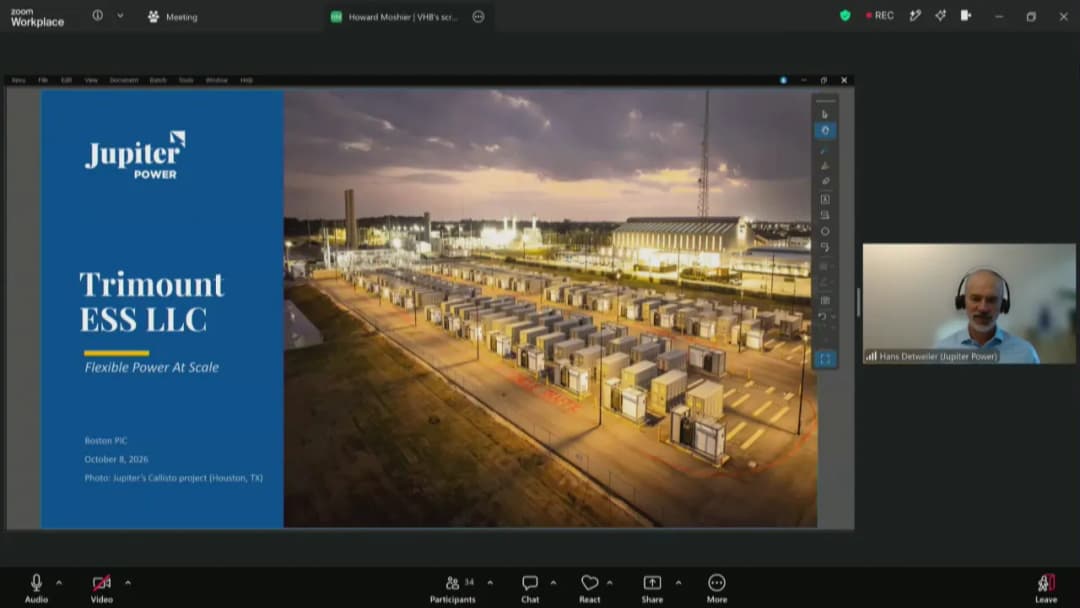
The Public Improvement Commission (PIC) met on October 22, 2026, at 10:00 AM, chaired by Todd. The meeting began with approval of the prior meeting minutes, followed by four public hearing petitions (all approved unanimously) and a new business presentation on the Jose Place cancer hospital project, which was continued to a future hearing. Consent Calendar - Approval of Meeting Minutes (October 8, 2026): The minutes from the October 8, 2026 PIC hearing were approved by a motion, second, and unanimous voice vote. Discussion Items - Public Hearing Item 1 – Earth Retention License for 8 Bernie Street, Roxbury: Petitioner Dermot Doyne sought a license to install a temporary earth support system (retention piles) within the public way at 8 Bernie Street. Proponent Peter Vancouver confirmed that piles would be cut off six feet below the sidewalk and would not affect the surface. The commission voted unanimously to approve. - Public Hearing Item 2 – Pedestrian Easement at 80 Gardner Street, Brighton: Petitioner SY NHLLC requested acceptance of a 154‑square‑foot pedestrian easement on the northerly side of Gardner Street as part of a residential expansion. Proponent Todd McDonald (Crocker Design Group) presented the plan. The commission voted unanimously to approve. - Public Hearing Item 3 – Specific Repairs on Gardner Street, Brighton: The same petitioner (SYNHLLC) requested permission for curb and sidewalk reconstruction, structural soil, street trees, bike racks, and driveway curb cuts on Gardner Street. Proponent McDonald noted the addition of resin‑bound aggregate paving in two existing tree pits and the closure of an existing curb cut. The commission voted unanimously to approve. - Public Hearing Item 4 – Grant of Location for Electrical Duct Bank in Charlestown: Petitioner TriMont ESS LLC sought approval to install a new electrical duct bank on Alfred Street and Dexter Street. Proponent Hans Detweiler (Jupiter Power) explained the project is a 700‑megawatt battery storage facility in Everett that will support grid reliability and renewable energy integration. The alignment had minor adjustments from a prior approval due to utility coordination. The design team committed to fully rebuilding a pedestrian curb ramp impacted by construction. The commission voted unanimously to approve. - New Business – Jose Place Cancer Hospital Project (Continued): Proponent Howard Mosier (VHB) presented a comprehensive set of actions for the proposed 300‑bed cancer hospital at 415–435 Brookline Avenue, including highway discontinuances, widening/relocations, pedestrian easements, specific repairs on four streets, and a utility license for the Longwood Collective. The project has received Article 97 approval and involves significant public realm improvements (raised cycle tracks, new street trees, ADA ramps, reconfiguration of Jocelyn Park). Councillor Durkin expressed strong support, noting the public process and groundbreaking earlier that week. No vote was taken; the matter was continued to the next hearing on November 5, 2026. Key Outcomes - Votes: All four public hearing petitions were approved by unanimous voice votes (no abstentions). - Next Steps: The new business item for the Jose Place cancer hospital was continued to the PIC hearing on November 5, 2026, for a formal public hearing.