Browse by city
Date range
Search help

Search titles, summaries, topics and stored transcripts together. Keywords may match separately; put the whole query in double quotes for a phrase. Matching follows word analysis, so punctuation is not exact. Both dates are included. Documents are not searched.

SHOWING 141–150 ENTRIES
141
APR 27, 2026 · BOSTON, MASSACHUSETTS · CITY COUNCIL
FY27 Budget Hearing for Boston Department of Innovation and Technology - April 27, 2026

The Boston City Council Committee on Ways and Means, chaired by Councillor Ben Weber (District 6), held a hearing on April 27, 2026, starting at 10:00 AM, to review the proposed FY27 operating budget for the Department of Innovation and Technology (DoIT) and the PEG Access Fund. The hearing covered docket numbers 0733-0740 and 0757. Chief Information Officer Santi Garcis (appearing virtually) presented the budget, highlighting significant cost savings through in-house projects, modernization of city services, and digital equity initiatives. Councilors questioned DoIT officials on personnel, contracts, technology equity, and the impact of declining cable revenues on public access. One public speaker testified. No votes were taken; the hearing was informational. Public Comments & Testimony - Glenn Williams, representing Boston Neighborhood Network (BNN), testified about the impact of cord cutting on franchise fees, noting that streaming services using the same infrastructure do not pay the 5% fee that traditional cable providers do. He advocated for state legislation to require streaming services to contribute to community media. Williams highlighted BNN’s partnerships with Circles of Support, the Mayor’s Office of Tourism, Madison Park Technical Vocational High School, and Harvard Health’s veterans program, which provides technology training for seniors. He also mentioned plans to establish satellite BNN centers in community centers. Discussion Items - Presentation by DoIT: Chief Garcis outlined DoIT’s role supporting 367 buildings, 20,000 employees, and 413 services. Key projects included: - Replacing the 20-year-old Lagan constituent relationship management system (CRM) with a new system by CREATIO and OpenGov, citing 30 days of partial/total inaccessibility in the last year. The new system is already used for election day issue tracking. - Permitting transformation: only 37% of residents reported satisfaction; a new hub at Boston.gov/permitting uses user research to clarify requirements. - properties.boston.gov, built in-house, saving an estimated $500,000 per project compared to prior outsourcing quotes. - Employee self-service migration saved $1.2 million in vendor quotes by doing the work in-house. - Data warehouse migration saved $1 million in professional services and $200,000 annually in licensing, while expanding access from 50 licenses to unlimited. - Service management: since October 2025, 12,000 service requests received with a median resolution time of 3.75 days. - Curb Atlas prototype launched for Chinatown, expanding to Charlestown, using AI to extract parking regulation data from signs. - Digital equity: 36 community partners, 11,000 constituents served, Wicked Free Wi-Fi with 117,000 unique users (50,000-60,000 monthly); 32,000 households without internet in 2019 reduced by half. Refurbishment of BCYF computer labs funded by state grants. - Proposed FY27 budget includes reductions, enabled by cost savings from insourcing and system modernization. Personnel increased by $500,000 (deliberate insourcing); contractual services decreased by $750,000; equipment spending declined from $4 million in FY24 to $1.3 million in FY27. External funds lost $3.7 million, impacting digital equity programs. - Councilor Questions: - Councillor Flynn asked about technology for basic city services, BCYF Wi-Fi improvements, and election technology costs (deferred to Elections Department). He also inquired about AI use (summaries for council roll calls, AI search with 4x satisfaction improvement) and the city’s data center at One Summer Street. He proposed a moratorium on new data centers pending study. - Councillor Murphy asked about the top three projects (basic city services modernization, permitting, digital equity) and how DoIT balances digital shift with equity. He noted the digital divide may be growing despite progress. - Councillor Durkin asked about the Longwood Place Wi-Fi model as a template for expansion, personnel vs. contractual service trends, and the sharp decline in equipment spending (FY24 $4M to FY27 $1.3M). Sheila Lee explained that equipment purchases are often shifted from savings during the fiscal year. - Councillor Culpepper focused on the 10-15% annual decline in cable subscriptions and its impact on BNN funding. She explored state legislation to tax streaming services and questioned how programming cuts would be prioritized. She also asked about the 1% decrease in the 311 budget and the properties.boston.gov portal’s reliance on registry of deeds data. - Council President Braden addressed the loss of $3.7M in external funds, partnership with ISPs for affordable options, neighborhood equity, digital equity survey updates, and seniors’ digital access. She also asked about the use of AI for property code enforcement and maintenance scheduling, and cybersecurity posture. - Chair Weber asked about vacancies (23 vacancies, 178 positions, 155 filled), hiring challenges, and specific contracts not renewed. He noted salary savings of $1.3 million due to vacancies. - Councillor Orell (likely O’Reilly) asked about cost savings from the IT consolidation ordinance (e.g., Zoom licenses expanded from a few hundred to over 2,000 at same cost, savings of $200,000 on parking enforcement equipment). He also asked about long-term contracts locking in rates and the ability to track 311 calls by district (data is public). Key Outcomes - No formal votes were taken. The hearing was one of a series on the FY27 budget. - The committee will continue budget hearings; the next public listening sessions are scheduled for April 28, 2026, at 6:00 PM and May 26, 2026, at 6:00 PM, both in the City Hall chamber. - Additional written testimony may be submitted via email or video. - The hearing was adjourned after the second round of councilor questions.
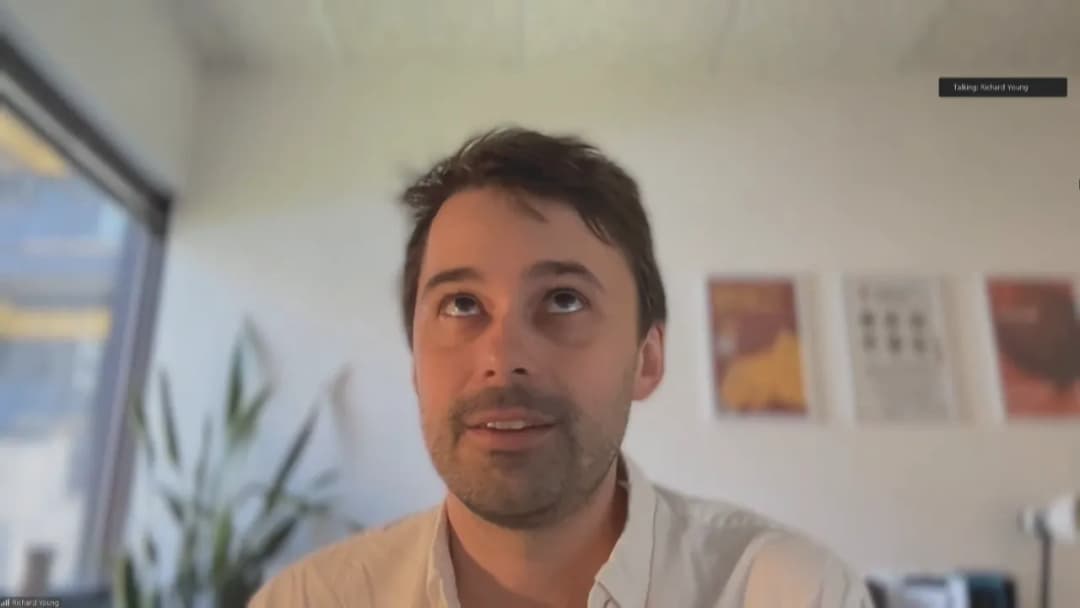
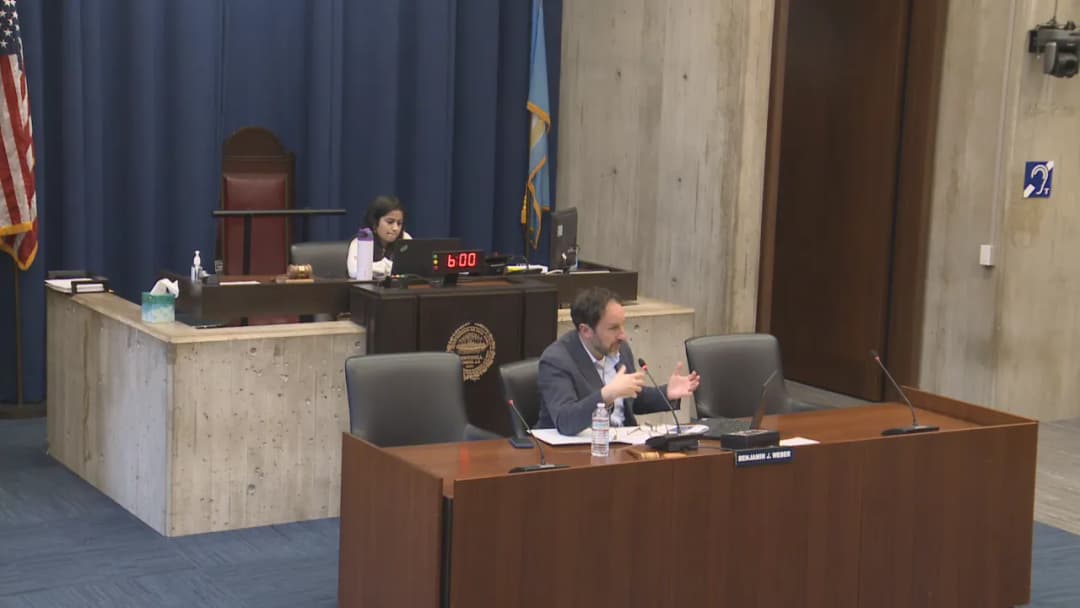
TECHNOLOGY AND INNOVATION 75% · FISCAL SUSTAINABILITY 6% · PROCEDURAL 5% · COMMUNITY ENGAGEMENT 5%
142
APR 24, 2026 · BOSTON, MASSACHUSETTS · CITY COUNCIL
City Council Committee Hearing on Modernizing Boston City Charter – April 24, 2026

The City Council Committee on Government Operations held a hearing on Docket 0410, an order to examine and modernize the Boston City Charter in advance of the city's 400th anniversary. The hearing, chaired by Councilor (Madam Chair) and sponsored by Councilor Julia Mejia, began at 10:33 AM and concluded without public testimony. Panelists included Ilinor Rabovsky (Executive Director, GenUnity), Richard Young (Founder and Executive Director, Civic Flex), and John Smith St. Cyr (Founder and Executive Director, Jails Smith Suicide Prevention Center for Young Black Boys, Inc.). Councilors Ed Flynn, Liz Breadon, and David Weber also participated. Discussion Items - Opening Remarks by Councilor Mejia: Mejia introduced the hearing, noting that the Boston City Charter has not been reformed in approximately 75 years and is a patchwork of statutes, amendments, and home rule petitions. She outlined three pathways for charter reform: a charter commission (requiring signatures from 15% of registered voters), a home rule petition, and a binding ballot question (which can be initiated by the council with mayoral approval, or by citizen petition with 200 signatures). She emphasized that the process should be community-led and focused on increasing civic engagement and trust. - Panelist Presentations: - Ilinor Rabovsky described GenUnity's work in creating intergenerational, multiracial cohorts to build relationships and participatory decision-making. She introduced Richard Young of Civic Flex. - Richard Young presented the Civic Assembly process used in Lexington, Kentucky, to review the Urban County Charter (first review since 1998). The assembly comprised 36 randomly selected residents (via lottery from 11,500 mailers), demographically representative across eight categories (age, race, housing status, etc.). Over 35 hours in seven sessions, participants learned about charter issues, deliberated, and voted using a 70% threshold. Three recommendations emerged: (1) increase council compensation to the average annual wage ($59,000), (2) create accountability/attendance expectations for council members, and (3) institutionalize charter review via a civic assembly every eight years. The process cost $225,000, raised from local donors, members, and grants; assembly members received a $1,200 stipend plus childcare and transportation support. Young stressed the value of random selection in engaging non-traditional participants and restoring trust. - John Smith St. Cyr argued that Boston's charter concentrates too much power in the mayor's office, creating weak checks and balances. He cited the 2021 ballot question on an elected school committee (passed 79% to 21% but not implemented) as an example of the system resisting structural change. He called for a rebalancing of authority, clearer lines of responsibility, and stronger legislative oversight, advocating for a charter commission elected by the people. - Councilor Questions and Discussion: - Councilor Mejia asked about the relationship between nonprofits and government, funding, and barriers to public engagement. She emphasized the need for meaningful participation and power-sharing. Young and Rabovsky discussed the benefits of assembly independence; Rabovsky noted that civic assemblies can restore trust if decision-makers commit to using recommendations. - Councilor Breadon asked about selection and question generation. Young explained the random selection process and the narrowing of eight potential topics to two (council compensation and charter review frequency) through public engagement. He noted that 84.6% to 88.8% of assembly members supported the final recommendations, including a standing charter review process. - Councilor Weber inquired about specific outdated charter provisions. Young cited gendered language and structural issues that need updating; Rabovsky and Smith St. Cyr emphasized the difficulty of finding and understanding the current charter, which is a collection of documents. Weber also asked about paths to amendment; Mejia clarified the three pathways. - Councilor Mejia later asked about youth representation; Young described a separate youth selection process via Civic Flex's education program, resulting in one 16-year-old participant who will present to the Lexington council. - The council discussed the feasibility of a civic assembly in Boston, potential resistance from those in power, and the importance of obtaining administration buy-in before launching a community process to avoid further mistrust. Key Outcomes - No Formal Votes: The hearing was informational; no votes were taken. - Next Steps: Councilor Mejia and the Chair agreed that a second hearing or working session should be scheduled to involve the administration (legal counsel, mayor's office) to clarify the administration's role and the viability of different reform pathways. - Potential for Civic Assembly: The council expressed interest in a civic assembly approach, possibly run by external organizations like GenUnity, to inform charter reform recommendations before any ballot question or commission. - Future Engagement: Councilor Mejia committed to a long-term process, emphasizing community input and partnership with the council and administration.

COMMUNITY ENGAGEMENT 58% · PUBLIC ENGAGEMENT 22% · LEGISLATIVE ADVOCACY 9% · PROCEDURAL 5%
143
APR 23, 2026 · BOSTON, MASSACHUSETTS · CITY COUNCIL
Boston City Council Budget Hearing on Participatory Budgeting FY27 - April 23, 2026

On April 23, 2026, the Boston City Council Committee on Ways and Means, chaired by Councillor Ben Weber, held a hearing to review the FY27 budget for the Office of Participatory Budgeting (OPB). The hearing began at 2:11 PM. Director Renato Costello presented the proposed operating budget of $1,891,561, an 11.4% decrease from FY26, attributed to a reclassification of a staff role and a reduction in special appropriations. The OPB oversees a democratic process where residents decide how to spend a portion of the city budget, with a special revenue fund of $2.2 million for the upcoming cycle. The hearing included a presentation on the latest cycle, which collected over 1,200 ideas and received over 4,800 votes, funding 8 projects totaling $2.2 million. Council members expressed differing views on the program's value and equity. Public Comments & Testimony - No members of the public testified in person or virtually. The chair noted that public testimony was available after the first round of questions, but no one signed up. Discussion Items - Presentation by Director Renato Costello: Costello outlined the OPB's staff (three full-time positions), the participatory budgeting process timeline (idea collection in July, proposal development in fall, voting in January-February), and the FY27 budget decrease. He highlighted results from the latest cycle: 1,200 ideas, 31 co-sponsored events, 200 participants in proposal forums, 4,800 votes, and 8 winning projects (e.g., Immigrant Legal Defense Fund, Fresh Food Access). He noted that youth (ages 11-19) made up 22% of early-phase participants and 8% of voters. The office plans to hire a community partnerships and project coordinator. - Councillor Flynn (opposition): Flynn questioned the budget cut, asked about outreach to veterans and Chinatown, and expressed opposition to the participatory budgeting program, particularly allowing 11-year-olds to vote on taxpayer money. He argued for fiscal discipline during challenging times and noted that the budget decrease would have been $200,000 without the reclassification. - Councillor Culpepper (support for expansion): Culpepper strongly supported the program and advocated for increasing the budget from $2 million to $10 million. He proposed a district-based model where each council district and at-large members would have one project, to ensure equitable representation. He raised concerns that Roxbury and Dorchester were underrepresented in idea collection, proposal development, and voting, suggesting a correlation between forum locations and voter turnout. He requested data on where the 19 contracted nonprofits were located. - Councillor Zapata (support): Zapata praised the office and its work, noting her role in the charter amendment. She asked about youth engagement (8% of votes from ages 11-19), the special revenue fund balance ($2.2 million), and the timeline for transferring funds to departments. She emphasized the value of civic engagement for young people. - Councillor Braden (support): Braden expressed strong support for the program, highlighting its role in democratizing budget discussions and fostering cross-neighborhood understanding. She asked about criteria for project eligibility (legal, procurement, budget checks), how residents can track project progress (via website updates), and definitions of success (participation, completion rates). She noted that 91% of forum participants said the process helped them understand the budget. - Chair Weber (supportive): Weber asked about voter turnout trends (increase of 500 votes from the first cycle), the impact of last year's budget amendment (which moved $200,000 from contractual services to project funding, but required an internal transfer of $100,000 back), and the new coordinator position. He also discussed the ordinance's intent to create a feedback loop for budget priorities, noting that this aspect has not yet been fully realized. Key Outcomes - No formal votes or decisions were taken. The hearing was part of the ongoing budget review process. - Councillor Culpepper's proposal for a district-based allocation model was discussed but not formally adopted; the chair suggested it could be considered for future cycles. - The OPB will continue with the FY27 budget as proposed, including the reclassification of the chief of staff role to a community partnerships coordinator position (expected to be filled by late summer/early fall 2026). - The office will provide Councillor Culpepper with data on the distribution of contracted nonprofits and the locations of idea collection events and proposal forums. - The chair noted that the office will work to increase youth engagement, possibly through partnerships with Boston Public Schools. - The hearing was adjourned at approximately 3:00 PM, with the next budget hearing scheduled for Monday, April 27, 2026.

COMMUNITY ENGAGEMENT 75% · FISCAL SUSTAINABILITY 10% · PROCEDURAL 5% · YOUTH PROGRAMS 4%
144
APR 23, 2026 · BOSTON, MASSACHUSETTS · CITY COUNCIL
Boston Public Improvement Commission Meeting - April 23, 2026

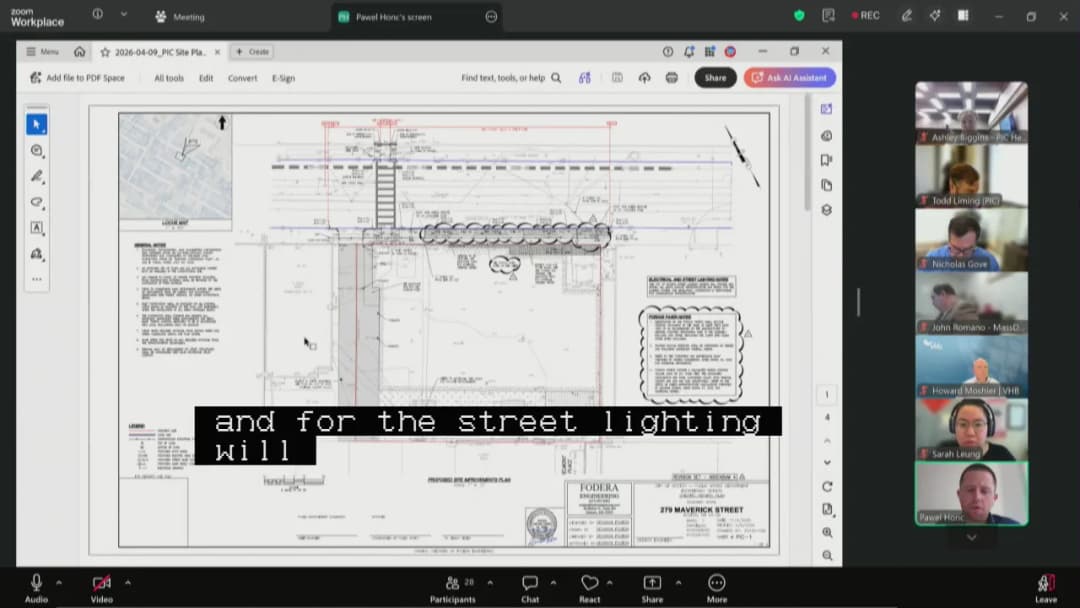
The Boston Public Improvement Commission (PIC) held a public hearing on April 23, 2026, to consider several petitions including street widenings, specific repairs, grant of location, earth retention licenses, and a city roadway acceptance. All items were approved unanimously, with one contingent approval. No public comments were received. Consent Calendar - Unanimously approved the meeting minutes of the PIC hearing held on April 9, 2026. Discussion Items - Agenda Item 1 – Joint Petition for Widening and Relocation of Amory Street, Roxbury: Proponent Colin Horsley (NICH Engineering) presented a request for 108 square feet of additional right-of-way for a fire truck turnaround area due to a shift in electrical infrastructure. The petition was approved unanimously. - Agenda Item 2 – Specific Repairs in Amory Street, Roxbury: The same proponents requested curb realignment, sidewalk reconstruction, and new lighting/storm drain infrastructure. Approved unanimously. - Agenda Item 3 – Grant of Location for Eversource Equipment in Amory Street: The petition involved a transformer (PMH 26640) owned by NSTAR/Eversource and a private enclosure owned by the proponents. Because Eversource was not present, the commission made approval contingent on signed permission from Eversource and a maintenance agreement for bollards. Approved with contingencies. - Agenda Item 4 – Specific Repairs at 279 Maverick Street, East Boston: Pavel Hunts (development manager) and Giovanni Federa (civil engineer) described a 32-unit mixed-use development. Work includes sidewalk reconstruction, relocation of a curb cut, pedestrian crosswalk, bike racks, street trees, and street lighting (underground infrastructure by developer, above-ground by city). Approved unanimously. - Agenda Item 5 – Earth Retention License for 262 St. Botolph Street, Roxbury: Northeastern University and Suffolk Construction requested approval for temporary crane pads and earth support systems for a new athletic facility. BTD took no exceptions after discussions. Approved unanimously. - City Roadway Acceptance – West Service Road, Boston Wharf Road, and Congress Street, South Boston: John Romano (MassDOT) presented the petition for the city to accept these roadways as part of the Central Artery project. All inspections and sign-offs from city departments were completed; an MOU regarding permanent authority over a tunnel was executed. Approved unanimously. - New Business – 1 Jocelyn Place (Dana Farber/Beth Israel Deaconess): Howard Mosier (VHB) presented three actions for the new cancer hospital project: 1) temporary secondary duct bank for construction power, 2) private storm drain connection crossing Pilgrim Road, and 3) temporary earth support measures. The project includes 300 beds, 450,000 square feet, 14 stories above grade, and 4 below grade. Staff submitted comments expected to be addressed in two weeks. The item was continued to the May 7, 2026 meeting. Key Outcomes - All public hearing items (1–5) and the city roadway acceptance were approved by unanimous voice votes. - Approval of Agenda Item 3 (Grant of Location) was made contingent on signed permission from Eversource and a maintenance agreement for bollards. - The new business item for 1 Jocelyn Place was continued to May 7, 2026, to allow the project team to address staff comments. - The meeting was adjourned by unanimous consent.

ENGINEERING AND INFRASTRUCTURE 59% · PROCEDURAL 27% · PUBLIC WORKS 14%
145
APR 23, 2026 · BOSTON, MASSACHUSETTS · CITY COUNCIL
Boston City Council Ways and Means Hearing on FY27 Budgets for Labor Compliance, Law Department, and Property Damage Fund - April 23, 2026

Councilor Ben Weber (District 6, Chair) opened the hearing at 10:11 AM on April 23, 2026, to review the FY27 operating budgets for the Office of Labor Compliance and Worker Protections (docket 0733-0740) and the Law Department and Property Damage Revolving Fund (docket 0748), sponsored by Mayor Michelle Wu and referred on April 8, 2026. Councilors Murphy, Flynn, and Coletta Zapata were present; Council President Braden and Councilor Santana were absent. The hearing featured presentations from both departments and a question-and-answer session. Discussion Items Office of Labor Compliance and Worker Protections - Presented by Deputy Chief Jody Sugarman Brazan and Senior Program Manager Monique Mitchell. - FY27 budget: $1.8 million, a 1.4% decrease ($27,000) from the prior year, primarily in contractual services for trainings. - The office enforces the Boston Resident Jobs Policy (BRJP), Living Wage and Prevailing Wage Ordinance, Wage Theft Executive Order, and the new Heat Illness and Injury Prevention Ordinance. - BRJP statistics (July 2025–March 2026): 19% of work hours to Boston residents, 42% to people of color, 7% to women. The office monitors 166 projects. - Wage theft: 22 complaints received, 20 referred to Massachusetts Attorney General; one worker received restitution. - Heat ordinance implementation: developed contract categories, affidavit, train-the-trainer sessions, webinars scheduled for May–June 2026. - Workers' rights initiative: provided $273,375 in funding to worker centers, trained over 650 workers in multiple languages, held 16 clinics serving 550 workers. - Staffing: 13 positions, no vacancies. Law Department - Presented by Corporation Counsel Michael Firestone, Chief of Staff Sam Dinning, and Office Manager Kristen Coventry. - FY27 budget: 1.4% decrease ($150,000) from contractual services; focused on reducing outside counsel spending. - Department has 75 total employees, 9 current vacancies (litigation, public facilities, Inspectional Services, Police Department). - Outside counsel spending in FY26: $2.6 million, with top firms Stoneman Chandler, Nixon Peabody, and Kahill Gordon (primarily for employment matters and exam school admissions defense). - Federal response: city is plaintiff in 7 cases against the federal administration, led 6 amicus briefs (up to 70 jurisdictions), joined 25 amicus briefs, and defended the Boston Trust Act in court. Preserved over $100 million in federal grants. - Property Damage Revolving Fund: funded by recoveries when the city pursues claims for damage to city property. - Self-insured: annual settlements range from $10–$25 million, heavily influenced by wrongful conviction cases. Unresolved Information Requests - Councilor Flynn: 17F request for Boston Housing Authority elevator data pending since January 2026; contracts for new Fire Commissioner and Police Commissioner requested. - Councilor Murphy: RFIs and 17Fs regarding BPS/Transdev transportation liability insurance unanswered; noted hundreds of outstanding RFIs from council. Councilor Flynn expressed lack of faith in Transdev. - Councilor Murphy requested five-year data on property damage claims and top three highest-risk litigation cases. Key Outcomes - Budget reviews concluded; no votes taken. The hearing was adjourned at approximately 12:30 PM. - Councilors directed follow-up requests for data on settlements, outside counsel cases, insurance, and hazard data from Transdev and BPS. - Chair Weber noted that a wage theft ordinance is expected to be advanced, with the office ready to convene an advisory council.

PENDING LITIGATION 45% · LABOR 14% · PROCEDURAL 9% · LEGAL SERVICES 9%
146
APR 22, 2026 · BOSTON, MASSACHUSETTS · CITY COUNCIL
Boston City Council Hearing on Transportation Safety, Project Delays, and Funding – April 22, 2026

On April 22, 2026, the Boston City Council's Committee on Planning, Development and Transportation, chaired by Councillor Sharon Durkin (District 8), held a combined hearing on three dockets: Docket 0204 (30-day review of street projects), Docket 0588 (transportation philosophy and infrastructure project status), and Docket 0589 (status of state and federal transportation funding). The hearing featured testimony from Streets Cabinet interim chief Nick Gove and Office of Neighborhood Services executive director Mohammed Mazuri, along with rounds of councillor questions and over 40 public speakers. Key topics included stalled or slowed street safety projects, loss or reallocation of federal funds, the status of speed hump and bike lane programs, and community engagement processes. Discussion Items - 30-Day Review and Project Pauses: Councillor Benjamin Weber, lead sponsor of Docket 0204, noted that the city's 30-day review, initiated in April 2025, called for better community engagement but resulted in a year of inaction with no clear process for advancing projects. Councillor Durkin echoed that residents lack clarity on transportation priorities and project timelines. - Funding Risks: Council President Liz Braden highlighted that $327 million in I-90 project funds were cut because of delays, and $8 million for the Boylston Street–Fenway project was reallocated to 2031. She requested a comprehensive schedule of all state and federally funded projects. Chief Gove stated the Boylston Street funds were not lost but moved to later years, and he pledged to provide a project-by-project breakdown. - Speed Hump Program Changes: Chief Gove described a shift from an algorithm-based speed hump placement to a more tailored approach considering alternative measures like raised crosswalks and bump-outs. He announced 100 new speed humps to be installed in the coming month. Councillors Weber, Pepin, and others questioned the criteria for eligibility and the lack of a transparent process for residents to request speed humps. - Blue Hill Avenue Center-Running Bus Lane: Councillor Culpepper and others voiced strong community opposition to the center-running bus lane on Blue Hill Avenue, citing a petition with over 2,000 signatures. Chief Gove said the city is working with the MBTA to host a joint community meeting and is assessing the flexibility of federal grant conditions. Several public speakers supported the bus lane as necessary for transit equity, while others demanded alternative designs. - Removal of Bike Lane Infrastructure: Councillor Durkin and multiple public speakers noted the removal of protective infrastructure (flex posts) from bike lanes without replacement. Chief Gove defended the shift to more permanent cast-in-place barriers, citing a "better buffer program" that starts with repaving projects. Councillor Durkin pressed for completion of the Dartmouth Street bike lane. - Data and Transparency: Several councillors called for updated Vision Zero crash data (current only through December 2025) and the release of a detailed project list with milestones. Chief Gove agreed to update the website and share status reports this week. Key Outcomes - Commitment to Provide Project Status: Chief Gove and Director Mazuri agreed to supply the council with a complete list of state and federally funded transportation projects, including their current status and funding obligation levels. This list is expected to be shared within days. - Speed Hump Program Redesign: The administration will revise the speed hump eligibility criteria and engage councilors and community stakeholders in the process. The spring 2026 installation of 100 speed humps was confirmed, with additional streets to be evaluated on a case-by-case basis. - Community Engagement on Blue Hill Avenue: A joint community meeting with the MBTA is being scheduled to address concerns about the center-running bus lane. The city will also explore curb management and enforcement improvements on the corridor. - Update to Go Boston 2030 Plan: Chief Gove stated that an update to the Go Boston 2030 plan will be undertaken this year, incorporating new mobility patterns and micro-mobility devices. - No Formal Votes Taken: The hearing was informational; no motions or resolutions were voted upon. Public Comments & Testimony Over 40 individuals testified in person and online. Key themes included: - Support for Accelerated Safe Streets Projects: Speakers from ACE, Boston Cyclists Union, Walk Massachusetts, TransitMatters, and others demanded concrete timelines and milestones for delayed projects, particularly on high-crash corridors like Hyde Park Avenue, Blue Hill Avenue, and Columbus Avenue. Many cited rising pedestrian fatalities and the urgency of using already-allocated federal funds. - Criticism of Project Pause: Multiple residents expressed frustration that a “30-day pause” had stretched to over 400 days without clear communication or action. Speakers like Tristan Thomas (ACE) and Reggie Ramos (Transportation for Massachusetts) called the administration’s claim that “nothing is paused” disingenuous, pointing to canceled MBTA meetings and zeroed-out budget lines. - Support for Blue Hill Ave Bus Lane and Opposition: Some residents, including Elijah Evans (Bikes Not Bombs) and Kate Crockford, strongly supported the center-running bus lane as a necessary transit improvement for predominantly Black and brown communities. Others, represented by Councillor Culpepper, argued the community was not meaningfully consulted and opposed the design. - Demand for Transparent Process: Several speakers highlighted the lack of accessible data, including crash statistics and project updates. Allegra Cohen proposed using technology to collect real-time resident feedback. Patricia Connors (West Roxbury) requested planter barriers to prevent illegal parking in bike lanes on Centre Street. - Small Business Concerns: Kelly McGrath (Brighton Main Streets) reported a 20–25% loss of business due to removal of 150 parking spaces on Western Avenue without a mitigation plan, urging a balanced approach that includes loading zones and restored parking where feasible.

TRANSPORTATION SAFETY 56% · ACTIVE TRANSPORTATION 22% · ENGINEERING AND INFRASTRUCTURE 9% · COMMUNITY ENGAGEMENT 9%
147
APR 22, 2026 · BOSTON, MASSACHUSETTS · CITY COUNCIL
Boston City Council Ways and Means Budget Hearing on Environment, Food Justice, Revolving Funds - April 22, 2026

The hearing, chaired by Councilor Ben Weber, reviewed the FY27 budgets for the Environment Department, the Office of Food Justice, and the Conservation Commission, Distributed Energy, and Birdo revolving funds. The panel, led by Chief Brian Sweat, presented proposed budgets with reductions of 2.1% for the Environment Department and 14% for the Office of Food Justice, while emphasizing preserved services and a focus on affordability. Public Comments & Testimony - Gregory Maynard (Boston Policy Institute) noted that the Office of Historic Preservation was missing from the hearing and urged a standalone budget hearing, citing past controversies. - Elena Straffenberger (ABCD) recommended increased city investment in food security programs, citing rising food costs and SNAP changes affecting 40% of Massachusetts households. - Alex Tobman (ABCD/Boston Food Access Council) urged reversal of cuts to Double Up Food Bucks and farmers market coupon programs, stating they are critical for food access. - Hassan Faruqi (Boston Climate Action Network) supported maintaining staff investments and called for sustainable long-term revenue to avoid future cuts. Discussion Items - Environment Department Budget: Commissioner Oliver Sellers Garcia detailed a 2.1% reduction achieved by shifting contract services to revolving funds temporarily. Accomplishments included the third round of Clean Air grants, conversion of gas street lights to LED in Bay Village, solar installations saving $415,000 annually, and the Boston Energy Saver program leveraging $50 million in Mass Save incentives. The department also saved $61.8 million in avoided electricity costs since FY15 and identified a reclassification saving $2.3 million in FY27. - Birdo Compliance: Extensions to August 15 were explained as a response to new flexibility measures. The city expects 80-90% of buildings to meet emissions limits. Free technical support continues. The Equitable Emissions Investment Fund has about $3 million initially, with remaining funds of less than half, and first alternative compliance payments expected. - Office of Climate Resilience: Director Chris Osgood highlighted the shift from planning to implementation, including the nine-acre Madahunt Urban Wild restoration, Charlestown flood risk reduction infrastructure, and a heat research agenda. Capital budget includes $75 million coastal resilience reserve plus projects like Border Street and Lewis Street. - Office of Food Justice: Director Eliza Wasserman reported a proposed budget of $109,852 for personnel and $610,000 for contracted services, plus $500,000 from participatory budgeting. Programs like the farmers market coupon program ($418,625 in FY26) and Double Up Food Bucks (using a federal grant ending June 2026) are maintained. Cold storage grants from ARPA are ending. The office is developing a food access dashboard and supporting SNAP access. - Councilor Questions: Several councilors probed the impact of cuts. Councilor Flynn asked about Birdo financial impact on nonprofits; the panel noted compliance plans exist. Councilor Braden raised heat island and tree canopy issues—40% of new trees planted in climate justice neighborhoods. Councilor Colletazapada inquired about coastal resilience capital and food access budget details. Councilor Culpepper pressed on the 14% cut to OFJ contract services, asking if it was a decision by the department or OBM. Chief Sweat explained it was a collective decision to preserve core programs. Councilor Murphy asked about contingency plans if federal grants do not materialize. - Tree Canopy: The city added 150 acres of canopy from 2019-2024, with increases on public land offset by losses on private residential lots. The urban forestry unit prunes trees on a 5-7 year cycle. A pilot in Chinatown uses above-grade planters due to underground utilities. - Substations: Chief Sweat noted six new substations needed in the next 10-15 years to meet demand, with community engagement on location and mitigation. Key Outcomes - No votes were taken; the hearing was informational for the council’s budget review. - The panel committed to providing written follow-up on: details of federal grant losses, exact balance of the Birdo revolving fund, list of positions impacted by hiring freeze, and specific impacts of cuts on food justice partners. - Councilor Weber announced future budget hearings: April 23 morning for Labor Compliance and Law Department, afternoon for participatory budgeting and street safety. - Public testimony and council dialogue emphasized the need to protect food security programs and climate resilience investments amid budget constraints.

ENVIRONMENTAL PROTECTION 28% · FISCAL SUSTAINABILITY 22% · FOOD SECURITY 9% · FOOD ACCESS 8%
148
APR 22, 2026 · BOSTON, MASSACHUSETTS · CITY COUNCIL
Boston Disability Commission Advisory Board Meeting – April 22, 2026

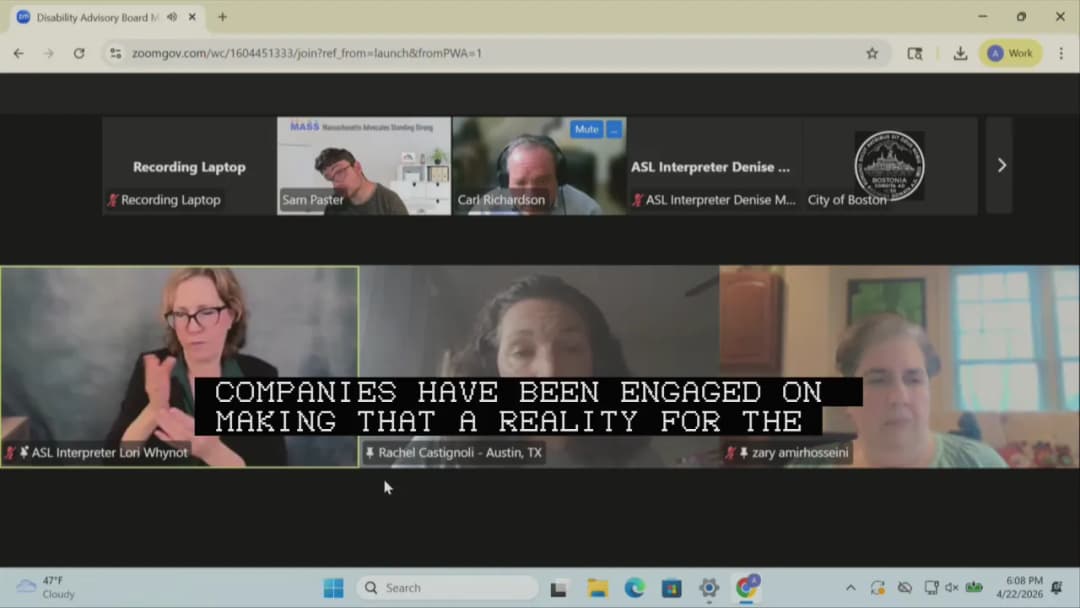
The Boston Disability Commission Advisory Board met on April 22, 2026, to discuss autonomous vehicle operations in other cities, the city's office-to-residential conversion program, updates on ADA compliance and community engagement, and to vote on several advocacy letters. Chair Zari presided, and Commissioner Crystal McCosh provided department updates. Consent Calendar - Minutes Approval: The board voted unanimously to approve the minutes from the February and March meetings. Discussion Items - Autonomous Vehicles Presentation: Rachel Castignoli (Senior Consultant, former CEO of Austin Transportation and Public Works) presented on Austin, Texas's experience with autonomous vehicles (AVs). She noted that five companies operate in Austin (Waymo, Zoox, Tesla, Volkswagen, AV Ride) and that Waymo, Zoox, and Tesla are currently carrying paying passengers. Key issues include AVs struggling with hand signals, temporary traffic control, emergency scenes, and objects close to the ground. Austin uses a public dashboard to track incidents (mostly related to hand signals and temporary traffic control). AVs cannot receive moving violations directly because there is no driver to sign a ticket, but violations are pursued through a roundabout legal process. Positive outcomes include pothole data collection, consistent speed limit compliance, and service animal accommodation. The presenter noted that AV companies have not yet deployed wheelchair-accessible vehicles in Austin. - Office to Residential Conversion Program: John Weill (Head of Office to Residential Conversion, Boston Planning Department) presented a program launched in October 2023 that provides a 75% tax abatement for 29 years to developers converting older office buildings into residential housing. To date, 24 applications have been received for 29 buildings, creating 1,730 new housing units (326 affordable units, including 30 for Section 8 voucher holders). A key requirement is bringing buildings into full ADA compliance. The program involves early collaboration with the Disabilities Commission to address accessibility challenges such as step entrances, interior elevation changes, and historic preservation constraints. Developers are encouraged to exceed the minimum 5% group 2 (wheelchair accessible) units and to add group 1 (adaptable) features and sensory units. Elevator preservation is also prioritized. - Chair Zari's Report: April is recognized as Autism Acceptance Month in Boston. The city adopted a resolution focusing on inclusion and removing barriers. The Massachusetts House restored funding for the Personal Care Attendant (PCA) program after proposed cuts, establishing a working group with disability advocates. Amendment 803 (wheelchair repair protection) has been filed as an outside section to the state budget; residents are urged to contact their representatives. - Disability Commissioner's Report: Commissioner Crystal McCosh provided updates on several initiatives: - Boston 250th anniversary celebrations will include disability history markers, with Perkins School for the Blind under consideration. - Taxi coupon program for seniors and people with disabilities: $5 per book ($10 value), doubled monthly limit for a limited time. - ADA Title II training is being delivered to the Boston Public Library, Boston Centers for Youth & Families, and the Elections Department. A new learning management system for asynchronous training will be piloted with the Office of Neighborhood Services and the Parking Clerk. - Elections access improvements include a dedicated situation room for real-time issue resolution and updated poll worker training. - Restaurant accessibility efforts: a focus on accessible tables (building code requires only 5%) and renewed outreach on the 2022 captions ordinance requiring TVs in public accommodations to display captions. - Upcoming events: AMO Lab (six-week civic engagement program for underserved disabled residents, starting May 12), annual Disability Community Forum (May 5), ADA Day (July 15 at Copley Square Park). - The federal WCAG digital accessibility deadline was extended by one year for municipalities, but Boston is continuing its audit and remediation work. - Board Member Spotlights: Numerous board members highlighted advocacy opportunities and concerns, including the state's equipment reuse program (Amendment 548), Boston Marathon fencing obstructing curb cuts, and the need for continued PCA funding. Key Outcomes - Voting Machine Letter: The board voted unanimously to approve a letter to the Secretary of the Commonwealth asking for alternative voting machines and requesting a meeting to discuss experiences with current machines. - Service Animal Discrimination Study (S2714): The board voted unanimously to support S2714, which would establish a commission to study discrimination in public accommodations for individuals with service animals. - Fines for Rideshare Refusals (H2066): The board voted unanimously to support H2066, which would fine rideshare drivers for refusing to pick up individuals with service animals. - Wheelchair Repair Letter: The board voted unanimously to draft a letter of support for Amendment 803 (wheelchair repair protection) in the state budget. - Minutes Approved: Minutes from February and March meetings were approved.

DISABILITY RIGHTS 52% · HOUSING 13% · TECHNOLOGY AND INNOVATION 10% · PROCEDURAL 8%
149
APR 21, 2026 · BOSTON, MASSACHUSETTS · CITY COUNCIL
Boston City Council CPA Committee Hearing on FY26 Funding and FY27 Budget – April 21, 2026

On April 21, 2026, the Boston City Council Committee on Community Preservation Act (CPA), chaired by Councilor Enrique Peppen (District 5), held a hearing on Docket 0569 (appropriation of $32.6 million from FY26 Community Preservation Fund revenues for 45 recommended projects) and Docket 0758 (appropriation of $1,763,090 for FY27 administrative expenses and $39,587,798 in estimated FY27 revenues to be reserved). The hearing featured presentations from CPA Director Thadine Brown and Christina Keith, Director of the Neighborhood Housing Division, followed by council questions and public testimony from 15 individuals. Public Comments & Testimony - Toy Burton (Founder, Didi’s Cry) urged the city to intentionally support the suicide loss community and fund the proposed Danita Morris Memorial Hope Park in Roxbury, emphasizing the need for visible healing spaces. - Deb Morris (Hebrew Senior Life) thanked the city for CPA support for a 78-unit affordable supportive housing community for older adults in Roslindale, calling the investment critical to project feasibility. - Jeffrey Gonyam (Dorchester resident, preservation consultant) praised CPA staff for their hands-on approach and highlighted the scarcity of historic preservation funding before CPA, advocating for maintaining at least 25% of CPA funds for historic preservation. - Elizabeth King and Jean Clark (Brighton-Allston Congregational Church) spoke in favor of funding for steeple and exterior repairs, noting the church’s role as a community hub with a food pantry and green space. - Gabriel Courier (First Asian Baptist Church of Boston) expressed gratitude for CPA funding that prevented the collapse of the church’s west wall, ensuring safety for the congregation and neighbors. - Bridget Wallace (Founder, G Code) supported CPA funding for the G Code House, a historic preservation project that will provide living and learning space for women from marginalized communities to access tech careers. - Robert Bonner (Brighton resident, food pantry volunteer) thanked the council for funding the Brighton church restoration after three applications, enabling continued service to hundreds. - Kyle Roberts (Executive Director, Congregational Library and Archives) testified in support of a project to process and digitize rare historical records from the City Mission Society and Seafarers Friends Society, making them freely accessible online. - Reggie Jean-Pancan (Executive Director, Haley House) supported funding for roof and chimney repairs at 23 Dartmouth Street, a historic building housing 110 units of affordable housing and a soup kitchen, warning of water damage threats. - Nancy Lowe (Chinese Consolidated Benevolent Association) testified for an open space grant to create a small park at the former girls’ entrance in Chinatown, which will provide recreational area and reduce urban heat. - Reverend Courtney Jones (Hope Central Church, Jamaica Plain) spoke in favor of funding for an ADA-compliant ramp, stating that the church’s building had been a burden but now enables community justice work, and that the ramp will make the space accessible to all. - Jeremy Vieira (Rogerson Communities) emphasized that CPA funds are essential for building affordable senior housing with memory care, noting that the project would not be feasible without CPA. - Reverend John Odoms (First Baptist Church of Boston) thanked the CPA staff and committee for recommending the church’s historic preservation grant and requested council approval. Discussion Items - Presentation and Overview: Thadine Brown presented the FY26 funding round, noting 84 applications totaling over $45 million in requests, with 45 projects recommended for $32.6 million. She highlighted that 50% of funds go to affordable housing, 25% to historic preservation, and 25% to open space/recreation. The FY27 budget projects $39.59 million in available funding, a $4.35 million increase from FY26, primarily due to increased surcharge revenue. She also reported that 217 projects (55.5%) are in neighborhoods where over 65% of households earn below the area median income, and 157 projects (40%) are in neighborhoods where over 65% identify as people of color. - Councilor Flynn praised the CPA team’s professionalism and outreach to unsuccessful applicants, noting that staff provide detailed feedback and encourage reapplication. He highlighted the program’s unifying effect on residents. - Councilor Cole Pepper asked about senior housing, noting the loss of the federal 2028/2811 program. Christina Keith explained that $4 million is set aside annually for senior housing under CPA, and that FY26 saw strong senior housing applications (close to $12 million). He also inquired about the One+ Boston Home Buyer program interest rate buy-down; Keith clarified that the average interest rate is about 6%, and the program can reduce it by 1%, plus up to $50,000 in down payment assistance. - Councilor Fitzgerald asked about coupling CPA funds with state projects (e.g., DCR). Brown confirmed that state agencies can apply, and CPA funds typically cover exterior work, requiring a 15-year MOU for site control. He also asked about adjusting the 50/25/25 allocation; Brown noted the committee can change percentages each round as long as each category gets at least 10%. - Council President Braden emphasized the need for family housing with two- and three-bedroom units. Keith agreed, noting that family housing is a growing priority. Braden commented on the rolling eligibility form for FY27, which opened in November 2025, with the first information session set for May 6, 2026. - Councilor Weber asked about project size for affordable housing: Keith said 25–100 units is typical for tax credit viability. Weber also asked about advice for unsuccessful applicants; Brown reiterated that staff discuss concerns and encourage reapplication, with the rolling eligibility form available year-round. - Councilor Coyota Zapata thanked the team for assistance with the McLean Playground retaining wall (funded at $198,000) and asked about future funding trends. Brown estimated that annual funding would remain around $38–40 million, depending on state match and surcharge. Zapata also inquired about using historic preservation funds for ADA accessibility at churches; Brown stated that CPA funds can support exterior ADA improvements, but not interior work, and offered to connect applicants with other funding sources. - Councilor Peppen (Chair) asked about the timeline for open space/recreation projects: Brown said 24 months, with possible 12-month extensions. For affordable housing, projects have five years. He also asked about the Riverside Theater Building’s indoor ADA needs; Brown reiterated that CPA does not fund interior spaces but can provide referrals. - Councilor Cole Pepper (follow-up) asked about the JM Goldson equity analysis. Brown clarified that the analysis is used to report how CPA funds are distributed across neighborhoods, not to determine funding decisions. The nine-member Community Preservation Committee evaluates projects based on readiness, scope, need, and equity, using an evaluation sheet that can be shared. Key Outcomes - No formal votes were taken during the hearing. The committee heard presentations and public testimony in preparation for a future council vote to approve the FY26 appropriations and FY27 budget. - The CPA staff will continue to accept rolling eligibility forms for FY27 funding until August 30, 2026, with the first information session on May 6, 2026. - Councilor Peppen indicated he would introduce the dockets for a vote at the next council meeting. - The committee will transmit the recommended slate of 45 projects to the full City Council for approval.

COMMUNITY PRESERVATION ACT 61% · HISTORIC PRESERVATION 11% · AFFORDABLE HOUSING 8% · ACCESSIBILITY 5%
150
APR 21, 2026 · BOSTON, MASSACHUSETTS · CITY COUNCIL
Boston City Council Committee Hearing on Appointments, Cemetery Funding, and Red Sox Grant – April 21, 2026

The Boston City Council Committee on Environmental Justice Resiliency in Parks held a virtual hearing on April 21, 2026, beginning at 11:01 a.m. The hearing covered three dockets: the appointment of Samira Amadi to the Building Emissions Reduction and Disclosure Ordinance (BERDO) Review Board, an appropriation of $860,000 from the Cemetery Trust Fund, and acceptance of a $375,000 grant from the Boston Red Sox. No public testimony was offered. Discussion Items - Docket 0260 – Appointment to BERDO Review Board: Samira Amadi, founder and principal of NV Energy Studio, a Boston-based energy and sustainability consulting firm, presented her qualifications. She has over 15 years of experience assisting building owners with BERDO and Building Owners and Operators Association (BODO) compliance, focusing on large residential, commercial, and affordable housing properties. In response to questions from Councillor Fitzgerald, Ms. Amadi discussed phased versus full decarbonization retrofits, noting that for vacant buildings, a full retrofit is often preferred, while occupied buildings may opt for phased approaches. She emphasized that affordable housing clients are motivated by environmental justice and long-term cost savings. Councillor Durkin expressed support for her expertise and thanked her for stepping forward. Councillor Louis Jen had no questions. - Docket 0760 – Cemetery Trust Fund Appropriation ($860,000): General Superintendent Tom Sullivan explained the request, which includes: $200,000 for a licensed professional to develop a future burial plan (current capacity at HyPach cemetery estimated at two to three years); $300,000 for pathway and water infrastructure improvements at Mount Hope, Fairview, and Evergreen cemeteries; $200,000 for landscape infrastructure (fencing, walls); $100,000 for signage improvements; and $35,000 for digital access to cemetery records and maps. Note: The itemized amounts total $835,000, not $860,000 – a discrepancy in the request not addressed during the hearing. The cemeteries cover 265 acres across 19 properties (16 historic, 3 active), with 600–800 burials per year and a staff of 25. Councillors Fitzgerald and Durkin praised the work of the cemetery division and supported the investment. - Docket 0761 – Boston Red Sox Grant Acceptance ($375,000): Bayata Collin, Deputy Chief of Staff to Mayor Wu, presented the grant as part of an eight-year agreement with the Boston Red Sox, with this being the fourth year. The amount increases by $25,000 annually. Due to the city approving 13 Fenway concerts earlier in 2026, the funds will be directed to the Fenway neighborhood to mitigate community impacts. Specific allocations will be determined in collaboration with Councillor Durkin and Fenway community leaders. Councillor Durkin voiced strong support, thanking the Red Sox and local community groups (Fenway Civic Association, Charles Haight Alliance) and emphasizing the importance of equitable distribution of benefits. The Chair expressed no concerns and looked forward to passing the grant. Key Outcomes - The committee appeared poised to recommend approval of Samira Amadi’s appointment to the BERDO Review Board to the full City Council. - The committee appeared poised to recommend approval of the $860,000 Cemetery Trust Fund appropriation (pending clarification of the $835,000 total discrepancy). - The committee appeared poised to recommend approval of the $375,000 grant from the Boston Red Sox. - No votes were taken during the hearing; recommendations are expected to proceed to the full council.

PARKS AND RECREATION 42% · ENVIRONMENTAL PROTECTION 35% · PROCEDURAL 9% · AFFORDABLE HOUSING 6%
OPENPUBLICA · PUBLIC MEETING INDEXUPDATED DAILY · openpublica.com