The Grand Rapids City Commission held a budget work session on May 5, 2026, to review strategic priorities and associated budgets. The meeting covered public safety (police, fire, OPA, district court), mobility and vital streets, engaged and connected community, and governmental excellence. Discussions included staffing levels, overtime analysis, new state funding opportunities, and a vacancy on the commission. Consent Calendar - None noted. Public Comments & Testimony - Dane Gates (Third Ward resident): Expressed support for filling the commission vacancy with Kurt Repart, calling it a chance to "rectify an injustice." Discussion Items - Public Safety (Police, Fire, OPA, District Court): - GRPD Chief Greg Trade reported 299 officers out of 312 authorized, with 100% city beat coverage. Overtime hours were down but court overtime up due to more officers. A $217,000 MCOLES pilot program funds additional training. The mental health co-response team has diverted 80% of 463 patients from jail or ER. - Fire Chief John Brown noted 25,000 incidents in 2025, 117 million dollars property saved, and a recommendation to add an engine at Leonard Street. Overtime covers 26% of staffing at the new Kindle station. A disaster relief fund of $100,000 (seeded with city funds) was proposed. - OPA Director Brandon Davis presented a 2.9 million dollar budget, including $400,000 from the state public safety trust fund for community-based programs (split $200,000 internal, $200,000 external grants). The Cure Violence program is supported by $750,000 in federal grants. - District Court Administrator Sean Vander Kodde reported an 8% increase in fee compliance, reducing the city contribution by 9%. A 14% increase in felony cases was noted, with 80% adjudicated within 28 days. - Mobility and Vital Streets: - Deputy City Manager Kate Berens presented mobility investments, including doubling the neighborhood traffic calming program ($650,000 matching grant leveraged to $3.6 million) and continuing the DASH pilot (ending FY27). Parking rates for monthly parking will increase with COLA; on-street hourly rates are unchanged. - Vital Streets Oversight Commission Chair Tim Roseboom and Acting City Engineer Cindy Irving reported 57.5% of streets rated good/fair (down from 60%). The FY27 budget includes 93 projects, 36.7 miles of streets, and $33.3 million in Vital Streets investment. New state funding (neighborhood roads fund) is expected to bring $8 million+ annually. Recommendations include doubling sidewalk snow plowing (to 400 miles), deer management program ($235,000 over 3 years), and $4.5 million for traffic safety. - Engaged and Connected Community & Governmental Excellence: - Chief of Staff Brendan Matthews highlighted investments in inclusive engagement, neighborhood connections, arts/culture strategy (survey open, recommendations due early 2027), and the Ward Wednesday newsletter (12% click-through rate). - Governmental excellence items include a $100,000 overtime analysis study for public safety, continuation of Oracle ERP implementation, a pilot AI customer service chatbot for 311 (opt-in), and a compensation and classification study (final report expected by end of FY26). The commission vacancy cost is $33,146 for half a year. Key Outcomes - No votes taken on budgets; this was a work session for discussion. - Staff directed to pursue new state funds for sidewalk plowing, deer management, and traffic safety. - Disaster relief fund proposal supported by multiple commissioners. - Commission vacancy (First Ward): No consensus was reached. The body remains split 3-3. The city attorney advised that a motion to reconsider would require five votes. The issue will be discussed further at the next meeting. - Next work session scheduled for May 12, 2026, covering economic prosperity, affordability, health, and environment. Public hearing on tax rate and fees also set.
Public Meetings - Grand Rapids, Michigan
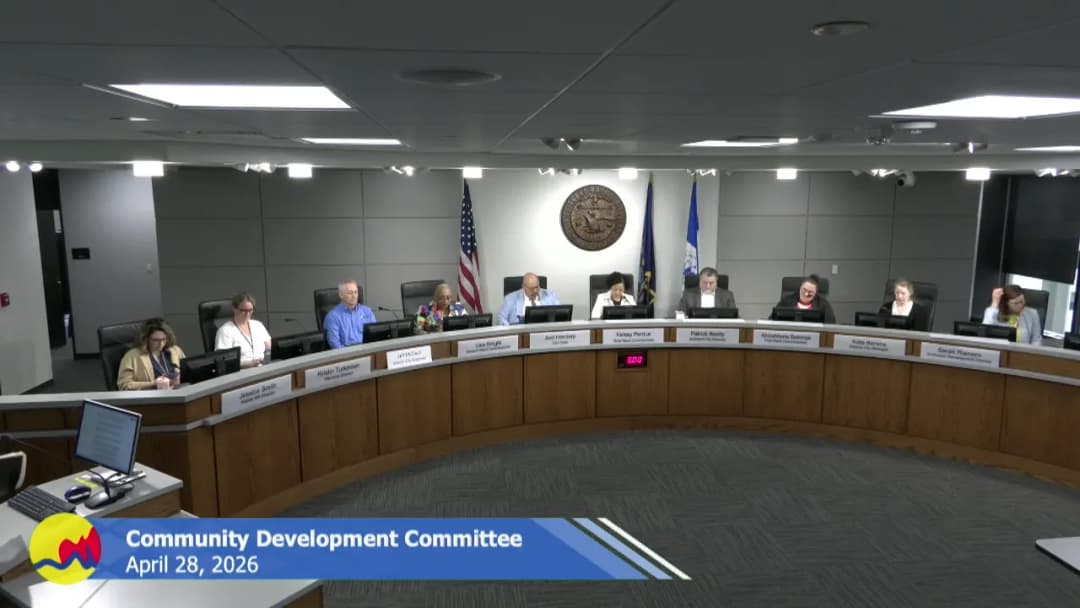
Public Meetings - Grand Rapids, MichiganThe Grand Rapids City Commission met as a Committee of the Whole on April 28, 2026, to address a range of administrative items, recognize public service employees, and receive the preliminary fiscal year 2027 budget presentation. The meeting included votes on several resolutions, a discussion of proposed amendments to historic preservation enforcement, and a presentation of the city’s financial plan. Proclamation & Recognition - Mayor David LeGrand read a proclamation declaring the week of May 3–9, 2026, as Public Service Recognition Week, honoring over 1,700 full-time and 1,000 part-time/seasonal city employees, as well as appointed and elected officials. - City Manager highlighted the ACE (Above Customer Expectations) award program; over 150 employees have been recognized since May 2025. - Ken Godwin, President of the Association of Public Administrators union, offered remarks on behalf of all collective bargaining units, thanking employees for their dedication. Consent Calendar - Resolution authorizing special events for 2026 – Approved by voice vote. All events must submit insurance and action plans approved by risk management, police, and fire. - Resolution recommending approval of a social district permit for MRA Vandenberg Enterprises (Sugar Bar) at 132 Monroe Center – Approved by voice vote. The bar will opt into the existing downtown social district. - Resolution for a Brownfield Plan Amendment at 528 Bridge Street – Approved by voice vote. The project includes 710,831 in Brownfield TIF for demolition, site prep, and infrastructure, with 2.7 million in private investment for commercial office space and a pub. - Resolution for a 12-year Industrial Facilities Exemption Certificate for Falk Sheep Metal at 1782 Northbridge NW – Approved by voice vote. The 5.4 million project adds a 50,000 sq. ft. production facility; the property tax abatement totals approximately 1.1 million over 12 years. Discussion Items Historic Preservation Enforcement Amendments - Planning Director Kristen Turkleson presented two companion resolutions to set a May 12, 2026 public hearing on amendments to Chapter 28 (Historic Preservation Commission) and related municipal civil infractions. The amendments would allow civil infractions for preservation ordinance violations instead of automatic misdemeanors. - Several commissioners expressed reluctance to retain a misdemeanor option even for a fourth violation. Commissioner Sasi stated the current draft “kicks the misdemeanor down the road but still leaves it on the books” and voiced a preference for purely civil fines, citing equity concerns. Commissioner Kilgore supported alignment with decriminalization goals. Commissioner Knight suggested reviewing past enforcement history before finalizing. - City Manager noted the amendment would require further commission direction. The city attorney indicated both legal paths are viable. The resolutions to set hearings were approved by voice vote, with the understanding that further refinement would occur before final adoption. Fiscal Year 2027 Preliminary Budget Presentation - City Manager and CFO Molly Claren presented the FY27 preliminary budget: a citywide appropriation of 785 million and a general fund of 206.7 million. Key highlights include: - Continuation of all basic services; no new general fund positions (except two grant-funded positions pending commission decision). - Proposed property tax millage rate decrease due to increased property values, with an average residential impact of 51. - No increase in on‑street meter parking rates; monthly parking rates rise about 3%. - 8.5 million in state road funding expected (not yet received); discussion on uses to include pedestrian safety and mobility. - 7 million transfer to the budget stabilization fund (“rainy day fund”) to buffer economic uncertainty. - 1.7 million in state public safety revenue sharing expected in September; 400,000 of that allocated for crime prevention programs (community‑oriented services and mediation). - Over 200 million investment in water/wastewater/stormwater systems; 125 million for public safety (police 75.4M, fire 48.3M). - Funding for employee compensation: 236 million total personnel services. - Continuation of the ARPA‑funded personal belongings storage program with 100,000 from the refuse fund. - 50,000 (expandable to 100,000) for a local disaster relief fund in partnership with United Way. - No changes to the Dash bus circulator; changes reduce capital costs by 7 million over five years and avoid operating cost increases. - Commissioners discussed priorities: - Commissioner Belshack asked about clarity on state road funding eligibility and uses, and expressed disinterest in continuing the commission support pilot, preferring to invest in neighborhood associations for communication. - Commissioner Sasi urged deliberate, imaginative use of new road funding, noting the budget is largely a continuation. - Commissioner Kilgore requested deeper review of fees with increases greater than cost of living (Code C) and continued support for the Vital Streets oversight commission as that millage sunsets. - Commissioner Knight raised concerns about police resource allocation for new downtown venues and supported neighborhood associations as communication bridges. - Commissioner Purdue added interest in strengthening neighborhood associations, using late fee revenue from water/sewer for assistance, and using Third Ward Equity Fund for neighborhood support. - Commissioner Koger asked about leveraging community partnerships for the Third Ward Equity Fund and urban forestry implementation. - CFO Claren answered questions on the GVSU income tax forecast model, noting it incorporates employment, wages, construction, work‑from‑home trends, CPI, and GDP. The FY27 forecast of 4.37% growth is the most aggressive in recent years, but out‑year projections taper. - Overtime in public safety: a study will be conducted to understand drivers and potential mitigation; proposed FY27 overtime budgets (police 4.3M, fire 4.0M) reflect continued variability. Key Outcomes - Consent Calendar items: All four resolutions were approved without objection (voice votes). - Historic Preservation Hearing Dates: Resolutions setting May 12, 2026 as the public hearing date for both the preservation and municipal civil infraction ordinance amendments passed by voice vote. Commissioners signaled intent to further amend the provisions before final adoption. - Budget Hearing Dates: Resolutions scheduling public hearings for the budget and service provision fees on May 12, 2026 were approved by voice vote. - Closed Session: A motion to enter closed session (in Room 601) to discuss pending litigation passed on a roll call vote (Commissioners Knight, Kilgore, Belshack, Sasi, Perdue, and Mayor LeGrand all voting yes). No further public items were discussed. The meeting concluded with the commission moving to closed session.
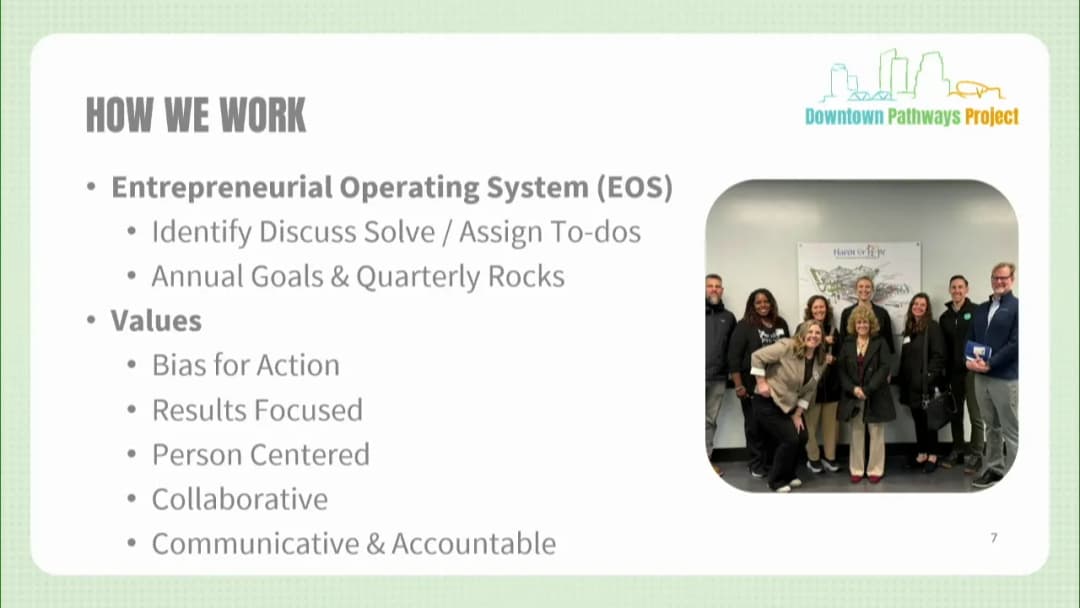
This meeting of the Public Safety Committee was called to order at approximately 2 minutes and 20 seconds past the scheduled start time. The agenda featured three main presentations: a Know Your Rights program update from the Office of Oversight and Public Accountability (OPA), a briefing on summer youth violence prevention initiatives and the Gun Violence Memorial Art Installation, and an update on the Downtown Pathways project (formerly 100 in 100). The meeting included discussions on immigration policies, youth curfew, data on homelessness, and collaborative efforts to address chronic homelessness. Know Your Rights Presentation - Brandon Davis, OPA, presented an abridged version of the Know Your Rights program, which typically runs about an hour. He explained key legal concepts such as probable cause, reasonable suspicion, and the difference between a hunch and a legal standard. He emphasized that the program aims to educate community members on their rights during police interactions, including traffic stops. - Commissioner questions addressed Miranda rights (custodial interrogation requirement), interactions involving youth, and coverage of alternative transportation (e.g., bikes, scooters). Davis confirmed that the program covers these scenarios, and that schools can request trainings. OPA reported that over 700 people were trained in the past year. - Mayor noted that the city's non-cooperation with ICE policy prohibits officers from asking about immigration status or detaining based on immigration status, and that the city does not participate in 287(g) agreements. He stated that these policies answer community demands related to ICE. Summer Youth Violence Prevention Initiatives & Gun Violence Memorial - Letitia Lipscomb, OPA's civilian violence prevention and intervention manager, presented on the "It Takes a Village" summer youth program, which will run at three sites in 2026: Night Quest (Life Quest), City Vibes (Gerald R. Ford School), and new in the First Ward: Freestyle Fridays at Muse GR. The programs offer safe, structured weekend evening activities to reduce youth violence, which data shows peaks in summer months (ages 12-17, after 8 p.m., weekends). - The Gun Violence Memorial Art Installation project is moving forward: an RFP is scheduled to be released in May 2026, based on community engagement. The memorial will honor those impacted by gun violence, with emphasis on youth voices and inclusivity (e.g., domestic violence victims). - Commissioners asked about consent for under-18 participants (addressed by partner organizations) and how data (including police hotspot data) informs program timing and locations. The times (e.g., 5:30-7:30 p.m.) are varied to cover different periods when youth may be at risk. Downtown Pathways (formerly 100 in 100) Update - Josh Lunger (Grand Rapids Chamber), Courtney Myers-Keaton (Coalition to End Homelessness), and Megan (Catherine's Health Center) presented the collaborative effort to end chronic homelessness. Key statistics: the by-name list of chronically homeless individuals peaked at 225-250 but dropped to 170, with 144 active referrals. Housing placements increased 234% over the prior year. Only 3% have returned to homelessness. - The project uses an Entrepreneurial Operating System (EOS) with quarterly priorities ("rocks"). Quarter 1 accomplishments included securing funding for a Fair Market Rent study (RFP awarded) to potentially unlock up to 300 HUD vouchers, launching a communication strategy (website PathwaysGR.org, newsletter), and identifying a site for complex care housing (funded by state budget, $750,000). Quarter 2 will focus on interim permanent supportive housing and metrics. - A celebration event is scheduled for June 18, 2026. - Commissioner inquiries about storage solutions for unhoused individuals (related to nuisance ordinance) were noted as an item on the group's issues list. The group meets weekly. Key Outcomes - No formal votes were taken. The committee received informational presentations and provided feedback. - The Gun Violence Memorial RFP will be released in May 2026. Community engagement is ongoing. - The Downtown Pathways group will continue weekly meetings and report back on quarter 2 priorities by May 8, 2026. - OPA will continue Know Your Rights trainings and seek to expand to more schools. - The summer youth programs will operate from late spring through summer at three sites, with additional wrap-around services (food boxes, utility assistance, etc.).
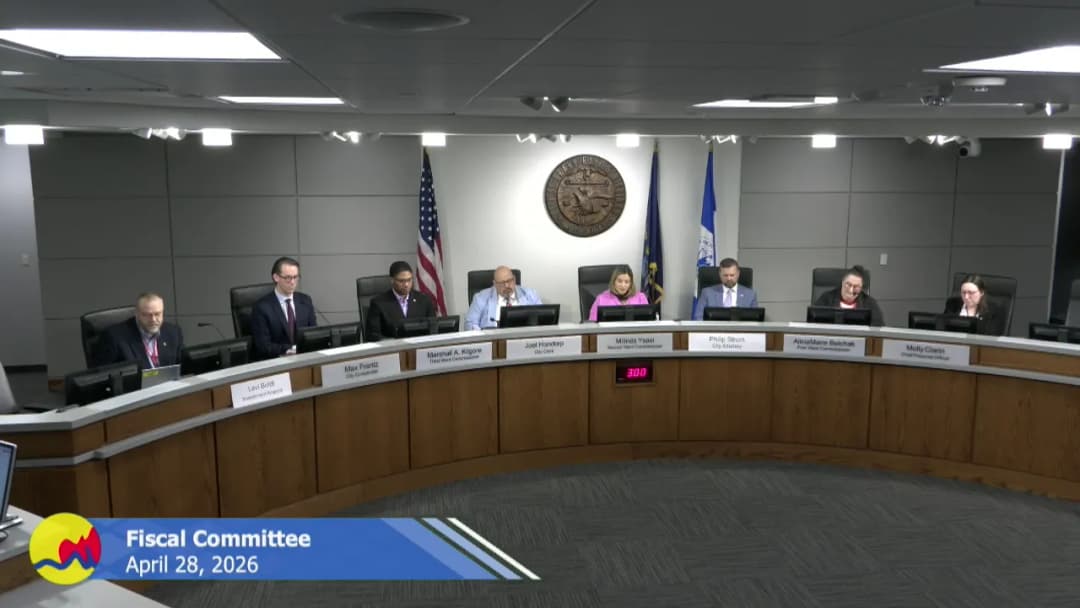
The Grand Rapids Fiscal Committee met on April 28, 2026, to approve several resolutions, accept grants, and receive financial reports. All items were approved unanimously. The meeting included presentations from Parks, Environmental Services, Engineering, and Treasurer’s office staff. Resolutions Approved - Urban Agriculture at Joe Taylor Park: Approved a $67,000 agreement with Access of West Michigan for a community-based urban agriculture project, funded by an Eagle Environmental Justice Grant. Activities run May 1, 2026 through September 2027. - Urban Agriculture at Garfield and MLK Parks: Approved an $83,000 agreement with Jade Rabbit to develop and activate agricultural spaces at both parks, also funded by the Eagle Environmental Justice Grant. Includes infrastructure and programming. Commissioner noted this will restore community gardens at MLK Park. - Plaster Creek Sewer Grant: Accepted a $412,500 FEMA hazard mitigation grant with a $137,500 city match (included in FY26 ESD budget) for assessment and preliminary engineering of the 66-inch Plaster Creek sanitary sewer trunk line, which is susceptible to inflow and infiltration during wet weather. - Duct Bank on Stocking Avenue: Authorized a budget substitution of $305,338 for installation of duct bank from First to Fourth Street to replace failed duct. Project bids came in 17% under engineer’s estimate. - GR Pay It Advertising: Approved a $40,000 agreement with Mesmerize to promote GR Pay It on Rapid buses from July 1 to September 30, 2026. Past campaigns (2023, 2024) yielded double-digit growth in adoption; contracts often extend beyond term. Commissioner asked about targets; staff expect continued adoption increases. - Bid List Resolution: Approved the April 28, 2026 bid list with three items. Comptroller's Report For the period March 31–April 13, 2026, cash payments of approximately $39.2 million were released, including $5.8 million for employee payroll and $157,000 for income tax warrants. 648 income tax refunds and 1,037 AP checks/electronic payments were issued. The report was received and filed. Treasurer's Report Mr. Bull reported that short-term interest rates are expected to remain stable, though global events (Middle East, private credit markets) pose risks. The city’s portfolio totals $680.9 million, yielding 3.23%. Recent investments include $7 million in Michigan State Housing Development Authority bonds for affordable housing. The report was received and filed. Key Outcomes - All five resolutions and the bid list were passed unanimously. - Comptroller’s and Treasurer’s reports were received and filed. - No public comments were heard.
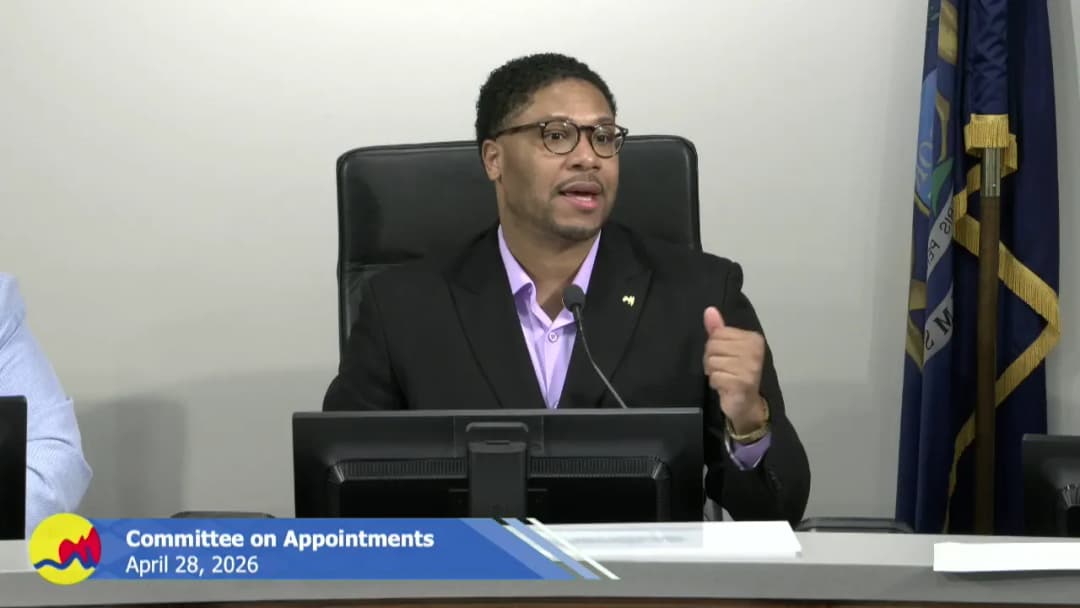
The Committee on Appointments met on April 28, 2026, at 8:00 a.m. to confirm four appointments to city boards and commissions and to discuss the current vacancy landscape. All resolutions passed unanimously. The meeting adjourned at 8:08 a.m. Appointments - Resolution 1: Confirmed Mayor LeGrand's appointment of Max Gibbs to the Urban Forestry Committee. Gibbs serves as the Parks and Recreation Advisory Board representative, filling a vacancy caused by a resignation. - Resolution 2: Confirmed Mayor LeGrand's reappointment of Commissioner Isassi to the Civil Service Board. Commissioner Isassi thanked the committee, and members acknowledged her expertise. - Resolution 3: Confirmed Commissioner Kilgore's appointment of Sarah Larson to the Urban Agriculture Committee. Members noted the importance of filling this board given its role in the climate action adaptation plan. - Resolution 4: Confirmed Commissioner Isassi's appointment of Stacey Stout to the Urban Agriculture Committee. Stout previously worked in the city's Office of Equity and Engagement and now leads Blandford Nature Center. Commissioner Isassi disclosed a personal friendship and absence of conflict of interest. Vacancy List Discussion - Miss Bosker (clerk's office) reported several recent resignations: Hannah Mako resigned from Urban Forestry, Carlos Calderone resigned from both Urban Agriculture and Stormwater boards, and Tammy Vandenberg resigned from the Land Bank Authority. Additionally, Civil Service Board terms are ending and will be addressed. - Commissioner Belchat inquired about the Stormwater board position, noting a previous member had been asked to serve until a decision was made. - Commissioner Isassi provided details: Hannah Mako had been appointed about a year ago and remains on Parks and Recreation; Carlos Calderone is her cousin; Tammy Vandenberg resigned after a few meetings since the Land Bank's first meeting in January. - Commissioner Saucy thanked all volunteers and noted that Land Bank appointments are mayoral, so the mayor will fill Vandenberg's seat. - Commissioner Saucy also reminded colleagues of the upcoming busy election season, thanked the clerk's office for a presentation at a neighborhood summit, and urged liaisons to stay on top of appointments to manage the clerk's office workload. Key Outcomes - All four resolutions (appointments of Gibbs, Isassi, Larson, Stout) passed unanimously by voice vote. - The committee acknowledged the resignations and will prioritize filling those positions by gathering applications. - Chair and Miss Bosker will continue to coordinate on vacancy management.
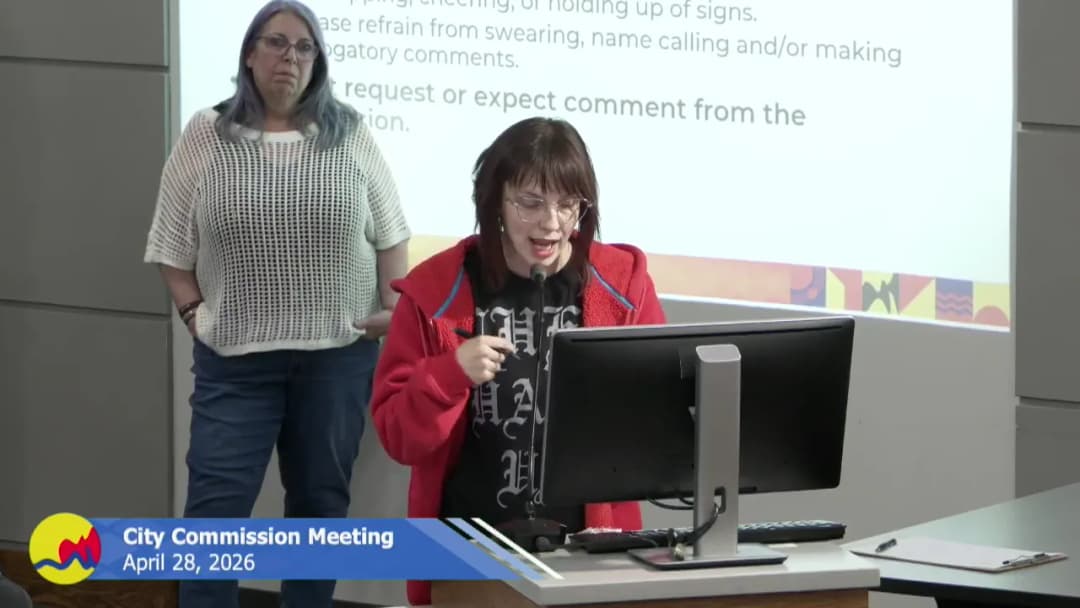
The Grand Rapids City Commission convened on April 28, 2026, for a regular meeting that included public hearings on a brownfield redevelopment project, the Downtown Improvement District special assessment, and a nuisance assessment appeal. Commissioners approved the consent agenda and heard extensive public comments on immigration enforcement, surveillance cameras, affordable housing, and the first ward vacancy. The meeting was adjourned early due to a disruption. Consent Calendar - Approved minutes from April 14, 2026. - Approved the consent agenda unanimously. Petitions and Communications The clerk read several communications, including: - A communication from the Grand Rapids Community Relations Commission requesting transparency and accountability regarding recent GRPD officer-involved incidents (filed). - Resignations from the Urban Forestry Committee and Urban Agricultural Committee (referred to committee on appointments). - A communication from Julie Hulk of GR for Affordable Housing regarding future housing needs (filed). - A communication from Michael B. Scrugs regarding police conduct (filed). - A communication from Mark Baker of Soft Lights Foundation regarding a lighting ordinance (filed). - Communications from Scott Atchison proposing a downtown information center and a name change of Kent County to Grand Kent County (filed). - A communication from Kelly Joe Paltier expressing support for the downtown improvement district (filed). - A communication from Diara Newman of West Michigan Center of Arts and Technology with concerns about the May 4-Route pilot (filed). - A communication from Josh Brink expressing disappointment in the April 2026 special meeting (filed). - A communication from the Hotel District Business Association expressing support for the downtown improvement district (filed). Public Hearings Brownfield Plan Amendment – 1225 Plymouth Flats - Presentation: Sarah Ranero (city staff) presented a brownfield plan amendment for the Plymouth Flats redevelopment at 1225 Plymouth. The project involves demolishing a vacated credit union and constructing three buildings with 48 residential units (24 one-bedroom, 24 two-bedroom). Total project cost is $10.5 million. Eligible brownfield activities total $1.75 million, with $948,312 in housing TIFF capture over 12 years. As part of aspirational inclusion goals, 30% of construction costs ($2.85 million) are targeted for micro-local and minority/women-owned businesses. Units are designated at 90% AMI. Construction is planned to start summer 2026. - Developer comments: Matt O'Connor and developer Matt (last name not given) noted the blighted building acquisition, neighborhood engagement, and desire to address housing needs incrementally. - Commissioner comments: Commissioner Yasow expressed support, noting neighborhood engagement and the project's potential to attract amenities. - Public comment: D Jones asked for per-unit costs and suggested using 3D-printed construction in the future. No other public comments. - Outcome: Hearing closed; matter referred to committee of the whole. Downtown Improvement District (DID) Special Assessment - Presentation: Melvin Ellers (Director of Operations, Downtown Grand Rapids Inc.) presented the 2027–2029 operations plan for the Downtown Improvement District. Proposed changes include: a 3% increase in the area-wide assessment in FY2027 (operating budget $1.5 million, including snowmelt), and 4% increases in FY2028 and FY2029 (ceiling tied to state inflation). The plan expands DID boundaries to include the new amphitheater and one additional parcel on the west side. Residential property owners pay $120 annually flat rate; nonprofits receive a 40% reduction. Assessment breakdown: 30% land area, 30% building square footage, 30% parcel frontage, 10% parking area. - Commissioner questions: - Commissioner Knight inquired about partnerships to protect personal belongings of unhoused residents. Ellers said conversations had not yet occurred but were open. - Commissioner Kilgore expressed disappointment that the DID executive team had not yet addressed the formal request, and urged communication of this need. - Commissioner Belchak asked about ambassador deployment for new venues and equitable service distribution. Ellers described special event deployments and daily cleaning of four to five sub-districts. - Public comment: - Scott Atchison (3rd Ward) criticized the lack of a downtown information center and said ambassador contracts should be reviewed; he argued DID/DDA/ DGRI are essentially the same entity. - D Jones advocated for using DID funds for affordable housing and criticized billionaires and businesses. - A speaker (name not given) commented on Ellis Parking rates. - A speaker suggested spreading assessments citywide to avoid a downtown vs. neighborhoods perception. - Mark (Grand Rapids) referenced a potential MLS team relocation and cautioned against repeating mistakes. - Outcome: Hearing closed; matter referred to committee of the whole. Special Assessment Nuisance Role 8802 - Presentation: Lindsay Post (City Assessor’s Office) explained that the special assessment role covers unpaid charges for code violations and services from July–December 2025. Notices were sent March 16, 2026, and the role was open for public inspection March 30–April 28. The commission convened as board of review for final appeals. - Public comment: None. - Outcome: Hearing closed. Public Comments (Second Opportunity) Numerous residents spoke; key themes included: - Immigration and sanctuary policies: Multiple speakers (Jacob, Shell, Alex, Sonia, Steve Bennett, Emma, Sam, Coco, Andrea, Adam, Kim, Chloe) urged the commission to adopt six sanctuary policies, including no 287G agreement with ICE, prohibiting sharing of Flock camera data with ICE, and not complying with ICE detainers without warrants. Many cited specific cases, FOIA evidence, and alleged GRPD collaboration. Speakers expressed that current policies create fear and harm immigrant families. Some criticized Mayor LeGrand’s inaction and requested concrete policy, not symbolic statements. - Flock cameras: Several speakers (Alex, Sonia, Sam, Coco, Adam, Kim) called for removal of Flock (ALPR) cameras, citing privacy violations, data security risks, improper access, and chilling effects on marginalized communities. One former employee of a similar company described default passwords and lack of security. - Affordable housing and 3D printing: D Jones shared his visit to a 3D-printed home in Detroit and advocated for 3D-printed housing in Grand Rapids. - Traffic safety: Deb Van Dynan (Oakdale Park Church) and Kenya Hunter requested $145,000 for a four-way stop at Kalamazoo and Adams ($20,000) and a flashing crosswalk near Ewing or Hancott ($125,000). They urged inclusion in the upcoming budget by end of 2026. - First ward vacancy: Russell Omstead (1st Ward) criticized the commission’s handling of the appointment process, stating that leaving the seat vacant through November is undemocratic and inequitable. He urged the body to revisit the process and provide representation. - Other: Daniel Spa spoke against a new alcohol license, citing harm. Mark Bet commented on the attempted assassination at the White House Correspondents’ Dinner and urged voting. A speaker referenced the April special meeting and criticized commissioner behavior. - Disruption: Near the end of public comments, chanting (“Ice and cops go hand in hand”) led the mayor to adjourn the meeting early. Key Outcomes - Consent agenda approved. - Three public hearings held and closed; matters referred to committee of the whole. - No votes taken on sanctuary policies, Flock cameras, or other public demands; no action announced. - Meeting adjourned early due to disruption.
The Community Development Committee met on April 28, 2026, at 9:15 AM and approved several infrastructure contracts, accepted utility easements, and scheduled public hearings for a business improvement district and a redevelopment project. All motions carried unanimously. Resolutions Approved - Extension of Energy, Lighting and Communications Primary Circuit (Wealthy Street and Front Avenue): Awarded a contract to Lodstar Construction Inc. for $1,663,531.30 (total not to exceed $3,033,365). The project will install concrete-encased duct bank to serve the proposed solar array at the Butterworth Landfill, part of a power purchase agreement approved in February 2026. Lodstar was one of five bidders and came in approximately 50% under the engineer's estimate. The contract includes 2% MLBE participation and subcontracting of $1,383,000. Approximately 96% of the project is funded by a state of Michigan grant. Motion carried. - Installation of Duct Bank on Stocking Avenue (First Street to Fourth Street): Awarded a contract to Lodstar Construction Inc. for $400,298 (total not to exceed $570,000). The project will install new duct bank, a manhole, riser, and primary cable to replace failed conduit. Lodstar was one of five bidders, approximately 17% under the engineer's estimate. The contract includes 6.87% MLBE participation and subcontracting of $27,500. Motion carried. - Water Main Replacement on Plymouth Avenue (Alger Street to Burton Street): Awarded a contract to AN Land Corporation for $3,416,216.33 (total not to exceed $4,407,950). The project will install new water main, line an existing main under railroad tracks, and resurface the roadway. The contractor elected to build the project in 2027 (originally planned for 2026) due to another project in Wyoming, Michigan. Subcontracting total is approximately $880,000. No MLBE contractors are used; the city's bid discount program could not be applied due to state of Michigan revolving loan fund restrictions. This is one of nine projects under a DWRF loan of $18 million, with approximately $5.4 million in principal forgiveness. The low bid was about 2.5% under the engineer's estimate. Motion carried. - Utility Easements for Irene and Linda Water Main Extension (2562 and 2568 Linda Avenue SE): Accepted two utility easements for a combined total of $7,770. The project is in the customer community of Cascade and funded by an alternative water supply grant agreement with the state of Michigan. It is related to PFAS contamination remediation efforts in the area. Bidding is planned for later in 2026. Motion carried. Public Hearings Scheduled - Uptown Business Improvement District Special Assessment Roll 8804: Set a public hearing for Tuesday, May 12, 2026, at 7:00 PM for the City Commission to sit as a Board of Review to hear appeals. This is the second year of a five-year plan adopted in March 2025. Property owners were notified on April 14, 2026. Motion carried. - Brownfield Plan Amendment for Indiana Avenue Northwest Redevelopment Project (335 and 343 Indiana Avenue): Scheduled a public hearing for May 12, 2026, to consider an amendment to the City of Grand Rapids Brownfield Plan for a proposed 29-unit residential building. Commissioner Belshaw expressed support, noting the buildings are dilapidated and close to Bridge Street's new housing, calling it "a great opportunity." Motion carried. - Neighborhood Enterprise Zone (NEZ) for Indiana Avenue Northwest Redevelopment Project (335 and 343 Indiana Avenue): Scheduled a public hearing for May 12, 2026, to consider a 15-year NEZ exemption certificate (base 9 years plus 6 additional years for setting aside 20% of units at 80% AMI). Motion carried. Key Outcomes - All six resolutions were approved unanimously by voice vote. - The meeting adjourned at 9:24 AM.
The Grand Rapids City Commission convened on April 22, 2026, to interview three candidates for the vacant First Ward city commissioner seat and to attempt to fill the position through December 31, 2026. The meeting featured extensive deliberation, but the commission deadlocked 3–3 after two rounds of voting, with no candidate receiving the required four votes. The meeting adjourned without an appointment, leaving the seat vacant for at least two more weeks, with the possibility of reconsideration after the August 4 primary. Public Comments & Testimony - No public comment period was held. Candidate Interviews The commission interviewed three finalists: former commissioner Kurt Reppart, Lindsay Perez Pletcher, and Dan Cope. Each candidate was asked the same six questions by the six commissioners (Mayor LeGrand, Commissioners Belchak, Ysasi, Knight, Purdue, and Kilgore). The questions covered civic engagement history, prioritization under competing demands, balancing multiple constituencies, working with the community during safety crises, top priority issues, and experience with frontline communities. - Kurt Reppart emphasized his deep experience in affordable housing, including helping three nonprofit agencies obtain project-based vouchers from the Grand Rapids Housing Commission. He advocated for using his prior institutional knowledge to hit the ground running, citing his work on the affordable housing fund, zoning changes, and public safety. He listed his top priorities as affordable housing (especially for households at/below 30% AMI), public safety (including the police chief search), and climate action. He stated he would prioritize being a team player for Commissioner Belchak and providing stability. - Lindsay Perez Pletcher highlighted her 20 years as a community-based mental health therapist, her work with immigrant communities (including founding a support group for families of deported members), and her experience on the GR Mobile Commission and community engagement around the Stocking School park. She identified housing (homeownership via the land bank, support for 30% AMI), public safety (expanding the co-response team and youth summer programming), and climate implementation as top priorities. She stated her moral compass and commitment to staying focused on service, not seeking higher office. - Dan Cope focused on her career as a professor at Grand Valley State University, where she teaches interdisciplinary studies and civic leadership. She highlighted her work on voter engagement (including a student voter turnout of over 76%), a Sustainable Democracy course, and a special needs inclusion project. Her top priorities included public transportation (as a holistic way to support multiple constituencies), public safety (supporting preventative programs like Cure Violence and co-response, and recruiting college-educated officers), and housing (including a potential tenants’ rights ordinance). She offered her four months of summer availability as a unique asset for the caretaker role. Deliberation and Voting Commissioners then deliberated, each stating their preferred candidate: - Commissioner Ysasi supported Kurt Reppart, citing his deep knowledge and ability to hit the ground running. He noted that Reppart is not running for election. - Commissioner Knight supported Kurt Reppart for similar reasons—immediate readiness and seamless continuity. - Commissioner Purdue also supported Kurt Reppart, emphasizing his experience, maturity, and ability to immediately engage on pressing First Ward issues like the zoo expansion. - Commissioner Belchak supported Lindsay Perez Pletcher, stating she wanted a people-first, future-oriented partner rather than someone who would assume hierarchy or represent past expectations. She acknowledged the flawed nature of the appointment process and the pressure she felt. - Commissioner Kilgore supported Dan Cope, arguing that appointing a former commissioner who was not currently running would perpetuate an “established class” and circumvent the voters. She emphasized the value of someone who teaches democracy and would not have an electoral mandate. - Mayor LeGrand also supported Dan Cope, emphasizing that an appointed caretaker without a mandate would allow the three declared candidates in the August primary to compete without the advantage of incumbency. First Vote (Motion for Kurt Reppart): - Yes: Ysasi, Purdue, Knight - No: Belchak, Kilgore, Mayor LeGrand - Result: 3–3, motion failed. Second Vote (Motion for Dan Cope): - Yes: Kilgore, Mayor LeGrand - No: Knight, Ysasi, Purdue, Belchak - Result: 2–4, motion failed. Third Vote (New motion for Kurt Reppart): - Yes: Ysasi, Purdue, Knight - No: Kilgore, Mayor LeGrand - Abstain: Belchak - Result: 3–2–1, motion failed. Key Outcomes - The commission did not fill the First Ward vacancy. The seat remains empty as of the meeting’s end. - The mayor indicated he would be open to reconsidering his position after the August 4 primary if voters provide a clear mandate. - The meeting adjourned without a resolution, with the intention of continuing the process at a future meeting.
The Grand Rapids City Commission's Committee on Appointments, consisting of Third Ward Commissioner Marshall Kilgore (Chair), First Ward Commissioner Alicia Marie Belchak, and Second Ward Commissioner Miguel Isassi, met on April 17, 2026, to conduct public interviews of nine applicants seeking to fill the vacant First Ward City Commissioner seat. The seat was vacated earlier, and the appointment will run through the end of the year. Each applicant was asked three questions by the commissioners—covering their community service, approach to balancing existing commission priorities with independent judgment, and conflict resolution style—and provided a closing statement. The committee deliberated and selected three finalists to advance to a second round of interviews. Interviewed Applicants & Their Positions Francine Zania - A former teacher and board of education member. She expressed commitment to listening, researching issues, and basing decisions on fairness, safety, and cost-efficiency rather than a personal agenda. Her conflict style involves direct communication to identify and resolve the specific issue. Zachary Baker - A railroad safety board member and Eagle Scout involved in community planning and environmental storm drain cleanups. His position emphasized centering marginalized voices and following procedural steps to de-escalate workplace conflict. Dan Cope - A Grand Valley State University professor and long-time election worker who formerly worked for Grand Rapids Township. He advocated for a Socratic style of asking questions to find gaps in the commission's work and dedicating full energy to the short-term role. His conflict example dealt with transparently managing a 2024 precinct tabulator malfunction by following procedure and communicating clearly. Lucas Leverett - Vice president of the West Grand Neighborhood Organization and former nonprofit builder. He expressed cynicism about the appointment process but respected fellow applicants. He argued for systemic solutions such as shifting power to elected officials from the city manager and resolving conflicts through group goals rather than egos. Lindsay Perez Pletcher - A mental health therapist and immigrant rights advocate. She expressed full support for the city’s CAP plan and neighborhood investment plan. Her conflict style focuses on listening first, validating emotions, finding common ground, and recognizing anger as a secondary emotion. She also stressed the need for balanced, well-researched housing development and proactive climate preparations. Mallory Root - Owner of Roots Brew Shop and the Cottage on Turner co-working space on the West Side, viewing her businesses as a response to the crisis of loneliness. She described her conflict style as leaning into difficult situations and relying on questions and discernment to understand diverse perspectives. Steve Tubbe - A firefighter, small business owner, and director of operations for Fans of Valley Field, who serves on city boards including the Brownfield Redevelopment Authority and Economic Development Board. His conflict style is collaborative, aiming for win-win solutions through crucial conversations but willing to compromise for progress. Kurt Reppart - A former five-year city commissioner now working on affordable housing at 30% area median income. He expressed willingness to join the commission to support existing work and share the “heaviness” of the role, citing experience with budgets, police chief searches, and master plans. He identifies as an agent of trust and a peacemaker. Paul Saltesiak - A union steward and co-founder of Fans of Valley Field. He believes in addressing conflict directly. He acknowledged his qualifications pale in comparison to others but offered to outwork anyone. He expressed mixed feelings about appointing candidates who are currently running for the seat versus letting voters decide. Key Outcomes - The committee narrowed the field of nine applicants to three finalists: Dan Cope, Kurt Reppart, and Lindsay Perez Pletcher. - Final round interviews will take place on Wednesday, April 22, 2026, beginning at 10:00 AM, following a Brownfield Redevelopment Authority meeting. A backup time on Friday, April 24, 2026, has been reserved. - Each finalist is expected to have approximately 45 minutes for their interview. - If a candidate is selected on April 22, the committee intends to administer the oath of office immediately. - A press release will be issued to the public following the final decision.
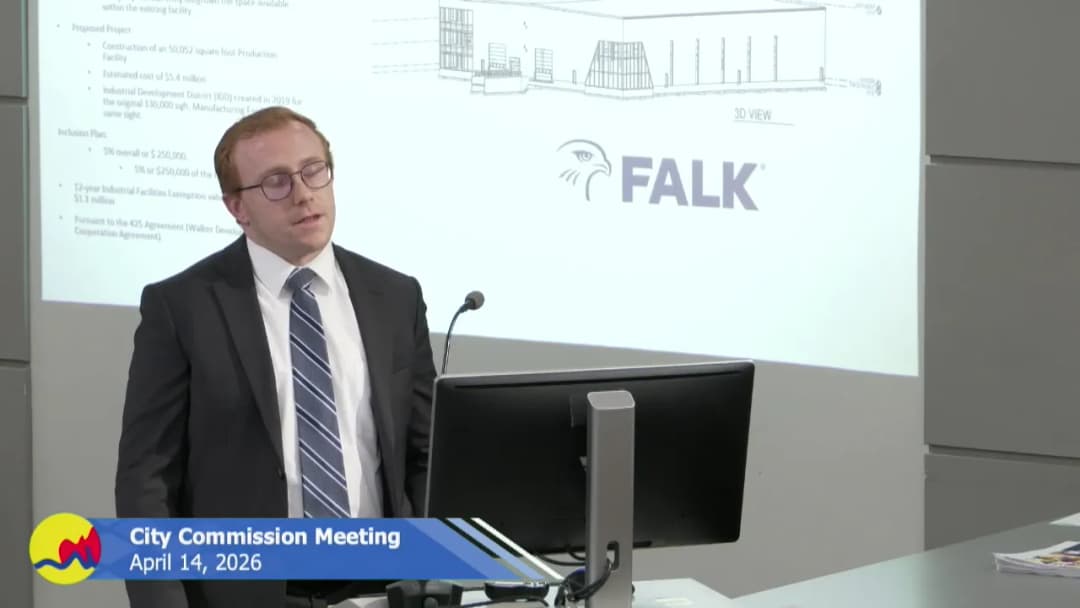
The Grand Rapids City Commission met on Tuesday, April 14, 2026, at 2 p.m. The meeting included approval of minutes, consent agenda, a contested appointment to the Housing Commission, a historic landmark designation, an opioid settlement authorization, and four public hearings on historic preservation, neighborhood investment, brownfield redevelopment, and industrial tax exemption. Public comment addressed downtown information centers, the Downtown Improvement District, housing, transit, parking, traffic safety, and police oversight. Consent Calendar - Approved minutes from March 31 and April 1, 2026, unanimously. - Approved the consent agenda, including routine items passed out of committee without objection. Public Comments & Testimony - First Public Comment (Agenda Items): Scott Atchison spoke on two agenda items: (1) supported the resolution recognizing the African American Museum but urged better downtown information dissemination; (2) opposed the three-year contract for the Downtown Improvement District special assessment, citing concerns about the ambassador program (paid $15/hour by Block by Block, but the company gets $21/hour) and lack of oversight. - Public Hearing: Neighborhood Investment Plan: Five speakers: - D Jones (Chair, Stocking Neighborhood Hub) supported the plan, praising neighborhood organization funding and requesting increases for 3D printing construction. - Mark expressed skepticism about federal funding availability under the current administration. - Deborah Cross (M Village) thanked the city for supporting affordable housing initiatives. - Tom Rolston (Union Suites Development) supported the affordable housing component. - Scott Addison (3rd Ward) questioned whether downtown is a neighborhood and suggested using CDBG funds for an information center. - Public Hearing: Brownfield Plan for 528 Bridge St.: Three speakers: - Russell Omstead (1st Ward) expressed concern about using limited public resources for private for-profit development instead of housing. - D Jones advocated for 3D printing construction engagement. - Kenneth (business owner) echoed concerns about parking and transit, urging more responsible spending. - Second Public Comment (General): - D Jones advocated for 3D printing construction, HBCU partnerships, and cryptocurrency regulation. - Deb Van Dynen and Anthony McConnell (Oakdale Neighbors) requested traffic safety improvements on Kalamazoo Ave, including a four-way stop ($20,000) and flashing crosswalks ($125,000). - Dennis Rodriguez (Family Outreach Center) thanked the city for continued funding of behavioral health services for men of color impacted by trauma. - Kenneth criticized reduced Dash service, parking shortages, and urged better public transit. - Shannon (3rd Ward) opposed Dash service reduction and parking rate increases, advocating for funneling parking revenue to transit. - Mark criticized Sinclair Broadcasting for alleged bias and false narratives. - Michael Scrugs urged creation of a civilian police oversight board with statutory subpoena power. Discussion Items - Appointment to Housing Commission: Commissioner Kilgore dissented from the appointment of Joshua Lunger (Grand Rapids Chamber) to the Housing Commission, citing the Chamber's advocacy against housing bills, support for a nuisance ordinance criticized by ACLU, and misinformation about the Climate Action Plan. Mayor LeGrand and others supported Lunger, highlighting his work on complex care housing. The appointment passed on a voice vote with Kilgore the only dissenter. - Historic Landmark Designation: Ordinance establishing the Dean Kendall House (2350 Leonard St.) as a historic landmark was adopted unanimously. The house, built in classical revival style, is on the National Register of Historic Places. - Opioid Settlement: Resolution authorizing entry into participation agreements for the national opioid settlement with six remaining defendants (total $97.625 million, with Grand Rapids receiving approximately $56,000). Passed unanimously. - Brownfield Plan for 528 Bridge St.: Public hearing held on a brownfield plan amendment for a 100-year-old building to be redeveloped by Advantage Commercial Real Estate for commercial use. Total project cost $2.7 million, with $710,831 in eligible brownfield activities including sidewalk activation. The plan has a 24-year term and aspirational inclusion goals of 8% for micro-local, women-owned, and minority-owned businesses. - Industrial Facilities Exemption: Public hearing for Falk Sheet Metal's new 50,000 sq ft facility in Walker (425 agreement). Estimated cost $5.4 million, with a 12-year tax abatement valued at $1.1 million. The district was established in 2019. - Neighborhood Investment Plan: Presentation of $8.2 million funding recommendations across eight outcome areas: homelessness ($1.26M), affordable housing ($2.5M), homeownership ($360K), housing stock ($2.8M), behavioral health ($500K), economic opportunity ($149K), neighborhood safety ($314K), and engaged neighborhoods ($319K). Public comment period open until April 29, 2026; final awards May 12. Key Outcomes - Appointment Confirmed: Joshua Lunger appointed to the Grand Rapids Housing Commission for a term ending April 9, 2030 (voice vote with one dissenting). - Historic Landmark Adopted: Dean Kendall House designated as a historic landmark (unanimous). - Opioid Settlement Authorized: City authorized to participate in the national opioid settlement with six remaining defendants (unanimous). - Public Hearings Closed: All four public hearings were closed without further action; decisions on the brownfield plan and industrial exemption will follow later. - Budget and Transit Discussions: Commissioners noted upcoming budget deliberations and a press conference on April 20 regarding mobility for major events. The Dash route change is a pilot program. - First Ward Appointment: The commission will interview 10 applicants for the First Ward appointment on April 17 (Friday) and select finalists for a full commission interview on April 22. - City Attorney Oath: Phil Strom was sworn in as city attorney after the meeting.