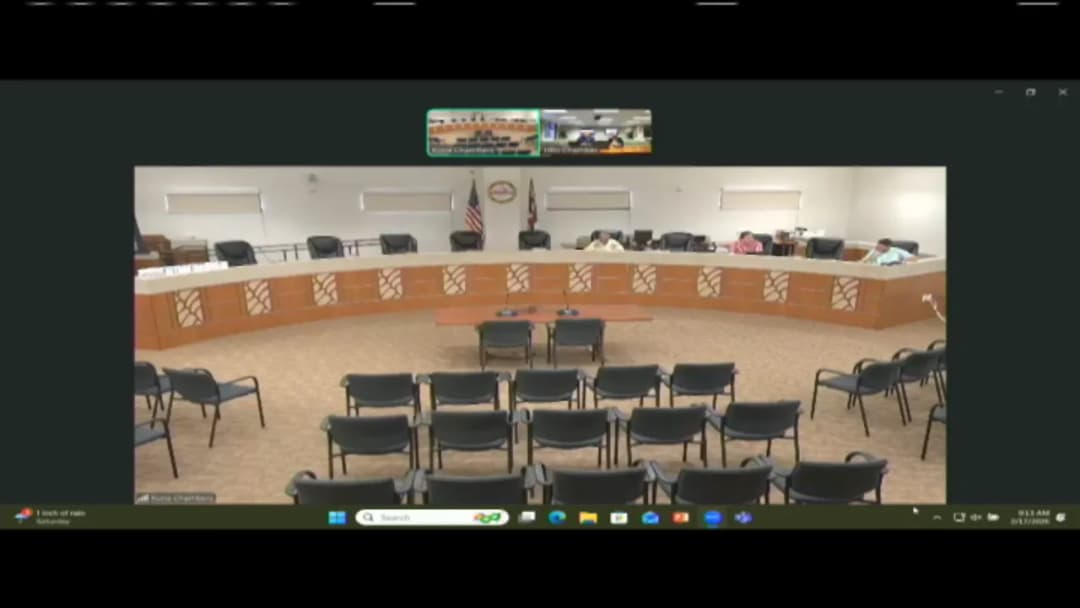
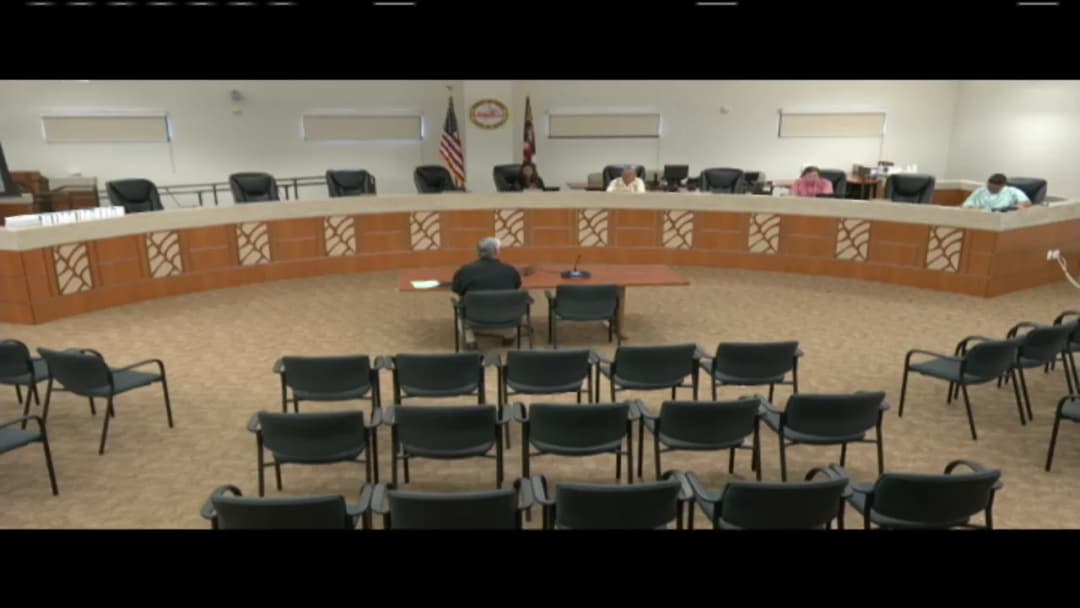
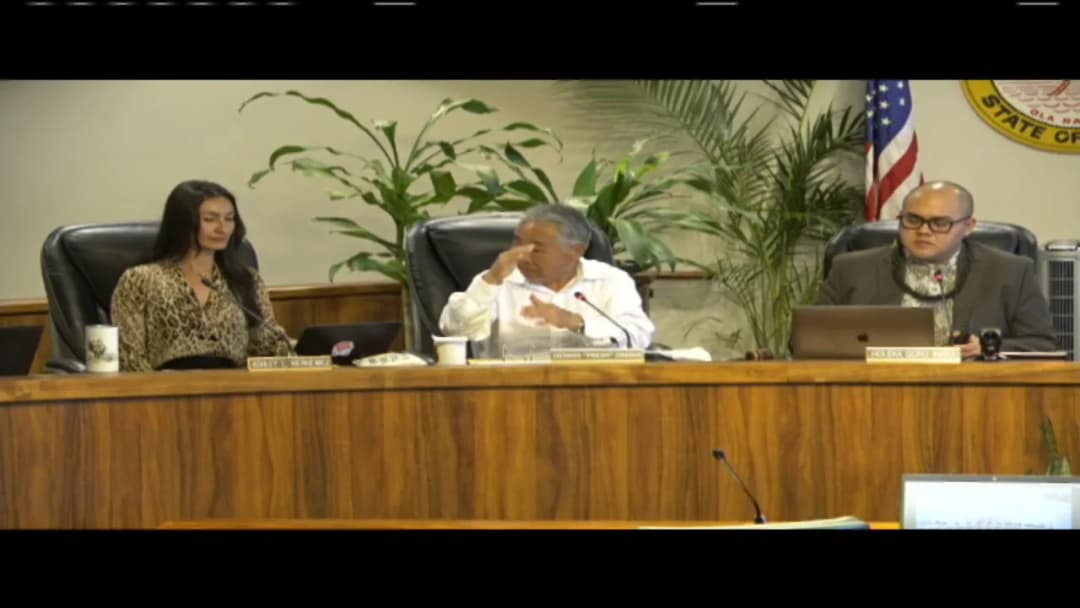
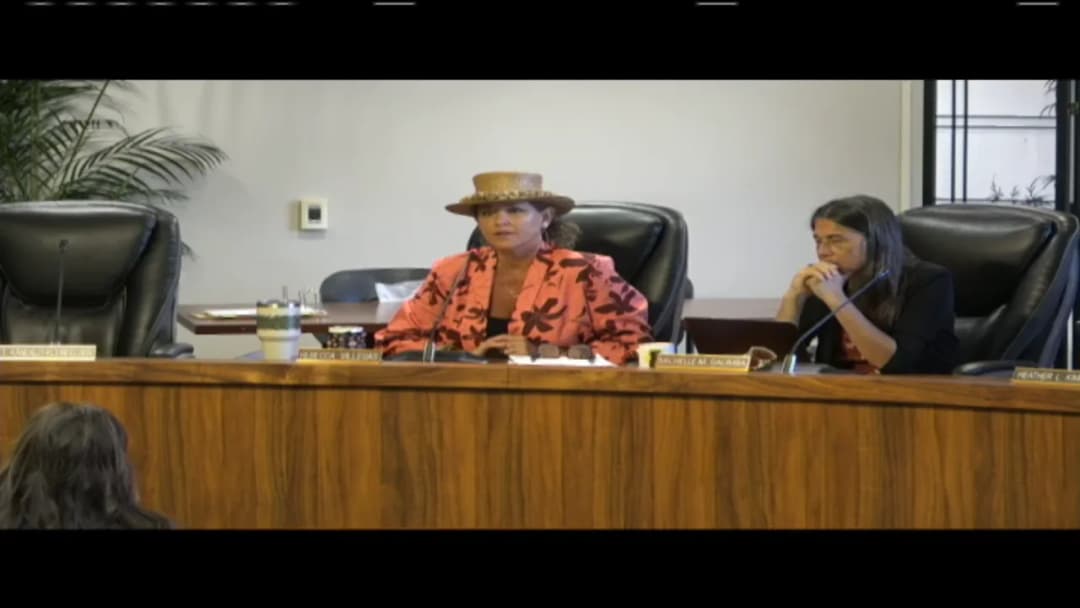
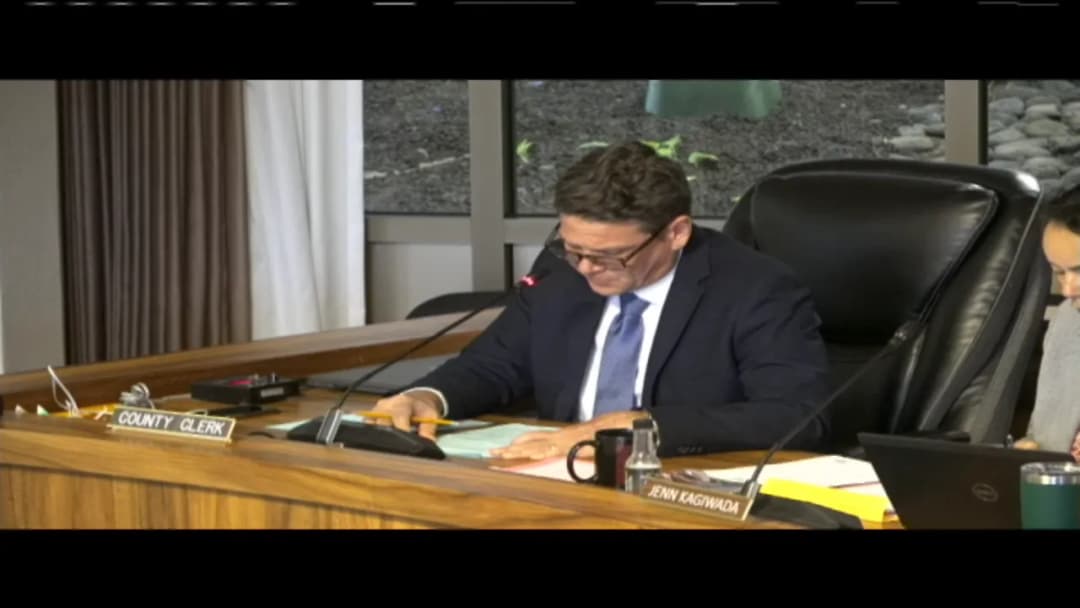
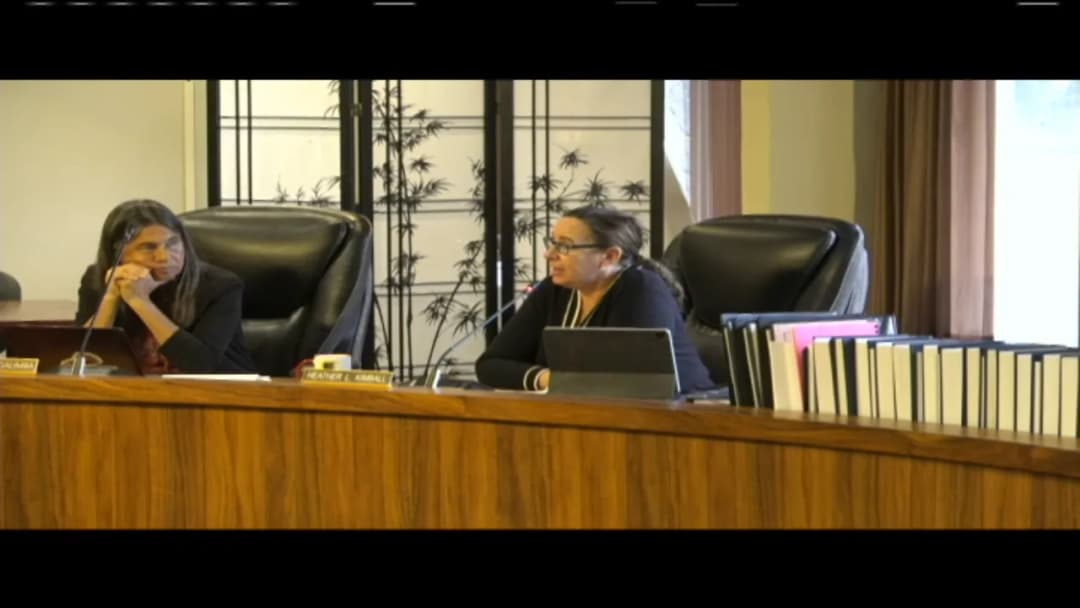
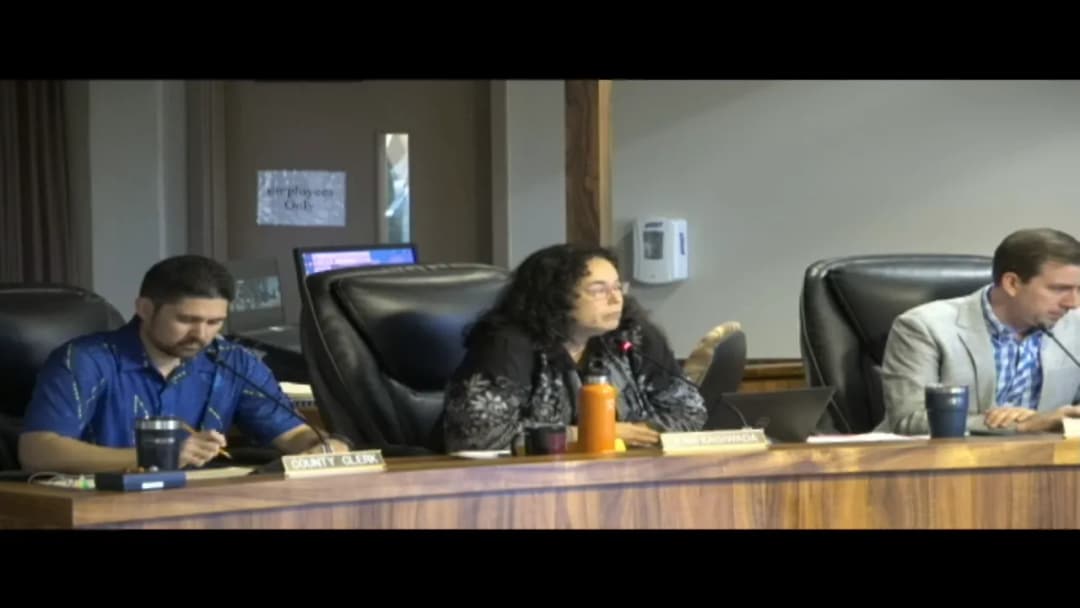
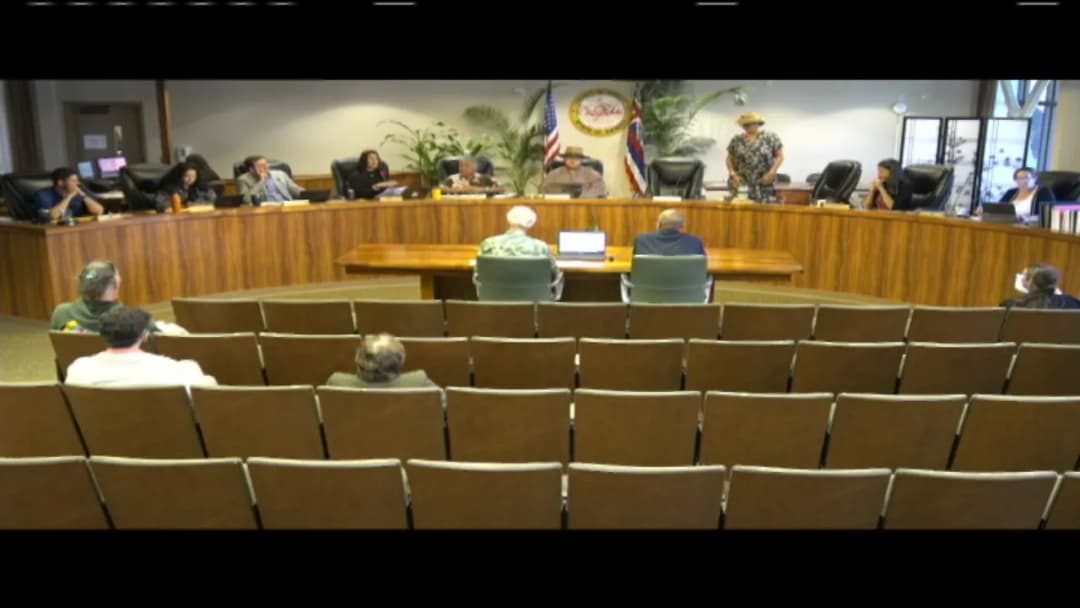
On February 17, 2026, the Committee on Governmental Operations and External Affairs met in the West Yfic Center Council Chambers in Kona, with Hilo chambers connected remotely. Acting Chair James Eustace presided. The committee reviewed and voted on two mayoral nominations: Dwayne T. Mukai to the Liquor Control Adjudication Board and Lokelani Brandt to the Public Access Open Space and Natural Resources Preservation (PONK) Commission. Both nominations advanced to the full council with favorable recommendations. Consent Calendar - None noted. Public Comments & Testimony - No testifiers appeared in person, at courtesy sites, in Hilo, or on Zoom for either agenda item, as confirmed by the clerk. Discussion Items - Nomination of Dwayne T. Mukai (Communication 731): Mayor's Executive Assistant Micah Alameda introduced Mr. Mukai, a Hilo native and graduate of Hilo High School (1974) and UH Manoa (BBA, 1978). Mukai is the owner of Mukai Investment Group, a longtime financial advisor, and has served on numerous boards including the Big Island Junior Golf Association, Hilo Daijingu, Hilo Hongwanji, and the Saddle Road Task Force. He previously served on the Liquor Control Adjudication Board as chairman. Councilmembers expressed support, citing his deep community involvement. Councilmember Kleinfelder disclosed that Mukai was his past financial advisor and may hold a small account for his child. Mukai confirmed he could attend all meetings. - Nomination of Lokelani Brandt (Communication 732): Ms. Brandt, a native Hawaiian from Kaneohe, Oahu, has resided on Hawaii Island since 1993. She is a historic preservation professional with over 15 years of experience in archaeological and ethnographic work, particularly with native Hawaiian communities. Alameda highlighted her expertise in the Popo area (now Wailoa State Park) and her podcast appearance on Kaleo Kauluau (episode 3). Brandt expressed interest in serving District 3, which she noted has been underrepresented on PONK. She identified the work at Honapo as a standout achievement of the PONK program. Councilmembers discussed the commission's every-other-month meeting schedule and quorum challenges; Alameda confirmed efforts are underway to enable virtual participation. Brandt noted a potential conflict in May due to a conference in Minnesota. Key Outcomes - Communication 731 (Mukai nomination): Motion to close the file and forward with favorable recommendation to full council. Vote: 6 in favor (Councilmembers Kirkowitz, Kimball, Kagiwada, Kleinfelder, and others present; Inaba, Galimba, and Viegas absent). - Communication 732 (Brandt nomination): Motion to close the file and forward with favorable recommendation to full council. Vote: 6 in favor (same composition). - The meeting adjourned at 9:28 a.m. HST.
Public Meetings - Hawaii County, Hawaii
Public Meetings - Hawaii County, HawaiiLegislative Approvals and Acquisitions Committee Meeting – February 17, 2026\n\nThe Committee on Legislative Approvals and Acquisitions (20th Session) met on February 17, 2026, at 12:30 p.m. at the West Hawaii Civic Center, with council members participating from Hilo and Kona. The sole agenda item was Resolution 469-26, authorizing a revocable license for landscaping and maintenance of a county right-of-way along Kuakini Highway. The meeting adjourned at 12:34 p.m.\n\n Discussion Items\n- Resolution 469-26: Introduced by Council Member Kimball (by request). The resolution authorizes the Director of Public Works to issue a revocable license to Kuakini Makai Association, Inc. to enter, landscape, and maintain a portion of Kuakini Highway right-of-way. Director Segawa of the Department of Public Works expressed full support for the resolution, noting the association’s beautification efforts. Council Member Kimball noted that the Hawaii Police Department (HPD) had provided email notification of no objection, but a hard copy for the record was still pending; she requested the committee proceed without waiting for the physical document.\n\n Key Outcomes\n- Vote: Motion by Council Member Kimball to give a favorable recommendation of Resolution 469-26 to the full Council, seconded by Council Member Hustace. The motion passed with 6 ayes (Council Members present: Kimball, Eustace, Galimba, Kierkiewicz, Kagiwada – who joined during the meeting) and 3 absent (Council Members Inaba, Villegas, Kānealiʻi-Kleinfelder). No opposition was recorded.\n- Next Step: The resolution will be forwarded to the full County Council with the recommendation for approval; the physical HPD communication will be attached before the next hearing.
The Policy Committee on Public Works and Mass Transit held its 10th session on February 17, 2026, at 11:33 AM in the West Hawaii Civic Center Council Chambers, with members participating from Hilo chambers. The committee considered a single agenda item: Bill 129, which proposes amending Hawaii County Code to establish no parking zones on Alii Drive at Kahaluu Beach Park to improve pedestrian safety. The meeting adjourned at 11:41 AM. Discussion Items - Bill 129 (No Parking at Any Time): Amends Chapter 24, Article 10, Division 5, Section 24-280, Schedule 28 of the Hawaii County Code 1983 (2016 edition) relating to no parking at any time. The bill targets narrow sections of the shoulder on Alii Drive at Kahaluu Beach Park where parked cars force pedestrians to walk in the roadway. Department of Public Works Director Segawa requested additional time to conduct community outreach and gather input before the committee acted. Traffic Division Chief Aaron Takaba explained the engineering rationale: the proposed parking restrictions are in areas where the shoulder is especially narrow, creating a pedestrian safety concern. - Postponement Motion: Councilmember Onishi moved to postpone Bill 129 to the March 17, 2026 committee meeting, seconded by Councilmember Galimba. Director Segawa indicated one month would be sufficient for community outreach. Councilmember Kirkowitz opposed the postponement, arguing that due diligence should have been completed before the bill was introduced. The motion failed on a roll call vote: 3 ayes (Galimba, Onishi, Chair Houstis), 4 noes (Kagiwada, Kleinfelder, Kirkowitz, Campbell), with 2 absent (Inaba and Viegas). - Main Motion: Councilmember Kirkowitz moved to forward Bill 129 to the full Council with a favorable recommendation, seconded by Councilmember Onishi. Director Segawa noted that the department would still reach out to the community and provide feedback during the two remaining readings at Council. Key Outcomes - Bill 129 forwarded to Council: The motion to forward Bill 129 to the Council with a favorable recommendation passed with 7 ayes (Galimba, Onishi, Chair Houstis, Kagiwada, Kleinfelder, Kirkowitz, Campbell) and 0 noes. Two members (Inaba and Viegas) were absent. The bill will proceed to Council for further readings. - Postponement denied: The motion to postpone to March 17, 2026 failed, allowing the bill to move forward immediately.
The committee met at 10:30 a.m. in Hilo chambers under chair James Houstis, who later passed the gavel to Councilmember Inaba. The sole agenda item was Bill 127, which would establish a construction code commission to advise the mayor, council, and public works director on building code adoption and interpretation. After discussion, the committee voted 8-0-1 (with one excused absence) to forward the bill to the full council with a favorable recommendation. Discussion Items - Bill 127 – Construction Code Commission: Councilmember Kirkowitz, co-introducer with Councilmember Houstis, explained that the commission was a scaled-down version of a prior charter amendment that did not advance. The intent is to bring community expertise—from licensed professionals and experienced builders—to guide the county on code updates. - Councilmember Viegas supported the bill, recalling the difficulty of past building code adoptions and the value of practical knowledge. - Councilmember Onishi supported, sharing examples of past code amendments that reduced costs (e.g., combining fire and home catchment tanks, allowing a reinforced room instead of a separate safe room). He suggested the commission also monitor state-level code activity. - Councilmember Kagiwada proposed a friendly amendment to broaden “building material supply” to include all building material expertise; Councilmember Kirkowitz accepted. - Councilmember Kimball provided legal analysis: state law (HRS 107-28A and 46-1.513) does not explicitly require more restrictive codes but only that local amendments not defeat the intent of state codes. He suggested adding insurance expertise to the commission and noted that the board of appeals already handles variance denials. - Councilmember Inaba clarified that the commission’s role in reviewing “interpretations” by the director is meant to mirror planning director memos, not to overlap with appeals. - Councilmember Kirkowitz said she would work with Corporation Counsel on a memo clarifying state code restrictions and requested that the Department of Public Works provide representation at future readings. Key Outcomes - Motion by Councilmember Kirkowitz, seconded by Councilmember Houstis, to forward Bill 127 to the full council with a favorable recommendation. Vote: 8 ayes (Kimball, Galimba, Viegas, Inaba, Oneshi, Kirkowitz, Kagiwada, Houstis), 0 nays, 1 excused (Councilmember Kleinfelder). Motion carried. - The committee will send a letter requesting DPW attendance at council readings. - Friendly amendments regarding building material expertise and potential addition of insurance expertise were noted for further refinement before final passage.
The Committee on Finance, chaired by Vice Chair James Eustace, met on February 4, 2026, at 9:00 a.m. in Hilo chambers. The primary agenda item was Bill 128, which proposes a new residential tier three real property tax classification for properties with a net taxable value over $4 million. The committee heard public testimony, discussed the bill, and voted to forward it to the full council with a favorable recommendation. Consent Calendar - Communication 23.28: Report of fund transfers authorized December 16–31, 2025, from Controller John Marbles, dated January 6, 2026. Motion to close file passed unanimously (8-0, with Councilmember Connelly Kleinfelder absent). - Communication 574.1: First quarter report of non-capitalized donations, October 1–December 31, 2025, from Finance Director Diane Nakagawa, dated January 14, 2026. Motion to close file passed unanimously (8-0). Councilmember O'Nishi recognized his nephew Ryan Higa for a $5,000 donation to the HyPal program. Public Comments & Testimony - Corey Harden testified in support of Bill 128. He cited statistics from UHER: each 10% increase in home prices correlates with a 10% increase in homelessness, and Hawaii's homelessness rate is more than twice the national average. He noted that off-island investors drive high housing costs, referencing Civil Beat data showing out-of-state ownership percentages on Oahu, Maui, and Lahaina. He suggested potential mitigations (e.g., exemptions for purpose-built rentals, tax credits for rent-controlled landlords, deferrals for inherited homes) and concluded that Bill 128 is a viable path to address housing issues. - Tanya Yamanaka Anasazian, representing the Hawaii Tax Fairness Coalition, testified in strong support. She argued the bill replaces the old two-tier system with a three-tier structure targeting high-value non-owner-occupied residential properties, shaping a fairer, more balanced tax system. She emphasized that without such changes, working people and kupuna will continue to be marginalized. Discussion Items Bill 128 – Real Property Tax: New Residential Tier Three Classification - Councilmember Kagiwata (co-introducer) explained that the bill creates a third tier for properties over $4 million within the residential tax class (which excludes homeowners, affordable rentals, and long-term rentals). It does not set a tax rate; that will be determined during budget season. The existing $9 million housing and homelessness fund allocation (from tier two) is preserved, and the bill provides flexibility to address county needs like wastewater projects. - Councilmember Eustace (co-introducer) noted that the tier helps shield residents from tax increases and shifts burden to investment properties, moderating housing price escalation. He acknowledged the $9 million housing fund expiration in June 2027. - Property Tax Administrator Lisa Miyara and Assistant Administrator Katie Joe provided data: 842 parcels in the residential class have net taxable values over $4 million, representing approximately $5.3 billion in assessed value. The difference between the current tier two rate ($11.10) and tier one rate ($13.60) generates an additional $13 million in revenue from these parcels. Implementation is straightforward as the current system can accommodate a third tier. - Councilmember Viegas expressed support, recalling the creation of tier two and noting that wealthy property owners' threats to leave did not materialize. She asked about implementation ease; staff confirmed no system changes are needed. - Councilmember O'Nishi sought clarification on whether hotels and resorts are included; staff confirmed that the hotel/resort tax class excludes residential properties in resort zones, but residential units in resort areas (e.g., condos) are included if they fall into the residential class. - Councilmember Galimba asked about the philosophical intent: whether the revenue is general or directed. Councilmember Kagiwata replied that no stipulations are in the bill; the use will be determined through the budget process. She noted existing revenue losses from the new long-term rental tax class (estimated $1.4 million based on 691 applications) and DHHL rate reductions (under $2 million), creating a potential shortfall. - Councilmember Kimball asked about the relationship to the housing and homelessness fund: the bill maintains that tier two and tier three contributions go to that fund, up to $9 million. He also confirmed that short-term vacation rentals (whole-house) could fall into tier two or three if valued over $2 million or $4 million, respectively, but homeowners with a homeowner exemption stay in tier one. He expressed concern about adding complexity versus simply adjusting tier two rates, stating he could not support the bill as is. - Councilmember O'Nishi reiterated that properties valued under $4 million are not affected. He questioned testimony that implied the bill protects housing markets, clarifying that the bill targets high-value investment properties, not workforce housing. - Councilmember Eustace responded to Kimball's concern about complexity, arguing that the tier three captures the very high end (e.g., $10 million+ properties) and provides a gradient, whereas simply raising tier two rates would affect those closer to the $2 million threshold. Key Outcomes - Motion: To approve Bill 128 and send it to the full council with a favorable recommendation. Moved by Councilmember Kagiwata, seconded by Councilmember Eustace. - Vote: 7 in favor (Councilmembers Galimba, Eustace, Kagiwata, Kirkowitz, O'Nishi, Viegas, and the acting chair [Inaba]? Actually the transcript shows the acting chair voted no, but the final tally is 7 in favor, 1 opposed, with Councilmember Connelly Kleinfelder absent. The roll call: Councilmember Galimba aye, Eustace aye, Kagiwata aye, Kirkowitz aye, O'Nishi aye, Viegas aye, and the acting chair (Inaba) voted no. The motion carried. - Next Steps: The bill will be taken up by the full council. The committee adjourned at 9:45 a.m., with the next meeting (Policy Committee on Public Works and Mass Transit) scheduled for 10:30 a.m.
The Hawaii County Council held its 30th session on February 4, 2026, beginning at 1:00 PM and adjourning at 2:58 PM. The meeting opened with an invocation led by Assistant Professor Akiakamae Kyona of Hawaii Community College in honor of Hawaiian Language Month. Six council members were present, establishing a quorum. The council approved multiple resolutions and bills, including a performance audit of housing and homelessness funds, several contingency relief grants, and amendments to Bill 63 concerning residential uses in MCX districts. Public testimony was heard from four individuals. Public Comments & Testimony - Joyce Belena (Leilani Estates resident, representing herself) testified in support of Resolution 445-26, expressing full support for county actions to alleviate homelessness and stating it is a moral obligation. - John Pelletier (Kona Community Development Plan Action Committee Chair) requested that Bill 63 be sent back to committee for further discussion, referencing the committee's earlier vote (Communication 333.16). - Claudia Zirolli (representing Puna Makalkow / Fern Acres Hub) thanked the council for a contingency grant that will support the hub's emergency operations center, CERT team, volunteer fire department, food distribution, and neighborhood watch. - Renee Godoy (Police and Fire Chaplain, founder of Friends of First Responders) testified in favor of Resolution 454-26, thanking the council for supporting a first responder kids camp and describing a children's book produced for the camp that highlights the pride and challenges of first responder families. Discussion Items - Communications 691 and 692 – Nominations to the Fire Commission (Durwin Ignacio) and Police Commission (Alan A. Sole) were confirmed without objection. Votes: 7-0-1 and 8-0-1 respectively. - Resolution 445-26 – Requesting a performance audit of real property tax revenues appropriated for housing and homelessness. Councilmember Kimball moved approval, noting the audit should examine both those helped out of homelessness and those prevented from becoming homeless. Councilmember Viegas clarified that the audit would include nonprofit use of funds per the resolution's clauses. Approved 8-0-1. - Resolution 450-26 – Transfer of $6,045 from contingency relief to Puna Makalkow for its Fern Acres Community Resource Emergency Operations Center. Approved 8-0-1. - Resolution 451-26 – Transfer of $3,000 for Liliuokalani Gardens pond wall restoration (Friends of Liliuokalani Gardens). Councilmember Onishi acknowledged Rosukouai of Puna Rocks for donating stones. Approved 8-0-1. - Resolution 452-26 – Transfer of $10,000 to Humanity Holiday for services in Kona (arts, cultural education, abuse prevention, leadership). Councilmember Viegas expressed gratitude. Approved 8-0-1. - Resolution 453-26 – Transfer of $5,000 to Hamakua Youth Foundation for youth center programs. Approved 8-0-1. - Resolution 454-26 – Transfer of $5,000 to Friends of First Responders for a children's book. Approved 8-0-1. - Resolution 455-26 – Transfer of $20,000 for a replacement scoreboard at Kohala High and Pahala Elementary School. Councilmember Galimba noted the need due to nonworking scoreboards. Approved 8-0-1. - Resolution 456-26 – Five-year lease for a multi-function copy machine for Public Works (traffic division, Hilo). Approved 8-0-1. - Resolution 457-26 – Five-year maintenance agreement for two copy machines for Public Works. Approved 8-0-1. - Resolution 458-26 – Authorization to accept a $1,600,000 federal Workforce Innovation and Opportunity Act grant. Approved 8-0-1. - Bill 63 Draft 2 – Amending Chapter 25 to permit residential dwellings in Industrial Commercial Mixed Use (MCX) districts. After discussion, Councilmember Kimball moved an amendment (Communication 333.17) to change the use from permitted to requiring a use permit, removing a 200-foot setback requirement. The amendment passed 6-2 (Houstis and Kagiwada opposed, Connelly Kleinfelder absent). Debate followed on the amended bill. Councilmember Viegas expressed concerns about loopholes for vacation rentals and lack of community benefit, especially in Kona. The amended bill passed first reading 7-1 (Viegas opposed, Connelly Kleinfelder absent). - Bill 114-118 – Various budget amendments for police department grants (roadblock, occupant protection, selective traffic enforcement, high intensity impact, pedestrian and bicycle safety). All approved 8-0-1 on first reading. - Bill 119 – Rezoning 5 acres in South Kohala from agricultural to residential and agricultural (condition D prohibits second dwelling unit). Approved 8-0-1 on first reading. - Bill 120 – Rezoning 1.86 acres in North Kona with deletion of condition H (prohibiting second dwelling unit) and amendment of condition C (five-year time extension). Applicant Elizabeth Young asked about reversion if conditions not met. Planning Director Darrow explained the process. Approved 8-0-1 on first reading. - Bill 121 Draft 2 – Ten-year time extension for a 51.058-acre multi-family residential development in North Kona (Kona Country Club). Councilmembers Kagiwada and Viegas opposed, citing lack of alignment with community needs and infrastructure concerns. Chair Inaba also voted no. Passed first reading 5-3 (Galimba, Houstis, Kirkowitz, Kimball, Onishi in favor; Kagiwada, Viegas, Inaba opposed; Connelly Kleinfelder absent). - Bill 112 and 113 – Budget amendments for Workforce Innovation and Opportunity Act ($1.6M) and Hazard Mitigation Grant Program ($68,000). After extensive discussion on WIOA program statistics, both bills approved 8-0-1 on second and final reading. Key Outcomes - Confirmed Durwin Ignacio to the Fire Commission (7-0-1) and Alan A. Sole to the Police Commission (8-0-1). - Approved Resolution 445-26 (performance audit of housing funds) 8-0-1. - Approved six contingency relief grants (Resolutions 450-26 through 455-26) and three administrative resolutions (456-26, 457-26, 458-26) each 8-0-1. - Passed Bill 63 (amended) on first reading 7-1, with an amendment to require a use permit for dwellings in MCX districts. - Passed Bills 114-120 on first reading each 8-0-1. - Passed Bill 121 (ten-year time extension) on first reading 5-3. - Passed Bills 112 and 113 on second and final reading each 8-0-1. - All bills will proceed to second reading (except those already on final). Bill 63 will require a second reading after the amendment.
The Committee on Legislative Approvals and Acquisitions convened to review two linked amendments regarding a property in Waimea, South Kohala (Tax Map Key 6-2-009018). Applicant Joseph Gaglione requested a state land use boundary amendment from agricultural to rural and a zone change from A5A to RA-2.5A to allow subdivision into two lots (3.563 acres and 2.5 acres) for single-family dwellings. Although the committee initially faced procedural challenges regarding the separate motions for Bill 122 and Bill 123 due to their interdependence, the Planning Department and Commissioners proceeded with a favorable recommendation for both items after receiving presentations from the Planning Director and the applicant's representative. Consent Calendar - No items listed; routine agenda items were debated rather than processed via consent. Public Comments & Testimony - No public witnesses appeared during the testimony period prior to the presentations. - John Pippen (Applicant's Representative): Stated that the subdivision was established in 1985 with 30 five-acre lots; subsequent rezonings to smaller minimum lot sizes have occurred as county water availability increased. He confirmed the applicant has installed two county water meters and requested a minimum lot size of 2.5 acres to permit exactly two lots. - Joseph Gaglione (Applicant): Explained he acquired the property around 1984-85 with family members after a group from the Grateful Dead pulled out. He noted his loss of the agricultural exemption, his history of grazing sheep on the land, and his intent to subdivide to build a dwelling for his children or for rental purposes to manage property taxes. Discussion Items - Zoning and Land Use Consistency (Director Darrow): Explained that while subdivision under Agricultural zoning is technically possible, a change to Rural designation is recommended to ensure consistency with the General Plan and the Land Use Pattern Allocation Guide. He noted the area is in a transition toward rural uses for decades and that the soil is dry and not ideal for agriculture; Rural designation also exempts the project from strict state land use agricultural requirements for farm dwellings. - Procedural Dependency (Chair Kimball & Councilmember Hustis): Addressed the issue that Bill 123 (Zone Change) cannot effectively proceed favorably without Bill 122 (Land Use Boundary Amendment) moving favorably, as they are legally and practically inextricably linked. The Chair noted the Planning Department's suggestion to combine dependent items into a single bill for future efficiency, though the committee moved forward with separate motions after procedural correction. - Lot Size Clarification (Councilmember Kagiwata): Inquired if an Agricultural designation required larger parcels than the proposed 2.5 acres. Director Darrow clarified that while one could subdivide in AG, the smaller lot size would likely be unjustifiable regarding consistency with the General Plan, making the Rural designation the appropriate path. Key Outcomes - Bill 122 (State Land Use Boundary Amendment): Motion carried with 8 ayes to forward to the Council with a favorable recommendation. (Councilmember Kleinfelder excused). - Bill 123 (Zone Amendment): Motion carried with 8 ayes to forward to the Council with a favorable recommendation. (Councilmember Kleinfelder excused). - Next Steps: Both bills will be transmitted to the County Council for further deliberation.
The Committee on Governmental Operations and External Affairs convened on February 3, 2026, at 9:00 a.m. to review and vote on five executive nominations submitted by Mayor C. Chemo (Kim) Alameda. Councilmembers Kimball, Galimba, Viegas, Inaba, O'Nishi, Kirkowitz, Houstis, and Chair Kagiwada were present; Councilmember Kleinfelder was absent. There was no public testimony regarding the nominations. The committee unanimously approved all five nominees for their respective boards and commissions, emphasizing the need for meeting quorum and the diverse community backgrounds of the appointees. Consent Calendar - Communication 703: Closed file and sent a favorable recommendation for Jennifer L. Lawson to the Public Access Open Space and Natural Resources Preservation Commission. Vote: 8 ayes, 0 opposed (Councilmember Kleinfelder absent). - Communication 704: Closed file and sent a favorable recommendation for Luisa Sasa Anthony Lee to the Environmental Management Commission. Vote: 8 ayes, 0 opposed. - Communication 705: Closed file and sent a favorable recommendation for Kanoi Suganuma Wilson to the Windward Planning Commission. Vote: 8 ayes, 0 opposed. - Communication 706: Closed file and sent a favorable recommendation for Sean Kelley Makayao to the Leeward Planning Commission. Vote: 8 ayes, 0 opposed. - Communication 707: Closed file and sent a favorable recommendation for Rollin Rabara to the Fire Commission. Vote: 8 ayes, 0 opposed. Public Comments & Testimony - No public testimony was offered during the hearing on any of the five nominations. Discussion Items Jennifer L. Lawson (Public Access Commission) - Project Description: Nominated to represent Council District 9 for a term ending December 31, 2030. She is the Executive Director of the Waikoloa Dry Forest Initiative. - Speaker Positions: - Councilmember Houstis expressed that Ms. Lawson is an "amazing community member" and a "great asset" to the commission for her work in North and South Kohala. - Councilmember Viegas stated she was "absolutely spectacular," attended her symposium, and expressed "full support" for the nomination. - Chair Kagiwada expressed appreciation for Ms. Lawson's commitment to the meeting schedule to ensure quorum. Luisa Sasa Anthony Lee (Environmental Management Commission) - Project Description: Nominated to represent Council District 3 for a term ending December 31, 2030. She is the director of operations at Kawunēke Public Charter School. - Speaker Positions: - Ms. Lee stated she was motivated by "frustration around some of the things that are happening," specifically regarding wastewater and solid waste in Kā'ū, and expressed a desire to channel that "frustration into something positive." - Councilmember O'Nishi expressed support for bringing a community member who is directly experiencing the issues of wastewater and landfill to the commission. - Councilmember Kirkowitz praised her for "practicing what you preach" and serving as a "positive example" for students regarding community service. - Councilmember Houstis emphasized the necessity of prioritizing committee attendance to avoid meetings being cancelled due to lack of quorum. Kanoi Suganuma Wilson (Windward Planning Commission) - Project Description: Nominated for the at-large seat representing the Puna Judicial District, ending December 31, 2030. She is a Senior Project Manager with Kamehameha Schools. - Speaker Positions: - Councilmember Kirkowitz expressed "100%" trust in Ms. Wilson and stated he is "fully supporting" her nomination, noting her history of rallying for quorum. - Councilmember Viegas expressed that he is "deeply grateful" and "humbled" to support her, trusting her intention to serve "seven generations" - Project Description: Nominated for a term ending December 31, 2030. She is a licensed realtor with Hawaii Life. - Speaker Positions: - Ms. Makayao expressed excitement and stated she believes the commission shapes the island for "generations after us," specifically noting she had her first granddaughter the previous day. - Councilmember Viegas expressed that he trusts her to "cleave to the wisdom of your ancestors" and support the community. - Councilmember Kirkowitz noted that while there is a historical concern regarding realtors on planning commissions, he trusts Ms. Makayao's "deepest intention" for the seven future generations and supports her 100%. - Councilmember Kirkowitz and Councilmember Viegas discussed the potential impact of having two realtors on the Leeward Planning Commission (Ms. Makayao and a previous nominee, Mrs. Ayers), with Councilmember Kirkowitz acknowledging the need for "diversity and perspectives." - Councilmember Inaba noted that the Mayor's office has addressed the quorum issue by looking into having the Puna commission on Zoom. - Councilmember Kagiwada expressed gratitude for the inclusion of "descendants of cultural practitioners" but maintained vigilance regarding the diversity of career paths, noting the prevalence of Kamehameha School graduates on the current slate. - Councilmember Inaba emphasized that qualifications and ability to serve should be the primary criteria over high school alma maters. Rollin Rabara (Fire Commission) - Project Description: Nominated to represent Council District 7 for a term ending December 31, 2030. He has over 28 years of service with the Hawaii Police Department. - Speaker Positions: - Councilmember Houstis noted the importance of having a non-firefighter perspective on the commission as the county prepares to select a new Fire Chief. - Councilmember Galimba expressed hope that the next Fire Chief will be supportive of and build the volunteer firefighting force in rural communities. - Councilmember O'Nishi disclosed a familial relationship (cousin) and congratulated Mr. Rabara. - Councilmember Viegas expressed "full support" and confidence that Mr. Rabara's experience as a first responder will provide wisdom as the Fire Department recovers. Key Outcomes - Unanimous Support: All five nominees received eight ayes against zero opposed (Councilmember Kleinfelder absent). - Quorum Directives: The committee unanimously prioritized nominees' commitment to attending all meetings to resolve chronic quorum issues. Chair Kagiwada asked all nominees to confirm their ability to commit to the schedules, and all affirmed their commitment. - Commission Leadership: The Fire Commission nominees are identified as critical for the upcoming selection process of the next Fire Chief. - Diversity Discussion: Council members engaged in a discussion regarding the diversity of nominees, specifically regarding the number of real estate professionals and Kamehameha School graduates, while acknowledging the value of their community roots. - Meeting Schedule: The Mayor's office indicated ongoing efforts to increase quorum, including virtual access options for commissions like the Puna Planning Commission.
The Policy Committee on Planning, Land Use and Economic Development met on February 3, 2026, to hear public testimony and deliberate on a coordinated package of three bills (124, 125, and 126) aimed at revitalizing downtown Pahoa. The committee heard support from community leaders regarding the potential for economic and cultural growth. The bills focus on establishing a new special zoning district, clarifying design guidelines, and facilitating property rezoning for commercial and light industrial uses. The committee unanimously recommended forwarding all three bills to the Windward Planning Commission and Planning Department for further review. Public Comments & Testimony - Robert Golden (Executive Director, Puna Rising Ohana; Acting President, Main Street Pahoa Association; President, Pahoa Lava Zone Museum): Expressed strong support for bills 124, 125, and 126. He testified that the community does not disappear when buildings are damaged, but when policy makes it impossible to belong. He stated he felt the bills were a "icing on the cake" for the accomplishments of Council Chair Kirkowitz and argued the effort opens a real avenue for people to start businesses and make a wonderful life. He emphasized the need to keep Pahoa's historic values and authentic character. Discussion Items - Bill 126 (Downtown Pahoa Commercial District): Councilmember Kirkowitz introduced the bill to create a new special zoning district between Post Office Road and Aka'akamai Loop. She clarified that the bill is not an improvement district and involves no special tax assessments on property owners. The bill seeks to expand permitted uses to include light industrial uses and explicitly elevate "cultural enterprise," co-working innovation hubs, and creative media spaces as distinct uses. Councilmember Kimball expressed curiosity regarding whether explicitly listing these uses might inadvertently exclude them from general commercial definitions in other zones. - Corporation Council & Planning Department Response: Deputy Corporation Counsel Gene Campbell and Planning Director stated that the new definitions are inclusive (interpreting them as "including but not limited to") and will not exclude these uses from the broader commercial definition applicable in other zones. They confirmed the Department supports the new uses and intends to include them in other zoning districts as part of the ongoing comprehensive zoning code update. - Bill 124 (Rezoning for DPC): Councilmember Kirkowitz explained this is a companion measure to Bill 126 that authorizes the rezoning of specific properties to the proposed Downtown Pahoa Commercial District. She emphasized that the county cannot force property owners to rezone; owners must opt-in. She clarified that real property taxes are based on the actual use of the property, not the zoning designation, so no tax changes occur unless the use itself changes. - Bill 125 (Pahoa Village Design Guidelines): Councilmember Kirkowitz introduced this bill to clarify the duties, procedures, and selection processes for the Pahoa Design Review Committee. She noted that while the committee is grassroots, there has been a lack of clarity regarding the composition and tenure of its members. The bill aims to increase transparency in how members are vetted and approved, and to establish a 10-year review cycle for the guidelines to ensure they remain modern and applicable. Key Outcomes - Bill 126: Motion to forward to the Windward Planning Commission and Planning Department passed with 8 ayes (Council Member Kleinfelder excused). - Bill 124: Motion to forward to the Windward Planning Commission and Planning Department passed with 7 ayes (Council Members Galimba and Kleinfelder excused). - Bill 125: Motion to forward to the Windward Planning Commission and Planning Department passed with 7 ayes (Council Members Galimba and Kleinfelder excused). - Procedural Note: Council Chair Heather Kimball transferred the gavel to Vice Chair Councilmember Galimba during the meeting and later handed it back; Councilmember Kirkowitz served as the primary presenter for the bills as the original chair introduced them.
The Communication Reports and Council Oversight Committee convened on February 3, 2026, at the Hawaii County Building in Hilo, to receive a status report from the Department of Environmental Management (DEM) regarding wastewater projects mandated by the EPA. The meeting included public testimony from a wastewater operator expressing serious concerns regarding safety documentation and a detailed presentation on the current status, timelines, and challenges of multiple wastewater infrastructure projects across the county, including Hilo, Pahala, Naalehu, Kula, and Papako. Consent Calendar - Communication 712: The committee moved to close the file on Communication 712, a request from Councilmember Michelle Galimba regarding the Department of Environmental Management's wastewater projects. The motion, moved by Councilmember Kagiwada and seconded by Councilmember Houstis, passed with 8 votes in favor, excusing the absent Councilmember Kleinfelder. Public Comments & Testimony - Alan Fukamizu (DEm licensed wastewater operator, UPW B1 Chief Steward): - POSITION: Expressed full support for stricter operational readiness and expressed full opposition to the current lack of documented safety protocols. - ARGUMENTS: Stated that EPA compliance requires operational readiness, including written SOPs, confined space classifications, and rescue planning. He argued that the absence of these documents weakens the County's compliance posture and exposes the public to avoidable risks. He noted that the Office of Information Practices flagged the DEM's Public Records response as deficient. - REQUEST: Asked the committee to direct DEM to provide a date-certain report on a complete written confined space and lockout/tag-out safety package, including interim directives until the package is complete, defaulting entries to full permit-required protocols in the meantime. Discussion Items - Hilo Wastewater Treatment Plant Rehabilitation (Phase 1 & 2): - PROJECT DESCRIPTION: Phase 1 involves replacing/rehabilitating critical facilities including headworks, sedimentation tanks, and anaerobic digesters. Phase 2 involves replacing secondary treatment with an activated sludge process. - TIMELINE & COST: Phase 2 has a compliance deadline of June 30, 2035. An estimated cost of plus or minus $100 million was cited, but Director Mark Grant clarified this estimate is outdated (2024) and has not been updated for current dollar values. - STATUS: Phase 1 is in material procurement; Phase 2 has 100% design but lacks a submitted building permit. - STAFFING: The committee discussed the need for proactive hiring and training, with staff joining early to participate in the startup process. - Pahala Wastewater Collection System: - STATUS: Currently 29% complete. The contractor is Good Fellows. - Pahala Treatment Plant: In the process of awarding a bid to the apparent low bidder, Alpha Inc. - Naalehu Large Capacity Cesspool Closer: - STATUS: Currently in the design phase. The project aims to construct a collection system and treatment plant to close county-owned cesspools. - Kula Waiwaio Stream & Papako Wastewater Treatment Plant Rehab: - STATUS: Both projects are in the design phase. Kula Waiwaio has a design consultant (Kennedy/Jinx), while Papako is still seeking a design contract. - TIMELINE: Aiming for completion in 2030 (Kula) and 2031 (Papako). - Hilo Force Main Installation (Pua Puhala): - STATUS: Phase 1 (redundant force main) is at 100% design; Phase 2 (rehab existing) is at 90%. Currently pending environmental reviews (Section 106/7). - RISK: Councilmember Onishi raised concerns that if environmental requirements are rejected, the county could lose funds already spent on the design. - Hale Hali Force Main Replacement: - STATUS: 21% complete. Contract awarded to Alpha Inc. with a construction cost of $6.5 million. The goal is to complete by October 2026 to avoid conflict with the Ironman event. - Resource & Compliance Concerns: - COUNCIL CONCERNS: Councilmembers expressed concerns regarding the sufficiency of time, staffing, and financial resources to meet EPA deadlines, particularly noting the risk of fines if deadlines are missed. Director Nakagawa (Finance) acknowledged significant challenges and the critical nature of timing for a nearly $1 billion portfolio of projects. - ACTION REQUESTED: Councilmember Kirkwitz requested a comprehensive spreadsheet tracking all projects, status, costs, and timelines to assist in budget planning. - COMPLIANCE STRATEGY: Councilmembers noted that while the EPA allows for time extension requests (already in process for Pahala and Naalehu), they prefer to avoid extensions and emphasized the need for strict monitoring. Key Outcomes - Motion Passed: The file on Communication 712 was closed with a unanimous 8-0 vote. - Directives: - Councilmember Kirkwitz requested that DEM provide a comprehensive spreadsheet detailing the status, costs, and timelines of all wastewater projects for future budget planning. - Councilmember Kirkwitz directed Finance and DEM to develop a clearer financial plan showing overlapping projects, funding sources, and projected spend for the council's review. - DEM agreed to compile the requested data and provide updates, with Councilmember Onishi requesting a separate brief session to discuss specific issues regarding the Hilo force main project. - Staffing: The committee emphasized the need for early hiring and training of operators to participate in the startup of new facilities. - AOC Compliance: The committee discussed the tight deadlines for Pahala and Naalehu, acknowledging that time extensions must be justified with a mitigation plan and approved by the EPA to avoid fines.