The Jacksonville Waterways Commission met on 2026-10-22 at 11:02 AM in the Council Chamber at City Hall. Chair Rahman K. Johnson presided. The meeting included a presentation from the Jax Riverfront Alliance, subcommittee reports on FIND grant projects, the Fort George River Sandbar Task Force, and the George Crady Bridge, as well as a water quality and manatee status update from Jacksonville University. The commission approved a set of four FIND grant project proposals and took note of future business items to be addressed in November. Consent Calendar - The minutes from the September 17, 2026 meeting were approved unanimously. Public Comments & Testimony - John Nooney, a Jacksonville resident, expressed full support for the Florida Inland Navigation District (FIND) and the subcommittee's recommendations. He also highlighted that public access to waterways in Duval County is "the worst ever" and urged the commission to address this issue. Discussion Items - Jax Riverfront Alliance Presentation: Linzee Ott, Interim Director, presented the organization's mission to activate, enhance, and create partnerships for a world-class destination riverfront. The phased approach includes focusing on programming at Riverfront Plaza and Music Garden in Phase 1, then expanding to operations and maintenance, and eventually caring for a larger system of connected parks. In response to commissioner questions, Ott noted that parking access is being coordinated with the Downtown Investment Authority and that the organization is beginning private fundraising after receiving initial city funding. - FIND Subcommittee Report: Brian Burkett of the Parks Department presented four grant applications for 2027: 1. Sisters Creek Transient Facilities – $2 million ask (total $4.4 million) for 500 feet of transient docks. 2. Wayne B. Stevens Boat Ramp Improvements – conversion to a kayak launch and fishing pier (design phase previously funded). 3. St. Johns Marina Boat Ramp Replacement – replacement and lengthening of the only downtown boat ramp, to be completed during a two-year construction closure ($1.3 million). 4. Stinson Park Bulkhead Replacement – 325 feet of deteriorated wooden bulkhead to be replaced with vinyl ($275,000). The subcommittee supported all four projects, and the commission voted to move them forward. - Fort George River Sandbar Vessel Speed Regulation Task Force: Commissioner Matt Jones reported that the task force requested an extension to December 1, 2026, to ensure a thorough report focused on public safety. The extension was approved. - George Crady Bridge Update: Vice Chair Gay and others discussed the challenge of the bridge being state-owned, which limits city grant eligibility. Brian Burkett identified a Cooperative Assistance Program (CAP) through FIND that could fund a study and design, with a potential cap of $3-4 million per year, but the state must apply. Representative Dean Black and Senator Davis are working with the Duval delegation to advance the issue. - Artificial Reef Subcommittee: The formal update is scheduled for the November 19, 2026 meeting. Commissioner Hardesty announced via Jim Suber that a cargo ship from South Florida will be sunk as an artificial reef in one of the city's permit locations in mid-November. - St. Johns River Status Report: Dr. Gerard Pinto reported that recent heavy rains have lowered salinities and temperatures. Salinities at Mayport were 22–29 ppt (normally 35 ppt) and at Buckman 3–10 ppt (normally <1 ppt). Algae blooms (blue-green algae) are present in the southern river but no toxins have been detected as of October 12. Manatee deaths are unchanged, with very few manatees spotted. Commissioner Thomas inquired about a manatee death in Little Pottsburg Creek and potential links to nearby construction; Dr. Pinto noted the difficulty of determining causation without a necropsy. Key Outcomes - The commission voted unanimously to approve the four FIND grant projects (Sisters Creek, Wayne B. Stevens, St. Johns Marina, Stinson Park) to proceed with city council authorization for grant applications. - The Fort George Sandbar Task Force report deadline was extended to December 1, 2026. - Future business items (land use ordinances and rezoning) were clarified as either deferred to November or outside the commission's authority and will be discharged. - Meeting adjourned at 11:51 AM.
Public Meetings - Jacksonville, Florida
Public Meetings - Jacksonville, FloridaCity Council At-Large Member Matt Carluccia convened a special workshop on October 22, 2026, to discuss the N7 Publix and Pearl Square development downtown. Joined by Councilmember Peluso (District 7), the meeting featured presentations from the development team (Gateway Jacks) and the Downtown Investment Authority (DIA). The purpose was to build understanding and support for the proposed incentives for the project, which includes a Publix grocery store, apartments, and other mixed-use components. Discussion Items - Councilman Carluccia opened with extended remarks emphasizing the transformative potential of the billion-dollar Pearl Square development, which he called one of the most important opportunities for downtown in his lifetime. He defended the need for public incentives, explaining that development costs downtown are higher due to aging infrastructure, and that incentives attract private investment that expands the tax base for the entire city. He acknowledged the difficulty of conveying this to residents and urged passage of the legislation in November. - Councilman Peluso echoed support, sharing his personal experience living in other cities with vibrant downtowns and stressing that downtown investment is crucial for retaining talent and competing with other Southeastern cities. - Cindy Trimmer (development team) provided background on the project timeline, starting in 2023, and explained that the incentive request (a completion grant) was thoroughly analyzed with over 12 permutations before settling on the current proposal. - Brian Maul (CEO, Gateway Jacks) detailed the scope: nine blocks, over a billion dollars in total investment, with only 7% of total development costs from city incentives. He noted that no incentives have been paid out yet, as they are tied to completed buildings. He projected over 1,250 residential units (2,500-3,000 new residents), 200,000 sq ft of retail (including 35,000 sq ft Publix), 100,000 sq ft of office, two hotels, and an acre of open space. - Colin Tarbert (CEO, DIA) affirmed DIA's underwriting, which projects a return of 1.1 to 1.45 times on the investment from property tax alone, and called the N7 block the linchpin for downtown revitalization. The development team also cited a UNF economist (Dr. Gallo) who confirmed their analysis showing that grocery stores in urban walkable areas increase property values by 4-7% within half a mile, translating to $335 million in additional property tax revenue over 30 years for the city. They added that the completion grant for N7 is intended to be the last such grant from the general fund. Key Outcomes - No formal votes were taken; the meeting served as an informational workshop aimed at the media, the public, and absent council members. - Councilman Carluccia committed to sending his remarks to colleagues and encouraged them to support the project. - Councilman Peluso noted the importance of the project to his downtown district and urged approval. - The development team reiterated that Project N7 is critical to unlocking future private development downtown without further general fund support.
This was the fourth or fifth meeting of the special committee, held on October 21, 2026, at 3:30 PM. The committee focused on preventing drownings and elopement incidents involving children, especially those with autism. Presentations were given by the Northeast Florida Regional Council, Duval County Public Schools, St. Johns River Water Management District, Jacksonville Public Works, and the Jacksonville Sheriff's Office Dive Team. The committee discussed current regulations, design standards for retention ponds, enforcement challenges, and potential legislative and policy solutions. Discussion Items - Working Group Update (Tyler Nolan, Northeast Florida Regional Council): Nolan reported on the working group's progress, which has been synthesizing information from previous meetings into recommendations. Key areas include elopement prevention, elopement recovery, and flotation/swimming lessons. The group identified several initiatives: sustaining the working group to implement actions; partnering with Duval County Public Schools (DCPS) on school-based water safety; examining a 1,000-foot buffer around high-risk properties for risk analysis; targeting registry outreach; sourcing hardware and creating tiered toolkits for alarms and locks (with partners like Home Depot); and creating a centralized landing page and event calendar to improve public messaging. The group found that Duval County has 9,700 ponds, and many existing programs need better promotion. A final report is being prepared. - Duval County Public Schools Presentation (Dr. Heather Albritton and Jason Merkison): DCPS described current water safety education, which includes required information for families on drowning prevention and K-12 health/physical education benchmarks for water safety. They noted that DCPS can serve as a mouthpiece for community resources but faces barriers such as access, transportation, cost, and limited instructional time. Jason Merkison emphasized the need for accessible information for families of students with disabilities, including those with wandering tendencies, and highlighted work on adaptive swimming and transportation solutions. Regarding charter and private schools, DCPS noted that public-facing resources are available to all, but proprietary curriculum is DCPS-only. - St. Johns River Water Management District Presentation (Mary Ellen Winkler): Winkler explained the district's environmental resource permitting (ERP) program. For wet ponds, if side slopes are steeper than 4:1, fencing or a barrier is required. The district conducted a search and found fewer than 20 permitted ponds in Duval County with fencing requirements; all were in compliance. Permittees (e.g., HOAs) must inspect ponds every two years (or based on a 2024 rule update ranging from one to five years). The district does not have field preemption on this topic, so the city can adopt stricter regulations (e.g., requiring fencing on all ponds regardless of slope). Changing district rules would require rulemaking under Chapter 120, Florida Statutes, including cost analysis and potential legislative ratification. Winkler also noted that the district inspects larger projects and transfer points (developer to HOA) and investigates complaints. She offered to provide data on compliance over the last three years. - City of Jacksonville Public Works Presentation (Steve Long): Long presented the city's pond design criteria, which follow similar requirements: side slopes shall not be steeper than 4:1 unless fencing is provided (minimum 4 feet tall). City standards require fencing for steeper slopes, including specific cases for dry and wet ponds with varying depth triggers. The city does not approve vegetative barriers like hedges. Long stated that dry ponds are rare in Jacksonville due to soil and water table conditions. The city inspects its own ponds at least every three years under its NPDES permit, with more frequent maintenance inspections. There are currently no city ponds out of compliance. Complaints can be filed via 630-CITY or the MyJax system. - Jacksonville Sheriff's Office Dive Team (Sgt. Jet Overall): Overall described the dive team's role in recovering evidence and bodies from water, including the recent drownings of two children and an adult. He stated that design changes would not hinder their recovery efforts, as they train for various environments. In response to a question, he noted that children who elope and drown are typically found close to the bank, as they enter the water and lose footing on the slope. - Committee Member Discussion: Councilmember Gay suggested the city should take the lead by implementing precautionary measures on its own projects and encouraging private developers through incentives and zoning discussions. Councilmember Clark Murray called for research into legal aspects (Chapter 120 and Chapter 373, Florida Statutes) and permitting processes to understand how to codify requirements. She emphasized that the charge is to save lives. Chair Gaffney indicated the next meeting would be the final one, with the working group to present a wrap-up and all recommendations. He asked members to bring any draft legislation to the next meeting. Key Outcomes - Next Meeting: Scheduled for November 4, 2026, at 3:30 PM in the Lynwood Roberts Room (due to the November 3 election occupying the normal committee room). This is expected to be the final meeting of the special committee. - Action Items: - The working group (Tyler Nolan et al.) will prepare a comprehensive final report summarizing all recommendations. - St. Johns River Water Management District to provide data on pond compliance in Duval County over the last three years. - City Public Works to provide information on city pond inspection frequency and any violations over the last two to three years. - Councilmember Clark Murray requested research on Chapter 120 and Chapter 373, as well as the permitting process for retention/detention ponds. - Committee members to bring any proposed legislation to the next meeting.
The Jacksonville City Council held a notice committee meeting on October 20, 2026, to discuss the legal feasibility of requiring or incentivizing apprenticeships on city-funded public works projects. The conversation centered around Florida Statute 255.0992 and a recent court ruling from St. Petersburg that struck down apprenticeship mandates. Participants included committee chair Council Member Layas Fout (also representing Smart Local 435 and North Florida Building Construction Trades Council), Council Member Jimmy Peluso (District 7), Office of General Counsel Attorney Shannon McGillis, Council Member Ms. Norris, and others. No public comment was made. Discussion Items - Legal Limitations on Apprenticeship Mandates: Shannon McGillis (OGC) explained that Florida Statute 255.0992 prohibits the city from requiring apprenticeships or controlling staffing on public works projects, as affirmed in the St. Petersburg case. The state's amicus brief made clear that even setting requirements through scoring in a request for proposals could constitute a mandate and violate the statute. - Aspirational Goals Not Mandates: Layas Fout argued that the goal is not a mandate but aspirational targets for apprenticeship use, similar to the city's existing goals for JCBs. He stated, "if the city is going to fund a project, I think the city has every right to ask for goals within a project." He brought up Council Member Mike Gay's bill that adds local business preferences to procurement, suggesting a similar model for apprenticeships. - Incentives as a Pathway Forward: Council Member Jimmy Peluso suggested a resolution declaring it the city's intent to consider apprenticeships in future incentive deals. Ms. Norris noted that the Stand for Service Act uses incentives for hiring veterans and military spouses without imposing a mandate, and that a similar approach could work for apprenticeships. - Scoring and Procurement: The committee discussed whether apprenticeship participation could be factored into bid scoring. McGillis warned that even scoring could be seen as a mandate if it affects bid ranking. Council members expressed interest in exploring this avenue further but acknowledged legal risks. - Private Development Incentives: Phil Peterson clarified that Florida Statute 255.0992 applies only to public works projects on city-owned property. As a result, the city may have more flexibility to attach apprenticeship goals to incentive agreements for private development projects, as demonstrated with the Stand for Service Act. - Restructuring Completion Grants: The committee considered an idea to provide a portion of completion grants upfront if developers commit to apprenticeship targets. While seen as an innovative policy, participants noted it would not require code changes but would be an internal administration decision. Key Outcomes - Agreement to Pursue Incentives: The committee reached a consensus to focus on apprenticeship incentives rather than mandates, modeled after the Stand for Service Act. A formal bill or resolution will likely incorporate incentive language. - Consultation with Procurement and Economic Development: The chair directed members to meet with Chief Procurement Officer Dustin Freeman and Economic Development staff (John Sawyer) to determine how to implement incentives without violating state law. - Outreach to Council Members: Committee members will discuss the proposal with other council members to build a bipartisan coalition. - Next Steps: The committee will gather additional legal guidance and return with specific recommendations at a future meeting.
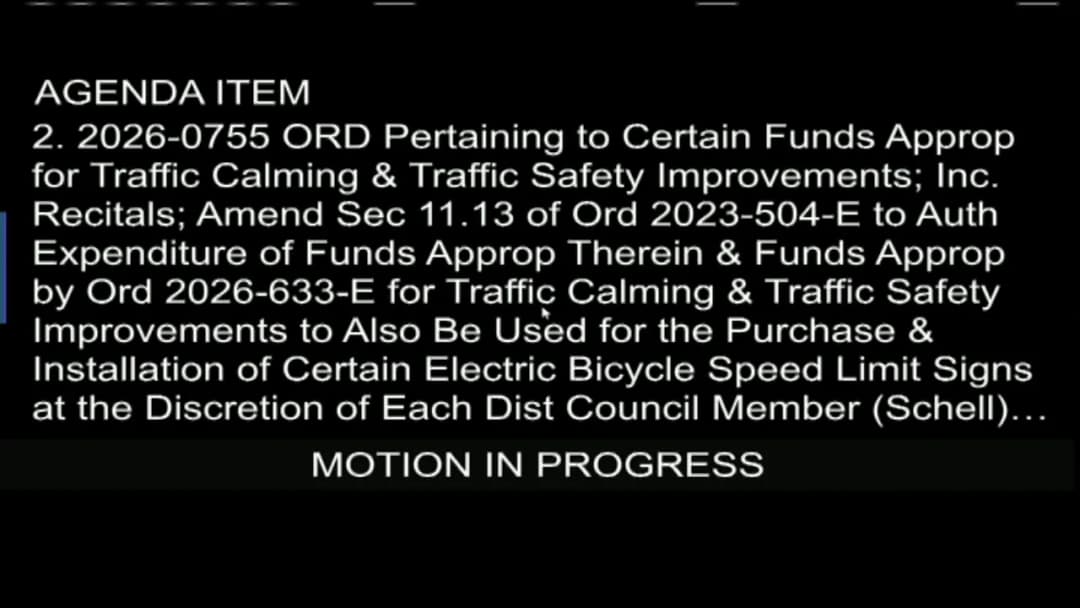
The Transportation, Energy & Utilities Committee (TEU) of the Jacksonville City Council convened on Tuesday, October 20, 2026, at 9:00 AM in the Council Chamber. Chair Ken Amaro presided, with members Raul Arias, Matt Carlucci, Reggie Gaffney Jr., Mone' Holder, and Jimmy Peluso present; Vice Chair Ju'Coby Pittman was excused. Council President Nick Howland and Council Member Miller were also present. The meeting featured a presentation from the University of Florida on the JaxTwin digital platform, actions on ordinances, committee announcements, and public comment. The meeting adjourned at 9:44 AM. Presentation: University of Florida JaxTwin Program Professor Jeff Carney (School of Architecture, Director of the Florida Institute for Built Environment Resilience – FIBER) and Dr. Changjie Chen (Assistant Scientist, FIBER) presented the JaxTwin, a living digital model of Jacksonville integrating data on buildings, infrastructure, environmental systems, and transportation. The project has been under development for three years and is now housed at the UF Jacksonville campus with two full-time staff. Dr. Chen demonstrated several AI-driven tools developed with the Jacksonville Transportation Authority (JTA): - An agentic AI system balancing service to underserved populations with transit on-time performance. - A machine-learning model predicting E. coli concentrations in waterways using proxies like temperature, pH, and salinity, serving as an early warning system. - A generative AI system converting 2D street-view images into 3D building models. - A regionalization tool enabling targeted intervention analyses. - An interactive model of downtown Jacksonville covering approximately 32,000 buildings with attributes such as parcel ID, value, and year built, including the ability to simulate urban heat island effects and building shadows. Professor Carney described the strategic vision for a statewide Florida Digital Twin that integrates AI, IoT sensor networks, geospatial data, and rapid scenario design to "transform Florida from the most at-risk state to the most prepared state." He emphasized that the platform does not itself solve problems but enables specific products, such as the partnership with JTA. A studio course is currently using the twin to reimagine the Skyway system. Future possibilities include modeling what-if scenarios for transportation, housing, costs, flooding, green infrastructure, and heat island effects; incorporating dynamic weather data and real-time updates; and enhancing emergency preparation for hazardous storms. Council Questions and Responses: - Council Member Carlucci confirmed collaboration with the City's Office of Resilience (Anne Coglianese) and emphasized the importance of resilience work, noting the flooding from Hurricanes Matthew and Irma. - Council President Howland asked whether the team assisted JTA with route optimization during its recent financial crisis and fixed-route reductions. Dr. Chen stated they are working with JTA to optimize service and assess impacts on Title VI analysis. Howland noted that critical infrastructure (hospitals, grocery stores, large employers) is not yet included in the model, and expressed hope for the team's involvement in the upcoming transportation optimization process. - Council Member Peluso asked about mapping underground infrastructure with the private sector. Professor Carney said they have not specifically discussed it but would be interested. Dr. Chen noted that there are technical sensors that can detect underground wires and pipes. - Council Member Arias asked whether the platform can track household utility consumption and affordability, and whether council members can access it directly. Professor Carney mentioned a parallel project with JEA funded by a U.S. Department of Energy grant to reduce household energy consumption. Dr. Chen confirmed that login access can be created for individuals. - Chair Amaro asked about the rider mobile app; Professor Carney clarified that it is JTA's app. Consent Calendar - 2026‑0748 – Kings Creek II CDD Contraction: Approved 6‑0. The ordinance contracts the Kings Creek II Community Development District boundaries by 93.24± acres in Council District 8 for future commercial development; the change does not affect the planned 621 residential units. - 2026‑0755 – Traffic Calming Funds for Electric Bicycle Signs: Amended and approved 6‑0. The amendment to Section 11.13 of Ordinance 2023‑504‑E allows traffic-calming funds (including those from Ordinances 2026‑633‑E and 2025‑186‑E) to be used for the purchase and installation of electric bicycle speed limit signs on sidewalks and shared-use paths, at the discretion of each district council member. Discussion Items - 2026‑0777 – Sidewalk Deferral Appeal (Resolution): Deferred. A quasi-judicial public hearing will be held at the next TEU meeting on November 4, 2026. Carla Schell (OGC) will provide committee members with an explanatory memo. - 2026‑0779 – Industrial Parking Requirements (Ordinance): Deferred due to the Planning Commission's schedule. The next hearing is before the Land Use & Zoning (LUZ) Committee on November 4, 2026. - 2026‑0799 – Arbors CDD Expansion (Ordinance, Second Read): Read a second time and rereferred. Public hearings are scheduled for October 27, 2026, and November 10, 2026. - 2026‑0801 – Williamson Lane Right‑of‑Way (Ordinance, Second Read): Read a second time and rereferred. A TEU public hearing is set for November 4, 2026, and a general public hearing for October 27, 2026. - 2026‑0803 – JEA Meeting Transparency (Ordinance, Second Read): Read a second time and rereferred. Public hearings are scheduled for October 27, 2026, and November 24, 2026. Public Comment - Carnell Oliver spoke on Item 2026‑0748, criticizing the city's government structure as outdated and unable to manage population growth. He called for expanding and reducing the size of council districts and voiced frustration with certain districts and officials. Committee Announcements - Council Member Carlucci suggested inviting JEA to a future committee meeting to explain recent rate increases, emphasizing the importance of respecting JEA's independence as an authority while ensuring public understanding. - Council Member Arias supported the suggestion, commending the chair for recent informative meetings. - Council Member Peluso agreed with inviting JEA and announced that he and Council Member Gaffney Jr. are co-introducing an emergency ordinance to provide additional utility assistance, using reserve funds, to help residents during the current economic difficulties. - Council Member Peluso also reminded members that the University of Florida would host the LaVilla Heritage Group of the Downtown Investment Authority at the Ritz Theatre at 5:30 PM that evening to discuss the UF campus and its integration into the LaVilla community. Key Outcomes - Approved: 2026‑0748 (CDD contraction) – 6‑0. - Approved as amended: 2026‑0755 (e-bike signs) – 6‑0. - Deferred: 2026‑0777 (sidewalk appeal) to November 4, 2026; 2026‑0779 (industrial parking) to LUZ on November 4, 2026. - Second-read and rereferred: 2026‑0799 (Arbors CDD expansion), 2026‑0801 (Williamson Lane ROW), 2026‑0803 (JEA transparency). - Next regular TEU meeting: Wednesday, November 4, 2026, at 9:00 AM.
City Council Representative Tywan Clarkmore of District 9 hosted a town hall on October 20, 2026, focused on educating residents about the upcoming ballot. The primary topics were the statewide Amendment 3 (homestead exemption increase) and the local One-Mill referendum (teacher salaries). Representatives from city departments (Code Enforcement, Parks, Public Works/Mowing) were also available for constituent questions. Public Comments & Testimony - Amendment 3 Debate: Multiple residents expressed strong opinions. One resident argued that increasing the homestead exemption "criminalizes homeowners" and advocated for a statewide income tax rather than penalizing property owners, while also criticizing city spending on projects like the Emerald Trail. Another countered that homeowners pass tax burdens onto renters, making it a community-wide issue. A resident in favor of the exemption argued they should have the right to direct their own tax savings rather than fund city "pet projects." A discussion ensued on whether a failure to vote should be counted as approval, referencing the councilmember's past traffic camera legislation. One resident questioned the predetermined nature of the outcome, challenging the councilmember's repeated assertion that the amendment "won't pass." - One-Mill Referendum Support: Tammy Brooks Evans, President of Duval Teachers United, urged support for the One-Mill referendum. She emphasized it is a continuation of an existing tax, not a new one, arguing a failure would result in a direct pay cut for teachers and support staff. She highlighted that paraprofessionals earn $15.10 per hour, and the average teacher receives approximately $8,600 annually from these funds. She noted the funds also support arts, athletics, and after-school programs. Discussion Items - Amendment 3 (State Homestead Exemption): Council Member Clarkmore presented extensively on the financial consequences of Amendment 3, which proposes increasing the homestead exemption from $25,000 to $150,000 in 2027 and $250,000 in 2028. He projected city revenue losses of $84 million in 2027 and over $200 million in 2028. Citing specific statistics (light pole costs of $2k–$9k, 125,000 poles, $1M/month electricity; road resurfacing at $400k per mile), he argued the amendment would force severe cuts to services (streetlights, roads, trash pickup, libraries, parks, senior services, mosquito control, Kids Hope Alliance) or force new taxes and fees (increased gas/sales tax, special assessments). He noted the state mandates 60% voter approval for passage. Council Member Clarkmore explicitly urged residents to vote "No" on Amendment 3, stating "we need it to fail." - One-Mill Teacher Referendum: Council Member Clarkmore and Ms. Brooks Evans detailed the local referendum. 81% of funds go to Duval County Public Schools, 19% to charter schools. Of the county's share, 12% goes to arts and athletics, with the rest for salaries. Unlike Amendment 3, this requires only a simple majority (50%) to pass. Council Member Clarkmore, a 33-year teaching veteran, strongly advocated for a "Yes" vote to support educators. - City Services and Funding: A resident questioned the increase in the garbage fee and its connection to a contract with Meridian Waste. Council Member Clarkmore explained the fee increase was a long-overdue correction to stop the city from borrowing from the general fund, a bill co-sponsored with Council Member Matt Carlucci. Key Outcomes - No formal votes were taken, as this was an informational town hall. - Council Member Clarkmore and Ms. Brooks Evans issued a clear directive to attendees: vote 'No' on Amendment 3 and 'Yes' on the One-Mill Referendum. - City department representatives engaged directly with residents on code enforcement, parks, and public works issues.
The Jacksonville City Council Land Use & Zoning Committee convened at 5:00 PM on October 20, 2026, in the Council Chamber at City Hall, chaired by Joe Carlucci. The meeting covered a large docket of land use amendments and rezoning ordinances. The committee deferred several items to later cycles, continued public hearings on controversial proposals, and approved others with or without amendments. The meeting adjourned at 6:28 PM. Public Comments & Testimony - Items 2026-0126/0127 (Pitts Rd): Jamie Travis-Leonard spoke in opposition, urging closure after eight months of continuations. - Item 2026-0436 (Acree PUD): Jamie Travis-Leonard opposed the increase in industrial uses, questioning the transparency of PUD amendments. - Item 2026-0556 (Vine St): Applicant Anthony Ikeh expressed willingness to work with the council member. - Item 2026-0558 (Richardson Rd): Samantha Ceres, Jamie Travis-Leonard, and Christopher Robinson expressed opposition. - Item 2026-0654 (Duval Laundry PUD): Applicant Jeff Rood and owner Charles Price spoke in support, requesting an 11pm cutoff for outdoor amplified sound instead of 10pm. - Item 2026-0657 (Batting Cage PUD): A strong majority of speakers (Ed Radloff, Lisa Ransom, Ramsey Salem, Nolan Brenner, Steve Matchett, and others) opposed the proposal, citing inadequate parking, noise, proximity to a school and residences, spot zoning, and lack of applicant attendance. One speaker, Jamie Travis-Leonard, spoke in support, comparing it to other entertainment venues. Councilmember Amaro urged the committee to weigh community opposition. - Item 2026-0660 (Alta Dr): Stephen Smith (applicant) spoke in support. - Item 2026-0689 (Main St N): Jamie Travis-Leonard expressed tentative support for a gas station, advocating for a community-oriented design. - Items 2026-0692/0693 (Hendricks Ave): Shannon Acevedo supported the proposed medical office use. - Item 2026-0694 (Galloway Dr): Erica Allen supported the development but asked for buffering details. - Item 2026-0695 (Sandler Rd): Stephen Smith (applicant) spoke in support. - Item 2026-0696 (103rd St): Ricky Rand (applicant) spoke in support. - Item 2026-0747 (Girvin Rd sign waiver): Cyndy Trimmer spoke in support, noting improved visibility and safety. Discussion Items Duval Laundry PUD (2026-0654): The committee considered a request to rezone 2.31 acres at 1905 Walnut Street from Industrial Light to a PUD to redevelop the historic Duval Laundry building into a mixed-use commercial and light industrial space, including event space, office, retail, and restaurants. The Planning Department recommended approval with three conditions, including a restriction on live music or amplified sound between 10pm and 9am. Councilmember Arias proposed an amendment to extend the allowed hours to midnight (12am to 9am). After debate about noise impacts on nearby residences and the Boys & Girls Club, and discussion about the intended outdoor/indoor application, the committee voted in favor of the amendment on a hand vote. However, the official meeting minutes record Condition 3 as the original 10pm to 9am restriction, creating a discrepancy. A second amendment to attach a revised written description (September 15, 2026) also passed. Parking concerns were addressed through off-site agreements, valet, and shared parking with re-threaded. The amended PUD was approved 7-0. Batting Cage and Latin Flavor of Jacksonville PUD (2026-0657): The proposal sought to allow beer and wine sales at a batting cage and event space on a 1.05-acre site at 3695 Hartsfield Road. The item had already been denied by the Planning Commission. A large number of residents and community leaders spoke in opposition, highlighting spot zoning, lack of on-site parking (only 8 spaces for 173 outdoor seats), proximity to a school, and noise concerns. The applicant was absent from several hearings. The committee continued the public hearing to November 4, 2026, with Councilmember Amaro urging careful consideration. Key Outcomes - Withdrawn: Item 2026-0653 (FLUM amendment companion to 2026-0654) was withdrawn 5-0. - Approved: - 2026-0654 (Duval Laundry PUD) approved as amended, 7-0. (Note discrepancy in condition 3 between transcript and minutes.) - 2026-0660 (Alta Dr rezoning) approved 6-0. - 2026-0692 (Hendricks Ave FLUM amendment) approved 6-0. - 2026-0693 (Hendricks Ave rezoning) approved 5-0. - 2026-0695 (Sandler Rd rezoning) approved 6-0. - 2026-0696 (103rd St rezoning) approved 7-0. - 2026-0747 (Girvin Rd sign waiver) approved 6-0. - Deferred to next cycle (PH November 4 or 17, 2026): Items 2026-0124, 2026-0125, 2026-0741, 2026-0742, 2026-0743, 2026-0744, 2026-0745, 2026-0746, 2026-0779. (Note: These items were deferred before committee consideration.) - Public Hearings Continued: - To November 4, 2026: Items 2026-0126, 2026-0127, 2026-0657, 2026-0689, 2026-0690, 2026-0691, 2026-0694. - To November 17, 2026: Items 2026-0436, 2026-0523, 2026-0524, 2026-0556, 2026-0558. - Read Second and Rereferred: Items 2026-0781 through 2026-0798 and 2026-0807 (Urban Agriculture code amendments) were read a second time and referred to future public hearings. The next regular meeting of the Land Use & Zoning Committee was scheduled for Wednesday, November 4, 2026.
The Jacksonville City Council Land Use & Zoning Committee convened at 4:33 p.m. on Tuesday, October 20, 2026, in Council Chamber, City Hall, for a twice-amended agenda meeting. The agenda listed a 4:30 p.m. start; the provided event timestamp is 2026-10-20 12:30:00+00:00. Chair Joe Carlucci presided. No public comments were included in the transcript, and the committee disposed of the agenda through a series of procedural motions. Agenda Actions and Discussion Items - Item 1 (2026-124) – Deferred; public hearing next cycle on 11/17/2026. - Item 2 (2026-125) – Deferred; public hearing next cycle on 11/17/2026. - Items 3–5 (2026-126, 2026-127, 2026-436) – Public hearings opened and continued. - Items 6–7 (2026-523 and companion 2026-524) – Public hearings opened and closed; an additional public hearing was set for 11/17/2026. - Item 8 (2026-556) – Initially listed as ex parte/open-close/move; a committee member requested deferral/continuance because they had not yet met with the developer. The item was deferred/continued to 11/17/2026. - Item 9 (2026-558) – Public hearing opened and continued to 11/17/2026. - Item 10 – Open/close; reported as up for withdrawal after a committee member said they had spoken with the applicant, George. - Item 11 (2026-654) – Ex parte; open/close; amended and moved with conditions; committee members raised no concerns about the amendment or conditions. - Item 12 (2026-657) – Public hearing opened and continued to 11/4/2026. - Item 13 (2026-660) – Ex parte; open/close; moved. - Items 14–16 (2026-689, 2026-690, 2026-691) – Public hearings opened and continued to 11/4/2026. - Item 17 (2026-692) – Open/close; moved. A committee member noted a need to follow up with an applicant, Stephanie. - Item 18 (2026-693) – Ex parte; open/close; moved. - Item 19 (2026-694) – Public hearing opened and continued. - Items 20–21 (2026-695, 2026-696) – Ex parte; open/close; moved. - Items 22–27 (2026-741 through 2026-746) – Deferred; public hearing next cycle. - Item 28 (2026-747) – Ex parte; open/close; moved; sign waiver. - Item 29 – Deferred due to pending planning commission action; originally scheduled for the upcoming Thursday, it will return to LUZ after the planning commission hears it. - Second-reading bills – The chair listed 2026-781 through 2026-798 and 2026-807 as on second reading, noting a "strange little skip hop" from 798 to 807. Key Outcomes - The committee deferred 2026-124, 2026-125, and 2026-741 through 2026-746 to the next public-hearing cycle. - It continued 2026-126, 2026-127, 2026-436, 2026-558, 2026-657, 2026-689, 2026-690, 2026-691, and 2026-694 to later dates, including 11/17/2026 and 11/4/2026. - It opened and closed public hearings on 2026-523, 2026-524, and 2026-654, with an additional hearing scheduled for 2026-523 and 2026-524 on 11/17/2026. - It moved 2026-660, 2026-692, 2026-693, 2026-695, 2026-696, 2026-747, and 2026-654 (as amended with conditions). - Item 10 was identified as up for withdrawal. - The next regular LUZ meeting is scheduled for Wednesday, November 4, 2026.
The committee convened at 4:00 PM for a one-hour emergency meeting to advance legislation allocating $2.3 million from city reserves for utility assistance, aiming to file an emergency bill by Wednesday and secure 13 votes. Councilmembers discussed program design, funding distribution, and administration capacity, and heard public testimony criticizing the approach as a short-term fix. Discussion Items - Proposed Funding Allocation: Councilmember Peluso introduced a plan to allocate $2.3 million from reserves: $400,000 to Parks, Rec and Community Services (PRCS) for their utility assistance program ($200,000 in year one, $200,000 in year two, without new hires), and the remaining $1.9 million to a new "City to Neighbor" program administered by United Way and its partners (Catholic Charities, Jewish Family and Community Services, DESK). Of the $1.9 million, $200,000 would cover administrative costs (10–15% overhead), leaving $1.7 million for direct household assistance over one year. - Maximum Household Assistance: Initially set at $1,000, Councilmember Pittman proposed $1,200, which the committee agreed to. United Way requested 25% of funds upfront ($425,000) to begin administration and hiring. - Existing Programs Overview: Current city programs include PRCS's utility assistance (once per 18 months) and the JEA Neighbor to Neighbor program (administered by Catholic Charities via United Way 211, funded by voluntary ratepayer contributions). PRCS can absorb an extra $200,000 without additional staff. - Capacity and Administration: United Way (Coretta Hill) explained that their 211 line handles tens of thousands of calls weekly with only seven daytime agents. Their closed-loop referral network (Catholic Charities, Jewish Family Services, DESK) can serve about $750,000 in new funding without extra administrative support; additional funding would require 10–15% overhead. The partners could expend the $1.7 million within one year. - JEA Data and Customer Support: JEA's Charles Morland reported that 85% of residential customers pay within 30 days, 12% within 60 days, and 97% by day 60. The critical bucket is 61–90 days past due: 9,381 residential customers; 91–120 days: 3,387 customers. JEA offers payment extensions, arrangements, budget billing, and works with partners to stop disconnection when a voucher is issued. They followed up on complaints from the previous meeting and resolved two cases. - Veterans Set-Aside: Councilmember Gaffney suggested setting aside $100,000–$200,000 for veterans, but the committee decided against segregating funds, noting that all residents in need should be served. - Long-Term Concerns: Councilmembers and public commenters noted that utility assistance is a band-aid and that rate increases (6% electric, 8% water/sewer since October) and JEA's opaque planning (Integrated Resource Plan) need systemic solutions. The committee acknowledged these issues but emphasized the immediate emergency. Public Comments & Testimony - Laureen Husband: Criticized assistance as treating symptoms, not causes. Reported that JEA sent $179 million to the city's general fund in FY2026 ($348 million including franchise fees and public service tax). Called for lowering the city's take from JEA, independent review of JEA spending, and addressing rate hikes. Stated that United Way's 211 line received 4,600+ calls from Duval residents in one year with only seven staff. - Suzanne Sapp (Sierra Club, Duval Affordable Clean Energy Coalition): Urged immediate intervention (no disconnections, remove disconnect notice requirement for assistance) and long-term solutions: free energy audits and weatherization for renters, time-of-use rate education, a community advisory council for JEA, and a forensic audit. Called for transparency in JEA's energy planning. - Deborah Thompson (NAACP Environmental and Climate Justice Committee): Highlighted difficulties for low/moderate-income families, refugees, and seniors on fixed incomes. Asked for fixed rates or rate stabilization, and urged the committee to consider the human side of escalating bills. - Reverend Dr. Russell Meyer: Emphasized that older homes need energy efficiency. Proposed a city‑JEA financing program for retrofits repaid through property-tax liens (for both homeowners and renters). Estimated 14,000 households (3% of JEA's residential customers) need help. Called for moving toward clean, renewable energy. Key Outcomes - Legislative Path: The committee agreed to file an emergency bill by Wednesday, October 23, 2026. The bill will allocate $2.3 million as follows: - $400,000 to Parks, Rec and Community Services ($200,000 for FY2026-27, $200,000 for FY2027-28). - $1.9 million to United Way for the "City to Neighbor" program, with $200,000 for administration and $1.7 million for direct household assistance. - Maximum assistance per household: $1,200 per year. - United Way to receive 25% upfront ($425,000) for administrative startup. - The program will operate for one year, with funds expected to be expended within that period. - Next Steps: The bill will be introduced and require 13 votes for passage. Councilmembers Peluso and Gaffney will co-introduce. The committee committed to continuing discussions on longer-term rate and energy policy issues.
The meeting of the TRUE Commission convened but lacked a quorum, preventing formal action on the backlog of minutes. The primary activity was a high-level budget presentation from Council Auditor Philip Peterson, followed by discussions on independent authority accountability and a proposed tier system for evaluating city expenses. Public comments addressed data centers and Amendment 3. Consent Calendar - None. No quorum was present, so the minutes could not be approved. Public Comments & Testimony - John J. Nooney: Commented on a recent noticed meeting about data centers and tied it to Amendment 3 and the proposed tier system. He raised questions about small data center sizes and encouraged a coordinated approach. - A representative of the Urban Core CPAC: Thanked the commission for its work, welcomed Commissioner Bass's tier system presentation, and suggested presenting it to the City Council. He also noted that Terry Canty is the likely new commissioner for the Urban Core CPAC, pending rules committee approval. He expressed appreciation for outgoing Commissioner Roundsville's service. Discussion Items - FY2027 Budget Overview: Council Auditor Philip Peterson presented key features of the $2.027 billion budget approved on September 22. He detailed the $26 million originally set aside for public safety union negotiations (which expired September 30), the Mayor's proposal to redirect that $26 million to one-time public safety projects (JFRD CO2 removal system, JSO warehouse consolidation, Florida Blue Building leasehold improvements), and subsequent council actions that created an $18.3 million public safety contingency. The 5% and 7.5% raises for JSO/JFRD rank-and-file and corrections officers were funded, along with 3% for other unions and non-union employees. The $4.9 million for affordable housing was preserved. Over 99% of the Mayor's proposed budget was ultimately approved. - Independent Authority Accountability: Commissioner Raymond Day led a discussion on whether the city's independent authorities (JTA, JAA, JEA, JPA) operate effectively and transparently. Auditor Peterson explained the city's limited oversight tools (quarterly reports based on authority-provided data, no system access) and noted that JTA's new CFO had recently acknowledged that prior financial projections to council were unrealistic. A select committee on JTA oversight was formed and will meet the following day. Auditor Peterson also clarified that JAA is largely self-funded and its revenues must be reinvested at the airport per FAA rules; JTA relies heavily on city sales and gas tax revenues; and JPA receives a formula-based contribution from the city. Commissioner Blake Bass expressed concern about accountability and urged more direct monitoring. - Tier System Proposal for Commission Work: Commissioner Blake Bass proposed a structured approach to prioritize and address financial issues: Tier 1 ($100k–$1M, actionable with direct meetings), Tier 2 ($1M–$10M, influential via advisement), and Tier 3 ($10M+, monitored and advised). He suggested the commission focus on one department and one area of financial concern at a time, and deliver a semi-annual report to the City Council covering findings, savings achieved, and the next focus area. Commissioners expressed strong support for this framework as a way to improve effectiveness and visibility. Key Outcomes - No votes were taken due to insufficient quorum. - Discussion of Amendment 3 was deferred to November. - The commission unanimously expressed support for Commissioner Bass's tier system and indicated it would be formally considered at a future meeting. - Outgoing Commissioner Roundsville was thanked for her service. Her replacement, Leroy Kelly, had been approved by the Rules Committee and was expected to be confirmed by the City Council the following day. - The commission agreed to rearrange its agenda to incorporate the tier system moving forward.