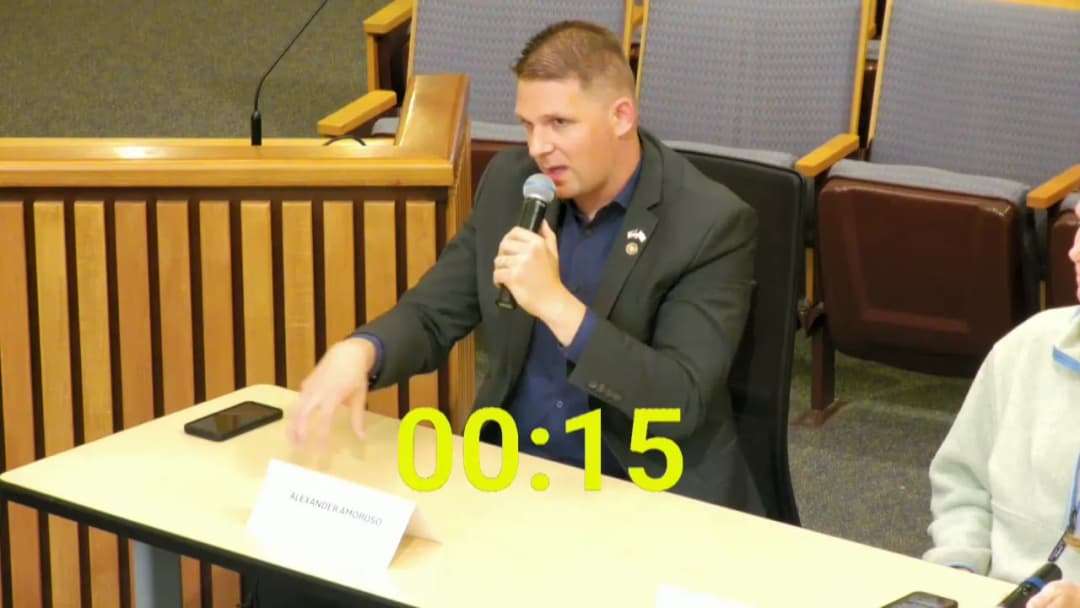
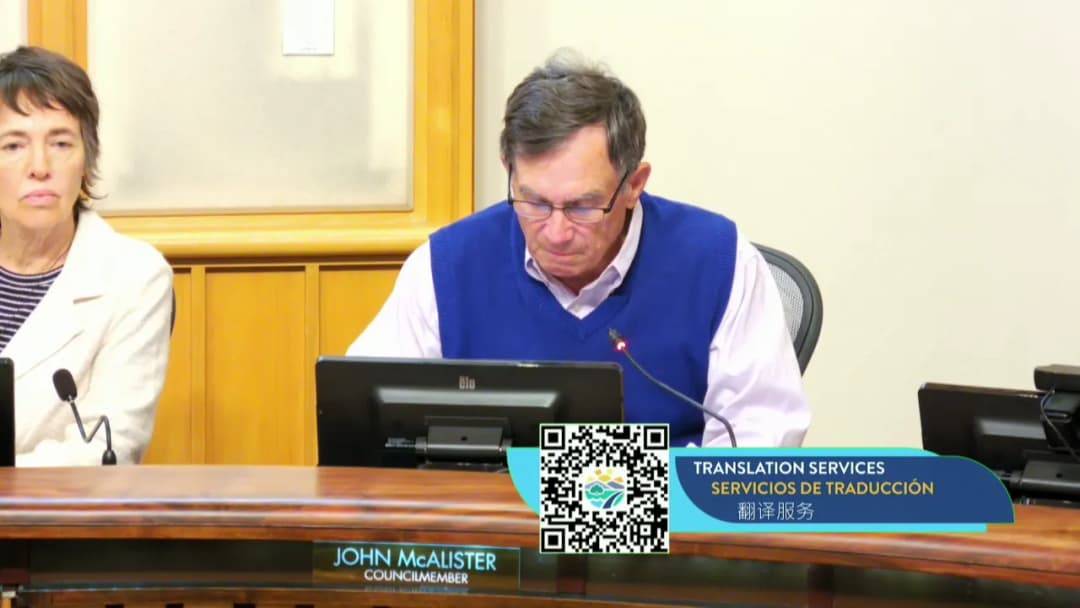
The Mountain View City Council convened a special study session on October 20, 2026, to interview four candidates for two upcoming vacancies on the Environmental Planning Commission (EPC). The session combined structured interviews with an extensive procedural debate over the appointment timeline, prompted by the possibility that a sitting EPC member might be elected to the City Council in the November election. The Council voted 4-2 to advance all applicants as finalists and prepare a contingency process for potential additional vacancies. Discussion Items Applicant Interviews The Council interviewed four candidates using a standard set of questions in a round-robin format: - Alexander Amaroso: An environmental and conservation professional with experience working with the Army Corps of Engineers and Native American tribes. He expressed support for the downtown and Moffett precise plans and identified climate change and sustainable infrastructure as key priorities for the EPC. - Elizabeth Conlin: A scientist who emphasized her technical expertise in reviewing environmental impact reports and biological site assessments. She identified the implementation of SB 79 as the most pressing immediate issue facing the commission. - Daniel Holsey: A mechanical engineer and PhD who stressed his ability to analyze complex systems. He argued the EPC's role is shifting toward broader policy documents and identified the rapid pace of state housing laws as the commission's biggest challenge. - Patricia Scarborough: An industrial engineer and 24-year Mountain View resident who served on the Environmental Benefits Committee. She advocated for a sustainable, equitable community and a systems-thinking approach to planning. Procedural Debate on Appointment Process The debate centered on whether to make final selections from the existing candidate pool or to wait until after the November election to account for the potential resignation of Commissioner Donahue, who is running for City Council. - Vice Mayor Clark proposed advancing all four candidates as finalists without immediate selection. He argued this would allow the Council to make a holistic decision knowing the full number of vacancies and the final composition of the Council and EPC. - Councilmember Hicks supported this approach, emphasizing the importance of EPC composition and having complete information. - Councilmember McAlister agreed, calling the delay an exercise in "better government." - Councilmember Kamei supported the delay, noting the importance of a full seven-member Council vote and that she did not have enough information from the interviews to vote confidently. - Councilmember Ramirez opposed the motion, arguing it was unfair to the applicants who met the established deadline and that changing the rules mid-process was inappropriate. He suggested the outcome might have differed had the applicant pool represented different interests. - Mayor Ramos also voted no, grounding her opposition in her mayoral theme of treating all volunteers with gratitude and following through on the advertised process. Key Outcomes - Vote: The motion passed 4–2. Voting in favor: Vice Mayor Clark, Councilmember Hicks, Councilmember McAlister, Councilmember Kamei. Voting against: Councilmember Ramirez and Mayor Ramos. Councilmember Showalter was absent. - Finalists: All four applicants (Amaroso, Conlin, Holsey, Scarborough) were designated as finalists for the EPC openings. - Contingent Process: If Commissioner Donahue is elected to Council and vacates his EPC seat, the City Clerk will open a new recruitment period for all vacant seats. Current finalists remain in the pool without needing to re-interview, though they have the option to do so. - Standardized Questions: Any interviews for a second round of candidates must use the identical set of questions used in this session. - Future Referral: The Council directed a referral to the Council Policy and Procedure Committee to review the alignment of EPC terms to prevent this scheduling conflict in future election years. - Next Steps: A study session for potential additional interviews is anticipated for December 8 or December 15, 2026. Final appointments will be made at the December 15 Council meeting.
Public Meetings - Mountain View, California
Public Meetings - Mountain View, CaliforniaThe City Council convened on October 16, 2026, at 5:00 PM for a closed session, followed by a study session at 5:30 PM, and a regular session at 6:30 PM. The agenda included consent calendar items and a public hearing. No transcript or minutes were provided for this meeting; therefore, the summary reflects only the agenda items as listed. Consent Calendar - Item 4.1: Test 2 – Recommendation: Test 2 - Item 4.2: Test 3 – Recommendation: Test 3 - Item 4.3: Test 4 – Recommendation: Test 4 Public Hearings - Item 6: Test PDF Linking – Attachment: Hyperlink. No additional details are available regarding discussion or public testimony. Oral Communications from the Public - No speakers or public comments are recorded in the provided materials. Other Items - The meeting proceeded through standard agenda items: call to order, pledge of allegiance, roll call, closed session report, consent calendar approval, items initiated by council, council/staff/committee reports, and adjournment. No actions, votes, or debate are documented in the available source material.
The Parks and Recreation Commission and Urban Forestry Board met on October 16, 2026, from 6:03 p.m. to 9:16 p.m. in the Maple Room and by video conference at 201 South Rengstorff Avenue, Mountain View, with all five commissioners present: Chair Joe Mitchner, Vice Chair Sandy Sommer, Commissioner Ronit Bryant, Commissioner Jonathan Davis, and Commissioner IdaRose Sylvester. The board approved the previous meeting minutes, heard public comment, denied a heritage tree removal appeal, and provided direction for a future Heritage Tree Ordinance update. Note: the supplied minutes and transcript identify the meeting date as Wednesday, October 14, 2026, while the supplied metadata says October 16, 2026; this summary uses the supplied date. No agenda was provided. Minutes Approval - On a motion by Commissioner Bryant, seconded by Commissioner Sylvester, the board approved the September 9, 2026 minutes 5-0. Chair Mitchner noted that the minutes for the prior meeting now include the 5-0 vote count on the prior Heritage Tree item. Public Comments & Testimony - Shani Kleinhaus, environment advocate for the Santa Clara Valley Bird Alliance, speaking for a coalition of organizations, expressed support for a temporary moratorium on herbicide use in city parks and tree wells, review of the more-than-20-year-old Integrated Pest Management (IPM) policy, public transparency, a strengthened review process, and transition to non-chemical weed control. - Silja Paymer supported the moratorium, said herbicides are "basically never needed," described her dog's allergic reactions after spraying, noted Los Altos and Palo Alto do not use them, and asked for collaboration with the school district. - Hala Alshahwany described the July tree removals near the library and Pioneer Park as heartbreaking, said QR codes were insufficient community communication, cited a Ventura case involving chemical-related tree loss, and asked for more outreach and research. - Leslie Friedman stated trees are health-giving filters, raised concerns about dying magnolia trees, and asked the city to stop using poison. - Jill Halloran raised concerns that pesticides move into groundwater and the Bay, said mature trees need less maintenance than saplings, and noted high sapling mortality under drought and heat. - Junyan Wang, a local birding volunteer, said trees provide essential habitat, argued that replacing one herbicide with another is not enough, and urged a temporary suspension of routine herbicide use, a transparent IPM update, and default non-chemical weed control. - Bruce England, speaking for Green Spaces Mountain View, voiced support for the staff and commission review of the permitting process and said HOA tree-removal requests should require submission of the actual CC&Rs rather than relying on the homeowner's account. Discussion Items Heritage Tree Removal Appeal – 1473 Tyler Park Way - Urban Forest Manager Russell Hansen presented staff's report on the coast live oak (Quercus agrifolia). Staff estimated the tree at about 26 inches in diameter, found good health and structure, considered the lean self-corrected and not a safety concern, and stated the canopy imbalance and competing scaffold branches were manageable through pruning for 20-30 years. No construction was proposed, so staff did not find criteria for removal and recommended denial. The minutes give the address as Tyler Park Way; the transcript says Tyler Park Drive. - Appellant Dillon Kirkby, an HOA board member, argued that a 2024 photograph showed the tree's lean had changed over time toward the building, that the risk was "high" with severe consequences, that past storm survival did not guarantee future safety, and that the HOA had funds and a contractor ready for removal and replacement. He also stated the HOA's CC&Rs authorize removal for safety. - In response to commissioner questions, Hansen said root confinement was moderate, the tree had a bubbler, and the lean measurements were conflicting: the appellant's arborist report cited 16 degrees, while staff photos annotated 9 and 3 degrees. Hansen explained that he becomes more concerned when lean exceeds 20 degrees and when soil cracking appears, indicating possible root-plate lifting. The arborist who wrote the statement that the tree could probably uproot within the next year was not present to answer questions. - Public comment for the appeal included: Alex Amarosso raised broader climate and wildlife habitat concerns; Shruti Gupta, an adjoining resident at 1471, said she would be directly impacted if the tree fell and believed the lean had been increasing; David Friedland, an HOA board member, cited a Western Arborist article reporting 72% of coast live oak failures occurred December-March, 59% in saturated soil, two-thirds in moderate or high wind, and lean as the most common structural defect; Jessica Hoffman, a resident of 1473, said the tree leans over her living room and children's bedroom, and her husband also urged prioritizing family safety. - During deliberation, Commissioner Bryant emphasized the ordinance's intent to preserve heritage trees and said the danger of falling had not been demonstrated; Commissioner Davis distinguished hazard from risk and sided with professional staff; Commissioner Sylvester said the increased-lean claim was not demonstrated; Chair Mitchner said the lean was significant, the nearby residents' concerns were credible, and given the forecast El Niño winter he would err on the side of caution. Vice Chair Sommer seconded the motion to deny and suggested a permanent plumb-line monitoring approach if the appeal was denied. - Vote: M/S Bryant/Sommer to adopt the resolution denying the appeal, upholding staff's decision, and denying removal of the heritage tree. Yes: Bryant, Davis, Sommer. No: Sylvester, Mitchner. The motion carried 3-2. Staff noted that if new evidence showed a material change, such as a documented increase in lean, the applicant could return before the normal two-year waiting period. Heritage Tree Ordinance Update - Assistant Community Services Director Brenda Sylvia said the update is an early-stage implementation action of the Biodiversity and Urban Forest Plan. No ordinance amendments have been drafted; the item was to identify topics for PRC and stakeholder involvement to shape the work plan, schedule, and engagement process. - Commissioner priorities included: heritage tree designation and removal criteria; clear, objective, evidence-based standards; enforcement and restitution; tree risk assessment and protection during construction and development; conforming uses; incentives; broader urban forest stewardship; alignment with the Biodiversity and Urban Forest Plan; and a community vision-setting process before detailed drafting. Commissioners also discussed the disconnect between individual homeowners and large development projects, the need to involve developers and other stakeholders, and the value of case studies, community advisory committees, and "go slow to go fast" engagement. - Public comment during this item: Silja Paymer supported vision-setting, asked for historical data on tree applications, disclosures at property sale, and attention to PG&E pruning and undergrounding; Hala Alshahwany urged stronger community dialogue and questioned whether heritage designations should rest on council discretion rather than objective criteria; Rashmi supported an open, slower process, called the current application system a "black box," and asked for metrics and dashboards and more scrutiny of development-related tree removal. - Sylvia summarized the themes and said staff would return in January with proposed work plans. The review will cover the entire Chapter 32, Articles I and II, not just the heritage tree article. She cautioned that a vision-setting process could extend the timeline and may require outside facilitation. Staff Announcements, Updates, and Committee Reports - Community Services Director John Marchant reported that the Clyde Park pickleball public meeting drew nearly 60 people, with overwhelming support for the 12-court option over 9; City Council approved an action step to create the tree selector tool from the Biodiversity and Urban Forest Plan; and staff attended the NRPA Conference. - Urban Forest Manager Russell Hansen reported on discussions with Community Development and Public Works about same-day permit processes. About 14-15 permit types are eligible for same-day permits; seven could affect trees; the three highest-risk are sewer lateral, water line, and roof replacement. He is working with the deputy building official to add tree-protection language, drawings, and screening questions to the online portal, with a target of end of calendar year, and to consider alternatives such as pipe bursting and tree-protection inspections. - Chair Mitchner commented on recent public meetings, including a resounding 70-to-2 response at the pickleball meeting, thanked staff for engagement, and noted the next meeting is Wednesday, November 4, 2026. Key Outcomes - Minutes of September 9, 2026 approved 5-0. - Appeal for the Heritage Tree at 1473 Tyler Park Way denied 3-2; staff's decision to deny removal was upheld. - Staff will prepare proposed Heritage Tree Ordinance update work plans and return in January 2027; a community vision-setting conversation was identified as a possible first step. - Staff will continue work on same-day permit tree protections and will begin mapping the IPM review process in January, with community engagement.
The Mountain View City Council held a regular meeting on Tuesday, October 13, 2026, at 6:30 PM in the Council Chambers and via video conference. The meeting began with proclamations for Filipino American History Month, United Against Hate Week, and Compassion Week, followed by a presentation from Caltrain on its performance and financial challenges. The council then approved the consent calendar (with one item pulled), heard public comments on oversized vehicle parking and other concerns, debated a citywide fiber network concept, and conducted public hearings on a LinkedIn development agreement amendment, an interim urgency ordinance on detention facilities, downtown business improvement area renewals, and a solar energy project. Key outcomes included unanimous passage of the urgency ordinance, approval of the LinkedIn extension with a revised public benefit allocation, and adoption of the fiber network Phase 1a. Consent Calendar - Item 4.1 (Historic Preservation Ordinance and Zoning Map Amendment – second reading) was approved unanimously (7-0). Councilmember Ramirez asked about AB 2339 implementation; staff clarified that eight properties are affected and final council action on the historic register is expected in December 2026, with code amendments in early 2027. - Item 4.2 (Ambulance Billing and User Fees Resolution) was approved unanimously. - Item 4.3 (Pathways to Housing Annual Progress Report) was pulled by Councilmember Ramirez for separate consideration. The council approved the report and directed staff to evaluate a request from Hope’s Corner for funding to build a new laundry room and return with options. - Items 4.4 (Biodiversity and Urban Forest Plan amendment) and 4.5 (not listed in transcript) were included in the consent calendar; the motion covered all non-pulled items. Public Comments & Testimony - On Consent Calendar Items (4.3): Leslie Carmichael, President of Hope’s Corner, requested council support for a $303,000 laundry room, noting the need exceeds current capacity. - Oral Communications (Non-Agendized): Several speakers addressed oversized vehicle (RV) parking issues: - Kunal Girotra (founder/CEO, Lunar Energy) reported that RVs have created safety hazards for employees and stated his company may leave Mountain View if conditions persist. - Rod Deal (EVP, BXP) described multiple safety incidents and economic threats to the 5.6 million sq ft business park (8,700 jobs, $665k business license tax revenue, $2.7M property tax). - Susan Frank (resident) urged immediate action before the Navarro settlement expires, citing near misses on Central Avenue. - Neil Gorinflow (resident) argued that streets are not housing and called for more affordable housing rather than allowing RV living. - Richard Wynne (resident) raised concerns about proposed zoning changes on Star Way, requesting a transition zone between R3 and single-family homes. - On Fiber Network (Item 6): Alex Brown (virtual speaker) expressed support for the fiber network and encouraged municipal fiber, while noting the high cost. - On LinkedIn DA (Item 7.1): No public comments. - On Urgency Ordinance (Item 7.2): Six speakers strongly supported the moratorium, citing concerns about immigration detention facilities, community fear, and the need to prevent additional ICE capacity in the region. Speakers included Kara Silver (attorney, Indivisible), Maria (Blue Turn Indivisible), Eric Baikon (HRC member), and others. - On BIA Items (7.3, 7.4): No public comments. - On Solar Project (Item 7.5): John Burdett (VP, Excite Energy) commended the city and offered additional energy audits at no cost. Discussion Items - Conceptual Design for a Citywide Fiber Network (Item 6): Staff presented a phased fiber network design with estimated total cost of $16.7 million. Phase 1a (civic center loop, $1 million) was recommended for adoption during the upcoming CIP budget process, along with establishing a Technology Upgrade Reserve. Councilmembers debated priorities: Councilmember Hicks and Ramirez cautioned against large expenditures given other needs (housing, parks), while Councilmember McAllister emphasized long-term economic benefits. The council voted unanimously to accept the report, adopt Phase 1a, and direct staff to create the reserve. - LinkedIn Development Agreement Amendment (Item 7.1): The proposed amendment extends the term to 2034 (15 years total) in exchange for a $1.6 million public benefit fee. Victor Sanchez (LinkedIn) explained delays due to hybrid work and market conditions, reaffirming commitment to Phase 2. Councilmember Showalter praised LinkedIn’s sustainability efforts and early fee payments. The council approved the extension unanimously (7-0). Subsequently, Councilmember Ramirez moved to allocate the entire $1.6 million to the Mountain View Affordable Housing Fund, arguing that affordable housing is the highest priority; the motion passed 5-2 (McAllister and Clark dissenting). - Interim Urgency Ordinance for Detention or Custodial Facilities (Item 7.2): The city attorney presented the ordinance, drafted in response to concerns about federal immigration detention expansion. Public comment was overwhelmingly supportive. Councilmember Kamei moved adoption, seconded by Showalter; the ordinance passed unanimously (7-0). - Downtown Business Improvement Area No. 1 (Item 7.3): Vice Mayor Clark and Councilmember Hicks recused themselves due to proximity of their residences. The council confirmed the annual report, levied 2027 assessments, and authorized revenue allocation to the Chamber of Commerce. Passed 5-0. - Downtown Business Improvement Area No. 2 (Item 7.4): No recusals. The council confirmed the annual report and levy, and authorized revenue allocation. Passed unanimously (7-0). - Energy Services Contract for Solar PV and Battery Storage (Item 7.5): Staff presented a project with $10.4 million in projected 30-year savings, $5 million upfront cost (funded from General Non-Operating Fund, CIP Reserve, and Sustainability CIP), and eligibility for $920,000 in IRA direct-pay incentives. The project includes roof replacements at the Library and Center for the Performing Arts. Councilmember Showalter moved approval; the motion passed unanimously (7-0). Key Outcomes - Consent Calendar: Approved all items except 4.3, which was approved with additional direction. - Fiber Network: Adopted Phase 1a (civic center loop) and directed staff to establish a Technology Upgrade Reserve; implementation to be considered during CIP budget. - LinkedIn DA Amendment: Approved extension to 2034 (7-0); public benefit fee of $1.6 million allocated entirely to the Mountain View Affordable Housing Fund (5-2). Second reading set for October 27, 2026. - Urgency Ordinance: Adopted unanimously, imposing a temporary moratorium on detention/custodial facilities pending study. - BIA No. 1: Resolutions passed (5-0, two recusals). - BIA No. 2: Resolution passed (7-0). - Solar PV/Battery Storage: Energy services contract awarded to Excite Energy (SolarNorcal) for $3,945,750; $5 million CIP project approved and funded; CEQA exemption found. - Council Reports: Councilmember Showalter announced a Sustainability Committee meeting on Oct 14 and a ribbon cutting for the SV Clean Energy building. Councilmember McAllister invited to a Neighborhood Committee meeting on Oct 15. Councilmember Ramos reported on the Cal Cities conference and other events.
The City Council convened a special meeting at 8:00 AM on Saturday, October 10, 2026, primarily to hold a closed session for City Attorney candidate interviews. Prior to the closed session announcement, Housing Department Director provided an update on affordable housing projects, reporting that up to six projects are at various stages of completion, including a newly constructed 100% affordable housing development behind the meeting location. Over the next six to eight months, four additional 100% affordable projects are expected to begin construction, providing several hundred new units for extremely low- to low-income residents, including some with special needs. The Housing Help Center, located at the rent stabilization division office on Escuela, offers workshops and assistance for residents with affordable housing applications. Closed Session Announcement - The sole agenda item was a closed session under California Government Code §54957(b)(1) to interview candidates for the position of City Attorney. - Mayor called for public comment on the closed session item; no members of the public appeared virtually or in-person to speak. Key Outcomes - The Council recessed to the Ameswell Hotel (800 Moffett Blvd.) for the closed session. - No closed session announcement was anticipated, and the meeting would not reconvene in open session for adjournment.
The Mountain View City Council held a special meeting on October 9, 2026, at 8:00 AM. Although the published agenda indicated only a closed session for City Attorney candidate interviews, the meeting began with an unscheduled presentation by the Housing Director on the city's affordable housing projects. After the presentation, the council proceeded to the closed session item. Housing Update - The Housing Director reported that the city has up to six affordable housing projects at various phases, with the newest fully affordable new construction being a "lot twelve" project. Over the next six to eight months, four additional 100% affordable developments are expected to start construction, adding several hundred units for extremely low- to low-income residents, including individuals with special needs. The director also highlighted the Housing Help Center located at the Rent Stabilization Division office on Escuela Avenue, which offers workshops and assistance with affordable housing applications. Closed Session Agenda - Item 2.1: Public Employee Appointment – City Attorney (Candidate Interviews) (California Government Code §54957(b)(1)). The council called for public comment, but none were offered. The council then recessed to the Ameswell Hotel (800 Moffett Blvd.) for the closed session and did not return to open session for adjournment. No closed session announcement was anticipated.
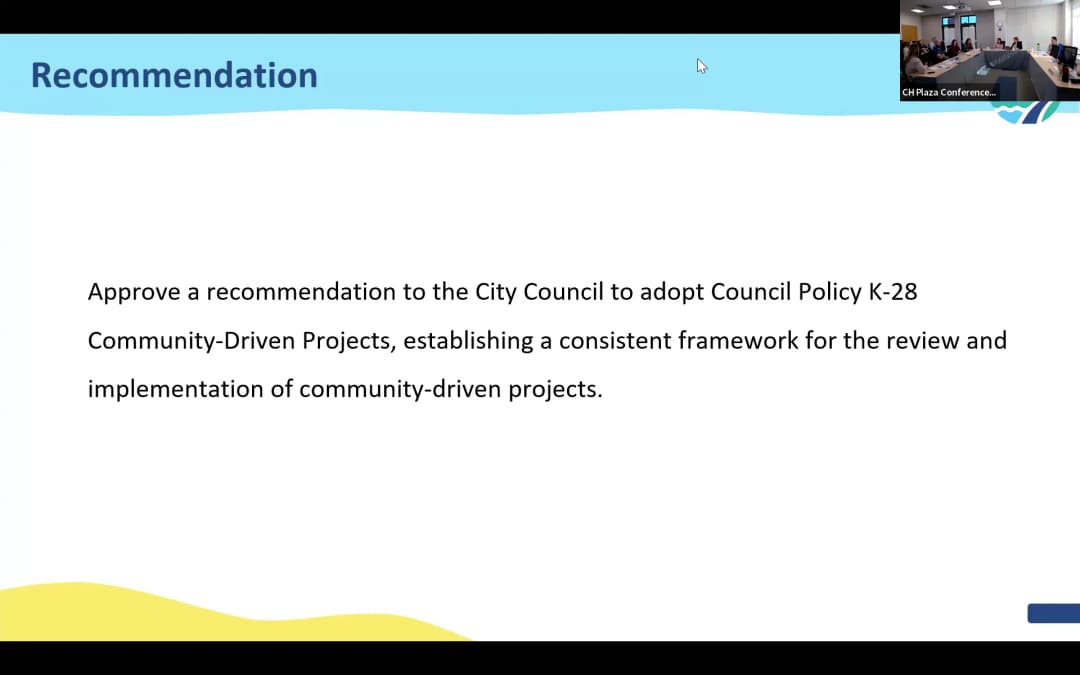
The Council Policy and Procedures Committee (CPPC) met on October 7, 2026, at 9:00 AM in a hybrid format. The committee considered three agenda items: a proposed policy for community-driven projects, an update on council policy modernization, and a work plan update. All actions were approved unanimously, and staff received direction on next steps. Consent Calendar - Approved Minutes: The May 6, 2026 CPPC meeting minutes were approved without modification. Public Comments & Testimony - Item 5.1 – Proposed Council Policy K-28: Paul Donahue (Mountain View resident) expressed overall support for the policy but suggested considering a tier three for new “friends” organizations. Celia Paymara (resident and president of Greenspaces MV, speaking as a resident) noted appreciation for the policy but identified unresolved issues, including high insurance costs for non-501(c)(3) groups, the city’s explicit statement that participants are not city volunteers, and the lack of an umbrella volunteer policy; she urged the city to explore options to address these barriers. - Item 5.2 – Council Policy Update: Paul Donahue spoke in favor of the update efforts, specifically urging prioritization of the Integrated Pest Management policy in light of tree deaths observed around the city. - No public comments were made on non‑agenda items or on item 5.3. Discussion Items - 5.1 – Proposed Council Policy K-28 (Community-Driven Projects): Staff presented a new policy framework for community-initiated projects that fall outside existing city volunteer programs. The policy establishes two review tiers: Tier 1 (streamlined process for smaller, low‑risk projects; estimated 10 business days after initial 15‑day review) and Tier 2 (formal agreement process for larger or higher‑risk projects; approximately 3 months). Projects must provide public benefit, be broadly accessible, and not duplicate city services. Community partners may be non‑501(c)(3) groups but must obtain insurance ($2 million general liability) for Tier 2 projects. The policy explicitly states that participants are not city volunteers and are not entitled to workers’ compensation. Staff conducted benchmarking with seven agencies and outreach to 17 Bay Area organizations. Committee members discussed insurance affordability, support for inexperienced groups (including minors), the importance of a dedicated volunteer coordinator, and the desire for a clear “bucket” system to help residents understand available pathways. Mayor Ramos moved to recommend adoption; the motion was seconded and carried unanimously. The committee gave soft direction to include draft forms, insurance guidance, an infographic or website resource showing different volunteer pathways, and performance metrics in the staff report to council. - 5.2 – Update on Council Policy Modernization: Deputy City Manager Kimberly Thomas reported that of 33 initially reviewed policies, 3 have been updated, 5 were deemed no longer needed, and 5 are recommended for rescission. An additional 10 outdated policies were identified, bringing the update universe to approximately 30 policies. A timeline was set: short‑term (2027), medium‑term (2028), and long‑term (2029+). Staff also noted that the Community Development Department’s conditions of approval template is underway and expected by early 2027. Chair Ramirez moved to approve the staff recommendation; the motion was seconded and passed unanimously. - 5.3 – CPPC Agenda Topics Update: Staff provided a routine informational update on anticipated FY2027 topics, including a tracking chart for council policy work. No action was required or taken. Key Outcomes - Policy K-28 adoption recommended: The committee voted 3‑0 to recommend that the City Council adopt Council Policy K-28. Staff will include draft forms, insurance guidance, and an infographic in the December 15, 2026 council report. - Council policy update effort endorsed: The committee unanimously supported staff’s recommended approach and timeline for updating council policies. - Next steps: Staff will incorporate committee feedback, revise the staff report, and present K-28 to the City Council on December 15, 2026. The policy update work will continue on the established schedule.
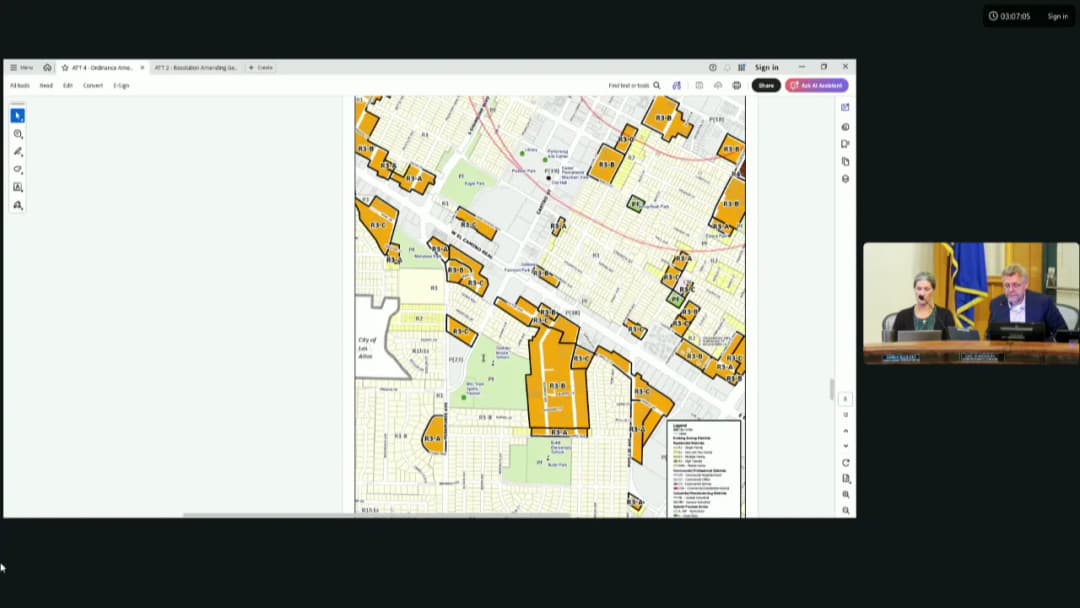
The Mountain View Environmental Planning Commission (EPC) met on October 7, 2026, to consider two major land use items. The Commission unanimously recommended approval of a new ordinance creating zoning incentives for voluntary all-electric construction in single-family and duplex zones. Following a lengthy public hearing and deliberation, the Commission voted 6-1 to recommend the comprehensive R3 Zoning District Update to the City Council, capping a seven-year process covering updates to zoning maps, precise plans, development standards, and a certified Environmental Impact Report (EIR). Consent Calendar - The EPC unanimously approved the meeting minutes from June 17, 2026, and August 19, 2026. Public Comments & Testimony Item 5.1 – All-Electric Zoning Program: - Alex Brown expressed support for electrification but noted mobile home parks remain underserved by such programs. - John Scarborough voiced strong support for the program as a step forward for city sustainability goals. - Alex Omonoro thanked the commission and urged future planning for electric vehicle charging infrastructure in all housing types. Item 5.2 – R3 Zoning District Update: - Manuel Salazar (Silicon Valley at Home) expressed strong support, stating the proposal balances housing needs with preservation and displacement protection. - Katya Kamangar (representing Del Medio Investors) requested the property at 2747 Del Medio Court be zoned R4 or R3C instead of the proposed R3B, arguing the R3B yield of 78 units would be fewer than the existing 85 units, conflicting with “no-net-loss” policies. - Amy Shelton expressed concern that high-density R4 upzoning is disproportionately concentrated in her Escuela Avenue neighborhood, overburdening infrastructure. - Daniel Hulse and Ilya Gurren (Mountain View YIMBY) supported the update but questioned mandatory massing breaks, which they argued can lead to poor design outcomes. - Ken Van B and Richard Wynne (Star Way residents) opposed the proposed upzoning of their street from R2 to R3A, citing potential harm to neighborhood character and low development feasibility. - Kevin Ma (League of Women Voters and as an individual) supported the general update but urged careful review of objective design standards and emphasized preventing unit loss. - Christina Pereira supported pedestrian cut-throughs and ADU restrictions but raised concerns about the concentration of upzoning and impacts of short-term rentals. - David Watson (Mountain View YIMBY) supported the update and suggested allowing uniform decorative styles as an alternative to massing breaks. Discussion Items Item 5.1 – All Electric Construction Zoning Program Amendments Staff presented a voluntary zoning incentive program allowing exceptions to development standards (e.g., 5% FAR bonus, rear/front yard encroachments) for single-family and duplex properties that voluntarily pursue all-electric construction. The program is modeled on a successful Sunnyvale initiative and is designed to comply with state constraints (AB 130) by operating as a zoning incentive rather than a building code mandate. Commissioners praised the “carrot over stick” approach, discussed gas meter removal requirements, and supported tracking the program for future expansion. Item 5.2 – R3 Zoning District Update Staff presented the final recommendations for the multi-year R3 update. Key components included updated development standards for small lots and transition areas, compliance with new state laws (SB 9, Starter Home Revitalization Act), rezoning 14 “change areas” to R4, and amending or repealing several precise plans. The Final EIR identified significant unavoidable cumulative impacts to air quality, greenhouse gas emissions, and transportation, necessitating a Statement of Overriding Considerations. Commissioners engaged in detailed technical discussion on massing transitions, parking minimums, the definition of bay boundaries, and the need for project drop-off zones. Commissioner Subramanian proposed several technical amendments, including reducing parking minimums on small lots, removing green wall requirements in transition zones, and allowing delivery drop-off areas. A straw poll indicated support for the parking and drop-off concepts. Commissioner Cranston voiced general support but raised specific questions about zoning orphans on individual parcels. Commissioner Dempsey requested a transparent rubric for merit-based zoning decisions in the staff report to Council. Key Outcomes - All-Electric Zoning Program (Item 5.1): The Commission voted 7-0 to recommend the ordinance to the City Council. - San Antonio Precise Plan (P40) Amendment: The Commission voted 5-1-1 to recommend the amendment. Commissioner Pham recused herself from this item due to a conflict of interest. - Full R3 Zoning District Update (Item 5.2): The Commission voted 6-1 to recommend the comprehensive package to the City Council (certify EIR, adopt General Plan and Zoning Code amendments, amend the Zoning Map, update seven Precise Plans, and repeal four outdated plans). - Advisory Direction: The Commission directed staff to include an advisory recommendation in the Council staff report regarding the importance of drop-off/pick-up zones and reducing parking minimums on small lots to improve development feasibility.
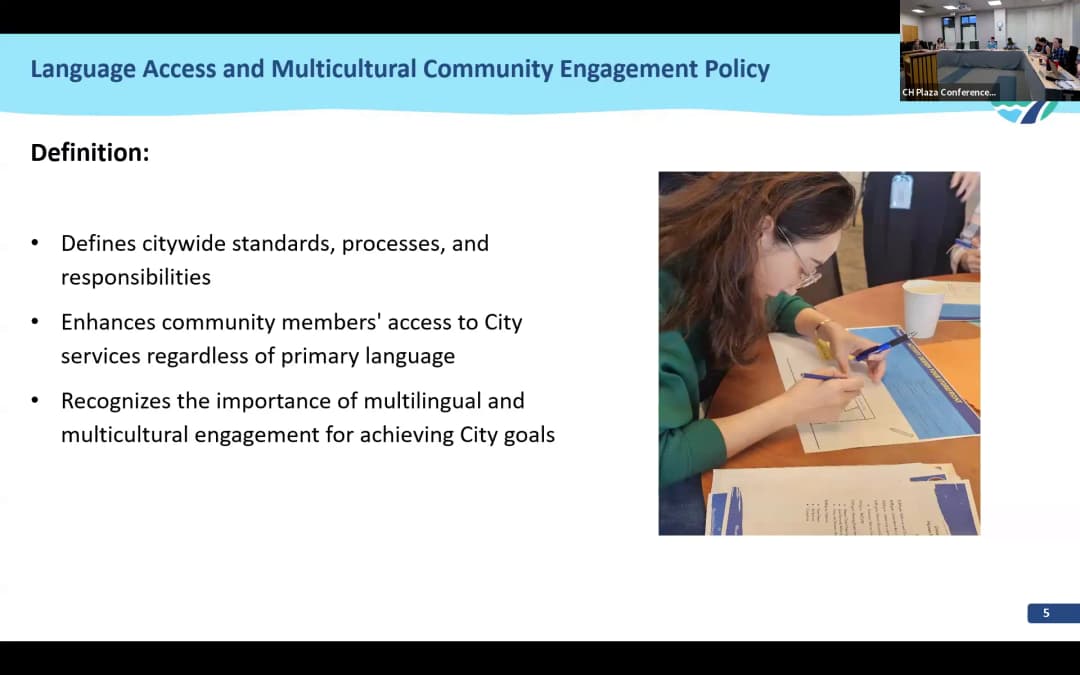
The Mountain View Human Relations Committee (HRC) held a regular meeting on October 2, 2026 (the agenda was originally dated October 1, but the provided timestamp is used per instructions). The committee approved minutes, received updates on LGBTQ+ outreach, Know Your Rights workshops, and the Multicultural Engagement Program (MEP), and made appointments to ad hoc committees for the upcoming fiscal year. Consent Calendar - Approved the minutes from the June 4, 2026 regular meeting. Motion by Commissioner Yan, seconded by Vice Chair Lester. The motion carried by a show of hands. Public Comments & Testimony - No members of the public spoke during Oral Communications or on the MEP presentation. LGBTQ+ Outreach Ad Hoc Committee Update - Commissioners reported tabling at the Mountain View Pride event, which was highly successful in raising awareness of the HRC. The committee plans to organize a future event to support the LGBTQ+ community. Know Your Rights Ad Hoc Committee Update - The committee is working with SALA (Senior Adults Legal Assistance) and the Mountain View Senior Center to host a workshop on senior housing rights and scam prevention, tentatively scheduled for late November 2026. Multicultural Engagement Program (MEP) Informational Update - Community Outreach Coordinator Nancy Duco presented MEP services: in FY 2025-26, the program completed approximately 503 written translations, 120 interpretations, and 31 in-person outreach events. Translation requests were 79 in Spanish, 43 in Chinese, and 4 in Russian. The language access threshold is 1,000 people or 5% of the population speaking English less than very well. MEP contracts with HANA for on-demand phone/video interpretation in 200 languages.A new pilot program uses Wordly AI translation for City Council, Environmental Planning Commission, and Rental Housing Committee meetings, providing real-time translation in 64 languages. Staff are monitoring accuracy and updating glossaries. MEP also operates Chinese and Spanish language academies and community events; the Día de Muertos celebration won a California CAPIO award in 2025. Fiscal Year 2026-27 Work Plan and Ad Hoc Committee Appointments - Staff from the City Manager’s Office presented the carry-forward projects (Civic Participation, Know Your Rights, LGBTQ+ outreach) and new items: an outreach toolkit and community event calendar, a civil discourse workshop with the Dignity Index, a multicultural festival (date moved to May), and attendance at Council Neighborhood Committee (CNC) meetings. A women’s celebration event was deferred. Commissioners volunteered: Vice Chair Lester and Commissioner Yan for the outreach toolkit, Chair Chapman for the civil discourse workshop, and others for the multicultural festival and the October 15 CNC meeting. The Chair will contact absent members about remaining vacancies. Committee/Staff Announcements - Staff announced an updated Board, Commission, and Committee Member Handbook (reduced from 74 pages to a shorter digital version) to be distributed the next day. Commissioner Yan will request a future agenda item to officially note the receipt. Chair reminded about the Día de Muertos celebration (November 7) and the Silicon Valley African Film Festival (October 9 in San Jose). Key Outcomes - Approved June 4, 2026 meeting minutes. - Assigned ad hoc committee members for the outreach toolkit, civil discourse workshop, multicultural festival, and CNC attendance. - Confirmed the Know Your Rights workshop partnership with SALA, targeting late November 2026. - Noted continued monitoring of Wordly AI translation accuracy by MEP staff. - Scheduled the next regular meeting for November 2026 (date not specified).
The Council Sustainability Committee (CSC) met on September 30, 2026, to review and recommend approval of the draft five-year community decarbonization plan "Climate Forward" and the 2024 community greenhouse gas emissions inventory. The committee also discussed reporting frequency for the GHG inventory and heard public comments on sustainability initiatives. Both items were approved unanimously and will be forwarded to the full City Council. Consent Calendar - Approval of Minutes: The committee unanimously approved the minutes of the previous meeting. Public Comments & Testimony - Item 5.1 – Climate Forward Plan: Multiple members of the public spoke. - A representative from GFMV (Carbon Free Mountain View) expressed support for the plan and suggested adding metrics such as jobs-housing balance, vehicle miles traveled, and gasoline sales, and urged tracking the percentage of electrified appliances. - A resident proposed a free bike-share program accessible with a library card, leveraging existing programs at local tech companies. - Bob Mayo urged the city to replace municipal gas water heaters with heat pump water heaters at a rate of 10% per year to build momentum and set an example. - Bruce England (Wisman Station Drive) emphasized collaboration across departments and with the Chamber of Commerce, noted the loss of bike shops, and called for incentives for HOAs and rental properties for heat pump water heaters. - John Scarborough highlighted the importance of affordable housing and equity, especially for renters, and proposed more green streets to encourage walking and biking. - Silja Paymer expressed concern about overemphasis on electric vehicles and urged prioritization of mode shift, e-bike charging, and green complete streets. - Item 5.2 – GHG Inventory: Two speakers commented. - Bruce Courtney urged the city to continue annual inventory reporting, noting that most other Bay Area cities do not report annually. He pointed out that 2023 data were substantially revised after initial reporting and that annual data allows for tracking refinements and recognizing large companies' zero-carbon purchases. - John Scarborough supported annual reporting but suggested a public dashboard to show both short-term changes and long-term trends. Discussion Items - 5.1 – Draft Five-Year Community Decarbonization Plan (Climate Forward): - Staff (Miss Lee and Rebecca Lucky) presented the plan, which includes 29 actions across four focus areas: clean buildings, clean transportation, zero waste, and ecosystem sequestration, plus integrated actions on funding and advocacy. The plan uses an adaptive planning approach, adjusting to changing state/regional policies (e.g., air district rules, REACH codes). Key discussion points: - Committee member Hicks asked about incentives, noting that local incentives have been cut. Staff reported new state and private incentives (e.g., from Rewiring America and Google) and highlighted the city's multifamily EV charger incentive that was fully reserved quickly. - Committee member Schoalter inquired about the municipal decarbonization plan, which is separate and will come to the committee in early 2027. - Discussion on time-of-sale energy evaluations: staff noted that their impact depends on regional rules; if air district rules are delayed, local policies become more valuable. - Members emphasized the importance of collaboration across departments, measuring success with clear metrics, and incorporating public input from letters (e.g., walkability policy, additional actions). - Committee expressed strong support for the plan's adaptive approach and recommended it to council with incorporation of public comments and letters. - 5.2 – 2024 Community Greenhouse Gas Emissions Inventory: - Staff presented the inventory, showing that 2023-2024 average emissions were 33% below the 2015-2019 baseline. Transportation accounts for 61% of emissions, natural gas 21%. On-road transportation emissions declined 37% from baseline, energy emissions declined 68% (largely due to SVCE clean power). Staff asked the committee to accept the inventory and direct staff to explore adjusting the reporting frequency for the inventory. - Committee discussion: Members noted the value of annual data but considered balancing reporting frequency with other climate indicators. They agreed to accept the inventory and direct staff to explore options, including reporting frequency that provides actionable data for policy decisions, and to return to CSC in spring 2027 with the 2025 inventory and analysis. Key Outcomes - Motion on Climate Forward Plan: Approved unanimously to accept the draft plan with direction to incorporate committee and public comments, and to recommend its adoption to the City Council. - Motion on GHG Inventory: Approved unanimously to recommend that the City Council accept the 2024 community greenhouse gas emissions inventory, and to direct staff to explore adjusting the reporting frequency for future inventories, considering public access, council needs, and policy decision-making. Staff will report back in spring 2027. Committee Staff Comments - Chair Schoalter raised the topic of gas-powered leaf blowers. Staff reported on existing efforts: state ban on sale of new gas leaf blowers, a tool lending library at the Day Worker Center, outreach to landscapers, and support for city departments' transition. The committee discussed potential additional outreach (e.g., articles in city newsletters) but did not propose a local use ban. They noted the environmental justice aspects and encouraged hiring from the Day Worker Center. - Staff announced the next CSC meeting on October 14, 2026, which will be a daytime session in a different location to discuss sea level rise and El Niño preparations.