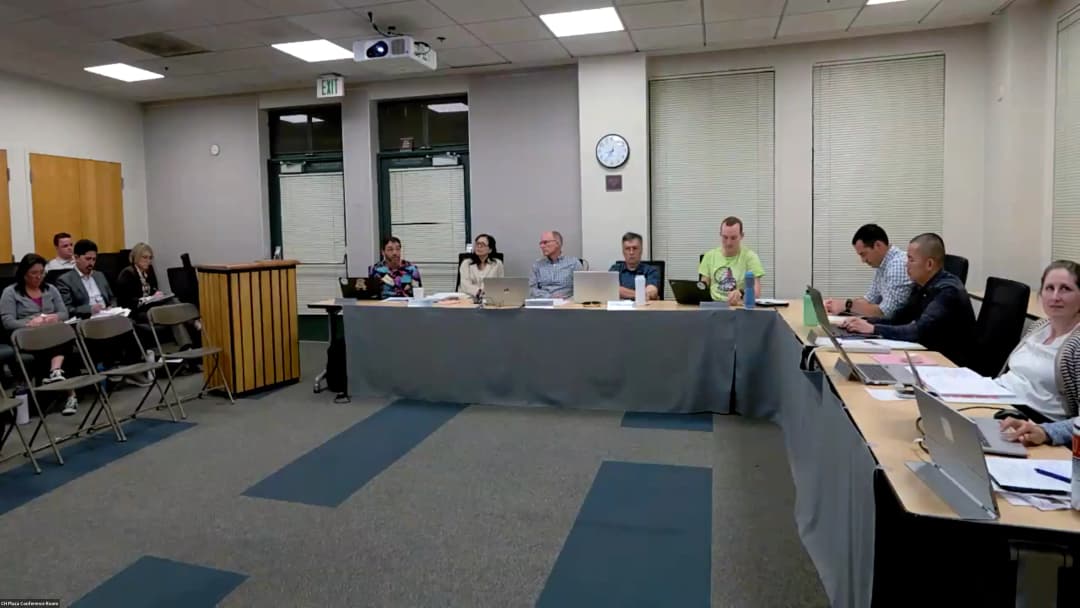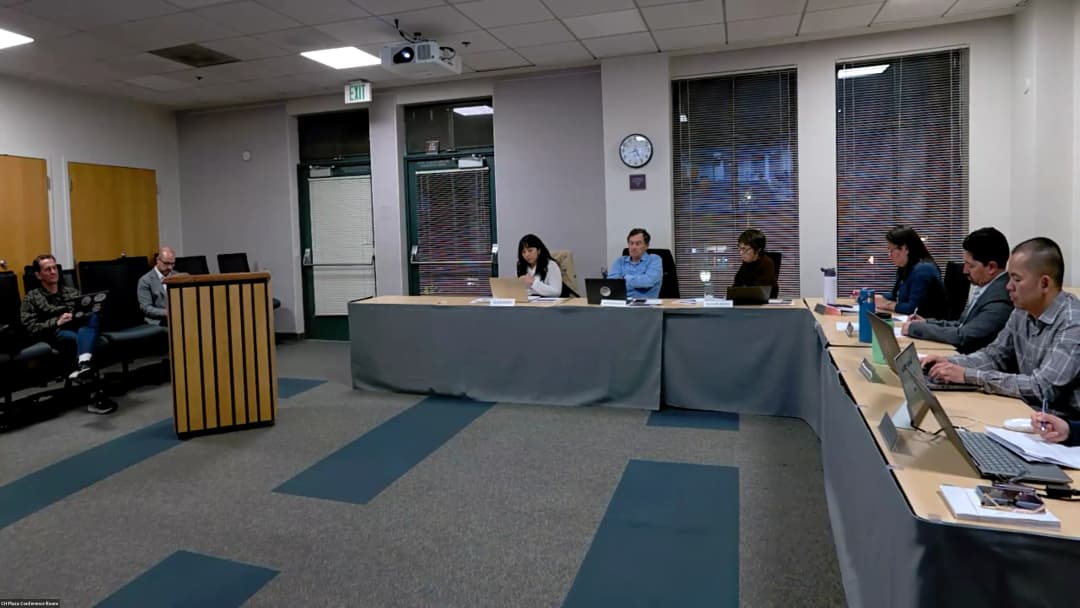
The City of Mountain View Council Transportation Committee met on May 6, 2026 (note: the agenda and minutes list the meeting date as May 5, 2026; the date provided for this summary is May 6, 2026). The committee discussed two major items: a proposed citywide Transportation Demand Management (TDM) ordinance and an update on the Middlefield Road Complete Streets project. The committee voted to recommend the TDM ordinance to the City Council and received information on the Middlefield Road project without taking formal action. Consent Calendar - Approve Meeting Minutes: The committee unanimously approved the minutes from the December 2, 2025 meeting. (Motion by McAlister, second by Kamei; vote 3-0.) Public Comments & Testimony - Item 5.1 – TDM Ordinance: Two virtual speakers commented: - David Watson requested that the parking reduction scaling be addressed administratively, that the "limit parking supply credit" not be contingent on adjacent street parking being metered, and that an enhanced TDM parking exemption pathway be opened for projects under 200 ADT. He also noted that the toolkit still has placeholder core strategies. - Roni Hattrup, on behalf of the Mountain View Transportation Management Association (TMA), expressed concern that the ordinance does not require TMA membership, which could lead to reduced shuttle services and diminished outcomes. She urged the committee to establish a clear path for robust participation, such as a property-based assessment district. - Item 5.2 – Middlefield Road Complete Streets: Numerous public speakers commented, both in-person and virtually. Key points included: - Valerie Fenwick (former BPAC member) urged immediate removal of part-time parking, narrower lanes, and a reduced speed limit. She noted that the road diet on California Avenue has been successful. - Greg Coladonato (Mountain View resident) supported upgrading the bike lane from Class II to Class IV, noted that current bike lane counts are low because it is unsafe, and advocated for a future road diet. - Silja Paymer (GreenSpacesMV) supported a road diet, asked for quick-build options, and noted the irony of encouraging mode shift but not following suit on city projects. - April Webster (GreenSpacesMV) questioned why a non-road diet design was advanced while traffic analysis was done, and noted that MTC indicated the OBAG 3 deadline should not prevent design changes. She also cited NACTO guidelines allowing 10-foot lanes. - Cliff Chambers (Mountain View) advocated for full-time bike lanes, a road diet, and speed reduction. He noted that the corridor is a drag strip. - Jesse (bicycle commuter) supported permanent protected bike lanes and a road diet, and asked for before/after data on previous projects. - Mary Dateo supported lane narrowing to 10 or 10.5 feet to reduce speeding, and suggested a road diet on the overpass. - Tracy (Mountain View) supported safer bike lanes and a road diet, noting that her grandson refuses to bike on the corridor. - Another speaker (Pearl Leeman) urged reconsideration of a road diet, noting that car commuters have alternatives (Central Expressway, 101) but bicyclists do not, and highlighted the pedestrian safety issue on the 85 overpass. Discussion Items - 5.1 – Citywide TDM Ordinance: Staff presented a comprehensive framework to standardize trip reduction targets, monitoring, and enforcement for developments generating 200 or more average daily trips (ADT). The ordinance applies to all land uses, with exemptions for 100% affordable units, very small projects, and patron-driven uses under 100,000 sq ft. Projects must reduce ADT by 20–50% depending on size and type. Committee members discussed parking reductions, the evergreen toolkit, enforcement, and the role of the TMA. Staff clarified that TMA membership is voluntary to avoid legal constraints, but a property-based assessment district is being explored. Committee members expressed support for the ordinance, noting its flexibility and alignment with housing element goals. The committee asked for the ordinance to interface with the Active Transportation Plan. - 5.2 – Middlefield Road Complete Streets: Staff presented the concept design for a Class IV protected bike lane from Moffett to Bernardo. The project is funded by an OBAG 3 grant with a deadline of January 2027. Staff analyzed a potential road diet (reducing from two lanes to one lane per direction) and concluded it would cause significant level-of-service degradation, increased queuing, and reduced capacity, and could delay the project past the grant deadline. Therefore, staff does not recommend a road diet. The project includes removing part-time parking to create full-time protected bike lanes, adding green conflict striping, and ADA upgrades. Committee members discussed the possibility of advancing parking removal before the full project, lane width reductions, speed limit signage, and the need for a "Green Complete Streets" checklist and a "Quick Build" program. Staff noted that parking removal could be done but would require council approval and staff resources. The committee also discussed the need to coordinate with Caltrans on the SR 85 overpass and with VTA/CPUC on the light rail crossing. Key Outcomes - Item 5.1 – TDM Ordinance: The committee voted unanimously (3-0) to recommend that the City Council adopt the ordinance as presented. The ordinance will go to Council for first reading on May 12, 2026, and second reading on May 25, 2026, with adoption anticipated in May 2026 and effective in June 2026. - Item 5.2 – Middlefield Road Complete Streets: No motion was made. The committee received the update and directed staff to: - Explore advancing the removal of part-time parking and converting to 24-hour bike lanes, pending staff resources and council approval. - Consider adding speed limit signage on the corridor. - Continue discussions on a "Green Complete Streets" checklist and a "Quick Build" program, possibly as part of the Active Transportation Plan. - Report back to the committee as the design progresses, including coordination with Caltrans and VTA. - Committee Comments: Member McAlister shared photographs of interesting street designs he observed, and the committee agreed to continue sharing such examples at future meetings.
Public Meetings - Mountain View, California
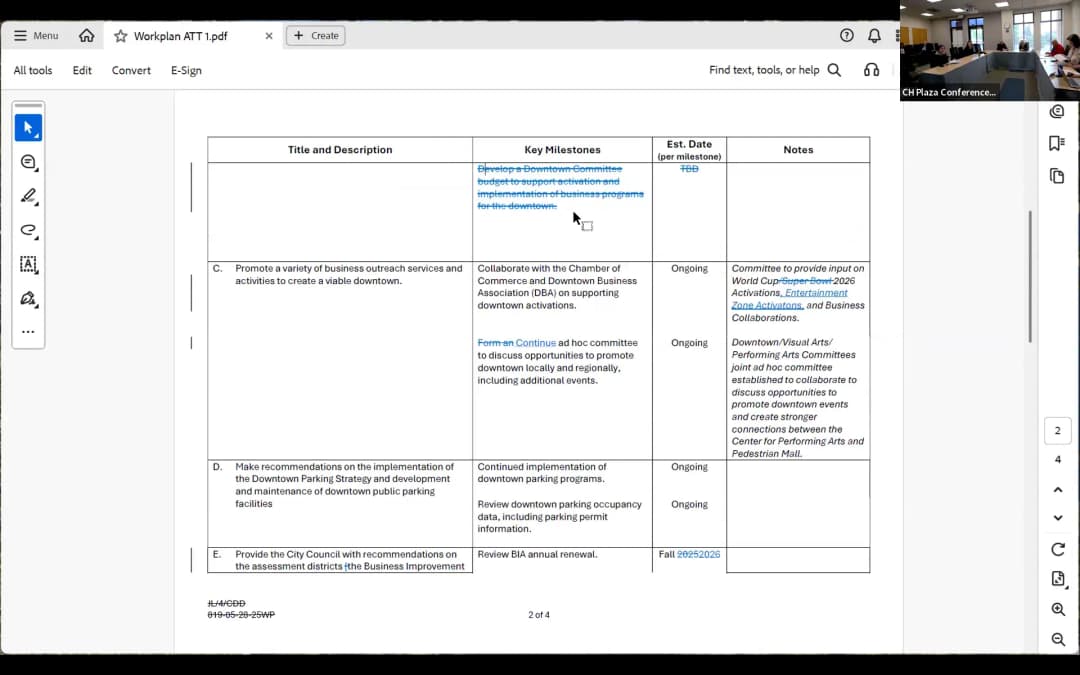
Public Meetings - Mountain View, CaliforniaThe Downtown Committee met on May 5, 2026, to review downtown development projects, updates on Castro Street art and activations, the annual Parking Maintenance Assessment District (PMAD), and the committee work plan for fiscal year 26/27. The meeting included approvals of minutes, staff reports, and a recommendation to the City Council. Consent Calendar - Approved minutes of the previous meeting by unanimous show of hands. Public Comments & Testimony - No members of the public spoke or submitted comments. Discussion Items Downtown Development Update Staff provided updates on several downtown projects. A new residential mixed-use development at 881 Castro Street was recently approved by the City Council (vote of 2-0). The project involves demolishing buildings along Castro Street and closing a street, but will include a walkway and approximately 10,000 square feet of commercial space. Other projects include facade improvements at 185 Castro Street (using a facade grant) and 748 Mercy Street, interior tenant improvements at 250 Bryant Street (new tech tenant Light Matter), and an expansion of ground-floor office at 47 West Dana Street. The M Design project at 16 Castro Street is near completion, with minor facade modifications under review. Principal Planner Diana Pancholi announced that code amendments will be presented to the City Council on May 26, 2026, to introduce an administrative approval process for residential projects using AB 130 CEQA exemptions. The process would include a 10-day courtesy notice to neighbors but no public hearing. Staff is also working on a citywide Transportation Demand Management Ordinance to be presented to Council next week. Castro Street Update Economic Vitality Manager Amanda Rafella reported that the downtown Castro Street bollard art installation is complete, with five artists creating pairs of painted bollards. The bollards have an anti-graffiti coating. The train depot mural is finished, with a ribbon cutting planned for June 11, 2026 at 3:00 PM. Summer of Soccer (rebranded from Fanfest) activations include a foot golf course at Cuesta Park, a mini soccer pitch downtown, and World Cup watch parties on July 18-19, 2026 with an entertainment zone in the 100 and 200 blocks of Castro Street. The watch parties have been approved by FIFA. Other ongoing activations include Music on Castro, Concerts on the Plaza (starting June), and the "don't eat me" pop-up which has been performing well. A new Japanese restaurant, Yakiniku, has soft-opened at 475 Castro Street. Parking Maintenance Assessment District (PMAD) – Annual Approval Staff presented the annual PMAD report for fiscal year 26/27. The district includes 224 property owners and raises $158,000 annually, with assessments based on land use and parcel square footage. The total amount raised remains flat; new development redistributes the assessment but does not increase revenue. The committee discussed parking challenges including lot 12 going offline and construction impacts, and ongoing efforts for wayfinding and shared parking agreements. The committee voted unanimously to recommend approval to the City Council. Committee Work Plan Staff presented a redlined version of the FY 26/27 work plan, removing a separate budget item but adding the entertainment zone and public art strategy. The committee discussed continuing the ad hoc committee for artist collaborations (with plans for two events per year, including a Lunar New Year event), and retaining the downtown parking strategy in the plan. The work plan will be finalized and brought back for adoption at the next meeting. Key Outcomes - Approved minutes of the previous meeting. - Recommended approval of the PMAD for FY 26/27 to the City Council (unanimous voice vote). - Directed staff to return with a final committee work plan for adoption at the June 2, 2026 meeting. - Upcoming City Council meetings: May 12 (PMAD) and May 26 (economic vitality strategy and AB 130 code amendments). - Next Downtown Committee meeting: June 2, 2026 (no meetings in July and August due to Summer of Soccer). - Noted completion of bollard art and train depot mural, with ribbon cutting June 11, 2026 at 3:00 PM.
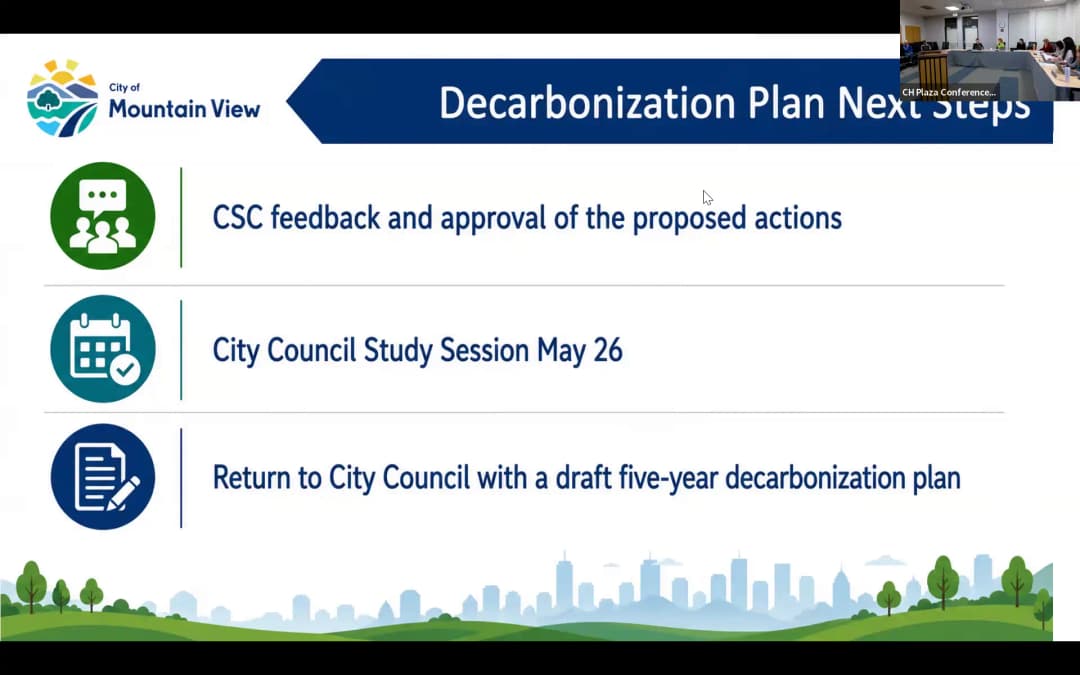
The Council Sustainability Committee (CSC) met on May 4, 2026 to discuss the proposed five-year decarbonization plan, receive public input, and provide staff with direction for an upcoming City Council study session. The meeting included approval of prior minutes, oral communications from residents, and a detailed staff presentation on priority actions for buildings and transportation. Consent Calendar - Unanimous approval of the minutes from the December 1, 2025 CSC meeting. Public Comments & Testimony - Oral Communications (non-agendized): Sophia Yamata, a student at Mona Vista High School, urged the city to implement educational programs on plastic pollution prevention, including storm drain signage, community creek cleanups, and partnerships with schools. The Chair noted existing programs like storm drain stenciling and Valley Water cleanups. - Comments on Agenda Item (Decarbonization Plan): - Mr. Carney argued that as natural gas usage declines, remaining users will face extremely high costs due to fixed overhead, and advocated for an end of gas flow by 2045 to benefit Mountain View residents economically and environmentally. - Mary Dadio praised the Cool Block program for its emergency preparedness benefits and urged the adoption of NACTO road design standards to improve active transportation safety. She also requested support for Bay Area Air District Rule 9-6 (restricting gas-fired water heaters). - Ann Incel asked about electrification of city-owned buildings; staff responded that a municipal decarbonization discussion is planned for fall 2026. - Bruce Nagel recommended including numeric goals and metrics in the plan, along with regular progress reviews, and offered to share a copy of his recent letter to the air district. Discussion Items - Five-Year Decarbonization Plan Presentation: Staff (Ms. Lucky and Ms. Lee) presented the proposed approach and priority actions, building on prior sustainability plans and recent federal policy changes (e.g., revocation of California's Clean Cars Act authority, discontinuation of IRA EV incentives). Key actions included: - Electrification readiness and streamlined permitting for buildings. - Targeted education, outreach, and incentives for low-income households and small businesses. - Piloting neighborhood-scale decarbonization (e.g., natural gas pruning program with PG&E). - Addressing barriers to EV adoption, particularly for multifamily residents, with a goal of providing charging access to 25% of multifamily units (approximately 5,000 units) over five years. - Exploring mobility hubs, zero-emission delivery services, and regional partnerships. - Committee Questions and Feedback: - Members discussed EV charging options (level 1 vs. fast chargers), the impact of rising gas prices on adoption, and the evolution of the Cool Block program. - The committee expressed general support for the plan’s direction and suggested additions: promoting balcony solar, encouraging hybrid vehicles, improving senior Clipper card accessibility, proactive planning for autonomous vehicles, addressing hard-to-electrify groups (seniors, fixed-income homeowners), and including regular performance metrics and celebration of successes. - Several members noted the importance of regional collaboration and continued advocacy at the state and federal levels. Key Outcomes - The committee provided feedback endorsing the overall approach and priority actions for the five-year decarbonization plan, with minor modifications to be incorporated. - Staff will present the proposed plan and committee feedback to the City Council at a study session on May 26, 2026, for confirmation of direction before returning with a formal adoption plan.
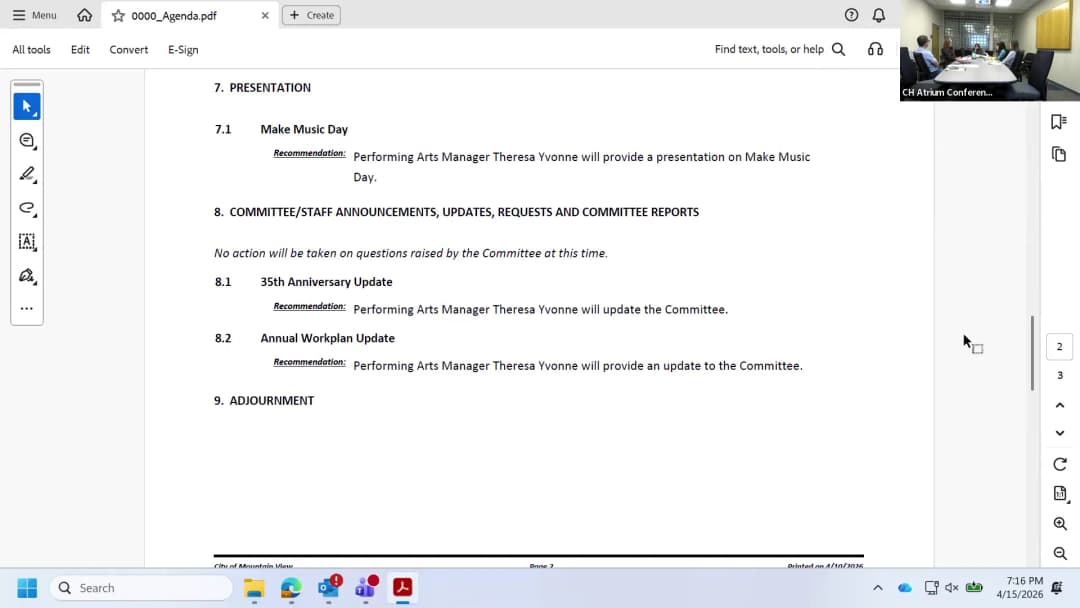
The Performing Arts Committee of Mountain View met on April 30, 2026, at 6:15 PM in the Atrium Conference Room and via video conference. Chair Carol Donahue called the meeting to order at 6:17 PM. Four members were present (Antara Bhardwaj, Irina Crone, David Garcia, Chair Donahue); Vice Chair Valerie Fenwick was absent but later participated virtually as a member of the public. The committee reviewed the third‑quarter attendance report, approved revisions to the SecondStage fee waiver program (renamed the SecondStage Vitality Program), discussed a potential Make Music Day event, and received updates on the 35th anniversary celebration and the annual workplan. Consent Calendar - Minutes Approval (February 25, 2026): Approved unanimously (4‑0) via motion by Garcia and second by Crone. Public Comments & Testimony - Valerie Fenwick (speaking as a member of the public, not as Vice Chair): Expressed strong support for the revised SecondStage Vitality Program, praising its openness and alignment with the reservation timeline. She noted the program’s name better reflects its goal of creating vitality rather than merely waiving fees. Discussion Items - Q3 Quarterly Attendance Report (January–March 2026): Performing Arts Manager Theresa Yvonne reported 9,025 tickets sold (74% attendance) for the Center for the Performing Arts, with 12,023 total attendees including comps. Including Theatre Works Silicon Valley’s production of Percy Felder, the Piano and Me (13,739 tickets, 82% attended), the grand total attendance was 24,535, generating approximately $900,543.84 in ancillary spending. New groups this quarter included iMuses Foundation, Silicon Valley Dance Community Center, Joe Wong stand‑up comedy, and Peninsula Lively Arts. Joe Wong and comedians consistently sell out. The report was received without formal action. - Revisions to SecondStage Fee Waiver Program (SecondStage Vitality Program): The ad hoc committee (members Garcia and Crone) presented a streamlined application process. Key changes: (1) Program renamed from “SecondStage Fee Waiver Program” to “SecondStage Vitality Program”; (2) Eligibility expanded from groups that had never used the venue to any organization or individual; (3) Application timeline aligned with the primary reservation process to avoid leftover dates; (4) Staff will offer an application workshop to improve proposal quality. The committee discussed and refined the application criteria: removed an erroneous “ineligible” line under “Eligibility” (shifting text about fundraisers), clarified that one‑time events and ongoing programs are eligible, and adjusted scoring weights (Organization Background 20 points, Project Narrative 25 points, Project Timeline & Innovation 30 points, Budget 25 points) after debate. A proof‑of‑insurance sample will be added. Recipients must present a final narrative summary in person at a PAC meeting within 90 days of project completion, but initial evaluations will be based only on written applications to avoid intimidating applicants. The ad hoc committee recommended annual reviews and a comprehensive review every three to five years. - Make Music Day Presentation: Theresa Yvonne introduced Make Music Day (June 21, 2026 – summer solstice and Father’s Day), a national community‑run program. San Jose’s model was reviewed, but the committee agreed to postpone an in‑depth conversation until after the 35th anniversary in fall 2026. They will consider adding “investigate Make Music Day” to the workplan for FY 2026‑27, with the goal of potential implementation in 2027. No action was taken. - 35th Anniversary Update: Save the date: Saturday, August 29, 2026, from 4:00 PM to 8:00 PM at the Center. The event will be an open house with rotating music performances on the main stage, second stage, and park stage, cake/cupcakes at 8:00 PM, giveaways, and possibly food trucks. Staff will explore a portable event bar for cocktail service. - Annual Workplan Update: The current workplan will be reviewed at the May 20, 2026 meeting for the upcoming fiscal year. The committee discussed adding a bullet point under “increasing community connections” for Make Music Day investigation. Key Outcomes - SecondStage Vitality Program Approved (4‑0): Motion by Bhardwaj, second by Garcia, to approve staff’s recommendation with the discussed edits (including removing the erroneous eligibility line, adjusting scoring, and adding insurance sample). Staff will present the final version for formal approval at the May 2026 meeting. - Volunteer Usher Dinner: The committee was invited to attend the annual usher appreciation dinner on June 17, 2026, which conflicts with the regular June meeting. The committee will decide at the May meeting whether to cancel or reschedule the June meeting. - Next Meeting: May 20, 2026, at 6:15 PM. Adjourned at 7:41 PM.
The Mountain View Bicycle/Pedestrian Advisory Committee (BPAC) met on April 30, 2026, to discuss the public draft of the Active Transportation Plan (ATP), Middlefield Road Complete Streets project, and appoint a representative to the VTA Bicycle & Pedestrian Advisory Committee. The committee unanimously approved the consent calendar and heard extensive public comment on both the ATP and Middlefield Road. Consent Calendar - Meeting Minutes (February 25, 2026): Approved unanimously via consent calendar. - Fiscal Year 2026-27 Capital Improvement Program (CIP): Approved via consent calendar. The committee supported active transportation projects for inclusion in the city's CIP. - Transportation Development Act Article 3 Funding: Approved via consent calendar. The committee recommended allocating accumulated TDA Article 3 funds to Interim Pedestrian Mall Improvements (Castro Intersections), Project 23-49. Public Comments & Testimony - Active Transportation Plan (Item 6.1): Ten members of the public provided comments, both in person and virtually. Speakers expressed general support for the plan but highlighted implementation gaps, the need for measurable outcomes, adoption of modern design standards (e.g., NACTO, 10-foot lane widths), stronger policies, and better integration with paving plans and safe routes to school. Several speakers urged inclusion of mid-block crossing policies, protected bike lane enforcement, and a progress dashboard. - Middlefield Road Complete Streets (Item 6.2): Eleven members of the public commented. Many speakers criticized the road diet analysis for focusing exclusively on level of service (LOS) and queuing without considering mode shift, demand destruction, safety benefits, or VMT-based analysis. Several advocated for permanent 24/7 bike lanes, a road diet (even partial), and protected intersections. Concerns were raised about pedestrian crossing safety, ADA compliance at curb ramps, and emergency vehicle access. - VTA BPAC Appointment (Item 6.3): No public comment. Discussion Items - Active Transportation Plan—Public Draft (Item 6.1): Assistant Public Works Director Allison Boyer and Tracy McMillan (Nelson Nygaard) presented the ATP public draft. The plan identifies over 100 projects, prioritizes them using criteria based on guiding principles, and outlines policies and programs. Committee members asked clarifying questions on project rescoping from 2023, trail extensions (e.g., Stevens Creek), curb adjustment costs for class IV bikeways, pedestrian walking speed standards, and connectivity issues with existing multi-use paths. Committee members expressed reservations about the policy section being too vague, lacking specific metrics, and not referencing modern design standards such as NACTO or DIB 94. A motion to recommend the ATP to the Council Transportation Committee with a note that BPAC has reservations in the areas of policies, metrics, and standards was made by Member Barton, seconded by Member Stone, and passed unanimously (5-0). - Middlefield Road Complete Streets, Project 22-01 (Item 6.2): Associate Civil Engineer Hoa Nguyen and Adam Merrill (Siegfried Engineering) presented the concept design. The project includes resurfacing Middlefield Road from Moffett to Bernardo, class IV protected bike lanes, and intersection improvements. Staff evaluated a road diet (reducing from two lanes to one lane per direction) and concluded it would cause significant LOS and queuing deficiencies at multiple intersections, potentially impacting emergency response times, and not recommended it. Committee members questioned the traffic analysis methodology (use of LOS instead of VMT, lack of mode shift or demand destruction assumptions), the feasibility of partial road diets, and the need for protected intersections. Several members expressed frustration that the analysis was one-sided. Staff stated that redesigning the project to include a road diet would jeopardize grant funding and the construction timeline. No formal motion was made, but comments will be reported to the Council Transportation Committee. - VTA BPAC Appointment (Item 6.3): The committee considered nominations for Mountain View's representative to the Santa Clara Valley Transportation Authority's Bicycle & Pedestrian Advisory Committee for the term July 1, 2026 – June 30, 2028. Chair Kuszmaul expressed willingness to serve a full term. A motion to recommend Chair James Kuszmaul to the City Council for appointment was made by Vice Chair Bonte, seconded by Member Huang, and passed unanimously (5-0). Key Outcomes - Consent Calendar: Approved unanimously (5-0), including February 25, 2026 meeting minutes, support for CIP projects, and TDA Article 3 funding allocation. - Active Transportation Plan: Recommended to the Council Transportation Committee with a note that BPAC has reservations about policies, metrics, and standards (motion 5-0). Staff will incorporate feedback and return for a final recommendation in August 2026. - Middlefield Road Complete Streets: No formal recommendation made; all comments will be forwarded to the Council Transportation Committee for their May 5, 2026 meeting. The project design will proceed without a road diet to maintain grant deadlines. - VTA BPAC Appointment: Unanimously recommended Chair Kuszmaul for appointment by the City Council (5-0). - Next Meeting: Scheduled for Wednesday, June 24, 2026, at 6:30 p.m., where the committee will review the draft work plan, collision data update, and OBAG4 complete streets checklists.
The Mountain View City Council held a study session and regular meeting on April 28, 2026. The study session focused on the city's draft Biodiversity and Urban Forest Plan, with staff presentations, public comments, and council feedback. The regular meeting included proclamations, consent calendar approval, oral communications regarding the cancellation of Shoreline Golf's annual twilight membership, public hearings on a mixed-use development, the fiscal year 2026‑27 Annual Action Plan, and the issuance of lease revenue bonds for a new public safety building, as well as council committee reports and discussion on RV parking policies. Consent Calendar - Approved the consent calendar unanimously, which included: an ordinance establishing an entertainment zone on Castro Street (Councilmember McAllister recused); a resolution approving a plan of finance for a residential rental project at 1020 Terabella Avenue; a resolution adopting a list of projects for funding from Senate Bill 1 (Road Repair and Accountability Act); a resolution amending conditions for a development at 400 Logue Avenue; an ordinance amending real property conveyance tax provisions; and a resolution ratifying the proclamation of local emergency for the April 24 water main incident in the Cuesta Park neighborhood (added to the consent calendar by a unanimous vote). Public Comments & Testimony - Biodiversity and Urban Forest Plan (Study Session): Nine speakers provided comments. Robert Cox requested faster canopy increases and better creek protection. Shani Kleinhouse (Santa Clara Valley Bird Alliance) praised the plan but urged stronger accountability and adaptive management. Dr. Tracy Faria (biologist) stressed prioritizing native plants and clear metrics. April Webster (Mountain View Coalition for Sustainable Planning) highlighted gaps between policy and implementation, calling for stronger operational language and specific actions on green infrastructure, site triangle standards, and shade requirements for pedestrians and cyclists. Jan Recker and Maureen Blando supported the plan, with Blando suggesting Cuesta Annex as a mini urban forest. Rashmi urged stronger heritage tree protections and native planting. Rodney Fisher (Santa Clara Valley Bird Alliance) endorsed recommendations from Greenspaces/ Bird Alliance letter. Hala Al Sawani asked for a 30% canopy target by 2030 and developer incentives. Jesse Cup and Sherry supported native trees and shade for active transportation. - Oral Communications (Non-Agenda): Nine speakers addressed the cancellation of the Shoreline Golf annual twilight membership program, effective June 30, 2026. All expressed opposition, arguing the program was affordable, built community, and served seniors, Special Olympics athletes, and working families. They requested the council place the issue on a future agenda to study alternatives. One speaker, Curtis Banks, supported staff’s decision to eliminate unlimited weekend play, stating the program subsidized non‑residents. - Public Hearing – Mixed-Use Development (6.1): No public comments were made. - Public Hearing – Annual Action Plan (6.2): Melanie Farr (Upwards) supported continued funding for the Boost microenterprise assistance program for child care providers. Georgia Basile (Senior Adults Legal Assistance) thanked the council for CDBG funding support. - Public Hearing – Lease Revenue Bonds (6.3): Six speakers opposed the bond issuance, arguing funds could be better used for housing, education, and social services. They questioned the necessity of a new public safety building, citing high cost and potential for over‑policing. Discussion Items - Biodiversity and Urban Forest Plan Draft (Study Session): Staff presented the draft plan, which integrates science, community input, and city feasibility. Key components include a vision statement ("Mountain View is a healthy, connected, and resilient community where people and nature thrive together"), four goals (connect people and nature, foster places of refuge, build resilience, activate and collaborate), 25 objectives, targets, and an implementation framework. The plan was shaped by over 1,300 community interactions. Staff highlighted steps already taken after Parks and Recreation Commission and Environmental Planning Commission reviews, including stronger commitment language, an implementation framework, and dedicating staffing capacity. Councilmembers provided feedback: (1) strengthen integration with upcoming objective design standards and roadway standards; (2) make the plan a foundational document guiding city projects; (3) assign a specific staff member to oversee implementation; (4) implement adaptive management with a one‑year community check‑in and reviews every 3‑5 years; (5) emphasize native and locally sourced trees, especially oaks; (6) carefully consider community comment letters; (7) explore volunteer partnerships and a beautification fund; (8) incorporate equity lens; (9) include greening in capital improvement project funding. Staff will bring a revised draft in June 2026. - Proclamations: The council accepted an award of excellence from the California Parks and Recreation Society for the Rengstorff Park Aquatic Center, and proclaimed April as Fair Housing Month and Earth Month. Representatives from Project Sentinel and Canopy spoke. - Mixed-Use Development (843‑903 Castro Street, 700 West El Camino Real, 750 Fairmont Avenue) (6.1): The council held a public hearing and considered a request to build an eight‑story mixed‑use development with 140 residential units (22 affordable), 9,743 sq ft of ground‑floor commercial space, two levels of underground parking, and vacation of a portion of Fairmont Avenue. The project uses state density bonus law. Staff recommended approval. Councilmember McAllister opposed, citing sale of city property and concerns about sunlight and future conversion from rentals to condos. Councilmember Ramirez supported the project, noting affordable moderate‑income units, commercial space, and $4.2 million in unrestricted funds from the street sale. The motion passed 4‑2. - Annual Action Plan FY 2026‑27 (6.2): The council adopted the annual action plan, which allocates CDBG and HOME funds. Staff described a strategy to use prior‑year funds and program income to avoid new federal policy conditions, and recommended one‑time contingency funding from the general housing fund for nonprofit partners. The plan was approved unanimously. - Lease Revenue Bonds for Public Safety Building (6.3): The council held a public hearing and approved two resolutions authorizing the issuance of up to $140 million in lease revenue bonds to fund construction of a new public safety building (total project cost $189 million). The bonds will be repaid over 30 years with annual lease payments of approximately $8.3 million from the general fund, using dedicated revenues (Ameswell property, Measure G) and general fund resources. Standard & Poor’s reaffirmed the city’s AAA credit rating. Both motions passed unanimously. - Council Reports: Vice Mayor Clark raised the upcoming expiration (February 2027) of a settlement agreement related to oversized vehicle parking. After discussion, the council unanimously agreed to direct staff to provide an updated off‑agenda memo with information on current conditions and actions by neighboring cities. Key Outcomes - Biodiversity and Urban Forest Plan: Council provided extensive feedback; revised draft to return for adoption in June 2026. - Consent Calendar: Approved unanimously (entertainment zone item with one recusal). - Oral Communications: The council heard public opposition to Shoreline Golf membership changes; no action taken, but several councilmembers noted the issue. - Mixed-Use Development: Approved (4‑2) with conditions and street vacation. - Annual Action Plan: Adopted unanimously. - Lease Revenue Bonds: Both resolutions approved unanimously (city council and capital improvements financing authority). - RV/Oversized Vehicle Parking: Council directed staff to prepare an updated memo for future discussion.
The Council Appointments Review Committee met on April 28, 2026, at 6:38 PM to review and interview applicants for two vacancies: one on the Downtown Committee and one on the Human Relations Commission. The committee also approved prior meeting minutes. The meeting adjourned at 7:00 PM. Consent Calendar - Approval of November 17, 2025 Minutes: Motion by Council Member Kamei, seconded by Vice Mayor Clark, passed unanimously. Public Comments & Testimony - No public comments were made on non-agendized items. Discussion Items - Interview of Downtown Committee Applicant (Janaid Harashi): The applicant, a downtown business owner, expressed desire to serve to improve downtown and support businesses. He discussed the need for process improvements, easing facade restrictions, and making downtown more lively. He praised staff but noted that businesses feel outreach and speed of process could be improved. - Interview of Human Relations Commission Applicant (Mary): The applicant, a former Downtown Committee member, shared her experience and highlighted pressing human relations needs including protecting immigrant communities and increasing Asian American civic participation. She stated she would focus on completing the current work plan for the remainder of the term (expiring December 2026). Key Outcomes - Motion to Recommend Appointments: Vice Mayor Clark moved to recommend that the City Council appoint Mary to the Human Relations Commission for the unexpired term ending December 31, 2026, and appoint Janaid Harashi to the Downtown Committee for one of the two unexpired terms ending December 31, 2028. Council Member Kamei seconded. The motion passed unanimously. - The committee's recommendations will be considered by the City Council at its May 26, 2026 meeting. Note: The transcript contains some confusion regarding the applicant's name for the Human Relations Commission; the interview was introduced as "Mary" but later references are unclear. The name used in the motion is transcribed as "very end," which may be a mishearing.
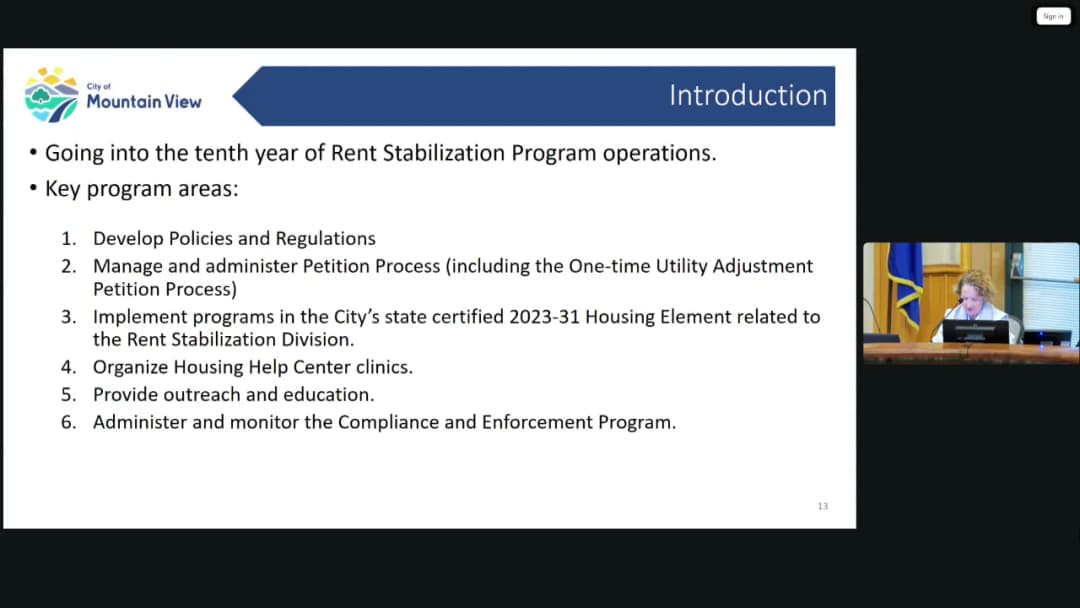
The Rental Housing Committee held a regular meeting on April 23, 2026, to discuss the recommended budgets for the Community Stabilization and Fair Rent Act (CSFRA) and Mobile Home Rent Stabilization Ordinance (MHRSO) for fiscal year 2026-27, adopt the annual general adjustment (AGA) of rents, and elect a new chair and vice chair. The committee also heard public comments and received updates on workshops and the one-time utility adjustment petition process. Consent Calendar - Approved unanimously the consent calendar, including the minutes from the February 26, 2026 meeting. Public Comments & Testimony - David Tang, a Mountain View resident of 10 years, expressed concerns about the low rate of petition resolutions. He noted that out of 613 tenant contacts with the division, only 44 became petitions, and 21 reached resolution (approximately 3%). He highlighted the case of 620 Alamo Court where the landlord offered $73/month for loss of amenities but the hearing officer found a reduction of $352/month, nearly five times higher. He urged the committee to investigate the "missing data" of complaints that never become petitions. - During the budget item, a member of the public asked staff why petitions declined in the past year and what the average cost per petition is. Staff did not have the data available at the meeting. - During the AGA item, a member of the public asked about the definition of "substantial compliance" and noted that the burden remains on the tenant to file a petition. Another speaker expressed concern about affordability for new tenants moving into the city. Discussion Items Fiscal Year 2026-27 Recommended Budgets - Staff presented the draft budgets for the CSFRA and MHRSO programs. For CSFRA, recommended revenues of $2.062 million (up $192,000 from FY 2025-26) and expenditures of $2.6 million (up $1,108; the specific increase may be a transcription error). The estimated actuals for FY 2025-26 show revenues of $1.84 million and expenditures of $2.11 million, with savings from lower hearing officer costs and salary vacancies. The recommended annual fee for CSFRA is $142 per unit ($11.92/month), an increase from prior years as the beginning balance is declining. For MHRSO, recommended revenues of $225,300 and expenditures of $281,000, with a proposed annual fee of $140 per year ($11.83/month), the same as last year, subsidized by $50,000 from the city general fund to achieve a 50% fee reduction. - Committee Member Bulch asked about the difference between the adopted budget and actuals, and staff explained it was due to reduced hearing officer services. Member also questioned the 16% increase in city administration costs, which staff attributed to a five-year rolling average of actual expenditures, including past staffing increases for registration and fee collection. Vice Chair Cox asked about hearing officer compensation updates and capital outlay for database improvements. Staff confirmed the COLA was applied and that further database features are pending staffing availability. - Committee Member Brown expressed support for the budget, noting that the initial higher fees allowed a reserve that has now been drawn down, and the current fee is still lower than the initial fee. Adoption of Annual General Adjustment (AGA) for 2026-27 - Staff recommended setting the CSFRA AGA at 2.5% and the MHRSO AGA at 1.5%, effective September 1, 2026 to August 31, 2027. The calculations are based on the CPI-U for the San Francisco area, with a floor of 2% and ceiling of 5% for CSFRA, and no floor and ceiling of 3% for MHRSO. The committee adopted the resolution unanimously. Election of Chair and Vice Chair - Member Brown nominated Vice Chair Robert Cox for Chair and Member Statsop for Vice Chair. Both accepted, and the motion passed unanimously. The new terms begin May 2026. Key Outcomes - Approved the consent calendar (unanimous). - Reviewed and provided feedback on the FY 2026-27 budgets; the budgets will be formally adopted at the next meeting. - Adopted the resolution for the annual general adjustment of rents: 2.5% for CSFRA and 1.5% for MHRSO (unanimous). - Elected Robert Cox as Chair and Member Statsop as Vice Chair for the term May 2026 to April 2027 (unanimous). - Heard a staff update on the one-time utility adjustment petitions: 85% of properties have submitted petitions; 65% of properties do not use RUBS; 5% of petitions are completed, 5% in process, and 10% in queue. No appeals are currently in process.
The Environmental Planning Commission (EPC) met on April 15, 2026 at 7:00 PM with six commissioners present (Commissioner Dempsey absent). The meeting covered two major agenda items: zoning code amendments to enable streamlined administrative approval for housing projects under AB 130, and a draft citywide Transportation Demand Management (TDM) ordinance presented as a study session. Discussion Items - Item 5.1: Zoning Code Amendments for AB 130 Streamlined Approval – Staff recommended an administrative (not ministerial) approval process for qualifying housing projects to comply with AB 130’s accelerated timelines. Commissioners questioned the lack of a ministerial pathway and the timeline for developing objective standards. Staff explained that a ministerial process is not yet feasible due to ongoing work, with completion likely beyond 2026. Commissioner Gutierrez expressed full support, noting efficiency and alignment with housing element goals. Commission voted unanimously to recommend council adoption with a minor correction (strike-through of small animal keeping from agricultural uses). - Item 6.1: Transportation Demand Management Ordinance – This was a study session. Staff presented the draft ordinance applying to projects generating 200 or more net new average daily trips (ADT), requiring trip reductions of 20% to 50% via a TDM toolkit. Exemptions include patron-driven uses under 100,000 sq ft and 100% affordable housing. Commissioners provided feedback: concern about cost burdens on large residential projects potentially triggering density bonus concessions; requests to explore tiered parking reductions as auxiliary strategies, recognition of mixed-use internalization of trips, and a call to assess how existing projects have used concessions on TDM. No vote was taken; staff will forward feedback to the City Transportation Commission and City Council. Key Outcomes - Unanimous approval (6-0) of the January 7, 2026 meeting minutes. - Motion passed unanimously (6-0) to recommend City Council adopt the AB 130 zoning amendments with the small animal keeping correction. - Staff received four main guidance areas for further TDM toolkit development: (1) explore tiered parking reduction incentives tied to transit proximity, (2) quantify trip internalization for mixed-use projects, (3) assess and address vulnerability to density bonus concessions, and (4) evaluate the nonlinear ADT reduction thresholds (e.g., 30% for 999 ADT vs. 40% for 1,000 ADT). - Next EPC meeting: May 6th tentatively canceled; next confirmed meeting June 17th for the EPC work plan.
Overview The Mountain View City Council held a regular meeting on April 14, 2026, starting at 5:03 PM. The meeting included a study session on the Fiscal Year 2026-27 Capital Improvement Program, presentations on proclamations and a VTA regional transportation measure, approval of the consent calendar, a public hearing on the Public Safety Building financing plan, and a preliminary review of the FY 2026-27 budget. The council also heard extensive public comments on burrowing owl conservation and Twilight golf memberships. Key actions included support for the CIP staff recommendations with direction to defer the Terabella bikeway project pending resources, approval of a 25.5 million dollar transfer from Shoreline funds for the Public Safety Building, and acceptance of the preliminary budget with a directive to review council travel/training expense allocations. Consent Calendar - Item 4.1: Zoning map amendment for properties at 922-950 San Leandro Avenue from M General Industrial to R3-1.5 Multiple Family Residential, as recommended by the Environmental Planning Commission. - Item 4.2: Resolution acknowledging receipt of the Mountain View Fire Department's annual inspection report under Health and Safety Code Section 13146.4. - Item 4.7: Introduction of an ordinance establishing an entertainment zone on portions of Castro Street consistent with Senate Bill 969, with second reading scheduled for April 28, 2026. - Item 4.3: Approval of a professional services agreement for biological services at Shoreline Park, including funding for scientific monitoring and banding of burrowing owls. Numerous public speakers urged the city to expedite hiring a full-time biologist rather than relying on consultants, citing a 41% decline in owl numbers. The council approved the consent calendar unanimously, with staff indicating they would work to fill the biologist position as soon as possible and update the 2012 Burrowing Owl Preservation Plan after state endangered species listing decisions. Public Comments & Testimony - Burrowing Owls (Item 4.3): Over 20 speakers, including members of the Santa Clara Valley Bird Alliance, Sierra Club, and local residents, expressed strong support for burrowing owl conservation. They noted that the population had dropped from 27 to 16 breeding pairs in one year after the removal of a full-time biologist. Speakers urged immediate hiring of a dedicated biologist, implementation of captive breeding, supplemental feeding, and habitat management consistent with the 2012 preservation plan. Aisha Thiessen from the Guardian Project detailed that the current contract costs $345,000 for monitoring alone, while the former full-time biologist cost $165,000 and provided comprehensive conservation. The council acknowledged the urgency and directed staff to expedite hiring. - Twilight Golf Memberships (Oral Communications): Six speakers, including John Shachter and others, criticized Kemper Sports' decision to cancel Twilight annual memberships at Shoreline Golf Links. They stated the program provided affordable access for a diverse community and noted the course reported a $345,000 profit in 2025. They asked the council to intervene and preserve the membership option. No action was taken as it was non-agenda, but the issue could be brought up under item 8. - VTA Regional Measure (Presentation): Multiple speakers, including Jim Zayorski, April Webster, Bruce England, and Adina Levin, emphasized the need for frequent, reliable transit service, better connectivity to employment centers, and equitable outreach. They supported funding operations over capital projects and encouraged a regional approach. - Public Safety Building (Item 6.2): Jim Zayorski questioned the cost estimate, expressing concern about potential overruns. Tim McKenzie urged reducing the building's footprint and scope, citing changes in conditions and the dissolution of the Public Safety Advisory Board. Discussion Items Fiscal Year 2026-27 Capital Improvement Program (Study Session) Public Works Director Jennifer Ng and Senior Civil Engineer Joy Houghton presented the draft CIP, which includes 290 active projects, a pavement condition index of 67 (fair), and planned paving expenditures of over $62 million from 2024-2027. Key recommendations included 21 non-discretionary projects, 22 discretionary projects (with Crittenden Field and Fire Station Master Plan as high priority), and 12 deferrals due to staffing or funding constraints. The presentation also highlighted a new Transportation Division, updates to standard roadway details, and the Active Transportation Plan community review starting in April 2026. Council members expressed support for the staff recommendations, with several calling for a community conversation on artificial turf and deferring the Terabella bikeway project due to limited transportation planning staff (three of five positions vacant). The council directed staff to defer Terabella pending resources but not eliminate it, and to plan a community discussion on artificial turf. VTA Regional Transportation Revenue Measure (Presentation) Greg Richardson and Sam Sargent from VTA presented the draft Local Investment Plan for a potential five-county regional sales tax measure (SB63) on the November 2026 ballot. The measure would generate approximately $264 million annually for Santa Clara County, focused on transit operations and roadway repavement on routes served by fixed-route transit. The plan is organized around three strategic areas: Foundation (bus corridor improvements, station upgrades), Reimagine (visionary network, increased service frequency, fare programs), and Transformation (new technologies, light rail fleet replacement). The council expressed interest in providing formal feedback and discussed opportunities for local priorities such as community shuttle funding and grade separation projects. Councilmember Kamei asked about multilingual outreach; VTA staff committed to improving language access. Public Safety Building Construction Financing Plan (Item 6.2) Assistant City Manager Arn Andrews presented the financing plan for the $189.8 million Public Safety Building. Staff recommended using $135 million in bond proceeds, $26.5 million from the public safety reserve, $16.3 million from CIP funds, and a transfer of $10 million from Shoreline Regional Park Community funds. Based on a cost allocation study showing police and fire department use of Shoreline amenities, staff suggested the council could increase the Shoreline transfer to $25.5 million (13.5% of proceeds) to provide additional contingency. Councilmember Ramirez made a motion to adopt the staff recommendation with the higher $25.5 million transfer, which was seconded and passed unanimously. The council also approved a $2 million general fund transfer to the Public Safety Building reserve. The bond documents will be considered for approval on April 28, 2026. Preliminary Review of FY 2026-27 Recommended Budget (Item 6.3) Finance Director Derek Rampone presented the preliminary budget, projecting a balanced general fund with a small operating balance of $172,000 for FY 26-27, but deficits in future years (up to $3.4 million in FY 28-29). Revenue growth is moderate, with property tax expected to increase 3%, sales tax 2.4%, and Measure G (property transfer tax) projected at $5.1 million. Staff recommended adding a principal planner position and several other positions. Council discussed risks including a proposed statewide ballot initiative that could cost Mountain View $10-15 million annually in property transfer tax revenue. Councilmember McAllister proposed reviewing the 20% general fund reserve policy to free up funds for projects, but the council agreed to defer that discussion to a later time after the bond financing is complete. A straw poll to move $100,000 from sustainability projects to street maintenance failed. The council accepted the report and advanced the staff recommendations, with a directive to review council travel and training expense allocations that have not been adjusted since before the pandemic. Key Outcomes - CIP: Council supported staff recommendations for the draft FY 2026-27 CIP, with direction to defer the Terabella bikeway project pending adequate staffing and resourcing, and to initiate a community conversation on the use of artificial turf in parks. - Consent Calendar: Approved unanimously, including the burrowing owl biological services contract. Staff committed to expediting the hiring of a full-time biologist. - Public Safety Building Financing: Approved unanimously with a $25.5 million transfer from Shoreline Regional Park Community funds (amended from $10 million) and a $2 million general fund transfer. Bond documents to be reviewed April 28. - FY 26-27 Budget Preliminary Review: Council accepted the report and directed staff to include adjustments to council travel/training expense allowances to reflect current costs. The budget will be published in late May with a public hearing on June 9 and adoption on June 23, 2026. - VTA Local Investment Plan: Council will work with staff to develop a list of local priorities for VTA and may consider a formal resolution before the June 4, 2026 board vote. - Council Questions Process: Councilmember Ramirez raised concerns about the volume of staff time spent answering advance questions (over 700 since September 2025). The city manager will work with her team to propose streamlined processes for consideration by the council.