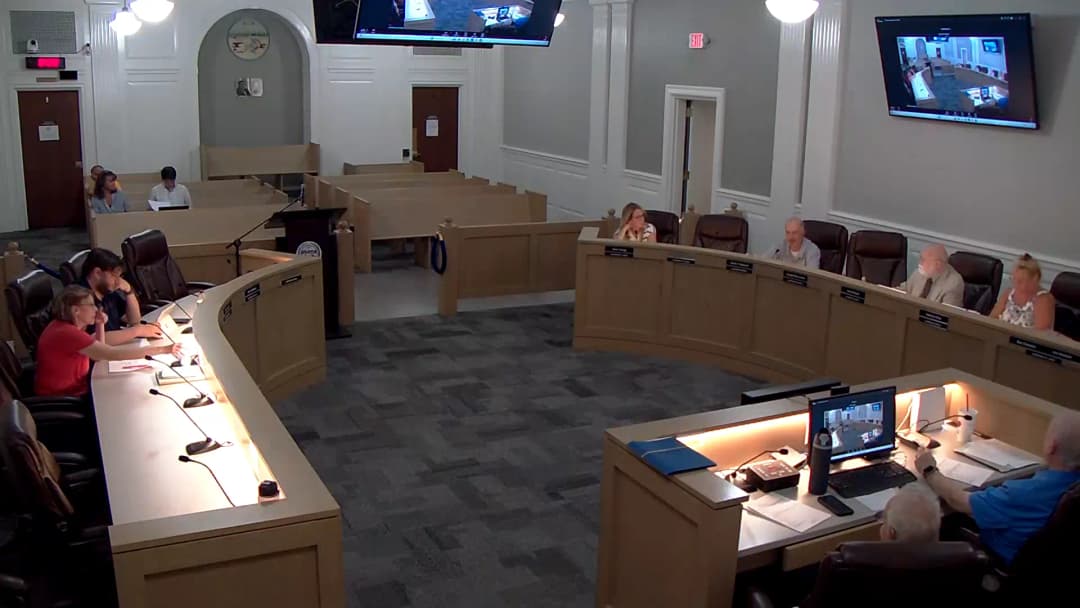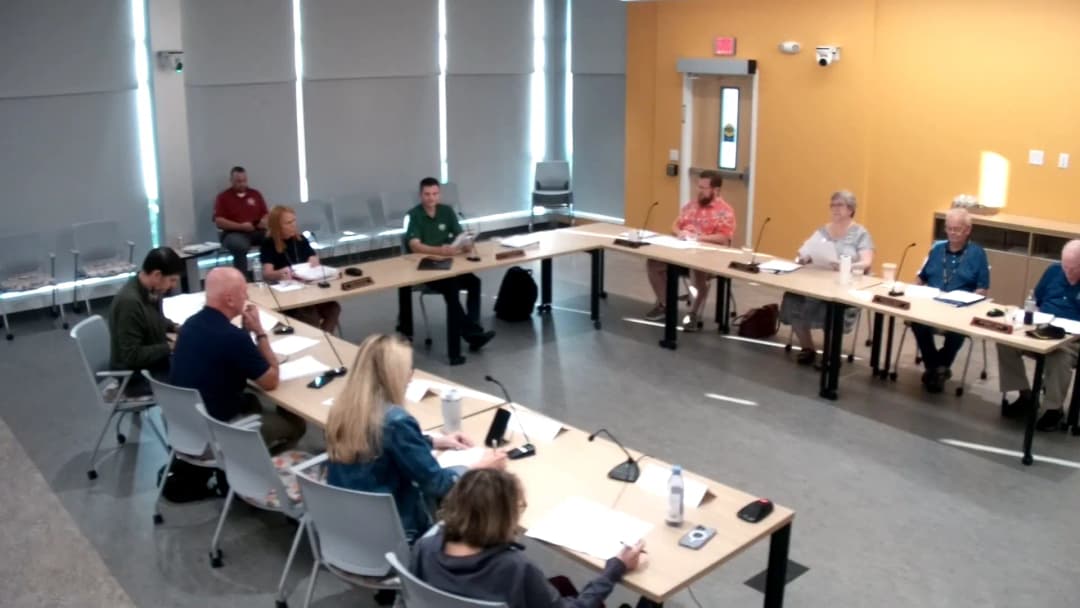
The joint meeting of the Committee on Infrastructure and the Board of Public Works was convened on Thursday, August 27, 2026 at 5:50 p.m. at 848 West Hollis Street in Nashua, New Hampshire. Roll call was taken; members present included Alderman Paula Johnson, Alderwoman Benja Flotta Smith, Commissioner Paul Shea, Commissioner June Lemon, Commissioner Matthew Gregg, Commissioner Manny Speedia, Alderman Richard Dowd, Alderman at Large Alicia Gregg, and Alderman at Large Michael O'Brien. Also in attendance were Administrative Services Director Tim Cummings, Public Works Director Photo, Left Field Project Manager Joe Sullivan, and Matt LeBlanc. No members of the public were present for public comment, which was opened and closed without testimony. Consent Calendar - Approval of Minutes: The minutes of the May 28, 2026 meeting were approved unanimously by voice vote. - Approval of Invoices: Three invoices were approved unanimously: Left Field services through May 31, 2026 (No. 193097, $15,000); Left Field services through June 30, 2026 (No. 953443, $15,000); and HKT Architects services through June 30, 2026 (No. 0010-02242, $258,316.21). Discussion Items - DPW Garage Project – General Progress Update: Joe Sullivan of Left Field reported that the design team has issued approximately 98% complete drawings for pricing to the construction manager (CM). Several addenda have been issued for clarification. A Guaranteed Maximum Price (GMP) is anticipated within the next few weeks to finalize the budget. The construction budget is approximately $43 million, with a total project budget of $54 million. Permitting is underway, and coordination with the fire training facility relocation and the solid waste facility (Sandboard Head and IMAG) is ongoing. Testing agencies are being solicited for compaction, concrete testing, and structural steel inspections. Alderman Dowd asked about design changes potentially increasing costs; Sullivan and Cummings clarified that no accepted changes have increased the program budget and that the iterative process is clarifying expectations without scope increases. - Fire Training Facility Relocation: Alderman Johnson asked about the exact location on site and whether the pipe work through Teak Drive has reached the landfill area. The Public Works Director confirmed the location and that the pipe has hit ledge, requiring excavation. Johnson clarified to concerned residents that the widened area is due to equipment access, not a road. - Approval of Contract Amendment for Left Field OPM Services: Director Cummings introduced an amendment for owner’s project manager (OPM) services through October 2026 in the amount of $101,060 (not to exceed). Joe Sullivan explained the $16,000 difference from the original $85,000 coverage was due to added services: a third-party cost estimate during feasibility, an exterior building envelope study of the maintenance facility, and underground drainage proposals for the new perimeter. The motion to approve was made by Alderman Gregg and passed unanimously. Key Outcomes - Votes: All motions (minutes approval, invoice approvals, and OPM amendment approval) were passed by voice vote with no recorded opposition. - Schedule for Next Meeting: The next joint meeting was set for October 22, 2026 at 5:30 p.m. at the same location (848 West Hollis Street). - Bond Resolution Timeline: Tim Cummings outlined the plan: introduce the bond resolution at the next Board of Alderman meeting; hold a public hearing on September 28, 2026 (during the budget review meeting); seek final approval by the Board of Alderman in the first meeting of October. Cummings also flagged the need for a potential joint meeting in late September to approve the GMP, conditioned on bond approval, to keep the project on track for an October construction start.
Public Meetings - Nashua, New Hampshire
Public Meetings - Nashua, New HampshireThe Nashua Zoning Board of Adjustment (ZBA) met on August 26, 2026, at 01:58:59 UTC. The meeting was chaired by Jay Mankara, with Vice Chair Josh Neely, members JP Boucher, Steve Lionell, and Joe Petrie present. Planning Manager Sam Durfee also attended. The board considered five applications: one for a self-storage facility (denied), one for a three-family conversion (approved), one for a swimming pool (approved), one for a retaining wall (approved), and one for auto sales at a repair shop (approved). Public testimony and letters were received, and the board also discussed transitioning to digital meeting materials. Public Comments & Testimony - Alderman Johnson spoke in opposition to the self-storage facility at 34 Buckmeadow Road, arguing it is out of character with the neighborhood and would harm wetlands and wildlife. She urged denial. - Gloria McCarthy (65 Musket Drive, 46-year resident, Conservation Commission member) opposed the self-storage variance, stating it would bypass zoning protections and that the property can be used for residential purposes as zoned. - Sherry Dutzey (18 Sport Terrace, Conservation Commission chair, lone dissenting vote) opposed the project, citing wetland sensitivity, increased impervious surface, potential for hazardous storage, and that the four buildings represent a substantial change. - Jessica Taylor (33 Gilson Road) opposed, citing character conflict, uncontrollable litter, noise, and wildlife impacts. - Heather Shaves (18 Twilight Drive) opposed, noting rodent concerns, past low-traffic use of the existing facility, and incompatibility with the area. - Frederick and Mary Lewis (26 Conant Road) submitted a letter in support of the retaining wall variance, stating it is necessary due to steep topography and that it increases property values. - Mike and Kathy Giacomukis (5 Crown Street) submitted a letter stating no objection to the auto sales variance provided no vehicles park along Crown Street except for church on Sundays. Discussion Items - Case 1: Salt Creek Properties LLC – 34 Buckmeadow Road – Request for a use variance to allow a self-storage facility in the R40 zone and a special exception for wetland/buffer impacts. The applicant proposed replacing an existing 19,500 sq ft warehouse with four buildings totaling 20,525 sq ft, reducing buffer impacts and improving stormwater management. The Conservation Commission gave a favorable recommendation with conditions. Public opposition was extensive. The board deliberated and found the variance failed on hardship and character grounds; the special exception failed on traffic and safety concerns, particularly due to proximity to a middle school and lack of sidewalks. - Case 2: 230 Pine Street LLC – Request to renew a previously approved variance to convert a two-family dwelling into a three-family by finishing attic space. The applicant stated the property was sold and taxed as a three-family, but no building permit was applied for. The board approved, noting no change in character. - Case 3: Carolyn Russell – 9 Huey Street – Request to exceed the maximum accessory use area (59% vs. 40% permitted) for a swimming pool. The applicant noted a large lot with a small house. The board approved, finding it a reasonable use and no adverse impacts. - Case 4: Robert Champagne – 22 Conant Road – Request to allow a retaining wall up to 9 feet in height (6 feet permitted). The wall was already built; the applicant argued steep topography required it. Abutters supported the variance. The board approved, noting the wall is necessary and improves safety. - Case 5: Dream Homes Corp – 93 East Hollis Street – Request to sell automobiles at an existing auto repair shop. The board first determined a variance is required because auto sales are a distinct use from repair. The applicant cited a state law change reducing business and argued the lot cannot be expanded. The board approved, finding the use consistent with the area's diverse character and hardship due to the property's unique location and history. Key Outcomes - Variance for self-storage (34 Buckmeadow Road) – DENIED (4–1, Boucher dissenting). The board found it contrary to public interest, inconsistent with the spirit of the ordinance, and no unnecessary hardship. - Special exception for self-storage (34 Buckmeadow Road) – DENIED (4–1, Boucher dissenting). The board cited undue impairment of pedestrian safety and impairment of neighborhood character. - Variance for three-family conversion (230 Pine Street) – APPROVED unanimously. The board found the use consistent with the neighborhood and no hardship. - Variance for swimming pool (9 Huey Street) – APPROVED unanimously. The board found the lot/house ratio justified the variance. - Variance for retaining wall (22 Conant Road) – APPROVED unanimously. The board found steep topography created hardship and the wall improves safety. - Variance for auto sales (93 East Hollis Street) – APPROVED unanimously. The board found hardship due to zoning confluence and state law changes, and no impact on public interest. - The board also discussed future digital delivery of meeting materials and a presentation on the new zoning code at the next meeting.
This special meeting was called to discuss and advance plans for a resource center to serve Nashua’s unhoused population. The meeting began with a prayer, roll call (15 aldermen present, one remote), and the introduction of the new HR manager, Michelle McGonagall. The primary agenda item was a presentation by Director of Public Health Bobby Bagley and Housing Services Officer Jessica Connors on the proposed resource center, followed by extensive board discussion and a unanimous vote to proceed with a federal grant application. Consent Calendar - Communication from President Lori Wilshard regarding calling the special meeting was accepted and placed on file without objection. Discussion Items - Introduction of HR Manager: Director Tim Cummings introduced Michelle McGonagall as the new HR manager, emphasizing the role’s importance and noting she joined the city about a week prior. McGonagall briefly welcomed the board. - Resource Center Presentation (Director Bagley & Officer Connors): - Provided end-of-year data on community health worker services: 860 client interactions, 91 mental health referrals, 14 job placements, 137 housing applications assisted, 69 housing placements (51 apartments, 5 permanent, 3 transitional, 1 assisted living, 1 safe haven). - Current operations at 18 Mulberry Street lack adequate space for private meetings; the resource center aims to centralize services. - Proposed services: housing navigation, emergency shelter referrals, substance use and mental health treatment, vital records assistance, benefits applications. - On-site amenities: showers, laundry, computer/internet access; daytime resource center (9am-4pm, 7 days/week) that can convert to an overnight warming station (7pm-7am) servicing 40-50 guests (based on prior winter experience and fire code capacity). - Transitional housing: 6-8 units on site, to be managed by a contracted property management firm. - Staffing: community health workers, two part-time hires for weekends, volunteer support, and on-site partner engagement (no formal MOUs yet, but verbal commitments from mental health and other organizations). - An interim “proof of concept” center with a downtown partner is set to launch in September 2026. - The city was awarded a $1.2 million congressional directed spending (CDS) grant (originally requested $3.6M) but must submit an updated application by October 15, 2026, specifying how the funds will be used. The board’s consensus on scope and priorities is needed to proceed. - Director Cummings proposed a feasibility study (approx. $20k per phase, two phases, total $40k) to develop a program, engage stakeholders, and determine square footage and costs over an 8-week period beginning in September. - Board Questions & Comments: - Alderman Keeble asked about the 40-50 person capacity (not wanting to attract more unhoused from other regions) and partner commitments; Bagley explained that the size is based on documented local need and that partners are ready to provide services on site without committing formal staffing yet. Keeble noted that a resource center is “one tool” and housing is the ultimate solution. - Alderman Dowd raised concerns about funding, 24/7 staffing/security, overtime costs, and the need for a long-term financial plan. Connors clarified that operating expenses are already in the public health budget, part-time staff will reduce overtime, and property managers are not on-site 24/7. Dowd stressed the need for vetting residents. - Alderman Senate sought clarity on the grant application’s required specificity; Bagley and Connors explained that the application must describe how the $1.2M will be used (e.g., land acquisition, building purchase, construction) but does not require an exact address. The board’s approval is needed before submission. - Alderman Johnson questioned the feasibility study cost ($40k) and compared the resource center to existing nonprofit programs like Revive. Bagley distinguished the city’s safety-net role and noted that community health workers refer individuals to supportive services. Johnson also asked about the building size; Bagley said a feasibility study would determine that, referencing 14 Mulberry Street as too small for all components. - Alderwoman Kelly supported the feasibility study, noting similar studies for other city projects. She asked if the 8-week timeline would meet the October 15 deadline; Cummings affirmed that with board approval at the September finance committee, it is achievable. - Alderman Clee expressed strong support but wanted a written plan for transitional housing requirements (e.g., length of stay, steps for residents). Bagley said such program details will be developed and are based on existing rental assistance programs. - Alderman Morgan suggested using the $1.2M for both the feasibility study and property acquisition, noting that once the application is accepted, the city is committed. - Alderman Clemens urged moving forward quickly without additional studies, trusting staff expertise. - Alderman Vermitting questioned whether one resource center will be sufficient and relayed constituent fears about downtown safety. Bagley emphasized education and outcome transparency, and noted that the aging population is a growing part of housing instability. - Alderman Smith worried about total project cost (beyond $1.2M) and funding sources (matching grants, city investment). Bagley and Connors said the feasibility study will define full costs, and that city investment will be necessary; additional grants (e.g., opioid abatement loan, tax credits) are possible once scope is clear. - Alderman Greg noted that outsourcing transitional housing management mitigates city liability and supported the feasibility study. - Alderman Dowd later suggested using casino funds for debt service and mentioned a possible closed school as a future location. - Alderman Lopez vouched for Director Bagley’s expertise and urged the board to support her leadership. Key Outcomes - After discussion, Alderwoman Kelly moved to “direct Director Bagley to take the next step to complete the HUD application for the $1.2 million dollars.” The motion passed unanimously (15-0). - The vote empowers staff to proceed with the grant application and related activities, including presenting the feasibility study scope to the Finance Committee for approval. - The meeting adjourned at 8:54 p.m. by a roll call vote of 13-2. Note: The agenda called the meeting for August 25, 2026, but the transcript timestamp records the meeting as occurring on August 26, 2026. The vote and comments reflect the discussions of August 25 evening.
The Board of Aldermen met on August 25, 2026, to consider three resolutions involving budget transfers and an increase in the motor vehicle permit fee cap for road and highway expenditures. The meeting included public comment on street lighting, extensive discussion on budgeting philosophy, and votes on all items. Public Comments & Testimony - Bill Ferriot (35 Indian Rock Road) questioned resolution R 26-055, which removes $76,000 from the street lighting budget. He asked how the $76,000 became available when the budget had been developed months earlier, expressed concern that the mayor had previously said no to turning off street lights, and wanted to know the plan for the removed funds and the basis for the original street lighting budget. Discussion Items - R 26-053 – Amending Special Revenue Fund for Road and Highway Expenditures: This resolution increases the annual amount of motor vehicle permit fees transferred into the special revenue fund from $1 million to $2 million, effective FY27. Director of Administrative Services Tim Cummings clarified that the legislation sets a cap; the city may appropriate up to $2 million from this source annually, but cannot exceed that amount. Alderman Clay and Alderman Kleiner raised concerns about the language implying a mandatory increase vs. a cap. Cummings noted that if the board wanted to insert “up to” language it would require another public hearing. Alderman Johnson expressed frustration with line items for positions never filled leading to end-of-year surpluses, while Alderman Thibault argued that budgeting for expected hires is responsible and that cutting empty positions would harm departments. Alderman Kleiner highlighted that vacancies often lead to overtime costs, making the original budget necessary. The debate also touched on health benefits surplus management. The motion to recommend final passage carried on a voice vote (one opposed heard). - R 26-055 – Transfer of $85,100 for Hydrant Fee Increase: This resolution transfers $9,100 from Department 123 (Assessing, consulting services) and $76,000 from Department 162 (Street Lighting, electricity) to Department 159 (Hydrant Protection) to cover increased hydrant fees charged by the Pennichuck water utility. Alderman Johnson opposed the transfer, calling it a “shell game” and requesting a full accounting before the full board vote. Alderman Thibault and Director Cummings defended the transfer as fiscally sound – using surplus from variable line items to cover an unexpected obligation. Lisa Carl (Accounting Manager) explained that street lighting costs vary and hydrant fees were unknown at budget time, making the transfer a practical solution. The motion carried on a voice vote with one audible nay (Alderman Johnson). - R 26-056 – Transfer of $10,500 for Citywide Communications Salaries: This resolution transfers $10,500 from citywide communications contingency to salaries and wages to fund a finalized union negotiation. The move was described as a routine action. No discussion or opposition. The motion carried unanimously on a voice vote. Key Outcomes - R 26-053 was recommended for final passage to the full Board of Aldermen (voice vote, one opposed). The increase from $1 million to $2 million in motor vehicle permit fee transfers will take effect in FY27. - R 26-055 was recommended for final passage (voice vote, one opposed). The full board will vote after Alderman Johnson’s request for a complete accounting is addressed. - R 26-056 was recommended for final passage unanimously. - The meeting adjourned at 8:17 PM.
The Board of Aldermen convened on August 24, 2026, with 10 members present. The meeting began with a public hearing on Resolution R26053, which proposes increasing the annual funding cap from motor vehicle permit fees to the road and highway special revenue fund from $1 million to $2 million. No public testimony was offered. The board then approved a three-year contract renewal for VMware software and adjourned. Public Hearing: R26053 - Amendment to Special Revenue Fund for Road and Highway Expenditures - Director of Administrative Services Tim Cummings presented the legislation, explaining it would raise the ceiling on local revenue contributions to the special revenue fund used for the city's paving program and associated debt service. The change is planned to take effect in FY28. - Aldermen asked clarifying questions regarding how the increase relates to budget surplus, whether the money would be transferred automatically or require annual appropriation, and the rationale for the $2 million figure. Cummings indicated that the cap change does not automatically transfer funds; the board would still need to approve transfers during the budget process or through separate legislation. He noted that the motor vehicle fee revenue source was chosen due to its history of generating surplus and its logical connection to road expenses. - Alderman Johnson requested, through the chair, that CFO Enright provide information on surplus from benefits, interest, and auto registration before the full board vote on the resolution. - No members of the public spoke in favor or opposition. The public hearing was closed at 7:27 p.m. Communications Requiring Final Approval: Contract Renewal for VMware Software - Alderman moved to accept, place on file, and approve a three-year renewal contract with GovConnection Inc. for VMware vSphere Foundation, at a total not to exceed $198,720 ($66,240 annually). Funding is from the Technology Maintenance Fund (Department 120). - The motion passed unanimously. Key Outcomes - Public hearing on R26053 held, no testimony received; resolution to be voted on at a future regular board meeting. - Three-year contract for VMware software (GovConnection Inc.) approved unanimously. - Meeting adjourned at 7:28 p.m.
The Finance Committee of Nashua, New Hampshire, met on August 19, 2026, at 7:24 PM (meeting adjourned). The meeting was called to order with four members present (later joined by Alderman Sullivan). Items included approval of contracts for virtualization software, sales qualification consulting, a major police body‑camera and equipment bundle, and routine police firearms equipment. Public comments addressed a consulting contract and later criticized city leadership. All motions passed unanimously. Public Comments & Testimony - First Public Comment (Lori Ortolano): Asked whether the Vincent Consulting contract was the first year with that consultant, if the $30,000 price was consistent with past years, and whether the consultant’s analysis would be a public record. - Second Public Comment (Lori Ortolano): Complained that records requested seven weeks ago have not been delivered, questioned whether city employees received trauma counseling after management interactions (citing specific examples), and criticized Alderman Clemens for inaction. Alderman Clemens replied, “Happy to continue to do nothing.” Discussion Items - Virtualization Software Renewal (Gov Connection): Nick Miserich, Chief Information Officer, presented a three-year renewal at $198,720 ($66,240 annually) from the technology maintenance fund. He noted a 45% reduction from the previous year by leveraging school district pricing. No questions. Motion passed unanimously. - Vincent Consulting Contract for Sales Qualification: A one-year contract not to exceed $30,000 ($60/hour) with former city employee Rick Vincent. Lori Ortolano’s public comment was addressed by a committee member noting the consultant’s invoices and sales qualifications become public record when submitted to the Department of Revenue. Motion passed unanimously. - NPD Body Worn Cameras and Axon Bundle: Captain Brian Treffery presented a five-year contract with Axon Enterprises for body‑worn cameras, fleet cameras, interview room cameras, digital evidence platform, Taser 10, drone‑as‑first‑responder, and AI technology. Total cost $5,699,999.83 ($900,000 year one; $1,199,999.96 each subsequent year). He described repeated failures of the current Core Force system (over 300 support calls since 2022) and a successful 90‑day Axon trial. Key features included live translation in 50+ languages and autonomous drones with three docks. Alderwoman Clee asked about data ownership and subpoenas; Captain Treffery explained content is retained per state guidelines, data stays on Axon only while under contract, and Axon cannot be directly subpoenaed for footage. Alderman Clemens expressed support. Motion passed unanimously. - Operational Equipment for NPD Firearms Training Unit: Todd Mordy presented the annual purchase of duty belts, sidearms, less‑lethal munitions, training rounds, flashlights, and related gear from Atlantic Tactical for $47,815. No questions. Motion passed unanimously. Key Outcomes - Approved contract with Gov Connection for virtualization software (three years, $198,720). - Approved contract with Vincent Consulting for sales qualification (one year, $30,000). - Approved purchase of Axon OSP 10 premium bundle for police body‑worn cameras, drones, and related equipment (five‑year contract, $5,699,999.83). - Approved purchase of operational equipment and supplies for the NPD Firearms Training Unit ($47,815). - Approved record of expenditures for July 31 – August 13, 2026. - Adjourned at 7:24 PM. Announcements - Alderwoman Clee announced a presentation on Lock and Whitney Street at 5:30 PM the next day in the auditorium.
A meeting of the Planning and Economic Development Committee was held on Wednesday, August 18, 2026 (noted as August 19 per instruction) at 7:00 p.m. in the Aldermanic Chamber. The meeting, duly noticed, covered two major topics: a public hearing on ordinance O-26-022 to create a video display signs overlay district, and a presentation/discussion on inclusionary zoning and the ongoing recode of the land use code. Roll call indicated five aldermen present (Ember Morgan, Patricia Clee, John Sullivan, Ben Clemens, Derek Tebow) plus Alderman Welshire and city staff including Planning Director Matt Sullivan and Planning Manager Sam Durfee. Public Hearing & Testimony on O-26-022 - Support: Brennan Karen, COO of Spectacle Live, presented in favor of the ordinance, which was developed over two years to allow video display signs on the National Center for the Arts (NCA) Main Street side. He noted a prior ZBA denial in 2022 and that the overlay district is intentionally broad to avoid First Amendment content-based regulation issues. Rich Lannon (chair of NCA nonprofit and Board of Trustees) also spoke in favor, noting the ZBA had directed them to the Board of Aldermen to change the ordinance. - Opposition/Concerns: Jim Pyle, representing Main Street Methodist Church (154 Main Street), asked that the historical aspects of Main Street buildings be considered, though he did not state a clear position for or against. - Clarifying Questions: Aldermen raised concerns about unintended consequences, including potential for controversial content (e.g., hate speech, alcohol/vaping ads) if the overlay district allowed any business to use video signs. Planning Director Matt Sullivan explained that because content regulation is limited by the First Amendment (Reed v. Gilbert), the district had to apply to all properties on Main Street, not just the NCA. He confirmed a church or restaurant could apply for a video sign if it meets regulations. Alderman Morgan asked whether TV-style age ratings could restrict content; Sullivan indicated that would likely not be permissible and would need legal review. Committee Deliberation on O-26-022 - Alderman Clee raised a point about the Planning Board’s recommendation: the communication indicated 5 votes in favor and 1 opposed but an “unfavorable recommendation.” Durfee clarified that the motion was for an unfavorable recommendation—i.e., the board recommended against passage. - Vote: A motion to recommend final passage was approved 4–1 (with Alderman Welshire presumably voting in favor; one member opposed). The ordinance will go to the full Board of Aldermen in September. Discussion on Inclusionary Zoning and Recode Sam Durfee presented a detailed analysis of density factors, sustainable development incentives, and inclusionary zoning (IZ) as part of the recode effort. Key points: - Density Factor Approach: A building’s square footage divided by a density factor determines the number of units allowed. Lower factor = more units. Base factors are calibrated to ensure a 6.75% return on cost (the “pencil” threshold). - Three Tiers: Base density, sustainable development (bonus for better site design), and inclusionary zoning (set-aside of affordable units). IZ provides the largest density bonus. Example: A 100-unit apartment building under IZ (20% set-aside at 80%/60% AMI) becomes a 162-unit project, a 1:3 ratio (market-rate to affordable). Smaller projects require even higher ratios (e.g., 1:4 or 1:6). - Market Feasibility: Downtown (including Main Street, East Hollis Street, and parts of Amherst Street/DW Highway) supports all three tiers for most building types. Citywide, base and sustainable development often do not “pencil” for larger building types, but IZ does—making it a strong incentive. - Current IZ Usage: Only two projects (Lake Street and Do Set Landing) have voluntarily used the current IZ ordinance, which is considered outdated. No projects have used the buyout option. - Administration: The city would require annual income verification for rental IZ units. For ownership (e.g., condos), verification is one-time. Questions remain about resale caps for for-sale units, with Alderman Clee suggesting HUD practices as a model. - Future Steps: Durfee noted the recode is in its final testing phase, with legal review ongoing. The goal is to introduce legislation before the end of 2026, with a grace period before implementation. The committee discussed public engagement, including ward-specific presentations to ensure aldermen and residents understand the complex code changes. Key Outcomes - Ordinance O-26-022: Committee voted 4–1 to recommend final passage to the full Board of Aldermen (expected September meeting). - Recode Next Steps: Staff will continue fine-tuning and legal review; additional policy meetings with PEDC are planned. A series of public engagement sessions (potentially ward-by-ward) will be organized to educate the public and aldermen. - Parking and Density: Clarified that state law limits parking minimums to 1 per unit, but market and lenders often require 1.3–1.5. The recode will set both minimums and maximums. - Adjournment: The meeting adjourned at 8:41 p.m.
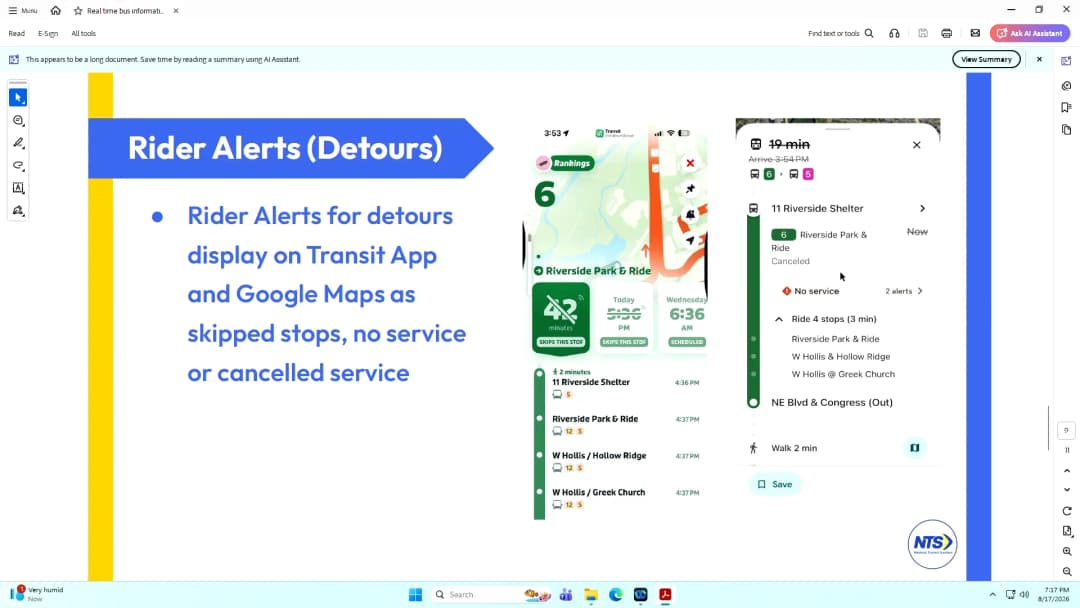
Note: The transcript indicates the meeting was held on Monday, August 17, 2026 at 7:06 PM local time, but the provided timestamp is 2026-08-18 01:19:23+00:00. This summary uses the timestamp date as instructed. The Human Affairs Committee convened on August 18, 2026 (UTC) to receive updates on real-time bus information for the Nashua Transit System (NTS) and on status of Community Development Block Grant (CDBG) projects for fiscal years 2025-27. No public comments were offered, and a scheduled presentation by Revive Recovery Resource Center did not occur due to staffing issues. Discussion Items Real-Time Bus Information Update - Transit Administrator Camille Correa and Director Matt Sullivan presented the new real-time bus tracking capability, which uses GPS and a software platform called Swiftly to provide predictive arrival times via mobile apps (Transit, Google Maps, Apple Maps) and desktop websites. - Key features include: ability to see if a bus is early, late, or on time; detour and stop closure alerts (e.g., during West Hollis paving); trip planning; and rider alerts via Civic Engage, Facebook, X, or phone. Dispatch is available 6:00 AM–10:30 PM weekdays and 9:00 AM–10:30 PM Saturdays. - Sullivan and Correa emphasized that the system updates every 2–30 seconds depending on connectivity and that riders should arrive about five minutes early to account for variability. - Committee members expressed strong support for the system, with Alderman Lopez noting her work teaching constituents to use the trip planner and Alderman Morgan commending the long-term effort to implement real-time data. CDBG Project Status Update (FY26 & FY27) - Urban Programs Manager Mike Jungers provided a detailed status of several projects: - Gateways Community Services (33 Atherton kitchen replacement): Completed, awaiting punch list. - 12 Upstone Drive (HVAC system) and PAL's security system: Contingent on radon mitigation plans; an RFP for mitigation services is forthcoming. The radon issue stems from new stringent HUD guidelines, not a new hazard. - Nashua Children's Home (security system at two locations): Mostly completed. - Mary Sweeney Home (four contracts): HVAC completed; kitchen awaiting cabinets; Wi-Fi contract in finalization; door hardware pushing total beyond awarded funds – a request for reallocation will come to the committee. - Nashua Soup Kitchen (flooring): Second phase delayed until September 14 to avoid interrupting summer service. - Infrastructure projects: Heritage Rail Trail signage purchased by Parks; Ledge Street Crossing completed; Jeff Moran Park work underway. - Staffing: The department remains understaffed (currently three, with a fourth member starting August 31). Jungers described efforts to modernize processes, implement an automated system for document generation, and document procedures to preserve institutional knowledge. - Future funding concerns: The federal Road to Housing Act may reduce CDBG allocations by up to 10% for communities not meeting housing production metrics. Director Sullivan expressed concern that Nashua’s many entitled but unbuilt projects may harm the city’s performance. - Discussion on parking requirements: Sullivan noted that state law limits parking minimums, creating a misalignment with lender requirements (1.25–1.4 spaces per unit) and contributing to stalled projects. The city is considering recalibrating land use regulations. Key Outcomes - No formal votes were taken. - The committee thanked Jungers and Sullivan for their thorough updates and transparent handling of challenges. - A special Board of Alderman meeting is scheduled for Tuesday, August 25, 2026, to discuss the resource center, where Director Bagley will present. - Revive Recovery Resource Center will be invited to a future committee meeting. - Jungers will work on creating a publicly accessible dashboard for CDBG project status updates.
This was a mandatory pre-bid meeting conducted by the City of Nashua for its ERP software solutions system RFP. The meeting was led by Nick Meiswich, Chief Information Officer, and Amy Gerard, Purchasing Manager. Approximately 99 individuals attended via Zoom and in person. The session covered submission requirements and a lengthy Q&A addressing vendor questions. Submission Process - Two submission methods accepted: electronic via Bonfire (no fee) or paper drop-off at City Hall. Both require separate envelopes/documents for proposal and cost proposal. - Attendance at this mandatory meeting is required; failure to sign in (in person or via Zoom chat) will disqualify submissions. - The RFP checklist must be signed and returned; any addendums issued must also be signed and attached. - Questions must be submitted by Friday, August 7, 2026 at 5:00 p.m. Answers will be posted in an addendum on Wednesday, August 12, 2026 at 1:00 p.m. - Proposals must be received no later than 3:00 p.m. on Wednesday, September 30, 2026. Q&A Discussion Items - Appendices and Forms: Vendor Dan Allen (M4) asked for clarification on required appendices. Amy Gerard confirmed Appendix D (DOE 25 reporting) is reference only and not to be completed. The checklist must be returned. Vendors also requested editable Word versions of Appendix C and the references document; the city agreed to provide them before the question deadline. - Eligibility & Resellers: Nick Meiswich clarified this is an open solicitation; resellers can submit with a corresponding manufacturer. The RFP's preference for ERP vendor as prime is not mandatory. The city will contract with only one prime entity, which may be a software vendor or services integrator. - Performance Bond: A performance bond equal to 100% of total proposal cost is required for the awarded vendor. This is non-negotiable at this point; the risk department is pushing for it. It is not a bid bond required with the submission. - Data Residency & AI: Data must reside on US soil; offshore development is acceptable. AI requirements apply only to AI features embedded in the ERP software; AI components must not broadcast data outside the software. All AI-generated outputs remain the vendor's responsibility. - Scope of Work: Data migration is preferred but not mandatory. References: five total implementations (cities and/or school districts) that are fully completed, preferably from the Northeast or New England. For functional areas not proposed, vendors should mark each line item as "not supported." - Utility & Tax Billing: Utility billing covers water and sewer only; current software is Munis. Tax billing will import assessed values from the existing assessing platform. The city seeks a fully integrated system, but proposals with separate modules will still be considered. - Timeline & Phasing: A phased approach is preferred with a 48-month timeline. The existing on-premise vendor support ends in 2030, driving the urgency. - School District Needs: Crystal DeGray (COO, Nashua School District) emphasized the district wants one database that covers all functions, including student activity accounting and substitute scheduling, if possible. The city and school district have equal voice in the project. - Timekeeping: The solution needs to communicate with on-prem time clocks; if a new timekeeping software is chosen, new time clocks may be needed. Key Outcomes - The city will provide editable Word versions of the references document and other forms before the question deadline. - A written addendum will be issued by August 12, 2026 at 1:00 p.m. containing official answers to all questions raised; vendors should rely on that addendum rather than verbal responses. - The meeting recording will be made available but not emailed due to file size. - The performance bond requirement stands, though the city will check with legal for possible alternatives. - Data must remain on US soil at all times; AI components must not broadcast data externally.
The Nashua Board of Aldermen held its regular meeting on Wednesday, August 12, 2026 (the meeting convened on August 11 at 7:30 p.m. and continued into early August 12). The meeting began with a moment of silence for the recent passing of Alderman Johnson's husband, followed by the mayor's remarks on cybersecurity and capital priorities. Key discussions included a greenhouse gas inventory presentation, a supplemental appropriation resolution split into seven parts, overnight parking in Ward 5, and public comment time limits. The board also received public testimony on homelessness, camping bans, and other community issues. Consent Calendar - Accepted multiple communications and reports from city departments (traffic, public works, planning, cemeteries, Penichuck Water, arts commission, etc.) and placed them on file. - Approved a two-year contract with CBIS CPA's PC for auditing services (FY2026-2027) at a total of up to $340,000. - Approved property owner David Campbell's request to unmerge two involuntarily merged lots (parcel 89-21). - Approved $2,500 in support of the Arts City Nashua project. - Confirmed the reappointment of Joseph Ducat to the Airport Authority and referred to Personnel Administrative Affairs Committee. - Confirmed the appointment of Michael McDowell (replacing withdrawn nominee Judith Carlson) to the Nashua Arts Commission. - Accepted reports of various committees (Budget Review, Infrastructure, Human Affairs, joint meetings) and placed on file. Public Comments & Testimony - Bob Keating expressed support for a gap analysis on homelessness, citing a federal judge's ruling on HUD rules and urging immediate shelter and housing for the most vulnerable. - Andy Pullman (attorney for Silverlining Development) spoke in favor of a petition to issue building permits for two lots at the end of Lyndon Street, noting the property had gone through the planning board process. - Eve Arnold urged the board to reject indefinite postponement of a gap study on homelessness (R-26-049), arguing the board should work with citizens and support Alderman Gregg's efforts. - Ben Heaney criticized the survival bans (camping bans) and called for repeal; he urged the board to carry out a gap analysis rather than table it. - Laurie Ortolano opposed the appointment of Judith Carlson to the Arts Commission (later withdrawn), opposed the supplemental appropriation (R-26-048) for COVID expenses, and supported eliminating the 15-minute time limit and increasing individual public comment time. - Myra Nikitas (Traveling Tooth Ferry) requested the board allocate $100,000 for the dental program, describing its services for children and reliance on grants. - Patrice Noel (second public comment) shared her personal story of becoming homeless that day, criticized the city's response to homelessness, and called for immediate action. - Holly Belberg raised concerns about cybersecurity and a building project at Palm Square, referencing reports of criminal activity. - Samson Rachopi spoke about ADA accommodations for remote participation and criticized the city's handling of right-to-know requests. Presentations - Taylor Barry (UNH intern, Sustainability Department) presented the City of Nashua 2024 greenhouse gas inventory and analysis. Key findings: the city produced 38,469 megatons of CO2 equivalent in 2024; overall scope 1 and 2 emissions increased 1.05% from 2016, missing the 25% reduction goal by 2025. The highest emitters were solid waste, buildings/facilities (especially schools), and vehicle fleet. Recommendations included food waste diversion (composting), electrification of buildings and vehicles, a tree inventory, and a municipal green revolving fund. Positive steps include the landfill gas-to-energy plant, solar arrays on six buildings, and EV charging station requirements. Discussion Items - R-26-048 (Supplemental Appropriation): The board voted to split the question into seven parts (A through G) after a roll call (9-5). Each part was debated and voted separately. - Part A ($247,386.18 for Ledge Street playground equipment): Passed 14-0. - Part B ($100,000 for Traveling Tooth Ferry dental program): Passed 14-0. - Part C ($500,000 for city retirements): Passed 13-1 (Alderman Johnson opposed, arguing it should have been in the budget). - Part D ($40,000 for lead grant program salaries/expenses): Passed after extensive questioning about employee leave, separation pay, and HUD reimbursement. The discussion included clarification that these are expenses HUD will not reimburse. Passed 11-3. - Part E ($5,250 for park/field rehabilitation from facility rental fees): Passed 14-0. - Part F ($42,758.50 for park/field rehabilitation from field rental fees): Passed 14-0. - Part G ($672,299.87 for COVID-19 expenses): Passed 13-1 (Alderman Johnson opposed). - R-26-049 (Homeless Service Gap Analysis Committee): A motion to table (indefinitely postpone) was made as a courtesy to the main sponsor who was absent. The motion carried after discussion; some aldermen expressed concerns that a 90-day study could delay work on a resource center. - R-26-050 (Transfer $35,000 to Nashua Association for the Elderly): Passed unanimously. - R-26-051 (Auctioning Tax-Deeded Property): Passed (voice vote with one nay noted). - O-26-012 (Secondhand Dealers Definition): An amendment replaced the original with a compromise requiring a 15-day waiting period before resale. Passed as amended. - O-26-016 (Stop Sign on Pinebrook Road): Declared duly adopted. - O-26-017 (Solid Waste Equipment Reserve Fund Removal): Declared duly adopted. - O-26-018 (Removing Total Time Limit for Public Comment in Committee Meetings): Declared duly adopted. - O-26-019 (Incorporating Environmental Health Subdivision Review Fee): Declared duly adopted. - O-26-020 (Overnight Parking in Ward 5, May 1-Oct 31): A motion to re-refer failed (6-8); a motion for indefinite postponement carried. - O-26-021 (Increasing Individual Public Comment Time): An amendment to set time at 3 minutes 30 seconds (first period only) passed after debate. Final passage as amended passed 11-3. - New Business (First Readings): R-26-053 (increasing motor vehicle permit fee allocation for roads to $2 million), R-26-054 (authorizing Penichuck line of credit extension), R-26-055 (transfer for hydrant fees), R-26-056 (transfer for citywide communications salaries), and O-26-023 (increasing sewer use fees) were all assigned to committees. Key Outcomes - Moment of silence observed for Alderman Johnson's husband. - Greenhouse gas inventory presented; city not on track for 2025 goals but recommended actions noted. - Supplemental appropriation passed in seven parts; total $1,607,694.55 approved with specific votes. - Homeless gap analysis committee resolution tabled. - Overnight parking in Ward 5 indefinitely postponed. - Public comment period increased to 3 minutes 30 seconds for the first period. - Secondhand dealers amendment (15-day waiting period) adopted. - All other resolutions and ordinances on the agenda were passed, postponed, or referred as noted. - Alderman Johnson announced intent to revisit ADA remote participation legislation.