Browse by city
Date range
Search help

Search titles, summaries, topics and stored transcripts together. Keywords may match separately; put the whole query in double quotes for a phrase. Matching follows word analysis, so punctuation is not exact. Both dates are included. Documents are not searched.

SHOWING 11–20 ENTRIES
11
SEP 22, 2026 · RAMSEY COUNTY, MINNESOTA · BOARD OF COMMISSIONERS & AUTHORITIES
Ramsey County Board Workshop: Homelessness Response, Roles, and What's Next – September 22, 2026

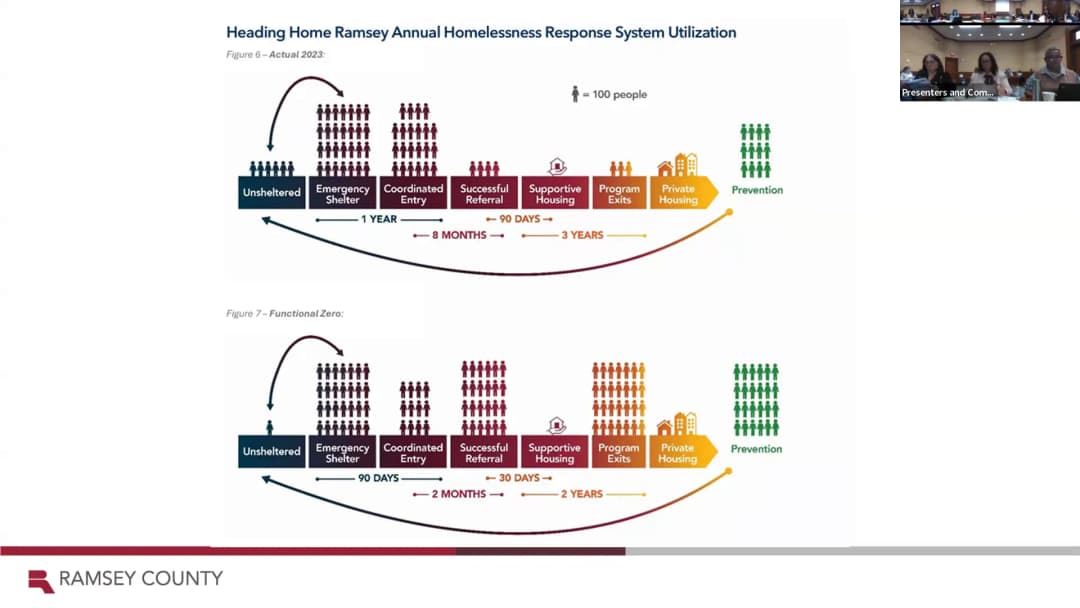
On September 22, 2026, the Ramsey County Board convened a workshop in Courthouse Room 220, 15 West Kellogg Blvd., Saint Paul, MN, to examine the county's homelessness response. The workshop was live-streamed and recorded, and no votes were taken. The sole agenda item (2026-367, sponsored by Housing Stability) was split into two parts: the morning session focused on system governance and strategy of the Heading Home Ramsey continuum, and the afternoon session at 1:30 p.m., led by Chair Moran, was scheduled to cover the county's role, funding buckets, and shared work. Public Comments & Testimony - No formal public comment period was held. One community member affiliated with Union Gospel Mission attended and was publicly welcomed by the board. Discussion Items - Heading Home Ramsey governance: Presenters described the 23-member governing board, composed of senior leaders with decision-making authority, supported by a steering committee, standing committees, and work groups. The City of St. Paul is represented on the governing board, and Assistant Mayor Cedric Baker serves as the mayor's proxy. Pam Axberg, CEO/President of Union Gospel Mission and member at large, was unable to attend. - System strategy and performance: Housing Stability staff presented the 2026 needs assessment, which took roughly one and a half years to complete, and described system goals of making homelessness rare, brief, and non-recurrent. Staff noted that more than 80% of households do not return to the homelessness response system after entering it. - Coordinated entry wait times: A commissioner asked why the time between enrollment and consideration in coordinated entry had nearly doubled. Staff attributed the longer waits to the county's internal single list and the lack of affordable housing stock. - Eligibility and voucher portability: Commissioners asked whether coordinated entry requires Ramsey County residency and whether successful referrals must be housed in Ramsey County. Staff responded that Ramsey County vouchers could be used statewide. - Cross-county coordination: A commissioner asked how coordinated entry and continuums of care in different counties (e.g., Hennepin County) could coordinate across county lines. Staff noted that the Ramsey County coordinated entry list connects to housing programs funded through the county's Continuum of Care and other sources, while acknowledging differences between Hennepin and Ramsey counties. - Encampment policy: A commissioner asked whether Heading Home Ramsey had discussed a county-wide approach to encampments. Staff cited a meeting with the mayor's office and stressed the importance of connecting with the continuum of care on encampment next steps. - Elected official representation: A commissioner recounted that when a Ramsey County delegation met with Representative Hussein, who suggested forming a work group, the county pushed back on the premise, consistent with the absence of elected officials on the Continuum of Care. A related discussion addressed how governing board elections could yield more diverse representation. - Federal policy concerns: A commissioner expressed concern about the federal shift away from Housing First policy (housing with no preconditions plus support services) and about local barriers and restrictions on harm-mitigation approaches facing people experiencing homelessness. - NACO advocacy: Commissioners discussed providing local data and stories to the National Association of Counties (NACO) to counter federal narratives, with county attorneys helping ensure the data is accurate. - County roles: The board chair, who departed around 11:20 a.m., emphasized that Ramsey County is one of several critical partners and, as the administrative entity, should not take on roles, responsibilities, or funding beyond its scope. A commissioner also stressed the importance of city roles such as zoning and approvals in supporting housing development and expansion. Key Outcomes - No votes were taken; the workshop was informational. - Part One concluded in the morning; Part Two was scheduled for 1:30 p.m. with Chair Moran to discuss the county's role, funding buckets (e.g., prevention, outreach, shelter, coordinated entry, housing), and shared work with partner agencies. - The board indicated support for sharing local data and examples with NACO, with county attorneys involved to verify accuracy.
HOMELESSNESS 64% · AFFORDABLE HOUSING 8% · HOUSING 7% · GOVERNANCE STRUCTURE 6%
12
SEP 10, 2026 · RAMSEY COUNTY, MINNESOTA · BOARD OF COMMISSIONERS & AUTHORITIES
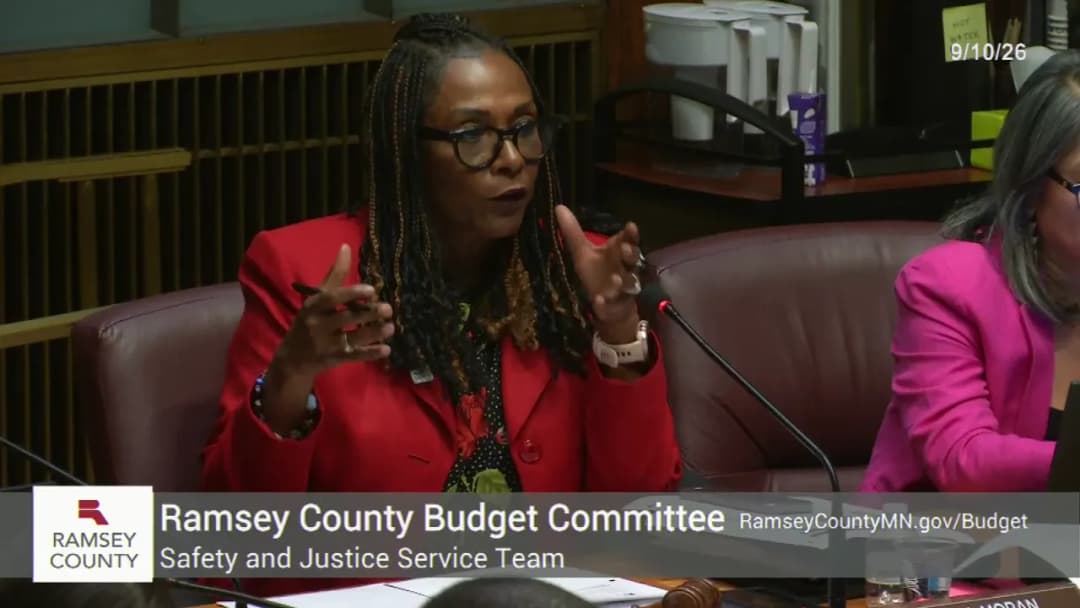
Ramsey County Budget Committee of the Whole: Safety & Justice Service Team Performance Measures – September 10, 2026

The Budget Committee of the Whole met on September 10, 2026, starting at 9 a.m., to review the 2027 Supplemental Budget and performance measures for the Safety and Justice Service Team. Presentations were given by the Emergency Communications Center (ECC), the Sheriff’s Office, and the County Attorney’s Office, each highlighting key performance metrics, staffing challenges, community engagement efforts, and future budget needs. Public Comments & Testimony - Commissioner McGuire shared a personal experience praising the ECC for excellent care after she fell and broke her kneecap during a tour. She also noted the Ramsey County League of Local Governments appreciated the tour and information provided. - A resident named Mary was quoted in the ECC presentation expressing gratitude for the compassionate handling of a mental health crisis call, saying the situation was resolved professionally and without violence. Discussion Items Emergency Communications Center (ECC) Presentation - Director Nancy Paz presented the ECC supplemental budget and measures. In 2025, 47% of all incoming calls were non-emergency; at least 11% (36,000 calls) were direct transfers to other departments. The ECC is implementing a non-emergency call handling automation (NECA) conversational AI to manage non-urgent calls, freeing up staff for emergencies. - Average call answer time: National standards recommend 95% of 911 calls answered within 15 seconds and 99% within 40 seconds. Staffing levels directly influence this; turnover was 28.5% in 2025, trending lower in 2026 at 17.6%, but expected to rise. - Appropriate Response Initiative (ARI): In 2025, 62% of person-in-crisis calls (about 9,300 calls, 1.3% of total) were handled by embedded social workers, public health responders, or the mental health crisis team. Embedded social workers received 3,833 calls in 2025, with 64% resolved by phone. The county will operationalize ARI within ECC operations in 2027. - Domestic violence resource text link: Part of phase two of the initiative; cards with QR codes are being developed for community distribution. - Commissioner Zhang asked about the difference between ARI and embedded social workers and requested hard numbers on responses. Director Paz and County Manager Becker noted an ARI workshop is planned before year-end to provide context. - Commissioner McMurtry asked about St. Paul’s incorporation into ARI; officials noted the public health responder component is being redesigned as a mobile service center model, and all St. Paul 911 calls already receive embedded social worker and crisis team support. - Commissioner Miller asked how ARI frees traditional emergency response capacity; the director agreed to bring data to the November workshop. - Commissioner Javens asked about cell phone location; the director explained that calls hit towers and are routed to the correct center, with improvements coming via Next Generation 911. - The ECC is also investing in wellness initiatives (Creative Caponia) and an internal peer support team, plus an organization-wide culture survey (Empower You). Sheriff’s Office Presentation - Sheriff Bob Fletcher and Under Sheriff Kyle Meested outlined three performance measures: (1) number of expungements processed – the Sheriff’s Office processes court-ordered expungements; (2) victim-related protection orders (harassment restraining orders, orders for protection, domestic abuse no contact orders) – measured by percentage served timely (goal above 93%); (3) average daily population at the Adult Detention Center (ADC) – 396 in 2025, with 35 at Project Bridge (RCCF). The goal is to increase Project Bridge population to reduce ADC overcrowding. - The sheriff reported serious crime in Ramsey County dropped 40% over the past three years, and auto thefts dropped 70%. The ADC staffing study recommendations are being implemented; 34 correctional officers are in training (65% diverse, 20% female), expected to reduce overtime costs by late October. - Project Bridge partnership with RCCF has improved conditions for inmates. The budget includes ongoing funding for up to 60-70 additional placements at RCCF. - Commissioner Miller asked about timelines for expungement processing and protection order service; the under sheriff said statutory deadlines (30-60 days) are generally met. - Commissioner Zhang asked about fee schedules and technology; there was discussion about Workday implementation for better cost breakdowns. - Chair Doyle noted racial disparities in jail bookings: 51% Black, 29% White, 9% Hispanic, 8% Asian, 3% Native American, and asked what crimes are driving these numbers. The sheriff agreed to provide data on booking charges; Under Sheriff Meested mentioned Rule 20 (mental health) is a significant pressure. - Discussion on Flock cameras: Several commissioners raised concerns about data privacy and community trust. County Manager Becker noted she is conducting due diligence with city administrators and will bring a comprehensive report to the board. The sheriff argued the cameras are valuable for crime reduction and that policy should be set at the state level. County Attorney’s Office Presentation - County Attorney John Choi presented performance measures: (1) expungements processed via helpsealmyrecord.org – goal of 400 per year (actual fluctuated, 2025 goal 400); (2) expungement applications reviewed – goal of 1,350; (3) child support orders established – goal of 80% (currently below due to staffing challenges but improving); (4) percentage of adult felony cases offered diversion – goal of 10% (currently 7%); (5) percentage of youth cases where power is shared with community through collaborative review team (CRT) – goal of 50% (currently 42.4% as of 2025 data). - Choi emphasized the economic impact of expungements: University of Michigan study shows 20% income increase for those with records sealed. He noted the Clean Slate Act is being implemented at the state level for automatic expungements, but data brokers still pose a challenge. - For youth justice, the collaborative review team includes the public defender and a community representative. Recidivism for youth in restorative justice programs is 4%, compared to 29-35% previously. Girls are more likely to experience shared power because their cases are less violent (eligible for CRT). New gender-specific programming (e.g., Gen to Gen, Cesma Flame Lily) has been added. - Choi expressed concern about state funding for restorative justice grants ($500,000 received); he plans to lobby for continuation and seek foundation bridge funding. - Commissioner Miller asked about sustainability of youth programs after grant funding ends; county manager noted the board approved $269,000 ongoing for youth/adult diversion and $114,000 for a restorative outreach coordinator. - Discussion on jail diversion and mental health: Choi called for a collective effort to move “the largest boulder” – systemic solutions require collaboration across county, state, and community. Commissioner Javens and others supported a workshop on these issues. Key Outcomes - The board will hold a workshop on the Appropriate Response Initiative (ARI) in November or before year-end, as announced by Deputy County Manager Reyes. - Data requests from the ECC, Sheriff’s Office, and County Attorney’s Office will be fulfilled: detailed breakdowns on ARI responses, booking charges by race, protection order service times, and recidivism for adult diversion programs. - The Sheriff’s Office will provide data on what criminal charges are driving the jail population, to inform future policy talks. - The County Attorney’s Office will continue its expungement outreach, including participation in Commissioner Moran’s expungement clinic. - The board set a schedule for 2027 supplemental budget: first public hearing today at 5 p.m.; levy limit set at September 22 board meeting; final public hearing December 3; final budget adoption December 15. - No formal votes were taken; the meeting was information and discussion only. The committee adjourned around 3 p.m., with a note to reconvene at 5 p.m. for the public hearing.

PUBLIC SAFETY 34% · COMMUNITY CORRECTIONS 31% · YOUTH PROGRAMS 7% · TECHNOLOGY AND INNOVATION 4%
13
SEP 10, 2026 · RAMSEY COUNTY, MINNESOTA · BOARD OF COMMISSIONERS & AUTHORITIES
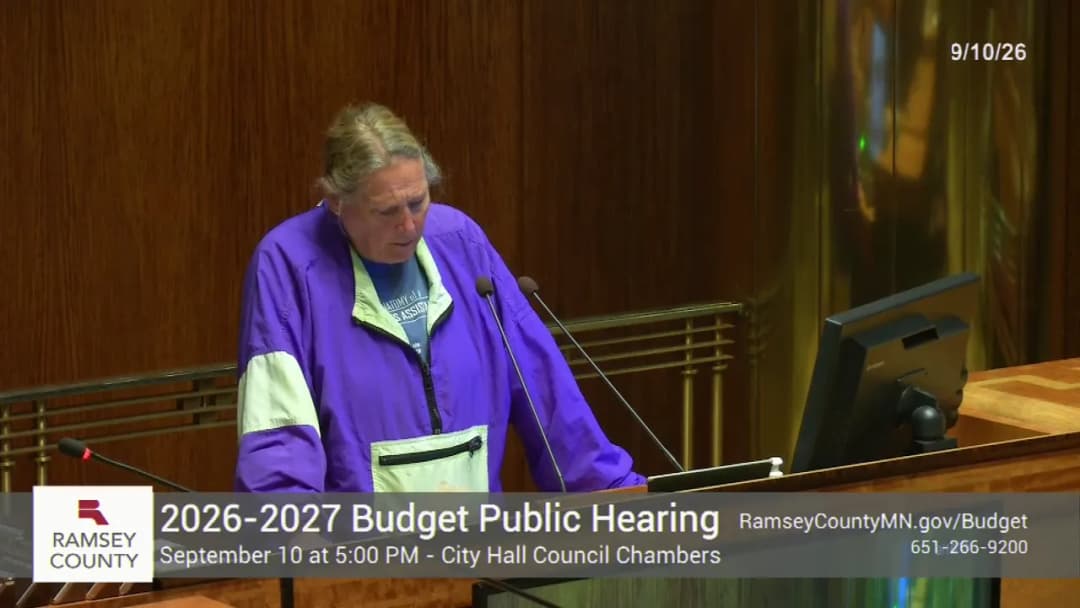
Ramsey County Board Public Hearing on Proposed 2027 Supplemental Budget and Tax Levy - September 10, 2026

The Ramsey County Board of Commissioners held a public hearing on September 10, 2026, at 5 p.m. in Council Chambers, Courthouse Room 300, to receive public comment on the proposed 2027 supplemental county budget and tax levy. The hearing was for comment only; no votes were taken. Two members of the public testified, and the chair declared the hearing closed after no additional speakers came forward. Public Comments & Testimony - Greg Copeland, a St. Paul resident from District 3 on the East Side and a former Maplewood city manager, called for reducing the tax levy and made several recommendations: freeze hiring on all vacant positions; seek across-the-board savings in nonpersonnel items in each department; repeal the salary ordinance passed in June; and follow Mayor Herr's example by cutting board salaries. Copeland suggested returning to the 2024 salary of $101,000, saying that would save $67,697, and eliminating the $7,200 expense account, saying that would save another $50,000. He also opposed county spending on downtown St. Paul, citing a tax break of 7.9 percent this year and about 6 percent last year, and said a downtown park bond program should be avoided because there are at least 10 parks downtown and Harriet Island Park. He said the county could save $320 million by not pursuing that. Copeland urged phasing out the railroad authority, arguing the Met Council should take responsibility for related projects such as the trolley, Rush Line, and White Bear Lake issues, and said the county should claw back a $22 million contract. He also said cutting out the railroad authority would free almost as much money as the new dollars required by the county's 8.25 percent increase. - Casey Cox, a St. Paul resident from Ward 1, expressed difficulty with the meeting location, saying the public hearing should be held in a more accessible and affordable place. Her main issue was county funding of nonprofits: she said that in a pie chart she brought two years ago, 47 percent of spending went to nonprofits, and she argued the county should cut that funding, proposing reductions to 40, 30, or, in her opinion, 20 percent. She said it is not the government's responsibility to give these services to organizations, identified a list of the top ten nonprofits she said receive about $3 million, and questioned their administrative costs at 37 percent. She said the county should investigate where money goes and should stop supporting nonprofits in favor of services constituents need. Cox also said she agreed with Copeland's calls for cuts. Key Outcomes - No votes were taken at the public hearing. - The chair declared the public hearing closed after no one else came forward to testify.

BUDGET EQUITY ANALYSIS 71% · PROCEDURAL 21% · PUBLIC ENGAGEMENT 8%
14
SEP 8, 2026 · RAMSEY COUNTY, MINNESOTA · BOARD OF COMMISSIONERS & AUTHORITIES
Ramsey County Board of Commissioners Meeting – September 8, 2026

The Ramsey County Board of Commissioners met in regular session on September 8, 2026, in Council Chambers (Courthouse Room 300) at 15 West Kellogg Blvd., St. Paul, MN. The agenda listed the meeting at 9:00 a.m. and the minutes record a call to order at 9:01 a.m. All seven commissioners were present: Jebens-Singh, McGuire, McMurtrey, Miller, Moran, Xiong, and Chair Ortega. Also present were County Manager Ling Becker and Assistant County Attorney Stacey D'Andrea. The meeting adjourned at 9:22 a.m. Consent Calendar - Agenda Approval (2026-342): Approved the agenda of September 8, 2026. - Minutes Approval (2026-343): Approved the minutes from September 1, 2026. Administrative Items - Joint Powers Agreement with the Metro East Consortium for Adult Basic Education Services (2026-329): Commissioner McGuire moved the item. The Board approved, by roll call vote, the joint powers agreement with the Metro East Consortium (2520 East 12th Avenue, North St. Paul, MN 55109) for adult basic education services through June 30, 2027, and authorized the Chair and Chief Clerk to execute the agreement. County Manager Update – Ling Becker - 2027 Supplemental Budget Process: Becker reminded the Board that 2027 supplemental budget presentations continue this week; the final service team (Safety and Justice) presentation, chaired by Budget Chair Commissioner Moran, is scheduled for Thursday. The first public hearing on the 2027 supplemental budget will take place that same day at 5:00 p.m. at St. Paul City Hall and the Ramsey County Courthouse. Residents can sign up to comment by calling the Chief Clerk at 651-266-9200, emailing chiefclerk@ramseycounty.us, or signing up at the meeting. Free Victory Ramp parking vouchers are available to attendees. At the Tuesday, September 22 board meeting, the Board will set its 2027 maximum property tax levies; a full schedule is posted on the county's budget and finance webpage. - Self-Care Awareness Month: Becker noted that September is self-care awareness month and outlined three pillars of self-care: physical care; mental and emotional well-being; and social and spiritual connections. - Minnesota Housing Investment in Encampment Response: Becker reported that Minnesota Housing made an additional investment of nearly $800,000 into Ramsey County after a recent regional meeting, working through the Interagency Council of Partners at the Department of Human Services. The funding increases the state's contract with Radius Health and supports three additional staff positions: a registered nurse, an outreach worker, and an administrative HIMIS data-system support role. Of the nearly $800,000, $316,000 is designated for direct assistance to people experiencing homelessness, including application fees, security deposits, and transportation. The funds are available through the end of June 2028. Becker expressed thanks to Minnesota Housing for its support at this immediate time and said the county looks forward to continuing conversations at the Legislature. Wilkins (county staff) is working closely with Radius Health to fill gaps in the county's ongoing work. Outside Board and Committee Reports - Commissioner Tara (Jebens-Singh): Highlighted the Lake Owasa residents family picnic on Saturday, September 12, from 12 to 3 p.m., describing it as a joyful community event involving residents, families, and volunteers. She promoted the North Oaks Guild rummage sale at Shoreview Arena on Saturday and Sunday, noting proceeds support Children's Hospital and the event helps keep clothing out of landfills. She also reminded the Board of the Self-Advocacy Day event on Wednesday, September 17, from 10 a.m. to 2 p.m. at the State Capitol, sponsored by ACT, which brings together self-advocates, families, organizations, artists, policymakers, and community members; she encouraged attendance but noted she will be at the AMC Policy Conference in Bemidji. - Health Partners Como Clinic and Corridor Updates: A commissioner reported meeting with Health Partners Como Clinic staff to discuss the expansion and new facility to be built in Como Park, which will include a women's health center, CT/MRI services, TRIA orthopedics, and TRIA urgent care, calling it an additional asset to the community. The same commissioner reported that the Hamlin Midway Coalition, Midway Chamber of Commerce, and Union Park District Council, along with other partners, are forming a Snelling University Alliance to develop the Snelling-University corridor, similar to what the Rice & Larpenteur (Rice & Larpers) Alliance has done. The commissioner also met with residents to discuss the county's supplemental budget and the redevelopment of the University of Minnesota golf course, clarifying the distinct roles of the city of Falcon Heights and the county in that process. - M Health Fairview Clinic Event: The commissioner promoted the rescheduled community celebration and ribbon cutting at the M Health Fairview Clinic off Rice Street on Thursday from 4:30 to 6 p.m., which will honor the clinic's Magaugh Prize (a national award from the American Hospital Association) and include a ribbon cutting for its new community garden. The commissioner noted the fair's Eco Building exhibits and expressed appreciation for the sustainability displays at the State Fair. Board Chair Update – Chair Ortega - Community and Partner Engagement: Chair Ortega reported holding in-district hours the following Monday and spending time with residents, young people, community partners, and county staff across housing, public health, economic opportunity, and community safety, including touring innovative housing models, celebrating youth leadership, and reviewing performance measures. She stated those connections reinforced the values of dignity, partnership, and community-led solutions. - Bronze Line Tour: The Chair hosted commissioners, county council members, and Met Council members on a site tour along the Bronze Line project route, which allowed participants to understand the constraints of the current right-of-way. - State Fair and Media: On Saturday, Chair Ortega and Washington County Commissioner Carla Bingham spoke on WCCO radio with Shaletta Brundage about the recycling and energy business recycling program; the Chair noted the State Fair Eco Building showcased sustainability efforts by the MPCA and transit organizations. - Upcoming Events: The Chair highlighted the City of Roseville Climate Equity Action Plan launch party on Thursday, 6–8 p.m. at the Showtime; the Thursday evening retirement event for Senator Sandy Papis, thanking her for her service to Ramsey County residents; and the Friday morning Ramsey County League of Local Governments meeting on flock cameras, which will feature Roseville's police chief, St. Paul's deputy chief, and St. Paul Council President Rebecca Naker, and will address balancing law enforcement safety benefits with privacy concerns. She noted the AMC Fall Policy Conference in Bemidji and encouraged participation in the league's Zoom call. - Audit Committee: Following the board meeting, an audit committee meeting was held, chaired by Commissioner Jebens-Singh and including Commissioners McGuire and Ortega. Key Outcomes - Approved the September 8, 2026 agenda and the September 1, 2026 minutes (consent calendar). - Approved the Joint Powers Agreement with the Metro East Consortium for Adult Basic Education Services through June 30, 2027, by roll call vote (Item 2026-329). - Noted the 2027 supplemental budget public hearing on Thursday at 5:00 p.m. and the Board's September 22 setting of the 2027 maximum property tax levies. - Acknowledged a nearly $800,000 Minnesota Housing investment in Ramsey County's encampment response, including $316,000 in direct assistance to people experiencing homelessness, available through June 2028. - Noted the discrepancy between the agenda's 9:00 a.m. meeting time and the minutes' recorded 9:01 a.m. call to order.

COMMUNITY ENGAGEMENT 39% · PROCEDURAL 18% · BUDGET EQUITY ANALYSIS 12% · PUBLIC HEALTH 9%
15
SEP 3, 2026 · RAMSEY COUNTY, MINNESOTA · BOARD OF COMMISSIONERS & AUTHORITIES
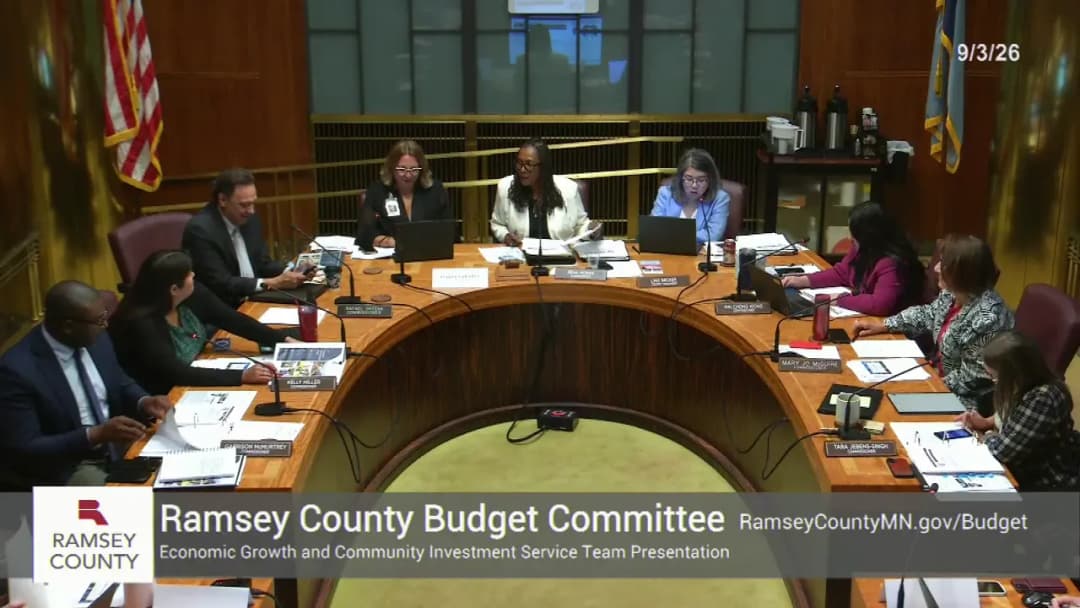
Ramsey County Budget Committee: EGCI Service Team Performance Measures – Sept. 3, 2026

The Ramsey County Board of Commissioners convened as a Budget Committee of the Whole on September 3, 2026, from 9:00 a.m. to approximately 1:15 p.m. (with a lunch break) to review the 2027 supplemental budget and performance measures for the Economic Growth and Community Investment (EGCI) Service Team. The team includes the Assessor’s Office, Community and Economic Development (CED), Libraries, Parks and Recreation, and Public Works. Presentations focused on key performance metrics tied to the county’s strategic priorities: racial and health equity, shared community power, operational excellence, and resident-centered holistic support. No public comments were made. Commissioners engaged in detailed discussion with each department director, asking about equity, data collection, community engagement, funding challenges, and future opportunities. Discussion Items Community and Economic Development (CED) – Director Josh Olsen - Presented two performance measures: (1) percentage of first-time home buyers who are first-generation home buyers, and (2) percentage of deeply affordable housing units (at or below 30% area median income) created or preserved. - CED’s homeownership programs serve about 50 families per year through down payment assistance ($2 million annually) and about 30 residents through rehab/repair programs (funded by federal CDBG). Since 2020, the county has invested over $100 million in housing projects, creating more than 5,500 total units, including 1,900 deeply affordable units. - Commissioners asked about demographic data, alignment with city programs, the role of CED in addressing homelessness (with coordinated entry wait times of 881 days), and the Emerging Diverse Developers program (68 graduates, 39 funded projects). - Director Olsen noted that the county’s focus on deeply affordable housing has shifted the market, but limited inventory and funding volatility remain challenges. The HRA levy and local affordable housing aid have stabilized recurring funding. Parks and Recreation – Director Chris McCabe - Presented three measures: (1) number of culturally specific community engagement sessions held annually, (2) total acreage of restored/enhanced land, and (3) number of culturally specific facilitated programs offered. - The county manages over 7,500 acres; 4,600 acres are eligible for restoration, with nearly 1,500 acres restored to date (supported by $4.3 million in non-county funds). Parks and rec serves 11 ice arenas, 9 county parks, 6 regional parks, 4 golf courses, and other facilities. - Commissioners discussed how engagement sessions translate to actual use, the need for demographic tracking, the impact of invasive species (e.g., emerald ash borer, oak wilt), and the potential for resident vs. non-resident fees. Director McCabe acknowledged that trust in government is low and that the department is exploring fee structures and partnerships to expand access. - The department’s workforce diversity has improved from 6% people of color to 22%, but more work is needed. Public Works – Director Brian Isaac - Presented three measures: (1) percentage of county road network in poor condition (currently 17%, goal 12% by 2030), (2) crash rate per million vehicle miles traveled (Ramsey County had the second highest rate among Minnesota counties), and (3) average chloride level in county lakes. - Public Works maintains 293 miles of county roads. The poor condition goal requires about 35 miles in poor condition at any time. Crash rates have plateaued; 1,490 crashes reported in 2025 vs. 1,851 in 2019. Investments in safer designs (e.g., converting four-lane roads to three lanes) are expected to reduce crashes. - Chloride levels are a new measure; the county purchases about 9,000 tons of salt annually at a cost of $600,000. Balancing winter road safety with water quality is a challenge. - Commissioners asked about pavement data collection (by MnDOT every other year), prioritization of road projects, community engagement for projects like Rice Street and White Bear Avenue, and the potential for tracking contracts with small/minority-owned businesses. Director Isaac noted that an asset management system will come online next year. Assessor’s Office – Director Pat Chapman - Presented three measures: (1) assessment quality and equity (100% compliance with state standards in 2026, up from 96% in 2024), (2) number of properties canvassed for restrictive racial covenant discharge (1,319 in 2025; goal to complete by 2030), and (3) percentage of staff with advanced professional certifications (currently 51%, goal 60%). - The office values approximately 165,000 parcels. Covenant discharges increased from 380 in 2024 to 685 in 2025, with partnerships including St. Catherine’s University. Over 5,500 homes in the county contain such covenants. - Commissioners discussed the AI-driven property tax appeal firms that file bulk appeals without local knowledge. Director Chapman highlighted that the county offers free informal appeals (March–June) and that residents should not pay third parties. The office is working with the Minnesota Association of Assessing Officers to seek legislation limiting AI-based appeals. - Commissioner Zhang suggested tracking property tax refund utilization as a potential future measure. Libraries – Director Ping Yang - Presented three measures: (1) percentage of library materials purchased that reflect racially and ethnically diverse communities (about one-third of new acquisitions), (2) community connections per 1,000 residents (combining physical and virtual visits), and (3) percentage of suburban Ramsey County residents with a library card (about half). - In 2025, the library system circulated over 3 million items, had over 800,000 physical visits, and 10 million website visits. The library of things (e.g., kitchen tools, yard games) is popular. Meeting room reservations have more than doubled since 2015. - Commissioners asked about the utilization of diverse materials (not systematically tracked), the challenge of complex patron needs (mental health, homelessness), and the need for staff training and partnerships with other county services (e.g., public health, service centers). Director Yang noted that inflationary costs for physical materials (20–50% increase) and restrictive e-book licensing are major constraints. The library recently transitioned to a new integrated library system, saving $50,000 annually. - Commissioner McGuire praised the Friends of Ramsey County Libraries and suggested exploring fee-based room reservations to offset costs, while others emphasized keeping libraries as free public spaces. Key Outcomes - No formal votes were taken; this was a discussion and informational session. - The next Budget Committee of the Whole meeting will be on September 10, 2026, from 9 a.m. to 4 p.m., featuring the Safety and Justice Service Team’s performance measures. - The board encouraged continued legislative advocacy on several fronts: (1) limiting AI-driven property tax appeal services, (2) capping e-book licensing costs for libraries, (3) securing additional funding for invasive species management and park restoration, and (4) promoting the state property tax refund program. - Directors were asked to explore: non-resident fee structures for parks and recreation; improved data collection on community engagement demographics; co-location of county services in library and other public spaces; and a countywide training framework for resident-facing staff on de-escalation and resource referral. - The EGCI service team will report back on specific data requests from commissioners, including average family size for homeownership programs and detailed breakdowns of park and library usage by demographics.

LIBRARIES 18% · AFFORDABLE HOUSING 16% · COMMUNITY ENGAGEMENT 11% · PARKS AND RECREATION 11%
16
SEP 1, 2026 · RAMSEY COUNTY, MINNESOTA · BOARD OF COMMISSIONERS & AUTHORITIES
Ramsey County Budget Committee of the Whole: Health and Wellness Performance Measures - September 1, 2026

The Budget Committee of the Whole met on September 1, 2026, to review supplemental budgets and performance measures for the Health and Wellness Service Team, including Community Corrections, Social Services, and Public Health. Presentations focused on outcomes related to justice transformation, racial equity, and resident-centered holistic supports. Key topics included reductions in youth out-of-home placement, felony revocation rates, Project Bridge, aging and disability services waitlist improvements, mental health access, child welfare disparities, tuberculosis incidence, WIC participation, and family home visiting. The meeting included farewell remarks to Deputy County Manager Nadir Abdi and Commissioner Ortega. Presentation 1: Community Corrections (Director Monica Long) - Youth in the Community: In 2025, 84% of Black youth and 83% of Asian youth remained in the community compared to 94% of white youth. American Indian youth remained at less than 80%. Overall, youth remaining in community increased from 74% in 2015. - Felony Revocation Rate: Reduced from 29% in 2016 to 15% in 2025. The overall probation revocation rate is 8%; the 15% for felony-level reflects intensive supervision cases. - Program Participation at RCCF: 98% of sentenced residents participated in programming. Pre-sentenced clients (Project Bridge) also showed high engagement; a video from a resident highlighted certificates, therapy, and medications. - Project Bridge: Launched April 2025, helping alleviate overcrowding at the Adult Detention Center. About 60 clients (15% of ADC population) were transferred. Costs were absorbed operationally in 2025 but are now included in the 2026-27 base budget with $2 million in ongoing funding approved by the board. - Unsheltered Population Team (UP): Worked on encampment closures; 29 clients resolved warrants, and 30 additional warrants are with courts. The team received the Minnesota Corrections Association President's Award. - MRRA (Minnesota Rehabilitation and Reinvestment Act): Began September 1, 2026. An unfunded mandate; no housing or resource funding provided to counties. Community corrections has a 58-employee deficit (out of 477 complement). Staffing and costs will be closely monitored. - Women's Judges Group: Over 4 years, 110 women attended; 23 attended more than 10 times. Zero recidivism among attendees. Presentation 2: Social Services (Director Sophia Thompson) - Turnover: Lake Owasso residents saw 27% turnover in 2024, decreasing in 2025 with stable leadership. Overall, turnover is disaggregated by race, age, and gender internally. - Aging & Disability Services: Long-term care assessments (MnChoices) waitlist reduced from 7 months to 1 month for developmental disability waivers. Currently less than 70 people on waitlist (down from 1,819). 80 new staff hired and trained by late 2025/early 2026, approved by board. Compliance with 20-day statutory face-to-face assessment is met for under/over 65; DD assessments average 27 working days. - Adult Mental Health Targeted Case Management: Timely access (within 10 days) improved from 18% in 2022 to 22% in 2025 (108 of 491 referrals). New pathway via CCBHCs (Clues, People Incorporated, Wilder, Frazier) now available. Demand growing: from 3,200 residents in 2015 to over 4,000 currently. - State Operated Services Discharges: Cost doubled since 2021 to over $17 million in 2025. New positions (financial worker, aging/disability partnership) added in 2026 to address barriers. Mentally ill and dangerous population rose from 30 in 2014 to over 100 in 2026. - Child Welfare Disparities: American Indian children are 43 times more likely than Asian children to be in out-of-home placement. African American children also disproportionately represented. In 2025, disparities increased, but structural changes (prevention services, ICWA/MIFPA training, safety organized practice) have been implemented. Future focus on culturally grounded partnerships and lived experience voices. Presentation 3: Public Health (Director Amy Cameron) - Clinic Visits: Over 70,000 clinical encounters at correctional facilities in 2025. Tuberculosis clinic saw 845 patients during 7,472 visits (avg. 9 visits/patient). 75% of immunization clinic clients were uninsured/underinsured. 56% of TB clinic clients spoke a language other than English. Over 80% of Clinic 555 clients had income ≤250% FPL. - Tuberculosis Incidence: Ramsey County incidence 5.2-7.4 per 100,000 (2020-2025), about 40 cases/year. Goal aligns with Healthy People 2030 (1.4 per 100,000). Partnerships with Washington and Dakota counties. Multi-drug resistant outbreak in 2016 highlighted challenges. - Hazardous Waste Collection: Environmental center opened April 2025. Participants increased from 32,500 (2020) to nearly 41,000 (2025). Metro-wide reciprocal use agreement with 7 counties. - WIC Participation: Over half of Ramsey County babies receive WIC. 90% of eligible infants served in 2025. 17,500 participants per month. 65% of staff from communities of color; over 12 languages spoken. Goal: increase percent of mothers participating 3 months of pregnancy (current rates not specified in presentation). - Family Home Visiting: Provides public health nurse visits to pregnant/parenting families (ages 0-3). ROI $1.80 to $5.70 per dollar spent. During Operation Metro Surge, staff helped clients procure over $10,000 in basic needs but missed 151 visits. Key Outcomes - Decisions & Next Steps: - Community Corrections will closely monitor MRRA costs and staffing deficits and report to county manager. - Board workshop on aging and disability services progress scheduled for September 22, 2026. - Public Health will explore expanded partnerships for mobile services (Care Van) and work with medical assistance providers to increase early WIC enrollment. - Social Services will continue tracking turnover and child welfare disparities; future measures may include disaggregated data and whole-family support outcomes. - Farewell to Deputy County Manager Nadir Abdi, who will transition; County Manager Becker acknowledged the complexity of Health and Wellness work. - Funding & Budget: The board's 8.25% levy increase included $2 million ongoing for Project Bridge. State and federal grants for WIC and TB clinics are stagnant or decreasing; county invests additional levy dollars. - Monitoring: Several measures will be refined with better data collection tools (e.g., case management system for corrections; improved turnover surveys countywide).

PUBLIC HEALTH 25% · HUMAN SERVICES 13% · COMMUNITY ENGAGEMENT 12% · MENTAL HEALTH AWARENESS 10%
17
SEP 1, 2026 · RAMSEY COUNTY, MINNESOTA · BOARD OF COMMISSIONERS & AUTHORITIES
Ramsey County Board of Commissioners Meeting – September 1, 2026

The Ramsey County Board of Commissioners met in regular session at 9:02 a.m. on September 1, 2026, in the Council Chambers of the Courthouse. Chair Ortega presided, and all seven commissioners were present: Jebens‑Singh, McGuire, McMurtrey, Miller, Moran, Xiong, and Ortega. County Manager Ling Becker and Civil Division Director Jada Lewis also attended. The meeting covered routine approvals, a settlement agreement, several joint powers agreements, a fund transfer discussion, a presentation on emergency communications modernization, and an update on homelessness encampment response. A closed meeting on the TCAAP/Rice Creek Commons property followed the public session. Consent Calendar - Agenda Approval (Item 1): Approved unanimously (7 ayes). - Minutes of August 25, 2026 (Item 2): Approved unanimously (7 ayes). - Settlement Agreement – Felicia Marie Wilson v. Ramsey County (Item 3): Approved a settlement totaling $150,000 plus non‑monetary terms. Authorized the Chair and Chief Clerk to execute. Resolution B2026‑115. Unanimous (7 ayes). - Joint Powers Agreement – Election Recount Services (Item 4): Approved a JPA with the State of Minnesota for election recount services through December 31, 2026. Resolution B2026‑116. Unanimous (7 ayes). - Safe and Secure Courthouse Initiative Grant (Item 6): Adopted a resolution to apply for a $350,000 state grant. Authorized the County Manager to enter into related agreements. Resolution B2026‑117. Unanimous (7 ayes). - Joint Powers Agreement – Metropolitan Emergency Services Board (Item 7): Approved a five‑year JPA (2027‑2031) with multiple counties and the City of Minneapolis for operation of the Metropolitan Emergency Services Board. Also authorized the County Manager to appoint members to the Technical Operations Committee. Resolution B2026‑118. Unanimous (7 ayes). Discussion Items - Fund Transfer – Boys Totem Town & Maplewood Properties to Redevelopment Implementation Project (Item 5): County Manager Ling Becker and Community & Economic Development Director Josh Olson presented the request to transfer up to $75,000 from Boys Totem Town (BTT) and $125,000 from Maplewood Properties into a single Redevelopment Implementation Project account to advance the Building Stronger Together initiative. The pooled $200,000 would provide flexibility to address due‑diligence and redevelopment needs across multiple county‑owned sites, including smaller parcels near Payne & Maryland and Frost & English. Olson noted that over 500 acres of county land are already in active redevelopment, with an additional 100+ acres identified as opportunities. Commissioner Xiong expressed concern that the BTT property has seen little movement since 2021, despite the county spending millions annually to maintain it, and she called for prioritization and community engagement. County Manager Becker responded that prior environmental studies (e.g., archaeological survey concluded May 2025) and the COVID‑19 pandemic had delayed outreach, but that work is now being kick‑started with a multidisciplinary team. Commissioner Moran supported the action, linking it to the need for intentional investments in the context of upcoming budget constraints (HR1 impacts). Commissioner Miller asked about the future process (RFI, community engagement) and urged long‑term thinking to avoid selling land that might be needed later for public purposes. The motion passed unanimously (7 ayes), Resolution B2026‑119. - Presentation – Joint Powers Agreement Modernization (Item 8): Emergency Communications Director Nancie Pass presented a plan to modernize the four existing JPAs that govern the consolidated 9‑1‑1 center. The center is the largest in Minnesota, handling nearly 1 million calls in 2025 with 151 employees. The current agreements, created when the center first consolidated in 2007, are outdated. The modernization aims to: create a single operational JPA rather than four; update language for cloud‑based technology and subscription models; strengthen the role of the Dispatch Policy Committee (DPC); and establish transparent fund‑balance guidelines. Commissioner Jebens‑Singh asked about partner feedback; Pass reported positive survey responses and a productive DPC meeting, with stakeholders recognizing the need for updates. Commissioner Xiong inquired whether the $2.1 million cost for dispatch console upgrades was included; Pass explained that a separate legislative work group is studying a statewide radio system (ARMER), and the new JPA would clarify how fund balances could be used for such capital improvements. Commissioner McGuire asked about cost sharing; Pass confirmed the current 60% levy / 40% city cost allocation (based on a three‑year call‑volume average) would remain unchanged. County Manager Becker noted the project is part of broader operational excellence work and that roadshows with city councils will occur. The presentation was for information only; no vote was taken. - County Connections – Homeless Encampment Response Update: County Manager Becker provided an update on the county’s coordinated response to homeless encampments, including Randolph & Shepherd Road and LaOrient. She outlined a shift from broad on‑site presence to targeted, individualized transition planning, supported by newly expanded shelter capacity (funded through LAHA and other sources). Key statistics: during the most recent reporting week, the shelter hotline handled 608 calls, including 380 shelter reservation requests; adult shelters were operating at or near capacity. The housing stability team has conducted 120 on‑site engagements, identified 28 individuals with active housing referrals, and placed 8 into housing (with 6 more completing intake). The county will maintain outreach at Randolph two days a week, coordinated with the city’s HEART team, and will deploy financial assistance and specialized supports based on resident needs. Commissioner Moran then shared her visit to Avivo, a Minneapolis 100‑unit tiny‑home warehouse that has housed over 300 people into permanent supportive housing since 2020 at a capital cost of $4 million. She contrasted this with a recent $1.8 million emergency encampment response, for which she questioned the measurable impact. Moran called for evidence‑based, innovative approaches and better coordination through the Heading Home Ramsey continuum. Other commissioners offered brief reports on transit, school visits, and regional infrastructure projects. Key Outcomes - Votes Taken: All seven consent and discussion items (Items 1, 2, 3, 4, 5, 6, 7) were approved unanimously. Resolution numbers B2026‑115 through B2026‑119 were assigned. - Directives: The County Manager was authorized to execute agreements for the settlement, joint powers agreements, grant application, and fund transfer. The County Manager will also lead the JPA modernization outreach to city councils and develop a property disposition framework to be presented at a board workshop before the end of 2026. - Next Steps: A closed meeting on TCAAP Outlot A was held after adjournment. A Budget Committee of the Whole meeting (Health & Wellness Service Team 2027 Supplemental Budget) was scheduled for 1:00 p.m. the same day.

HOMELESSNESS 27% · ECONOMIC DEVELOPMENT 21% · OPERATIONAL EXCELLENCE 11% · PROCEDURAL 10%
18
AUG 28, 2026 · RAMSEY COUNTY, MINNESOTA · BOARD OF COMMISSIONERS & AUTHORITIES
Ramsey County Operations Service Team 2027 Supplemental Budget and Performance Measures - August 28, 2026

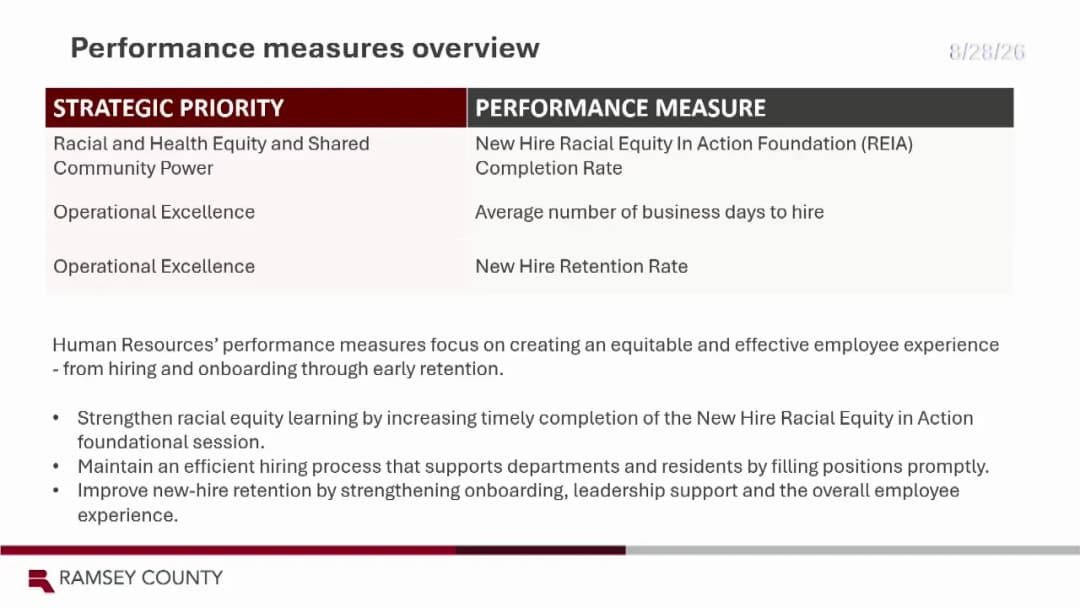
The Ramsey County Budget Committee of the Whole met on August 28, 2026, from 9 a.m. to 4 p.m. to receive presentations on the 2027 supplemental budget and performance measures for the County Operations Service Team. The meeting focused on performance metrics tied to core processes such as cybersecurity, procurement, contracting, and property management, with an emphasis on operational excellence, cost savings, and resident-centered services. Presentations were delivered by directors from Property Tax Records and Election Services (PTRIS), Communications and Public Relations, Information Services, Property Management, Finance, Human Resources, and the County Manager's Office, concluding with a review of the proposed 2027 budget addendum. Discussion Items Property Tax Records and Election Services (PTRIS) – Director Tracy West - Three performance measures were presented: percentage of qualified properties ending in tax forfeiture (13% in 2025), percentage of restrictive covenants discharged (approximately 1,000 of 5,000 identified), and percentage of election judges serving in their home precincts (25% in 2025, target 60% by 2028). - Cost savings included $96,000 annually from new interpreting technology in elections and $85,000 annually from cross-training employees across divisions. - Commissioner questions addressed collaboration with municipalities on forfeited properties, recruitment of diverse election judges, and the status of restrictive covenant removal. Communications and Public Relations – Director Rose Lindsay - Three measures: audience reach across community media (Hmong TV program reached nearly 500,000 unique views), social media engagement (increased after micro-campaigns and influencer partnerships), and average time on website (decrease attributed to improved search and translation tools). - A new Gen Z podcast was launched in partnership with Workforce Solutions and Environmental Health; the Hmong program will become permanent. - Commissioners discussed outreach to populations not on social media, the vetting of influencers, and the use of toolkits for community partners. Information Services – Chief Information Officer Chaiton Ganatra - Three measures: public Wi-Fi coverage (68% of sites, goal 100% by 2030), timely resolution of technology incidents (80% met, goal 90%), and blocked malicious connections (67% in 2025, blocking 20.2 million emails in 2025 versus 17.4 million in 2023). - Cost savings included $240,000 from decommissioning library data centers and $360,000 from improved hardware forecasting and volume discounts. - Discussion covered cybersecurity insurance premium reduction, partnership with other governments, and prioritization of Wi-Fi to public-facing and safety facilities. Property Management – Director Gene Krueger - Three measures: workforce participation by racially and ethnically diverse/American Indian in construction contracts (18% in 2025, goal 32%), energy consumption (8% increase in 2025 but 18% higher heating/cooling degree days; 41% reduction since 2008), and renewable energy utilization (0.21% from on-site sources, goal 5% by 2030). - Cost savings through energy efficiency projects; sale of Maplewood South property completed; 160 East Kellogg building sale expected in 2027. - Commissioners inquired about district energy connections, organics collection in county buildings, and collaboration with cities on surplus property. Finance – Chief Financial Officer Amelia Kruver - Three measures: percentage of invoices paid on time (97-98%), weeks to execute a solicitation contract (23 weeks in 2025, down from 36; goal 18 weeks), and rate of return on investments (4.2% in 2025 vs. U.S. Treasury benchmark of 3.48%). - Cost savings highlighted through the new subrogation program; finance is working on accounting alignment and Workday implementation. - Discussion focused on late payment penalties, training vendors on invoice submission, and support for small/minority-owned businesses. Human Resources – Chief Human Resources Officer Patience Ferguson - Three new measures: new hire racial equity foundation completion rate, average business days to hire (reduced to 76 from 160 through NeoGov investment), and new hire retention rate (76%, goal 80%). - Integration of NeoGov with Workday planned; deeper analysis of retention by department and exit interviews to be conducted. - Commissioners raised concerns about applicant experience, barriers in screening, and the need for continuous review of degree requirements. County Manager's Office – Chief of Staff Maria Sarabia - Three measures: percentage of applicants to community advisory boards that are racially/ethnically diverse or American Indian (36%), percentage of revised countywide administrative policies (6% of 150 in 2025), and rate of recovery for damages caused by third parties (84% in 2025, on $168,357 eligible; goal 70-75% going forward). - Cost savings noted from reducing federal lobbying service costs. - Commissioners discussed advisory board term limits, diversity demographics, and the need for greater nuance in board skill sets and strategic projects. 2027 Supplemental Budget Addendum – Budget Director Kelsey Lewey - Proposed increases: $1.5 million and 17.5 FTEs for Financial Assistance Services (FAS) to meet federal HR1 requirements (offset by $514,000 federal revenue, net $1M levy impact); $3.1 million and 32 FTEs (24 funded) for Sheriff's Adult Detention Center based on staffing study. - Net levy impact of $2.8 million after $1.3 million in belt-tightening reductions and $44,000 reduction in County Program Aid. - Net-neutral adjustments: moving FTEs to service teams, operationalizing the Appropriate Response Initiative (ARI) from ARPA to levy/opioid funds, and reassigning other positions. - Regional Rail Authority levy held flat; Housing and Redevelopment Authority levy at max (slight decrease due to market values). Key Outcomes - The committee received the presentations and will include the proposed addendum in the 2027 supplemental budget process. A public hearing and written comment period will be held, with final adoption scheduled for December. - The Health and Wellness Service Team will present their performance measures at a future meeting. - Follow-up materials on County Program Aid, FTE changes, and other items were requested by commissioners.

TECHNOLOGY AND INNOVATION 12% · COMMUNICATION AND PUBLIC RELATIONS 11% · PERSONNEL MATTERS 7% · PROCEDURAL 6%
19
AUG 27, 2026 · RAMSEY COUNTY, MINNESOTA · BOARD OF COMMISSIONERS & AUTHORITIES
Ramsey County Budget Committee of the Whole: Community Services & Supports 2027 Supplemental Budget and Performance Measures - August 27, 2026

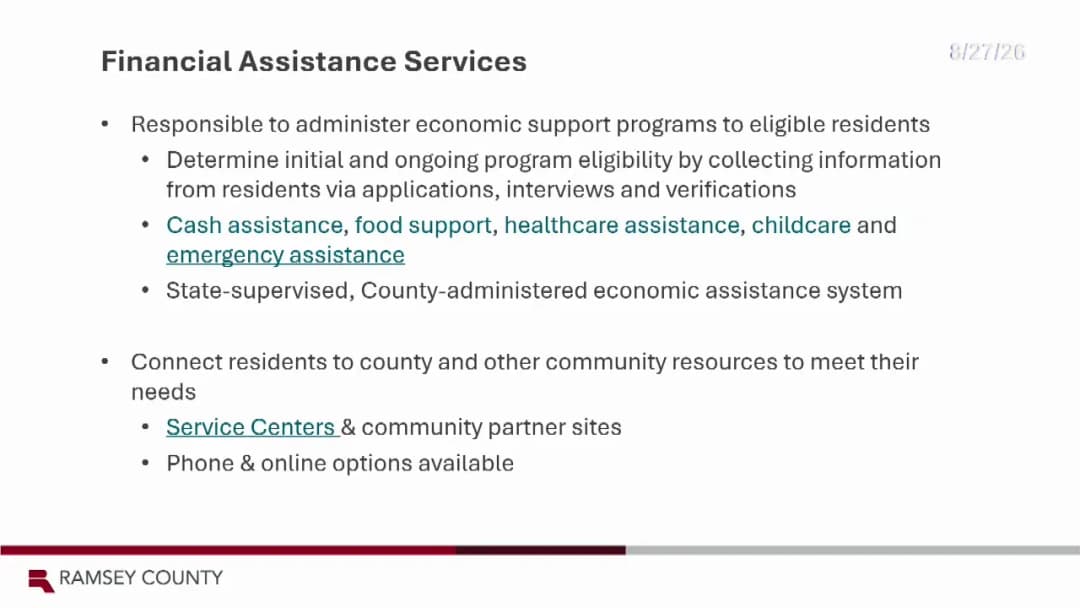
The Budget Committee of the Whole met on August 27, 2026, at 1:00 p.m. to review the Community Services & Supports (CSS) Service Team’s proposed 2027 supplemental budget and associated performance measures. Presentations were delivered by four departments: Housing Stability, Financial Assistance Services (FAS), Workforce Solutions, and Veteran Services. Each department detailed key performance indicators, progress toward strategic goals, and challenges, particularly related to federal policy changes (HR1) and funding constraints. Commissioners posed questions on data trends, budget fluctuations, equity, and operational improvements. No formal votes were taken; the presentations informed upcoming budget decisions. Housing Stability Department Presentation - Director Dr. Wilkins presented three performance measures: average days on the coordinated entry priority list for single adults (881 days in 2025, goal 180 days by 2030); evictions prevented in housing court (funded by an additional $2 million in LAHA dollars for 2026-2027, increasing case capacity to 1,900); and the number of bundled FHPAP cases (reflecting coordinated use of multiple funding sources). - The department is undertaking a coordinated entry system redesign this year and next, with $50,000 allocated for a consultant, aiming to shorten wait times and address racial disparities. - Commissioner questions clarified that the budget decrease from $16M in FY26 to $12M in FY27 in the budget packet does not represent a reduction; it reflects timing of LAHA fund accounting, which will be added via a future board action. - Director Wilkins emphasized that more affordable housing stock, developed in partnership with the Community & Economic Development (CED) department, is critical to reducing wait times. Financial Assistance Services (FAS) Presentation - Director Ali Ali presented four performance measures: average wait time at service centers (16 minutes in 2025, down from 22 in 2024); percentage of residents reporting they received needed help (90% in 2025, goal 95% by 2030); SNAP application timeliness (expedited: 23% in 2025, improved to 46% by March 2026; regular: 70% in 2025, improved to 87% by March 2026); and percentage of emergency assistance (EA) and emergency general assistance (EGA) funds supporting permanent housing (69% in 2025, helping 1,850 families). - The county approved 17.5 new FTEs for FAS, including 6.5 for SNAP, to address workload increases from HR1. - Director Ali noted that the state’s aging MAXIS system hinders efficiency, and the county is exploring cross-training and internal modernization while awaiting state upgrades. - Commissioners discussed the low SNAP timeliness metrics, the importance of surveying more residents (current sample size 400-434), and the need to track HR1’s impact on benefit caseloads (estimated 7,000 SNAP recipients affected, but actual reductions unknown). Workforce Solutions Presentation - Director Catrice Davis presented four performance measures: percentage of MFIP participants exited to employment (low single digits, e.g., 2-4% over recent years, with goals to maintain through holistic supports); percentage of MFIP families engaged in whole family support services (targeting African American and American Indian families through contracts with NIDCAD and American Indian Family Center); percent of residents served at career labs from low-income zip codes (goal 350 by 2030); and number of public pathways program graduates employed (goals adjusted for natural attrition and reduced funding). - The holistic family supports model, funded through TANF consolidated grants, provides culturally responsive services including mental health, transportation, and child care assistance. - Commissioners questioned the low MFIP exit rates and noted that many MFIP recipients are employed part-time but cannot achieve self-sufficiency due to benefit cliffs. Director Davis confirmed that additional data on employment while on MFIP is tracked separately. - County Manager Becker highlighted a $500K investment in the family coach model for 2027 to complement MFIP services. Veteran Services Presentation - Director Christina Ross presented three performance measures: percentage of new residents served (27% in 2025, goal 31% by 2030); percentage of veterans reporting they received needed services (96% in 2025, based on 28% survey response rate); and percentage of veterans served who applied for at least one qualified benefit (30% in 2025, up from 16% in 2020, goal 38% by 2030). - The department collaborates with county encampment outreach (a veteran outreach social worker is embedded with the team) and community partners to reach veterans, including Special Guerrilla Unit veterans from Laos. - Director Ross noted that federal VA claims processing has accelerated (75-81 days) but error rates have increased, requiring additional appeals work. - The county is exploring text-based surveys and a Power BI dashboard to improve data collection and outcome tracking. Key Outcomes - No formal votes were taken; the presentations are part of the budget deliberation process. - Commissioners emphasized the need for clear data storytelling, particularly around MFIP exit rates, EA/EGA housing support metrics, and HR1 impacts on caseloads. - Staff will follow up on specific data requests, including coordinated entry redesign details, EA/EGA eligibility clarification, and the breakdown of MFIP participant employment outcomes. - The next presentation in the budget series is scheduled for August 28, 2026, from 9:00 a.m. to 4:00 p.m., focusing on operational service teams and budget addenda. - Public participation is encouraged via public hearings, contacting commissioners, or submitting written comments to the Chief Clerk’s office.

HOMELESSNESS 15% · HUMAN SERVICES 13% · VETERANS SERVICES 12% · ECONOMIC DEVELOPMENT 9%
20
AUG 25, 2026 · RAMSEY COUNTY, MINNESOTA · BOARD OF COMMISSIONERS & AUTHORITIES
Ramsey County Board Workshop on 2027 Tax Impact – August 25, 2026

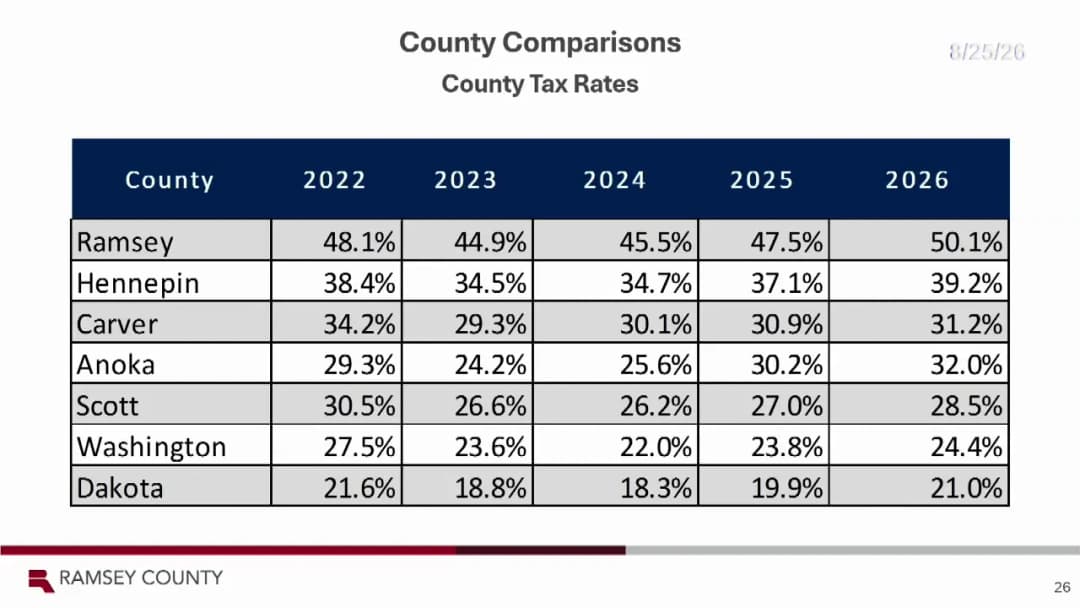
The Ramsey County Board held a workshop to discuss the projected impact of 2027 property taxes. No votes were taken. County Auditor Tracy West presented an overview of the property tax process, levy changes, tax base shifts, and comparisons to other metro counties. Commissioners asked clarifying questions and discussed policy implications for development, tax burden distribution, and regional cooperation. Discussion Items - Presented by Tracy West, County Auditor - Property Tax Process: Market value is assessed annually, adjusted by property type to determine taxable value. Levies are set by taxing jurisdictions and divided by total taxable value to set rates. - Levy Change: The proposed 2027 levy of $464 million is an 8.25% increase over 2026, following a steady upward trend. - Tax Base Changes: Total market value exceeds $78 billion, growing 1.84% overall. Residential growth is minimal (0.95%), while commercial (2.84%), industrial (5.52%), and apartment (4.1%) values rise faster, shifting tax burden away from residential properties. - Typical Resident Impact: Using 0% levy increases for other jurisdictions (except St. Paul), examples showed small annual changes (e.g., North Oaks +$246, Maplewood +$8, some areas saw decreases). For St. Paul, the median home valued at $290,300 would see a net increase of $30 (0.7%) after accounting for county levy, school shifts, and other factors. - Affordability: Property taxes as a percentage of median income vary: North St. Paul at 5.8% ($4,590 tax on $79k income) vs. Arden Hills at 4.9% ($6,617 on $134k). Relief programs exist (e.g., Minnesota Homestead Credit Refund). - Comparison to Other Counties: Ramsey County has the lowest average residential market value but the highest tax rate among metro counties (proposed 52.7%). This is due to a smaller residential base, high exempt property share, and limited vacant land for development. - Downtown St. Paul: Commercial tax capacity declined 12.2% year-over-year, shifting burden to other areas. Suburban Ramsey County shows growth in commercial, industrial, and apartment. - Commissioner Questions and Comments: - Commissioner Mueller asked whether apartment tax increases could raise rents and affect subsidized housing; West noted it is up to property owners. - Commissioner Jevinson highlighted that policy decisions (zoning, comp plans) shape the property mix, which influences tax burdens. West confirmed and noted that developing commercial properties relieves residential taxpayers. - Commissioner Tayon sought to differentiate value increases from new construction; Assessor Pat Chapman confirmed both contribute and promised detailed data. - Commissioner McGuire asked about the role of exempt properties; West agreed that adding taxable exempt land would lower the rate. - Commissioner Zhang emphasized that stopping development (e.g., due to opposition) increases residential tax burden in a dense county. - Commissioner Taylor inquired about the declining agricultural classification; Chapman explained it is being developed and will approach zero. - Commissioner Moran noted the interconnectedness of downtown and suburban tax bases, and the need to communicate unique Ramsey County challenges to the legislature and local partners. - Commissioner McGuire requested clarification on fiscal disparities; West explained that it is a metro-area revenue sharing program partly based on commercial/industrial growth, which helps balance resources. Key Outcomes - Certification of Maximum Levy: September 22, 2026. - Estimated Tax Notices: Mailed mid-November 2026. - Truth in Taxation Public Hearing: December 3, 2026. - County Budget and Levy Approval: December 2026. - Next Steps: Department performance measure presentations begin August 27, 2026 (Community Service), followed by August 28, September 1, 3, and 10. Materials are available on Ramsey County's open data portal. - Public Participation Encouraged: Attend hearings, contact commissioners, or submit written comments. Details on the county's budget and finance page.

PROPERTY TAX ADMINISTRATION 65% · ECONOMIC DEVELOPMENT 19% · AFFORDABLE HOUSING 8% · COMMUNITY ENGAGEMENT 4%
OPENPUBLICA · PUBLIC MEETING INDEXUPDATED DAILY · openpublica.com