Browse by city
Date range
Search help

Search titles, summaries, topics and stored transcripts together. Keywords may match separately; put the whole query in double quotes for a phrase. Matching follows word analysis, so punctuation is not exact. Both dates are included. Documents are not searched.

SHOWING 11–20 ENTRIES
11
AUG 18, 2026 · REDWOOD CITY, CALIFORNIA · PLANNING COMMISSION
Redwood City Planning Commission Special Meeting - August 18, 2026

The Redwood City Planning Commission held a special meeting on August 18, 2026, at 6:30 PM to receive public comments on the Draft Environmental Impact Report (EIR) for the Recycled Water Master Plan (RWMP) Phase 2 Project and to appoint a new Chair and Vice Chair. No decisions were made on the EIR; the public comment period remains open until September 21, 2026. The Commission also received updates on recent City Council actions. Consent Calendar - No items were on the consent calendar. Public Comments & Testimony - No members of the public spoke during the public hearing for the Draft EIR or during the general public comment period. Discussion Items - Public Hearing on Draft EIR for Recycled Water Master Plan Phase 2 Project: Staff presented the project, which aims to expand the recycled water service area to include the east market assessment area (south and east of Woodside Road), extend pipelines in central and east areas, and add backup storage and pumping capacity. The Draft EIR analyzed environmental impacts and identified no significant and unavoidable impacts; all potential impacts were related to construction and were mitigated to less-than-significant levels. Mitigation measures cover air quality (dust control), biological resources (surveys, best management practices), archaeological and tribal cultural resources (worker education, consultation), paleontological resources, hazardous materials (contaminated soil management), and noise (equipment restrictions). The project would deliver an additional 762 acre-feet (250 million gallons) of recycled water per year, increasing the city's recycled water use from the current 500 acre-feet per year (about 7-8% of total demand) to potentially double. Two alternatives were analyzed: a branch transmission alternative (environmentally superior) and a multiple loop alternative. Staff expressed a preference for the proposed project, which offers the most flexibility and reliability. Commissioners asked clarifying questions about future phases, pipeline types, tank size options, dual-plumbing requirements for affordable housing, project timeline (10-20 years), and the status of neighboring jurisdictions. Commissioner Arruza Cruz noted that all impacts are typical construction effects and expressed excitement about the project. Commissioner Koch praised the timing and environmental stewardship. Chair Crnogorac raised a concern about potential effects of recycled water on existing green infrastructure (e.g., heritage trees) and suggested the city examine exceptions. - Planning Commission Chair and Vice Chair Appointments: The Commission appointed a new Chair and Vice Chair for the upcoming term. - Motion to appoint Commissioner Kimberly Koch as Chair passed unanimously (7-0). - Motion to appoint Commissioner Dylan Finch as Vice Chair passed 5-1-1 (Commissioner Cornejo voted no; Commissioner Crnogorac abstained). - Matters of Commission Interest: Assistant Community Development Director Exline provided updates on recent City Council actions from July 13, 2026 (referred to as "planning night"). Key outcomes: SB79 (transit-oriented development): Council approved the Commission's recommendation to allow baseline obligations to take effect without exclusions and concurrently develop a TOD alternative; staff will bring a proposal in spring 2027. Zoning code and Municode amendments: Approved with two parcels removed from rezoning; those may return to the Commission later (vote was 6-1, Councilmember Padilla opposed). Greater Downtown Area Plan (GDAP) expansion: Council approved expanding the boundary to include an area bounded by Woodside Road, Highway 101, Douglas, Bay, and Willow along Broadway; staff will return in September with a scope and budget, emphasizing Broadway as a person-centered street. The expansion will add 12-14 months to the planning process. Key Outcomes - No motion or decision was made on the Draft EIR; the public comment period remains open until September 21, 2026. - The Commission unanimously approved the appointment of Kimberly Koch as Chair (7-0). - The Commission approved the appointment of Dylan Finch as Vice Chair (5-1-1). - The next regular Planning Commission meeting is scheduled for September 15, 2026 (September 1 meeting canceled).

RECYCLED WATER 51% · PROCEDURAL 27% · PUBLIC COMMENT 8% · LAND USE PLANNING 8%
12
AUG 18, 2026 · REDWOOD CITY, CALIFORNIA · PLANNING COMMISSION
Planning Commission Special Interview Session – August 18, 2026

This meeting was scheduled as a special interview session of the City of Redwood City Planning Commission. No agenda items, minutes, or transcript were provided in the source materials, so no discussion, public testimony, or decisions can be summarized. The only available information is the meeting date (August 18, 2026) and the listed start time of 6:00 PM Pacific (corresponding to the UTC timestamp of 2026-08-18 14:00:00+00:00). Note on Missing Records The agenda packet exists as a PDF but its contents were not extracted. Minutes and raw transcription are absent. Therefore, this summary reflects only the meeting’s title and scheduling information.

13
AUG 18, 2026 · REDWOOD CITY, CALIFORNIA · PLANNING COMMISSION
Special Planning Commission Meeting – August 18, 2026 – No Agenda Details Available

The meeting was scheduled for August 18, 2026, at 6:30 PM. However, the provided agenda consists only of a link to an agenda packet PDF with no visible items, and no minutes or transcript were available. Consequently, no discussion items, public comments, consent calendar items, or key outcomes can be summarized. Meeting Materials Incomplete - The agenda packet is a PDF file with no extractable text or items listed. - No minutes or transcript were provided. - No public testimony, speaker positions, or decisions can be identified. Conclusion Due to the absence of substantive meeting content, this summary cannot report any actions, discussions, or outcomes.

14
JUL 27, 2026 · REDWOOD CITY, CALIFORNIA · CITY COUNCIL
Redwood City Council Meeting - July 27, 2026: Affordable Housing Swap, ALPR Debate, Rent Control Measure, and 101/84 Project Update

On July 27, 2026, the Redwood City Council met beginning at 6:00 PM. The meeting included recognitions, extensive public comments on several major issues, a public hearing on an affordable housing site substitution and street vacation, appointments to commissions, a decision on a city council position regarding a ballot measure on rent control and just cause eviction, and an update on the 101/84 interchange project with a contentious contract amendment. The meeting was extended to 11:15 PM. Consent Calendar - All consent calendar items were approved unanimously (6-0) with Councilmember G recused from item 7B (Landscape Maintenance District). Public Comments - Redwood Life Project: Multiple Redwood Shores residents opposed the proposed 5 million sq ft development, citing traffic overload, parking increases of 61%, 25 years of construction, and safety concerns. They urged the council to evaluate a community-vetted alternative capping the project at 2 million sq ft. Speakers also questioned conflicts of interest and the independence of city consultants. - Flock ALPR Surveillance: Over a dozen speakers urged the city to end its contract with Flock Safety and pause the RFP for a new ALPR vendor. They cited data misuse by federal agencies (1,256 searches on behalf of ICE/DHS in 11 months), unauthorized access, and the dystopian potential of mass surveillance. Speakers noted that this data is used to target immigrants and vulnerable communities. Several stressed that the Police Advisory Committee had asked for community input before moving forward. - Parks and Shakespeare: One speaker invited the council to Free Shakespeare in the Park (Anthony and Cleopatra) at Red Morton Park and thanked the city for support. - Rent Control Measure: During item 9B, many speakers (landlords, realtors, housing advocates) urged the council to oppose the ballot measure, citing negative impacts on affordable housing, small landlords, and city finances. A few speakers supported the measure or asked for further study. - Other: One speaker recalled the closure of Redwood Roller Rink and asked for a replacement. Discussion Items - Proclamation and Recognitions: The council read a proclamation for Parks Make Life Better Month. Eric Newby, Recreation Manager, honored the late Bill Wooten (former recreation manager) for his contributions to softball and community programs. The meeting was then adjourned in memory of Vice Mayor Aiken's father, Dave Aiken, a longtime San Mateo County educator. - Item 8A – Affordable Housing Site Substitution and Street Vacation: The council considered substituting 847 Woodside Road with 705 Veterans Boulevard as the affordable housing site for the 1900 Broadway project. The new site would be a 5-story, 76-unit building (75 affordable + 1 manager), targeting seniors, with 36 parking spaces and units at extremely low, very low, and low income levels. The developer also sought to vacate a segment of Spring Street and a parklet, purchasing them for $10.75 million. Council members discussed the loss of a dog park and heritage trees but supported the project, citing the need for senior housing and proximity to amenities. Several councilmembers asked staff to consider future downtown green space and dog park replacements. The substitute site was found to meet all criteria, including providing four more extremely low-income units than the previous site. The motion passed 4-1-2 (Councilmember Padilla opposed; Vice Mayor Aiken and Councilmember G recused). - Item 9A – Commission Appointments: The council appointed the following: Board of Port Commissioners – Stan Moppin and Nancy Radcliffe; Arts Commission – Jeffrey Goodkind, Natalie Wills, and Anthony Lazarus; Parks, Recreation, and Community Services Commission (partial term) – Molly Neighbor. The council also voted unanimously to maintain the current applicant pool for future vacancies. - Item 9B – City Council Position on Rent Control Ballot Measure: The council considered taking a position on the citizen-initiated "Fair and Affordable Housing Ordinance" for the November 2026 general election. After lengthy discussion, the majority argued the measure would cost the city $5-11 million annually, harm affordable housing developers (by not exempting deed-restricted units), reduce housing supply, and burden small landlords (79% of pre-1995 rental units are owned by mom-and-pop operators). The council voted 6-1 (Councilmember Sturkin abstained) to oppose the measure. The council then voted 5-2 (Sturkin and Vice Mayor Aiken abstained) to appoint the Mayor and Councilmember Chu to draft the ballot argument. - Item 9C – 101/84 Interchange Project – AECOM Amendment: The project manager presented an $2.8 million amendment to the AECOM contract for additional design work due to seismic criteria changes and other issues. AECOM representatives acknowledged a six-month delay in reporting cost overruns and apologized. Council members expressed significant frustration over the lack of timely communication and loss of trust. After debate, the council approved an amendment for $2.6 million, with an additional $200,000 authorized for the city manager to negotiate terms and conditions with AECOM as a measure of good faith. The vote was 6-1 (Councilmember Padilla opposed). - Item 10 – Matters of Council Interest: The council designated the Mayor as voting delegate and Councilmember Sturkin as alternate for the League of California Cities annual conference. The city manager gave a brief update on National Night Out and the next meeting date. Key Outcomes - Affordable Housing Swap: Approved site substitution at 705 Veterans Boulevard and the Spring Street vacation (4-1-2). - Commission Appointments: Filled six seats on three commissions. - Rent Control Opposition: The council formally opposes the November ballot measure (6-1). The Mayor and Councilmember Chu will draft the ballot argument (5-2). - 101/84 Interchange: Approved the AECOM amendment for $2.6 million with up to $200,000 for negotiated terms (6-1). - The meeting was adjourned in memory of Dave Aiken.

AFFORDABLE HOUSING 28% · PROCEDURAL 16% · PUBLIC SAFETY 15% · ENGINEERING AND INFRASTRUCTURE 12%
16
JUL 13, 2026 · REDWOOD CITY, CALIFORNIA · CITY COUNCIL
Redwood City Council Regular Meeting - July 13, 2026

This hybrid-format regular City Council meeting, held on July 13, 2026, included a proclamation, presentations from the San Francisco Peninsula tourism organization and Caltrain, a public hearing on SB 79 (Affordable Homes Near Transit Act), zoning and municipal code amendments, and a discussion on expanding the Greater Downtown Area Plan (GDAP) boundary. The meeting ran from approximately 7:15 PM to past midnight, with multiple extensions. Consent Calendar - Items on the consent calendar were approved unanimously by roll call vote, with Councilmember G recused from item 7B (grant to Casa Secure Catorau). The motion passed 6-0 (item 7B separately approved 6-0). Public Comments & Testimony - Bear Island Rezoning (Item 8B): Three in-person speakers (Dr. Gregory Gilbert, Aaron Takitomo Gilbert, Shruti Dibodkar) and one virtual speaker (Gita Dev) urged the council to not approve the rezoning of two parcels under power lines from mixed-use waterfront back to general commercial with a residential overlay. They cited concerns about transparency, lack of broader community outreach, potential loss of waterfront zoning, and environmental and traffic impacts. Staff clarified the parcels were inadvertently rezoned in 2023 and the change would allow a use permit to regulate the current illegal use. - Greater Downtown Area Plan (Item 9A): Three in-person speakers (Cindy Bickerstaff, Michael Rusa Cruz, Dylan Finch) supported expanding the GDAP boundary to improve bike/pedestrian connectivity, micro-retail opportunities, and land use flexibility. One speaker highlighted safe micromobility passage during upcoming construction projects. Discussion Items - Proclamation for Jason New Blanc: The Mayor read a proclamation honoring outgoing Arts Commissioner Jason New Blanc for 13.5 years of service. New Blanc spoke about his work advancing public art, the percent-for-art ordinance, and building the foundation for the city's public art program. - San Francisco Peninsula Presentation: John Hutar (President & CEO) presented the organization's new strategic plan focusing on asset development (e.g., event center upgrades, sports facilities), maximizing destination experiences (e.g., food festivals, bay trail completion), and organizational excellence. Council members expressed support and discussed TV advertising and local collaboration. - Caltrain Ridership/Budget Update: Michelle Bouchard and Casey Fromson (Caltrain) reported on electrification success, fastest-growing transit ridership (some months over 50% increase), but a projected $75 million annual operating deficit due to changed commute patterns. They discussed cost-cutting measures, potential service cuts (hourly weekday/weekend service, station closures), and the need for external funding (SB 63). Council members asked about revenue opportunities (land use, station amenities) and clarified a recent news article about $1.2 million consultant authority (actual payments were about a quarter of that). - SB 79 Public Hearing: Senior Planner Ellen Yao presented options to implement SB 79, which requires by-right housing within half a mile of Caltrain with increased density/height. Staff recommended allowing baseline obligations to take effect without a temporary exclusion ordinance (as already in effect since July 1) while developing a transit-oriented development (TOD) alternative plan in coordination with existing planning efforts (GDAP, MTC policy). Council discussion included impacts on RHNA goals, historic resource protections, and community outreach. The motion passed unanimously. - Zoning and Municipal Code Amendments (Item 8B): Assistant Director Sue X-Line and Senior Planner Apollo Rojas presented amendments to streamline development review: ministerial approval for 100% affordable housing, extending entitlements from 3 to 5 years, reducing open space and setbacks, eliminating parking minimums for certain uses, and updating ADU and short-term rental rules. Public comment focused on the Bear Island rezoning. Council debated the two parcels: some wanted further study, others favored the rezoning to allow a use permit. A motion to adopt the staff recommendations except for the Bear Island rezoning (bifurcated for future study and community engagement) passed 6-1 (Councilmember Padilla opposed). - Greater Downtown Area Plan (GDAP) Boundary Expansion (Item 9A): Principal Planner John Francis presented alternatives to expand the GDAP boundary east of Woodside Road to improve connectivity and land use. Councilmember Chu championed option 2 (expand now) to capture a generational opportunity with concurrent Stanford cancer center and 101/84 interchange projects. Others preferred option D (separate community plan after GDAP) to avoid delays and budget overruns. After extended debate, a motion to expand the GDAP boundary and return with an amended scope/budget passed 4-3 (Councilmembers Chu, Sturkin, Padilla, and Mayor Martinez Savallos in favor; Councilmembers Howard, G, and Vice Mayor Aiken opposed). Key Outcomes - SB 79: Council unanimously directed staff to allow baseline SB 79 obligations to take effect and develop a TOD alternative plan (spring 2027). - Zoning Amendments: Adopted all amendments except the Bear Island rezoning (bifurcated for separate planning commission process and community engagement). Vote: 6-1. - GDAP Boundary Expansion: Approved to expand the plan area east of Woodside Road as shown, with emphasis on a person-centered Broadway prioritizing pedestrians, bikes, and transit. Vote: 4-3. - Meeting Extensions: Meeting extended multiple times (to 11:15 PM, 11:30 PM, and 11:45 PM) by unanimous votes to complete the agenda.

AFFORDABLE HOUSING 28% · ENGINEERING AND INFRASTRUCTURE 14% · ECONOMIC DEVELOPMENT 13% · COMMUNITY ENGAGEMENT 10%
17
JUL 13, 2026 · REDWOOD CITY, CALIFORNIA · CITY COUNCIL
Special Meeting for Interviews of Board of Port Commissioners and Arts Commission Applicants - July 13, 2026

Board of Port Commissioners Interviews - Stan Moppen (incumbent): Emphasized the port's role in economic development, transportation, and community benefits. Highlighted achievements such as record-breaking revenue, the first regional nature-based living shoreline, and partnerships with SF Bay Ferry and the U.S. Coast Guard. Goals include continuing annual revenue growth, drone deployment for marine mammal tracking, and expanding community benefits. - Noah Gaspar: Expressed interest in learning from experienced commissioners and bringing oversight skills from his work as a product manager at Meta. Goals include increasing community involvement and leveraging the port's regional and multimodal strengths for funding. - Joseph Muscat: Stressed his background in accounting and consulting, and his experience building climate change programs. Focused on making the port better understood among stakeholders and engaging private sector partners. - Nancy Radcliffe: Absent; submitted written responses for council consideration. Arts Commission Interviews - Oceana Anderson: Advocated for grassroots outreach to high school students and community hubs to surface public art ideas. Emphasized including input from the Ramay Tush Olone descendants and working with local galleries. - Kelly Boyett: Proposed collaborating with libraries, commissions, community centers, and nonprofits to represent diverse communities. Highlighted the importance of involving youth and creating programs for them. - Anthony DeQuattro (Tony): Advocated for accessible arts, reducing reliance on cover bands, promoting original artists, and banning AI in city-sponsored events. Wants to honor current local artists. - Jeffrey Goodkind: Focused on helping Redwood City develop its own artistic identity through collaboration with local businesses and providing consistent venues for expression. - Megan La Sara: Emphasized authentic representation and literacy through arts. Proposed a book and arts festival to bring together authors, illustrators, and local businesses. - Anthony Lazarus: Presented a vision for public art installations in key spaces like Courthouse Square. Suggested leveraging the city's climate and demographics to become a cultural destination. Showed slides of public art examples. - Roberta Newhousler: Advocated for continued outreach, multilingual information, and partnerships with community organizations. Vision includes strengthening the grant ecosystem and co-creating a vibrant arts scene as an economic asset. - Aravic Roy: A high school student, proposed investing in community-driven public art murals and deepening partnerships with schools. Suggested a youth artist council and interactive art installations in public spaces. - Natalie Wills: Shared personal story of overcoming adversity and using art to tell stories of underdogs. Wants to help create art that inspires emotional connection. Mentioned working on a mural project with Caltrans. - Several applicants were absent and provided written responses: Sophia Constantini, Mark Facet, Gregory Harrington, Jose Maciel, Leah Nonis, and Georgina Corbett (did not appear in person or online). Key Outcomes - All applicants for the Board of Port Commissioners (four) and Arts Commission (15 applicants; 10 interviewed in person, 5 absent) presented their qualifications and visions. - The city council will make selections for both commissions at the regular city council meeting on July 27, 2026, at 6:00 PM. Applicants do not need to be present to be selected.

ARTS AND CULTURE 57% · ECONOMIC DEVELOPMENT 19% · PROCEDURAL 18% · COMMUNITY ENGAGEMENT 6%
18
JUL 7, 2026 · REDWOOD CITY, CALIFORNIA · CITY COUNCIL
Redwood City Council Meeting July 7, 2026: Rent Control Initiative and Mosquito Control

The Redwood City Council met on July 7, 2026, in a hybrid format. The meeting included a presentation from the San Mateo County Mosquito and Vector Control District, routine consent calendar approvals, and a major discussion on a proposed rent control and just cause eviction initiative that qualified for the November 2026 ballot. The council heard 19 public comments (16 in-person, 3 via Zoom) and deliberated extensively on the supplemental 9212 economic impact report before voting unanimously to place the measure on the November 3, 2026 ballot. Consent Calendar - The consent calendar was approved unanimously by roll call vote (7-0). Public Comments & Testimony - Rona Gundrum (38-year resident) corrected misinformation about the Redwood Life project, stating the proposed development is 2.27 times larger (not five times), and urged release of the EIR and Precise Plan. - Martha Beatley (proponent) celebrated the democratic process and urged support for the rent control initiative to help tenants. - Clara Jekyll highlighted benefits of rent stabilization for families, essential workers, and community cohesion. - Brian Ponty (resident) asked council to place the measure on the ballot and inform voters of downsides, citing negative impacts on property taxes and city finances. - Jeff Lamont (real estate professional) expressed concern about negative impacts on affordable housing, city finances, and mom-and-pop landlords (79% of housing providers). - Fernando Peña (San Mateo County Association of Realtors) requested the measure be placed on the ballot and opposed it. - Deborah Miramontes (homeowner) questioned funding if fees are insufficient. - Elaine Gilbrick (SAMCAR) requested ballot placement and opposed the measure. - Denise (property manager) stated the ordinance would hurt mom-and-pop landlords, citing a 95-year-old client, and noted high capital costs. - Robert Pedro (business owner) requested ballot placement and urged the city to take an opposing position. - Roe V Antonio (California Apartment Association) thanked council for the supplemental report and urged ballot placement. - John Mendez (small landlord) noted the high evidentiary standard for eviction and the risk to other tenants. - Linda Crows Anderson (SAMCAR president) highlighted unintended consequences and urged ballot placement. - Michael Pierce (St. Francis Center) detailed specific financial impacts: loss of RUBS ($176,000) and potential property tax abatement loss ($576,000) across five parcels. - Diana Lopez (resident) spoke in support of rent control to help single mothers and essential workers. - Iggy Lopez (realtor and property owner) opposed the measure, citing reduced investment. - Anne Pellou (property manager) questioned implementation details like tenant safety plans and emergency repairs. - Evelyn Stuvers (Housing Leadership Council) expressed support for rent control but raised concerns about the ordinance's impact on affordable housing and requested more city clarification. - Elizabeth Madrigal (MidPen Housing) described concerns for deed-restricted affordable housing, citing Berkeley's experience with similar fees. - Norman Goldow (small property owner) requested ballot placement with a no vote. Discussion Items - Mosquito Control Presentation (Item 5): Katherine Lyon (city representative) and Rachel Curtis Robles (communication director) presented services including mosquito control, yellow jacket control, and disease surveillance. In 2025, Redwood City had over 450 service requests. The district has about 22 staff covering the entire county. Council thanked them. - Rent Control Initiative (Item 8): City staff (Housing Leadership Manager Elyn Lancaster) and EPS consultants (Jason Moody, Kavia Chatrapati) presented the supplemental 9212 report on the proposed Fair and Affordable Housing Ordinance, which qualified for the November ballot. Key points: - The ordinance would impose rent stabilization (annual increase capped at 60% of CPI, max 5%), a rent rollback to October 2025, just cause eviction protections (expanded beyond state law and city's TPO), relocation assistance (4 months fair market rent or $12,000 minimum, plus $6,000 for vulnerable tenants), tenant safety plans, and a right to return (non-expiring). - Coverage: 48% of the city's housing stock is rental. 19% (pre-1995 multifamily) would be fully covered (rent control + tenant protections). All other rentals (including post-1995, single-family, ADUs, deed-restricted affordable) are partially covered (subject to tenant protections but not rent stabilization). - Non-rent control impacts: Just cause provisions, relocation costs, right to return, and elimination of RUBS utility billing increase costs and risks, especially for pre-1995 units. The just cause provisions no longer list criminal activity as an explicit at-fault cause. - Cumulative pressures: Insurance costs up 75% since 2019, rising interest rates, and local fee increases (example: $569 per unit increase from FY2023 to current). - Affordable housing impacts: Pro forma analysis of a hypothetical 101-unit project showed pre-1995 affordable projects would face cash flow issues, inability to resyndicate (debt service coverage ratio below 1.15), and potential default after 35 years. Post-1995 affordable projects were less impacted but still constrained. - City financial impacts: Ongoing administration costs $5-11 million annually (7-18 new staff), start-up costs $320k-$687k (including recruitment), and legal services for low-income tenants ($1.06M/year). Fees set in the ordinance at $84-$120/unit would only cover 13-32% of costs; necessary fees projected at $320-$700/unit. The general fund cannot be used, so an interfund loan and reserve would be needed. - Council questions and discussion: - Councilmember Sturken questioned startup costs, suggested delaying loan repayment to minimize impact, and asked about fee study timing. She proposed creating a fund for small landlord renovations. - Councilmember Chu focused on tenant impacts, arguing the ordinance would harm renters by reducing housing supply and making it harder to remove problematic tenants (e.g., criminal activity, domestic violence). He noted the high evidentiary standard for eviction and the non-expiring right to return. - Councilmember G asked about legal defense costs (city must defend, cannot capture from fees), impacts on lenders (harder to finance), and the risk of property owners withdrawing units. He highlighted that the city has already spent significant general funds on this process. - Councilmember Padilla expressed discomfort with council serving as appeals court and noted concerns about criminal activity provisions, tenant safety plans, and loss of property tax abatements for affordable housing. - Councilmember Howard stated she could not adopt the ordinance and would vote to place it on the ballot, opposing it personally. She emphasized the 79% family-owned rental statistic and feared unintended consequences. - Vice Mayor Aiken emphasized the ordinance was not city-led (only seen since June), noted the city's housing leadership, and expressed concerns about impacts on affordable housing providers (e.g., HIP Housing, St. Francis Center) and the elimination of RUBS. - Mayor Martinez Savallos acknowledged the intent but highlighted fiduciary duty and the need for informed voter decision. She committed to continuing policy discussions after November, regardless of outcome. Key Outcomes - Vote: The council voted unanimously (7-0) to adopt a resolution calling for an election on November 3, 2026, to place the proposed rent control and just cause eviction initiative on the ballot. The council did not adopt a formal position for or against the measure, though several members stated personal opposition. - Next Steps: The city will prepare an FAQ and provide information to voters. If the measure passes, city staff will return to council to discuss implementation, funding, and potential fee studies. The council may also consider a fund for small landlord renovations and other mitigation measures. - Other Reports: The council received reports from governance (legislative updates), equity and social justice (library meeting room policy, outreach), and finance and audit (clean audit opinion for FY 2024-25 with two findings; process improvements underway). The meeting adjourned to closed session on cybersecurity with no reportable action.

AFFORDABLE HOUSING 83% · BUDGET AND FISCAL MANAGEMENT 8% · PROCEDURAL 7% · COMMUNITY ENGAGEMENT 2%
19
JUN 22, 2026 · REDWOOD CITY, CALIFORNIA · CITY COUNCIL
Redwood City Council Meeting – June 22, 2026

The Redwood City Council held a regular hybrid meeting on June 22, 2026, starting at approximately 2:00 PM (the exact time is not specified). The agenda included presentations on regional transportation plans, a youth leadership program, public comments on a major development proposal, consent calendar items, adoption of the fiscal year 2026–2027 budget, approval of the Urban Water Management Plan, appointments to boards and commissions, and implementation of new Brown Act requirements. Presentations - San Mateo County Transportation Authority (SMCTA) – 101 Corridor Connect Program: Patrick Gilster, Director of Programming and Grants, reported on a countywide congestion management effort along US 101. The program includes two planning initiatives: multimodal strategies and the Active 101 plan. The multimodal strategies identified the top 20 priority projects per county segment, with Redwood City having the largest number of projects. The Active 101 plan developed a network of walking, biking, and rolling improvements across and along 101. A new “Jump Start” mini‑grant program (up to $750,000 per project, no local match required) is open, with applications due in late July 2026. Redwood City staff indicated they plan to apply for a crossing improvement at Maple over 101 and a joint application with the county on Bay Road. - SamTrans – Grand Boulevard Initiative and Central El Camino Plan: Cassie Holes, SamTrans Major Corridors Manager, presented the Central El Camino Real Multimodal Plan, covering a segment of El Camino Real in Redwood City (Brewster Avenue to the San Carlos border). The plan aims to improve safety and mobility for walking, biking, and transit. Community engagement included 700 survey respondents, with 642 responding to the Redwood City question. The public strongly supported two alternatives: a transit alternative (dedicated southbound bus lane and protected bike lanes) and a bicycle alternative (continuous separated bike lanes, wider sidewalks, more trees). Council members expressed support for both alternatives, with several favoring the transit option, while noting the need for more robust community engagement. A resolution of support is expected in fall 2026. The cost for the entire corridor is estimated up to $1 billion, with construction possibly starting after 2030. - Youth Leadership Institute – Voice Program: Andrea Gill (senior program planner) and youth participants Yuvia and Elizabeth presented the Vibrant Opportunities for Involvement, Community and Empowerment (VOICE) program. The program has operated for three years in partnership with the city. Youth leaders identified top priorities: housing justice, youth employment, and accessible youth services. They hosted a community event at The Yard coffee with about 60 attendees. The program has increased youth civic engagement, with some members making public comments at council meetings and serving on advisory bodies. Council members praised the program and encouraged continued youth involvement. Consent Calendar - Items 7C, 7D, 7F, 7H, and 7I (routine approvals and unanimous actions) were approved by a unanimous vote. - Item 7G (related to a building lease) was approved 5‑0 after recusals by Vice Mayor Aiken and Councilmember G. - Item 7A (grant application for homelessness encampment funding) was pulled by Councilmember Howard for discussion. Councilmember Howard praised the “Dignity on Wheels” program (mobile shower and laundry service). Assistant City Manager Derek Wolfgram reported 211 visits by 88 unique individuals in a recent month. The item was approved 6‑0 (Mayor Martinez Savallos recused). - Item 7B (residential permit parking program for Manzanita Street) was pulled by Councilmember Sturkin. Speakers Pearl and Maria Martinez described ongoing issues with homelessness, drug activity, and illegal dumping. Council members supported the measure but noted potential displacement of problems; the item passed unanimously. - Item 7E (surplus property disposal) was pulled by Councilmember Padilla, who asked that cost recovery be prioritized. Staff confirmed that surplus property may be auctioned or donated; the item passed unanimously. Public Comments & Testimony - Kristen Mercer (Redwood City resident) urged the council to direct staff to include a feasible middle‑ground alternative in the Environmental Impact Report (EIR) for the Redwood Life Project. She stated the project is five million square feet (five times current development, twice the size of Oracle campus) and called the current EIR an “all or nothing” approach that ignores a middle ground. - David Sapper spoke against the Redwood Life Project, arguing it would harm the community and that the environmental impact process should not be circumvented. He warned about risks of piercing the landfill cap with 10,000 pilings and referenced the original Westpointe plan that prohibited such construction. - Bob Highsmith (Redwood Shores resident, 25 years) expressed concerns about the project’s scale (over five million sq ft, 120‑foot buildings), 25 years of construction disruption, 115‑decibel pile driving into an unlined dump, 36,000 truck trips, and 5,000 new cars. He asked for a balanced, livable alternative. - Pearl Martinez Gadea and Maria Martinez (Manzanita Street residents) described long‑standing challenges including homelessness, drug use, vandalism, and sexual assault in their small neighborhood. They supported the residential permit parking program (item 7B) as a measure to improve safety. - Tony Gapstone (founder of Brave Maker Film Festival) promoted the upcoming five‑day festival (July 8–12), featuring filmmaker Kevin Hines (survivor of a Golden Gate Bridge suicide attempt) and actress Loretta Devine. He noted the festival lost its venue due to a flood and is seeking support. Discussion Items - FY 2026–2027 Budget Adoption (Item 8A): Finance Director Beth Goldberg presented the recommended operating budget of $410 million ($206 million general fund) plus $40.6 million in capital improvement projects. The budget includes $31 million in reserves (15% of general fund). Future projections show $22–$29 million annual shortfalls starting in FY 2027‑28. In response to council feedback, the budget includes: a police crisis response evaluation with possible domestic violence co‑response integration, increased street maintenance funding (PCI index), a directive to set aside any positive year‑end fund balance into reserves, and an economic vitality strategy. Council members praised the budget for its fiscal responsibility and alignment with priorities. The budget was adopted unanimously. - Urban Water Management Plan and Water Shortage Contingency Plan (Item 8B): Justin Chappell (interim assistant public works director) presented the 2025 update. Redwood City’s potable water comes entirely from the SFPUC; the city serves nearly 90,000 people. Demand has declined since 2000 despite population growth due to conservation and recycled water. Under normal years, supply meets demand through 2050. However, if the Bay‑Delta Plan (requiring increased river flows) is implemented, single dry years could bring 31–38% potable shortfalls; multiple dry years up to 40% shortfalls. The Water Shortage Contingency Plan outlines six stages of demand reduction. Council members supported the plans, with several noting the need for state‑level agricultural water reform. The plans were adopted unanimously. - Appointments to Boards, Commissions, and Committees (Item 9): City Clerk Jessica Castro oversaw appointments. After a recruitment of 75 applicants and interviews, the council filled 20 seats across six bodies. Key appointments: Board of Building Review: Joanne Kurz and Herman Rossbach. Housing and Human Concerns Committee: Max Disher, Katie Getz, Scott Grenett, and Frida Sanchez. Library Board: Anthony Godluski, Amy Swanson, and Lindsay Verma. Parks, Recreation and Community Services Commission: Elise DeBiser, Alice Kaufman, Ben Sario, and Zayn Razak. Planning Commission: Michael Arusa and Dylan Finch. Senior Affairs Commission (full term): Michael Lynch, Paul Bocanegra, and Cecilia Fay; (partial term): David Sue and Nancy Keegan. The applicant pool was kept open through January 31, 2027. - SB 707 Brown Act Updates (Item 10A): City Clerk Castro presented staff recommendations to implement SB 707, which modernizes California’s open meeting laws. Key provisions: all legislative bodies must provide a two‑way audiovisual option (already city practice); a Technology Disruption Policy must be adopted (approved by council); agendas for council meetings must be translated into Spanish starting July 1 2026 (31% of residents speak Spanish, 61% of those speak English less than very well); the city may allow subsidiary bodies to meet fully remotely under certain conditions, but staff recommend against it; multi‑jurisdictional bodies (e.g., joint committees with school districts) may meet remotely only with strict conditions; and the city must make reasonable efforts to engage underrepresented groups. The council adopted the Technology Disruption Policy and provided input on additional outreach outlets (e.g., local newspapers, Chinese media). The item passed unanimously. Key Outcomes - Budget adopted unanimously with new financial reporting cadence and reserve strategies. - Urban Water Management Plan and Water Shortage Contingency Plan approved unanimously. - 20 appointments to boards, commissions, and committees finalized. - Technology Disruption Policy adopted as required by SB 707. - Ad hoc committees formed: Project Labor Agreement (Councilmembers G, Sturkin, and Mayor) and Intergovernmental Relations (Vice Mayor Aiken, Councilmember G, and Mayor). - Next regular meeting: Tuesday, July 7, 2026. - Closed session held on existing litigation; no reportable action.

PROCEDURAL 26% · TRANSPORTATION SAFETY 20% · ENGINEERING AND INFRASTRUCTURE 14% · BUDGET AND FISCAL MANAGEMENT 13%
20
JUN 16, 2026 · REDWOOD CITY, CALIFORNIA · PLANNING COMMISSION
Redwood City Planning Commission Recommends SB 79 Transit-Oriented Development Alternative Plan - June 16, 2026

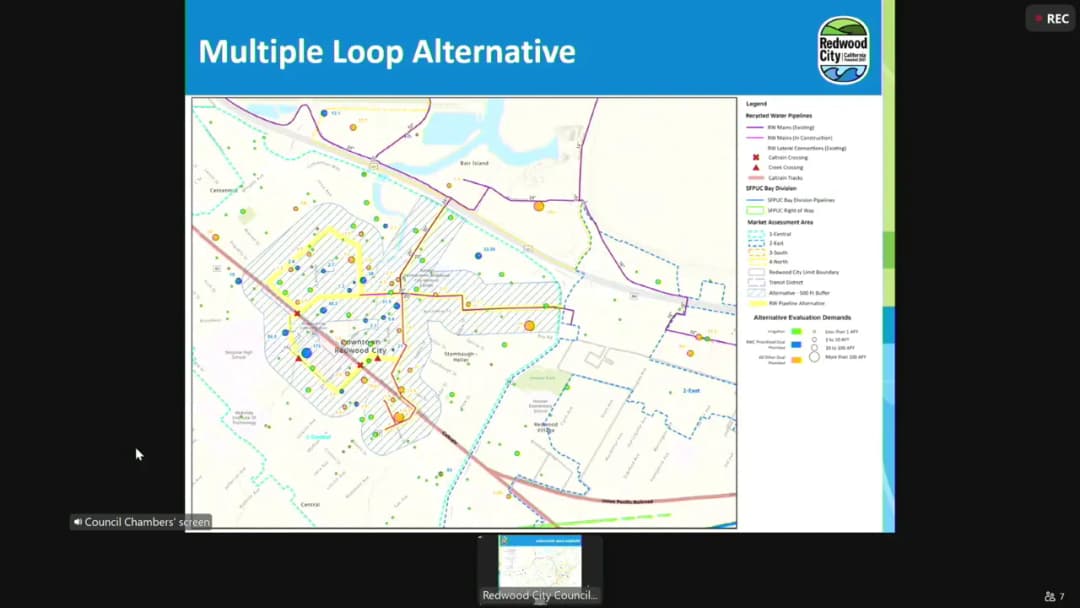
On June 16, 2026, the Redwood City Planning Commission held a regular meeting at 6:00 p.m. in Council Chambers, 1017 Middlefield Road, Redwood City, with participation available via Zoom. Six commissioners were present (Commissioners Bhat, Finch, Hunter, Robinson, Vice Chair Koch, and Chair Crnogorac); Commissioner Cornejo was absent. The meeting focused primarily on a public hearing to consider a recommendation to the City Council regarding Senate Bill (SB) 79, the Abundant and Affordable Homes Near Transit Act. The Commission also approved minutes from two prior meetings and received updates on upcoming City Council items. Consent Calendar - No items were listed on the consent calendar. Public Comments & Testimony - Michael Aruzo, volunteer lead for Yes in Redwood City, spoke in support of the staff recommendation. He emphasized that Redwood City is not on track to meet its regional housing goals and that SB 79 helps meet city goals. He supported adopting SB 79 as is and then developing a Transit-Oriented Development (TOD) Alternative Plan, suggesting density could be shifted from sites like Sequoia High School to other areas near the train station. Discussion Items Staff Presentation on SB 79 Senior Planner Ellen Yau presented an overview of SB 79, which requires housing as an allowed use on residential, mixed-use, or commercial sites within half a mile of a TOD stop. Key standards include: - Sites within half-mile: up to 65 feet in height and 100 dwelling units per acre. - Sites within 200 feet (inner red circle): up to 95 feet and 160 dwelling units per acre. - Minimum density of 30 dwelling units per acre and at least five residential units. - Projects with 11 or more units must provide affordable housing; affordability requirements are the greater of SB 79 or city requirements. - Projects over 85 feet must comply with prevailing wage and skilled workforce requirements. Staff noted that Redwood City has one eligible transit stop: the Redwood City Caltrain station. Many parcels already meet or exceed SB 79 standards (shown in green), while others (pink) would see increased height and density allowed. However, staff anticipates limited near-term impact due to recent development, small parcel sizes, and high construction costs and interest rates. Staff described four implementation approaches: baseline SB 79, a local temporary exclusion ordinance, a TOD Alternative Plan, or a combination. Staff recommended allowing SB 79 to take effect (baseline) and focusing on developing a TOD Alternative Plan, which would allow the city to tailor capacity while maintaining overall SB 79 capacity. The plan could align with ongoing efforts such as the Greater Downtown Area Plan (GDAP) and MTC's Transit-Oriented Communities (TOC) policy. Commissioner Clarifying Questions and Discussion - Commissioner Bhat asked about capacity numbers; staff said specific figures would be provided later, estimating a difference of a couple thousand units between current zoning and SB 79. - Commissioner Hunter asked about the implications of Caltrain service changes and affordability comparisons. Staff noted state law changes could affect applicability, and a separate department handles affordability compliance. - Commissioner Robinson asked about non-eligible sites near Sequoia High School; staff explained they did not meet exclusion criteria (e.g., 50% density threshold, historic status, low-resource designation). - Commissioner Finch asked about the transit station relocation; staff said future planning accounts for a potential move. - Commissioner Bhat questioned whether adopting a TOD Alternative Plan could cap densities at 200% above SB 79, but staff indicated existing higher densities would be justified. - Commissioner Koch asked about the relationship between SB 79 and a future TOD plan; staff clarified the TOD Alternative Plan would take precedence once adopted. Commissioner Finch expressed support for the staff recommendation, noting SB 79 aligns with city goals and near-term effects are likely limited. Commissioner Bhat concurred, arguing exclusions would make the rules complicated and patchwork. Commissioner Hunter initially supported a combination approach with a temporary exclusion ordinance to maintain flexibility, but ultimately supported the motion for the TOD Alternative Plan. Key Outcomes - Minutes Approved: The Commission approved the May 5, 2026 regular meeting minutes and the June 2, 2026 Planning Commission and Architectural Advisory Committee joint meeting minutes, both by 6-0 votes (Commissioner Cornejo absent). - Motion Passed: Commissioner Bhat made a motion, seconded by Vice Chair Koch, to recommend by minute order that the City Council direct staff to prepare a Transit-Oriented Development Alternative Plan in compliance with SB 79. The motion passed 6-0 (Commissioner Cornejo absent). This action allows the baseline SB 79 to take effect while staff works on the TOD Alternative Plan. - Next Steps: The item will be brought to the City Council on July 13, 2026. Staff noted that certain other planning items, including annual zoning code updates and a discussion on extending the Greater Downtown Area Plan boundary, are also on that Council agenda. The next Planning Commission meeting is scheduled for August 18, 2026; the July 21, 2026 meeting has been cancelled. Commissioner Bott was recognized for his service, as this was his last Planning Commission meeting.

AFFORDABLE HOUSING 65% · PROCEDURAL 28% · ENGINEERING AND INFRASTRUCTURE 5% · COMMUNITY ENGAGEMENT 2%
OPENPUBLICA · PUBLIC MEETING INDEXUPDATED DAILY · openpublica.com