Browse by city
Date range
Search help

Search titles, summaries, topics and stored transcripts together. Keywords may match separately; put the whole query in double quotes for a phrase. Matching follows word analysis, so punctuation is not exact. Both dates are included. Documents are not searched.

SHOWING 1531–1540 ENTRIES
1531
MAR 29, 2016 · SACRAMENTO, CALIFORNIA · COMMUNITY POLICE REVIEW COMMISSION
Sacramento Community Police Commission Special Meeting – March 29, 2016

Note: The agenda and minutes indicate the meeting actually occurred on Thursday, April 21, 2016, at 6:00 PM at the Sam and Bonnie Pannell Meadowview Community Center. The date March 29, 2016, is provided per instruction and does not match the official record. The special meeting was called to order by Chair Les Simmons at 6:00 PM. Seven of eleven commissioners were present; Dr. Ernest Uwazie, Rick Jones, and Tim Davis were excused, and Rosalyn Van Buren was absent without excuse. The meeting lasted approximately 113 minutes, adjourning at 7:53 PM. Consent Calendar - Approval of March 14, 2016 Meeting Minutes – Moved by Betty Williams, seconded by Clif Roberts, and unanimously approved. Discussion Items - Police Department Hiring Process – Deputy Chief Ken Bernard presented on the hiring process. The commission received and filed the report. Public comment was heard from Michelle Belton. - Police Department Recruiting Efforts – Deputy Chief Ken Bernard presented recruiting efforts. The commission received and filed the report. No public comments were recorded on this item. - Police Department Diversity – Deputy Chief Ken Bernard presented on police diversity. The commission received and filed the report. Public comments were heard from Erin, Victor, Aniceto Balimgh, and Kim Church (specific positions not recorded). - Proposed Ad Hoc Sub‑Committees – OPSA Director Francine Tournour presented proposed sub‑committees. The commission received and filed the report. No public comment was recorded. Public Comments – Matters Not on the Agenda - Tanya Faison – Requested a document be emailed to commission members. - Trina Allen – Spoke (specific content not recorded). - An anonymous speaker – Spoke (specific content not recorded). Member Comments - Chair Les Simmons requested that a listserv be added to the commission’s website so the public can receive meeting date change notifications. Key Outcomes - The March 14, 2016 meeting minutes were approved unanimously. - All four discussion items were received and filed; no formal recommendations or directives were issued. - No votes were taken other than the consent calendar approval.

1532
MAR 29, 2016 · SACRAMENTO, CALIFORNIA · COMMUNITY POLICE REVIEW COMMISSION
Sacramento Community Police Commission Meeting - March 29, 2016 (Date Discrepancy Noted)

This summary is based on agenda and minutes documents that show conflicting dates: the agenda is dated February 8, 2016, the minutes are dated March 14, 2016, and the user-supplied date is March 29, 2016. The raw transcript is not available. The meeting was held at the Oak Park Community Center. Commission members present included Les Simmons (Chair), Clif Roberts (Vice-Chair), Basim Elkarra, Dr. Ernest Uwazie, Bill Knowlton, Rick Jones, Mariana Sabeniano, Betty Williams, Cathy Thao, Tim Davis, and Rosalyn Van Buren. Consent Calendar - Approval of Minutes: The agenda listed approval of the November 23, 2015 and January 11, 2016 meeting minutes, while the minutes document records approval of the February 8, 2016 meeting minutes. A motion passed to approve the February 8, 2016 minutes with all commissioners voting in favor except Tim Davis, who abstained. Discussion Items - Agenda Items: The agenda included three items: Internal Affairs Overview, Office of Public Safety Accountability Overview, and Internal Accountability, all with a recommendation to receive and file. - Minutes Items: The minutes instead record two discussion items: Police Equipment Overview (presented by Deputy Chief Ken Bernard) and Officer Involved Shootings and Death In Custody Protocol (presented by Deputy Chief Mike Bray). Both were received and filed. Public comment was heard from Trina on the Police Equipment item, and from Muriel Strand and Tanya Faison on the Officer Involved Shootings item. No content of their statements is recorded. Public Comments & Testimony - Matters Not on the Agenda: Public comment was heard from Muriel Strand and Tanya Faison. Their specific positions or statements are not recorded in the minutes. Key Outcomes - The consent calendar minutes were approved with one abstention. - The two discussion items (as per the minutes) were received and filed. - No other actions, votes, or referrals are recorded. The meeting adjourned at 8:05 PM (per the minutes). Note: The discrepancy between the agenda date (February 8, 2016), the minutes date (March 14, 2016), and the user-supplied date (March 29, 2016) is significant. The agenda and minutes document apparently different meetings, and the content of the summary reflects the actions recorded in the minutes, which are more detailed.

1533
MAR 16, 2016 · SACRAMENTO, CALIFORNIA · PRESERVATION COMMISSION
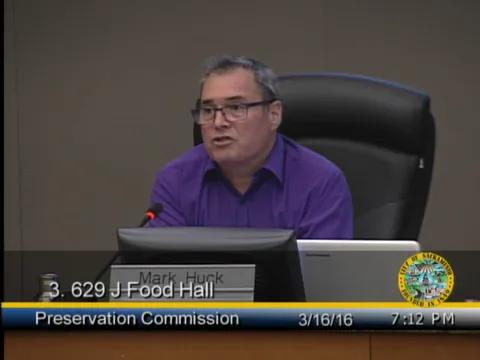
Sacramento Preservation Commission Meeting – March 16, 2016

The Sacramento Preservation Commission convened on March 16, 2016, at 5:30 p.m. in the New City Hall Council Chambers. The meeting included a consent calendar, extensive public testimony regarding proposed changes to the Historic City Cemetery rose garden, and a public hearing on the 629 J Food Hall tenant improvement project. The meeting adjourned at 7:39 p.m. Consent Calendar - Approval of Minutes (February 17, 2016): Approved 6–0–1 (Moffett absent? Commissioner Fuller absent? Actually minutes show 6:0:1 with Fuller absent). Motion by Huck, seconded by Marshack. - Director Report: Received and filed. Public Comments & Testimony Thirteen members of the public spoke during the “Matters Not on the Agenda” period, all on the subject of proposed changes to the Historic City Cemetery rose garden. Key points included: - Sean Manwaring (central city resident, Southside Park Neighborhood Association member) requested the commission consider alternatives to removing climbing roses and trellises, noting their aesthetic and historic value. - Charlotte Owendyk (local rose society member) corrected misconceptions that the roses are modern, stating they are clones of period plants and that the garden is a living memorial. She urged cooperation among groups. - Delphine Cathcart (co-founder of Sacramento Old City Association) asked for preservation of the rose collection, climbing roses, and trellises, inviting commissioners to a garden event on April 9. - Anita Clevenger (current curator of the historic rose garden) stated the collection is a late 20th-century interpretation of historic plantings, that climbing roses are 25+ years old and difficult to relocate, and that the December deadline was only communicated on February 19, which she called unfair. - Diane Woodruff (rose lover) noted the garden’s worldwide reputation, including induction into the World Federation’s Award of Garden Excellence, and pleaded for more time and public input. - Anne Geraghty (resident, volunteer) claimed guidelines were developed without gardener or community input and urged commissioners to visit the garden. - Werner Schink (nearby resident) argued that removing roses would diminish the experiential quality and could lead to increased vandalism. - Garret Root (President, Preservation Sacramento) explained that National Register listing does not impose rules, that the 2007 cemetery general plan should be updated, and that the proposed work may qualify as a development project subject to commission review. He suggested applying for a CLG grant for a cultural landscape treatment plan. - William Burg (historian, California Office of Historic Preservation) clarified that the National Register listing does not affect the cemetery’s eligibility; trellises are not historic features and meet Secretary of Interior Standards; he said the commission has purview over city-owned resources. - Rick Roberts (longtime volunteer, oversees three cemetery areas) stated that volunteers have complied with city guidelines and that there is a need for balanced consideration. - Jennifer Holden (volunteer, apprentice blacksmith) emphasized the dedication and specialized skills of volunteers and the importance of including them in decision-making. - Randee Tavarez (community member) argued that simply because roses were planted in the 1990s does not justify removal, and that weather and age, not roses, damage markers. - Martin Hopper (volunteer from Plymouth Pioneer Historic Cemetery) noted that roses are living history, that mature roses do not transplant well, and that the city should work with volunteers and experts to revisit guidelines. Discussion Items PB16-016 – 629 J Food Hall (629 J Street) - The project is a tenant improvement of the historic Dio Mills Bank building (listed on Sacramento, California, and National Registers, designed by Willis Polk in 1912 with a 1926–27 addition by Leonard Starks). The scope includes a retractable stair opening into the 7th Street sidewalk (hollow sidewalk), a new mezzanine, and modifications to the historic central stair. - Staff recommended a north-end mezzanine (matching historic location) and asked for commission feedback on stair treatment (raising railing vs. adding glass rail), mezzanine location and design, and the retractable stair. - Commissioners provided the following guidance: - Mezzanine: Strong preference for the north end (near vault) to preserve the open volume; should be held off walls with a clear glass railing to allow views; size should be minimal and justified by business need. - Central stair: Prefer detaching original railings and adding a base panel to meet safety code, preserving the historic fabric. - Retractable stair: Commissioners requested more detailed drawings and explanation of operation; expressed concern about sidewalk dining structures blocking views but noted retractable design mitigates that. - Revolving door: Should be retained and rehabilitated. - Teller cages: Reuse encouraged, but with careful differentiation to avoid false historicism; may be used to repair damaged marble. - Signage: Minimal signage only, possibly on non-historic west entrance; consider projected light signs. - Lighting: Interior lighting should be discreet; no exterior lighting on building; ground-floor windows can provide street activation. - Flooring: Marble floor in banking hall should be preserved; new flooring in carpeted areas should complement. - Character-defining features: Commissioners added the 1927 staircase, cheek walls/raised floors, and the sense of volume to the preliminary list; requested a full inventory with disposition. - The project is expected to return to the commission in April for final design review and approval. Key Outcomes - Consent Calendar approved (6–0–1). - Commissioners Whitelam and Piner requested that the Historic City Cemetery guidelines be agendized for the April 13, 2016 meeting to allow proper discussion of the public comments heard. - Commissioner Huck announced the 40th anniversary of preservation in Sacramento: banners in downtown in May, an exhibit at New City Hall (May–August) and McClatchy Library (November–December), a reception on May 21 at Railbridge and Company, and a drawing contest for students. - No formal action was taken on Public Comments as the item was not on the agenda. - No vote on the 629 J Food Hall item; it was a review and comment session.

HISTORIC PRESERVATION 35% · ARCHITECTURE 29% · HISTORICAL PRESERVATION 11% · PUBLIC COMMENTS 11%
1534
MAR 14, 2016 · SACRAMENTO, CALIFORNIA · COMMUNITY POLICE REVIEW COMMISSION
Sacramento Community Police Commission Meeting – March 14, 2016

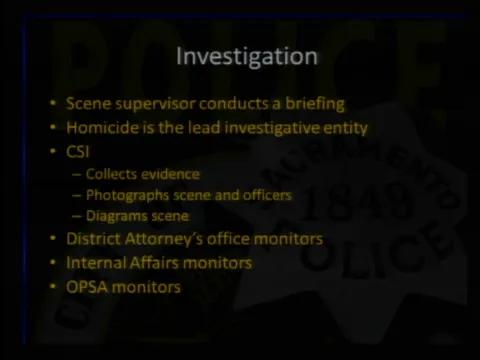
The Sacramento Community Police Commission met on Monday, March 14, 2016, from approximately 5:59 pm to 8:05 pm in the Council Chamber at 915 I Street. The commission received presentations on police equipment (in-car cameras and body-worn cameras) and on protocols for officer-involved shootings and deaths in custody. Public comment and commissioner discussion followed, with both major agenda items being received and filed. Consent Calendar - Approved the February 8, 2016 meeting minutes (moved by Mariana Sabeniano, seconded by Ernest Uwazie; all voted yes except Tim Davis abstained, as he was not at that meeting). Discussion Items - Police Equipment Overview (Sergeant Michelle Gigante, Sacramento Police Department) – Presented an overview of the in-car camera (ICC) system (Panasonic Arbitrator 360). Key details: cameras were first deployed in 2001 (VHS) and upgraded to digital in 2012; automatic activation triggers include light bar, speed over 90 mph, rear door opening, and crash sensor; manual activation via camera button, wireless microphone, or in-car computer; 30-second pre-record buffer; video stored for 18 months (general) or indefinitely for evidentiary cases; officers cannot edit footage; public release is not standard practice. Officers must log in and perform a system check at start of shift; cameras are automatically downloaded via wireless at department buildings. The sergeant noted that the department is also moving toward body-worn cameras. - Body-Worn Camera Update (Lieutenant Justin Risley, Sacramento Police Department) – Described the department’s body-worn camera pilot program, funded by a DOJ grant (Oct 2016 – Sept 2017) with a city match. The total estimated cost for two years is $1,536,000. Multiple vendors have been trialed (Taser, Panasonic, Vive U, Digital Ally, Watch Guard, Motorola). Officers in various units (gang, bike, motor, canine, shot spotter) are testing the cameras. Key considerations: battery life, mounting options, storage costs, back-end system, and integration with existing equipment. The department aims to take a deliberate approach, learning from early adopters, and expects to finalize a product selection by June 2016. Policy mirrors the in-car camera policy and incorporates best practices. - Officer-Involved Shootings and Death in Custody Protocol (Deputy Chief Mike Bray, Sacramento Police Department) – Outlined the post-incident response: immediate medical aid, public safety statement from involved officer, witness identification, scene management, notifications (CSI, command staff, internal affairs, DA investigators, PIO), and formal interviews (all videotaped). The district attorney’s office monitors the investigation; internal affairs and the Office of Public Safety Accountability also provide oversight. Statistics: 17 officer-involved shootings in the last five years (average 3/year) – 53% white, 18% black, 17% Hispanic, 12% Asian; 4 deaths in custody (2011 and 2013) – two black, one white, one Hispanic. The department also investigates shootings by other agencies within the city. Post-incident, officers receive mandatory meeting with mental health professional, three days administrative leave, and peer support. Public Comments & Testimony - Trina (on Police Equipment Overview) – Expressed support for body cameras and in-car cameras, but requested citizen oversight: activation upon citizen request, commission review of footage, and public access to one’s own video. - Muriel Strand (Matters Not on Agenda) – Read a Harper’s Magazine article quoting former Nixon aide John Ehrlichman describing the war on drugs as a politically motivated effort to target the anti-war left and black communities. - Tanya Faison (Black Lives Matter Sacramento) – Criticized the commission for appearing too friendly with police and not focusing enough on accountability; urged commissioners to represent the community. Key Outcomes - Both agenda items (Police Equipment Overview and Officer Involved Shootings/Death in Custody Protocol) were received and filed. - The next meeting is scheduled for April 11, 2016, at 6:00 pm at the Pennell Community Center, focusing on the pillar of diversity. - Commissioners discussed the need for ride-alongs and community engagement, noting Brown Act restrictions on communication but encouraging the formation of ad hoc committees for specific topics. - The commission will report to the mayor and council in June/July 2016 after completing the remaining pillars.

POLICE POLICY REVIEW 45% · BODY WORN CAMERAS 20% · PUBLIC SAFETY 13% · TECHNOLOGY AND INNOVATION 5%
1535
FEB 17, 2016 · SACRAMENTO, CALIFORNIA · PRESERVATION COMMISSION
Sacramento Preservation Commission Meeting - February 17, 2016

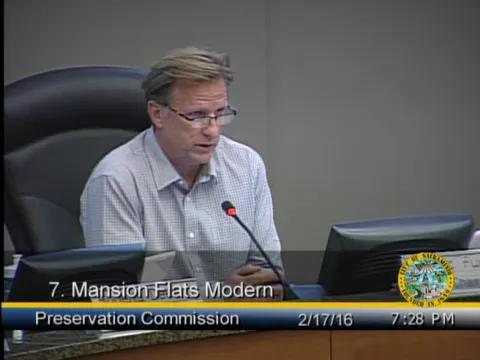
The Sacramento Preservation Commission met on February 17, 2016, at 5:30 PM in the Council Chambers at New City Hall, 915 I Street. The meeting included approval of previous minutes, public hearings on three property nominations and a development project, establishment of an ad-hoc committee, and election of officers. The meeting adjourned at 8:01 PM. Consent Calendar - Approval of Minutes (December 16, 2015 and January 20, 2016): Approved with corrections. The December minutes were corrected to remove an extraneous letter in “proclamation” and the January minutes were corrected to reflect that the calendar date approval was moved to the current meeting. Vote: 6-0-1 (Commissioner Whitelam abstained on the December minutes as she was not a commissioner at that time). - Director’s Report: Received and filed. Included updates on nominations, development projects, and other preservation matters. - 2016 Meeting Calendar Changes: Approved a change for April: the meeting will be held on April 13, 2016, in the same location, due to the statewide California Preservation Commission conference. Vote: 7-0. Public Comments & Testimony - No members of the public provided comment on any agenda items or during the public comment period for matters not on the agenda. Discussion Items - 5. M15-019 – Nomination of Murphy Residence (1967 13th Avenue) as a Landmark: Staff presented the nomination, citing the property as an excellent example of mid-century modern architecture (criteria 3 and 4). The historical consultant noted the house was designed by prominent architect Herbert Goodpastor in 1949. Commissioners discussed character-defining features and debated whether to add criterion 5 (high artistic value). Commissioner Moffett noted insufficient information to support criterion 5. The commission forwarded a recommendation of approval to the City Council with amendments to the character-defining features list, including correcting “flat roof” to “very low pitched roof,” removing the later rear addition from the list, and adding horizontal wood siding as a feature. Vote: 7-0. - 6. M15-020 – Nomination of Nelson Residence (2626 P Street) as a Landmark: Staff and consultant presented the 1908 Craftsman-style home, built by Wright and Kimbrough, noted for its high integrity and preservation. Commissioner Piner disclosed a prior site visit. The commission approved forwarding a recommendation to the City Council with amendments: adding the construction date “1908” to the ordinance, clarifying the eligibility criteria as “criterion 3” (not C), updating the description of the rear dormers, and adding two character-defining features noted by Commissioner Piner (the water table feature and asymmetrical massing). Vote: 7-0. - 7. P15-059 – Mansion Flats Modern (1509 D Street): The project proposes subdividing three vacant parcels (0.39 acres) into eight lots and constructing eight new single-family homes in the Washington Historic District. Staff recommended forwarding approval of the environmental exemption (CEQA infill) and site plan/design review (including a reduced side-yard setback) to the Planning and Design Commission. Commissioners discussed parking, curb cuts, privacy at the D Street facade (sliding glass doors at grade), fencing, and the design of the garage doors. Commissioner Huck expressed concern about garage doors dominating the streetscape. Commissioner Marshack noted the project’s design fit the neighborhood’s scale. The commission approved a motion to forward with conditions: eliminate interior fencing between units, ensure fencing design is integral to the architecture (especially along the street frontage), and require preservation staff review of final fencing and landscape plans. The motion also added language referencing “Central City Neighborhood Design Guidelines” and requiring preservation staff (not design review staff) for final approvals. Vote: 7-0. - 8. Establish Ad-Hoc Committee on Demolition Mitigation Fee: Commissioner Huck proposed forming a committee to research feasibility of a mitigation fee for demolition of historic structures, similar to other California cities. The commission established a three-member ad-hoc committee: Commissioners Huck, Moffett, and Whitelam. The committee is to define its mission, scope, and timeline, and report back to the full commission. - 9. Election of Chair and Vice Chair for 2016: Commissioner Moffett was elected Chair, and Commissioner Marshack was elected Vice Chair. Vote: 7-0 for each. Key Outcomes - Approved consent calendar items with corrections. - Forwarded recommendations to City Council for landmark designation of the Murphy Residence (1967 13th Ave) and the Nelson Residence (2626 P St), both with amendments. - Forwarded a recommendation to the Planning and Design Commission to approve the Mansion Flats Modern project with conditions, including elimination of interior fencing and preservation staff review of fence and landscape details. - Established an Ad-Hoc Committee to study a potential demolition mitigation fee for historic structures. - Elected new officers: Chair Chad Moffett and Vice Chair Jon Marshack. - Commissioner Marshack highlighted the ongoing restoration of the Amaruso House (Hart Mansion) in the Boulevard Park Historic District, praising city staff efforts. - Commissioner Huck invited the public to a 40th anniversary social hour for preservation advocates on February 18, 2016, at Monkey Bar.

HISTORIC PRESERVATION 42% · ARCHITECTURE 14% · URBAN DESIGN 12% · PROCEDURAL 11%
1536
FEB 10, 2016 · SACRAMENTO, CALIFORNIA · UTILITIES RATE ADVISORY COMMISSION
Utilities Rate Advisory Commission Meeting: February 10, 2016

The Utilities Rate Advisory Commission (URAC) continued a public hearing on the Department of Utilities' proposed four-year water and wastewater rate adjustments. Commissioners heard a staff presentation comparing the original accelerated meter program (4‑year) with an extended alternative (8‑year), received testimony from 17 members of the public, and ultimately voted to recommend the original rate proposal. A separate motion to explore expanding the Utility Rate Assistance Program (URAP) to cover renters and nonprofit organizations also passed. Consent Calendar - Approval of Minutes (January 27, 2016): The minutes were approved with a revision clarifying that the first motion at the January meeting was superseded by a substitute motion. The motion passed unanimously (6‑0). Public Comments & Testimony - Sandra Bauer called the proposed 9%–10% annual increases “extreme, excessive, and a burden on citizens.” - Dennis Neufeld cited a specific example of a water‑main repair where a meter could have been installed but was not, arguing a lack of cost‑containment culture in the department. - Craig Powell (ION Sacramento) presented data showing that deferring half the meter debt would save about $14 million per year in interest and that the department’s cost projections omitted future savings from delayed meter replacement. - Rick Stevenson questioned the necessity of replacing backyard mains, citing public‑records evidence that leaks were not concentrated in old pipes. - Erik Smitt (ION Sacramento) contrasted the department’s projected 4% annual cost increases with a 1.5% CPI over eight years, and said cost containment is lacking. - Debra Desrosiers calculated that with flat rates, the city would lose $127 per meter per year under the accelerated program, and she questioned the lack of a sunset clause. - Joshua Fogler (former DOU employee) raised concerns about fluoridation and potential lead leaching, referencing Flint, Michigan. - Roxanne Fuentez warned that the combined rate increases (water, garbage, etc.) could push homeowners into poverty and increase homelessness. - Andre Gauet asked about the life expectancy of meters (15–20 years) and whether future replacement costs were budgeted. - Frank Slonek objected to fluoridation costs and questioned the department’s budget breakdown. - John Hahn questioned the $28 million additional cost of the extended program, noting that only half the meter program would be deferred, and asked for better cash‑flow disclosure. - Eric Rasmussen (Sacramento Association of Realtors) supported the original rate proposal, praising the department’s outreach and transparency. - Steven Bourasa noted his own metered bill had not decreased and argued that the 40%+ increase was too high for many residents. - Robin Corralejo said the commission had not fully disclosed that the increases also cover past mismanagement, pension debt, and backyard main replacements, and suggested borrowing at low interest rates instead. - P. Anthony Thomas asked whether this would be the last increase and urged the commission to balance the city’s budget rather than burden ratepayers. - DeAun Tollefson presented a comparative analysis of 30 metro areas, concluding that Sacramento’s combined water/wastewater/refuse bill was currently low, and that the proposed increases would bring it to a reasonable level; she also supported faster meter installation. - Susan Gedestad argued that cramming the program into four years was unfair and that the city manager’s appearance amounted to lobbying; she also questioned the desire to move to a cash‑basis system. - Charles Yarbrough said Sacramento was being punished for a state‑mandated meter law despite having a historical unlimited water supply, and that water was being sent to Southern California. - Rick Castro advocated for tiered rates (variable charges) to encourage conservation and help low‑income users, noting that PG&E and SMUD use such structures. Discussion Items - Continuation of Public Hearing on Water and Wastewater Rate Adjustments: - Staff presented two scenarios: (1) the original proposal – 4‑year meter program (completion by 2020) with 10% annual water rate increases and 9% wastewater increases, using 266 million in debt; (2) an extended 8‑year meter program (completion by 2024) with 9% annual water increases for the first four years, but 10% increases in three of the next four years, plus 28 million in additional capital costs and greater interest‑rate risk. - City Manager John Shirey urged approval of the original plan, citing the need for water conservation, equitable billing, accountability, cost savings, and regulatory pressure. He noted that a letter from the State Water Resources Control Board chair expressed support for the city’s metering efforts. - Commission discussion included clarification of the $28 million cost increase ($9 million in soft costs, $19 million in inflation), and concerns about the minimal rate difference (1%) between the two scenarios. Commissioner Butcher proposed a middle‑ground approach (three years of 9% increases with a two‑year review), but this was not formally moved. - The public hearing was closed after the first vote. - Utility Rate Assistance Program (URAP): Staff reported that written protests numbered 427 (below the 1% threshold), and that outreach efforts include a bill stuffer, partnership with SMUD to cross‑match customer databases, and a standard eligibility threshold of 200% of the federal poverty level. Key Outcomes - Motion 1 (Approve Four‑Year Rate Increases): Passed 4‑1‑1. - Yes: Brian Biering, Ryan McManus, Timothy Horner, Andrew Day - No: Carolyn Veal‑Hunter - Abstain: April Butcher The recommendation to the Mayor and City Council includes water rate increases of 10% per year for FY2017–FY2020 and wastewater increases of 9% per year for the same period. - Motion 2 (Expand URAP Study): Passed unanimously (6‑0). - The motion recommends that the Mayor and City Council direct staff to report back on expanding the Utility Rate Assistance Program to cover renters and nonprofit organizations that house qualifying individuals, exploring models such as SMUD’s program. - Public Hearing: Closed after the first motion. - Next Steps: The commission’s recommendation will be forwarded to the City Council for final action. The commission also discussed improving web transparency and future public engagement, though no formal action was taken on those items.

WATER MANAGEMENT 36% · PUBLIC COMMENTS 11% · UTILITIES 11% · RATE INCREASES 11%
1537
JAN 27, 2016 · SACRAMENTO, CALIFORNIA · UTILITIES RATE ADVISORY COMMISSION
Utilities Rate Advisory Commission Meeting - January 27, 2016: Public Hearing on Proposed Four-Year Water and Wastewater Rate Increases

The Utilities Rate Advisory Commission (URAC) held a public hearing on January 27, 2016, to consider the Department of Utilities' proposed four-year water and wastewater utility service rate increases. The meeting began at 5:33 p.m. and included staff presentations, extensive public testimony, and commissioner discussion. The commission deferred a final decision by voting to continue the public hearing to February 10, 2016. Consent Calendar - Approval of Minutes for December 9, 2015: Approved unanimously (6-0). Public Comments & Testimony - Opposition: Numerous residents and business owners spoke against the proposed rate increases, citing financial hardship, perceived mismanagement, lack of transparency, and the burden on low-income and fixed-income households. Specific concerns included the accelerated water meter program (from 2025 to 2020), inadequate outreach, past illegal transfers of utility funds, and high costs of contracts. Speakers urged the commission to reject or delay the rate hikes and to explore cost-saving efficiencies. - Support: A few speakers supported the increases, emphasizing the need to invest in aging infrastructure, maintain reliable service, and avoid future crises. Supporters noted the city's good credit rating and the importance of funding capital improvements. Discussion Items - Staff Presentation: Bill Busath (Director of Utilities), Dan Sherry (Engineering Manager), Susan Goodison (Business Services Manager), and Lucy Crocker (Community Engagement) presented the four-year rate proposal. Key points: the water system requires $265.5 million in capital improvements (including $230 million for accelerated meter installation), and the wastewater system needs $53.5 million. Proposed annual increases: water 10% (raising average monthly bill from $45.73 to $66.95 by 2019), wastewater 9% (from $22.42 to $31.65). The storm drainage rate adjustment was withdrawn. Staff noted 381 written protests received as of the meeting. The utility rate assistance program (currently serving 1,600 customers) would be continued with general fund support. - Commissioner Questions: Commissioners asked about the 100-year replacement cycle, debt financing, the impact of the meter acceleration program, the utility rate assistance program, comparisons with other cities, and the potential for consolidating wastewater services with the county. Staff acknowledged that the proposed rate increases would not achieve the 100-year replacement cycle within four years (water: 200-230 years; wastewater: 300-350 years) but would move toward that goal. - Public Hearing: Commissioners heard over 30 public speakers, the majority opposing the rate increases. Concerns included the steep 40% cumulative increase, lack of economic impact analysis, and the timing of the meter acceleration. Key Outcomes - Substitute Motion: Commissioner Brian Biering moved to adjourn the public hearing and continue it to February 10, 2016. The motion was seconded by Ryan McManus and passed 5-1 (April Butcher opposed). This action deferred a decision on the rate proposal. - Next Steps: The commission will reconvene on February 10, 2016, to continue the public hearing and potentially vote on a recommendation to the City Council. Staff was asked to provide additional analysis, including the impact of extending the meter installation timeline to 2025.

RATE INCREASES 36% · UTILITIES 21% · PUBLIC COMMENTS 7% · WATER MANAGEMENT 6%
1538
JAN 20, 2016 · SACRAMENTO, CALIFORNIA · PRESERVATION COMMISSION
Sacramento Preservation Commission Meeting - January 20, 2016

The Sacramento Preservation Commission met on Wednesday, January 20, 2016, at 5:30 p.m. in the New City Hall Council Chambers, 915 I Street. All commissioners were present. The Commission acted on a recommended approval for an infill development in the Southside Historic District, reviewed a National Register nomination, and advanced a 40th anniversary proclamation. The meeting adjourned at 7:58 p.m. Consent Calendar - Item 1: Minutes of the December 16, 2015 meeting were continued to the February 17, 2016 agenda because the Commission Clerk was recovering from injuries. - Item 2: Director Report was received and filed. - Item 3: The Commission welcomed new Commissioner Jacqueline Whitelam and recognized outgoing Commissioner Kathleen Forrest with a certificate of appreciation. - Item 4: The 2016 meeting calendar changes were brought up. The transcript indicates the item was continued to the February 17, 2016 meeting; however, the approved minutes record "Calendar dates approved." This discrepancy is noted. Public Comments & Testimony - Matthew Downey, a resident at 821 U Street directly across the alley from the proposed Tomato Alley Lofts, opposed the project. He cited the 38-foot building height, requested setback exceptions, density (4 units with 8-10 bedrooms), increased alley traffic and parking problems, and the project's incompatibility with the Southside Park Historic District. He requested that any approved building not exceed two stories. - Susan Bush, a longtime Southside Park Neighborhood Association member speaking for herself, supported the project, describing it as a good-looking, compatible improvement amid nearby shabby commercial buildings. - William Moore, owner of property at 800-802 U Street and other properties in Southside Park, opposed the project at the proposed scale. He argued it would erode the historic district, set a precedent for oversized backyard infill ("Tomato Canyon"), and should be scaled back and made more congruent with the neighborhood. Discussion Items - Item 5 - P15-046 Tomato Alley Lofts (816 T Street): This public hearing concerned a request to forward a recommendation to the Planning and Design Commission for a tentative map and Preservation Site Plan/Design Review. The project would subdivide a 40-by-160-foot downtown lot into three parcels, retain the existing single-family home, and construct two new three-story duplexes facing Tomato Alley. Staff recommended approval of: an environmental exemption under CEQA Guidelines Section 15332; site plan and design review; and deviations to reduce the minimum lot size from 3,200 to 1,600 square feet (Parcels 2 and 3), minimum lot width from 40 to 20 feet, rear yard setback from 15 to 12 feet (Parcel 1), rear setback from 15 to 14 feet and interior side yard setback from 3 to 0 feet (Parcels 2 and 3). The buildings would be 38 feet to the roof peak (maximum 42 feet), and the five units would comply with density on the 6,400-square-foot overall site. Staff noted a similar approved project in Chinatown Alley. Applicant Lane Leach (property owner) and architect Craig Houseman presented the design, emphasizing flexible "grow home" units, privacy-oriented fenestration, a metal roof, Corten steel panels, recycled Resista siding, and a ventilated garbage closet. Commissioner questions explored precedent, massing, density calculation, solar access, and materials. After public comment, Commissioner Huck moved to approve staff recommendations; the motion was seconded by Commissioner Moffett. A friendly amendment added "neighborhood" to the Central City Design Guidelines reference. The minutes record the motion carried 7:0:0; however, the transcript shows multiple "yes" votes and one "No" vote (possibly Chair Fuller) before the motion was declared passed. This discrepancy is noted. The recommendation is forwarded to the Planning and Design Commission. - Item 6 - M15-018 Bel-Vue Apartments / American Cash Apartments (1123 8th Street): The Commission considered a request from the State Historic Preservation Officer for review and comment on nominating the property to the National Register of Historic Places. A representative of the owner (the redevelopment agency successor agency) noted the property is being considered for disposal and affirmed the prospective developer's intent to preserve the Bel-Vue Apartments, while raising the possibility of interior unit reconfiguration. Commissioners discussed the building's significance, with particular attention to the north (alley) facade, its integrity, and the rarity of the property type. The Commission voted to send a letter to the Mayor stating that the property meets the criteria for National Register listing, adding language about the north facade as a character-defining feature. The motion passed by voice vote. - Item 7 - 40th Anniversary Celebration Proclamation: The Commission reviewed draft language for a City Council ceremonial proclamation celebrating the 40th anniversary of the City Preservation Commission and Sacramento Heritage. Commissioner Huck led the discussion. Amendments were added to recognize that historic preservation contributes to the authenticity, uniqueness, livability, and future economic development of Sacramento. The Commission approved the draft language for submission to Sacramento Heritage and the City Council. The motion passed by voice vote. Key Outcomes - Tomato Alley Lofts: The Commission voted to recommend approval to the Planning and Design Commission, including the environmental exemption, site plan and design review, and requested deviations. The Planning and Design Commission will make the final decision. - Bel-Vue Apartments: The Commission will transmit comments to the Mayor stating that the property meets National Register criteria, with an emphasis on the north facade's integrity. - 40th Anniversary: The Commission approved draft proclamation language for City Council consideration. - The next meeting is scheduled for February 17, 2016, with an election for new Chair and Vice Chair.

HISTORIC PRESERVATION 45% · LAND USE PLANNING 19% · PROCEDURAL 10% · URBAN DESIGN 10%
1539
JAN 11, 2016 · SACRAMENTO, CALIFORNIA · COMMUNITY POLICE REVIEW COMMISSION
Sacramento Community Police Commission Meeting - January 11, 2016

The Sacramento Community Police Commission held its first meeting of 2016 on January 11, 2016, at 6:00 PM in the City Council Chamber. The meeting included welcoming remarks from Police Chief Sam Somers, a presentation on the Officer Next Door Initiative, adoption of the 2016 meeting calendar, and an overview of the Sacramento Police Department. Public comments were heard on both agenda items and non-agenda matters. The meeting adjourned at 7:40 PM. Consent Calendar - Approval of the November 23, 2015 meeting minutes. Moved by Bill Knowlton, seconded by Betty Williams. Passed unanimously with nine votes in favor (Dr. Ernest Uwazie absent). Public Comments & Testimony - Dave Jenest (Crime Watch) commented on the welcoming remarks, expressing support for the police department and urging better communication and community engagement. He also spoke on the Officer Next Door Initiative, emphasizing the need for proactive communication and community workshops. - Bob Erlenbusch (Executive Director, Sacramento Regional Coalition to End Homelessness) requested to present a forthcoming report on homelessness and police interactions, noting recommendations on implicit bias training and support for the Impact Team. He asked to present at the February meeting. - Efren Gutierrez (Latino community representative) expressed concern about the underrepresentation of Latinos on the commission and in the police department, urging more diversity and community-based policing. He volunteered to assist with recruitment. - Ernest Carter (former commission member) criticized the commission as a "facade" and asserted that the police department has proven bias in investigations and report writing. He called for real civilian oversight, not just recommendations. - Unnamed speaker (likely Ernest Carter) asked how the community can communicate with the commission, expressing frustration with the disconnect. - Dave Jenest (final) commented on technology and staffing, noting that actual officer numbers are lower than reported and urging better communication and support for bike officer technology. Discussion Items 1. Welcoming Remarks – Police Chief Sam Somers (Received and Filed) - Chief Somers introduced himself (32 years with SPD, second generation). He emphasized the department's shift from enforcement to prevention and intervention, building trust through transparency, and the importance of the commission as ambassadors. He noted the department requires 60 college credits and many officers have bachelor's degrees. 2. Officer Next Door Initiative (Received and Filed) - Francine Tournour (OPSA Director) and Deputy Chief Ken Bernard presented the four pillars: Training, Diversity, Engagement, and Accountability. They discussed implicit bias training, de-escalation simulators, mental health training, and the need for a diverse workforce. The commission recommended starting with the accountability pillar at the February meeting. - Commissioner Betty Williams asked about the Office of Public Safety Accountability’s role. Commissioner Clif Roberts asked about diversity goals and current makeup, and the impact of Measure U (funding for hiring, set to sunset in 2019). Deputy Chief Bernard noted the department aspires to reflect the community and will provide detailed stats later. 3. Commission Calendar Adoption (Motion passed unanimously) - The 2016 calendar was adopted. Meetings will be held at various community locations (Oak Park, Pennell, Del Paso Heights) with some at City Hall. No meetings in June, July, or December; those months will be used for community engagement activities. 4. Police Department Overview – Captain Justin Eklund (Received and Filed) - Detailed presentation on organizational structure, staffing (sworn and civilian, peak in 2007-08, decline to 692 sworn including academy), crime statistics (11.45% uptick in 2015 from 2014 lows, but still below 2012 and 2013 levels), and initiatives: geographic policing, neighborhood watch/Nextdoor (300 groups, 100,000 social media reach), Cops and Clergy, youth programs (criminal justice academies with 99% graduation rate, 90% college attendance), technology (pod cameras, license plate readers, real-time crime center, body cameras, shot spotter in Del Paso Heights), and Impact Team for homelessness. - Commissioners asked about crime hotspots, geographic policing boundaries, pod camera capabilities, officer staffing goals (target of 1,000 officers), and body camera policies. Chief Somers indicated a plan to add 15 officers per year for 20 years. Key Outcomes - Approved minutes of November 23, 2015 (unanimous). - Received and filed the welcoming remarks, Officer Next Door Initiative presentation, and Police Department Overview. - Adopted the 2016 meeting calendar (unanimous). - Staff recommendation to begin the accountability pillar at the February meeting, with a presentation on internal affairs and use of force procedures. - Information request from Betty Williams for crime maps depicting 2015 hotspots. - A request from Bob Erlenbusch to present the homelessness report in February; the commission will consider scheduling.

POLICE POLICY REVIEW 33% · COMMUNITY ENGAGEMENT 20% · PUBLIC SAFETY 16% · TECHNOLOGY AND INNOVATION 9%
1540
DEC 16, 2015 · SACRAMENTO, CALIFORNIA · PRESERVATION COMMISSION
Sacramento Preservation Commission Meeting – December 16, 2015

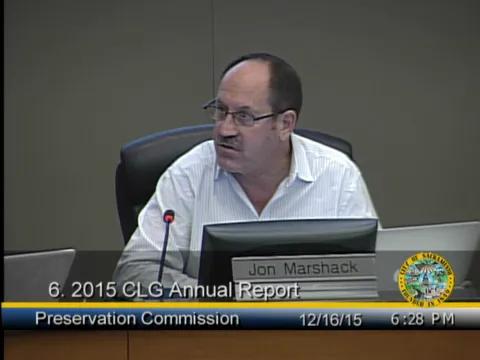
The Sacramento Preservation Commission convened on December 16, 2015, at 5:30 PM in the Council Chambers of New City Hall (915 I Street). The meeting covered a consent calendar, updates from the Preservation Director, a presentation on the 40th anniversary of preservation in Sacramento, a discussion on a potential mitigation fund for historical resource losses, and provided direction on the 2015 Certified Local Government (CLG) Annual Report. The meeting included public comments and concluded with member comments and adjournment. Consent Calendar - Approval of Minutes (November 18, 2015): The commission unanimously approved the minutes from the previous meeting. - 2016 Regular Meeting Calendar: Commissioner Marshak noted a conflict between the April 2016 meeting and the California Preservation Conference (April 16–20, 2016, at the Presidio). The commission voted to approve the calendar with the exception of the April meeting, pending confirmation of a rescheduled date. [Note: The agenda states a meeting date in December 2015; the calendar year is for 2016.] Director's Report - Digitization of Historic Records: Preservation Director Roberta Deering announced that intern Dakota Smith scanned 23 boxes of original landmark survey forms from the late 1970s and 1980s. The physical records were transferred to the Center for Sacramento History, and the electronic forms will be linked to the Sacramento Register online, with completion expected before Dakota leaves at the end of January. 40th Anniversary of Preservation in Sacramento - Presentation: Members of the ad hoc committee (Melissa Goudreau, Carew Bounds, and Commissioner Mark Huck) presented plans for the 40th anniversary celebration, commemorating the passage of the preservation ordinance (likely 1975 or 1976). The celebration will include downtown banners, a traveling exhibit, educational outreach, a city proclamation, and a reception, all focused around May 2016. - Research and Student Involvement: Public history graduate student Wesby is conducting research on 40 years of preservation milestones and will produce a thesis by May 2016. - Budget and Sponsorship: The minimal budget is $8,000; roughly half has been raised. The commission was encouraged to solicit sponsorships from businesses and individuals. - Community Engagement: Monthly social hours and hosted walking tours are planned to broaden participation. The next social hour is January 14, 2016, at Bottle and Barlow, with a walking tour on January 20. Public Comments & Testimony - Ann Yan Douglas: Raised concerns about maintenance and vegetation (trees) in Old Sacramento and near the Governor's Mansion, as well as an alleged power surge near the Centennial Building. The Chair suggested contacting the appropriate departments and offered to follow up. - Ann Yan Douglas (on Mitigation Fund): Asked if a fund existed for historic site maintenance; was informed there is no dedicated fund at present, but there is a small historic places fund for private projects. Discussion Items - Mitigation Program for Historical Resources Impacts (Item 5): Commissioner Huck proposed creating a fund to mitigate unavoidable loss of historical resources, potentially funding surveys, registration, and maintenance. An ad hoc committee will be formed to explore this idea, with a formal resolution agendized for the next meeting. - 2015 CLG Annual Report (Item 6): Roberta Deering presented the report and requested commission input on critical preservation planning issues, accomplishments, and goals. Commissioner Marshak identified insufficient staff and development pressures (entertainment/sports complex, 10,000 housing units) as critical issues, and suggested goals including adding staff and increasing education for city officials. Commissioner Piner suggested exploring deconstruction and material salvage incentives. Key Outcomes - Consent Calendar: Approved except for April 2016 meeting. - 2016 Calendar: Approved with April exception; date to be confirmed. - Mitigation Fund: An ad hoc committee will be formed; details to be discussed at the next meeting. - CLG Annual Report: Commission provided verbal direction; additional comments due by December 30, 2015. Member Comments - Adjournment: The meeting was adjourned after Commissioner Huck requested that the proclamation discussion be agendized for the next meeting.

HISTORIC PRESERVATION 63% · PUBLIC COMMENTS 8% · URBAN FORESTRY 6% · PROCEDURAL 5%
OPENPUBLICA · PUBLIC MEETING INDEXUPDATED DAILY · openpublica.com