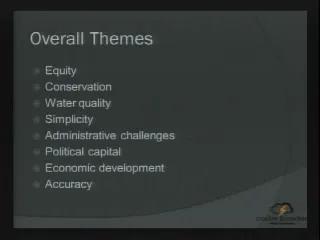
The Utilities Rate Advisory Commission (URAC) met on April 22, 2015, at 5:30 PM in the City Hall Council Chambers, 915 I Street, Sacramento. The meeting included approval of previous minutes, revisions to the 2015 meeting calendar, a detailed update on the Department of Utilities rate structure study, and a drought update from city staff. Commissioners discussed equity between metered and unmetered customers, conservation pricing, and recent legal rulings on tiered rates. Consent Calendar - Approval of Minutes for February 25, 2015 – The motion passed unanimously on a voice vote (all present in favor). Public Comments & Testimony - No members of the public spoke during the public comment period. Commissioner April Butcher noted that the stakeholder group for the rate study lacked Hispanic and African American representation, which together account for 40-50% of Sacramento’s population, and urged broader outreach. Discussion Items - Item 2: Utility Rate Advisory Commission Meeting Calendar Revisions – Susan Goodison (Business Services Manager, Department of Utilities) presented a request to add three new meeting dates (September 9, October 7, and November 4, 2015) to the current schedule to accommodate potential rate adjustment discussions. A brief discussion clarified that July 22 remains a regularly scheduled meeting. Staff confirmed the addition would keep the total annual meetings at 12, within the commission’s limit. The motion to add the three dates passed unanimously. - Item 3: Department of Utilities Utility Rate Development Planning Update – Robert Armijo (project manager) introduced two consultants: Kate Taylor (Crocker & Crocker) on public outreach, and Sanjay Gar (Raftelis Financial Consultants) on rate structure evaluation. Public Outreach (Kate Taylor): Taylor described stakeholder engagement conducted in summer 2014, involving four meetings with a diverse group including large customers (e.g., Dr Pepper/Snapple), business groups (Metro Chamber, Sacramento Business Coalition), environmental organizations (Native Plants Association, ECOS, Save the American River Association), and neighborhood associations. Key themes from stakeholders included equity, financial stability, economic development friendliness, simplicity, accuracy, and conservation. She noted the city plans continued comprehensive outreach similar to the “Your Utilities, Your Voice” program. Rate Structure Evaluation (Sanjay Gar): Gar presented findings from the ongoing rate structure study, emphasizing that rates are a means to meet defined objectives (rate stability, defensibility under Prop 218, revenue stability, simplicity, and conservation). For water rates, current fixed/variable split is 56% fixed, 44% variable – high compared to other agencies (typical 30%). Options evaluated for metered customers included keeping the current uniform rate, adjusting meter ratios to AWWA standards, lowering fixed to 30% (1B), or implementing a two-tiered residential structure (2A). For unmetered customers, staff recommended retaining the current flat rate due to the ongoing transition to full metering. For wastewater, recommended keeping the current structure for residential, and for non-residential, using a 90% return factor with a variance program for customers who do not discharge (e.g., bottlers). For storm drainage, staff recommended moving from a room-based charge to an impervious-area-based tiered residential system, which would result in a 60% decrease for most residential customers but significant increases for commercial accounts. Gar also discussed potential drought surcharges and conservation pricing, noting a recent court ruling (San Juan Capistrano) did not ban tiered rates but required cost-of-service justification. - Drought Update (Dan Sherry, DOU): Sherry reported that the April 1 executive order mandates a 28% reduction for Sacramento compared to 2013 baseline. City achieved 19% reduction in 2014 but needs to intensify efforts. Planned actions include increased enforcement (40 staff working 7 days/week), public outreach (billboards, bus wraps), expanded rebate programs (cash for grass, toilet/washer), acoustic leak detection, and potential code changes (e.g., suspending 21-day variance for new landscaping, prohibiting irrigation during/after rain, restricting median irrigation). If targets are not met, stage three restrictions may be considered. Key Outcomes - Consent Calendar: Approved unanimously. - Meeting Calendar Revisions: Approved unanimously – added September 9, October 7, and November 4, 2015, as regular meeting dates. - Rate Development Planning Update: Received and filed; staff will continue refining rate structure options and engage in further public outreach. No formal vote on rate changes was taken. - Drought Update: Received; staff to present additional code changes to City Council in May. - Commissioner Comments: Several members emphasized the need to update conservation metrics given the worsening drought, to explore three-tiered water rates, and to balance revenue stability with affordability. Commissioner Butcher suggested recognizing positive water-saving behaviors rather than only penalizing excess use.
Public Meetings - Sacramento, California
Public Meetings - Sacramento, CaliforniaThe Utilities Rate Advisory Commission meeting scheduled for March 25, 2015 at 5:30 PM was called to order but could not proceed due to lack of quorum. After waiting for additional commissioners, the meeting was adjourned without any discussion or action on agenda items.
The Utilities Rate Advisory Commission met on Wednesday, February 25, 2015, in Council Chambers at Sacramento City Hall, 915 I Street, with open session scheduled for 5:30 p.m. The Commission approved the February 11 minutes, elected new leadership, received the Department of Utilities quarterly Accountability Plan update, and closed the continued public hearing on proposed three-year recycling and solid waste rate adjustments. After considering alternatives, the Commission voted to recommend the staff proposal of 3% FY2016, 2% FY2017, and 2% FY2018 rate increases with a 90-day reserve. Consent Calendar - Approved the minutes of the February 11, 2015, meeting by motion. Public Comments & Testimony - Member of the public Joshua Foster expressed frustration that residents who heavily recycle and compost receive no economic benefit for using less garbage service. He asked whether customers can opt out of services or receive a credit. Staff responded that variable can sizes provide some rate choice, city code requires a minimum 32-gallon weekly garbage service for health and safety, and weight-based billing has been explored but presents practical issues. Department of Utilities Accountability Plan Update - Dan Cherry, presenting for interim director Bill Busath, reported on quarterly accountability measures. As of February 2, 2015, the water bond fund had spent $108 million of $239.5 million, and the wastewater bond fund had spent $13.8 million of $30 million. Bond-funded work includes about 33 water projects (9 complete, 6 in construction) targeted for completion by March 2016, and about 58 wastewater projects (10 complete, 7 in construction) targeted by June 2016. - The Department remains under Stage 2 water shortage restrictions with a 20% conservation target. In 2014, citywide conservation averaged 19%, with 19% residential and 13% commercial/industrial savings. About 19,000 water misuse calls were received last year. - City Council approved the accelerated water meter program the previous evening: approximately 38,800 front-yard and 12,400 backyard meters at an estimated cost of about $250 million, aiming for 100% metering by 2020 and about 90% metering within three years. - The new utility bill format, effective February 23, 2015, includes a 13-month water usage histogram. - Commissioner Archambold disclosed that he had testified on the meter plan before City Council as an individual, not on behalf of the Commission. The Commission received and filed the report. Public Hearing: Proposed Three-Year Recycling and Solid Waste Rate Adjustments - The Commission continued the public hearing begun the previous week. Staff recommended three-year rate adjustments of 3% in FY2016, 2% in FY2017, and 2% in FY2018 on a weighted-average basis, while maintaining a reserve equal to 90 days of operating costs (about $15.5 million). For residential customers, monthly rates would rise from $30.22 to $32.34 for 32-gallon service, $34.48 to $36.89 for 64-gallon service, and $38.31 to $40.99 for 96-gallon service over the three years. - Steve Harriman, Integrated Waste General Manager, reviewed cost drivers including disposal tip fees, fuel, Local 39 labor contract escalations, and landfill regulatory compliance. He cited efficiencies achieved since 2010 including exiting commercial waste service, biweekly recycling, a mandatory containerized yard waste program, complete rerouting, fleet replacement, and safety programs. Reported improvements include a 60% reduction in workers' compensation claims from FY12 to FY14, collision reductions from 50 in FY13 to 29 in FY14, and recycling contamination down from nearly 32% to under 20%. - David Levine, Business Planning Manager, described rate model assumptions: 3% annual labor escalation, 2.75% CPI (using the San Francisco-Oakland-San Jose index), 5.8% disposal escalation, 5% fuel escalation, and 2% development growth. He noted that a 1% rate reduction equals about $600,000 in cuts. - Alternative reserve scenarios were presented: a 75-day reserve ($12.7 million) would lower the package to about 2% per year; a 60-day reserve ($10.2 million) would yield about 1.5%/1%/1%; a 45-day reserve ($7.6 million) would allow 0% in FY16 and FY17 with 1.21% in FY18; and a 30-day reserve ($5.1 million) would require no rate increase over the three-year period but was not advised. - The Commission heard responses to written commissioner questions, including on the 11% voter-approved general fund tax (Measure I), the disposal contract's 117,000-ton "put or pay" minimum, recycling commodity pricing and contamination, the $50,000 cost of Prop 218 notices, and fleet replacement timing. Key Outcomes - The February 11, 2015, minutes were approved. - Carolyn Bill Hunter was elected Chair and Kevin Schubert was elected Vice Chair. - The Department of Utilities Accountability Plan update was received and filed. - The public hearing was closed. - Commissioner Horner moved to approve the staff proposal of 3%/2%/2% with a 90-day reserve; the motion was seconded by Commissioner Butcher. - A substitute motion to instead use the 75-day reserve option failed. - A later substitute motion to approve only the first two years of rate increases also failed. - The original motion approving the 3%/2%/2% rate adjustments with a 90-day reserve passed. The transcript records yes votes from Commissioners Butcher, Horner, and Hunter and no votes from Commissioners Schubert and Archambold; Commissioner Bering's vote is not clearly captured in the transcript. - A subsequent motion to send an advisory notice to the City Council requesting consideration of rebating a portion of the 11% utility general fund tax or surplus revenue to ratepayers was made and seconded, but was withdrawn after Commissioner Horner expressed concern that this might not be the best use of city surplus funds.
The Utilities Rate Advisory Commission held a special meeting on February 11, 2015, at 5:30 p.m. in the Council Chambers at 915 I Street, Sacramento. The meeting included approval of previous minutes, introduction of two new commissioners, and a public hearing on proposed three-year rate adjustments for recycling and solid waste services. After hearing public testimony and deliberation, the commission voted unanimously to continue the hearing to February 25, 2015. Consent Calendar - Approved the minutes of November 12, 2014, by a unanimous vote (6-0). Public Comments & Testimony - Dave Balastari (property owner, midtown) stated that the city’s classification of residential vs. commercial properties for garbage service is unfair, citing a $1,000–$1,100 annual difference for similar properties. - Rodney Wilson (homeowner, District 1) opposed the rate increase, arguing that bi-weekly recycling pickup discourages recycling and that rates should not increase without corresponding service improvements. - Dennis Newfeld (from watchdog group "I on Sacramento") recommended capping rate increases at the local inflation rate (challenging the 2.75% CPI assumption) and noted the burden on low-income families. - Nathan Sweem suggested reducing or eliminating the transfer of utility funds to the city’s general fund to cover the deficit. - Susan Edelmeyer (Tahoe Park homeowner, retired) spoke against the increase, citing her fixed income and the cumulative effect of rising utility rates. She proposed creative solutions like sharing garbage cans. - Brian Sprock (third-generation Sacramentan, former gardener) proposed alternating yard waste and recycling pickup weekly to save costs, and noted that yard waste does not need weekly pickup in winter. - Landis Rayford (Westlake homeowner) opposed the increase due to cumulative rate hikes and noted that gated communities do not receive bulk pickup services, yet are charged the same. - Joshua Foster (resident) urged the city to renegotiate labor contracts and itemize the 11% general fund transfer, suggesting these equal the proposed increase. He also called for incentives for high-recycling households. Discussion Items - Introduction of new commissioners: Vice Chair Carolyn Veal-Hunter introduced April Butcher (filling a citizen seat, District 6, executive director of Sacramento Public Library Foundation) and Brian Biering (filling a rate design expert seat, attorney at Ellison Schneider Harris). - Three-Year Rate Adjustments for Recycling and Solid Waste Services: Staff presented the proposed increases: 3% in FY2015/16, 2% in each of the following two years, to address a $3.6 million shortfall and maintain a 90-day reserve. The proposal includes a weighted average increase of 3%, 2%, 2% across commodities (garbage, recycling, yard waste, street sweeping). Rates for a 32-gallon can would increase from $30.22 to $32.24 over three years. - Commissioner questions and concerns: - Steven Archibald noted the commission typically has multiple meetings on rate proposals and expressed concern about the abbreviated schedule. He requested a "zero-based" analysis of what would be cut if no increase were approved. - Timothy Horner identified three key questions: fuel cost assumptions (previously $4/gallon, now lower), recycling program expense increases, and current reserve levels. - Carolyn Veal-Hunter asked about the deficit in 2010 when rates were last increased. - Kevin Schubert requested copies of contract escalators (labor, disposal, LNG). - April Butcher asked for analysis of alternative service models like sharing cans. - Brian Biering requested information on improvements considered but not implemented. - Public hearing and protests: Staff reported 147 written protests received as of the meeting date (out of 157,000 Prop 218 notices sent), plus 7 verbal protests at the hearing. The commission formally closed the public hearing. - Survey validity discussion: Commissioner Archibald raised concerns about the survey used to justify bi-weekly recycling, noting that 60% of respondents were age 55+ while only 20% of Sacramento adults are in that age group, potentially skewing results. Staff offered to have the survey contractor attend the next meeting. Key Outcomes - The commission voted unanimously (6-0) to continue the public hearing and discussion of the rate adjustments to the February 25, 2015, meeting at 5:30 p.m. (Motion by Horner, second by Biering). - The hearing was closed, and the item will be reconsidered with additional information requested by commissioners, including: detailed cost drivers, contract escalators, alternative proposals (e.g., zero increase scenarios), and the survey contractor’s attendance. - The next steps for the rate process (originally scheduled for City Council on March 3, 2015) may be affected by the delay.
The Utilities Rate Advisory Commission (URAC) met on November 12, 2014, at 5:34 p.m. in Council Chambers, 915 I Street, Sacramento. Commissioners present: Kevin Schubert, Douglas Brown, Timothy Horner, Scott Brown, Carolyn Veal-Hunter. Absent: Christopher Butcher, Steven Archibald. The meeting covered approval of previous meeting minutes, a presentation on proposed three-year rate adjustments for recycling and solid waste services, and discussion on selecting a new chair and vice chair. The meeting adjourned at 7:10 p.m. Consent Calendar - Approved the minutes of October 22, 2014, with a correction noted for calendar dates (March 26, 2014 and December 10, 2014 were Thursdays instead of Wednesdays). Motion by Scott Brown, second by Carolyn Veal-Hunter. Vote: 4 yes, 0 no, 1 abstention (Horner). Public Comments & Testimony - Mr. Neufeld, representing Ion Sacramento, raised concerns about the rate calculations: suggested that recent drops in fuel costs should be recalculated to potentially lower proposed rates. Also warned about upcoming labor contract negotiations (Local 39) with potential 9% increases, which would impact pension costs, and urged the commission to contact the City Council. - Don McNurney, resident of Sacramento, compared Sacramento's solid waste rates ($30/month) to West Sacramento's ($19.56/month) and questioned why Sacramento's rates are higher despite economies of scale. He suggested investigating the difference. Discussion Items - Proposed Three-Year Rate Adjustments for Recycling and Solid Waste Services: David Levine, Business Planning Manager, presented the proposal for a three-year rate cycle starting July 1, 2015. The presentation covered organizational overview, five-year fund summary, operational review, cost allocation methodologies, and the need for rate increases due to revenue shortfalls in recycling ($2.1M), yard waste ($1.0M), and garbage ($678K). The recommended rate adjustments: 2% in FY16, 3% in FY17, and 2% in FY18. For a typical single-family home, monthly rates would increase by $0.75 (32-gallon), $0.82 (64-gallon), and $0.91 (96-gallon) per year. Additional rate changes include: a $28.60 fee for each additional household junk pickup beyond the two included; a revised rate for oversized junk piles (beyond 5 cubic yards) at $28.60 per additional cubic yard; and a container exchange fee of $21 per exchange for two or more exchanges in a six-month period. - Commissioner Questions: Commissioners discussed fuel cost assumptions, labor and pension costs, the 60% drop in recyclable commodity values, landfill costs related to McKinley Village development, and the cost allocation model. Staff clarified that the rate model uses conservative assumptions and that the three-year cycle smooths rate increases. No action was taken; the item will proceed to a Prop 218 public hearing in February 2015. - Selection of New Commission Chair and Vice Chair: Staff informed the commission about ongoing changes to the URAC ordinance that would redefine membership categories (single-family, multifamily, business, at-large). Recruitment for new members likely to open in January 2015. Commissioners agreed to defer the selection until the January meeting, pending resolution of membership appointments. Key Outcomes - Approved the October 22, 2014 minutes with a correction. - Received and discussed the proposed three-year rate adjustments; no vote taken. Next steps: additional discussion possible in December, Prop 218 mailer, public hearing in February 2015, City Council adoption in March 2015. - Deferred selection of chair and vice chair to a future meeting (likely January 2015) due to pending recruitment and ordinance changes.
The Utilities Rate Advisory Commission (URAC) met on Wednesday, October 22, 2014 at 5:30 PM in Council Chambers. The commission approved the meeting calendar for 2015, received updates on the Department of Utilities' accountability plan and rate development, discussed membership composition changes, and deferred the selection of a new chair and vice chair to the November 12, 2014 meeting. Consent Calendar - The commission unanimously approved the minutes of the October 8, 2014 meeting. Commissioner Christopher Butcher abstained. Public Comments & Testimony - No public comments were made. Discussion Items - 2015 Utility Rate Advisory Commission Calendar – Staff presented the proposed meeting schedule for 2015, noting no meeting in November due to Veterans Day. The commission approved the calendar (6-0, with Butcher voting yes). - Department of Utilities Quarterly Accountability Plan Update – Interim Director Bill Busath reported on community engagement, bond expenditures, capital program progress, water conservation, and drought response. Highlights included: 18% year-to-date water use reduction (goal 20%), 17,000 water waste notifications with 6,000 first notices, $70M of $240M water bonds expended, $13M of $30M wastewater bonds expended, and a drought surcharge being considered for future stages. Commissioner Steven Archibald requested data on conservation breakdown by customer class. The report was received and filed. - Department of Utilities Rate Development Planning Update – Jamille Moens presented the rate development process and introduced a rate structure study by Robert Armijo. Five alternative water rate structures were reviewed: current (44% variable), increased variable (70% variable), two-tier, consumption-based fixed (ratchet), and a drought surcharge. Wastewater alternatives included full variable, hybrid, and simplified flat rates. Drainage alternatives included gross area, impervious area, and simplified flat rates. The study is near completion; final report expected by end of November. The commission requested detailed impact analyses, histograms, and legal clarity on tiered rates for unmetered customers. The report was received and filed. - Utility Rate Advisory Commission Membership Composition – Assistant City Clerk Wendy Klock-Johnson presented plans to amend the ordinance to remove the industrial category and clarify seat definitions. The current commission composition is not fully compliant with code, but compliance is not required for non-hearing actions. A revised ordinance is expected to go to the Law and Legislation Committee in early November, with appointments possibly completed by end of January 2015. Commissioners raised the issue of representing duplex owners and the status of incumbents. The item was received and filed; no formal recommendation to council was made. - Selection of New Commission Chair and Vice Chair – The commission voted 5-0 (Carolyn Veal-Hunter had left at 7:14 PM) to defer this item to the November 12, 2014 meeting due to Commissioner Veal-Hunter's absence and pending clarity on membership composition. Key Outcomes - Approved the 2015 meeting calendar (6-0). - Received and filed the quarterly accountability update and rate development planning update. - Received and filed the membership composition update; no formal recommendation made. - Deferred selection of new chair and vice chair to November 12, 2014 (5-0). - Directed staff to provide detailed rate impact analyses, histograms, and legal guidance on tiered rates for unmetered customers at a future meeting.
The Utilities Rate Advisory Commission (URAC) met on Wednesday, October 8, 2014, at 5:30 p.m. in the Council Chambers at 915 I Street. The meeting included approval of prior minutes, a detailed presentation on the Recycling and Solid Waste Division’s operations, financials, and efficiency improvements, followed by discussion of commission composition and administrative matters. The meeting adjourned at 7:14 p.m. Consent Calendar - Item 1 – Approval of Minutes for July 23, 2014: The commission unanimously approved the minutes on a motion by Scott Brown, seconded by Timothy Horner. Voting yes: Douglas Brown, Steven Archibald, Timothy Horner, Scott Brown. Commissioner Kevin Schubert abstained. Members absent: Christopher Butcher and Carolyn Veal-Hunter (who arrived at 5:40 p.m.). Discussion Items - Item 2 – Department of General Services Recycling and Solid Waste Organizational Overview, 5‑Year Fund Summary, and Operational Efficiency Review (Estimated time: 30 minutes): Steve Harriman, Integrated Waste General Manager, presented an overview of the division’s structure, five‑year financial trends, and efficiency measures since the last rate adjustment in FY2010. Key highlights: - Waste flow changes: Garbage tonnage dropped from 146,000 tons in FY2010 to 119,000 in FY2014; recycling tons declined from 40,000 to 30,000; yard waste from 81,000 to 61,000 tons. - Total revenue stayed around $60 million; operational expenses fell from $56 million (FY2010) to $47 million (FY2014) due to exiting commercial business and breaking out multi‑year appropriations. - Major program changes effective July 2013: exit from commercial and city‑facility collection, switch to every‑other‑week recycling, mandatory containerized yard waste, and a seasonal appointment‑based household junk program. - Prop 218 compliance improvements: eliminated ratepayer subsidies for city facilities and illegal dumping; now receiving general fund reimbursement. - Vehicle replacement program established (7‑year cycle) with annual $5.5 million set‑aside; new LNG/CNG trucks reduced maintenance and fuel costs and improved morale. - Contamination in curbside recycling dropped 38% from 2011 (above 30%) to below 20% in 2014 due to public education. - Discretionary overtime reduced 44% year‑over‑year (FY2013 to FY2014). - Missed collections in September 2014 were 838 out of 1.5 million cans (0.06% rate). - Illegal dumping: 8,000 reported incidents per year; household junk program appointments increasing. - Future rate process: rate adjustment workshops planned for November and December 2014; Prop 218 mailer in January 2015; public hearing in February; City Council action in March 2015. - Commissioners’ Questions and Discussion: - Commissioner Archibald asked about tipping fee increases (new disposal agreement in 2012 brought waste to Kiefer Landfill) and net savings from vehicle replacement (maintenance savings offset purchase costs). - Commissioner Veal‑Hunter requested breakdown of discretionary vs. non‑discretionary overtime (ratio 75% discretionary, 25% non‑discretionary). - Commissioner Horner noted apparent annual surpluses; staff explained that multi‑year appropriations and fund balance will be fully addressed in upcoming rate discussions. - Commissioner Douglas Brown inquired about impact of moving Solid Waste from Utilities to General Services (improved coordination with fleet and 311). - Chair Douglas Brown clarified that service‑level changes (e.g., weekly recycling) are not part of this rate proposal; staff confirmed council has not directed changes. - The city attorney advised that the commission’s statutory role is limited to rate recommendations, not service levels. Key Outcomes - Consent Calendar Approved: Minutes of July 23, 2014, adopted with one abstention. - Presentation Received and Filed: The commission accepted the report as information. - Commissioner Requests: - Timothy Horner asked staff to provide the budget section missing from the previous URAC binder. - Scott Brown requested a comparison of the Department of Utilities’ rate analysis timeline with that of Solid Waste. - Commission Composition Issue: Discussion revealed that the URAC code requires three business‑category seats (industrial, commercial, multifamily) that have not been filled in recent years. The clerk’s office paused applications for three open seats to seek compliant applicants; deadline October 17, 2014. The commission expressed urgency and asked staff to convey the potential impact on rate‑setting timelines to the City Council. The issue will be placed on the October 22, 2014, URAC agenda for possible formal action. - Adjournment: The meeting ended at 7:14 p.m. Public Comments – Matters Not on the Agenda None.
The meeting scheduled for the date specified in the instruction (2014-09-15) did not take place. The provided agenda, dated for December 13, 2016, indicates a cancellation of the Personnel and Public Employees Committee meeting. No minutes or transcript were available. There is a discrepancy between the instruction's meeting date (2014-09-15) and the agenda's date (2016-12-13). The meeting was cancelled.
The Utilities Rate Advisory Commission (URAC) met on Wednesday, July 23, 2014, at 5:30 p.m. in the Council Chambers at 915 I Street, Sacramento. The meeting was chaired by Douglas Brown. Commissioners present: Christopher Butcher, Douglas Brown, Steven Archibald, Timothy Horner, and Scott Brown. Absent: Kevin Schubert and Carolyn Veal-Hunter. The commission approved the consent calendar, received updates on the Department of Utilities quarterly accountability plan and rate development planning, and discussed upcoming rate structure changes and retirements. Consent Calendar - Approval of Minutes for April 23, 2014: Moved by Christopher Butcher, seconded by Timothy Horner. Passed unanimously (5-0). Discussion Items - Department of Utilities Quarterly Accountability Plan Update: Director Dave Brent presented the update, including a preview of the new community engagement website (Sacramento Waterworks.com), bond expenditure status ($51 million spent of $240 million water bond; $12 million spent of $30 million wastewater bond), the water meter program (65,000 meters installed, 70,000 more to be installed by January 2025), and a drought update. He reported that the discontinuance program had issued 470 30-day notices: 48% of customers entered 12-month payment plans, 10% paid in full, 6% were exempt due to low-income status, and 51 services were terminated. The commission discussed project budgets (most coming in under estimates) and the water meter schedule. - Department of Utilities Rate Development Planning Update: Presented by Wally Cole, Senior Management Analyst; Susan Goodison, Supervising Financial Analyst; and Lucy Edmund Crocker of Crocker & Crocker. Topics included the three-step rate development process, the 35-3 capital planning approach (30-year infrastructure plan, 5-year CIP, 3-year funding plan), and results of the last rate adjustment (fiscal years 2013-15). Susan Goodison provided report backs on fund balances (available fund balance for June 30, 2013 shown), debt obligations ($475 million outstanding as of June 30, 2013), and FY2014/FY2015 budget updates. She noted water and wastewater revenues were coming in higher than April projections but still below budget due to drought conservation ramping up. Debt service coverage ratios were projected at 2.4 times for water and 2.1 times for wastewater in FY2015, well above the 1.2 covenant. Lucy Edmund Crocker presented findings from the stakeholder group process on rate structures. Stakeholders expressed overwhelming support for keeping the unmetered flat rate structure unchanged until 2025, emphasized equity, conservation, and simplicity, and noted that tiered metered rates would require steep differentials to drive behavior change. The final findings report will be presented at a future meeting. Member Comments – Ideas, Questions, and Meeting/Conference Reports - Commissioner Scott Brown reported that he and Commissioner Veal-Hunter toured the recycling facility in South Sacramento, noting the facility could not process shredded paper in bags. - Commissioner Douglas Brown announced his retirement from the commission; his last meeting was expected to be this one. He requested that the agenda be distributed earlier to allow commissioners time to suggest additions. - Commissioner Christopher Butcher requested information on the economic benefits and cost savings/losses of the every-other-week recycling system, to be presented at a future meeting. He also noted his retirement from the commission. - Commissioner Steven Archibald and Chair Douglas Brown praised outgoing Utilities Director Dave Brent for his leadership through difficult times and the bond-financed infrastructure strategy. - Dave Brent announced his last day with the city is August 29, 2014, after 23 years. - The commission discussed the Prop 218 process timeline. Staff indicated that formal rate proposals would be brought forward at a later date; a 45-day notification process is required. Solid Waste may present rate restructuring information in September. Key Outcomes - Approved consent calendar (minutes of April 23, 2014) unanimously. - Received and filed the Quarterly Accountability Plan Update and the Rate Development Planning Update. - Noted the completion of the stakeholder rate structure review; findings report to be presented at the next meeting. - Scheduled future meetings: August 27, 2014 (regular meeting agenda with potential new chair election); September meeting dates also reserved. - Staff will provide information on recycling program costs at a future meeting. - The commission acknowledged retirements of Chair Douglas Brown and Commissioner Christopher Butcher, and Director Dave Brent's departure.
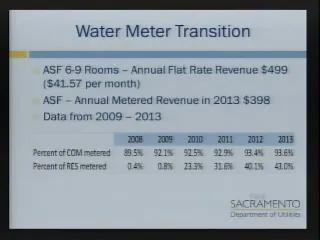
The Utilities Rate Advisory Commission (URAC) met on Wednesday, April 23, 2014, at 5:33 PM in the City Hall Council Chamber. The meeting covered routine approvals, a revised 2014 meeting calendar, an update on the Department of Utilities Accountability Plan, and a comprehensive financial update on the water, wastewater, and storm drainage funds. The commission also selected three members to participate in a potential community stakeholder group for rate structure evaluation. The meeting adjourned at 7:21 PM. Consent Calendar - Approval of Minutes for March 26, 2014: Moved by Steven Archibald, seconded by Carolyn Veal-Hunter. Passed with a vote of 4 ayes (Kevin Schubert, Douglas Brown, Steven Archibald, Carolyn Veal-Hunter) and one abstention (Timothy Horner). Christopher Butcher and Scott Brown were absent. Public Comments & Testimony - No members of the public spoke during the public comment period for matters not on the agenda. Discussion Items - 2014 URAC Meeting Calendar Revision: Staff presented a revised calendar adding three Wednesdays: September 10, October 8, and November 5, 2014, to provide flexibility for potential rate hearings. The motion to approve passed unanimously (6 ayes, with Scott Brown absent). - Department of Utilities Quarterly Accountability Plan Update: Director Dave Brent provided updates on the capital improvement program (including the water treatment plant and Oak Park regional storage project), the utility rate assistance program expanded to 200% of poverty level, drought conservation efforts (March savings of 16% overall, city accounts saved over 50%), and the rate adjustment planning process. He noted that a cost-of-service study and rate structure study are underway, with consultants Roth’s Telus (rate structure) and SCI (drainage rate polling) engaged. A community stakeholder group may be formed to provide input on rate structure evaluations. The commission discussed the role of commissioners in that group. Commissioner Archibald initially requested a direct staff-level liaison role, but staff clarified that designating two commissioners to the stakeholder group would provide sufficient insight. After discussion, the commission agreed to assign three members: Steven Archibald, Timothy Horner, and Carolyn Veal-Hunter (with Commissioner Horner volunteering as a full participant). The city attorney noted that three participants is acceptable and does not constitute a separate meeting. The quarterly update was received and filed. - Department of Utilities Financial Update: Jamille Moens and Susan Goodison presented a detailed financial overview covering fund structures (water, wastewater, storm drainage), budget-to-actual comparisons, bond issuances (water revenue bonds of $215M producing $239.5M proceeds; wastewater bonds of $30.8M producing $33.7M proceeds), FY2014-15 budget projections, water meter transition progress (43% residential metered as of 2013), and the impact of drought on revenues. Key points: The water fund FY2015 budget incorporates a 10% rate increase effective July 1, 2014, but also assumes a 20% mandatory conservation throughout the year, reducing projected revenues by $8.1 million. The wastewater fund includes a 14% rate increase. The storm drainage fund remains without a rate increase since 1996 and faces a structural deficit. The commission requested additional data on fund balances, debt service schedules (full amortization), and a clearer presentation of PAYGO capital contributions. The presentation was received and filed. Key Outcomes - Approved the revised 2014 meeting calendar (unanimous vote). - Received and filed the Department of Utilities Quarterly Accountability Plan Update. - Designated Commissioners Steven Archibald, Timothy Horner, and Carolyn Veal-Hunter to participate in the community stakeholder group for rate structure evaluation (when formed). - Received and filed the Department of Utilities Financial Update; staff will provide updated financial projections, fund balance history, and full debt service schedules at a future meeting. - Noted that binders with background materials (including Brown Act, Prop 218, and bond official statements) will be distributed to commissioners before the next meeting.