On Tuesday, April 14, 2026, the Sacramento City Council convened at 2:24 PM and adjourned at 2:58 PM, with Vice Mayor Karina Talamantes presiding. All eight councilmembers present (Mayor Kevin McCarty absent) voted unanimously to approve the consent calendar and the public hearing item. The meeting featured council comments, AB1234 reports, and public testimony on transportation, labor agreements, and the Delta Shores Community Facilities District. Consent Calendar The council adopted the consent calendar (Motion No. 2026-0063) with a single 8-0 vote, including the following items: - Item 1: Approved minutes from multiple March 2026 meetings. - Item 2: Adopted Resolution No. 2026-0080 updating the City’s Conflict-of-Interest Code, rescinding Resolution 2019-0119. - Item 3: Confirmed seven board and commission appointments (Motion No. 2026-0064). - Item 4: Received and filed the Animal Wellbeing Commission 2025 Annual Report and 2026 Workplan. - Item 5: Received and filed the Measure U Community Advisory Commission 2025 Annual Report and 2026 Workplan. - Item 6: Certified the Environmental Impact Report and approved preliminary project design for the Water+ Treatment Plants Resiliency and Improvements Project (Resolution No. 2026-0081; Motion No. 2026-0065). - Item 7: Adopted the Sacramento Transportation Infrastructure Adaptation (SacAdapt) Plan (Resolution No. 2026-0082). Councilmember Kaplan noted the plan’s importance for climate resilience and transit equity, especially in heat-island areas like North Natomas and Robla. - Item 8: Authorized a two-thirds vote resolution (No. 2026-0083) for the I Street Bridge Replacement Project, including $250,000,000 in federal capital grants, $25,000,000 in other capital grants, environmental mitigation agreements (not-to-exceed $3,367,500 and $3,260,400), a $10,000,000 surety, and a $2,518,458 supplemental agreement with Mark Thomas and Company (total not-to-exceed $23,643,116). Mayor Pro Tem Guerra praised the project as a transformative multimodal connection. - Item 9: Established the Rental Housing Inspection Program (RHIP) Reserve and Policy (Motion No. 2026-0066; Resolution No. 2026-0084), creating a $1,025,000 multi-year operating project. - Item 10: Awarded a $531,897 contract to Pisor Fence Division for Sump 157 security improvements (Motion No. 2026-0067). - Item 11: Approved Change Order No. 1 (not-to-exceed $310,758) for Pioneer Structural Repairs, bringing total to $1,525,958 (Motion No. 2026-0068). - Item 12: Authorized a supplemental legal services contract not-to-exceed $560,000 for the Susan Edmonson litigation (Motion No. 2026-0069). - Item 13: Approved Supplemental Agreement No. 5 with Step Up on Second Street, Inc. (not-to-exceed $482,338; total $4,230,437) for the City Motel Shelter Program. Councilmember Kaplan voiced concern about the program’s future given budget constraints and the upcoming Point-in-Time count. - Item 14: Authorized a supplemental investigatory services contract with Shaw Law Group (not-to-exceed $114,910) (Motion No. 2026-0071). - Item 15: Rejected all bids for Garcia Bend Park Soccer Field Improvements (Motion No. 2026-0072). - Item 16: Approved a two-thirds vote contract supplement with UC Davis for fire training (not-to-exceed $800,000, increase of $192,000) (Motion No. 2026-0073). - Item 17: Suspended competitive bidding for the North 5th Street Parallel Storm Trunk Main Project (two-thirds vote, Motion No. 2026-0074). - Item 18: Adopted successor labor agreements and a revised citywide salary schedule (Resolution No. 2026-0085, two-thirds vote). Public testimony from SCXEA members Josh Bartholomew, Sarah Muster, and Haley Arrata expressed appreciation for immediate wage relief but deep concern about future health insurance premium increases (potentially from $550/month to over $1,000/month for families). - Item 19: Authorized a goods contract with Granite Construction Company for aggregates, asphalt, and related materials (not-to-exceed $8,000,000 over five years) (Motion No. 2026-0075). Public Comments & Testimony - Lambert (on items 2, 5, 15, 17): Questioned the conflict-of-interest code, alleged Measure U funds were improperly combined with the general fund, expressed suspicion about rejecting all bids and suspending competitive bidding, citing corruption risks. - Denise Morgan (District 3, PTA president, on item 7): Supported the SacAdapt Plan but urged the council to prioritize funding for the ride-free RT program (set to expire in June), noting 14,600 light rail and 21,000 bus passengers per day, many of whom are students. - Josh Bartholomew (SCXEA board member, on item 18): Thanked the council for wage increases but warned that health insurance premium inflation could double family costs within 20 months; asked for long-term solutions to retain staff. - Sarah Muster (city employee, on item 18): Emphasized that her take-home pay is already decreasing while costs rise; stated that without premium stability, she may be unable to afford to continue working for the city. - Haley Arrata (city employee, on item 18): Thanked the council for the tentative agreement but highlighted that a 10% annual premium increase would push family costs to $1,000/month by 2028, and connected the issue to diversity, equity, and inclusion by noting that high costs threaten access to gender-affirming and ability-affirming care. Public Hearing – Item 20: Delta Shores Community Facilities District Eric Frederick (Finance Department) presented the proposal to call a special election to amend Improvement Area No. 3 (IA-3) and create Improvement Area No. 4 (IA-4) of the Delta Shores CFD No. 2019-01 (Improvements). The changes would allow landowners to petition for a new improvement area, adjust the rate and method of apportionment, and authorize bonded indebtedness and a special tax in IA-4. No public testimony was offered. The council unanimously adopted: - Resolution No. 2026-0086 (calling a special election for IA-3 changes), - Resolution No. 2026-0087 (deeming it necessary to incur debt for IA-4), - Resolution No. 2026-0088 (calling a special election to levy a special tax and incur debt for IA-4). Council Comments & AB1234 Reports - Councilmember Maple reported on a March 27, 2026 trip to San Francisco to study the Vacant to Vibrant program, which activates vacant storefronts with short-term pop-ups. She noted that clustering businesses and streamlining permitting (including early fire inspection) were key success factors; stated interest in bringing a similar model to downtown Sacramento. - Councilmember Kaplan reported on a March 27, 2026 Cal Cities Housing, Community, and Economic Development Policy Committee meeting in Costa Mesa, where discussion focused on state mandates, housing affordability, and innovative financing tools. - Councilmember Jennings acknowledged upcoming birthdays for Councilmember Vang and himself. Public Comments – Matters Not on the Agenda - Julia Curry (Midtown resident, realtor, CKM PTSA treasurer): Spoke in support of the ride-free RT program, emphasizing its importance for students, especially those in the COVID-era, and requested continued funding. - LR Roberts (District 5 resident): Called for disinvestment from fossil fuels (specifically Chevron) and urged the city to adopt an ordinance similar to San Francisco’s ban on ICE (Immigration and Customs Enforcement) in public buildings, and criticized police allocation priorities, citing a recent shooting near a four-year-old and lack of response to a gun found on her property. Key Outcomes - Consent Calendar: All 19 items approved unanimously (8-0) with no dissents. - Delta Shores CFD: Three resolutions adopted unanimously (8-0) to hold special elections for IA-3 and IA-4 changes. - Labor Agreements: The two-thirds vote resolution (No. 2026-0085) passed, but multiple employees urged the council to address long-term health insurance premium stability. - Next Steps: The city will proceed with the special elections for the Delta Shores CFD; the ride-free RT program remains a funding concern; and councilmembers will explore replicating the Vacant to Vibrant model in Sacramento.
Public Meetings - Sacramento, California
Public Meetings - Sacramento, CaliforniaThe Sacramento City Council held a special meeting in closed session on April 14, 2026, at 1:01 PM. The meeting was called to order with a quorum present. No public comments were received. The council discussed two closed session items as listed on the amended agenda. Closed Session Items - Conference with Labor Negotiators (Gov. Code § 54957.6): The council met with designated representatives Leyne Milstein, Aaron Donato, and Tim Davis to discuss negotiations with multiple employee organizations and all unrepresented groups. - Conference with Legal Counsel – Existing Litigation (Gov. Code § 54956.9(d)(1)): The council discussed the pending lawsuit Rodriguez, et al. v. City of Sacramento, et al., Sacramento County Superior Court Case No. 23CV001023. Key Outcomes - No actions, votes, or decisions were reported from the closed session. The meeting adjourned following the closed session.
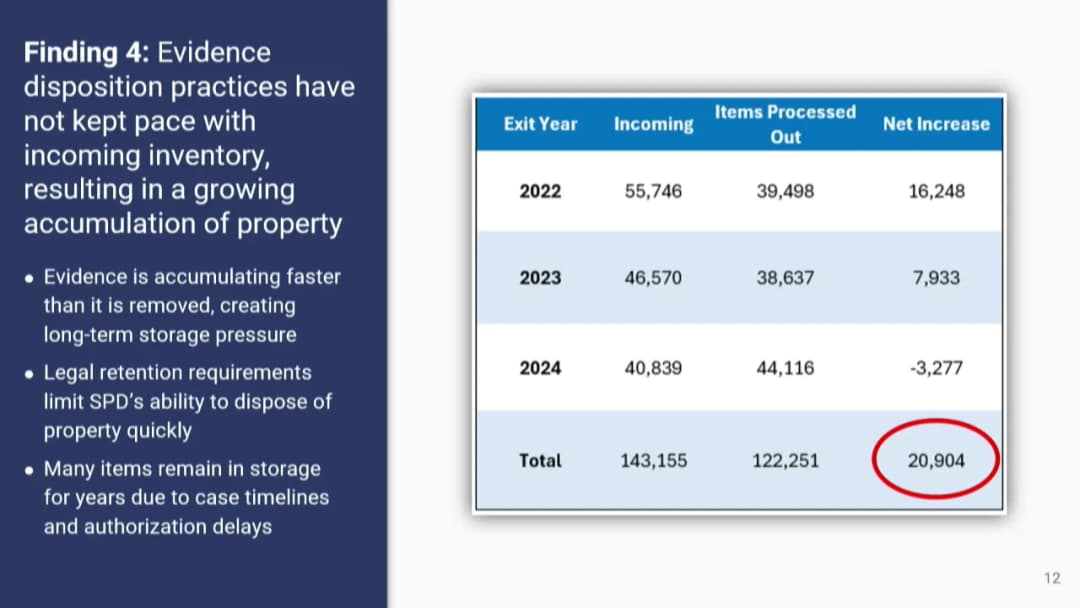
The Sacramento Community Police Review Commission held a regular meeting on Monday, April 13, 2026, at 5:37 p.m. in the City Hall Council Chamber. The meeting included a presentation on the Sacramento Police Department's Inspections and Standards Team, a detailed audit of the Police Department's Evidence and Property Division, establishment of ad hoc committees for the 2026 work plan, discussion on commissioner outreach to councilmembers and the mayor, and planning for Military Equipment Use (MEU) community outreach. The meeting adjourned at 7:10 p.m. Consent Calendar - Approval of March 9, 2026 Minutes (File ID 2026-00169): The commission voted unanimously (6-0, with four absent: Coleman, Brookins, Buenrostro, Gianulias) to approve the minutes. Public Comments & Testimony - Speaker – Ms. Tanji Lewis: During the public comment period for matters not on the agenda, Ms. Lewis addressed the commission regarding her inability to report a crime involving her son, stating she had been refused service by multiple police agencies. She asked the commission for help in connecting her with resources to address the situation. Discussion Items - SPD Staff Update (Item 2): Captain Clayton Buchanan presented on the Inspections and Standards Team, created in 2020 to ensure accountability through equipment inspections and constitutionality of arrest audits. Key statistics: In the third quarter of 2025, SPD made approximately 2,500 arrests; the team reviewed 126 of them, finding 125 fully compliant and one referred for additional review. Commissioners asked about training for auditors and how the 5% sample is used to identify trends. - Audit of SPD Evidence and Property Division (Item 3): Assistant City Auditor Kevin Christensen presented findings from an audit covering 2020-2024. Highlights: - Evidence location/retrieval: Error rates within acceptable industry ranges. Drugs tracked at 100%, firearms at 99.6%. - Ammunition storage: Best practices recommend fire-rated lockers; ammunition was stored on pallets on the warehouse floor. - Firearms pending destruction: Initially stored in open racks; SPD added locking mechanisms during the audit, but procedures weren’t updated. - Surveillance workstation: Placed on the open warehouse floor; risk of unauthorized access. - Governance gap: Draft policy manuals not formally adopted. - Homeless property: SPD spends 8,000 staff hours annually (estimated $588,000) collecting, storing, and disposing of property from homeless individuals. Other agencies use third-party providers. - Evidence accumulation: Between 2022-2024, SPD booked over 143,000 items and disposed of about 122,000, resulting in a net increase of over 20,000 items. 75% of items require external authorization for disposal. - Jewelry handling: Items over $100 require safe storage but value determination is inconsistent. - Access controls: Strong overall, but policies lack routine periodic reviews of access permissions. - Booking accuracy: Error rate less than 1%, corrected within 2-7 days. Commissioners discussed hurdles for homeless individuals retrieving property and the potential for contracting with service providers. The report was received and filed. - Establishing Ad Hoc Committees (Item 4): Chair Sample formed three committees for the 2026 work plan (April through December 31, 2026): 1. Outreach and Events Ad Hoc Committee (includes MEU planning): Commissioners Espinoza Salazar, Vice Chair Johnson, and Lewis. 2. Policy and Procedures Ad Hoc Committee: Commissioners Korbs, Gianulias (tentatively), Griggs, and Vice Chair Johnson. 3. 2026 Annual Report Ad Hoc Committee: Chair Sample, Vice Chair Johnson, and Commissioner Lewis. - Commission Outreach to Councilmembers and Mayor (Item 5): Vice Chair Johnson led a discussion on strategies for commissioners to meet with their appointing councilmembers. Commissioner Korbs shared a successful experience attending a joint community meeting. Commissioner Lewis highlighted the need to advocate for additional commission staffing. Chair Sample asked commissioners to prioritize these meetings within two months. - Proposed MEU Outreach Planning (Item 6): Commissioners discussed timeline (community meeting needed before July 31, 2026 per state ordinance) and potential locations (Oak Park, Del Paso Heights, or Land Park Zoo/fairy tale town). The Outreach and Events Ad Hoc Committee will work on securing a location and date. The City Attorney clarified that only ad hoc committee members (plus the chair) may attend planning meetings under the Brown Act, but other commissioners can attend if the meeting is agendized as a public meeting and does not exceed quorum. - Follow-Up Log (Item 7): The commission received and filed the follow-up log; no new items were added. - Commissioner Comments: Commissioner Korbs inquired about the status of OPSA (Office of Public Safety Accountability) and noted the Sacramento County Sheriff’s community academy (10 weeks, Tuesdays, May 5 – July 7, applications due April 20). Chair Sample shared updates on a recent school incident, District One community conversations, a meeting with Sacramento County counterparts, and congratulated Police Chief Kathy Lester on her retirement after 32 years, expressing hope that the commission can engage in the search process. Deputy Chief Bails is expected to serve as interim chief in May. Key Outcomes - Consent Calendar approved unanimously. - SPD Staff Update received and filed. - Audit of SPD Evidence and Property Division received and filed; commission offered to support recommendations before the Budget and Audit Committee or City Council. - Ad Hoc Committees established with appointed members and scope through December 31, 2026. - Commissioners directed to schedule one-on-one meetings with their appointing councilmembers within two months. - MEU outreach planning to proceed with the Outreach and Events Ad Hoc Committee tasked to secure a location and date before the July 31, 2026 deadline. - Follow-Up Log received and filed without additions. - The meeting adjourned at 7:10 p.m.
The Arts, Culture, and Creative Economy Commission met on Monday, April 13, 2026, at 1:05 p.m. at Sacramento City Hall. The meeting opened with a land acknowledgement and Pledge of Allegiance. Chair Luisa Lavulo and Commissioner Rosa Maria Orozco were absent. Seven commissioners were present. The meeting adjourned at 2:16 p.m. Consent Calendar - The commission unanimously approved the Consent Calendar (motion by Commissioner Wallace, second by Commissioner Winlock; vote: 6 yes, 3 absent). Items included: - Approval of the March 9, 2026 DRAFT minutes (File ID: 2026-00109). - Adoption of the Arts, Culture, and Creative Economy Commission Follow-Up Log (File ID: 2026-00203). Public Comments & Testimony - Item 4 – Recognition of April as Arts, Culture, & Creativity Month: Lambert spoke in support, praising the young poet and urging the city to focus on fiscal responsibility and support for youth. Justina Martino read excerpts from her essay on collage, linking it to the theme of creativity. - Item 5 – Race and Cultural Equity Statement Discussion: Lambert commended Commissioner Wallace and Dr. Winlock for their work, raised concerns about funding for DEI initiatives under the current federal administration, and called for accountability and audits. - Public Comments – Matters Not on the Agenda: - Richard Falcon (Teatro Nagual) announced an Individual Artist Fellowship administered by the California Arts Council (funding: $50,000, $10,000, and $5,000 for legacy, established, and emerging artists across five counties). He emphasized reaching all artists to demonstrate need. - Julie Crum (Art Tonic) described free workshops in April and May to assist artists with the fellowship application, including grant writing and info sessions. - Lambert discussed the need to support a local artist (Brianna) and criticized delays in equity initiatives. - John Downs introduced himself as an applicant for the District 7 commission seat, highlighting his experience with grants, arts collectives, and the Sacramento French Film Festival. - Justina Martino reminded about Big Day of Giving on May 7, 2026, with early giving starting April 23, and offered fundraising tools for nonprofits. Discussion Items - Item 3 – 2026 Poetry Out Loud County Champion: Grants and Programs Manager Melissa Cerrone introduced Beza Gatahun, a 10th grader at McClatchy High School and the Sacramento County champion. Beza performed her original poem "Alchemy" and a second poem, receiving praise from commissioners. The item was received and commented upon (no vote required). Commissioners noted the partnership with the Sacramento County Office of Education. - Item 4 – Recognition of April 2026 as Arts, Culture, & Creativity Month: Presenter Jason Jong explained that the California Senate declared April as Arts, Culture, and Creativity Month in 2019. The commission considered draft proclamation language for City Council. After public comment and discussion, a motion to recommend approval passed unanimously (7 yes, 2 absent). Commissioner Smith suggested amplifying the proclamation via council newsletters and school districts. - Item 5 – ACCEC Race and Cultural Equity Statement Discussion: Dr. Winlock and Commissioner Wallace presented the history of the Race and Cultural Equity Statement developed in 2016–2017 by a 16-member task force. They outlined three focus areas: outreach and engagement, equity and access, and accountability. Discussion included the need for updates reflecting changes in technology and community needs, as well as measuring progress through data and annual reports. No vote was taken; the item was received and commented. Commissioner Eisenberg suggested adding action items to the work plan and summarizing equity accomplishments in budget reports. Manager Jong committed to helping integrate the statement into the annual work plan. Key Outcomes - Approved Consent Calendar (unanimous). - Passed Motion (7 yes, 2 absent) recommending City Council approve a proclamation recognizing April 2026 as Arts, Culture, & Creativity Month. - Race and Cultural Equity Statement discussion concluded with direction to explore updates, incorporate into the commission’s work plan, and report progress in the annual report. - Director’s Report included: - Upcoming virtual artist talks for the Birds and Benches project (April 23 and 30, 2026). - Announcement of $98,000 in Small Arts Organization Fund grants awarded to 25 organizations with budgets under $25,000. - Two commission seat openings for District 6 (vacated by Carisa Gutierrez) and District 7. - Commissioner Comments: Commissioner Hershey suggested pursuing a concurrent state-level resolution reaffirming April as Arts, Culture, and Creativity Month, noting that similar resolutions are reintroduced annually.
The Sacramento Planning and Design Commission met on Thursday, March 26, 2026, from approximately 5:32 p.m. to 9:04 p.m. at City Hall. The agenda included recognition of outgoing commissioners, a consent calendar, two withdrawn/continued items, and two major workshops: one on Missing Middle Housing (MMH) standards and Senate Bill (SB) 79 implementation, and another on a preliminary framework for regulating Cottages on Wheels. Commissioners provided extensive feedback to guide staff in developing formal ordinances. Recognition of Commissioners - The Commission honored departing Commissioners Julio Lamas and Enoch Young for their dedicated service. Both received certificates and remarks from colleagues praising their thoughtful contributions and community representation. Consent Calendar - Approval of Minutes (File ID: 2026-00142): Unanimously approved (9-0) the Planning and Design Commission minutes from March 12, 2026. Public Comments & Testimony - On Missing Middle Housing and SB 79: Nine speakers addressed the Commission. Michael Turgeon (President, House Sacramento) expressed support for adding SB 79 heights into the code and urged limiting bulk control to allow three-story residences. Maximiliano Rosa (Director of Sustainability, Sierra Service Project) encouraged adoption of temporary parcel exemptions to support local workforce housing. Michael Nervy, a builder, reported it took over a year to get a cottage court approved and requested faster approvals and higher floor area ratios (FAR). Ben Raderstorf (House Sacramento) urged eliminating bulk control entirely, arguing that prioritizing the status quo harms those who cannot afford housing. Robert Ng (Missing Middles) emphasized that standards must translate into buildable configurations. Nolan Gray (renter, House Sacramento) expressed concern that bulk controls could make three-story apartments illegal in many areas. Brian Saynard (architect, AIA Housing Task Force) called for greater density but warned against poorly massed buildings, citing examples on 34th Street. - On Cottages on Wheels: Three speakers testified. Maximiliano Rosa described Sierra Service Project’s program building tiny homes on wheels for transitional housing and argued the proposed limit of one per lot is too low. Robin, a primary tiny home dweller from West Sacramento, shared her experience legalizing her unit and urged allowing these as primary residences and keeping the process simple. Ben (House Sacramento) recommended treating them like ADUs, allowing them on the same basis, and creating a pre-approved design library. Discussion Items Workshop: Missing Middle Housing (MMH) Standards and Senate Bill 79 (Item 5) Staff presented a detailed analysis of the 2040 General Plan’s impact on MMH zones, focusing on three degrees of change (minor, moderate, transformative) based on FAR (floor area ratio) allowances of 1.0, 1.5, and 2.0. Staff recommended the moderate approach, which balances existing neighborhood context with increased intensity near transit. Key data: since the interim ordinance was adopted, 19 projects have been approved (average FAR 0.4, average 3 units per lot), but only one project has more than a few units; most are duplexes with ADUs due to building code constraints. Staff also recommended a local implementing ordinance for SB 79 and codifying SB 79 heights in commercial zones, but not in MMH zones because the state’s affordability and density requirements would still apply there. Commissioners offered varied perspectives: - Vice Chair Kadin recommended a transformative approach, advocating for allowing simple three-story buildings without bulk control (e.g., gables/dormers). He argued that the current interim ordinance has not produced middle-density projects due to bulk control costs, and that preserving existing context perpetuates historical inequities (e.g., redlining). He supported staff’s SB 79 recommendation. - Commissioner Hernandez noted the need to avoid overcomplicating the code and supported the moderate recommendation but with room for deviation. - Commissioner Ortiz emphasized that many neighborhoods (e.g., East Sacramento) already have height variation and are receptive to density; she favored greater flexibility over strict house-scale standards. - Commissioner Macias Reed preferred moderate but with an option for MMH High (transformative) in FAR 2.0 areas, and echoed concerns about bulk control increasing costs. - Commissioner Reschke stressed simplicity and supported allowing discretionary review for projects exceeding house-scale standards. - Commissioner Young questioned whether the proposed house-scale standards (24-foot eave height with pitched roof) effectively limit three-story buildings; he sought ways to push density while preserving neighborhood character, potentially using contextual thresholds (e.g., next to two-story homes). - Commissioner Lamas suggested considering a temporary ordinance that shifts from moderate to transformative after a set period to allow adjustment. Workshop: Preliminary Framework for Regulating Cottages on Wheels (Item 4) Staff presented a draft framework allowing one cottage on wheels (COW) on lots zoned R1, R1A, R1B, and R2, subject to size (150-400 sq ft), safety certifications (ANSI/NFPA), DMV/HCD registration, and utility connections. The units must resemble traditional homes, be placed on stable surfaces, and follow underlying setbacks. Review would be staff-level if standards are met; deviations would require a design director hearing. Commissioners overwhelmingly supported the ordinance and suggested expansions: - Allow COWs as primary dwellings (not just accessory) to enable affordable homeownership. - Permit more than one per lot (e.g., up to two, or treat like ADUs). - Explore allowing COWs in commercial and multifamily zones for rental/transitional housing. - Simplify design review by pre-approving factory-built models, as modifications after manufacture are impractical. - Ensure utility connections are flexible and affordable; consider proportional impact fees as West Sacramento is doing. - Clarify anchoring requirements (seismic/wind, no continuous foundation). - Consider allowing placement in front yards to reduce transport and utility costs. Key Outcomes - No formal votes were taken on the workshops; both were for review and comment. - Staff will use the Commission’s feedback to refine the MMH/SB 79 ordinance and the COW ordinance. A similar MMH/SB 79 workshop will be presented to the City Council on April 14, 2026. - For MMH, the Commission’s leaning was toward a moderate degree of change with a strong push to limit or remove bulk control to facilitate three-story buildings. Many commissioners favored transformative approaches in FAR 2.0 areas. Staff will return with more detailed development standards and an updated framework. - For COWs, staff will consider allowing primary units, increasing the number per lot, and pre-approving designs; the goal is to adopt an ordinance by late 2026. - The meeting adjourned at 9:04 p.m.
The City of Sacramento Compensation Commission met on Wednesday, March 25, 2026, at 10:02 a.m. at City Hall Complex (915 I Street). The commission, chaired by retired judge Arthur Scotland, considered the annual review of compensation for the mayor, city councilmembers, and public board/commission members, and elected a vice chair for 2026. Commissioner David Kawada was absent. The meeting adjourned at 11:28 a.m. Consent Calendar - Approved the Compensation Commission Regular Meeting Minutes of May 12, 2025 (File ID 2026-00066) by a unanimous 4-0 vote (Commissioner Kawada absent). Discussion Items 1. Annual Review of Compensation for Mayor, Councilmembers, and Public Members (File ID 2026-00729) - Presentation: Ebony Heaven, Human Resources Manager, presented salary surveys for comparable cities (Fresno, Long Beach, Oakland, San Diego, San Francisco, San Jose, Denver, Portland, Seattle). She noted that the mayor’s current base salary is $184,464 and councilmembers’ $111,324. Staff included cost‑of‑living (ERI) adjustments and a table showing total compensation as a percentage of each city’s budget. No increase was recommended for public board members. Staff also highlighted that newly ratified labor contracts for Local 39 include a 1% increase effective September 2025 and 2.5% effective September 2026. Health care contributions rose from $2,051 to $2,230. - Public Testimony: None. - Commission Deliberation: - Chair Scotland reviewed the charter’s test: compensation must be “reasonable and consistent with other cities similar in size and structure.” He cited prior findings (2019) that councilmember work is full‑time. Applying cost‑of‑living adjustments, Sacramento’s mayor ranks 4th of 10 (including San Francisco) and 3rd of 9 (excluding San Francisco); councilmembers rank 5th of 10 and 5th of 9, respectively. He concluded that maintaining current compensation is reasonable, especially given the city’s projected $66.2 million budget deficit for FY 2026‑27. - Commissioner Steven Cohn questioned the complexity of cash supplements (auto, cell, deferred comp, “other” 3% benefit) and suggested simplifying by consolidating some into salary. Chair Scotland preferred keeping them for transparency. - Commissioner Theresa Riviera expressed concern about life insurance amounts ($150,000 for mayor, $100,000 for council) given increased threats to elected officials, and requested a comparison with other cities’ policies for next year. - Commissioner Elisabeth Pray opposed a freeze, arguing that a small increase (e.g., 2%) would cost only about $3,600 for the mayor and $2,200 per councilmember relative to the $66 million deficit, preventing a larger catch‑up later. She also questioned the inclusion of Long Beach (a low outlier) and suggested presenting surveys with and without Long Beach and San Francisco. - Staff agreed to return next year with life insurance comparisons and adjusted survey options (with/without San Francisco and Long Beach). 2. Selection of Vice Chair for Calendar Year 2026 (File ID 2026-00318) - Commissioner Pray nominated herself and was elected unanimously (4‑0) to serve as Vice Chair for 2026, replacing David Kawada (absent). Key Outcomes - Mayor’s Compensation: Motion to adopt the resolution setting the mayor’s annual salary at $184,464 plus insurance/benefits (including updated health contributions), effective June 13, 2026 (first paycheck in July). Passed 3‑1 (Commissioner Pray opposed). - Councilmembers’ Compensation: Motion to adopt the resolution setting councilmembers’ annual salary at $111,324 plus benefits, effective June 13, 2026. Passed 3‑1 (Commissioner Pray opposed). - Public Board/Commission Members’ Compensation: Motion to maintain current compensation (no increase), effective June 13, 2026. Passed 4‑0. - Final Resolution: Motion to adopt the combined resolution covering mayor, council, and public members with the approved amounts and effective dates. Passed 4‑0. - Vice Chair: Commissioner Elisabeth Pray elected Vice Chair for calendar year 2026. - Future Research: Staff to provide (a) a survey of life insurance amounts in comparable cities; (b) salary survey tables with and without San Francisco and Long Beach (three versions).
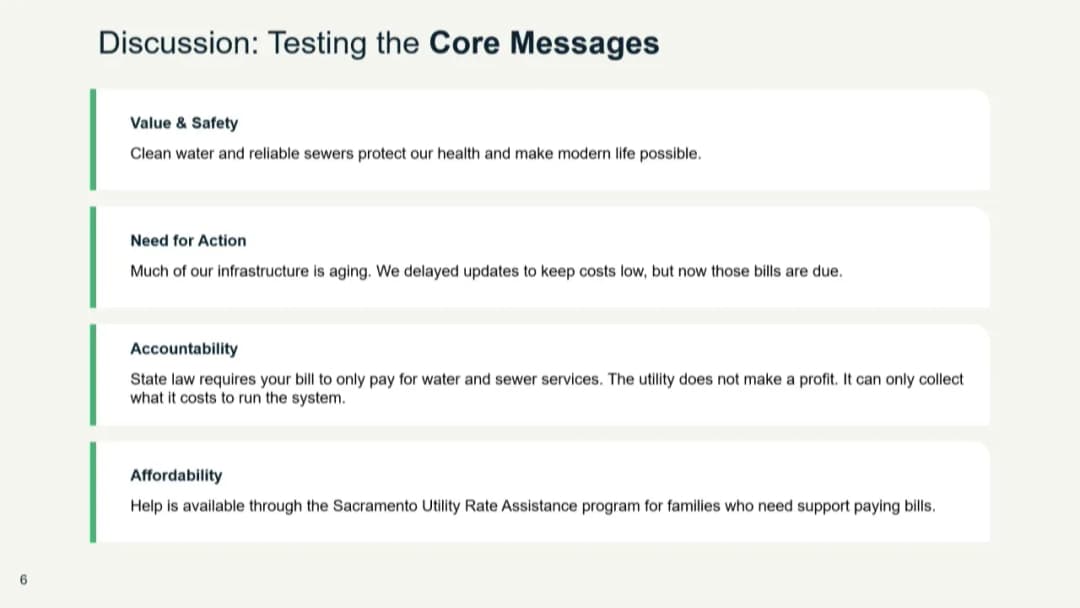
The Utilities Rate Advisory Commission (URAC) met on Wednesday, March 25, 2026, at 5:30 PM at Sacramento City Hall. The meeting lasted approximately 75 minutes, adjourning at 6:45 PM. Commissioners present: Anthony Burdock, Jonathan Cook, Paul Gaspard, Soren Nelson, Ivan Rogers, Heru Oba Shambe, Lauren Steinbaum, Srirama Tanikella, Jill Zito, and Chair Tiffany Tran. Commissioners absent: Lara Johnson and Tim Olson. The primary agenda item was a discussion of the community outreach strategy and core messaging for the upcoming water/wastewater rate adjustment, presented by Department of Utilities staff and the consultant RAFTELUS. Consent Calendar - Approval of January 28, 2026 Minutes (File ID: 2026-00119): Passed unanimously on a voice vote (10-0-0) without discussion. Public Comments & Testimony - Viet Long Wynne (Sacramento resident) addressed the commission during the discussion item. He suggested tying infrastructure improvements to climate change adaptation, questioned why rate increases were not smoothed over previous years, and expressed concerns about fairness in how increases are distributed across income levels. He thanked staff for the transparent process. - No public comments were made on matters not on the agenda. Discussion Items - Water/Wastewater Rate Adjustment – Community Outreach and Core Messaging (File ID: 2026-00744): Staff (David Levine, Long-Range Financial Planning Manager) and consultant Samantha Villeagis (RAFTELUS) presented the outreach plan and sought feedback on core rationale and messages. Key points: - Nearly 200 community groups have been identified for two-way conversations, including business chambers, property/business improvement districts, and neighborhood associations. - The communications challenge: residents face inflation and rate fatigue after eight years without a water/wastewater rate increase (last increase in 2020). The strong story includes protecting public health, fixing aging infrastructure, and noting that utility funds cannot be used for general city services. - Core rationale options presented: aging infrastructure (some pipes over 100 years old), cost of delay (planned upgrades cheaper than emergency repairs), rising costs (materials, chemicals, labor), stricter regulations, and resiliency (preparing for future needs like drought). - Draft core messages grouped into value/safety, need for action, accountability, and affordability. Language was kept simple (6th–8th grade reading level). - Commissioner feedback (summarized): - Commissioner Shambe supported “resiliency” and suggested adding “protecting future generations.” He recommended removing mention of “strict regulations” as it may sound like another tax. - Commissioner Steinbaum found “rising costs” and “aging infrastructure” relatable; she thought “cost of delay” less compelling. She also disliked the phrase “we delayed updates to keep costs low, but now those bills are due,” calling it passive-aggressive and potentially unfair to newer residents. She requested inclusion of average bill impacts and a focus on positive framing (economic growth, housing). - Commissioner Zito agreed regulations cause fatigue; she noted people care more about present costs than future promises, citing gas prices. - Commissioner Rogers suggested highlighting job creation for local tradespeople (union labor) as a silver lining. - Vice Chair Nelson noted a city-conducted FlashVote survey showed nearly 60% of respondents would support a rate increase if justified and backed by a third party. He saw an opportunity to educate the public about Proposition 218 (that utility funds are siloed). - Commissioner Eberle stressed that improvements will be universal across all neighborhoods, addressing skepticism that downtown/midtown gets preferential treatment. - Commissioner Tanikella and others requested seeing the actual rate increase numbers and a one-page fact sheet before engaging the public; staff confirmed this will be presented at the June URAC meeting. - Commissioner Gaspard cautioned about redundancy with the commission’s role to inform city council. - Staff and consultant responded: feedback will be used to refine messages. The rate study and materials for commissioners will be ready by June, with public outreach ramping up in summer 2026. In the meantime, staff is conducting stakeholder interviews and working on internal briefings. Key Outcomes - The commission received and commented on the community outreach plan and core messaging; no formal vote was taken on the item. - Staff will incorporate feedback into refined messaging and prepare fact sheets, infographics, and rate details for the June URAC meeting. - Commissioners agreed to use the intervening months to identify outreach venues (neighborhood associations, council member meetings, festivals) and a draft template letter for individual council member briefings was discussed (subject to legal guidance regarding meeting size limits). - The commission will reconvene in June 2026 to receive final rate study results and outreach materials.
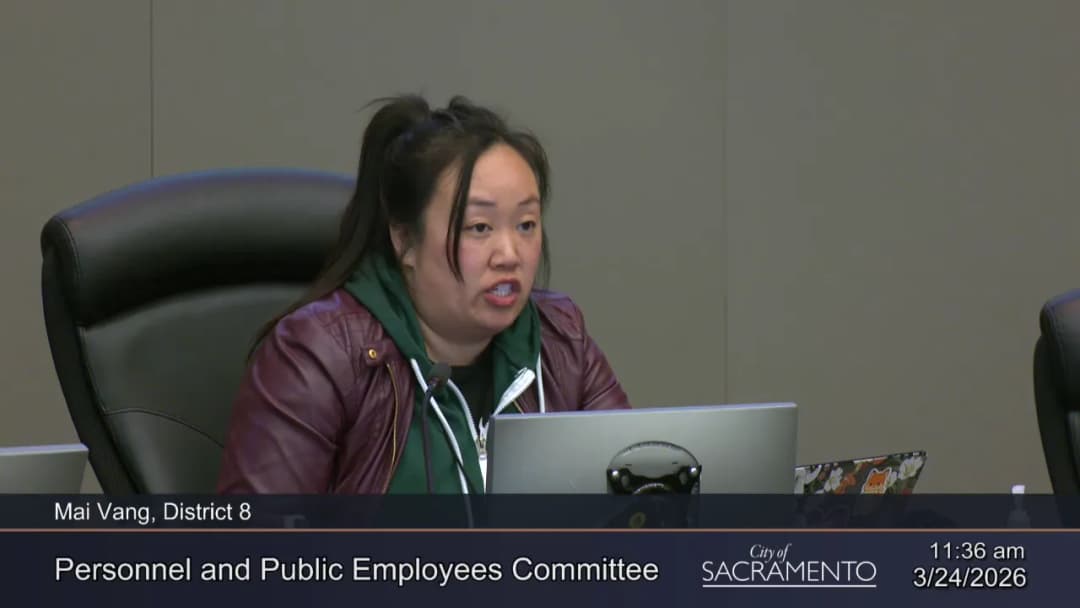
The Personnel and Public Employees Committee (PPE) met on Tuesday, March 24, 2026, at 11:00 a.m. in the Sacramento City Hall Council Chamber. The meeting was chaired by Rick Jennings and included members Lisa Kaplan, Karina Talamantes, and Mai Vang (arriving at 11:13 a.m.). The committee conducted interviews for three board/commission vacancies, reviewed two annual reports and work plans, and forwarded recommendations to the City Council. No public comments were received on any agenda item. Consent Calendar - Approval of Minutes (File ID: 2026-00691): The committee approved the meeting minutes from February 24, 2026, by a unanimous 3–0 vote (Member Vang absent). Discussion Items Item 2 – Housing Code Advisory and Appeals Board (Seat F) The committee reviewed two applicants for Seat F, which requires an expressed interest or demonstrated history of involvement in the city's housing code. Neither applicant appeared in person. Member Kaplan noted that both applicants were qualified based on their applications and motioned to recommend Krista Dianne Bunting, executive director of a city nonprofit, citing her relevant experience. Member Talamantes seconded. The motion passed unanimously. Item 3 – Preservation Commission (Seat E) The committee interviewed one applicant, John Nicolaus, a landscape architect with extensive local project experience (Capitol Park, Raleigh Field, West Sacramento Riverwalk Park). Member Kaplan confirmed with staff that the commission allows appointment of non-city residents per a 2024 ordinance update. After questions, Member Kaplan moved to recommend Nicolaus, seconded by Member Jennings. The motion passed unanimously. Item 4 – Natomas Basin Conservancy Board of Directors (Seat B) Three applicants were interviewed: Henry DeBay (deputy executive officer for science at the Delta Stewardship Council), Michael Kevin McRae (certified public accountant, former board member), and Francesca Parent (economic development professional). Member Kaplan noted that the executive director specifically requested someone with a financial/numbers background, and she moved to recommend Kevin McRae for the seat. Member Talamantes seconded. The motion passed unanimously. Kaplan encouraged the other applicants to apply for other boards/commissions. Item 5 – Measure U Community Advisory Commission 2025 Annual Report and 2026 Workplan Seti Georgeoff, chair of the Measure U Commission, presented highlights including: the commission is a 50-member oversight body; Measure U generates approximately $150 million per year in sales tax revenue; 17 programs (totaling about $19 million) still report no metrics; $2.2 million was spent on facility roof repair, $58,000 on IT equipment, and $500,000 on ADA compliance—expenditures the commission considers not directly aligned with Measure U's purpose. The 2026 workplan focuses on program-level outcome reporting, a public metrics dashboard, earlier budget engagement, and stronger community outreach. Member Kaplan commended the transparency and accountability efforts. Member Vang noted that last year's budget recommendations are already under council discussion. A motion to forward the report and workplan to the City Council passed unanimously. Item 6 – Utilities Rate Advisory Commission (URAC) 2025 Annual Report and 2026 Workplan David Levine, Long Range Financial Planning Manager, presented the report. In 2025, URAC held six meetings, focusing on educating commissioners and preparing for the FY28 rate development process. Total cost of commission work in 2025 was approximately $95,000. The 2026 workplan includes: preparing for a Prop 218 rate hearing in December; community outreach (survey via FlashVote, city council briefings starting April, consultant-led influencer interviews). Member Kaplan emphasized early community education and transparent messaging, especially given affordability concerns. A motion to forward the report and workplan to the City Council passed unanimously. Key Outcomes - Krista Dianne Bunting recommended for Housing Code Advisory and Appeals Board Seat F. - John Nicolaus recommended for Preservation Commission Seat E. - Michael Kevin McRae recommended for Natomas Basin Conservancy Board of Directors Seat B. - Measure U Community Advisory Commission 2025 Annual Report and 2026 Workplan forwarded to City Council for review. - Utilities Rate Advisory Commission 2025 Annual Report and 2026 Workplan forwarded to City Council for review. - The meeting adjourned at 11:48 a.m.
The regular City Council meeting was called to order at 5:42 PM on Tuesday, March 24, 2026, at Sacramento City Hall Council Chamber. All council members were present, with Roger Dickinson, Eric Guerra, and Caity Maple arriving shortly after. The meeting began with a land acknowledgement led by Councilmember Pluckebaum and the Pledge of Allegiance. The agenda included a special presentation, one discussion item, council comments, and public comments on matters not on the agenda. Special Presentation/General Communications - McClatchy Flag Football Team Recognition – Mayor Kevin McCarty and Councilmember Rick Jennings honored the McClatchy girls' flag football team for winning the CIF San Joaquin Section Division One championship. Quarterback Daisy Throckmorton was recognized as the 2025 California Player of the Year (Max Preps) and for throwing a touchdown pass to Jerry Rice during NFL Pro Bowl week. The team finished the season with a 24–5 record, defeating West Park 33–25. Councilmember Jennings, a former Oakland Raider (Super Bowl XI), congratulated the team and coaching staff. Discussion Items - 2025 Housing Element Annual Progress Report (File ID: 2026-00714) – Senior Planner Greta Soos and City Housing Manager Ya Yin Ei presented. Key data: In 2025, the city produced 2,737 housing units (a 15% increase from 2024), including 930 deed-restricted affordable units (34% of total). The eight-year RHNA target is 45,580 units (about 5,700/year); 2025 production met 48% of the annual target. To date, 62% through the planning period, the city has built 29% of the total goal. ADU permits surged to 390 in 2025, exceeding the planning-period target of 600. Average rent in Sacramento is $1,900; average home sale price is $470,000—both below state averages. Implementation program status: 37% complete, 37% ongoing, 16% in progress, 10% not started. Upcoming initiatives include an ordinance for cottages on wheels, ADU condo sales (AB 1033), condo conversion reform, and a small developer incubator. Councilmembers discussed the need to accelerate production, the importance of a diverse housing stock, rental assistance and homelessness prevention, condominium conversions, and opportunities for roommate matching for seniors and college students. A city council workshop on missing middle housing and SB 79 is scheduled for April 14, 2026. Public comment on this item was provided by former city planner Celia Iniguez, who praised staff efforts and noted the long timeline for affordable housing projects. Public Comments & Testimony - Matters Not on the Agenda – Nine speakers addressed the council. Multiple speakers (Rosalie Lair, Lionel Barrigan, Tyranny Bates, Annabelle Gonzalez) opposed the proposed homeless micro-community at 3511 Arena Boulevard, citing safety concerns for nearby schools and families, lack of on-site services, and potential negative impacts on local businesses. Others (John Jew, Celia Yenez, Rita Odin) called for greater transparency, healthier community initiatives, and enforcement of code violations. Annabelle Gonzalez, a single mother and daycare provider, asked the council to reconsider the Arena Boulevard location as it would be visible from her daughter’s bedroom and endanger children in her care. Key Outcomes - The City Council reviewed and commented on the 2025 Housing Element Annual Progress Report (no formal vote taken). - Councilmember Roger Dickinson requested follow-up on the rental assistance program and the high number of returned rental packets (7,500 sent, 5,200 returned). Staff agreed to investigate. - Councilmember Lisa Kaplan inquired about affordable housing projects without city subsidy (e.g., Ascent in North Natomas) and emphasized learning from lower-cost models. - Vice Mayor Karina Talamantes directed staff to explore a roommate matching program for seniors and college students, connecting with AARP, Sacramento State, and UC Davis. - Councilmember Eric Guerra highlighted the importance of commercial corridor revitalization to support housing. - Mayor Kevin McCarty noted the city’s leadership in pro-housing policies but acknowledged the gap toward RHNA goals; he referenced an upcoming April 14 workshop on missing middle housing. - The meeting adjourned at 7:29 PM. Councilmember Announcements - Councilmember Dickinson promoted the NCAA Women’s Basketball Sweet 16 and Elite Eight games at Golden 1 Center (March 28–31). - Councilmember Jennings announced a free Easter egg hunt on March 28 at Rivers Edge Church (District 7). - Councilmember Mai Vang reported on her district community conversation and upcoming Earth Day cleanup (April 11). - Vice Mayor Talamantes encouraged attendance at a March 26 event supporting the FUEL Network (immigrant and refugee resources).
Note: The agenda and minutes for this special meeting list only one information item (Notification of Parcel Map of 3225 D Street). However, the recorded transcript reveals that the council also conducted a concurrent regular meeting, discussing and voting on several substantive items including ADU design standards, an enhanced infrastructure financing district, the city auditor’s work plan, a contract for tiny homes, and early budget presentations. This summary reflects the full content of the concurrent meeting as captured in the transcript. The meeting was called to order at 2:05 p.m. by Mayor Kevin McCarty and adjourned at 5:27 p.m. All nine council members were present. A land acknowledgement was led by Councilmember Maple, followed by the Pledge of Allegiance. Consent Calendar - Items 1–6 and 8–13 were approved unanimously (9-0) after Item 7 was pulled for separate discussion. Public Comments & Testimony - Item 16 (Tiny Homes): Michael Melton accused Brian Pedro (Director of Community Response) of lying about an RV removal and alleged misuse of funds. Melton argued that the city should build apartments instead of tiny homes without bathrooms or showers. He also criticized the focus on age 55+ residents, saying it excludes younger homeless individuals. - Item 17 (Budget Work Session) and General Public Comment: - Public Bank: A dozen speakers urged the council to restore $250,000 for a public bank feasibility study (AB 857). Speakers included Dr. Harry Wong (public health), Katie McCammon (350 Sacramento), Diamond Lulo (Hiram Johnson Law Academy student), and others representing Sacramento Climate Coalition, Third Act, and SAC Act. They argued a public bank would keep city funds local, support affordable housing and small businesses, and reduce reliance on Wall Street. - Hiram Johnson Magnet Police Academy: Several students and staff (Brianna Wells, Garrett Kirkland, Diamond Lulo, Nancy Hernandez, James Vallejo) spoke passionately against proposed budget cuts. They highlighted the academy’s 100% graduation rate, mentorship, and positive impact on student confidence and leadership. - Code Enforcement / Housing Conditions: Twyconda Strain and Teresa Oliver described severe roach, rat, and mold infestations at 595 Santiago Avenue, alleging years of neglect and code violations. They called for action. - Budget Cuts: Keon Bliss criticized the budget process for disproportionately targeting small departments while sparing the police department from significant cuts. Discussion Items - Item 7 – ADU Design Standards for Historic Properties: Councilmember Maple pulled the item for separate discussion. She expressed concern that the new aesthetic standards (e.g., roof type, siding, windowsill and trim requirements) would increase costs and complexity for ADU builders in historic districts. She noted that most projects already comply, but the standards could force modern designs into a longer site plan review process. Preservation Director Sean DeCoursey explained the standards are meant to control the small percentage of poorly designed units and that the process remains ministerial for compliant projects. Councilmember Dickinson supported the standards, arguing they preserve historic character. Councilmember Pluckebaum also voiced concerns about cost and process. The resolution passed 7-2, with Maple and Pluckebaum voting no. - Item 14 – District 2 Enhanced Infrastructure Financing District (EIFD): Councilmember Dickinson introduced the proposal to study a tax-increment financing district for North Sacramento, citing decades of underinvestment in basic infrastructure (curbs, gutters, sidewalks, lighting). Staff presented a high-level analysis showing potential revenue but recommended a full fiscal impact analysis (3 months, 20 staff hours plus consultant). Public speakers (Shantae Campbell, Andy Hernandez, Rob Kurth, John Vignocchi, Tim Smith, Nas) strongly supported the study, emphasizing equity, economic development, and the need to address infrastructure deficits. One speaker, Justin Wilson, raised concerns about risk to the general fund if projections fall short and suggested a more targeted approach. Council members expressed broad support, with Mayor McCarty noting the need to balance risks and rewards. The council directed staff to proceed with the fiscal impact analysis. - Item 15 – City Auditor’s Work Plan for FY 26-27: City Auditor Farishta Ahrary presented the proposed work plan, which includes six new audits: homeless response protocol, police overtime practices, code enforcement operations, downtown safety/walkability assessment, urban forestry operations, and a financial management/budgeting forensic audit. The plan also rolls over some incomplete audits. The budget and audit committee had recommended removing some projects (e.g., special event permitting, code enforcement night team) and pausing the illegal cannabis cultivation audit. Councilmember Kaplan thanked the committee for including the police overtime audit. Councilmember Maple noted that the auditor’s office is already lean and that cuts to its staff would jeopardize completion of the work plan. The work plan was approved unanimously. - Item 16 – Contract to Purchase 35 Tiny Homes for Roseville Road Campus: Brian Pedro (Director of Community Response) requested approval to suspend competitive bidding and purchase 35 additional tiny homes from Boss Cubes, using Encampment Resolution Fund (ERF) grant money. The initial 135-unit campus opened in February 2026 and has filled 71 units (89 people) in one month. Since opening, 303 individuals have been sheltered with 64 exits to permanent housing (44% of all exits). The additional 35 units will serve people from the Sacramento Northern Bike Trail area. The cost is covered by funds saved from the original purchase. Councilmember Kaplan questioned the long-term funding sustainability after ERF funds expire (obligated by Feb 2027, fully expended by Feb 2028). She also noted that the city manager has authority to approve emergency shelter contracts, and a proposal to require council approval for such contracts has not been scheduled. She voted no. The motion passed with one no (Kaplan) and one abstention. - Item 17 – Early Budget Work Session: City Department Reports on Budget Reduction Strategies: The finance director presented a baseline $66.2 million deficit. Departments presented their 15% reduction proposals: - OPSA (Office of Public Safety Accountability): Eliminating 4 positions. - City Attorney: Proposed cutting 7 FTEs ($1.47M) but strongly advised against it, arguing that hiring two senior litigators could save $1.48M in outside counsel fees. Councilmember Dickinson asked for analysis of which cases could be brought in-house. Councilmember Kaplan noted the attorney’s office touches all city departments and that cuts would delay critical work. - City Auditor: Proposed three options: discontinue community survey ($34K), reduce training/computer expenses ($25K), or eliminate a senior analyst position (layoff). Councilmember Maple emphasized that cuts would delay audits. - City Clerk: Proposed cutting $242K (6% of budget) by eliminating one FTE and discontinuing office automation fund allocation. Clerk Mindy Cuppy raised concerns about rising costs for ethics commission complaints (average $14K per complaint) and suggested temporarily suspending the commission. Councilmember Kaplan asked about strategies to prevent abuse of the ethics complaint process. - City Treasurer: John Colville reported that his office is a net revenue generator (net $3.9M contribution to general fund) and proposed no cuts. He highlighted savings of $3.5M from refinancing, merchant fee elimination, and superior investment performance. Council members praised the office’s efficiency and argued against cuts. Key Outcomes - Item 7 (ADU Standards): Passed 7-2 (Maple and Pluckebaum voting no). - Item 14 (EIFD): Council directed staff to proceed with a fiscal impact analysis (3 months, report back). - Item 15 (Auditor Work Plan): Approved unanimously. - Item 16 (Tiny Homes): Approved with one no (Kaplan) and one abstention. - Item 17 (Budget Work Session): No action taken; presentations received for information. Council members provided direction to staff on priorities (e.g., preserving police overtime audit, examining public bank feasibility, considering ethics commission changes). - Public Bank: Several council members (Maple, Vang, Dickinson) expressed support for continuing the feasibility study. Mayor McCarty asked the city treasurer to provide a memo on work done to date for future discussion. - Hiram Johnson Magnet Academy: Council members heard public testimony opposing cuts; no formal vote on this item.