The Sacramento Arts, Culture, and Creative Economy Commission held a special meeting on Monday, October 23, 2023, from 2:01 PM to 3:45 PM at City Hall. Commissioners present included Chair Priscilla Enriquez, Roynell Anderson, Kristen Blair, Luisa Lavulo, Cruz Naranjo, Wellington Smith, Robert Tocalino, and Dr. Melinda Wilson Ramey. Commissioners Kira Bautista, Isela Ortiz, and Dr. L. Steven Winlock were absent. The meeting began with a land acknowledgment and pledge of allegiance, followed by a special presentation, consent calendar, and two discussion items. Special Presentation - Sacramento Poet Laureate Andru Defeye announced Sacramento Poetry Day on October 26, 2023. He highlighted the locally sourced curriculum reaching 400 schools across 14 districts, a poetry contest with 200 entries (cash prizes of $200 for adults and students), and a gala at the Sacopolis Library Galleria (sold out with 250 attendees). He also noted the creation of the Cleo Cartel Award to honor impactful poets who have passed away. Consent Calendar - Approval of Minutes (August 14, 2023 and September 11, 2023): Passed unanimously with a motion by Commissioner Naranjo and second by Commissioner Tocalino. All present commissioners voted yes; three absent. Public Comments & Testimony - Item 2 – Creative Business Innovation Challenge: - Mike Snill (veteran and local entrepreneur) expressed strong support, calling the program a “necessary central hub” and advocated for permanent funding, suggesting a tax on alcohol consumption to support such initiatives. - Jay Ross Perelli (founder of Beats Lyrics Leaders) described the program as transformative, noting it helped him overcome founder syndrome and learn budgeting. He urged the commission to continue the program. - Item 3 – Music Census and Regulatory Review: - Mike Snill (speaking again) compared regulatory struggles in cannabis to those in the music industry, advocating for equity and safe consumption spaces. - Rashawn Reed (club owner) shared his experience of being unfairly targeted by code enforcement and permit delays, attributing it to racial bias. He called for the city to support small businesses rather than attack them. - Public Comments – Matters Not on the Agenda: - Mac Ross (elder and resident) expressed concern about excessive noise from venues, specifically 808 kick drums, negatively impacting quality of life for nearby residents. He urged the commission to consider noise levels in their decisions. Discussion Items - Item 2 – Sacramento Creative Business Innovation Challenge Report & Proposal for 2024/2025 - Presentation: Megan Van Voorhis (Director of Convention & Cultural Services) introduced the program. Alice Loy (Creative Startups) and Rashawn Davis (Unseen Heroes/Culture) presented the inaugural six-week innovation challenge, which had 56 applicants and served 20 businesses. Key metrics: 9.77% net promoter score (9.77 out of 10? Actually stated as 9.77% – transcript says “9.77% of people from Sacramento said yes” to recommending the program). The proposal for 2024/2025 includes expanding to 60 businesses, offering both a six-week innovation challenge and a 12-week accelerator, and launching an integrated capital fund. The program focuses on four industry areas identified through research (60 interviews, 15 data reports). - Commissioner Discussion: Commissioners asked about challenges (time frame, limited capacity) and how the program could benefit early-stage creatives (e.g., a cultural dance teacher). Staff noted that the innovation challenge is designed for those with “lucky revenue” to assess if their creative work is a viable business. - Motion: Commissioner Naranjo moved to recommend approval of the proposal for 2024/2025; seconded by Commissioner Wilson Ramey. Passed unanimously. - Item 3 – Sacramento Music Census Follow-Up and Arts & Entertainment Regulatory Review Findings - Presentation: Dustin Hollingsworth (Assistant Director of Convention & Cultural Services) presented findings from the Sacramento Music Census (nearly 1,400 respondents, 78% music creatives, 15% industry professionals, 7% venue presenters) and the regulatory review. Three key insights: (1) the live music ecosystem is out of balance – too many creatives relative to venues and industry professionals; (2) creatives are committed but need more opportunities and revenue streams; (3) the regulatory environment negatively impacts live music. The regulatory review identified 21 recommendations, including creating an Entertainment Services Division, adopting a tiered licensing approach, moving to online permitting, and updating the sound ordinance. Five additional recommendations focused on resource allocation for permit review. - Commissioner Discussion: Commissioners Cruz Naranjo, Roynell Anderson, Luisa Lavulo, Kristen Blair, and Robert Tocalino raised issues of equity, curfew times, security requirements, and permit turnaround times. Commissioner Naranjo noted that some promoters have left Sacramento due to burdensome regulations. Staff acknowledged that some changes (e.g., limited live performance license) could be implemented sooner, while ordinance changes would take longer. A pilot program is being explored. - Motion: Commissioner Blair moved to recommend the City Manager and City Council act on the findings of the regulatory review; seconded by Commissioner Lavulo. Passed unanimously. Key Outcomes - Consent Calendar: Approved minutes of August 14 and September 11, 2023 (unanimous). - Item 2: Commission passed a motion recommending approval of the Sacramento Creative Business Innovation Challenge proposal for 2024/2025 activities (unanimous). - Item 3: Commission passed a motion recommending the City Manager and City Council act on the findings of the Sacramento Arts & Culture Regulatory Review (unanimous). - Next Steps: The Department of Convention and Cultural Services will take the Item 2 proposal forward, with a related item before City Council on October 24, 2023, to reallocate ARPA funds ($1.75 million) – $750,000 for entrepreneurial support and $1 million for regulatory reform, venue support, and communication. For Item 3, staff will work internally to prioritize recommendations, with some quick wins (e.g., limited live performance license) and longer-term ordinance changes. The commission will receive updates at future meetings. - In Memoriam: The commission honored the memory of Angela James (poet and storyteller, passed July 2023) and Cleo Cartel (poet, passed in 2023), with a note that the Cleo Cartel Award will be established for Sacramento Poetry Day.
Public Meetings - Sacramento, California
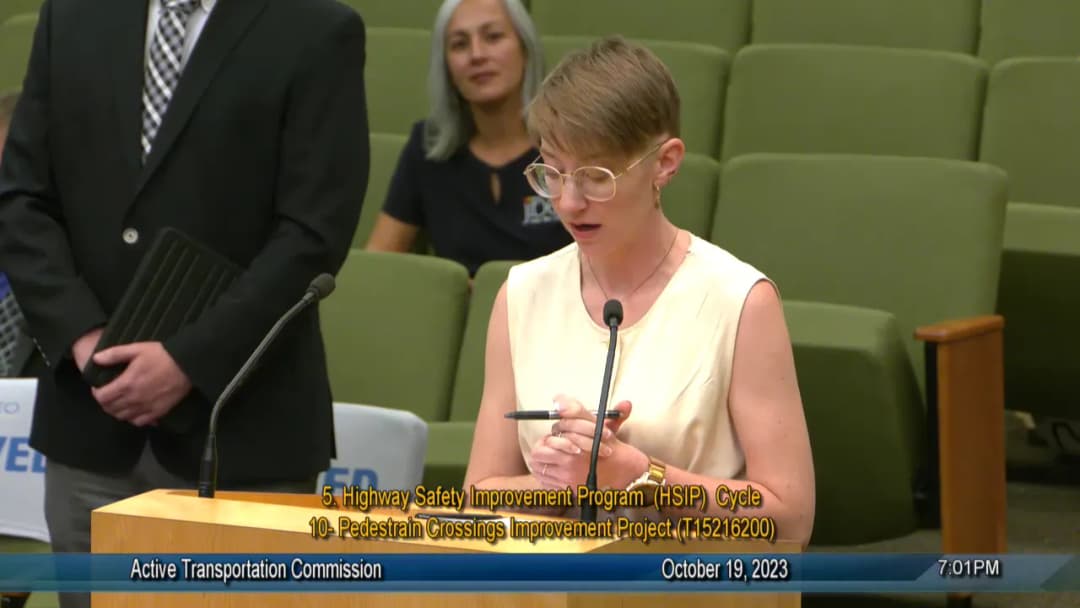
Public Meetings - Sacramento, CaliforniaThe Active Transportation Commission of Sacramento met on Thursday, October 19, 2023, from 6:00 p.m. to 8:17 p.m. at City Hall (915 I Street). Chair Ali Doerr Westbrook presided. Nine commissioners were present (Banks, Gibson, Gonzalez, Harris, Hodel, Houpt, Roh, Granville, Westbrook) and one was absent (Brasel). The meeting included a land acknowledgment, pledge of allegiance, staff report, consent calendar, four discussion items, public comments, and commissioner remarks. Consent Calendar - Approval of Minutes (Sept 21, 2023): Passed unanimously (9-0). - Adoption of Active Transportation Commission Log: Passed unanimously (9-0). Public Comments & Testimony - HSIP Cycle 10 (Item 5): Matt Anderson (District 4) thanked staff and requested vertical delineators on W Street, and suggested the commission support staff in applying for more funding. Kay Crum (District 6) expressed that RRFBs can give a false sense of security and asked for additional traffic calming. - Jackrabbit Trail Naming (Item 4): No public speakers. - 2022 Annual Report (Item 6): No public speakers. - 2023 Annual Report (Item 7): Alice Mercer (Disability Advisory Commission, personal capacity) praised the report but urged staff to explicitly define “active transportation” to include wheelchairs, walkers, and other assistive devices in all reports. - Matters Not on the Agenda: Kay Crum (Strong Sack Town) presented her analysis of city road vs. active transportation spending: in 2020, $53.3 million on roads and $3.9 million on bike lanes; 2021, $60.6 million and $1.7 million; 2022, $35.8 million and $2.2 million. Jerry Champa, a traffic safety advocate, recommended that any budget increase be tied to performance metrics (e.g., reduction in severe crashes) and focus on strategies that reduce vehicle speeds 24/7/365. Discussion Items - Item 3 – City of Sacramento Street Closures: David Edrosolan (Engineering Manager) presented city policies on temporary (block party, special event, public safety/nuisance) and permanent (abandonment) street closures, and discussed the new California Vehicle Code Section F allowing “slow streets” programs (no city program or funding yet). Commissioners asked about PBID recurring closures, weekend closures, and costs from the pandemic-era Slow and Active Streets pilot. Staff noted that pilot required significant community engagement and $850,000/year for a similar 5-mile effort. No vote was taken; item was received and filed. - Item 4 – Natomas Trail Naming: Jackrabbit Trail Name Extension: Melissa Mang (Exec. Director, North Natomas JIB) requested extending the Jackrabbit Trail name from Airport Road south to Garden Highway, covering a shared-use path with three existing gaps. The majority of community feedback supported the extension; one person opposed until the trail is complete. Commissioners supported the naming for navigation and branding. A motion to extend the name passed 9-0. - Item 5 – HSIP Cycle 10 Pedestrian Crossings Improvement Project: James Kragh (Associate Civil Engineer) proposed installing rectangular rapid flashing beacons (RRFBs) at four uncontrolled crossings (Folsom/Seville, Raley/Santa Ana, W/8th, Alhambra/X) along with ADA ramp upgrades, advanced warning signs, and yield markings. At Raley Boulevard a median refuge with a third RRFB is planned; at W Street lane-narrowing buffer striping is included. According to the Federal Highway Administration, RRFBs can reduce pedestrian collisions by 47% and increase motorist yield rates up to 98%. Commissioners voiced support but noted that some drivers ignore flashing beacons. They recommended considering full signalized crossings and physical traffic calming. The item was received and filed. - Item 6 – Active Transportation Commission 2022 Annual Report Discussion: Jennifer Donlon Wyant (Transportation Planning Manager) presented refined cost estimates for the commission’s nine recommendations to City Council. After discussion, the commission reached consensus on: - Item 1 (Increase funding for active transportation projects): Ask for doubling the average annual local match for grants over the last five years, with a 10% annual escalation for five years. - Item 2 (Expand speed management): Quadruple the speed lump program budget to $2 million/year, apply equitably, and add new traffic calming tools; include half-time senior engineer and half-time associate engineer. - Item 3 (Safe Routes to School program): Two new planners (senior and associate) at $325,000/year. - Item 4 (Finalize construction detour policy): No cost; to be brought for public review in January. - Item 5 (ATC dashboard): $275,000 first year, $195,000 recurring. - Item 6 (Quick-build bikeways program): $1.5 million first year, recurring costs; half-time senior and associate engineers. - Item 7 (Electric library and e-bike incentives): Expand e-bike lending library to every council district and a $1 million e-bike voucher pilot; $2.3 million first year, $525,000 recurring. - Item 8 (Increase bike parking): $300,000/year; quarter-time associate planner. - Item 9 (Re-establish Slow and Active Streets): $850,000/year; half-time associate planner. - Total year-one estimate: $7.5 million; ongoing $5.5 million. - Item 7 – Active Transportation Commission 2023 Annual Report: Jeff Jelsma (Transportation Planner) presented the draft report incorporating prior feedback, including cost estimates from the 2022 report discussion. Commissioners requested: (1) consistency in narrative format and cost breakdowns, (2) swapping the order of items A (expanded speed management) and B (safe routes to school), (3) adding explicit language about inclusive mobility (wheelchairs, walkers, etc.), (4) including a section on citywide accomplishments (e.g., e‑bike lending library, South Sacramento Parkway Trail West ribbon cutting), (5) replacing the word “stroads” with “roads,” (6) adding photos from each district, and (7) taking a new cover photo. The report will be revised and brought to the November meeting for a vote. Commissioner Comments – Ideas and Questions - Commissioner Gibson reported two recent hit-and-run incidents on Fruit Ridge Road (one fatality, one hospitalization) and stressed the life-saving importance of traffic-calming projects. - Commissioner Gonzalez noted a pedestrian fatality on Mack Road near Center Parkway and urged continued advocacy for built environment changes. - Commissioner Gonzalez also proposed restoring Zoom public comment at commission meetings, suggesting a letter to City Council. Chair Westbrook supported collaborating with other commissions. Key Outcomes - Consent Calendar: Adopted unanimously (9-0). - Jackrabbit Trail Name Extension: Approved 9-0; to be recommended to City Council. - Street Closures and HSIP Cycle 10: Received and filed; feedback provided to staff. - 2022 Annual Report Recommendations: Consensus reached on all nine items with modified cost and funding approach (doubled match, 10% escalation). Staff will refine estimates and present to City Council before year-end. - 2023 Annual Report: Direction provided for edits; final vote scheduled for November 2023. - Commission Letter: Chair will draft a letter to restore Zoom public comment.
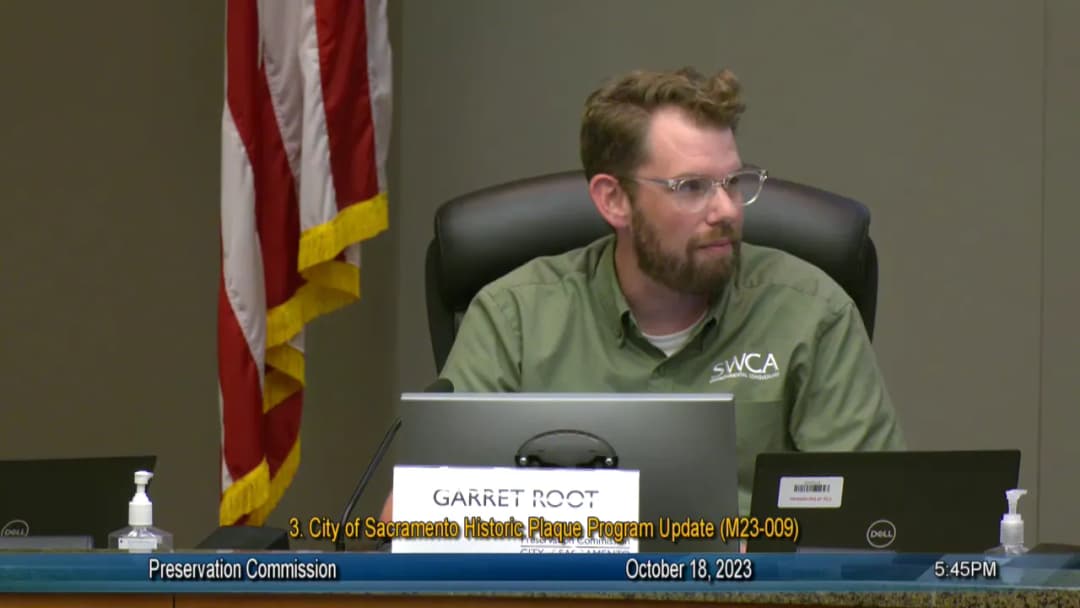
The Preservation Commission met on Wednesday, October 18, 2023, at 5:30 PM in the City Hall Complex Council Chamber. The meeting (adjourned at 6:05 PM) included approval of the consent calendar, review and comment on the 2023 Draft Annual Report and an update on the Historic Plaque Program, a Director’s Report, and no public comments. Consent Calendar - Approval of August 16, 2023 Meeting Minutes – File ID: 2022-02442. Passed unanimously (4‑0, Commissioner Montemayor absent) on a motion by Vice Chair Root, seconded by Chair McSlavkin. Discussion Items - 2023 Draft Preservation Commission Annual Report (M23-008) – Staff presented the draft report required by the 2023 Council Rules of Procedure. Commissioners reviewed the work plan for the coming year, including the proposed Native American policy resolution, the African American Experience Project, the LGBTQ+ grant, and potential grant opportunities for Native American historic context. Commissioner Merker expressed strong support for pursuing a Native American historic context survey, noting that San Francisco and Los Angeles are already undertaking such studies. Chair McSlavkin asked about the feasibility of requesting additional city funding for preservation initiatives; staff indicated a development impact fee for preservation is a goal listed in the annual report. No vote was taken; the item was for review and comment only. - City of Sacramento Historic Plaque Program Update (M23-009) – Staff reported on a $4,000 CLG grant used to award plaques to commercial properties and to redesign the plaque template. Discussion focused on reducing plaque costs (currently $500 each), finding a cheaper manufacturer (Vice Chair Root suggested a Southern California vendor offering cast aluminum plaques 35–45% cheaper), digitization and walking tour apps, QR codes, and the use of plaques for demolished buildings (e.g., the site of the former Williams Memorial Church). Commissioner Merker shared historical context from his service on the Sacramento Heritage committee and recommended consulting the OHP vendor list. Staff noted that the program now accepts applications for plaques on sites of no-longer‑extant landmarks. The item was for review and comment only. Director’s Report - The African American Experience Project was officially endorsed by City Council in September 2023 with no opposition. - Four new Mills Act contracts were approved: 1301 and 1230 45th Street (East Sacramento), the Marshall Hotel (1122 7th Street), and 2305 Capitol Avenue. - A positive news story on the Mills Act program (CBS 13) has increased application inquiries. - The final public meeting for the Eichler Historic District nomination will be November 1, 2023, at 6 PM at Bell Coolidge Library. - The Montgomery Way Historic District was officially listed on both the National Register of Historic Places and the California Register of Historical Resources. Key Outcomes - Consent Calendar approved unanimously (4‑0) – minutes of August 16, 2023 adopted. - Annual Report and Plaque Program Update – received by the commission for comment; no formal action taken. - Staff will incorporate commissioner feedback into the final annual report and continue seeking affordable plaque options and a fillable online application form.
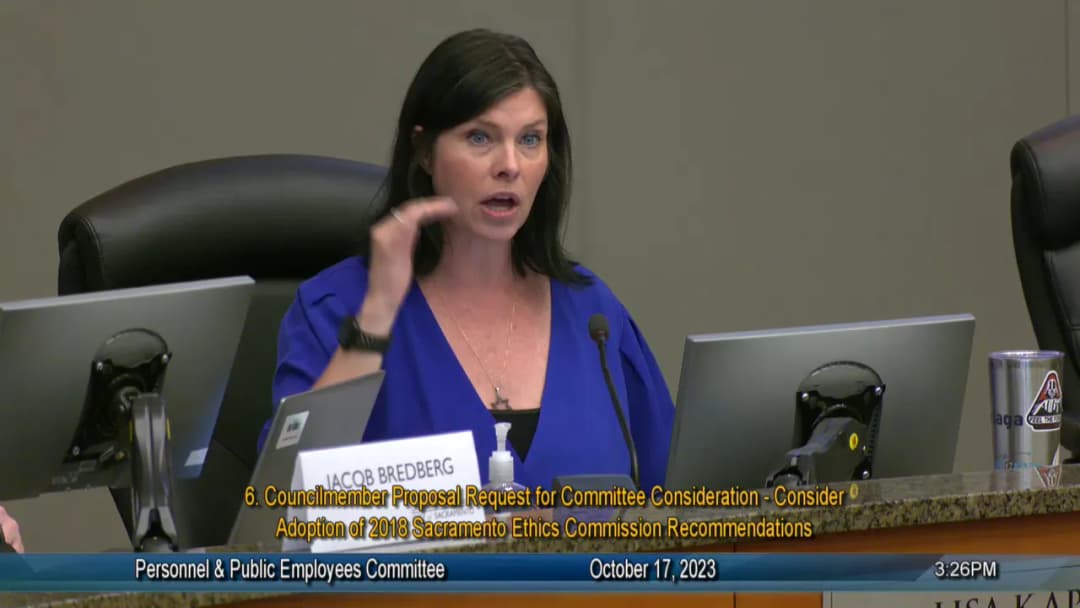
The Personnel and Public Employees Committee met on Tuesday, October 17, 2023, at 3:00 p.m. in the Sacramento City Hall Council Chamber. The meeting was called to order by Chair Lisa Kaplan at 3:02 p.m. and adjourned at 3:32 p.m. All four members were present: Chair Kaplan, Councilmember Sean Loloee, Councilmember Katie Valenzuela, and Vice Chair Caity Maple. The committee reviewed board and commission appointments, considered a proposal regarding 2018 Ethics Commission recommendations, and approved the prior meeting's minutes. Consent Calendar - Approved the Personnel and Public Employees Committee meeting minutes of September 19, 2023 (File ID 2023-01282) by unanimous vote (Motion by Maple, second by Loloee). Public Comments & Testimony - Item 6 – Ethics Commission Recommendations: Two speakers testified in support of forwarding the recommendations to the full City Council. - Susan Underwood, Chair of the Ethics Commission, stated the commission considers all four recommendations important and expressed personal support for granting subpoena power, noting it would make investigations more efficient and avoid delays. She requested the full package be sent to the City Council. - Paula Lee, President of the League of Women Voters of Sacramento County, urged the committee not to "receive and file" the recommendations, noting that volunteers had left the Ethics Commission because they felt their work lacked power. She recommended moving the proposal forward. - No public comments were made on matters not on the agenda. Discussion Items - Item 2 – Ethel MacLeod Hart Trust Fund Advisory Committee (File ID 2023-01311): The agenda listed seats A, F, and G, but the clerk stated there was one available seat and eight applications. The item was continued to a special meeting (referenced as October 31) because applicants had not been invited to present. Note: The agenda and minutes conflict on the number of seats (agenda: "Seats A, F, and G"; minutes: "Seat F"). - Item 3 – Parks and Community Enrichment Commission, Seat L (File ID 2023-01310): One applicant, Halia Rose Salinas-Collins of District 2, met the requirement of being between ages 14 and 22. Councilmember Loloee moved to recommend her appointment, seconded by Vice Chair Maple, who praised her resume and work with the LGBT Center. The committee unanimously recommended Salinas-Collins to the Mayor and Council. - Item 4 – Sacramento Environmental Commission, Seats A, B, and C (File ID 2023-01309): Six applications were received. The item was continued to a future special meeting because applicants were not invited to present. - Item 5 – Utilities Rate Advisory Commission, Seat D (File ID 2023-01312): Applicant Nicolai Dimitry Ellis attended and introduced himself, describing his chemical engineering degree from UCSD, work as a utilities/production engineer, and experience authoring a stormwater discharge permit. Councilmember Valenzuela moved to appoint Ellis, seconded by Vice Chair Maple. The committee unanimously recommended Ellis to the Mayor and Council. - Item 6 – Councilmember Proposal: Consider Adoption of 2018 Sacramento Ethics Commission Recommendations (File ID 2023-01353): Councilmember Valenzuela presented the proposal, explaining it stemmed from the Ethics Commission annual report. She requested a fuller staff analysis, including costs and legal implications. After discussion, the committee voted unanimously to direct the appropriate council appointive officer to commence work and bring the proposal back to the committee for review and consideration, with an update targeted for January 2024 if possible. The direction included cost analysis, legal analysis on subpoena power (including whether the city attorney's office could provide it), and stakeholder input. Key Outcomes - Approved the September 19, 2023, meeting minutes unanimously. - Continued Items 2 and 4 (trust fund committee and environmental commission appointments) to a future special meeting. - Recommended Halia Rose Salinas-Collins for Parks and Community Enrichment Commission Seat L (unanimous, 4-0). - Recommended Nicolai Dimitry Ellis for Utilities Rate Advisory Commission Seat D (unanimous, 4-0). - Passed a motion (unanimous, 4-0) to direct staff to work on the 2018 Ethics Commission recommendations and bring them back to the committee with detailed analysis before any forwarding to the City Council.
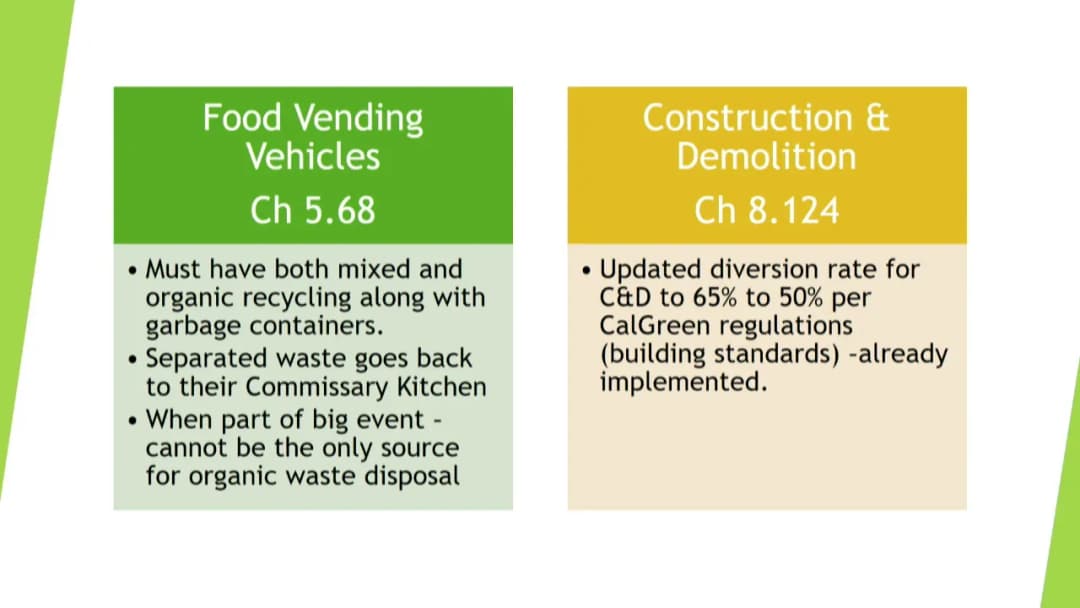
The Law and Legislation Committee of the Sacramento City Council met on October 17, 2023, at 1:04 PM in the City Hall Council Chamber. The meeting was called to order by Chair Katie Valenzuela and adjourned at 2:38 PM. Members present included Eric Guerra (District 6), Rick Jennings (District 7), Lisa Kaplan (District 1), and Chair Valenzuela (District 4). The committee reviewed two consent items and two discussion items, including a proposed ordinance on Community Benefits Agreements and amendments to solid waste management codes. Consent Calendar - Item 1 – Law and Legislation Log (File ID 2022-02191): Approved by unanimous motion. The log tracks city legislative activities. - Item 2 – Legislative Advocacy Correspondence (File ID 2023-01065): Received and filed by unanimous motion. This item documents city advocacy positions. Public Comments & Testimony - Tamika LaCluse (Vice President, Sacramento Investment Without Displacement – SIWD): Expressed strong support for a robust Community Benefits Agreement (CBA) ordinance, emphasizing that the current $10 million threshold is too high and that the ordinance must give residents a direct role in negotiations and enforcement. She urged the committee to forward the ordinance to the full City Council. - Michelle Willard (Chief Public Affairs Officer, Greater Sacramento Economic Council): Opposed the CBA ordinance, stating it would reduce investment and job growth, particularly harming low-income and underserved communities. She cited national concerns that such agreements drive up construction costs and limit competition. - Liz Williams (Downtown Sacramento Partnership): Opposed the ordinance as written, requesting an exemption for the central city and infill development. She warned that the policy could negatively impact transformative projects like the Rail Yards. - Chris Noram (North State Building Industry Association): Expressed concerns about unclear language, particularly regarding the potential capture of routine housing projects and definitions of affordable housing. He requested further clarification before the ordinance proceeds to full council. - Rashid Sadiq (SIWD member): Urged the committee to be bold and prioritize the needs of vulnerable residents over developer interests, stating that a CBA would lift all communities. - Andrea Cow (Sacramento Asian Pacific Chamber of Commerce): Supported the CBA but requested inclusion of the Small Business Utilization Program (SBUC) to ensure local and minority-owned businesses can participate in city projects. Discussion Items Item 3 – Ordinance Adding Chapter 3.156: Community Benefits Agreements (File ID 2023-00557) Staff presented a revised draft ordinance, required by the 2021 Aggie Square settlement agreement with SIWD. The ordinance would mandate a CBA for development projects receiving $10 million or more in city subsidies (consistent with Government Code 53083). Required elements include prevailing wage, local hire, and third-party beneficiary enforcement. Optional elements include small business support, anti-displacement, affordable housing, and transportation. Staff incorporated feedback from the April 2023 law and legislation meeting, adding a purpose section, adjusting the definition of affordable rent, clarifying bond exclusions, and specifying that the city manager’s policies include community input processes. Committee discussion focused on several concerns raised by Vice Chair Jennings and others: - Subsidy definition: The city attorney confirmed the definition aligns with the settlement agreement and cannot be narrowed without violating the agreement. - $10 million threshold: Staff noted that only a few major projects (e.g., Golden One Center, Aggie Square) have exceeded this threshold historically. Councilmember Kaplan suggested the threshold should be adjusted annually for inflation every 24 months (starting in 2026) rather than the proposed 60 months. - Housing exemptions: Councilmembers Kaplan and Guerra requested that standalone housing projects and master-planned communities be explicitly excluded to avoid conflicts with state housing law (SB 330) and to not hinder housing production. Chair Valenzuela noted that the city rarely provides $10 million subsidies to non-affordable housing projects. - Third-party beneficiary: The city attorney explained that the settlement agreement requires the ordinance to include community enforcement through a third-party beneficiary, but the council may ultimately choose not to include it. - Pipeline projects: Vice Mayor Guerra asked staff to define pipeline projects (e.g., Rail Yards, Innovation Park) and consider exemptions for fragile, long-term projects. After extensive discussion, the committee voted unanimously to forward the ordinance to the full City Council, with the recommendation that it be considered in a workshop format to allow for robust debate. The motion also directed staff to: - Clarify the definition of pipeline projects and potential exemptions. - Provide an estimate of implementation costs. - Consider adjusting the inflation trigger to 24 months. Item 4 – Ordinance Amending Solid Waste Management Codes (File ID 2023-01287) Staff presented updates to five chapters of the city code to comply with SB 1383 (short-lived climate pollutants) and to reflect the 2019 dissolution of the Sacramento Solid Waste Authority. Key changes include: - Requiring food waste recycling at food trucks and special events. - Increasing construction diversion rates from 50% to 65% (per CalGreen). - Mandating waste plans for events with 500+ attendees and post-event reports for events with 2,000+ attendees. - Codifying residential junk pickup appointment times and container storage rules. - Updating commercial waste regulations, including customer service standards and franchise fee uses (now allowed for landfill maintenance at Sutter Landing Park and illegal dumping mitigation). No public comments were received. Committee members discussed franchise fee allocation, the need for a coordinated approach to special events, and future opportunities for renewable energy from waste (e.g., hydrogen). Councilmember Kaplan urged a thoughtful rollout of food recovery requirements for tier-two generators. The committee voted unanimously to forward the ordinance to the City Council, with direction to further explore franchise fee use and SB 1383 implementation strategies. Key Outcomes - Consent Calendar (Items 1 & 2): Approved unanimously. - Item 3 – Community Benefits Agreements: Motion to forward to City Council for a workshop passed unanimously (4-0). Staff was directed to refine definitions, assess costs, and consider inflation adjustments. - Item 4 – Solid Waste Code Amendments: Motion to forward to City Council with additional staff direction on franchise fees and SB 1383 goals passed unanimously (4-0). - Adjournment: The meeting adjourned at 2:38 PM.
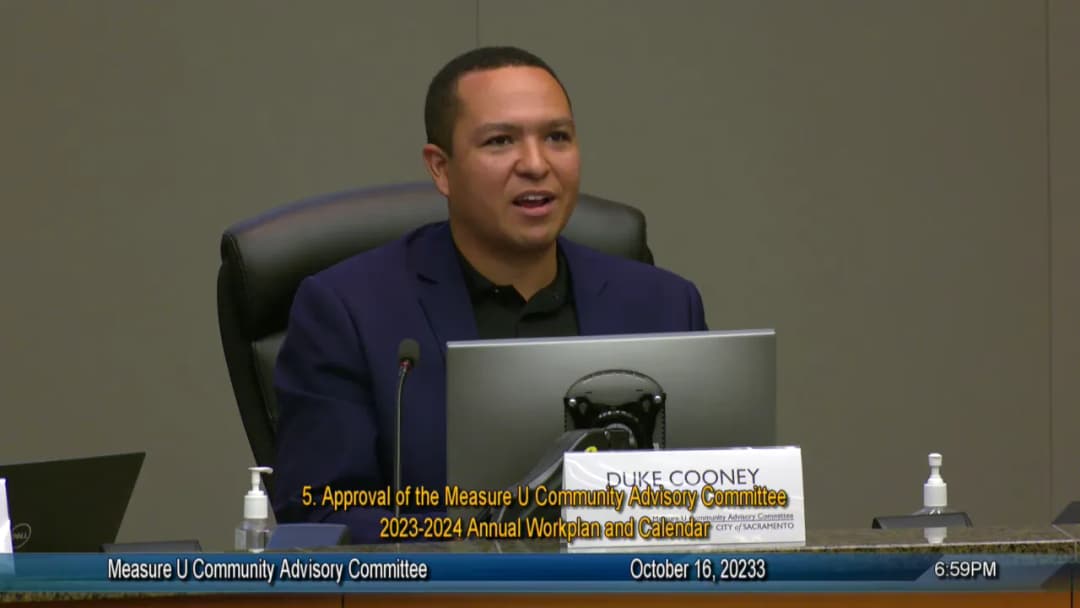
The Measure U Community Advisory Committee met on Monday, October 16, 2023, at 6:01 p.m. in the City Hall Complex (915 I Street, Sacramento, CA). The meeting was called to order by Chair Dickinson and adjourned at 7:22 p.m. The committee approved consent calendar items, discussed fiscal year 2023/24 spending categories and ballot language, approved the FY2021/22 Annual Report, and continued discussion of the 2023-2024 Annual Workplan and Calendar to the November meeting. Consent Calendar - Item 1 – Approval of August 21, 2023 Meeting Minutes (File ID: 2022-02404): Passed by motion (Member Goris / Member Cooney). Vote: 8 ayes (Members Goris, Cooney, Riviera, Georgeoff, Byrd, Paschal, Diaz, Chair Dickinson); 4 absent (Rueb, Sala, Macias, Wolf). - Item 2 – Measure U Community Advisory Committee Agenda Log (File ID: 2023-01207): Approved as part of the consent calendar. Discussion Items - Item 3 – Fiscal Year (FY) 2023/24 Measure U Spending Categories and November 2018 Ballot Measure Language (File ID: 2023-01209): Vice Chair Cooney presented the concept of organizing future meetings around specific spending categories (e.g., affordable housing, homelessness, community response) to align with ballot measure language. Members expressed support for the idea. Member Rivera stressed the need for community input on topic selection. Deputy City Attorney Angel Solis clarified that serial communication among members outside meetings would violate the Brown Act. Staff noted that the actual vote on the work plan would occur under Item 5. The item was received and discussed. - Item 4 – Approval of the Measure U Community Advisory Committee FY2021/22 Annual Report (File ID: 2023-01210): Member Diaz presented the draft report, which summarized Measure U expenditures, observations, and recommendations. Key discussion included the need for data transparency, tracking of recommendations versus actual funding, and accountability. Member Sala requested that the report be presented to the Budget and Audit Committee in December, with an opportunity for committee members to speak. The committee passed a motion (Member Paschal / Member Goris) to approve the report and authorize one member to finalize and forward it to the Budget and Audit Committee. Vote: 9 ayes (Members Sala, Goris, Cooney, Riviera, Georgeoff, Byrd, Paschal, Diaz, Chair Dickinson); 3 absent (Rueb, Macias, Wolf). - Item 5 – Approval of the Measure U Community Advisory Committee 2023-2024 Annual Workplan and Calendar (File ID: 2023-01211): Vice Chair Cooney outlined a draft workplan focusing on affordable housing, homelessness, 911 response, parks, libraries, and participatory budgeting. Members discussed community engagement, outreach, and the need for data by neighborhood. Member Diaz supported starting with affordable housing in January to align with the Point-in-Time Count. The committee decided to continue the item to the November meeting for further refinement. A motion to continue (Member Cooney / Member Goris) passed unanimously. Vote: 8 ayes (Members Sala, Goris, Cooney, Riviera, Georgeoff, Byrd, Paschal, Diaz, Chair Dickinson); 3 absent (Rueb, Macias, Wolf). City Manager’s Office Report - No formal report. Chair Dickinson noted attendance at the City Manager’s Innovation and Economic Development Committee meeting regarding the creative economy. Committee Member Comments – Ideas and Questions - Member Goris highlighted a $101.3 million state allocation for a soccer field renovation in District 10, secured by Assemblymember Stephanie Wynne with support from Kevin McCarthy and Councilmember Rick Jennings. - Member Sala reiterated the need for Measure U data to be reported by neighborhood or zip code to better track resource distribution. Staff noted that such granularity would require additional council direction and resources. - Member Rivera questioned whether data requirements could be included in contracts with external vendors. Staff clarified that the majority of Measure U funds (estimated 75%) go to city staff, not contracts, but that contracted projects could potentially include data reporting requirements. - Member Diaz asked about the mid-year budget process and the status of participatory budgeting. Staff advised that the committee could use the December presentation of the Annual Report to advocate for mid-year budget recommendations. Key Outcomes - Consent Calendar Approved (Items 1 and 2) – unanimous voice vote. - Item 3 (Spending Categories & Ballot Language) – received and discussed; no formal vote. - Item 4 (FY2021/22 Annual Report) – approved (9-0-3) with authorization to finalize and forward to the Budget and Audit Committee. A presentation to the committee is expected in December. - Item 5 (2023-2024 Workplan and Calendar) – discussion continued to the November 2023 meeting; the committee will review amendments and finalize at that time. - Next Steps: The agenda log may be used to add items not covered in the workplan. Staff will invite the Community Engagement Office to a future meeting.
The Civil Service Board meeting scheduled for Monday, October 16, 2023, at 1:00 p.m. was cancelled. No agenda items were discussed, no public testimony was heard, and no decisions were made.
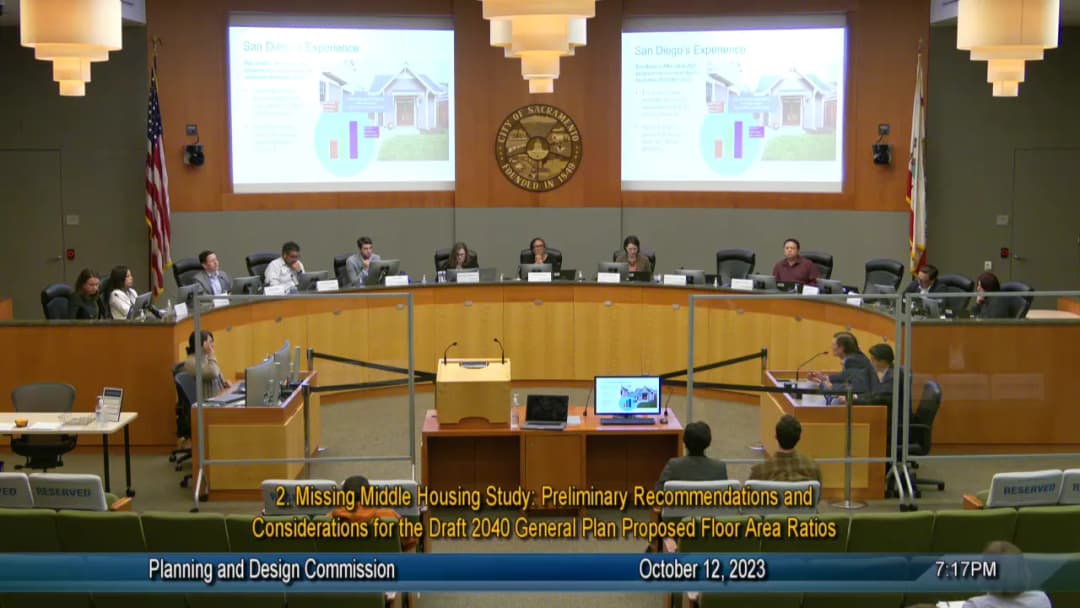
The Sacramento Planning and Design Commission met on Thursday, October 12, 2023, at 5:30 p.m. at City Hall (915 I Street). The meeting included a public hearing for a conditional use permit for a new bar, followed by a discussion and review of the Missing Middle Housing Study preliminary recommendations. The commission voted unanimously to approve the Townie Bar permit and provided extensive feedback on the housing study. The meeting adjourned at 8:21 p.m. Public Hearings 1. Townie Bar (P23-010) - Location: 710 K Street; APN 006-0380-001-0000; District 4 - Proposal: Conditional Use Permit to establish a bar within an existing 1,200-square-foot ground-floor tenant space in the Central Business District (C-3-SPD), Central City Special Planning District, and Merchant Street Historic District. - Details: No alterations to the structure are proposed. The project was noticed to all residents, property owners, and neighborhood associations within 500 feet. Staff reported no comments or e-comments were received. - Action: Commissioner Xiong moved to approve the staff recommendation, seconded by Commissioner Kadin. The motion passed unanimously (7-0) with Commissioners Andrade, Buckley, Kadin, Lamas, Wallace, Xiong, and Yeung voting in favor. Absent: Boyd, Chase, Macias Reed, Thompson, and Chair Hernandez. Discussion Calendar 2. Missing Middle Housing Study: Preliminary Recommendations Staff (Nguyen Nguyen, Associate Planner; Matt Hertel, Long Range Planning Manager; and consultants from Opticos Design) presented preliminary recommendations for implementing “missing middle housing” (duplexes, triplexes, fourplexes, ADUs, bungalow courts) citywide. The study was commissioned in response to a 2021 City Council key strategy in the 2040 General Plan to allow a greater array of housing types. Key proposals included: - Establishing three missing middle housing districts (Tier 1, Tier 2, Tier 3) with varying unit caps (e.g., 2+2 ADUs, 4+2 ADUs, 6+2 ADUs) based on transit proximity and context. - A sliding-scale Floor Area Ratio (FAR) to incentivize more units (e.g., more units allowed higher FAR) and limit large single-family homes. - Modifications to development standards: increasing required open space from 100 to 125 sq ft per unit (but allowing setbacks to count), reducing front setbacks, allowing smaller minimum lot sizes (1,300 sq ft for homes 1,000 sq ft or less), and redefining driveway widths. - A local density bonus program (similar to San Diego’s) to encourage income-restricted units. - Anti-displacement strategies, including a displacement risk assessment and a one-year occupancy requirement before demolition. - A discretionary (staff-level) design review process for missing middle projects. Public Comments on Item 2 - David (member of the public): Expressed personal struggle with housing costs, citing a recent rent increase to $2,525 per month, and thanked the commission for considering the proposal. - Ansel Lundberg (District 7 resident, House Sacramento board member): Voiced support for missing middle housing but opposed unit caps and discretionary review, favoring form-based codes and ministerial approval. He supported reducing minimum lot sizes (preferring zero) and other liberalizations. - Ben Raderstorf (House Sacramento Vice President, District 4 homeowner): Criticized the unit caps and new discretionary hurdles, arguing they contradict the city’s pro-housing stance and council direction. He stressed the need to prioritize affordable housing over aesthetic concerns. - Connor Finney (renter, District 4): Expressed disappointment, stating the draft recommendations walk back climate and fair housing goals. He called for removing unit caps completely or at least raising Tier 2 to Tier 3 levels, and criticized historic preservation exemptions as mirroring redlining maps. Commissioner Discussion & Feedback Commissioners praised the study’s thoroughness but raised several concerns and offered specific recommendations: - Commissioner Kadin: Argued that unit caps are unnecessary and inconsistent with a form-based approach; recommended raising Tier 2 caps to 6+2 ADUs and Tier 3 to 8+2 ADUs; expanding Tier 3 beyond the proposed 0.26% of residential land; eliminating the discretionary review process; and not reducing FAR below General Plan levels for projects that maximize units. - Commissioner Buckley: Requested clarification on the FAR/unit cap relationship; urged stronger anti-displacement strategies targeted at vulnerable areas (e.g., Oak Park) and more differentiation between neighborhood character and historic preservation. - Commissioner Yeung: Highlighted the need to address financial feasibility and transparency; suggested exploring a local density bonus for very-low-income units; recommended challenging the narrative that density reduces property values. - Commissioner Thompson: Emphasized the need for clear definitions (e.g., “house scaled”) and consideration of building code thresholds; suggested individual homeowner incentives and streamlined processes. - Commissioner Lamas: Suggested engaging financial institutions to help homeowners navigate financing for missing middle projects. - Commissioner Andrade: Asked about opposition and unintended consequences; noted that density alone doesn’t guarantee affordability (citing San Francisco and Orange County). - Commissioner Zhang: Encouraged broader public outreach to build awareness and acceptance of the proposed changes. - Vice Chair Wallace: Acknowledged the balance staff is trying to achieve and noted the study is still early; encouraged continued evolution. Key Outcomes - Approved the Townie Bar Conditional Use Permit (7-0). - Reviewed and commented on the Missing Middle Housing Study; staff will incorporate feedback into final recommendations and present to City Council on October 24, 2023. - A virtual webinar on attainability and ownership recommendations is scheduled for October 19, 2023. - Staff will consider raising unit caps, eliminating discretionary review, refining FAR sliding scale, and enhancing anti-displacement measures based on commissioner input.
The Sacramento Community Police Review Commission met on October 9, 2023, from 6:00 PM to 9:28 PM at City Hall. The meeting included a consent calendar, public comments, and discussion of three major items: an audit of SPD misconduct complaint cases, an update on the audit of the commission itself, and a request for a joint workshop with the City Council. Commissioners expressed frustration over the lack of progress on previous recommendations and the need for resources and clear processes. Consent Calendar - Approval of Minutes (September 11, 2023): Passed 7-0-1 (Commissioner Salazar abstained; Commissioners J. Johnson, Carter Martinez, Marion absent). Public Comments & Testimony - Matters Not on the Agenda: A community member (Truth) described a September 29, 2023 encounter with SPD Sergeant McPhail, alleging the officer stopped him without cause, confiscated his ID, and acted dismissively. The speaker gave historical context linking modern policing to slave catchers and demanded the return of his ID. He criticized the city's funding priorities and called for a community town hall in December. - Public Comment on Item 5: No speaker slips. Discussion Items 3. Office of Public Safety Accountability’s Audit of SPD: Misconduct Complaint Cases - Improper Search and Seizure Inspector General Dwight White presented an audit of 109 completed misconduct complaint cases (improper search and seizure) from June 1, 2020 to June 30, 2023. Key findings: - SPD dispositions: 86 unfounded, 17 sustained, 4 exonerated, 2 not sustained. - OPSA identified additional violations, especially in unlawful pat-downs and pretextual stops. - 70% of complainants were Black/African American; most were aged 19–30; 70% male. - Traffic-related stops (especially window tint) were a primary pretext; all such stops involved Black or Latino individuals. - 10 findings included: pretextual stops, lack of standalone Fourth Amendment policy, outdated 2007 search and seizure manual, failure to articulate reasonable suspicion, warrantless entries, and cell phone seizures. - Recommendations: eliminate pretextual stops, update policies, train officers (including DA’s office training), involve IAD in all complaint investigations, and create a policy review committee with community input. - SPD representatives (Lt. Buchanan, Assistant City Manager Lara) stated they are implementing all recommendations and forming an Office of Internal Compliance. - Commissioners discussed the need for impartial third-party training, accountability metrics, and reformed reporting forms. Commissioner Carter Martinez (not present) raised concerns via other commissioners about training quality and reliance on in-house instruction. Commissioner Bliss questioned the community advisory body mentioned in the September presentation. 4. Update on the Audit of the Sacramento Community Police Review Commission Kevin Christensen (City Auditor’s Office) presented an update on the November 2021 audit. Findings: - Lack of clarity in roles and responsibilities (city code vague on staffing, information access, and review duties). - Commission lacks resources: no dedicated staff, no annual report, no performance metrics, no mandated training. - Recommendation process flawed: 110 recommendations made between 2018 and 2021, less than half responded to; no required formal written responses from SPD; no council vote required. - Recommendations: clarify code, provide staff, establish recommendation format, require SPD responses, create tracking system, and conduct a joint workshop with council. - Status: Some progress – administrative support moved to City Clerk; SPD converting recommendations to new format; law and legislation committee requested workshop. However, most recommendations unimplemented; community members expressed frustration. - Commissioner Carter voiced strong frustration that after years, few tangible changes have occurred. 5. Request for a Joint Workshop with the City Council Regarding the Audit of the Sacramento Community Police Review Commission The Commission considered a letter from the chair and vice chair urging acceptance of the council’s offer for a joint workshop. The letter noted that 146 of 147 recommendations remain unaddressed and that the commission lacks resources. Commissioners emphasized the need for clear timelines, concrete outcomes, and a formal recommendation process. The motion passed unanimously (9-0, 2 absent). 2. Sacramento Community Police Review Commission Follow-Up Log The follow-up log was received and filed. It will be updated to align with the commission’s work plan and brought back in November. Key Outcomes - Consent Calendar approved (minutes of Sept 11, 2023). - Item 3 (OPSA audit) received and filed; ongoing implementation of recommendations noted. - Item 4 (update on CPRC audit) received and filed; commission expressed frustration and called for council action. - Item 5 (joint workshop) passed unanimously. The chair and vice chair will work with council to set agenda, facilitator, and timeline. Commissioners demanded that the workshop produce clear deadlines for council action on recommendations. - Item 2 (follow-up log) received and filed. - SPD committed to having sworn personnel present at future meetings and to completing response formats for 2018 recommendations (already done) and 2019-2020 recommendations by November 2023. - New positions (Office of Internal Compliance, OPSA staff) expected to be recruited; job postings not yet begun. - No action taken on public commenter’s specific complaint about Sergeant McPhail; referral to appropriate agency implied.
The Law and Legislation Committee of the Sacramento City Council met in a special session on Tuesday, October 3, 2023, at 11:31 a.m. in the City Hall Council Chamber (915 I Street, Sacramento, CA 95814). The meeting, chaired by Councilmember Katie Valenzuela (District 4) and attended by Councilmembers Lisa Kaplan (District 1), Eric Guerra (District 6), and Rick Jennings II (District 7), addressed six agenda items. Key topics included modernization of the Business Operations Tax (BOT), an interim ordinance on commercial truck usage in North Sacramento, a digital kiosk policy, and an update on the audit of the Sacramento Community Police Review Commission (SCPRC). The meeting adjourned at 1:55 p.m. Consent Calendar - Motion by Councilmember Kaplan, seconded by Councilmember Guerra, adopted unanimously (4-0) with a voice vote, approving: - The Law and Legislation Committee meeting minutes of August 15, 2023 and September 5, 2023 (File ID: 2023-01270). - The Law and Legislation Log (File ID: 2022-02190). - Councilmember Guerra requested that contract lobbyists provide a legislative wrap-up at the November hearing; Councilmember Jennings noted his absence on August 15, 2023, and asked that the minutes reflect that. Public Comments & Testimony - Item 3 (BOT): One public comment was received. Douglas Nelson, representing a local business and property owner, expressed concerns that increasing the business tax would unfairly penalize compliant businesses while unpermitted land uses (e.g., trucking operations on gravel lots) circumvent the system. He urged the city to enforce existing land-use regulations rather than raise taxes on responsible businesses. - Item 4 (Commercial Truck Ordinance): Five public comments were received, all but one from business owners or attorneys: - Nick Abdiscontre (attorney for Jensen Enterprises) and Ryan Hooper and Brian Manning (representing property owners) requested additional time for stakeholder outreach, arguing that the ordinance was not adequately publicized and would devalue property without addressing underlying environmental justice concerns. Brian Manning also raised potential Equal Protection Clause issues, noting the ordinance applies only to North Sacramento. - Todd Sperber, a property owner, stated he had not received formal notice and requested more time to analyze the ordinance's impact. - Keon Bliss, a resident of District 4 and SCPRC vice chair, spoke in support of the ordinance, arguing that residents in industrial areas lack resources to participate in public process and that businesses' legal challenges should not overshadow community health concerns. - Sheridan Evans (Buzz Olds Construction) echoed concerns about insufficient financial impact analysis and the length and cost of conditional use permits (CUPs). - Item 6 (SCPRC Audit): Two public comments were received: - Keon Bliss, speaking as SCPRC vice chair, read a letter from the commission's chair and vice chair, Graciela Castillo-Kings and Keon Bliss, supporting the city auditor's findings and requesting clear delineation of roles, dedicated staff, and a pathway for recommendations to be heard. They highlighted that 146 of 147 SCPRC recommendations since 2018 remain unaddressed. - Chief Bay, a community member, alleged racial profiling by the Sacramento Police Department and expressed frustration with lack of accountability, claiming a recent incident of ID confiscation. Discussion Items Item 3: Business Operations Tax (BOT) Modernization (File ID: 2023-01252) - Staff Presentation: Peter Coletto (Finance Director) presented options to modernize the BOT. The current tax, established in 1975 and last updated in 1991, generates approximately $9 million annually from non-cannabis businesses. The tax has a regressive structure, with a $5,000 maximum cap, resulting in large businesses paying a smaller effective rate than small ones. Three options were presented: - Option 1: Inflation adjustment only, raising the minimum threshold from $10,000 to $22,000, the cap to $11,405, and generating approximately $3 million in additional revenue. - Option 2: Increase the rate from 0.04% to 0.06% and remove the cap, generating approximately $17 million in additional revenue, with the highest impact on businesses grossing over $100 million (only 37 firms). - Option 3 (Staff Recommendation): Raise the threshold to $50,000 (minimum payment $50), increase the cap to $150,000, and generate approximately $6.5 million in additional revenue, protecting small and medium-sized businesses. - Committee Discussion: Councilmember Kaplan favored option 3 but raised concerns about the cap increase to $150,000 and the impact on large businesses. Councilmember Guerra moved to support option 3, with a provision to phase in the cap. He also requested analysis of the impact on minority grocers and collaboration with economic development. Chair Valenzuela suggested raising the threshold to $100,000 and creating a separate rate for grocery stores. The committee directed staff to explore these amendments and return with a refined proposal. - Public Comment: One speaker (Douglas Nelson) expressed opposition to increasing taxes on compliant businesses, advocating for enforcement of existing land-use rules instead. - Vote: Motion by Councilmember Guerra, seconded by Councilmember Kaplan, passed unanimously (4-0). Item 4: Interim Ordinance – Commercial Truck Usage in North Sacramento (File ID: 2023-01180) - Staff Presentation: Kevin Colin (Zoning Administrator) described an interim ordinance that would require a conditional use permit (CUP) for certain commercial truck-related uses (e.g., truck parking, contractor storage yards, warehouses) in industrial zones (M1, M1S, M2, MT) in North Sacramento, within a defined geographic area (north of Arden Way, south of Steelhead Creek) and within 1,000 feet of sensitive uses (homes, schools, etc.). The ordinance aimed to address environmental justice and land-use compatibility issues. - Committee Discussion: Multiple members noted the necessity of a balance between protecting residents and not overburdening existing businesses. Concerns were raised about notification (standard mail, with 20 calls received out of 1,022 notices), the potential for property devaluation, and the need for a sunset clause. Councilmember Kaplan proposed narrowing the ordinance and holding stakeholder meetings before forwarding to City Council. Councilmember Guerra and Vice Chair Jennings supported a pilot approach with more dialogue. Chair Valenzuela emphasized the importance of community input, and the need for a privacy/surveillance policy if cameras are allowed. - Vote: Motion by Councilmember Kaplan, seconded by Chair Valenzuela, passed unanimously (4-0), directing staff to conduct stakeholder outreach with Councilmembers Kaplan and Loloee (District 2) and to bring a revised draft to City Council. Item 5: Digital Kiosk Policy (File ID: 2023-01171) - Staff Presentation: Jamie Mosler (Associate Planner) presented the findings from community outreach (March 2023) and a proposed ordinance and resolution to permit digital kiosks in the public right-of-way. The ordinance would define digital kiosks, allow them on public property with city agreement, and permit advertising as a subordinate use. The resolution would guide the future procurement process, emphasizing multilingual content, accessibility, maintenance responsibility by the provider, and further outreach when locations are selected. - Committee Discussion: Councilmember Guerra moved to forward the ordinance and resolution to City Council with amendments: (1) making cameras permissive (rather than prohibited) subject to a city-manager-approved privacy/surveillance policy; (2) adding language allowing for security cameras; (3) including considerations for electric vehicle charging infrastructure. Councilmember Kaplan and Vice Chair Jennings supported the amendments, with Councilmember Kaplan noting the importance of privacy protections and Councilmember Jennings supporting cameras for crime prevention. Councilmember Valenzuela expressed concern about privacy but supported the motion with adequate oversight. - Vote: Motion by Councilmember Guerra, seconded by Chair Valenzuela, passed unanimously (4-0). Item 6: Update on Audit of Sacramento Community Police Review Commission (File ID: 2023-00919) - Staff Presentation: City Auditor Jorge Oseguera and Principal Policy Analyst Kevin Christensen presented an update on the 2021 audit of the SCPRC. The audit found three main findings, including unclear roles and responsibilities and insufficient staffing. They noted that the commission currently receives no dedicated functional support, and recommended that the City Council determine staffing and funding. The auditor's office will continue follow-up every six months. - Committee Discussion: The committee discussed the need to clarify the commission's role, provide adequate staff, and strengthen the recommendation process. Chair Valenzuela proposed that the commission have a dedicated staff position and that the police department be required to consult with and attend commission meetings. Councilmember Kaplan noted that this item was for discussion only and emphasized consistency across all boards and commissions. Vice Chair Jennings recommended a joint workshop between the City Council and the SCPRC to build trust. Councilmember Guerra recalled prior commitments to staff OPSA and have police department representatives attend meetings. - Action: The committee received and filed the report by consensus. No formal motion was made, but Chair Valenzuela directed staff to work on bringing draft code amendments to a future meeting. Key Outcomes - BOT Modernization: The committee unanimously directed staff to draft a ballot measure for the March 2024 election, incorporating a threshold increase (likely to at least $50,000, with consideration of $100,000), a cap increase to potentially $150,000, a phase-in option, a potential separate rate for grocery stores, and a recommendation for a 0.06% rate (option 2) or other modifications. The motion included a request for staff to return to the committee with a revised proposal before the October 31 (or November) City Council deadline. - Commercial Truck Ordinance: The committee unanimously directed staff to continue stakeholder outreach and bring a revised draft that narrows the scope (likely focusing on areas with residential uses), includes a sunset provision, and applies lessons learned as a pilot, with eventual citywide consideration. The revised ordinance is expected to be brought back to City Council after refining details. - Digital Kiosk Policy: The committee unanimously voted to forward the ordinance and resolution to City Council with amendments: making cameras permissive under a privacy policy, adding language for security cameras, and considering EV charging infrastructure. - SCPRC Audit: The report was received and filed. The committee agreed to consider a future joint workshop with the SCPRC and to explore code amendments to clarify roles, staffing, and recommendation timelines, with an emphasis on consistency across all boards and commissions.